
$30B housing plan, immigration pathway & Raptors win
The federal government has unveiled a 30-billion-dollar plan to address homelessness alongside a major pathway granting permanent residency to 200,000 temporary residents. Abroad, Gadi Eisenkot has been tapped to form Israel's next coalition government following deadlocked elections. Plus, a short-handed Raptors squad rallies to top the Bucks.
55 stories4 sections293 sources checked
Listen to this edition
PiBrief Canada, November 8, 2026
The lineup
In this edition
 01
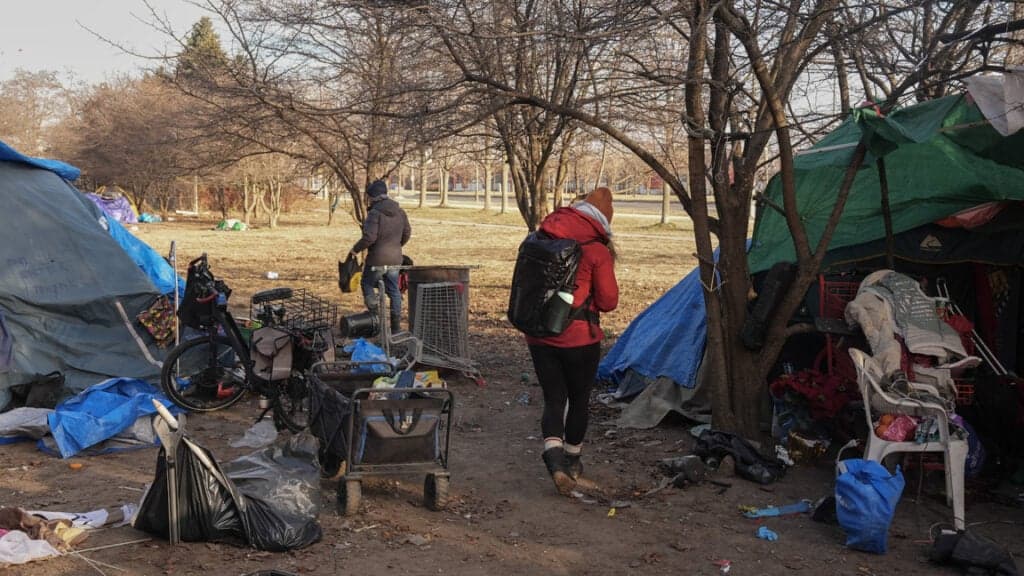
Federal Government Launches $30-Billion Plan to End Homelessness, Faces Provincial Hurdles
National News
 02
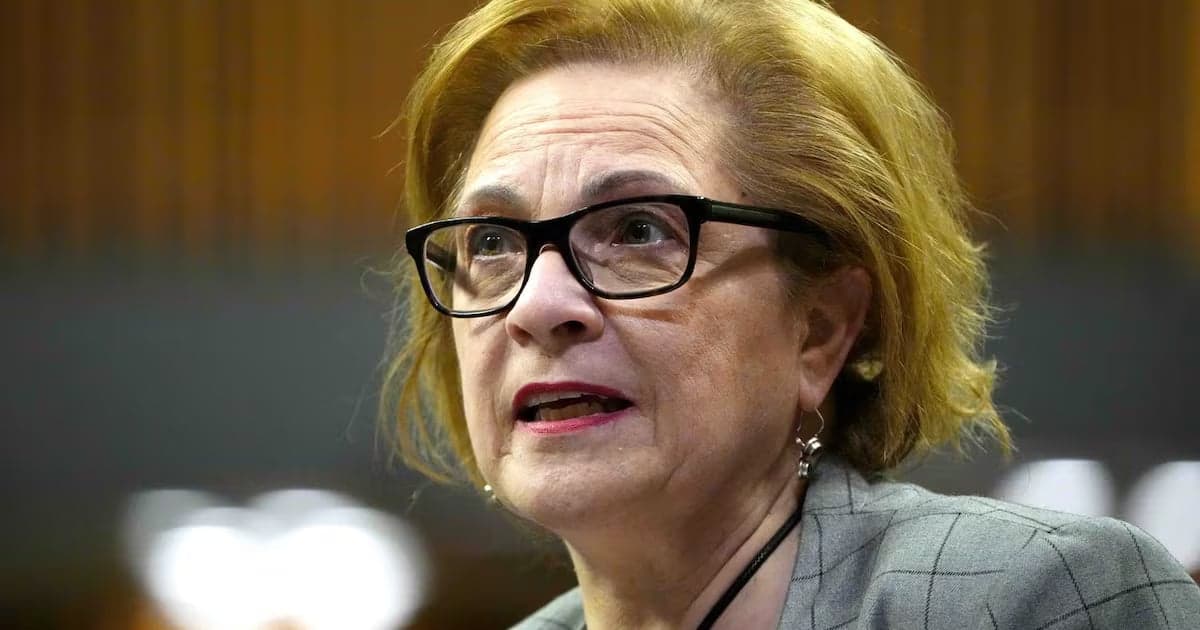
Canada Unveils Immigration Plan: 200,000 Temporary Residents to Gain Permanent Status
National News
 03
Reforms to Temporary Foreign Worker Program Spark Political Firestorm
National News
 04
Canadian Labour Market Weakens; Ottawa Adjusts Foreign Worker Program
National News
 05
US and Canada Sanction Eight Canadian Businesses in Ryan Wedding Cartel Laundering Probe
National News
 06
US Treasury Sanctions Eight Canadian Exchange Firms for Iran Sanctions Evasion and Money Laundering
National News
 07
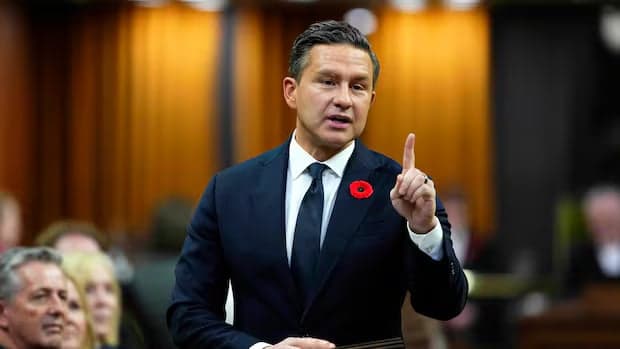
Poilievre Slams Carney Government's Capital Gains Exemption as Complex and Exclusionary
National News
- 08
Poilievre Criticizes Ottawa's Capital Gains Exemption as Too Complex and Exclusive
National News
 09
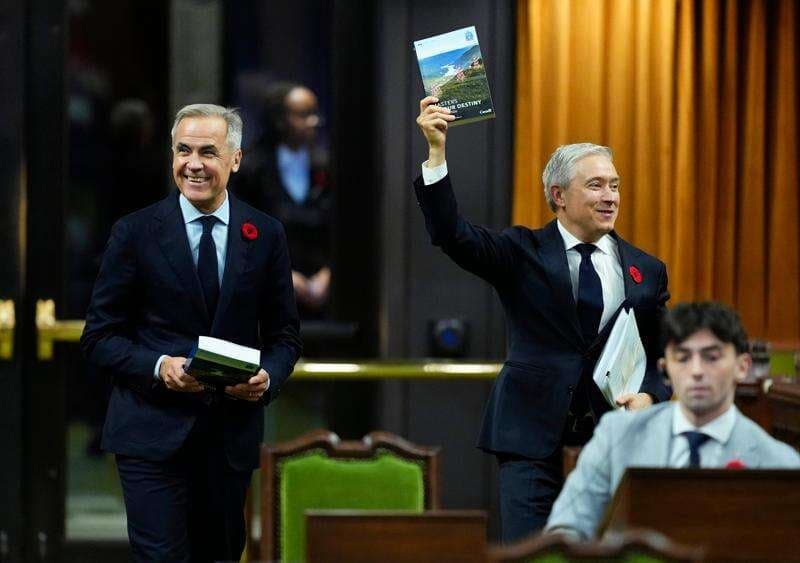
Ottawa Requests $22.1 Billion in Supplementary Funding Amid Fiscal Scrutiny
National News
 10
Canada's NATO 2035 Spending Goals Unfunded in Budget 2026, Analysts Warn
National News
 11
Humanitarian Groups Decry Foreign Aid's Absence in Budget 2026
National News
- 12
Atmospheric Rivers and High Winds Batter British Columbia, Causing Widespread Power Outages and Transit Disruptions
National News
 13
Measles Alert Issued in Durham Region After Unvaccinated Traveler Arrives
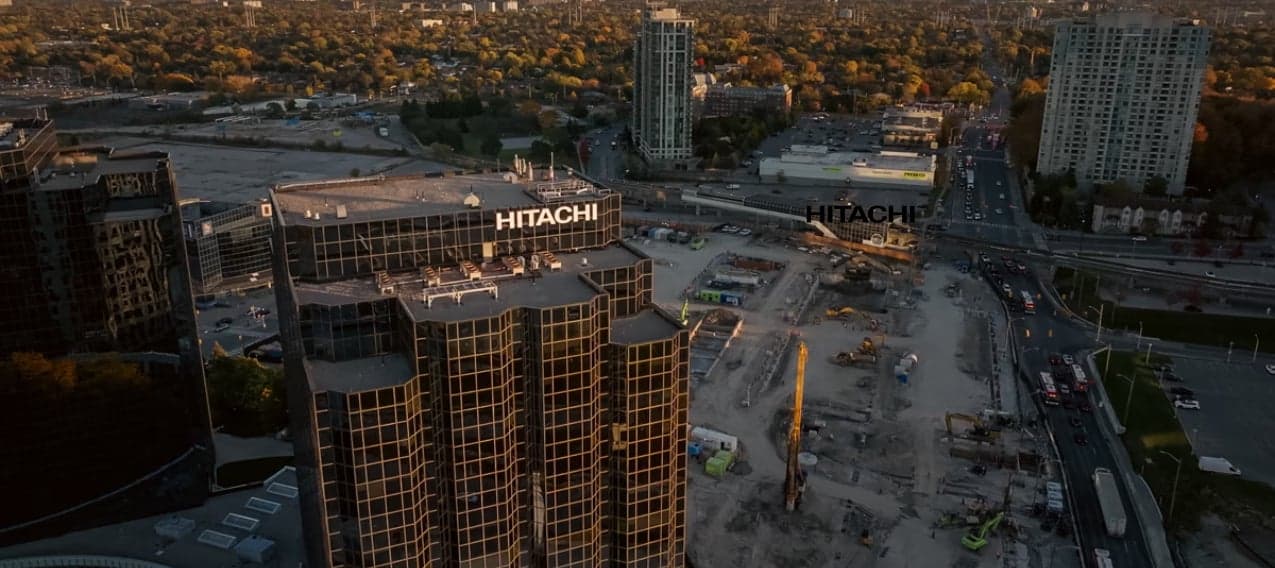
National News
 14
Fatal Daylight Shooting in Etobicoke Prompts Toronto Police Manhunt
National News
 15
Former Junior Hockey Executive Tyler King Granted Bail on Sexual Exploitation Charges
National News
 16
Avenir Global Acquires Marker Collective for £70.4 Million, Boosting AI and Global Reach
National News
 17
Eisenkot Tapped to Form Israeli Coalition Amid Political Gridlock and Regional War Strain
World & Geopolitics
 18
Israel's President Herzog Mandates Gadi Eisenkot to Form Government After Deadlocked Elections
World & Geopolitics
 19
CENTCOM Creates Task Force Iron Gate to Disrupt Iranian Overland Trade and Weapon Networks
World & Geopolitics
 20
CENTCOM Launches Task Force Iron Gate to Disrupt Iran's Overland and Caspian Supply Routes
World & Geopolitics
- 21
Russia Launches Massive Ballistic Missile and Drone Attack on Ukraine's Energy Grid
World & Geopolitics
 22
Yemen War Resumes with Deadly Sanaa Airstrikes and Houthi Retaliation
World & Geopolitics
- 23
Sudanese Army Recaptures Strategic Town in West Kordofan from RSF
World & Geopolitics
- 24
Drone Strike on Colombian Military Base Underscores Rising Asymmetric Warfare
World & Geopolitics
 25
Democrats Take Congress, Push to Repeal Trump Tariffs; Miller Replaces Chief of Staff
World & Geopolitics
 26
Canada Invests $1.8 Billion in Drones Amid Concerns Over Palantir Software
World & Geopolitics
 27
Six GCC Nations Sign Agreement for Integrated 2,117-Kilometer Railway Network
World & Geopolitics
 28
UK and India Implement Landmark Free Trade Pact, Boosting Bilateral Commerce
World & Geopolitics
 29
Four-Nation Badr Defense Pact Enhances Gulf and Indo-Pacific Security Cooperation
World & Geopolitics
 30
Canada's Budget 2026 Targets Banking Oligopoly, Enhances RRSPs, and Unveils Housing Strategy
World & Geopolitics
 31
US Strikes Iran in Strait of Hormuz; Sanctions Hit Canadian Firms in Crypto Laundering
World & Geopolitics
- 32
Urgent Measles Exposure Alert Issued for Pearson Airport and Ajax Hospital
City News
 33
Toronto Prepares 2026-2027 Winter Services Amidst Homelessness Crisis and Fiscal Strain
City News
 34
Federal Government Invests Billions in Housing and Homelessness Strategy
City News
 35
Toronto Unveils 2026/2027 Winter Services Plan for Homeless Residents Amid Capacity Concerns
City News
 36
Impaired Driving Arrest After Midtown Rollover Collision
City News
 37
Toronto Honors Indigenous Veterans at Spirit Garden Ceremony
City News
 38
Fatal Etobicoke Shooting Leaves Young Man Dead
City News
- 39
Homicide Investigation Launched After Fatal Etobicoke Shooting
City News
 40
Parkdale E-Bike Collision Hospitalizes Cyclist Amid Micromobility Debate
City News
 41
Peel Police Report 283 Auto Thefts in 30 Days, Warn of Live-Streaming Risks
City News
 42
Line 2 Subway Shutdown Disrupts Weekend Transit Across Toronto
City News
- 43
TTC Line 2 Weekend Closure for Critical Bridge and Infrastructure Maintenance
City News
- 44
TTC Line 2 Weekend Closure Disrupts Commutes for Prince Edward Viaduct Repairs
City News
 45
Hitachi Rail Opens $30M Scarborough Headquarters for Ontario Transit Projects
City News
 46
Greater Toronto Area Faces Sharp Temperature Drop After Unseasonable Warm Spell
City News
 47
Short-Handed Raptors Stage Dramatic Comeback to Defeat Bucks
Sports
 48
Maple Leafs Fall to Canadiens Amidst Third-Period Comeback Attempt
Sports
 49
John Tavares Moves to Wing in Maple Leafs' Loss to Canadiens
Sports
 50
Maple Leafs Call Up Goaltender Artur Akhtyamov Amidst Crease Instability
Sports
 51
Blue Jays Awarded AL Team Gold Glove Amidst Individual Snubs
Sports
- 52
Toronto Blue Jays Win AL Team Gold Glove Amid Roster Realignment
Sports
 53
Blue Jays Re-Sign Lázaro Estrada and Five Minor Leaguers
Sports
- 54
CJ Van Eyk Elects Free Agency After Declining Blue Jays Outright Assignment
Sports
- 55
Raptors Sign Kevin McCullar Jr. to Two-Way Contract
Sports
See all 55 as a listHide the list
- Federal Government Launches $30-Billion Plan to End Homelessness, Faces Provincial Hurdles
- Canada Unveils Immigration Plan: 200,000 Temporary Residents to Gain Permanent Status
- Reforms to Temporary Foreign Worker Program Spark Political Firestorm
- Canadian Labour Market Weakens; Ottawa Adjusts Foreign Worker Program
- US and Canada Sanction Eight Canadian Businesses in Ryan Wedding Cartel Laundering Probe
- US Treasury Sanctions Eight Canadian Exchange Firms for Iran Sanctions Evasion and Money Laundering
- Poilievre Slams Carney Government's Capital Gains Exemption as Complex and Exclusionary
- Poilievre Criticizes Ottawa's Capital Gains Exemption as Too Complex and Exclusive
- Ottawa Requests $22.1 Billion in Supplementary Funding Amid Fiscal Scrutiny
- Canada's NATO 2035 Spending Goals Unfunded in Budget 2026, Analysts Warn
- Humanitarian Groups Decry Foreign Aid's Absence in Budget 2026
- Atmospheric Rivers and High Winds Batter British Columbia, Causing Widespread Power Outages and Transit Disruptions
- Measles Alert Issued in Durham Region After Unvaccinated Traveler Arrives
- Fatal Daylight Shooting in Etobicoke Prompts Toronto Police Manhunt
- Former Junior Hockey Executive Tyler King Granted Bail on Sexual Exploitation Charges
- Avenir Global Acquires Marker Collective for £70.4 Million, Boosting AI and Global Reach
- Eisenkot Tapped to Form Israeli Coalition Amid Political Gridlock and Regional War Strain
- Israel's President Herzog Mandates Gadi Eisenkot to Form Government After Deadlocked Elections
- CENTCOM Creates Task Force Iron Gate to Disrupt Iranian Overland Trade and Weapon Networks
- CENTCOM Launches Task Force Iron Gate to Disrupt Iran's Overland and Caspian Supply Routes
- Russia Launches Massive Ballistic Missile and Drone Attack on Ukraine's Energy Grid
- Yemen War Resumes with Deadly Sanaa Airstrikes and Houthi Retaliation
- Sudanese Army Recaptures Strategic Town in West Kordofan from RSF
- Drone Strike on Colombian Military Base Underscores Rising Asymmetric Warfare
- Democrats Take Congress, Push to Repeal Trump Tariffs; Miller Replaces Chief of Staff
- Canada Invests $1.8 Billion in Drones Amid Concerns Over Palantir Software
- Six GCC Nations Sign Agreement for Integrated 2,117-Kilometer Railway Network
- UK and India Implement Landmark Free Trade Pact, Boosting Bilateral Commerce
- Four-Nation Badr Defense Pact Enhances Gulf and Indo-Pacific Security Cooperation
- Canada's Budget 2026 Targets Banking Oligopoly, Enhances RRSPs, and Unveils Housing Strategy
- US Strikes Iran in Strait of Hormuz; Sanctions Hit Canadian Firms in Crypto Laundering
- Urgent Measles Exposure Alert Issued for Pearson Airport and Ajax Hospital
- Toronto Prepares 2026-2027 Winter Services Amidst Homelessness Crisis and Fiscal Strain
- Federal Government Invests Billions in Housing and Homelessness Strategy
- Toronto Unveils 2026/2027 Winter Services Plan for Homeless Residents Amid Capacity Concerns
- Impaired Driving Arrest After Midtown Rollover Collision
- Toronto Honors Indigenous Veterans at Spirit Garden Ceremony
- Fatal Etobicoke Shooting Leaves Young Man Dead
- Homicide Investigation Launched After Fatal Etobicoke Shooting
- Parkdale E-Bike Collision Hospitalizes Cyclist Amid Micromobility Debate
- Peel Police Report 283 Auto Thefts in 30 Days, Warn of Live-Streaming Risks
- Line 2 Subway Shutdown Disrupts Weekend Transit Across Toronto
- TTC Line 2 Weekend Closure for Critical Bridge and Infrastructure Maintenance
- TTC Line 2 Weekend Closure Disrupts Commutes for Prince Edward Viaduct Repairs
- Hitachi Rail Opens $30M Scarborough Headquarters for Ontario Transit Projects
- Greater Toronto Area Faces Sharp Temperature Drop After Unseasonable Warm Spell
- Short-Handed Raptors Stage Dramatic Comeback to Defeat Bucks
- Maple Leafs Fall to Canadiens Amidst Third-Period Comeback Attempt
- John Tavares Moves to Wing in Maple Leafs' Loss to Canadiens
- Maple Leafs Call Up Goaltender Artur Akhtyamov Amidst Crease Instability
- Blue Jays Awarded AL Team Gold Glove Amidst Individual Snubs
- Toronto Blue Jays Win AL Team Gold Glove Amid Roster Realignment
- Blue Jays Re-Sign Lázaro Estrada and Five Minor Leaguers
- CJ Van Eyk Elects Free Agency After Declining Blue Jays Outright Assignment
- Raptors Sign Kevin McCullar Jr. to Two-Way Contract
Section 1 of 4
National News
16 stories · 8 min skim
National News
2 min read
Federal Government Launches $30-Billion Plan to End Homelessness, Faces Provincial Hurdles
The federal government has launched a $30-billion, 10-year plan to end chronic homelessness, including $11.2 billion in near-term funding. Ministers are touring the country to promote the initiative, which aims to provide housing and wraparound support services. Prime Minister Mark Carney emphasized the plan's role in ensuring personal dignity and economic security through secure shelter.
Read the full storyFold the full story2 min · 8 sources
Federal cabinet ministers and Liberal members of Parliament fanned out across the country to promote the government’s flagship housing initiative: an ambitious, nearly $30-billion commitment over a decade to eliminate chronic homelessness across Canada[1][2]. The cross-country communications blitz details the rollout of $11.2 billion in near-term funding over the next four years, paired with $17.8 billion in subsequent disbursements, anchored by an expanded $6.5-billion renewal of the federal Reaching Home initiative[1][2]. Prime Minister Mark Carney framed the policy as central to making Canadians "maîtres chez nous," insisting that personal dignity and economic security begin with secure shelter[3][1].
In regional appearances, federal officials highlighted localized partnerships and specific project funding[3][1]. In London, Ontario, Arielle Kayabaga, Deputy Leader of the Government in the House of Commons, met with community non-profit operators, including Homes Unlimited, to highlight capital injections intended to combine rent supplements with wraparound health interventions[1]. In Regina, Saskatchewan, Housing and Infrastructure Minister Gregor Robertson confirmed over $14.9 million in joint funding through Build Canada Homes and the Canada Mortgage and Housing Corporation (CMHC) Affordable Housing Fund to construct Namerind Place, an affordable rental development specifically designated for Indigenous residents, multi-generational families, and single mothers[4][5]. Concurrently, National Defence Minister David McGuinty and Parliamentary Secretary Mona Fortier scheduled an operational showcase in Ottawa focusing on dedicated transitional housing units for vulnerable veterans[6].
Despite the federal funding commitments, the operational execution of the strategy has exposed deep structural frictions between federal, provincial, and municipal tiers of government[2]. In Toronto, where municipal data shows unsheltered populations have more than doubled since 2021 to over 15,000 individuals, Liberal MP Julie Dabrusin toured supportive housing sites in Regent Park, emphasizing that federal grants will directly support non-profit builders[2]. However, the federal framework relies heavily on matching social, psychiatric, and addiction supports that fall exclusively under provincial jurisdiction[2]. Toronto Mayor Olivia Chow publicly intervened, demanding that Ontario Premier Doug Ford immediately commit matching provincial healthcare resources to staff the supportive facilities, warning that capital construction without operational healthcare staff cannot solve the crisis[2].
The reliance on intergovernmental harmonization has become the primary point of vulnerability for the Carney government’s 10-year deadline[2]. Front-line housing advocates have praised the scale of the capital allocations but remain skeptical of interprovincial uptake, pointing out that several provincial administrations remain resistant to tied federal funding conditional on municipal zoning and shelter-management standards[1][2][7]. With the federal deficit projected to hover at $62.3 billion for 2026–27, opposition critics also questioned whether the backloaded 10-year funding horizon will survive upcoming fiscal constraints or shifts in the parliamentary balance of power[8].
- Mark Carney
- Reaching Home
- Arielle Kayabaga
National News
2 min read
Canada Unveils Immigration Plan: 200,000 Temporary Residents to Gain Permanent Status
The federal government announced its 2027–2029 Immigration Levels Plan, setting annual permanent residency targets at 380,000 and temporary resident caps at 370,000. A key component is a pathway to permanent residency for up to 200,000 eligible temporary residents already in Canada by the end of 2027, split between economic and humanitarian streams. This policy aims to stabilize population growth amid strained housing and healthcare systems.
Read the full storyFold the full story2 min · 7 sources
Intense political and economic fallout intensified across Ottawa on November 7 and 8, 2026, following the federal government's unveiling of its 2027–2029 Immigration Levels Plan and accompanying measures within Budget 2026[1][2][3]. The policy architecture establishes an annual permanent residency admission target of 380,000 people and caps temporary resident arrivals at 370,000 annually[1][4]. Central to the plan is an aggressive regularization mechanism: granting permanent residency to up to 200,000 eligible temporary residents already residing and working inside Canada by the end of 2027[1][2].
The 200,000 transition quota is split evenly into two distinct streams[2]. One tranche of 100,000 slots is earmarked for workers already embedded in the domestic economy, distributed through provincial and regional pathways such as the Provincial Nominee Program, the Atlantic Immigration Program, and specific caregiver and agri-food pilot programs[2]. The second 100,000 allocation will address humanitarian backlogs, family reunification files, and long-standing applicants under special measures for displaced Ukrainian and Hong Kong nationals[2]. The plan also allocates $151.5 million to overhaul the Temporary Foreign Worker Program to boost compliance and tie admissions directly to verified regional labour shortages[1].
The policy represents a concerted pivot by the federal government under Prime Minister Mark Carney to recalibrate population growth against strained healthcare and housing markets[5][4][3]. Speaking during public briefings, Carney defended the plan as an economically sustainable transition that stabilizes population metrics while leveraging workers already active in the labor force[3]. Government data published alongside the announcement showed that tighter policy levers had already caused asylum claims to plummet 52 per cent year-over-year by mid-2026, alongside a 71 per cent contraction in international study permits and a 57 per cent drop in temporary foreign workers compared to 2024 baselines[6][3].
Despite these controls, opposition leaders and municipal stakeholders sharply criticized the targets[3][7]. Speaking in Brampton, Ontario, Conservative Leader Pierre Poilievre argued that transitioning hundreds of thousands to permanent status would continue to compound pressure on social services and urban rental markets, charging that federal targets remain detached from actual infrastructure capacity[3][7]. Economists and business groups, by contrast, largely welcomed the regularization pathway, noting that converting vetted domestic workers avoids sudden employment vacuums in manufacturing, agricultural logistics, and regional healthcare settings[4][2].
- Prime Minister Mark Carney
- Immigration Levels Plan
- Provincial Nominee Program
National News
2 min read
Reforms to Temporary Foreign Worker Program Spark Political Firestorm
The federal government's overhaul of the Temporary Foreign Worker Program has ignited a political dispute. Key changes include extending the duration of Labour Market Impact Assessments to two years for low-wage workers and exempting early childhood educators from certain moratoriums. Additionally, provinces may soon increase their foreign worker caps from 10% to 15% of a firm's workforce.
Read the full storyFold the full story2 min · 9 sources
The federal government’s newly enacted overhaul of the Temporary Foreign Worker (TFW) Program became the center of a political battle between the governing Liberals, the Conservative Opposition, and several provincial cabinets[1][2]. The policy package, introduced by Minister of Jobs and Families Patty Hajdu, doubled the maximum allowable duration of Labour Market Impact Assessments (LMIAs) under the low-wage stream from one year back to two years, while exempting early childhood educators from an existing moratorium that halts LMIA processing in Census Metropolitan Areas with unemployment rates of 6 percent or higher[3][4]. In addition, the ministry outlined a secondary framework set for March 1, 2027, that would allow participating provinces to expand their low-wage foreign worker cap from 10 percent to 15 percent of a firm's total workforce[3][5].
Conservative Leader Pierre Poilievre condemned the reforms as a total abdication of the federal responsibility to safeguard entry-level employment for domestic job seekers, youth, and landed immigrants[1]. Emphasizing that national immigration and temporary visa volumes continue to "exceed our capacity to absorb people," Poilievre demanded that the Carney administration immediately abolish the Low-Wage TFW Program across all economic sectors in any metropolitan area where the local unemployment rate exceeds 5.5 percent[1]. The Conservative leader argued that extending two-year permits suppresses market wages in services and retail, disincentivizes corporate investment in automation, and exacerbates severe urban rental housing shortfalls[6][1].
The policy shift has also aggravated federal-provincial divisions over labor force jurisdiction[2]. While business associations in rural regions, food processing, and agriculture applauded the administrative extension to two years, provincial labor leaders raised concerns over youth underemployment[2]. Ontario Labour Minister David Piccini reiterated the province’s resistance to increasing foreign worker thresholds, citing youth unemployment numbers that exceed 15 percent across Ontario and arguing that Ottawa's loosening of low-wage permits directly undermines provincial initiatives to steer young domestic workers into skilled trades and industrial apprenticeships[2].
Minister Hajdu and Minister of Immigration, Refugees and Citizenship Lena Metlege Diab defended the reforms as a pragmatic, demand-driven compromise designed to give predictability to essential supply chains while keeping overall temporary residency numbers on a downward track[7][4]. The ministers highlighted that Budget 2026 allocates $151.5 million over five years to modernize program integrity and enforcement, alongside $82 million for the Migrant Worker Support Program to combat workplace abuses[3][5]. The federal plan attempts to balance economic demands by establishing an annual target cap of 370,000 temporary residents starting in 2027, alongside a dedicated pathway allowing 200,000 existing temporary workers to transition to permanent residency[8]. However, with regional labor dynamics diverging significantly across Canada, the program remains one of the most volatile domestic policy files facing the 45th Parliament[1][9][2].
- Patty Hajdu
- Pierre Poilievre
- Mark Carney
National News
3 min read
Canadian Labour Market Weakens; Ottawa Adjusts Foreign Worker Program
Canada's unemployment rate rose to 6.7% in October, marking the third consecutive month of job losses with a net decrease of 4,700 positions. Private sector employment saw a significant decline, while the public sector added jobs. This softening labor market has prompted Employment and Social Development Canada to adjust the Temporary Foreign Worker Program, extending LMIA durations to two years and adding early childhood educators to an exemption list. A transition to a regional framework is planned for March 2027.
Read the full storyFold the full story2 min · 10 sources
Canada’s macroeconomic outlook faced renewed headwinds as Statistics Canada’s October Labour Force Survey revealed the national unemployment rate climbed 0.2 percentage points to 6.7%, driven by a net loss of 4,700 positions and sharp contractions across the private sector[1][2]. The figures marked the third consecutive monthly decline in employment, bringing cumulative job losses to roughly 115,000 over the late-summer and early-autumn quarters[3]. Underlying data highlighted acute vulnerability in business payrolls: private-sector employment tumbled by 53,000 positions, while the public sector offset losses by adding 50,000 workers[4][2]. The national employment rate fell to 60.5%, with youth unemployment (ages 15 to 24) surging 0.7 percentage points to 13.7%[1][4]. Furthermore, long-term unemployment expanded significantly, with 23.7% of jobless Canadians reporting job searches lasting 27 weeks or longer[1].
In immediate reaction to the deteriorating employment environment, Employment and Social Development Canada (ESDC) rolled out administrative adjustments to the Temporary Foreign Worker (TFW) Program[5]. Under the new operational directives, the federal government doubled the maximum duration of new low-wage Labour Market Impact Assessments (LMIAs) to two years for applications submitted on or after November 6[5]. Simultaneously, Ottawa added early childhood educators to the selective exemption list, permitting providers to bypass hiring freezes that apply in metropolitan areas with elevated local unemployment[5]. Looking ahead to March 2027, the department announced a structural transition toward a regional framework, granting provincial and territorial administrations greater leeway to set occupational caps and sector-specific workforce thresholds[5].
The softening labor data triggered immediate market movements and heated policy exchanges[6][7]. On currency desks, the Canadian dollar experienced its steepest single-day slump in nine months, falling 0.8% against the greenback to trade near C$1.413 per U.S. dollar as foreign exchange traders scaled back expectations of future Bank of Canada interest rate increases[4]. Conservative Leader Pierre Poilievre immediately condemned the Carney administration's simultaneous expansion of LMIA durations alongside its broader immigration targets, which maintain 380,000 permanent resident admissions and 370,000 temporary residents annually[8][7]. Poilievre demanded that the low-wage TFW stream be fully abolished in any metropolitan area where unemployment exceeds 5.5%, arguing that an influx of temporary workers depresses entry-level wages and locks young Canadians out of employment[9].
Prime Minister Mark Carney defended his government's labour market management, asserting that the current framework represents a managed, sustainable equilibrium following earlier policy tightenings[7]. Carney noted that since 2024, admissions of international students, low-wage foreign workers, and asylum applicants had fallen by 71%, 57%, and 68%, respectively[7]. However, provincial breakdowns showed uneven labor weakness, with Alberta shedding 24,000 positions to bring its jobless rate to 7.3%, matched by Ontario at 7.3%[10]. With wage growth for permanent employees slowing to 2.0% year-over-year, analysts warn that consumer spending could decelerate further heading into the year-end retail season[2].
- Statistics Canada
- Employment and Social Development Canada
- Temporary Foreign Worker Program
National News
2 min read
US and Canada Sanction Eight Canadian Businesses in Ryan Wedding Cartel Laundering Probe
The U.S. Treasury Department, in coordination with Canadian authorities, imposed sanctions on eight Canadian money services businesses for allegedly laundering millions for drug kingpin Ryan Wedding and facilitating illicit digital asset transactions for the Iranian regime. The targeted entities, operating in British Columbia and Ontario, converted drug proceeds into cryptocurrency. The crackdown coincides with the arrest of a Mexican judge involved in the release of Wedding's associate.
Read the full storyFold the full story1 min · 7 sources
In a major cross-border law enforcement and financial integrity action reported across Canadian and international media on November 7, 2026, the U.S. Department of the Treasury's Office of Foreign Assets Control (OFAC) imposed strict economic sanctions on eight Canadian money services businesses[1][2][3]. Coordinated closely with the Financial Transactions and Reports Analysis Centre of Canada (FINTRAC) and the U.S. Drug Enforcement Administration, the sanctions targeted money-exchange operations located across British Columbia and Ontario accused of facilitating illicit digital asset transactions for the Iranian regime while laundering millions in narcotics proceeds for Canadian fugitive drug kingpin Ryan Wedding[1][2][3].
Federal regulators named several corporate entities, including Amin Exchange (operating as 1380079 BC Ltd) in North Vancouver, Nia Nations Currency Ltd, and Toronto-area firms[2][3]. Investigations revealed that these money-services storefronts systematically converted cash proceeds generated from transnational drug trafficking into cryptocurrency and stablecoins such as Tether, transferring funds to overseas accounts under the direction of Wedding's criminal network[2][3][4]. Wedding, an Olympic snowboarder who represented Canada at the 2002 Winter Games, had previously been indicted by the U.S. Department of Justice for orchestrating a multi-tonne cocaine pipeline from Colombia through Mexico to Canadian cities under the direct auspices of the Sinaloa Cartel[5].
The crackdown coincided with parallel revelations from the U.S. Department of Justice detailing the arrest of a Mexican federal judge, Luis Benitez Alcantara[6][5]. Court records allege the judge accepted a $2 million bribe in exchange for ordering the unlawful release of Canadian national Andrew Clark, identified as Wedding’s chief operational lieutenant in Mexico[6][5]. The sanctions effectively freeze all U.S.-linked property and financial assets connected to the designated Canadian companies, bar American entities from conducting business with them, and expose secondary banking channels to penalties[7].
The coordinated sanctions highlight mounting friction regarding the vulnerabilities of Canadian anti-money-laundering systems, particularly within retail money service businesses handling unregulated crypto transactions[2][7]. National security and advocacy groups inside Canada reiterated demands for tighter domestic compliance over digital currency brokers, pointing out that transnational criminal networks increasingly exploit regulatory loopholes in Canada to launder illicit capital and finance hostile state-linked entities abroad[2][3].
- U.S. Department of the Treasury
- Office of Foreign Assets Control (OFAC)
- Financial Transactions and Reports Analysis Centre of Canada (FINTRAC)
National News
2 min read
US Treasury Sanctions Eight Canadian Exchange Firms for Iran Sanctions Evasion and Money Laundering
The U.S. Treasury has imposed financial sanctions on eight Canadian money services businesses (MSBs) for allegedly facilitating illicit financial activities. These firms are accused of circumventing sanctions on Iran by converting currencies into cryptocurrencies and transferring them to sanctioned Iranian entities, including the IRGC. Additionally, some businesses are implicated in laundering tens of millions of dollars for a transnational cocaine trafficking ring led by former Olympic snowboarder Ryan Wedding.
Read the full storyFold the full story2 min · 5 sources
Cross-border financial enforcement between Canada and the United States escalated dramatically following a joint regulatory crackdown dubbed "Operation Economic Outcast"[1]. The United States Department of the Treasury’s Office of Foreign Assets Control (OFAC) imposed comprehensive financial sanctions on eight Canadian money services businesses (MSBs) operating across British Columbia and Ontario[2][1]. The penalized corporate entities include Million Exchange, Amin Exchange, NIA Nations Currency, Farah Exchange, CCC Inc., B Galaxy Inc. (operating as Cryptoyal), Darvish Exchange, and several associated numbered corporations[3][1]. Under the sanctions, all property and assets belonging to these businesses within U.S. jurisdiction are frozen, and American citizens and corporate entities are strictly prohibited from conducting transactions with them[1].
According to formal statements from the U.S. Treasury, the targeted exchange networks operated as illicit conduits that processed transfers of fiat currencies and digital assets to circumvent international sanctions on the Iranian government[3][1]. OFAC alleged that the Canadian MSBs routinely converted Iranian rials and other foreign currencies into cryptocurrencies, routing digital assets directly to sanctioned Iranian institutions and virtual wallet addresses affiliated with the Islamic Revolutionary Guard Corps (IRGC)[1]. In addition to geopolitical sanctions evasion, U.S. officials disclosed that multiple firms in the network provided money-laundering services to Ryan Wedding, the former Canadian Olympic snowboarder who was arrested following his indictment as an alleged kingpin of a multi-billion-dollar transnational cocaine trafficking ring[2][3]. Authorities allege Wedding funneled tens of millions of dollars in illicit drug proceeds through the Vancouver and Toronto money exchanges via cryptocurrency rails[2][4].
The coordinated enforcement action was carried out in tandem with Canada’s national financial intelligence agency, the Financial Transactions and Reports Analysis Centre of Canada (FINTRAC), alongside the U.S. Financial Crimes Enforcement Network (FinCEN)[3][1]. Announcing the designations, U.S. Treasury Secretary Scott Bessent issued a pointed warning regarding Canadian financial integrity, stating, "Canada cannot be a safe haven for illicit financial facilitators that provide sanctions evasion services to the Iranian regime and its proxies"[1]. The enforcement actions highlight long-standing vulnerabilities in Canada’s non-bank financial intermediary sector, where money services businesses have historically faced lighter regulatory compliance burdens than chartered banks[2].
The sanctions fall at a critical juncture for Canadian banking regulators[5]. To restore international confidence and close loopholes exploited by transnational syndicates, the federal government is advancing plans to transition primary anti-money laundering and financial-crime oversight for federally regulated financial institutions to the Office of the Superintendent of Financial Institutions (OSFI)[5]. Legal and compliance experts warn that domestic financial firms must immediately review and sever institutional clearing connections with the designated MSBs, as exposure to OFAC-blocked entities carries severe secondary sanctions risks from international banking partners[1].
- U.S. Department of the Treasury
- Office of Foreign Assets Control
- Financial Transactions and Reports Analysis Centre of Canada
National News
2 min read
Poilievre Slams Carney Government's Capital Gains Exemption as Complex and Exclusionary
Conservative Leader Pierre Poilievre has sharply criticized the Carney government's proposed $15-million capital gains exemption, arguing it's too complex for ordinary entrepreneurs and excludes key sectors. The Canada Growth Incentive, detailed in Budget 2026, aims to boost Canadian productivity and innovation by offering tax relief on qualifying shares. However, it explicitly bars businesses in agriculture, fishing, forestry, utilities, financial services, real estate, hospitality, and arts, among others.
Read the full storyFold the full story2 min · 3 sources
Conservative Leader Pierre Poilievre launched a sharp critique of a signature tax measure in the Carney government’s 2026 federal budget, focusing on the proposed $15-million capital gains exemption under the newly unveiled Canada Growth Incentive[1]. Speaking in an interview broadcast on CBC’s Rosemary Barton Live, Poilievre argued that the tax incentive is structured with such restrictive parameters that it renders the relief practically inaccessible to everyday entrepreneurs, while arbitrarily locking out critical traditional sectors of the Canadian economy[1]. Characterizing the mechanism as an exercise in bureaucratic convolution, Poilievre asserted that "you have to be able to stand on one foot and count backwards from a thousand with your finger on your nose before you could qualify," labeling the measure "insignificant and irrelevant"[1].
The controversy centers on the eligibility boundaries established in Budget 2026, which was tabled in Parliament by Finance Minister François-Philippe Champagne[2]. While the measure allows founders who sell qualifying shares in Canadian corporations to retain nearly 96 percent of their equity value - providing an estimated $715 million in tax relief over four years starting in the upcoming fiscal year - it explicitly excludes an extensive list of commercial industries[1]. Businesses operating in agriculture, fishing, forestry, utilities, financial services, insurance, real estate, hospitality and food services, arts, recreation, and entertainment are barred from claiming the exemption[1].
Prime Minister Mark Carney’s Liberal administration has defended the incentive as an indispensable pillar of its industrial strategy, aimed at supercharging Canadian productivity, fostering high-growth innovation, and preventing domestic tech enterprises from relocating to the United States[1][3]. According to the government, the design enables early-stage startups to use equity compensation more aggressively to recruit high-tier talent while granting private backers significantly higher after-tax returns upon successful exits[1]. Federal officials maintain that targeting capital relief toward scale-ups and high-productivity enterprises represents a disciplined deployment of federal revenues rather than a blanket windfall for non-tradable commercial services[1][2].
Poilievre countered that the exclusionary design demonstrates an out-of-touch, technocratic bias that picks winners and losers while penalizing resource extraction, primary food production, and hospitality operators who form the foundation of local economies across the country[1]. Reaffirming the Official Opposition’s pledge to bring forward broad-based, simplified tax reductions, the Conservative leader argued that true economic competitiveness stems from lowering general corporate and individual rates rather than introducing niche carve-outs requiring costly legal and accounting intermediaries[1]. The exchange highlights a deepening ideological fault line on Parliament Hill over whether Canada's chronic productivity lag should be remedied through targeted industrial policy or sweeping deregulation and tax relief[1][3].
- Pierre Poilievre
- Carney government
- Canada Growth Incentive
National News
3 min read
Poilievre Criticizes Ottawa's Capital Gains Exemption as Too Complex and Exclusive
Conservative Leader Pierre Poilievre has fiercely criticized the federal budget's proposed $15-million capital gains exemption under the Canada Growth Incentive. Poilievre argued that the exemption's eligibility criteria are overly convoluted and exclude the majority of Canadian entrepreneurs, rendering it ineffective for broad economic impact. Many small business advocates share these concerns, noting that numerous industries, including agriculture and hospitality, are barred from the incentive. The government aims to provide significant tax relief, but critics suggest a more streamlined approach would benefit a wider range of businesses.
Read the full storyFold the full story2 min · 7 sources
On November 8, 2026, Conservative Leader Pierre Poilievre mounted an aggressive critique of a cornerstone measure in Prime Minister Mark Carney’s newly tabled federal budget, taking aim at the proposed $15-million capital gains exemption under the Canada Growth Incentive (CGI)[1]. Speaking in an interview on CBC’s Rosemary Barton Live, Poilievre characterized the measure as excessively convoluted and structurally flawed, arguing that its narrow eligibility criteria disqualify the vast majority of Canadian entrepreneurs[1]. "Basically, I can't figure out who actually qualifies," Poilievre said, asserting that "you have to be able to stand on one foot and count backwards from a thousand with your finger on your nose before you could qualify for that break," and branding the policy as functionally irrelevant to the broader economy[1].
The controversy centers on the design of the Canada Growth Incentive, introduced in Finance Minister François-Philippe Champagne’s "Masters of Our Destiny" budget[2][1]. While the Carney administration framed the policy as a multi-million-dollar tax shield intended to persuade innovative founders to scale companies domestically rather than relocate to the United States, the legislation explicitly bars several major traditional industries[1]. Businesses operating in agriculture, fishing, forestry, financial services, insurance, utilities, real estate, accommodation, food services, arts, recreation, and entertainment are ineligible for the incentive[1]. Government fiscal projections estimate the measure will deliver approximately $715 million in tax relief over four years starting in the upcoming fiscal year[1]. Under Ottawa's model, qualifying startup founders would retain roughly 96% of their company's value upon exit, providing early-stage employees with more equity-based compensation and attracting patient domestic venture capital[1].
Advocates for independent enterprise quickly aligned with the opposition's concerns[3]. Dan Kelly, president of the Canadian Federation of Independent Business (CFIB), described the budget’s approach as a missed opportunity, pointing out that the exclusions effectively bar more than half of the country’s small- and medium-sized enterprises from participating[3]. While the CFIB commended certain elements of the budget - such as expanded rollover provisions that allow entrepreneurs to defer capital gains if sale proceeds are reinvested into another Canadian business - Kelly argued that excluding family farms, independent hospitality operators, and engineering firms from the primary exemption is counterproductive[4][3]. In response, Poilievre proposed replacing the targeted exemption with a streamlined tax structure allowing unlimited capital gains deferrals for any entrepreneur who rolls their proceeds back into Canadian businesses, regardless of industry sector[4][5].
The dispute underscores deep philosophical divisions regarding Canada’s economic trajectory, capital formation, and fiscal management[1][6]. Economists, including Randall Bartlett of Desjardins Group, noted that while targeted tax incentives contribute positively to investment sentiment, tax code adjustments alone are unlikely to ignite tens of billions of dollars in overnight corporate capital expenditure[4]. With the Canadian Chamber of Commerce welcoming the budget's Productivity Mega Deduction but raising alarms over surging public debt charges, the political debate is expected to intensify across parliamentary committees as business groups lobby for amendments before the budget implementation bill reaches a final vote[7][3].
- Pierre Poilievre
- Mark Carney
- Canada Growth Incentive
National News
2 min read
Ottawa Requests $22.1 Billion in Supplementary Funding Amid Fiscal Scrutiny
The Canadian federal government has formally requested $22.1 billion in new supplementary spending authority for the 2026-27 fiscal year, adding to already significant budget projections. This request comes shortly after Budget 2026, which outlined substantial multiyear measures and projected considerable deficits. The funds are earmarked for national defence, child care programs, and public infrastructure, including housing initiatives.
Read the full storyFold the full story2 min · 13 sources
Public finance debates in Ottawa reached a fever pitch following the government’s formal submission to Parliament of Supplementary Estimates (B) for the 2026-27 fiscal year, requesting $22.1 billion in new voted budgetary spending authority[1]. The supplementary estimates also cataloged $2.3 billion in additional statutory spending commitments, elevating total projected federal expenditures for the current fiscal year to $538.3 billion[1]. The substantial capital allocation arrives merely days after the presentation of Budget 2026, which outlined $142.1 billion in multiyear policy measures and projected annual operating deficits between $44.5 billion and $62.3 billion, depending on infrastructure capital adjustments and statutory accounting treatments[2][3][1].
The Supplementary Estimates allocate primary funding tranches across national defence procurement, child care programs, and immediate public infrastructure outlays[1]. Over the weekend, key cabinet members fanned out across the country to defend the expenditures[4][5]. In Ottawa, Defence Minister David McGuinty announced federal investments dedicated to transitional and supportive housing units[4]. In Moncton, Dominic LeBlanc, President of the King's Privy Council and Minister responsible for Canada-U.S. Trade, Internal Trade, and One Canadian Economy, held a joint briefing with regional lawmakers to highlight the government's $5.5-billion expansion of the Canada Housing Benefit and emergency homelessness funding[6][5]. Federal officials maintain that the large-scale outlays are necessary to backstop domestic supply chains and jumpstart an "Investment Supercycle" in sovereign artificial intelligence, energy transmission, and social housing[7][8][1].
However, the rapid accumulation of federal commitments is drawing intense scrutiny from parliamentary watchdogs and the financial community[9][10]. A recent evaluation by the Parliamentary Budget Officer (PBO) estimated that cumulative federal borrowing is on track to rise by $733 billion over the next five years, with approximately half funding infrastructure and military equipment and the remainder absorbing chronic operating shortfalls[9]. Most critically, the PBO projected that annual public debt charges will escalate to $83 billion by 2030-31, up from $59 billion this year and just $25 billion five years ago, making debt service the single fastest-growing line item in federal expenditure[11][9].
The fiscal surge has triggered divergent responses across the private sector[12][11]. Large-cap industry associations, including the Business Council of Canada, expressed broad support for government incentives targeting private capital mobilization and accelerated depreciation rules[12]. Conversely, the Canadian Chamber of Commerce cautioned that elevated sovereign debt loads will crowd out fiscal room for emergency maneuvers and constrain future tax relief[11]. Opposition parliamentarians echoed these concerns, arguing that expanding budgetary authorizations by over $22 billion will sustain elevated inflationary pressures and complicate the Bank of Canada’s monetary policy easing path[10][13].
- Parliament of Canada
- Parliamentary Budget Officer
- Bank of Canada
National News
2 min read
Canada's NATO 2035 Spending Goals Unfunded in Budget 2026, Analysts Warn
Defense analysts are questioning the feasibility of Canada's military spending commitments, particularly its pledge to meet NATO's 2035 targets. While Budget 2026 allocates significant funds, projections show defense spending plateauing and falling short of the 5% of GDP target for core military capabilities. The budget also lacks a clear fiscal roadmap beyond 2030, raising concerns about long-term planning and allied confidence.
Read the full storyFold the full story2 min · 5 sources
Independent defense analysts and parliamentary budget watchers raised serious questions regarding the feasibility and long-term trajectory of Canada’s military allocations following a line-by-line review of Budget 2026[1]. While the Carney government tabled $11.2 billion in new defence appropriations over five years - bringing total projected annual defence spending to approximately $157 billion, or just over 4 percent of national GDP by 2030–31 - the government’s own internal fiscal projections reveal that military spending growth abruptly plateaus after the 2027–28 fiscal year[1]. Most critically, the fiscal framework stops tracking expenditures after 2030, leaving Canada’s formal commitment to the 2035 NATO spending targets completely unpriced and unbudgeted[1].
The accounting gap poses diplomatic risks stemming from the agreement reached at NATO's 2025 summit in The Hague[1]. Under that pact, alliance members committed to spending the equivalent of 5 percent of GDP on total defense by 2035, divided into 3.5 percent for core military capabilities - such as weapons procurement, munitions stockpiling, and force modernization - and 1.5 percent for military-adjacent infrastructure and cybersecurity[1]. Department of Finance tables indicate that while Canada expects to meet the 1.5 percent infrastructure benchmark through broader capital investments, core military spending will peak at just 2.6 percent of GDP ($99.2 billion) in 2027–28 and remain flat through 2031, leaving a persistent 0.9 percent GDP deficit relative to the alliance's core military mandate[1].
Compounding the controversy are the austerity measures the Carney government proposed to finance its military hardware acquisitions[2]. To offset expanding procurement obligations and stabilize the federal debt ratio, the government tabled a plan to execute $73 billion in direct program cuts over the next five years, scaling the annual growth of direct program spending down from 8 percent to 2 percent[2][3]. However, the budget document provides negligible operational detail regarding which federal ministries, public services, or grants will bear the brunt of these reductions, triggering immediate pushback from public service unions and social policy advocates who argue that the military buildup is being paid for via covert austerity[2][3].
The lack of fiscal clarity through 2035 has sparked renewed warnings from security experts and allied observers[1]. While Finance Minister François-Philippe Champagne maintained that the five-year fiscal horizon represents prudent budgeting in an unpredictable macroeconomic environment, critics argue that Canada risks entering upcoming NATO bilateral consultations with an incomplete balance sheet[1][4]. With allied scrutiny intensifying over Arctic security and continental missile defense renewal, the government faces mounting pressure from both the Official Opposition and international partners to publish a binding, fully costed 10-year capital procurement roadmap before the House of Commons votes on the budget implementation act[5][1].
- NATO
- Budget 2026
- Mark Carney
National News
2 min read
Humanitarian Groups Decry Foreign Aid's Absence in Budget 2026
International development and humanitarian organizations are expressing strong criticism over the complete omission of foreign aid from Budget 2026. This marks a departure from previous budgets that consistently included commitments to international assistance. The silence from the Carney government has led to concerns about Canada's global standing and its commitment to multilateralism.
Read the full storyFold the full story2 min · 7 sources
Canada’s international development and humanitarian organizations expressed sharp dismay following an analysis showing that Budget 2026 contains no mention of foreign aid, international development, or official development assistance (ODA)[1]. A review of federal budgets dating back to 2010 revealed that every annual budget over the past decade and a half has included dedicated policy directives and accounting commitments for international assistance[1]. In contrast, the Carney government's fiscal plan omitted the sector almost entirely, referencing Ukraine strictly in the technical context of domestic drone manufacturing partnerships and citing overseas aid workers only in a regulatory clause regarding counter-terrorism operating permits[1].
The international NGO community, coordinated through the national coalition Co-operation Canada, warned that the omission signals an unprecedented retreat from Canada’s traditional multilateral standing[1]. Kate Higgins, head of Co-operation Canada, stated that the budget’s silence arrives "at a time when the stakes around the world are very high," with global food insecurity, regional conflicts, and climate crises escalating[1]. Development leaders noted that the fiscal blueprint offers no update on the four-year, $2.7-billion reduction in international assistance first initiated in 2025, leaving non-governmental organizations in bureaucratic limbo regarding multi-year funding renewals for humanitarian relief programs in Sub-Saharan Africa and the Middle East[1][2].
In response to the sector’s outcry, Foreign Affairs Minister Anita Anand defended the government’s international posture, stating that Canada remains committed to humanitarian relief and clarifying that the country's forward-looking overseas development priorities will be formally articulated in a forthcoming comprehensive foreign policy review rather than the domestic budget[3][4]. Government spokespersons maintained that federal finances must prioritize core domestic economic security and industrial resilience, pointing to substantial ongoing diplomatic engagement abroad, including the Prime Minister’s scheduled diplomatic trip across Asia and Europe[5][6].
Advocacy groups including Results Canada and The ONE Campaign rejected that justification, emphasizing that Canada’s ODA allocation represents barely 32 cents of every $100 of gross national income - well below the international target of 0.7 percent[2][4]. Analysts noted that the Carney administration has systematically reoriented Canada’s diplomatic and overseas spending apparatus toward transactional commercial ties and economic diplomacy, including demoting the dedicated international development ministerial post and combining trade and aid files under shared parliamentary secretariats[7]. Sector leaders warned that abandoning non-transactional development assistance diminishes Canadian leverage at international multilateral forums, including the upcoming Sommet de la Francophonie and APEC leaders' summits[5][1].
- Co-operation Canada
- Kate Higgins
- Anita Anand
National News
2 min read
Atmospheric Rivers and High Winds Batter British Columbia, Causing Widespread Power Outages and Transit Disruptions
Potent atmospheric river systems and gale-force winds struck British Columbia on November 7-8, 2026, causing significant power outages for tens of thousands and halting major transportation routes. Heavy rainfall led to localized flooding and evacuation orders in some areas, while strong winds severed power lines, affecting communities across the province. The storms exacerbated existing infrastructure vulnerabilities due to drought-weakened trees.
Read the full storyFold the full story2 min · 9 sources
A series of potent atmospheric river systems and severe windstorms swept across coastal and interior British Columbia over November 7 and 8, 2026, knocking out power to tens of thousands of residents, halting key marine transport corridors, and prompting emergency flood warnings[1][2][3]. Following an unusually dry October, the early-season weather front brought localized rainfall totals exceeding 200 millimetres to parts of Vancouver Island and the central coast[1][3]. The deluge triggered heightened river flow advisories and prompted the Village of Zeballos to declare a local state of emergency and issue evacuation orders after recording 205 millimetres of rain, which created immediate landslide and flooding hazards[4][5].
The storm's powerful winds wreaked havoc across the provincial electrical grid[3]. Crown utility BC Hydro reported that approximately 80,000 customers lost power at the peak of the system's landfall, with about 40,000 properties still in the dark as of Saturday morning, November 7[6][3]. The outages hit communities including Prince George, Port Hardy, Courtenay, and Qualicum particularly hard, with falling trees and snapped branches repeatedly severing transmission lines[1][6]. BC Hydro spokesperson Whitney Deane noted that ground crews faced significant challenges, including adverse weather that temporarily grounded inspection helicopters, while warning that consecutive weather systems packing southeasterly wind gusts up to 90 km/h would deliver secondary waves of outages into Sunday[1][6][4].
Marine transportation was broadly paralyzed as Environment and Climate Change Canada (ECCC) issued wind warnings covering Metro Vancouver, the Southern Gulf Islands, the Sunshine Coast, and Vancouver Island[2]. BC Ferries cancelled numerous sailings across its major routes connecting the Lower Mainland and Vancouver Island due to heavy swells and treacherous docking conditions[7][6]. The rough weather also triggered perilous local emergency responses; in Metro Vancouver, search-and-rescue teams mounted a river rescue after a municipal worker attempting routine waterline maintenance was caught in flash runoff and swept over a waterfall[8].
The meteorological pattern carries broader national and structural implications, arriving in the wake of a newly published BC Hydro report emphasizing that summer heat and drought have structurally weakened tree roots province-wide[9]. With soil stability severely compromised, infrastructure experts warn that typical autumn storms are now generating outsized municipal disruption and strain on disaster relief budgets[9]. High streamflow advisories remained active across the Fraser Valley and Sea-to-Sky corridor as secondary storm bands moved eastward toward the Interior[2][3].
- BC Hydro
- Environment and Climate Change Canada
- BC Ferries
National News
2 min read
Measles Alert Issued in Durham Region After Unvaccinated Traveler Arrives
Durham Region Health officials issued a public notification on November 7, 2026, after a confirmed measles case in an unvaccinated child who recently traveled from Addis Ababa to Toronto Pearson International Airport. Potential exposure sites include the airport's Terminal 1 and an emergency department waiting room. The health department is urging those who may have been exposed to monitor for symptoms and seek medical advice if necessary.
Read the full storyFold the full story2 min · 6 sources
Public health authorities in Ontario’s Durham Region issued an urgent public notification on Saturday, November 7, 2026, after confirming a new measles infection involving an unvaccinated pediatric patient who had recently returned to Canada[1][2]. According to the Durham Region Health Department, the child traveled on Ethiopian Airlines Flight ET552 from Addis Ababa to Toronto Pearson International Airport on November 2, arriving at Terminal 1 on the morning of November 3[2][3]. The department cautioned that community exposure likely occurred across transit hubs and clinical settings, identifying Terminal 1 and the emergency waiting room at Lakeridge Health Ajax-Pickering as primary exposure sites[2][3].
Individuals present at the specified airport zones during the morning of November 3 or inside the Ajax-Pickering emergency department between 10:40 a.m. and 5:00 p.m. on the same date have been instructed to monitor for symptoms through November 24[2][3]. Public health teams emphasized that measles remains one of the most infectious respiratory pathogens known, capable of remaining suspended in the air and viable on surfaces for up to two hours after an infected individual has left the area[1][3]. Unimmunized individuals, pregnant women, and immunocompromised patients were urged to consult physicians immediately to assess eligibility for post-exposure prophylaxis[3].
The case brings Durham Region's cumulative measles tally to five for 2026 and adds fresh anxiety to a healthcare system operating under prolonged epidemiological strain[4][3]. National surveillance data released in early November showed that Canada has recorded more than 1,120 cases of measles in 2026 across eight provinces[4]. The current surge directly follows the public health crisis of late 2024 and 2025, which saw more than 2,000 cases emerge from undervaccinated communities in Ontario and New Brunswick, culminating in the Pan American Health Organization (PAHO) formally revoking Canada's measles-elimination status in late 2025[5][6].
Public health advocates and infectious disease clinicians pointed to the new Durham exposure as evidence that international importation risks intersect dangerously with domestic vaccination shortfalls[5][2]. Clinicians reiterated that while individuals born before 1970 possess presumed natural immunity, uptake of the two-dose measles, mumps, and rubella (MMR) vaccine among eligible children must rebound to at least 95 per cent to re-establish herd immunity and prevent isolated introductions from turning into hospital-burdening municipal outbreaks[5][2][6].
- Durham Region Health Department
- Ethiopian Airlines
- Toronto Pearson International Airport
National News
2 min read
Fatal Daylight Shooting in Etobicoke Prompts Toronto Police Manhunt
Toronto Police launched a homicide investigation on November 7, 2026, following a fatal shooting in Etobicoke during daylight hours. A young male victim was found with multiple gunshot wounds and later pronounced deceased at a hospital. Investigators are searching for two suspects who fled the scene on foot and are appealing to the public for dashcam footage and security videos from the area.
Read the full storyFold the full story1 min · 3 sources
The Toronto Police Service Homicide Unit initiated a full-scale homicide investigation on Saturday, November 7, 2026, following a fatal shooting in a residential Etobicoke neighbourhood[1][2]. Emergency personnel were summoned shortly before 4:30 p.m. to the intersection of Rathburn Road and The East Mall after area residents reported multiple gunshots[2]. First responders found an unidentified male victim, believed to be in his late teens or early 20s, suffering from multiple life-threatening gunshot injuries[2].
Paramedics initiated aggressive resuscitation protocols at the scene before transferring the victim under emergency escort to a local trauma centre[2][2]. Despite emergency surgical intervention, the victim was pronounced deceased shortly after arrival[2][2]. Toronto Police Inspector Jeff Allington briefed reporters at the scene, stating that investigators were searching for at least two suspects who were observed fleeing the area on foot immediately after the gunfire, both dressed in dark clothing[1][2].
The brazen nature of the late-afternoon shooting rattled the surrounding suburban community[2]. Detectives from the Homicide Unit, alongside uniform officers from 22 Division, spent Saturday evening canvassing adjacent apartment buildings, door-to-door residences, and commercial plazas to recover dashboard camera footage and private security video[1][2]. Forensics officers cordoned off significant portions of the roadway to document ballistic evidence, while police appealed to drivers who traversed the Rathburn and East Mall corridor between 4:00 p.m. and 4:45 p.m. to submit recording files[1][2].
The fatal occurrence marks another incident in a persistent cluster of firearm-related violence documented across outer Toronto boroughs through the latter half of 2026[3][2]. Inspector Allington acknowledged growing community anxiety regarding daytime gun crimes, affirming that visible tactical patrols would remain stationed across the neighbourhood to provide community reassurance while detectives work to determine whether the shooting was targeted or tied to localized gang disputes[2].
- Toronto Police Service
- Homicide Unit
- Etobicoke
National News
2 min read
Former Junior Hockey Executive Tyler King Granted Bail on Sexual Exploitation Charges
Former junior hockey executive Tyler King was granted conditional bail on November 6–7, 2026, in Okotoks, Alberta, facing charges including child luring and sexual exploitation. King is accused of offenses against three minor athletes. He was arrested at the Ontario border upon returning from the U.S. His bail conditions include restrictions on contact with minors and internet usage.
Read the full storyFold the full story2 min · 7 sources
A prominent former Canadian junior hockey executive accused of systemic sexual offences against minor athletes was granted conditional bail on November 6–7, 2026, following his appearance at the provincial courthouse in Okotoks, Alberta[1][2]. Tyler King, 39, faces multiple criminal counts including child luring, sexual exploitation of a young person, and making child pornography involving three teenage players under the age of 18 from Alberta and Saskatchewan[1][3]. King had been apprehended by law enforcement the previous week at the Lansdowne border crossing in Ontario as he re-entered the country from the United States[1][4].
RCMP investigators initially launched their file in June 2024 after leadership from the Okotoks Oilers, a franchise in the British Columbia Hockey League (BCHL), notified police that an executive had allegedly solicited intimate images and explicit videos from junior players in exchange for financial remuneration[1][2]. Following his departure from Okotoks, King had worked in management roles with various hockey programs - including the BCHL’s Nanaimo franchise and teams in Fort McMurray and Brooks - before taking a position as a digital journalism professor and broadcast adviser at the State University of New York (SUNY) Oswego[1][5][3]. SUNY Oswego officials confirmed that King was suspended without pay and barred from campus immediately upon notification of the charges[5][6].
While specific arguments presented at King’s bail hearing remain subject to a standard judicial publication ban, the presiding judge ordered his release under strict oversight provisions[1][2]. Under his bail conditions, King is expressly forbidden from having any contact with the three complainants, barred from unsupervised contact with anyone under the age of 18, and placed under strict limitations regarding personal internet usage and social media access[1][2]. Escorted from court by officers to retrieve his personal belongings, King was transferred to Calgary and is scheduled to re-appear in court for arraignment on December 18[1][2].
The case has renewed scrutiny over safeguarding protocols and institutional oversight within Canadian minor and junior sports leagues[3]. Both Alberta and Saskatchewan RCMP detachments reiterated an open appeal on November 7 for potential additional victims to come forward, expressing concern that King’s extensive career across multiple junior hockey associations and media platforms gave him broad access to vulnerable aspiring athletes[3][6]. Athlete advocacy organizations emphasized that the case exposes persistent gaps in interprovincial background monitoring and reporting frameworks across amateur sporting bodies[7].
- Tyler King
- Okotoks Oilers
- British Columbia Hockey League (BCHL)
National News
2 min read
Avenir Global Acquires Marker Collective for £70.4 Million, Boosting AI and Global Reach
Montreal-based Avenir Global has acquired London's Marker Collective for £70.4 million, significantly expanding its global footprint and technological capabilities. The acquisition brings three communications agencies - Archetype, Nectar, and Outcast - and the AI media intelligence platform Delve under Avenir Global's ownership. This move increases Avenir Global's worldwide workforce to over 1,500 employees across 39 locations, positioning it among the top global communications conglomerates.
Read the full storyFold the full story2 min · 8 sources
In a major consolidation within Canada’s corporate services and public relations sector, Montreal-based holding company Avenir Global completed the acquisition of Marker Collective from London-listed Next 15 Group plc for £70.4 million in cash consideration (approximately CAD $125 million or USD $95 million)[1][2]. The transaction, which values Marker Collective at an enterprise value of £70 million on a cash-free, debt-free basis, provides Next 15 with net proceeds of approximately £67.9 million to rebalance its balance sheet, while transferring complete ownership of three premier communications agencies - Archetype, Nectar, and Outcast - alongside the proprietary AI media intelligence platform Delve to the Canadian firm[3][4][5].
The acquisition delivers substantial global scale and technological capability to Avenir Global, which is celebrating its 50th corporate anniversary[3]. Marker Collective brings roughly 650 communications professionals and 20 operational offices spread throughout the United States, the United Kingdom, continental Europe, and the Asia-Pacific region[3]. The integration expands Avenir Global’s worldwide workforce beyond 1,500 employees across 39 international locations[3][6]. According to corporate revenue data, the acquisition officially solidifies Avenir Global’s position among the top 15 communications and advisory conglomerates worldwide, providing a major Canadian-owned counterweight to traditional multinational holding groups[1][3].
Technological integration represents the core strategic rationale for the deal[3]. Marker Collective's proprietary engine, Delve, is an AI-powered media intelligence platform engineered to analyze real-time news, regulatory disclosures, and multi-channel social discourse, distilling voluminous data streams into executive-ready strategic insights[3]. Avenir Global plans to deploy Delve as the foundational software operating layer across its entire network of agencies - which includes Canada’s National Public Relations and Time & Space, U.S.-based Padilla and SHIFT Communications, and European healthcare specialists AXON and Cherry[3][6]. Under the transaction terms, Marker Collective will continue operating as an independent unit led by current CEO Helena Maus, preserving established client mandates across more than 450 global enterprise technology firms[3][7].
Industry analysts viewed the transaction as a significant indicator of how professional service firms are utilizing balance-sheet capital to adapt to artificial intelligence disruption[1][3]. Jean-Pierre Vasseur, President and Chief Executive Officer of Avenir Global, noted that the combination of established agency brands with proprietary, AI-native infrastructure provides a blueprint for modern communications advisory[3][8]. The deal also expands Canadian commercial influence across rapidly growing Asia-Pacific markets, including Singapore, Australia, India, and Greater China, where Archetype maintains extensive regional advisory hubs for major technology multinationals[7].
- Avenir Global
- Marker Collective
- Next 15 Group plc
Section 2 of 4
World & Geopolitics
15 stories · 7 min skim
World & Geopolitics
2 min read
Eisenkot Tapped to Form Israeli Coalition Amid Political Gridlock and Regional War Strain
President Isaac Herzog has tasked Yashar party leader Gadi Eisenkot with forming Israel's next governing coalition following an election gridlock. Eisenkot secured more Knesset recommendations than incumbent Prime Minister Benjamin Netanyahu, who faces pressure from regional warfare and international criticism. Eisenkot must now assemble a 61-seat majority within 28 days to end Netanyahu's tenure and potentially recalibrate Israel's military operations.
Read the full storyFold the full story2 min · 7 sources
In a major political turning point, Israeli President Isaac Herzog formally announced that he would task Yashar party leader and former Israel Defense Forces (IDF) Chief of Staff Gadi Eisenkot with forming Israel’s next governing coalition[1][2]. The decision followed intense consultations following the October 27, 2026 general election, which left the 120-seat Knesset deeply fractured[3]. Herzog invited Eisenkot to the President’s Residence in Jerusalem for a formal handover of the mandate scheduled for 5:00 p.m. on November 8[1][4]. During the constitutional consultation process, factions representing 67 members of the Knesset recommended Eisenkot, compared to only 46 lawmakers who backed incumbent Prime Minister Benjamin Netanyahu, while one faction of seven members abstained[1].
The political setback for Netanyahu comes amid mounting international and domestic strain over protracted regional warfare[3]. Although Netanyahu’s Likud emerged as the largest single party, his right-wing and religious alliance secured only 53 seats - well short of the 61-seat majority required to govern[3]. Eisenkot’s Yashar party secured 21 seats, anchoring an opposition bloc of 48 seats[2]. The balance of power was tipped when Arab-led factions, controlling 19 Knesset seats, extended external endorsements to Eisenkot to unseat Israel's longest-serving prime minister[3][2]. This domestic shift closely followed broader geopolitical turbulence, including friction with the United States after the U.S. midterm elections, where U.S. leadership publicly criticized Netanyahu’s regional war policies[2].
Netanyahu responded aggressively, releasing a video address calling for an emergency "national unity government" under his own leadership and warning against "hastily swearing in a government that includes supporters of terrorism"[5][6]. Netanyahu also leveled unverified claims alleging foreign interference in the election, which were swiftly dismissed by Din Livne, acting director-general of Israel’s Central Elections Committee[6]. In response, the Yashar party described Netanyahu’s address as "hysterical" and insisted that any emergency government led by Eisenkot would be conditioned on the total dismantlement of Hamas and the restoration of institutional governance[5].
Eisenkot now faces a strict constitutional window of 28 days to finalize a coalition, with the possibility of a 14-day presidential extension[1]. The negotiations carry immense implications for Middle Eastern security, ceasefire negotiations, and diplomatic normalization frameworks[3]. If Eisenkot succeeds in stitching together a diverse coalition spanning centrist, left-leaning, and Arab-backed factions, it will bring an end to Netanyahu’s long reign and potentially recalibrate Israel's military operations and regional alliances[3][7]. Conversely, if Eisenkot fails to reach a 61-seat parliamentary consensus, the mandate will likely revert to Netanyahu, risking a prolonged governance vacuum during an active multi-front conflict[3][2].
- Gadi Eisenkot
- Yashar party
- Isaac Herzog
World & Geopolitics
2 min read
Israel's President Herzog Mandates Gadi Eisenkot to Form Government After Deadlocked Elections
Israeli President Isaac Herzog has appointed Gadi Eisenkot, chairman of the Yashar Party and former IDF Chief of Staff, to form the country's next governing coalition. This decision follows an election where Benjamin Netanyahu failed to secure a parliamentary majority. Eisenkot garnered support from a broad coalition, including Arab-led factions, aiming to prevent Netanyahu and his far-right partners from retaining power.
Read the full storyFold the full story2 min · 11 sources
In an announcement delivered on the evening of Saturday, November 7, 2026, Israeli President Isaac Herzog concluded days of intensive political consultations by declaring that he would formally mandate Yashar Party chairman and former Israel Defense Forces (IDF) Chief of Staff Gadi Eisenkot to form Israel’s next governing coalition[1]. Herzog officially invited Eisenkot to the President’s Residence in Jerusalem for the formal mandate ceremony on November 8[1]. The decision leaves longtime Prime Minister Benjamin Netanyahu fighting for his political survival after failing to marshal the legislative backing needed to secure a parliamentary majority following the October 27 national ballot[2][3].
The move follows a razor-thin general election - Israel's first since the outbreak of conflict in October 2023 - which functioned largely as a referendum on Netanyahu’s wartime leadership[4][3]. Although Netanyahu's Likud emerged as the largest single party with 27 seats, his broader religious-nationalist bloc fell short of the 61-seat majority in the 120-member Knesset[2][5]. During formal consultations with Herzog, factions representing a combined total of 67 lawmakers recommended Eisenkot to lead the government, while only 46 backed Netanyahu[1]. Crucially, Eisenkot’s recommendation threshold was achieved through an extraordinary alignment: members of his centrist-liberal opposition alliance were joined by Arab-led parliamentary factions, including the Ra'am party, who broke precedent to actively nominate Eisenkot to prevent Netanyahu and his far-right partners from retaining power[2][6][7].
Netanyahu aggressively pushed back against the mandate, issuing video appeals for an emergency "national unity government" under his own stewardship and warning against what he characterized as a government dependent on anti-Zionist factions[2][8]. However, Netanyahu’s position was severely undercut by international strains, including visible friction with Washington in the wake of the U.S. midterm elections, where political fallout over prolonged military engagements led to open disagreements over strategic war aims and defense assistance[9][2]. Eisenkot, who lost his own son in the Gaza campaign and previously walked out of Netanyahu’s wartime cabinet over stalled ceasefire and hostage negotiations, declared on social media that "the time has come to form a national emergency government" anchored in institutional accountability[10][5].
Under Israel’s Basic Law, Eisenkot now has an initial window of 28 days to stitch together a functional coalition, with the possibility of a 14-day extension[1]. The coalition-building path remains treacherous: Eisenkot must somehow balance secular center-left factions, defense hawks, ultra-Orthodox parties wary of universal conscription, and Arab parties demanding domestic funding and policy concessions[6][3]. If Eisenkot succeeds, it will mark the decisive end of the Netanyahu political era, fundamentally altering Israel’s regional diplomatic posture, the conduct of ongoing Middle Eastern hostilities, and negotiations concerning postwar regional security architecture[11][2].
- Isaac Herzog
- Gadi Eisenkot
- Yashar Party
World & Geopolitics
2 min read
CENTCOM Creates Task Force Iron Gate to Disrupt Iranian Overland Trade and Weapon Networks
U.S. Central Command (CENTCOM) has established Task Force Iron Gate to monitor and disrupt Iranian transit networks used for transporting weapons and sanctioned goods overland and across the Caspian Sea. This specialized unit will work with interagency partners to extend economic and military pressure beyond maritime interdiction. The move follows recent U.S. actions including naval blockades and precision strikes against Iranian military assets.
Read the full storyFold the full story2 min · 9 sources
The United States has moved to expand its economic and military campaign against Iran by extending maritime interdiction capabilities to overland and inland trade corridors[1][2]. Admiral Brad Cooper, Commander of U.S. Central Command (CENTCOM), formally directed the creation of Task Force Iron Gate[3][1]. Headquartered in Tampa, Florida, the specialized unit comprises approximately 20 military and civilian personnel working in close coordination with interagency partners[4][5]. The task force's mandate is to monitor, detect, and disrupt Iranian transit networks that facilitate the movement of advanced weapons systems, dual-use components, sanctioned cargo, and illicit revenue across overland borders and the Caspian Sea[5].
The formation of Task Force Iron Gate follows sustained operations designed to curtail Iranian military capabilities[3]. In recent months, an aggressive U.S. naval blockade across the Arabian Sea and the Gulf of Oman has prevented Iran from exporting more than $25 billion worth of crude oil[3][5]. Concurrently, U.S. forces operating under "Operation Epic Fury" conducted limited precision strikes targeting Iranian air defense radar systems on Qeshm Island in the Strait of Hormuz, an action President Donald Trump described as "minor strikes" against Iranian anti-aircraft positions[6][4]. CENTCOM also raised financial pressure by offering up to $20 million and potential relocation for actionable intelligence concerning Iran’s nuclear programs, personnel, and production infrastructure[7].
Iran responded with sharp warnings and operational policy revisions[7]. On November 7, Islamic Revolutionary Guard Corps (IRGC) spokesman General Hossein Mohebbi announced that Iran had officially lifted its self-imposed 1,200-mile (2,000-kilometer) range limit on its ballistic missile inventory[7]. The announcement implemented directives from Iran's Supreme Leader, Ayatollah Mojtaba Khomeini, who warned that any aggression from Washington or Israel would be met with retaliatory measures unrestricted by geography[7]. Senior Iranian foreign policy advisor Ali Akbar Velayati asserted on social media that Tehran remains a central architect of the regional order, emphasizing its geographic role as a bridge linking the Persian Gulf, Central Asia, the Caucasus, and the Sea of Oman[8].
The establishment of Task Force Iron Gate signals a strategic expansion into cross-border trade networks involving Iran’s northern and eastern neighbors[5]. Targeting Caspian Sea shipping lanes and overland routes threatens to create diplomatic friction with littoral states and regional powers, including Russia and Central Asian republics, which utilize these corridors for commerce[5]. Meanwhile, commercial maritime tracking and energy markets have absorbed renewed geopolitical risk, with oil markets reacting to the possibility of broader supply disruptions across the Persian Gulf and Central Asian transport networks[9][2].
- CENTCOM
- Task Force Iron Gate
- Iran
World & Geopolitics
2 min read
CENTCOM Launches Task Force Iron Gate to Disrupt Iran's Overland and Caspian Supply Routes
CENTCOM has established Task Force Iron Gate to monitor and disrupt Iranian supply corridors over land and across the Caspian Sea. Directed by Admiral Brad Cooper, the task force aims to interdict advanced conventional weapons, dual-use technologies, and sanctioned materials. This initiative expands on existing maritime blockade strategies, addressing intelligence that Iran is increasingly diverting supply logistics to overland routes.
Read the full storyFold the full story2 min · 8 sources
United States Central Command (CENTCOM) directed the formal establishment of Task Force Iron Gate, a specialized operational initiative tasked with monitoring, detecting, and disrupting Iranian supply corridors over land and across the Caspian Sea[1][2]. Directed on November 7, 2026, by CENTCOM Commander Admiral Brad Cooper, the task force operates out of headquarters in Tampa, Florida, bringing together approximately 20 civilian and military specialists who will coordinate directly with broader U.S. interagency partners[1][2]. The initiative specifically targets the cross-border transit of advanced conventional weapons, dual-use technologies, heavily sanctioned raw materials, and illicit revenue mechanisms moving into and out of Iran[1][2].
The launch represents an expansion of Washington’s economic and logistical containment strategy, which has previously concentrated on a maritime blockade enforced since July 2026 across the Persian Gulf and the Gulf of Oman[3][4]. According to CENTCOM, that naval blockade has halted oil export loadings at key terminals, preventing Iran from exporting more than $25 billion in crude oil and effectively driving Iranian tanker loadings to historic lows[4][5]. The formation of Task Force Iron Gate directly addresses intelligence showing that Tehran has increasingly diverted supply logistics to overland arteries and northern maritime lanes[1][6]. The deployment follows a kinetic strike confirmed by the White House against an Iranian air defense radar installation on Qeshm Island in the Strait of Hormuz, alongside a State Department reward offering up to $20 million for actionable intelligence on Iran's nuclear infrastructure and personnel[7][8].
Geopolitically, the focus of Task Force Iron Gate places immediate diplomatic and border-security pressure on Iran's continental neighbors, including Türkiye, Pakistan, Turkmenistan, and Afghanistan[1]. CENTCOM’s newly unveiled operational footprint indicates enhanced intelligence-sharing with border authorities in South and Central Asia to clamp down on illicit ground shipments, a development already reflected by Pakistan’s decision to suspend commercial transit at two critical border checkposts citing localized security imperatives[1].
The interdiction effort carries significant structural implications for the wider Eurasian economy. Regional analysts note that attempting to throttle overland and Caspian transit directly threatens the viability of the International North–South Transport Corridor (INSTC), a multi-modal freight network that Tehran and Moscow have spent years developing to bypass Western sea lanes. Admiral Cooper framed the task force as a force multiplier designed to "constrain Iran's ability to finance terrorism, rebuild weapons factories, and replenish their military"[2]. However, the move also introduces volatility into land-based freight logistics across the Caucasus and Central Asia, raising the risk of trade friction with regional powers that rely on overland transit routes to maintain basic commodity flows[1][5].
- CENTCOM
- Task Force Iron Gate
- Iran
World & Geopolitics
2 min read
Russia Launches Massive Ballistic Missile and Drone Attack on Ukraine's Energy Grid
Russian forces executed a large-scale offensive targeting Ukraine's energy infrastructure, firing 36 ballistic missiles and 172 drones across multiple regions. The primary focus was on Kyiv and surrounding areas, with critical substations and the Trypilska Thermal Power Plant hit. The attacks damaged key transmission lines connecting nuclear power plants to the grid, raising concerns about cascading blackouts and nuclear safety.
Read the full storyFold the full story1 min · 1 source
Russian forces launched a coordinated, large-scale missile and drone offensive against Ukraine's energy generation and transmission architecture[1]. Ukrainian President Volodymyr Zelensky reported that Russian units fired 36 ballistic missiles and launched 172 long-range strike drones across 13 oblasts[1]. In a marked concentration of high-velocity munitions, all 36 ballistic missiles were directed squarely at Kyiv City and the surrounding Kyiv Oblast[1]. The Russian Ministry of Defense confirmed that its forces targeted critical energy infrastructure, including the Trypilska Thermal Power Plant, the Kyivska and Northern electrical substations in Kyiv Oblast, and regional transmission hubs in Zhytomyr Oblast[1].
The precision assault inflicted severe structural damage on Ukraine’s transmission backbone[1]. Zelensky confirmed that the strikes damaged a vital electricity substation in Kyiv Oblast that connects the Rivne and Khmelnytskyi Nuclear Power Plants to the capital and central Ukrainian regions, alongside additional substations in Vinnytsia, Rivne, Kharkiv, and Dnipropetrovsk oblasts[1]. According to assessments by the Institute for the Study of War (ISW), the deliberate targeting of key substations corroborates intelligence pointing to a systematic Russian campaign to decouple Ukraine’s nuclear generation from its unified electrical grid, effectively isolating metropolitan Kyiv from external baseline power supplies ahead of winter[1].
The barrage highlighted notable technological enhancements in Russia's long-range drone arsenal[1]. ISW analysts reported that Russian forces have increasingly fitted long-range strike drones with turbojet propulsion and mesh radio network modems[1]. These adaptations have improved flight speeds, communication resilience, and strike accuracy, enabling Russian munitions to better penetrate Ukrainian air defense screens[1]. The technical upgrades, paired with the depletion of Ukrainian surface-to-air missile interceptors, have placed immense strain on Ukraine's defensive grid[1].
The immediate implications for Ukraine’s civilian stability and war economy are severe[1]. Disconnecting nuclear facilities from the unified distribution system risks triggering cascading blackouts, crippling municipal heating infrastructure, and forcing extensive industrial shutdowns across central Ukraine[1]. European officials have raised alarms over the heightened nuclear safety risks associated with sudden grid disconnections from active reactors[1]. The scale of the attack has accelerated Kyiv's appeals to Western partners for immediate deliveries of advanced interceptors and grid-stabilization hardware[1].
- Russia
- Ukraine
- Volodymyr Zelensky
World & Geopolitics
2 min read
Yemen War Resumes with Deadly Sanaa Airstrikes and Houthi Retaliation
The conflict in Yemen has seen a catastrophic escalation with Saudi-led coalition airstrikes in Sanaa province killing at least 33 people, including many women and children. Houthi authorities reported secondary strikes targeting first responders. This follows an earlier attack in Taiz province and marks a severe breakdown of the UN-brokered truce. In retaliation, the Houthis launched missile and drone attacks targeting Saudi infrastructure.
Read the full storyFold the full story2 min · 5 sources
The armed conflict between the Saudi-led military coalition and the Houthi movement experienced one of its deadliest days since combat resumed[1][2]. Coalition airstrikes pounded the village of Al-Shariya in Yemen’s Sanaa province, killing at least 27 to 33 people and injuring dozens more, according to Houthi-controlled authorities and the Saba news agency[1][2]. Houthi health ministry spokesman Anees Alasbahi reported that women and children comprised the vast majority of the casualties, with near-final casualty breakdowns recording 13 children and eight women among the dead, as well as 39 people wounded[1]. Local rescue officials reported that coalition warplanes conducted secondary strikes targeting first responders and paramedics attempting to recover bodies from the rubble[3][1].
The carnage in Sanaa followed an attack in Taiz province that struck a crowded marketplace, killing or wounding approximately 30 civilians[1][2]. The intensified strikes mark a catastrophic collapse of the relative calm that had largely endured since the 2022 United Nations-brokered truce[2]. Hostilities fully reignited in July 2026, and United Nations figures indicate that the renewed fighting has claimed more than 1,600 lives and displaced over 300,000 Yemeni civilians[4][1]. Ground clashes have concurrently escalated across central front lines, where Yemeni government-aligned tribal forces advanced in Marib and established positions along the Jabal Dahida mountain range in Jawf Governorate[5][1].
In direct retaliation, Houthi military spokesman Yahya Saree claimed that the group conducted six large-scale operations utilizing ballistic missiles and attack drones against Saudi energy and military infrastructure[1]. The targeted locations included Saudi Aramco oil installations, King Khalid International Airport in Riyadh, and border military positions[1]. The Saudi-led coalition confirmed that it intercepted and destroyed ballistic missiles launched toward Riyadh province and the border city of Najran, as well as a drone directed toward the Mecca region[1][2].
The renewed transborder cycle of airstrikes and missile fire threatens to unravel broader Gulf security arrangements and regional supply chains[2]. United Nations Special Envoy for Yemen Hans Grundberg reiterated warnings that the resurgent conflict will not remain contained within Yemen's borders[2]. The threat of recurring drone and missile strikes against commercial aviation and energy assets in Saudi Arabia elevates maritime shipping risks in the Red Sea and complicates multilateral regional de-escalation initiatives[1][2].
- Yemen
- Saudi-led coalition
- Houthi movement
World & Geopolitics
2 min read
Sudanese Army Recaptures Strategic Town in West Kordofan from RSF
The Sudanese Armed Forces (SAF) have recaptured the strategic town of Iyal Bakhit in West Kordofan from the Rapid Support Forces (RSF). This military advance aims to disrupt RSF supply lines and operational mobility between Darfur and central conflict zones. The fighting has intensified, exacerbating humanitarian conditions and displacing thousands of civilians.
Read the full storyFold the full story1 min · 3 sources
The Sudanese Armed Forces (SAF) achieved a critical battlefield breakthrough by recapturing the strategic town of Iyal Bakhit in West Kordofan state from the paramilitary Rapid Support Forces (RSF)[1]. Military spokespersons in El Obeid confirmed that army units cleared paramilitary positions within the municipality and successfully brought down an RSF long-range reconnaissance and strike drone during the operation[1]. The capture of Iyal Bakhit marks the most significant tactical advance for the regular army since it resumed localized counteroffensives across the Kordofan theater[1].
The resumption of intense fighting in Kordofan represents an expansion of the broader civil war between the SAF and the RSF, which has devastated Sudan's state structures and created a catastrophic humanitarian emergency[2][1]. Control of West and North Kordofan is critical to both belligerents: the states serve as the strategic logistical bridge linking the RSF’s western power base in Darfur with combat theaters in Khartoum and central Sudan[1]. In recent days, the SAF has pressed outward from regional army headquarters to secure supply routes south and west of El Obeid, seeking to break the RSF's operational stranglehold on the city[1].
The retaking of Iyal Bakhit significantly impedes the RSF's mobility across the Kordofan corridor, restricting its ability to transfer armored convoys, fuel, and heavy weaponry eastward[1]. However, the military advance has come at great cost to local populations[3]. Humanitarian monitors noted that the intensification of drone strikes, artillery exchanges, and aerial bombardments around water sources and fueling stations has exacerbated famine conditions, completely cut off aid access, and forced additional thousands of civilians into precarious internal displacement[2][3].
- Sudanese Armed Forces (SAF)
- Rapid Support Forces (RSF)
- West Kordofan
World & Geopolitics
1 min read
Drone Strike on Colombian Military Base Underscores Rising Asymmetric Warfare
A drone attack on a Colombian military installation in Santa Rosa del Sur killed three and wounded 16, highlighting the escalating use of unmanned aerial vehicles by non-state actors. The attack occurred in a contested area known for illicit mining and drug trafficking, involving groups like the ELN and FARC dissidents. This incident exposes vulnerabilities in the Colombian military's air defense capabilities.
Read the full storyFold the full story1 min · 2 sources
A targeted unmanned aerial vehicle (UAV) strike struck a Colombian military installation in Santa Rosa del Sur, located within the southern Bolívar Department, killing three people and wounding 16 others[1][2]. Colombian defense officials confirmed the attack occurred within a heavily contested area where government troops have maintained an elevated presence[2]. First responders treated wounded military personnel and base personnel, while emergency security protocols were enacted across surrounding regional garrisons[2].
The attack underscores the deteriorating security environment in Colombia's rural and mining heartlands[1]. Southern Bolívar is an area contested by multiple armed groups, including the National Liberation Army (ELN) and dissident factions of the Revolutionary Armed Forces of Colombia (FARC)[1]. These groups compete for territorial control over lucrative illicit gold mining routes and narcotics transit corridors[1]. In recent months, fragile ceasefires and peace talks under the government’s pacification initiatives have faced persistent breakdowns, accompanied by a notable escalation in insurgent violence against state forces[1].
The deployment of a lethal weaponized drone against a fortified government outpost illustrates the accelerating adoption of commercial and modified drone technologies by non-state actors in Latin America[2]. The incident exposes critical air defense and electronic warfare vulnerabilities within the Colombian armed forces' rural installations[2]. In response, Colombian defense leaders face mounting pressure to overhaul force-protection protocols and deploy specialized counter-UAS (unmanned aerial systems) capabilities to safeguard security personnel operating in volatile border and jungle territories[2].
- Colombian military
- Santa Rosa del Sur
- Bolívar Department
World & Geopolitics
2 min read
Democrats Take Congress, Push to Repeal Trump Tariffs; Miller Replaces Chief of Staff
Democrats seized control of Congress in the 2026 midterms, prompting a push to repeal Trump's tariffs on Canadian goods. Prime Minister Mark Carney expressed optimism for dismantling cross-border duties. However, the White House saw a significant shift with Stephen Miller replacing Susie Wiles as chief of staff, signaling a continuation of protectionist policies. This creates a polarized dynamic for Canada, balancing congressional support for tariff repeal with potential executive resistance from Miller's hardline stance.
Read the full storyFold the full story2 min · 11 sources
In the immediate wake of the November 2026 U.S. midterm elections - in which Democrats secured control of Congress[1][2] - newly empowered congressional leaders launched an aggressive push to repeal President Donald Trump’s sweeping tariffs on Canadian goods[1]. Speaking across the border, Canadian Prime Minister Mark Carney welcomed the Democratic initiative to dismantle cross-border duties that have weighed heavily on Canadian manufacturing, steel, and export sectors[3][1]. However, the prospect of an immediate detente was swiftly clouded by a major shake-up inside the White House: President Trump ousted his long-serving chief of staff, Susie Wiles, and appointed hardline domestic policy adviser Stephen Miller to lead the West Wing[2][4][5]. The staffing change, announced late Friday with Miller officially assuming the post on Monday, November 9, signals that the administration intends to double down on nationalist and protectionist policies rather than moderate after its electoral setback[4][6].
The midterm shift creates a polarized dynamic for Canadian policymakers and businesses. For over a year, Canadian exporters have navigated broad-based U.S. tariffs and the constant threat of further trade restrictions, which have dampened Canadian capital investment and complicated supply chains in the automotive and industrial sectors[7][8]. The Democratic majority in the House, led by incoming legislative leadership, plans to leverage congressional tariff authorities to restore tariff-free commerce under the terms of the trilateral trade architecture[1][9]. While Canadian trade representatives signaled optimism that the election results could pave the way for a bilateral deal with Washington[8], Miller’s elevation poses a steep counterweight[6][10]. Known as the principal architect of Trump’s restrictive border rules and economic nationalism, Miller’s expanded authority means the executive branch may resist congressional efforts to unwind trade barriers, using national security rationales to preserve executive tariffs[2][5].
The appointment of Miller triggered immediate political friction in Washington, with Senate Democratic Leader Chuck Schumer and Representative Robert Garcia pledging extensive oversight and investigations into executive trade and border conduct[4][5]. For Canada, the stakes extend beyond trade tariffs to northern border policy. With the Trump administration maintaining a hardline posture on border enforcement and deportations[4][10], Canadian officials remain on alert regarding potential asylum and immigration pressures along the 49th parallel[11]. Deputy Prime Minister Chrystia Freeland and Canadian border agencies have reiterated that border management mechanisms remain heavily resourced to handle any sudden shifts[11]. As Washington enters a divided-government standoff, Canadian trade emissaries in Ottawa and Washington are preparing a two-track strategy: engaging congressional allies to press for legislative tariff exemptions while bracing for retaliatory trade friction from a Miller-led White House[8][1][6].
- Donald Trump
- Mark Carney
- Stephen Miller
World & Geopolitics
2 min read
Canada Invests $1.8 Billion in Drones Amid Concerns Over Palantir Software
Canada is investing $1.8 billion over five years in its Defence Drone Initiative to significantly expand its military drone fleet and establish domestic manufacturing. This initiative follows a 'Drone Deal' with Ukraine for joint production of battlefield systems. However, concerns are rising over the Canadian Armed Forces' reliance on Palantir's AI platforms, sparking a debate on technological sovereignty.
Read the full storyFold the full story1 min · 7 sources
Canada’s defense posture shifted into sharp focus over the weekend as the federal government detailed a $1.8-billion capital expenditure plan under the Defence Drone Initiative, aimed at rapidly re-equipping the Canadian Armed Forces (CAF)[1][2]. The five-year procurement program, formally anchored in the 2026 federal budget, seeks to achieve a tenfold increase in the military's unmanned aerial fleet while establishing domestic manufacturing capacity to produce millions of specialized tactical drones within two years[1]. The announcement follows a comprehensive bilateral "Drone Deal" established between Ottawa and Kyiv to jointly manufacture cutting-edge battlefield systems, formalizing lessons from modern high-intensity conflict[1].
However, this military modernization push has run headlong into an escalating national debate over technological sovereignty and data governance[3][2]. Reporting by CBC News and defense analysts on November 7 highlighted growing disquiet among military procurement officials and parliamentarians over the Canadian Armed Forces' expanding reliance on software platforms built by U.S. defense contractor Palantir Technologies[3][4]. The company’s flagship artificial intelligence systems, including the Maven platform widely utilized across NATO command centers, form the digital backbone for surveillance processing, sensor fusion, and predictive intelligence[5][6][7].
Critics within the Canadian defense technology sector and academia argue that anchoring sovereign military decision-making to proprietary American algorithms creates unacceptable dependencies, potentially exposing sensitive Canadian operational data to foreign legal reach or strategic leverage[3][4]. Emerging Canadian defense software startups, such as Ottawa-based Anvil, have stepped up their lobbying efforts, urging the Department of National Defence to allocate portions of its procurement envelope to homegrown intelligence systems rather than sole-sourcing command-and-control software to foreign defense giants[4]. With Deputy Minister of National Defence Christiane Fox pushing for faster, more agile defense acquisitions, Ottawa now faces the complex challenge of balancing the rapid deployment of combat-ready systems with the strategic necessity of preserving independent Canadian data sovereignty[2].
- Canadian Armed Forces (CAF)
- Palantir Technologies
- Christiane Fox
World & Geopolitics
2 min read
Six GCC Nations Sign Agreement for Integrated 2,117-Kilometer Railway Network
Transport ministers from six Gulf Cooperation Council (GCC) nations have signed the General Agreement for the GCC Railway Project, establishing a framework to link their national rail networks into a 2,117-kilometer integrated system. The project aims for full commercial operations by December 2030, with trials starting in 2027. This initiative is a response to supply-chain vulnerabilities highlighted by regional maritime instability.
Read the full storyFold the full story2 min · 5 sources
Transport and communications ministers from the six member states of the Gulf Cooperation Council (GCC) - Saudi Arabia, the United Arab Emirates, Qatar, Kuwait, Bahrain, and Oman - convened in Manama, Bahrain, on Sunday, November 8, 2026, to execute the General Agreement on the GCC Railway Project[1][2]. Convened under the patronage of Bahrain’s Crown Prince and Prime Minister Salman bin Hamad Al Khalifa, and witnessed by GCC Secretary-General Jassim Albudaiwi, the signing establishes the binding legal, technical, and regulatory framework required to link all six sovereign networks into an integrated 2,117-kilometer heavy-rail spine[3][2].
The project, which had remained largely aspirational since its initial conceptual endorsement in 2009, was revitalized by supply-chain vulnerabilities highlighted by escalating naval friction in the Strait of Hormuz and broader regional maritime instability[1][2]. Bahrain’s Minister of Transportation and Telecommunications, Sheikh Abdulla bin Ahmed Al Khalifa, emphasized that the regional security landscape has made redundant continental transport links an economic imperative rather than a luxury[1]. The General Agreement sets out four core pillars: a uniform project execution timeline aiming for full commercial freight and passenger operations by December 2030 (with scheduled trials starting by 2027), shared technical standards and rolling-stock interoperability, unified border customs and clearance protocols, and a centralized coordination mechanism managed through the Gulf Railway Authority[3][4][2].
The physical alignment of the mega-project will stretch from Kuwait City down through Saudi Arabia’s Eastern Province, connecting to the Bahraini archipelago via the planned King Hamad Causeway before extending to Doha, Qatar[2][5]. From Saudi Arabia, the rail trunk will push east across Abu Dhabi and Dubai in the UAE, terminating at the Port of Sohar and Muscat in Oman[2][5]. While several member nations have already constructed major domestic segments - most notably the UAE’s operational Etihad Rail network and Saudi Arabia’s extensive mineral and passenger rail links - the Manama agreement establishes the critical legal parity required for cross-border transit, tariff harmonisation, and unified safety certification overseen by the Riyadh-based Gulf Railway Authority[4][2][5].
For global shipping and logistics, the completion of this agreement marks a structural shift away from total reliance on narrow maritime passages. Once operational, the rail network is projected to lower freight transport costs between GCC economic zones by an estimated 20 to 30 percent, slash intra-Gulf transit times, and integrate industrial hubs, free-trade zones, and deepwater container ports from the Red Sea to the Gulf of Oman[4]. Economists in the region note that by locking all six states into a shared logistics grid, the GCC is establishing the structural infrastructure needed to preserve collective commerce even during heightened maritime geopolitical crises[1][4].
- GCC
- Saudi Arabia
- United Arab Emirates
World & Geopolitics
2 min read
UK and India Implement Landmark Free Trade Pact, Boosting Bilateral Commerce
The India–United Kingdom Comprehensive Economic and Trade Agreement (CETA) and its accompanying Double Contribution Convention (DCC) have become operational, leading to significant structural economic shifts. The pact eliminates tariffs on nearly all Indian exports to the UK and includes phased tariff reductions on British goods. The DCC also extends the exemption period for dual social security contributions for professionals working between the two countries.
Read the full storyFold the full story2 min · 7 sources
During bilateral engagements accompanying the Diwali festival weekend on November 7–8, 2026, diplomatic missions and trade bodies confirmed that the landmark India–United Kingdom Comprehensive Economic and Trade Agreement (CETA) and its companion Double Contribution Convention (DCC) have begun delivering tangible, structural economic shifts across both markets[1][2][3]. The British High Commission in New Delhi formally marked the occasion by heralding the operational delivery of the pact, emphasizing that early customs implementation phases have already begun restructuring bilateral commerce across key export categories[4][2].
The agreement, which completed legislative ratification and officially came into force earlier this year, eliminates tariffs on approximately 99 percent of Indian export lines into the UK, accounting for nearly 100 percent of total bilateral export trade value[2][3]. In return, India has initiated phased tariff reductions on high-value British goods, including automotive components, specialized industrial machinery, chemicals, and premium consumer goods[5][3]. Illustrating the real-world operational impact, municipal and state excise departments across India - including the Delhi Excise Department - formally enacted revised duty matrices on November 8, creating an immediate price rationalization for imported British spirits and Scotch whisky that is projected to sharply expand market penetration ahead of peak year-end retail cycles[5].
The commercial impact of CETA is bolstered by the simultaneous implementation of the Double Contribution Convention[3]. This social security pact extends the exemption period from dual social security contributions for Indian corporate and technology professionals deployed temporarily to the UK from three years to five years[3]. Corporate trade bodies, including the India Global Forum and Confederation of Indian Industry, noted that this regulatory relief significantly lowers operating costs for Indian IT, engineering, and consulting firms delivering services across Britain, directly stimulating bilateral services trade[6].
In a global macroeconomic environment defined by rising protectionism, unpredictable tariff spikes, and disrupted maritime choke points, the UK-India agreement stands as a vital counter-trend toward institutionalized trade liberalization[7][6]. For the Starmer administration in London, the trade pact represents the crowning achievement of Britain’s post-Brexit independent trade diplomacy, embedding the UK economy into the rapid industrial expansion of the world's fastest-growing major market[2][3]. For New Delhi, the partnership serves as a cornerstone of its "Viksit Bharat 2047" industrial strategy, securing diversified Western consumer markets for Indian textiles, leather, marine goods, and advanced engineering exports while anchoring long-term foreign direct investment toward the shared goal of doubling bilateral trade to $100 billion by 2030[3].
- India
- United Kingdom
- CETA
World & Geopolitics
2 min read
Four-Nation Badr Defense Pact Enhances Gulf and Indo-Pacific Security Cooperation
The 'Badr Memorandum of Understanding' (Badr MoU), a defense and technology pact between Qatar, Türkiye, Pakistan, and Indonesia, is gaining geopolitical traction. This quadrilateral framework aims to foster defense-industrial co-reliance, pooling national advantages in investment, drone technology, manufacturing, and strategic reach to insulate signatories from Western supply-chain disruptions and sanctions.
Read the full storyFold the full story2 min · 7 sources
Detailed policy briefings and strategic assessments published across the Gulf and South Asia on November 7 and 8, 2026, shed light on the burgeoning geopolitical weight of the "Badr Memorandum of Understanding" (Badr MoU) - a multilateral defense and technology pact executed between Qatar, Türkiye, Pakistan, and Indonesia[1][2]. Signed recently in Doha, the quadrilateral framework has rapidly emerged as a prominent structural innovation in regional security, purposefully designed to move beyond traditional, Western-dominated defense architectures in favor of horizontal, defense-industrial co-reliance[1].
Unlike conventional military alliances such as NATO, the Badr MoU explicitly does not mandate automatic collective combat obligations or a shared nuclear deterrent umbrella[1][3]. Instead, the agreement establishes an institutionalized framework designed to pool distinct national advantages: Qatar’s sovereign investment capital, Türkiye’s advanced drone, aerospace, and naval export ecosystem, Pakistan’s extensive light combat production lines and operational maintenance capacities, and Indonesia’s expansive defense-industrial base and strategic geographic reach spanning the Indo-Pacific and the Strait of Malacca[1][4]. The framework seeks to systematically insulate the four nations from external supply-chain shocks, unilateral sanctions, and arms embargoes imposed by Western defense suppliers[1][4].
The growing visibility of the Badr pact reflects a broader hedge by Middle Eastern and Asian capitals against shifting Western political priorities and transactional foreign policies[1]. While Gulf states have traditionally outsourced external territorial protection to the United States, protracted conflicts and diplomatic recalibrations in Washington have incentivized regional leadership to cultivate domestic manufacturing capabilities and diversified strategic partnerships[1]. Joint working groups established under the Badr MoU are already formulating priority tracks, including coproduction lines for unmanned aerial platforms, maritime patrol craft designed for Gulf littoral environments, and integrated radar maintenance systems[5].
The geopolitical ramifications extend far beyond procurement. For the Gulf, the pact complements bilateral security accords (such as the Makkah framework) by anchoring non-Arab Muslim-majority powers with deep military capacity into the security calculus of the Arabian Peninsula[6][7]. For South Asia and the Indo-Pacific, the institutional coordination between Islamabad, Ankara, Jakarta, and Doha creates an alternative security pole that bypasses Western export control regimes[1][4]. Strategic analysts note that if the Badr signatories successfully navigate technical interoperability hurdles and diverse procurement standards, the framework could serve as a durable template for South-South defense-industrial integration in an increasingly fragmented multipolar order[1].
- Badr Memorandum of Understanding
- Qatar
- Türkiye
World & Geopolitics
2 min read
Canada's Budget 2026 Targets Banking Oligopoly, Enhances RRSPs, and Unveils Housing Strategy
Canada's Budget 2026, titled 'Masters of Our Destiny,' aims to break up banking oligopolies by giving the OSFI a new mandate for financial sector competition. It also introduces an 'RRSP-for-life' concept to allow Canadians to keep retirement accounts past age 71 and offers a 'Productivity Mega Deduction' for businesses. A substantial $30-billion, 10-year strategy to combat homelessness was also detailed.
Read the full storyFold the full story2 min · 8 sources
Over the weekend of November 7–8, Canadian cabinet ministers fanned out across the country to outline operational details of the newly tabled federal budget, "Masters of Our Destiny," presented by Finance Minister François-Philippe Champagne and Prime Minister Mark Carney[1][2][3]. At the heart of the government’s domestic economic pitch is an aggressive legislative push to break the stranglehold of Canada’s corporate oligopolies, with a particular focus on the Big Six domestic banking institutions[2]. The federal blueprint proposes to grant the Office of the Superintendent of Financial Institutions (OSFI) an explicit secondary mandate to promote commercial competition across the financial sector, while concurrently transferring the nation’s anti-money laundering and financial-crime oversight directly under OSFI’s regulatory umbrella[2][4].
The government’s financial sector offensive is coupled with substantial structural changes to Canadian retirement planning and corporate taxation. The budget officially introduced the concept of an "RRSP-for-life," a structural overhaul designed to eliminate the long-standing statutory rule that requires Canadians to convert their Registered Retirement Savings Plans (RRSPs) into Registered Retirement Income Funds (RRIFs) upon reaching age 71[5][6][3]. Under the proposed rules, individuals will be permitted to maintain their core accounts past 71 - though minimum withdrawal requirements will remain intact - while introducing seamless "successor holder" designations to allow surviving spouses to inherit tax-deferred accounts directly without triggering punitive tax friction[5][6]. For corporate Canada, the government paired these changes with a "Productivity Mega Deduction" allowing companies to fully write off heavy equipment investments immediately, seeking to remedy Canada’s chronic capital productivity shortfall[7][6].
Simultaneously, the administration initiated the regional rollout of an expansive, nearly $30-billion, 10-year strategy to eliminate chronic homelessness[8][3]. Speaking in Victoria, British Columbia, on November 7, Secretary of State for Seniors Stephanie McLean detailed a $6.5-billion renewal of the Reaching Home initiative, tying municipal allocations to verifiable outcome data and integrated health supports[8]. The announcement was accompanied by a direct $14.9-million capital injection via Build Canada Homes and the CMHC in Regina, Saskatchewan, to build affordable housing for Indigenous families using modern modular construction[1]. While Canadian business councils welcomed capital write-offs as an essential driver for a domestic investment supercycle, small business associations expressed frustration over the lack of broad-based payroll tax cuts, setting the stage for intensive parliamentary scrutiny when debate resumes[7].
- François-Philippe Champagne
- Mark Carney
- OSFI
World & Geopolitics
2 min read
US Strikes Iran in Strait of Hormuz; Sanctions Hit Canadian Firms in Crypto Laundering
The U.S. conducted targeted strikes against Iranian air defenses in the Strait of Hormuz following escalations by Houthi forces. Concurrently, the U.S. Treasury sanctioned eight Canadian companies accused of facilitating Iranian sanctions evasion and laundering money for a fugitive cartel leader through digital asset networks. This dual action highlights risks in global energy markets and vulnerabilities in Canada's financial transparency.
Read the full storyFold the full story1 min · 7 sources
Geopolitical tensions in the Persian Gulf reached a critical threshold following limited U.S. military strikes against Iranian air defense positions on Qeshm Island in the Strait of Hormuz[1]. The strike, confirmed by the Pentagon and described by President Trump as a targeted operation against an anti-aircraft installation, follows a series of ballistic missile and drone attacks launched by Iranian-aligned Houthi forces targeting Saudi critical energy infrastructure[1]. In response to the escalating threats, the U.S. State Department issued an urgent security alert for the region on November 7, warning of airspace closures and disruptions[2]. The spike in regional hostility has injected fresh turbulence into global energy markets, reinforcing elevated prices for heavy crude that directly affect Canadian oil sands producers and domestic refinery output[3][4].
Parallel to the kinetic engagement, the conflict reverberated directly inside Canada’s corporate and financial ecosystem. The U.S. Department of the Treasury's Office of Foreign Assets Control (OFAC) levied coordinated sanctions against eight Canadian corporations accused of operating within a transnational illicit financing ring[5]. American investigators revealed that the Canadian businesses provided essential financial architecture to help the Iranian government bypass international sanctions, laundering capital through commercial digital asset networks[5]. Crucially, U.S. officials alleged that several of the penalized Canadian entities were simultaneously deployed to launder tens of millions of dollars in illicit narcotics proceeds for Ryan Wedding, the former Canadian Olympic snowboarder turned fugitive cartel kingpin[5].
The sanctions action exposes systemic vulnerabilities within Canada’s corporate transparency framework and digital asset regulatory enforcement. Canadian law enforcement and the Financial Transactions and Reports Analysis Centre of Canada (FINTRAC) face growing scrutiny over how domestic shell corporations and digital exchanges were leveraged to service both state-sponsored sanctions evasion and violent international drug syndicates[5]. The dual development of Persian Gulf military volatility and U.S. enforcement actions within Canadian borders reinforces the urgency behind Ottawa’s newly announced federal budget plans to consolidate financial-crime oversight under OSFI, as Canadian financial institutions race to isolate sanctioned corporate entities from domestic capital networks[6][7].
- Ryan Wedding
- FINTRAC
- OSFI
Section 3 of 4
City News
15 stories · 7 min skim
City News
2 min read
Urgent Measles Exposure Alert Issued for Pearson Airport and Ajax Hospital
Durham Region Health Department has issued a public safety warning for potential measles exposure at Toronto Pearson International Airport's Terminal 1 and Lakeridge Health Ajax-Pickering hospital's emergency department. The exposure occurred on November 3rd, involving an unimmunized child returning from international travel. Individuals who were present during the specified times are advised to monitor for symptoms.
Read the full storyFold the full story1 min · 2 sources
Public health authorities across the Greater Toronto Area issued an urgent public safety warning late Saturday after a laboratory-confirmed case of measles was detected in an unimmunized child returning from international travel[1]. The Durham Region Health Department released a high-priority exposure alert on the evening of November 7, warning travellers and hospital visitors of potential airborne exposure across two major GTA transit and healthcare facilities[2][1].
According to health officials, the infected patient arrived in Canada aboard Ethiopian Airlines Flight ET552, landing at Toronto Pearson International Airport’s Terminal 1 at approximately 7:30 a.m. on November 3[1]. Later that morning, the child was brought for medical care to the emergency department waiting room at Lakeridge Health Ajax-Pickering, where they remained from 10:40 a.m. until 5:00 p.m.[1] Health officials emphasized that measles is an exceptionally contagious virus capable of suspended airborne transmission and remaining active on surface areas for up to two hours after an infectious person has departed[1].
The alert instructs anyone who passed through Pearson Terminal 1 during that arrival window or who was present in the Ajax-Pickering emergency room on November 3 to closely monitor themselves for signs of infection through November 24[1]. Symptoms typically develop between seven and 21 days after exposure and include a high fever, severe cough, runny nose, conjunctivitis, and a distinctive erythematous rash that spreads downward from the hairline[1]. Individuals exhibiting symptoms are instructed to telephone clinics, hospitals, or primary care providers before visiting so infection prevention and isolation protocols can be enacted prior to arrival[1].
The case arrives amid elevated vigilance by regional healthcare networks over sporadic domestic importation of preventable diseases. Durham Region medical officers emphasized the urgency of reviewing immunization records, strongly recommending that unimmunized or under-vaccinated residents receive the measles, mumps, and rubella (MMR) vaccine[1]. Regional public health tracing teams continue to collaborate with federal quarantine officers and local hospital networks to contact passengers and vulnerable patients who shared the waiting spaces[1].
- Durham Region Health Department
- Toronto Pearson International Airport
- Lakeridge Health Ajax-Pickering
City News
2 min read
Toronto Prepares 2026-2027 Winter Services Amidst Homelessness Crisis and Fiscal Strain
The City of Toronto has launched its 2026/2027 Winter Plan for people experiencing homelessness, detailing strategies for warming centers, increased shelter beds, and street outreach as temperatures drop. This plan is being rolled out amidst significant fiscal pressures on the municipal government and ongoing debates surrounding encampments in public spaces. City officials are seeking expanded funding agreements with the provincial government, which has so far declined further financial concessions.
Read the full storyFold the full story2 min · 8 sources
The City of Toronto formally initiated the rollout of its 2026/2027 Winter Plan for People Experiencing Homelessness, scheduling an executive briefing led by Gord Tanner, General Manager of Toronto Shelter and Support Services, at Toronto City Hall[1][1]. The announcement outlines the municipal emergency readiness strategy as temperatures begin to dip across the Greater Toronto Area[1][2]. Municipal officials confirmed the plan will establish operational frameworks for cold-weather warming centers, surge shelter bed allocations, and street outreach coordination[3][4].
The winter readiness blueprint arrives at a moment of acute fiscal and operational strain for Toronto’s municipal government[5]. With the city’s shelter system operating at near-capacity year-round, municipal authorities are navigating intense public pressure regarding encampments in municipal parks and public spaces[6][4]. Recent polling has underscored a growing consensus among Toronto and GTA residents favoring the transition of individuals from outdoor tent encampments into indoor supportive and transitional housing facilities[6]. However, delivering on that public demand requires substantial sustained funding at a time when City Hall's broader financial agreements are under severe provincial pressure[6][5].
The announcement also highlights ongoing friction between Toronto Mayor Olivia Chow’s administration and the provincial government at Queen’s Park[7][5]. Mayor Chow has continued to lobby for an expanded "New Deal 2.0" funding pact to help shoulder municipal budget shortfalls tied to transit, infrastructure, and shelter operations[7][5]. However, Ontario Finance Minister Peter Bethlenfalvy firmly pushed back against new financial concessions, citing the province’s own fiscal constraints and projected deficits following Queen's Park's Fall Economic Statement[5]. With provincial coffers closed to immediate supplementary operational subsidies, Toronto's shelter administrators have been forced to maximize internal municipal resources, repurpose civic community assets, and rely on non-profit service partners to handle the anticipated surge in winter demand[5][2].
The winter plan directly impacts thousands of unhoused individuals across the GTA and tests municipal emergency logistics[2][3]. Social service providers and frontline advocates emphasize that temporary emergency warming spaces - while lifesaving during sub-zero cold snaps - remain a stopgap measure rather than a durable housing solution[4][8]. Frontline organizations will be monitoring the specific activation thresholds for emergency respite centers, the regional distribution of beds between the downtown core and outer boroughs, and how the city plans to resolve encampment concerns without adequate long-term supportive housing pipelines[2][4].
- City of Toronto
- Gord Tanner
- Toronto Shelter and Support Services
City News
2 min read
Federal Government Invests Billions in Housing and Homelessness Strategy
The federal government has unveiled a national 10-year housing and homelessness strategy, committing nearly $30 billion, including $13 billion for the 'Build Canada Homes' initiative focused on affordable housing. Minister Julie Dabrusin highlighted the strategy's integration of emergency support with long-term housing investments. The plan also includes significant funding for low-carbon district energy systems and supportive housing models in urban centers.
Read the full storyFold the full story2 min · 7 sources
Federal Minister of the Environment, Climate Change and Nature Julie Dabrusin conducted a high-profile site visit and media briefing at Toronto Community Housing’s (TCHC) Regent Park Revitalization Project at 325 Gerrard Street East to detail the federal government's 10-year housing and homelessness strategy[1][2]. The federal framework earmarks nearly $30 billion nationally, anchored by an expanded "Build Canada Homes" initiative providing $13 billion to supercharge non-market, deeply affordable, and transitional housing developments[3][2]. Minister Dabrusin emphasized that tackling homelessness requires integrating emergency support with capital investments in long-term municipal and non-market housing stock[2].
A primary focus of the briefing was linking urban housing density directly with resilient green municipal infrastructure[2]. The Canada Infrastructure Bank (CIB) confirmed the deployment of flexible, repayable financing to support a $600-million expansion of low-carbon district energy systems across dense urban developments in both Toronto and Mississauga[2]. Officials noted that district energy networks are critical for unlocking large-scale master-planned communities like Regent Park by reducing strain on the regional electrical grid while slashing greenhouse gas emissions by roughly 77,800 tonnes annually[2]. The federal initiative also points to integrated supportive housing models in Toronto, such as the University Health Network's modular Dunn House, which connects vulnerable individuals and frequent emergency-room visitors directly with permanent on-site medical and social care[3][4].
The policy platform elicited a swift response from the Toronto Regional Real Estate Board (TRREB), which issued a comprehensive evaluation of the budget’s broader market mechanisms[5][6]. TRREB highlighted upcoming mortgage insurance and regulatory reforms designed to expand missing-middle and purpose-built rental housing[5]. Beginning February 1, 2027, builders and investors constructing new triplexes and fourplexes will be permitted to access insured financing covering up to 90 percent of property value without standard owner-occupancy restrictions or property-value caps[5][6]. Furthermore, rental projects comprising between five and 50 units will be eligible for private mortgage default insurance alongside extended amortization periods stretching up to 50 years to ensure project viability[5][6].
The policy shift comes as the Greater Toronto Area property market faces ongoing head-winds, with regional sales declining nearly 8 percent in October due to buyer hesitation and economic uncertainty[7]. To assist buyers entering the market, federal proposals will increase the home-price cap for optional mortgage default insurance on conventional loans from $1 million to $1.5 million, allowing 30-year amortizations for first-time homebuyers and newly built units[5][6]. In addition, the federal framework extends restrictions on foreign purchases of existing properties until January 1, 2029, while fully exempting newly constructed residences - a move designed to steer private capital into new residential construction without inflating resale home prices[5][6].
- Federal Government
- Julie Dabrusin
- Toronto Community Housing
City News
2 min read
Toronto Unveils 2026/2027 Winter Services Plan for Homeless Residents Amid Capacity Concerns
The City of Toronto is set to release its 2026/2027 Winter Services Plan for people experiencing homelessness. The plan will outline the expansion of emergency shelter spaces, warming facilities, and outreach services. This announcement comes as social service organizations face significant capacity constraints and ongoing criticism regarding the reliance on emergency thresholds.
Read the full storyFold the full story1 min · 5 sources
With late-autumn cold setting into southern Ontario, the City of Toronto announced on November 7 that it will officially unveil its 2026/2027 Winter Services Plan for People Experiencing Homelessness[1]. The comprehensive briefing, scheduled to be delivered at City Hall by Gord Tanner, General Manager of Toronto Shelter and Support Services, will detail how the municipality intends to expand emergency shelter spaces, activate daytime and nighttime warming facilities, and coordinate mobile outreach across the Greater Toronto Area through mid-April[1][2].
The forthcoming seasonal activation arrives under intense public scrutiny as social service organizations grapple with acute capacity constraints[3]. During the 2025–2026 winter season, the city mobilized approximately 1,275 emergency beds, respite spaces, and subsidized housing options, yet frontline workers consistently reported turning away unhoused residents on sub-zero nights[2][3]. The core architecture of the city’s cold-weather strategy typically centers on staggered interventions, including opening warming centres when temperatures drop to -5°C (or during winter storm warnings) and deploying surge capacity when temperatures plunge below -15°C[2].
For grassroots frontline groups and residents experiencing homelessness, the annual plan represents a vital lifeline, though advocates continue to critique the municipality's heavy reliance on emergency temperature thresholds[3][4]. Housing outreach teams have urged the city to transition away from reactive, sporadic warming centres toward permanent, 24-hour respite spaces with comprehensive wraparound medical and psychiatric support[4]. Local drop-in centre staff note that predictable operating hours and low-barrier shelter beds are critical to preventing severe cold-weather injuries and frostbite during the impending winter cycle[5][3].
Municipal officials noted that the 2026/2027 strategy incorporates operational data, health recommendations from Toronto Public Health, and direct feedback gathered from unhoused communities over the past year[2]. As municipal budget allocations tighten, the release of the winter strategy will set the tone for how Toronto balances emergency street-level relief against the long-term push to create permanently supportive housing units[5][3].
- City of Toronto
- Winter Services Plan
- Toronto Shelter and Support Services
City News
2 min read
Impaired Driving Arrest After Midtown Rollover Collision
A violent two-vehicle rollover crash at Macpherson Avenue and Avenue Road in Midtown Toronto led to an impaired driving arrest on Friday evening. First responders secured the scene, treated an injured individual, and shut down surrounding roads. An adult male driver was charged with impaired driving following an on-scene investigation.
Read the full storyFold the full story1 min · 3 sources
A violent two-vehicle crash in Midtown Toronto prompted an extensive multi-agency emergency service response and forced the temporary closure of key traffic arteries on Friday evening[1][2]. Toronto Police Service units, along with crews from Toronto Fire Services and Paramedic Services, were dispatched at approximately 8:00 p.m. to the intersection of Macpherson Avenue and Avenue Road following multiple emergency calls reporting a high-impact crash with a vehicle overturned on its roof[1][2].
Upon arrival, first responders encountered heavy wreckage across the roadway[1]. Firefighters worked to secure the inverted vehicle and clear hazards while paramedics treated the vehicle occupants[1]. One individual sustained non-life-threatening injuries and was transferred by ambulance to a nearby hospital for medical evaluation[1]. Due to debris, fluid spills, and the ongoing investigation, police shut down the southbound lanes of Dupont Street and restricted surrounding traffic through the Avenue Road intersection[1].
Following an on-scene roadside investigation by frontline officers, an adult male driver was placed under arrest and charged with impaired driving[1][2]. Police operations teams reopened the roadways late Friday night after specialized tow operators cleared the overturned vehicle and city road crews resolved road surface hazards[1].
The collision underscores persistent municipal concerns regarding impaired and aggressive driving along Toronto’s arterial thoroughfares. Traffic safety advocacy groups and local neighbourhood associations have repeatedly raised alarms over speeding along the Avenue Road and Dupont corridors, where tight street geometry intersects with dense pedestrian activity. The charges will proceed through the Ontario Court of Justice as traffic reconstructionists review whether vehicle speed contributed to the rollover[3][1].
- Toronto Police Service
- Toronto Fire Services
- Toronto Paramedic Services
City News
2 min read
Toronto Honors Indigenous Veterans at Spirit Garden Ceremony
The City of Toronto held a ceremony at Nathan Phillips Square's Spirit Garden to commemorate Indigenous Veterans Day. The event honored the sacrifices of First Nations, Inuit, Métis, and non-status Indigenous service members. Traditional practices, including a Sacred Fire and Sharing Circle, were central to the observance, with Mayor Olivia Chow in attendance.
Read the full storyFold the full story1 min · 6 sources
The City of Toronto hosted an official commemorative ceremony marking Indigenous Veterans Day on Sunday, November 8, 2026, drawing civic officials, community leaders, and local residents to Nathan Phillips Square[1]. Held at the recently established Spirit Garden - a permanent space dedicated to Indigenous culture, remembrance, and reconciliation at City Hall - the gathering honored the service and sacrifices of First Nations, Inuit, Métis, and non-status Indigenous service members who participated in major global conflicts and continue to serve in the Canadian Armed Forces[1][2].
The ceremony featured traditional ways of remembrance rather than conventional military protocol alone[1]. Spiritual leader Young Spiritual Elder Noodjmowin lit a Sacred Fire to welcome the memory of fallen ancestors and warriors, which was followed by a Sharing Circle inside the Spirit Garden Teaching Lodge[1][3]. Toronto Mayor Olivia Chow joined community members and Indigenous veterans in laying offerings and participating in the reflection circle, emphasizing the deep historical legacy of Indigenous people who answered the call of duty despite facing systemic inequities at home[1][2].
Indigenous Veterans Day was first established in 1994 to redress decades of historical oversight, during which Indigenous soldiers often returned from battlefields abroad only to be denied standard veterans’ benefits and basic civil rights[2]. An estimated 12,000 Indigenous personnel enlisted during the First and Second World Wars and the Korean War, with more than 500 losing their lives[2]. Sunday's event at Nathan Phillips Square was designed to offer GTA residents an open, accessible venue to learn about this history firsthand from living elders and family members, forming a central pillar of the city's broader Veterans' Week programming[4][5].
Attendees and local community advocates underscored that hosting the ceremony inside the Spirit Garden provides vital visibility for reconciliation in the physical core of municipal governance[6]. For residents gathered around the teaching lodge, the service offered a somber and intimate moment to reflect on intergenerational trauma and national service, representing a continuing shift in how Toronto’s public institutions commemorate military heritage[1][6].
- City of Toronto
- Indigenous Veterans Day
- Nathan Phillips Square
City News
2 min read
Fatal Etobicoke Shooting Leaves Young Man Dead
Toronto Police homicide detectives are investigating a fatal shooting that occurred at Rathburn Road and The East Mall on Saturday afternoon. A young man, believed to be in his late teens or early 20s, was found with critical gunshot wounds and later died at a trauma centre. The area was cordoned off for evidence collection, and police are seeking dashcam and surveillance footage to identify suspects and the motive.
Read the full storyFold the full story1 min · 4 sources
Toronto Police Service homicide detectives have launched a murder investigation after a young man was gunned down in broad daylight in the city's west end on Saturday afternoon[1][2]. Emergency services were dispatched to the intersection of Rathburn Road and The East Mall shortly before 4:30 p.m. following multiple frantic calls reporting gunfire[1][2]. Responding frontline officers and Toronto Paramedic Services discovered an unidentified male victim suffering from critical, life-threatening gunshot wounds[1][2]. Paramedics administered emergency trauma interventions before rushing the victim to an area trauma centre, where he succumbed to his injuries and was pronounced dead[1][2].
Speaking to reporters at the crime scene, Toronto Police Inspector Jeff Allington confirmed that while formal identification remains pending, the victim is believed to have been in his late teens or early 20s[2]. Forensic identification officers and investigators quickly cordoned off the area, closing northbound lanes of The East Mall at Rathburn Road for several hours to comb the pavement for spent shell casings, ballistic evidence, and private security camera footage[2]. As of Sunday morning, police have not publicly identified any suspects or disclosed the motive behind the fatal encounter[1][3].
The deadly incident has delivered another shock to west-end residents, reigniting persistent community anxieties over gun violence across suburban arterial corridors. Acknowledging the psychological toll of daytime violence in residential pockets, Inspector Allington stated that such incidents are deeply traumatic for local families and workers[2]. To reassure the public and deter retaliatory violence, the service deployed an elevated police presence to the surrounding neighbourhood, with extra uniform cruisers and tactical patrols assigned through the remainder of the weekend[2].
The investigation is actively being handled by the Toronto Police Homicide and Missing Persons Unit[4][2]. Investigators are urging motorists who were travelling near Rathburn Road and The East Mall between 4:00 p.m. and 4:45 p.m. on Saturday, as well as nearby apartment residents and commercial tenants with surveillance systems, to come forward with dashcam or video recordings to help reconstruct the suspect’s path of flight[1][2].
- Toronto Police Service
- Homicide and Missing Persons Unit
- Rathburn Road
City News
1 min read
Homicide Investigation Launched After Fatal Etobicoke Shooting
Toronto Police are investigating a fatal shooting that occurred in Etobicoke on Saturday afternoon. A young man was shot and critically injured near Rathburn Road and The East Mall and later died at a local hospital. Investigators are searching for at least two suspects seen fleeing the scene.
Read the full storyFold the full story1 min · 1 source
Toronto Police Service's Homicide Unit launched a major investigation after a young man was fatally shot in broad daylight in an Etobicoke neighborhood on the afternoon of Saturday, November 7[1]. Emergency responders were dispatched shortly before 4:30 p.m. following multiple 911 calls reporting gunfire near the intersection of Rathburn Road and The East Mall[1].
Arriving officers and emergency paramedics discovered a male victim - believed to be in his late teens or early twenties - suffering from critical gunshot injuries on the street[1]. First responders initiated emergency trauma care on the scene before the victim was rushed via emergency run to a local trauma hospital, where he succumbed to his injuries and was pronounced dead[1]. Authorities cordoned off surrounding intersections and initiated forensic searches across the roadway and adjacent residential property[1].
Inspector Jeff Allington told reporters at the scene that homicide investigators are actively searching for at least two suspects who were seen fleeing the area immediately following the gunshots[1]. Forensics teams and tactical officers spent Saturday evening and Sunday canvassing nearby residential buildings and tracking security camera feeds to determine the sequence of events and verify whether the shooting was a targeted attack[1].
The broad-daylight homicide unsettled local residents along The East Mall corridor, where neighbors described hearing sudden bursts of shots during an otherwise quiet weekend afternoon[1]. The incident adds to ongoing community dialogue across western GTA neighborhoods regarding gun violence prevention, street safety, and youth engagement, prompting local ward leaders and police divisions to step up high-visibility patrols across the immediate area in the days ahead[1].
- Toronto Police Service
- Homicide Unit
- Etobicoke
City News
2 min read
Parkdale E-Bike Collision Hospitalizes Cyclist Amid Micromobility Debate
A collision between a car and an e-bike in Parkdale sent a cyclist to the hospital on Saturday. Emergency services responded quickly, and traffic was restricted as police investigated. The incident occurs amid growing concerns about the safety of electric bikes and other micromobility devices in the city.
Read the full storyFold the full story1 min · 3 sources
A collision involving a motor vehicle and an electric bicycle in Toronto's west end left a cyclist hospitalized on Saturday, triggering an immediate emergency response and renewed debate surrounding vulnerable road user safety[1]. Emergency crews were called to the Parkdale neighbourhood near the intersection of Queen Street West and Dufferin Street just before 12:00 p.m. following reports that a car had collided with an e-bike rider[1].
Toronto Paramedic Services treated the male cyclist at the scene for unspecified injuries before transporting him to a regional hospital[1]. Police confirmed that the driver of the motor vehicle remained at the collision site and cooperated fully with investigating officers[1]. Traffic along Queen Street West was heavily restricted as emergency vehicles blocked lanes to tend to the injured rider and examine the damaged equipment[1].
The weekend crash comes amid intensifying scrutiny from municipal officials, first responders, and provincial regulators over the rapid expansion of micromobility devices throughout Toronto’s core[2][3]. With delivery riders and urban commuters relying heavily on e-bikes along aging transit corridors, sharing narrow street space alongside streetcar tracks, parked vehicles, and dense vehicular traffic continues to present severe collision hazards.
The incident follows a multi-faceted push by provincial and municipal authorities addressing micromobility safety from multiple angles[2][3]. In addition to targeted road enforcement campaigns by Toronto Police to educate riders and drivers on right-of-way compliance, the Ontario government has simultaneously advanced fire safety proposals to restrict e-bike and lithium-ion battery storage in multi-residential hallways to curb battery combustion hazards[2][3]. The Parkdale collision has renewed calls from cycling advocacy groups for enhanced protected cycling infrastructure along key commercial arteries to prevent severe vehicle-bicycle interactions.
- Parkdale
- Queen Street West
- Dufferin Street
City News
2 min read
Peel Police Report 283 Auto Thefts in 30 Days, Warn of Live-Streaming Risks
Peel Regional Police reported 283 vehicle thefts in Mississauga and Brampton over a 30-day period, averaging more than nine per day. Theft rings are targeting specific areas using sophisticated technology. Police also issued a warning about the dangers of civilian live-streaming during active police operations, citing safety risks for officers and the public.
Read the full storyFold the full story1 min · 3 sources
Peel Regional Police released monthly operational crime data revealing that car thieves stole 283 vehicles across Mississauga and Brampton between October 7 and November 7, 2026 - an alarming rate averaging more than nine stolen vehicles every day[1]. Detailed geographical mapping indicates that 167 thefts occurred in Mississauga and 116 in Brampton[1]. The overwhelming majority of targeted vehicles were passenger cars (201 thefts), followed by commercial and pickup trucks (60) and motorcycles (17)[1].
According to the departmental breakdown, theft rings heavily focused on primary transit and logistics hubs[1]. In Mississauga, Dixie Road recorded the highest concentration with 10 thefts, followed closely by Airport Road with nine, Argentia Road with five, and Britannia Road with four[1]. In Brampton, theft hot spots centred around Great Lakes Drive, Bramtree Court, and Coventry Road[1]. Investigators noted that criminal networks continue to deploy sophisticated technology, such as relay attacks and onboard diagnostics port hacking, to clone electronic keys within seconds from residential driveways and commercial parking plazas[1].
The release of the vehicle theft data follows broader discussions regarding tactical operations and digital public safety across Peel Region[2][1]. Media investigations and police briefings over the past 24 hours highlighted operational challenges surrounding civilian live-streaming during active police responses[2]. Peel Police spokesperson Officer Tyler Bell cautioned that members of the public filming tactical officers and broadcasting deployments online - such as occurred during a recent armed standoff at the University of Toronto Mississauga's McLuhan Court student residence - pose critical safety hazards[2].
Police stressed that broadcasting officer positions, tactical weapons, and cordon boundaries provides real-time situational intelligence that barricaded suspects can monitor via smartphones, endangering officers and bystanders inside[2]. Authorities urged GTA residents to exercise civic responsibility during active security emergencies by refraining from publishing operational footage[2]. Peel Police continue to encourage residents to adopt rigorous physical vehicle security measures, including steering wheel locks, RFID-blocking key pouches, and aftermarket tracking systems, while detectives pursue organized theft rings through specialized task forces[1][3].
- Peel Regional Police
- Mississauga
- Brampton
City News
2 min read
Line 2 Subway Shutdown Disrupts Weekend Transit Across Toronto
The TTC has shut down Line 2 (Bloor-Danforth) between St. George and Broadview stations for crucial track work and tunnel maintenance throughout the weekend. Replacement shuttle buses are operating, but the closure has caused significant disruptions, coinciding with streetcar detours and other major events impacting GTA transit.
Read the full storyFold the full story1 min · 7 sources
A sprawling infrastructure maintenance blitz by the Toronto Transit Commission (TTC) forced the complete closure of Line 2 (Bloor-Danforth) between St George and Broadview stations throughout the November 7–8 weekend[1][2]. The shutdown, enacted to execute urgent state-of-good-repair track work and structural tunnel maintenance, removed train service across the central spine of the city's east-west transit corridor[1][3].
To bridge the substantial gap across the Bloor Viaduct, the transit agency deployed a heavy contingency fleet of replacement shuttle buses connecting St George and Broadview[1][3]. The closure required the full shutdown of Bay and Sherbourne subway stations, while the Yonge Street subway entrance to Line 2 at Bloor-Yonge station was blocked off to control passenger movement[1]. Station supervisors, fare inspectors, and customer service ambassadors were stationed at key transfer nodes to direct disoriented commuters, while specialized Wheel-Trans vehicles operated continuously to support passengers with mobility limitations[1][2].
The subway suspension coincided with significant, ongoing streetcar infrastructure disruptions throughout downtown[3][4]. The TTC maintained complex detours along the 505 Dundas and 506 Carlton surface corridors to accommodate active streetcar track and municipal utility rehabilitation projects[4][5]. Compounding transit friction, several major weekend events - including the annual Royal Agricultural Winter Fair at Exhibition Place and local Remembrance Day parade closures in surrounding municipalities like Markham, Aurora, and Richmond Hill - placed heavy operational burdens on regional GO Transit corridors and suburban feeder routes[6][7].
The TTC defended the necessity of the extensive weekend closure, reiterating that while regular maintenance occurs during short overnight windows, replacing aging heavy rail infrastructure, switches, and signal assemblies requires uninterrupted track access[1]. Commuters and business owners across Bloor Street East and the Danforth reported notable surface congestion and lengthened travel times throughout Saturday and Sunday[1][3]. Regular subway service across Line 2 is scheduled to resume on Monday morning at approximately 6:00 a.m.[1]
- Toronto Transit Commission (TTC)
- Line 2 (Bloor-Danforth)
- St. George Station
City News
2 min read
TTC Line 2 Weekend Closure for Critical Bridge and Infrastructure Maintenance
The Toronto Transit Commission (TTC) has closed Line 2 subway service between St. George and Broadview stations for essential weekend maintenance. Crews are undertaking critical structural work on the Prince Edward Viaduct bridge components and replacing communication and power cabling. Replacement shuttle buses are operating to serve affected passengers, alongside adjustments to surface transit routes.
Read the full storyFold the full story2 min · 6 sources
The Toronto Transit Commission (TTC) enacted a complete weekend service suspension on Line 2 (Bloor-Danforth) between St. George and Broadview stations, halting east-west subway operations across the core of the city[1][2]. During the closure, subway service was restricted to outer segments - operating solely between Kipling and St. George stations in the west and between Kennedy and Broadview stations in the east[2]. To bridge the downtown transit gap, the TTC deployed a large fleet of surface replacement shuttle buses, with full closures enacted at Bay and Sherbourne stations and direct Line 2 subway platform access restricted at the Bloor-Yonge interchange[1][2].
Transit agency engineering crews focused structural work on replacing vital bridge components that support the subway roadbed across the Prince Edward Viaduct[1][2]. Built over a century ago with a lower deck specifically engineered to accommodate future rail transit, the viaduct carries the Bloor-Danforth line across the Don Valley ravine[3][4]. Maintaining the structural beams and track bed on this open-air crossing requires full track access that cannot be completed within standard overnight non-revenue maintenance windows[2][5]. The structural rehabilitation was paired with a complete replacement of communication and power feeder cabling along the underground corridor between Yonge-Bloor and Sherbourne stations[1][2].
In addition to physical track and bridge repairs, the weekend outage enabled technicians to install modern closed-circuit television (CCTV) security monitoring arrays at Broadview and Castle Frank stations[1][2]. These hardware installations form part of the TTC’s network-wide security modernization push aimed at upgrading platform surveillance, passenger safety analytics, and emergency response capabilities[1][2]. Surface transit routes throughout the corridor, including downtown streetcars and bus lines intersecting Bloor Street and Danforth Avenue, were temporarily adjusted and rerouted to clear priority traffic lanes for the high volume of replacement shuttle buses[1].
The shutdown underscores the compounding challenges the TTC faces in maintaining aging, heavy-rail infrastructure while navigating severe budget limitations[6][2]. With the Bloor-Danforth line serving as the primary rapid transit artery linking Toronto’s eastern and western suburbs to the central business district, weekend closures continue to draw scrutiny from transit advocates and local business associations[6][2]. While riders faced travel delays across central Toronto, transit planners maintain that scheduled weekend closures are essential to preventing unpredicted emergency track failures, maintaining structural integrity on aging civil bridges, and laying the groundwork for digital signalling upgrades[6][2].
- Toronto Transit Commission (TTC)
- Line 2 (Bloor-Danforth)
- Prince Edward Viaduct
City News
2 min read
TTC Line 2 Weekend Closure Disrupts Commutes for Prince Edward Viaduct Repairs
The Toronto Transit Commission (TTC) closed Line 2 (Bloor-Danforth) between St. George and Broadview stations for weekend maintenance on the Prince Edward Viaduct. The shutdown required extensive structural repairs, modernization of tunnel infrastructure, and the deployment of shuttle buses, causing significant detours and congestion for thousands of riders.
Read the full storyFold the full story1 min · 1 source
Tens of thousands of transit riders across Toronto faced major detours throughout the weekend of November 7 and 8 as the Toronto Transit Commission (TTC) implemented a full subway closure on Line 2 (Bloor-Danforth) between St. George and Broadview stations[1]. The two-day suspension was required to execute urgent structural maintenance on the Prince Edward Viaduct, alongside modernization work along one of the system’s oldest east-west tunnels[1].
During the closure, subway stations at Bay and Sherbourne were shuttered completely, and the Line 2 concourse at the Bloor-Yonge interchange was cordoned off from through-traffic[1]. Engineering crews utilized the 48-hour track access window to replace heavy structural bridge components supporting the subway roadbed across the viaduct, renew aging communications cabling between Yonge-Bloor and Sherbourne stations, and install updated closed-circuit security surveillance systems at Broadview and Castle Frank stations[1].
The TTC deployed dozens of replacement shuttle buses along Bloor and Danforth avenues to connect stranded passengers between St. George and Broadview, while on-demand Wheel-Trans shuttles accommodated riders with mobility requirements[1]. Surface travel experienced significant congestion through downtown corridors, especially around the Bloor-Yonge nexus and the Don Valley crossing, where heavy road traffic and bus volume slowed travel times by 20 to 30 minutes[1].
Riders and local business associations in the Bloor-Yorkville and Danforth neighborhoods reported navigating crowded boarding queues, with many transit users diverting to alternate north-south streetcar and bus routes[1]. The transit agency confirmed that work remained on schedule to restore full train service across Line 2 by 6:00 a.m. on Monday, November 9, framing the weekend disruption as necessary preventative care to avoid emergency track shutdowns during winter transit operations[1].
- TTC
- Line 2 (Bloor-Danforth)
- Prince Edward Viaduct
City News
2 min read
Hitachi Rail Opens $30M Scarborough Headquarters for Ontario Transit Projects
Hitachi Rail has inaugurated a new $30-million Canadian headquarters and digital technology center in Scarborough, Toronto. The facility will house over 1,100 employees and serve as a hub for urban rail signalling, including the SelTrac Communications-Based Train Control (CBTC) systems for major transit projects. This investment is linked to R&D programs focused on AI, 5G, and edge computing for next-generation train control.
Read the full storyFold the full story2 min · 6 sources
Hitachi Rail commenced operations at its new Canadian headquarters and digital technology centre in Scarborough, representing a $30-million capital investment in the GTA’s advanced transit manufacturing and engineering ecosystem[1][2]. Located at Consilium Place, the 125,000-square-foot facility occupies 5.5 floors and serves as the primary base for more than 1,100 specialized rail engineers, systems designers, and 100 annual paid technical interns[1][2]. The opening drew prominent transit and political figures, including Ontario Premier Doug Ford, Metrolinx CEO Michael Lindsay, and Toronto Transit Commission (TTC) CEO Mandeep Lali[1].
The Scarborough site functions as Hitachi Rail’s global center of excellence for urban rail signalling, overseeing the domestic rollout of SelTrac Communications-Based Train Control (CBTC) systems[1][3]. As part of its long-term presence in Ontario, Hitachi Rail is executing a broader $105-million research and development program focusing on next-generation digital train control powered by artificial intelligence, 5G wireless networks, and edge computing architectures[1]. The facility includes advanced simulation and testing laboratories designed to model rail traffic, safety interlocking systems, and automated braking parameters across complex transit networks[4][1].
The establishment of this technology hub is directly tied to the delivery of several megaprojects currently transforming the Greater Toronto and Hamilton Area (GTHA)[1][2]. Hitachi Rail is the key signalling and systems contractor for the Ontario Line subway, the Hazel McCallion Line light rail transit system in Peel Region, and the comprehensive signalling overhaul of the TTC’s Line 2 (Bloor-Danforth)[1][2]. Under its modernization mandate with the TTC, Hitachi Rail is replacing Line 2’s legacy 1960s-era wayside signalling system with automatic train control[5]. Once implemented, the CBTC technology will allow subway trains to run closer together safely, increasing Line 2's capacity by up to 40 percent - from 23,400 passengers per hour up to 33,000 during peak commuting windows[5].
The facility will also engineer and deliver the train control infrastructure required for the province’s 7.8-kilometer eastward extension of Line 2 deeper into Scarborough, bringing three new stations to the borough and putting approximately 38,000 additional residents within walking distance of rapid transit[5][6]. Arnaud Besse, Chief Operating Officer for Hitachi Rail in Canada, noted that consolidating engineering, testing, and operations in Scarborough provides a reliable domestic pipeline for transit delivery while commercializing made-in-Ontario rail technology for international export[1][2].
- Hitachi Rail
- Scarborough
- Ontario Premier Doug Ford
City News
2 min read
Greater Toronto Area Faces Sharp Temperature Drop After Unseasonable Warm Spell
The Greater Toronto Area experienced a dramatic shift from record-breaking warmth to cooler, damp autumn weather over the weekend of November 7-8. Daytime temperatures fell significantly, accompanied by rain and wind, ending a spell that had seen temperatures approach records set in 1987. Residents are now preparing for more typical late-autumn conditions.
Read the full storyFold the full story1 min · 8 sources
A sharp atmospheric pattern shift swept across the Greater Toronto Area between November 7 and November 8, putting a damp, chilly end to a record-challenging spell of unseasonable warmth that marked early November[1][2]. The region experienced a brisk temperature tumble from near-summer conditions into typical November overcast skies, fog, and scattered rainfall[3][1].
Earlier in the week, southwesterly airflow had driven GTA daytime temperatures upward toward 21°C, nearing records last recorded in 1987[1]. However, a slow-moving cold front advanced across southern Ontario on Friday night and Saturday morning, November 7, locking in damp morning showers, dense low cloud cover, and daytime highs struggling to reach 8°C to 10°C[3][4]. Sustained westerly winds gusting between 20 and 40 km/h generated a pronounced wind-chill effect, dropping evening temperatures toward 4°C across suburban GTA sectors[4].
The abrupt weather swing produced slippery, water-slicked roads during peak Saturday commuter and shopping hours, leading municipal transport agencies and provincial police to remind drivers to moderate speeds[2][5]. The return to cool, wet conditions prompted residential communities to pivot rapidly toward end-of-season home maintenance, from clearing leaf-choked street storm basins to scheduling vehicle winter tire changeovers[3][6].
Meteorologists noted that while seasonal weather has officially reclaimed southern Ontario, long-range models suggest variable conditions will continue to dominate the remainder of the month[1][7]. With overnight lows expected to hover near freezing in the coming weeks, municipal operations across Toronto and Peel, York, and Durham regions have begun shifting road-clearing equipment and salt reserves into standby readiness for early-season frosty road conditions[8][4].
- Greater Toronto Area
- Ontario
- Toronto
Section 4 of 4
Sports
9 stories · 4 min skim
Sports
2 min read
Short-Handed Raptors Stage Dramatic Comeback to Defeat Bucks
The Toronto Raptors achieved a significant 121-107 comeback victory over the Milwaukee Bucks, overcoming a 15-point deficit without key players Kawhi Leonard, Scottie Barnes, and Immanuel Quickley. Alijah Martin led the charge with a career-high 27 points, supported by strong performances from RJ Barrett, Jamal Shead, and Jakob Poeltl.
Read the full storyFold the full story2 min · 6 sources
The Toronto Raptors engineered a resilient 121-107 comeback victory over the Milwaukee Bucks at Fiserv Forum, opening their NBA Cup group-play weekend with one of their most impressive team performances of the year[1]. Toronto trailed by as many as 15 points in the first half after Milwaukee's perimeter attack surged out of the gate[1]. However, the Raptors completely flipped the script in the second half, outscoring the Bucks 70-47 over the final 24 minutes[1]. Reserve guard Alijah Martin hit a step-back 3-pointer with 5:41 remaining in the third quarter to give Toronto its first lead[1]. Following a brief counter by Milwaukee, the Raptors took the lead for good on an Allen Graves three-point play with 2:17 left in the third, riding a 9-0 run to run away with the game down the stretch[1].
The victory was made all the more notable by the extensive list of Toronto casualties[1]. The Raptors were without three primary starters: superstar forward Kawhi Leonard, who missed his seventh consecutive game managing a lingering knee condition; franchise cornerstone Scottie Barnes, sidelined with an adductor/groin strain; and starting point guard Immanuel Quickley, who remains out due to a hamstring injury[2][1]. With the core rotation depleted, second-year guard Alijah Martin stepped into the spotlight, scoring a career-high 27 points on 9-of-11 shooting from the floor, including an electric 6-of-7 showing from 3-point range[1]. Martin, who had scored only 23 total points across seven games this season entering Friday, completely dismantled Milwaukee's drop coverage[1].
Martin's heroics were matched by veteran wing RJ Barrett, who also poured in 27 points alongside seven rebounds and four assists while carrying the primary scoring burden in Barnes's absence[1][3]. Point guard Jamal Shead delivered an exceptional playmaking clinic, dishing out a career-high 16 assists against only two turnovers while chipping in 10 points[1][4]. In the frontcourt, Jakob Poeltl dominated the fourth quarter to finish with 19 points and 11 rebounds, while forward Collin Murray-Boyles matched Poeltl's 19 points[2][1]. Milwaukee, which slumped to 1-8 on the season, received 23 points and 10 assists from Tyler Herro and a 21-point, 11-rebound double-double from rookie Brayden Burries, but lacked the defensive resistance to contain Toronto’s second-half movement[1].
The win improved Toronto to 5-4 overall and 1-1 in NBA Cup East Group A play[1]. The Raptors' official injury update heading into their upcoming homestand against the Memphis Grizzlies lists Barnes and Quickley as day-to-day as their medical staff monitors their soft-tissue strains, while Leonard remains out indefinitely[5]. Emerging depth contributions from Martin and Shead offer head coach Darko Rajaković significant tactical flexibility and renewed confidence that Toronto can maintain competitive footing in the Eastern Conference playoff picture while awaiting the return of their injured stars[5][6].
- Toronto Raptors
- Milwaukee Bucks
- Alijah Martin
Sports
2 min read
Maple Leafs Fall to Canadiens Amidst Third-Period Comeback Attempt
The Toronto Maple Leafs lost 4-2 to the Montreal Canadiens, extending their early-season struggles and exposing defensive weaknesses. Montreal took an early lead with goals from Alex Newhook and Chris Kreider. Despite a third-period rally by Toronto, Montreal secured the win with an insurance goal.
Read the full storyFold the full story2 min · 8 sources
The Toronto Maple Leafs dropped a 4-2 decision to the Montreal Canadiens at Scotiabank Arena, extending their early-season slump and highlighting lingering defensive and divisional vulnerabilities[1][2][3]. Montreal established command early behind a first-period brace from Alex Newhook, who opened the scoring at 14:04 off a feed from Oliver Kapanen and doubled the lead seven minutes later with help from Kirby Dach and Kaiden Guhle[1]. Veteran forward Chris Kreider extended Montreal’s cushion to 3-0 with an unassisted tally midway through the second period[1]. Toronto showed signs of life in the third period with back-to-back goals in a 55-second span - a William Nylander power-play strike assisted by Auston Matthews and Darren Raddysh, followed by a Gavin McKenna wrist shot set up by Dakota Joshua and Colton Sissons - before Montreal forward Zachary Bolduc buried an insurance marker to ice the contest[1][3].
The defeat marks Toronto’s third loss in their past four outings and drops their record to 8-7-2, keeping them winless against Atlantic Division opponents at 0-2-1 with all three divisional losses occurring on home ice[2][4]. Montreal, meanwhile, extended their point streak to 10 games (8-0-2), driven by the sharp goaltending of rookie Jacob Fowler[2][5]. Fowler turned aside 26 of 28 Toronto shots to improve to 8-1-1 on the season with a .929 save percentage on the evening[3]. At the opposite end, Maple Leafs veteran goaltender Sergei Bobrovsky struggled to match Fowler's composure, surrendering four goals on 28 shots (.857 save percentage) and absorbing his third consecutive defeat[2][3].
Rookie sensation Gavin McKenna provided the most compelling storyline of the night for Toronto[6]. After seeing his ice time curtailed by head coach Craig Berube following inconsistent defensive shifts in the opening periods, McKenna responded in the final frame with his fifth goal of the season and a visible physical push[1][6]. Captain Auston Matthews and Nylander continued to produce on the man advantage, but Toronto’s 5-on-5 structure repeatedly broke down against Montreal’s relentless neutral-zone forecheck and high-danger transition counters led by Nick Suzuki and Lane Hutson[2][3].
Toronto faces an immediate turnaround as they prepare to host the New Jersey Devils on Sunday night at Scotiabank Arena[2][7]. With Bobrovsky faltering through early November, goaltender Anthony Stolarz (5-1-0, 2.66 GAA, .910 SV%) is slated to take the crease against New Jersey[2][8]. The Maple Leafs' inability to bank points against divisional rivals has placed them seventh in the Atlantic Division standings, putting early-season pressure on the coaching staff to stabilize line combinations and clean up defensive zone coverage ahead of a grueling homestand[2].
- Toronto Maple Leafs
- Montreal Canadiens
- Alex Newhook
Sports
2 min read
John Tavares Moves to Wing in Maple Leafs' Loss to Canadiens
Veteran forward John Tavares returned to the ice for the Toronto Maple Leafs after an injury, but the team lost 4-2 to the Montreal Canadiens. Tavares was moved to the left wing on the second line, a significant positional change in his career.
Read the full storyFold the full story2 min · 6 sources
The Toronto Maple Leafs experienced a bittersweet Saturday evening at Scotiabank Arena, welcoming veteran forward John Tavares back to the ice but faltering in a 4-2 defeat against the rival Montreal Canadiens[1][2]. Tavares had missed nine games due to an undisclosed lower-body injury suffered in mid-October[1]. His return, confirmed by head coach Jim Hiller following morning skate, reinserted a critical leader into the locker room; captain Auston Matthews noted that Tavares had set the standard in recent practices, outperforming teammates during full-contact drills[1].
The most significant strategic development surrounding Tavares' return is a structural repositioning[1]. Over his 1,273-game NHL career, the 36-year-old has operated almost exclusively as a top-six centre, appearing at left wing in fewer than 20 games[1]. Against Montreal, Hiller placed Tavares on the left wing of the second line, flanking centre Nick Paul alongside William Nylander on the right[1]. Hiller had discussed the switch during the offseason, inspired by Tavares playing on the wing for Team Canada at the World Championships[1]. Tavares acknowledged that while spatial responsibilities and puck-support duties differ significantly on the wall, the positional adjustment was designed to alleviate some of his two-way skating stress while unlocking sustained offensive-zone possession for Toronto’s second unit[1].
On the ice, however, the Maple Leafs struggled to contain Montreal’s opportunistic transition game[3][2]. The Canadiens jumped out to a 3-0 advantage behind a pair of first-period goals from Alex Newhook and an unassisted tally by Chris Kreider beating goaltender Sergei Bobrovsky[2]. Toronto pressed aggressively in the third period, outshooting Montreal and generating consecutive goals from William Nylander on the power play and rookie Gavin McKenna at even strength to cut the deficit to 3-2[2][4]. Nevertheless, Montreal netminder Jacob Fowler turned aside 26 of 28 Toronto attempts, and a late power-play strike from Zachary Bolduc sealed Montreal’s seventh win in eight games[5][3][2].
The setback leaves the Maple Leafs hovering at .500 with an 8-8-2 record, continuing an inconsistent trend that saw them post a 2-3-2 record with Tavares early in the year and tread water at 5-4-0 during his absence[1][2]. Analysts following the club point out that despite spending extended stretches in Montreal's defensive zone, Toronto continues to struggle with finishing at 5-on-5 and finding reliable secondary scoring beyond the top power-play unit[1][3]. With a quick turnaround scheduled against the New Jersey Devils, Hiller faces the immediate challenge of accelerating chemistry between Tavares, Paul, and Nylander to prevent the team's early-season drift in the Atlantic Division standings[1][6].
- Toronto Maple Leafs
- Montreal Canadiens
- John Tavares
Sports
2 min read
Maple Leafs Call Up Goaltender Artur Akhtyamov Amidst Crease Instability
The Toronto Maple Leafs have promoted goaltender Artur Akhtyamov to the NHL roster to address weekend goaltending strain. The move provides depth behind a taxed tandem of Sergei Bobrovsky and Anthony Stolarz, with starter Elvis Merzlikins still sidelined by injury. Akhtyamov has three prior NHL appearances.
Read the full storyFold the full story1 min · 5 sources
The Toronto Maple Leafs executed a roster promotion in their crease, calling up 25-year-old goaltender Artur Akhtyamov to the National Hockey League roster[1]. The transaction was made to reinforce the Leafs' netminding tandem ahead of a demanding back-to-back weekend set against the Montreal Canadiens and New Jersey Devils[1]. Akhtyamov was brought into the mix to provide immediate depth and insurance behind an overextended goaltending rotation[1].
The roster adjustment comes amid ongoing instability and injury complications in the Toronto crease[1]. Goaltender Elvis Merzlikins remains sidelined on injured reserve due to a persistent shoulder injury, leaving Toronto with a tandem of veteran Sergei Bobrovsky and Anthony Stolarz[1]. With Bobrovsky handling 11 starts and Stolarz starting six, the coaching staff has searched for defensive stability[1]. Akhtyamov, drafted in the fourth round (106th overall) by Toronto in 2020, has three games of NHL experience and has developed well within the AHL’s Toronto Marlies system[1].
The urgency behind Toronto's depth moves became immediately visible on Saturday night, as the Maple Leafs dropped a 4-2 decision on home ice to the surging Montreal Canadiens[2][3]. The defeat exposed ongoing defensive vulnerabilities, highlighted by costly turnovers from rookie Gavin McKenna and an untimely injury sustained by veteran defenseman Morgan Rielly[2]. With Rielly’s status uncertain and the team facing a quick turnaround against New Jersey, head coach Jim Hiller faces compounding lineup pressures[2][1].
League-wide, goaltending depth has emerged as an early-season differentiator across the NHL, forcing contending teams to manage cap-tight rosters carefully[1][4]. The Leafs recently slipped forward Bo Groulx through waivers to the Marlies to maintain roster flexibility, while managing previous trade acquisitions[5][4]. Akhtyamov’s presence on the big-league roster gives Toronto a reliable safety net while the organization monitors both Merzlikins’ recovery timeline and the physical workload of their veteran goaltending duo[1].
- Toronto Maple Leafs
- Artur Akhtyamov
- Elvis Merzlikins
Sports
2 min read
Blue Jays Awarded AL Team Gold Glove Amidst Individual Snubs
The Toronto Blue Jays have been named the American League's top defensive team, winning the 2026 Team Gold Glove Award for the third time in four seasons. This marks a historic achievement as they secured the team award without any individual player winning a position Gold Glove.
Read the full storyFold the full story2 min · 7 sources
Rawlings and Major League Baseball officially awarded the Toronto Blue Jays the 2026 American League Team Gold Glove Award, honoring the franchise as the premier overall defensive club in the junior circuit[1][1]. The National League honor was captured by the Chicago Cubs[1]. The Team Gold Glove, which integrates managerial voting (75%) with the Society for American Baseball Research’s Defensive Index (SDI, 25%), represents the third time in the past four seasons (2023, 2024, and 2026) that Toronto has secured the award, reclaiming the crown from the 2025 winner, the Texas Rangers[1][2].
The announcement carries unique historical significance: Toronto became the first team in American League history to win the Team Gold Glove without having a single individual player capture a position Gold Glove in the same campaign (a feat matched only by the 2023 Milwaukee Brewers in the NL)[3]. The Blue Jays boasted five individual Gold Glove finalists this fall - shortstop Andrés Giménez, first baseman Vladimir Guerrero Jr., catcher Brandon Valenzuela, outfielder Nathan Lukes, and pitcher José Soriano - yet were shut out when individual winners were unveiled earlier in the week[1][3]. The collective SDI metrics, however, proved undeniable, reflecting superior defensive coherence across every defensive position[1][3].
Statistically, Toronto established itself as an elite run-prevention unit across 2026[4][5]. The club accumulated 51 Defensive Runs Saved (DRS), ranking third in the American League and sixth across Major League Baseball[3]. More impressively, the Blue Jays led the entire American League and tied for second in MLB with 46 Fielding Run Value (FRV), lapping the second-place AL team (the Boston Red Sox, who finished with 24)[3]. Shortstop Andrés Giménez proved to be the linchpin, transitioning full-time back to shortstop and generating a team-best 16 FRV and 19 Outs Above Average (OAA)[1][3]. Behind the plate, the catching tandem of Brandon Valenzuela and Alejandro Kirk delivered elite pitch-framing and blocking numbers, while Guerrero stabilized the infield corners with four OAA at first base[3].
The Team Gold Glove provides a measure of organizational validation for general manager Ross Atkins and manager John Schneider after a disappointing 79-83 regular season that left Toronto fifth in the AL East and out of postseason contention[6][7][5]. As the front office pivots to winter free agency and potential rotation upgrades - where Toronto is currently linked to top starting pitching targets on the open market - the presence of an elite, award-winning defense offers a major competitive baseline and pitching-friendly environment for incoming talent[6].
- Toronto Blue Jays
- Rawlings
- Major League Baseball
Sports
2 min read
Toronto Blue Jays Win AL Team Gold Glove Amid Roster Realignment
The Toronto Blue Jays have been awarded the 2026 American League Team Gold Glove for overall defensive excellence. This marks their third such honor in four seasons. The award recognizes the team's strong fielding performance, with a .983 percentage and significant defensive runs saved.
Read the full storyFold the full story2 min · 7 sources
On November 7, 2026, Rawlings announced that the Toronto Blue Jays were named the winners of the 2026 American League Team Gold Glove Award[1]. Introduced in 2020 to reward overall defensive excellence, the Team Gold Glove selection combines votes from Major League Baseball managers and coaching staffs (75 percent of the ballot) with quantitative data derived from the SABR Defensive Index (SDI) formulated by the Society of American Baseball Research (25 percent)[1][2]. The honor marks the third time in the past four seasons that the Blue Jays have secured the American League's collective fielding award, with the National League counterpart going to the Chicago Cubs[1].
The collective distinction serves as an intriguing counterpoint to individual hardware voting results[1][2]. While Toronto placed five players as finalists for individual positional Gold Gloves - first baseman Vladimir Guerrero Jr., infielder Andrés Giménez, catcher Brandon Valenzuela, and outfielders Nathan Lukes and José Soriano - none captured individual trophies at their respective positions[1]. Instead, the award underscores the roster’s systemic fielding efficiency[1]. Across the 2026 campaign, the Blue Jays compiled a .983 fielding percentage, ranking third in the American League in defensive runs saved (51), fifth in outs above average (14), and first in fielding run value (46)[1]. Giménez proved to be Toronto’s defensive anchor, delivering a team-best 16 fielding run value while smoothly transitioning back to everyday shortstop duties after spending several previous seasons primarily at second base[1].
This defensive recognition arrives as general manager Ross Atkins and manager John Schneider navigate the early phases of an pivotal offseason following a disappointing 79-83 campaign that left Toronto at the bottom of the AL East[3][4]. Roster reshaping is already well underway; the organization recently declined a 2027 club option on outfielder Myles Straw and initiated a wave of minor league transactions, parting ways with several upper-level contributors including Tanner Andrews, Daz Cameron, and CJ Van Eyk[5][6]. Front-office analysts emphasize that despite the club's fourth-place finish, underlying evaluations remain respectable - a recent MLB.com talent assessment identified Toronto as maintaining the eighth-most talented roster foundation entering free agency, driven by a projected healthy rotation[4].
Simultaneously, under-the-radar developments in the developmental pipeline suggest defensive and offensive reinforcements are progressing[7]. Prospect Aaron Parker - alongside pitcher Jake Bloss and outfielder Jake Cook - earned selection to the Arizona Fall League Fall Stars showcase[7]. Parker, a converted backstop working on positional flexibility, has generated significant organization buzz by pairing high walk rates with elite hard-contact metrics, including 90th-percentile exit velocities averaging 107.9 mph[7]. With Toronto evaluating roster depth and payroll flexibility ahead of winter meetings, the combination of elite run prevention at the major league level and power-hitting prospects climbing the ranks provides a sturdy foundation for executive decision-making.
- Toronto Blue Jays
- Rawlings
- American League
Sports
2 min read
Blue Jays Re-Sign Lázaro Estrada and Five Minor Leaguers
The Toronto Blue Jays have re-signed pitcher Lázaro Estrada and five other minor league free agents to bolster organizational depth. Estrada, a Cuban right-hander, returns on a minor league deal with a Spring Training invite. The group also includes pitcher Josh Stephan and outfielders Hedbert Perez, Alexis Hernandez, and Adrian Pinto.
Read the full storyFold the full story2 min · 1 source
The Toronto Blue Jays made a concerted move to stabilize their organizational depth ahead of the winter transaction cycle, officially re-signing right-handed pitcher Lázaro Estrada to a minor league contract with an invitation to Major League Spring Training for the 2027 season[1][1]. Along with Estrada, the club finalized agreements to retain five additional minor league free agents: right-handed pitcher Josh Stephan, catcher Geovanny Planchart, and outfielders Hedbert Perez, Alexis Hernandez, and Adrian Pinto[1][1]. The transactions ensure that Toronto protects key upper-minor depth before rival clubs can evaluate the open pool[1][1].
The 27-year-old Estrada has established himself as a reliable emergency arm within the Blue Jays' pitching pipeline[1][1]. The Cuban right-hander appeared in eight games for the major-league club during the 2026 campaign, recording 13 innings of relief work while posting a 5.54 ERA and a 6.25 FIP[1][1]. Estrada's primary value came at Triple-A Buffalo, where he served as a dependable, multi-inning bullpen anchor, logging a 3.25 ERA and a 4.49 FIP across 18 appearances and 36 innings[1][1]. Having made his big-league debut in 2025, Estrada's familiarity with the pitching development infrastructure made him a high-priority retention candidate for the Bisons' pitching staff.
Retaining the remaining five players preserves valuable developmental continuity across the high minors[1][1]. Alexis Hernandez emerged as a standout during the 2026 minor-league campaign, batting .298/.386/.493 with 15 home runs across 439 plate appearances while splitting time between High-A and Double-A New Hampshire[1][1]. Stephan, who originally joined Toronto's system in the trade that sent Josh Smith out of the organization, offers starting pitching depth, while Perez - once a top-tier outfield prospect in the Milwaukee Brewers system - provides upside as he looks to rebound from past injury interruptions[1][1].
From a roster construction standpoint, these signings allow General Manager Ross Atkins to fortify organizational depth at Triple-A and Double-A without committing coveted 40-man roster slots[1][1]. With the Rule 5 Draft deadline and the opening of MLB free agency commanding front-office attention, retaining seasoned arms like Estrada gives the Blue Jays low-risk, internal bullpen coverage capable of absorbing innings in the event of early-season major-league pitching injuries[1][1].
- Toronto Blue Jays
- Lázaro Estrada
- Josh Stephan
Sports
2 min read
CJ Van Eyk Elects Free Agency After Declining Blue Jays Outright Assignment
Pitcher CJ Van Eyk has officially become a free agent after clearing waivers and declining an assignment to Triple-A Buffalo. This ends his six-year tenure with the Toronto Blue Jays organization, which drafted him in 2020. Van Eyk made his MLB debut in 2026 after recovering from Tommy John surgery.
Read the full storyFold the full story1 min · 3 sources
Right-handed pitcher CJ Van Eyk officially parted ways with the Toronto Blue Jays, electing free agency after clearing outright waivers and declining an assignment to Triple-A Buffalo[1]. The roster transaction marks the conclusion of Van Eyk’s six-year tenure with the Toronto organization, which drafted him in the second round of the 2020 MLB Draft out of Florida State[1]. Van Eyk’s departure came as part of early offseason housecleaning, where Toronto’s front office has actively trimmed peripheral talent from its 40-man roster[1].
Van Eyk’s journey through the Blue Jays' system was defined by resilience[1]. After losing significant developmental time to Tommy John surgery and extended rehabilitation, the 28-year-old rookie finally broke through to the major leagues on July 17, 2026[1]. Over 11 2/3 innings at the major-league level, Van Eyk recorded a 5.40 ERA[1]. Although his upper-level minor league peripherals demonstrated swing-and-miss ability, his vulnerability to hard contact at the highest level ultimately left him on the bubble as the Blue Jays prepared for a pivotal offseason[1].
Rather than remaining on a minor league contract with the Bisons, Van Eyk opted to test the open market in search of a clearer runway to an MLB bullpen role[1]. His decision mirrors a growing trend across Major League Baseball, where fringe relievers with major-league experience choose free agency in early November to engage with pitching-needy clubs before the traditional free-agent market solidifies[1]. For Van Eyk, his health and recent major league debut provide sufficient leverage to pursue opportunities elsewhere[1].
For Toronto, Van Eyk’s outright and subsequent departure clears vital 40-man roster flexibility[1]. The Blue Jays have entered the offseason aiming to retool following an uneven campaign, already declining veteran outfielder Myles Straw’s club option and reinstating multiple players from the 60-day injured list[2][3]. Opening roster spots allows Toronto the necessary leeway to protect minor-league prospects from the Rule 5 Draft while maintaining empty berths to pursue premium external free agents on the open market.
- CJ Van Eyk
- Toronto Blue Jays
- Triple-A Buffalo
Sports
2 min read
Raptors Sign Kevin McCullar Jr. to Two-Way Contract
The Toronto Raptors have signed swingman Kevin McCullar Jr. to a two-way contract, adding perimeter depth. McCullar, known for his defense and versatility, will split time between the NBA club and the Raptors 905 in the G League. He joins a team looking to manage workloads on its core players.
Read the full storyFold the full story1 min · 4 sources
The Toronto Raptors continued fine-tuning their supplementary roster depth, cementing their player pipeline following the recent two-way contract signing of swingman Kevin McCullar Jr.[1][2] As transaction filings registered across the league over the November 7–8 weekend window, McCullar's integration into the organization's player development ecosystem highlights Toronto's focus on defensive perimeter depth[1][3][2]. The move positions the 25-year-old wing to divide playing time between head coach Darko Rajaković’s NBA rotation and the Raptors 905 in the NBA G League[4].
McCullar, a seasoned collegiate standout with Texas Tech and Kansas, entered the professional ranks known for his defensive tenacity, high-IQ passing, and positional versatility. For a Toronto roster that has placed heavy operational burdens on core perimeter contributors such as Scottie Barnes, RJ Barrett, and Immanuel Quickley, securing a plug-and-play defender under two-way terms provides low-cost insurance against short-term backcourt injuries[4][1].
The Raptors' roster management reflects wider macro-trends taking shape across the NBA during early November[3]. With the regular season roughly three weeks old, teams across the Eastern Conference are actively manipulating two-way slots and fringe roster positions[3]. Notable league-wide activity over the past 24 hours included the Cleveland Cavaliers outright waiving forward Riley Minix to open flexibility, alongside an influx of G League assignments and recalls carried out by the Chicago Bulls, Boston Celtics, and Charlotte Hornets[3].
By actively utilizing the flexibility afforded under the NBA's collective bargaining agreement, Raptors General Manager Bobby Webster continues to prioritize talent evaluation without jeopardizing standard cap room[4]. McCullar’s presence grants Toronto wing depth that can seamlessly step into defensive assignments when called upon, ensuring the organization maintains organizational flexibility ahead of the mid-winter trade discussions[4][1].
- Toronto Raptors
- Kevin McCullar Jr.
- NBA G League
You're all caught up.
That's every story in Sunday's PiBrief Canada. And there's a newer edition waiting for you.
Subscribe to receive daily briefings about Canadian news in your email.
Get PiBrief Canada in your inbox
A free newsletter for Canadians. National news, the world stories that affect Canada, the Greater Toronto Area, and your Toronto teams, with an audio briefing in every edition.
Free forever / no account / 1-click unsubscribe