
$30B homelessness plan, Real-Time Rail & COP31
Canada has unveiled a 30 billion dollar national strategy aimed at ending homelessness over the next decade, alongside the launch of a new Real-Time Rail system for instant payments. Meanwhile, international delegates gather for COP31 amid deep divisions over climate finance and escalating tensions in the Strait of Hormuz.
51 stories4 sections307 sources checked
Listen to this edition
PiBrief Canada, November 9, 2026
The lineup
In this edition
 01
Canada Unveils $30 Billion Strategy to End Homelessness in Ten Years
National News
 02
Government Launches $5 Billion Integrated Healthcare and Housing Strategy to Combat Homelessness
National News
 03
Canada Launches Real-Time Rail System for Instant Financial Transactions
National News
 04
Canadian Economy Faces Divergent Pressures Amidst Post-Budget Government Push
National News
 05
Canada Invests $600 Million to Bolster Domestic Audio and Screen Industries
National News
 06
Federal Government Allocates $600 Million to Canadian Cultural and Screen Industries
National News
 07
Canada and China Conclude Economic Dialogue, Extend Trade Framework
National News
 08
Canada Navigates COP31 Amid Climate Goals and Domestic Energy Expansion
National News
 09
Immigration Levels Plan Targets Rural Retention and Inland Transitions for 2027-2029
National News
 10
Canada Strengthens Immigration System with New Act, Hardening Operational Enforcement
National News
- 11
Foreign Medical Specialists Face Licensing Hurdles Despite Provincial Reforms
National News
- 12
Barrick Mining Reports Strong Q3 Results Amid Inflationary Pressures
National News
 13
COP31 Opens Amid Geopolitical Crises and Climate Finance Divisions
World & Geopolitics
 14
Strait of Hormuz Tensions Escalate With Tanker Attacks and U.S. Interdictions
World & Geopolitics
 15
Canada Unveils $3.5B Arctic Initiative for Sovereignty and Defense
World & Geopolitics
 16
Bank of Canada Governor Warns of Trade Fragmentation and Stagflation Risks
World & Geopolitics
- 17
Payments Canada Launches Real-Time Rail Instant Payment System
World & Geopolitics
 18
Canadian Chamber Urges U.S. to Ease Trade Barriers at B20 Summit
World & Geopolitics
 19
G7 Foreign Ministers Convene in France Amid Geopolitical and Trade Tensions
World & Geopolitics
 20
G7 Foreign Ministers Meet in Paris Amid Shifting U.S. Stance, Canada Coordinates Response
World & Geopolitics
- 21
Houthi Attack on Aramco, Hormuz Escalation Threaten Global Oil Flow
World & Geopolitics
 22
Ottawa Debates EU Associate Membership Amid 'Economic Sovereignty' Pivot
World & Geopolitics
 23
Canada's Infrastructure Conference Opens Amidst Transit Megaproject Scrutiny
City News
- 24
Metrolinx Completes Major GTA Rail Shutdown for GO Expansion and Ontario Line
City News
 25
TTC Shifts to Nightly Line 2 Closures and Line 1 Single-Tracking After Viaduct Repairs
City News
 26
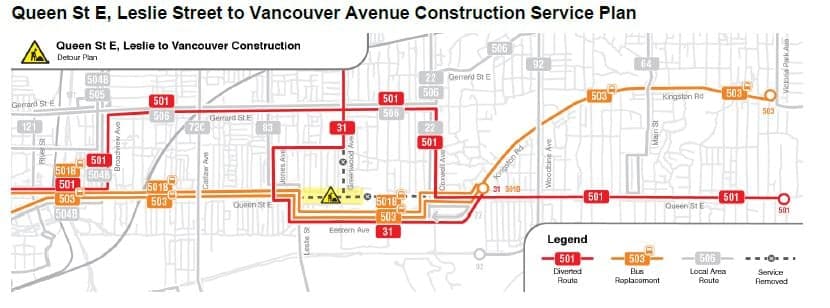
Queen Street East Streetcar Track Renewal Causes Lane Closures and Transit Diversions
City News
 27
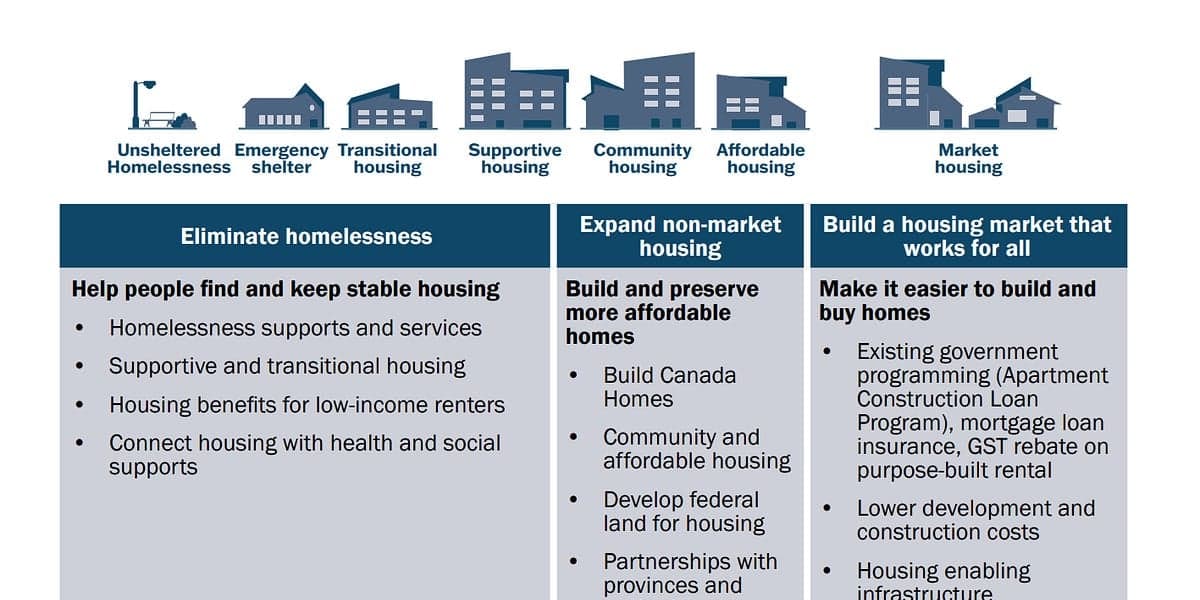
Budget 2026 Overhauls Housing Policy with 'Missing-Middle' Focus and New Financing
City News
 28
Canada to Ease Foreign Buyer Ban on New GTA Homes, Sparking Debate
City News
 29
North York Community Demands Traffic Upgrades After Child and Elderly Woman Hit by Car
City News
 30
Toronto Police Identify 18-Year-Old Malik Abass as 33rd Homicide Victim in Fatal Etobicoke Shooting
City News
 31
Armed Suspects Sought by Police at Mimico and Exhibition GO Stations, Prompting Tactical Response
City News
 32
Police Arrest Repeat Demonstrator Diana Bosco at North York Protest for Failing to Comply
City News
 33
Peel Police Arrest Masked Driver in Multi-City Street Racing Spree
City News
- 34
Weekend Violence: Stabbing Downtown, Collision Injures Motorcyclist, Commercial Arson Under Investigation
City News
 35
York University Suffers Cybersecurity Breach; Records Dating Back to 2007 Compromised
City News
 36
GTA Braces for Arctic Cold Snap Following Damp, Chilly Early November Weather
City News
 37
Toronto Launches 2026/2027 Winter Services Plan Amidst Persistent Homelessness Crisis
City News
 38
Hockey Hall of Fame Weekend: Maple Leafs Shut Out by Devils in Hall of Fame Game
City News
- 39
Devils Shut Out Maple Leafs 4-0; Hellebuyck Continues Dominance
Sports
 40
Maple Leafs Shut Out by Devils Amid Defensive Injuries and Load Management Concerns
Sports
 41
Maple Leafs' Injury Woes Worsen with Roslovic, Sissons Sidelined in Loss to Devils
Sports
- 42
Connor Hellebuyck's Dominance Propels Devils to Top of Metro Division, Pressuring East Coast Rivals
Sports
 43
Raptors Face Major Injury Woes Ahead of Grizzlies Game
Sports
 44
Raptors' Barnes, Quickley Questionable; Leonard Still Out Ahead of Grizzlies Game
Sports
 45
Kawhi Leonard Returns to Toronto for Knee Rehab Amidst Raptors' Guard Injuries
Sports
 46
Blue Jays Win 2026 AL Team Gold Glove, Prepare for Offseason Moves
Sports
 47
Blue Jays Prospect Aaron Parker Wins AFL Home Run Derby; Bloss Secures Option Year
Sports
 48
Jake Bloss Earns Fourth Minor League Option, Boosting Blue Jays' Roster Flexibility
Sports
 49
Maple Leafs Defense Strained by Morgan Rielly Injury; Cole McWard Recalled
Sports
 50
James Reimer and New York Rangers Mutually Agree to Contract Termination
Sports
- 51
Oklahoma City Thunder Acquire Nique Clifford from Sacramento Kings
Sports
See all 51 as a listHide the list
- Canada Unveils $30 Billion Strategy to End Homelessness in Ten Years
- Government Launches $5 Billion Integrated Healthcare and Housing Strategy to Combat Homelessness
- Canada Launches Real-Time Rail System for Instant Financial Transactions
- Canadian Economy Faces Divergent Pressures Amidst Post-Budget Government Push
- Canada Invests $600 Million to Bolster Domestic Audio and Screen Industries
- Federal Government Allocates $600 Million to Canadian Cultural and Screen Industries
- Canada and China Conclude Economic Dialogue, Extend Trade Framework
- Canada Navigates COP31 Amid Climate Goals and Domestic Energy Expansion
- Immigration Levels Plan Targets Rural Retention and Inland Transitions for 2027-2029
- Canada Strengthens Immigration System with New Act, Hardening Operational Enforcement
- Foreign Medical Specialists Face Licensing Hurdles Despite Provincial Reforms
- Barrick Mining Reports Strong Q3 Results Amid Inflationary Pressures
- COP31 Opens Amid Geopolitical Crises and Climate Finance Divisions
- Strait of Hormuz Tensions Escalate With Tanker Attacks and U.S. Interdictions
- Canada Unveils $3.5B Arctic Initiative for Sovereignty and Defense
- Bank of Canada Governor Warns of Trade Fragmentation and Stagflation Risks
- Payments Canada Launches Real-Time Rail Instant Payment System
- Canadian Chamber Urges U.S. to Ease Trade Barriers at B20 Summit
- G7 Foreign Ministers Convene in France Amid Geopolitical and Trade Tensions
- G7 Foreign Ministers Meet in Paris Amid Shifting U.S. Stance, Canada Coordinates Response
- Houthi Attack on Aramco, Hormuz Escalation Threaten Global Oil Flow
- Ottawa Debates EU Associate Membership Amid 'Economic Sovereignty' Pivot
- Canada's Infrastructure Conference Opens Amidst Transit Megaproject Scrutiny
- Metrolinx Completes Major GTA Rail Shutdown for GO Expansion and Ontario Line
- TTC Shifts to Nightly Line 2 Closures and Line 1 Single-Tracking After Viaduct Repairs
- Queen Street East Streetcar Track Renewal Causes Lane Closures and Transit Diversions
- Budget 2026 Overhauls Housing Policy with 'Missing-Middle' Focus and New Financing
- Canada to Ease Foreign Buyer Ban on New GTA Homes, Sparking Debate
- North York Community Demands Traffic Upgrades After Child and Elderly Woman Hit by Car
- Toronto Police Identify 18-Year-Old Malik Abass as 33rd Homicide Victim in Fatal Etobicoke Shooting
- Armed Suspects Sought by Police at Mimico and Exhibition GO Stations, Prompting Tactical Response
- Police Arrest Repeat Demonstrator Diana Bosco at North York Protest for Failing to Comply
- Peel Police Arrest Masked Driver in Multi-City Street Racing Spree
- Weekend Violence: Stabbing Downtown, Collision Injures Motorcyclist, Commercial Arson Under Investigation
- York University Suffers Cybersecurity Breach; Records Dating Back to 2007 Compromised
- GTA Braces for Arctic Cold Snap Following Damp, Chilly Early November Weather
- Toronto Launches 2026/2027 Winter Services Plan Amidst Persistent Homelessness Crisis
- Hockey Hall of Fame Weekend: Maple Leafs Shut Out by Devils in Hall of Fame Game
- Devils Shut Out Maple Leafs 4-0; Hellebuyck Continues Dominance
- Maple Leafs Shut Out by Devils Amid Defensive Injuries and Load Management Concerns
- Maple Leafs' Injury Woes Worsen with Roslovic, Sissons Sidelined in Loss to Devils
- Connor Hellebuyck's Dominance Propels Devils to Top of Metro Division, Pressuring East Coast Rivals
- Raptors Face Major Injury Woes Ahead of Grizzlies Game
- Raptors' Barnes, Quickley Questionable; Leonard Still Out Ahead of Grizzlies Game
- Kawhi Leonard Returns to Toronto for Knee Rehab Amidst Raptors' Guard Injuries
- Blue Jays Win 2026 AL Team Gold Glove, Prepare for Offseason Moves
- Blue Jays Prospect Aaron Parker Wins AFL Home Run Derby; Bloss Secures Option Year
- Jake Bloss Earns Fourth Minor League Option, Boosting Blue Jays' Roster Flexibility
- Maple Leafs Defense Strained by Morgan Rielly Injury; Cole McWard Recalled
- James Reimer and New York Rangers Mutually Agree to Contract Termination
- Oklahoma City Thunder Acquire Nique Clifford from Sacramento Kings
Section 1 of 4
National News
12 stories · 6 min skim
National News
2 min read
Canada Unveils $30 Billion Strategy to End Homelessness in Ten Years
The federal government has initiated a nationwide campaign to promote its $30-billion, 10-year strategy aimed at eradicating chronic homelessness. The plan focuses on a "Help, Housing, and Health" model, integrating supportive housing with long-term funding for mental healthcare and addiction recovery. Key projects include federal property redevelopment for new housing units.
Read the full storyFold the full story2 min · 10 sources
Over November 8 and 9, 2026, the federal cabinet orchestrated a nationwide legislative and public-affairs campaign to mobilize support for the government’s newly unveiled $30-billion, 10-year strategy to eliminate chronic homelessness across Canada[1][2][3][4]. Spearheaded by coordinated appearances from parliamentary secretaries and ministers across Ontario, Atlantic Canada, and Western provinces, the federal blitz highlighted direct municipal investments drawn from Budget 2026[5][2][6][3][4]. Key briefings were led by Parliamentary Secretary Mona Fortier in Ottawa, Kody Blois in Halifax, Jennifer McKelvie in Ajax, and Ryan Turnbull in Milton, focusing on federal land conversions and integrated supportive housing frameworks[7][6][3][4].
The government's restructured strategy pivots federal intervention away from isolated emergency shelters toward an institutional tri-pillar model dubbed "Help, Housing, and Health"[1][3][4]. Rather than treating unhoused populations strictly through capital infrastructure grants, the policy ties transitional physical housing directly to long-term operational funding for addiction recovery, mental healthcare, and wraparound community assistance[3][4]. Concrete commitments announced during the regional tour include the advancing redevelopment of surplus federal property at Shannon Park in Dartmouth, Nova Scotia - projected to deliver 1,430 new homes, including 500 community units - and funding allocations for eight separate housing developments in Ottawa yielding over 1,100 rental units under the Build Canada Homes banner[3][4].
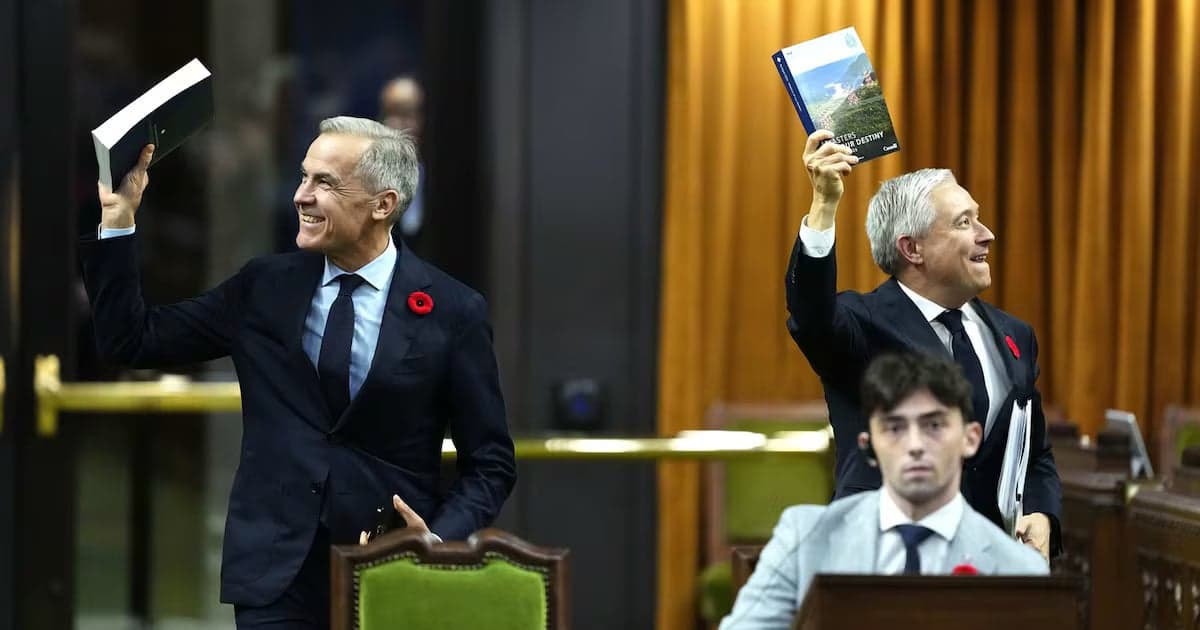
The public-relations offensive comes amid fierce parliamentary pushback following the delivery of Budget 2026 by Finance Minister François-Philippe Champagne[8][9]. With the federal deficit projected to expand to $62.3 billion for the 2026–27 fiscal cycle and total new spending exceeding $142 billion, the official opposition has centered its attacks on federal fiscal discipline[9]. Conservative Leader Pierre Poilievre moved amendments in the House of Commons challenging the overall budgetary policy of the government, arguing that unprecedented federal spending programs are driving sustained inflation and placing an unsustainable debt load on Canadian households[10].
In defending the program across national broadcast panels and regional events, Prime Minister Mark Carney and provincial allies such as Manitoba Premier Wab Kinew maintained that piecemeal, under-resourced local programs have exacerbated societal decay and municipal fiscal strain[1][2]. Government spokespersons framed the $30-billion strategy as a foundational public safety and economic intervention[1][2]. As the House of Commons continues its debate on ways and means motions required to implement the budget's fiscal foundations, the administration's parliamentary team is leaning heavily on civic partnerships to generate bipartisan pressure on opposition MPs to support the implementing measures[10][3].
- Mark Carney
- François-Philippe Champagne
- Pierre Poilievre
National News
3 min read
Government Launches $5 Billion Integrated Healthcare and Housing Strategy to Combat Homelessness
The federal government has initiated a nationwide campaign to detail its $5 billion Integrated Supports Fund, part of a larger $30 billion, 10-year strategy to eliminate chronic homelessness. This initiative formally pairs healthcare delivery with physical shelter, funding facilities that embed primary care, psychiatric services, and addiction treatments directly within housing developments. The policy aims to reduce strain on acute care infrastructure by providing on-site clinical teams for unhoused individuals with severe vulnerabilities.
Read the full storyFold the full story2 min · 8 sources
On November 8, 2026, the federal government initiated a coordinated nationwide ministerial push to outline the healthcare mechanics of its nearly $30-billion, 10-year initiative to eliminate chronic homelessness, anchored by a newly established $5-billion Integrated Supports Fund[1][2]. Across major metropolitan centers and northern hubs - including announcements by Housing and Infrastructure Minister Gregor Robertson at Vancouver’s Soroptimist House, Crown-Indigenous Relations Minister Rebecca Alty in Yellowknife, and Parliamentary Secretary Mona Fortier in Ottawa - federal officials detailed how healthcare delivery is being formally paired with physical shelter[1][3][4]. Designed to be administered through Build Canada Homes, the fund directly finances facilities that embed full-scope primary care, psychiatric services, and addiction treatments directly within permanent and transitional supportive housing developments[1].
The policy shift is rooted in clinical data demonstrating that unhoused individuals with severe medical, psychological, and substance-use vulnerabilities place severe, repetitive demands on acute care infrastructure when discharged without social stabilization[5]. Federal officials explicitly modeled the program on Toronto’s Dunn House project, a 51-unit initiative developed in partnership with the University Health Network that reduced residents' emergency department visits by 50 percent[5][1]. In tandem with the $5-billion fund, Budget 2026 establishes a $2-billion Health Infrastructure Fund under the Build Communities Strong Fund to construct and rehabilitate community mental health clinics, while renewing the Reaching Home and Veterans Homelessness programs with $6.5 billion over the coming decade[1][2]. The initial capital injection took shape through an agreement committing over $200 million toward the Winnipeg Centre for Mental Health and Addictions, cost-shared equally with the Manitoba government[6].
The implementation involves critical alignment between federal ministries, provincial authorities, and municipal health networks[7]. Key figures leading the initiative include Prime Minister Mark Carney, Housing Minister Gregor Robertson, Manitoba Premier Wab Kinew, and Minister Rebecca Alty[1][3][7]. By targeting the intersection of healthcare and social infrastructure, the strategy seeks to dismantle chronic hospital gridlock: rather than relying on emergency rooms as makeshift drop-in centers for unmanaged chronic illnesses, clinical teams will be stationed on-site to provide managed medication administration, psychiatric counseling, and preventive health screenings[5].
Reaction to the program from front-line healthcare providers and community organizations has been guardedly optimistic, accompanied by calls for swift execution[7]. Sara Goldvine, chief operating officer at Coast Mental Health in Vancouver, noted that while the holistic model provides a viable template for lasting recovery, long-term stabilization hinges upon adequate operating funding from provincial healthcare ministries to staff the facilities[7]. Nick Wells of Vancouver’s Union Gospel Mission similarly cautioned that clinical supervision must be sustained over years, as abrupt transitions into independent living without wrap-around care frequently fail[7]. Politically, New Democratic Party Leader Avi Lewis welcomed the targeted mental healthcare investments but criticized the broader federal fiscal framework for providing insufficient immediate relief for soaring living costs, while frontline women's advocacy organizations raised concerns over the absence of dedicated allocations for second-stage survivor shelters[8][2].
- Federal Government
- Integrated Supports Fund
- Build Canada Homes
National News
2 min read
Canada Launches Real-Time Rail System for Instant Financial Transactions
Payments Canada has officially launched the Real-Time Rail (RTR) system, a new sovereign payment infrastructure enabling instant, 24/7 financial transactions. The system allows for data-rich payments, reducing settlement delays and modernizing Canada's financial architecture. It integrates traditional banks with credit unions and payment service providers.
Read the full storyFold the full story2 min · 4 sources
On November 9, 2026, the Government of Canada and Payments Canada formally launched the country’s next-generation fast-payment system, the Real-Time Rail (RTR)[1][2]. The deployment represents a fundamental modernization of Canada’s sovereign financial infrastructure, providing consumers, commercial businesses, and public institutions with the capability to initiate, clear, and settle data-rich payments in seconds on a continuous 24/7/365 operational basis[1][2]. Confirmed as a cornerstone initiative in the Carney administration's Budget 2026, the system gives financial participants instant, irrevocable access to transferred capital, bringing Canada's transactional rails into alignment with global payment standards[1][2].
The RTR framework transforms the domestic financial architecture by integrating both incumbent federally regulated banks and an expanded roster of newly eligible participants, including provincial credit unions and registered payment service providers (PSPs)[1][2]. Governed under oversight provisions established with the Department of Finance and the Bank of Canada, the platform utilizes the global ISO 20022 messaging standard[1][2]. This protocol allows complex transaction data - such as tax records, invoices, and automated accounting details - to accompany electronic payments, eliminating multi-day clearing delays and reducing settlement risks for Canadian enterprises[1][2].
The operational activation of the RTR arrives after years of technical development, structural testing, and regulatory synchronization[1][2]. Federal policymakers have positioned payment modernization as an essential driver of domestic economic efficiency, projecting that real-time liquidity settlement will remove billions in operational friction from corporate cash-flow management, accelerate e-commerce, and support consumer convenience[1][2]. The launch directly complements the government’s adjacent legislative agenda around consumer-driven banking, domestic stablecoin oversight, and recently introduced Senate legislation (Bill S-8) targeting sophisticated money laundering and financial crime networks[3][1].
Industry response to the rollout has centered on market competition and national productivity[2]. Payments Canada praised the official activation as a transformative turning point for Canadian commerce, noting that the infrastructure enables fintech firms to innovate and scale domestic payment applications on an equal regulatory footing with chartered banks[2][4]. Concurrently, financial sector groups are preparing for the Department of Finance's upcoming statutory review and public consultation on broader retail payment modernization scheduled for early 2027, which will examine further integrations between commercial real-time settlement and automated tax administration[1].
- Payments Canada
- Real-Time Rail (RTR)
- Carney administration
National News
2 min read
Canadian Economy Faces Divergent Pressures Amidst Post-Budget Government Push
Canada's economy is showing mixed signals, with slowing GDP growth, elevated inflation, and a rising unemployment rate. Despite cooling domestic demand, inflation remains a concern, prompting the Bank of Canada to raise interest rates. Federal ministers are promoting Budget 2026 initiatives across the country.
Read the full storyFold the full story2 min · 11 sources
As of November 9, 2026, Canada’s macroeconomic backdrop reflects growing divergence, marked by slowing economic output, elevated consumer prices, and tightening labor conditions[1]. After posting an annualized expansion of 3.3% in the second quarter, real GDP growth moderated to an estimated 2.0% in the third quarter and is projected to dip below 1.0% in the final three months of the year[1]. Concurrently, October labor data revealed the economy shed 4,700 positions, pushing the national unemployment rate up to 6.7%, even as wage growth decelerated to 2.2% year-over-year[1].
Despite signs of cooling domestic demand, headline inflation rebounded to 3.1% in September, fueled predominantly by volatile retail gasoline and energy costs[1][2]. Although CPI excluding gasoline registered at a modest 2.2%, the Bank of Canada Governing Council raised its benchmark target rate by 25 basis points to 2.50% at its October 28 meeting, explicitly warning that localized energy cost shocks risk becoming embedded in broader consumer inflation expectations[3][4][1]. Markets are closely awaiting the central bank's summary of deliberations, scheduled for release on Tuesday, to assess whether policymakers anticipate further tightening[3].
In response to these volatile economic dynamics, federal cabinet ministers fanned out across the country on November 8 and 9 to promote the implementation of Budget 2026[3][5][6]. In Vancouver on Sunday, Housing and Infrastructure Minister Gregor Robertson outlined newly funded municipal housing and infrastructure grants[5]. In Ajax, Ontario, on Monday, Parliamentary Secretary Jennifer McKelvie staged public briefings on government cost-of-living and supply-chain initiatives[6]. Finance Minister François-Philippe Champagne also prepared to deliver a flagship address to the Empire Club of Canada later in the week[3]. The cabinet’s primary mandate is defending Budget 2026’s centerpieces: the $400-billion multi-year capital investment strategy, the newly announced "Productivity Mega Deduction" designed to let businesses immediately write off equipment, and a $15-million capital gains exemption under the Canada Growth Incentive[7][8][9].
The federal economic program has elicited sharply contrasting reactions across the business community[10][9]. The Business Council of Canada and major corporate leadership groups praised the Productivity Mega Deduction, stating it could ignite an investment supercycle that narrows the Canadian productivity deficit with other G7 nations[10][8]. In contrast, the Canadian Federation of Independent Business (CFIB) criticized the package, arguing that complex qualification rules exclude broad swathes of small enterprises - including farms, hospitality venues, and small service providers - from the new capital gains exemptions[9]. As rising interest charges climb near $1.4 trillion in cumulative sovereign debt, small business representatives warned that fiscal deficits and elevated borrowing costs continue to squeeze Main Street firms amid uncertain trade conditions[11][9].
- Bank of Canada
- Budget 2026
- Gregor Robertson
National News
2 min read
Canada Invests $600 Million to Bolster Domestic Audio and Screen Industries
The Canadian government has launched a $600-million investment strategy to support its domestic audio and audiovisual sectors. This funding aims to provide operational stability against international digital consolidation and platform disruptions. The capital will be distributed through existing institutions, with a significant portion dedicated to Indigenous-led audiovisual production.
Read the full storyFold the full story2 min · 2 sources
On November 8, 2026, Marc Miller, Minister of Canadian Identity and Culture and Minister responsible for Official Languages, formally unveiled the federal implementation framework for a targeted $600-million investment in Canada’s domestic audio and audiovisual sectors[1]. Originating from the broader fiscal plan laid out in Budget 2026 - themed Masters of Our Destiny - the dedicated funding envelope is structured to provide immediate operational stability for Canadian cultural industries facing intense international digital consolidation and platform disruptions[2][1]. The federal initiative channels direct capital into key creative institutions rather than creating new administrative bureaucracies, intending to safeguard cultural sovereignty and domestic production capacity while longer-term legislative and regulatory updates take effect[1].
To ensure immediate market deployment, the Department of Canadian Identity and Culture designated six existing cultural institutions and established programs to distribute the capital: Telefilm Canada, the Canada Media Fund, the Indigenous Screen Office, the Canada Music Fund, the Northern Aboriginal Broadcasting program, and the Canada History Fund[1]. A key component of the mandate requires a substantial share of the capital to support Indigenous-led audiovisual production, expanding executive and operational representation across the screen sector[1]. Additionally, the fund provides specialized liquidity lines for independent production houses, music distribution networks, and regional broadcast initiatives facing shifts in advertising revenues and international streaming pressures[1].
The announcement responds to structural pressures within Canada's broadcast and digital media ecosystems[1]. While the Carney administration has prioritized industrial capital expenditure and productivity in its broader fiscal strategy, cultural sector stakeholders have warned that domestic creators were increasingly vulnerable to foreign platform monopolies and domestic cutbacks[2][1]. By tying the relief directly to cultural sovereignty, the government is seeking to stabilize creative labor forces across Montreal, Toronto, and Vancouver, while preserving regional, official language minority, and northern storytelling capacities[1].
Cultural and creative industry associations have largely welcomed the liquidity infusion, citing urgent balance-sheet requirements following successive years of disruptive distribution transitions[1]. However, the policy rollout continues to draw scrutiny from federal opposition members and media analysts, who argue that recurring institutional subsidies fail to address root regulatory discrepancies between domestic broadcasters and global digital streaming giants. Minister Miller emphasized that the $600-million package serves as an operational bridge while modern regulatory protections and intellectual property safeguards are harmonized across domestic and international digital distribution channels[1].
- Marc Miller
- Canadian Identity and Culture
- Telefilm Canada
National News
2 min read
Federal Government Allocates $600 Million to Canadian Cultural and Screen Industries
The Canadian federal government has unveiled a $600 million funding plan for its cultural and screen industries, including film, television, music, and local broadcasting. The allocation, part of the 2026 budget, will support content development and production through organizations like the Canada Media Fund and Telefilm Canada.
Read the full storyFold the full story1 min · 4 sources
On November 8, 2026, the Minister of Canadian Identity and Culture, Marc Miller, unveiled the comprehensive allocation plan for a $600-million federal funding injection into Canada’s film, television, music, and local broadcasting sectors[1][2]. The distribution plan delivers on cultural stabilization provisions established under the "Masters of Our Destiny" 2026 federal budget, providing immediate operating capital to creative production ecosystems across all provinces and territories[1][2].
Under the announced breakdown, the Canada Media Fund (CMF) receives the largest single allocation, capturing $213.4 million to support content development, production financing, and commercialization across television and interactive digital media[3][4]. The remaining funds are channeled through proven national bodies, including Telefilm Canada, the Indigenous Screen Office, the Canada Music Fund, Northern Aboriginal Broadcasting, the Canada History Fund, and dedicated independent community and radio journalism funds[1][2]. The capital deployment is specifically structured to sustain public-interest programming, expand Indigenous-led audiovisual production, and protect independent local newsrooms facing existential advertising deficits[1][2].
The emergency capital rollout comes as the Canadian broadcasting and media landscape undergoes severe structural transformation[3][2]. Traditional commercial broadcasters and cable distribution networks have experienced sharp declines in subscriber fees and advertising revenues, which historically funded domestic content generation[3][2]. While federal regulators work through revised policy frameworks for contributions from foreign digital streaming giants, domestic production studios and content creators have encountered a critical capital gap that threatened to stall multi-million-dollar production schedules across major creative hubs in Toronto, Montreal, and Vancouver[3][2].
Creative industry associations, including the CMF and the Canadian Media Producers Association, strongly welcomed the targeted allocations, stating that the direct financing offers necessary stability for thousands of skilled media and technical workers[4]. By earmarking capital specifically for francophone programming, minority-language communities, and Indigenous creators, the federal government aims to ensure domestic storytelling remains solvent while the sector transitions toward a digitally financed marketplace[1][2].
- Marc Miller
- Canada Media Fund (CMF)
- Telefilm Canada
National News
2 min read
Canada and China Conclude Economic Dialogue, Extend Trade Framework
High-level delegations from Canada and China met in Vancouver for their second Economic and Financial Strategic Dialogue. Key outcomes include an extension of the bilateral trade and tariff-relief framework through late 2028, maintaining tariff suspensions on Canadian agricultural exports and preserving Canadian exemptions for Chinese EVs and steel. The dialogue also explored issuing yuan-denominated bonds in Canada.
Read the full storyFold the full story2 min · 8 sources
High-ranking Canadian and Chinese economic delegations convened in Vancouver, British Columbia, on November 8 and 9, 2026, to conduct the second Canada-China Economic and Financial Strategic Dialogue (EFSD)[1][2]. The bilateral talks were co-chaired by He Lifeng, Vice Premier of China’s State Council and Beijing’s principal economic strategist, alongside Canadian Minister of Finance and National Revenue François-Philippe Champagne and Minister of International Trade Maninder Sidhu[1][3]. They were joined by Bank of Canada Governor Tiff Macklem and Peter Routledge, head of the Office of the Superintendent of Financial Institutions (OSFI), highlighting the systemic financial focus of the engagement[1].
The bilateral discussions build on months of high-level diplomacy, including Prime Minister Mark Carney’s January visit to Beijing and Minister Sidhu’s reciprocal trip to China earlier this month[1][4]. The Vancouver summit finalized a comprehensive extension of a bilateral trade and tariff-relief framework through late 2028[4][5]. Under the extended accord, Beijing agreed to maintain suspensions and reductions on import tariffs levied on Canadian agricultural goods, including canola seed, canola oil, field peas, lobster, and crab[5]. In exchange, Ottawa preserved specific tariff exemptions for imported Chinese steel and aluminum and reaffirmed an arrangement permitting the import of up to 49,000 Chinese-manufactured electric vehicles per year under preferential tariff thresholds[5]. The dialogue also laid the groundwork for sovereign yuan-denominated bonds to be issued in Canadian capital markets[6].
The talks reflect a calculated policy shift by the federal government to accelerate trade diversification as Canadian industry faces severe headwinds from Washington[7][8]. With the United States imposing aggressive tariffs on Canadian automotive components, steel, and consumer products under Section 338 of the Tariff Act, Ottawa’s newly tabled Budget 2026 formally established a $5-billion trade diversification corridor initiative aiming to double Canadian exports to non-U.S. markets by 2035[7][8]. Deepening access to Chinese commodity and energy markets is seen by federal policymakers as an essential hedge against American trade volatility[1][4][6].
However, the Vancouver summit has drawn intense scrutiny from trade analysts and domestic industrial groups[4]. While agricultural exporters, port operators, and natural resource firms have voiced strong relief over protected Asian market access, manufacturing and industrial sectors have warned that facilitating Chinese EV inflows and metal imports complicates ongoing negotiations with Washington[8][4][5]. Analysts point out that Ottawa must now manage a delicate balancing act, seeking trade sovereignty and growth abroad while mitigating trade disputes with its primary trading partner[4].
- Canada
- China
- Vancouver
National News
2 min read
Canada Navigates COP31 Amid Climate Goals and Domestic Energy Expansion
Canada's delegation, led by Environment Minister Julie Dabrusin, has arrived at COP31 in Turkey, balancing its role in international climate diplomacy with domestic energy expansion plans. The nation faces scrutiny for supporting fossil fuel infrastructure while advocating for global climate action and clean energy finance.
Read the full storyFold the full story2 min · 5 sources
On November 8 and 9, 2026, Canada’s diplomatic and environmental delegation, led by federal Environment Minister Julie Dabrusin, arrived in Antalya, Turkey, for the formal opening of the United Nations Climate Change Conference (COP31)[1][2]. Canada’s positioning at the summit has emerged as an intense focal point of domestic and global political debate[1]. Following the withdrawal of the United States from the Paris Agreement under the Trump presidency, middle-power states like Canada have sought expanded influence over international clean energy finance, carbon accounting rules, and global emissions negotiations[1]. However, the federal government enters the multilateral talks facing domestic and international criticism concerning its simultaneous push to expand domestic fossil fuel infrastructure[1].
The tension was brought to the forefront through parallel policy analyses and advocacy briefings released on November 8 and 9 by Canadian climate policy institutes[3][2]. Climate Action Network Canada (CAN-Rac) issued a comprehensive brief from Antalya warning that federal credibility on the world stage is compromised by domestic policy maneuvers[1][2]. CAN-Rac Executive Director Caroline Brouillette specifically called out the federal government’s newly introduced industrial legislation, Bill C-39 (the Building Canada Strong Act), which establishes expedited one-year regulatory approvals for major infrastructure, including fossil energy projects and pipelines[4][2]. Climate organizations urged the government to halt provisions that accelerate high-emission industrial corridors and instead double down on global adaptation finance[2].
Simultaneously, the Canadian Climate Institute released an executive assessment on November 9 analyzing the clean growth provisions within the federal government’s updated National Electricity Strategy, published alongside Budget 2026[3]. Executive Vice President Dale Beugin noted that while Ottawa has softened specific regulatory timelines at home to bolster heavy industry and energy security, the budget maintains an ambitious $50-billion commitment to double Canada’s electricity generation and modernize transmission networks toward net zero[1][3]. The assessment highlighted that the Carney government is deliberately decoupling economic competitiveness from emissions policy, treating electrification and clean power export infrastructure as primary national security assets[5][3].
Minister Dabrusin and federal trade representatives operating out of the Canada Pavilion in Antalya have rejected assertions that domestic resource development undermines Canada's international standing[1]. The delegation reiterated the government’s stance that economic stability and realistic transitional infrastructure are essential preconditions for sustaining domestic public support for net-zero goals[1][3]. As negotiations across global finance facilities, adaptation funds, and industrial decarbonization targets get underway through November 20, the Canadian delegation faces sustained pressure from both multilateral allies demanding rigorous emission enforcement and domestic industry lobbies seeking protection amid an increasingly protectionist global trade landscape[1][2].
- Julie Dabrusin
- COP31
- United Nations Climate Change Conference
National News
2 min read
Immigration Levels Plan Targets Rural Retention and Inland Transitions for 2027-2029
Immigration, Refugees and Citizenship Canada (IRCC) has outlined its 2027-2029 Immigration Levels Plan, focusing on distributing skilled workers to rural areas facing demographic decline. The plan caps permanent resident admissions at 380,000 annually and temporary residents at 370,000. A key component is a mechanism to transition up to 200,000 temporary foreign workers and international graduates already in Canada to permanent status by the end of 2027.
Read the full storyFold the full story2 min · 10 sources
Immigration, Refugees and Citizenship Canada (IRCC) maintained the rollout of its 2027–2029 Immigration Levels Plan, highlighted on November 9, 2026, by a major policy deployment in Stellarton, Nova Scotia[1][2]. Minister of Immigration Lena Metlege Diab, joined by Minister of Justice and Central Nova MP Sean Fraser alongside Rural Development Secretary of State Buckley Belanger, outlined targeted federal mechanisms aimed at distributing skilled workers directly into rural and remote communities facing acute demographic depletion[1]. The rural initiative operationalizes elements of the broader federal blueprint, which permanently caps standard annual permanent resident admissions at 380,000 and restricts new temporary resident arrivals to 370,000 per year - comprising 220,000 foreign workers and 150,000 international students[3][2].
The strategic pivot reflects profound structural pressure resulting from historic shifts in Canadian demographics[4][5]. Data from Statistics Canada indicates that the nation’s population expanded by just 0.5 percent between July 2025 and July 2026 - the slowest annual population growth recorded since the 1944–1945 fiscal year[4]. Concurrently, the Bank of Canada recently concluded that rapid population deceleration, coupled with an aging workforce, has begun reshaping labor supply and domestic consumer spending[4]. To avert severe labor deficits without re-inflating municipal rental markets, Ottawa unveiled a time-limited mechanism to transition up to 200,000 qualified temporary foreign workers and international graduates already residing in Canada into permanent status by the end of 2027[3][6]. Half of these candidates are slated for absorption via provincial nominee allocations and the high-skilled Express Entry pool[6].
Key institutional architects behind this shift include Minister Diab, Finance Minister François-Philippe Champagne, and provincial immigration secretariats[3][1]. As part of the regional distribution strategy, the Rural Community Immigration Class has been granted permanent status, with designated targets scaling from 5,500 admissions in 2027 up to 6,500 by 2029[2]. To curb employer exploitation while aligning labor import with actual market wages, Ottawa eliminated the standard Labour Market Impact Assessment (LMIA) requirement for qualifying job offers in verified high-wage occupations, reallocating up to 150 Comprehensive Ranking System (CRS) points toward verified in-country high-wage work experience[7][8].
The transition policy has triggered vigorous debate across economic and migration policy circles[4][9]. While business organizations in Atlantic Canada and rural municipalities welcomed the rural retention strategies to staff local manufacturing, construction, and healthcare roles, immigration consultants noted that the 200,000 inland transition places sit outside standard levels accounting, generating intense competition among existing permit holders[1][9]. Economists, including University of Waterloo professor Mikal Skuterud, observed that while the stabilized levels prevent the runaway housing inflation seen in previous cycles, the federal government faces an intricate balancing act to protect lower-wage local labor while preventing critical structural shortages across essential service sectors[10].
- Immigration, Refugees and Citizenship Canada (IRCC)
- Immigration Levels Plan
- Lena Metlege Diab
National News
2 min read
Canada Strengthens Immigration System with New Act, Hardening Operational Enforcement
Canada's *Strengthening Canada's Immigration System and Borders Act* has fully entered into force, restructuring asylum assessment and border enforcement. Claimants must now initiate applications through a centralized online portal within 60 days, with strict eligibility criteria for claims lodged late or made after irregular border crossings. This overhaul aims to address significant backlogs experienced in prior years through stricter intake screening and inter-agency coordination.
Read the full storyFold the full story2 min · 8 sources
Comprehensive administrative reviews and legal analyses released across November 8 and 9, 2026, revealed the full operational scope of the newly enforced regulatory apparatus under the Strengthening Canada’s Immigration System and Borders Act (Bill C-12)[1][2][3]. The sweeping legislative overhaul, which brought its final regulatory components into active legal force following executive Orders in Council, permanently restructures Canada’s asylum assessment and border enforcement mechanics[4][4]. Under the new operational directives, all individuals seeking refugee protection - whether presenting inland or at designated ports of entry - are strictly required to initiate claims through a single, centralized online IRCC portal before receiving an interview[5][1]. Furthermore, claimants are bound to a strict 60-day statutory window to submit all corroborating legal documentation, backed only by a discretionary, one-time 30-day extension[1].
The regulatory framework represents a robust structural intervention designed to address massive backlogs that overwhelmed Canada's immigration adjudicators during the mid-2020s[4]. Federal figures show that asylum claims surged to approximately 144,000 in 2023 and 173,000 in 2024 before dropping to 115,000 in 2025[4]. Due to tightening enforcement and strict intake screening, claims from January to August 2026 fell by 52 percent compared to the same period in 2025 and 68 percent compared to 2024[5]. The finalized regulations establish rigid statutory ineligibility criteria: any claim lodged more than one year after an individual’s initial entry into Canada, or more than 14 days after crossing irregularly between authorized border checkpoints, is deemed automatically ineligible for referral to the Immigration and Refugee Board (IRB), barring narrow exceptions for unaccompanied minors[6].
The policy relies heavily on inter-agency coordination between the Minister of Public Safety, Gary Anandasangaree, and Immigration Minister Lena Metlege Diab[4][4]. Crucially, the legislation equips both ministers with unilateral administrative authority to declare non-compliant claims withdrawn prior to RPD referral, systematically purging dormant files from processing inventories[4]. Simultaneously, the Canada Border Services Agency (CBSA) solidified revised operating schedules across 26 western land ports of entry spanning British Columbia, Alberta, and Manitoba, while public safety directives began winding down legacy Remote Area Border Crossing (RABC) permits ahead of a late-November phaseout[7][8].
The systemic tightening has sparked sharp divisions across Canada's legal and humanitarian sectors[1][3]. Regulated immigration consultants and legal practitioners caution that the rigid 60-day digital threshold imposes severe procedural barriers on traumatized asylum seekers who face linguistic deficits, limited digital literacy, or delays securing legal aid[1]. While IRCC maintains that genuine applicants will benefit from expedited security vetting, integrated work authorization pathways, and reduced hearing postponements, legal watchdogs warn that the strict 14-day bar on irregular border crossings will result in expedited removal orders without substantive hearings on the merits of claimants' persecution fears[5][6][3].
- Strengthening Canada's Immigration System and Borders Act
- IRCC
- Immigration and Refugee Board (IRB)
National News
2 min read
Foreign Medical Specialists Face Licensing Hurdles Despite Provincial Reforms
An investigative report reveals persistent administrative barriers preventing internationally trained medical specialists from practicing in Canada, despite provincial efforts to reform licensing. While some reforms exist, the College of Physicians and Surgeons of British Columbia, among others, restricts fast-track licensing to only a few Western jurisdictions. This leaves many foreign-trained doctors unable to secure independent licenses or supervised roles, exacerbating healthcare labor shortages.
Read the full storyFold the full story2 min · 4 sources
An investigative report published on November 8, 2026, laid bare deep-seated administrative gridlock blocking internationally trained medical specialists from practicing in Canada, exposing the friction between provincial licensing colleges and national healthcare labor shortages[1]. Focusing on reforms undertaken by the College of Physicians and Surgeons of British Columbia (CPSBC), the investigation revealed that despite provincial bylaws amended in July to bypass provisional licensing requirements, veteran foreign specialists remain systematically shut out of both independent medical licenses and supervised associate physician roles[1]. The investigation highlighted cases such as that of Dr. Hassan Moustafa, a general surgeon who directed a regional emergency hospital in the Kurdistan region of Iraq before immigrating in 2017, but who remains unable to secure a clinical role[1].
The controversy highlights a deepening systemic crisis within Canadian healthcare delivery[2][1]. Operating under acute physician shortages that have forced rural emergency room closures and extended specialized surgical waitlists across British Columbia, the provincial Ministry of Health initially championed regulatory modernization to fast-track qualified international personnel[1]. However, the CPSBC's direct licensing fast-track is restricted exclusively to credentials originating from an approved group of Western jurisdictions: the United States, the United Kingdom, Australia, and Ireland[1]. Medical doctors trained across South Asia, Africa, and the Middle East remain funneled into restrictive alternative tracks that require supervised associate positions - posts that provincial health authorities and hospitals have funded in negligible quantities[1].
The impasse puts provincial licensing bodies in sharp tension with national medical organizations and federal immigration authorities[3][1]. While IRCC updated its Express Entry framework to award up to 100 bonus CRS points to foreign family doctors, specialists, and nurse practitioners with qualifying employment offers, provincial regulatory bodies retain ultimate constitutional authority over who is allowed to touch a patient[3][1]. Rosemary Pawliuk, president of the Society for Canadians Studying Medicine Abroad (SOCASMA), challenged the licensing architecture, stating that credentialing must evaluate an individual physician's verified surgical and clinical competence rather than relying on blanket geopolitical exclusions[1].
The disconnect carries profound operational implications for public healthcare sustainability[4][1]. While health spending across Canada is projected to hover near historic non-pandemic highs of 12.4 percent of GDP, access to timely procedural care continues to lag[4][2]. Frustrated foreign doctors contend that provincial healthcare administrators are squandering thousands of skilled clinicians already living within Canada who are willing to work in underserved rural posts under initial clinical oversight[1]. As specialized wait times lengthen and healthcare unions highlight severe physician burnout, health policy analysts warn that without national credential harmonization and funded hospital supervision programs, federal initiatives to attract foreign doctors will remain largely ineffectual[1].
- College of Physicians and Surgeons of British Columbia (CPSBC)
- Ministry of Health
- IRCC
National News
2 min read
Barrick Mining Reports Strong Q3 Results Amid Inflationary Pressures
Barrick Mining Corp. released its third-quarter financial results, showing strong performance driven by high gold and copper prices that offset rising operational costs. The company reported robust free cash flow and maintained a conservative debt ratio. Management discussed strategies for reserve replacement and expansion projects.
Read the full storyFold the full story1 min · 5 sources
Before the opening bell on Monday, November 9, 2026, Barrick Mining Corp. (TSX: ABX; NYSE: B) released its third-quarter financial and operating results, opening a pivotal corporate earnings week on Bay Street[1][2][3]. Management subsequently hosted an analytical conference call to detail quarterly operational metrics, production volumes across its global gold and copper complexes, and revised capital expenditure projections for fiscal 2027[2][3].
Consensus Wall Street and Bay Street expectations heading into the release projected earnings of approximately $0.78 to $0.79 per share on revenues of roughly $5.10 billion, marking an estimated 34% increase in per-share profitability compared to the same period in 2025[4][5][3]. Barrick entered the quarter buoyed by consecutive earnings beats and strong operational margins, propelled primarily by historic spot gold prices that have outpaced industry-wide mining cost inflation, including rising equipment costs, diesel fuel, and remote labor expenses[5][3].
Barrick’s operating results highlighted robust free cash flow generation, driven by high realized metal prices that shielded the miner’s balance sheet from broader industrial margin compression[5][3]. The company maintained a conservative debt-to-equity ratio while continuing to return capital to shareholders via dividends, supported by strong performance from its North American and global joint-venture operations[3]. In its accompanying management commentary, the leadership team addressed long-term reserve replacement strategies, copper expansion projects to meet green electrification demand, and capital allocation discipline[3].
The mining giant's quarterly release set a strong baseline for the broader Canadian equity market, where resource extraction and materials companies carry heavy weighting on the S&P/TSX Composite Index[1]. Investors and portfolio managers monitored the results closely to gauge whether high commodity margins can withstand escalating supply chain costs[5]. Barrick’s performance also establishes the tone for a busy slate of corporate releases scheduled throughout the week, with major reports upcoming from Hydro One, Finning International, CGI, Cargojet, CAE, and Brookfield Corp[1].
- Barrick Mining Corp.
- Bay Street
- Wall Street
Section 2 of 4
World & Geopolitics
10 stories · 5 min skim
World & Geopolitics
2 min read
COP31 Opens Amid Geopolitical Crises and Climate Finance Divisions
COP31 has commenced in Antalya, Türkiye, with delegates from nearly 200 nations facing significant geopolitical tensions and financial challenges. Global conflicts and rising costs are straining international climate commitments, while mid-tier powers are urged to address funding gaps for the Paris Agreement. Canada's participation is under scrutiny due to perceived contradictions between its domestic fossil fuel agenda and international climate pledges.
Read the full storyFold the full story2 min · 10 sources
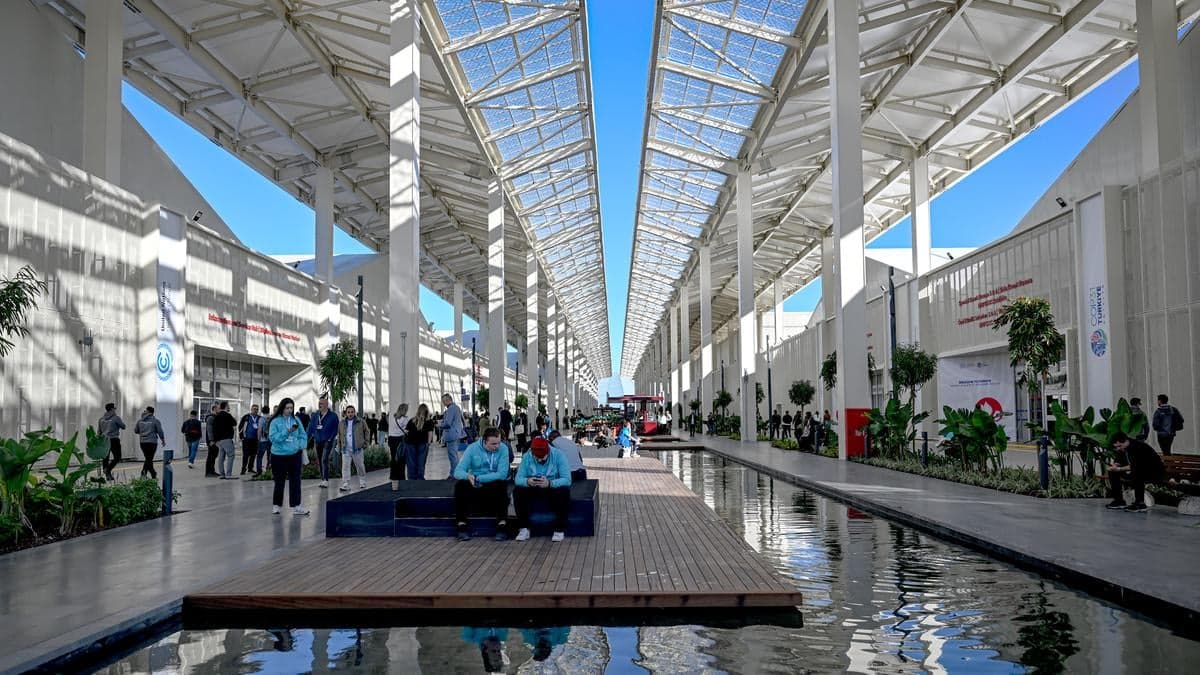
The 31st United Nations Climate Change Conference (COP31) officially opened in Antalya, Türkiye, convening more than 100,000 delegates, environmental experts, and senior officials from nearly 200 nations at the Antalya Expo Center[1][2]. The two-week summit begins under severe geopolitical strain, as an ongoing global energy shock and soaring borrowing costs - intensified by the United States’ military conflict with Iran and the continuing war in Ukraine - threaten to derail international pledges to accelerate emissions reductions[1][3]. With the United States stepping back from international climate leadership and multilateral funding mechanisms, mid-tier powers are under intense pressure to bridge financing gaps and rescue the implementation architecture of the Paris Agreement[4].
For Canada, the Antalya negotiations represent both an opening and a diplomatic obstacle[4]. On November 8, Climate Action Network Canada (CAN-Rac) issued an urgent policy brief warning that Ottawa’s international credibility is on the line[5][4]. Pratishta Singh, CAN-Rac’s international diplomacy manager, emphasized that Canada cannot credibly present itself as a global climate transition leader while simultaneously pushing fossil fuel expansion and contentious legislative measures such as Bill C-39 at home[5][4]. The Canadian delegation, operating under the direction of Prime Minister Mark Carney’s government, faces mounting international scrutiny regarding the contrast between its domestic energy agenda and its international climate pledges[4].
This debate is deeply intertwined with Canada’s domestic fiscal framework, following the release of the federal government's Budget 2026, titled "Masters of Our Destiny"[6][4]. While the budget commits substantial capital toward domestic electrification, carbon capture, utilization, and storage (CCUS), and industrial competitiveness, it also cements support for expanded pipeline capacity and hydrocarbon infrastructure designed to cushion Canada against global energy volatility[6][5][4]. At the Canada Pavilion in Antalya, federal representatives are slated to highlight industrial clean technology and high-integrity measurement systems, seeking foreign direct investment while avoiding binding commitments that could constrain domestic resource development[7][8].
The broader geopolitical environment in Antalya highlights Canada’s complex balancing act[1][4].[1][9] With global temperatures threatening to breach the 1.5°C threshold and major energy markets shaken by Persian Gulf supply chokepoints, developing nations are demanding that developed countries dramatically increase the New Collective Quantified Goal (NCQG) on climate finance790565_EN.pdf).[4][9] If Ottawa fails to resolve the friction between its strategic energy autonomy objectives and its global climate commitments, it risks facing diplomatic isolation from key allies and civil society partners throughout the conference proceedings790565_EN.pdf).
- COP31
- United Nations Climate Change Conference
- Antalya
World & Geopolitics
2 min read
Strait of Hormuz Tensions Escalate With Tanker Attacks and U.S. Interdictions
Maritime conflict in the Strait of Hormuz has intensified with attacks on oil tankers and U.S. military interdictions. The IRGC targeted vessels, while U.S. forces intercepted a tanker for breaching restrictions, significantly disrupting traffic through this vital oil artery. Diplomatic mediation efforts have stalled following the U.S. midterm elections.
Read the full storyFold the full story2 min · 11 sources
Military tensions in the Persian Gulf and the Strait of Hormuz escalated over the past 24 hours, characterized by physical strikes on commercial tankers, direct naval enforcement actions by the United States military, and an abrupt freeze in international mediation efforts[1][2][3]. On November 8, Islamic Revolutionary Guard Corps (IRGC) naval forces targeted three commercial oil tankers, citing alleged navigation violations, while Iranian state outlets claimed a merchant tanker caught fire after striking a naval mine in the eastern waters of the strait[3]. Iranian authorities announced that navigational aid systems across the southern passage had been destroyed, resulting in an overnight standstill where no unauthorized vessels were permitted transit[4]. Concurrently, U.S. forces enforcing a counter-blockade intercepted and disabled the St. Kitts-flagged tanker M/V Huda in the Gulf of Oman after it breached restrictions[1][3].
The maritime crisis, which has simmered since early 2026 following direct U.S. and Israeli strikes on Iranian facilities, has choked the world's most critical petroleum artery[5]. AIS vessel tracking and IMF PortWatch data indicate that tanker traffic through the narrow waterway has fallen to roughly 1 to 4 crossings per day - representing less than 8 percent of pre-crisis commercial transit averages of 85 vessels daily[3][6]. War risk marine insurance premiums across both the Middle East and the Black Sea have surged to historic highs, while front-month Brent crude benchmarks have fluctuated erratically between $94 and $111 per barrel, reflecting intense market anxiety[7][8].
Diplomatic efforts to de-escalate the standoff stalled over the weekend[2]. On November 8, Iranian Foreign Minister Abbas Araghchi announced on state television that regional mediation teams organized by Qatar and Pakistan had suspended travel, attributing the halt to the shock caused by the U.S. midterm election results[2]. Araghchi asserted that Tehran’s proposal to reopen the waterway within two days remains conditional on the complete cessation of American military operations[2][9]. In Washington, President Donald Trump insisted during a Sunday interview that renewed major strikes remained "unlikely" if talks progressed, even as U.S. forces active in the region continued targeting asymmetric threats, and Houthi combatants fired into Riyadh's King Abdullah Financial District, damaging an Aramco office complex[1][2].
For Canada, the persistence of the Hormuz blockade delivers severe economic and security reverberations[10][11]. Elevated crude prices and volatile global benchmark premiums directly enhance Canadian heavy crude export revenues from Western Canadian Select producers, but they also severely feed domestic inflation, transport costs, and supply chain friction across Canadian markets[10][11]. Furthermore, Canadian cargo transported via international container fleets faces escalating marine war insurance surcharges, increasing import costs for consumer goods and industrial components right as the Bank of Canada seeks to preserve stable price conditions[10][7].
- Strait of Hormuz
- Persian Gulf
- Islamic Revolutionary Guard Corps
World & Geopolitics
2 min read
Canada Unveils $3.5B Arctic Initiative for Sovereignty and Defense
Canada is bolstering its Arctic sovereignty with a $3.49 billion initiative focused on national readiness and procurement. The funding will enhance the Canadian Coast Guard's icebreaker fleet and the Department of National Defence's satellite communication capabilities in the polar region. This move addresses increasing geopolitical competition and strategic vulnerabilities in the Arctic.
Read the full storyFold the full story2 min · 6 sources
In response to heightening geopolitical competition across the high north, the Canadian federal government advanced $3.49 billion in emergency national readiness and Arctic procurement authority through the tabling of Supplementary Estimates (B) 2026–27[1][1]. The procurement package allocates $1.92 billion for the Canadian Coast Guard’s Program Icebreaker Project and $1.56 billion for the Department of National Defence’s Enhanced Satellite Communications Project – Polar[1]. The twin appropriations represent a significant step in translating the sovereign defense priorities outlined in Budget 2026 into operational equipment and resilient command infrastructure[1][1].
The policy shift addresses persistent strategic vulnerabilities that have left Canada exposed in the Circumpolar North[1][1]. As retreating polar sea ice opens the Northwest Passage and Arctic shipping corridors to foreign commercial and naval navigation, Russian military installations have proliferated across the region, while Chinese polar research expeditions have increasingly contested international maritime governance[1][2]. Internally, a recently declassified memo from the Privy Council Office confirmed that Canada’s earlier national security frameworks rested on outdated premises, forcing Prime Minister Mark Carney and national security advisers to overhaul Arctic surveillance capabilities, ice operations, and northern defense coordination[3].
The capital infusion is also designed to fortify domestic heavy manufacturing and maritime supply chains[1][4]. On November 8, domestic industrial momentum coalesced as Seaspan Shipyards finalized a major procurement order with Ontario’s Algoma Steel, utilizing its electric arc furnace (EAF) plate mill to manufacture sovereign structural steel for six Canadian Coast Guard icebreakers[4]. Treasury Board President Shafqat Ali emphasized that the Supplementary Estimates ensure Canadian sovereign security relies on domestic industrial foundations rather than sole-source foreign suppliers[5][4]. The companion polar satellite initiative will deploy a hybrid Low Earth Orbit (LEO) and Medium Earth Orbit (MEO) network to close Arctic communications blackouts and support Canadian Armed Forces command units operating in extreme northern latitudes[1][1].
Defense analysts and security experts at the Canadian Security Intelligence Service (CSIS) and allied institutions noted that while parliamentary spending approvals are a vital milestone, delivering hardware remains Canada’s core challenge[6][1]. With the first newly commissioned icebreakers not expected to enter service until between 2027 and 2032, Canada remains reliant on aging hulls during a window of acute geopolitical rivalry[2]. The parliamentary authorization reinforces Ottawa’s commitment to northern defense, signaling to NATO allies and Arctic adversaries alike that Canada is actively defending its northern boundary and securing its sovereign borders[3][1].
- Canada
- Arctic
- Canadian Coast Guard
World & Geopolitics
3 min read
Bank of Canada Governor Warns of Trade Fragmentation and Stagflation Risks
Bank of Canada Governor Tiff Macklem has highlighted increasing challenges for monetary policy due to trade disputes, geopolitical fragmentation, and technological shifts. Despite headline economic resilience, underlying growth is weakening, exacerbated by persistent trade friction and supply chain disruptions which complicate inflation control efforts. This comes as the Bank of Canada recently raised its policy rate to combat elevated inflation, facing a dilemma between weak labor indicators and the risk of further price increases. The governor emphasized the structural realignment Canadian businesses are undergoing due to U.S. protectionism, necessitating aggressive export diversification despite productivity gains from AI adoption.
Read the full storyFold the full story2 min · 11 sources
In an extensive interview and policy briefing published on November 9, 2026, Bank of Canada Governor Tiff Macklem addressed the escalating challenges confronting monetary policy in an era defined by trade disputes, geopolitical fragmentation, and rapid technological transition[1][1]. Macklem highlighted that while the global economy has displayed headline resilience - with the International Monetary Fund projecting global output growth slightly above 3% - underlying economic resilience is eroding[1][1]. The governor warned that persistent cross-border trade friction, alongside persistent supply chain and energy disruptions stemming from conflict in the Middle East, continues to weigh heavily on growth prospects while complicating central bank efforts to anchor inflation[1][2].
The governor’s remarks follow the Bank of Canada Governing Council’s decision on October 28 to raise the overnight policy rate by 25 basis points to 2.50%, snapping a year-long easing pause[3][4]. Macklem characterized the recent move as a challenging policy dilemma where the central bank had to weigh deteriorating domestic labor indicators against the risk of reigniting broader inflation[4]. The Canadian macroeconomic landscape as of November 9 illustrates this tension: while gross domestic product expanded at an annualized rate of 3.3% during the second quarter, growth is projected to decelerate below 1% in the final quarter of the year[3]. Concurrently, October labor market statistics showed a net loss of 4,700 jobs and an uptick in the national unemployment rate to 6.7%, even as September headline inflation held elevated at 3.1% - largely pushed above the Bank's target by energy volatility and imported tariff costs[3].
Central to Macklem’s analysis is the structural realignment forced upon Canadian commerce by U.S. protectionism[5][6]. Describing the Canadian private sector as having navigated "several stages of grief over the death of open trade with the United States," Macklem stressed that domestic firms and households are fundamentally reshaping their operating models[6]. While artificial intelligence adoption is providing an unexpected tailwind to national productivity, the fragmentation of global supply chains requires Canadian enterprises to diversify export destinations aggressively[1][1][7]. Macklem noted that while a diplomatic resolution to bilateral tariff disputes would provide immediate welcome relief, it will not reverse the broader global shift toward economic nationalism and fractured multilateralism[7].
The central bank's deliberations directly intersect with the federal government's newly unveiled Budget 2026, titled Masters of our destiny, and the ongoing joint renewal of Canada's monetary policy framework[8][9]. With Ottawa forecasting multi-year deficits of over $62 billion and prioritizing an "Investment Supercycle" centered on domestic resource corridors and clean energy capital projects, monetary and fiscal policies are operating in close proximity[8][10]. Analysts note that Macklem’s forward guidance underscores an environment where rates may need to remain restrictive despite softening domestic consumer demand, as global supply chain reconfiguration and imported price shocks continue to limit the bank's room for monetary easing[3][11].
- Bank of Canada
- Tiff Macklem
- International Monetary Fund
World & Geopolitics
2 min read
Payments Canada Launches Real-Time Rail Instant Payment System
Payments Canada has officially launched the Real-Time Rail (RTR), its new instant payment infrastructure, enabling 24/7, real-time money transfers with rich data capabilities. This modernization aligns Canada with international standards like SEPA Instant and FedNow, utilizing the ISO 20022 messaging standard. The launch signifies a major overhaul of the country's financial infrastructure and fulfills a key objective outlined in Budget 2026.
Read the full storyFold the full story2 min · 9 sources
Payments Canada officially launched the Real-Time Rail (RTR) on Monday, November 9, 2026, operationalizing the nation's next-generation payments system and marking the most significant modernization of domestic financial infrastructure in decades[1][2][3]. The RTR enables individuals, commercial enterprises, and public entities to send and receive data-rich payments 24 hours a day, 365 days a year, with instantaneous access to cleared funds and irrevocable finality[1][4]. The launch fulfills a core pillar confirmed in the federal government’s newly tabled Budget 2026, which elevated national payment rails to a strategic sovereign capability designed to enhance domestic economic productivity and liquidity[5][4].
The activation of the system concludes a complex, multi-year overhaul of Canada’s clearing and settlement ecosystem[4]. Designed to align Canada with international real-time clearing standards such as the European Union's SEPA Instant and the U.S. FedNow service, the RTR is built around the ISO 20022 financial messaging standard[6]. This enables the transmission of detailed transaction data alongside capital flows, which is expected to streamline commercial invoicing, reduce accounts-receivable lag for small and mid-sized enterprises, and eliminate multi-day settlement risks in cross-border and interprovincial trade[4][7].
Crucially, the regulatory architecture surrounding the launch marks a break from Canada’s legacy banking structure[4]. Under legislative amendments enacted via the Retail Payment Activities Act (RPAA), supervisory oversight was established under the Bank of Canada, permitting registered payment service providers (PSPs) and non-bank financial technology firms direct access to Payments Canada’s core systems alongside the traditional chartered banks[4][8]. Throughout 2026, fintech challengers have been vetted and onboarded into membership, reducing the domestic economy's longstanding reliance on the "Big Six" Canadian banks for core transaction processing[4].
Financial industry stakeholders emphasize that the RTR is a critical operational foundation for upcoming legislative reforms in consumer-driven (open) banking and federal digital asset frameworks[5][4][8]. By facilitating instant funds transfer, the platform lowers operational hurdles for commercial innovators, though legal analysts at McCarthy Tétrault and Gowling WLG note that financial institutions still face impending regulatory work[9][4]. The federal government has signaled public consultations for early 2027 on the broader statutory review of the Canadian Payments Act, as well as harmonized provincial-federal consumer protection guidelines to cover liability in real-time fraud environments[9][8].
- Payments Canada
- Real-Time Rail
- RTR
World & Geopolitics
2 min read
Canadian Chamber Urges U.S. to Ease Trade Barriers at B20 Summit
A delegation from the Canadian Chamber of Commerce is attending the B20 USA Summit in Washington, D.C., to advocate for the reduction of cross-border tariffs and protectionist procurement rules. The summit brings together international business leaders and U.S. policymakers to discuss critical economic issues. Canadian delegates are emphasizing the importance of continental co-dependence for maintaining global competitiveness amidst growing trade uncertainty.
Read the full storyFold the full story2 min · 10 sources
A senior delegation from the Canadian Chamber of Commerce arrived in Washington, D.C., on November 9, 2026, for the opening of the B20 USA Summit, an international gathering of enterprise executives from across the G20 economies[1][2]. Operating under the U.S. presidency of the G20, the three-day summit brings Canadian corporate leaders into closed-door policy working groups with multinational chief executives, industry associations from over 20 countries, and senior U.S. policymakers, including sitting state governors[1]. The Canadian delegation's primary objective is to make direct commercial appeals to American state officials and business counterparts to mitigate the economic harm inflicted by cross-border tariffs and protectionist procurement rules[3][1].
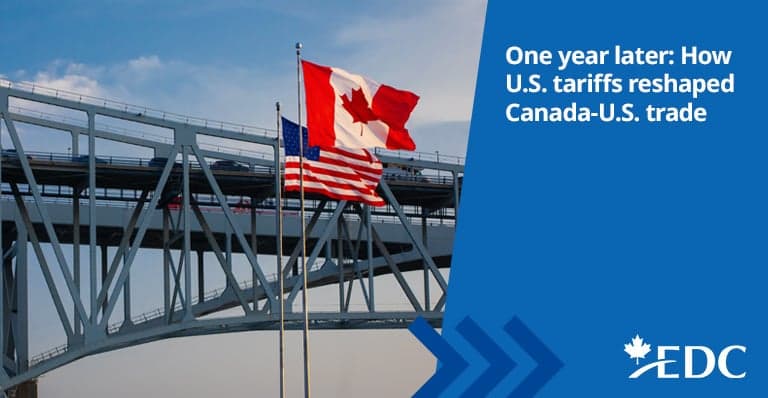
The summit convenes at a delicate moment for continental commerce, with Canadian industry navigating widespread trade uncertainty[4][1]. Data released by the Canadian Chamber’s Business Data Lab indicates that prolonged tariff barriers threaten significant long-term growth penalties, with broader economic fallout eroding real incomes across integrated supply chains[5]. Delegates representing manufacturing, agri-food, transportation, and critical minerals are focusing discussions on energy security, digital trade standards, and workforce development, arguing that regional co-dependence between Canadian raw inputs and U.S. manufacturing facilities is essential to maintaining global competitiveness against heavily subsidized Asian supply chains[6][1].
The private-sector engagement in Washington mirrors Ottawa’s dual-track economic strategy[7][8]. While Canadian business leaders actively lobby in the U.S. capital to preserve access to their primary trading partner, the federal government is simultaneously implementing a rapid diversification drive[8][9]. Prime Minister Mark Carney is scheduled to depart November 11 on a multi-nation diplomatic mission encompassing Ireland, the Philippines, Cambodia, and China[7]. During the tour, Carney aims to finalize the comprehensive ASEAN-Canada Free Trade Agreement, conclude bilateral trade pacts with Manila, and represent Canadian interests at the Asia-Pacific Economic Cooperation (APEC) Leaders’ Meeting in Shenzhen[7][10].
Market observers note that the presence of Canadian business representatives at the B20 reflects a growing divergence between political rhetoric and private capital flows[9][1]. Recent foreign portfolio statistics reveal that Canadian institutional capital has increasingly shifted investment away from U.S. assets toward European and Indo-Pacific markets, with non-U.S. equity allocations hitting multi-year highs[9]. Delegations in Washington are leveraging these shifts to underscore to U.S. counterparts that prolonged trade frictions risk permanently re-routing Canadian raw materials, clean energy, and investment capital toward alternative international partners[9][1].
- Canadian Chamber of Commerce
- B20 USA Summit
- G20
World & Geopolitics
2 min read
G7 Foreign Ministers Convene in France Amid Geopolitical and Trade Tensions
Foreign ministers from the Group of Seven (G7) nations met in France to address escalating international conflicts, trade resilience, and supply chain security. Discussions focused on safeguarding maritime shipping lanes, stabilizing energy supplies, and countering cyber threats, particularly in light of recent geopolitical events in the Middle East. The meeting aimed to foster coordinated responses to global economic disruptions.
Read the full storyFold the full story1 min · 13 sources
Foreign ministers representing the Group of Seven (G7) industrialized democracies - comprising Canada, the United States, France, Germany, Italy, Japan, and the United Kingdom - convened in France on November 8 and 9, 2026, for high-level ministerial consultations focused on international security, trade resilience, and escalating regional conflicts[1][2][3]. The discussions, which included U.S. Secretary of State Marco Rubio and Canada's diplomatic leadership, took place against the backdrop of widening conflicts in the Middle East, acute vulnerability in international maritime shipping lanes, and concerted geopolitical efforts to secure critical mineral and high-technology supply chains[4][1].
The meeting comes as the geopolitical environment increasingly disrupts global economic fundamentals[4][5]. Central banking authorities and international financial institutions have tracked severe spillovers from Middle Eastern hostilities, where sustained energy price spikes and maritime shipping reroutes around contested corridors have kept global inflation persistently above central bank targets[4][3]. At the ministerial summit, G7 members sought common ground on safeguarding critical sea corridors, stabilizing energy supply routes, and expanding institutional coordination to defend sovereign financial and digital infrastructure against coordinated foreign cyber operations[2][3].
For Canada, the multilateral discussions carry direct implications for its domestic economic and defense priorities[5][6]. As Western nations accelerate industrial policies aimed at decoupling critical supply chains from geopolitical adversaries, Canada has positioned its resource sector as a strategic bulwark for allied critical minerals, semiconductor precursors, and clean energy exports[7][8]. However, the Ottawa delegation faces the diplomatic challenge of managing deepening economic friction with its largest G7 partner, the United States, whose Section 338 and Section 232 tariff frameworks have targeted the very Canadian industrial metals and energy flows needed to sustain allied technological resilience[9][10].
The G7 foreign ministers also reviewed progress on multilateral initiatives designed to advance economic security, including joint frameworks on quantum computing safeguards, critical technology transfer standards, and artificial intelligence governance[11]. Canadian officials used the sessions to reinforce Ottawa’s commitment to multilateral trade governance, highlighting the government’s pending attendance at upcoming Indo-Pacific and European summits as evidence that mid-sized trading economies must balance robust collective security alliances with broad, rules-based market diversification[12][13].
- G7
- France
- Canada
World & Geopolitics
2 min read
G7 Foreign Ministers Meet in Paris Amid Shifting U.S. Stance, Canada Coordinates Response
Foreign Affairs Minister Anita Anand is attending a G7 summit in Paris, convened by France, to address crises in Eastern Europe, the Middle East, and the Caribbean. The meeting is significant as it follows the U.S. midterm elections, creating uncertainty in Washington's foreign policy. Canada aims to reinforce multilateral commitments, particularly concerning Ukraine, Haiti, and countering hybrid warfare.
Read the full storyFold the full story2 min · 7 sources
Foreign Affairs Minister Anita Anand arrived in Paris on November 8 to join fellow Group of Seven (G7) foreign ministers for high-level summits addressing compounding crises across Eastern Europe, the Middle East, and the Caribbean[1][2]. The summit, held at the French Foreign Ministry under the hosting of French Foreign Minister Jean-Noël Barrot, represents the first gathering of allied foreign ministers following the U.S. midterm elections, which shifted congressional power and created uncertainty surrounding Washington's long-term foreign policy and tariff positions[3][4][2]. Ottawa confirmed that Anand will take a leading role in sessions focused on stabilization efforts in Haiti, global governance frameworks for artificial intelligence, sustained assistance for Ukraine, and countering state-sponsored hybrid warfare directed against North American and European democracies[1].
The Paris summit convenes during a delicate transition in international diplomacy[4]. The sweeping victory of the Democratic Party in the U.S. Congress has constrained the White House's ability to execute unilateral economic policies, including threatened blanket tariffs on Canadian imports, while introducing new dynamics into G7 discussions[3][5][2]. The Canadian delegation is seeking to leverage this political reset to reinforce collective multilateral commitments[1]. Global Affairs Canada indicated that Minister Anand’s primary objective in Paris is to shore up unified Western defense postures while ensuring that allied strategies address asymmetrical threats, ranging from cyber operations targeting critical supply chains to foreign election interference[1].
The diplomatic forum features key counterparts, including U.S. Secretary of State Marco Rubio, German Foreign Minister Johann Wadephul, British Foreign Secretary Ed Miliband, Italian Foreign Minister Antonio Tajani, and Japanese Foreign Minister Toshimitsu Motegi[2]. Alongside plenary negotiations on Ukraine and the ongoing military confrontation between the United States and Iran, bilateral meetings have been scheduled between Anand and European counterparts to deepen existing bilateral security architecture[1][2].
For Canadian foreign policy, the Paris proceedings underscore an ongoing effort to manage vulnerability to American policy shifts through a strategic hedge toward Europe[3][6]. Having spent the past year formalizing closer defense ties - including agreements that secured Canadian industry access to the European Union’s Strategic Technologies for Europe Platform (STEP) and the launch of the multilateral "Alliance for the Future" in Montreal - Ottawa is using the G7 platform to safeguard Canadian economic and defense interests[7][6]. Anand’s vocal support for structured international rules comes as Canadian policymakers assess key defense acquisitions, including the final composition of fighter aircraft orders and Arctic surveillance systems, ensuring Canadian interoperability with European partners should transatlantic alignments encounter further turbulence[6].
- G7
- Anita Anand
- Jean-Noël Barrot
World & Geopolitics
2 min read
Houthi Attack on Aramco, Hormuz Escalation Threaten Global Oil Flow
A Houthi projectile struck Saudi Aramco's Riyadh office tower, while Iran's IRGCN deployed mines and anti-ship systems in the Strait of Hormuz, damaging oil tankers. U.S. Central Command intervened, intercepting a tanker exiting an Iranian facility. Iran's foreign minister issued an ultimatum to the U.S. post-midterms, raising tensions significantly.
Read the full storyFold the full story2 min · 13 sources
The security landscape in the Persian Gulf deteriorated markedly on November 8 following a direct projectile strike that damaged the corporate office tower of state energy giant Saudi Aramco in Riyadh's King Abdullah Financial District (KAFD)[1][2]. The strike blew out windows across multiple floors of the commercial facility in the first attack to impact the heart of the Saudi capital's commercial center since mid-2026 hostilities widened[3][2]. While the Saudi Ministry of Energy reported that falling interception debris caused minor damage with no fatalities, regional tracking agencies and witnesses confirmed blast damage to the building, with Yemen’s Houthi forces claiming responsibility as part of a wider salvo that also targeted King Khalid International Airport[3][2].
The escalation in Riyadh unfolded alongside acute naval warfare in the Strait of Hormuz and the Gulf of Oman[1]. On November 7 and 8, Iran’s Islamic Revolutionary Guard Corps Navy (IRGCN) deployed maritime mines and anti-ship systems against commercial navigation, leaving three oil tankers ablaze and prompting the United Arab Emirates to execute an emergency rescue of 22 sailors from an adrift vessel in the Sea of Oman[4][1][5]. In retaliatory enforcement of an economic maritime cordon, U.S. Central Command (CENTCOM) announced that U.S. naval forces intercepted and disabled the St. Kitts-flagged tanker M/V Huda after it exited an Iranian facility[6][1]. Concurrently, Iranian Foreign Minister Abbas Araghchi issued an ultimatum via social media, declaring that Washington had two choices post-midterms: either accept Tehran’s "two-day proposal" to halt hostilities across all fronts or face expanded strikes from Iranian armed forces[1].
The crisis involves a web of state and non-state actors, including the IRGCN, CENTCOM, the Saudi Royal Armed Forces, Houthi military spokesperson Yahya Saree, and multinational shipping consortia[6][1][3]. The confrontation has effectively paralyzed transit through the Strait of Hormuz, through which roughly a fifth of the world’s petroleum supply typically flows, driving Brent crude toward $95 a barrel amid warnings from the G7 that coordinated intervention in the oil market may be required[7][8][9].
For Canada, the cascading disruption across Middle Eastern chokepoints presents dual-edged economic and diplomatic consequences. As a major energy producer, Canada experiences upward revenue momentum for crude exports and Western Canadian Select (WCS) differentials; however, widespread maritime transit disruptions threaten to reignite global supply chain inflation and freight insurance premiums[10][7]. The development carries strategic weight for Canadian national security planners: as Iranian proxies demonstrate persistent reach against capital infrastructure in Riyadh, Ottawa faces pressure within the G7 and NATO to contribute naval or logistic support to secure international sea lines of communication[11][7]. At the same time, the prospect of prolonged regional war threatens to disrupt broader Indo-Pacific trade corridors vital to Canada's economic diversification goals[12][13].
- Houthi forces
- Saudi Aramco
- IRGCN
World & Geopolitics
2 min read
Ottawa Debates EU Associate Membership Amid 'Economic Sovereignty' Pivot
Canada's federal government is facing increased debate over its 'Economic Sovereignty' agenda, which seeks strategic autonomy and diversification beyond North America. A key proposal involves pursuing associate membership with the European Union, a move met with criticism regarding national self-determination but supported as a hedge against U.S. trade volatility.
Read the full storyFold the full story2 min · 4 sources
A broader debate over Canada’s geopolitical and economic trajectory intensified over the weekend following comprehensive reviews of the federal government's economic agenda, designated in Budget 2026 as Masters of Our Destiny[1]. Analysis published on November 8 framed the policy architecture under Prime Minister Mark Carney as a decisive departure from decades of unreserved integration with the North American commercial sphere[1]. Recognizing that high-level concentration in a single market has become a strategic liability in an era of weaponized trade and tariffs, Ottawa has increasingly prioritized strategic autonomy - securing critical supply chains, expanding sovereign industrial capacity, and actively seeking alternative multilateral anchor points[1].
This pivot toward strategic insulation was brought into sharp relief on November 8 by growing political debate over whether Canada should pursue formal associate membership status with the European Union[2][2]. Christian Heritage Party Leader Rod Taylor publicly challenged the initiative, warning that closer formal integration between Ottawa and Brussels could dilute Canadian self-determination and compromise sovereignty over key regulatory levers[2][2]. The pushback reflects a broader domestic political fault line[2]. While critics argue that institutional EU associate arrangements would bind Canada to European legal and environmental standards, proponents within the federal government view deep transatlantic integration as an essential defense against volatility emanating from Washington[2][1].
Key figures driving the strategy include Prime Minister Mark Carney and senior trade negotiators, whose outreach has focused on turning traditional trade agreements into strategic security covenants[2][1]. The foundation of this European rapprochement has gained traction through recent bilateral arrangements, including the November 6 Canada-Austria ministerial dialogues led by Anita Anand and Austrian counterpart Beate Meinl-Reisinger[3]. Those talks established joint exploratory frameworks covering critical mineral extraction, semiconductor processing, advanced manufacturing, and defense industrial integration[3].
The implications of this policy realignment will shape Canadian industry for decades[1]. Royal Bank of Canada (RBC) market analysis released in the wake of the U.S. midterm elections indicated that while the Democrats' congressional victories may soften impending U.S. auto and steel tariffs, structural cross-border vulnerabilities remain entrenched[4]. By pivoting capital toward critical domestic manufacturing, indigenous energy grids, and trans-Atlantic supply links, Canada is working to eliminate economic coercion from its bilateral relationships[1]. However, executing this economic hedge requires delicate political calibration: Ottawa must manage domestic pushback against deeper institutional ties with Europe while ensuring that the Canada-United States-Mexico Agreement (CUSMA) framework remains intact[4][1].
- Prime Minister Mark Carney
- European Union
- Christian Heritage Party
Section 3 of 4
City News
16 stories · 8 min skim
City News
2 min read
Canada's Infrastructure Conference Opens Amidst Transit Megaproject Scrutiny
Canada's Infrastructure Conference 2026 has opened in Toronto, focusing on major transit projects like the Ontario Line, which recently saw its first tunnel breakthrough. The conference brings together industry leaders, financiers, and government officials to discuss project delivery, procurement models, and the challenges of escalating costs and urban disruption. Discussions aim to find ways to evolve public-private partnerships.
Read the full storyFold the full story2 min · 7 sources
Industry leaders, project financiers, and government decision-makers gathered at the Sheraton Centre in downtown Toronto on Monday, November 9, 2026, for the opening of Canada’s Infrastructure Conference (CIC) 2026[1][2]. Organized by the Canadian Council for Public-Private Partnerships (CCPPP), the two-day summit opened against the backdrop of an unprecedented wave of public transit capital works across the Greater Toronto Area, marked by both major engineering milestones and mounting debates over delivery timelines, construction fatigue, and procurement models[3][4][1].
The conference convened just days after a milestone on the federal and provincial governments' premier regional project: the breakthrough of the tunnel boring machine (TBM) nicknamed Libby into the underground excavation of the future King West Station on the Ontario Line[3][1]. Having bored approximately 1.3 kilometres from Exhibition Station and installed roughly 780 tunnel lining rings, the TBM marks the very first station breakthrough for the 15.6-kilometre rapid transit line[3]. With a second TBM, Corkie, slated to begin driving the parallel tunnel in December, and ongoing naming competitions underway for boring machines on the Yonge North Subway Extension, speakers at the summit cited the downtown breakthrough as evidence that progressive procurement and tunneling operations are hitting their stride[3][5][1].
However, the symposium's panel discussions also addressed the severe cost, risk, and delivery challenges confronting transit agencies and private partners across Ontario[1]. Tim Murphy, Executive Vice President and Chief Strategic Affairs Officer at Aecon, led discussions on project execution and capital allocation, assessing how public-private partnerships (P3) must evolve to avoid the disputes and operational delays that have historically plagued complex urban transit schemes[1]. Policymakers, including Ontario Minister of Infrastructure David Piccini, outlined the province's forward pipeline, highlighting strategies to accelerate project delivery, mobilize private capital, and manage supply chain capacity constraints amid high regional project volume[1][6].
The broader debate at CIC 2026 reflected a sharp dichotomy between long-term economic promises and short-term urban disruption[3][4][1]. Proponents stressed that megaprojects like the Ontario Line - backed by more than $4 billion in federal investment and built to accommodate 390,000 daily boardings - are vital for Toronto’s long-term housing density and productivity[3]. Conversely, panelists and municipal observers acknowledged the immense strain placed on host communities, where multi-year utility work, surface rail diversions, and regional rail shutdowns have strained public tolerance, reinforcing calls for more collaborative, community-aligned project management in modern urban infrastructure delivery[4][7][1].
- Canada's Infrastructure Conference
- CIC 2026
- Toronto
City News
2 min read
Metrolinx Completes Major GTA Rail Shutdown for GO Expansion and Ontario Line
Metrolinx has finished a significant weekend shutdown of the Lakeshore East and Stouffville GO train lines to advance the GO Expansion program and the Ontario Line project. This disruption, impacting thousands of commuters with bus replacements, allowed for critical infrastructure upgrades, including bridge work and track maintenance. While necessary for expansion, the closures highlighted transit bottlenecks and rider fatigue.
Read the full storyFold the full story2 min · 5 sources
Metrolinx concluded an extensive, multi-corridor service shutdown across the eastern Greater Toronto Area on Sunday, November 8, 2026, which halted all rail traffic along the entirety of both the Lakeshore East and Stouffville GO train lines[1][2]. Spanning approximately 100 kilometres of combined railway corridor - including the 50.5-kilometre Lakeshore East line and the 49.6-kilometre Stouffville line - the planned weekend disruption forced thousands of regional travelers onto replacement buses and municipal transit feeders[2]. The temporary suspension allowed construction crews to complete critical structural upgrades, ballast renewal, and rail corridor overhauls that could not be executed during standard overnight maintenance windows[3].
The intensive work blitz encompassed a series of complex infrastructure interventions tied directly to the multibillion-dollar GO Expansion program and the provincially managed Ontario Line rapid transit project[4][3]. Along the shared rail approaches into Toronto’s core, crews conducted waterproofing on three newly erected railway bridges spanning Queen Street East, Dundas Street East, and Logan Avenue - vital structures built to accommodate joint Ontario Line and GO service[3]. Concurrently, contractors advanced preparatory track and ballast replacement near Woodfield Road, performed rehabilitation at the Eureka Street rail crossing in Markham's Unionville sector, and initiated preliminary site investigations at Yonge Street within the high-density Union Station Rail Corridor[3].
The logistical response demanded substantial bus deployment by Metrolinx, yet it exposed stark service bottlenecks for inter-regional commuters[2]. Express and semi-express bus shuttles connected outer suburban terminuses such as Durham College Oshawa, Whitby, Pickering, Ajax, and Old Elm directly with the downtown Union Station Bus Terminal[5]. However, the operational design bypassed multiple core suburban and midtown stops entirely: GO stations including Milliken, Agincourt, and Kennedy on the Stouffville corridor, as well as Danforth, Scarborough, Eglinton, Guildwood, and Rouge Hill along Lakeshore East, received no direct GO train or bus replacement service[5][3]. Impacted riders were directed to absorb longer travel times on local Toronto Transit Commission (TTC) subway, bus, and streetcar alternatives[5][3].
Public reaction across the weekend underscored growing rider fatigue with compounding transit disruptions across the region[2]. Transit user groups pointed out that while track work is necessary to enable 15-minute, all-day two-way electrified rail service under future GO Expansion contracts, overlapping weekend closures between regional rail and city subway lines severely constrict cross-boundary mobility[2]. Metrolinx reiterated that such corridor shutdowns remain indispensable to hitting capital delivery timelines, confirming that similar weekend closures along the Stouffville line will continue intermittently through spring 2027 to facilitate civil works and track reconfiguration[3].
- Metrolinx
- GO Expansion
- Ontario Line
City News
2 min read
TTC Shifts to Nightly Line 2 Closures and Line 1 Single-Tracking After Viaduct Repairs
The Toronto Transit Commission (TTC) concluded weekend repairs on the Prince Edward Viaduct by closing Line 2 between St. George and Broadview. Immediately following, the TTC initiated early weeknight closures on Line 2 from Keele to St. George for cable installation and single-tracking on Line 1 between Vaughan Metropolitan Centre and Finch West for track maintenance. These measures aim to modernize aging infrastructure.
Read the full storyFold the full story2 min · 9 sources
The Toronto Transit Commission (TTC) pivoted its system-wide maintenance operations on November 8 and 9, 2026, wrapping up a massive weekend closure of Line 2 (Bloor-Danforth) before initiating a four-day blitz of early weeknight subway shutdowns and single-tracking across two lines[1][1]. Over the weekend of November 7 and 8, the transit agency fully shuttered Line 2 between St. George and Broadview stations, taking Bay and Sherbourne stations entirely offline to execute structural repairs on the Prince Edward Viaduct[2][3]. That closure allowed engineering teams to replace track-bearing bridge components high above the Don Valley, replace internal communication cabling between Yonge-Bloor and Sherbourne, and install upgraded closed-circuit television (CCTV) security systems at Broadview and Castle Frank stations[2][3].
With normal daytime service restored at 6:00 a.m. on Monday, November 9, the commission promptly shifted focus to its aging west-end subway infrastructure[4][5]. Starting at 11:59 p.m. on November 9 and continuing through Thursday, November 12, train service along Line 2 between Keele and St. George stations will terminate early each night[5]. The early closures will shutter Christie, Dufferin, and Lansdowne stations, while closing key automated and secondary street entrances at Ossington (Delaware Avenue), Bathurst (Markham Street), and Spadina (Kendal Avenue)[5]. During this nocturnal window, technical crews are deploying more than 1,500 feet of specialized communications cables designed to modernize the line's legacy fixed-block signal equipment and transition the corridor toward state-of-good-repair reliability standards[1].
Simultaneously, the TTC is executing track-level adjustments on Line 1 (Yonge-University)[1]. Beginning at 11:00 p.m. on November 9, trains running between Vaughan Metropolitan Centre and Finch West stations will operate on a single-track configuration, alternating along an active line while maintenance teams conduct infrastructure upkeep on the opposite rail[1][6]. While Line 1 will avoid a complete shutdown, the single-track arrangement will reduce service frequencies and extend headways for late-night riders traveling to and from York University and York Region[1][6].
The compounding schedule has drawn pointed reactions from transit advocacy groups, who note that late-night and shift workers bear the brunt of early closures[7]. Although the TTC is operating accessible replacement shuttle buses and supplementary Wheel-Trans vehicles along Bloor Street West, surface shuttles face surface road delays, resulting in reduced passenger-carrying capacity compared to regular heavy-rail operations[1][8]. TTC operations leadership maintained that early shutdowns are necessary to expand the overnight working window, allowing crews to complete structural modernizations safely and avoid protracted system failures during peak weekday rush hours[1][9].
- Toronto Transit Commission
- TTC
- Line 2 Bloor-Danforth
City News
2 min read
Queen Street East Streetcar Track Renewal Causes Lane Closures and Transit Diversions
Construction has begun on Queen Street East between Leslie Street and Vancouver Avenue for streetcar track renewal, narrowing the road to a single westbound lane and causing significant transit diversions. This two-phase project, involving both TTC track replacement and City sewer rehabilitation, will continue through mid-December. The disruptions are impacting local businesses and commuters, adding to existing transit delays.
Read the full storyFold the full story2 min · 4 sources
The City of Toronto and the TTC officially enacted major construction restrictions along Queen Street East on Monday, November 9, 2026, inaugurating the active excavation and track replacement phase of a substantial multi-stage renewal program between Leslie Street and Vancouver Avenue[1]. Following a week in which TTC crews welded continuous strings of standard steel rails within the median lanes of Queen Street East, the roadway has been narrowed to just a single westbound lane[1]. This corridor constriction will remain in place through mid-December, driving sweeping route diversions for streetcars, feeder buses, and commercial vehicular traffic across Toronto’s east end[1].
The physical overhaul is structured to address decaying street-level transit infrastructure in two distinct phases[2][1]. Phase 1, led by TTC track renewal crews, focuses on extracting and replacing worn railbeds and embedded tracks to bring the corridor into a state of good repair before pausing for the winter holiday season[1]. In early January 2027, the City's Engineering and Construction Services will assume site control for Phase 2, rehabilitating the aging municipal sanitary sewer trunk running beneath Queen Street between Leslie Street and Greenwood Avenue[1]. By staggering the project into rail renewal followed by sewer relining, municipal engineers aim to prevent long-term utility failures along one of Toronto's primary east-west commercial arteries[2][1].
To navigate the tight construction zone, the TTC implemented a network of transit diversions that took effect on November 9[1]. Regular 501/301 Queen streetcars are detoured off Queen Street, operating via Gerrard Street East between Broadview Avenue and Coxwell Avenue[1]. Eastbound 501B/301B Queen and 503 Kingston Road replacement buses are rerouted south via Leslie Street, Eastern Avenue, and Emdaabiimok Avenue before rejoining their regular routes, while westbound buses maintain Queen Street access through the sole open lane[1]. Connecting transit is also heavily disrupted: 31 Greenwood buses have been rerouted in both directions along Dundas Street East, Jones Avenue, Queen Street East, and Leslie Street[1].
The launch of the Queen Street East project has sparked immediate friction among local business improvement areas (BIAs) and commuters, coming on top of ongoing disruptions on King Street West[3][4]. With King Street currently interrupted between Close Avenue and Dufferin Street, and between Portland Street and Spadina Avenue for watermain and track replacement, east-west surface transit travel through downtown Toronto is encountering parallel choke points[3][4]. Local retail associations along Queen East expressed concern over the loss of street parking and reduced foot traffic leading into the crucial retail season, while transit planners emphasized that completing track bed overhauls now is essential to avert emergency surface rail failures in future years[1].
- City of Toronto
- TTC
- Queen Street East
City News
2 min read
Budget 2026 Overhauls Housing Policy with 'Missing-Middle' Focus and New Financing
Federal Budget 2026 introduces a new three-pillar housing policy framework, linking market-rate homeownership, non-market housing, and homelessness prevention. A key element is accelerated financing for 'missing-middle' housing like triplexes and fourplexes, with revised mortgage insurance parameters starting February 2027. The budget also supports municipal modernization through a $100 million commitment to electronic permitting and AI integration.
Read the full storyFold the full story2 min · 5 sources
A structural shift in federal housing policy is reshaping urban development debates across the Greater Toronto Area as housing analysts and industry leaders assess the broader implications of Ottawa's latest strategic framework[1]. Policy evaluations led by urban economist Mike Moffatt and the Missing Middle Initiative emphasize that the most consequential outcome of Budget 2026 is an integrated "three-pillar, one-foundation" framework designed to dismantle long-standing policy silos[2][1]. Rather than treating market-rate homeownership, non-market housing, and homelessness prevention as isolated challenges, the framework formally links them, calling on federal, provincial, and GTA municipal authorities to harmonize zoning, infrastructure spending, and development charges to spur supply[1].
A centerpiece of the evolving discussion is a slate of financing tools intended to accelerate "missing-middle" density - such as triplexes, fourplexes, and low-rise apartments - in established Toronto residential neighborhoods[3][4]. TRREB highlighted that beginning February 1, 2027, revised mortgage insurance parameters will allow builders and investors of new triplexes and fourplexes to secure insured financing covering up to 90 percent of property value, eliminating prior property-value ceilings and owner-occupancy restrictions[3][4]. Furthermore, smaller rental developments ranging from five to 50 units will gain access to private mortgage insurance and extended amortization schedules of up to 50 years, significantly reducing pro-forma hurdles for mid-scale urban rental projects that have historically struggled against heavy land and financing costs[3][4].
The package also introduces direct support for municipal modernization, headlined by a $100 million federal commitment over three years to subsidize municipal electronic permitting and artificial intelligence integration[3][4]. Development applicants and planning departments across the GTA, where protracted municipal review periods have frequently added tens of thousands of dollars in carrying costs to individual housing units, stand to gain streamlined approval timelines[3][4]. In parallel, the federal proposal to raise the home-price ceiling for optional mortgage default insurance on conventional loans from $1 million to $1.5 million, coupled with 30-year amortizations for qualified purchasers, is expected to recalibrate buyer qualification parameters across the GTA's entry-level market[4].
Reactions from coalitions such as the Homes and Growth Coalition underscore that while regulatory modernization and credit expansion are vital, execution depends heavily on Ontario municipalities lowering development charges and revising local building codes[1]. GTA market commentators noted that amid October real estate metrics showing regional sales down 7.9 percent year-over-year and active listings declining by 10 percent, lower financing hurdles and predictable regulatory environments are essential to converting planning approvals into active construction sites[1][5].
- Budget 2026
- Greater Toronto Area (GTA)
- Mike Moffatt
City News
2 min read
Canada to Ease Foreign Buyer Ban on New GTA Homes, Sparking Debate
Canada's federal government is proposing to exempt newly constructed residential properties from the foreign buyer ban. This change, part of the 2026 Federal Budget, aims to boost the GTA's struggling pre-construction condominium market by allowing foreign investment to secure necessary financing for new developments. The exemption, however, raises concerns about housing affordability for local residents and potential inflation of property values.
Read the full storyFold the full story2 min · 5 sources
The federal government’s move to alter the national foreign buyer restrictions has emerged as a central flashpoint across the Greater Toronto Area (GTA) development sector[1]. Under proposals outlined in the newly unveiled 2026 Federal Budget, Ottawa plans to ease rules to allow foreign buyers to purchase newly constructed residential properties, while simultaneously extending the prohibition on foreign acquisitions of existing resale homes until January 1, 2029[2][1]. While the legislative and regulatory mechanisms to enact the exemption are being drafted, the proposal has prompted immediate reaction from developers, urban economists, and housing advocates across Southern Ontario who are weighing the economic boost to building starts against local affordability concerns[1].
The policy shift comes at a critical juncture for the GTA’s multi-residential construction pipeline[3][1]. Following years of elevated borrowing costs, cooling investor sentiment, and mounting carrying charges, Toronto's pre-construction condominium sector has experienced notable distress, marked by stalled sales and high-profile project cancellations[1][4]. In previous cycles, pre-construction sales to international and domestic investors provided the requisite 70 percent equity and debt pre-sale thresholds mandated by Canadian lenders to secure construction financing. The federal foreign buyer ban, originally instituted in January 2023 and subsequently extended to 2027, closed off a traditional stream of capital[1]. By exempting new builds, Ottawa aims to reignite project viability and inject private capital into lagging housing starts without subjecting the broader resale market to speculative bidding[2][1].
Industry associations and real estate professionals have largely welcomed the move as a pragmatic lifeline for Toronto’s development pipeline[5][1]. The Toronto Regional Real Estate Board (TRREB) voiced strong support for the carve-out, noting that it reflects sustained calls to protect domestic buyers in the existing housing market while encouraging essential investment in new housing supply, missing-middle projects, and high-density condominiums[5]. Market practitioners, including local real estate agent Lucy Hua, observed that unlocking foreign demand could clear unsold developer inventory and generate the early presales required to get future ground-up projects out of planning phases and into construction[1].
Conversely, housing affordability advocates and policy analysts have raised concerns over the structural implications of relying on offshore investment to stimulate domestic supply[1]. Critics question whether allowing foreign capital into pre-construction developments will genuinely expand affordable housing options for local residents, or instead reinforce higher square-foot pricing models geared toward investor yields rather than family-sized or deeply affordable end-use housing[1]. Observers also caution that without strict developer delivery guarantees and municipal alignment, the exemption risks driving land values higher without expanding the stock of attainable homeownership for the local workforce.
- GTA
- Canada
- Federal Budget 2026
City News
2 min read
North York Community Demands Traffic Upgrades After Child and Elderly Woman Hit by Car
Following a collision that critically injured an eight-year-old girl and seriously injured a 76-year-old woman, North York residents and Councillor Lily Cheng are demanding urgent traffic safety upgrades at Willowdale Avenue and Elmwood Avenue. A petition calls for replacing the existing pedestrian crossover with a full traffic signal, citing drivers ignoring flashing lights and speeding.
Read the full storyFold the full story1 min · 7 sources
A community coalition in North York mobilized to demand immediate municipal safety interventions at the intersection of Willowdale Avenue and Elmwood Avenue[1][2]. The outcry follows an incident on October 26 in which an eight-year-old girl crossing the street sustained life-threatening injuries, and a 76-year-old woman suffered serious injuries, when they were struck by a northbound 2015 Subaru Crosstrek operated by a 67-year-old driver[3]. Local resident Jasmine Yu launched a formal petition calling for the immediate replacement of the existing mid-block pedestrian crossover with a full, permanent traffic signal[1][4].
Parents at the nearby elementary school reported that the existing pedestrian crossing system - which relies on overhead flashing yellow beacons - is routinely ignored by speeding drivers navigating the undulating topography of Willowdale Avenue[1][3][2]. Video evidence recorded by residents during a morning commute demonstrated multiple vehicles failing to yield to pedestrian crossing lights, continuing through the crosswalk while pedestrians waited at the curb[2]. Community members emphasized that standard requests to municipal staff for crossing guards carry wait times of up to 12 months, which residents described as unacceptable given the immediate risk to school children[5].
Ward 18 Willowdale Councillor Lily Cheng visited the site and pledged to bypass prolonged bureaucratic traffic warrant studies by tabling a direct motion before North York Community Council and Toronto City Council[5][6]. Cheng argued that video documentation of motorist non-compliance, combined with physical sightline issues created by the uphill roadway grade in both directions, provides ample justification to fast-track traffic control signals[5]. The councillor also voiced intentions to engage the Toronto Police Service and push for revived classroom traffic safety education programs[6].
The controversy comes against a backdrop of deteriorating road safety figures in Toronto, with the city recording 42 traffic-related fatalities to date in 2026[5]. Earlier in November, emergency services reported responding to five separate pedestrian collisions across the GTA within a single 12-hour window, underscoring seasonal spikes in vehicle-pedestrian crashes that typically coincide with the end of daylight saving time and reduced evening visibility[5][7].
- North York
- Willowdale Avenue
- Elmwood Avenue
City News
2 min read
Toronto Police Identify 18-Year-Old Malik Abass as 33rd Homicide Victim in Fatal Etobicoke Shooting
Toronto Police have identified 18-year-old Malik Abass as the victim of a fatal daylight shooting in Etobicoke. Abass was found with severe gunshot wounds after an incident near Rathburn Road and The East Mall and later pronounced deceased. This marks Toronto's 33rd homicide of the year, sending shockwaves through the community and the Ghanaian-Canadian diaspora.
Read the full storyFold the full story1 min · 5 sources
The Toronto Police Service's Homicide and Missing Persons Unit released the identity and photograph of 18-year-old Malik Abass of Mississauga, who was fatally shot in broad daylight in an Etobicoke neighbourhood[1]. Emergency personnel were dispatched at approximately 4:27 p.m. following emergency calls reporting gunfire near Rathburn Road and The East Mall[1]. First responders located Abass suffering from severe gunshot wounds and performed aggressive life-saving measures before paramedics rushed him to a trauma center, where he was pronounced deceased[1]. Investigators confirmed that at least two suspects fled the scene before officers arrived, prompting a multi-agency manhunt[1][2].
The fatal encounter marks Toronto’s 33rd official homicide of 2026[1]. Family members have identified the victim as Prince Abdul Malik, an 18-year-old of Ghanaian descent whose sudden death has sent shockwaves through both the local Etobicoke community and the broader Ghanaian-Canadian diaspora across the Greater Toronto Area[3][4]. While homicide detectives have not established a public motive or recovered the firearm used, officers spent the subsequent 24 hours canvassing local apartment complexes and commercial plazas for security camera footage and witness testimonies[4].
Speaking to reporters, Toronto Police Inspector Jeff Allington emphasized the profound emotional toll that daylight gun violence inflicts on surrounding neighbourhoods, acknowledging that such violent incidents are deeply traumatic for local residents and workers[5]. The shooting has renewed concerns among west-end community groups regarding violent crime spillover and transit corridor safety near highway junctions[5]. Anyone with dashcam footage or information about the suspects has been urged to contact Toronto Police Corporate Communications or submit anonymous tips to Crime Stoppers[1].
- Toronto Police Service
- Malik Abass
- Etobicoke
City News
2 min read
Armed Suspects Sought by Police at Mimico and Exhibition GO Stations, Prompting Tactical Response
Toronto Police tactical units responded to Mimico GO Station following reports of two armed individuals. One suspect fled on foot, while the other boarded an eastbound train towards downtown. Both suspects were described as wearing masks. Police conducted searches at Mimico and Exhibition GO stations, urging the public not to approach and to call 911 if sighted.
Read the full storyFold the full story1 min · 3 sources
Toronto Police deployed tactical units to the Lakeshore West rail line after receiving emergency reports of two men armed with firearms at Mimico GO Station in South Etobicoke[1][2]. Officers were called to the station, located near Royal York Road and Judson Street, just before noon following an altercation involving two individuals carrying visible guns[3][1]. The incident prompted immediate transit security warnings and active coordination between the Toronto Police Service and Metrolinx transit safety officers[3][1].
According to investigators, the two suspects separated immediately after the confrontation[3][1]. One suspect fled the Mimico station property on foot into the surrounding neighborhood, while the second suspect boarded an eastbound commuter train traveling toward downtown Toronto[3][1]. Police quickly converged on both Mimico GO and Exhibition GO stations to search carriages and monitor passenger exits along the Lakeshore West line[3][1].
Investigators issued detailed physical descriptions of both suspects to assist the public[3][1]. The suspect who fled on foot is described as a Black male wearing blue jeans, a black hoodie, a black jacket, and a black medical mask[3][2]. The suspect who boarded the commuter train is described as a man in his 20s, dressed in black jeans, a black jacket, and a ski mask[3][1]. Authorities reported no physical injuries to transit passengers or staff, and officers have maintained active surveillance around both stations while reviewing platform surveillance footage[3][1].
The armed encounter on a major commuter transit route has reignited conversations around passenger safety and security presence on Metrolinx properties[3][1]. While GO Transit has historically enjoyed low violent crime rates compared to urban subway systems, incidents involving armed individuals attempting to utilize regional trains as escape routes present unique logistical challenges for suburban law enforcement agencies[3][1]. Metrolinx and police urged anyone who spotted either individual to refrain from approaching them and call 911 immediately[3][1].
- Toronto Police Service
- Mimico GO Station
- Exhibition GO Station
City News
2 min read
Police Arrest Repeat Demonstrator Diana Bosco at North York Protest for Failing to Comply
Toronto Police Intelligence Services arrested Diana Bosco, 40, at a North York demonstration for allegedly violating an undertaking. Bosco was previously arrested for obstruction of a peace officer during a June protest and was subject to legal restrictions. Officers identified her at the scene and took her into custody without incident, charging her with failure to comply with an undertaking.
Read the full storyFold the full story1 min · 3 sources
The Toronto Police Service announced an arrest made by its specialized Intelligence Services unit during a public demonstration in North York[1]. At approximately 12:10 p.m., police units deployed to monitor a demonstration in the area of Bathurst Street and Sheppard Avenue West identified a familiar demonstrator who was subject to previous legal restrictions[1][2]. Officers took 40-year-old Diana Bosco of Toronto into custody at the scene without physical incident[1][2].
Bosco was formally charged with failure to comply with an undertaking under the Criminal Code[1][2]. According to police and court records, the undertaking stemmed from an earlier arrest involving an alleged obstruction of a peace officer during a high-profile "Walk with Israel" demonstration in June, during which participants were accused of refusing lawful police orders to stay within designated protest barriers[3]. After recognizing Bosco among the active demonstrators, officers determined she was in breach of conditions attached to her prior release[2][3].
Bosco was held in custody pending a formal bail appearance at the Toronto Regional Bail Centre on Finch Avenue West[1][2]. The intersection of Bathurst Street and Sheppard Avenue West has been the site of repeated rallies and counter-demonstrations over the past year, prompting regular deployments of Toronto Police public order and intelligence units to prevent physical confrontations between rival factions[1][2].
Legal experts pointed out that the arrest highlights the stringent conditions imposed on political demonstrators facing active charges in Ontario courts[3]. Undertakings often include strict geographical exclusion zones or explicit prohibitions against participating in unlawful assemblies[2][3]. Civil liberties monitors and legal counsel noted that as protest enforcement remains a high priority for Toronto police leadership, participants with outstanding legal conditions face immediate apprehension if they attend public actions where specialized intelligence officers are actively conducting visual surveillance[2][3].
- Toronto Police Service
- Intelligence Services
- Diana Bosco
City News
2 min read
Peel Police Arrest Masked Driver in Multi-City Street Racing Spree
Peel Regional Police have arrested Tarman Toor, 24, of Brampton, in connection with a three-month investigation into organized street racing. Toor allegedly operated a ski-masked BMW M3 with no license plates across Mississauga and Toronto, participating in high-speed races and reckless driving incidents. He faces nine criminal charges, including dangerous operation and racing a motor vehicle.
Read the full storyFold the full story1 min · 4 sources
Peel Regional Police announced a major arrest following a three-month investigation by its specialized Safer Roads Team (SRT), bringing nine criminal charges against 24-year-old Tarman Toor of Brampton[1][2]. Toor was taken into custody in connection with a series of high-speed, organized street races and reckless driving maneuvers across Mississauga and Toronto[1]. According to investigators, Toor systematically operated a red BMW M3 stripped of licence plates while wearing a ski mask to conceal his facial identity and evade automated traffic cameras[1].
The investigation tracked multiple high-risk driving incidents dating back to late summer[1][2]. Police first documented the vehicle engaging in an illegal street race just after 1:00 a.m. in the industrial corridor of Explorer Drive and Satellite Drive in Mississauga[1]. The same vehicle was observed participating in street races near Meadowpine Boulevard and Danbro Crescent in Mississauga, blowing through a red light at the critical junction of Winston Churchill Boulevard and Highway 401[1]. Later that night, the car was recorded racing through the streets of North York near Clayson Road and Bartor Road, close to Highway 400 and Finch Avenue West[1][3].
Toor has been formally charged with three counts of dangerous operation, three counts of disguise with intent, and three counts of racing a motor vehicle[1]. Law enforcement officials highlighted that street racing networks across the GTA have increasingly adopted evasive measures - including obfuscating license plates and utilizing masks - to disrupt police enforcement[1][4]. Peel Regional Police underscored the broader scale of their enforcement drive, reporting that officers across Peel have already laid 214 stunt driving charges and carried out 119 arrests under the Highway Traffic Act so far this year[1].
Legal analysts and road safety advocates noted that the charges of "disguise with intent" represent an escalating prosecution strategy designed to deter coordinated stunt drivers who treat arterial roads and highway on-ramps as unregulated speedways[4]. The arrest highlights increasing inter-jurisdictional cooperation between Peel Regional Police and the Toronto Police Service to crack down on car clubs coordinating late-night street takeovers along regional borders[1][3].
- Peel Regional Police
- Safer Roads Team
- Tarman Toor
City News
2 min read
Weekend Violence: Stabbing Downtown, Collision Injures Motorcyclist, Commercial Arson Under Investigation
The GTA experienced a violent weekend with multiple incidents including a stabbing near Lake Shore Boulevard East and Parliament Street that left one man hospitalized. Separately, a collision between a car and a motorcycle on Yonge Street at Wellesley Street resulted in serious injuries to the motorcyclist. York Regional Police are also investigating a suspected commercial arson at a Vaughan restaurant.
Read the full storyFold the full story1 min · 4 sources
A spate of separate violent encounters and vehicle collisions kept GTA emergency responders on high alert throughout the weekend[1][2][3]. In downtown Toronto, emergency services were summoned at approximately 1:30 a.m. to the intersection of Lake Shore Boulevard East and Parliament Street outside a local nightclub[2][4]. Paramedics treated a 28-year-old man who had sustained severe stab wounds following an altercation[4]. The victim was transported to an area trauma center in serious but non-life-threatening condition[4]. Toronto police stated that the victim and suspect were known to each other, but the attacker managed to escape before police cruisers reached the scene[4].
Road violence and severe traffic accidents also disrupted downtown corridors later in the day[1]. Just after 5:00 p.m., Toronto police and paramedics rushed to the Church-Wellesley district following a collision between a motor vehicle and a motorcycle at Yonge Street and Wellesley Street[1]. The impact left the motorcyclist with serious, traumatic injuries, requiring immediate transfer to a specialized trauma unit[1]. The driver of the passenger vehicle remained on the scene to cooperate with traffic services investigators, causing rolling road closures that backed up Sunday evening traffic through the midtown corridor[1].
Simultaneously, York Regional Police launched an investigation into a suspected commercial arson in Vaughan[3]. Emergency crews responded around 3:00 a.m. to reports of a structure fire at a shawarma restaurant situated near Dufferin Street and Steeles Avenue West in the Thornhill area[3]. Firefighters managed to extinguish the blaze without injuries, but preliminary findings indicated intentional ignition, prompting the involvement of the Ontario Fire Marshal and regional criminal investigators[3]. The cluster of incidents across central Toronto and York Region underscores ongoing strain on emergency trauma and fire resources during high-traffic weekend periods[1][3].
- GTA
- Toronto Police Service
- York Regional Police
City News
2 min read
York University Suffers Cybersecurity Breach; Records Dating Back to 2007 Compromised
York University has disclosed a significant cybersecurity breach impacting personal information and identification data of students, applicants, and community members. An unauthorized actor accessed departmental online forms used for university business between 2007 and October 2026, exposing sensitive details including names, addresses, and in some cases, financial information and government IDs.
Read the full storyFold the full story1 min · 4 sources
York University disclosed a widespread cybersecurity incident involving the theft of personal information and identification data belonging to students, applicants, and community members[1][2]. The post-secondary institution confirmed that an unauthorized actor gained access to departmental online forms hosted across select university web domains, which were utilized for everyday university business between 2007 and October 2026[1][2]. Compromised forms included residence housing applications, student surveys, event registrations, and departmental questionnaires[1][2].
The university’s information technology division discovered the breach on October 25 and initiated containment measures alongside third-party forensic cyber experts[1][2]. York University deputy spokesperson Yanni Dagonas clarified that the breach did not directly compromise primary enterprise systems, such as core human resources databases or official registrar admissions software[3][4]. However, the compromised departmental forms contained sensitive student identification numbers, full names, home and email addresses, and phone numbers[1][3]. In more critical cases, the exposed records included academic and employment histories, disability and accommodation disclosure statuses, government-issued identification details, and financial account information[2][3].
The breach has triggered regulatory notifications to the Information and Privacy Commissioner of Ontario and provincial law enforcement authorities[2]. In response to the exposure, York University is directly notifying impacted individuals and offering two years of complimentary credit monitoring and identity theft protection through TransUnion[2]. Affected students and alumni have been advised to exercise heightened caution regarding phishing attempts, spoofed phone calls, and suspicious financial requests[2][4].
The incident has raised sharp questions regarding data retention policies across Ontario higher education institutions[1][2]. Privacy specialists expressed concern over why administrative web forms containing sensitive identification and disability information from as far back as 2007 remained accessible on public-facing departmental web servers rather than being archived or purged under routine data management schedules[2][3]. York University stated it is undertaking a comprehensive audit of its cyber architecture and will continue hardening safeguards across all internal faculties[4].
- York University
- Cybersecurity
- Information and Privacy Commissioner of Ontario
City News
2 min read
GTA Braces for Arctic Cold Snap Following Damp, Chilly Early November Weather
The Greater Toronto Area experienced overcast, damp conditions with temperatures ranging from 7°C to 10°C on November 8-9, accompanied by gusty winds. This weather is a precursor to a significant arctic front expected in the second week of November, bringing sharp cold snaps, heavier rain, and potential for wintry precipitation. Both public and private sectors are preparing for the drastic temperature drop.
Read the full storyFold the full story1 min · 6 sources
Over November 8 and November 9, the Greater Toronto Area experienced a pronounced transition toward late-autumn weather, marked by overcast skies, damp conditions, and localized light rain showers across the urban core and surrounding regions[1][2]. Ground temperatures across Toronto settled into the 7°C to 10°C range during daytime hours, dropping to overnight lows between 6°C and 8°C[2][3]. Sustained westerly to northwesterly winds ranging from 19 to 22 km/h, with localized gusts reaching 33 to 35 km/h, brought a sharp wind chill that made conditions feel substantially colder along the Lake Ontario shoreline and elevated suburban corridors[2].
The damp, chilly weather generated slick pavement across major regional expressways, including the Gardiner Expressway, Highway 401, and the Don Valley Parkway, slowing early commute times on Monday morning[2][3]. While total precipitation remained relatively light, averaging roughly 0.01 inches during localized showers, the persistent cloud cover and reduced visibility influenced transit operations and required ongoing road-condition monitoring by the Ontario Ministry of Transportation and municipal public works crews[4][2][5].
The 24-hour weather pattern is serving as the leading edge of a much broader meteorological shift anticipated across Southern Ontario for the second week of November[1][5]. Forecast models and alerts from Environment and Climate Change Canada indicate that following a brief midweek temperature rise, a vigorous arctic front will drive sharp cold snaps, heavier rainfall, and the season's first significant potential for mixed wintry precipitation and wet snow across parts of the GTA[1][5].
The immediate drop in temperatures has intensified operational urgency for both public and private sectors in the GTA[1]. General contractors across municipal infrastructure and residential job sites have begun enacting cold-weather protocols, including equipment winterization and concrete-curing temperature controls[5]. Concurrently, civic outreach teams in Toronto, Peel, and York regions have heightened their monitoring of unhoused individuals in outdoor spaces, distributing cold-weather supplies and preparing overnight intake facilities as freezing temperatures draw closer[6][1].
- Greater Toronto Area (GTA)
- Environment and Climate Change Canada
- Ontario Ministry of Transportation
City News
2 min read
Toronto Launches 2026/2027 Winter Services Plan Amidst Persistent Homelessness Crisis
The City of Toronto has activated its 2026/2027 Winter Services Plan to address homelessness, focusing on warming centers, expanded outreach, and temporary bed allocation. This mobilization occurs as municipal shelter systems remain strained due to a severe shortage of affordable and supportive housing. Officials are working to integrate services and secure funding for permanent housing solutions.
Read the full storyFold the full story1 min · 5 sources
The City of Toronto convened shelter administrators and community partners at City Hall on November 9 to address emergency capacity and service continuity for vulnerable residents under its 2026/2027 Winter Services Plan for People Experiencing Homelessness[1]. Led by Gord Tanner, General Manager of Toronto Shelter and Support Services, municipal officials provided operational updates detailing warming center deployments, outreach expansion, and temporary bed allocation ahead of dropping seasonal temperatures[1][2]. The mobilization takes place against a backdrop of persistently strained municipal shelter systems, where an ongoing shortage of deeply affordable and supportive housing continues to leave hundreds seeking shelter each night[3][1].
The logistical rollout is closely tied to broader intergovernmental funding negotiations for permanent, supportive housing models across the GTA[4][5]. Municipal attention has increasingly focused on institutional initiatives such as Toronto's Dunn House - the city's pioneer social medicine housing facility, which integrates permanent homes with dedicated healthcare and social support infrastructure[3][5]. While federal data demonstrates that the Dunn House model achieved a 52 percent reduction in emergency department visits and over $2 million in healthcare savings within its first two years, local non-profits point out that ongoing operating expenditures - frequently exceeding $2 million annually per facility - remain a critical provincial and municipal funding challenge[3][5].
Federal housing strategies have dedicated nearly $30 billion to homelessness initiatives, alongside a newly recapitalized $1.7 billion Canada Housing Benefit renewal and an added $13 billion capital injection into Build Canada Homes[3][5]. However, front-line shelter providers in Toronto emphasize that federal funding primarily finances initial capital costs, leaving municipalities and non-profit operators to shoulder the recurring operating budgets required for caseworkers, physical shelter operations, and medical staff[3].
Community advocates and frontline organizations warn that emergency seasonal shelters remain an expensive, short-term measure that cannot substitute for structural affordable supply[3]. While municipal officials reiterated their operational readiness to ensure emergency space is accessible during extreme cold snaps, they stressed that broader integration among regional housing authorities, healthcare networks, and non-profit housing providers is required to transition individuals permanently from emergency cots into stable, rent-geared-to-income units[3][1].
- City of Toronto
- Toronto Shelter and Support Services
- Gord Tanner
City News
2 min read
Hockey Hall of Fame Weekend: Maple Leafs Shut Out by Devils in Hall of Fame Game
Hockey Hall of Fame induction weekend culminated with the Toronto Maple Leafs hosting the New Jersey Devils in the Hall of Fame Game at Scotiabank Arena. While the event celebrated inductees like Patrice Bergeron and Carey Price, the Maple Leafs lost 4-0 to the Devils, with Connor Hellebuyck earning a shutout. The weekend also provided a significant economic boost to downtown Toronto's hospitality sector.
Read the full storyFold the full story1 min · 3 sources
Toronto served as the epicenter of the hockey world as the annual Hockey Hall of Fame induction weekend festivities gathered thousands of fans and hockey dignitaries at Scotiabank Arena[1][2]. The on-ice centerpiece took place as the Toronto Maple Leafs hosted the New Jersey Devils in the official Hall of Fame Game, an event that serves as the ceremonial prelude to the formal induction banquet[1][2].
Before puck drop, the Hockey Hall of Fame honored its incoming induction Class, presenting them to a capacity Toronto crowd[2][3]. Inductees included longtime Boston Bruins captain Patrice Bergeron, superstar goaltenders Carey Price and Pekka Rinne, power forward Keith Tkachuk, and pioneering women's player Cindy Curley in the player category, alongside executive Brian Burke entering as a builder[2][3]. In an emotional highlight, Boston Bruins legend Ray Bourque stepped onto center ice to present Bergeron with his official Hockey Hall of Fame blazer, after which the class took part in a ceremonial puck drop between Leafs captain Auston Matthews and Devils captain Nico Hischier[2].
The subsequent game proved sobering for the home crowd, as the Maple Leafs were shut out 4-0 by the Devils[3]. Former Winnipeg Jets netminder Connor Hellebuyck delivered a 23-save shutout performance for New Jersey, earning his 350th career NHL victory and becoming the first goaltender in Devils franchise history to win each of his first five starts[1][3]. The defeat marked Toronto's third consecutive loss, highlighting defensive vulnerabilities as blue-liners Morgan Rielly and Chris Tanev sat out with injuries[3]. Beyond the score, the weekend-long festival delivered an estimated multi-million dollar hospitality boost to downtown Toronto's sports tourism sector, filling downtown hotels and dining rooms as hockey fans congregated for the formal enshrinement ceremonies[1][2].
- Hockey Hall of Fame
- Toronto Maple Leafs
- New Jersey Devils
Section 4 of 4
Sports
13 stories · 6 min skim
Sports
2 min read
Devils Shut Out Maple Leafs 4-0; Hellebuyck Continues Dominance
The New Jersey Devils defeated the Toronto Maple Leafs 4-0, with goaltender Connor Hellebuyck recording his first shutout for New Jersey. The Devils' offense, led by Timo Meier's two goals and Jack Hughes's two assists, capitalized on Toronto's defensive breakdowns. The loss continues a troubling slump for the Maple Leafs, highlighting offensive and systemic issues.
Read the full storyFold the full story2 min · 5 sources
The New Jersey Devils silenced the Scotiabank Arena crowd on Sunday night, shutting out the Toronto Maple Leafs 4-0[1][2]. Former Winnipeg Jets goaltender Connor Hellebuyck turned away all 23 shots he faced to record his first shutout in a New Jersey uniform and the 46th of his NHL career[2]. The victory maintained Hellebuyck's spotless record with the Devils, making him the first goaltender in franchise history to win each of his first five starts for the club following his blockbuster acquisition last month[2]. Shortly after the game, New Jersey general manager Sunny Mehta announced that Hellebuyck will be held out of Tuesday night’s contest against the Jets to avoid an immediate emotional return to Winnipeg[2].
New Jersey dominated puck possession and capitalized on decisive breakdowns in the Toronto zone[1][2]. After a scoreless opening frame, winger Timo Meier broke through at 8:28 of the second period, burying a loose puck from point-blank range after an offensive-zone faceoff win[2]. Meier struck again with 7:16 remaining in the period when he redirected a Jack Hughes blast past Toronto netminder Anthony Stolarz[2]. Devils captain Nico Hischier extended the lead to 3-0 on a third-period power play at 9:49, marking his 500th career NHL point, before former Maple Leaf Connor Brown deposited an empty-netter to seal the contest[2][3]. Hughes and Jesper Bratt each finished the evening with a pair of assists[2].
The loss highlighted severe systemic and offensive concerns for head coach Jim Hiller and the Maple Leafs[1][4]. Toronto has dropped three consecutive games and five of its last six in regulation, slipping to 8-9-2 on the season and tumbling down the Atlantic Division standings[1][2]. Anthony Stolarz stopped 25 of 28 shots in a losing effort, but Toronto's top offensive weapons were repeatedly neutralized in transition[2]. Captain Auston Matthews and winger William Nylander were unable to penetrate the Devils' stingy neutral-zone scheme, leaving the team searching for answers after failing to score on home ice[5][2].
Following the final horn, frustration within the Toronto locker room was evident, with team leaders expressing urgency regarding their passive defensive play and inability to establish extended zone pressure[4]. Toronto’s lack of finishing and repeated turnovers at both blue lines have quickly turned a promising start to the season into a spiraling slump, raising scrutiny around the team's forward combinations and five-on-five efficiency heading into a difficult upcoming schedule[1][4].
- New Jersey Devils
- Toronto Maple Leafs
- Connor Hellebuyck
Sports
2 min read
Maple Leafs Shut Out by Devils Amid Defensive Injuries and Load Management Concerns
The Toronto Maple Leafs were shut out 4-0 by the New Jersey Devils, hampered by a depleted blue line due to injuries and planned maintenance for veteran defenseman Chris Tanev. The absence of key defensemen Morgan Rielly and Tanev significantly impacted the team's transition game and offensive capabilities, leading to frustration and questions about defensive depth.
Read the full storyFold the full story2 min · 16 sources
The Toronto Maple Leafs suffered a demoralizing 4-0 shutout defeat against the New Jersey Devils at Scotiabank Arena, marking the first time Toronto has been held scoreless during the 2026–27 NHL season[1][2][3]. The Devils were backstopped by goaltender Connor Hellebuyck and propelled by forward Timo Meier, who capitalized on a disorganized Toronto squad[3][4]. Toronto netminder Anthony Stolarz made several key stops, including an acrobatic save against Jesper Bratt, but was left repeatedly exposed by a patchwork defensive structure[2]. The defeat capped a frustrating back-to-back weekend for Toronto, coming on the heels of a 4-2 divisional loss to the Montreal Canadiens and dropping the team to four losses in their past five contests[5][3].
The roster Toronto iced against New Jersey was severely compromised on the blue line[6][7]. Longtime defensive anchor Morgan Rielly was sidelined after suffering an undisclosed lower-body injury in the second period against Montreal, departing after logging just 5:45 of ice time[8][9][7]. Compounding Rielly's absence, veteran defenseman Chris Tanev was held out for planned maintenance[7][10]. Tanev had missed time in October with an upper-body ailment, and head coach Jim Hiller confirmed to reporters that keeping the 36-year-old out of the second half of back-to-back slates will likely remain standard protocol[7]. To plug the holes, Toronto demoted forward Vinni Lettieri to the AHL’s Toronto Marlies and recalled 25-year-old blueliner Cole McWard, pairing him with Dakota Mermis on an ad-hoc bottom pairing[11][7][12].
Tactically, the absence of two top-four defensemen hamstrung Toronto’s transition game and offensive generation[13]. Rielly had quietly been orchestrating Toronto's attack from the back end, leading all Toronto blueliners with 12 assists in 18 games while logging over 19 minutes per night[8][14]. Without him moving pucks to the neutral zone, stars Auston Matthews and William Nylander struggled to create sustained offensive zone time[6][2][15]. The defensive reshuffle also placed immense strain on remaining defensemen Jake McCabe and Darren Raddysh, the latter of whom was pushed to nearly 30 minutes of ice time against Montreal[13]. Meanwhile, the squad continued to manage growing pains with rookie Gavin McKenna, who faced benching and a removal from the top power-play unit following costly neutral-zone giveaways earlier in the weekend[5][16].
Following the final horn, frustration within the locker room and the broader Toronto market was evident[6]. Matthews and McCabe candidly admitted to reporters that the team lacked execution and failed to match New Jersey’s forecheck[2]. Media commentary in the Toronto Sun dubbed the game a "flat effort" during the Hockey Hall of Fame induction week, openly questioning whether Toronto possesses sufficient defensive depth to weather extended absences from its core veterans[15][4]. With Rielly scheduled for further medical evaluation and Hiller committing to cautious load management for Tanev, Toronto's front office faces immediate pressure to shore up the blue line or risk losing ground in a tightly contested Atlantic Division[11][13][7].
- Toronto Maple Leafs
- New Jersey Devils
- Morgan Rielly
Sports
3 min read
Maple Leafs' Injury Woes Worsen with Roslovic, Sissons Sidelined in Loss to Devils
The Toronto Maple Leafs' injury crisis deepened as Jack Roslovic and Colton Sissons were sidelined during a 4-0 shutout loss to the New Jersey Devils. Roslovic was a surprise scratch with a lower-body issue, while Sissons exited the game with a similar injury. These absences add to an already depleted roster, impacting the team's performance and contributing to their third consecutive loss.
Read the full storyFold the full story2 min · 8 sources
The Toronto Maple Leafs suffered a cascade of roster setbacks during and immediately preceding their 4-0 shutout loss to the New Jersey Devils at Scotiabank Arena on Sunday night[1]. Winger Jack Roslovic was a surprise scratch just minutes before puck drop due to an aggravated lower-body issue[2][1]. Roslovic had originally sustained the ailment during an earlier defeat against the Utah Mammoth, sat out practice for maintenance, and attempted to participate in pregame warmups before head coach Jim Hiller and the training staff determined he could not suit up[3][4]. Compounding matters midway through the contest, veteran third-line center Colton Sissons was forced to exit after logging just 9:55 of ice time across 13 shifts, with the team ruling him out for the third period with a lower-body injury[2][5].
These sudden absences strike an already severely depleted Maple Leafs lineup. Over the preceding 24 hours, top-pairing defenseman Morgan Rielly was sidelined after suffering a lower-body injury in Saturday’s 4-2 defeat against the Montreal Canadiens, while defensive anchor Chris Tanev was held out against the Devils for what the team described as scheduled maintenance[3][2]. Forward Kirill Marchenko has been out of commission since late October with a lower-body ailment, and defenseman Nick Blankenburg remains on injured reserve[3][5]. To patch together a functioning roster against New Jersey, Toronto had recalled defenseman Cole McWard from the AHL’s Toronto Marlies and initially reassigned forward Vinni Lettieri, only to rush Lettieri into the lineup when Roslovic was scratched[6][4].
The injuries manifested in an uninspired performance that pushed the Maple Leafs to 8-9-2 on the season[3][5]. Toronto has now dropped three straight games and five of their last six in regulation, slipping to seventh in an unforgiving Atlantic Division with 18 points through 19 contests[3][5][1]. Sissons, who signed a two-year, $8.5 million ($4.25 million AAV) contract in the offseason to fortify the team’s defensive depth down the middle, serves as the club’s primary penalty killer and defensive-zone faceoff anchor[5][7]. Roslovic’s sudden absence removed one of the team’s most productive early-season offensive contributors; he entered the night with eight goals and 10 assists in 18 games and ranked among the NHL’s top five-on-five producers per 60 minutes[8][4].
The mounting attrition has triggered vocal frustration from team leadership. Addressing the media postgame, captain Auston Matthews issued a blunt challenge to the dressing room, declaring that "guys gotta look in the mirror and ask a little bit more of themselves and take on a little bit more," urging the team to use the adversity to unify rather than unravel[3]. The timing could hardly be worse for coach Hiller’s squad: Toronto immediately embarks on the remaining legs of a demanding road trip featuring showdowns against the Colorado Avalanche on Tuesday, the Minnesota Wild on Thursday, and the Edmonton Oilers on Saturday[3]. Without clarity on recovery timelines for Sissons, Roslovic, or Rielly, general manager Brad Treliving will likely be forced into further minor-league recalls from the Marlies before flying westward[3][2][7].
- Toronto Maple Leafs
- New Jersey Devils
- Jack Roslovic
Sports
2 min read
Connor Hellebuyck's Dominance Propels Devils to Top of Metro Division, Pressuring East Coast Rivals
Connor Hellebuyck has made a historic impact since his acquisition by the New Jersey Devils, becoming the first goaltender in franchise history to win his first five starts after a midseason trade. His impressive 23-save shutout against the Toronto Maple Leafs marked his fifth consecutive win, extending the Devils' dominant run and solidifying their position atop the Metropolitan Division.
Read the full storyFold the full story2 min · 6 sources
The reverberations of the New Jersey Devils’ blockbuster October 23 acquisition of Connor Hellebuyck were fully felt on Sunday night as the veteran goaltender recorded a 23-save shutout against the Toronto Maple Leafs[1][2]. With the 4-0 blanking, Hellebuyck became the first goaltender in New Jersey franchise history to win each of his first five starts following a midseason trade[1][2]. The victory marked his 46th career NHL shutout and extended the surging Devils’ run to nine wins in their last 10 games, solidifying their standing at 13-5-0 atop the Metropolitan Division[1][2].
Hellebuyck’s dominant transition to the Eastern Conference comes on the heels of a contentious departure from the Winnipeg Jets, where he requested a trade earlier in the fall before general manager Sunny Mehta struck a deal to bring the Vezina Trophy winner to Newark[1][2]. Immediately following Sunday’s shutout, Mehta released a public statement clarifying that the club would hold Hellebuyck out of Tuesday’s highly anticipated game in Winnipeg, opting to manage the veteran netminder's workload rather than subject him to the emotional and physical strain of facing his former club on the front end of a road stretch[2][3].
The ripple effects of New Jersey’s goaltending stabilization are shifting the competitive landscape across the entire Eastern Conference, placing immense pressure on Atlantic Division teams like the Maple Leafs[4][1]. For years, the Devils boasted high-powered offensive firepower led by Jack Hughes, Jesper Bratt, and Nico Hischier - who celebrated his 500th career NHL point during Sunday's game - but routinely faltered due to bottom-tier goaltending metrics[5][1][2]. With Hellebuyck establishing elite stability between the pipes, New Jersey has transformed into a legitimate Eastern powerhouse, effectively closing off one of the primary pathways for wild-card hopefuls[1][2].
For fringe and struggling franchises, New Jersey’s ascent raises the playoff cutoff line considerably[4][1]. Toronto, currently sitting at 8-9-2 and unable to establish defensive consistency, now finds itself six points back of division frontrunners and falling behind in the early wild-card chase[4][1][6]. With Atlantic competitors such as Florida and Tampa Bay maintaining robust records, the emergence of an impenetrable Metropolitan Division trio - spearheaded by Hellebuyck’s Devils - means any extended skid during Toronto’s upcoming road trip could leave the Maple Leafs facing an insurmountable points deficit before the season reaches the holiday break[4][1].
- New Jersey Devils
- Connor Hellebuyck
- Toronto Maple Leafs
Sports
2 min read
Raptors Face Major Injury Woes Ahead of Grizzlies Game
The Toronto Raptors are battling significant injuries to key players, including Scottie Barnes and Immanuel Quickley, ahead of their game against the Memphis Grizzlies. Kawhi Leonard remains out with knee swelling, further depleting the team's starting lineup. This situation places increased offensive responsibility on RJ Barrett and rookie Jamal Shead.
Read the full storyFold the full story1 min · 6 sources
The Toronto Raptors enter their Monday night showdown against the Memphis Grizzlies (6-3) at Scotiabank Arena facing severe personnel challenges across their starting lineup[1][2]. Franchise centerpiece Scottie Barnes and starting point guard Immanuel Quickley were officially designated as day-to-day on Sunday's league injury report, throwing Toronto's starting backcourt and primary playmaking into question[2]. Barnes is battling an adductor strain, while Quickley is nursing a hamstring issue[2]. Additionally, forward Kawhi Leonard remains completely ruled out due to ongoing swelling in his left knee, marking his seventh consecutive missed game[3][2]. Two-way big man Nate Bittle is also day-to-day with a foot ailment[2].
The rash of injuries places enormous pressure on Canadian forward RJ Barrett, who has emerged as Toronto’s focal point on offense[3][2]. Through the first nine games of the season, Barrett is posting a team-high 21.6 points, 6.1 rebounds, and 3.9 assists per game[2]. Most encouragingly for head coach Darko Rajakovic, Barrett has dramatically elevated his ball security, cutting his turnover rate to a career-low 1.5 per contest while posting an assist-to-turnover ratio of 2.6[3]. With Barnes (23.5 PPG, 7.6 RPG, 5.1 APG) potentially watching from the bench, Barrett and rookie playmaker Jamal Shead will shoulder the primary playmaking responsibilities against a physical Memphis squad[1][2].
Leonard's prolonged absence remains an acute concern for the organization[3][2]. Re-acquired by Toronto via trade in September, Leonard was intended to provide veteran scoring punch and defensive versatility[4]. Instead, chronic knee discomfort has kept him sidelined for the bulk of the young campaign, testing the developmental depth of youngsters like Ja'Kobe Walter and rookie forward Collin Murray-Boyles[3][2].
Despite the depleted roster, the Raptors enter Monday with a 5-4 record, driven by one of the NBA's most aggressive turnover-forcing defensive schemes[5][1][2]. Toronto currently ranks first in the NBA by forcing 19.3 opponent turnovers per contest, an intensity they will need to replicate against Memphis' potent interior offense[1]. If Barnes and Quickley are ultimately held out, Toronto will rely heavily on secondary scoring to withstand the Grizzlies' high-tempo transition game[6][2].
- Toronto Raptors
- Memphis Grizzlies
- Scottie Barnes
Sports
2 min read
Raptors' Barnes, Quickley Questionable; Leonard Still Out Ahead of Grizzlies Game
The Toronto Raptors face significant roster uncertainty as key players Scottie Barnes and Immanuel Quickley are sidelined with injuries, listed as questionable for their upcoming game against the Memphis Grizzlies. Veteran Kawhi Leonard remains out as he continues to recover from knee swelling, having played only two games this season. Despite these setbacks, the Raptors showed resilience in a recent win, relying on strong performances from RJ Barrett and Jamal Shead.
Read the full storyFold the full story2 min · 9 sources
The Toronto Raptors are navigating significant injury setbacks after All-Star forward Scottie Barnes (adductor strain) and starting point guard Immanuel Quickley (hamstring tightness) were limited in practice and officially listed as questionable for Monday night’s matchup against the Memphis Grizzlies at Scotiabank Arena[1][2][3]. Both players missed Toronto’s recent Emirates NBA Cup victory over the Milwaukee Bucks[4][2][1]. Compounding their lineup flux, team medical personnel confirmed that veteran forward Kawhi Leonard remains in Toronto receiving treatment for persistent knee swelling and has yet to be cleared for full on-court basketball activities, having appeared in only two contests this season[1].
The status updates arrive at a critical juncture for head coach Darko Rajaković’s squad, which sits at 5-4 on the young campaign[1]. Barnes has operated as the franchise cornerstone this season, posting career-best averages of 23.5 points, 7.6 rebounds, 5.1 assists, and 2.3 steals per game while shooting 47.5% from the field[1][5]. Quickley has provided essential perimeter shot creation, averaging 17.4 points, 5.8 assists, and connecting on a team-leading 2.6 three-pointers per night[1][6][7]. Although hamstring tightness is common early in the year, Quickley's recurrence has sparked heightened vigilance from the training staff given that a similar soft-tissue issue compromised his postseason run in the spring[6].
Despite their thinned rotation, the Raptors showcased unexpected bench resilience in their 121-107 victory over Milwaukee on Friday[4][1]. Swingman RJ Barrett shouldered the primary scoring burden, scoring 27 points to maintain his 21.6-point scoring average[4][1][3]. Point guard Jamal Shead stepped seamlessly into Quickley’s starting role, recording a career-best 16 assists against Milwaukee to spearhead Toronto's ball-movement scheme[1]. Frontcourt depth also held firm with Jakob Poeltl contributing a double-double and rookie Collin Murray-Boyles filling multiple box-score columns[8]. Defensively, the Raptors have leaned into chaos, leading the NBA by forcing 19.3 turnovers per game behind active perimeter hounds like Ja’Kobe Walter and Barrett[3][9][7].
Monday’s clash against the Grizzlies (6-3) - who arrive looking to snap a three-game skid behind rookie Cameron Boozer - will test the sustainability of Toronto's makeshift lineup[1][5][7]. While Toronto's offense ranks seventh in the league at 118.2 points per game, the team ranks near the bottom in three-point shooting volume, averaging only 11 triples an outing[3]. Losing Quickley’s floor spacing and Barnes’ point-forward playmaking against Memphis’ top-ranked rebounding unit could quickly expose Toronto’s half-court offensive limitations[3][7]. Rajaković must weigh the short-term benefit of pushing his two banged-up stars back onto the floor against the strategic imperative of preserving their health for the grind of the 82-game calendar.
- Toronto Raptors
- Memphis Grizzlies
- Scottie Barnes
Sports
2 min read
Kawhi Leonard Returns to Toronto for Knee Rehab Amidst Raptors' Guard Injuries
Kawhi Leonard has returned to Toronto to continue his specialized knee rehabilitation following successful out-of-market medical consultations. While progress is being made, the forward has not yet been cleared for on-court drills or team activities due to persistent knee swelling. The Raptors are also managing injuries to guards Immanuel Quickley and Scottie Barnes, placing operational stress on their rotation.
Read the full storyFold the full story2 min · 12 sources
The Toronto Raptors received an encouraging yet cautious development on the health of superstar forward Kawhi Leonard as he officially rejoined the organization in Toronto following specialized knee treatment[1][2]. Speaking to reporters on Sunday ahead of Monday’s tilt against the Memphis Grizzlies, head coach Darko Rajakovic confirmed that Leonard had completed his out-of-market medical consultations and returned to the team facility[1][3]. While Rajakovic noted that Leonard’s body "reacted well to the treatment" and that the two-time Finals MVP is making "good progress," he emphasized that the 35-year-old forward has not yet been cleared to engage in on-court drills or full team activities[1][3][2].
Leonard has been sidelined for seven consecutive games due to persistent swelling in his left knee - an issue separate from the right knee tendinitis and ACL issues that plagued him during his tenure with the Los Angeles Clippers[4][5]. Toronto opened the season 2-0 with Leonard in the lineup, during which he averaged 19.5 points and 7.5 rebounds in roughly 26 minutes per game, but he has not suited up since October 23[1][2][5]. The Raptors' medical staff is adhering to an ultra-conservative return-to-play protocol, aiming to reduce all inflammation before progressing him to individual shooting workouts and eventual contact drills[3][2].
The team's injury woes, however, extend into the backcourt. Starting point guard Immanuel Quickley has been listed as day-to-day and is in serious jeopardy of missing his second straight contest due to a right hamstring strain[6][7]. All-Star forward Scottie Barnes is also nursing a left adductor strain, though he participated in non-contact work during Sunday’s practice, and center Nate Bittle remains day-to-day with a foot injury[7][8][9]. The slew of injuries has placed unexpected operational stress on head coach Rajakovic’s rotation as the 5-4 Raptors face a critical seven-game stretch against competitive Western and Eastern conference opponents[1][10][7].
In response to the vacancies, Toronto’s young depth has stepped forward in remarkable fashion. Rookie guard Jamal Shead has excelled as a starting floor general, delivering a 10-point, 16-assist performance with only a single turnover in Friday’s NBA Cup win over Milwaukee[11][12]. Concurrently, guard Alijah Martin authored a breakout performance off the bench, burying six of seven three-pointers on his way to 27 points[11]. Alongside RJ Barrett, who has posted 20 or more points in eight of nine games to open the season, Toronto’s supporting cast has kept the team competitive[7][12]. Nonetheless, front office decision-makers and the coaching staff recognize that sustaining a playoff trajectory in the Eastern Conference will ultimately hinge on when Leonard and Quickley can safely transition back to full-game intensity[10][9].
- Toronto Raptors
- Kawhi Leonard
- Darko Rajakovic
Sports
2 min read
Blue Jays Win 2026 AL Team Gold Glove, Prepare for Offseason Moves
The Toronto Blue Jays have been awarded the 2026 American League Team Gold Glove, recognizing their consistent defensive excellence. Concurrently, the team secured roster flexibility by granting Jake Bloss a fourth minor-league option and re-signed relief pitcher Lazaro Estrada. Prospect Aaron Parker also won the Arizona Fall League Home Run Derby.
Read the full storyFold the full story1 min · 6 sources
The Toronto Blue Jays received major organizational recognition on Sunday, November 8, 2026, capturing the 2026 American League Team Gold Glove Award[1][2]. Rawlings announced the collective fielding honor, marking the third time in the past four seasons that the Blue Jays have claimed the AL Team Gold Glove[2]. The award validates Toronto’s continuous organizational emphasis on defensive efficiency, range metrics, and run prevention under manager John Schneider and front-office architect Ross Atkins[2][3].
Complementing the defensive accolade, the Blue Jays completed a series of procedural roster maneuvers over the weekend as baseball enters its hot-stove cycle[3]. Most notably, top pitching prospect Jake Bloss was officially granted a fourth minor-league option year by Major League Baseball[4][3]. The administrative decision provides Toronto with crucial roster flexibility heading into 2027, allowing the front office to freely move Bloss between Triple-A Buffalo and the big-league pitching staff without exposing him to waivers[2][4]. Toronto also reinforced its organizational pitching depth by re-signing right-handed relief pitcher Lazaro Estrada to a minor league contract with an invitation to spring training[4].
The club also celebrated standout performances in the Arizona Fall League, where catching prospect Aaron Parker made headlines by winning the AFL Home Run Derby[5][2]. Parker, alongside teammates Jake Bloss and Jake Cook, was subsequently named to the Arizona Fall League All-Star roster, reflecting a strong showing from Toronto’s upper-level development system[6].
With free agency officially opening and awards season underway - starters Dylan Cease and Louis Varland having just been named finalists for the AL Cy Young and AL Reliever of the Year awards, respectively - Toronto is positioned to be active in the winter market[3]. Bolstered by elite team defense and newfound pitching flexibility, Atkins is expected to direct his primary offseason resources toward acquiring an impact left-handed-mashing bat to reinforce the heart of the order[5][2].
- Toronto Blue Jays
- Rawlings
- John Schneider
Sports
3 min read
Blue Jays Prospect Aaron Parker Wins AFL Home Run Derby; Bloss Secures Option Year
Toronto Blue Jays catching prospect Aaron Parker won the Arizona Fall League Home Run Derby, showcasing significant power that addresses the team's previous struggles with offensive production. Concurrently, pitcher Jake Bloss received a crucial fourth minor-league option year, providing the front office with valuable roster flexibility. These prospect developments occur as the Blue Jays prepare for MLB free agency and roster adjustments.
Read the full storyFold the full story2 min · 12 sources
Toronto Blue Jays catching prospect Aaron Parker provided an unexpected jolt to the organization by capturing the Arizona Fall League (AFL) Home Run Derby championship at Salt River Fields[1][2]. Entering the derby on Saturday as an eleventh-hour alternate, the 24-year-old slugger launched 19 home runs across the competition, clinching the title with a monster 477-foot blast[1][2]. Parker, who alongside rotation prospect Jake Bloss and speedster Jake Cook was named an AFL All-Star for the Mesa Solar Sox, has been one of the developmental standouts of the autumn, posting a 1.005 OPS while expanding his positional versatility by playing left field[1][3].
Parker's offensive power surge directly addresses the defining flaw that doomed the 2026 Blue Jays[4][3]. After a storybook run to Game 7 of the 2025 World Series, Toronto endured an offensive collapse during the 2026 campaign, missing the postseason entirely while finishing last in Major League Baseball in total runs scored and home runs hit[4][5][6]. Most glaring was Toronto's total inability to punish left-handed pitching; the lineup mustered a combined .659 OPS and a .298 on-base percentage against southpaws, the second-lowest mark in the majors[4]. While catcher Alejandro Kirk, Vladimir Guerrero Jr., and George Springer struggled to generate power, Parker’s performance in Arizona underscores internal front-office efforts to find multi-positional power bats that can accelerate through the upper minors[4][3].
Concurrently, general manager Ross Atkins and the front office received significant roster relief when Major League Baseball officially granted right-handed pitcher Jake Bloss a fourth minor-league option year[7]. Bloss, acquired as the centerpiece from the Houston Astros in the 2024 Yusei Kikuchi trade, had exhausted three option years across just four pro seasons due to severe injury interruptions[3][7]. After undergoing UCL surgery in May 2025, Bloss returned to Triple-A Buffalo last June before a teres major shoulder strain sidelined him in August[7]. Healthy again in the AFL, where his fastball has touched 97.5 mph, the fourth option grants Toronto immense tactical leverage[7]: they are no longer required to expose Bloss to waivers if he fails to make the big-league roster out of spring training[7].
These prospect developments intersect with broader, aggressive restructuring across Toronto's 40-man roster as MLB free agency officially opens[6]. The club recently cleared financial space by declining outfielder Myles Straw’s $8 million club option (leaving the Cleveland Guardians to pay his $1.75 million buyout) and outrighting minor-league depth players[8][6][9][10]. Concurrently, key contributors including Anthony Santander, Jose Berrios, and Addison Barger were reinstated from the 60-day injured list[6][9]. With projected 2027 rotation anchors Dylan Cease, José Soriano, and Trey Yesavage set, Bloss's flexibility and Parker's developmental rise allow Toronto’s front office to preserve its prospect capital and concentrate payroll resources on marquee free-agent bats - such as Japanese slugger Teruaki Sato, Chicago's Seiya Suzuki, or platoon specialist Edmundo Sosa - to cure the lineup's chronic power shortage[4][11][7][12].
- Toronto Blue Jays
- Aaron Parker
- Jake Bloss
Sports
2 min read
Jake Bloss Earns Fourth Minor League Option, Boosting Blue Jays' Roster Flexibility
Pitching prospect Jake Bloss has been granted a rare fourth minor league option by Major League Baseball, providing the Toronto Blue Jays with significant roster flexibility for the upcoming season. This administrative decision allows the club to move Bloss between Triple-A Buffalo and the major league roster without exposing him to waivers, a crucial benefit given his injury history.
Read the full storyFold the full story2 min · 10 sources
In a significant administrative development for the Toronto Blue Jays' pitching infrastructure, Major League Baseball has officially awarded right-handed pitching prospect Jake Bloss a rare fourth minor-league option year[1][2][3]. Typically, players on a 40-man roster possess three option years, allowing a franchise to send them to the minor leagues without exposing them to outright waivers[2][4]. However, under MLB roster regulations, clubs can qualify for a fourth option year if a player exhausts their initial three option years before reaching five full professional seasons - defined as seasons with at least 90 days of combined active and injured-list service[2][4].
Bloss, who was acquired alongside Will Wagner and Joey Loperfido from the Houston Astros at the 2024 trade deadline in exchange for left-hander Yusei Kikuchi, burned his initial three options in rapid succession largely due to injuries[5][2]. After briefly making his big-league debut with Houston in June 2024, the Blue Jays optioned him to Triple-A Buffalo upon completing the trade, triggering his first option[2]. He subsequently spent portions of the 2025 and 2026 seasons on optional assignment, undergoing Tommy John UCL reconstruction in May 2025 and later battling a severe teres major strain in August 2026 that required an activation-and-recall sequence to the 60-day injured list[1][2]. Because his active calendar was heavily condensed by surgeries, he comfortably fit MLB's criteria for a fourth option[5][2].
The fourth option provides general manager Ross Atkins and manager John Schneider with immense tactical value entering the 2027 campaign[6][4]. Had Bloss been deemed out of options, the Blue Jays would have faced a rigid ultimatum: either keep him on the big-league 26-man roster out of Spring Training or expose him to waiver claims from 29 rival clubs[4][7]. Now, Toronto can shuttle the 25-year-old between Triple-A Buffalo and Rogers Centre up to five times across the season without risk of asset forfeiture[4]. This flexibility stands in stark contrast to other fringe 40-man roster players, such as left-handed reliever Brendon Little and outfielder Jonatan Clase, both of whom enter 2027 completely out of options and facing roster crunches[4].
Bloss has validated the organization’s patience by demonstrating rejuvenated arm health and velocity this fall with the Mesa Solar Sox in the Arizona Fall League, earning an AFL Fall Stars Game selection[4][7][8]. The procedural victory on Bloss arrives as Toronto executes a series of quiet roster adjustments to bolster organizational pitching depth[6]. In complementary moves over the weekend, the club re-signed 27-year-old right-hander Lázaro Estrada to a minor-league deal with an invitation to Major League camp, finalized a contract with 19-year-old Taiwanese left-hander Cheng-Hao Wu, and retained outfielder Rudy Martin Jr., ensuring depth across the upper minors heading into winter arbitration and Rule 5 draft deadlines[9][6][10][6].
- Toronto Blue Jays
- Jake Bloss
- Major League Baseball
Sports
2 min read
Maple Leafs Defense Strained by Morgan Rielly Injury; Cole McWard Recalled
The Toronto Maple Leafs have recalled defenseman Cole McWard from the AHL's Toronto Marlies due to a lower-body injury sustained by alternate captain Morgan Rielly. Rielly's absence forced significant reshuffling of the defensive pairings, impacting the team's transition speed and puck distribution during a crucial period.
Read the full storyFold the full story1 min · 5 sources
The Toronto Maple Leafs suffered a major setback to their defensive core after alternate captain Morgan Rielly was sidelined by a lower-body injury sustained during Saturday's 4-2 defeat to the Montreal Canadiens[1][2]. Rielly exited that matchup after logging just 5:45 of ice time and did not return[2]. With Rielly unavailable for Sunday’s clash against the New Jersey Devils, the Maple Leafs officially recalled defenseman Cole McWard from the American Hockey League’s Toronto Marlies to provide immediate depth[1].
Rielly's absence forced head coach Jim Hiller to drastically reconfigure his defensive pairings on Sunday[1]. Jake McCabe was elevated into top-pairing duty alongside secondary partner Dakota Mermis, while veteran Chris Tanev anchored the second unit[1]. The shuffle placed heavy minutes onto Toronto’s shutdown defenders and exposed a significant drop-off in transition speed and offensive puck distribution from the back end[1][3].
The timing of Rielly’s injury could hardly be worse for a Maple Leafs squad struggling to stay afloat in the Atlantic Division[1]. Rielly has consistently served as the club's primary power-play quarterback and heavy-minute workhorse in critical situations[1]. Without his ability to retrieve pucks under heavy pressure, the Maple Leafs struggled to exit their own zone efficiently against New Jersey's relentless forecheck, directly contributing to Toronto's 4-0 shutout loss[1][3].
Team medical personnel will continue to evaluate Rielly in Toronto, but any extended absence poses an existential test for general manager Brad Treliving's blue-line depth[4]. The call-up gives McWard a prime audition to prove his NHL viability, but Toronto's front office may be compelled to monitor the trade market if Rielly is forced to miss significant time[1][5].
- Toronto Maple Leafs
- Morgan Rielly
- Cole McWard
Sports
1 min read
James Reimer and New York Rangers Mutually Agree to Contract Termination
Veteran goaltender James Reimer and the New York Rangers have agreed to a mutual contract termination, making the 38-year-old netminder an unrestricted free agent. Reimer joined the Rangers for veteran depth but saw limited playing time. The termination provides roster flexibility for the Rangers and allows Reimer to explore new opportunities.
Read the full storyFold the full story1 min · 3 sources
In a notable transaction across the National Hockey League, veteran goaltender James Reimer and the New York Rangers agreed to a mutual contract termination on Sunday, November 8, 2026[1][1]. The 38-year-old netminder was placed on unconditional waivers for the purpose of terminating his standard player agreement, clearing the way for him to become an unrestricted free agent[1][1].
Reimer, a veteran of more than 500 NHL games who began his career with the Toronto Maple Leafs, joined the Rangers to provide veteran insurance in the organization's goaltending hierarchy[1][1]. However, with New York's crease locked down and limited opportunities to see game action in Manhattan, both sides determined that a mutual separation was the best course of action[1][2].
The contract termination affords Reimer full autonomy to sign with another NHL club seeking experienced netminding depth or to explore opportunities in Europe[1]. Across the league, several contenders and rebuilding teams have grappled with inconsistent backup goaltending and early-season injuries, making Reimer an intriguing, low-risk depth candidate on the open market[3][1].
For the Rangers, the move immediately opens an NHL contract slot and provides minor salary-cap relief as general manager Chris Drury manages roster flexibility ahead of a tight Eastern Conference race[1][2]. Reimer is eligible to sign with any team immediately upon clearing waivers[1].
- James Reimer
- New York Rangers
- Toronto Maple Leafs
Sports
2 min read
Oklahoma City Thunder Acquire Nique Clifford from Sacramento Kings
The Sacramento Kings have traded wing Nique Clifford to the Oklahoma City Thunder in exchange for two future second-round draft picks. Clifford, originally drafted by OKC and then by Sacramento, had fallen out of the Kings' rotation. This move marks a strategic asset management play for both franchises.
Read the full storyFold the full story1 min · 1 source
The Sacramento Kings executed a rare early-season trade on Sunday, November 8, sending 24-year-old wing Nique Clifford to the Oklahoma City Thunder in exchange for two future second-round draft picks[1]. According to league sources, Sacramento received Utah’s 2028 second-round draft pick and Minnesota’s 2030 second-round draft pick from Oklahoma City's extensive war chest of draft assets[1].
Clifford was originally drafted 24th overall in the 2025 NBA Draft by Sacramento, appearing in 75 games (with 28 starts) during his rookie campaign while averaging 8.6 points, 3.8 rebounds, and 2.4 assists in 25.0 minutes per contest[1]. However, under Kings head coach Doug Christie, Clifford completely fell out of the core rotation through the opening weeks of the 2026–27 season, seeing his playing time crater to just 6.3 minutes per game[1].
The transaction represents an ironic full circle for both franchises[1]. In June 2025, Oklahoma City originally dealt Clifford’s draft rights to Sacramento in exchange for a top-16 protected 2027 San Antonio first-round pick[1]. By re-acquiring Clifford 17 months later at the cost of two distant second-rounders, Thunder general manager Sam Presti effectively secured both the player and a valuable first-round asset while taking a low-cost flyer on Clifford’s defensive versatility[1].
For Sacramento, the deal frees up an immediate roster spot and eliminates a redundant contract for a player no longer in Christie's plans, replenishing second-round draft capital in projected deep drafts[1]. For Oklahoma City, Clifford offers an athletic 6-foot-6 perimeter defender capable of absorbing depth minutes in head coach Mark Daigneault’s switch-heavy defensive system[1].
- Oklahoma City Thunder
- Sacramento Kings
- Nique Clifford
You're all caught up.
That's every story in Monday's PiBrief Canada. And there's a newer edition waiting for you.
Subscribe to receive daily briefings about Canadian news in your email.
Get PiBrief Canada in your inbox
A free newsletter for Canadians. National news, the world stories that affect Canada, the Greater Toronto Area, and your Toronto teams, with an audio briefing in every edition.
Free forever / no account / 1-click unsubscribe