
Canada eyes Chinese EVs, MAID debate & Gulf tensions
Canada is weighing new partnerships with Chinese automakers amid growing trade frictions with the United States, while Parliament prepares for a contentious showdown over medical assistance in dying reforms. Meanwhile, escalating military confrontations in the Red Sea and Persian Gulf continue to strain global energy corridors.
54 stories4 sections248 sources checked
Listen to this edition
PiBrief Canada, November 16, 2026
The lineup
In this edition
 01
Canada Considers Chinese Automakers Amidst U.S. Trade Tensions
National News
 02
Canada's MAID Reforms Face Parliamentary Showdown Over Mental Illness and Advance Requests
National News
 03
Canadian Inflation Edges Up to 3.2% in October; Housing Market Weakens
National News
 04
Canada to Offer Fast-Track PR to 200,000 In-Country Residents by 2027
National News
 05
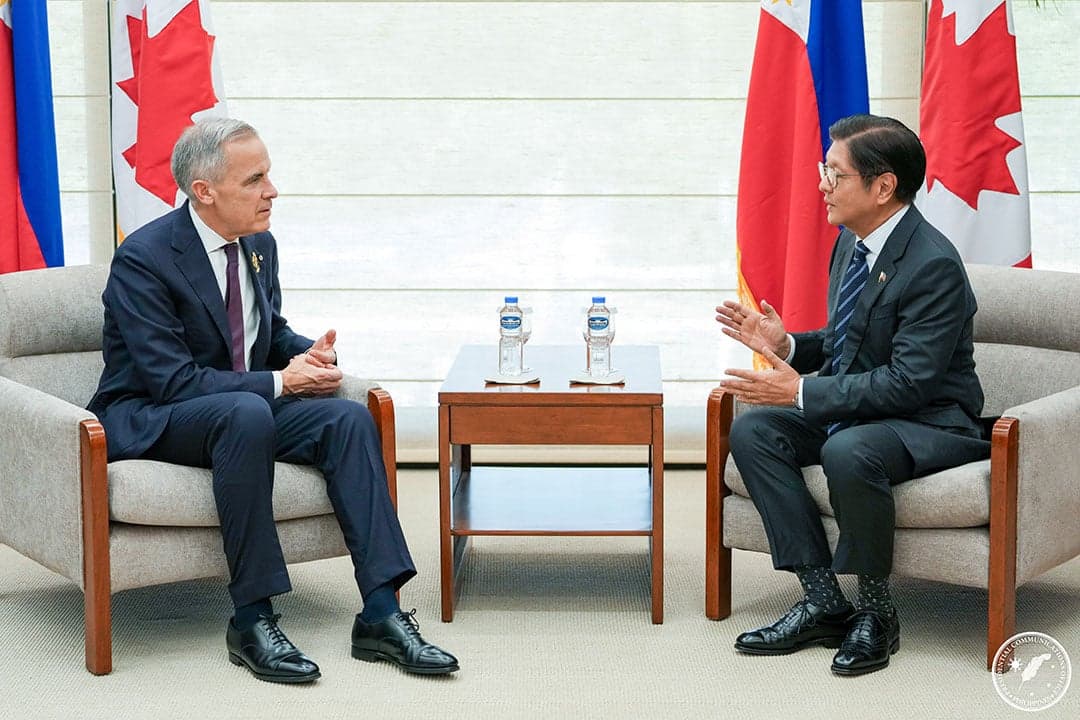
Canada Finalizes ASEAN Free Trade Pact and Accelerates Thailand Deal
National News
 06
Saskatchewan Expands Police and Crisis Teams in North Battleford
National News
 07
Fatal Home Invasion in Granby Leaves One Dead, One Critically Injured
National News
 08
CBSA Demotes 63 Officers Medically Unfit to Carry Firearms
National News
 09
Canadian Natural Resources Acquires Advantage Energy for $2.53 Billion
National News
 10
Ottawa Invests $200 Million to Boost Woodfibre LNG Capacity
National News
 11
Canada Pledges $560 Million to Tropical Forest Conservation Facility
National News
 12
TTC Bans E-Bikes and E-Scooters for Winter to Prevent Battery Fires
National News
 13
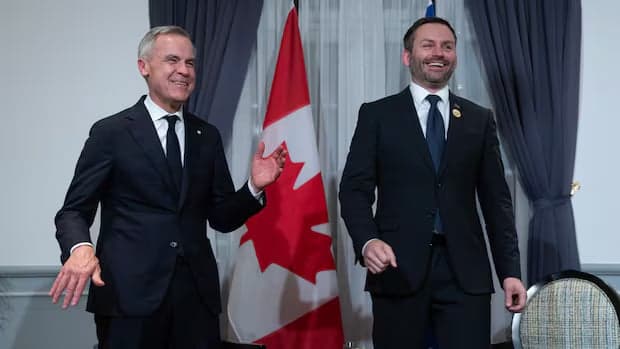
Carney and Quebec Premier Plamondon Hold First Bilateral Meeting
National News
 14
Pfizer Withdraws Premarin from Canada, Raising Access Concerns for Menopause Therapy
National News
 15
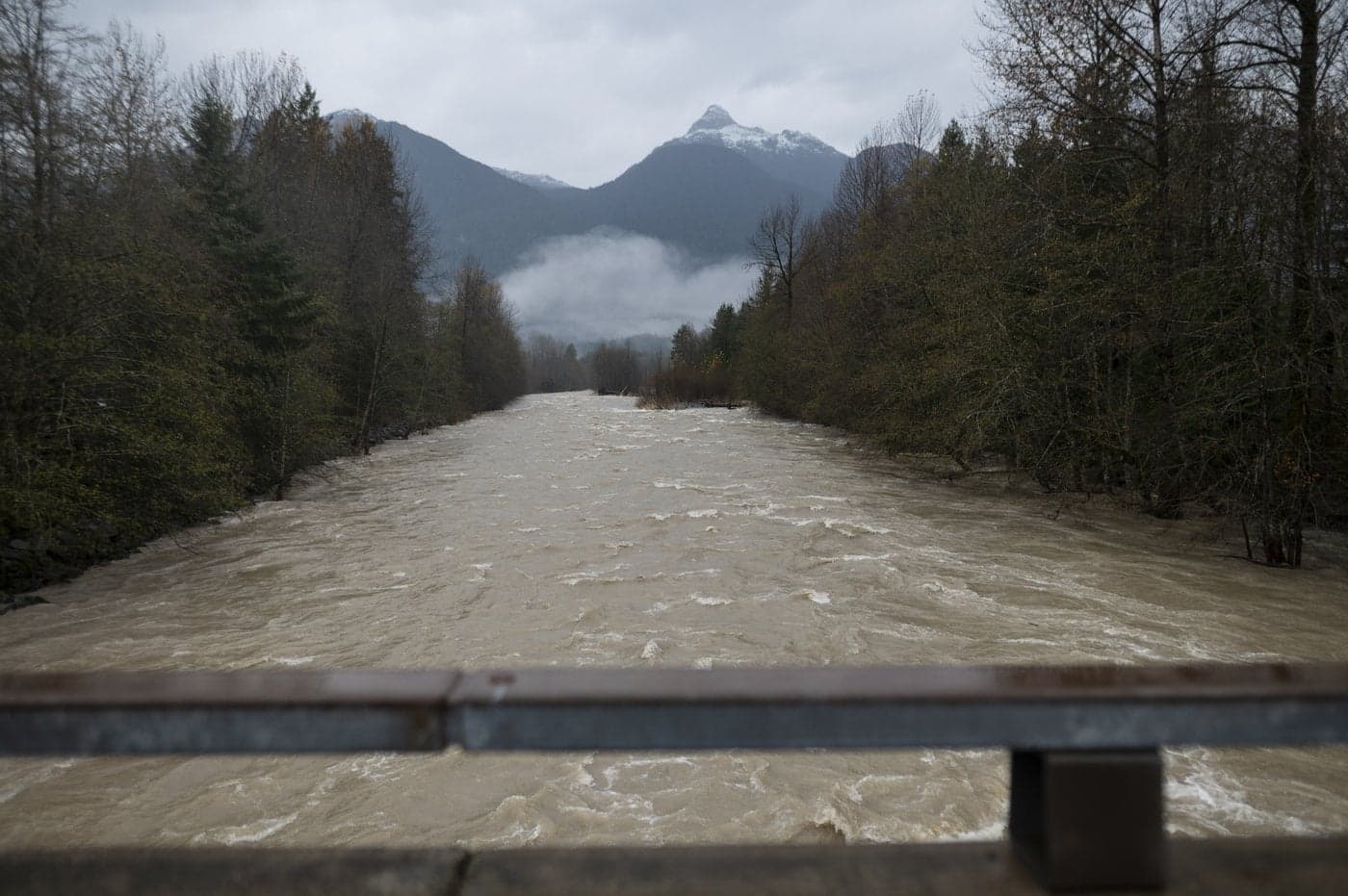
Pemberton Valley Evacuation Alerts Lifted as Atmospheric River Floodwaters Recede
National News
- 16
Red Sea and Gulf Escalations Strain Middle East Shipping and Energy Security
World & Geopolitics
 17
Iran Escalates Gulf Tensions with Drone Attacks on Bahrain Base, Mines Hit Tankers; U.S. Deploys Third Carrier
World & Geopolitics
 18
Houthis Recapture Strategic Red Sea Coast, Forcing Yemeni Forces Back Toward Aden
World & Geopolitics
 19
Western Allies Demand Israel Lift Gaza Blockade Amid Winter Crisis; Internal Israeli Politics Shift
World & Geopolitics
 20
Four Nations Urge Israel to Expedite Gaza Winter Aid Amidst Severe Storm
World & Geopolitics
 21
Ukraine Launches Record 1,300-Drone Attack on Russian Military and Petrochemical Targets
World & Geopolitics
 22
Ukraine Air Defenses Hampered by Starshield Speed Limits, Enabling Russian Strikes
World & Geopolitics
 23
China Pushes Upgraded ASEAN Trade Pact Amid South China Sea Tensions
World & Geopolitics
 24
Canada Finalizes Philippines Free Trade Deal, Bolsters ASEAN Energy Ties
World & Geopolitics
 25
Francophonie Summit in Phnom Penh Focuses on Digital Economy and Non-Aligned Trade
World & Geopolitics
 26
G7 Economic Optimism Plummets to 2009 Crisis Levels, Gallup Reports
World & Geopolitics
 27
Canada Hints at Chinese Auto Imports Amid Stalled U.S. Trade Talks
World & Geopolitics
 28
US Treasury Chief Demands Nvidia Shakeup Over Alleged China AI Chip Diversion
World & Geopolitics
- 29
Toronto Homeowners, Builders Urge Permitting Overhaul for Backyard Housing Growth
City News
- 30
Toronto Activates Winter Services Plan to Aid Unhoused Residents Amidst Shifting Demographics
City News
 31
Toronto Seeks Indigenous Housing Provider Amid Budget Shortfall and Hiring Freeze
City News
- 32
Protesters Rally Against Bike Lane Removals as Road Safety Debate Intensifies
City News
 33
Toronto Road Safety Protests Erupt as Highway Collisions Intensify Calls for Transit Protection
City News
 34
TTC Bans E-Bikes and E-Scooters Over Fire Risks From Lithium-Ion Batteries
City News
 35
TTC Investigates Second Antisemitic Vandalism Incident at St. Clair Subway Station
City News
- 36
Antisemitic Vandalism at St. Clair Station Spurs Hate-Crime Investigation Calls
City News
 37
Suspect Arrested After Break-and-Enter Getaway Vehicle Crashes into East York Storefront
City News
 38
Durham Police Officer Injured in Collision Responding to Priority Call
City News
- 39
Multi-Vehicle Crash Halts Traffic on Highway 401 Westbound Collectors in North York
City News
- 40
Mississauga Business Owners Suffer Under Prolonged Hurontario LRT Construction Delays
City News
- 41
Ontario Consults on Hamilton Transit Station Areas to Spur Transit-Oriented Development
City News
 42
Toronto Faces Cold Snap and Rising Respiratory Illnesses; Public Health Issues Guidance
City News
 43
GTA Observes Louis Riel Day with Cultural Events and Civic Illuminations
City News
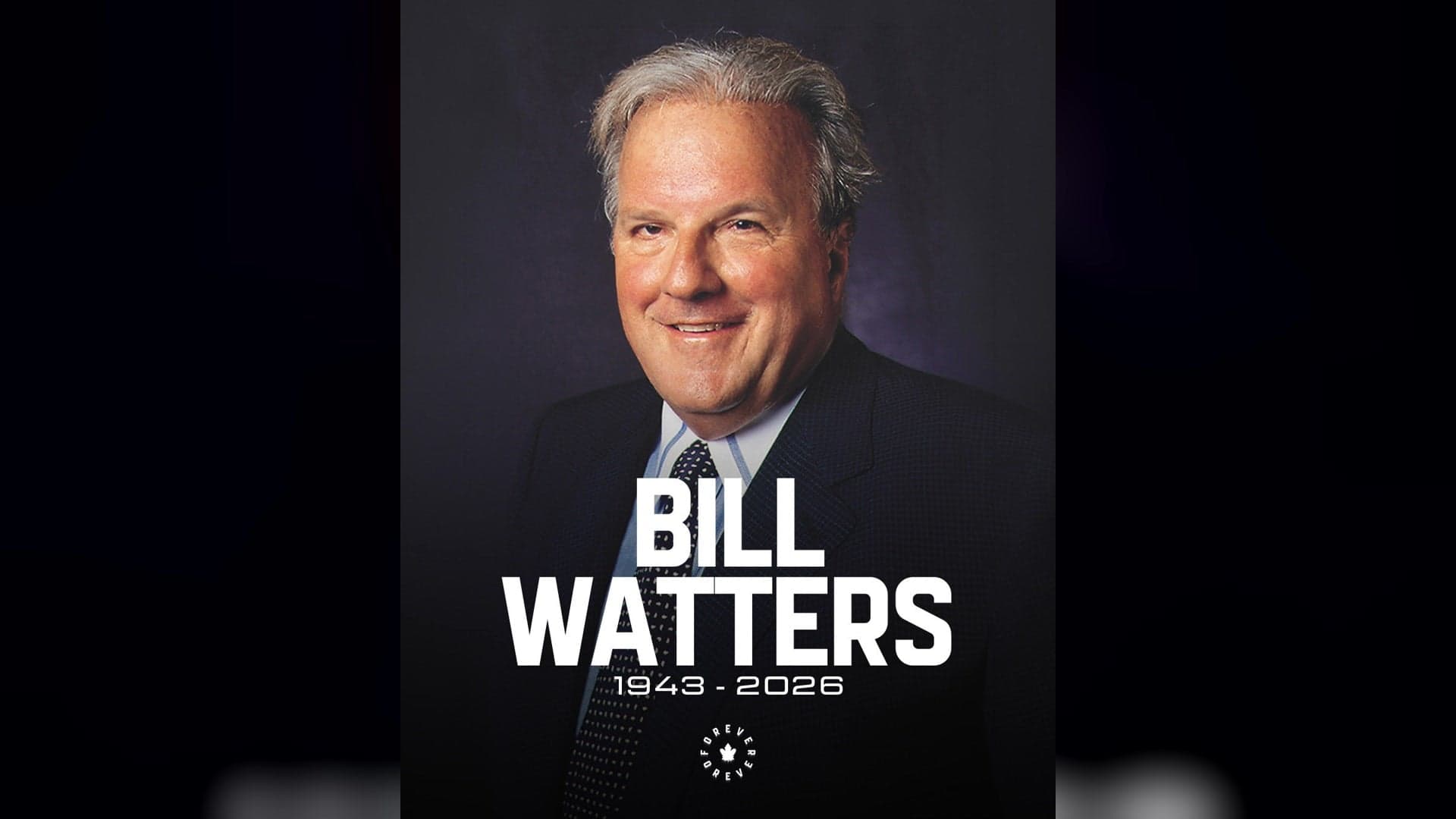 44
Bill Watters, Iconic Maple Leafs Executive and Broadcaster, Dies at 83
Sports
 45
Blue Jays Target Dustin May in Aggressive Winter Overhaul Amid Front-Office Turmoil
Sports
 46
Blue Jays Target Middle Infield, International Talent in Offseason Shake-up
Sports
 47
Scottie Barnes Shines in Return, but Kawhi Leonard Remains Out
Sports
 48
Raptors Extend Losing Streak to 14 Against Knicks Amidst Chronic Fourth-Quarter Meltdowns
Sports
 49
Raptors Blow Fourth-Quarter Lead, Fall to Knicks in Overtime
Sports
- 50
Blue Jays Release 11 Minor Leaguers, Including Power Hitter Peyton Williams
Sports
 51
Raptors Maintain Open Roster Spot Amid Trade Speculation and Cap Concerns
Sports
 52
Maple Leafs Crisis Deepens: Chayka Eyes Defensive Fix Amid Record Homestand Collapse
Sports
 53
Maple Leafs' Losing Streak Hits Six Games Amidst Player Apologies and Goalie's 'Gut Check'
Sports
 54
Raptors' Pattern of Collapsing After Building Leads Causes Concern
Sports
See all 54 as a listHide the list
- Canada Considers Chinese Automakers Amidst U.S. Trade Tensions
- Canada's MAID Reforms Face Parliamentary Showdown Over Mental Illness and Advance Requests
- Canadian Inflation Edges Up to 3.2% in October; Housing Market Weakens
- Canada to Offer Fast-Track PR to 200,000 In-Country Residents by 2027
- Canada Finalizes ASEAN Free Trade Pact and Accelerates Thailand Deal
- Saskatchewan Expands Police and Crisis Teams in North Battleford
- Fatal Home Invasion in Granby Leaves One Dead, One Critically Injured
- CBSA Demotes 63 Officers Medically Unfit to Carry Firearms
- Canadian Natural Resources Acquires Advantage Energy for $2.53 Billion
- Ottawa Invests $200 Million to Boost Woodfibre LNG Capacity
- Canada Pledges $560 Million to Tropical Forest Conservation Facility
- TTC Bans E-Bikes and E-Scooters for Winter to Prevent Battery Fires
- Carney and Quebec Premier Plamondon Hold First Bilateral Meeting
- Pfizer Withdraws Premarin from Canada, Raising Access Concerns for Menopause Therapy
- Pemberton Valley Evacuation Alerts Lifted as Atmospheric River Floodwaters Recede
- Red Sea and Gulf Escalations Strain Middle East Shipping and Energy Security
- Iran Escalates Gulf Tensions with Drone Attacks on Bahrain Base, Mines Hit Tankers; U.S. Deploys Third Carrier
- Houthis Recapture Strategic Red Sea Coast, Forcing Yemeni Forces Back Toward Aden
- Western Allies Demand Israel Lift Gaza Blockade Amid Winter Crisis; Internal Israeli Politics Shift
- Four Nations Urge Israel to Expedite Gaza Winter Aid Amidst Severe Storm
- Ukraine Launches Record 1,300-Drone Attack on Russian Military and Petrochemical Targets
- Ukraine Air Defenses Hampered by Starshield Speed Limits, Enabling Russian Strikes
- China Pushes Upgraded ASEAN Trade Pact Amid South China Sea Tensions
- Canada Finalizes Philippines Free Trade Deal, Bolsters ASEAN Energy Ties
- Francophonie Summit in Phnom Penh Focuses on Digital Economy and Non-Aligned Trade
- G7 Economic Optimism Plummets to 2009 Crisis Levels, Gallup Reports
- Canada Hints at Chinese Auto Imports Amid Stalled U.S. Trade Talks
- US Treasury Chief Demands Nvidia Shakeup Over Alleged China AI Chip Diversion
- Toronto Homeowners, Builders Urge Permitting Overhaul for Backyard Housing Growth
- Toronto Activates Winter Services Plan to Aid Unhoused Residents Amidst Shifting Demographics
- Toronto Seeks Indigenous Housing Provider Amid Budget Shortfall and Hiring Freeze
- Protesters Rally Against Bike Lane Removals as Road Safety Debate Intensifies
- Toronto Road Safety Protests Erupt as Highway Collisions Intensify Calls for Transit Protection
- TTC Bans E-Bikes and E-Scooters Over Fire Risks From Lithium-Ion Batteries
- TTC Investigates Second Antisemitic Vandalism Incident at St. Clair Subway Station
- Antisemitic Vandalism at St. Clair Station Spurs Hate-Crime Investigation Calls
- Suspect Arrested After Break-and-Enter Getaway Vehicle Crashes into East York Storefront
- Durham Police Officer Injured in Collision Responding to Priority Call
- Multi-Vehicle Crash Halts Traffic on Highway 401 Westbound Collectors in North York
- Mississauga Business Owners Suffer Under Prolonged Hurontario LRT Construction Delays
- Ontario Consults on Hamilton Transit Station Areas to Spur Transit-Oriented Development
- Toronto Faces Cold Snap and Rising Respiratory Illnesses; Public Health Issues Guidance
- GTA Observes Louis Riel Day with Cultural Events and Civic Illuminations
- Bill Watters, Iconic Maple Leafs Executive and Broadcaster, Dies at 83
- Blue Jays Target Dustin May in Aggressive Winter Overhaul Amid Front-Office Turmoil
- Blue Jays Target Middle Infield, International Talent in Offseason Shake-up
- Scottie Barnes Shines in Return, but Kawhi Leonard Remains Out
- Raptors Extend Losing Streak to 14 Against Knicks Amidst Chronic Fourth-Quarter Meltdowns
- Raptors Blow Fourth-Quarter Lead, Fall to Knicks in Overtime
- Blue Jays Release 11 Minor Leaguers, Including Power Hitter Peyton Williams
- Raptors Maintain Open Roster Spot Amid Trade Speculation and Cap Concerns
- Maple Leafs Crisis Deepens: Chayka Eyes Defensive Fix Amid Record Homestand Collapse
- Maple Leafs' Losing Streak Hits Six Games Amidst Player Apologies and Goalie's 'Gut Check'
- Raptors' Pattern of Collapsing After Building Leads Causes Concern
Section 1 of 4
National News
15 stories · 7 min skim
National News
2 min read
Canada Considers Chinese Automakers Amidst U.S. Trade Tensions
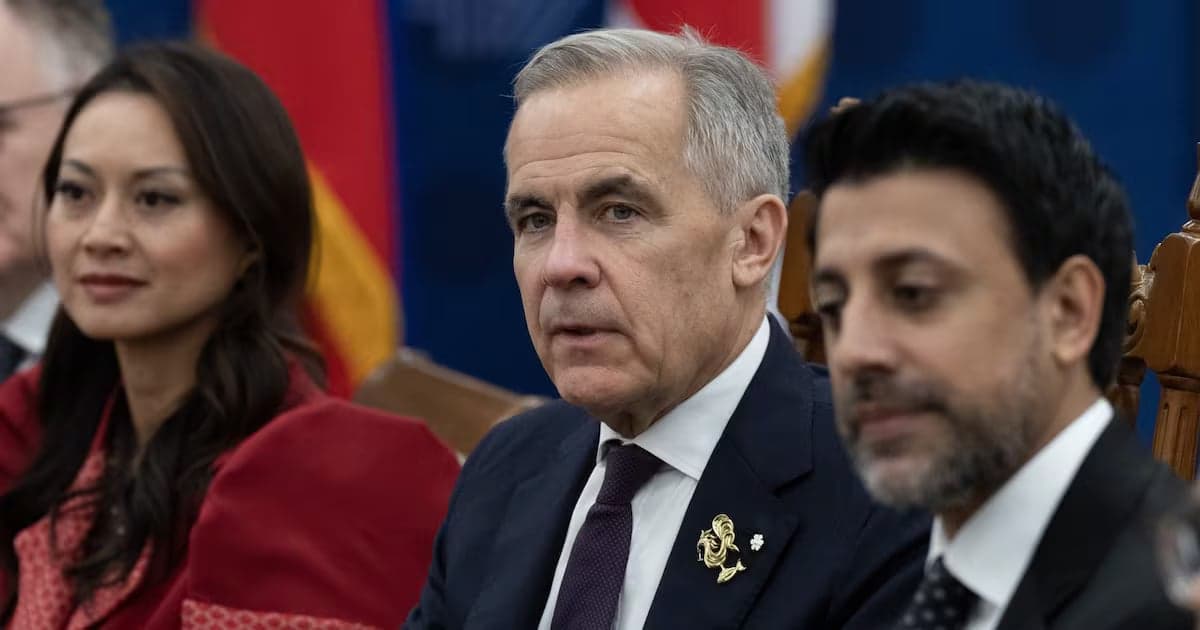
Prime Minister Mark Carney warned that Canada may partner with Chinese automakers if U.S. trade talks collapse, emphasizing that any investment must include significant domestic manufacturing. This potential pivot follows strained relations with the U.S. under President Trump and comes ahead of high-stakes meetings with Chinese President Xi Jinping at the APEC Summit. The move aims to sustain the Canadian auto sector, particularly in Ontario, but carries geopolitical risks and has drawn criticism from the opposition.
Read the full storyFold the full story1 min · 7 sources
Speaking from Phnom Penh, Cambodia, on November 16, 2026, Prime Minister Mark Carney issued a stark warning regarding the future of the Canadian automotive sector, asserting that Canada is prepared to partner directly with Chinese automakers if bilateral negotiations with U.S. President Donald Trump fail to preserve an integrated North American automotive manufacturing market[1][2][3]. Carney specified that any potential Chinese investment would be strictly conditioned on establishing significant domestic manufacturing footprints within Canada, explicitly ruling out arrangements that merely involve assembling imported foreign vehicle components[4].
The Prime Minister’s ultimatum precedes high-stakes bilateral meetings with Chinese President Xi Jinping scheduled for later in the week at the Asia-Pacific Economic Cooperation (APEC) Summit in Shenzhen, China[5][2][3]. Trade relations between Ottawa and Washington have grown increasingly strained following the election of President Trump, whose protectionist agenda threatens cross-border industrial integration under the continental trade framework[6][2][3]. Canada had previously laid groundwork for bilateral engagement with Beijing earlier in the year, when both nations concluded a preliminary arrangement permitting tens of thousands of Chinese electric vehicles (EVs) into the Canadian marketplace at reduced tariff rates[3].
The prospect of inviting Chinese automotive original equipment manufacturers (OEMs) into the domestic manufacturing supply chain represents a major pivot in Canadian industrial and trade policy[1][2]. The domestic auto manufacturing base - centered primarily in Ontario - has faced growing headwinds, exemplified by recent operational restructuring and plant divestment controversies involving major players like Stellantis in Brampton[7]. Opening Canada’s manufacturing sector to Chinese state-backed automotive firms would provide an alternative avenue for sustaining high-skilled manufacturing employment and EV production, but carries profound geopolitical risks, potentially triggering retaliatory tariffs and regulatory penalties from Washington[2][3].
The remarks immediately sparked political and industry reaction[6]. Official Opposition Conservatives have sharply criticized the Liberal government’s trade posturing, arguing that leaning toward Beijing jeopardizes Canada’s most vital security and economic alliance[6]. Public sentiment remains similarly divided; recent polling data published by Ipsos indicates that a significant majority of Canadians express deep skepticism regarding the federal government's economic management and its ability to secure a favorable, stable trade arrangement with the Trump administration[6].
- Mark Carney
- Donald Trump
- Xi Jinping
National News
2 min read
Canada's MAID Reforms Face Parliamentary Showdown Over Mental Illness and Advance Requests
The Canadian House of Commons is set to vote on Bill C-41, the Medical Assistance in Dying Safeguards Act, which seeks to reform the country's MAID framework. The legislation permanently bans MAID for individuals whose sole condition is mental illness and establishes a framework for advance requests for MAID for those with serious, incurable illnesses before losing capacity. The bill faces significant political and religious opposition, with calls to split its provisions due to ethical concerns.
Read the full storyFold the full story2 min · 8 sources
Debate over federal assisted dying legislation reached a critical juncture in Ottawa on November 15–16, 2026, as the House of Commons prepared to conclude second-reading deliberations on Bill C-41, titled the Medical Assistance in Dying Safeguards Act[1][2]. Introduced by Justice Minister Sean Fraser, the legislation enacts sweeping updates to the Criminal Code to overhaul Canada’s medical assistance in dying (MAID) framework[3][4]. Government House leaders have signaled their intention to bring second-reading debate to a rapid conclusion on November 16, paving the way for a decisive vote to refer the bill to the Standing Committee on Justice and Human Rights[2].
Bill C-41 contains two core statutory mechanisms that address long-standing legal uncertainties[4]. First, it permanently bars MAID for individuals whose sole underlying condition is a mental illness, formally adopting the recommendations of the Special Joint Committee on MAID and pre-empting the expiration of the statutory exclusion deadline on March 17, 2027[2][4]. Second, the bill creates a federal framework allowing competent adults diagnosed with a serious and incurable illness (such as early-stage Alzheimer’s or other forms of dementia) to submit advance requests for MAID before irreversibly losing mental capacity[5][4]. The lawful administration of advance-request MAID would be contingent upon individual provinces establishing regulated repositories and specific clinical verification criteria[5][6].
The push to advance the bill has met significant political and religious resistance[2]. On November 15, the Canadian Conference of Catholic Bishops (CCCB) submitted an extensive 18-page legal brief to Parliament and launched a nationwide grassroots letter-writing campaign demanding that the federal government split Bill C-41 into two distinct bills[2][7]. The bishops, supported by bioethical experts including Bishop Emeritus Noël Simard, voiced approval for making the mental illness ban permanent, but urged MPs to excise and reject the advance-request provisions, arguing they lack necessary evidentiary scrutiny and diminish protections for vulnerable, incapacitated individuals[2].
Within Parliament, Conservative members have echoed calls to bifurcate the legislation, criticizing the Liberal government for bundling the time-sensitive mental health prohibition with ethically complex advance-directive provisions[8][2]. The procedural maneuver to end second-reading debate sets up a contentious parliamentary battle over the coming days, highlighting unresolved regional divides regarding whether provincial health jurisdictions possess the administrative infrastructure to store, oversee, and execute advance end-of-life directives[2][5].
- Sean Fraser
- Canadian Conference of Catholic Bishops
- Noël Simard
National News
2 min read
Canadian Inflation Edges Up to 3.2% in October; Housing Market Weakens
Canada's annual inflation rate rose to 3.2% in October, driven by persistent increases in automotive and energy prices. This uptick has diminished expectations for early interest rate cuts by the Bank of Canada. Concurrently, the housing market shows signs of continued weakness, with the Canadian Real Estate Association projecting a 5.2% decline in national home sales for 2026 due to high mortgage costs.
Read the full storyFold the full story2 min · 7 sources
Canadian financial markets opened the week of November 16, 2026, centered on a dense schedule of macroeconomic indicator releases and public policy updates[1]. Front and center is Statistics Canada’s October Consumer Price Index (CPI) report, with consensus projections anticipating headline annual inflation to tick up toward 3.2%, compared to 3.1% in September[1][2]. The persistence of firm consumer prices, largely driven by sticky automotive and energy inputs, has tempered expectations for near-term interest rate cuts by the Bank of Canada, with fixed-income markets weighing the likelihood of additional policy tightening to manage persistent core services price growth[2].
The country's real estate sector also faces headwinds ahead of the Canadian Real Estate Association’s (CREA) October sales data release[1]. Heading into the mid-month report, CREA downgraded its national home sales forecast for 2026 for the third consecutive quarter[1]. CREA now projects total home sales across Canada to reach 444,530 units by the end of 2026, representing a 5.2% contraction compared to 2025 volumes[1]. High mortgage servicing costs continue to keep prospective buyers on the sidelines, depressing transaction volumes across major urban centres in Ontario and British Columbia[1][3].
Simultaneously, the federal cabinet executed a coordinated national rollout on November 15 and 16 to promote implementation measures under "Budget 2026: Masters of our destiny"[4][5][6]. Health Minister Marjorie Michel and Secretary of State John Zerucelli announced community allocations under the $1.5-billion, nine-year Build Communities Strong Fund, which reserves $750 million specifically for retrofitting municipal ice arenas and recreational complexes[4][6]. Meanwhile, in Victoria, British Columbia, federal representatives visited marine-tech firm Barnacle Systems to highlight the new "Productivity Mega Deduction" - a flagship corporate write-off provision aimed at stimulating private business capital investments in advanced technology, equipment, and automation[7].
Corporate performance indicators will round out the picture later in the week[1]. Consumer retail bellwether Loblaw Companies Ltd. is slated to present third-quarter financial earnings, offering insight into grocery gross margins and household purchasing power under elevated price levels[1]. Those results will be paired with September retail sales figures from Statistics Canada, following August data that revealed modest retail expansion of 1.2% to $74.6 billion[1].
- Statistics Canada
- Bank of Canada
- Canadian Real Estate Association
National News
2 min read
Canada to Offer Fast-Track PR to 200,000 In-Country Residents by 2027
Immigration, Refugees and Citizenship Canada (IRCC) will create up to 200,000 permanent residency spaces by 2027 specifically for individuals already in Canada. This initiative targets qualified workers awaiting provincial nominee approvals and aims to clear backlogs for humanitarian streams, including those from Hong Kong and Ukraine.
Read the full storyFold the full story1 min · 4 sources
Immigration, Refugees and Citizenship Canada (IRCC) detailed an operational shift intended to create up to 200,000 additional permanent residency spaces in 2027 exclusively for individuals already living, studying, or working inside the country[1][2]. The time-limited measure, released in tandem with the federal immigration levels plan and annual departmental report, is split into two distinct cohorts of 100,000 spaces each: an economic stream dedicated to qualified workers awaiting Provincial Nominee Program (PNP) approvals or decisions under closed economic pathways, and a humanitarian stream designed to eliminate long-standing application backlogs[2]. Under the humanitarian grouping, federal officials aim to complete processing for up to 32,000 individuals under the sunsetting Hong Kong pathways and up to 18,800 people under the temporary Ukrainian humanitarian program[1][2].
The announcement addresses mounting anxiety among thousands of temporary visa holders whose lives were thrown into administrative limbo as their permits neared expiration[1]. Eligible applicants covered by the policy do not need to file fresh applications or pay additional fees, as IRCC will draw directly from existing in-Canada inventories to finalize determinations[2]. Temporary residents across major urban centres like Toronto and Vancouver, who had spent years waiting for final decisions while facing the prospect of forced departures, reported immense relief at the federal commitment to clear backlogs before the end of 2027[1].
The federal strategy represents a calibrated effort to manage national population growth while mitigating backlash over housing affordability and public infrastructure pressures[3][4]. By converting individuals already residing in Canadian communities into permanent residents rather than bringing in new arrivals from abroad, the federal government aims to meet macroeconomic labor demands without driving up the national head count[4][2]. Federal data indicates that non-permanent residents constituted 6.7 per cent of Canada’s total population as of mid-2026, down from a peak of 7.4 per cent in late 2024; the current target is to compress that figure below 5 per cent by the end of 2027 while capping broader annual permanent admissions at under 1 per cent of the overall population[4].
- Immigration, Refugees and Citizenship Canada
- IRCC
- Permanent Residency
National News
2 min read
Canada Finalizes ASEAN Free Trade Pact and Accelerates Thailand Deal
Canada has substantially concluded negotiations for a comprehensive Free Trade Agreement with the Association of Southeast Asian Nations (ASEAN), marking the bloc's first such accord with a North American nation. Additionally, Canada and Thailand agreed to expedite their bilateral free trade negotiations, aiming for finalization by the end of 2027. These moves are part of Canada's strategy to diversify trade and secure access to growing Indo-Pacific markets.
Read the full storyFold the full story1 min · 6 sources
Canadian trade negotiators achieved a critical breakthrough in Southeast Asia on November 15, 2026, announcing the "substantial conclusion" of negotiations for the comprehensive ASEAN-Canada Free Trade Agreement on the sidelines of the 49th ASEAN Summit in Manila, Philippines[1][2]. The landmark multilateral pact - scheduled for formal signature in 2027 - will establish the Association of Southeast Asian Nations’ first comprehensive free-trade accord with a North American market[1][2]. Prime Minister Mark Carney highlighted that the agreement is designed to anchor Canadian advanced manufacturers and commodities directly into fast-growing Indo-Pacific supply chains[1].
Simultaneously, Canadian Minister of International Trade Maninder Sidhu met with Thailand's Deputy Prime Minister and Commerce Minister Suphajee Suthumpun in Manila to formalize an accelerated roadmap for a bilateral Canada-Thailand Free Trade Agreement[2]. Building on the initial round of talks completed in Toronto in late October, both nations established an official deadline to finalize bilateral pact terms by the end of 2027[2]. Philippine business organizations similarly welcomed the wrap-up of parallel Philippines-Canada trade talks, citing an influx of Canadian infrastructure capital and enhanced market access for Canadian agricultural and industrial goods[1].
The trade offensive also featured new international public finance commitments[3][4]. During bilateral talks with Brazilian President Luiz Inácio Lula da Silva in Manila on November 15, Prime Minister Carney pledged an initial Canadian contribution of up to $560 million over four years to the Tropical Forest Forever Facility (TFFF)[4][5]. The commitment draws from Canada’s multi-year $6-billion international climate finance envelope, designed to protect critical carbon sinks and support international climate resilience[3][4].
Together, the diplomatic push reflects Canada’s broader strategy to cushion domestic industries against shifts in North American trade rules[1][6]. By locking in tariff reductions and investment protections across emerging Pacific economies, Canadian policymakers aim to give domestic exporters predictable access to high-growth markets across Southeast Asia[1][2].
- ASEAN
- Mark Carney
- Maninder Sidhu
National News
2 min read
Saskatchewan Expands Police and Crisis Teams in North Battleford
The Government of Saskatchewan is investing over $360,000 to establish a second Police and Crisis Team (PACT) in North Battleford. These teams pair RCMP officers with mental health clinicians to respond to crises involving mental health and addictions, diverting individuals from emergency departments and the justice system.
Read the full storyFold the full story1 min · 2 sources
The Government of Saskatchewan has allocated more than $360,000 to launch a second Police and Crisis Team (PACT) in North Battleford, dramatically expanding specialized mobile crisis response units across the west-central region of the province[1][1]. PACT units pair uniformed frontline RCMP officers with registered mental health and addictions clinicians from the Saskatchewan Health Authority, enabling coordinated dispatch to high-risk 911 calls involving psychiatric crises, suicidal ideation, and acute substance intoxication[1][1]. The teams focus on physical de-escalation, immediate clinical triage, and connecting individuals to community-based social services rather than defaulting to criminal detention[1][1].
The expansion comes on the heels of provincial performance metrics demonstrating the efficacy of North Battleford's inaugural crisis team[1]. Between April 1, 2025, and March 31, 2026, the local team conducted 289 field interventions[1]. Provincial figures show that these interventions directly diverted 227 individuals from acute emergency department visits and prevented 217 people from entering the formal criminal justice system through arrest and processing[1]. Local healthcare administrators emphasized that these diversions relieve critical pressure on rural emergency departments that have been chronically overstretched by severe staffing shortages and physician recruitment hurdles[1][2].
Battlefords RCMP Detachment Commander Insp. Ryan How praised the expansion, stating that community safety challenges in the region are heavily rooted in deep social, economic, and addictions-related issues that standard law enforcement interventions are not equipped to solve[1]. How stressed that partnering police with specialized healthcare professionals modernizes detachment practices and delivers clinical care to patients during moments of peak crisis[1]. The funding expansion will allow North Battleford to widen its operational coverage hours, ensuring clinical crisis responders are available during evening and weekend peaks when traditional community mental health clinics are closed[1].
- Saskatchewan
- North Battleford
- Police and Crisis Team
National News
2 min read
Fatal Home Invasion in Granby Leaves One Dead, One Critically Injured
A targeted home invasion in Granby, Quebec, resulted in one man's death and a woman being critically injured. Two armed suspects entered the residence and opened fire on the occupants before fleeing the scene. The Sûreté du Québec is leading the investigation, with the surviving victim's condition stabilizing.
Read the full storyFold the full story1 min · 3 sources
A targeted home invasion and double shooting in Granby, Quebec, left one man dead and a woman critically injured, triggering a multi-jurisdictional homicide investigation led by the Sûreté du Québec (SQ) alongside Granby municipal police[1]. The incident unfolded around 6:00 p.m. Saturday inside a private residence situated on Leclerc Boulevard West, a residential thoroughfare in the municipality located roughly 80 kilometres east of Montreal[1]. According to SQ spokesperson Sgt. Geneviève Bruneau, two armed male suspects forced their way inside the dwelling and opened fire directly on the two occupants[1].
The male victim, identified only as a man in his 30s, sustained fatal gunshot wounds and was pronounced dead at the scene by emergency medical responders[1]. The second victim, a woman also in her 30s, sustained severe penetrating wounds and was rushed to a regional hospital under emergency escort[1]. Hospital officials confirmed her condition had stabilized by Sunday, and investigators indicated her injuries are no longer considered life-threatening[1]. Major Crimes investigators spent Sunday awaiting medical clearance to conduct formal interviews with the surviving victim to reconstruct the events leading up to the attack[1].
The perpetrators fled the scene on foot or in an unidentified vehicle immediately after discharging their firearms, and no suspects had been taken into custody[1]. Forensic teams cordoned off Leclerc Boulevard West to analyze ballistic evidence, sweep for surveillance footage from surrounding homes, and determine the exact points of entry and egress[1]. The brazen nature of the daylight home invasion has heightened safety concerns across Quebec’s Eastern Townships[1], coming amid heightened public awareness of localized organized crime operations and violent illicit firearms proliferation across southern Quebec[2][3].
- Sûreté du Québec
- Granby
- Quebec
National News
2 min read
CBSA Demotes 63 Officers Medically Unfit to Carry Firearms
The Canada Border Services Agency (CBSA) is demoting 63 officers who can no longer carry firearms due to medical reasons. The agency states this is a necessary measure for operational readiness and responsible fund management. Affected officers, including those with injuries or PTSD, face demotion to lower-paying administrative roles.
Read the full storyFold the full story1 min · 3 sources
The Canada Border Services Agency (CBSA) has formally notified 63 frontline border services officers that they are being demoted to lower-paying administrative positions because of medical conditions that permanently prevent them from carrying a duty firearm[1][2]. The agency's leadership informed CBC News that while temporary workplace accommodations are regularly extended to staff experiencing transient medical or psychological setbacks, employees requiring permanent accommodation must be transferred away from armed classifications to positions where carrying a sidearm is not a mandatory condition of employment[1]. The CBSA defended the move as a lawful requirement aligned with the responsible stewardship of public funds and operational readiness along Canada's ports of entry[1].
The decision has ignited furious opposition from the Customs and Immigration Union (CIU) and affected frontline personnel, who argue the agency is unjustly penalizing experienced officers for injuries sustained on duty, chronic physical disabilities, and psychological traumas such as post-traumatic stress disorder[1]. Union representatives highlighted that the 63 officers make up roughly 0.7 per cent of the approximately 8,500 CBSA positions that require firearm qualification[1]. The union maintains that modern border management encompasses a wide spectrum of vital day-to-day enforcement tasks - including document analysis, secondary customs processing, commercial trade compliance, and cargo monitoring - that do not necessitate the active carriage of a sidearm[1].
The dispute underscores long-running friction between federal public safety administrators and public sector unions regarding duty-to-accommodate obligations under the Canadian Human Rights Act[1]. Frontline officers facing salary cuts argue that forcing veteran officers out of their core classification undermines morale across an agency already grappling with recruitment shortages and demanding border security mandates[3][1]. The union is preparing labor grievances against the agency's policy, insisting that pushing experienced personnel into reduced pay bands creates a dangerous disincentive for officers to report workplace injuries or seek help for psychological distress[1].
- Canada Border Services Agency
- CBSA
- Customs and Immigration Union
National News
2 min read
Canadian Natural Resources Acquires Advantage Energy for $2.53 Billion
Canadian Natural Resources Limited has agreed to purchase Advantage Energy Ltd. for $2.53 billion in an all-cash deal. This acquisition will add approximately 79,000 barrels of oil equivalent per day of production from the Montney and Charlie Lake formations, strategically located near Canadian Natural's existing operations. The deal represents a significant consolidation in Western Canada's energy sector.
Read the full storyFold the full story2 min · 3 sources
In a major consolidation of Western Canadian upstream energy assets, Canadian Natural Resources Limited (TSX: CNQ) announced on November 16, 2026, that it has entered into a definitive arrangement agreement to acquire all outstanding common shares of Advantage Energy Ltd. (TSX: AAV)[1]. The all-cash transaction offers Advantage shareholders $13.55 per share, representing an aggregate equity consideration of approximately $2.255 billion on a fully diluted basis and an enterprise value of approximately $2.53 billion once Advantage’s net debt and outstanding convertible debentures are factored in[1]. The transaction represents an all-cash premium of 25% over Advantage’s closing price on November 13, 2026, and a matching 25% premium over its 30-day volume-weighted average price, reaching the highest trading valuation for Advantage shares in 18 years[2].
The acquisition delivers to Canadian Natural approximately 79,000 barrels of oil equivalent per day (BOE/d) of high-margin production, concentrated heavily in the prolific Montney and Charlie Lake formations[1]. This reflects a transaction metric of roughly $32,000 per flowing barrel of oil equivalent per day[1]. The acquired land base includes an extensive inventory of light crude oil and liquids-rich natural gas development opportunities directly adjacent to Canadian Natural’s core operational footprint in the Grande Prairie region of northwestern Alberta[1]. Scott Stauth, President of Canadian Natural, emphasized that the portfolio offers exceptional strategic alignment, noting that the adjacent acreage will allow the company to capture scale-driven operational efficiencies while maintaining its low-cost operator advantage[1].
For Advantage Energy, the buyout follows an extensive review of strategic alternatives overseen by its board of directors[2]. Advantage Board Chair and Interim CEO John Festival stated that after a quarter-century of building out top-tier Montney infrastructure and drilling inventories, the board concluded that an immediate, premium cash exit provided the best value realization for shareholders[2]. Advantage’s board has unanimously recommended that investors vote in favor of the deal at a special meeting scheduled for January 2027, with the final closing anticipated under the Business Corporations Act (Alberta) in the first quarter of 2027[1][2].
From a corporate balance-sheet perspective, Canadian Natural indicated it will fund the $2.255-billion cash outlay through cash on hand and existing commercial bank credit facilities[3]. Crucially for institutional investors, management reaffirmed that its capital return framework will remain intact post-closing[1]. Canadian Natural plans to maintain its target of returning 100% of free cash flow to shareholders via ongoing share repurchases and dividends, signaling confidence that the acquisition will be accretive to cash flow per share upon integration[1][3].
- Canadian Natural Resources Limited
- Advantage Energy Ltd.
- Montney Formation
National News
2 min read
Ottawa Invests $200 Million to Boost Woodfibre LNG Capacity
The Canadian federal government is providing $200 million over three years to expand the Woodfibre LNG project in British Columbia. This funding will support engineering upgrades to increase the facility's liquefied natural gas export capacity by 25%, from 2.1 to 2.6 million tonnes per annum. The project is approximately 75% complete, with operations expected to begin in late 2027.
Read the full storyFold the full story1 min · 3 sources
Federal Energy Minister Tim Hodgson announced on November 15, 2026, that the Government of Canada is committing $200 million in federal funding over three years to British Columbia’s Woodfibre LNG facility[1]. The capital infusion will directly finance engineering upgrades designed to increase the export terminal's eventual throughput capacity by roughly 25%, lifting potential production from 2.1 million tonnes per annum to 2.6 million tonnes of liquefied natural gas[1]. The facility, situated approximately seven kilometres southwest of Squamish, B.C., is currently about 75% complete, with initial shipments to global buyers projected to commence in late 2027[1].
Minister Hodgson delivered the announcement in Vancouver alongside British Columbia Premier-designate Lorne Doerkson and Woodfibre LNG Chief Executive Luke Schauerte[1]. Hodgson stressed that establishing reliable Pacific maritime corridors is critical to diversifying Canada’s natural resource exports away from an over-reliance on traditional North American buyers[1]. The federal intervention seeks to leverage Canada’s western coastline to supply energy-hungry Asian markets seeking to transition away from coal-fired power, framing the project as an essential component of Canada's economic statecraft[1].
The project has been positioned by government officials as an environmental and regulatory model, operating under an agreement where the Squamish Nation conducts environmental monitoring and regulation - marking the first major industrial project approved through an Indigenous-led environmental assessment framework[1]. The facility is engineered to run on hydroelectric power rather than gas drives, producing lower operational emissions than standard global LNG plants[1].
The funding announcement comes amid domestic friction over public support for fossil fuel infrastructure[2][1]. While industry stakeholders welcomed the export expansion, environmental organizations monitoring the ongoing COP31 climate negotiations in Antalya, Türkiye, criticized the federal expenditure[2][3]. Groups including Climate Action Network Canada questioned the rationale of directing public funding toward natural gas expansion while domestic climate audits indicate Canada remains off track from hitting its 2030 greenhouse gas reduction goals[2][3].
- Woodfibre LNG
- Government of Canada
- Tim Hodgson
National News
2 min read
Canada Pledges $560 Million to Tropical Forest Conservation Facility
Prime Minister Mark Carney committed CAD $560 million over four years to the Brazil-led Tropical Forest Forever Facility (TFFF) at the ASEAN Summit. This multilateral fund aims to protect tropical rainforests by providing performance-based payments tied to verified tree canopy retention. The Canadian contribution is part of its international climate finance commitments and includes provisions for Indigenous peoples and local communities. The pledge aims to catalyze significant private market investment in conservation.
Read the full storyFold the full story2 min · 7 sources
On November 15, 2026, Prime Minister Mark Carney met with Brazilian President Luiz Inácio Lula da Silva on the sidelines of the 49th Association of Southeast Asian Nations (ASEAN) Summit in Manila, Philippines, to formally commit up to CAD $560 million over four years to the Tropical Forest Forever Facility (TFFF)[1][2][3]. The multilateral fund, co-spearheaded by Brazil and Norway, is designed to protect tropical rainforests across more than 70 developing nations by providing performance-based conservation payments tied to verified retention of tree canopy cover[1][3]. Under the facility’s operating charter, at least 20 percent of all conservation disbursements are legally designated for Indigenous peoples and local traditional communities[1][3].
The Canadian contribution is drawn from the nearly $6 billion in international climate finance authorized under the 2026 Spring Economic Update, which underpins Canada’s broader target of delivering over $13 billion in international climate financing by 2031[1][4]. The TFFF aims to assemble $35 billion in sovereign capital and institutional guarantees to catalyze up to $140 billion in private market investment, using investment returns to fund ongoing preservation incentives for over one billion hectares of tropical forest[3][4].
The major financial pledge comes amid intensifying domestic and international scrutiny of Ottawa’s environmental policy[3]. Carney has faced sharp criticism from civil society organizations for declining to attend consecutive United Nations climate negotiations, including COP30 in Brazil and COP31 in Antalya, Türkiye[3]. Caroline Brouillette, Executive Director of Climate Action Network Canada, noted that while supporting tropical forest conservation is vital, Ottawa’s successive international climate pledges reveal a piecemeal strategy that risks depleting federal funds for adaptation, loss, and damage without a transparent, comprehensive climate finance framework[5]. Conversely, international watchdogs like Human Rights Watch applauded the funding influx, while advocacy coalitions such as the Global Campaign to Demand Climate Justice expressed concern over the commodification of forest management through blended-finance models[6].
Beyond conservation objectives, the Manila agreement serves to reinforce strategic bilateral commerce between Ottawa and Brasília[2]. Brazil remains Canada’s largest trade partner in South America, with two-way merchandise exchange totaling $14.7 billion annually[2]. Following the funding announcement, President Lula extended an official invitation for Carney to visit Brazil in early 2027, with the Brazilian head of state planning a reciprocal state visit to Canada later that year to explore expanded trade ties, critical mineral cooperation, and joint initiatives under the Canada-Brazil Defence Cooperation Agreement[2][7].
- Mark Carney
- Luiz Inácio Lula da Silva
- Tropical Forest Forever Facility
National News
2 min read
TTC Bans E-Bikes and E-Scooters for Winter to Prevent Battery Fires
The Toronto Transit Commission (TTC) has implemented its annual winter ban on e-bikes and e-scooters from November 15 to April 15. This measure aims to prevent fires caused by lithium-ion battery failures, which have occurred previously on transit vehicles. Electric mobility aids for persons with disabilities remain exempt.
Read the full storyFold the full story1 min · 2 sources
The Toronto Transit Commission (TTC) issued a safety directive reminding transit riders that its seasonal prohibition against bringing e-bikes and e-scooters on all public transit vehicles and facilities officially went into effect on November 15, extending through April 15[1]. Under the directive, battery-powered personal micromobility vehicles are barred from all subway trains, streetcars, buses, and indoor station concourses across North America's third-largest transit network[1]. The TTC clarified that electric wheelchairs and other medically necessary, battery-powered mobility aids used by persons with disabilities remain strictly exempt from the policy[1].
The seasonal ban is rooted in fire safety protocols following an incident in late 2023 when a lithium-ion battery on an e-bike suffered catastrophic failure, bursting into heavy flames aboard an active subway car at Sheppard-Yonge station[1]. Transit safety engineers and fire prevention officers noted that lithium-ion battery cells are particularly susceptible to internal thermal runaway, electrical shorts, and explosive ignition when moving rapidly between severe sub-zero outdoor weather and warm, pressurized transit interiors[1]. TTC officials also cited everyday physical hazards, pointing out that large, heavy lithium-powered bicycles obstruct passenger pathways and egress doors during peak rush-hour crowding[1].
While manual, non-electric bicycles and standard fold-up scooters remain permitted aboard TTC vehicles during off-peak travel windows and on weekends, the winter prohibition presents logistical hurdles for thousands of urban couriers and delivery workers who rely on e-bikes for gig-economy employment[1]. The transit agency urged riders using electric conveyances to utilize bike lockups and designated storage infrastructure stationed outside station perimeters rather than attempting to board transit vehicles, warning that transit enforcement officers will intercept and turn away non-compliant commuters across the network[1][2].
- Toronto Transit Commission
- TTC
- E-bikes
National News
2 min read
Carney and Quebec Premier Plamondon Hold First Bilateral Meeting
Prime Minister Mark Carney and Quebec Premier Paul St-Pierre Plamondon held their first official bilateral meeting in Phnom Penh, Cambodia, agreeing on intergovernmental cooperation for municipal affairs, federal funding, and international trade. Despite underlying sovereignty tensions, the meeting was cordial and productive. Discussions focused on deploying federal housing strategy funds to Quebec and mitigating U.S. tariff impacts on Quebec's industries. They also agreed on Quebec hosting an international economic summit for Francophonie economic ministers in 2027.
Read the full storyFold the full story1 min · 5 sources
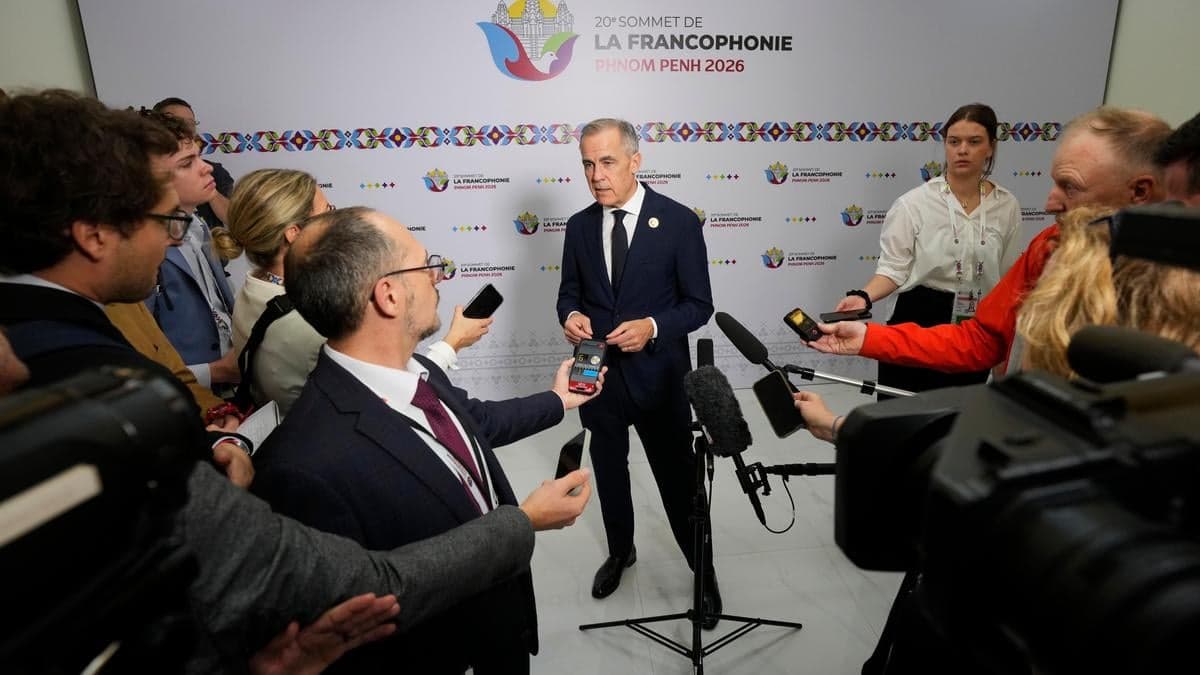
On November 15, 2026, Prime Minister Mark Carney and Quebec Premier Paul St-Pierre Plamondon convened in Phnom Penh, Cambodia, for their first official bilateral meeting since Plamondon’s sovereigntist Parti Québécois formed the provincial government[1][2][3]. Held on the margins of the 20th Sommet de la Francophonie, the sit-down ran 45 minutes - exceeding its scheduled timeframe - and resulted in an agreement on intergovernmental cooperation regarding key municipal files, federal funding commitments, and international trade strategy[2][3].
Despite ideological tensions surrounding Quebec sovereignty - an issue Plamondon noted had been raised informally by international leaders at the summit - both officials struck an amicable and pragmatic tone[2][4]. Premier Plamondon characterized the meeting as highly cordial, confirming that the two leaders exchanged direct contact information to facilitate continuous bilateral dialogue[2]. Substantively, the discussions focused on deploying federal resources from Budget 2026, specifically Ottawa’s newly established $30-billion national housing strategy aimed at curbing homelessness, with federal ministers promising dedicated support tailored to Quebec’s social service priorities[5][2][3].
The bilateral exchange also centered on mitigating the commercial impact of incoming U.S. tariffs on Quebec’s industrial base, particularly forestry, aerospace, and energy exports[2]. Plamondon secured Carney’s explicit backing for an international economic summit of Francophonie economic ministers set to take place in Quebec City in 2027, which provincial officials view as a vital mechanism for diversifying foreign direct investment away from volatile American trade corridors[2][3].
The constructive initial meeting marks a notable baseline for federal-provincial relations as Canada prepares to host the 2028 Sommet de la Francophonie in the National Capital Region[1][4]. While constitutional friction over provincial jurisdiction, immigration levels, and sovereignty remains an underlying political current, both governments signaled that near-term priorities will center on coordinating regional infrastructure rollouts and joint international economic diplomacy[2][3].
- Mark Carney
- Paul St-Pierre Plamondon
- Sommet de la Francophonie
National News
2 min read
Pfizer Withdraws Premarin from Canada, Raising Access Concerns for Menopause Therapy
Pfizer has permanently discontinued its menopause therapy Premarin, including oral tablets and vaginal cream, in Canada. While injectables remain available, the withdrawal impacts many women, particularly those with medical histories precluding other treatments. The move highlights vulnerabilities in Canada's drug formulary system.
Read the full storyFold the full story2 min · 5 sources
Pharmaceutical giant Pfizer has confirmed the permanent withdrawal of its hormone replacement therapy Premarin from the Canadian market, triggering immediate concern among medical practitioners and women’s health advocates[1][2]. The decision encompasses Premarin vaginal cream as well as Premarin oral tablets in multiple strengths (0.3 mg, 0.625 mg, and 1.25 mg), with existing tablet inventories projected to deplete by mid-2027 depending on consumer demand[2]. Medical experts, including CTV News medical contributor Dr. Marla Shapiro, characterized the withdrawal as a commercial business decision by the drugmaker rather than an issue tied to safety or clinical efficacy[3]. Premarin Intravenous, an injectable formulation used in hospital environments to treat acute abnormal uterine bleeding, remains exempt from the Canadian market exit[2].
The discontinuation has exposed notable vulnerabilities within Canada's public drug benefit formularies[1]. Premarin - a conjugated estrogen therapy whose active ingredients are derived from the urine of pregnant mares collected under long-standing ranching contracts in Manitoba and Saskatchewan - has been a clinical staple in Canada since receiving its initial regulatory approval in 1941[4]. Clinicians routinely prescribe topical conjugated estrogen creams for genitourinary syndrome of menopause (GSM), a condition that causes vulvovaginal atrophy, painful intercourse, recurrent urinary tract infections, and incontinence[1]. For thousands of patients with a history of breast cancer, thromboembolism, or cardiovascular disease, localized topical estrogen remains the only medically sound treatment pathway because it operates without the broader systemic risks associated with oral hormone therapy[1].
The policy and financial fallout is sharpest in Ontario, where Premarin cream was the sole vaginal estrogen cream listed on the Ontario Drug Benefit (ODB) formulary[1]. While alternative vaginal estrogen tablets such as Vagifem exist, clinicians emphasize that many elderly patients or individuals with anatomical discomfort cannot physically insert vaginal tablets[1][5]. The only remaining topical estrogen cream alternative on the Canadian market, Estragyn, is not covered under public provincial drug plans in Ontario, creating an immediate equity barrier for low-income seniors and vulnerable women without private supplemental insurance[1][5]. Medical associations and pharmacists warn that unless provincial health ministries expedite coverage reviews for alternative local estrogen formulations, patients risk untreated genitourinary deterioration and heightened risks of severe urinary infections[1].
- Pfizer
- Premarin
- Canada
National News
2 min read
Pemberton Valley Evacuation Alerts Lifted as Atmospheric River Floodwaters Recede
Evacuation alerts have been rescinded across the Pemberton Valley following receding floodwaters from an atmospheric river event. River levels have decreased, and inspections confirm improved conditions. However, localized alerts and a high streamflow advisory remain in place for vulnerable areas.
Read the full storyFold the full story1 min · 3 sources
Municipal officials in the Village of Pemberton and the Squamish-Lillooet Regional District (SLRD) formally rescinded widespread evacuation alerts across the Pemberton Valley as river levels receded following days of intense atmospheric river rainfall[1][2]. The decision to stand down community-wide emergency advisories followed inspections by local dyking district engineers and river forecast teams, who confirmed that water volumes in the Lillooet and Birkenhead rivers were tapering off under improved meteorological conditions[2]. A localized shelter-in-place advisory that had been issued for lower valley properties was also officially lifted[3].
Despite the broad de-escalation, significant public safety measures remain in place across the Sea-to-Sky corridor[2]. Properties directly bordering riverbanks and waterways - including specific parcels along Airport Road - remain on heightened evacuation alert, while the BC River Forecast Centre kept a high streamflow advisory in place for the wider Pemberton Valley[1][2]. Meanwhile, the neighboring Líl̓wat Nation lifted the bulk of its local evacuation orders, but kept mandatory orders in effect for approximately 20 residential properties where localized inundation had compromised private septic tanks or created structural hazards[2].
Regional infrastructure sustained notable strain during the multi-day storm event, requiring emergency stabilization works[2]. Provincial authorities reopened a flooded stretch of Highway 99 near Seymour Road under single-lane alternating conditions with pilot vehicles, warning drivers to exercise extreme caution over newly laid gravel sections while secondary routes, such as Dike Road, remain shuttered pending engineering assessments[2]. A boil-water advisory remains active for commercial properties inside Pemberton’s Industrial Park, and all recreational trails throughout One Mile Lake Park remain closed due to submerged boardwalks and slope stability concerns[2]. Local disaster management officials continue to monitor forecast patterns, cautioning that saturated catchment basins leave the valley vulnerable to rapid renewed surges should subsequent frontal systems make landfall[3][2].
- Pemberton Valley
- Atmospheric River
- Floodwaters
Section 2 of 4
World & Geopolitics
13 stories · 7 min skim
World & Geopolitics
2 min read
Red Sea and Gulf Escalations Strain Middle East Shipping and Energy Security
Military escalations in the Persian Gulf and Red Sea on November 15-16, 2026, have severely disrupted international maritime corridors and regional energy security. Iran launched drone strikes targeting radar installations in Bahrain, escalating tensions with the U.S. Meanwhile, Houthi forces seized key coastal enclaves in Yemen, advancing towards Aden and improving positioning over the Bab al-Mandab Strait, aiming to pressure Saudi Arabia and international shipping.
Read the full storyFold the full story1 min · 5 sources
International maritime corridors and regional energy security faced acute disruptions on November 15–16, 2026, following coordinated military escalations across the Persian Gulf and the Red Sea[1][1]. In the Gulf, the Bahrain Defense Force confirmed on November 15 that it had intercepted multiple Iranian unmanned aerial vehicles targeting air defense radar installations at al Riffa Air Base[1]. The strikes, launched to degrade regional radar coverage, represented a direct retaliation for recent U.S. military strikes on Iranian coastal installations, signaling heightened military friction surrounding the Strait of Hormuz[1].
Simultaneously along the Red Sea, Houthi forces executed significant ground maneuvers on November 15, seizing key coastal enclaves vacated by Yemeni government-aligned units, including Dhubab Airport, Jabal Kahbub, and al Shatt[1]. The territorial capture establishes tactical positions that enable Houthi forces to advance toward the strategic port city of Aden and substantially improves their positioning over the Bab al-Mandab Strait[1][1]. Analysts at the Institute for the Study of War reported that the movement is part of an orchestrated campaign to impose political and economic pressure on Saudi Arabia and international shipping lanes to force concessions regarding Yemeni energy revenue and maritime access[1].
The compound escalations immediately raised risks for global commercial shipping, tanker traffic, and maritime insurance premiums across the primary trade choke points connecting Asia to Europe and North America[2][1]. Energy analysts underscored that sustained volatility in the Bab al-Mandab and Strait of Hormuz corridors threatens to exert persistent upward pressure on benchmark crude oil prices, reinforcing inflation risks across global manufacturing, agricultural, and transportation sectors[2].
The resulting logistics bottlenecks carry notable implications for Canadian trade and energy policy[2][3]. While elevated crude prices provide short-term revenue windfalls for Canadian conventional energy producers and pipeline operators, heightened global fuel costs threaten to exacerbate domestic inflationary pressures and elevate freight rates for Canadian containerized imports and exports[2][3]. Furthermore, instability in Middle Eastern maritime channels accelerates calls among Asian trading partners - including Japan, South Korea, and the Philippines - to diversify their energy imports, boosting long-term interest in Canadian liquefied natural gas and nuclear fuel exports[4][5].
- Bahrain Defense Force
- Houthi forces
- Institute for the Study of War
World & Geopolitics
2 min read
Iran Escalates Gulf Tensions with Drone Attacks on Bahrain Base, Mines Hit Tankers; U.S. Deploys Third Carrier
Tensions in the Persian Gulf surged on November 15-16 as Iran's IRGC launched drone attacks targeting a U.S. air defense radar in Bahrain and mined three oil tankers near the Strait of Hormuz. The U.S. responded by deploying a third aircraft carrier, the USS Theodore Roosevelt, to the region, joining two others. These actions escalate the regional confrontation, with diplomatic channels remaining paralyzed.
Read the full storyFold the full story2 min · 8 sources
Tensions across the Persian Gulf escalated sharply over November 15–16 as Iran’s Islamic Revolutionary Guard Corps (IRGC) launched direct military strikes against U.S.-linked assets in the region[1]. In the early hours of November 15, the IRGC Aerospace Force targeted an advanced U.S. air defense radar installation at al-Riffa Air Base in Bahrain using a swarm of six loitering drones[1][2]. Bahrain’s military confirmed that its air defenses successfully intercepted and destroyed the incoming aerial barrage before it struck the installations, marking the Kingdom's first major kinetic engagement since September[1]. The incident prompted Bahrain's Interior Ministry to issue emergency nationwide civil defense shelter warnings, while the U.S. Embassy in Manama elevated its security posture, warning American personnel of heightened threats to U.S. installations and infrastructure[1][3].
Maritime supply lines through the Strait of Hormuz faced concurrent disruption when the IRGC announced that three commercial oil tankers struck naval mines overnight, sparking fires aboard the vessels[4]. While the specific vessel identities were not immediately released, the mining incidents directly imperiled navigation in the world’s most critical maritime petroleum chokepoint[4]. In Washington, Treasury Secretary Scott Bessent disclosed that heightened, credible assassination threats linked to Iranian intelligence had forced him and his family to temporarily relocate to a secure military facility, following his oversight of expanded U.S. sanctions and enforcement operations[5].
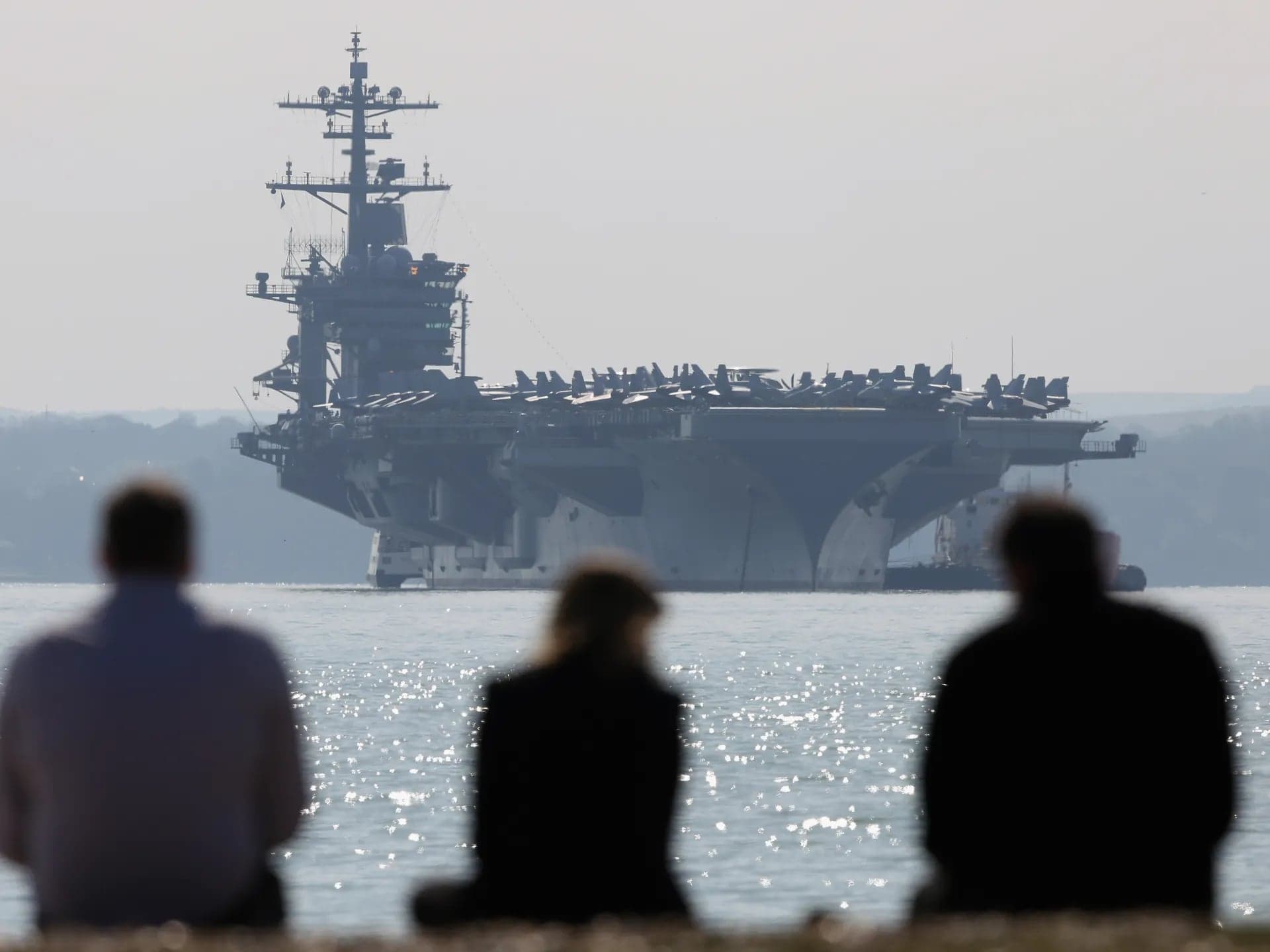
In response to the deteriorating security environment, the Pentagon significantly surged naval combat power to the theater[4]. A U.S. military official confirmed that the aircraft carrier USS Theodore Roosevelt arrived in Middle Eastern waters to join the USS George H.W. Bush and USS George Washington, establishing a formidable, rare three-carrier strike group deployment[4]. U.S. Central Command (CENTCOM) affirmed that American forces remain engaged in maritime interdiction operations to enforce an economic blockade, safeguard navigation through the Strait of Hormuz, and sever Iranian logistics corridors[6].
Diplomatic tracks remain completely paralyzed in what regional analysts describe as a precarious "no war, no peace" standoff[7]. Iranian Foreign Ministry spokesman Esmail Baghaei formally rejected European demands, spearheaded by Germany, to halt domestic uranium enrichment, insisting on Tehran's rights under the Nuclear Non-Proliferation Treaty while rebuffing International Atomic Energy Agency (IAEA) scrutiny over an alleged new enrichment facility in Isfahan[4]. Furthermore, Iranian authorities declared that UN inspectors would be barred from inspecting war-damaged nuclear facilities until military hostilities conclude[8]. With both Washington and Tehran betting that economic and military pressure can force capitulation without triggering full-scale conflict, the risk of miscalculation across Gulf maritime corridors and regional bases has reached its highest level in months[7].
- Iran
- Islamic Revolutionary Guard Corps (IRGC)
- Bahrain
World & Geopolitics
2 min read
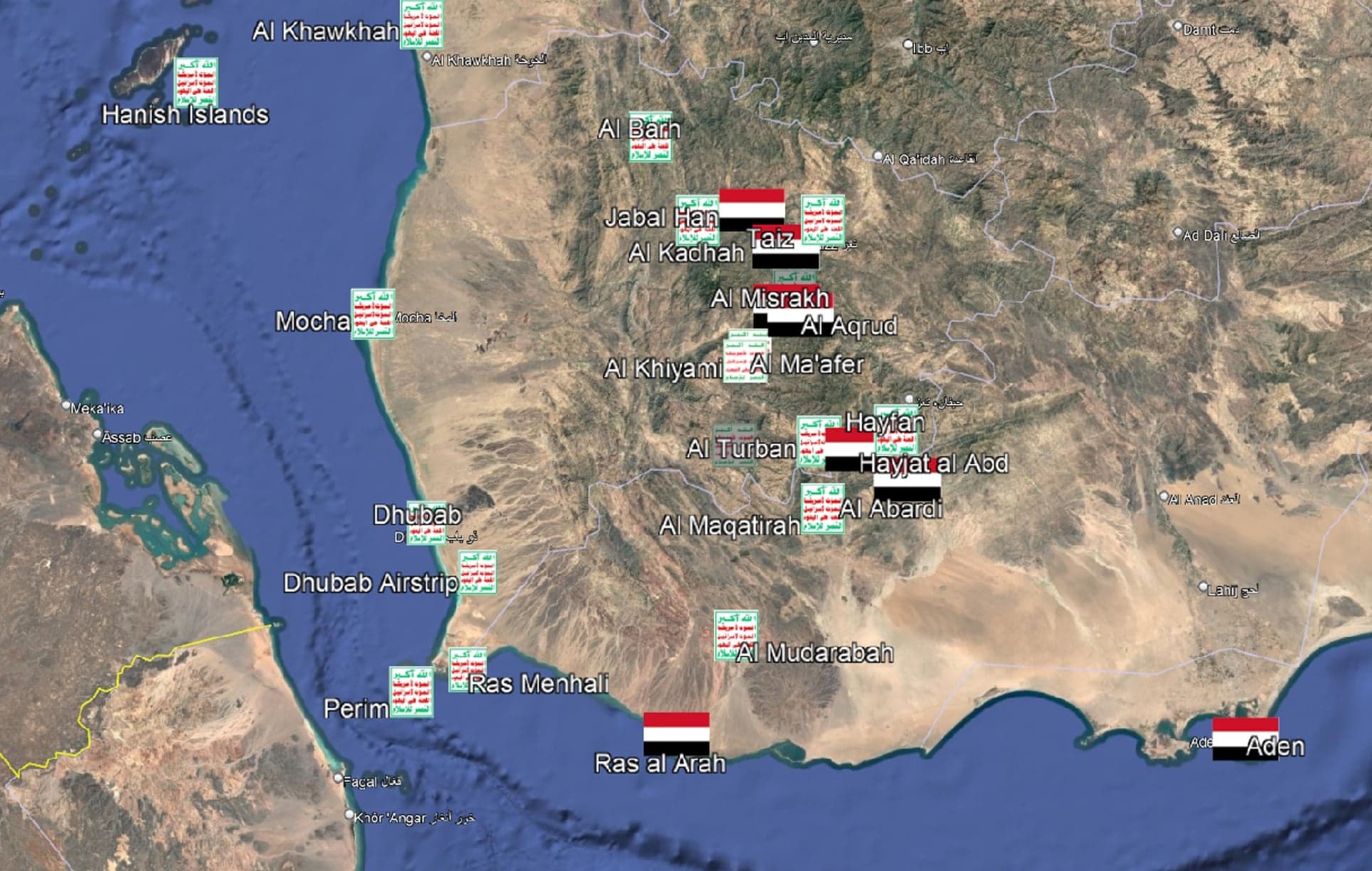
Houthis Recapture Strategic Red Sea Coast, Forcing Yemeni Forces Back Toward Aden
Houthi fighters have retaken key positions along the Red Sea coast, overlooking the Bab el-Mandeb Strait, after Yemeni government-aligned forces withdrew from strategic locations. The retreat, which includes Dhubab Airport and Jabal Kahbub, marks the end of a Saudi-backed counteroffensive and allows Houthi forces to advance closer to Aden, the interim capital. The Houthi resurgence restores their control over critical maritime observation and launch postures.
Read the full storyFold the full story2 min · 9 sources
Yemeni government-aligned coalition forces executed a sweeping withdrawal from frontline positions along the Red Sea coast, allowing Ansarallah (Houthi) fighters to recapture vital geographic perimeters overlooking the Bab el-Mandeb Strait[1][2][3]. Formations belonging to the Southern Armed Forces and the Southern Giants Brigades abandoned operational hubs at Dhubab Airport, Jabal Kahbub, and al-Shatt, falling back to defensive fall-back lines in southern Taiz and Lahij governorates[1][1][4]. Houthi advanced units capitalized immediately on the vacuum, pushing south toward the Al-Kharaz encampment and establishing forward tactical positions roughly 60 kilometers outside the internationally recognized government’s interim capital of Aden[5].
The retreat marks the functional end of a six-week counteroffensive backed by Saudi Arabia that had briefly dislodged Houthi units from the coastal strip[6][4]. Military leadership in Aden characterized the pullback as a calculated regrouping necessary to prevent Houthi forces from severing ground lines of communication (GLOCs) between Mokha, Taiz, and Aden[1][4]. However, frontline reporting confirms that the withdrawal was hastened by Houthi ballistic missile strikes on staging grounds in Khour al-Umairah and escalating encirclement risks around the Jabal Kharaz mountain passes[1][1].
By regaining commanding heights on the Ras Menhali peninsula and adjacent coastal approaches, the Houthis have effectively restored direct line-of-sight artillery, radar observation, and launch postures across the mouth of the Red Sea[2][3]. This shift occurs in tandem with regional posturing: an Iranian drone strike recently targeted radar installations at Bahrain’s al-Riffa Air Base, while Saudi air defenses intercepted several Houthi cruise missiles and drones aimed at inland infrastructure[1][7]. In response to the deteriorating littoral environment, the Pentagon has moved a third U.S. Navy aircraft carrier strike group toward regional waters to maintain deterrent presence[8].
The re-consolidation of Houthi forces over the maritime corridor carries severe commercial consequences for global maritime freight and Canadian export logistics[3][9]. With commercial vessels already diverted around South Africa’s Cape of Good Hope due to drone and anti-ship missile threats, the collapse of the coastal buffer eliminates any near-term prospect of safe transit normalization through the Suez Canal[3][9]. This dynamic ensures that container spot rates will remain elevated, directly increasing import costs for consumer goods and industrial inputs entering Canada’s eastern ports, including Montreal and Halifax, while driving volatility into benchmark global crude indices[3][9].
- Ansarallah
- Houthi
- Yemen
World & Geopolitics
2 min read
Western Allies Demand Israel Lift Gaza Blockade Amid Winter Crisis; Internal Israeli Politics Shift
The foreign ministers of the UK, Australia, Canada, and Italy issued a joint declaration demanding Israel immediately lift blockades on humanitarian aid to Gaza. They warned of a catastrophic crisis among displaced Palestinians due to severe winter conditions and blocked supplies. This diplomatic pressure coincides with ongoing Israeli military operations in Gaza and shifts in Israeli domestic politics, including new committee leadership and planned high-level security briefings.
Read the full storyFold the full story2 min · 5 sources
Geopolitical pressure mounted as the foreign ministers of the United Kingdom, Australia, Canada, and Italy released an urgent joint declaration on November 15–16 demanding that Israel immediately lift blockades on life-saving humanitarian supplies entering the Gaza Strip[1][2]. The quad-nation coalition, represented prominently by Australian Foreign Minister Penny Wong and her counterparts, warned that severe winter downpours and flooding have triggered a catastrophic secondary crisis among hundreds of thousands of displaced Palestinian civilians living in informal camps[1][2]. The ministers emphasized that the crisis is man-made and "entirely reversible," noting that more than 150,000 emergency winterized tents and vital cold-weather shelters remain immobilized at border checkpoints due to Israeli administrative and security restrictions[1][2].
The diplomatic intervention comes amid continuing Israeli ground and air operations across the enclave[3][4]. Over the weekend, Israeli strikes in southern Gaza resulted in the death of a senior Hamas field commander, alongside persistent bombardments that struck adjacent civilian and medical infrastructure, including the perimeter of Nasser Hospital[3][4]. The Gaza Government Media Office also reported that Israeli forces targeted an administrative security checkpoint in al-Mawasi that was staffed by civil economy personnel tasked with safeguarding and coordinating commercial aid truck distribution, an action that local authorities argued was designed to collapse basic internal order and paralyze supply logistics[1].
The joint Western statement reflects growing political fractures between Israel and its traditional international partners[1][2]. Western capitals face escalating domestic unrest over civilian casualties and the denial of shelter during winter[1][2]. Simultaneously, international aid agencies warned that the arrival of early winter storms will cause widespread hypothermia and waterborne disease outbreaks in flooded encampments unless heavy logistical equipment and winterization materials are granted immediate and unimpeded transit[1][2].
Within Israel, the escalating diplomatic confrontation coincides with domestic political maneuvers[5]. On November 16, the Knesset Foreign Affairs and Defense Committee confirmed Yisrael Beytenu chairman Avigdor Liberman as committee head[5]. Liberman immediately announced plans to summon the Chief of Staff of the Israel Defense Forces (IDF), Lt. Gen. Eyal Zamir, alongside the heads of the Shin Bet and Mossad, to address discrepancies between military planning, hostage negotiations, and the management of multiple war fronts[5]. Concurrently, U.S. and Israeli officials are engaged in contentious negotiations regarding post-conflict peacekeeping frameworks in southern Lebanon and Gaza, even as international consensus fractures over the ongoing humanitarian siege[5][1][2].
- Israel
- Gaza Strip
- United Kingdom
World & Geopolitics
2 min read
Four Nations Urge Israel to Expedite Gaza Winter Aid Amidst Severe Storm
Canada, the UK, Australia, and Italy jointly demanded Israel lift restrictions on essential winter supplies, including 150,000 tents, for Gaza. A severe winter storm exacerbates the crisis, with hundreds of thousands of displaced civilians facing catastrophic conditions in flooded makeshift camps. The nations emphasized that humanitarian delays undermine regional stability and violate conditions for ceasefire arrangements.
Read the full storyFold the full story2 min · 3 sources
In a coordinated diplomatic intervention, the foreign ministers of Canada, the United Kingdom, Australia, and Italy issued a joint declaration calling on the Israeli government to immediately remove administrative and border impediments blocking more than 150,000 winterized tents and emergency provisions from entering the Gaza Strip[1][2]. The joint communiqué, released after the arrival of the season’s first severe winter storm, warned that hundreds of thousands of displaced civilians face catastrophic conditions in flood-soaked makeshift camps[1][2]. The four ministers emphasized that this humanitarian crisis is "entirely reversible" and demanded unimpeded border access before severe winter conditions become entrenched[1][2].
The coalition’s statement specifically targeted restrictions on so-called "dual-use" materials - supplies categorized by Israeli security authorities as having potential civilian and military utility, which has severely restricted the import of shelter support poles, water-pumping equipment, sanitation piping, and concrete rehabilitation tools required for winterization[1][2]. United Nations agencies corroborated the urgency: the UN Office for the Coordination of Humanitarian Affairs (OCHA) reported that initial flooding has already inundated the living sites of over 200,000 Palestinians, while the World Health Organization (WHO) highlighted that approximately 950,000 displaced individuals are concentrated in flood-prone depressions across central and southern Gaza[1].
For Canada, the joint demarche represents a recalibration of middle-power diplomatic alignment[3][1]. Joining with London, Canberra, and Rome - outside the direct orbit of Washington’s bilateral negotiations - signals growing transatlantic and Commonwealth impatience with humanitarian bottlenecks[1]. Canadian foreign policy has increasingly prioritized adherence to international humanitarian law and the unhindered movement of non-governmental aid shipments financed by Canadian taxpayers. Domestically, the move responds to persistent pressure within Parliament and civil society for Ottawa to exercise independent leverage regarding civilian protection and postwar stabilization frameworks, notably the implementation of the Comprehensive Plan for Gaza[1].
The diplomatic push also exposes widening fissures within the international community regarding reconstruction timelines[1]. By publicly pressing Israel to permit early recovery hardware and temporary shelters, the four nations are challenging the restrictive vetting mechanisms enforced at perimeter crossings[1][2]. Israeli officials have maintained that strict inspections are imperative to prevent Hamas and other militant elements from diverting structural materials and commercial freight[1]. However, the joint statement stresses that humanitarian delays undermine regional stability and violate the core conditions necessary to sustain broader ceasefire arrangements[1][2].
- Canada
- United Kingdom
- Australia
World & Geopolitics
2 min read
Ukraine Launches Record 1,300-Drone Attack on Russian Military and Petrochemical Targets
Ukraine conducted its largest drone assault to date, launching 1,336 UAVs against Russian military-industrial sites and petrochemical complexes on November 16, 2026. Key targets included facilities in Tatarstan vital for producing materials for Russian missiles and an airfield in Astrakhan, disrupting both revenue generation and weapon supply lines. This extensive operation occurred amid escalating Russian strikes on Ukraine's power grid.
Read the full storyFold the full story2 min · 3 sources
In what marks the largest single aerial drone assault launched by Kyiv since Russia’s full-scale invasion began nearly five years ago, Russian air defenses intercepted 1,336 Ukrainian unmanned aerial vehicles across multiple regions on November 16, 2026[1]. The Ukrainian General Staff coordinated deep-penetration strikes against key military-industrial facilities, petrochemical refining complexes, and front-line airfields[2][3]. High-priority targets included the PJSC Nizhnekamskneftekhim chemical complex and the ELOU-AVT-7 primary oil refining unit at the TAIF-NK refinery in Tatarstan[3]. Additional strikes hit the JSC Monolit military-industrial plant in Trubchevsk, Bryansk Oblast, which fabricates specialized components for Russian military aircraft, as well as the Akhtubinsk airfield in Astrakhan Oblast, where an explosion triggered secondary detonations at a guided glide bomb depot[2][3].
The barrage represents a dual-track strategy by Ukrainian forces to cripple Moscow’s revenue generation and disrupt frontline weapons supplies[3]. According to assessments by the Institute for the Study of War (ISW), the targeted Tatarstan complexes supply synthetic rubbers, plastics, and essential binding agents required for the solid rocket propellant powering Russia’s Iskander ballistic missiles[2]. By coupling attacks on raw-material synthesis plants with airfield strikes targeting mobile radio altimeters and drone staging facilities - such as the Tsymbulova site - Kyiv aims to degrade Russian aviation sortie rates and undermine long-range strike logistics at their origin[2][3].
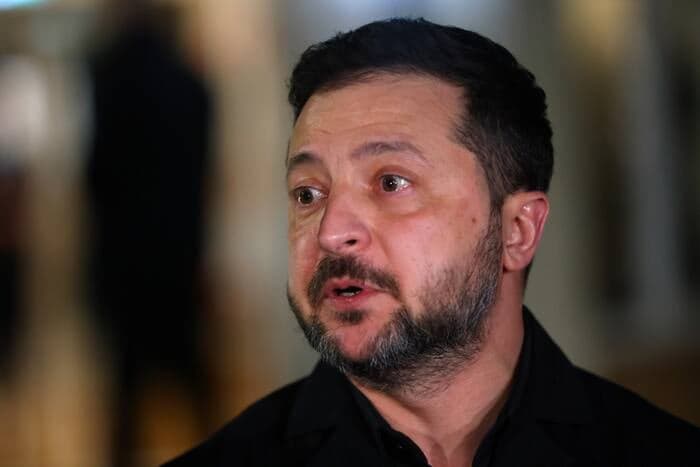
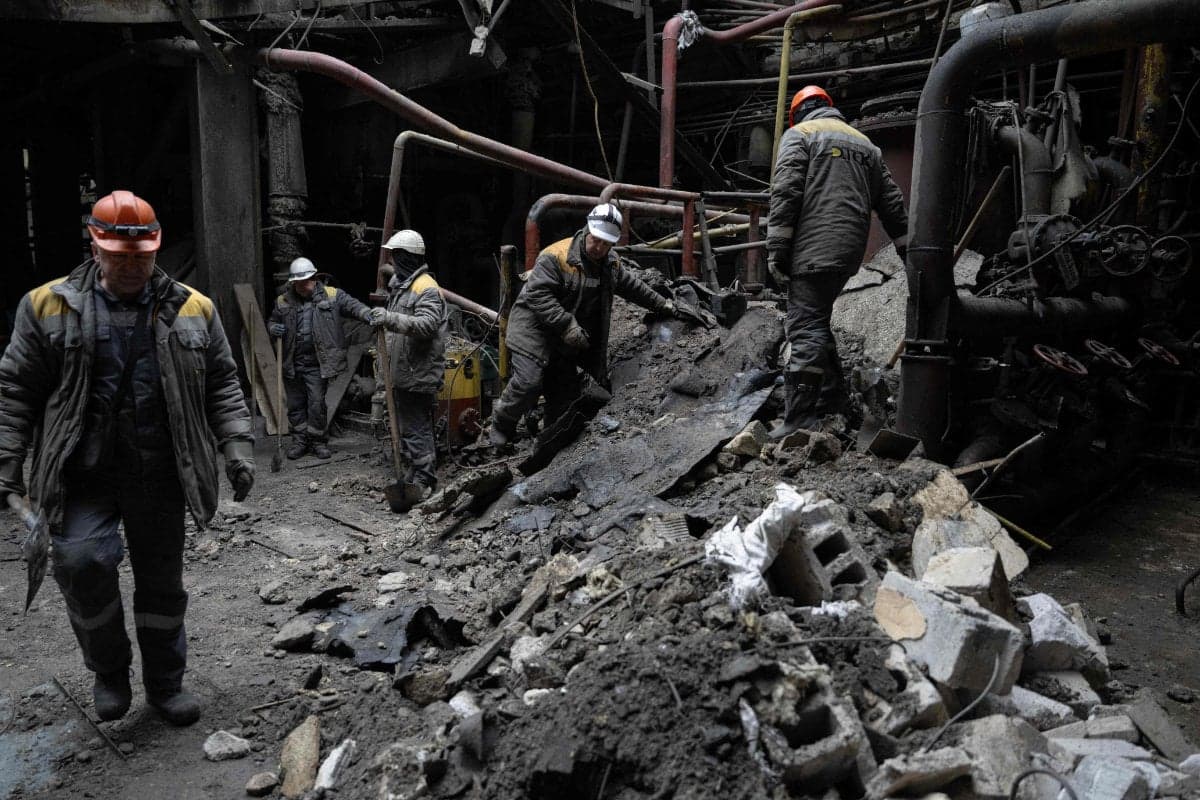
The Ukrainian counter-offensive coincides with severe Russian aerial assaults against Ukraine’s civilian power grid[2]. Over November 14–15, Russian forces launched 132 drones - including 78 high-speed, jet-powered Shahed variants, Gerbera strike platforms, and Parodiya decoy systems - targeting critical electrical substations across Zaporizhia, Sumy, Odesa, Zhytomyr, Kirovohrad, Donetsk, and Kyiv oblasts[2][2]. Ukrainian President Volodymyr Zelensky warned that Russian forces have actively sought to exploit operational vulnerabilities stemming from newly introduced speed restrictions imposed on SpaceX’s military-grade Starshield satellite network, complicating Ukrainian air defense tracking and counter-drone interceptor operations ahead of sub-zero winter temperatures[2][1].
This escalation on both sides underscores the attrition of strategic reserves and the rising technological competition defining the conflict[2][1]. While Moscow publicizes massive interception numbers to project air superiority, Ukrainian strikes on deep rear infrastructure demonstrate persistent gaps in Russian territorial air defenses[2][1]. Internationally, the widening exchange further complicates stalled diplomatic efforts and heightens pressure on European power grids and global energy markets as regional refining capabilities and power transmission nodes sustain compounded damage[2][1].
- Ukraine
- Russia
- PJSC Nizhnekamskneftekhim
World & Geopolitics
2 min read
Ukraine Air Defenses Hampered by Starshield Speed Limits, Enabling Russian Strikes
Ukrainian President Zelenskyy stated that speed limitations on SpaceX's Starshield terminals are severely impacting drone capabilities, allowing Russia to strike critical energy infrastructure. Interceptor drones lose terminal link commands above 161 kph, rendering them unable to intercept fast Russian drones. This has enabled significant Russian attacks on electrical substations and railway facilities across multiple Ukrainian regions.
Read the full storyFold the full story2 min · 9 sources
Ukrainian President Volodymyr Zelenskyy revealed that technical operating limits enforced on SpaceX’s militarized Starshield satellite terminals have severely compromised interceptor drone capabilities, enabling Russian strikes on critical energy infrastructure[1][2]. Over the weekend, Russian forces capitalized on these communication bottlenecks to execute complex strikes against electrical substations and railway traction facilities across Dnipropetrovsk, Zaporizhzhia, Sumy, Odesa, and Zhytomyr[1][3][4]. Zelenskyy stated that Ukrainian interceptor unmanned aerial vehicles (UAVs) lose terminal link commands whenever they exceed 161 kilometers per hour (100 mph) along frontline sectors and over occupied territory, rendering them incapable of intercepting high-speed, jet-powered Russian Shahed attack drones[1][2].
Assessments from the Institute for the Study of War (ISW) confirmed that Russian operational planning has adapted to these satellite system constraints[5][6]. Russian forces have concentrated drone barrages against high-voltage distribution hubs that feed Ukraine's nuclear and thermal power systems[1][2]. The strike campaign included over 2,300 attack drones and nearly 1,600 guided aerial bombs launched over a seven-day period, putting the national electrical grid under severe duress ahead of sub-zero winter temperatures[1][4]. Ukrainian defense officials noted that while ground-based interceptors struggle with munition depletion, drone-based aerial interception was designed to be the cost-effective alternative - a posture now hobbled by private corporate geofencing[1][2][7].
The confrontation highlights an escalating vulnerability for Western defense doctrine: strategic dependency on private, commercial space infrastructure[7]. Zelenskyy publicly characterized the speed caps as "political" rather than technical, confirming that Kyiv has instructed its defense, foreign affairs, and intelligence leadership to negotiate directly with SpaceX executives and Washington to eliminate operational limits[8][2]. While Starlink and SpaceX management have cited compliance with defense guidelines and end-user provisions, the throttling has created tactical safe zones for Russian airborne vectors[1][7].
This development directly affects Canadian and NATO defense procurement planning[9]. Canada’s updated defense policy emphasizes heavy investments in sovereign satellite constellations, Arctic surveillance architectures, and commercial dual-use partnerships. The operational paralyzation of Ukraine’s drone shield offers a stark case study in the perils of vendor lock-in and extra-sovereign control over tactical communications[1][7]. With an upcoming meeting of the Ukraine Defense Contact Group (Ramstein format), Ottawa and European partners are facing renewed pressure to finance alternative satellite networks, independent optical fiber feeds, and sovereign electronic-warfare-resistant communication backbones that do not rely on unilateral commercial discretion[8][7].
- Ukraine
- SpaceX
- Starshield
World & Geopolitics
2 min read
China Pushes Upgraded ASEAN Trade Pact Amid South China Sea Tensions
Chinese Premier Li Qiang is urging ASEAN to finalize the Free Trade Area 3.0 Upgrade Protocol, aiming for its implementation by December 1st. This commercial integration push occurs despite ongoing maritime security friction in the South China Sea, where the Philippines faces repeated confrontations with Chinese vessels. Beijing is prioritizing economic cooperation over territorial disputes.
Read the full storyFold the full story2 min · 9 sources
Chinese Premier Li Qiang arrived in the Philippine capital to attend the 29th China-ASEAN Summit and associated leader-level meetings of the 49th ASEAN Summit, hosted by Philippine President Ferdinand Marcos Jr.[1][2]. Addressing regional heads of government, Li urged the 10-member bloc to "overcome distractions" and set the China-ASEAN Free Trade Area (FTA) 3.0 Upgrade Protocol to take effect on December 1[3][4]. Beijing is utilizing the diplomatic platform to cement its commercial primacy across Southeast Asia, prioritizing joint digital economy integration, artificial intelligence governance, green industrial supply chains, and cross-border currency clearing[3].
The diplomatic overture unfolded against sharp, unresolved security friction in the South China Sea[5]. The Philippines, serving as ASEAN chair, continues to face persistent confrontations with Chinese coast guard and maritime militia flotillas around disputed maritime features in Manila’s exclusive economic zone (EEZ)[1][5]. While talks regarding a binding South China Sea Code of Conduct (COC) remain bogged down over legal status, geographical jurisdiction, and enforcement protocols, Beijing has decoupled its commercial economic integration drive from maritime territorial disagreements, effectively compelling ASEAN member states to prioritize economic growth over unified defensive resistance[5].
The summit has brought an influx of global leaders seeking to counteract Beijing's expanding regional influence[3]. Newly inaugurated Japanese Prime Minister Sanae Takaichi departed Tokyo for Manila to unveil the "Bridge Asia Initiative," a strategic program designed to pool funding and research for AI development, quantum technologies, and industrial decarbonization between Japan and Southeast Asian partners[3]. Concurrently, leaders including South Korean President Lee Jae Myung, Indian Prime Minister Narendra Modi, and Western diplomatic delegations convened to present alternative technological and security frameworks to regional capitals[3][2].
For Canada, the proceedings at the Manila summit represent a stress test for Ottawa's long-term Indo-Pacific Strategy[6]. Canadian Prime Minister Mark Carney attended the Manila gatherings, focusing on advancing international climate finance packages - including landmark financing for global tropical forest protection - and strengthening supply chain agreements for critical minerals and agri-food exports[7][8]. However, as Beijing successfully formalizes its upgraded trade perimeter under the FTA 3.0 protocol, Canadian enterprises seeking deeper market penetration in Southeast Asia will face entrenched Chinese commercial standards, preferential tariff advantages, and expanding regional regulatory alignment with Beijing[3]. To prevent Canadian exporters from being marginalized in rapidly growing ASEAN markets, Ottawa will be compelled to accelerate bilateral trade negotiations and deepen its investment presence before these structural trade realignments crystallize[9][3].
- China
- ASEAN
- Philippines
World & Geopolitics
2 min read
Canada Finalizes Philippines Free Trade Deal, Bolsters ASEAN Energy Ties
At the ASEAN Summit in Manila, Canada and the Philippines concluded negotiations on a bilateral Free Trade Agreement, aiming for ratification by 2027 and projected to triple trade by 2035. This aligns with broader efforts to finalize a Canada-ASEAN FTA, expected to boost Canadian exports to Southeast Asia. The agreement includes significant collaboration in the Philippines' hydropower and nuclear energy sectors, offering Canadian clean-tech providers access to growing markets.
Read the full storyFold the full story2 min · 8 sources
At the 49th Association of Southeast Asian Nations (ASEAN) Summit in Manila, Canadian Prime Minister Mark Carney and Philippine President Ferdinand Marcos Jr. officially concluded negotiations on a bilateral Canada-Philippines Free Trade Agreement[1][2][3]. The agreement, which negotiators aim to formally ratify and implement by 2027, establishes a comprehensive framework projected to triple bilateral trade between the two nations by 2035[4][5]. The announcement coincided with intensified multilateral negotiations aimed at concluding a broader Canada-ASEAN Free Trade Agreement, an initiative that federal projections estimate will unlock over $3.5 billion in Canadian exports across Southeast Asia's rapidly expanding economies[5].
A central pillar of the newly established trade architecture centers on critical energy and infrastructure collaboration[6]. On November 15, Philippine Energy Secretary Sharon Garin announced that trade ties with Canada would directly accelerate the development of the Philippines' hydropower and nuclear energy sectors[6]. Garin noted that Canadian clean-technology providers, nuclear engineering expertise, and institutional capital are uniquely positioned to meet the Philippines' soaring demand for reliable, baseload electricity[6]. The partnership offers Canadian green-energy firms and natural resource exporters direct access to high-growth emerging markets in the Indo-Pacific[6][5].
Beyond the Philippines, Canada utilized the Manila summit to expand its commercial footprint across Southeast Asia[7]. Carney held bilateral discussions with Vietnamese Prime Minister Lê Minh Hưng on November 15, reviewing concrete steps to advance the Strategic Partnership established earlier between Ottawa and Hanoi[7]. The talks addressed market access for Canadian agricultural commodities - including beef, canola meal, crab, and peas - while expanding supply chain linkages with Vietnamese manufacturing hubs[4][7]. Canadian Foreign Minister Anita Anand reaffirmed that these initiatives are designed to advance Ottawa’s strategic imperative to double Canada's non-U.S. exports over the next decade[8].
The breakthrough at the ASEAN summit reflects a systemic shift in Canadian trade diplomacy aimed at mitigating dependency on the American market[8]. By securing bilateral and multilateral free-trade corridors across the Indo-Pacific, Canada is seeking to offset trade volatility in North America[8][5]. Canadian commercial sectors - spanning agriculture, renewable energy, and small-to-medium digital enterprise platforms - gain substantial preferential access, insulating the domestic economy from protectionist disruptions while anchoring Canada as a core Pacific trade partner[8][4][5].
- Mark Carney
- Ferdinand Marcos Jr.
- Sharon Garin
World & Geopolitics
2 min read
Francophonie Summit in Phnom Penh Focuses on Digital Economy and Non-Aligned Trade
The 20th Francophonie Summit convened in Phnom Penh, Cambodia, with leaders from 90 member states discussing the digital economy under the theme 'One Francophone Community, One Digital Future.' Presidents Emmanuel Macron and Mark Carney highlighted the bloc's potential for economic influence and promoting open, rule-based commerce against monopolistic technological dominance. The summit also addressed institutional leadership for the OIF and fostered digital economy partnerships.
Read the full storyFold the full story2 min · 6 sources
Heads of state and government representing the 90 member and observer states of the International Organisation of La Francophonie (OIF) gathered in Phnom Penh, Cambodia, on November 15–16, 2026, for the 20th Francophonie Summit and the high-level FrancoTech business forum[1][2][3]. Convening under the theme "One Francophone Community, One Digital Future," the summit brought together key international figures, including French President Emmanuel Macron, Canadian Prime Minister Mark Carney, Vietnamese President Tô Lâm, Romanian President Nicușor Dan, Bulgarian President Iliana Iotova, and host Cambodian Prime Minister Hun Manet[3]. The leaders jointly inaugurated the FrancoTech 2026 exhibition at the Koh Pich Exhibition and Convention Center to promote cross-border digital economy partnerships, artificial intelligence cooperation, and open trade[3][4].
In his keynote address on November 15, President Macron urged Francophone nations to translate their demographic and linguistic footprint into decisive global economic and political influence[1]. Macron highlighted the Francophonie as a vital platform for preserving open, rule-based international commerce and counteracting monopolistic dominance in emerging technological sectors[4]. Emphasizing the geopolitical significance of convening in Southeast Asia, Macron positioned the Francophone bloc as an embodiment of non-aligned multilateralism, providing medium-sized and developing economies with strategic alternatives to bipolar geopolitical confrontation[4].
Alongside economic agendas, diplomatic negotiations took place regarding institutional leadership for the OIF’s 2027–2030 term[1]. Incumbent Secretary-General Louise Mushikiwabo of Rwanda campaigned for a second term, navigating competition following shifting diplomatic endorsements, including the Democratic Republic of Congo’s decision to back former Romanian Prime Minister Dacian Cioloș[1]. The diplomatic maneuvering highlighted regional competition within the bloc over resources, governance priorities, and diplomatic representation between African and European member states[1].
For Canada - a founding member of the OIF and the designated host of the 2028 Francophonie Summit - the gathering served as an essential channel for technological and economic engagement outside the Western hemisphere[5]. Canadian delegates focused on commercializing domestic artificial intelligence applications, establishing digital infrastructure partnerships across the Global South, and strengthening bilateral ties with Southeast Asian and African partners[1][4][5]. By embedding its digital and services sectors within the Francophone trade network, Canada is actively broadening its export base to shield domestic tech industries from shifting regulatory and tariff barriers in North America[6][4].
- Emmanuel Macron
- Mark Carney
- Tô Lâm
World & Geopolitics
2 min read
G7 Economic Optimism Plummets to 2009 Crisis Levels, Gallup Reports
A Gallup report indicates that economic optimism in G7 nations has fallen to lows not seen since the 2008-2009 financial crisis, with only 22% of adults believing local economic conditions are improving. Conversely, 66% report deteriorating economies, a sentiment exceeding that of the 2008 crash. This decline occurs despite moderate GDP growth, with inflation, high living costs, and borrowing expenses eroding household purchasing power.
Read the full storyFold the full story2 min · 4 sources
A comprehensive global study released by Gallup on November 16, 2026, revealed that economic optimism across the world’s leading industrialized Group of Seven (G7) economies has plummeted to levels not seen since the aftermath of the 2008–2009 global financial crisis[1]. According to the survey, a median of only 22% of adults across G7 nations - comprising Canada, the United States, Japan, Germany, the United Kingdom, France, and Italy - believe local economic conditions are improving, a steep decline from 35% recorded in 2025[1][1]. The 22% figure is virtually identical to the 21% trough recorded in 2009 during the depths of the Great Recession and the onset of the European sovereign debt crisis[1].
Concurrently, the median percentage of citizens reporting that their local economies are actively deteriorating surged to 66%, three times the number of those reporting positive conditions and exceeding negative sentiment registered during the 2008 financial crash[1]. Gallup researchers Benedict Vigers and Mikaila Ulmer observed a historic divergence: public economic sentiment no longer correlates with headline economic expansion[1]. While median G7 gross domestic product (GDP) growth hovered at 1.1% in 2026, prolonged cumulative inflation, elevated living costs, and steep borrowing expenses have eroded real household purchasing power, breaking the traditional linkage between GDP growth and consumer confidence that had held for over two decades[1][1].
The souring public mood presents acute political challenges for G7 leaderships facing widespread domestic voter dissatisfaction and cost-of-living unrest[1]. France and Italy face critical national elections in 2027, while Germany and Britain continue to grapple with industrial headwinds and household budget crunches[1]. For Canada, the plunge in domestic sentiment is compounded by ongoing cross-border trade disputes, which have driven up consumer import costs and created operational insecurity across resource-dependent provinces[2][3].
The findings reflect broader structural challenges facing G7 trade and fiscal policy[1]. With consumer sentiment severely depressed, domestic demand across Western economies is softening, limiting the capacity of governments to navigate industrial restructuring and energy transitions[4][1]. The profound lack of public confidence also constrains policymakers' political capital, fostering protectionist impulses and complicating international consensus-building on tariff reductions, supply chain integration, and multilateral financial assistance[4][1].
- Gallup
- Benedict Vigers
- Mikaila Ulmer
World & Geopolitics
2 min read
Canada Hints at Chinese Auto Imports Amid Stalled U.S. Trade Talks
Canadian Prime Minister Mark Carney has warned that Canada may open its market to Chinese automakers if trade negotiations with the United States continue to stall over the integrated North American automotive sector. This statement precedes talks with Chinese President Xi Jinping. The warning is a strategic move to counter U.S. tariffs imposed by the Trump administration, which have strained Canadian industries and led to job losses. Canadian public opinion also opposes trade agreements that codify U.S. tariffs.
Read the full storyFold the full story2 min · 8 sources
In remarks delivered from Southeast Asia on November 16, 2026, Canadian Prime Minister Mark Carney warned that Canada could open its market to Chinese automotive manufacturers if bilateral trade negotiations with the United States fail to preserve an integrated North American automotive sector[1]. Carney’s blunt declaration came ahead of planned talks with Chinese President Xi Jinping during his multi-nation Asian diplomatic tour[1]. The warning marks a significant escalation in Canada's trade rhetoric, demonstrating Ottawa's willingness to leverage alternative international partnerships to counter persistent tariff barriers imposed by U.S. President Donald Trump's administration[1][2].
The impasse follows months of friction stemming from widespread U.S. duties targeting Canadian lumber, steel, aluminum, and automobiles, which have strained domestic industrial operations and led to manufacturing job losses[3]. While U.S. Trade Representative Jamieson Greer confirmed that bilateral negotiations took place recently and noted that Trump and Carney communicate regularly, Greer firmly declined to establish a target deadline, asserting that the substance of supply chain security supersedes any fixed negotiating timeline[4][5]. Washington has pushed to insulate domestic supply chains, whereas Ottawa has consistently pursued a restoration of the tariff-free cross-border trade framework that historically anchored bilateral manufacturing[4][5].
Canadian domestic political pressure is reinforcing Carney’s hardline stance. A national Nanos Research poll published on November 15 revealed that a broad majority of Canadians oppose entering into any bilateral trade agreement with Washington that incorporates or codifies U.S. tariffs[6]. In parallel, Canadian Trade Minister Maninder Sidhu confirmed that several Chinese vehicle makers - including Chery - are actively seeking Transport Canada regulatory certification to market affordable passenger vehicles, with some expected to clear regulatory hurdles by the end of 2026[7]. Sidhu emphasized that federal officials are exploring arrangements similar to those in Europe, pressing Chinese firms to incorporate Canadian supply chains and employ domestic workers in exchange for market access[7].
The prospective entry of Chinese electric and conventional vehicles into Canada threatens to disrupt the deeply integrated Canada-U.S. auto pact, creating severe diplomatic friction with Washington, which views Chinese vehicular technology as an acute economic and national security risk[8][1]. For Canadian industrial strategy, however, the maneuver signals an urgent diversification drive[3]. As Canadian Finance Minister François-Philippe Champagne and Intergovernmental Affairs Minister Dominic LeBlanc continue to refine domestic tariff relief programs for impacted industries, Ottawa is demonstrating that it is prepared to seek counterweights in Beijing if cross-border manufacturing channels remain constrained by protectionist measures[3][2].
- Mark Carney
- Donald Trump
- Jamieson Greer
World & Geopolitics
2 min read
US Treasury Chief Demands Nvidia Shakeup Over Alleged China AI Chip Diversion
Treasury Secretary Scott Bessent called for drastic changes at Nvidia, demanding the company's board shake up its executive leadership and address suspected evasion of US export controls. The crisis centers on Singapore-based Megaspeed International, allegedly used to route advanced AI processors to blacklisted Chinese entities. An inter-agency feud between the Treasury and Commerce departments has emerged over enforcement actions.
Read the full storyFold the full story2 min · 9 sources
An inter-agency feud within the United States administration broke into public view as Treasury Secretary Scott Bessent demanded a "dramatic shakeup" of Nvidia Corp.’s executive leadership and issued a 10-day ultimatum to the company's board of directors[1][2]. Speaking on Fox News’ Sunday Morning Futures, Bessent called for an outside chief executive following the abrupt resignation of Jensen Huang, urging regulators and corporate directors to shift their scrutiny from personal misconduct to suspected systemic evasion of U.S. national security export controls[1][2]. Bessent openly questioned whether Nvidia's internal corporate culture fostered or overlooked illicit channel sales to inflate quarterly revenues and market valuations[3][2].
At the heart of the crisis is Singapore-based cloud enterprise Megaspeed International, which is under intense federal scrutiny for allegedly operating as a front company to route cutting-edge Nvidia artificial intelligence processors to blacklisted Chinese entities[1][4]. Megaspeed released a statement confirming that its former executive, Alice Huang - who had a personal relationship with Jensen Huang and has been flagged by U.S. counterintelligence officials as a suspected intelligence operative - officially departed the firm in August 2025[5][4]. Megaspeed announced an independent audit led by outside legal counsel while maintaining that its supply chain adhered to existing international regulations[4].
The controversy has sparked open hostility between the U.S. Treasury and Commerce departments[1][6]. Bessent pointedly accused Commerce Secretary Howard Lutnick of failing to utilize his statutory authority to place Megaspeed on the U.S. Entity List months ago, remarking that while Treasury, the State Department, and defense agencies demanded decisive action, "Commerce had the pen"[5][7]. In response to mounting bipartisan criticism from lawmakers such as Senator Jim Banks and Senate Banking Committee Chairman Tim Scott, Lutnick agreed to testify publicly before Congress on December 10 regarding regulatory loopholes and export enforcement delays[8][5][9].
This institutional collision has immediate ramifications for Canada’s rapidly growing technology sector and North American cross-border supply chains. As Washington prepares for sweeping audits of third-party cloud aggregators and server distribution hubs, Canadian data center operators and AI infrastructure developers face tighter compliance mandates under the U.S.-Mexico-Canada Agreement (USMCA) framework. Furthermore, any federal restrictions targeting advanced chip architectures or imposing secondary sanctions on intermediaries in Southeast Asia will inevitably force Canadian research institutions and hyperscalers to provide rigorous provenance tracking, increasing compliance overhead and slowing hardware procurement timelines.
- Nvidia Corp.
- Scott Bessent
- Jensen Huang
Section 3 of 4
City News
15 stories · 7 min skim
City News
2 min read
Toronto Homeowners, Builders Urge Permitting Overhaul for Backyard Housing Growth
Homeowners, builders, and housing advocates in Toronto are calling for significant reforms to the city's permitting process to speed up the construction of laneway and garden suites. While zoning bylaws have been permissive since 2018 and 2022 respectively, stakeholders argue that bureaucratic delays and complicated review timelines are stifling the potential of these accessory dwelling units to address the city's housing shortage. Property owners face extended waits for financing and approvals, with delays from various municipal departments inflating project costs.
Read the full storyFold the full story1 min · 4 sources
Homeowners, builders, and infill housing advocates across the Greater Toronto Area are urging City Hall to overhaul permitting bottlenecks, eliminate bureaucratic hurdles, and introduce targeted financial incentives for accessory dwelling units[1]. According to municipal data, there are currently 755 laneway and garden suites under active construction across Toronto[1]. However, stakeholders argue that municipal red tape and complicated review timelines are substantially muting the wider potential of backyard housing as a grassroots tool to alleviate the city's housing shortage[1].
The City of Toronto initially approved as-of-right zoning bylaws for laneway suites in 2018 and expanded permissive zoning to encompass detached backyard garden suites in 2022[1]. Intended to build "missing middle" gentle density into low-rise residential neighbourhoods without altering architectural fabric, these policies were recently supplemented with pre-approved, city-released design templates to curb architectural soft costs[1][2]. Despite these legislative steps, property owners attempting to realize these developments report running into prohibitive delays[1]. Homeowners navigating the process - such as Nitin Goela and Joanne Magday, who are building a backyard garden suite intended for family use and rental income - noted that securing financing and progressing through city approvals took considerably longer than anticipated[1].
The push for reform involves municipal planning officials, private residential builders, and homeowners seeking flexible housing solutions[1]. Proponents point out that while high-rise development has slowed due to high interest rates and broader macroeconomic pressures[3][4], backyard infill remains a homeowner-funded avenue to create ground-oriented rental housing[1]. Nevertheless, builders note that delays from overlapping municipal departments - including urban forestry, utility clearance, and zoning reviews - often add months of idle time, inflating carrying costs and project budgets[1].
The implications of these delays are significant for the broader GTA housing ecosystem. Secondary suites provide critical low-rise rental supply, opportunities for multi-generational living, and income stability for primary homeowners[1]. Housing analysts stress that unless the city streamlines application workflows, relaxes restrictive building guidelines, and coordinates with financial institutions on non-traditional construction loans, laneway and garden suites will remain confined to affluent property owners with significant liquidity, missing the opportunity to become an accessible housing mechanism[1].
- City of Toronto
- Toronto
- Greater Toronto Area
City News
2 min read
Toronto Activates Winter Services Plan to Aid Unhoused Residents Amidst Shifting Demographics
The City of Toronto has launched its 2026–2027 Winter Services Plan, increasing emergency shelter and transitional housing spaces by 18 percent. This proactive measure aims to protect vulnerable individuals experiencing homelessness throughout the colder months, with additional beds available during extreme cold snaps. The plan also includes expanded outreach and daytime drop-in services.
Read the full storyFold the full story2 min · 7 sources
The City of Toronto officially enacted its 2026–2027 Winter Services Plan for People Experiencing Homelessness, initiating a seasonal surge protocol designed to safeguard vulnerable residents through April 15, 2027[1][2]. Under the operational mandate that took effect across municipal divisions, the city has introduced up to 1,533 additional emergency shelter and transitional housing spaces[3][4] - an 18 percent increase in seasonal capacity compared to the 1,275 surge beds provided during the previous winter cycle[5].
The municipal framework allocates up to 588 permanent supportive and subsidized housing placements alongside approximately 505 dedicated winter respite beds and shelter spaces operating 24 hours a day[3]. The emergency architecture includes 254 warming centre beds distributed across five strategic locations, triggered automatically when temperatures reach minus 5 degrees Celsius or whenever Environment Canada issues winter weather warnings[3]. An additional surge tier of roughly 186 spaces stands reserved for extreme cold conditions plunging past minus 15 degrees Celsius[3]. Beyond physical lodging, the city has expanded mobile street outreach deployments and funded 252 additional operating hours per week across community daytime drop-in facilities, ensuring expanded access to warm meals, showers, medical check-ins, and daytime respite[3].
The activation follows shifts in Toronto’s homelessness demographics[5]. Gord Tanner, general manager of Toronto Shelter and Support Services, reported that the baseline pressure on municipal shelters has moderately eased from severe historical peaks[5]. The system currently accommodates roughly 7,000 people per night - a marked drop from approximately 9,000 individuals nightly in late 2025 and more than 12,000 per night during the crisis peak of October 2024[5]. City data also reflects a roughly 67 percent decrease in outdoor tent encampments over the past twelve months, declining from 353 documented tents in October 2025 to 118[5][6]. City officials attribute much of this downward trend to federal shifts in refugee intake volume, which had previously seen up to 6,500 claimants utilizing municipal shelters simultaneously, down to roughly 1,200[5].
Despite these statistical reductions, frontline shelter operators caution that capacity bottlenecks remain acute as cold weather sets in[7][5]. Executives from non-profit shelters like Street Haven at the Crossroads noted that single-night bed counts frequently approach capacity across women's and specialized shelters[7]. Housing rights advocates emphasize that while the expanded surge plan prevents life-threatening hypothermia during sudden temperature drops, short-term beds do not solve systemic housing shortages across the Greater Toronto Area (GTA)[5][6]. The municipal administration affirmed it will monitor overnight demand continuously through mid-winter, retaining the flexibility to scale up outreach teams and emergency spaces as severe lake-effect weather patterns emerge[5].
- City of Toronto
- Winter Services Plan
- Unhoused Residents
City News
2 min read
Toronto Seeks Indigenous Housing Provider Amid Budget Shortfall and Hiring Freeze
The City of Toronto has closed bidding for an Indigenous-led affordable and supportive housing project at 15 Denison Avenue, despite facing a significant $1.1-billion municipal budget shortfall for 2027, which has led to a hiring freeze. The city-owned site will be transferred at a nominal cost to a selected Indigenous non-profit partner to develop 100 housing units. This initiative aligns with Toronto's commitment to Indigenous-led housing and has secured federal funding.
Read the full storyFold the full story1 min · 6 sources
The City of Toronto closed submissions for a Request for Proposals (RFP) to select an Indigenous housing provider to design, build, and operate a 100-unit affordable and supportive housing development at 15 Denison Avenue[1][2][3]. The procurement deadline comes just as City Hall implements an administrative hiring freeze to confront a projected $1.1-billion municipal budget shortfall for 2027[4][1]. The municipal budget gap includes a looming $379-million funding cliff for the TTC following the conclusion of provincial transit operating subsidies[4].
The 15 Denison Avenue site, a city-owned property situated in downtown Toronto, is being transferred at nominal cost to the selected Indigenous non-profit partner[1][2][5]. The property transaction forms part of Toronto's HousingTO 2020–2030 Action Plan, which includes a dedicated commitment to approve 5,200 Indigenous-led non-market homes[2]. The project has also secured support from the federal Build Canada Homes initiative, which recently pledged over $310 million across nine Toronto public land sites[3][6]. Under the contract, the provider will construct energy-efficient supportive housing units that are legally protected by 99-year rent-control covenants, while delivering tailored cultural and social programming on-site[2][5].
The initiative involves the City of Toronto’s Housing Development Office, CreateTO, the Miziwe Biik Development Corporation, and federal housing authorities[2][6][5]. While social housing developments continue to leverage capital grants and municipal land transfers, broader city services are facing financial pressure[4]. Mayor Olivia Chow’s directive restricting municipal recruitment to essential emergency workers highlights the difficulty of funding local operations while preserving transit service frequencies and municipal infrastructure[4].
The convergence of Toronto's municipal deficit and housing delivery programs reflects structural strains facing the GTA[4]. While non-profit developments like 15 Denison Avenue demonstrate that intergovernmental capital programs can unlock supportive housing on public land, long-term operational sustainability depends heavily on stable public funding[4][3]. Transit and municipal watchdogs warn that without long-term operating support agreements from higher levels of government, the city faces tough tradeoffs between maintaining transit service quality and expanding supportive housing programs[4].
- City of Toronto
- Toronto
- 15 Denison Avenue
City News
2 min read
Protesters Rally Against Bike Lane Removals as Road Safety Debate Intensifies
Demonstrators gathered on Bloor Street West to protest provincial plans to remove municipal bike lanes and automated speed enforcement systems. Cycling advocates, pedestrian safety coalitions, and local residents expressed concerns that dismantling active transit infrastructure would endanger vulnerable road users and reverse progress in Vision Zero initiatives. The protest highlights a growing jurisdictional dispute between the Ontario government and the City of Toronto regarding street design and traffic management.
Read the full storyFold the full story1 min · 5 sources
Demonstrators gathered along Bloor Street West to protest provincial plans to dismantle key municipal cycling lanes and counter calls from critics advocating for the removal of automated speed enforcement systems[1][2][3]. Cycling advocates, pedestrian safety coalitions, and local residents formed picket lines along the corridor, displaying banners and vocally pushing back against the Ontario government's intervention in municipal street design[1][2][3]. Protesters argued that protected active transit infrastructure is an indispensable barrier protecting vulnerable road users from aggressive traffic and serious injury[1][3].
The mobilization follows a deepening jurisdictional dispute between Premier Doug Ford’s provincial government and the City of Toronto[2]. Provincial officials have moved forward with plans targeting bike lanes installed along major east-west and north-south arterial routes, such as Bloor Street, University Avenue, and Yonge Street, asserting that dedicating lanes exclusively to bicycles exacerbates vehicle gridlock and slows economic mobility. However, grassroots groups such as Cycle Toronto and community safety organizers maintain that vehicular congestion stems from automobile volumes rather than cycling paths, noting that removing lanes will reverse years of Vision Zero progress and expose non-motorists to heightened collision risks[1][2][3].
The demonstration underscored rising friction on Toronto's roadways[1][3]. Protesters engaged in civil resistance actions along sections where preliminary municipal and provincial contractor operations have been staged, requiring Toronto Police Service officers to position themselves between demonstrators and work crews to prevent direct interference[2][4]. Organizers warned that further direct-action demonstrations and legal challenges will continue as advocacy organizations seek injunctions to halt any permanent removal of bike infrastructure along Bloor Street[2][5].
For local commuters and residents, the escalating dispute highlights practical and safety ramifications across downtown transit corridors. Advocates pointed out that removing lanes on Bloor Street would leave thousands of daily active commuters without safe east-west passage across the city core, while motorists face ongoing disruptions during protests and potential construction overhauls[1][2][3]. City officials and urban planning experts continue to caution that dismantling existing lanes will prove costly and fail to solve Toronto’s broader structural traffic dilemmas[1][2][3].
- Bloor Street
- Toronto
- Ontario government
City News
2 min read
Toronto Road Safety Protests Erupt as Highway Collisions Intensify Calls for Transit Protection
Community advocates and road safety demonstrators gathered in Toronto to protest provincial efforts to remove protected bike lanes and restrict automated speed enforcement. Protesters argue these legislative changes compromise street safety and contradict the city's Vision Zero goals. The demonstrations occurred amid a series of serious traffic incidents across the GTA, including pedestrian strikes and multi-vehicle collisions.
Read the full storyFold the full story2 min · 4 sources
Community advocates and road safety demonstrators assembled across central Toronto to protest provincial policies targeting municipal bike lanes and automated enforcement[1]. The mobilization followed legislative pushes by the Ontario government under Premier Doug Ford to remove protected cycling corridors and restrict automated speed enforcement cameras along key arterial routes[1]. Demonstrators - organized by pedestrian advocacy networks, cycling groups, and neighborhood associations - argued that removing separated bike lanes and stripping speed cameras severely degrades street safety, directly contravening the city’s Vision Zero commitments[1].
Protesters emphasized that current road designs in the GTA leave vulnerable road users exposed, citing growing tension between municipal traffic safety authorities and provincial transportation mandates[1]. Activists carried signs outside municipal offices and along major thoroughfares, pointing to collision statistics and highlighting that physical infrastructure separation is essential to preventing pedestrian and cyclist casualties on high-speed urban corridors[1]. Representatives of local cycling coalitions warned that dismantling existing bike lanes would force cyclists back into mixed automotive traffic, leading to inevitable spikes in severe injuries[1].
The demonstration coincided with a spate of serious traffic incidents across the GTA[2][3][4]. In Mississauga, Peel Regional Police responded after an adult male pedestrian was struck by a vehicle near Dixie Road and Winding Trail[3]. The pedestrian was transported to a regional trauma centre with severe injuries, leading to extended road closures throughout the intersection[3]. Hours later on Highway 401 in Toronto, Ontario Provincial Police and Toronto emergency units were forced to shut down three westbound collector lanes near Keele Street after a violent three-vehicle collision sent one motorist to the hospital[2]. Simultaneously, Durham Regional Police reported that an on-duty police officer sustained serious injuries in a multi-vehicle crash on Brock Street near Highway 401 in Whitby, requiring immediate transport to a Toronto hospital[4].
Advocacy groups pointed to the weekend's collisions as clear evidence that regional traffic speeds and driver behaviors require stricter enforcement rather than regulatory rollbacks[1]. Toronto City Council members allied with the road safety movement have pledged to defend the city’s autonomous jurisdiction over municipal street design, arguing that local councils - rather than provincial ministries - are best equipped to balance commuter flow with neighbourhood safety standards[1].
- Toronto
- Ontario
- Premier Doug Ford
City News
2 min read
TTC Bans E-Bikes and E-Scooters Over Fire Risks From Lithium-Ion Batteries
The Toronto Transit Commission (TTC) has implemented a seasonal ban on e-bikes and e-scooters across its entire network until April 15, 2027, due to fire hazards associated with lithium-ion batteries. This policy, prompted by a recent subway fire caused by a battery malfunction, aims to enhance passenger safety during winter months. The ban will affect thousands of delivery workers and couriers.
Read the full storyFold the full story1 min · 7 sources
The Toronto Transit Commission (TTC) implemented its seasonal prohibition on lithium-ion battery-powered micromobility devices across the entire public transit network[1][2]. Under the directive, e-bikes and e-scooters are barred from all TTC subway trains, buses, streetcars, stations, and transit facilities through April 15, 2027[1][3]. The agency has advised commuters that anyone attempting to enter TTC property with a restricted device will be denied boarding or instructed to exit, with non-compliant individuals facing fines or trespass enforcement[2].
The seasonal ban, initially approved by the TTC Board in December 2024, is engineered to mitigate severe fire risks posed by lithium-ion power packs during severe weather swings[1]. Technical evaluations have shown that lithium-ion batteries become substantially more prone to thermal runaway, short circuits, and catastrophic failures when exposed to fluctuating cold temperatures and indoor heating[1][2]. The policy was accelerated following a December 2023 incident where an e-bike battery experienced thermal runaway and erupted into an explosive fire aboard a subway car pulling into Sheppard-Yonge station, sending passengers fleeing through smoke-filled cars[2][3].
Toronto Fire Chief Jim Jessop and local emergency services have highlighted lithium-ion energy storage systems as one of the most pressing public safety challenges in the municipality, with Toronto Fire Services recording a threefold surge in battery-related fires over recent years[2]. The TTC has emphasized that the policy contains a clear exemption for mobility devices used by individuals with disabilities, ensuring motorized wheelchairs remain fully permitted[4][2]. Conventional, non-electric folding bicycles and non-motorized scooters are also allowed throughout the transit system at all times[4][5].
The restriction has an immediate operational impact on thousands of gig-economy delivery workers and couriers across the Greater Toronto Area who routinely use the subway system to bridge long delivery routes during harsh winter months[6][7]. Labor and active transit advocacy groups have voiced concerns that the seasonal exclusion imposes economic hardship on lower-income workers without offering viable alternatives[7]. Concurrently, the Ontario government continues to explore broader statutory measures to penalize uncertified battery modifications and limit indoor battery storage in residential hallways[2].
- TTC
- e-bikes
- e-scooters
City News
2 min read
TTC Investigates Second Antisemitic Vandalism Incident at St. Clair Subway Station
Toronto Police and TTC enforcement are investigating a second instance of antisemitic vandalism at the St. Clair subway station, featuring swastikas and hateful slogans. This repeated defacement has heightened concerns about hate crimes targeting public transit infrastructure and places of worship across the city. Advocacy groups are calling for increased security and expedited cleanup protocols.
Read the full storyFold the full story1 min · 1 source
The Toronto Police Service and TTC transit enforcement launched a hate-crime investigation after antisemitic vandalism was discovered outside St. Clair subway station for the second time in less than a week[1][1]. The defacement included a large red swastika and conspiratorial slogans spray-painted onto exterior concrete surfaces adjacent to the transit entrance[1][1]. Maintenance crews were dispatched to scrub and repaint the defaced property after the vandalism was reported by transit riders and community groups[1][1].
B’nai Brith Canada flagged the repeat defacement, contacting both municipal leaders and Toronto Police to demand an immediate investigation and increased monitoring of the station[1][1]. Investigators are treating the two incidents as linked, focusing on closed-circuit television recordings around the Yonge Street and St. Clair Avenue corridor to identify the perpetrators[1][1]. Advocacy organizations pointed out that the deliberate repetition of neo-Nazi symbols at the same transit hub signals a coordinated effort to intimidate local Jewish residents and daily commuters[1][1].
The vandalism at St. Clair station comes amid sustained heightened concern regarding hate-motivated property damage across Toronto, which has seen an uptick in reported incidents targeting public transit infrastructure, schools, and places of worship[1][1]. Community leaders have called upon the Toronto Police Service Board and municipal authorities to implement enhanced preventive patrols around high-traffic public transit hubs and expedite graffiti abatement protocols across city-owned assets[1][1].
The immediate impact has unsettled transit users who frequent Line 1, prompting transit worker representatives and ridership advocacy groups to push for higher security guard presence at major transit portals[1][1]. Police are encouraging anyone who witnessed suspicious activity outside St. Clair station or who possesses security footage from businesses along the corridor to contact investigators or report details anonymously through Crime Stoppers[1][1].
- Toronto Police Service
- TTC
- St. Clair subway station
City News
2 min read
Antisemitic Vandalism at St. Clair Station Spurs Hate-Crime Investigation Calls
St. Clair subway station in Toronto was vandalized with antisemitic graffiti for the second time in a week, prompting calls for a hate-crime investigation. Symbols including Nazi swastikas were spray-painted on public structures, leading to condemnation from transit authorities and advocacy groups. Police are reviewing security footage to identify suspects.
Read the full storyFold the full story1 min · 2 sources
Human rights monitors and Jewish advocacy groups called for an urgent police response after St. Clair subway station in midtown Toronto was defaced with antisemitic graffiti for the second time in less than seven days[1][2]. The vandalism, which featured red spray-painted Nazi swastikas and conspiratorial symbols plastered over public concrete structures outside the transit entrance, prompted condemnation from transit riders and civic leaders[1][2].
B’nai Brith Canada formally notified the Toronto Police Service (TPS) and Toronto Transit Commission (TTC) management, urging investigators to treat the repeated vandalism as a coordinated, hate-motivated campaign[1][2]. The organization highlighted that the markings bore identical structural and stylistic characteristics to graffiti removed from the exact same site earlier in the week, suggesting that the perpetrator deliberately returned to re-apply the imagery[1][2]. B'nai Brith emphasized that repeated visual hate symbols outside essential public transit hubs create an environment of intimidation for local commuters and nearby Jewish community institutions[1][2].
The TPS Hate Crime Unit and 53 Division officers are reviewing closed-circuit security camera feeds from surrounding street intersections and transit turnstiles to identify suspects[1][2]. While transit crews moved rapidly to scrub and paint over the offensive markings, community organizations called for broader preventive measures, including enhanced foot patrols around midtown subway portals[1][2]. Civil society groups urged residents to utilize digital reporting applications, such as the Combat Antisemitism Movement's "Report It" app, to catalog hate graffiti and expedite coordinated cleanup efforts across the municipality[1][2].
Community leaders stressed that hate graffiti on mass transit networks requires immediate, transparent communication from city leadership[1][2]. Transit advocates noted that ensuring subway stations remain secure, welcoming environments is vital to public confidence, particularly as reports of hate-motivated mischief have trended upward across Canadian urban centres over the past several years[1][2].
- St. Clair Station
- Toronto
- B’nai Brith Canada
City News
2 min read
Suspect Arrested After Break-and-Enter Getaway Vehicle Crashes into East York Storefront
Toronto Police arrested one suspect after a vehicle involved in a break-and-enter fled from officers and crashed into a storefront in East York. Another suspect escaped on foot and is being sought by police. The collision caused significant damage to the commercial property, and police are investigating the incident and searching for the outstanding individual.
Read the full storyFold the full story1 min · 1 source
A residential burglary investigation turned into a dangerous crash scene in East York after suspects attempting to flee police drove into a commercial storefront near Broadview Avenue and O’Connor Drive[1]. Toronto Police Service officers responded to reports of an active break-and-enter at a nearby home[1]. As officers arrived, suspects fled the property in a motor vehicle, which traveled only a short distance before losing control and slamming into a retail business[1].
One suspect was arrested by responding officers at the collision scene, while at least one other occupant managed to exit the vehicle and flee on foot into the surrounding neighborhood[1]. Emergency services cordoned off the intersection as canine units and additional police officers conducted a targeted perimeter search for the outstanding suspect[1]. Building inspectors were summoned to assess the structural integrity of the damaged retail storefront, which sustained substantial exterior and internal structural damage from the impact[1].
The violent conclusion to the property crime highlights ongoing community anxieties regarding residential burglaries and high-speed vehicular flight in urban residential pockets[1]. East York residents reported hearing loud impacts and rapid police responses, noting that high-speed escapes down narrow urban corridors put evening pedestrians and motorists in immediate jeopardy[1].
Toronto Police Operations maintained a heightened presence throughout the area while crime scene officers processed evidence from both the targeted residence and the getaway vehicle[1]. The detained suspect faces charges related to break-and-enter and dangerous driving, while detectives continue to canvass local properties for residential surveillance footage to identify and apprehend the remaining suspect[1].
- Toronto Police Service
- East York
- Broadview Avenue
City News
2 min read
Durham Police Officer Injured in Collision Responding to Priority Call
A Durham Regional Police Service (DRPS) officer sustained serious injuries when their cruiser collided with a civilian vehicle while responding to a priority call in Whitby. The officer was transported to a trauma center, while occupants of the other vehicle suffered minor injuries. The crash led to significant traffic disruptions on Brock Street and Highway 401.
Read the full storyFold the full story1 min · 4 sources
A Durham Regional Police Service (DRPS) officer was rushed to a Toronto-area trauma center with serious injuries following a two-vehicle collision involving a civilian car in Whitby[1][2]. The crash occurred near the intersection of Brock Street and Highway 401[1]. Emergency first responders converged on the location to extricate the officer from the heavily damaged cruiser and treat occupants of the civilian vehicle, who sustained minor injuries[1][2].
According to DRPS Acting Sgt. Nicholas Gluckstein, preliminary findings indicate that the officer - assigned to Central West Division - was operating with emergency equipment activated while responding to a priority call for service at the time of the impact[1][3]. The officer remains hospitalized in stable condition[1][3]. Collision reconstruction specialists and forensic investigators took over the site, documenting skid patterns and analyzing onboard vehicle event recorders to reconstruct the precise sequence of events leading up to the crash[1][2].
The incident triggered extensive arterial closures across the central Durham corridor, shutting down both northbound and southbound lanes of Brock Street at the interchange and closing eastbound lanes of Highway 401[1][4]. The closures led to prolonged traffic congestion throughout Whitby and Oshawa, diverting heavy highway commuter traffic onto regional roads and residential detour corridors[1][4].
The collision highlights ongoing public safety risks surrounding emergency vehicle operations in dense GTA transit corridors, particularly during twilight hours and unpredictable driving conditions[1][2]. Durham Regional Police have urged any motorists with dashcam video or witnesses who were traveling along Brock Street near Highway 401 during the incident to submit evidence to the Traffic Services Branch as the formal inquiry continues[1][2].
- Durham Regional Police Service
- DRPS
- Whitby
City News
2 min read
Multi-Vehicle Crash Halts Traffic on Highway 401 Westbound Collectors in North York
A three-vehicle collision in the Highway 401 westbound collector lanes near Keele Street in North York resulted in the closure of three lanes and significant traffic delays. Emergency services responded, and one person was taken to the hospital. The incident caused extensive gridlock and highlighted ongoing safety challenges on this busy highway.
Read the full storyFold the full story1 min · 1 source
A three-vehicle crash in the westbound collector lanes of Highway 401 near Keele Street prompted the closure of three collector lanes in North York[1][1]. Toronto Police and emergency medical teams responded to the collision site, finding significant vehicular damage across the roadway[1][1]. Paramedics treated involved motorists at the scene and transported one individual to a local hospital with injuries[1][1].
The crash caused an immediate bottleneck on Canada’s busiest highway, generating severe delays that stretched for kilometers eastward through the North York corridor[1][1]. Heavy-duty tow trucks and road maintenance crews worked for hours to clear wreckage, sweep fluid spills, and restore safe road conditions[1][1]. Westbound collector traffic was channeled into the single remaining lane before slowly feeding back into express arteries, creating ripple-effect backups across feeder routes including Allen Road and Keele Street[1][1].
The collision emphasizes persistent roadway safety challenges along Highway 401's collector-express basketweave systems, where rapid lane changes and heavy volume routinely contribute to multi-vehicle impacts[1][1]. Provincial highway safety experts note that non-fatal multi-vehicle incidents frequently impose outsized economic and logistical costs on regional transit networks due to the hours required for safe clearance and scene investigation[1][1].
The Ontario Provincial Police have reiterated safety warnings for drivers across the Greater Toronto Area, emphasizing the need for reduced speeds and increased braking distances during evening hours as changing temperatures diminish road friction[1][1]. Motorists caught in the gridlock were forced to seek alternate routes along Lawrence and Wilson avenues, compounding local traffic throughout North York neighborhoods[1][1].
- Highway 401
- Keele Street
- North York
City News
2 min read
Mississauga Business Owners Suffer Under Prolonged Hurontario LRT Construction Delays
Small businesses along Mississauga's Hurontario Street are facing severe financial distress due to extended delays in the Hurontario Light Rail Transit (Hazel McCallion Line) project. Over two years past its original completion date, the construction has led to disrupted traffic, reduced parking, and uncertainty for merchants. Business owners report this as the most challenging period in their history, highlighting a lack of transparent scheduling from provincial and transit authorities.
Read the full storyFold the full story1 min · 2 sources
Small business owners along Mississauga’s Hurontario Street commercial corridor are voicing severe financial strain resulting from protracted delays on the Hurontario Light Rail Transit (Hazel McCallion Line) project[1]. Construction on the 18-kilometre surface transit line is now more than two years past its original completion target[1]. Business operators report that disrupted street traffic, sidewalk closures, reduced customer parking, and ambiguous timelines from provincial and transit authorities have pushed local merchants to the brink[1].
Long-standing merchants, such as Luis D'Guerra, owner and operator of A1 Copy & Printing in Mississauga for over three decades, have characterized the ongoing construction phase as the single most challenging operating period in their business history[1]. Retailers emphasize that a lack of transparent project scheduling prevents them from making basic commercial and operational decisions[1]. While provincial officials and Metrolinx maintain that construction activity has accelerated across key surface segments, the prolonged timeline continues to curtail foot traffic and logistics along major arteries[1].
The Hazel McCallion LRT project is being delivered by provincial transit agency Metrolinx alongside Infrastructure Ontario and private contracting consortium Mobilinx[2][1]. The route is designed to operate 19 stops connecting Port Credit in south Mississauga to the Brampton Gateway Terminal[1]. The friction is also spreading northward into Peel Region: preliminary exploratory drilling and utility relocations are currently advancing in Brampton to support the future line extension into downtown Brampton’s Innovation District GO Station, with field assessments scheduled to stretch through spring 2027[1].
Merchants in Mississauga and Brampton warn that without direct mitigation, business support programs, or accountable milestones, local retail ecosystems may collapse before the tracks open[1]. Business owners such as Chris Bautista, co-owner of We Rock the Spectrum Kid's Gym, expressed deep concern that Brampton commercial strips will soon experience the same multi-year disruption seen south of the border[1]. While urban planners champion the line as essential rapid transit infrastructure capable of anchoring future dense housing developments, business leaders stress that uncoordinated construction management threatens existing neighborhood economies during the multi-year transition[1].
- Mississauga
- Hurontario Street
- Hazel McCallion Line
City News
2 min read
Ontario Consults on Hamilton Transit Station Areas to Spur Transit-Oriented Development
The Ontario Ministry of Municipal Affairs and Housing has initiated a 30-day public consultation for 19 Protected Major Transit Station Areas (PMTSAs) along Hamilton's planned rapid transit corridors. These zones, encompassing LRT and GO Transit stations, aim to establish legally binding density targets for high-density residential and mixed-use commercial development. The initiative, once approved by the Minister, will insulate these designations from appeals, facilitating focused development around transit hubs.
Read the full storyFold the full story1 min · 2 sources
The Ontario Ministry of Municipal Affairs and Housing has opened a 30-day public consultation window on 19 Protected Major Transit Station Areas (PMTSAs) delineated along Hamilton’s future rapid transit corridors[1]. The designated zones encompass 17 future light rail transit (LRT) stops along the planned Main-King street corridor, alongside two standalone GO Transit rail stations[1]. This initiative represents an important regulatory milestone for transit-oriented growth within the western Greater Toronto and Hamilton Area (GTHA)[1].
The regulatory framework stems from three official plan amendments adopted by Hamilton City Council in October and submitted for provincial sanction under Section 26 of the Planning Act[1]. By formally classifying these areas as PMTSAs, the municipality establishes legally binding minimum density targets for high-density residential and mixed-use commercial development within a 500- to 800-metre radius of rapid transit hubs[1]. Once the Minister of Municipal Affairs and Housing signs off on the amendments - which are posted on the Environmental Registry of Ontario through December 13, 2026 - the planning designations will become final, insulated from third-party appeals at the Ontario Land Tribunal[1].
The project involves key public bodies, including the City of Hamilton, the provincial government, and Metrolinx, which is funding and designing the 14-kilometre, 17-stop Hamilton LRT project running from McMaster University in the west to Eastgate Square in the east[1]. Alongside the baseline density mandates, the city has drafted supplementary policies to enforce Inclusionary Zoning (IZ) in key station precincts, empowering the municipality to require private developers to include a defined percentage of below-market affordable housing units in new builds[1].
Urban policy analysts view the provincial review as critical to linking transportation investment with long-term housing targets[1]. In Hamilton and across the broader GTHA, rapid transit capital commitments are increasingly paired with aggressive zoning liberalization to maximize passenger ridership and unlock land value[2][1]. Final approval of these 19 PMTSAs is expected to catalyze a new wave of high-density zoning applications, giving builders certainty regarding maximum height and floor space ratios near mass transit corridors[1].
- Ontario Ministry of Municipal Affairs and Housing
- Hamilton
- GO Transit
City News
2 min read
Toronto Faces Cold Snap and Rising Respiratory Illnesses; Public Health Issues Guidance
Toronto is experiencing a late-autumn cold spell with temperatures near freezing and strong winds, coinciding with an increase in seasonal respiratory illnesses. Toronto Public Health has reiterated advisories on influenza, COVID-19, and RSV, urging residents to get vaccinated. Updated guidance emphasizes layered clothing and respiratory hygiene as colder weather persists.
Read the full storyFold the full story2 min · 11 sources
Toronto entered a cold mid-November weather pattern characterised by overcast skies, persistent breezes, and overnight temperatures dropping toward the freezing point[1][2]. Environment Canada observations at Toronto Pearson International Airport and Billy Bishop Toronto City Airport recorded daytime highs between 6°C and 8°C (43°F to 46°F), accompanied by westerly wind gusts exceeding 30 km/h that significantly amplified the wind chill for commuters and pedestrians[3][2]. The chilly conditions follow a weekend cold front that brought scattered morning flurries across northern GTA communities and dry, grey conditions to the lakeshore[1][4].
The shift to colder conditions has coincided with an increase in seasonal respiratory illness[5]. Toronto Public Health (TPH) reiterated public health advisories regarding the acceleration of the 2026 respiratory virus season, pointing to updated surveillance figures compiled by Health Canada and Public Health Ontario[6][7][5]. Epidemiological data shows the national influenza test-positivity rate climbing to 13.7 percent - marking a transition into moderate-to-high activity across multiple provinces, with more than 4,200 lab-confirmed cases detected over the preceding week[5]. COVID-19 transmission rates in Toronto have stabilized at moderate levels, while respiratory syncytial virus (RSV) activity has begun its initial seasonal incline, predominantly impacting young children and individuals aged 65 and older[8][5].
Toronto’s Medical Officer of Health, Dr. Michelle Murti, urged residents to get their updated autumn immunizations to protect hospital emergency capacity before sub-zero winter temperatures arrive[6][9]. Public health teams underscored that co-administered influenza and updated COVID-19 vaccines remain available free of charge to all individuals aged six months and older across participating neighbourhood pharmacies and clinical sites[6][10]. In addition, specialized RSV prophylaxis and high-dose influenza formulations are being distributed through targeted community outreach clinics and long-term care homes to safeguard vulnerable elderly populations[6][10].
Meteorologists project that Toronto will experience a brief respite of lighter winds and mild sunny intervals before a secondary, colder atmospheric system moves into Southern Ontario later in the month[11][1]. TPH advised residents - especially seniors, outdoor workers, and those who rely on active transit - to dress in windproof layers, observe proper indoor respiratory hygiene, and seek medical consultations early if exhibiting severe flu-like symptoms[2][6][10].
- Toronto
- Environment Canada
- Toronto Public Health
City News
2 min read
GTA Observes Louis Riel Day with Cultural Events and Civic Illuminations
Indigenous communities across the Greater Toronto Area commemorated Louis Riel Day with cultural ceremonies and civic illuminations. The observance honours the Métis leader and defender of Indigenous rights, marking the anniversary of his execution. Events included flag-raising ceremonies, traditional storytelling, and music, highlighting Métis self-determination and cultural endurance.
Read the full storyFold the full story1 min · 1 source
Indigenous communities across the Greater Toronto Area gathered to commemorate Louis Riel Day, marking the annual provincial observance honouring the historical Métis leader, statesman, and defender of Indigenous rights[1]. The day of remembrance commemorates November 16, 1885 - the date of Riel's execution following the Northwest Resistance - and serves as a cornerstone occasion for affirming Métis self-determination, legal rights, and cultural endurance across Ontario[1].
In the western GTA, the Credit River Métis Council organized an evening ceremony centred on the illumination of the Mississauga Civic Centre[1]. Starting at 8:00 p.m., the landmark Celebration Square Clock Tower was lit up in royal blue - reflecting the primary colour of the Métis infinity flag[1]. The gathering brought together Métis elders, citizens, municipal representatives, and local families for shared storytelling, historical reflections, and community fellowship[1].
The Mississauga commemoration concluded a weekend of civic events coordinated by regional councils under the Métis Nation of Ontario (MNO)[1]. In downtown Toronto, the Toronto and York Region Métis Council held an official flag-raising ceremony and traditional Kitchen Party at Toronto City Hall, featuring traditional fiddle music, jigging, and cultural workshops[1]. Community leaders highlighted the ongoing work to secure full self-governance recognition and protect Métis harvesting rights throughout the province[1].
Civic leaders emphasized that Louis Riel Day represents an opportunity to educate the broader public on Métis history and the community's contemporary contributions to Ontario’s civic fabric[1]. For Métis youth and urban Indigenous populations, the public displays across municipal institutions in Toronto and Peel Region signify growing visibility and institutional recognition for their distinct governance structures[1].
- Greater Toronto Area
- Louis Riel Day
- Métis
Section 4 of 4
Sports
11 stories · 5 min skim
Sports
2 min read
Bill Watters, Iconic Maple Leafs Executive and Broadcaster, Dies at 83
Bill Watters, a prominent figure in Canadian sports media and former assistant general manager for the Toronto Maple Leafs, has passed away at the age of 83. Watters was instrumental in building Maple Leafs rosters during the 1990s and 2000s, contributing to their deep playoff runs. He also had a notable career in sports broadcasting and player representation.
Read the full storyFold the full story2 min · 1 source
Bill Watters, a fixture in Canadian sports media and a key architect of the Toronto Maple Leafs’ front office during one of the franchise's most memorable modern eras, passed away on Sunday, November 15, 2026, at the age of 83[1]. The news was first reported Sunday morning by longtime Toronto Sun columnist Steve Simmons and subsequently confirmed by the Maple Leafs organization[1]. Watters spent 12 seasons in the Maple Leafs' hockey operations department, serving as assistant general manager from 1991 to 2003 alongside general manager Cliff Fletcher[1]. During that tenure, he played an integral role in building the rosters that reached the Campbell Conference and Eastern Conference Finals behind captain Doug Gilmour and later navigated the franchise through the peak years of Hall of Fame center Mats Sundin[1].
Sundin, who currently serves as a senior executive advisor for the Maple Leafs, issued a heartfelt statement reflecting on Watters’ impact on the organization: "As a longtime member of the team's front office, Bill was an important part of my time as a player with the Maple Leafs and someone I will remember with affection. Bill cared deeply about the Leafs, the City of Toronto, and the people around him"[1]. Longtime Maple Leafs radio play-by-play broadcaster Joe Bowen also paid tribute to Watters, describing him as a cherished partner and peer across decades of Toronto hockey history[1].
Watters lived a multifaceted life in sports before ever stepping into an NHL executive suite. Born in Orillia, Ontario, he was a standout linebacker for the University of Toronto Varsity Blues and was selected second overall by the Toronto Argonauts in the 1964 CFL Draft[1]. A devastating knee injury abruptly ended his football career before his professional debut, prompting his transition into hockey management, representation, and broadcasting[1]. Through the 1970s and 1980s, Watters worked as a player agent and aided Hockey Canada in assembling national team rosters for the 1977 and 1978 IIHF World Championships, which helped pave the way for his hire by Fletcher in the summer of 1991[1].
Beyond the front office, Watters was a dominant voice in Canadian sports talk radio and television. He was an original panelist when Prime Time Sports debuted in 1989, later hosted The Bill Watters Show on AM 640 in Toronto, and was a longtime co-host of Hockey Central on Sportsnet[1]. Known for his outspoken perspectives and insider connections, his passing represents the loss of one of the most recognizable and enduring hockey personalities in Toronto over the past half-century[1].
- Bill Watters
- Toronto Maple Leafs
- Cliff Fletcher
Sports
2 min read
Blue Jays Target Dustin May in Aggressive Winter Overhaul Amid Front-Office Turmoil
The Toronto Blue Jays are aggressively pursuing free-agent pitcher Dustin May and are also prioritizing outfielder Seiya Suzuki as part of a major winter roster overhaul. This comes while the organization deals with fallout from outfielder Anthony Santander's controversial social media posts and community outreach efforts.
Read the full storyFold the full story2 min · 10 sources
The Toronto Blue Jays have emerged as aggressive pursuers in the Major League Baseball free-agent market, with reports revealing that the front office has placed former Milwaukee Brewers right-hander Dustin May squarely on its target list[1]. The 29-year-old starter declined his $20 million mutual option for the 2027 season to test the open market, sparking a bidding contest among nearly a dozen franchises[1]. May split his 2026 campaign between the St. Louis Cardinals and Milwaukee - earning a World Series ring with the Brewers - and represents the high-upside rotation reinforcement that Toronto general manager Ross Atkins is targeting to restock a pitching staff thinned by midseason trades and injuries[1][2].
The pursuit of May comes alongside widespread reports that the Blue Jays are heavily prioritizing free-agent outfielder Seiya Suzuki to bolster their lineup[1]. Toronto faces an accelerated winter timeline driven by broader labor dynamics across baseball, as teams maneuver to execute transactions ahead of the December 1 Collective Bargaining Agreement expiration[3]. With foundational players from their recent competitive window - including longtime designated hitter George Springer and right-hander Shane Bieber - hitting the open market, Atkins and team president Mark Shapiro are operating with substantial financial flexibility, but also urgent holes across their outfield and starting rotation[2].
Complicating the front office's offseason agenda is the lingering organizational fallout surrounding veteran outfielder Anthony Santander[4][5]. Santander issued a formal apology expressing regret for amplifying discriminatory, anti-Muslim social media posts, conceding that he exercised poor judgment with his public platform[4]. Santander's statement came directly on the heels of formal apologies from Shapiro and Atkins, who held bridge-building meetings with Toronto Muslim community leaders and representatives from the National Council of Canadian Muslims[4][6][5]. Santander, who signed a five-year, $92.5 million deal in 2025 but missed all of 2026 with injuries, faces scrutiny over his standing in the locker room and broader community[4].
Across Toronto's sports landscape, the Blue Jays' Hot Stove positioning mirrors the broader institutional pressure felt by MLSE and Rogers Communications[7][8][1]. Having demonstrated city-wide synergy during the Blue Jays' deep postseason runs, the corporate ownership umbrella is now navigating parallel tests across all three major properties: the Blue Jays' aggressive winter retooling, the Maple Leafs' franchise-worst home slide, and the Raptors' crunch-time regression[7][9][10][1].
- Toronto Blue Jays
- Dustin May
- Seiya Suzuki
Sports
2 min read
Blue Jays Target Middle Infield, International Talent in Offseason Shake-up
The Toronto Blue Jays are focusing their offseason efforts on acquiring middle infield talent through trades and international free agency, aiming to bolster an offense that faltered in 2026. All-Star second baseman Ketel Marte of the Arizona Diamondbacks is reportedly a key trade target. The team is also actively pursuing international bats, including Japanese slugger Teruaki Sato.
Read the full storyFold the full story2 min · 8 sources
With the annual Major League Baseball General Managers Meetings concluding in Las Vegas, the Toronto Blue Jays' offseason roadmap came into clearer focus over November 15–16, 2026, as front-office targets emerged across the trade market and international free agency[1][2][3][4]. Following an active week where general manager Ross Atkins and his staff reportedly scheduled over 100 meetings with player agents and rival executives, Toronto's primary directive has centered on infusing dynamic offensive talent into an infield and lineup that sputtered throughout 2026[1][4].
A major focal point of Toronto’s hot-stove discussions is Arizona Diamondbacks All-Star second baseman Ketel Marte, who emerged on November 15 as a leading trade candidate linked to the club[4]. Evaluators highlighted Marte as a transformative potential upgrade over incumbent second baseman Ernie Clement, offering the switch-hitting contact and middle-of-the-order slugging that the Blue Jays lacked all season[4]. Adding intrigue to the potential pursuit is a close personal connection: Marte is married to the first cousin of Blue Jays franchise superstar Vladimir Guerrero Jr., an organizational link that analysts noted could provide a smooth transition and locker-room stability[4].
Simultaneously, the Blue Jays have ramped up their pursuit of international and top-tier free-agent bats, including checking in heavily on Japanese slugger Teruaki Sato[2]. Having successfully brought over Kazuma Okamoto the previous winter - who led Toronto with 33 home runs and 92 RBIs in 2026 - the Blue Jays are continuing to leverage the Nippon Professional Baseball (NPB) pipeline to address positional versatility in the corner outfield and third base[2][5].
These parallel pursuits come at a critical juncture for the Blue Jays franchise. After capturing the American League pennant and reaching Game 7 of the World Series in 2025, Toronto suffered a steep regression in 2026, missing the postseason entirely with a 79-83 record while ranking near the bottom of the league in runs scored (648) and home runs (152)[6][7][8][5]. With key rotation stalwarts like Shane Bieber and Max Scherzer hitting the open market, and elite free agents like Tarik Skubal also on Toronto's radar, Atkins and the Blue Jays brass face intense pressure to execute impactful trades and signings before winter deadlines accelerate[6].
- Toronto Blue Jays
- Ketel Marte
- Ernie Clement
Sports
2 min read
Scottie Barnes Shines in Return, but Kawhi Leonard Remains Out
Scottie Barnes returned for the Toronto Raptors with a strong performance, scoring 30 points and forcing overtime against the Knicks after missing four games with a groin injury. However, the team continues to struggle without Kawhi Leonard, who remains sidelined due to swelling in his left knee.
Read the full storyFold the full story2 min · 12 sources
The Toronto Raptors received an immediate boost on Sunday with the return of All-Star forward Scottie Barnes, who rejoined the active lineup after missing four consecutive games due to a strained left groin[1][2][3]. Barnes showed virtually no signs of rust or conditioning rust in his return against the Knicks, exploding for 10 points in the first five minutes of play and carrying Toronto's offense throughout the night[3]. He closed with 30 points, nine rebounds, four assists, and two blocks across 40 minutes of action, demonstrating his trademark two-way versatility and hitting the clutch game-tying triple that sent the contest into overtime[4][5][2].
While Barnes' return stabilized Toronto’s starting five, the team remains shorthanded at the top of the roster as superstar forward Kawhi Leonard remains sidelined with persistent swelling in his left knee[1][6]. Leonard has now missed 10 consecutive games, having suited up in only two contests this season[7][3]. Toronto has stumbled to a 3-8 record in the 11 games Leonard has missed, feeling the absence of his primary scoring punch and perimeter defense against elite wings[1][6]. Head coach Darko Rajakovic indicated that while Leonard has continued individual on-court work and is progressing, he remains in a dedicated reconditioning phase and is not yet cleared for full-contact team activities[6][8][3].
The injury list around the locker room has forced Rajakovic to shuffle rotations and lean heavily on young role players[6]. In addition to Leonard's absence, center Nate Bittle remains out until at least late November due to a lingering foot injury, while rookie guard Kevin McCullar Jr. missed Sunday's game while battling an acute illness[9][8]. Starting point guard Immanuel Quickley, who recently dealt with hamstring tightness, managed 28 minutes against New York but continues to play with a cautious workload alongside Shead[4][10][6].
Barnes’ dynamic performance underscored his indispensable role as Toronto's offensive engine, but the extended timeline for Leonard’s return clouds the Raptors' immediate competitive ceiling[6][3]. Without Leonard to shoulder crunch-time scoring and draw secondary defenders away from Barnes and Barrett, Toronto's half-court offense has frequently sputtered against set defenses late in fourth quarters[7][1][11]. The medical staff will re-evaluate Leonard’s progress later this week as the team enters a crowded home stretch[12][6].
- Scottie Barnes
- Toronto Raptors
- Kawhi Leonard
Sports
2 min read
Raptors Extend Losing Streak to 14 Against Knicks Amidst Chronic Fourth-Quarter Meltdowns
The Toronto Raptors suffered their 14th consecutive loss to the New York Knicks, a 112-108 overtime defeat marked by another fourth-quarter collapse. The team squandered a double-digit lead for the third game in a row, despite a strong performance from Scottie Barnes in his return from injury.
Read the full storyFold the full story2 min · 3 sources
The Toronto Raptors suffered another heartbreaking fourth-quarter unraveling at Scotiabank Arena, falling 112–108 in overtime to the New York Knicks[1]. The defeat marked Toronto's 14th consecutive head-to-head loss to the Knicks, extending a losing streak against their Atlantic Division rivals that stretches back to January 2023[1]. New York guard Jalen Brunson delivered the decisive blow, sinking a tiebreaking three-pointer with 33 seconds remaining in the extra period to pace the Knicks alongside Karl-Anthony Towns, as both stars posted matching 28-point performances[1].
The loss highlighted a troubling trend for head coach Darko Rajakovic’s squad: the inability to protect substantial late-game leads[2][1]. The Raptors held an 84–71 advantage with 8:55 remaining in regulation following an Immanuel Quickley three-pointer, only to watch New York rally behind perimeter shooting from Landry Shamet and former Raptor OG Anunoby[1]. The fourth-quarter meltdown marked Toronto's third consecutive game squandering a double-digit lead, having blown a 22-point cushion against the Boston Celtics and a 17-point edge against the Philadelphia 76ers earlier in the week[1]. Although Scottie Barnes forced overtime with a clutch step-back three-pointer with 13 seconds left in regulation, Toronto could not hold ground in the extra frame[1].
Barnes was a bright spot, returning to the lineup after missing four games with a strained left groin to deliver a 30-point performance[1]. Point guard Jamal Shead provided 19 points and Quickley contributed 17, while rookie forward Collin Murray-Boyles secured a season-high 13 rebounds[1]. However, the team's margin for error remains razor-thin due to the continued absence of superstar forward Kawhi Leonard, who remains sidelined by persistent swelling in his left knee[1]. Following Leonard’s injury, Toronto has dropped seven of its last nine contests and tumbled below the .500 mark, falling to a 3–8 record when playing without him[3][1].
In late-night and early-morning media sessions, Rajakovic and team leaders confronted the growing psychological weight of their repeated late-game failures[2]. While the locker room praised Barnes' resilience and the team's competitiveness against the defending champions, the persistent execution breakdowns during clutch moments have placed immense pressure on Rajakovic's rotations and late-game offensive sets[2][1]. With a rematch against the Knicks scheduled in Toronto, the Raptors are confronting critical questions about whether their supporting cast can close games without Leonard serving as the offensive focal point[1].
- Toronto Raptors
- New York Knicks
- Scottie Barnes
Sports
2 min read
Raptors Blow Fourth-Quarter Lead, Fall to Knicks in Overtime
The Toronto Raptors lost a heartbreaking 112-108 overtime game to the New York Knicks, extending their losing streak against the Knicks to 14 games. Toronto squandered an 84-71 lead in the fourth quarter, with the Knicks forcing overtime on a late three-pointer and ultimately securing the win in the extra period.
Read the full storyFold the full story2 min · 9 sources
The Toronto Raptors suffered a demoralizing 112-108 overtime defeat against the defending champion New York Knicks on Sunday night at Scotiabank Arena, extending their losing streak against New York to 14 consecutive games[1][2][3]. In a physical, see-saw battle that featured a raucous home crowd of 19,800, Toronto appeared poised to snap the historic drought after taking an 84-71 lead early in the fourth quarter following a three-pointer by Immanuel Quickley[4][2]. However, New York chipped away down the stretch, powered by center Karl-Anthony Towns and reserve guard Landry Shamet, who hit a game-tying shot from beyond the arc with 1:16 left in regulation[2]. After Towns drilled a go-ahead three with 20 seconds remaining, Toronto forced overtime when Scottie Barnes nailed a contested 27-foot three-pointer with 13.6 seconds on the clock to knot the score at 95-95[2][3].
The overtime session came down to late-game execution and perimeter shotmaking[5]. With the game tied at 106-106 in the final minute - following an alley-oop slam from Barnes to rookie Collin Murray-Boyles and a subsequent Murray-Boyles rejection of an OG Anunoby layup - Knicks captain Jalen Brunson took over[6][3]. Coming off an inbound feed from Mikal Bridges with the shot clock ticking down, Brunson faded into the left corner and sank a tiebreaking three-pointer over the outstretched arm of Barnes with 33.4 seconds remaining[6][3][7]. Free throws by Anunoby and Towns in the closing seconds sealed the victory after Barnes misfired on a potential game-tying three from the top of the key[6].
Brunson and Towns led the charge for the Knicks with 28 points apiece[2]. Towns, who celebrated his 31st birthday on Sunday, dominated the interior with 17 rebounds to record his 13th double-double in as many contests this season[6]. Shamet provided crucial perimeter firepower off the bench with 23 points on 8-of-12 shooting, while former Raptor Anunoby added 21 points, nine rebounds, and lockdown defense in the closing moments against his former club[4][6][7]. For Toronto, Barnes spearheaded the offense with 30 points and nine rebounds, while backup point guard Jamal Shead provided 19 points off the bench[1][3]. Immanuel Quickley tallied 17 points, RJ Barrett had 14, and Jakob Poeltl chipped in 11, but Toronto was severely undermined by poor efficiency at the charity stripe, shooting just 11-of-19 (57.9%) compared to New York’s steady 23-of-28 (82.1%)[4][2][6].
The setback drops Toronto to 5-8 on the season and marks their fourth straight loss[1][2]. It also prolongs a hex against New York that dates back to January 22, 2023, representing the longest active losing streak against a single opponent in Raptors franchise history[2][3]. Head coach Darko Rajakovic and his squad will not have long to stew over the blown opportunity, as the two Atlantic Division rivals are set to face off in an immediate rematch at Scotiabank Arena on Tuesday night[8][9][3].
- Toronto Raptors
- New York Knicks
- Scottie Barnes
Sports
2 min read
Blue Jays Release 11 Minor Leaguers, Including Power Hitter Peyton Williams
The Toronto Blue Jays have released 11 minor league players as part of a broader restructuring of their farm system. Among the notable departures is 26-year-old first baseman Peyton Williams, a significant power hitter in the system. The move signals a shift in developmental priorities and aims to free up roster space in the lower minor leagues.
Read the full storyFold the full story2 min · 6 sources
The Toronto Blue Jays took decisive steps to overhaul their minor league pipeline, confirming the release of 11 players across several affiliate levels as documented on the official MiLB transactions ledger and detailed by team analysts on November 15, 2026[1][2]. While none of the cut players occupied spots on Toronto’s major league 40-man roster, the volume of cuts signals a coordinated post-GM Meetings restructuring[1]. The transactions reflect front-office efforts to free up roster bandwidth in the lower minors and adjust developmental priorities following a disappointing 79-83 major league campaign in 2026[1][3][4].
The headliner among the departures is 26-year-old first baseman Peyton Williams[1][2]. Selected by Toronto in the seventh round of the 2022 MLB Draft out of the University of Iowa, Williams - affectionately dubbed "The Iowa Meat Truck" - was among the most productive power hitters in the organization’s farm system[1][2]. Over his five seasons in the organization, his 52 home runs across 1,407 plate appearances tied for the fourth-most among all Blue Jays minor leaguers from 2022 to 2026[2]. In 2026, Williams posted 16 home runs in 111 games with a .204 isolated power (ISO) and a 119 weighted runs created plus (wRC+), including batting .278 with three home runs following a late-season promotion to Triple-A Buffalo[1].
The remainder of the cuts heavily targeted pitching depth and lower-level utility options[1]. Left-hander Trenton Wallace, an 11th-round draft pick in 2021 who was Williams' collegiate teammate at Iowa, was released from Triple-A Buffalo after missing the entire 2026 season due to injury[1][2]. Wallace had posted a 2.68 ERA in 2024 and a 3.95 ERA in 2025 before suffering injuries that sidelined him until he was briefly activated from the 60-day injured list on November 2[1][2]. Other pitchers cut loose included right-hander Luis Torres (who logged a 3.40 ERA in 53 innings in 2024), Michael De La Cruz, Freighter Barco, Ramon Suarez, Victor Espiritu, Sann Omosako, and Eminen Flores[2]. The club also parted ways with 25-year-old shortstop Max Viera - an undrafted signee out of Seton Hall acquired from the independent Atlantic League in June - and catcher/infielder Yorman Licourt[5][2].
The purge has drawn attention given external evaluations from outlets such as FanGraphs, which have characterized Toronto's minor league system as thin on high-end talent[1]. Releasing a proven slugger like Williams, who was on the verge of the major leagues, raised eyebrows among fans and evaluators because the Blue Jays finished last in Major League Baseball in team home runs in 2026[1][6]. However, industry observers expect the front office to re-sign select candidates to minor league deals later in the winter if they do not find major league 40-man additions elsewhere, as general manager Ross Atkins pivots toward reshaping the organization's depth[1].
- Toronto Blue Jays
- Peyton Williams
- Trenton Wallace
Sports
2 min read
Raptors Maintain Open Roster Spot Amid Trade Speculation and Cap Concerns
The Toronto Raptors are one of 15 NBA teams holding an open 15th roster spot, opting against signing a veteran free agent due to luxury tax implications. This financial inflexibility comes as trade speculation swirls, with Naz Reid being linked as a potential target, though acquiring him would be challenging.
Read the full storyFold the full story2 min · 7 sources
League-wide roster analyses published over the weekend confirmed that the Toronto Raptors are among 15 NBA franchises currently maintaining an open 15th standard roster spot[1]. Despite dealing with a thin bench due to injuries, front office executive Bobby Webster has opted to hold the roster at 14 players on standard contracts[1][2]. Toronto is currently operating in luxury tax territory, meaning the addition of a veteran free agent on a minimum-salary contract would sharply increase the team's projected luxury tax penalties and push them uncomfortably close to hard-cap thresholds established by the collective bargaining agreement[1].
This cap inflexibility arrives amid escalating trade chatter across the league[3]. Analysis published Monday listed Toronto and the Cleveland Cavaliers as premier hypothetical landing spots for Charlotte Hornets center Naz Reid, whose availability has surfaced in trade circles as Charlotte undergoes a broad roster overhaul[3]. Analysts noted that Reid’s combination of interior size, floor-spacing perimeter shooting, and aggressive rebounding would fill an immediate void in Toronto’s frontcourt alongside Jakob Poeltl and rookie Collin Murray-Boyles[4][3]. However, any prospective pursuit would require creative salary matching given Toronto's tax positioning and limited willingness to sacrifice future draft assets[1].
In the interim, the Raptors are leaning heavily on internal developmental pipelines through their NBA G League affiliate, the Raptors 905[5]. Guard Tyreke Key made headlines across the G League on Sunday by erupting for a career-high 43 points in a 122-118 victory over the Capital City Go-Go[5]. Key, who is currently tied for the G League scoring lead at 32.5 points per game, has emerged as an aggressive downhill driver and physical finisher, providing Toronto with an appealing in-house depth candidate should backcourt injuries worsen[5].
For now, Toronto's front office appears content to evaluate the current roster until Leonard returns to the floor and clarifies the team's postseason trajectory[6][7]. Management has historically prioritized financial flexibility heading toward the February trade deadline, ensuring that the open 15th spot can either be utilized in multi-player trade absorption or converted closer to the playoffs to minimize prorated tax hits[1]. Unless a transformative frontcourt upgrade like Reid becomes available at an advantageous price, Toronto is expected to rely on its two-way players and 905 standouts to weather the current roster crunch[5][3][1].
- Toronto Raptors
- Bobby Webster
- Naz Reid
Sports
2 min read
Maple Leafs Crisis Deepens: Chayka Eyes Defensive Fix Amid Record Homestand Collapse
The Toronto Maple Leafs are in crisis after a record-breaking six-game homestand without a win, culminating in a 1-0 loss to the Oilers. Coach Jim Hiller defended his team's effort, but public scrutiny is mounting over leadership and offensive struggles. Rookie phenom Gavin McKenna's development is also reportedly at risk.
Read the full storyFold the full story2 min · 10 sources
The Toronto Maple Leafs have been thrust into full-blown crisis mode following a 1–0 shutout loss to the Edmonton Oilers at Scotiabank Arena, capping off the worst six-game homestand in the franchise’s century-long history[1][2]. Evan Bouchard provided the lone goal on an assist from Connor McDavid, while goaltender Devon Levi turned aside all 19 Toronto shots[2][3]. The defeat left Toronto winless across their six-game stay on home ice - having dropped consecutive contests to Utah, Montreal, New Jersey, Colorado, Minnesota, and Edmonton - and cemented their slide to the bottom of the Atlantic Division at 8–12–2 (18 points), leaving them 26th overall in the NHL standings and eight points adrift of an Eastern Conference wild-card spot[1][2][4].
Head coach Jim Hiller staunchly defended his squad's effort, adamantly rejecting suggestions that his players had quit during the homestand[5][2]. "Guys played their tail off, I don’t think anyone’s gonna question that," Hiller stated following the loss[2]. "I’d like to see them get rewarded, but I’m going to tell you, we deserve better than that from the six-game homestand. And we didn’t, so we’ll move onto the next one."[2] Despite Hiller’s defense, public and media scrutiny around the club reached a fever pitch, with prominent voices citing an apparent lack of vocal leadership in the dressing room and on the bench, while the club's offensive output completely evaporated, having generated only nine goals across the entire six-game home stretch[6][7].
The homestand also spotlighted unprecedented cross-franchise dynamics within Toronto's sports empire[6]. Prior to the Edmonton clash, staring down a five-game slide, Hiller and the Maple Leafs traded their suburban practice facility for the baseball diamond at Rogers Centre, holding team meetings, an off-ice workout, and batting practice on the Toronto Blue Jays' field[6]. While meant to inject fresh energy and alter team routines, the novel inter-venue gesture did little to mask growing structural deficiencies on the ice[6][7]. League analysts increasingly warn that the hostile environment threatens to derail the development of rookie phenom Gavin McKenna, whom Toronto selected first overall in the 2026 NHL Draft[5][8].
General manager John Chayka, hired alongside senior executive adviser Mats Sundin to spearhead a cultural and tactical overhaul, now faces three immediate, fraught avenues: a midseason coaching change, an aggressive roster shakeup, or a patient recalibration[4][8]. Insiders report that Chayka has been aggressively working the phones across the league in search of a legitimate, top-four defenseman rather than a short-term stopgap[9][10]. However, Toronto's leverage is constrained by financial and asset limitations; the organization has just $647,618 in projected tagging room for the 2027–28 campaign, meaning any blockbuster acquisition for a blueliner - such as Carolina's Alexander Nikishin - will require shipping significant salary out the door[5][10].
- Toronto Maple Leafs
- Jim Hiller
- John Chayka
Sports
2 min read
Maple Leafs' Losing Streak Hits Six Games Amidst Player Apologies and Goalie's 'Gut Check'
The Toronto Maple Leafs' struggles have deepened, with a 1-0 loss to the Edmonton Oilers extending their losing streak to six games and dropping them to 26th overall in the NHL standings. Veteran forward John Tavares issued a public apology to the fans for the team's difficult performance, particularly at home. Goaltender Anthony Stolarz expressed frustration, calling it a 'gut check' time for the team.
Read the full storyFold the full story2 min · 6 sources
The Toronto Maple Leafs plunged deeper into regular-season turmoil over the weekend as the fallout from a 1-0 shutout loss to the Edmonton Oilers culminated in public apologies, clubhouse soul-searching, and mounting pressure across the organization[1][2]. The defeat on Saturday night closed out an empty, six-game homestand at Scotiabank Arena, extending Toronto’s losing streak to six games[1][2]. The slump has dropped the Maple Leafs to an 8-12-2 record (18 points), leaving them 26th overall in the NHL standings and eighth in the Atlantic Division after securing just two wins across their last 10 games (2-8-0)[1][2][3][4].
On Sunday, November 15, veteran forward and former captain John Tavares addressed the media and delivered a rare, direct apology to Maple Leafs supporters[2][3]. "It's been challenging," Tavares said[2]. "First and foremost, we feel for our fans and the difficulty we've had here at home. It's a special place to play here in Toronto. But the effort and continued buy-in from the guys has been there. We were right there to win the hockey game, and I guarantee you we're going to keep working to find our way through it. We'll get through it and be better for it"[2]. Tavares, 36, has registered seven points in 12 games with a minus-13 rating this season, though he achieved a personal milestone by skating in his 609th career game as a Maple Leaf, surpassing Wendel Clark (608) for sole possession of 24th on the franchise's all-time games played list[5][2].
Goaltender Anthony Stolarz offered an even more blunt assessment of the team's crisis on Sunday night[1]. Stolarz delivered a sharp individual performance against Edmonton, turning aside 22 of 23 shots, but Evan Bouchard's second-period goal stood as the winner while Edmonton's Devon Levi stopped all 19 Toronto attempts[1][2][6]. "It sucks. It's not fun," Stolarz remarked candidly[1]. "You wanna put on a show for the fans and get everyone excited. We dug ourselves a little bit of a hole here and we have no one to blame but ourselves. I think it's gut check time, and we have to look at ourselves in the mirror"[1].
The most glaring concern confronting head coach Jim Hiller is Toronto’s stark home-road disparity[1][5][2]. The Maple Leafs have collapsed on home ice, posting an abysmal 4-9-1 record at Scotiabank Arena compared to a steady 4-3-1 record on the road[1][2]. Anemic offense has compounded the issue; the Leafs have been shut out twice at home already and managed only 19 shots in Saturday's contest[1][5]. With scrutiny intensifying on both the coaching staff and the veteran core, the Maple Leafs depart for Chicago to face the Blackhawks on Tuesday, November 17, desperate to arrest their slide and salvage their campaign before playoff positioning slips out of reach[2][4].
- Toronto Maple Leafs
- Edmonton Oilers
- John Tavares
Sports
2 min read
Raptors' Pattern of Collapsing After Building Leads Causes Concern
The Toronto Raptors have developed a concerning pattern of squandering significant second-half leads, suffering their third consecutive game with a double-digit collapse. This trend was evident in their recent loss to the Knicks, following similar blown leads against the Celtics and 76ers.
Read the full storyFold the full story1 min · 10 sources
Toronto’s overtime loss to New York highlighted an alarming systemic trend: the Raptors have built significant leads against quality opponents only to suffer complete collapses in the second half[1][2][3]. The 13-point advantage surrendered to the Knicks on Sunday represents the third consecutive contest in which Toronto squandered a double-digit lead[2]. Just four days earlier on Wednesday, Toronto surrendered a 22-point advantage in a 98-93 loss to the Boston Celtics, followed immediately by Thursday's 123-112 defeat in Philadelphia where the Raptors let a 17-point lead slip away against the 76ers[2][4].
Raptors head coach Darko Rajakovic pointed out in his postgame address that the recurring collapses stem from a lethal combination of offensive stagnation and transition vulnerability[5][1][3]. When opposing defenses ramp up ball pressure in the fourth quarter, Toronto has repeatedly devolved into isolation attempts, failing to execute the quick-passing, high-assist offense that creates their early leads[5][1][3]. The shooting drought in Sunday's final quarter allowed New York to go on an unanswered run, exposing Toronto's defensive rotations and inability to defend without fouling[2][6].
Reporting following Sunday's loss emphasized that Toronto's leadership is calling for accountability[7]. Barnes and the team's veterans are planning direct, unsparing locker room discussions - reminiscent of the "hot callouts" Barnes practiced during his collegiate career - to address lack of defensive composure, careless turnovers, and poor execution when leads evaporate[7]. Rajakovic acknowledged that while his young core plays with tremendous pace and enthusiasm in opening quarters, game management and situational poise remain significant growing pains[5][1][3].
The Raptors now sit ninth in the Eastern Conference standings at 5-8, having dropped seven of their past nine games[2][8]. The inability to finish games is taking a psychological toll on a young squad that is currently 0-3 against division opponents[8]. With Tuesday's rematch against New York looming as the second leg of a mini-series, team leaders have stressed that addressing late-game focus is urgent if Toronto hopes to remain in contention for an Eastern Conference playoff seed rather than slipping further into the lottery conversation[8][9][10].
- Toronto Raptors
- Darko Rajakovic
- New York Knicks
You're all caught up.
That's every story in Monday's PiBrief Canada. The next edition is already in the works.
Subscribe to receive daily briefings about Canadian news in your email.
Get PiBrief Canada in your inbox
A free newsletter for Canadians. National news, the world stories that affect Canada, the Greater Toronto Area, and your Toronto teams, with an audio briefing in every edition.
Free forever / no account / 1-click unsubscribe