
Stellantis aid, ASEAN trade deal & Toronto hiring freeze
Canada has finalized major trade agreements with the Philippines and the ASEAN bloc as federal and provincial leaders offer a relief package for the Stellantis Brampton plant. Meanwhile, Toronto has implemented an immediate hiring freeze to manage a 1.1 billion dollar budget shortfall.
53 stories4 sections276 sources checked
Listen to this edition
PiBrief Canada, November 15, 2026
The lineup
In this edition
 01
Ottawa and Ontario Offer Aggressive Package to Save Stellantis Brampton Plant
National News
 02
Canada Finalizes Historic Trade Deals with ASEAN Bloc and Philippines
National News
- 03
Canada Secures Free Trade Agreement with Philippines, Bolstering ASEAN Ties
National News
- 04
Canada Finalizes Philippines FTA, Advances ASEAN Pact Amid US Trade Tensions
National News
- 05
Federal Ministers Promote Budget 2026 Infrastructure and Indigenous Investments
National News
 06
Canada's Budget 2026 Focuses on Growth Incentives Amidst Business Sector Debate
National News
- 07
Canada Realigns Immigration Strategy, Boosting Provincial Nominee Programs
National News
- 08
Canada Pledges $560 Million for Global Tropical Forest Conservation
National News
 09
Cross-Country Auto Theft Ring Busted, $10 Million in Stolen Property Seized
National News
 10
Fifth Fatality Confirmed in CFB Wainwright Training Fire Accident
National News
 11
PHAC Rules Out Mystery Neurological Disease in New Brunswick
National News
 12
JCM Power and APECO Forge Partnership for Clean Energy in Philippine Freeport
National News
 13
1.5 Million Children Lack Primary Care Amid Pediatric Healthcare Crisis
National News
 14
Honda Canada Recalls Nearly 43,000 Vehicles for Power Steering Software Defect
National News
 15
Trump, Xi, Putin to Hold Trilateral Summit in Shenzhen
World & Geopolitics
 16
US Proposes Ukraine Land Concession for NATO, Divides Allies
World & Geopolitics
 17
US Mediators Propose Donbas Withdrawal for NATO Membership in Ukraine Peace Talks
World & Geopolitics
 18
Canada Strikes Landmark Trade Deals with ASEAN and Philippines
World & Geopolitics
 19
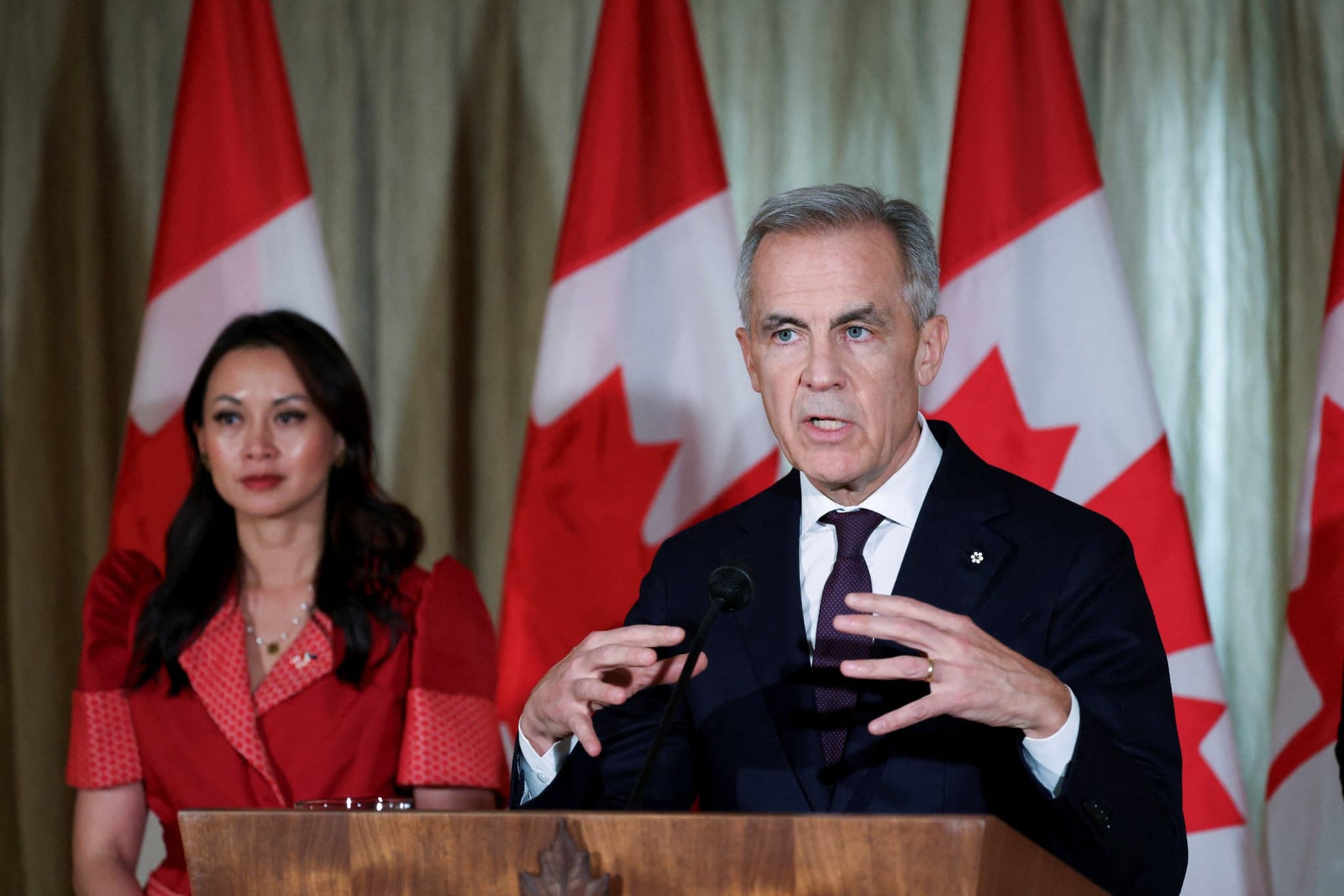
Canada and Philippines Conclude Landmark Free Trade Talks, Pursuing Pacific Diversification
World & Geopolitics
 20
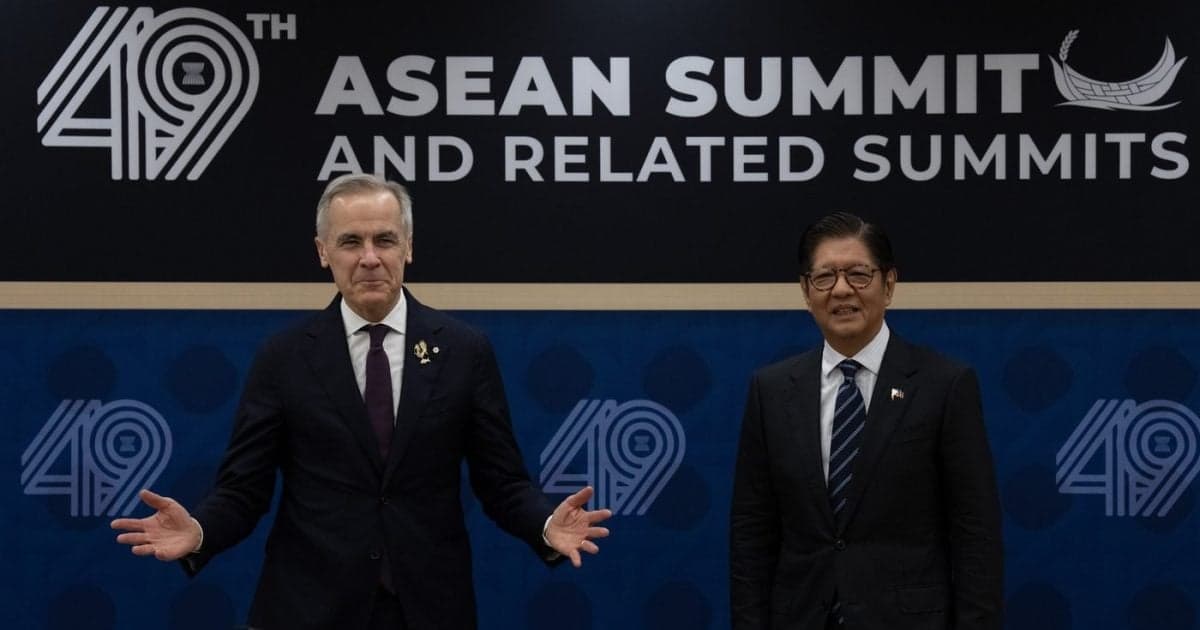
Canada and Philippines Finalize Free Trade Agreement, Boosting Indo-Pacific Ties
World & Geopolitics
- 21
Persian Gulf Tanker Attacks and Riyadh Missile Strikes Escalate Tensions
World & Geopolitics
 22
L3Harris Network Failure Triggers Massive North American Aviation Ground Stop
World & Geopolitics
 23
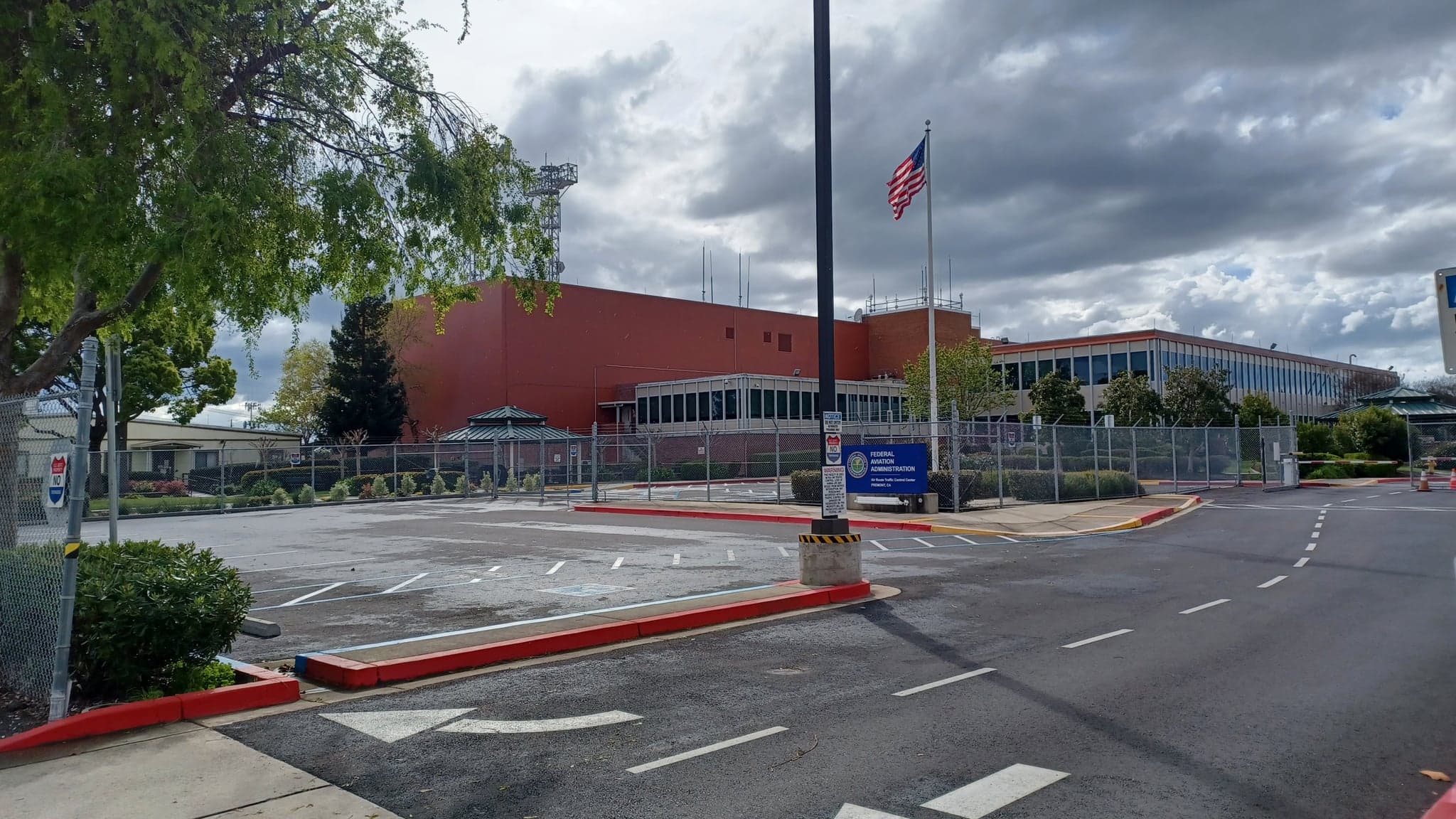
FAA Router Failure Triggers Nationwide Ground Stop, Disrupting North American Air Travel
World & Geopolitics
 24
Nvidia CEO Jensen Huang Resigns Amid Espionage Allegations and Market Turmoil
World & Geopolitics
 25
Canada Pledges $560 Million to Brazil-Led Tropical Forest Forever Facility
World & Geopolitics
 26
Canada Pushes Security and Manitoba's OIF Membership at Francophonie Conference
World & Geopolitics
- 27
Toronto Imposes Hiring Freeze Amid $1.1 Billion Budget Deficit
City News
 28
Mayor Chow Blasts Speed Camera Ban as City Sees 400% Speed Increase
City News
 29
Toronto Launches Winter Homeless Services with Increased Shelter Capacity
City News
- 30
GTA Housing Market Diverges: HST Rebate Benefits New Low-Rise, Stagnates High-Rise
City News
 31
GTA Commuters Face Severe Transit Chaos Due to Multiple Rail Closures
City News
- 32
GTA Transit Suffers Major Disruptions Due to Simultaneous Infrastructure Work
City News
 33
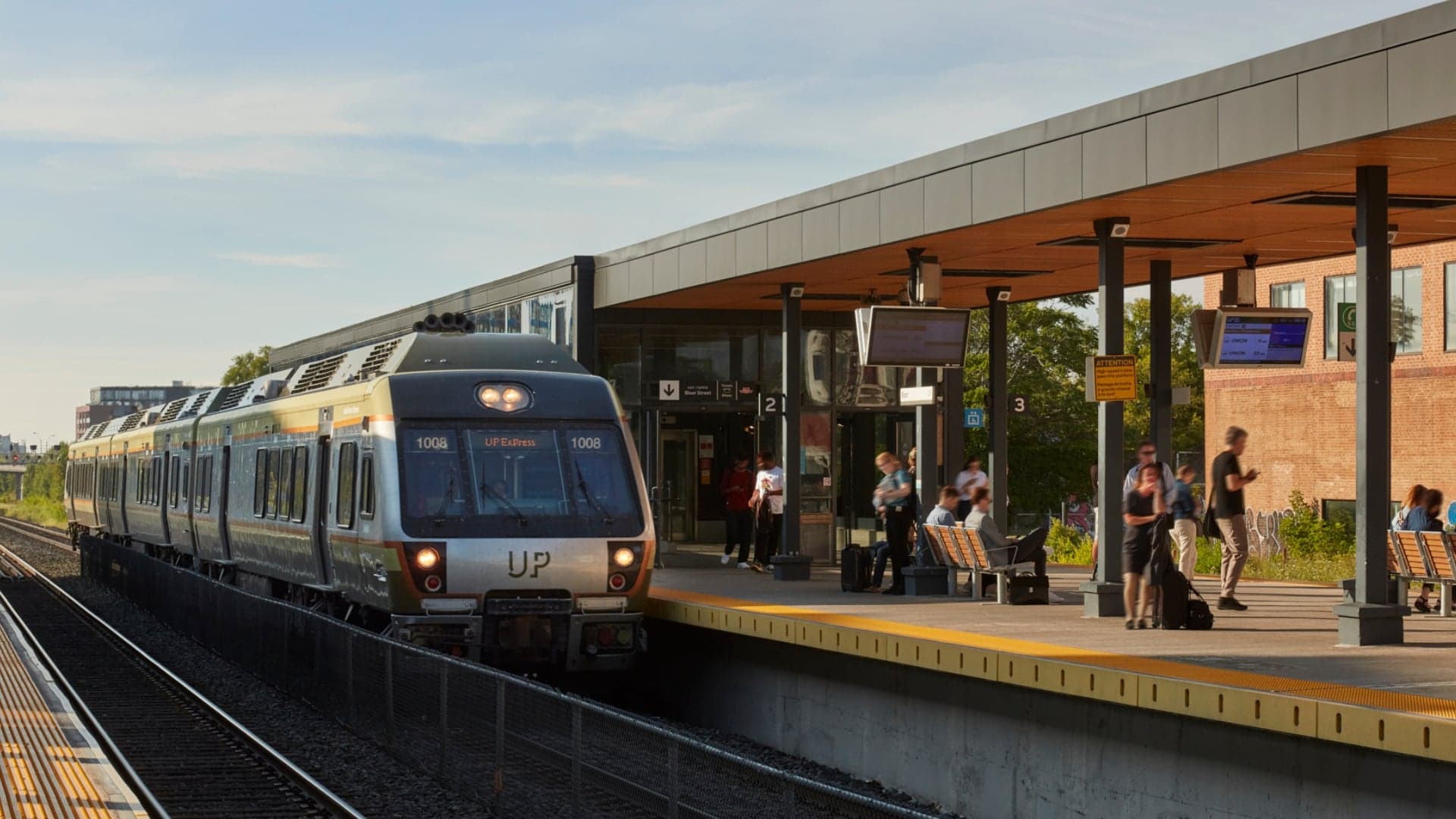
Metrolinx Conducts Major Weekend Rail Upgrades Affecting GO Transit and UP Express
City News
 34
Pearson Airport Faces Delays Post-US Air Traffic Control System Shutdown
City News
 35
Toronto Events Draw Crowds Amid Transit Strain and Winter Village Opening
City News
 36
East York Burglary Suspect Arrested After Storefront Collision During Pursuit
City News
- 37
Toronto Police Obtain Rare Judicial Order in Rathburn Road Homicide Case
City News
 38
Fatal Stabbing in Mississauga Under Investigation
City News
 39
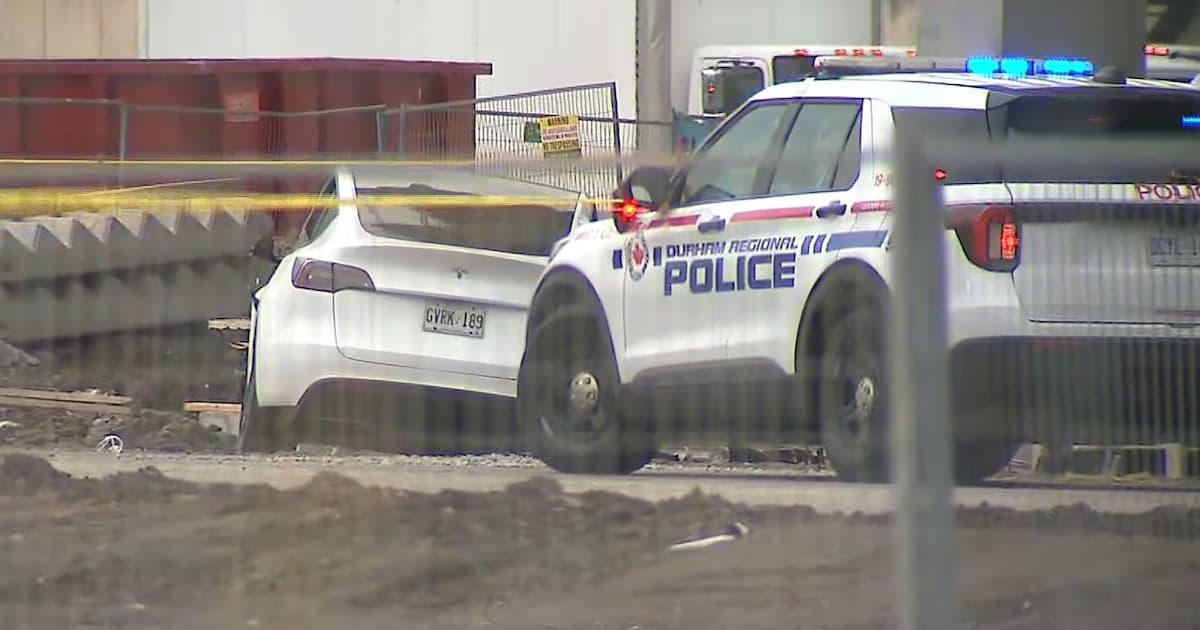
Two Construction Workers Killed by Vehicle at Pickering Shopping Centre
City News
 40
Five Critical After Burlington Townhouse Fire, Including Three Children
City News
 41
AFC Toronto Wins Inaugural Northern Super League Championship
City News
 42
Maple Leafs Suffer 1-0 Loss to Oilers, Extend Winless Homestand to Six Games
Sports
 43
Maple Leafs Suffer Sixth Straight Home Loss, Blanked 1-0 by Oilers
Sports
- 44
McDavid Hits 50 Points in Oilers' Shutout of Maple Leafs
Sports
 45
Scottie Barnes Upgraded to Questionable for Raptors' Clash with Knicks
Sports
 46
Raptors Face Knicks Without Injured Scottie Barnes
Sports
 47
Blue Jays Release Minor Leaguers Amidst Ketel Marte Trade Rumors
Sports
 48
Blue Jays Pursue Ketel Marte Trade Amid Conflicting Reports
Sports
 49
Anthony Santander Apologizes for Islamophobic Posts After Blue Jays Meeting
Sports
 50
Zack MacEwen Emerges as Surprise Offensive Contributor for Struggling Maple Leafs
Sports
- 51
Chris Tanev Returns Amidst Maple Leafs' Health and Depth Concerns
Sports
 52
NBA G League Trade, NHL Blockbuster Rumors Circulate
Sports
 53
MacKinnon and Makar Out for Avalanche with Significant Injuries
Sports
See all 53 as a listHide the list
- Ottawa and Ontario Offer Aggressive Package to Save Stellantis Brampton Plant
- Canada Finalizes Historic Trade Deals with ASEAN Bloc and Philippines
- Canada Secures Free Trade Agreement with Philippines, Bolstering ASEAN Ties
- Canada Finalizes Philippines FTA, Advances ASEAN Pact Amid US Trade Tensions
- Federal Ministers Promote Budget 2026 Infrastructure and Indigenous Investments
- Canada's Budget 2026 Focuses on Growth Incentives Amidst Business Sector Debate
- Canada Realigns Immigration Strategy, Boosting Provincial Nominee Programs
- Canada Pledges $560 Million for Global Tropical Forest Conservation
- Cross-Country Auto Theft Ring Busted, $10 Million in Stolen Property Seized
- Fifth Fatality Confirmed in CFB Wainwright Training Fire Accident
- PHAC Rules Out Mystery Neurological Disease in New Brunswick
- JCM Power and APECO Forge Partnership for Clean Energy in Philippine Freeport
- 1.5 Million Children Lack Primary Care Amid Pediatric Healthcare Crisis
- Honda Canada Recalls Nearly 43,000 Vehicles for Power Steering Software Defect
- Trump, Xi, Putin to Hold Trilateral Summit in Shenzhen
- US Proposes Ukraine Land Concession for NATO, Divides Allies
- US Mediators Propose Donbas Withdrawal for NATO Membership in Ukraine Peace Talks
- Canada Strikes Landmark Trade Deals with ASEAN and Philippines
- Canada and Philippines Conclude Landmark Free Trade Talks, Pursuing Pacific Diversification
- Canada and Philippines Finalize Free Trade Agreement, Boosting Indo-Pacific Ties
- Persian Gulf Tanker Attacks and Riyadh Missile Strikes Escalate Tensions
- L3Harris Network Failure Triggers Massive North American Aviation Ground Stop
- FAA Router Failure Triggers Nationwide Ground Stop, Disrupting North American Air Travel
- Nvidia CEO Jensen Huang Resigns Amid Espionage Allegations and Market Turmoil
- Canada Pledges $560 Million to Brazil-Led Tropical Forest Forever Facility
- Canada Pushes Security and Manitoba's OIF Membership at Francophonie Conference
- Toronto Imposes Hiring Freeze Amid $1.1 Billion Budget Deficit
- Mayor Chow Blasts Speed Camera Ban as City Sees 400% Speed Increase
- Toronto Launches Winter Homeless Services with Increased Shelter Capacity
- GTA Housing Market Diverges: HST Rebate Benefits New Low-Rise, Stagnates High-Rise
- GTA Commuters Face Severe Transit Chaos Due to Multiple Rail Closures
- GTA Transit Suffers Major Disruptions Due to Simultaneous Infrastructure Work
- Metrolinx Conducts Major Weekend Rail Upgrades Affecting GO Transit and UP Express
- Pearson Airport Faces Delays Post-US Air Traffic Control System Shutdown
- Toronto Events Draw Crowds Amid Transit Strain and Winter Village Opening
- East York Burglary Suspect Arrested After Storefront Collision During Pursuit
- Toronto Police Obtain Rare Judicial Order in Rathburn Road Homicide Case
- Fatal Stabbing in Mississauga Under Investigation
- Two Construction Workers Killed by Vehicle at Pickering Shopping Centre
- Five Critical After Burlington Townhouse Fire, Including Three Children
- AFC Toronto Wins Inaugural Northern Super League Championship
- Maple Leafs Suffer 1-0 Loss to Oilers, Extend Winless Homestand to Six Games
- Maple Leafs Suffer Sixth Straight Home Loss, Blanked 1-0 by Oilers
- McDavid Hits 50 Points in Oilers' Shutout of Maple Leafs
- Scottie Barnes Upgraded to Questionable for Raptors' Clash with Knicks
- Raptors Face Knicks Without Injured Scottie Barnes
- Blue Jays Release Minor Leaguers Amidst Ketel Marte Trade Rumors
- Blue Jays Pursue Ketel Marte Trade Amid Conflicting Reports
- Anthony Santander Apologizes for Islamophobic Posts After Blue Jays Meeting
- Zack MacEwen Emerges as Surprise Offensive Contributor for Struggling Maple Leafs
- Chris Tanev Returns Amidst Maple Leafs' Health and Depth Concerns
- NBA G League Trade, NHL Blockbuster Rumors Circulate
- MacKinnon and Makar Out for Avalanche with Significant Injuries
Section 1 of 4
National News
14 stories · 6 min skim
National News
2 min read
Ottawa and Ontario Offer Aggressive Package to Save Stellantis Brampton Plant
The federal and Ontario governments have launched an emergency financial package to prevent Stellantis from selling its Brampton assembly plant. The automaker was in negotiations to sell the facility to defense firm Roshel, following disputes over subsidies. This joint intervention aims to preserve over 2,000 automotive manufacturing jobs and protect Canada's industrial base amid shifting production mandates.
Read the full storyFold the full story2 min · 3 sources
In an exceptional joint intervention to protect Canadian industrial capacity, federal and provincial officials presented an “aggressive” emergency support package over the weekend to convince multinational automaker Stellantis to cancel the sale of its assembly plant in Brampton, Ontario[1]. Federal Minister of Industry Mélanie Joly and Ontario Minister of Economic Development, Job Creation and Trade Vic Fedeli outlined the coordinated initiative following urgent discussions, confirming that both levels of government have presented new industrial subsidy and investment scenarios directly to Stellantis global CEO Antonio Filosa[1].
The intervention was triggered by Stellantis’s recent move to enter a conditional agreement to offload the sprawling Brampton facility to Roshel, a defense manufacturing firm specializing in armored vehicle production[1]. The prospective divestiture followed prolonged disputes between the automaker and government officials over hundreds of millions of dollars in previously promised subsidy outlays and shifting production mandates[1]. Although an initial purchase agreement had been drafted between Stellantis and Roshel, the transaction remains subject to mandatory government and regulatory reviews, creating an operational window for Ottawa and Queen's Park to attempt to preserve the plant's traditional high-volume passenger vehicle lines[1].
At stake are more than 2,000 highly unionized automotive manufacturing jobs represented by Unifor, alongside thousands of downstream positions within the southern Ontario auto parts supply chain[1]. Industry analysts note that losing an assembly plant of Brampton's scale would permanently diminish Canada’s manufacturing footprint at a time when North American auto production is realigning around electric and hybrid platforms[1]. The federal-provincial offer combines updated capital grants, workforce retention incentives, and regulatory certainty intended to make remaining in Brampton financially compelling for Stellantis compared to a complete manufacturing exit[1].
The joint bid highlights the acute sensitivity of Canadian policymakers to manufacturing flight amid an unpredictable cross-border trade environment[2][1]. With Washington considering new tariffs and strict procurement rules on foreign-assembled vehicles and components, preserving domestic manufacturing scale has become a central economic security priority for both the Carney ministry and the Ontario government[3][2]. Negotiations between government representatives and Stellantis executives are continuing behind closed doors as the automaker weighs the enhanced support package against the proposed sale[1].
- Stellantis
- Brampton Plant
- Ontario
National News
3 min read
Canada Finalizes Historic Trade Deals with ASEAN Bloc and Philippines
Canada has concluded negotiations for a comprehensive free trade agreement with the Association of Southeast Asian Nations (ASEAN) and a separate bilateral trade pact with the Philippines. These agreements, announced at the ASEAN Summit in Manila, are Canada's first simultaneous negotiation of two major trade accords. Formal signing is anticipated in 2027, with projections indicating significant GDP growth and job creation for Canada, particularly in agriculture, manufacturing, and clean energy sectors.
Read the full storyFold the full story2 min · 7 sources
In a major milestone for Canadian trade diversification, Prime Minister Mark Carney and International Trade Minister Maninder Sidhu announced the substantial conclusion of negotiations for two separate trade pacts at the 49th Association of Southeast Asian Nations (ASEAN) Summit in Manila[1][2][3]. The dual breakthroughs encompass the comprehensive ASEAN-Canada Free Trade Agreement (ACAFTA) - Canada’s first trade pact negotiated with the Southeast Asian bloc as a collective unit - and a bilateral free trade agreement with the Philippines[2][4]. Both agreements were finalized following high-level bilateral discussions between Carney and Philippine President Ferdinand Marcos Jr., alongside negotiations led by Sidhu and Philippine Trade and Industry Secretary Maria Cristina Roque[2][5]. Formal signings for both pacts are targeted for 2027[2][3].
The conclusion of these agreements represents the first time Canada has completed negotiations on two separate free trade accords simultaneously[4]. The broader ASEAN pact links Canadian exporters to a fast-growing market of nearly 700 million consumers representing a regional gross domestic product approaching $6 trillion[3]. Federal estimates project that ACAFTA will inject nearly $2 billion (CAD) into Canada’s GDP and generate approximately 14,000 domestic jobs, primarily bolstering the export profiles of Canadian agriculture, advanced manufacturing, clean energy, and natural resources[5][3]. Meanwhile, the bilateral Canada-Philippines accord covers more than 90 percent of tariff lines across goods and services, while integrating specialized provisions for digital trade, professional service mobility, and micro, small, and medium-sized enterprises (MSMEs)[2][5]. Federal projections indicate the bilateral deal could help triple Canadian exports to the Philippines by 2035[5].
To support the transition from negotiations to implementation, Prime Minister Carney committed $15.9 million in federal investments across Southeast Asia[6]. This funding will assist regional regulatory capacity, nuclear security, ocean conservation, and clean energy transition, alongside an earmarked $5 million allocation designed to assist ASEAN member states with technical readiness for swift legislative ratification[6][3]. The Canada-ASEAN Business Council (CABC) praised the development, announcing the formation of a new CEO Advisory Forum to connect mid-market Canadian businesses directly with commercial supply chains across Jakarta, Manila, Singapore, and Bangkok[4].
The diplomatic breakthrough in Southeast Asia comes at a pivotal moment for Canada’s macroeconomic strategy[3][5]. Addressing reporters in Manila, Prime Minister Carney confirmed that he held extensive discussions with U.S. President Donald Trump and senior White House officials prior to departing for Asia, reporting renewed progress toward a bilateral trade arrangement following the breakdown of cross-border talks in August[5][7]. With Canadian automakers and steel producers facing ongoing tariff volatility south of the border, the Carney administration is aggressively pursuing an economic doctrine aimed at doubling non-U.S. exports by 2035[1][5]. Following the summit in Manila, Carney's itinerary includes the Francophonie summit in Cambodia and the Asia-Pacific Economic Cooperation (APEC) summit in China, where he is scheduled to hold formal bilateral talks with Chinese President Xi Jinping[5].
- Canada
- ASEAN
- Philippines
National News
2 min read
Canada Secures Free Trade Agreement with Philippines, Bolstering ASEAN Ties
Canada and the Philippines have concluded bilateral negotiations for a Free Trade Agreement (FTA), signed on the margins of the ASEAN Summit. This marks a significant step in Canada's Indo-Pacific strategy, aiming to diversify trade away from protracted negotiations with the U.S. The agreement covers goods, services, SMEs, and digital commerce, with anticipated benefits for Canadian agri-food, manufacturing, and clean tech exporters. It also includes provisions for infrastructure investment and a deepening security alliance.
Read the full storyFold the full story2 min · 8 sources
In a major milestone for Canadian trade diversification, Prime Minister Mark Carney and Philippine President Ferdinand Marcos Jr. announced the formal conclusion of bilateral negotiations for a Canada-Philippines Free Trade Agreement (FTA) on November 14, 2026[1]. The exchange of joint statements occurred on the margins of the 49th Association of Southeast Asian Nations (ASEAN) Summit in Pasay City, Metro Manila, where Canadian Minister of International Trade Maninder Sidhu and Philippine Trade Secretary Maria Cristina Roque signed documents finalizing terms, paving the way for full ratification and implementation anticipated in 2027[2][1]. Concurrently, Canadian and ASEAN delegates revealed that multilateral talks toward a comprehensive ASEAN-Canada Free Trade Agreement have reached a “substantial conclusion,” marking a breakthrough in Canada's diplomatic and economic engagement across Southeast Asia[3].
The trade breakthrough comes at a critical juncture for Canadian economic diplomacy[4]. Faced with ongoing tariff disputes and protracted, unpredictable negotiations with Washington - including cross-border friction surrounding automotive manufacturing, supply chain protectionism, and restrictive procurement measures - the Carney government has accelerated its strategy to establish alternative market footholds[4][5]. Ottawa views the Philippines, a rapidly expanding economy of over 110 million people with annual economic output exceeding $700 billion, as a vital anchor in the Indo-Pacific[6]. Strong demographic ties reinforce the agreement, with more than one million Canadians tracing their lineage to the Philippines, providing an established bridge for commercial, educational, and cultural integration[6].
The scope of the finalized agreement covers extensive ground across trade in goods and services, micro, small, and medium-sized enterprises (SMEs), and digital commerce[1]. Canadian exporters in agri-food, advanced manufacturing, clean technology, and critical minerals are poised to benefit from reduced tariffs and streamlined customs procedures[1][7]. In return, the pact broadens Canadian market access for Philippine exports and addresses service industry cooperation, remote digital workers, and freelancers[1]. The discussions also placed a specific focus on infrastructure investment along the Philippines’ Luzon Economic Corridor, opening doors for Canadian capital in transport networks, food logistics, and cold-chain distribution[8].
Beyond commerce, the summit underscored a deepening bilateral security alliance[6]. Carney and Marcos celebrated the ratification of their bilateral Status of Visiting Forces Agreement and formally launched a General Security of Information Agreement (GSIA) to enable secure intelligence and defense sharing[6]. The move signals Canada’s intention to play a substantive role in regional defense cooperation and maritime stability across the Indo-Pacific, pairing trade liberalization with institutional defense architecture[6].
- Canada
- Philippines
- Mark Carney
National News
2 min read
Canada Finalizes Philippines FTA, Advances ASEAN Pact Amid US Trade Tensions
Canada has concluded negotiations for a free trade agreement with the Philippines and made significant progress on a pact with ASEAN. These deals aim to expand Canadian trade into Southeast Asia's growing market. The move is seen as a strategic diversification away from U.S. trade disputes, which have led to significant tariffs on Canadian goods.
Read the full storyFold the full story2 min · 4 sources
In a major strategic realignment of Canadian trade architecture, Prime Minister Mark Carney announced the substantial conclusion of negotiations for a bilateral free trade agreement with the Philippines, alongside major advancements toward a comprehensive pact with the Association of Southeast Asian Nations (ASEAN)[1][2]. Speaking from Manila on the sidelines of the 49th ASEAN Summit, Carney and Philippine President Ferdinand Marcos Jr. confirmed the finalization of terms for the Canada-Philippines Free Trade Agreement after nine months of intensive negotiations[1][3]. Formal ratification and implementation are slated for 2027, marking Ottawa’s most concerted push to date into Southeast Asia’s rapidly expanding market of nearly 700 million consumers and a combined gross domestic product approaching $6 trillion[1][4].
The agreements focus heavily on tariff elimination and market predictability across core Canadian export sectors, including agriculture, aerospace, mining, energy services, forestry, and artificial intelligence[3]. Bilateral trade between Canada and the Philippines is projected to triple over the next decade under the terms of the agreement, which also expands reciprocal supply-chain integration in critical minerals and advanced technology[3]. Canadian officials underscored that deepened economic cooperation is paired with expanding regional security collaboration, supported by a diaspora of more than one million Filipino-Canadians that underpins the bilateral relationship[3].
This aggressive diversification into the Indo-Pacific unfolds against severe economic turbulence closer to home. Canada remains embroiled in an intense trade dispute with the United States under President Donald Trump[2]. Following a breakdown of cross-border talks in August, Washington levied 50 percent tariffs on approximately $20 billion worth of Canadian goods, prompting retaliatory Canadian duties in September[2]. Carney disclosed to reporters in Manila that he engaged in an extensive call with President Trump, U.S. Trade Representative Jamieson Greer, and White House Chief of Staff Stephen Miller immediately prior to his departure for Asia[2]. While noting modest progress toward an eventual bilateral compromise, Carney was explicit that Ottawa would not sign any deal that sacrifices or undermines the Canadian automotive sector, which has borne the brunt of punitive American measures[2].
The strategic pivot to Southeast Asia is widely seen by trade economists and domestic industry leaders as a critical hedge against single-market dependency. By anchoring supply chains in ASEAN member states, Canadian exporters gain insulation against protectionist shocks from the United States. However, domestic stakeholders caution that real market access will hinge on overcoming non-tariff barriers, logistical bottlenecks across trans-Pacific shipping routes, and the swift implementation of regulatory harmonization frameworks before the agreements formally take effect[1][2].
- Canada
- Philippines
- ASEAN
National News
2 min read
Federal Ministers Promote Budget 2026 Infrastructure and Indigenous Investments
Federal ministers conducted a nationwide tour to publicize Budget 2026's investments in municipal infrastructure and Indigenous reconciliation. Key initiatives include the $1.5 billion Build Communities Strong Fund for recreational facilities and a $50 billion+ package over 10 years for core Indigenous community funding, including housing and infrastructure.
Read the full storyFold the full story2 min · 10 sources
Across November 14 and 15, 2026, the federal cabinet executed a coordinated national tour to promote key provisions of Budget 2026, officially titled Masters of Our Destiny[1][2][3]. The outreach campaign mobilized cabinet ministers, secretaries of state, and parliamentary secretaries across dozens of communities - ranging from Nunavut to urban centers in Ontario and British Columbia - to showcase municipal infrastructure programs and long-term reconciliation investments[1][4][3][5].
A centerpiece of the ministerial tour was the newly unveiled $1.5 billion Build Communities Strong Fund, designed to disburse capital over nine years for community-level public infrastructure[1]. The fund is split evenly, dedicating $750 million specifically toward the construction, retrofitting, and energy modernization of municipal ice rinks and $750 million toward recreational complexes and community centers[1]. In Pangnirtung, Nunavut, Minister of Canadian Identity and Culture Marc Miller visited Akshayuk Arena alongside municipal leaders to detail northern allocations[1], while Secretary of State for Sport Adam van Koeverden and Minister of Housing and Infrastructure Gregor Robertson highlighted community center upgrades in Embrun, Ontario[6]. Companion announcements were led by Parliamentary Secretaries Ali Ehsassi in North York, Pauline Rochefort in North Bay, Karim Bardeesy in Vaughan, and Stephanie McLean in Victoria[7][2][8][4].
Simultaneously, the government promoted Budget 2026’s reconciliation framework during ministerial events in western Canada[5]. In Saskatoon, Ginette Lavack, Parliamentary Secretary to the Minister of Indigenous Services, outlined an investment package exceeding $50 billion over 10 years for core Indigenous community funding[5]. The financial framework allocates $32 billion specifically for First Nations housing and on-reserve infrastructure, headlined by an $18.5 billion, 10-year dedicated On-Reserve Infrastructure Program to finance long-term water and wastewater treatment, roads, schools, and health facilities[5]. A further $18 billion over six years is directed to Indigenous family support, skills training, community safety, and emergency response operations[5].
The nationwide campaign is an effort to build public support for the Carney government’s broader economic policy[1][9]. The 2026 federal budget introduces a strict fiscal consolidation path that targets a balanced operating budget by 2027–28 - one year ahead of initial forecasts - bolstered by the rapid reduction of the federal civil service, which has already eliminated 34,000 of a planned 40,000 public sector jobs[1][10]. By emphasizing local recreational projects and substantial infrastructure capital, the administration is working to demonstrate tangible community benefits while defending its fiscally restrained macro targets[1][9].
- Canada
- Budget 2026
- Mark Carney
National News
3 min read
Canada's Budget 2026 Focuses on Growth Incentives Amidst Business Sector Debate
The Canadian government is promoting its "Masters of Our Destiny" budget, highlighting strong GDP growth, job creation, and increased labor productivity. The budget includes significant tax incentives for investments in Canadian growth enterprises, accelerated equipment write-offs, and expanded R&D tax credits. A dedicated fund for community sports facilities is also part of the package.
Read the full storyFold the full story2 min · 5 sources
Cabinet ministers and parliamentary secretaries fanned out across Canada to promote the economic architecture of Budget 2026, titled Masters of Our Destiny, releasing detailed economic indicators aimed at reinforcing business confidence[1][2]. Public appearances included Canadian Identity and Culture Minister Marc Miller in Pangnirtung, Nunavut; Agriculture and Agri-Food Minister Heath MacDonald in Prince Edward Island; and Industry Parliamentary Secretary Karim Bardeesy in Vaughan, Ontario[3][4][2]. The coordinated communications blitz highlighted that Canada’s GDP expanded at an annualized rate of 3.3 percent in the second quarter - the fastest pace among G7 nations - while national unemployment eased to 6.5 percent alongside the creation of 214,000 net private-sector jobs over the past twelve months[2].
A central focus of the public policy addresses was Ottawa’s updated macroeconomic data showing national labour productivity grew by 1.2 percent year-over-year, recovering from post-pandemic stagnation that averaged just 0.1 percent annually[2]. Federal officials attributed this momentum to Canada’s competitive investment environment, noting that foreign direct investment reached $98 billion in 2025 - the highest level in nearly two decades - allowing Canada to lead the G7 in per-capita inbound direct investment[2]. Furthermore, the Department of Finance reaffirmed its commitment to dual fiscal anchors: keeping the federal debt-to-GDP ratio on a downward track while achieving a balanced operating budget by the 2027–2028 fiscal year, one full year ahead of initial projections[5][2].
The corporate cornerstone of Budget 2026 is a targeted suite of tax incentives designed to reverse longstanding private-sector capital underinvestment[1]. Chief among these is a capital gains tax exemption on up to $15 million in gains derived from eligible investments in Canadian growth enterprises[1]. To qualify, investments must be made in shares issued between the budget’s introduction and 2036, held for a minimum of 36 months, in operating businesses with total combined assets not exceeding $100 million at the time of issuance[1]. The measure, estimated to cost the federal treasury $80 million in 2029–2030 and $485 million by 2030–2031, is paired with accelerated equipment write-offs and expanded research and development tax credits[1]. Additionally, ministers promoted the rollout of the $1.5 billion, nine-year Build Communities Strong Fund, which reserves $750 million specifically for the modernization and construction of community ice rinks and sports facilities nationwide[5][4].
Despite official optimism, the budget’s enterprise framework has drawn scrutiny from small-business advocacy groups[1]. Dan Kelly, president and chief executive of the Canadian Federation of Independent Business (CFIB), expressed frustration over the policy tilt toward large-scale capital projects, labeling the measures "a mega disappointing budget for small business owners"[1]. Commercial lenders echoed these concerns, with Merchant Growth Chief Growth Officer Hash Aboulhosn pointing out that while enhanced productivity deductions assist established balance sheets, they offer minimal relief to Main Street entrepreneurs facing high borrowing costs who cannot shoulder the upfront capital expenditures required to utilize the tax credits[1]. The debate highlights an emerging policy divide between capital-intensive industrial modernization and the cash-flow realities confronting independent Canadian businesses[1].
- Canada
- Budget 2026
- Mark Miller
National News
2 min read
Canada Realigns Immigration Strategy, Boosting Provincial Nominee Programs
Canada's federal budget for 2026 signals a shift in immigration strategy, increasing annual admissions under the Provincial Nominee Program (PNP) to 95,000 starting next year. This change transfers more selection authority to provinces, allowing them to target immigrants based on specific local economic needs and address critical workforce shortages.
Read the full storyFold the full story1 min · 1 source
Policy briefings and statements delivered on November 15, 2026, shed light on a significant adjustment to Canada’s immigration framework emerging from the newly tabled federal budget[1]. Minister of Immigration, Refugees and Citizenship Lena Metlege Diab affirmed that while the federal government is maintaining overall permanent residency admission targets at stable, predictable levels, it is reallocating authority toward the provinces by increasing annual admissions under the Provincial Nominee Program (PNP) to 95,000 starting in the next calendar year, up from 92,500[1]. The shift transfers greater control to regional authorities to select immigrants whose qualifications match acute local economic needs[1].
The revised allocations indicate a strategic calibration after years of public debate regarding infrastructure strain, housing capacity, and healthcare backlogs[1]. For 2026, provincial quotas set Ontario at 14,119 nominee spaces, followed by Alberta at 6,603 and British Columbia at 6,254[1]. Although national totals are constrained, the recalibrated distribution mechanism gives provincial administrations the autonomy to target specialized candidates, bypass broader federal backlogs, and incentivize settlement outside major urban centers[1].
Provincial reaction has centered on strategic prioritization and absorption capacity[1]. B.C. Premier-designate Lorne Doerkson emphasized that his administration intends to manage its allocation with strict discipline, aiming to push certified doctors, nurses, and allied healthcare professionals to the absolute front of the line[1]. Doerkson acknowledged that after several years of historic intake volumes that strained provincial public services, provincial governments must focus exclusively on addressing essential workforce shortages rather than broad, volume-driven admissions[1].
Immigration policy experts and legal scholars point out that the decentralization of candidate selection represents an important operational reform[1]. Irene Bloemraad, a political science professor at the University of British Columbia, observed that while regional stakeholders had sought larger base allocations, the model empowers provincial ministries to craft targeted economic migration paths suited to their specific labor markets[1]. Former Immigration and Refugee Board member Cedric Marin noted that regionalized streams will provide distinct advantages to rural communities, which have faced prolonged labor shortages that generic federal Express Entry draws failed to resolve[1].
- Canada
- Lena Metlege Diab
- Provincial Nominee Program
National News
2 min read
Canada Pledges $560 Million for Global Tropical Forest Conservation
At the ASEAN Summit, Prime Minister Mark Carney announced Canada's commitment of up to $560 million over four years for global tropical forest conservation. This pledge supports international efforts to fund deforestation-arresting and biome-restoring countries through performance-based capital disbursements.
Read the full storyFold the full story1 min · 5 sources
On the margins of the ASEAN Summit in Manila, Prime Minister Mark Carney announced that Canada will contribute up to $560 million over four years toward global tropical forest conservation[1][2]. The financial pledge was unveiled following a high-level bilateral meeting with Brazilian President Luiz Inácio Lula da Silva, whose administration has spearheaded international multilateral efforts to capitalize the Tropical Forest Finance Facility[1][3]. The commitment positions Canada as a primary donor nation within the international framework, which seeks to establish performance-based, sovereign-level capital disbursements to countries that successfully arrest deforestation and restore critical biomes[1].
The forest preservation package represents an operational extension of Canada's international climate finance program, which was restructured under the Spring Economic Update 2026[1][2]. Ottawa has committed nearly $6 billion in direct funding to international climate finance instruments, advancing toward a cumulative goal of deploying more than $13 billion to emerging markets by 2031[1][2]. These international disbursements are channeled through Global Affairs Canada, Environment and Climate Change Canada, and FinDev Canada, with an emphasis on blending commercial capital with concessional finance for nature-based solutions and climate resilience[2].
The multilateral funding coincides with substantial domestic outlays under Canada's $3.8 billion A Force of Nature conservation strategy and an auxiliary $1.2 billion ocean protection initiative[1][2]. Domestically, these envelopes support Indigenous-led ecological stewardship, marine monitoring, and restoration initiatives across vital zones like the Lower Fraser River Estuary and the Great Bear Sea[2]. Internationally, the federal government is attempting to align Canadian institutional capital with global natural capital markets, leveraging export expertise in environmental engineering, spatial satellite monitoring, and clean technology[1][2].
Carney’s environmental diplomacy in Manila also served to address criticisms from domestic and international civil society groups following his absence from consecutive UN climate summits[4]. Canadian officials underscored that the $560 million commitment reflects a transition away from broad multilateral declarations toward commercially enforceable, performance-contingent capital mechanisms[1][4]. As emerging markets negotiate stringent supply-chain deforestation rules with Europe and North America, federal officials argue that Canada’s early involvement in forest finance mechanisms ensures domestic agricultural and forestry producers remain insulated from retaliatory carbon-intensity border penalties[1][5].
- Canada
- Mark Carney
- Luiz Inácio Lula da Silva
National News
2 min read
Cross-Country Auto Theft Ring Busted, $10 Million in Stolen Property Seized
A multi-jurisdictional police investigation has dismantled a cross-country stolen vehicle syndicate, leading to 220 charges against four individuals. The 16-month probe resulted in the seizure of over $10 million in stolen vehicles, commercial machinery, and parts. The sophisticated operation involved transporting stolen vehicles across provinces to chop shops, including a repurposed elementary school.
Read the full storyFold the full story2 min · 8 sources
In one of the most expansive organized property crime busts in recent Canadian history, the Cape Breton Regional Police Service (CBRPS), supported by the RCMP and international partners, laid 220 criminal charges against four individuals linked to a multi-million-dollar interprovincial auto theft operation[1][2]. The 16-month cross-border investigation, initiated in July 2025, culminated in the seizure of more than $10 million in stolen property, including roughly 150 motor vehicles in various stages of dismantling, assembly, or re-vinning[1][3]. Investigators also recovered extensive commercial machinery, stolen industrial components, illicit firearms, and bulk shipments of recreational vehicles staged for illicit distribution[1][3].
The criminal enterprise operated across multiple Canadian provinces, systematically obtaining stolen high-value vehicles from Ontario, New Brunswick, Nova Scotia, Newfoundland and Labrador, and Manitoba[1]. Vehicles were hauled across provincial boundaries to rural Cape Breton properties, including two residences in Little Pond, an auto salvage business in Sydney Mines, and a repurposed, decommissioned elementary school in Florence, Nova Scotia[3][4]. The former school was repurposed into a massive indoor chop shop, with classrooms and corridors lined with shelving units full of cataloged engines, transmissions, and parts that were marketed online or exported[5][2][6].
The operation involved sophisticated Vehicle Identification Number (VIN) manipulation, where stolen cars were either cloned with fraudulent registrations for domestic resale or stripped down entirely to supply black-market supply chains[6][5]. CBRPS Acting Chief Stephen MacKinnon noted that the operation was international in scope, requiring operational coordination with provincial police units across Central and Eastern Canada as well as United States Homeland Security Investigations, which intercepted trailer-loads of stolen snowmobiles bound for American markets[1][2].
This high-profile takedown comes as law enforcement agencies and federal policymakers face relentless public pressure over escalating auto theft rates and their deep links to organized crime[7]. In response, the federal government enacted sweeping bail and sentencing reforms under the Bail and Sentencing Reform Act, which established reverse onus provisions for chronic auto theft offenders and stiffened penalties for organized trafficking networks[7][8]. Legal analysts and police chiefs observe that while the Cape Breton bust demonstrates the success of joint-force operations, the sophisticated reuse of industrial and public properties highlights how criminal syndicates continue to adapt logistics across interprovincial boundaries to exploit regional enforcement gaps[5][2].
- Cape Breton Regional Police Service
- RCMP
- United States Homeland Security Investigations
National News
2 min read
Fifth Fatality Confirmed in CFB Wainwright Training Fire Accident
The Canadian Armed Forces confirmed a fifth death resulting from a live-fire training accident at CFB Wainwright. Private William Douglas Dal Bianco succumbed to injuries sustained during the October 17 disaster. The incident, which involved a brush fire accelerated by high winds during a grenade launcher exercise, resulted in four immediate fatalities and 43 injuries.
Read the full storyFold the full story2 min · 5 sources
The Canadian Armed Forces (CAF) and the Department of National Defence confirmed the death of Private William Douglas Dal Bianco of the 3rd Battalion, Princess Patricia’s Canadian Light Infantry (3 PPCLI), marking the fifth fatality resulting from a catastrophic live-fire training accident at Canadian Forces Base (CFB) Wainwright[1][2]. Private Dal Bianco succumbed to critical burn and trauma injuries at an Ontario medical facility, where he had been receiving specialized intensive care following the October 17 disaster[1][3]. Chief of the Defence Staff General Jennie Carignan and Canadian Army Commander Lieutenant-General Michael Wright issued statements mourning Dal Bianco’s loss, extending condolences to his family, and praising his dedication to military service[3].
The fatal incident originated during a live-fire exercise utilizing an automatic grenade launcher range at the Alberta base[3]. Gale-force winds rapidly accelerated an uncontained brush fire, sweeping across the range and engulfing an administrative and staging area before military personnel could evacuate or deploy fire-suppression equipment[3]. Four service members were killed in the immediate aftermath, while 43 additional CAF members sustained varying degrees of injuries[3]. Several severely burned soldiers were subsequently airlifted to specialized trauma centers across the country, including facilities in Ontario, to facilitate family support during long-term treatment[3].
The fifth death has intensified scrutiny regarding training safety protocols, weather risk assessments, and environmental precautions during military live-fire exercises. Senior defence leadership confirmed that formal military police and departmental investigations remain underway to ascertain how live munitions were deployed under elevated fire-hazard conditions and why evacuation avenues failed to prevent significant casualties[3]. Defence observers and military personnel advocates have also utilized the tragedy to draw attention to systemic disparities in support and compensation structures for members injured during domestic operations, particularly among regular force members and accompanying reservists[4].
The loss of Private Dal Bianco compounds an already challenging operational environment for the Canadian military, which faces ongoing retention deficits and equipment modernization shortfalls across multiple commands. As political leaders, including Prime Minister Mark Carney, paid tribute to the fallen soldier, calls are mounting from Parliament and veterans' organizations for a swift, publicly accessible account of the command decisions that led to the CFB Wainwright disaster to ensure comprehensive procedural reforms are instituted nationwide[2][5].
- Canadian Armed Forces
- Department of National Defence
- Private William Douglas Dal Bianco
National News
2 min read
PHAC Rules Out Mystery Neurological Disease in New Brunswick
The Public Health Agency of Canada has concluded that there is no evidence of a novel neurological illness among over 200 patients in New Brunswick. An extensive review of medical data determined that patients were experiencing a range of known neurological and non-neurological disorders, not a single unexplained affliction. The agency will not recommend further targeted federal investigations or environmental testing.
Read the full storyFold the full story2 min · 8 sources
The Public Health Agency of Canada (PHAC) concluded an exhaustive, multi-year epidemiological review of more than 200 patients in New Brunswick, finding no evidence of an unknown neurological illness or a novel epidemic[1][2]. Federal health authorities confirmed that an extensive examination of clinical files, surveillance data, and diagnostic patterns indicated that patients were experiencing a spectrum of known neurological and non-neurological disorders rather than a single unexplained affliction[1][3]. As a result of these findings, PHAC explicitly advised that it is not recommending further targeted federal epidemiological investigations or wide-scale environmental testing in the province[3].
The controversy dates back to 2019 and 2020, when a Moncton-based neurologist, Dr. Alier Marrero, initially raised alarms regarding an atypical cluster of rapidly progressing neurological symptoms reminiscent of Creutzfeldt-Jakob disease[3][4]. Over the years, the case count of individuals presenting with severe motor impairments, cognitive decline, memory loss, and hallucinations expanded to several hundred[5][3]. Dr. Marrero and advocacy groups theorized that local environmental contaminants, including glyphosate spraying and heavy metal exposure, might be linked to the health crisis, triggering years of public outcry, scientific skepticism, and demands for federal oversight[6][3].
PHAC's conclusions reinforce earlier provincial oversight committees from 2022 and 2025 that failed to uncover a novel cluster, but the finality of the federal determination has sparked sharp community blowback[2][7]. While New Brunswick Chief Medical Officer of Health Dr. Yves Léger welcomed the report and pledged to transition patients toward existing provincial care pathways, patient advocacy coalitions and affected families expressed profound distress[8][2]. Many patients argue that dismissing the concept of a shared syndrome leaves them without clear therapeutic protocols, dedicated financial support, or definitive explanations for their debilitating physical symptoms[8].
The resolution of the New Brunswick probe carries significant national ramifications for Canadian public health surveillance. The case has become an instructional study in the operational difficulties of distinguishing emergent environmental clusters from dispersed, heterogeneous medical conditions in an era of heightened public suspicion and digital communication. While the federal decision effectively closes the door on specialized disease research funding, regional healthcare networks now face the complex administrative burden of re-evaluating, diagnosing, and treating hundreds of marginalized patients through an already overstrained primary and specialized care infrastructure[3][2].
- Public Health Agency of Canada
- New Brunswick
- Dr. Alier Marrero
National News
2 min read
JCM Power and APECO Forge Partnership for Clean Energy in Philippine Freeport
Canadian clean-energy firm JCM Power has signed a Memorandum of Understanding with the Aurora Pacific Economic Zone and Freeport Authority (APECO) in the Philippines. This agreement will facilitate the development of utility-scale solar and wind power facilities within the APECO economic zone.
Read the full storyFold the full story2 min · 4 sources
Canadian clean-energy developer JCM Power broadened its footprint in Southeast Asia by formalizing a Memorandum of Understanding (MOU) with the Aurora Pacific Economic Zone and Freeport Authority (APECO)[1]. The bilateral agreement was presented during the Canada-ASEAN Business Forum in Parañaque City, Metro Manila, attended by JCM Power Chief Executive Officer Jim Bahen, APECO President and CEO Undersecretary Gil Taway IV, and Canadian trade delegates accompanying Prime Minister Carney[1]. The transaction represents one of the initial direct corporate deliverables emerging from Canada's elevated Indo-Pacific commercial push[1][2].
Under the terms of the agreement, Toronto-based JCM Power will explore, develop, and operate utility-scale solar- and wind-power generation facilities within the Casiguran-based economic zone located in the Aurora province of the Philippines[1]. APECO, a special economic and freeport zone designed to spur industrial growth along the eastern seaboard of Luzon, has faced persistent infrastructure bottlenecks due to limited local grid transmission and generation capacity[1]. JCM Power’s proposed hybrid renewable installations are intended to provide dedicated, uninterrupted baseload and peak clean power, stabilizing commercial operating costs for export manufacturers and maritime logistics firms locating within the freeport[1].
The commercial partnership is the product of accelerated cross-border trade diplomacy initiated earlier in the autumn[1]. APECO executives pitched the zone's utility concessions to JCM Power leadership in October, followed by formal due-diligence discussions during an APECO investment roadshow across Canada[1]. For JCM Power - an independent power producer specializing in renewable projects in high-growth, underserved international markets - the agreement secures a strategic gateway into the rapidly modernizing Philippine power sector, where regulatory reforms have eased restrictions on foreign equity ownership in clean-power assets[1].
The venture underscores a broader government-backed push to export Canadian energy technology and infrastructure engineering to the Indo-Pacific[3][4]. With Canadian trade negotiators concluding the ACAFTA and bilateral Philippine free trade agreements, commercial ties in renewable power, grid optimization, and civil nuclear technology are expected to accelerate[3][4]. Philippine industrial authorities highlighted that the entry of institutional Canadian energy players provides essential technical de-risking for APECO, clearing the way for subsequent private-sector industrial investments across agro-processing, cold storage, and regional supply chain logistics[1].
- JCM Power
- APECO
- Philippines
National News
2 min read
1.5 Million Children Lack Primary Care Amid Pediatric Healthcare Crisis
A new report reveals that 1.5 million Canadian children lack access to primary care, signaling an unsustainable crisis in pediatric healthcare. The report highlights increased surgical wait times, strained pediatric intensive care units, and worsening child and youth mental health. This situation is compounded by the collapse of Bill S-212, which aimed to establish a national framework for children's wellness.
Read the full storyFold the full story2 min · 2 sources
A comprehensive joint report released by Children’s Healthcare Canada and pediatric advocacy groups warned that Canada's pediatric healthcare network is at an unsustainable breaking point, documenting that 1.5 million Canadian children currently lack access to a consistent primary care provider[1]. The findings highlight steep increases in surgical wait times, pediatric intensive care capacity crunches, and a widespread deterioration in child and youth mental health metrics across every province and territory[1]. Labeling the situation untenable, the coalition asserted that Canada is actively slipping in global youth health outcomes and urged the federal government to establish a dedicated, funded national strategy for child and youth wellness[1].
The report coincides with acute political fallout on Parliament Hill over the quiet collapse of Bill S-212[1]. The proposed legislation, which originated in the Senate through Senator Rosemary Moodie, sought to institute a legally mandated national framework and establish a federal commissioner for children and youth[1]. Although the bill passed the Senate in March, it was formally dropped from the House of Commons order paper after its government sponsor missed consecutive debate slots[1]. The office of the Secretary of State for Children and Youth, Anna Gainey, characterized the abandonment as a routine reflection of established parliamentary procedures for Private Members' Business, a defense that child welfare advocates described as an unacceptable display of institutional neglect[1].
The convergence of access deficits and legislative stagnation comes as national healthcare bodies criticize federal spending priorities. The Canadian Medical Association (CMA) warned that recent health measures in the federal budget resemble short-term remedies that fail to tackle systemic structural underfunding or stabilize the medical workforce[2]. Pediatric specialists note that young patients are disproportionately affected by the national family doctor shortage, with emergency rooms frequently forced to serve as de facto primary clinics for basic childhood illnesses, fueling severe hospital overcrowding[1].
In response to the report, UNICEF Canada and allied organizations announced plans to escort delegations of affected youth to Ottawa to lobby federal cabinet ministers and members of Parliament directly[1]. The advocacy push aims to pressure Ottawa into establishing earmarked health transfers specifically designed for pediatric infrastructure, standardized national pediatric surgical wait-time benchmarks, and integrated youth mental health services to prevent long-term public health decline[1].
- Children's Healthcare Canada
- Senator Rosemary Moodie
- Anna Gainey
National News
2 min read
Honda Canada Recalls Nearly 43,000 Vehicles for Power Steering Software Defect
Honda Canada is recalling approximately 43,000 vehicles, including Acura MDX, Acura TLX, and Honda Pilot models, due to a software issue affecting electronic power steering. The defect can cause unexpected increases in steering resistance, potentially elevating crash risks.
Read the full storyFold the full story1 min · 1 source
Honda Canada and Transport Canada updated an automotive safety recall covering nearly 43,000 vehicles across the country, citing a software anomaly that can compromise electronic steering control[1]. The safety campaign directly impacts three of the automaker's popular consumer lines: the 2022 to 2024 model years of the Acura MDX, 2021 to 2025 model years of the Acura TLX luxury sedan, and 2023 to 2025 model years of the Honda Pilot sport utility vehicle[1]. The vehicles, widely distributed through Canadian dealership networks, include units assembled at regional North American manufacturing facilities[1].
According to technical filings released by regulatory bodies and manufacturer alerts, the defect is located within the electronic power steering (EPS) control unit software[1]. Under specific operating conditions, a code error can erroneously trip the EPS control module into a failsafe operational state[1]. If this failsafe mode activates while the vehicle is in motion, the mechanical power assist mechanism disengages, resulting in an abrupt and unexpected increase in manual steering resistance[1]. Regulators warned that an unexpected surge in the physical effort required to turn the steering wheel substantially increases the risk of driver error, particularly during low-speed maneuvers or sudden evasive lane corrections, significantly elevating crash hazards[1].
The EPS mechanism relies on sophisticated sensory inputs that dynamically calibrate power-assist ratios depending on velocity, delivering lighter resistance during low-speed parking operations and firmer feedback at highway speeds to maximize vehicle stability and fuel efficiency[1]. Because the software glitch abruptly severs this adaptive assist without advance dashboard warning, the transition can momentarily leave drivers struggling to manage vehicle trajectory[1].
Honda Canada confirmed that it will initiate direct owner notifications by mail, instructing affected consumers to bring their vehicles to authorized Honda and Acura franchise dealerships[1]. Technicians will install an updated, recalibrated software patch to the EPS electronic control module free of charge[1]. The automotive recall represents one of the largest single-issue software remediation campaigns for Honda Canada, underscoring the growing warranty liabilities and regulatory scrutiny automakers confront as core vehicle chassis and mechanical dynamics become increasingly dependent on complex electronic control systems[1].
- Honda Canada
- Transport Canada
- Acura MDX
Section 2 of 4
World & Geopolitics
12 stories · 6 min skim
World & Geopolitics
2 min read
Trump, Xi, Putin to Hold Trilateral Summit in Shenzhen
Russian, Chinese, and U.S. presidents will convene for a closed-door trilateral summit in Shenzhen, China, on the sidelines of the APEC Leaders' Summit. The Kremlin confirmed the meeting, which the White House states will focus on nuclear non-proliferation and arms control. However, observers fear the three nuclear powers may negotiate global spheres of influence without broader international consensus, drawing comparisons to a modern Yalta Conference.
Read the full storyFold the full story2 min · 14 sources
The Kremlin formally confirmed that Russian President Vladimir Putin, Chinese President Xi Jinping, and U.S. President Donald Trump will convene for a historic, closed-door trilateral summit on November 19 in the southern Chinese technological hub of Shenzhen[1][2][3]. Kremlin spokesman Dmitry Peskov announced that the tripartite leaders' meeting will take place on the sidelines of the 33rd Asia-Pacific Economic Cooperation (APEC) Leaders' Summit[1][4][5]. While the White House noted that discussions would center on nuclear non-proliferation, arms control architecture, and de-escalation frameworks in the Middle East, geopolitical observers have likened the gathering to a modern "Yalta Conference," raising global concern that the three nuclear powers intend to negotiate global spheres of influence without multilateral consensus[2][6][7].
The trilateral summit convenes against a backdrop of deep strategic friction[2]. Host city Shenzhen has been placed under heavy security lockdowns as delegations from 21 Pacific Rim economies arrive[8][9]. U.S. officials clarified that sensitive bilateral technology controls - particularly export curbs on advanced artificial intelligence semiconductors that have caused friction among American tech giants - will not be tabled during the tripartite session[10]. Furthermore, high-profile corporate figures, including Elon Musk, who is accompanying Trump’s delegation to Asia, will be excluded from the direct trilateral discussions[10].
The prospect of great-power dealmaking has cast a shadow over Canada’s diplomatic posture heading into the APEC summit[11][2]. Carney, who will attend the Shenzhen gathering on his second trip to China, confirmed that he will participate in the official leaders' "family photo" alongside Vladimir Putin out of diplomatic deference to host China[11][12]. The decision contrasts with past boycotts by Canadian cabinet ministers at G20 events and drew domestic debate[12]. Defending the posture, Carney asserted that Canada’s principled opposition to Russian aggression is firmly anchored in economic sanctions, defense assistance, and legal enforcement rather than diplomatic walkouts[13][12].
For Canada, the Shenzhen summit represents a critical geopolitical stress test. Ottawa finds itself caught between an increasingly unilateralist United States, an assertive Chinese host, and an expansionist Russia[11][2][14]. As Washington, Beijing, and Moscow deliberate over global trade rules, Arctic access, and military spheres of influence, Canadian officials face the urgent task of preserving multilateral norms alongside allied middle powers to avoid being marginalized in decisions that will shape the international order[11][2][14].
- Russia
- China
- United States
World & Geopolitics
2 min read
US Proposes Ukraine Land Concession for NATO, Divides Allies
The United States has reportedly proposed that Ukraine cede occupied Donbas to Russia in exchange for security guarantees and NATO membership. This initiative, revealed by Ukrainian President Zelensky, has created a significant rift within the Western alliance. While Ukraine has not accepted the proposal, Zelensky indicated a referendum could be held if a comprehensive package with binding security commitments is presented. Meanwhile, Russia intensifies attacks on Ukraine's energy infrastructure, and SpaceX faces scrutiny over Starshield restrictions.
Read the full storyFold the full story2 min · 13 sources
A sharp diplomatic rift has emerged within the Western alliance following revelations by Ukrainian President Volodymyr Zelensky that United States negotiators formally proposed Kyiv cede the occupied Donbas region to the Russian Federation in exchange for security guarantees and NATO accession[1][2]. The exchange was tabled by U.S. special envoys Jared Kushner and Steve Witkoff during trilateral talks in Abu Dhabi and reiterated during follow-up meetings[1][3][4]. Zelensky confirmed that this was the first instance in which American representatives explicitly linked territorial concessions directly to NATO membership[1][5]. While rejecting any unilateral executive surrender of Ukrainian territory, Zelensky stated that if a concrete, comprehensive package backed by binding NATO and European Union security commitments were finalized, he would put the decision directly to the Ukrainian public via referendum[1][4].
The proposal arrives at a precarious military junction as Russian forces intensify aerial bombardments against Ukraine’s civilian electrical grid and energy substations ahead of winter[6][4]. Compounding Ukrainian tactical challenges, Kyiv reported that SpaceX has continued to enforce service restrictions on its Starshield satellite communication network across occupied zones, hindering Ukraine's ability to intercept Russian long-range attack drones[7][8]. Alarmed by Washington’s transactional maneuvers, European leaders convened in Dublin to mandate direct European involvement in peace negotiations, selecting France, Germany, Italy, Poland, and the United Kingdom to represent continental security interests in upcoming sessions[9].
Speaking from Manila, Prime Minister Mark Carney issued an uncompromising Canadian rebuttal to any negotiated dilution of allied commitments[10][11]. Carney reaffirmed that Canada would not waver in its defense of alliance partners, declaring that “there is no way that Canada as a NATO member is going to walk away from any other NATO member - ever”[10][11]. Warning against a "redux of the Minsk agreements" or the appeasement policies of the 1940s, Carney stressed that the security architecture of free Europe must be determined exclusively by free Europe and NATO, not dictated by Moscow or forged through coercive territorial concessions[10][11].
The American initiative carries immense strategic implications for Ottawa. Canada hosts one of the world's largest Ukrainian diasporas and has contributed billions in military aid, training missions, and sanctions enforcement against Russian defense and financial entities[12][13]. A forced land-for-membership compromise orchestrated by Washington risks fracturing NATO consensus, undermining the sanctity of internationally recognized borders, and setting a dangerous precedent for international law - a framework middle powers like Canada rely upon to preserve their own sovereignty and territorial security[1][10].
- United States
- Ukraine
- Russia
World & Geopolitics
3 min read
US Mediators Propose Donbas Withdrawal for NATO Membership in Ukraine Peace Talks
US mediators have proposed linking Ukraine's potential NATO membership to a withdrawal from parts of the eastern Donbas region, according to Ukrainian President Volodymyr Zelensky. This proposal emerged from high-stakes diplomatic talks involving US envoys, Ukraine, and Russia. The US initiative aims to alter the security architecture and end the ongoing conflict, though it faces significant hurdles regarding territorial integrity and NATO expansion.
Read the full storyFold the full story2 min · 11 sources
In disclosures confirmed on November 14, 2026, Ukrainian President Volodymyr Zelensky revealed that United States negotiators had formally floated a proposal linking Ukraine’s eventual accession to NATO with a Ukrainian military withdrawal from the remaining areas of the eastern Donbas region[1][2]. The revelation followed a rapid sequence of closed-door diplomatic talks mediated by U.S. envoys Steve Witkoff and Jared Kushner, who conducted trilateral discussions with Ukrainian and Russian delegates in Abu Dhabi on November 10–11 before traveling to Moscow to confer with Russian President Vladimir Putin and then meeting Zelensky on the margins of a European leaders' meeting in Dublin[3][4][5]. According to Zelensky, American representatives explicitly posed the compromise: "What if Ukraine joins NATO? Would Ukraine withdraw from Donbas?" - marking the first time that Washington mediators had actively tied Alliance security guarantees directly to Ukrainian territorial concessions[2].
The diplomatic initiative reflects increasing pressure from the White House to bring an end to Europe’s deadliest conflict through an altered security architecture[1][4]. While the Abu Dhabi talks produced tangible progress on humanitarian fronts - specifically the framework for a major reciprocal prisoner swap involving over 1,000 personnel on each side - they stalled on core sovereign disputes[3][6]. Moscow circulated an unofficial negotiating "non-paper" demanding that NATO permanently withdraw its military forces and infrastructure from all member states that joined after 1997, cease all eastward expansion, and mandate post-war Ukraine’s permanent neutrality[1]. The Trump administration's counter-concept of offering Article 5 collective defense protections in exchange for Kyiv pulling forces back from the heavily fortified Donbas front line represents an attempt to bypass Moscow’s veto while accommodating battlefield realities where Russia currently occupies the majority of Luhansk and Donetsk oblasts[1][5].
Zelensky responded cautiously to the leaked proposal during briefings released on November 14, reiterating that Kyiv will never legally recognize occupied Ukrainian territory as sovereign Russian land[7][6]. However, Zelensky stated that if the United States and NATO allies formally present a binding, comprehensive package - one that includes unimpeded NATO admission, long-term Western funding for domestic military capabilities, and ironclad reconstruction financing - he would place the war-termination proposal before Ukrainian citizens in a nationwide referendum[1][8]. In Washington, White House Deputy Press Secretary Anna Kelly confirmed that envoys Witkoff and Kushner remain engaged with all parties to prepare next steps, while European officials gathered in Dublin expressed deep concern that shifting territorial lines under coercion could compromise the broader post-Cold War security architecture[9][10].
The developments have acute ramifications for Canadian foreign policy and defense commitments[11]. Canada, which hosts one of the world's largest Ukrainian diasporas and commands NATO’s multinational brigade in Latvia, has historically stood as one of the Alliance’s firmest opponents of recognizing territorial gains achieved through Russian military aggression. Responding to the negotiations from Manila on November 14, Prime Minister Mark Carney issued an unequivocal statement reaffirming that Canada will not walk away from NATO or accept imposed arrangements[11]. Carney asserted that the security architecture of a free Europe must be determined exclusively by a free Europe and its NATO allies, rather than shaped around ultimatums issued by the Kremlin[11]. As talks continue, any formal proposal to extend Article 5 coverage over a partitioned Ukraine will require unanimous consensus among NATO member states, placing Ottawa at the center of upcoming multilateral debates over treaty obligations, military deployments, and long-term aid allocations.
- Ukraine
- NATO
- United States
World & Geopolitics
3 min read
Canada Strikes Landmark Trade Deals with ASEAN and Philippines
Canada has finalized significant trade agreements with ASEAN and the Philippines, a strategic move to diversify its economy away from North America. The ASEAN-Canada Free Trade Agreement (ACAFTA) and a bilateral pact with the Philippines aim to boost Canadian access to a large consumer market and potentially triple exports to the Philippines by 2035. These agreements come amid strained Canada-U.S. trade relations and increasing protectionist sentiments from the United States.
Read the full storyFold the full story2 min · 11 sources
In a major strategic realignment to insulate the domestic economy from escalating North American trade volatility, Canadian Prime Minister Mark Carney announced in Manila the substantial conclusion of negotiations for the ASEAN-Canada Free Trade Agreement (ACAFTA), alongside a bilateral free trade agreement with the Philippines[1][2][3]. The twin breakthroughs, finalized during the 49th Association of Southeast Asian Nations Summit, mark Canada’s most aggressive trade diversification push into the Indo-Pacific to date[1][2]. The agreements provide preferential Canadian access to an economic bloc encompassing nearly 700 million consumers and an aggregate gross domestic product approaching $6 trillion[1][2]. Bilateral merchandise trade between Canada and the Philippines reached $3.4 billion in 2025, and officials project that the new bilateral pact - slated for formal signing in 2027 - could triple Canadian exports to the archipelago by 2035[3].
The diplomatic push in Southeast Asia follows severe strain in Canada–U.S. economic relations[4]. Following the July 2026 joint review of the Canada–United States–Mexico Agreement (CUSMA), during which the Trump administration declined to extend the treaty's term, Canadian exporters have faced persistent tariff threats and industrial uncertainty[5]. Although Carney acknowledged that parallel, high-level bilateral trade discussions with President Donald Trump and U.S. Trade Representative Jamieson Greer made progress over the weekend, the lack of a finalized border agreement has accelerated Ottawa’s strategy to diminish dependence on a single trading partner[5][6][7]. Recent polling by the Angus Reid Institute and the Asia Pacific Foundation of Canada underscores domestic support for this shift, with 69 percent of Canadians supporting closer trade ties with Asia to hedge against Washington's economic nationalism[4].
Beyond trade provisions covering agricultural goods, critical minerals, and manufactured exports, the summit yielded significant defense, security, and climate commitments[8][3]. Ottawa backed the economic agreements by committing $15.9 million in capacity-building funds to ensure rapid implementation of ACAFTA across Southeast Asian markets[9]. In parallel security talks with Philippine President Ferdinand Marcos Jr., both nations announced the ratification of a Status of Visiting Forces Agreement and established a General Security of Information Agreement to govern secure intelligence and military data exchange[10][3]. On the sidelines in Manila, Carney also engaged Brazilian President Luiz Inácio Lula da Silva, pledging up to $560 million over four years toward the Brazilian-led Tropical Forests Forever Facility, leveraging international climate finance to deepen ties across the Global South[8][11].
For Canadian industry, ACAFTA establishes vital alternate supply chains in critical raw materials, semiconductors, and green technology, reducing exposure to unilateral cross-border trade actions by the United States[1][4]. However, business groups emphasize that executing these agreements will test Canadian commercial agility and infrastructure, requiring expanded Pacific port capacity and heightened defense engagements to safeguard commercial navigation across disputed sea corridors in Southeast Asia[1][10].
- Canada
- ASEAN
- Philippines
World & Geopolitics
3 min read
Canada and Philippines Conclude Landmark Free Trade Talks, Pursuing Pacific Diversification
Canada and the Philippines have finalized a comprehensive Free Trade Agreement (FTA), covering goods, services, investment, and digital commerce. This agreement is a key part of Canada's Indo-Pacific strategy to diversify its exports beyond the United States, which has been experiencing trade tensions. The deal aims to boost bilateral trade and investment, with merchandise trade reaching $3.4 billion and Canadian investment climbing to $1.7 billion in 2025.
Read the full storyFold the full story2 min · 14 sources
On November 14, 2026, Canadian Prime Minister Mark Carney and Philippine President Ferdinand Marcos Jr. met in Manila on the sidelines of the 49th Association of Southeast Asian Nations (ASEAN) Summit to formally announce the conclusion of negotiations for a comprehensive Canada-Philippines Free Trade Agreement (FTA)[1][2][3]. Following extensive bilateral discussions at the Philippine International Convention Center, the two leaders signed a joint declaration cementing the pact, which covers cross-border trade in goods, services, investment frameworks, digital commerce, and technical cooperation for small- and medium-sized enterprises[4]. At the same time, Prime Minister Carney announced the substantial conclusion of negotiations toward the broader ASEAN-Canada Free Trade Agreement (ACAFTA), establishing a framework for duty-free access across a regional market encompassing more than 700 million consumers[5][6].
The trade breakthroughs represent a core component of Canada’s Indo-Pacific economic strategy, which aims to diversify export destinations and reduce Ottawa’s heavy reliance on the United States[7][6]. With US-Canada trade tensions lingering under the Trump administration - particularly ongoing tariff disputes surrounding automotive supply chains, steel, aluminum, and softwood lumber - the Carney government has made expanding non-U.S. exports a primary economic objective, setting an official target to double non-U.S. exports by 2035[8][9]. Two-way merchandise trade between Canada and the Philippines reached $3.4 billion in 2025, an increase of 7.4 percent year-over-year, while Canadian direct foreign investment in the Philippines climbed 44 percent to $1.7 billion[5]. Region-wide, merchandise trade between Canada and the 11-member ASEAN bloc expanded by more than 22 percent in 2025 to reach $52.5 billion, underscoring the commercial momentum that Ottawa is attempting to institutionalize[6].
Alongside Prime Minister Carney, the Canadian delegation included Minister of International Trade Maninder Sidhu and Minister of Women and Gender Equality Rechie Valdez[10]. Beyond commercial provisions, the visit advanced substantial defense and regional security integration. The two governments finalized the operationalization of their Status of Visiting Forces Agreement (SOVFA), signed a Mutual Logistics Support Arrangement, and formally launched negotiations for a General Security of Information Agreement (GSIA) to enable secure intelligence sharing and joint naval exercises in the Indo-Pacific[1][5]. Carney committed over $15.9 million in federal investments to support regional governance, maritime protection, and clean energy transition, including $5 million deployed through Cowater International to assist ASEAN partner states in finalizing and implementing the ACAFTA provisions through to full parliamentary ratification[11].
The economic implications for Canadian industry are immediate, particularly for the Western Canadian agricultural and energy sectors[5][12]. The bilateral deal secures critical tariff concessions for Canadian agri-food exporters, offering relief to pork and grain producers facing import safeguard reviews in Southeast Asia[12]. Addressing reporters in Manila, International Trade Minister Sidhu emphasized that individual bilateral agreements allow Canada to secure granular market access more quickly than multilateral talks alone, while feeding directly into the broader ASEAN framework[10]. At the same time, Carney used the diplomatic platform to send a clear message to Washington regarding bilateral North American commerce: while confirming that Canada and the United States continue to make progress in ongoing trade dialogues, Carney reiterated that Canada will not accept unfavorable concessions on its integrated auto industry or compromise its strategic sovereignty[13][14].
- Canada
- Philippines
- Mark Carney
World & Geopolitics
2 min read
Canada and Philippines Finalize Free Trade Agreement, Boosting Indo-Pacific Ties
Canada and the Philippines have concluded negotiations for a new Free Trade Agreement (FTA), marking a significant step in their Indo-Pacific strategies. The pact, finalized on November 14, 2026, covers trade in goods, services, investment, and digital commerce, with special provisions for small businesses. Canada is also providing $26 million in funding for bilateral initiatives.
Read the full storyFold the full story2 min · 7 sources
Canadian Prime Minister Mark Carney and Philippine President Ferdinand Marcos Jr. officially concluded negotiations for the Canada-Philippines Free Trade Agreement (FTA) on November 14, 2026, during a bilateral meeting on the sidelines of the 49th Association of Southeast Asian Nations (ASEAN) Summit at the Philippine International Convention Center in Pasay City[1][2]. Canadian Minister of International Trade Maninder Sidhu and Philippine Trade Secretary Maria Cristina Roque exchanged the signed joint declaration terminating formal negotiations, paving the way for legal scrubbing and a formal signing anticipated in 2027[2][3]. Beyond core market access, Carney also unveiled $26 million in Canadian funding dedicated to bilateral initiatives spanning civil nuclear security, climate-resilient agriculture, critical infrastructure, and food supply chain resilience[3].
The breakthrough follows years of exploratory talks that first began in 2015 and were aggressively rebooted late last year as Ottawa sought to operationalize its Indo-Pacific Strategy amid persistent trade protectionism and tariff volatility across North America[4][5]. The concluded pact encompasses trade in goods, cross-border services, foreign direct investment protections, digital commerce standards, and dedicated carve-outs for micro-, small-, and medium-sized enterprises (MSMEs)[1][2]. It arrives as both nations maneuver through shifting geopolitical alignments: Canada is seeking rapid trade diversification away from bilateral friction with Washington, while the Philippines is attempting to anchor stable democratic partners amidst maritime territorial friction in the South China Sea[1][5].
Key figures driving the deal framed the moment as a decisive shift from caution to assertive economic statecraft. "A ship that stays in the harbour is safe, but that's not what a ship is for," Carney told Marcos during their summit meeting[6]. The Prime Minister’s Office projected that the agreement could triple Canadian merchandise exports to the Philippines by 2035, delivering high-margin market openings for Canadian exporters in agriculture, forestry, critical minerals, clean energy, aerospace, and artificial intelligence technologies[3]. In Manila, private sector groups and financial analysts welcomed the conclusion; Michael Ricafort, chief economist at Rizal Commercial Banking Corporation, characterized the FTA as a vital strategic bridge that provides Philippine service providers, digital freelancers, and agricultural exporters an indirect gateway into North American supply chains while expanding access to Canadian industrial goods and non-Middle Eastern energy resources[2][5].
The agreement marks a critical strategic proof-of-concept for Canadian foreign policy. By locking in a high-standard bilateral deal with one of Southeast Asia’s fastest-growing economies - home to over 115 million consumers - Ottawa secures an institutional anchor ahead of the broader, ongoing Canada-ASEAN free trade negotiations[6][7]. The strategic dividend extends to maritime security: both leaders reaffirmed joint operational commitments to an international rules-based order in the Indo-Pacific, pairing trade concessions with increased surveillance cooperation and defense integration[1][2].
- Canada
- Philippines
- Mark Carney
World & Geopolitics
2 min read
Persian Gulf Tanker Attacks and Riyadh Missile Strikes Escalate Tensions
Two oil supertankers caught fire south of the Strait of Hormuz after being struck by naval mines, according to Iran's IRGC Navy, which stated the vessels disabled their tracking systems. Simultaneously, Saudi Arabia intercepted ballistic missiles and drones targeting Riyadh, attributed to Houthi forces. These incidents have created significant volatility in global energy markets and maritime logistics.
Read the full storyFold the full story2 min · 6 sources
Global energy supply security was plunged into renewed jeopardy after two commercial oil supertankers were struck by naval mines and caught fire south of the Strait of Hormuz[1][2]. According to an official communique from Iran’s Islamic Revolutionary Guard Corps (IRGC) Navy, the vessels were navigating an unauthorized transit lane with their automatic identification systems (AIS) and navigation transponders disabled in an attempt to pass undetected[1]. The resulting underwater detonations triggered massive structural fires aboard both tankers, prompting emergency maritime hazard alerts and complicating traffic through a maritime corridor that handles approximately 20 percent of global petroleum shipments[1][3].
Simultaneously, the regional conflict escalated across the Arabian Peninsula when the Saudi-led coalition announced the interception of two long-range ballistic missiles targeting Riyadh[4]. Coalition spokesman Maj. Gen. Turki al-Maliki stated that Saudi air defense units engaged and neutralized the incoming projectiles before they could impact populated areas, alongside the downing of explosive loitering drones over the oil-rich Eastern Province[4]. Saudi Civil Defence utilized its National Early Warning Platform to alert residents across Riyadh before declaring the hazard cleared[4]. Military analysts confirmed that the kingdom utilized its integrated air defense network, relying on Patriot PAC-3 and Terminal High Altitude Area Defense (THAAD) interceptors to thwart the Houthi-origin strike[4].
The combined naval detonations and missile attacks have triggered volatility across international commodities markets and maritime logistics[3]. Shipping syndicates and marine insurers are reviewing risk premiums for commercial vessels operating in the Persian Gulf and Gulf of Oman, with crude benchmarks reflecting heightened geopolitical disruption fears[3]. The escalation compounds diplomatic friction between Washington, regional Arab capitals, and Tehran, raising the stakes of upcoming trilateral security discussions between global leaders in Asia[1][5][6].
The flare-up carries significant, bifurcated consequences for Canada’s economy and security agenda. As an energy exporter, Canada often sees upward price support for Western Canadian Select (WCS) and conventional oil benchmarks during Middle Eastern maritime disruptions, boosting fiscal revenues and trade volumes through expanded infrastructure like the Trans Mountain pipeline system. Conversely, sudden spikes in global crude and bunker fuel prices threaten to reignite domestic inflationary pressures, driving up transportation, consumer, and supply-chain costs across North America. Moreover, persistent instability along critical maritime choke points threatens Canadian commercial shipping reliability and increases pressure on Ottawa and its allies to deploy maritime assets in international freedom-of-navigation missions.
- Iran
- Saudi Arabia
- Strait of Hormuz
World & Geopolitics
2 min read
L3Harris Network Failure Triggers Massive North American Aviation Ground Stop
A nationwide ground stop across the United States on November 14-15, 2026, paralyzing air travel, was caused by a telecommunications failure during network modernization by L3Harris Technologies. The incident originated at an FAA facility, severing communication and radar feeds across multiple air traffic control centers, leading to over 20,000 flight delays and cancellations.
Read the full storyFold the full story2 min · 10 sources
A nationwide ground stop across the United States that paralyzed commercial aviation throughout November 14 and 15, 2026, was traced to an infrastructure malfunction during routine network modernization by defense and communications contractor L3Harris Technologies[1][2]. U.S. Transportation Secretary Sean Duffy, joined by Federal Aviation Administrator Bryan Bedford at a press briefing, confirmed that the disruption originated at a remote Federal Aviation Administration (FAA) facility in the southern United States where technicians were converting legacy copper telecommunication circuits into high-speed fiber-optic connections[1][2]. The resulting failure triggered cascading software loops that severed communication and radar feeds across 17 of the FAA’s 22 en route air traffic control centers[1].
The operational toll expanded rapidly across continental transport corridors. Over 20,000 flights were delayed or cancelled across North America over the 48-hour period[2]. Although Nav Canada confirmed that Canadian domestic air traffic management systems remained fully operational, the closure of U.S. airspace choked major transborder corridors, stranding tens of thousands of travelers at hubs in Toronto, Montreal, Calgary, and Vancouver and requiring Nav Canada to manage dozens of diverted international flights[3][4]. Commercial airlines, including American Airlines and Canadian carriers, scrambled throughout the weekend to reposition displaced aircraft and crews[5][6].
Technical disclosures revealed that the crisis was precipitated by a newly installed network router that unexpectedly began flooding surrounding air traffic infrastructure with more than 1,000 automated connection requests every four seconds[1]. L3Harris, which has operated the FAA Telecommunications Infrastructure (FTI) network under long-term contract since 2002, issued a statement defending its record, noting that it has completed over 70 percent of the migration from legacy Time-Division Multiplexing (TDM) copper architecture to modern Internet Protocol (IP) fiber systems[7][8][9]. However, the contractor faces intense scrutiny over whether the failure resulted from hardware defects or operational installation negligence[1].
The failure has swiftly ignited a political and regulatory firestorm in Washington with long-term implications for cross-border infrastructure. Secretary Duffy seized on the crisis to lobby Congress for an emergency $50 billion funding package to execute a top-to-bottom replacement of aging FAA hardware, while prominent lawmakers and state officials - including New York Governor Kathy Hochul - demanded accountability and structural investigations into defense contractors handling critical civilian logistics[10][2]. The incident demonstrates the vulnerability of highly integrated North American transport networks, highlighting how a localized civilian telecommunications fault can instantly compromise continental connectivity and cross-border commerce.
- L3Harris Technologies
- FAA
- United States
World & Geopolitics
3 min read
FAA Router Failure Triggers Nationwide Ground Stop, Disrupting North American Air Travel
A critical router failure during a Federal Aviation Administration (FAA) modernization upgrade caused an unprecedented nationwide ground stop across the US on November 13-14, 2026. The incident led to thousands of flight cancellations and delays, severely impacting travel plans and airline operations during a peak holiday period. The FAA attributed the failure to an equipment malfunction during a network upgrade, not a cyberattack.
Read the full storyFold the full story2 min · 10 sources
A catastrophic communications breakdown on November 13–14, 2026, triggered an unprecedented Federal Aviation Administration (FAA) nationwide ground stop, halting all commercial and civilian departures across the United States for nearly five hours and creating severe flight disruptions that extended through the entire weekend[1][2][3]. Over 12,000 flights were canceled and more than 20,000 delayed nationwide as the stoppage froze departures from major international hubs including Chicago O'Hare, Atlanta Hartsfield-Jackson, and Ronald Reagan Washington National Airport[4][1][3]. The incident marked only the second time since the terrorist attacks of September 11, 2001, that federal authorities ordered a total shutdown of the domestic National Airspace System, inflicting massive operational backlogs across commercial airlines during the run-up to peak holiday travel[5][3].
At an emergency press briefing in Washington on November 14, U.S. Transportation Secretary Sean Duffy and FAA Administrator Bryan Bedford provided the official technical explanation for the collapse, tracing the systemwide blackout to an overloaded router installed by primary defense and telecommunications contractor L3Harris[4][3]. Duffy categorically dismissed early concerns of a foreign state-sponsored cyberattack, explaining that the disruption was caused by an equipment malfunction occurring during a live network upgrade[6][3]. L3Harris has been overseeing an ambitious multi-billion-dollar federal modernization contract to transition the FAA's legacy telecommunications network - which relies on decades-old copper wiring, floppy disks, and aging computing equipment - onto high-speed fiber-optic lines[7][3]. In a corporate statement issued on November 14, L3Harris confirmed it had converted more than 70 percent of planned airspace communications to fiber, but pledged full technical assistance to determine how a single router failure severed critical air-to-ground and facility-to-facility data streams[7].
The crisis has ignited immediate political controversy on Capitol Hill, with lawmakers pointing to a September watchdog report and a 2023 FAA safety review that warned the push to overhaul legacy systems lacked sufficient redundancy and risked triggering catastrophic ground stops during live changeovers[1]. Secretary Duffy faced bipartisan scrutiny over whether the FAA maintained adequate secondary failovers, even as he pressed Congress for an additional $50 billion in long-term appropriations to modernize outdated facilities[3]. Major U.S. air carriers, including American Airlines and United Airlines, spent November 14 and 15 repositioning thousands of displaced aircraft and flight crews, issuing broad passenger travel waivers, and calculating tens of millions of dollars in unexpected operational costs, overtime wages, and margin losses[8][5][9].
The cascading effects of the outage breached the border, causing widespread chaos across Canada’s commercial aviation corridors[6][10]. While Nav Canada stated that its domestic air traffic management infrastructure was fully functional and actively guided diverted transborder flights to safe Canadian landings, cross-border schedules collapsed[10]. Thousands of Canadian travelers flying through hubs in Toronto, Montreal, Vancouver, and Calgary experienced extended cancellations on transborder routes operated by Air Canada and WestJet, while flights transiting U.S. airspace en route to Latin America and the Caribbean were grounded or rerouted[6][10]. Beyond commercial passengers, the paralysis interrupted just-in-time express air cargo logistics between Canadian manufacturing plants and American assembly facilities, renewing calls among Canadian business associations and transport regulators for Ottawa to review continental airspace dependencies and establish stronger bilateral contingency plans with Washington.
- FAA
- L3Harris
- Sean Duffy
World & Geopolitics
3 min read
Nvidia CEO Jensen Huang Resigns Amid Espionage Allegations and Market Turmoil
Nvidia co-founder and CEO Jensen Huang has resigned following allegations of a corporate espionage scandal involving an executive linked to China's Ministry of State Security. The scandal centers on accusations that Nvidia's advanced AI chips were illicitly funneled to China through third-party intermediaries, bypassing US export restrictions. This has led to a massive drop in Nvidia's market capitalization and intense scrutiny from US intelligence and financial regulators.
Read the full storyFold the full story2 min · 6 sources
Global financial markets and technology sectors faced unprecedented turbulence on November 14–15, 2026, as fallout widened following the sudden resignation of Nvidia co-founder and Chief Executive Officer Jensen Huang[1][2]. Huang resigned on November 12 from his roles as CEO, president, and board member after 33 years at the helm of the world’s leading artificial intelligence semiconductor firm, prompting the immediate appointment of Chief Financial Officer Colette Kress as interim chief executive[1]. The executive departure culminated an escalating corporate espionage scandal involving allegations that Huang maintained an inappropriate relationship with Alice Huang (also known as Huang Le), an executive at Singapore-based Megaspeed International who is under investigation by U.S. intelligence agencies as an operative for China’s Ministry of State Security (MSS)[1][3].
The scandal stems from investigative disclosures that Megaspeed served as an illicit conduit to bypass stringent U.S. semiconductor export restrictions imposed on advanced graphics processing units (GPUs)[3]. While Nvidia publicly asserted that its direct sales to China had dropped to zero following tight 2025 trade controls, investigations pioneered by short-seller Culper Research revealed that Megaspeed purchased over $4.8 billion in advanced Nvidia AI computing chips since mid-2024, funnelling restricted technology through third-party intermediaries across Southeast Asia to Chinese commercial and defense entities[4][3]. The revelations have sent shockwaves through Washington’s national security establishment: U.S. Attorney General Todd Blanche stated that the Department of Justice is probing whether intellectual property and controlled hardware were systematically compromised, while U.S. Treasury Secretary Scott Bessent openly clashed with Commerce Secretary Howard Lutnick during White House Situation Room meetings over the Commerce Department’s failure to timely blacklist Megaspeed[1][4].
The financial carnage has been historic, wiping out nearly $1 trillion in market capitalization from Nvidia’s peak valuation within days and pulling down major global indexes[2][3]. Because Nvidia had grown to represent an outsized percentage of major equity benchmarks like the S&P 500, the stock's steep decline rattled institutional portfolios, hedge funds, and retail investors worldwide[2]. Market analysts noted on November 14 that the upheaval threatens capital spending projections across the broader artificial intelligence and data center sectors, as enterprise clients reassess delivery timelines for next-generation hardware amid looming congressional hearings where Huang has agreed to testify[5]. The controversy also severely complicates the Trump administration’s trade leverage and technology policy ahead of scheduled high-level diplomatic engagements with Beijing[6][4].
In Canada, the fallout touches critical institutional capital and emerging industrial policy[2]. Major Canadian public pension funds - including the Canada Pension Plan Investment Board (CPPIB), the Caisse de dépôt et placement du Québec (CDPQ), and the Ontario Teachers' Pension Plan (OTPP) - maintain extensive passive and active equity exposures to Nvidia, leaving Canadian retirement holdings exposed to the abrupt valuation drop[2]. On the regulatory and foreign policy front, the Megaspeed revelations are already accelerating scrutiny from Canadian national security officials and the Canadian Security Intelligence Service (CSIS). As the Trump administration prepares a sweeping tightening of global semiconductor supply chains, Ottawa is expected to face intensified pressure from Washington to enhance oversight of Canadian AI research partnerships, monitor high-performance computing centers, and enforce rigorous export tracking to ensure Canadian soil is not exploited by front companies seeking to evade technology sanctions.
- Nvidia
- Jensen Huang
- Colette Kress
World & Geopolitics
2 min read
Canada Pledges $560 Million to Brazil-Led Tropical Forest Forever Facility
Canada has committed up to $560 million over four years to the Brazil-led Tropical Forest Forever Facility (TFFF), announced by Prime Minister Mark Carney on November 15, 2026. This innovative conservation fund, managed with the World Bank, aims to reduce deforestation by tying financial distributions to verified reductions, with a mandate to direct funds to Indigenous and local communities.
Read the full storyFold the full story2 min · 6 sources
In a major environmental diplomacy development on November 15, 2026, Prime Minister Mark Carney announced that Canada will contribute up to $560 million over four years to the Tropical Forest Forever Facility (TFFF)[1]. The announcement was made during a high-level bilateral meeting with Brazilian President Luiz Inácio Lula da Silva on the margins of the ASEAN Summit in Manila[1]. Managed internationally with the World Bank serving as trustee of its Financial Intermediary Fund and Luxembourg hosting its investment vehicle, the TFFF is an innovative conservation fund co-championed by Brazil and Norway that ties long-term financial distributions directly to satellite-verified reductions in deforestation[2][3].
The facility is engineered to tackle the chronic shortfall in global biodiversity funding by raising $35 billion in sovereign capital and guarantees, designed to leverage up to $140 billion in private institutional investments[4][5]. Returns generated from this endowment are intended to fund conservation payments across more than 70 developing nations encompassing over one billion hectares of tropical canopy[1][5]. Crucially, the operating charter mandates that at least 20 percent of all conservation payouts flow directly to Indigenous peoples and local traditional communities, recognizing frontline stewardship as an essential buffer against ecological collapse[1][5].
For Carney, the commitment serves to recalibrate Canada's international climate posture following domestic and international criticism over his recent absence from the COP30 and COP31 multilateral climate summits[4]. The $560 million pledge is drawn from the $6 billion climate finance envelope announced in the Spring 2026 Economic Update, feeding into Canada's overall statutory target of deploying more than $13 billion in international climate assistance by 2031[1]. Following the announcement, President Lula revealed that the two leaders plan reciprocal state visits in the first half of 2027, highlighting a mutual goal to double bilateral trade between Canada and Brazil while deepening green industrial cooperation[6].
The strategic significance of the agreement reaches beyond conservation metrics. Canada and Brazil have aligned alongside the European Union and Kenya under a diplomatic coalition known as Partners for Multilateralism (P4M)[6]. Designed deliberately to preserve rules-based global governance against unilateral trade sanctions and transactional diplomacy from Washington, the initiative repositions Ottawa as an essential capital provider for South-South ecological stability[6]. By tying its climate financing directly to verified, market-tested outcomes, Canada is carving out an influential intermediary role between G7 capital markets and the Global South.
- Canada
- Brazil
- Mark Carney
World & Geopolitics
2 min read
Canada Pushes Security and Manitoba's OIF Membership at Francophonie Conference
Canadian Foreign Affairs Minister Anita Anand led discussions at the 48th Francophonie Ministerial Conference in Phnom Penh, Cambodia, on November 14, 2026. Key outcomes included advancing Manitoba's bid for observer status in the OIF and reinforcing Canadian support for conflict mediation, economic resilience, and democratic governance within the organization.
Read the full storyFold the full story2 min · 5 sources
Canadian Foreign Affairs Minister Anita Anand concluded pivotal negotiations at the 48th Francophonie Ministerial Conference in Phnom Penh, Cambodia, on November 14, 2026, laying the diplomatic groundwork for the 20th Francophonie Leaders' Summit[1][2]. Anand, accompanied by Parliamentary Secretary Mona Fortier, spearheaded high-level discussions focusing on institutional conflict mediation, economic resilience in developing Francophone economies, and democratic governance across member states[1][2]. A primary procedural milestone advanced during the ministerial session was the formal accession review of the Province of Manitoba to join the Organisation Internationale de la Francophonie (OIF) as an observer government[1][3].
The ministerial proceedings in Cambodia hold heightened weight as the 88-member organization grapples with a contentious leadership contest to determine its next secretary general and navigate worsening regional crises across Francophone West Africa[3]. While OIF Secretary General Louise Mushikiwabo has sought to refocus the body toward innovation and digital entrepreneurship through parallel initiatives such as the FrancoTech platform, deep political rifts stemming from military coups and shifting security alliances in the Sahel have strained multilateral cohesion[3][4]. Anand’s diplomatic team utilized the Phnom Penh sessions to reassert Canadian support for institutional reforms, democratic continuity, and counter-disinformation efforts across the French-speaking world[1][3].
Manitoba’s pending entry as an observer represents a strategic expansion of Canada’s distinctive sub-national diplomatic architecture within the OIF. Under Canadian federal practice, Ottawa maintains full sovereign representation while Canadian provincial jurisdictions participate directly - Quebec and New Brunswick hold full member government status, while Ontario and Nova Scotia serve as observer governments[4]. Integrating Manitoba cements the visibility of Western Canadian Francophone communities on the global stage, reinforcing national unity through external engagement[4].
The Phnom Penh conference also forms the launchpad for a multi-year Canadian diplomatic initiative leading up to Ottawa hosting the 21st Francophonie Summit in 2028[1]. As the second-largest financial donor to the OIF - contributing nearly $43 million annually - Canada is leveraging the platform to forge durable trade and security ties across Southeast Asia and Africa[4][5]. Anand held bilateral sideline meetings with Cambodian officials to expand trade relations before departing for Shenzhen alongside Prime Minister Carney, using La Francophonie as a stabilizing, values-based diplomatic counterweight amid sharpening global fragmentation[1][2].
- Anita Anand
- Organisation Internationale de la Francophonie
- Manitoba
Section 3 of 4
City News
15 stories · 8 min skim
City News
2 min read
Toronto Imposes Hiring Freeze Amid $1.1 Billion Budget Deficit
The City of Toronto has implemented a broad hiring freeze, affecting most municipal positions, to address a projected $1.1 billion budget deficit for 2027. While essential frontline emergency services like paramedics and fire are exempt, the freeze impacts administrative and non-frontline recruitment unless critical exceptions are met. This measure is part of an effort to manage rising municipal costs and past deficits, following a similar freeze in 2025 that yielded significant savings.
Read the full storyFold the full story2 min · 2 sources
The City of Toronto has instituted an immediate hiring freeze across the vast majority of municipal positions as municipal leadership prepares to confront a projected $1.1-billion shortfall in its upcoming 2027 fiscal plan[1]. Mayor Olivia Chow and senior administrative officials confirmed that the temporary pause applies to both vacant roles and ongoing corporate recruitment drives where formal offers of employment have not yet been finalized[1]. The fiscal clampdown reflects intensifying structural budget pressures at City Hall following years of rising municipal costs, transit deficits, and high inflation[1].
The hiring freeze includes explicit safeguards for essential frontline emergency operations[1]. Paramedics, Toronto Fire Services personnel, and frontline caseworkers with the Toronto Community Crisis Service (TCCS) are entirely exempt, ensuring emergency call responses and crisis mental health field operations remain uninterrupted[1]. In addition, municipal spokesperson Russell Baker noted that non-frontline recruitments may only proceed under strict exceptions dictated by statutory requirements, binding legislative mandates, or critical operational necessity[1]. The current restrictions build upon a similar municipal hiring pause executed in 2025, which city accountants credit with delivering tens of millions of dollars in administrative expenditure reductions[1].
The broader context of the fiscal crisis stems from a growing impasse between municipal governance and upper-tier funding partners[1]. While the historic 2023 "New Deal for Toronto" provided the city with $1.2 billion in provincial operating funding over a three-year span and uploaded the capital liabilities of the Gardiner Expressway and Don Valley Parkway to the province, those operating allocations are rapidly approaching expiration[1]. Premier Doug Ford has flatly ruled out negotiating another wide-ranging operating subsidy package for Toronto, indicating that Queen’s Park will only entertain narrow, project-specific financial discussions rather than broad bailouts[1].
The hiring pause will directly affect municipal operations and long-term public service delivery across departments, from administrative administration and urban planning to library operations and non-emergency civic coordination[1]. City divisions have been instructed to undertake a thorough line-by-line internal expenditure audit to identify efficiency savings that can be realized throughout the remainder of 2026 and carried forward into 2027 without compromising frontline community standards[1].
Fiscal analysts warn that while targeted headcount reductions generate short-term capital savings, they often strain municipal throughput and delay capital project planning[1]. Toronto City Council now faces a delicate balancing act in the upcoming budget cycles, where councillors must weigh additional internal austerity against potentially controversial property tax adjustments and transit service revisions[1][2].
- City of Toronto
- Olivia Chow
- Doug Ford
City News
2 min read
Mayor Chow Blasts Speed Camera Ban as City Sees 400% Speed Increase
Toronto Mayor Olivia Chow has condemned the provincial ban on speed cameras one year after its implementation, reporting a staggering 400% increase in vehicle speeds in community safety and school zones. This highlights a significant conflict between Toronto City Hall and the Ontario provincial government regarding urban road safety and municipal control over traffic enforcement. The ban, enacted by Premier Doug Ford, is seen by the city as crippling its ability to protect pedestrians and students, despite evidence showing cameras reduced fatalities.
Read the full storyFold the full story2 min · 3 sources
Marking the one-year anniversary of the provincial government's prohibition on municipal automated speed enforcement (ASE) devices, Toronto Mayor Olivia Chow announced that city streets have become significantly more dangerous[1]. Chow revealed alarming municipal traffic figures indicating that vehicle speeds have surged by up to 400 percent in designated community safety and school zones since the provincial directive took effect[1]. The data highlights an escalating dispute between City Hall and Queen’s Park over urban street safety, pedestrian protection, and municipal jurisdiction over local roadways[1].
The conflict traces back to October 2025, when Ontario Premier Doug Ford’s government moved to outlaw speed cameras across provincial and municipal roads[1]. Premier Ford dismissed empirical municipal road safety data as "a bunch of hogwash," framing photo radar systems as an opportunistic "cash grab" deployed by municipalities against drivers[1]. Prior to the provincial ban, the City of Toronto had integrated automated speed cameras into its Vision Zero Road Safety Plan beginning in 2020[1]. Independent municipal tracking from 2025 indicated that speed enforcement cameras had successfully driven down chronic speeding and contributed to the lowest annual pedestrian fatalities and severe collision injuries recorded since Vision Zero's inception[1].
The primary stakeholders involved in the impasse include Mayor Olivia Chow, Premier Doug Ford, Toronto City Council, the City of Toronto Transportation Services division, and local road safety advocacy organizations[1]. For Toronto officials, the loss of automated enforcement has crippled their ability to monitor hundreds of school zones continuously without diverting frontline police personnel[1]. Chow reiterated her administration's persistent call for the province to grant a specific statutory exemption allowing the reinstatement of automated cameras in vulnerable school zones and residential corridors[1].
The operational impact of the ban has altered conditions for hundreds of thousands of daily road users, students, and pedestrians across the Greater Toronto Area[1]. Transportation safety specialists point out that excessive speed remains the single most critical factor determining injury severity in vehicle-pedestrian collisions[1][2]. Without automated camera deterrents, the municipal government has had to rely on cost-intensive traffic calming measures, such as speed humps, altered curb radii, and manual police traffic blitzes - measures that transportation engineers argue lack the round-the-clock compliance effect previously achieved by automated photo radar[1].
The political and legal implications point toward continued friction between the municipal and provincial administrations[3][1]. As community safety councils voice mounting concern over speeding around neighbourhood parks and classrooms, City Council continues to explore alternative legislative levers and infrastructure redesigns to mitigate vehicle risks in the absence of provincial cooperation[1].
- Olivia Chow
- Doug Ford
- City of Toronto
City News
2 min read
Toronto Launches Winter Homeless Services with Increased Shelter Capacity
The City of Toronto has launched its 2026-2027 Winter Services Plan, increasing shelter and supportive housing capacity by 18% with up to 1,533 additional spaces. The plan includes new 24-hour respite sites and warming centers activated by temperature thresholds. This rollout coincides with the conclusion of a Federal, Provincial, and Territorial Forum on Housing.
Read the full storyFold the full story2 min · 7 sources
The City of Toronto officially put its comprehensive 2026–2027 Winter Services Plan for People Experiencing Homelessness into operation, launching a network of seasonal shelters, warming facilities, and street outreach initiatives scheduled to operate through April 15, 2027[1][2]. Under the finalized plan, the city is bringing up to 1,533 additional shelter and supportive housing spaces online - representing an 18 percent increase in peak winter capacity compared to the previous season[1][2]. As part of the activation, dedicated 24-hour winter respite sites opened their doors at 20 Gerrard Street East (operated by Covenant House for youth), 502 Spadina Avenue (operated by Scott Mission for men), and 22 Metropolitan Road (operated by Homes First for women)[3].
The rollout aligns with the conclusion of the high-stakes Federal, Provincial, and Territorial (FPT) Forum on Housing and Homelessness held in Toronto, co-chaired by Canada's Minister of Housing and Infrastructure Gregor Robertson and Ontario's Minister of Municipal Affairs and Housing Rob Flack[4]. Gord Tanner, head of Toronto's Shelter, Support and Housing Administration (SSHA), highlighted that while operational shelter occupancy has declined to approximately 7,000 individuals nightly - down from peak numbers exceeding 12,000 in late 2024 - and documented encampment sites dropped by roughly 70 percent year-over-year to 118, early cold snaps present acute health risks that necessitate a robust reserve of spaces[5]. The seasonal strategy incorporates 254 warming centre spaces across five fixed sites activated when temperatures hit -5°C, approximately 186 surge capacity spaces deployed at -15°C, up to 588 permanent supportive and subsidized housing placements, and an additional 252 weekly service hours at daytime drop-in facilities[1][6].
Advocacy groups and frontline shelter workers have offered mixed reviews[7]. Lorraine Lam, an organizer with the Shelter and Housing Justice Network (SHJN), emphasized that while any capacity expansion is critical, the city's reliance on temperature-triggered thresholds rather than continuously available 24/7 beds leaves vulnerable residents exposed during damp, marginally warmer weather, heightening the risk of hypothermia and frostbite[7]. In contrast, municipal officials underscored that the expanded use of permanent supportive placements alongside emergency spaces provides a clearer transition pathway off the street, as additional mobile outreach teams begin round-the-clock distribution of winter clothing and survival kits across downtown corridors[1][2].
- City of Toronto
- Covenant House
- Scott Mission
City News
2 min read
GTA Housing Market Diverges: HST Rebate Benefits New Low-Rise, Stagnates High-Rise
Ontario's expanded HST rebate for new homes has created a significant market divergence across the GTA. While low-rise housing sales are brisk in outer regions, the downtown high-rise condominium market is experiencing historic lows. This trend is further exacerbated by rising interest rates and development costs.
Read the full storyFold the full story1 min · 4 sources
A six-month performance analysis of Ontario's expanded Harmonized Sales Tax (HST) rebate revealed an accelerating divide across the Greater Toronto Area's residential real estate landscape[1]. The incentive allows qualifying buyers who purchase newly constructed homes as their primary residence to recover up to the full 13 percent HST on properties priced up to $1 million - delivering tax savings capped at $130,000, with tapering relief on homes up to $1.5 million[1]. The analysis shows that while new low-rise inventory (detached, semi-detached, and freehold townhomes) has seen brisk absorption across York, Halton, and Durham regions, the urban high-rise condominium pre-construction market remains caught in severe stagnation, touching historic sales lows[1].
The policy update comes alongside the latest monthly market indicators released by the Toronto Regional Real Estate Board (TRREB), which recorded 5,603 residential transactions across the GTA - a 7.9 percent year-over-year contraction[2][3]. The average selling price across all home types settled at $1,024,108, down 2.7 percent compared to the same period last year, while active inventory dipped 10 percent to 25,098 units as prospective sellers withheld listings[2][3]. Market activity remains constrained following the Bank of Canada's decision to lift its policy rate to 2.50 percent, which nudged monthly carrying costs higher and kept prospective first-time buyers cautious[4][3].
Real estate economists and industry executives noted that the design of the HST rebate creates urgency for single-family homebuyers, who face a firm signing deadline of March 31, 2027, with the province confirming no future extensions will be granted[1]. However, TRREB President Daniel Steinfeld and brokerage analysts pointed out that new condo developers in the downtown Toronto core are largely unable to benefit from the rebate's momentum, as elevated development charges, investor hesitation, and shifting buyer preference toward larger family-oriented dwellings have frozen presale demand[2][1]. With new listings continuing to decline at a faster rate than actual sales (new listings dropped 11.9 percent to 14,173), experts anticipate a tight, bifurcated market will persist into early 2027[2][3].
- Ontario
- Greater Toronto Area (GTA)
- Harmonized Sales Tax (HST)
City News
2 min read
GTA Commuters Face Severe Transit Chaos Due to Multiple Rail Closures
Weekend transit across the Greater Toronto Area was severely disrupted by simultaneous closures of key rail lines, including the UP Express, Barrie GO corridor, and a section of TTC Line 2. Tens of thousands of commuters were forced onto replacement bus services, causing significant travel friction and connectivity issues, particularly to Toronto Pearson International Airport. The disruptions were attributed to extensive construction and infrastructure upgrades under the GO Expansion Program.
Read the full storyFold the full story2 min · 7 sources
Commuters across Toronto and the Greater Toronto Area faced unprecedented regional transit friction over the November 14–15 weekend as multiple critical commuter rail and rapid transit arteries simultaneously suspended train operations[1][2]. Metrolinx initiated concurrent weekend-long shutdowns of both the UP Express airport link and the entire Barrie GO corridor, while the Toronto Transit Commission (TTC) closed an essential five-kilometre eastern segment of subway Line 2[1][3]. The synchronised service reductions forced tens of thousands of travelers off rail platforms and into fleets of regional replacement buses, severely disrupting cross-regional trips and transit connections to Toronto Pearson International Airport[1][3].
The service suspensions stemmed from an agglomeration of scheduled state-of-good-repair work and infrastructure upgrades under the multi-billion-dollar GO Expansion Program[1][4]. On the TTC network, Line 2 subway service was halted between Victoria Park and Kennedy stations to facilitate extensive track maintenance, fully shuttering Warden Station for the weekend[1][3]. While Victoria Park and Kennedy remained open for local bus transfers and fare purchases, connecting commuters on the GO Stouffville line at Kennedy were completely severed from direct subway access into Toronto's downtown core, relying instead on surface shuttle replacement buses[1][3]. The TTC scheduled regular subway service to resume at approximately 6:00 a.m. on Monday, November 16[1][2].
Concurrently, Metrolinx halted all train operations on the Barrie GO corridor for major infrastructure works, redirecting passengers traveling from as far north as Allandale Waterfront and Rutherford to highway motor coaches terminating at the TTC Line 1 Highway 407 Bus Terminal[3][2]. Travelers heading into downtown Toronto were forced to disembark and navigate Line 1 trains to complete their journey[3][2]. Compounding the disruption, the UP Express airport route suspended train departures entirely between Union Station and Pearson Airport Terminal 1, operating non-stop replacement buses that bypassed intermediate communities at Bloor, Mount Dennis, and Weston stations[3]. On the Kitchener GO line, trains were similarly short-turned between Mount Pleasant and Mount Dennis, forcing western commuters onto Route 30 and 33 highway bus shuttles[5].
The travel complications were further amplified by local surface diversions and municipal events across southern Ontario[6][7]. In Mississauga, overnight work on the Hazel McCallion (Hurontario) Light Rail Transit project around City Centre Terminal triggered bus rerouting for MiWay and GO Transit lines beginning November 14[7]. Across several GTA municipalities, seasonal Santa Claus parades - including marches in Georgetown, Oakville, Hamilton, and Toronto’s Beaches neighbourhood - closed arterial roads and forced surface route diversions, including TTC routes 12, 29, 117, and 503[6]. Regional transit advocates and commuter groups voiced frustration over the lack of staggered planning, pointing out that traveling between eastern suburbs and Pearson Airport required navigating multiple disconnected shuttle transfers on a single trip[1][3].
- Metrolinx
- TTC
- GO Transit
City News
2 min read
GTA Transit Suffers Major Disruptions Due to Simultaneous Infrastructure Work
The Greater Toronto Area experienced extensive transit disruptions over a weekend due to simultaneous critical infrastructure work on the UP Express, GO Barrie line, and TTC Line 2 subway. These closures led to service suspensions and rerouting, significantly impacting commuters and airport travelers.
Read the full storyFold the full story1 min · 4 sources
Greater Toronto Area transit networks experienced broad operational disruptions as Metrolinx and the Toronto Transit Commission (TTC) simultaneously halted service across three major transit corridors for critical infrastructure work[1][2]. Commuters traveling across the regional network faced significant delays due to the full-weekend shutdown of the GO Barrie rail line, a full suspension of train service on the Union Pearson (UP) Express, and a multi-station subway closure along the eastern leg of the TTC's Line 2 (Bloor-Danforth)[1][2].
Metrolinx executed complete track closures on both the Barrie corridor and the UP Express[1]. To facilitate railway construction work, all train operations along the Barrie Line were canceled, requiring riders between Allandale Waterfront and Rutherford GO stations to divert to replacement GO buses routing into the TTC's Highway 407 terminal on subway Line 1[1][2]. On the airport link, UP Express trains were entirely replaced with direct shuttle buses running exclusively between the Union Station Bus Terminal and Pearson Airport Terminal 1, effectively cutting off rail access to intermediate stops at Bloor, Mount Dennis, and Weston stations[1][2]. Simultaneously, the TTC suspended Line 2 subway service between Victoria Park and Kennedy stations, shutting down Warden Station entirely to permit signal integration for the upcoming Scarborough Subway Extension alongside sub-grade track drainage maintenance[3][4].
The overlapping shutdowns produced widespread bottlenecks for weekend commuters, cross-border travelers, and visitors navigating between Pearson Airport and downtown Toronto[1][2]. Commuter advocacy organizations raised concerns regarding the lack of inter-agency synchronization, pointing out that cutting rail connections on the airport express and commuter rail simultaneously with a Line 2 terminal closure isolated East End commuters and forced thousands onto crowded shuttle buses and congested highway routes[1][2]. Transit agency representatives defended the timing, asserting that coordinated weekend closures are critical to completing state-of-good-repair overhauls and regional transit buildouts before sub-zero winter temperatures halt heavy outdoor construction[3][4]. Normal train operations across all three lines are scheduled to resume at approximately 6:00 a.m. Monday morning[3][2].
- Metrolinx
- Toronto Transit Commission (TTC)
- GO Barrie
City News
2 min read
Metrolinx Conducts Major Weekend Rail Upgrades Affecting GO Transit and UP Express
Metrolinx has executed extensive weekend rail upgrades, impacting service on the Union Station Rail Corridor, Barrie GO line, and UP Express. This has led to service disruptions, including bus replacements for UP Express, to facilitate critical track work, re-signaling, and platform modifications. These closures are essential phases of Ontario's multi-billion-dollar transit expansion program aimed at electrifying and intensifying regional rail service.
Read the full storyFold the full story2 min · 8 sources
Metrolinx and provincial transit partners initiated extensive engineering and corridor modernization closures across the regional transit network, temporarily halting normal operations along the Union Station Rail Corridor and key arterial lines[1][2][3]. The planned major track closures took rail capacity offline along segments of the Barrie GO line and forced the temporary complete replacement of UP Express rail service between downtown Toronto and Toronto Pearson International Airport with dedicated road shuttle buses[4][1][3]. The intensive track occupancy window represents a central execution phase of Ontario’s multi-billion-dollar transit expansion mandate[5][6][2].
The physical work underway in the Union Station Rail Corridor involves the positioning of heavy rail equipment, track re-signaling, platform widening, and structural modifications to support intensified network capacity[7][2]. For the Barrie line, complete rail service was halted from Allandale Waterfront down through Rutherford GO, rerouting thousands of inter-regional travelers via bus bridges to the Highway 407 Bus Terminal and connecting TTC Line 1 subway links[3]. Similar maintenance alignments also impacted the Kitchener and Lakeshore West corridors, where selective station track works and bridge rehabilitations proceeded around the clock[7][8].
These construction disruptions are critical milestones in the provincial government’s broader $70-billion transit program and the wider $236-billion provincial capital plan coordinated through Infrastructure Ontario and Metrolinx[5][6]. The long-term objective of the GO Rail Expansion is to transform regional commuter rail from a legacy diesel service into a continuous, two-way, all-day electrified rapid transit network operating trains at 15-minute intervals across core corridors[3]. Modernizing the tight Union Station corridor is widely recognized as the single most complex operational hurdle in achieving this electrified, high-capacity system[2][3].
The weekend closures have required regional commuters to navigate extensive detours and substantial travel time increases[4][3]. Air travelers arriving at Toronto Pearson experienced modified terminal transfers and boarding onto bus alternatives rather than the express 25-minute train ride into downtown[4][1]. Cross-system transit integration was maintained through the province's "One Fare" framework, allowing passengers using digital Presto wallets and contactless payment cards to transfer seamlessly between displaced GO bus services and municipal transit networks like the TTC without financial penalty[7][3].
Transit advocacy groups and municipal planners note that while weekend shutdowns cause immediate friction for travelers, concentrated full-corridor closures significantly reduce overall construction timelines[2][3]. With foundational civil engineering projects advancing alongside major projects like the Hazel McCallion Line extension and Scarborough subway tunneling, Metrolinx is prioritizing high-intensity, overnight and weekend work to maintain projected commissioning schedules[5][2][3].
- Metrolinx
- GO Transit
- UP Express
City News
2 min read
Pearson Airport Faces Delays Post-US Air Traffic Control System Shutdown
Toronto Pearson International Airport experienced significant travel disruptions throughout the weekend following a historic four-hour nationwide FAA ground stop in the United States. Airlines, including Air Canada and Porter Airlines, grappled with flight cancellations and delays, impacting transborder travel. Hundreds of passengers were stranded as the system worked to recover from the unprecedented air traffic control failure.
Read the full storyFold the full story1 min · 6 sources
Toronto Pearson International Airport experienced severe operational turbulence through the November 14–15 weekend as airlines scrambled to clear backlogs following a historic shutdown of the United States air traffic control system[1][2][3]. The Greater Toronto Airports Authority (GTAA) deployed surge support personnel across both Terminal 1 and Terminal 3 to handle stranded travelers and established special apron parking protocols for grounded aircraft[3]. The bottlenecks followed a four-hour nationwide FAA ground stop on Friday that threw cross-border aviation into disarray[4][3].
The ripple effects severely restricted transborder departures and arrivals across southern Ontario[3]. Major Canadian carriers operating out of Pearson and Billy Bishop Toronto City Airport, including Air Canada and Porter Airlines, saw dozens of U.S.-bound flights cancelled or heavily delayed[2][3]. Porter Airlines confirmed that schedule recovery would stretch across the entire weekend, offering full refunds or rolling re-bookings[2]. While domestic routes and transatlantic flights avoiding U.S. airspace continued to operate normally, hundreds of transit passengers found themselves stranded in customs halls and departure lounges[2][3].
The disruption was triggered when an attempt by U.S. contractors to upgrade antiquated air route traffic control equipment - swapping out legacy copper cabling for fiber-optic lines - overloaded communications protocols, creating radar gaps across American centres[4][5]. U.S. Transportation Secretary Sean Duffy and FAA Administrator Bryan Bedford stated that while flights gradually resumed over Saturday, passenger re-routing would take through Sunday night to normalize[4]. Canadian air navigation agency NAV CANADA briefly instituted regional flow management measures to safely control high holding-pattern volumes entering and exiting Ontario airspace[3].
For GTA travellers, the weekend highlighted consumer rights under the Air Passenger Protection Regulations (APPR)[6]. Consumer advocates noted that because the disruption originated from an extraordinary international civil aviation command outside airline control, passengers were generally entitled to alternative transportation or full refunds, but not mandated delay compensation[5][2]. The GTAA urged all outgoing passengers through Sunday evening to confirm carrier statuses remotely before traveling to Mississauga, as terminal parking and check-in counters operated near peak holiday capacities[2][3].
- Toronto Pearson International Airport
- FAA
- GTAA
City News
2 min read
Toronto Events Draw Crowds Amid Transit Strain and Winter Village Opening
Major events like the Distillery Winter Village and the Royal Agricultural Winter Fair drew large crowds to Toronto, marking the start of the holiday season. The Distillery Winter Village featured its iconic Christmas tree and numerous vendors, while the Royal Agricultural Winter Fair hosted agricultural exhibitions and competitions.
Read the full storyFold the full story1 min · 11 sources
Tens of thousands of visitors congregated at major public event venues across Toronto, marking the unofficial opening of the city’s holiday tourism season[1][2]. The Distillery Winter Village recorded its first full operational weekend following its seasonal debut in the historic Distillery District[3][1]. The pedestrian-only heritage precinct drew heavy foot traffic to view its centerpiece 16.8-metre (55-foot) silver fir Christmas tree - sourced from Drysdale Tree Farm and decorated with 80,000 lights - alongside more than 50 seasonal food and artisan vendor cabins and the newly introduced Immersive Nutcracker exhibit on Case Goods Lane[4][5][2].
At the same time, Exhibition Place hosted the final weekend of the 104th Royal Agricultural Winter Fair, bringing thousands of agricultural exhibitors, equestrian competitors, and spectators to the grounds[6][7]. The city's cultural calendar was further packed with the continuation of the 22nd annual European Union Film Festival at Spadina Theatre, showcasing screenings from 28 nations, as well as a popular holiday-themed Tim Hortons pop-up along Queen Street West that drew neighborhood lines[8][6].
The convergence of multiple large-scale events placed acute pressure on the downtown core’s road grid and surface transit routes[7][9]. With subway service on the east end of Line 2 severed and regional commuter trains sidelined, substantial passenger volumes shifted directly onto the 504 King streetcar, the 501 Queen replacement buses, and surface roads leading toward the Gardiner Expressway and Lake Shore Boulevard[7][10][11]. Local business associations in the Distillery District and Liberty Village reported high merchant sales volumes and strong hospitality turnout, though attendees and neighborhood residents voiced frustration over severe vehicular gridlock and extended wait times at surface transit loops[10][11].
- Distillery Winter Village
- Royal Agricultural Winter Fair
- TTC
City News
1 min read
East York Burglary Suspect Arrested After Storefront Collision During Pursuit
A residential break-in in East York concluded with a suspect's arrest after the getaway vehicle crashed into a storefront during a police pursuit. Officers responded to a burglary in progress near O'Connor Drive and Broadview Avenue, where suspects fled in a vehicle. The driver lost control, colliding with a commercial building, leading to one arrest. Another suspect escaped and is the subject of an ongoing search.
Read the full storyFold the full story1 min · 1 source
Residents and shop owners in Toronto’s East York neighbourhood were jarred late Saturday night after an alleged residential burglary culminated in a vehicle crashing directly into a storefront[1]. Toronto Police Service units were called to the area of O’Connor Drive and Broadview Avenue shortly before 9:00 p.m. on November 14 following emergency calls reporting an active residential break-and-enter in progress[1].
Upon arrival, officers discovered that the suspects had fled the residential property in an awaiting getaway vehicle[1]. Within moments of attempting to escape through the surrounding commercial and residential grid, the driver lost control of the vehicle, which careened off the road and smashed into a local retail storefront, causing significant structural damage[1].
Responding officers quickly cordoned off the area and took one suspect into custody at the crash scene without reported injuries[1]. However, at least one other occupant escaped the wreckage and fled into adjacent residential properties on foot, initiating a search that involved canine units and 55 Division patrol teams[1]. Building inspectors were called to assess the stability of the damaged storefront, while forensic teams combed the vehicle for evidence tied to a broader string of seasonal burglaries in the area[1].
- Toronto Police Service
- East York
- 55 Division
City News
2 min read
Toronto Police Obtain Rare Judicial Order in Rathburn Road Homicide Case
The Toronto Police Service has secured Canada-wide arrest warrants for two suspects in the fatal shooting of 18-year-old Malik Abass. In an unusual legal move, police obtained a judicial waiver allowing them to publicly release the identity of 17-year-old suspect Cameron Marlor, alongside 19-year-old Armani Callender, due to public safety concerns. Both are wanted for second-degree murder and related firearms offenses. The publication of Marlor's identity is restricted to a five-day window.
Read the full storyFold the full story2 min · 2 sources
The Toronto Police Service (TPS) Homicide and Missing Persons Unit announced significant enforcement breakthroughs in the shooting death of 18-year-old Malik Abass, obtaining Canada-wide arrest warrants for two suspects alongside a rare judicial waiver[1][2]. Abass, a Mississauga resident, was fatally shot on the late afternoon of November 7 near Rathburn Road and The East Mall in Etobicoke, marking the city's 33rd recorded homicide of the year[2]. Emergency responders had transported Abass to a regional trauma centre, where he ultimately succumbed to his gunshot injuries[2].
In an extraordinary legal step, investigators secured judicial authorization under provisions of the Youth Criminal Justice Act (YCJA) allowing authorities to publicly release the name and photograph of 17-year-old Cameron Marlor, alongside 19-year-old Armani Callender[1][2]. Both individuals, residents of Toronto, are wanted on Canada-wide warrants for second-degree murder, attempted murder, and two counts of firearms-related offences[2]. Under the explicit terms of the judicial order, the publication of Marlor's identity and visual likeness is restricted to a strict five-day operational window or until he is brought into custody[2].
The publication waiver represents an uncommon procedure within the Canadian judicial landscape[2]. The federal Youth Criminal Justice Act imposes automatic, strict publication bans protecting the identity of any accused individual under the age of 18[2]. To overturn this statutory protection, police services must provide compelling evidence before a judge demonstrating that the young person poses an imminent, substantial danger to community safety and that disclosing their identity is imperative to facilitate immediate apprehension[2].
The announcement has triggered widespread police coordination across the Greater Toronto Area and national law enforcement channels[2]. TPS 52 and 23 Division units, alongside regional municipal police forces, have intensified field surveillance and community appeals for information[1]. Corporate Communications for TPS cautioned the public that the suspects should be considered armed and dangerous, urging citizens who spot either individual to avoid approaching them and immediately contact 911[2].
The legal clock governing the publication waiver places urgent pressure on TPS investigators to track down the suspects before the five-day statutory window lapses[2]. The incident has renewed dialogue surrounding firearms violence involving youth and young adults across the GTA, underscoring ongoing operational collaborations between municipal police leadership, provincial anti-violence task forces, and community outreach services[1][2].
- Toronto Police Service
- Malik Abass
- Cameron Marlor
City News
1 min read
Fatal Stabbing in Mississauga Under Investigation
Peel Regional Police are investigating a homicide after a man was found dead from stab wounds following an early morning altercation in a Mississauga residence. Officers responded to reports of a disturbance near Lakeshore Road East and Fergus Avenue. The victim was pronounced deceased at the scene, and police are treating the incident as an isolated domestic event with no public threat.
Read the full storyFold the full story1 min · 1 source
Peel Regional Police launched a homicide investigation after a violent altercation inside a Mississauga residence left one man dead in the early hours of Saturday, November 14[1]. Uniformed officers and Peel Emergency Medical Services responded around 5:00 a.m. to reports of a violent disturbance at a private home near the intersection of Lakeshore Road East and Fergus Avenue, situated within the Lakeview neighborhood[1].
Upon entering the residence, emergency crews found an adult male victim suffering from serious puncture wounds[1]. Despite field trauma treatments administered by paramedics and officers, the victim succumbed to his injuries and was pronounced deceased at the scene[1]. The identity of the victim was temporarily withheld pending formal identification and next-of-kin notifications[1].
Peel police spokesperson Const. Amanda Steenson told media on scene that initial findings indicate the stabbing was an isolated domestic incident with no threat to the broader public[1]. Detectives from the Peel Homicide and Missing Persons Bureau took carriage of the probe, canvassing the Lakeshore Road corridor for residential security video, commercial dashcam feeds, and eyewitness accounts to establish the sequence of events and identify the assailant[1].
- Peel Regional Police
- Mississauga
- Peel Homicide and Missing Persons Bureau
City News
2 min read
Two Construction Workers Killed by Vehicle at Pickering Shopping Centre
A tragic incident at The Shops at Pickering City Centre resulted in the deaths of two construction workers when a vehicle crashed through a safety perimeter. The 75-year-old driver of a Tesla reportedly experienced sudden acceleration, breaching a fenced-off work zone and striking the crew. The victims, a 58-year-old man and a 21-year-old woman, died from their injuries. The Ministry of Labour is investigating.
Read the full storyFold the full story2 min · 5 sources
A devastating workplace tragedy shook the Durham Region community after two construction workers struck by an errant vehicle at The Shops at Pickering City Centre succumbed to fatal injuries[1][2]. On Saturday, November 14, the Durham Regional Police Service (DRPS) formally confirmed that both victims - a 58-year-old male and a 21-year-old female - had died following the catastrophic collision that occurred late Friday morning[3][1]. The incident took place within an active, fenced-off construction zone adjacent to the retail complex near Kingston Road and Glenanna Road, close to Highway 401[1][4].
According to investigators with the DRPS Collision Investigation Unit, a 75-year-old man operating a white Tesla was attempting to locate a parking space in the crowded mall lot shortly before 11:00 a.m. on November 13[5][2]. For reasons that remain under police review, the vehicle experienced sudden, extreme acceleration, tore across the parking lanes, and smashed through the heavy security fencing surrounding the work zone[5][4]. The electric vehicle barreled directly into the work crew before grinding to a halt[5][2]. The 58-year-old worker suffered critical trauma and was pronounced dead shortly after arriving at a local hospital, while the 21-year-old woman was airlifted via Ornge air ambulance to a Toronto trauma hospital, where she later passed away[1][2].
The 75-year-old driver was treated for minor injuries and has continued to cooperate with investigators[1][4]. As of November 15, police had not laid criminal charges, pending vehicle mechanical inspections, electronic telemetry extraction, and review of dashcam and surveillance footage[3][2]. The Ontario Ministry of Labour, Immigration, Training and Skills Development joined the investigation, sending inspectors to examine the physical perimeter integrity and site configuration[2].
The double fatality has reignited urgent scrutiny regarding commercial construction safety guidelines and vehicle physical barriers in open commercial zones across the GTA[2]. Labour advocates and local trade unions highlighted the vulnerability of infrastructure and redevelopment crews working near operating consumer parking facilities, urging municipal regulators to mandate reinforced concrete barriers rather than standard temporary chain-link fencing around commercial job sites. The Shops at Pickering City Centre, which has been undergoing extensive phased redevelopment, saw portions of its parking facility cordoned off as police completed scene reconstruction[1][4].
- Durham Regional Police Service
- Pickering City Centre
- Ministry of Labour, Immigration, Training and Skills Development
City News
2 min read
Five Critical After Burlington Townhouse Fire, Including Three Children
An early Saturday morning fire in a Burlington townhouse complex left five individuals, including three young children, in critical condition. Emergency crews responded to the Maple Crossing Boulevard address to find heavy smoke and flames. First responders performed rescues and provided advanced medical care before transporting the victims to trauma hospitals. Firefighters prevented the blaze from spreading to adjacent units.
Read the full storyFold the full story1 min · 6 sources
A family was left fighting for survival after an intense residential fire swept through a Burlington townhouse complex in the early hours of Saturday, November 14[1][2]. Emergency crews were dispatched around 6:45 a.m. to a multi-unit townhouse structure at 1300 Maple Crossing Boulevard, near Maple Avenue and Fairview Street[3][2]. Firefighters arrived to discover heavy smoke and active flames pouring from the upper levels of the residence, quickly escalating rescue efforts to pull trapped occupants from the home[2][4].
Paramedics treated five individuals at the scene before rushing them to regional trauma hospitals in life-threatening condition[2]. Halton Regional Police Service (HRPS) confirmed the victims include an adult man, an adult woman, and three young children[2]. Const. Jeff Dillon stated that the children involved include a 12-year-old and two youngsters believed to be five years old or younger[4]. A sixth person sustained non-life-threatening injuries[4]. First responders performed emergency field resuscitations before transferring the patients under police escort to specialized intensive care units across Halton and Hamilton[2][4].
Burlington Fire Department personnel mounted an aggressive interior attack that successfully knocked down the flames before the fire could breach firewalls into adjacent units within the tightly packed complex[2][4]. Initial assessments indicated that the fire originated inside a second-floor bedroom, but official causes remain unconfirmed[4]. Speaking at the scene, HRPS Const. Ryan Anderson called the incident a "really, really tragic scene" and praised firefighters for preventing broader structural collapse[1][2].
The Office of the Ontario Fire Marshal was called in to take carriage of the investigation alongside Halton police detectives[5][6]. Investigators spent November 14 and 15 sifting through debris to determine the fire's exact source, verify whether operational smoke and carbon monoxide detectors were present, and assess the structural safety of the home[2]. The catastrophic event prompted Burlington fire prevention officials to remind the community of winter residential safety precautions, particularly the testing of alarms and establishing multi-story fire escape routes as residential heating systems activate during cold snaps.
- Burlington Fire Department
- Halton Regional Police Service
- Ontario Fire Marshal
City News
2 min read
AFC Toronto Wins Inaugural Northern Super League Championship
AFC Toronto secured the 2026 Northern Super League Championship by defeating Montreal Roses FC 1-0 in Ottawa. The winning goal was scored by 17-year-old Olivia Chisholm in the 39th minute, marking her first professional goal and the decisive moment of the match. Goalkeeper Sabrina D’Angelo preserved the clean sheet for Toronto, who also won the Supporters' Shield previously.
Read the full storyFold the full story1 min · 4 sources
AFC Toronto etched its name into Canadian soccer history on Saturday, November 14, capturing the 2026 Northern Super League (NSL) Championship with a gritty 1-0 victory over Montreal Roses FC at TD Place Stadium in Ottawa[1][2]. In front of travelling supporters from across Ontario, Toronto hoisted the prestigious Diana B. Matheson Cup, marking the pinnacle of professional women's soccer in Canada[1][2]. With this victory, AFC Toronto became the first club in league history to claim both major domestic honours, having captured the Supporters' Shield during the inaugural 2025 campaign[1].
The match's deciding moment arrived in the 39th minute[2][3]. Following an intense battle on the right flank, Toronto’s Lauren Rowe outworked Montreal defenders to send a sharp cross toward the center of the penalty area[1][3]. Seventeen-year-old Toronto native Olivia Chisholm met the pass, striking the ball cleanly past Montreal goalkeeper Gabrielle Lambert for her first career professional goal[1][3]. The goal provided Toronto with an advantage that their defensive structure preserved through an intense second-half siege[2].
Montreal Roses FC, entering the final on a 12-match unbeaten streak under interim head coach Maryse Bard-Martel and having captured the 2026 Supporters' Shield, applied relentless pressure throughout the final 45 minutes[2][3]. However, AFC Toronto veteran goalkeeper Sabrina D’Angelo, who joined defender Shelina Zadorsky in captaining the team, made critical stops to log her second consecutive postseason clean sheet[1][2]. Toronto survived 16 shot attempts from Montreal, relying on 33 defensive clearances to seal the championship[4].
The championship delivered a sense of redemption for head coach Marko Milanovic and his squad, who had reached the inaugural championship final in 2025 only to fall short against the Vancouver Rise[1][3]. Team leadership celebrated the growth of women's sports in the GTA, pointing out that Chisholm's rise from local Toronto development programs to scoring the championship-winning goal embodies the Northern Super League’s mission[1][3]. A public reception and civic celebration for the team were planned upon their return to Toronto.
- AFC Toronto
- Northern Super League
- Montreal Roses FC
Section 4 of 4
Sports
12 stories · 5 min skim
Sports
2 min read
Maple Leafs Suffer 1-0 Loss to Oilers, Extend Winless Homestand to Six Games
The Toronto Maple Leafs were shut out 1-0 by the Edmonton Oilers, marking their sixth consecutive loss and a winless 0-6-0 homestand. Evan Bouchard scored the lone goal, with assists from Connor McDavid and Leon Draisaitl. Goaltender Devon Levi earned the shutout for the Oilers. A controversial disallowed goal for Toronto in the third period fueled frustration for the home team.
Read the full storyFold the full story2 min · 4 sources
The Toronto Maple Leafs suffered a 1-0 defeat against the Edmonton Oilers on Saturday night, November 14, 2026, at Scotiabank Arena, cementing a winless 0-6-0 homestand[1]. The lone goal of the contest came at 15:34 of the second period when Edmonton defenseman Evan Bouchard blasted a shot past Toronto netminder Anthony Stolarz, assisted by superstars Connor McDavid and Leon Draisaitl[2]. Edmonton goaltender Devon Levi turned aside all 19 Toronto shots to earn the shutout victory, improving his record to 9-1-0 in his debut season with the Oilers[3][1]. With the loss, the Maple Leafs saw their record fall to 8-12-2 (18 points), extending their losing skid to six consecutive games[4][1].
The game was not without late drama and controversy for Toronto[1]. In the third period, Maple Leafs center John Tavares appeared to tie the game at 1-1 after tipping a William Nylander shot past Levi, but the goal was waived off following a five-minute video review that determined the puck was contacted with a high stick[1]. Toronto pushed relentlessly with the extra attacker in the final two minutes, with Auston Matthews missing wide from the slot with four seconds remaining and Ryan Nugent-Hopkins blocking a last-ditch effort from Nylander as time expired[3]. The game also marked a notable personal milestone for Tavares, who skated in his 609th regular-season game in a Maple Leafs uniform, surpassing franchise legend Wendel Clark (608 games) for sole possession of 24th on Toronto’s all-time games-played list[4].
The contest carried significant storylines on both benches[3]. With his second-period primary assist, McDavid extended his season-opening point streak to an astonishing 21 games, collecting 50 points (11 goals, 39 assists) to become only the fifth player in NHL history to hit the 50-point plateau within his first 21 games of a season[3]. It also marked former Maple Leafs head coach Mike Babcock’s first game coaching in Toronto since he was relieved of his duties by the organization in November 2019[3].
Following the game, Maple Leafs head coach Jim Hiller voiced immense frustration regarding the overturned equalizer, noting that the call on the ice was a goal and that subsequent video monitors did not reveal conclusive evidence to overturn it[1]. The Maple Leafs now face severe pressure from the local market and front office as they hit the road, struggling to generate five-on-five offense and languishing outside the playoff picture in the Eastern Conference[1].
- Toronto Maple Leafs
- Edmonton Oilers
- Evan Bouchard
Sports
2 min read
Maple Leafs Suffer Sixth Straight Home Loss, Blanked 1-0 by Oilers
The Toronto Maple Leafs' home ice woes deepened with a 1-0 shutout loss to the Edmonton Oilers, marking their sixth consecutive regulation defeat at Scotiabank Arena. Evan Bouchard scored the lone goal, and Devon Levi made 19 saves for his first NHL shutout. This slump is the franchise's longest home regulation losing streak in over three decades.
Read the full storyFold the full story2 min · 6 sources
The Toronto Maple Leafs saw their home-ice crisis worsen on Saturday night at Scotiabank Arena, suffering a 1-0 shutout loss at the hands of the Edmonton Oilers[1][2]. Edmonton defenseman Evan Bouchard provided the lone goal of the contest at 15:34 of the second period, blasting a slap shot through traffic after young Toronto forward Easton Cowan turned over the puck in his own defensive zone[1]. Connor McDavid intercepted the errant clearing attempt and set up Bouchard, extending his season-opening scoring streak to 21 games and pushing his league-leading point total to 50[1][2]. In goal for Edmonton, Devon Levi turned aside all 19 Toronto shots to earn the first shutout of his NHL career[1].
The defeat marks Toronto’s sixth consecutive regulation loss on home ice, sealing a winless 0-6-0 homestand and dropping the Maple Leafs to 8-12-2 overall and 1-8-0 over their last nine games[2][3]. The slump marks the franchise's longest home regulation losing streak in more than three decades[4], ratcheting up tension for head coach Jim Hiller and a front office that committed heavily to veteran talent in the offseason[2][4]. Adding drama to the evening, former Maple Leafs head coach Mike Babcock returned to Toronto behind the Oilers’ bench, steering his surging 15-3-3 squad to victory in his first game at Scotiabank Arena since his firing in November 2019[5][2].
Despite the loss, goaltender Anthony Stolarz delivered a sharp performance in his first back-to-back starts of the season, stopping 22 of 23 shots to keep Toronto within striking distance[1][2]. Stolarz was leaned on after high-profile July 1 free-agent signing Sergei Bobrovsky struggled to find his footing during the opening six weeks of the campaign[2][4]. Toronto had scoring opportunities early, with William Nylander ringing a shot off the post and Ryan Tverberg generating multiple chances[1]. One minute into the third period, John Tavares appeared to tie the game on a deflection, but following a lengthy video review, the goal was disallowed after officials determined Tavares' stick made contact above the crossbar[1]. The game was Tavares’ 609th as a Maple Leaf, pushing him past Wendel Clark (608) for sole possession of 24th place in franchise history[6].
The Maple Leafs received a modest boost on the blue line with the return of defenseman Chris Tanev, who rejoined the lineup after missing one game, while top defenseman Morgan Rielly had his status upgraded to day-to-day despite missing Saturday's contest due to a lower-body ailment[1]. Forward Brandon Duhaime attempted to generate momentum with a spirited first-period bout against Edmonton's Kirby Dach, but the offensive disconnect persisted[1]. With Toronto sliding into the lower rungs of the Atlantic Division, the Maple Leafs must urgently solve their scoring drought as they depart on a road trip beginning Tuesday night against the Chicago Blackhawks[2][4].
- Toronto Maple Leafs
- Edmonton Oilers
- Evan Bouchard
Sports
3 min read
McDavid Hits 50 Points in Oilers' Shutout of Maple Leafs
Connor McDavid achieved a historic milestone, reaching 50 points in just 21 games as the Edmonton Oilers defeated the Toronto Maple Leafs 1-0. Evan Bouchard scored the game's only goal, assisted by McDavid, extending his season-opening point streak. The Maple Leafs suffered their sixth consecutive home loss, continuing a significant downturn.
Read the full storyFold the full story2 min · 5 sources
The Toronto Maple Leafs sank to a new low during Saturday night’s 1-0 defeat to the Edmonton Oilers at Scotiabank Arena[1][2], cementing an unprecedented winless homestand and exposing systemic flaws in Toronto's roster construction[1]. Edmonton defenseman Evan Bouchard broke a scoreless deadlock at 15:34 of the second period, wiring his 12th goal of the season past Anthony Stolarz through a partial screen[3]. The goal stood as the game’s lone tally, but its primary assist carried historical weight: superstar Connor McDavid set up the marker to extend his season-opening point streak to 21 games[3]. In doing so, McDavid reached 50 points (11 goals, 39 assists) in just 21 contests, becoming only the fifth player in NHL history to record 50 points in 21 games or fewer, joining Wayne Gretzky, Mario Lemieux, Bernie Nicholls, and Mike Bossy[3].
For Toronto (8-12-2), the defeat marked their sixth consecutive home loss in regulation, finalizing an 0-6-0 homestand that also saw them drop decisions to the Utah Mammoth, Montreal Canadiens, New Jersey Devils, Minnesota Wild, and Colorado Avalanche[1]. It represents the franchise's longest home regulation losing skid since the 1985-86 campaign[1]. Despite an intense, grinding playoff-style effort where Toronto outshot Edmonton late and had a potential third-period equalizer disallowed due to a high stick[1][4], the team has now plummeted to 1-8-0 over its past nine games[2]. The evening also marked a poignant return for Oilers head coach Mike Babcock, who stepped behind the bench at Scotiabank Arena against his former club for the first time since being fired by Toronto in November 2019[2].
The Maple Leafs’ goaltending situation remains an urgent storyline across the league[2]. Anthony Stolarz delivered an admirable 22-save performance to keep Toronto competitive[1][2], earning consecutive starts for the first time this season as marquee free-agent signing Sergei Bobrovsky continues to struggle to find his form[2]. At the opposite end, 24-year-old Devon Levi stopped all 19 shots he faced to record his first career NHL shutout[2][4]. Levi improved to 9-1-0 on the year, establishing the best record through a goaltender’s first 10 appearances in Oilers franchise history[4]. Toronto’s inability to solve Levi - punctuated by an Auston Matthews miss in the final seconds and two William Nylander drives blocked by Ryan Nugent-Hopkins - leaves the Leafs in an early-season spiral[4].
Following the final horn, Maple Leafs head coach Jim Hiller defended his squad’s battle level while acknowledging the mounting pressure in the market[1]. "Guys played their tail off… I don't think anybody's going to question that," Hiller stated[1]. "I'd like to see them get rewarded. You write your stories, but I'm here to tell you we deserved better than that."[1] Even as veteran defenceman Chris Tanev returned to the ice and John Tavares skated in his 609th game in Blue and White to surpass Wendel Clark for 24th in franchise history[3][5], the organization now heads out on a critical road trip starting Tuesday in Chicago with mounting questions surrounding their scoring depth and overall direction[2][3].
- Connor McDavid
- Edmonton Oilers
- Toronto Maple Leafs
Sports
2 min read
Scottie Barnes Upgraded to Questionable for Raptors' Clash with Knicks
Toronto Raptors star forward Scottie Barnes has been upgraded to questionable for Sunday's game against the New York Knicks, showing progress from a right groin/adductor strain. Barnes had participated in parts of Saturday's practice. Backup center Trayce Jackson-Davis has been cleared to play, but Kawhi Leonard remains sidelined with knee swelling.
Read the full storyFold the full story1 min · 9 sources
The Toronto Raptors received significant positive news on their injury front on Saturday, November 14, 2026, when All-Star forward Scottie Barnes was officially upgraded to questionable for Sunday evening’s showdown against the New York Knicks at Scotiabank Arena[1][2]. Barnes, who has been sidelined since November 4 due to a right groin/adductor strain, participated in portions of Toronto's Saturday practice[1][3]. Prior to the setback, the 25-year-old franchise cornerstone was posting career-best numbers, averaging 23.5 points, 7.6 rebounds, and 5.1 assists while shooting 47.5 percent from the field across eight contests[3].
The Raptors (5-7) enter Sunday’s contest against the reigning NBA champion New York Knicks (6-6) on a three-game losing streak, having most recently dropped a 123-112 decision in Philadelphia on Thursday[4][5][6]. Toronto’s depth chart is beginning to regain form, as backup center Trayce Jackson-Davis was cleared by team physicians and entirely removed from the official injury report on Saturday after missing two consecutive games with an illness[3][7]. However, the Raptors will still be without veteran forward Kawhi Leonard, who remains sidelined due to ongoing swelling and inflammation in his left knee[1][3]. Leonard did engage in light individual on-court work at the practice facility on Saturday, but head coach Darko Rajaković emphasized that the former Finals MVP remains without a firm return timetable[1].
The potential return of Barnes would provide an essential boost for a Raptors squad that has shouldered heavy offensive burdens on swingman RJ Barrett (averaging 21.3 points and 6.7 rebounds) and center Jakob Poeltl[8][7]. New York enters the matchup fully healthy with no players listed on their official injury report, boasting an elite defense anchored by Karl-Anthony Towns and Jalen Brunson[9]. For Toronto, reincorporating Barnes into the lineup is viewed as vital to stopping their slide and remaining within striking distance of the Eastern Conference play-in seeds[6][1].
- Toronto Raptors
- Scottie Barnes
- New York Knicks
Sports
2 min read
Raptors Face Knicks Without Injured Scottie Barnes
The Toronto Raptors may be without star forward Scottie Barnes, who is questionable with a groin strain, for their game against the New York Knicks. Barnes has been averaging 23.5 points, 7.6 rebounds, and 5.1 assists. The Raptors are looking to end a slide against the defending champion Knicks.
Read the full storyFold the full story2 min · 6 sources
The Toronto Raptors enter Sunday’s marquee matchup against the New York Knicks facing major uncertainty around their franchise centerpiece, as All-Star forward Scottie Barnes was officially listed as questionable due to a left groin strain[1]. Barnes, 25, previously sat out Toronto’s 123-112 defeat to the Philadelphia 76ers on Thursday, and his absence was felt heavily on both ends of the floor[2][3]. Despite the Raptors' inconsistent 5-7 start to the 2026-27 campaign, Barnes has operated at an elite individual level, averaging 23.5 points, 7.6 rebounds, and 5.1 assists across eight games played[1]. His potential absence against New York creates a massive void in head coach Darko Rajaković’s lineup as the club looks to halt a multi-game slide[1][4].
The contest at Scotiabank Arena carries substantial emotional weight, serving as the first leg of back-to-back home games against the reigning champion Knicks[4]. It marks another chapter in the aftermath of the December 2023 blockbuster deal that reshaped both franchises, sending OG Anunoby to New York in exchange for RJ Barrett and Immanuel Quickley[4]. The trade ultimately propelled the Knicks to their first NBA championship since 1973 this past June, defeating the San Antonio Spurs in five games after also claiming the inaugural NBA Cup[4]. However, the defending champions have experienced a sluggish start, sitting at 6-6 - the worst 12-game start by a defending champion since the 2022-23 Golden State Warriors[4]. New York’s defense of their NBA Cup title effectively ended on Friday night with a 106-104 loss to Indiana when Karl-Anthony Towns missed a buzzer-beater, dropping them to 0-2 in East Group B[4].
For Toronto, the matchup brings internal roster questions to the forefront, particularly surrounding Quickley's role at starting point guard[2]. Rajaković’s rotation has come under scrutiny as the Raptors grapple with severe turnover issues that have offset strong individual scoring nights from Barrett and sophomore guard Ja'Kobe Walter[2][5]. With former Finals MVP Kawhi Leonard also dealing with knee management following his offseason return to Toronto, the Raptors' depth is being tested across the board[2][6][5]. If Barnes is unable to suit up Sunday, the offensive burden will fall squarely on Barrett and Quickley to execute in transition against their former team’s physical half-court defense[1][4].
League analysts view this two-game home series as an early litmus test for where the Raptors stand in the Eastern Conference hierarchy[4]. Facing a vulnerable, frustrated Knicks squad that ranks 25th in the league in scoring (109.8 points per game), Toronto has an opportunity to re-establish Scotiabank Arena as an intimidating venue[4]. However, with Barnes compromised and the team already ranking in the bottom half of the league defensively, the Raptors face an uphill battle to avoid falling further below the .500 mark[1][6].
- Scottie Barnes
- Toronto Raptors
- New York Knicks
Sports
2 min read
Blue Jays Release Minor Leaguers Amidst Ketel Marte Trade Rumors
The Toronto Blue Jays have released seven minor-league players, including first baseman Peyton Williams, to clear roster space ahead of the Rule 5 Draft. Concurrently, the team is reportedly intensifying trade discussions with the Arizona Diamondbacks for All-Star second baseman Ketel Marte. The Blue Jays are also linked to trade talks for Detroit Tigers pitcher Tarik Skubal.
Read the full storyFold the full story1 min · 4 sources
The Toronto Blue Jays front office conducted a sweep of its player development pipeline heading into the weekend of November 14–15, 2026, officially releasing seven minor-league players to clear roster space ahead of the upcoming Rule 5 Draft deadline and winter roster adjustments[1]. The group of departures was headlined by first baseman Peyton Williams, a former seventh-round selection from the 2022 MLB Draft out of the University of Iowa[2][1]. Williams, who concluded the 2026 campaign at the Triple-A level with the Buffalo Bisons, was released alongside six lower-tier farmhands: right-hander Victor Espiritu, shortstop Max Viera, left-hander Ramon Suarez, right-hander Sann Omosako, outfielder Yorman Licourt, and right-hander Freigher Barco[1].
Simultaneously, the Blue Jays emerged at the center of major trade market speculation[3]. Reports surfaced on Saturday, November 14, that Toronto had intensified trade discussions with the Arizona Diamondbacks regarding All-Star second baseman Ketel Marte[3]. The initial report indicated that Toronto was exploring a trade package coupled with discussions regarding a four-year, $135 million contract extension restructure for the switch-hitting infielder[3]. Although local Phoenix beat reporters clarified that formal trade discussions had not yet crossed the desk of Diamondbacks General Manager Mike Hazen, industry insiders continue to view Toronto as one of the most aggressive suitors for established position-player upgrades[3].
Toronto’s front office has also been heavily linked by national baseball insiders to the ongoing sweepstakes for Detroit Tigers ace and two-time Cy Young Award winner Tarik Skubal[4]. With substantial financial flexibility and an urgent mandate to construct a playoff-caliber roster, the Blue Jays appear prepared to leverage both top prospects and major payroll commitments, demonstrating that General Manager Ross Atkins is pursuing high-end talent via trade and free agency as the MLB offseason accelerates[1][4].
- Toronto Blue Jays
- Peyton Williams
- Ketel Marte
Sports
2 min read
Blue Jays Pursue Ketel Marte Trade Amid Conflicting Reports
Reports indicate the Toronto Blue Jays are in serious trade talks with the Arizona Diamondbacks for second baseman Ketel Marte, potentially including a contract extension. However, conflicting reports from Arizona suggest no new discussions. Marte has had a strained relationship with the Diamondbacks.
Read the full storyFold the full story2 min · 2 sources
Major League Baseball’s early hot stove ignited over the weekend following reports that the Toronto Blue Jays have intensified trade negotiations with the Arizona Diamondbacks for All-Star second baseman Ketel Marte[1]. According to baseball insider Héctor Gómez on November 14, Toronto and Arizona engaged in serious discussions regarding a blockbuster swap for the switch-hitter, with conversations reportedly involving a potential four-year, $135 million contract extension and restructure[1]. However, the initial report was met with a swift counter-narrative from Diamondbacks beat writer Steve Gilbert, who reported later in the day that there were "no new discussions" on the Marte trade front from Arizona’s perspective, generating an immediate debate over the proximity of a deal[1].
The persistent rumors surrounding Marte stem from an increasingly fraught relationship between the 33-year-old infielder and the Diamondbacks organization[1]. During the 2026 season, Marte was a controversial mid-season no-show at Chase Field, generating significant clubhouse distraction and fan frustration amid a down offensive year by his standards[1]. While Marte remains under team control, industry executives have widely anticipated that Arizona would explore moving the veteran infielder this winter to clear salary and reset their roster culture, provided a suitor is willing to take on his remaining financial commitments[1].
For the Blue Jays, an aggressive push for an established offensive anchor aligns directly with the franchise’s winter mandate[2]. Toronto is coming off an embarrassing, injury-plagued 79-83 finish in 2026, leaving management under intense scrutiny to immediately return to American League contention[2]. Offseason power rankings and industry projections place Toronto's competitive balance tax (CBT) payroll at roughly $237 million for 2027, giving general manager Ross Atkins and team president Mark Shapiro considerable resources to address major lineup deficiencies[2]. Adding a versatile, switch-hitting middle infielder of Marte’s caliber is viewed internally as an ideal complement to Vladimir Guerrero Jr., whose offensive resurgence remains the cornerstone of the club's championship aspirations[2].
While Gilbert’s rebuttal suggests that formal trade packages have not progressed to final stages, baseball insiders note that Toronto’s front office has been actively formulating trade packages that could include upper-tier prospects or controllable major-league pitching[1]. The conflicting reports underscore an offseason market where aggressive contenders are attempting to strike early before broader free-agent bidding develops[1][2]. Whether or not the Diamondbacks ultimately accept Toronto's proposal, the discussions confirm that the Blue Jays intend to be one of the most aggressive players in both the trade and free-agent markets over the coming weeks[2].
- Toronto Blue Jays
- Arizona Diamondbacks
- Ketel Marte
Sports
2 min read
Anthony Santander Apologizes for Islamophobic Posts After Blue Jays Meeting
Toronto Blue Jays outfielder Anthony Santander issued an apology for sharing anti-Muslim and Islamophobic videos online. His statement followed meetings between Blue Jays executive leadership, including Mark Shapiro, and representatives from the Canadian Muslim community. Santander acknowledged the harm caused by his actions and expressed regret.
Read the full storyFold the full story1 min · 4 sources
Toronto Blue Jays outfielder Anthony Santander issued an apology on his personal social media accounts on Friday, November 14, 2026, expressing regret for anti-Muslim and Islamophobic videos he shared online earlier in the month[1][2]. Santander’s statement came directly on the heels of formal meetings held at Rogers Centre between Blue Jays executive leadership - led by President and Chief Executive Officer Mark Shapiro - and prominent representatives from the Canadian Muslim community, including officials from the National Council of Canadian Muslims (NCCM)[3][1]. The 32-year-old Venezuelan switch-hitter had reposted rhetoric disparaging Muslims and falsely claiming Sharia law would be instituted following U.S. election outcomes before deleting the posts several hours later[3][2].
In his written statement, Santander acknowledged that the shared content caused widespread harm and division, admitting that his actions fell short of the values of inclusivity and respect[2]. Blue Jays General Manager Ross Atkins had previously addressed the situation during Major League Baseball’s annual General Managers Meetings in Las Vegas, expressing profound personal and organizational disappointment and calling on Santander to account for the posts directly[3][2]. Shapiro reiterated that the Blue Jays organization unequivocally condemns Islamophobia and is actively collaborating with multicultural leaders to turn the incident into an educational and restorative initiative[3][1].
Steven Zhou, media and communications lead for the NCCM, noted that the initial dialogue with the Blue Jays was productive and demonstrated organizational accountability, expressing optimism regarding long-term community outreach initiatives[1]. Although the club has yet to state whether Santander will face internal discipline or fines, the resolution of the public-facing controversy allows the front office to clear a major off-field distraction as they transition deeper into winter baseball operations[4][2].
- Anthony Santander
- Toronto Blue Jays
- Mark Shapiro
Sports
2 min read
Zack MacEwen Emerges as Surprise Offensive Contributor for Struggling Maple Leafs
Amid the Toronto Maple Leafs' struggles, fourth-line forward Zack MacEwen has become an unexpected bright spot. Signed as a depth enforcer, the winger has surprisingly contributed offensively, matching his scoring output from two full previous seasons within just 15 games. He has also delivered on his physical role and leadership qualities.
Read the full storyFold the full story2 min · 6 sources
Amid a miserable week on the ice for the Maple Leafs, forward Zack MacEwen has solidified himself as one of the roster's most surprising positive developments[1][2]. Signed on July 1 to a two-year contract as depth grit, the 30-year-old winger was viewed primarily as a fourth-line physical enforcer[1][3]. However, through 15 games, MacEwen has delivered an unexpected scoring punch alongside his usual abrasive edge, registering six points (including two goals) to match his entire scoring output across two full seasons in Ottawa and surpass his tenure in New Jersey[2].
MacEwen demonstrated his value leading into the weekend despite battling a wrist injury suffered during Tuesday’s 6-3 defeat against Colorado[1]. After being designated a game-time decision on Thursday against the Minnesota Wild, he suited up and nearly recorded a Gordie Howe hat trick, setting up Auston Matthews with a saucer pass before burying a top-shelf goal of his own in a 5-2 loss[4][2]. MacEwen’s ability to generate bottom-six offense while leading by example has resonated within the locker room; during an organizational batting practice session at Rogers Centre arranged to break up the team's mental fatigue, MacEwen joined Matthews as the only two skaters to hit home runs into the outfield bleachers[2].
Beyond the box score, MacEwen has recorded 35 hits, 26 penalty minutes, and 15 shots on goal while skating low minutes on a checking line alongside Brandon Duhaime and Teddy Blueger[1][2][5]. His surge has provided temporary cover for a lineup dealing with offensive absences and depth adjustments, including Colton Sissons landing on injured reserve retroactive to November 8 and the subsequent AHL recall of Brendan Brisson[6]. "I'm an energy player. I want to fire the boys up," MacEwen told reporters, noting that he chose Toronto in free agency while rehabbing a surgically repaired knee[2].
For Toronto's front office, MacEwen has represented a cost-effective success story at a moment when higher-priced additions have underperformed[2]. However, coaching staff adjustments will center on balancing his aggressive style; while his physical forechecking and willingness to defend teammates have injected life into a flat team, avoiding costly penalties in tight games remains paramount[1]. If MacEwen can sustain this two-way standard, he figures to lock down a permanent checking role for the remainder of the season[1].
- Zack MacEwen
- Toronto Maple Leafs
- Auston Matthews
Sports
2 min read
Chris Tanev Returns Amidst Maple Leafs' Health and Depth Concerns
Veteran defenseman Chris Tanev has returned to the Toronto Maple Leafs' lineup after being rested under a load management protocol during recent losses. Tanev logged significant minutes against the Oilers, aiming to stabilize the team's penalty kill and defensive zone coverage. Despite his return, Tanev expressed personal reservations about sitting out games while the team is struggling.
Read the full storyFold the full story1 min · 3 sources
Maple Leafs veteran defenseman Chris Tanev returned to the blue line on Saturday night after being held out of Thursday’s 5-2 defeat to the Colorado Avalanche under a strict organization-mandated load management protocol[1]. The 36-year-old blueliner, who was also held out of a 4-0 loss to the New Jersey Devils the prior week, logged substantial ice time and played a physical, shutdown game against Edmonton's top offensive units[1]. Head coach Jim Hiller and the Maple Leafs’ sports science and medical staff have instituted the program to preserve the veteran’s health following an injury-plagued campaign last season in which he was restricted to just 11 games[1].
Tanev’s return brought stability to Toronto's penalty kill and defensive zone coverage, but his post-game remarks revealed friction regarding the club’s rest schedule[1]. Speaking to reporters in the locker room following the 1-0 loss, Tanev indicated that he does not endorse sitting out contests while the team is struggling: "Whenever I'm playing, I'm gonna work my butt off to help this team win," Tanev said, pointedly adding, "and when I'm not playing, it's not my decision[1]." His physical style remains integral to the Maple Leafs' defensive structure, but balancing his long-term durability with the team's immediate need to snap a six-game skid has created a difficult dilemma for Toronto's coaching staff[1].
Toronto’s defensive corps remains under scrutiny as the team seeks to stabilize its pairs[1]. While Tanev managed to suppress McDavid and Draisaitl during even-strength shifts, the Maple Leafs have had to elevate minutes for defensemen like Troy Stecher and Darren Raddysh in an effort to maintain defensive integrity amid back-to-back schedule demands[2][3]. The organization’s management must now decide whether they can afford to continue resting their top shutdown defender during an upcoming road swing or if the team’s precarious position in the standings demands Tanev’s presence in every game[1].
- Chris Tanev
- Toronto Maple Leafs
- Colorado Avalanche
Sports
2 min read
NBA G League Trade, NHL Blockbuster Rumors Circulate
In the NBA G League, the Westchester Knicks acquired the rights to guard Rob Dillingham from the Iowa Wolves in a multi-player and pick exchange. In the NHL, trade speculation continues, with the Minnesota Wild reportedly pursuing Dylan Larkin from the Detroit Red Wings, and the Philadelphia Flyers remaining committed to developing Matvei Michkov.
Read the full storyFold the full story1 min · 4 sources
The transaction market across North American major sports saw activity in the past 24 hours, highlighted by a notable trade in professional basketball[1]. On Saturday, November 14, 2026, the Westchester Knicks, the official NBA G League affiliate of the New York Knicks, acquired the returning player rights to 21-year-old guard Rob Dillingham from the Iowa Wolves (Minnesota Timberwolves affiliate)[1]. In exchange, Westchester dealt the returning rights to forward Tuburu Naivalurua, Westchester’s own upcoming first-round pick, and an additional 2027 second-round draft selection in the NBA G League Draft[1]. Dillingham, a former lottery prospect who appeared in 65 games during the 2025-26 season, provides New York's organization with dynamic backcourt depth as he works to establish a permanent NBA rotation role[1].
Meanwhile, in the National Hockey League, trade speculation intensified over the weekend as front offices evaluated their early-season rosters[2]. Sportsnet insider Elliotte Friedman reported that the Minnesota Wild have continued their pursuit of Detroit Red Wings captain Dylan Larkin, tabling a proposed blockbuster package centered around top prospect Danila Yurov and three first-round draft picks[3]. While Red Wings management has thus far resisted shipping out their franchise center, rival executives believe discussions will carry significant weight heading into the winter months[4][3].
Simultaneously, tension in Philadelphia surrounding winger Matvei Michkov has captured league attention[2]. Despite reports of on-ice friction with veteran teammates Travis Konecny and Nick Seeler, Flyers General Manager Daniel Briere has maintained that the organization remains fully committed to developing the 21-year-old Russian forward rather than entertaining premature trade offers, seeking to avoid another high-profile departure from their young core[2].
- Westchester Knicks
- New York Knicks
- Rob Dillingham
Sports
2 min read
MacKinnon and Makar Out for Avalanche with Significant Injuries
The Colorado Avalanche announced that star forward Nathan MacKinnon will miss approximately one month and defenseman Cale Makar will be sidelined for at least two weeks due to significant injuries. MacKinnon leads the team in scoring, and both are critical to the Avalanche's success.
Read the full storyFold the full story2 min · 6 sources
The NHL’s competitive landscape absorbed a seismic jolt on Saturday when the Colorado Avalanche confirmed that superstar center Nathan MacKinnon and perennial Norris Trophy defenseman Cale Makar will both miss extended time due to significant injuries[1][2]. The Avalanche announced that MacKinnon is expected to be out for approximately one month, while Makar will miss at least two weeks[1][2]. MacKinnon, who had been performing at an MVP-caliber pace, currently leads Colorado and is tied for fifth in NHL scoring with 30 points (10 goals, 20 assists) through the opening weeks of the season[2]. The simultaneous loss of their top forward and top defenseman strips the Avalanche of two of the league's most dominant transition players[2].
Colorado head coach Jared Bednar addressed the devastating news on Saturday, emphasizing the strain it places on the entire roster structure[2]. "When I think about those two guys, it's like every matchup, they take it on; now someone else has to be able to step up and do that," Bednar said[2]. "And then you are losing the depth down the lineup as you kind of do that because everyone is elevated."[2] The Avalanche managed an inspired performance in their immediate test Saturday night, riding a goal and an assist from Artturi Lehkonen to snap the Montreal Canadiens' 12-game point streak[3][2], but navigating the next month without MacKinnon threatens to disrupt their positioning in a cutthroat Central Division[2].
The injury bug did not spare their Saturday opponents, either[4]. The Montreal Canadiens announced Saturday morning that veteran winger Chris Kreider will miss six to eight weeks after suffering a serious lower-body knee injury during a collision with Boston’s Michael Eyssimont on Thursday[4]. Kreider, who signed a one-year deal with Montreal in September, had registered nine points in 18 games and provided crucial veteran leadership for an ascending young Canadiens lineup[4].
The Avalanche injuries reverberate across the NHL trade market, where teams are closely monitoring whether Colorado general manager Chris MacFarland will look to acquire short-term center depth or blueline reinforcements. With Western Conference rivals like the Edmonton Oilers gaining momentum and the Minnesota Wild actively exploring trade possibilities involving their own core pieces[5][6], Colorado’s sudden vulnerability reshapes the playoff picture over the second quarter of the season.
- Colorado Avalanche
- Nathan MacKinnon
- Cale Makar
You're all caught up.
That's every story in Sunday's PiBrief Canada. And there's a newer edition waiting for you.
Subscribe to receive daily briefings about Canadian news in your email.
Get PiBrief Canada in your inbox
A free newsletter for Canadians. National news, the world stories that affect Canada, the Greater Toronto Area, and your Toronto teams, with an audio briefing in every edition.
Free forever / no account / 1-click unsubscribe