
Canada affordability bill, Toronto housing & Blue Jays
Ottawa has introduced a 4.1 billion dollar affordability package while extending the foreign homebuyer ban to 2029, alongside Toronto approving incentives to fast-track nearly 10,000 rental units. Meanwhile, global leaders prepare for an unprecedented summit in Shenzhen, and the Blue Jays push to acquire ace Tarik Skubal ahead of baseball's labor freeze.
54 stories4 sections328 sources checked
Listen to this edition
PiBrief Canada, November 17, 2026
The lineup
In this edition
- 01
Canada Unveils $4.1B Affordability Package, Extends Foreign Homebuyer Ban to 2029
National News
 02
Ottawa Tables Fast-Track Affordability Bill with Grocery Supplement
National News
 03
Canada's October Inflation Holds at 3.1%, Dampening Rate Hike Speculation
National News
 04
Bank of Canada Governor Tiff Macklem to Step Down
National News
 05
Canada, China Expand Trade Partnership, Eyeing E-Commerce and Easing Tariffs
National News
- 06
PM Mark Carney Expands Trade Ties with China Amid Shifting Global Dynamics
National News
 07
Canada Finalizes Trade Pacts with ASEAN and Philippines
National News
 08
Qué;becor Launches Hostile $31B Takeover Bid for TELUS
National News
 09
Quebecor Launches Unsolicited $31 Billion Takeover Bid for Telus
National News
 10
Canada's Immigration Plan Faces Scrutiny Over 2027 Levels and PR Pathways
National News
- 11
OSC Launches 'Operation Niagara' to Combat Crypto Fraud
National News
 12
Peel Police Dismantle Major Auto Theft Ring in 'Project Cadetta'
National News
 13
Former CRA Employee Sentenced for Identity Trafficking and Breach of Trust
National News
 14
Federal Government Invests $14 Million in Yukon Tungsten Project
National News
- 15
Ontario Proposes Bill to Restrict Cross-Border Prescription Drug Sales
National News
 16
Health Canada Warns of Inaccurate Online Radon Monitors
National News
 17
Historic Trump-Xi-Putin Summit in Shenzhen to Tackle Global Security and Trade
World & Geopolitics
 18
Ukraine's Drone Strikes Cripple Kerch Bridge and Deep Russian Infrastructure
World & Geopolitics
 19
Third U.S. Carrier Deployed to Persian Gulf Amid Stalled Hormuz Negotiations
World & Geopolitics
 20
Fourth Tanker Hit Near Hormuz as De-Escalation Talks Fail
World & Geopolitics
 21
Houthi Fighters Advance on Aden as Saudi-Backed Forces Withdraw
World & Geopolitics
 22
EU Imposes Sweeping Sanctions on Russia's Shadow Fleet and Energy Exports
World & Geopolitics
 23
Russian Military Aircraft Breach Japanese Airspace, Triggering Regional Alert
World & Geopolitics
 24
Canada and China Deepen Trade Ties: Carney, Xi Meet Ahead of APEC Summit
World & Geopolitics
 25
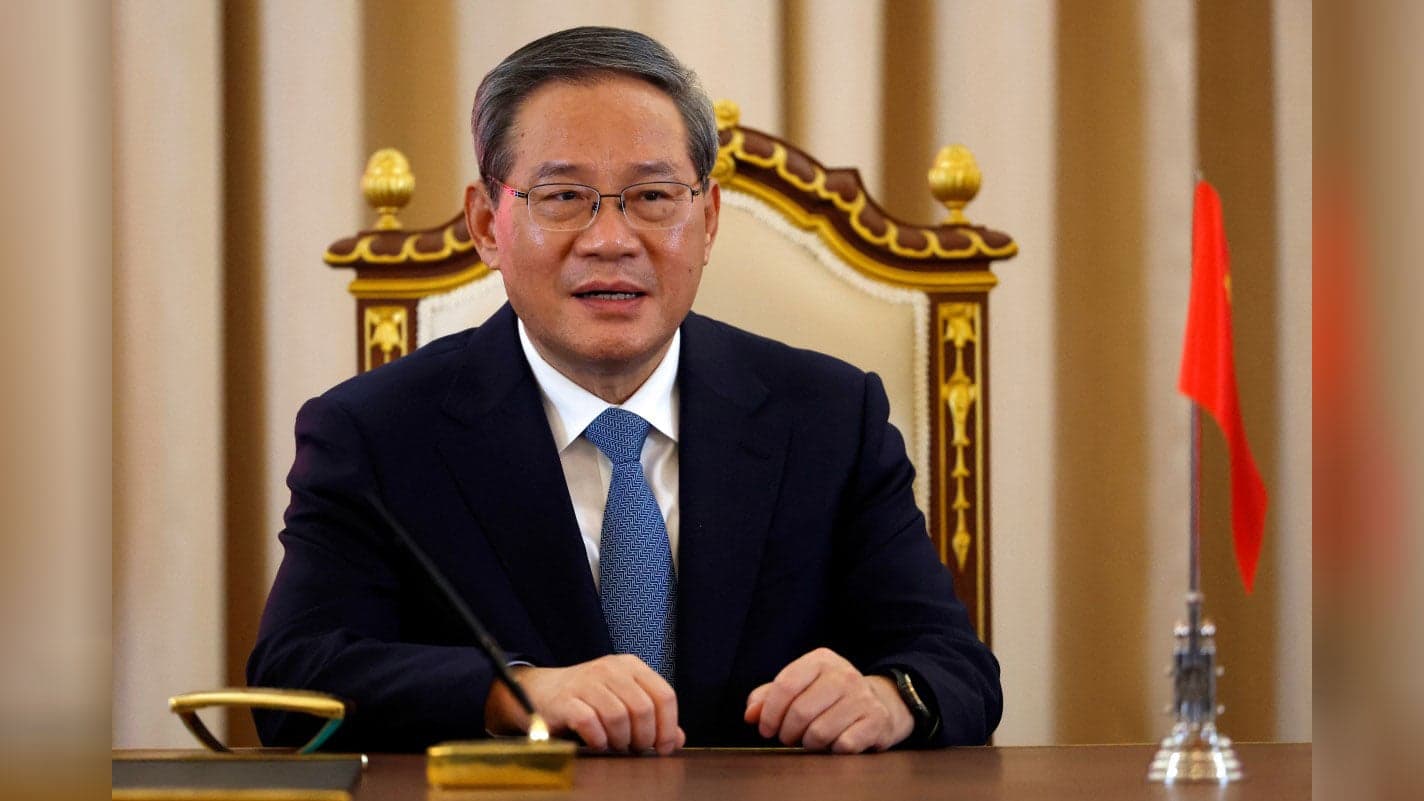
China's Premier Li Qiang Rallies ASEAN for Free Trade Amid U.S. Push
World & Geopolitics
- 26
Canada Solidifies Indo-Pacific Strategy with ASEAN Trade Pact and Bilateral Agreements
World & Geopolitics
 27
US Expands AI Chip Export Controls to Southeast Asia and Brazil
World & Geopolitics
 28
U.S. Trade Policy Faces Scrutiny as Trump Tours Asia Amid Tariff Disputes
World & Geopolitics
 29
Japan Proposes Asian Oil Stockpile Task Force at ASEAN Summit
World & Geopolitics
 30
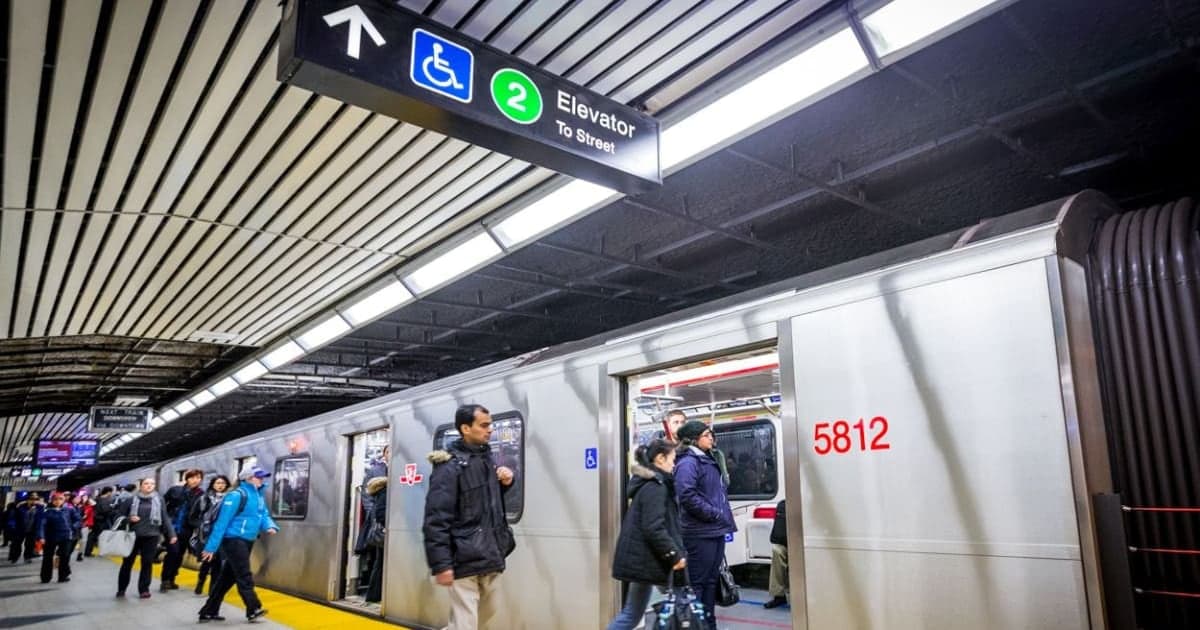
Toronto Approves Nearly 10,000 Rental Homes Via Incentives Program
City News
 31
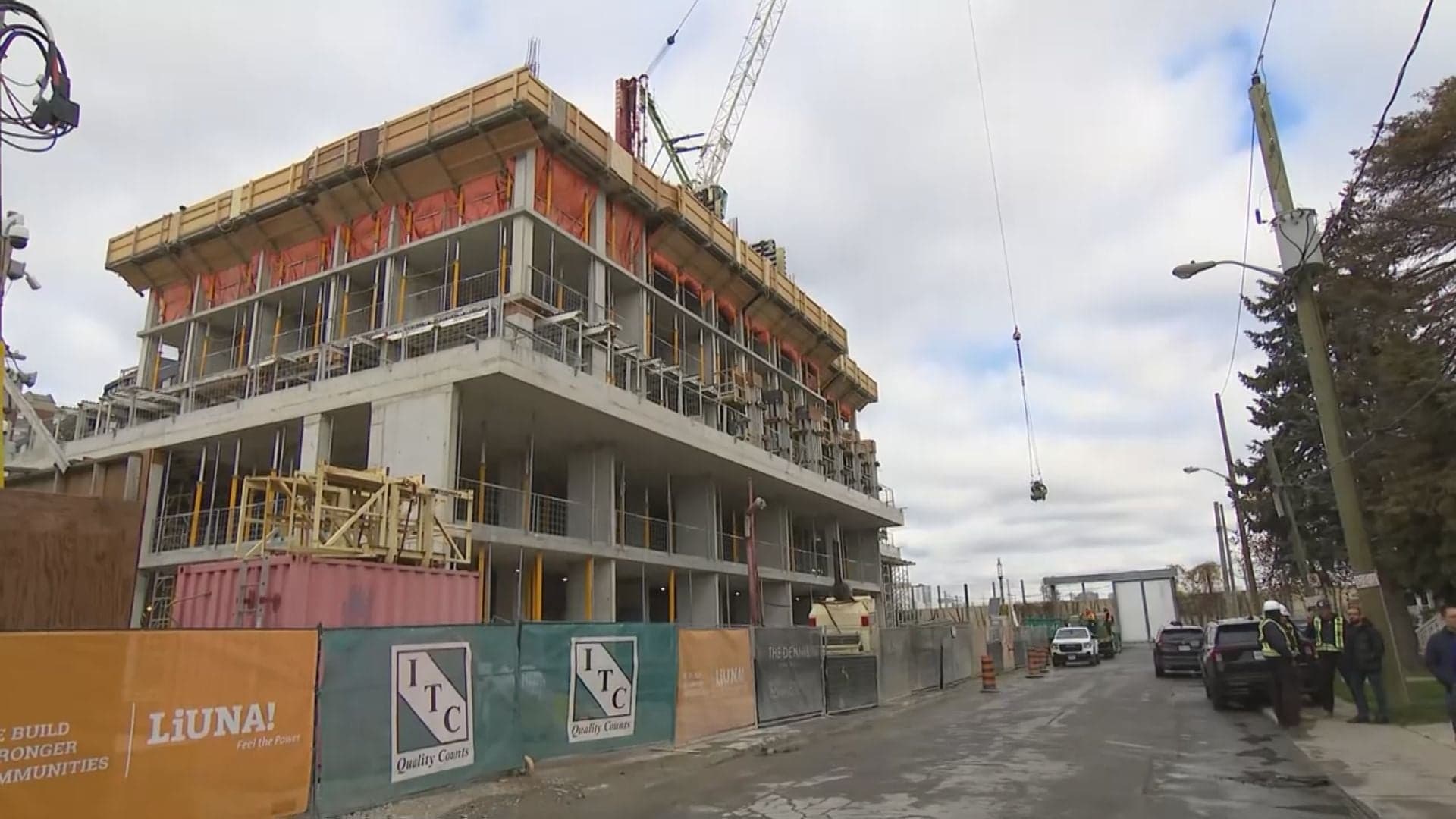
Toronto Expands Rental Housing Incentives, Boosting Nearly 10,000 New Units
City News
- 32
Toronto City Council Begins New Term Amid Housing Crisis and Leadership Changes
City News
 33
Ford Demands Stellantis Rehire Workers as Brampton Plant Sale Sparks Political Clash
City News
 34
Ontario Catholic Teachers Vote Overwhelmingly for Strike Mandate Amid Contract Standoff
City News
- 35
Toronto Police Name Youth Suspect in Linked Double Homicide Investigation
City News
 36
Ballistics Tech Links Teenager to Two Etobicoke Homicides; Suspect and Others Sought
City News
 37
Suspect Arrested in Brazen Bridle Path Home Invasion; Victims Recovering
City News
 38
Ontario Securities Commission Leads Multinational Operation Against Crypto Scams
City News
 39
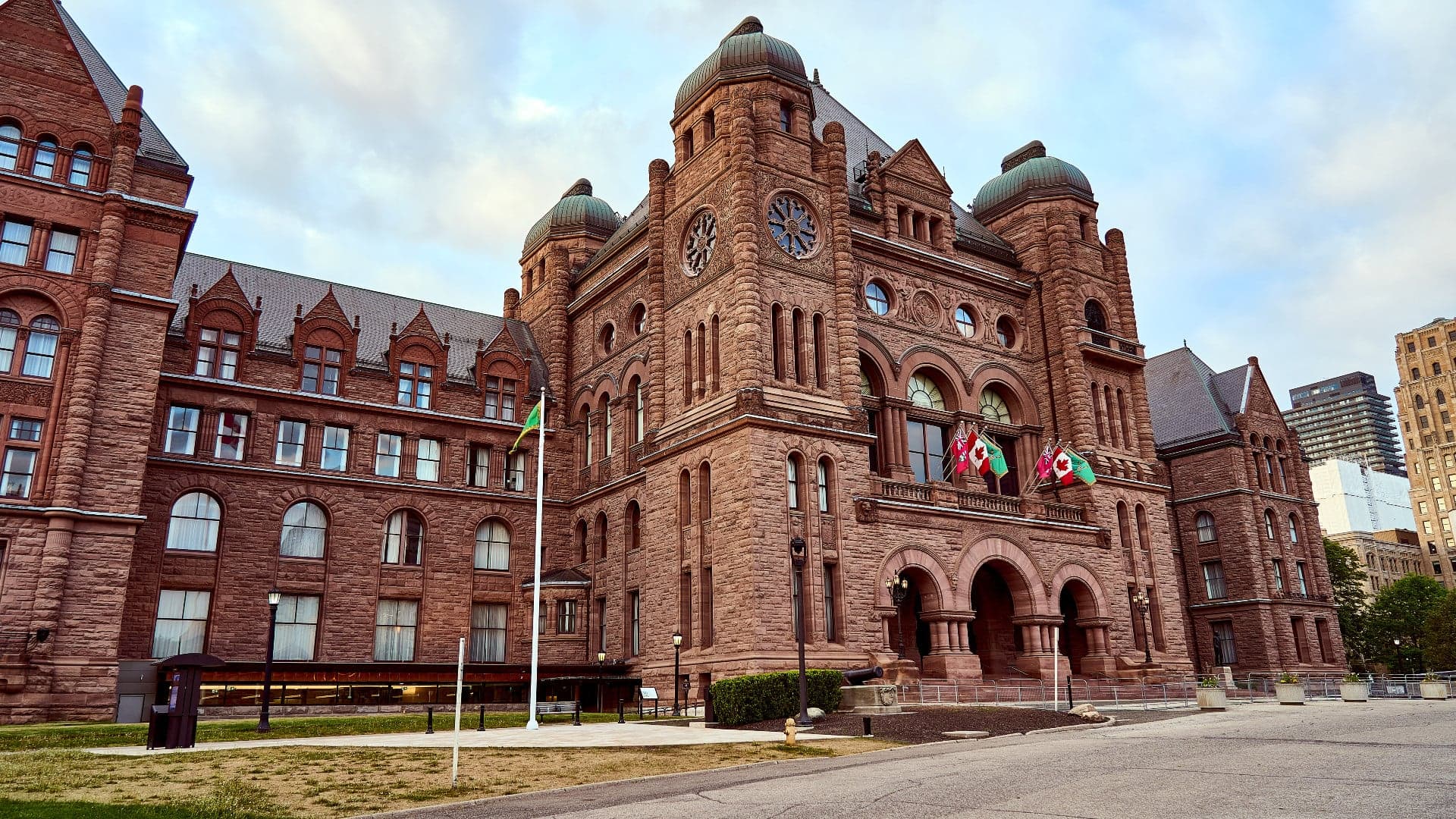
Ontario Tables Law to Expedite Removal of Deepfakes and Intimate Image Abuse
City News
- 40
Peel Police Dismantle Major Transnational Auto Theft Ring, Recovering 96 Stolen Vehicles
City News
 41
Inquest Probes Peel Police Tactics in Fatal Shooting of Unarmed Jamal Francique
City News
 42
Outdated Smoke Alarms Investigated After Fatal Oshawa House Fire
City News
 43
Unseasonable Warmth Persists Across Southern Ontario, Defying November Norms
City News
- 44
Blue Jays Vie for Ace Tarik Skubal Ahead of MLB Lockout Deadline
Sports
 45
Blue Jays Vie for Ace Tarik Skubal in Race Against Labor Freeze
Sports
 46
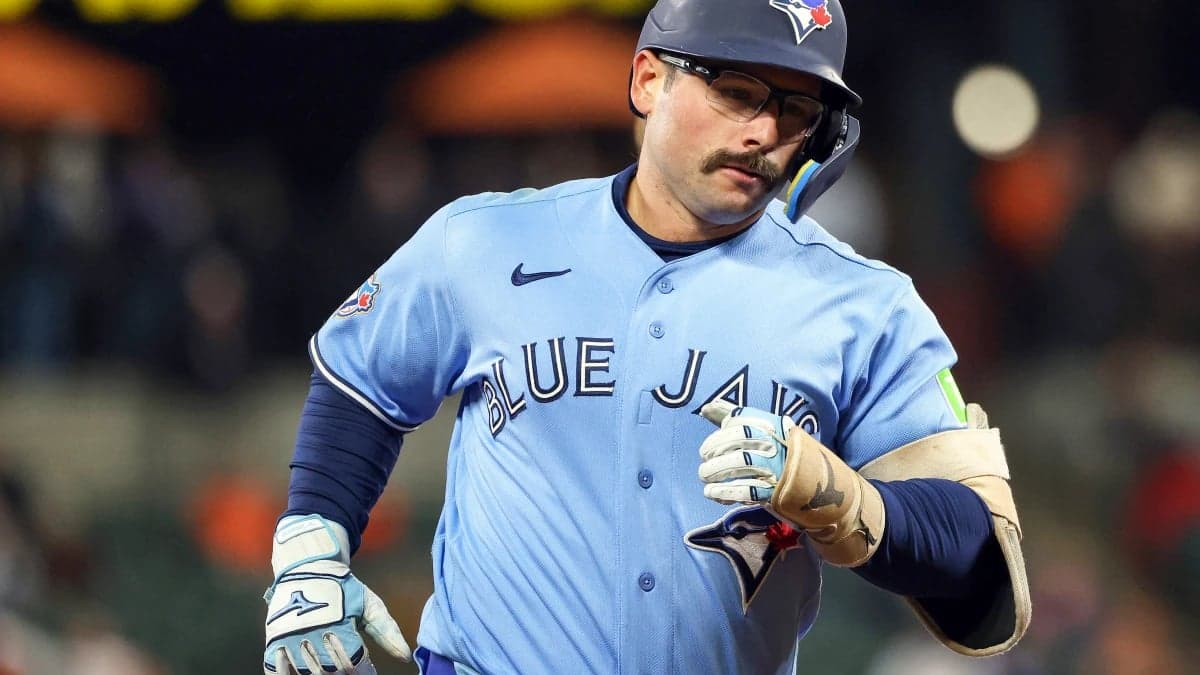
Blue Jays Navigate Roster Moves and Trade Pursuits Ahead of Winter Meetings
Sports
 47
Maple Leafs Defend McKenna's Ice Time and Maintain Line Combinations Amid Fan Pressure
Sports
 48
Maple Leafs Seek Respite in Centennial Clash Amid Deepening Slump
Sports
- 49
Maple Leafs GM Backs Coach Hiller Amid Historic 0-6-0 Homestand Crisis
Sports
 50
Raptors Fall to Knicks in Overtime, Face Rematch Amid Injury Concerns
Sports
 51
Raptors' Barrett Urges Patience Amid Losing Streak and Shifting East
Sports
 52
Scottie Barnes Calls for 'Uncomfortable Conversations' After Raptors' OT Loss to Knicks
Sports
 53
Three Blue Jays Alums on Hall of Fame Ballot; Pitching Honors Highlight Offensive Woes
Sports
 54
MLB Pushes Salary Cap Agenda Amid Blue Jays' Financial Crossroads
Sports
See all 54 as a listHide the list
- Canada Unveils $4.1B Affordability Package, Extends Foreign Homebuyer Ban to 2029
- Ottawa Tables Fast-Track Affordability Bill with Grocery Supplement
- Canada's October Inflation Holds at 3.1%, Dampening Rate Hike Speculation
- Bank of Canada Governor Tiff Macklem to Step Down
- Canada, China Expand Trade Partnership, Eyeing E-Commerce and Easing Tariffs
- PM Mark Carney Expands Trade Ties with China Amid Shifting Global Dynamics
- Canada Finalizes Trade Pacts with ASEAN and Philippines
- Qué;becor Launches Hostile $31B Takeover Bid for TELUS
- Quebecor Launches Unsolicited $31 Billion Takeover Bid for Telus
- Canada's Immigration Plan Faces Scrutiny Over 2027 Levels and PR Pathways
- OSC Launches 'Operation Niagara' to Combat Crypto Fraud
- Peel Police Dismantle Major Auto Theft Ring in 'Project Cadetta'
- Former CRA Employee Sentenced for Identity Trafficking and Breach of Trust
- Federal Government Invests $14 Million in Yukon Tungsten Project
- Ontario Proposes Bill to Restrict Cross-Border Prescription Drug Sales
- Health Canada Warns of Inaccurate Online Radon Monitors
- Historic Trump-Xi-Putin Summit in Shenzhen to Tackle Global Security and Trade
- Ukraine's Drone Strikes Cripple Kerch Bridge and Deep Russian Infrastructure
- Third U.S. Carrier Deployed to Persian Gulf Amid Stalled Hormuz Negotiations
- Fourth Tanker Hit Near Hormuz as De-Escalation Talks Fail
- Houthi Fighters Advance on Aden as Saudi-Backed Forces Withdraw
- EU Imposes Sweeping Sanctions on Russia's Shadow Fleet and Energy Exports
- Russian Military Aircraft Breach Japanese Airspace, Triggering Regional Alert
- Canada and China Deepen Trade Ties: Carney, Xi Meet Ahead of APEC Summit
- China's Premier Li Qiang Rallies ASEAN for Free Trade Amid U.S. Push
- Canada Solidifies Indo-Pacific Strategy with ASEAN Trade Pact and Bilateral Agreements
- US Expands AI Chip Export Controls to Southeast Asia and Brazil
- U.S. Trade Policy Faces Scrutiny as Trump Tours Asia Amid Tariff Disputes
- Japan Proposes Asian Oil Stockpile Task Force at ASEAN Summit
- Toronto Approves Nearly 10,000 Rental Homes Via Incentives Program
- Toronto Expands Rental Housing Incentives, Boosting Nearly 10,000 New Units
- Toronto City Council Begins New Term Amid Housing Crisis and Leadership Changes
- Ford Demands Stellantis Rehire Workers as Brampton Plant Sale Sparks Political Clash
- Ontario Catholic Teachers Vote Overwhelmingly for Strike Mandate Amid Contract Standoff
- Toronto Police Name Youth Suspect in Linked Double Homicide Investigation
- Ballistics Tech Links Teenager to Two Etobicoke Homicides; Suspect and Others Sought
- Suspect Arrested in Brazen Bridle Path Home Invasion; Victims Recovering
- Ontario Securities Commission Leads Multinational Operation Against Crypto Scams
- Ontario Tables Law to Expedite Removal of Deepfakes and Intimate Image Abuse
- Peel Police Dismantle Major Transnational Auto Theft Ring, Recovering 96 Stolen Vehicles
- Inquest Probes Peel Police Tactics in Fatal Shooting of Unarmed Jamal Francique
- Outdated Smoke Alarms Investigated After Fatal Oshawa House Fire
- Unseasonable Warmth Persists Across Southern Ontario, Defying November Norms
- Blue Jays Vie for Ace Tarik Skubal Ahead of MLB Lockout Deadline
- Blue Jays Vie for Ace Tarik Skubal in Race Against Labor Freeze
- Blue Jays Navigate Roster Moves and Trade Pursuits Ahead of Winter Meetings
- Maple Leafs Defend McKenna's Ice Time and Maintain Line Combinations Amid Fan Pressure
- Maple Leafs Seek Respite in Centennial Clash Amid Deepening Slump
- Maple Leafs GM Backs Coach Hiller Amid Historic 0-6-0 Homestand Crisis
- Raptors Fall to Knicks in Overtime, Face Rematch Amid Injury Concerns
- Raptors' Barrett Urges Patience Amid Losing Streak and Shifting East
- Scottie Barnes Calls for 'Uncomfortable Conversations' After Raptors' OT Loss to Knicks
- Three Blue Jays Alums on Hall of Fame Ballot; Pitching Honors Highlight Offensive Woes
- MLB Pushes Salary Cap Agenda Amid Blue Jays' Financial Crossroads
Section 1 of 4
National News
16 stories · 7 min skim
National News
2 min read
Canada Unveils $4.1B Affordability Package, Extends Foreign Homebuyer Ban to 2029
The Canadian federal government has introduced legislation to combat inflation and address housing market imbalances. A key component is the $4.1-billion Canada Groceries and Essentials Benefit Supplement, providing a one-time boost to low- and modest-income households. Additionally, the ban on foreign purchases of existing homes is extended to January 1, 2029, while an exemption process for new constructions is being initiated.
Read the full storyFold the full story1 min · 7 sources
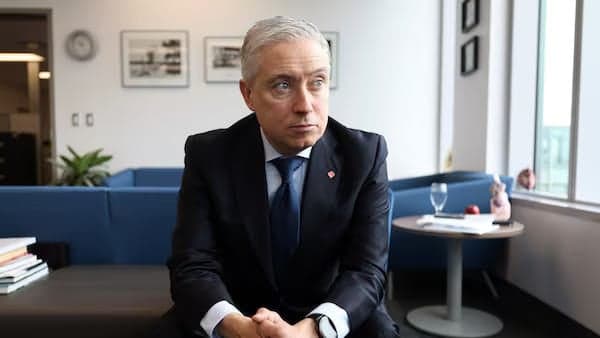
On November 16, 2026, the federal government moved to implement critical elements of its newly tabled Budget 2026, titled Masters of Our Destiny, introducing urgent legislation aimed at curbing persistent living costs and addressing structural imbalances in the housing market[1][2][3]. Minister of Finance and National Revenue François-Philippe Champagne, alongside Minister of Housing and Infrastructure Gregor Robertson, unveiled the legislative measures on Parliament Hill, emphasizing the need to shield vulnerable households while maintaining macroeconomic stability[1][2].
The centerpiece of the legislative package is the 2027 Canada Groceries and Essentials Benefit Supplement, a targeted $4.1-billion financial relief program scheduled for disbursement in early 2027[1][2]. The initiative provides a one-time 50% top-up to the standard 2026–2027 benefit calculation, directed to over 12 million low- and modest-income individuals and families across the country[1][2]. According to Department of Finance projections, the cash injection is anticipated to lift approximately 120,000 Canadians out of poverty, offering immediate balance-sheet relief to households disproportionately burdened by elevated food and energy expenses[1][2].
On the housing front, the legislation introduces a two-pronged adjustment to foreign property ownership rules[2]. The government confirmed a two-year extension of the nationwide prohibition on foreign purchases of existing residential real estate, pushing the sunset date from the end of 2026 to January 1, 2029[2]. Simultaneously, Ottawa announced the launch of an expedited regulatory consultation process to carve out an exemption for new residential developments[2]. By opening newly constructed homes and multi-unit residential projects to foreign investment while keeping existing housing stock protected, the government aims to channel foreign capital directly into new supply generation without driving up prices on current family homes[2].
The announcement sparked immediate contention in the House of Commons during Question Period[4]. Conservative Leader Pierre Poilievre criticized the measures as inflationary, arguing that multi-billion-dollar direct cash outlays fail to address underlying fiscal deficits and supply-side constraints[5][6]. Minister Champagne defended the legislative rollout, countering that targeted income supplements and supply-oriented foreign investment exemptions strike the necessary balance between compassion and fiscal prudence in an unpredictable global trade environment[1][7][5].
- François-Philippe Champagne
- Gregor Robertson
- Canada
National News
2 min read
Ottawa Tables Fast-Track Affordability Bill with Grocery Supplement
The Canadian government has tabled urgent legislation to address affordability concerns, featuring a $4.1 billion enhancement to the Canada Groceries and Essentials Benefit. This one-time cash injection aims to provide immediate relief to lower- and modest-income households. The bill also extends the foreign ban on purchasing existing residential real estate for two years and facilitates foreign investment in new housing construction.
Read the full storyFold the full story2 min · 9 sources
Finance and National Revenue Minister François-Philippe Champagne, joined by Minister of Housing and Infrastructure Gregor Robertson, tabled urgent economic legislation in Parliament to codify several marquee affordability and shelter commitments from the recently unveiled Budget 2026[1][2]. The legislative push is aimed directly at mitigating household strain caused by elevated living expenses and ongoing structural housing deficits across the country[2]. The ministers emphasized that while overall economic growth has shown stability, Canadian families continue to absorb elevated recurring bills for food, utilities, and mortgage payments[2][3].
The cornerstone of the tabled legislation is the creation of the 2027 Canada Groceries and Essentials Benefit Supplement[2]. Structured as a one-time, 50 percent cash enhancement to the baseline Canada Groceries and Essentials Benefit - which formally succeeded the previous GST/HST tax credit framework - the program injects $4.1 billion directly into the pockets of lower- and modest-income households[2][4]. Scheduled for direct distribution in early 2027, the measure will benefit an estimated 12 million individuals and families, delivering up to $339 for single adults without dependents, $679 for couples with two children, and maximum allocations reaching $2,570 for qualifying low-income households of four[2][5][6]. Federal projections estimate that this liquidity injection will lift approximately 120,000 Canadians above the poverty line in 2027[7].
On the housing front, the legislative package enacts a two-year statutory extension of the federal prohibition on non-resident foreign purchases of existing residential real estate, stretching the ban until January 1, 2029[7]. Simultaneously, Robertson confirmed the initiation of an expedited regulatory process to formally carve out and exempt new residential developments from foreign investment prohibitions[7]. By preserving the ban on the existing housing stock while clearing barriers for foreign capital to invest into new residential construction, the government aims to protect traditional family neighbourhoods from speculative asset trading while injecting foreign development capital to meet multi-family construction targets[7].
The policy package elicited varied economic reactions across the country[8][3]. Food distribution experts and economists, including Dalhousie University’s Sylvain Charlebois, acknowledged that while $4.1 billion in direct cash transfers provides necessary immediate balance-sheet relief for families cutting food consumption, it functions as a temporary demand-side subsidy that fails to address the root supply-side drivers of agricultural transportation, retail consolidation, and production inflation[3]. Meanwhile, parliamentary opposition critics raised alarms over the federal government’s expanding fiscal footprint, citing recent budget data indicating that federal debt charges will rise to $60.2 billion this year, consuming 10 cents of every taxpayer dollar and surpassing annual federal health transfers[9].
- François-Philippe Champagne
- Gregor Robertson
- Sylvain Charlebois
National News
2 min read
Canada's October Inflation Holds at 3.1%, Dampening Rate Hike Speculation
Statistics Canada reported that the annual inflation rate remained at 3.1% in October, matching September's figure. Higher gasoline and food prices were partially offset by falling telecommunications costs and cooling shelter inflation. Core inflation metrics presented a mixed picture, leading to scaled-back expectations for a Bank of Canada interest rate hike in December.
Read the full storyFold the full story2 min · 10 sources
Statistics Canada published its monthly Consumer Price Index (CPI) report on November 16, 2026, revealing that Canada's headline annual inflation rate held steady at 3.1% in October, matching the 3.1% reading recorded in September[1][2]. On a seasonally adjusted month-over-month basis, consumer prices advanced by 0.2%[1]. The result came in marginally below the 3.2% consensus forecast anticipated by Bay Street economists, providing a modest sigh of relief to financial markets after months of resurgent price pressures[3][2].
The report detailed stark divergences across major expenditure categories[2]. Persistent price inflation was overwhelmingly driven by transportation and energy, with retail gasoline prices leaping 30.9% year-over-year[3][4]. Statistics Canada attributed the gasoline surge to geopolitical instability in overseas oil markets alongside base-year statistical effects stemming from steep crude oil drops in October 2025[3][4][5]. Food and grocery costs also picked up momentum, rising 2.0% annually compared to 1.7% in September, while clothing and footwear increased 1.8% due to higher maritime shipping inputs[3][6]. These upward forces were counterbalanced by ongoing declines in cellular service and telecommunications plans, as well as a marked cooling in shelter cost inflation, which decelerated to 1.4% year-over-year[4][3][2].
Underlying core inflation metrics closely tracked by the Bank of Canada presented a nuanced picture[7]. While CPI-common edged up slightly to 2.5%, CPI-median held unchanged at 2.0%, and CPI-trim decelerated to 1.8%[7]. The moderation in core price indices has altered expectations for the central bank’s Governing Council, which had just initiated a tightening cycle on October 28 with a 25-basis-point increase to the benchmark overnight rate, raising it to 2.50% - its first rate hike since mid-2023[8][9].
Following the CPI release, money markets dramatically scaled back bets on a back-to-back rate increase at the central bank’s upcoming December 9 meeting[3][10]. Market-implied odds of a 25-basis-point December hike tumbled from 54% to roughly 38%[3]. The shifting rate differential weighed on the Canadian currency, with the Canadian dollar weakening against its U.S. counterpart to hold above 1.43 per U.S. dollar[3]. Macroeconomists noted that while headline inflation remains outside the midpoint of the central bank's 1% to 3% control target band, the subdued core figures provide Governor Tiff Macklem with sufficient flexibility to adopt a wait-and-see stance amid cooling domestic economic growth[2][9].
- Statistics Canada
- Bank of Canada
- Consumer Price Index
National News
2 min read
Bank of Canada Governor Tiff Macklem to Step Down
Bank of Canada Governor Tiff Macklem announced he will not seek reappointment, concluding his term in June 2025. His tenure, beginning in 2020, was marked by unprecedented economic volatility, including navigating the COVID-19 pandemic's initial shock and a subsequent surge in inflation. Macklem oversaw aggressive monetary tightening and a shift towards rate cuts.
Read the full storyFold the full story2 min · 7 sources
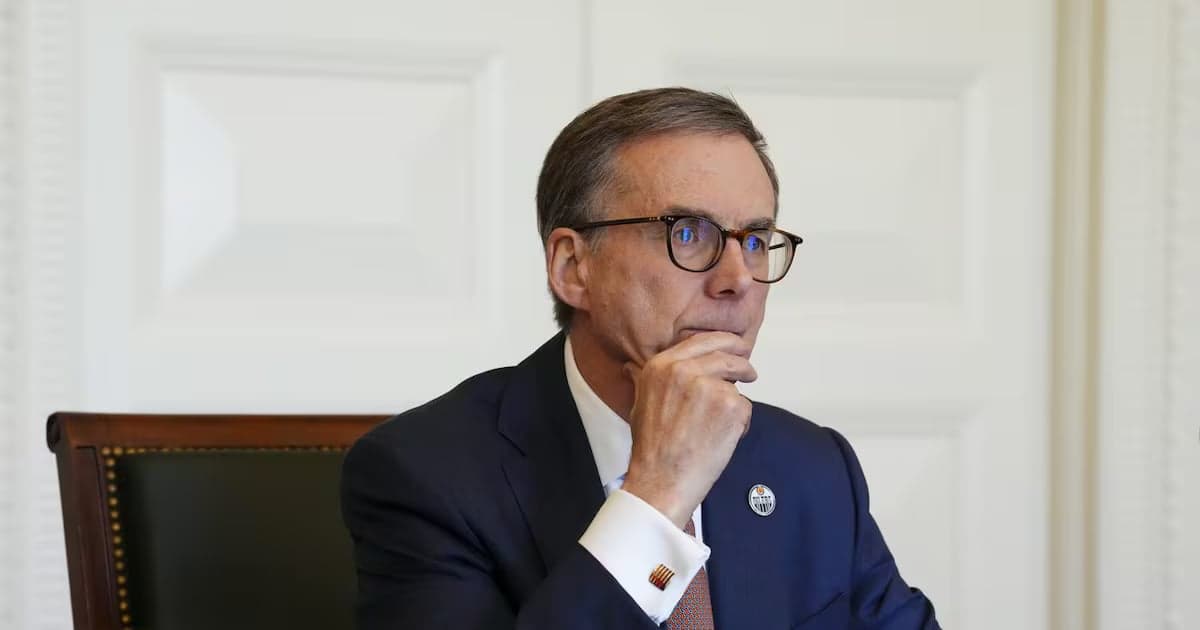
Bank of Canada Governor Tiff Macklem announced that he will not seek reappointment and will step down from his post at the conclusion of his seven-year term[1][2]. Appointed in June 2020 during the earliest, most uncertain months of the COVID-19 pandemic, Macklem's departure will close one of the most consequential and turbulent tenures in the history of Canada’s central bank[2]. In a statement released by the central bank, Macklem cited the privilege of serving as the institution’s tenth governor while reflecting on a global macroeconomic backdrop that had transitioned into a permanently "fragmented and shock-prone" environment[2].
Macklem’s tenure was defined by historic policy pivots[2]. After slashing the overnight benchmark rate to the effective lower bound of 0.25 percent and implementing an emergency quantitative easing program in 2020 to avert a depression, the central bank was forced to confront the fastest rise in consumer prices since the early 1980s[2]. Macklem subsequently executed the most aggressive monetary tightening campaign in modern Canadian history, raising rates by 475 basis points to restore price stability before cautiously commencing an easing cycle as inflationary pressures abated[2][3]. He noted that the central bank navigated these supply-chain breakdowns, international conflicts, and market shifts by exercising decisive judgment and operating with institutional humility[2].
Macklem's announcement arrived on the exact morning Statistics Canada published its October Consumer Price Index data, highlighting the delicate economic landscape he leaves behind[2][3]. Headline inflation held steady at 3.1 percent year-over-year in October, just below analyst consensus estimates of 3.2 percent[3]. While trimmed-mean core inflation fell to a multi-year low of 1.8 percent and shelter price appreciation slowed to 1.4 percent, a 30.9 percent spike in gasoline costs and a re-acceleration in grocery prices to 2.0 percent illustrated persistent consumer pain[4][5][6]. Bank of Montreal macro strategists noted that while the latest inflation print does not compel immediate policy action, it complicates expectations for imminent interest rate cuts as transportation and energy costs ripple into broader services[3].
The central bank's Board of Directors and the Department of Finance will initiate an executive search process to select the eleventh Governor of the Bank of Canada[2]. Finance Minister François-Philippe Champagne commended Macklem for his steadfast leadership through extreme macroeconomic volatility, but Bay Street analysts noted the transition introduces fresh uncertainty[7][2]. Macklem's successor must steer monetary policy through soaring public debt-servicing burdens, heightened risks of cross-border trade friction, and an economy operating with sluggish per-capita productivity growth[7].
- Tiff Macklem
- Bank of Canada
- Statistics Canada
National News
3 min read
Canada, China Expand Trade Partnership, Eyeing E-Commerce and Easing Tariffs
Canadian Prime Minister Mark Carney and Chinese President Xi Jinping met in Shenzhen to extend and expand a trade agreement through December 2028. The deal includes tariff relief for Canadian agricultural and seafood exports and reciprocal tariff exemptions for Chinese steel and aluminum. The leaders also designated 2027 as the Canada-China Year of E-Commerce and announced expanded aviation links. This strategic pivot aims to diversify Canada's trade beyond the U.S.
Read the full storyFold the full story2 min · 13 sources
In a major foreign policy and economic breakthrough, Canadian Prime Minister Mark Carney met with Chinese President Xi Jinping in Shenzhen on November 17, 2026, ahead of the Asia-Pacific Economic Cooperation (APEC) Economic Leaders’ Meeting[1][2]. The high-level bilateral talks culminated in the formal extension and expansion of the Preliminary Joint Arrangement on Addressing Bilateral Economic and Trade Issues, locking in mutual trade commitments through December 2028[3]. The agreement represents a significant recalibration of Ottawa’s international trade posture as the federal government seeks to diversify commercial partnerships and insulate the domestic economy from escalating United States trade tensions and tariff threats under the incoming Trump administration[4][5][6].
Under the expanded arrangement, Beijing agreed to provide immediate tariff relief covering approximately $400 million in Canadian exports[3][5]. The relief targets key agricultural and seafood sectors, including $116 million in frozen pork cuts and $285 million in seafood exports such as Greenland halibut ($96 million), cold-water shrimp and Pacific spot prawn ($87.5 million), geoduck ($61.4 million), and sea cucumber ($39.4 million)[3][5]. This builds on earlier agreements that restored market access for Canadian canola meal, lobster, crab, and peas, bringing total restored Canadian export value to nearly $7.5 billion - recovering more than 90% of trade previously hindered by bilateral trade frictions[7][3]. In exchange, Ottawa agreed to grant a two-year extension on existing tariff remissions for select Chinese steel and aluminum imports set to expire in late 2026, while adding 32 new steel and aluminum tariff exemptions where Canadian domestic production faces shortfalls[5][6].
Beyond tariff schedules, the bilateral summit produced several commercial and institutional deliverables[5]. Prime Minister Carney pledged $8.85 million in federal funding for bilateral initiatives, including $8 million over five years allocated through the International Institute for Sustainable Development (IISD) to support the China Council for International Cooperation on Environment and Development (CCICED), alongside $850,000 for the Canada Learning Initiative in China (CLIC) scholarship program[5][8]. The leaders officially designated 2027 as the Canada-China Year of E-Commerce, outlined plans for a comprehensive Canadian trade mission next year, and announced expanded aviation links, including new Air Canada service connecting Vancouver and Guangzhou beginning in May 2027, matched by expanded flights by Chinese carriers[5].
The strategic pivot reflects Prime Minister Carney’s broader objective to increase Canadian exports to non-U.S. markets by 50% before the end of the decade[6]. Recent Statistics Canada trade figures underscore the momentum, with merchandise exports to China rising nearly 40% year-over-year in the first nine months of 2026 to reach $33.5 billion[9]. However, the concessions - which complement earlier decisions to reduce tariffs on Chinese electric vehicles to 6.1% for up to 49,000 units annually - continue to generate fierce political debate in Ottawa[10]. Official Opposition Leader Pierre Poilievre and Conservative critics have scrutinized the Carney administration's outreach, cautioning that deeper economic integration with Beijing risks alienating Canada’s traditional North American security and economic partners[11][12][13].
- Mark Carney
- Xi Jinping
- Canada
National News
2 min read
PM Mark Carney Expands Trade Ties with China Amid Shifting Global Dynamics
Prime Minister Mark Carney concluded an Asian tour with a high-stakes meeting with Chinese President Xi Jinping in Shenzhen. The leaders announced a formal extension of a bilateral trade arrangement through December 2028, including tariff reductions and regulatory relief on over 90 percent of Canada-China trade. This move facilitates market access for approximately $7.5 billion in Canadian exports.
Read the full storyFold the full story2 min · 9 sources
Prime Minister Mark Carney met with Chinese President Xi Jinping in Shenzhen, China, marking the final and most sensitive leg of a multi-nation Asian tour[1][2]. During the summit, the two leaders announced a significant expansion and formal extension of the Canada-China Preliminary Joint Arrangement on Addressing Bilateral Economic and Trade Issues through December 2028[1][3]. The renegotiated pact delivers tariff reductions and regulatory relief across more than 90 percent of Canada-China bilateral trade, solidifying market access for approximately $7.5 billion in Canadian exports[1].
The latest round of tariff relief applies immediately to roughly $400 million in previously targeted Canadian agricultural and seafood exports[3]. Specifically, Beijing agreed to suspend punitive anti-discrimination tariffs on most cuts of Canadian frozen pork (valued at $116 million annually), Greenland halibut ($96 million), frozen cold-water shrimp and Pacific spot prawns ($87.5 million), molluscs including geoduck ($61.4 million), and sea cucumbers ($39.4 million)[3]. This arrangement builds upon the two-year tariff moratorium secured earlier in the month for Canadian canola meal, peas, lobster, and crab[3]. Alongside commercial arrangements, Ottawa announced $8 million over five years via the International Institute for Sustainable Development to support the China Council for International Cooperation on Environment and Development (CCICED), $850,000 for student scholarships under the Canada Learning Initiative in China (CLIC), and reciprocal agreements to restore direct commercial air travel frequencies[4][5].
The strategic pivot comes as Ottawa aggressively recalibrates its trade diplomacy to insulate the domestic economy from shifting American policies and the protectionist tariff platform of the incoming Donald Trump administration[6][7]. Carney addressed the deepening divide in North American commerce by engaging Beijing on high-tech manufacturing and the automotive sector[8][2]. In January, the federal government had scaled back its 100 percent import tariff on Chinese electric vehicles to 6.1 percent for a quota of up to 49,000 units in exchange for agricultural market access[2]. Background disclosures confirmed that 16,211 Chinese EVs have entered the Canadian market since March, half of which retail below $35,000[2]. With major Chinese automaker BYD establishing a retail footprint in Canada, Carney indicated that Canada remains open to deeper industrial cooperation with Asian automakers should North American auto supply chains face disruption under future U.S. trade actions[8][2].
The rapprochement has drawn sharp domestic and international scrutiny[8]. Canadian agricultural, pork, and seafood associations welcomed the restoration of dependable Asian export markets, noting that arbitrary trade barriers had severely impacted primary producers across Western Canada and the Atlantic provinces[1][3]. However, opposition lawmakers in Ottawa questioned the government's concessions regarding green tech and electric vehicle supply chains, warning that inviting subsidized foreign manufacturing into Canada risks undermining billions of dollars in domestic battery and auto plant subsidies committed across Ontario and Quebec[8][9].
- Mark Carney
- Xi Jinping
- BYD
National News
2 min read
Canada Finalizes Trade Pacts with ASEAN and Philippines
Canada has concluded negotiations for trade agreements in principle with the Association of Southeast Asian Nations (ASEAN) and the Philippines. These deals aim to expand Canadian exporter access to a combined market of nearly 700 million people, building on a significant increase in bilateral trade with the ASEAN bloc. The agreements cover tariffs on various Canadian goods and promote trade in clean technologies and advanced machinery.
Read the full storyFold the full story2 min · 7 sources
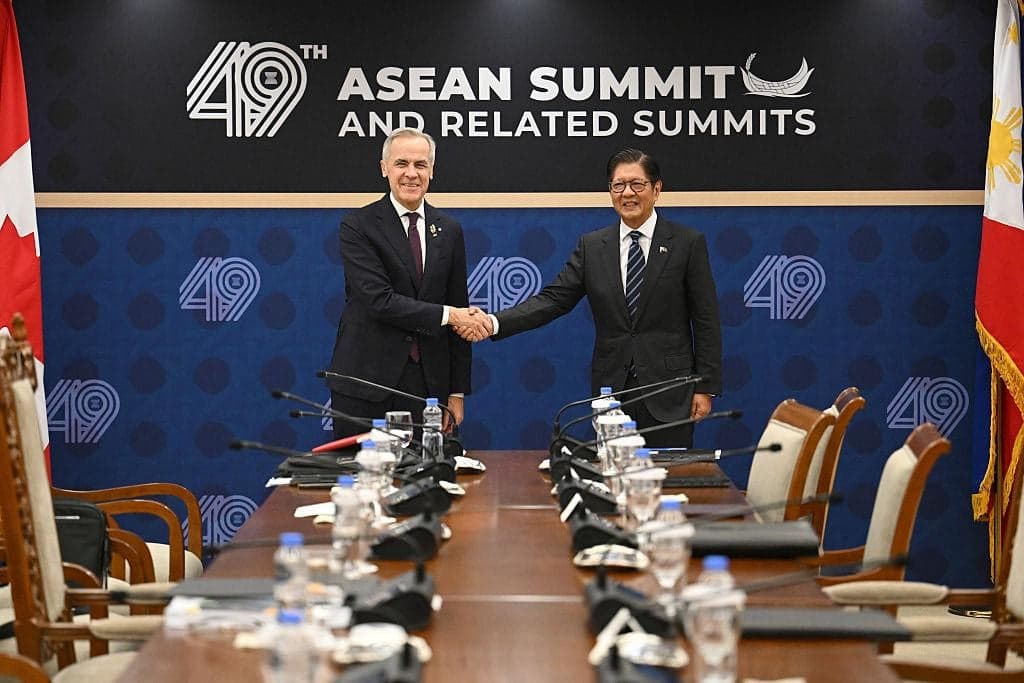
Ottawa completed negotiations for two comprehensive trade agreements in principle: the ASEAN-Canada Free Trade Agreement (ACAFTA) alongside a standalone bilateral free trade pact with the Philippines[1][2]. The conclusion of talks was announced during ministerial meetings held around the Association of Southeast Asian Nations Summit in Manila, where Canadian International Trade Minister Maninder Sidhu held negotiations with key regional counterparts, including Indonesian Coordinating Minister for Economic Affairs Airlangga Hartarto and Singapore's Deputy Prime Minister Gan Kim Yong[2][3]. The deals represent the successful culmination of multilateral negotiations first initiated in late 2021[1].
The completed agreements open access for Canadian exporters to an integrated market spanning nearly 700 million people, encompassing an aggregate gross domestic product approaching $6 trillion[2]. In 2025, the ASEAN bloc solidified its position as Canada’s fifth-largest merchandise trading partner, with bilateral trade climbing 22.7 percent year-over-year to $52.5 billion[1]. Federal trade models project that once fully ratified and implemented, the ACAFTA agreement alone will expand Canada's annual real GDP by roughly $2 billion and support up to 14,000 domestic jobs[2]. The pact eliminates tariff schedules on Canadian pork, wheat, beef, and canola while securing lowered duties for clean technologies, specialized mining equipment, and advanced commercial machinery[1][2].
The agreements form the operational spearhead of the federal government’s "middle power diplomacy" trade strategy[4]. Foreign Affairs Minister Anita Anand outlined the doctrine, explicitly affirming Ottawa’s formal objective to double Canada's non-U.S. export trade over the coming decade to eliminate overreliance on the American domestic market[4]. With bilateral trade consultations with Washington stalled on automotive parts and dairy supply management rules, Ottawa has moved to construct counterweights across the Indo-Pacific and European political communities[5][4].
Canadian business associations, including the Canadian Council of Chief Executives and the Canadian Agri-Food Trade Alliance, praised the formal conclusion of the pacts, highlighting that privileged access to rapid-growth markets across Southeast Asia helps buffer Canadian primary producers from unpredictable global protectionism[2]. In Ottawa, federal trade minister Dominic LeBlanc confirmed that he will chair a session of the Advisory Committee on Canada-U.S. Economic Relations to analyze how the Indo-Pacific diversification fits into Canada's overall cross-border trade readiness[6]. Industrial groups emphasized that signing deals in principle represents only the first milestone; parliament and provincial governments must move quickly to implement domestic logistics, port throughput capacity, and commercial shipping channels along Canada's West Coast to handle the projected surge in Pacific freight[7][2].
- Maninder Sidhu
- Airlangga Hartarto
- Gan Kim Yong
National News
2 min read
Qué;becor Launches Hostile $31B Takeover Bid for TELUS
Qué;becor Inc. has made a unsolicited, non-binding takeover bid of approximately $31 billion to acquire TELUS Corporation. The Montreal-based company proposed a cash-and-stock deal that values TELUS equity at roughly $19.45 per share, representing a significant premium. Québecor argues the merger is necessary to create a stronger domestic competitor capable of deploying advanced network technologies and competing globally.
Read the full storyFold the full story2 min · 8 sources
Canadian corporate markets were jolted on November 16, 2026, when Montreal-based telecom and media conglomerate Québecor Inc. publicly disclosed an unsolicited, non-binding takeover proposal to acquire Vancouver-based TELUS Corporation in a cash-and-stock transaction valued at approximately $31 billion[1][2][3]. Québecor, spearheaded by President and CEO Pierre Karl Péladeau, decided to take its approach public after earlier private overtures - initiated in June 2026 and revised on November 9 - failed to yield consensual transaction talks[4][5][3].
Under the proposed terms, TELUS shareholders would receive $6.35 in cash and 0.1700 of a Québecor Class B share for each common share held, valuing TELUS equity at roughly $19.45 per share[2][3][6]. This offer represents a 60% premium over TELUS’s closing price on the Toronto Stock Exchange on Friday, November 13[2][3]. The deal structure would result in TELUS shareholders collectively owning approximately 54% of the combined entity[2][3]. Québecor pitched the merger as an urgent necessity to create a scaled domestic carrier capable of deploying next-generation 5G networks, funding advanced artificial intelligence and data center infrastructure, and competing against encroaching global low-Earth-orbit satellite broadband operators[3]. Québecor projected annual operating synergies of $160 million and capital expenditure efficiencies of $235 million from the combination[3].
The TELUS Board of Directors, working alongside newly appointed President and CEO Victor Dodig, confirmed receipt of the proposal and established a Special Committee of Independent Directors to evaluate the bid[5][3]. In a formal letter to Péladeau released publicly, the board signaled significant skepticism, retaining TD Securities and Stikeman Elliott as financial and legal advisers[5]. The committee cautioned that the bid carries substantial valuation and execution risks, expressing doubts over whether the transaction is actionable under Canada’s rigid foreign-ownership restrictions and competition policies[5][6]. TELUS shares surged by over 20% following the announcement, although the equity continues to trade at a substantial discount to the $19.45 offer price, reflecting widespread investor doubts regarding regulatory approval[3][6].
The transaction faces formidable regulatory hurdles[7][6]. The Competition Bureau of Canada confirmed it is "aware" of the offer and actively monitoring developments[8]. Antitrust analysts and consumer advocacy groups have warned that merging the country’s second- and fourth-largest national mobile operators would severely undermine federal efforts to foster carrier competition, which were only recently established through Québecor’s acquisition of Freedom Mobile[8][6]. The proposal will also require formal clearance under the Investment Canada Act and from the Canadian Radio-television and Telecommunications Commission (CRTC), setting the stage for what could become the most scrutinized corporate takeover in Canadian telecommunications history[8][6].
- Qué;becor Inc.
- TELUS Corporation
- Pierre Karl Péladeau
National News
2 min read
Quebecor Launches Unsolicited $31 Billion Takeover Bid for Telus
Quebecor Inc. has launched a public, unsolicited takeover offer for Telus Corp. valued at approximately $31 billion. The bid proposes shareholders receive cash and Quebecor shares, representing a significant premium over Telus's current market price. Quebecor aims to create a pan-Canadian telecommunications champion, projecting substantial operational and capital expenditure synergies.
Read the full storyFold the full story2 min · 7 sources
In one of the most consequential corporate developments in Canadian telecommunications history, Montreal-based Quebecor Inc. made a public, unsolicited cash-and-stock takeover offer for Vancouver-based Telus Corp. valued at approximately $31 billion[1][2]. Quebecor announced that it had presented an enhanced bid following an initial, confidential approach made in June[1][2]. Under the terms of the proposal, Telus shareholders would receive $6.35 in cash and 0.17 Class B shares of Quebecor for each Telus common share[1]. Quebecor stated the proposal values Telus at $19.45 per share, representing a premium of approximately 60 percent over Telus’s closing price of $12.14 on the Toronto Stock Exchange[1][2]. Under the envisioned structure, Telus shareholders would own roughly 54 percent of the combined company's equity and retain 23 percent of the voting power[2].
Quebecor, which expanded nationwide following its acquisition of Freedom Mobile during the Rogers-Shaw merger in 2023, framed the tie-up as a patriotic and strategic imperative to build an integrated pan-Canadian champion[3][4]. Quebecor’s leadership, steered by CEO Pierre Karl Péladeau, pledged to preserve the Telus brand identity, maintain Telus’s corporate headquarters in Vancouver, and sustain Quebecor's annual dividend of $1.80 per share[2][4]. The company projected that combining their respective wireless spectrum, fibre networks, and back-office infrastructure would generate nearly $160 million in operational synergies alongside $235 million in annual capital expenditure efficiencies, while allowing a domestic provider to compete against global satellite and digital entrants[2][4].
Telus’s board of directors formed an independent special committee to evaluate the bid, but quickly expressed serious skepticism regarding the deal’s feasibility[1]. In a formal response, Telus chair John Manley stated that the company's review had already highlighted significant execution and regulatory risks, noting that Quebecor had yet to articulate how a combination of this magnitude could secure regulatory clearances under Canada's stringent antitrust regime[1]. Telus, which recently appointed Victor Dodig as its chief executive officer to oversee a broad restructuring - including targeted asset divestitures in Telus Health, digital services, and agriculture - maintained that Quebecor’s offer fundamentally undervalues the telecom giant's long-term network value and fiber assets[5][3].
The transaction faces an immense hurdle before federal regulators[6]. Because the federal government and the Canadian Radio-television and Telecommunications Commission (CRTC) have explicitly prioritized maintaining a four-player mobile wireless market across all provinces to restrain retail prices, an outright merger between Canada’s third- and fourth-largest national carriers would invert Ottawa’s multi-year pro-competition framework[2][6]. Innovation, Science and Economic Development Canada (ISED) retains statutory authority over spectrum license transfers, while the Competition Bureau confirmed it is monitoring the proposal closely[7]. Industry analysts warned that even if Telus shareholders warmed to the substantial premium, navigating Competition Act approvals and spectrum caps would trigger protracted legal and political negotiations lasting upwards of eighteen months[2].
- Quebecor Inc.
- Telus Corp.
- Pierre Karl Péladeau
National News
2 min read
Canada's Immigration Plan Faces Scrutiny Over 2027 Levels and PR Pathways
Canada's 2027-2029 Immigration Levels Plan is under intense scrutiny, projecting 662,000 new permanent residents in 2027 through measures converting temporary residents to permanent status. This strategy aims to reduce the proportion of non-permanent residents in the population, with priority given to healthcare, STEM, and skilled trades.
Read the full storyFold the full story2 min · 9 sources
Intense political and economic examination surrounded Canada's immigration trajectory following detailed technical analyses published on the federal government’s updated 2027–2029 Immigration Levels Plan[1][2]. While the baseline annual targets for new permanent resident admissions remain fixed at 380,000 for each calendar year from 2027 through 2029, a suite of temporary, one-time transition measures has elevated the projected total of permanent resident admissions to 662,000 in 2027[1]. The strategy is engineered to convert hundreds of thousands of temporary foreign workers, international graduates, and humanitarian entrants already living in Canada into permanent status rather than bringing in net-new arrivals[3][1][2].
The policy approach arrives amidst broader efforts by Ottawa to rein in the overall proportion of non-permanent residents, which peaked in 2024 at roughly 3 million individuals (7.2 percent of the national population)[4]. Statistics Canada data indicated that as of mid-2026, non-permanent residents numbered approximately 2.8 million, or 6.7 percent of the population, with the federal target aiming to lower that share to 5 percent by the end of 2027[4][5]. To accelerate this rebalancing, Immigration, Refugees and Citizenship Canada (IRCC) also designated formal priority occupational categories under the Express Entry selection system, highlighting healthcare and social service professionals, STEM specialists, skilled tradespersons, educators, and commercial transportation operators to fill critical domestic labour gaps[6].
The framework has drawn sharp divisions across Canada’s economic and political landscape. Official Opposition critics in Parliament expressed severe apprehension regarding the projected 2027 admission volumes, citing an overall Canadian unemployment rate that reached 6.7 percent and rising youth unemployment as evidence that the economy cannot absorb substantial figures without straining infrastructure and municipal services[1][7]. Conversely, federal officials and immigration economists argue that because roughly half of the permanent resident admissions will consist of individuals already working, paying taxes, and housed inside Canada, the pathways will not create net-new housing demand or put sudden pressure on physical infrastructure[1].
The long-term implications represent an operational pivot for Canadian businesses and prospective immigrants. While international student admissions and low-wage Temporary Foreign Worker Program permits remain tightly restricted under caps introduced over the past two years, provincial nominee quotas and specialized transition programs will form the primary pipeline for long-term domestic retention[8][5][9]. Legal analysts observe that while these measures help resolve backlogs from expired temporary permits, they create heightened competition among foreign nationals currently in Canada attempting to secure qualifying status before broad transition windows close[3].
- Immigration, Refugees and Citizenship Canada (IRCC)
- Statistics Canada
- Express Entry
National News
1 min read
OSC Launches 'Operation Niagara' to Combat Crypto Fraud
The Ontario Securities Commission (OSC) has launched 'Operation Niagara,' a cross-border initiative to disrupt cryptocurrency-enabled investment fraud. This operation involves law enforcement, international regulators, and cybersecurity firms to detect fraudulent platforms, dismantle financial infrastructure, and intercept ongoing victimizations using blockchain forensics.
Read the full storyFold the full story1 min · 1 source
The Ontario Securities Commission (OSC) announced the official deployment of "Operation Niagara," a major cross-border regulatory and law enforcement initiative aimed at disrupting organized cryptocurrency-enabled investment fraud schemes[1]. Starting November 16, 2026, the initiative convenes Canadian law enforcement agencies, international market regulators, and private cybersecurity firms to actively detect fraudulent crypto platforms, dismantle digital financial infrastructure, and directly intercept ongoing victimization[1].
The joint initiative leverages advanced blockchain forensics and threat-intelligence capabilities to identify boiler-room operators, illicit online trading portals, and automated digital schemes that target retail investors[1]. Financial authorities noted that investment fraud involving digital assets has escalated drastically, with complex cross-jurisdictional networks siphoning tens of millions of dollars from Canadian victims before laundering assets through decentralized finance tools and overseas jurisdictions[1].
Operation Niagara is structured around dual objectives: disrupting fraudulent networks at the technical level and conducting proactive victim outreach[1]. OSC specialists and partnered cyber investigators will contact individuals identified as actively interacting with fraudulent platforms to halt financial transfers before funds are irreversibly settled off-chain[1]. The task force is also coordinating with internet service providers and domain hosts to rapidly seize and take down fraudulent web domains mimicking legitimate financial institutions[1].
Regulatory leaders stated that the establishment of Operation Niagara reflects an operational shift toward preventative, cross-border cooperation in the capital markets sector[1]. Financial market analysts observed that as digital fraud tactics grow increasingly sophisticated, real-time coordination between regulatory watchdogs like the OSC and federal and state law enforcement agencies represents the most viable model for combating transnational financial crime syndicates[1].
- Ontario Securities Commission (OSC)
- Operation Niagara
- Blockchain
National News
2 min read
Peel Police Dismantle Major Auto Theft Ring in 'Project Cadetta'
Peel Regional Police have concluded an eight-month investigation, 'Project Cadetta,' targeting a transnational car theft syndicate operating in the GTA. The operation recovered 96 stolen luxury vehicles valued at $4.5 million and led to 12 arrests with 231 charges filed. The syndicate used an industrial warehouse to alter VINs and ship stolen vehicles to West African markets.
Read the full storyFold the full story2 min · 9 sources
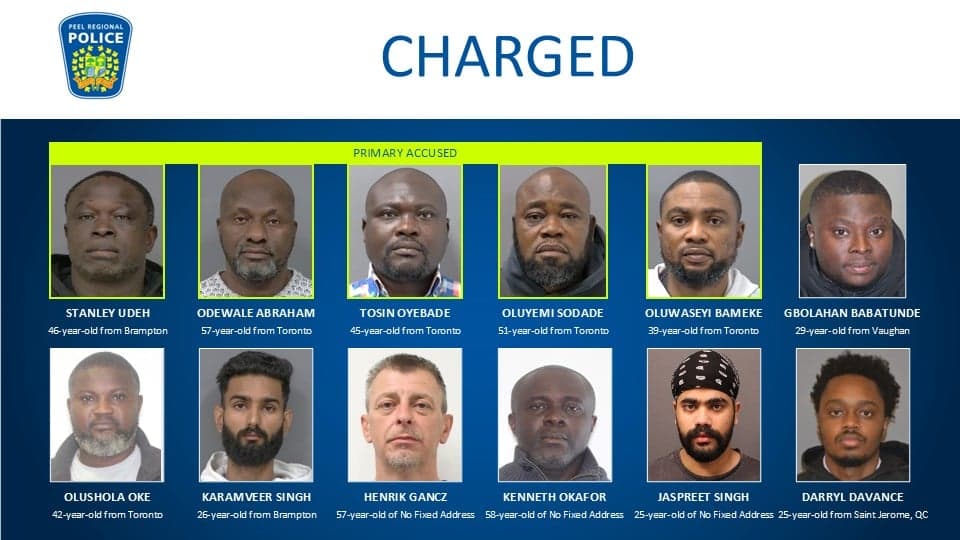
Peel Regional Police announced the culmination of "Project Cadetta," an eight-month multi-jurisdictional investigation targeting an organized transnational car theft ring operating across the Greater Toronto Area (GTA)[1][2]. Investigators recovered 96 stolen luxury vehicles - primarily sport utility vehicles and high-value pickup trucks - valued at an estimated $4.5 million CAD[2][3]. Law enforcement authorities arrested 12 individuals and filed 231 criminal charges relating to property obtained by crime, conspiracy, and trafficking in stolen goods[2][4]. Arrest warrants remain active for two outstanding suspects, identified as 32-year-old Steven Gyamfi and an unnamed 16-year-old youth from Hamilton[1][2].
The operation was initiated in March 2026 after detectives identified an industrial warehouse facility on Cadetta Road in Brampton, Ontario[5][6]. Investigators discovered that the site functioned as a staging ground where stolen vehicles were fitted with altered or fraudulent Vehicle Identification Numbers (VINs) and packed into shipping containers destined for maritime export via Canadian ports to West African markets[2][3]. According to Peel Regional Police Deputy Chief Nick Milinovich and Detective-Sergeant Ian Harloff, the criminal syndicate operated a structured supply chain extending from driveway and dealership thefts across Ontario to international cargo logistics[2][7]. Milinovich emphasized that roughly 75 percent of stolen vehicles intercepted at the Port of Montreal originate in Ontario[2].
The individuals charged in connection with coordinating the operation include Stanley Udeh, 46, of Brampton, as well as Toronto residents Odewale Abraham (who faces 48 counts), Tosin Oyebade, Oluyemi Sodade, Oluwaseyi Bameke, and Olushola Oke[4][8]. Additional individuals facing charges include Karamveer Singh and Jaspreet Singh[3]. Investigators highlighted that the enforcement action was executed in partnership with the Canada Border Services Agency (CBSA)[2]. Regional police stated that several of the non-citizen accused could be referred directly to the CBSA for administrative immigration enforcement proceedings, creating the potential for formal deportation or removal from Canada following the disposition of their criminal matters[1][9].
The takedown highlights persistent national concerns surrounding Canada's role as an originating hub for global auto theft, which has increasingly escalated into violent home invasions and carjackings[2]. Ontario Solicitor General Michael Kerzner noted that the enforcement action demonstrates continued provincial investments in dedicated auto-crime task forces[7]. While Peel authorities noted that vehicle thefts within the region have declined by more than 50 percent from peak levels recorded in 2023, law enforcement officials cautioned that sophisticated syndicates continue to adapt logistics rapidly through cross-border trade networks[7].
- Peel Regional Police
- Project Cadetta
- Greater Toronto Area (GTA)
National News
2 min read
Former CRA Employee Sentenced for Identity Trafficking and Breach of Trust
A former Canada Revenue Agency (CRA) employee, Yoan Zola, has been sentenced in Vancouver to a conditional sentence for criminal breach of trust, fraud, and trafficking in identity information. Zola compromised sensitive taxpayer data, leading to an RCMP investigation that exposed significant risks associated with insider threats in government institutions.
Read the full storyFold the full story1 min · 1 source
The Royal Canadian Mounted Police (RCMP) Federal Policing Pacific Region reported that Yoan Zola, a former employee of the Canada Revenue Agency (CRA), was sentenced in British Columbia following guilty pleas to criminal breach of trust, fraud, and trafficking in identity information[1]. Zola received a conditional sentence of two years less a day for the breach of trust and identity trafficking offences, coupled with a concurrent two-month conditional sentence for fraud, to be served in the community subject to strict court-supervised conditions[1].
The criminal case was initiated in 2022 when the CRA notified federal authorities that an internal employee had compromised sensitive taxpayer information[1]. Following an exhaustive multi-year investigation by the Pacific Region Cyber and Financial Investigation Team, Zola was arrested in Vancouver in January 2026[1]. He originally faced multiple criminal counts, including identity theft, fraudulent personation, and unlawful use of a credit card obtained by crime; those charges were stayed following his formal plea agreement[1].
Staff Sergeant David Grey, speaking on behalf of the RCMP's Federal Policing Pacific Region, stated that Zola’s criminal actions fundamentally breached the public trust required of public servants managing sensitive personal and financial data[1]. The RCMP reiterated that insider threats within vital government institutions represent a severe risk to Canadian financial infrastructure, facilitating identity theft rings and unauthorized credit transactions against private citizens[1].
The sentencing has reignited scrutiny among privacy advocates and legal scholars regarding internal oversight controls at federal departments[1]. The imposition of a conditional sentence served within the community rather than custodial jail time has also drawn commentary over whether criminal penalties for public-sector cyber fraud and data theft provide sufficient deterrence against internal systemic misconduct[1].
- Canada Revenue Agency (CRA)
- Royal Canadian Mounted Police (RCMP)
- Yoan Zola
National News
2 min read
Federal Government Invests $14 Million in Yukon Tungsten Project
The federal government is providing a $14 million investment to accelerate the development of the Mactung tungsten deposit in the Yukon, operated by Fireweed Metals Corp. This funding will support final engineering phases, metallurgical testing, and feasibility studies for a North American ammonium paratungstate processing plant.
Read the full storyFold the full story2 min · 3 sources
Advancing its national security and critical minerals mandate, the federal government announced a $14-million direct financial investment to accelerate development of the Mactung tungsten deposit in the Yukon[1][2]. The announcement was delivered in Whitehorse by Brendan Hanley, Parliamentary Secretary to the Minister of Northern and Arctic Affairs, on behalf of Natural Resources Canada’s Global Partnerships Initiative[1][2]. The capital is allocated directly to Vancouver-based Fireweed Metals Corp. (TSX: FWZ) to move the Mactung asset through final engineering phases and technical validation as the company advances toward a formal Final Investment Decision (FID)[1][2].
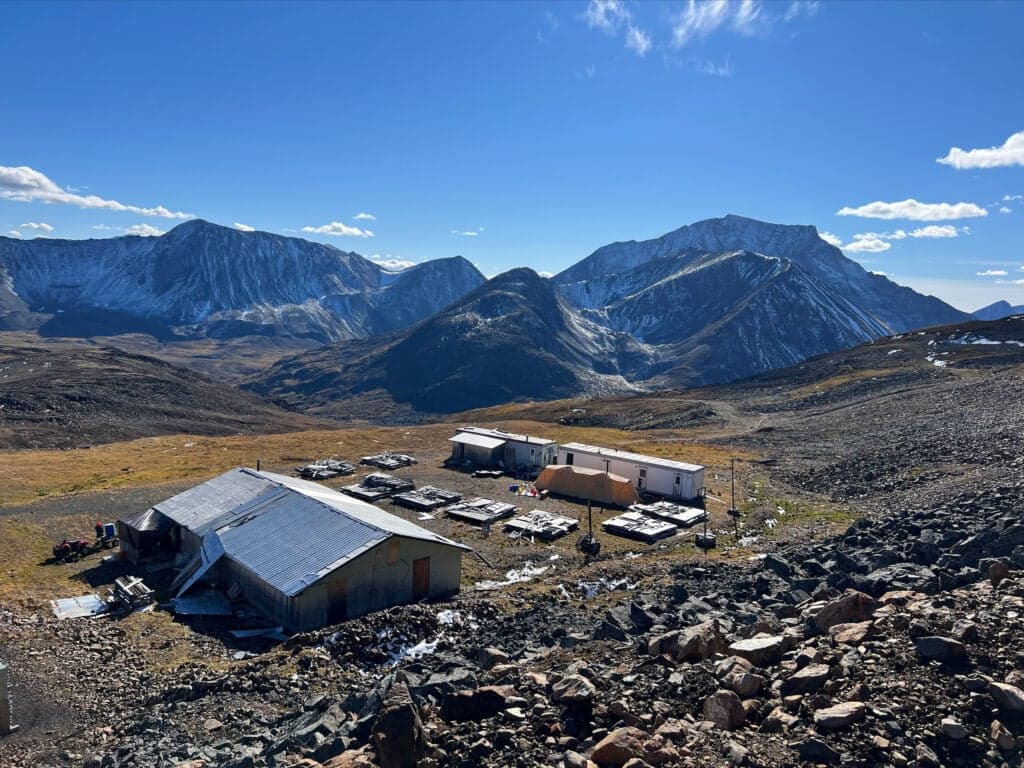
Located along the border of the Yukon and the Northwest Territories within the Selwyn Mountain range, the Mactung deposit is globally recognized as one of the largest and highest-grade undeveloped tungsten skarn resources in the world[1][2]. Under the agreement, Fireweed will utilize the federal funds to complete tender-ready mine engineering designs, execute advanced metallurgical testing programs, and evaluate downstream midstream processing facilities[2]. Crucially, the engineering review will assess the commercial feasibility of constructing a North American ammonium paratungstate (APT) processing plant, a necessary step in converting raw mineral ore into usable industrial-grade intermediate feedstocks[2].
The investment directly targets Western vulnerabilities in critical supply chains[2]. Tungsten is a strategically indispensable refractory metal utilized heavily in defence armor, high-heat aerospace alloys, semiconductors, and specialized military munitions[1]. Currently, the People's Republic of China controls over 80 percent of worldwide tungsten mining extraction and refines the overwhelming majority of intermediate supply[2]. Fireweed chief executive Ian Gibbs emphasized that securing non-dilutive federal backing without operational covenants or commercial export quotas solidifies Mactung as the cornerstone of North America’s industrial defense strategy, insulating domestic manufacturers from potential export embargos[2][2].
Following the announcement, Fireweed shares rose 3.4 percent on the Toronto Stock Exchange, trading up to $2.13 as investors responded to the de-risking of the capital expenditure plan[2][2]. The grant builds directly upon a prior $12.9-million allocation from Ottawa’s First and Last Mile Fund, which financed planning for access roads and high-voltage transmission grids along the remote North Canol corridor[3][2]. While Northern business leaders praised the investment for creating high-wage industrial and logistical employment for remote Yukon communities, regional environmental organizations reiterated that strict environmental and reclamation oversight must be maintained along fragile subarctic ecosystems throughout the mine's future operating life[1][3].
- Fireweed Metals Corp.
- Natural Resources Canada
- Brendan Hanley
National News
2 min read
Ontario Proposes Bill to Restrict Cross-Border Prescription Drug Sales
The Ontario government has proposed omnibus legislation to curb the dispensing of prescription drugs to non-Canadians residing outside the province, primarily targeting sales to the U.S. This measure aims to protect local drug inventories from shortages and ensure priority access for Ontario patients. The bill also includes reforms for digital patient records, long-term care, and child welfare.
Read the full storyFold the full story1 min · 1 source
The Government of Ontario introduced an omnibus legislative and regulatory package designed to protect critical social services, client safety, and provincial pharmaceutical stability[1]. Central to the public health reforms is the launch of formal stakeholder consultations aimed at imposing statutory restrictions on Ontario pharmacies dispensing prescription medications to non-Canadians residing outside Canada[1]. The measure is specifically structured to curtail the direct export of Canadian pharmaceuticals to cross-border buyers, primarily in the United States, to protect local inventories from recurring domestic shortages[1].
Historically, Ontario pharmacies have operated without statutory limits regarding dispensing medicines to non-resident foreign nationals abroad, a loophole that has created significant supply vulnerabilities during nationwide drug shortages[1]. The Ontario Ministry of Health indicated that with global pharmaceutical supply chains increasingly volatile, priority access must be guaranteed to provincial patients[1]. Beyond cross-border dispensing rules, the proposed legislative changes introduce measures to grant physicians expanded, streamlined access to integrated digital patient health records, supporting the province's stated commitment to connect every Ontario resident with a primary healthcare provider by 2029[1].
The omnibus bill also targets structural vulnerabilities in long-term care, child welfare, and professional oversight[1]. In long-term care environments, the province is legislating mandatory standards for specialized dementia care, stabilized facility-level medical leadership, and enhanced transparency around admissions data[1]. Concurrently, the legislation updates the Social Work and Social Service Work Act to introduce mandatory disciplinary penalties following findings of sexual abuse, while requiring standardized human trafficking risk assessments and professional training across Ontario's children's aid societies[1].
Healthcare advocates and clinical organizations have largely supported the move toward digital record integration and pharmaceutical supply protections, warning that drug shortages have frequently compromised therapies for chronic illnesses[1]. However, the proposal to restrict out-of-country dispensing is expected to impact cross-border pharmacy operators that rely on export sales, prompting commercial and cross-border regulatory scrutiny as formal provincial consultations commence[1].
- Government of Ontario
- Ontario Ministry of Health
- Social Work and Social Service Work Act
National News
2 min read
Health Canada Warns of Inaccurate Online Radon Monitors
Health Canada has issued a public health advisory warning consumers about uncertified and inaccurate electronic radon monitors sold online, which provide false reassurance about radiation levels. These flawed devices can prevent homeowners from taking necessary remediation steps to address dangerous radon gas in their homes.
Read the full storyFold the full story1 min · 1 source
Health Canada issued a nationwide public health advisory urging residents to inspect home radon testing equipment, warning that multiple uncertified electronic monitors widely sold online produce highly inaccurate readings[1]. The regulator stated that flawed monitors purchased through major e-commerce platforms, including Amazon.ca, pose serious risks by providing false reassurance to homeowners regarding ambient levels of radiation[1]. The advisory highlighted previously recalled or flagged digital detector brands, including InkBird, Life Basis, Hanchen, and Spolehli[1].
Radon is an invisible, odourless, and tasteless radioactive gas produced naturally by the decay of uranium in rock, soil, and groundwater[1]. It seeps into residential structures through foundation cracks, crawl spaces, utility gaps, and basement drains[1]. Epidemiological data from Health Canada confirms that long-term radon exposure is the second-leading cause of lung cancer in the country behind tobacco smoking, and the leading cause among non-smokers[1]. Inaccurate monitoring devices that register falsely depressed levels prevent homeowners from executing necessary structural remediations, such as active soil depressurization or improved sub-slab ventilation[1].
Federal health officials emphasized that inaccurate electronic units can produce readings that are erratic or substantially lower than actual concentrations[1]. Health Canada urged Canadians testing their living spaces to use approved test kits and services verified by the Canadian National Radon Proficiency Program (C-NRPP)[1]. Certified equipment includes standardized long-term alpha track detectors, electret ion chambers, or validated professional digital monitors calibrated against strict regulatory benchmarks.
The advisory prompted public health specialists to renew calls for broader institutional screening and mandatory radon testing standards in regional building codes[1]. Consumer safety organizations emphasized that the proliferation of low-cost, uncalibrated consumer health sensors on international digital marketplaces underscores the need for federal market-surveillance mechanisms to prevent non-compliant safety devices from reaching domestic consumers[1].
- Health Canada
- Canadian National Radon Proficiency Program (C-NRPP)
- InkBird
Section 2 of 4
World & Geopolitics
13 stories · 6 min skim
World & Geopolitics
2 min read
Historic Trump-Xi-Putin Summit in Shenzhen to Tackle Global Security and Trade
China confirmed President Xi Jinping will host a landmark trilateral summit with U.S. President Donald Trump and Russian President Vladimir Putin in Shenzhen. The meeting, occurring during the APEC summit, will address nuclear non-proliferation, Iran, global trade, and the Ukraine conflict. This unprecedented gathering is seen by analysts as a significant geopolitical alignment shift, potentially paralleling historical diplomatic conferences.
Read the full storyFold the full story2 min · 8 sources
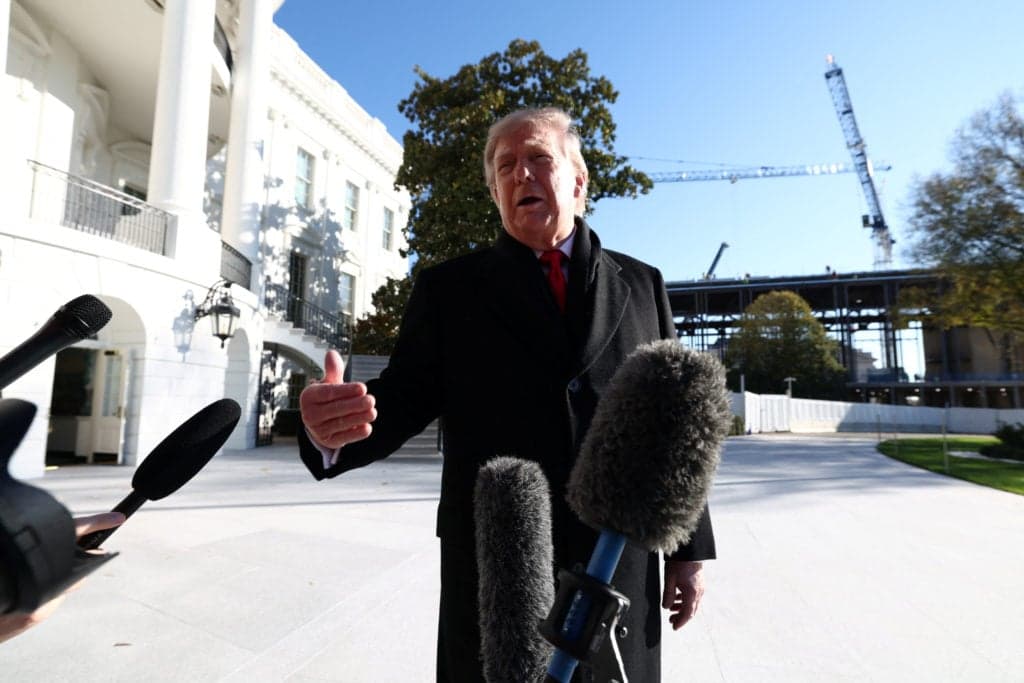
In a diplomatic milestone, the Chinese Ministry of Foreign Affairs officially confirmed that Chinese President Xi Jinping will host United States President Donald Trump and Russian President Vladimir Putin for a first-of-its-kind trilateral heads-of-state summit[1]. The historic talks will take place in the southern technology hub of Shenzhen on the sidelines of the 33rd Asia-Pacific Economic Cooperation (APEC) Leaders' Meeting[2][3]. Prior to departing the White House, President Trump told reporters that the agenda would encompass global nuclear non-proliferation and denuclearization, the simmering conflict with Iran, global economic trade, and the war in Ukraine[4]. The confirmation follows weeks of diplomatic sparring and backchannel maneuvers, culminating in a preparatory call between U.S. Secretary of State Marco Rubio and Chinese Foreign Minister Wang Yi[4].
The summit occurs amid widespread friction across Eurasia and the Indo-Pacific, leading several foreign policy analysts to characterize the Shenzhen talks as a potential modern parallel to the Yalta Conference[2]. Beijing, having initially hesitated before validating Moscow's proposal, appears eager to cement Xi’s reputation as the indispensable arbiter of international security while hosting APEC for the first time in over a decade[4][5]. Ahead of the Shenzhen session, President Trump landed in Manila for high-stakes consultations with Indo-Pacific allies, reviving the Quad leaders' mechanism alongside the heads of state of Japan, Australia, and India, before joining the U.S.–ASEAN summit[6][7]. Trump also raised the prospect of expanding the diplomatic theater further, hinting that North Korean leader Kim Jong Un might potentially participate if facilitated by Beijing[4].
The roster of global actors engaged in the maneuver extends far beyond the three superpowers. United Nations Secretary-General António Guterres urged the leaders to seize the trilateral format to halt the unraveling of international arms control architecture[4]. Conversely, Ukrainian President Volodymyr Zelenskyy cautioned against any great-power agreements negotiated above the heads of sovereign states, warning against any arbitrary carving up of global spheres of influence[6]. Simultaneously, NATO partners and East Asian allies are watching closely, acutely wary that bilateral transactionalism could compromise security guarantees in Eastern Europe and the Western Pacific[3].
The implications of the trilateral summit for global stability are profound. A coordinated push on arms control among the world’s three largest nuclear powers could establish much-needed guardrails at a time of heightened regional confrontation[4][3]. However, the prospect of high-level bargaining on Ukraine and the Persian Gulf without direct allied consensus risks alienating traditional partners[6][2]. Financially, global markets are on alert: while the confirmation initially offered brief relief regarding U.S.-China commercial friction, investors remain cautious regarding whether Shenzhen will yield structural de-escalation or deepen divisions between Western democracies and an autocratic Eurasian axis[8][5].
- Xi Jinping
- Donald Trump
- Vladimir Putin
World & Geopolitics
2 min read
Ukraine's Drone Strikes Cripple Kerch Bridge and Deep Russian Infrastructure
Ukraine launched a significant drone campaign, causing severe damage to the Kerch Strait Bridge and striking the Gazprom Neftekhim Salavat petrochemical complex. The Kerch Bridge, a vital logistical route for Russian forces in southern Ukraine, sustained structural damage and partial collapse. Russia reported intercepting over 1,300 Ukrainian drones, while also conducting retaliatory strikes on Ukrainian energy infrastructure.
Read the full storyFold the full story2 min · 11 sources
Ukraine launched an extensive and technically sophisticated aerial offensive against strategic Russian infrastructure, culminating in direct, crippling hits on the Kerch Strait Bridge[1][2]. Following an initial wave on November 16 where an explosive one-way attack drone impacted a structural arch - causing it to visibly tilt at a 15-degree angle - a second, intensified overnight barrage struck the bridge's main road vehicle span[3][1][2]. Russia’s Investigative Committee formally acknowledged structural damage on November 17 and initiated a criminal terrorism probe, marking Moscow's first official concession regarding the severity of the damage after circulating imagery verified that a major road span had collapsed into the Kerch navigation channel[4][2].
The bridge strikes were part of a wider, multi-theater drone campaign that overwhelmed regional defenses[1]. The Russian Ministry of Defense reported that air defense systems intercepted more than 1,330 to 1,440 Ukrainian unmanned aerial vehicles (UAVs) over a 48-hour span, engaging targets across Crimea, the Black Sea, the Sea of Azov, and central Russia, including approximately 600 drones directed toward the Moscow capital region alone[5][1][6]. Concurrently, Ukrainian long-range strike drones penetrated nearly 1,300 kilometers behind the front line into Bashkortostan, striking and igniting the Gazprom Neftekhim Salavat petrochemical refining complex[7]. Moscow mounted retaliatory drone operations of its own, deploying more than 130 strike drones against Ukraine's domestic energy infrastructure across Odesa, Vinnytsia, and Dnipropetrovsk oblasts[8][9].
The strategic significance of the Kerch Bridge cannot be overstated. Inaugurated by President Vladimir Putin in 2018 to physically anchor occupied Crimea to Krasnodar Krai, the 19-kilometer artery serves as the primary military logistical corridor supplying Russian occupation forces across southern Ukraine[2][10]. While Kremlin spokesperson Dmitry Peskov initially characterized the incident as minor, the suspension of transit and subsequent partial collapse stranded thousands of military and civilian transport vehicles[3][2]. The strike illustrates persistent gaps in Russia’s point-defense arrays, which failed to protect the crossing despite the deployment of layered S-400 surface-to-air systems, Pantsir batteries, electronic warfare netting, and floating boom barriers[11].
The physical degradation of the Kerch crossing complicates Russia's military posture ahead of winter operations. Military analysts from the Institute for the Study of War (ISW) noted that by degrading critical ground lines of communication via Crimea, Kyiv is constraining Russia's ability to pivot reserves and heavy equipment[9]. The simultaneous strikes against deep refining installations like Neftekhim Salavat continue to drain Moscow's industrial logistics and domestic fuel networks[7]. The escalation underscores that despite quiet diplomatic soundings between Washington, Kyiv, and Moscow, operational tempo on the ground has intensified as both sides attempt to capture maximal leverage ahead of potential diplomatic resets[5].
- Ukraine
- Russia
- Kerch Strait Bridge
World & Geopolitics
2 min read
Third U.S. Carrier Deployed to Persian Gulf Amid Stalled Hormuz Negotiations
The U.S. has deployed its third aircraft carrier strike group, the USS *Theodore Roosevelt*, to the Persian Gulf, increasing military pressure amid stalled de-escalation talks. Diplomatic efforts brokered by Oman to reopen the Strait of Hormuz have failed, with Iran demanding comprehensive sanctions relief. Meanwhile, low-intensity exchanges continue, including drone strikes on Bahrain and alleged naval mine attacks on commercial tankers.
Read the full storyFold the full story2 min · 11 sources
The geopolitical standoff in the Middle East intensified as the USS Theodore Roosevelt arrived in the region, bringing the total number of American aircraft carrier strike groups deployed to theater to three[1][2]. The substantial naval buildup follows a protracted "no war-no peace" impasse that has persisted since large-scale U.S.-Israeli strikes hit Iranian nuclear and military infrastructure earlier this year[1][3]. Speaking on national television, U.S. Vice President JD Vance defended the administration’s strategy of combining intense economic coercion with forward naval posture, insisting that while Washington will maintain military pressure to eliminate perceived security threats, it will not allow the crisis to devolve into a "10- or 15-year protracted war"[4][2].
The military posturing comes as diplomatic channels run into significant obstacles[3][5]. In Muscat, Iranian Foreign Minister Seyed Abbas Araghchi met with Omani Foreign Minister Sayyid Badr bin Hamad Al Busaidi to discuss de-escalation and explore mechanisms to restore commercial navigation through the Strait of Hormuz under the framework of the June Islamabad Memorandum[6][7]. Despite hours of negotiations, the talks ended without an accord, leaving the strategic waterway closed to normal traffic and stranding an estimated 138 commercial vessels per day[6]. Araghchi arrived in Muscat following stops in Pakistan, where he conferred with military chief Field Marshal Asim Munir, yet Tehran offered no concessions on its core demands regarding comprehensive sanctions relief and maritime access[8][9][5].
Meanwhile, low-intensity military exchanges continue to erode regional stability[1][5]. The Islamic Revolutionary Guard Corps (IRGC) executed drone strikes targeting U.S. radar installations at Bahrain's Riffa Air Base, attacks that Bahraini and regional defenses intercepted[10][11]. In the Persian Gulf, IRGC naval units reported multiple commercial tankers damaged by naval mines, further depressing commercial shipping volumes to under a third of historical averages[1][4]. Regional neighbors, led by Saudi Arabia and the Gulf Cooperation Council (GCC), have pursued separate tracks, appealing to the European Union and the United Nations for international naval escorts rather than relying on bilateral Iranian assurances[6].
The diplomatic deadlock carries profound consequences for the global economy. Although the International Energy Agency has raised non-OPEC output estimates to prevent crude price spikes, insurance premiums for maritime freight in the Gulf remain elevated[4][6]. The failure of the Muscat channel leaves the Strait of Hormuz heavily militarized under a U.S. naval blockade that halts Iranian crude shipments while rogue mining threatens third-party merchant traffic[3]. With Washington reinforcing its naval strike wings and Tehran signaling an unwillingness to dismantle defensive leverage without sanctions relief, the Persian Gulf remains on a knife-edge[3][2].
- USS Theodore Roosevelt
- Persian Gulf
- Strait of Hormuz
World & Geopolitics
2 min read
Fourth Tanker Hit Near Hormuz as De-Escalation Talks Fail
A fourth commercial tanker was struck and caught fire east of the Strait of Hormuz after detonating a naval mine, according to Iranian authorities. This incident occurred as diplomatic talks in Muscat between Iran and Oman concluded without an agreement to stabilize maritime transit. The failure of these negotiations underscores escalating regional tensions and the growing risks to global energy logistics.
Read the full storyFold the full story2 min · 9 sources
A sharp escalation in maritime warfare across Middle Eastern chokepoints crystallized over the past 24 hours as Iranian naval authorities claimed a fourth commercial tanker caught fire east of the Strait of Hormuz after detonating a naval mine[1][2][3]. In a statement broadcast by Islamic Republic of Iran Broadcasting (IRIB), the Iranian Navy asserted that the vessel had entered an unauthorized, restricted maritime corridor with its automatic identification and navigation systems switched off[2][4]. Concurrently, the United Kingdom Maritime Trade Operations (UKMTO) confirmed an attack on the liquefied petroleum gas (LPG) carrier Tara Gas roughly seven nautical miles north of Khasab, Oman, situated on the strategic Musandam Peninsula[3][5]. The attack disabled the ship and ignited an engine room blaze, though the crew was reported safe[5].
The naval mine strikes coincided with high-stakes diplomatic negotiations in Muscat between Iranian Foreign Minister Abbas Araghchi and Omani Foreign Minister Badr Al-Busaidi[3][6]. Despite hours of closed-door mediation aimed at establishing safe maritime transit frameworks and de-escalating the regional tanker crisis, the summit ended without an agreement to reopen or stabilize the Strait of Hormuz[7][6]. Omani readouts carefully cited ongoing diplomatic efforts to mitigate regional hazards, but Tehran offered a far more rigid assessment, warning commercial operators that any transit undertaken without direct Iranian military coordination would inevitably meet mines and hostile fire[7][2].
The failure of the Muscat channel underscores growing fissures in regional crisis diplomacy[7]. Rather than relying solely on Omani mediation, Saudi Foreign Minister Prince Faisal bin Farhan activated a parallel diplomatic circuit, conferring with his Egyptian and Qatari counterparts while simultaneously lobbying European capitals for naval escorts through contested waters[7]. Riyadh's multi-track diplomacy reflects apprehension among Gulf states that Oman's traditional role as an intermediary between Tehran and Western-aligned nations is losing traction as Iran hardens its operational stance across energy transit routes[7].
The immediate market impact has reverberated through maritime insurance and global energy logistics. Tanker operators face soaring war-risk insurance premiums and escalating demurrage costs as transits through the narrow strait dwindle, stranding shipments destined for global refiners[8][9]. With four vessels disabled or caught in mine detonations in a single 24-hour cycle and state-to-state mediation stalling, commercial shipping lines are being forced to choose between paralysis in Gulf ports or running high-risk routes that could trigger broader military intervention[2][3].
- Strait of Hormuz
- Iranian Navy
- UKMTO
World & Geopolitics
2 min read
Houthi Fighters Advance on Aden as Saudi-Backed Forces Withdraw
Houthi fighters have advanced rapidly along Yemen's southern coast toward Aden, securing territory west of the city after Saudi-backed government forces withdrew from defensive positions near the Bab el-Mandeb Strait. This significant military shift follows a royal decree dismissing the senior general commanding the Saudi-led coalition forces. The advance effectively relinquishes allied ground control over key Red Sea approaches.
Read the full storyFold the full story1 min · 4 sources
Military balances across southwestern Arabia tilted dramatically over the past 24 hours as Houthi combat units pushed rapidly eastward along Yemen’s southern coastline, securing the coastal sector of Khor Omairh roughly 100 kilometers west of Aden[1][2]. The militia's forward spearheads advanced to within 25 kilometers of the internationally recognized government’s primary defensive line at Qawah[1][2]. The advance follows an abrupt weekend decision by Saudi-backed government forces to abandon fortified positions surrounding the Bab el-Mandeb Strait, pulling ground troops toward Aden and Lahj province to prevent the fall of the provisional capital[1].
The loss of the southern coastline and coastal ridges prompted an immediate administrative and military purge in Riyadh[2][3]. King Salman bin Abdulaziz issued a royal decree dismissing the senior general commanding the Saudi-led coalition forces overseeing the campaign against the Houthis, replacing the command structure amidst chaotic frontline retreats[2][3]. The military collapse in the south effectively relinquishes direct allied ground monitoring over Perim Island and the narrowest navigable channel of the Red Sea, cementing Houthi dominance over both the coastal approaches and inland corridors[3].
Inside Aden, tension escalated as government forces instituted emergency checkpoints, tightened identity controls, and constructed sandbag barricades and defensive earthworks across entry roads[1][4]. Although basic municipal supplies and fuel remain available, civic anxiety is mounting over the prospect of an urban siege[1]. The civil conflict, which had remained largely static following previous truce frameworks, was reignited by broader regional escalation, transforming Yemen's territorial contest into an active flank of the wider conflict between Iran-aligned forces and Western-backed coalitions[1].
The geopolitical repercussions of the Houthi advance extend directly to global shipping lanes[1][3]. By securing contiguous coastal territory directly abutting the Bab el-Mandeb transit corridor, the Houthi movement has significantly expanded its shoreline missile, radar, and drone launch geography[3]. With coalition forces now pinned into defensive pockets defending the approaches to Aden, Western and regional navies face an adversary that has strengthened its operational control over one of the world's most critical maritime transit points[1][3].
- Houthi fighters
- Yemen
- Aden
World & Geopolitics
2 min read
EU Imposes Sweeping Sanctions on Russia's Shadow Fleet and Energy Exports
The European Union has approved an extensive sanctions package targeting 12 individuals and 101 entities involved in Russia's war economy and maritime energy exports. The sanctions primarily aim at Russia's 'shadow fleet,' a network of tankers used to circumvent price caps on crude oil. Designated entities include logistics providers and trading intermediaries obscuring Russian oil shipments.
Read the full storyFold the full story2 min · 2 sources
In Brussels on November 16, 2026, the European Union Foreign Affairs Council approved an expansive sanctions package targeting 12 individuals and 101 legal entities actively facilitating Russia's war economy and sustaining its maritime energy exports[1]. The council session, attended by EU foreign ministers - including Irish Minister for Foreign Affairs and Trade Helen McEntee - featured an in-person briefing from Ukrainian Foreign Minister Andrii Sybiha[1]. Sybiha presented a critical update on the recent Abu Dhabi diplomatic negotiations while laying out Ukraine's urgent defense and critical infrastructure protection requirements ahead of severe winter conditions[1].
The primary target of this sanctions round is Russia's sprawling "shadow fleet" - the network of unflagged, aging, or flag-of-convenience maritime tankers used by Moscow to circumvent the G7 and EU price cap mechanisms on seaborne crude oil[1]. The 101 sanctioned entities include maritime logistics providers, opaque trading intermediaries, and specialized engineering firms operating across jurisdictions designed to obscure the ownership and transit of Russian oil shipments[1]. The Council also subjected 12 individuals to comprehensive asset freezes and travel bans for directing state-linked enterprises that channel vital foreign currency revenue directly into Russia’s military-industrial supply chain[1].
The regulatory tightening carries notable ramifications for global energy logistics, commodity trading routes, and maritime insurance markets[1]. Following the listings, major marine insurers, international shipping registries, and European bunkering hubs are legally compelled to sever ties with the designated vessels and corporate networks, sharply escalating operational risks for international maritime intermediaries[1]. Minister McEntee stated following the Council meeting that the new sanctions demonstrate that despite renewed multilateral dialogue tracks, the EU will maintain relentless economic pressure so long as Russian strikes continue to target civilian infrastructure[1].
For global commodity markets and Canada’s extractive energy sector, the clampdown on Moscow’s shadow fleet alters maritime crude pricing and tanker availability[1]. Increased enforcement against illicit Russian crude exports diverts global buyers toward certified, transparent crude sources, directly impacting heavy crude price benchmarks and shipping insurance rates worldwide[1]. Canadian energy producers and institutional financial houses operating internationally must navigate enhanced compliance obligations under these expanded designations to prevent secondary sanctions exposure within complex cross-border logistical networks[1][2].
- European Union
- Russia
- Helen McEntee
World & Geopolitics
2 min read
Russian Military Aircraft Breach Japanese Airspace, Triggering Regional Alert
Two Russian military aircraft violated Japan's sovereign airspace near Okinoshima Island, prompting an immediate scramble of Japanese fighter jets. The aircraft then proceeded into South Korea's Air Defense Identification Zone (KADIZ) and Taiwan's ADIZ before exiting into the Western Pacific. This incident marks the first confirmed Japanese airspace violation by Russian aircraft since late September 2024.
Read the full storyFold the full story2 min · 9 sources
Tensions in Northeast Asia escalated when two suspected Russian military aircraft violated Japan’s sovereign territorial airspace northwest of Okinoshima Island in Fukuoka Prefecture[1][2]. According to Japan's Ministry of Defense, the Russian aircraft entered sovereign skies for approximately three to five minutes, prompting the Japan Air Self-Defense Force (JASDF) to scramble fighter jets, issue stern radio warnings, and execute tactical diversion maneuvers[1][2][3]. After leaving Japanese territorial airspace, the aircraft traversed the Tsushima Strait and flew between Yonaguni Island and Taiwan before tracking out into the Western Pacific Ocean[4][3].
The Russian sorties triggered defensive alarms across multiple capitals in the region[1]. South Korea’s Joint Chiefs of Staff (JCS) revealed that several Russian military aircraft entered the Korea Air Defense Identification Zone (KADIZ) over the East Sea without prior notification, compelling the Republic of Korea Air Force to launch interceptor aircraft to monitor the formation[5][6]. Taiwan's Ministry of National Defense also confirmed detecting two Russian warplanes transiting through its air defense identification zone along its northeastern and southeastern perimeters[1][4]. The incident represents the first confirmed sovereign airspace violation of Japan by Russian military aircraft since late September 2024[2].
Tokyo’s political leadership reacted with sharp condemnation. Chief Cabinet Secretary Minoru Kihara described the intrusion as "a serious infringement of Japan's sovereignty" and an "absolutely unacceptable threat to national safety," confirming that a formal diplomatic protest had been lodged with Moscow[4][2]. Japanese Defense Minister Shinjiro Koizumi emphasized that Tokyo is monitoring Russian military maneuvers with heightened vigilance, citing an increasingly aggressive pattern of joint Russian-Chinese naval and aerial operations along Japan’s perimeter[3][6]. Bilateral ties between Tokyo and Moscow have steadily deteriorated over contested claims to the Kuril Islands (Northern Territories), Russia's detention of a Japanese journalist on espionage charges, and Moscow's expropriation of Japanese corporate assets[2][6].
Defense analysts view the incursion as a calculated military probe designed to test the reaction speed and radar tracking networks of the U.S.–allied defensive perimeter in East Asia[7]. The timing is particularly notable: the incursions coincided with President Trump's arrival in Manila to meet with Quad partners and precede Vladimir Putin’s scheduled visit to China for the APEC summit[8][9]. By flying long-range missions that spanned the territorial borders of Japan, South Korea, and Taiwan, Moscow demonstrated its capacity for power projection along Pacific air lanes, signaling that any regional security framework negotiated by Washington and its partners will face direct operational challenges[1][4][2].
- Russia
- Japan
- South Korea
World & Geopolitics
3 min read
Canada and China Deepen Trade Ties: Carney, Xi Meet Ahead of APEC Summit
Canadian Prime Minister Mark Carney met with Chinese President Xi Jinping to expand a trade arrangement, restoring market access for over 90% of Canadian export lines previously subjected to retaliatory duties. Key agricultural concessions were extended through 2028, and discussions aimed to resolve outstanding trade friction points. This development signals a pragmatic reset in Canada's economic posture towards China amid friction with the United States.
Read the full storyFold the full story2 min · 8 sources
In a major geopolitical and commercial development on November 17, 2026, Canadian Prime Minister Mark Carney met with Chinese President Xi Jinping in Shenzhen, China, on the margins of the Asia-Pacific Economic Cooperation (APEC) Economic Leaders’ Meeting[1][2]. The two leaders announced a significant extension and expansion of the Preliminary Joint Arrangement on Addressing Bilateral Economic and Trade Issues, formalizing new measures to facilitate reciprocal market access and stabilize commercial relations[1]. The bilateral meeting followed intense diplomatic maneuvering in the region and marked a decisive shift in Ottawa’s foreign economic posture, seeking a pragmatic reset with the world's second-largest economy amid mounting commercial friction with the United States[1][3].
The Shenzhen summit solidifies a steady rebuilding of bilateral trade channels that began in early 2026[1][4]. According to Global Affairs Canada data, Canadian merchandise exports to China surged by 31.4% in the first half of 2026, reaching $21.5 billion, while Canadian crude oil shipments rose approximately 37%[4]. Under the expanded arrangement, Canada has now successfully restored market access for over 90% of export lines previously subjected to punitive retaliatory duties - representing nearly $7.5 billion in Canadian goods[1]. Building on the relief secured earlier this year that reduced tariffs on Canadian canola seed from roughly 85% to 14.9% and paused duties on peas, lobster, and crab, the leaders extended these crucial agricultural concessions through the end of 2028[4]. Discussions in Shenzhen also aimed at resolving outstanding trade friction points, notably China’s remaining 100% tariffs on Canadian canola oil, 25% tariffs on Canadian pork products, and import protocols for Canadian beef[4].
The commercial rapprochement carries profound implications for North American trade architecture and Canada's broader economic sovereignty. Speaking to reporters on November 16 immediately prior to his arrival in China, Prime Minister Carney explicitly warned that Canada could turn directly to Chinese electric vehicle manufacturers and automotive supply chains if stalled negotiations with U.S. President Donald Trump fail to preserve an integrated North American automotive sector under the Canada-United States-Mexico Agreement (CUSMA)[5]. Carney emphasized that Canada intends to deploy its domestic autoworkers and industrial base "either way," signaling that Ottawa is prepared to leverage closer trade alignment with Beijing to protect domestic manufacturing employment against unilateral U.S. trade pressure[5]. Beyond industrial manufacturing, the Canadian government also announced a C$8 million five-year contribution via the International Institute for Sustainable Development to support environmental policy advisory work through the China Council for International Cooperation on Environment and Development (CCICED), alongside student mobility funding under the Canada Learning Initiative in China[6].
President Xi outlined a four-point framework for bilateral ties during the summit, urging Ottawa to maintain strategic mutual trust, broaden cooperation into green and digital economy sectors, deepen subnational educational exchanges, and strengthen multilateral coordination[2]. Prime Minister Carney is also slated to hold bilateral talks with Mexican President Claudia Sheinbaum in Shenzhen to coordinate regional strategies[7]. For Canadian commodity producers, agri-food exporters, and energy firms, the expansion of the arrangement offers immediate tariff predictability in a critical market[1][4]. However, trade analysts note that Ottawa’s warming ties with Beijing risk escalating tensions with Washington, particularly as cross-border supply chains face intensified scrutiny under Section 338 trade provisions[8][3].
- Mark Carney
- Xi Jinping
- Canada
World & Geopolitics
2 min read
China's Premier Li Qiang Rallies ASEAN for Free Trade Amid U.S. Push
Chinese Premier Li Qiang urged ASEAN nations to resist protectionism and defend free trade during a summit in Manila, pledging deeper supply chain integration. His address countered the U.S. administration's trade and technology agenda, which President Trump is also presenting in Manila. China highlighted its substantial trade and investment growth with ASEAN, emphasizing its role as a key economic partner.
Read the full storyFold the full story2 min · 5 sources
Addressing regional leaders at the 29th ASEAN-China Summit in Manila, Chinese Premier Li Qiang mounted a robust defense of global multilateralism and open markets, directly challenging the escalating wave of protectionism, trade restrictions, and tariff threats emanating from the West[1]. Li urged Southeast Asian nations to resist unilateral economic pressures, pledging that Beijing will expand supply chain integration and preserve economic globalization despite recurring geopolitical conflicts[1]. The address comes as U.S. President Donald Trump arrived in the Philippine capital to convene the Quad security grouping and present his administration's commercial and technological agenda to Southeast Asian states[2][3].
Premier Li substantiated Beijing’s economic appeal with substantial trade metrics[1]. Bilateral trade between China and ASEAN member nations exceeded $1 trillion over the past year, marking a 20.1% increase compared to 2021, while expanding an additional 29.6% over the first ten months of 2026[1]. Li noted that cumulative two-way investment has surpassed $500 billion - an increase of more than 50% across five years - and emphasized expanding joint initiatives in high-growth fields including artificial intelligence, electric vehicles, and the green digital economy[1]. The diplomatic offensive is designed to remind regional partners that China remains their dominant economic engine, irrespective of U.S. efforts to reorganize critical supply chains[1][2].
The geopolitical dynamics in Southeast Asia are intensely contested. Manila finds itself at the physical intersection of this great-power rivalry, hosting both the ASEAN discussions and the Quad consultations involving the U.S., Japan, Australia, and India[2][3]. Philippine leadership has maintained a complex balancing act, deepening its security pacts with Washington to resist Chinese maritime encroachments in the South China Sea while relying on Chinese trade and infrastructure investments to sustain domestic economic growth[4][3]. At the same time, regional powers including Indonesia, Malaysia, and Vietnam are navigating heavy pressures to ensure that Southeast Asia remains non-aligned rather than being partitioned into competing economic blocs[5][1].
Li’s diplomatic positioning in Manila reflects China's broader preparation for the upcoming APEC gathering in Shenzhen[5][1]. By casting China as the champion of the rules-based multilateral trading system and contrasting its approach with Western tariff measures, Beijing is seeking to insulate its export base against proposed U.S. trade restrictions[5][1]. For Southeast Asian economies, the contest presents both structural opportunities and systemic risks: while nations benefit from dual investment inflows, the prospect of heightened technology export curbs and retaliatory tariffs threatens regional manufacturing supply chains, cementing Southeast Asia as the primary arena of commercial and strategic competition[5][2].
- Li Qiang
- ASEAN
- Donald Trump
World & Geopolitics
2 min read
Canada Solidifies Indo-Pacific Strategy with ASEAN Trade Pact and Bilateral Agreements
Canadian Minister of International Trade Maninder Sidhu finalized institutional frameworks for the ASEAN-Canada Free Trade Agreement (ACAFTA) and advanced bilateral agreements with Indonesia and Singapore. These moves are key to Canada's Indo-Pacific Strategy, aiming to diversify market access and insulate supply chains from external tariffs. The agreements include duty reductions, investor protections, and support for digital trade and clean energy.
Read the full storyFold the full story2 min · 3 sources
On November 16, 2026, Canadian Minister of International Trade Maninder Sidhu convened a series of high-level bilateral meetings on the sidelines of the 49th Association of Southeast Asian Nations (ASEAN) Summit in Manila to translate newly concluded multilateral trade talks into actionable bilateral commitments[1]. Minister Sidhu met with Indonesian Coordinating Minister for Economic Affairs Airlangga Hartarto and Singapore’s Deputy Prime Minister and Minister for Trade and Industry Gan Kim Yong[1]. The discussions centered on finalizing the institutional framework for the ASEAN-Canada Free Trade Agreement (ACAFTA) - the substantial conclusion of which was formally unveiled by Prime Minister Mark Carney on November 14 - and laying the groundwork for immediate regional implementation[2][1].
The ministerial sessions represent a critical step in Canada’s long-term Indo-Pacific Strategy, aimed at insulating domestic supply chains from external unilateral tariffs by diversifying market access across Southeast Asia’s rapidly expanding economies[2][3]. During the session with Indonesia, Minister Sidhu and Minister Hartarto reviewed operational readiness for the December 1, 2026 entry into force of the Canada-Indonesia Comprehensive Economic Partnership Agreement (CEPA)[1]. The bilateral agreement is designed to deliver immediate duty reductions and legal investor protections across vital sectors, including Canadian agri-food exports, seafood shipments, mining operations, digital services, and clean energy technology[1]. In concurrent talks with Singapore’s Gan Kim Yong, the ministers accelerated work on a dedicated Canada-Singapore economic partnership framework to bolster bilateral investment, food security initiatives, emerging technology sharing, and maritime supply-chain resilience[1].
The economic stakes for Canadian industry across the ASEAN region are substantial. The 11-member ASEAN bloc represents an aggregate consumer base of nearly 700 million individuals and a collective gross domestic product approaching $6 trillion[2]. Comprehensive economic modeling from Global Affairs Canada projects that the ACAFTA framework will contribute nearly $2 billion directly to Canada’s annual GDP once fully enacted, generating an estimated 14,000 domestic jobs concentrated in high-value agricultural production, advanced manufacturing, and extractive logistics[1]. The agreement establishes binding rules on digital trade, intellectual property protection, and non-tariff barrier mitigation, opening new corridors for Canadian resource and services firms looking to expand beyond conventional North American markets[2][1].
The diplomatic momentum generated in Manila reflects a coordinated push among middle powers - including Canada, Brazil, and Australia - to hedge against geopolitical unpredictability and escalating global protectionism[3]. During the summit, Canadian officials, alongside regional partners, underscored the urgency of establishing multilateral trade anchors that offer institutional stability[1][3]. For Canadian enterprises, the conclusion of the ASEAN pact and the formalization of the Indonesian CEPA provide immediate avenues to export agricultural staples, critical minerals, and digital software under preferential terms, significantly expanding Canada’s commercial footprint across Asia’s primary manufacturing corridors[2][1].
- Maninder Sidhu
- ASEAN
- Indonesia
World & Geopolitics
2 min read
US Expands AI Chip Export Controls to Southeast Asia and Brazil
The U.S. Commerce Department has implemented new export licensing requirements for advanced semiconductors and AI hardware targeting Malaysia, Singapore, Indonesia, Thailand, and Brazil. This rule aims to close loopholes that allow sanctioned entities to circumvent U.S. export controls through diversion routes in emerging technology hubs. It mandates rigorous end-user due diligence for foreign foundries and data center operators.
Read the full storyFold the full story2 min · 6 sources
The United States Department of Commerce’s Bureau of Industry and Security (BIS) enacted an Interim Final Rule establishing comprehensive export licensing requirements for advanced semiconductors, high-performance computing components, and artificial intelligence hardware destined for Malaysia, Singapore, Indonesia, Thailand, and Brazil[1][2][3]. The 132-page regulatory package mandates that foreign foundries, third-party data center operators, and hardware distributors conduct exhaustive end-user due diligence[1][3]. Designed to close loopholes that have allowed sanctioned entities to circumvent existing export controls, the rule targets remote access, compute-sharing arrangements, and potential technology diversion routes in emerging technology hubs[4][3].
This aggressive expansion of technological statecraft comes amid an intensifying probe into diversion pipelines across Southeast Asia, highlighted by recent investigations into entities such as Megaspeed and Speedmatrix in Malaysia[4][3]. The regulatory shift also follows widespread industry shockwaves from the abrupt departure of Nvidia leadership, alongside heightened administrative scrutiny overseen by Commerce Secretary Howard Lutnick and BIS officials[5][4][3]. While licensing mandates will not apply to subsidiaries that are fully owned and headquartered by U.S. parent corporations - provided rigorous compliance reporting is satisfied - foreign-owned infrastructure providers across Southeast Asia face stringent new compliance burdens[2].
Regional markets reacted swiftly to the sudden friction introduced into their rapidly expanding digital infrastructure sectors[1]. In Kuala Lumpur, technology and data-center construction shares plunged, with infrastructure providers such as MN Holdings and Critical Holdings sliding nearly 20% during morning trading as investors reassessed the pace of capital deployment[1]. Kenanga analysts cautioned that while broad data center construction might show resilience over the medium term, Southeast Asia's nascent integrated circuit design sector faces immediate administrative hurdles and supply bottlenecks[1][6].
Diplomatic responses from host governments highlighted the tension between national industrial goals and Washington's technological containment strategy[2]. Singapore’s Ministry of Digital Development and Information (MDDI) and the Ministry of Trade and Industry (MTI) issued a joint statement noting active engagements with both Washington and affected industry stakeholders to preserve the republic’s standing as a trusted, law-governed global hub while maintaining access to advanced computing capabilities[2]. The broader undercurrent indicates that Washington is increasingly willing to risk diplomatic friction with non-aligned partners in ASEAN and Latin America to enforce a unified technological perimeter against strategic adversaries[1][2].
- U.S. Department of Commerce
- Bureau of Industry and Security (BIS)
- Nvidia
World & Geopolitics
3 min read
U.S. Trade Policy Faces Scrutiny as Trump Tours Asia Amid Tariff Disputes
U.S. President Donald Trump's Asia tour begins amidst ongoing trade tensions with allies and domestic debates over his tariff policies. U.S. Trade Representative Jamieson Greer defended the administration's aggressive tariff regime, while negotiations with Canada over Section 338 tariffs remain tense. Separately, the U.S. Senate Committee on Agriculture advanced a nomination for an Undersecretary who pledged an aggressive stance on foreign trade enforcement.
Read the full storyFold the full story2 min · 9 sources
On November 17, 2026, U.S. President Donald Trump touched down in Manila for the closing stages of the ASEAN Summit before heading to Shenzhen for the APEC summit, initiating a critical international tour amid simmering trade tensions with North American allies[1][2]. Trump's trip coincides with fierce domestic and cross-border debates regarding the administration's aggressive tariff regime[3][4]. Just ahead of the summit, on November 16, U.S. Trade Representative Jamieson Greer mounted an outspoken defense of the White House's trade policies in a public letter published in the Wall Street Journal[4]. Ambassador Greer argued that tariffs are fundamentally advancing the long-term prosperity and structural resilience of American manufacturers, agricultural producers, and industrial workers, despite warnings from trading partners and international economists[4].
The escalating rhetoric comes against the backdrop of strained Canada–U.S. trade negotiations, specifically surrounding controversial Section 338 tariffs[5]. While Ambassador Greer confirmed that U.S. and Canadian negotiators had resumed informal contact to explore a potential tariff-relief agreement following a complete collapse of negotiations over the summer, friction remains intense[5]. The core point of contention centers on Section 338 tariffs, which - as highlighted by the U.S. Congressional Research Service - differ from earlier measures by denying general exemptions to goods that fully comply with CUSMA rules of origin[5]. This absence of a CUSMA carve-out directly exposes Canadian integrated manufacturers, steel processors, and automotive suppliers to punitive cross-border levies, prompting Ottawa to implement emergency domestic tariff relief programs to protect impacted Canadian employers[5][6].
Simultaneously, the machinery of U.S. agricultural trade policy saw major movement on Capitol Hill[7]. On the evening of November 16, the U.S. Senate Committee on Agriculture, Nutrition, and Forestry voted 18–5 to advance the nomination of Greg Ibach to serve as USDA Undersecretary for Trade and Foreign Agricultural Affairs, sending the nomination to the full Senate[7]. During his confirmation hearings, Ibach pledged an aggressive approach toward foreign agricultural trade enforcement and non-tariff barrier elimination, signaling that Washington will strictly confront trading partners like Canada and the European Union over agricultural access rules[7].
This administrative assertiveness arrives at an intricate political juncture following the November 2026 midterm elections, which resulted in a Democratic majority across both chambers of Congress[3][8]. Trade policy analysts at the Peterson Institute for International Economics (PIIE) and leading international law firms noted on November 16 that despite Democratic victories, the incoming 120th Congress will face steep legislative hurdles in unwinding Trump’s tariff architecture[3][8]. Because overriding presidential tariff vetoes requires a two-thirds majority in both chambers, legal scholars project a protracted legislative stalemate, leaving the future of cross-border duties tied to ongoing federal court challenges over executive tariff authorities, including the International Emergency Economic Powers Act (IEEPA)[3][8][9]. For Canadian businesses deeply integrated into U.S. supply chains, the persistent threat of Section 338 enforcement ensures continued volatility in cross-border trade planning[5].
- Donald Trump
- Jamieson Greer
- Canada
World & Geopolitics
2 min read
Japan Proposes Asian Oil Stockpile Task Force at ASEAN Summit
Japanese Prime Minister Sanae Takaichi proposed an Asia-wide emergency oil security task force at the ASEAN Summit to establish coordinated stockpiling and mutual release mechanisms. Japan offered to utilize its domestic storage facilities to support regional energy security, aiming to mitigate vulnerabilities exposed by deteriorating conditions in the Persian Gulf and Red Sea. The initiative seeks to create a unified energy shield for East and Southeast Asia.
Read the full storyFold the full story1 min · 9 sources
At the 49th Association of Southeast Asian Nations (ASEAN) Summit in Manila, Japanese Prime Minister Sanae Takaichi put forward a proposal to establish an Asia-wide emergency oil security task force[1][2][3]. Under Tokyo’s initiative, regional partners would establish coordinated stockpiling protocols and mutual emergency supply release mechanisms[4][3]. To anchor the initiative, Japan offered to open its domestic, idle petroleum storage facilities to neighboring Southeast Asian nations, providing physical buffer capacity to economies lacking substantial national petroleum reserves[4][3].
Tokyo’s proposal addresses deep vulnerabilities across Asian supply chains generated by deteriorating conditions in the Persian Gulf and Red Sea[3][5]. Approximately 90% of crude transiting the Strait of Hormuz is bound for Asian consumers, leaving regional powerhouses and emerging manufacturing centers severely exposed to maritime interdictions[6]. Prime Minister Takaichi stressed that Japan's plan is designed to coordinate directly with a parallel, Philippine-led joint stockpiling framework championed by President Ferdinand Marcos Jr., creating a unified energy shield for East and Southeast Asia[2][3].
The initiative unfolded against a backdrop of intense diplomatic maneuvering in Manila, where Takaichi, U.S. President Donald Trump, Indian Prime Minister Narendra Modi, and Australian Prime Minister Anthony Albanese gathered for the first Quadrilateral Security Dialogue (Quad) leaders' summit in two years[1][7]. While the Quad agenda centered on critical mineral supply chains, sea lane deterrence, and counter-coercion strategies, Japan utilized the multilateral ASEAN platform to address immediate energy anxieties that threaten regional economic stability[1][8].
Despite the strategic appeal of Japan's reserve-sharing architecture, regional nuances emerged during plenary discussions[9]. Malaysian Prime Minister Anwar Ibrahim remarked that emergency petroleum stockpiling arrangements must remain strictly voluntary and commercially grounded rather than treaty-bound, reflecting lingering reluctance among some ASEAN members to enter institutionalized arrangements that might constrain national regulatory autonomy[9]. Nonetheless, Japan’s willingness to repurpose domestic commercial assets for regional energy protection represents a significant shift in its economic statecraft, positioning Tokyo as an indispensable security coordinator in maritime Asia[4][3].
- ASEAN Summit
- Japan
- Sanae Takaichi
Section 3 of 4
City News
14 stories · 6 min skim
City News
2 min read
Toronto Approves Nearly 10,000 Rental Homes Via Incentives Program
The City of Toronto has advanced plans for nearly 10,000 new purpose-built rental units, including over 2,000 permanently affordable homes. The initiative offers incentives like property tax reductions and development charge waivers to stimulate construction amidst high interest rates and inflation. This program is part of Toronto's HousingTO 2020-2030 Action Plan, aiming to address the rental housing shortage and its impact on affordability.
Read the full storyFold the full story2 min · 7 sources
The City of Toronto announced the results of its Call for Applications for the second phase of the Purpose-Built Rental (PBR) Housing Incentives stream, greenlighting municipal support to move nearly 10,000 new rental units closer to construction[1][1]. The package includes explicit commitments for more than 2,000 permanently affordable rental homes distributed across multiple high-density transit corridors[1][1]. By offering targeted municipal property tax reductions, development charge waivers, and fast-tracked planning approvals, the city aims to unlock shovel-ready projects that had stalled under the weight of high interest rates, inflationary construction overhead, and constrained private financing[1][2].
The initiative represents a core pillar of Toronto’s broader HousingTO 2020–2030 Action Plan and builds upon agreements between the municipality and higher orders of government[3][2]. As rental vacancy rates across the Greater Toronto Area (GTA) have hovered near historic lows, soaring rents have intensified affordability pressures on lower- and middle-income residents. The first phase of the PBR incentives stream was launched in 2024 to stimulate long-term rental tenure over speculative condominium construction[1]. This second tranche focuses heavily on infill parcels and transit-oriented development zones, leveraging recent provincial and federal transit expansions - such as the Ontario Line and Scarborough rapid transit corridors - to integrate dense housing near transit stations[4][1].
Mayor Olivia Chow framed the program's progress as an essential step toward addressing the city's housing shortage while stimulating regional economic growth[2]. Chow emphasized that building purpose-built rentals rather than relying solely on the secondary condo market creates more stable neighbourhoods and delivers tens of thousands of construction and skilled-trades jobs[2]. Deputy Mayor Ausma Malik similarly highlighted the importance of intergovernmental funding alignment, noting that municipal financial concessions work in tandem with federal low-cost financing programs and provincial infrastructure grants to bridge the viability gap for non-profit and private developers[2][5].
The impact of the announcement will be felt directly across Toronto’s urban core and inner suburbs, where large-scale housing complexes will enter site preparation and permit finalization. In addition to bolstering the rental stock, the influx of units is designed to relieve acute pressure on the city's emergency shelter networks and supportive housing infrastructure[6][1]. Urban planners and industry observers noted that while city incentives provide critical momentum, long-term delivery timelines remain vulnerable to supply chain volatility, skilled labour availability, and municipal coordination with transit construction schedules[7][2].
- City of Toronto
- HousingTO 2020-2030 Action Plan
- Greater Toronto Area
City News
3 min read
Toronto Expands Rental Housing Incentives, Boosting Nearly 10,000 New Units
Toronto has selected 19 development projects to receive incentives for building purpose-built rental housing. This initiative, part of Phase 2 of the city's program, aims to create 9,667 new rental units, with 2,059 designated as affordable and rent-controlled. The program offers developers significant municipal fee relief and tax reductions in exchange for commitments to affordability and long-term rental use.
Read the full storyFold the full story2 min · 10 sources
On Monday, November 16, 2026, Toronto Mayor Olivia Chow announced the selection of 19 residential development projects across 12 municipal wards under Phase 2 of the City’s Purpose-Built Rental (PBR) Housing Incentives program[1][2]. Marking the first major housing announcement of her newly commenced second mayoral term, the initiative will support the construction of 9,667 purpose-built rental units[2][3]. Crucially, 2,059 of these residences will be delivered as affordable, rent-controlled homes, directly targeting the acute deficit of non-luxury rental housing across the city[1][2]. The city selected the 19 projects from a competitive field of 58 applications submitted following a call for proposals issued in August 2026[1][2].
First launched in 2024, the PBR Housing Incentives stream was established to counter stalling private residential construction and shift builder focus toward long-term rental supply[4][5]. Under the Phase 2 terms, qualifying developers receive substantial municipal fee relief, including an indefinite deferral of development charges for market-rate rental units - contingent on the units remaining rental properties - as well as a 15 per cent property tax reduction for 35 years[1][2]. To ensure affordability, developers of the dedicated affordable units receive waivers on municipal building permit fees and full exemptions from property taxes[1]. In exchange, participating builders must designate at least 20 per cent of units as affordable, implement rent controls, and commit to having shovels in the ground within 12 months to maintain eligibility[1][2].
The approved developments reflect a balance between downtown density and transit-oriented development across outer wards[3]. Five of the 19 selected projects are situated in downtown wards - specifically Spadina - Fort York, University - Rosedale, Toronto Centre, and Parkdale - High Park - bringing 3,277 units (accounting for roughly 34 per cent of the total Phase 2 allocation) to the core[2]. The remaining developments span Etobicoke, North York, East York, and Scarborough[3]. Mayor Chow delivered the announcement at the construction site of "The Dennis," a Phase 1-supported project in Mount Dennis that broke ground in late 2025 near the Mount Dennis transit hub, emphasizing City Hall’s strategic objective to cluster high-density rental development near transit lines[1][2].
The financial backbone of the municipal program rests on an anticipated $1.5 billion intergovernmental funding framework through the Development Charges Reduction Program, coordinated with provincial and federal partners[1][6]. While the broad funding agreement was outlined earlier in the year, city officials noted that final intergovernmental sign-offs are pending before projects receive final formal confirmation[6]. Joining Chow at the announcement was newly elected York South - Weston Councillor Chiara Padovani, a longtime housing advocate who unseated former council speaker Frances Nunziata[7][2]. Padovani praised the administration's aggressive timeline, emphasizing that "rent-controlled homes should be the norm, not the exception"[2].
The Phase 2 rollout arrives as builders rapidly transition away from condominium development toward rental projects[8]. With regional condo starts dropping to multi-year lows under higher financing costs and sluggish pre-sales, purpose-built rentals have become the primary growth engine for Toronto's residential pipeline[8]. While the 2,059 affordable homes represent a concrete policy victory for City Hall, housing analysts point out that municipal action alone cannot fully absorb local pressures: more than 100,000 households remain on the city's waitlist for subsidized housing, and nearly 40 per cent of local renters live in unaffordable accommodations, leaving municipal officials reliant on continued senior-level funding to sustain delivery[9][10].
- City of Toronto
- Olivia Chow
- Purpose-Built Rental Housing Incentives
City News
3 min read
Toronto City Council Begins New Term Amid Housing Crisis and Leadership Changes
Toronto's municipal government has commenced its 2026-2030 term with a reshaped council and critical briefings on the city's severe housing crisis. The new council includes seven new members, bringing a notable shift in political alignment towards community advocacy. Key leadership positions, including Council Speaker and TTC Chair, need to be filled.
Read the full storyFold the full story2 min · 3 sources
Toronto’s municipal government officially crossed into its 2026–2030 mandate on November 15, with political alignments and comprehensive administrative briefings emerging on November 16 ahead of the newly seated City Council’s inaugural meeting on November 18–19[1]. The incoming council enters the chamber with an altered balance of power following the October 26 municipal election[1]. Alongside Mayor Olivia Chow, who secured a second four-year term centered on affordability and tenant protections, seven new councillors will take their seats: Diana Chan McNally, Curran Stikuts, Shaun Chen, Chiara Padovani, Mike Layton, Sara Ehrhardt, and Nate Erskine-Smith[1]. The arrival of this cohort - comprising prominent anti-poverty organizers, returning municipal veterans, and former federal legislators - marks a notable leftward and community-advocacy shift in the council chamber[1].
The immediate order of business facing the chamber involves filling key leadership vacancies created by the defeat of several veteran council members[1]. Former MP Shaun Chen defeated Scarborough North incumbent Jamaal Myers, thereby vacating the role of Toronto Transit Commission (TTC) Chair[1]. Simultaneously, Chiara Padovani unseated Frances Nunziata, the long-serving representative for York South - Weston who presided over the chamber as Council Speaker[1]. In addition to finalizing committee rosters under the Mayor’s executive framework, council’s first formal duties this week include electing a new Speaker to govern debates and appointing a new TTC Chair to steer the transit authority through capital project deadlines and persistent operating budget deficits[1].
Coinciding with the start of the term, City of Toronto staff published foundational briefing notes outlining the severity of the housing crisis awaiting the new council[2][3]. According to municipal data, 20 per cent of Toronto households live in core housing need, with renters accounting for more than 70 per cent of that demographic[2]. Over 100,000 households remain queued on the city’s rent-geared-to-income (RGI) waiting list, while 67 per cent of renters surveyed reported experiencing threats of eviction[2]. Furthermore, municipal records documented that more than 12,000 people were experiencing homelessness across Toronto during the October 2025 point-in-time count, underscoring severe pressure on municipal emergency shelter and community support systems[2].
The briefing documents also highlight the difficult market headwinds confronting the city's HousingTO 2020–2030 Action Plan, which targets the approval of 65,000 affordable and rent-controlled homes by 2030[2]. Macroeconomic pressures, high borrowing costs, and construction slowdowns saw Toronto housing starts plunge 44 per cent in 2025 relative to 2024 levels[2]. Compounding these difficulties is an approaching federal policy deadline: the National Housing Strategy (NHS) is scheduled to expire in 2028[2][3]. City staff warned that municipal preservation efforts depend heavily on NHS capital repair funds, noting that roughly 75 per cent of Toronto’s community housing stock was built prior to 1987 and faces acute maintenance liabilities without long-term federal renewal[3].
In response, the new council is expected to intensify municipal anti-displacement measures over the coming term[3]. City staff highlighted the ongoing deployment of initiatives such as the Multi-Unit Residential Acquisition (MURA) program - which has directed over $214 million to help non-profit and Indigenous housing providers acquire and preserve more than 1,300 rental homes since 2022 - alongside the newly implemented Rental Renovation Licence By-law designed to prevent bad-faith renovictions[3]. With fresh council voices like Padovani and Chan McNally poised to focus heavily on tenant rights and emergency relief, this week’s organizational sessions establish housing preservation and fiscal pressure on senior levels of government as the central themes of the 2026–2030 council term[2][3][1].
- Toronto City Council
- Olivia Chow
- HousingTO 2020-2030 Action Plan
City News
2 min read
Ford Demands Stellantis Rehire Workers as Brampton Plant Sale Sparks Political Clash
Ontario Premier Doug Ford is demanding that Stellantis rehire over 2,200 autoworkers affected by the sale of its Brampton Assembly Plant to Roshel Inc., a military vehicle manufacturer. The provincial and federal governments are clashing over how to manage the plant's future and reclaim subsidies, while Brampton's zoning bylaws complicate the sale.
Read the full storyFold the full story2 min · 7 sources
Political and industrial friction over the future of Ontario’s manufacturing heartland escalated sharply on November 16, 2026, as Premier Doug Ford addressed the controversial sale of the idled Stellantis Brampton Assembly Plant[1][2]. Speaking to reporters at Queen's Park, Ford insisted that any resolution regarding the facility must guarantee the re-employment of more than 2,200 unionized autoworkers who have faced continuous layoffs since assembly lines were halted in late 2023[1][2]. The Premier’s remarks followed Stellantis Canada’s finalized deal to sell the massive assembly complex to Roshel Inc., an Ontario-based military and armored vehicle manufacturer[2][3]. The proposed transaction has triggered vehement protests from labor leaders and drawn threats of federal litigation[3][4].
The plant was originally slated for an extensive retooling program to manufacture the next-generation Jeep Compass alongside multi-energy platform passenger vehicles, backed by hundreds of millions of dollars in joint federal and provincial subsidies[5][6]. However, shifting production economics, corporate restructuring, and persistent cross-border trade friction prompted Stellantis to redirect Compass production to an assembly facility in Illinois[6]. That reallocation left the Brampton facility dark and thousands of workers sidelined[2][6]. In response, Unifor National President Lana Payne denounced the Roshel sale as a direct breach of collective agreements and a betrayal of the federal auto strategy, arguing that reassigning the footprint to defense manufacturing permanently hollows out the domestic auto parts supply network[3].
The controversy has exposed differing strategic nuances between levels of government[1][7]. Federal Industry Minister Mélanie Joly reiterated that the Canadian government has served Stellantis with a formal notice of default, warning that Ottawa will pursue aggressive legal action to claw back historic investments unless the automaker fulfills its commitments to its Canadian footprint[5][4]. Federal officials proposed an aggressive assistance package to persuade Stellantis global leadership to retain the plant[1][7]. In contrast, Ontario Minister of Economic Development Vic Fedeli indicated provincial priorities were focused on keeping the physical plant "warm" to ensure heavy industrial manufacturing capacity does not permanently vanish from the region[1][7].
Compounding the dispute is local municipal regulation[3]. In early 2026, Brampton City Council unanimously enacted an amendment to municipal zoning bylaws restricting the facility’s parcel strictly to automotive assembly and direct component manufacturing, a measure championed by Brampton Mayor Patrick Brown to deter industrial conversion[3]. As Unifor urges municipal and provincial leaders to strictly enforce the zoning encumbrance to block the Roshel takeover, autoworkers and regional economic analysts warn that prolonged litigation or corporate intransigence could leave one of Peel Region's largest industrial employers permanently vacant[1][3].
- Doug Ford
- Stellantis
- Roshel Inc.
City News
2 min read
Ontario Catholic Teachers Vote Overwhelmingly for Strike Mandate Amid Contract Standoff
The Ontario English Catholic Teachers’ Association (OECTA), representing 45,000 teachers, has secured an overwhelming 98% strike mandate from its members. This vote follows months of stalled contract negotiations with the provincial government and Catholic school boards, putting OECTA in a legal strike position.
Read the full storyFold the full story2 min · 3 sources
The Ontario English Catholic Teachers’ Association (OECTA), which represents roughly 45,000 elementary and secondary teachers across the province, announced on November 16, 2026, that an overwhelming 98 per cent of voting members cast ballots in favor of granting their union executive a legal strike mandate[1][2]. The vote, conducted electronically on November 12 and 13, follows months of stalled central negotiations with the provincial government and Catholic school board employer representatives[3]. While the vote does not automatically trigger an immediate walkout, it places the union in a legal strike position once statutory conciliation steps are exhausted, significantly elevating pressure on Queen's Park as labor strife looms across the GTA’s publicly funded education systems[3][2].
Contract negotiations between the province and Ontario’s major education unions have been in limbo since collective agreements expired on August 31[1]. The central point of contention has been a procedural deadlock before the Ontario Labour Relations Board regarding which bargaining items must be negotiated at the central provincial table versus local district boards[1][3]. Central bargaining traditionally addresses compensation, benefits, and foundational workload parameters, while local bargaining covers school-specific operational rules[1]. OECTA leadership contends that the government’s approach has deliberately stalled progress on structural grievances affecting classroom environments[3][2].
OECTA President Rene Jansen in de Wal released a statement characterizing the near-unanimous strike vote as an unmistakable referendum on what the union describes as chronic provincial underfunding[3][2]. Jansen in de Wal highlighted escalating classroom sizes, widespread shortages of certified occasional teachers and educational assistants, insufficient mental health resources, and rising incidents of classroom violence as crises that compromise daily educational delivery[3][2]. He asserted that educators have spent years raising flags regarding deterioration in school resources and that the strike mandate reflects a widespread consensus that teachers have reached a breaking point[2].
Ontario Minister of Education Paul Calandra publicly downplayed the threat of disruption, asserting during a Queen’s Park media briefing that he was not fazed by the 98 per cent result[2]. Calandra framed the high turnout and affirmative vote as an encouraging signal that frontline educators want both sides to redouble efforts at the bargaining table[2]. However, the minister reiterated the government’s stance that scheduling strike mandate votes while legal questions remain before the Ontario Labour Relations Board is counterproductive and destabilizing for students and families[3]. With parallel strike authorization votes underway among members of the Elementary Teachers’ Federation of Ontario (ETFO) and the Ontario Secondary School Teachers’ Federation (OSSTF), the Greater Toronto Area faces the prospect of broad collective action in early winter if negotiations remain unresolved[1][3].
- Ontario English Catholic Teachers’ Association
- OECTA
- Ontario Labour Relations Board
City News
2 min read
Toronto Police Name Youth Suspect in Linked Double Homicide Investigation
Toronto Police have issued a rare warrant to identify a 17-year-old male suspect, Cameron Marlor, in connection with two homicides in northwest Toronto. Ballistic evidence linked the November 7 shooting death of Malik Abass to the November 10 murder of Brandon Blake. A 16-year-old has been arrested, and another individual, Joseph Kunene, is also wanted.
Read the full storyFold the full story1 min · 4 sources
The Toronto Police Service (TPS) Homicide and Missing Persons Unit announced significant developments in a probe spanning two fatal shootings in northwest Toronto[1]. Investigators confirmed the arrest of a 16-year-old male and revealed that they had secured a rare judicial authorization under the Youth Criminal Justice Act to publicly identify a 17-year-old suspect, Cameron Marlor, who is wanted on a Canada-wide warrant for first-degree and second-degree murder[1].
The latest fatal incident occurred in the early hours of November 10 near Martin Grove Road and Finch Avenue West, adjacent to the Elmbank Community Centre in Rexdale, where 18-year-old Brandon Blake of Barrie was found suffering from gunshot wounds and later died[1][2]. Blake's death marked Toronto’s 34th homicide of 2026[1]. Through the use of ballistic Clearcase technology, forensic investigators were able to rapidly match spent shell casings recovered at the Martin Grove scene to the November 7 shooting death of 18-year-old Malik Abass in Etobicoke, establishing that both homicides were carried out using the same firearm just three days apart[3][1].
Following rapid field investigations, officers arrested a 16-year-old Vaughan resident on November 14, charging him in connection with Blake’s murder prior to his appearance at the Toronto Regional Bail Centre[1]. TPS also identified 19-year-old Joseph Kunene, who remains wanted on first-degree murder charges[1]. Because Marlor - a young person under Canadian law - is considered armed, dangerous, and an immediate threat to community safety, the Ontario Court of Justice granted emergency permission to broadcast his name and photograph until November 19[1].
The coordinated homicides have sparked renewed alarm among neighbourhood residents and anti-violence advocates regarding youth recruitment into violent disputes and the ease of illegal firearm trafficking in the GTA[1]. Community workers in Rexdale highlighted the traumatic impact of back-to-back gun violence on local families and urged city officials to expand dedicated youth spaces and crisis response teams to prevent further retaliatory violence[1][4].
- Toronto Police Service
- Homicide and Missing Persons Unit
- Cameron Marlor
City News
2 min read
Ballistics Tech Links Teenager to Two Etobicoke Homicides; Suspect and Others Sought
Toronto Police are seeking 17-year-old Cameron Marlor in connection with two fatal shootings in Etobicoke that occurred within 72 hours. The use of Clearcase ballistics technology linked a single firearm to both incidents, resulting in charges of murder and attempted murder. Police have identified other suspects and issued warrants for their arrests.
Read the full storyFold the full story2 min · 8 sources
The Toronto Police Service Homicide and Missing Persons Unit revealed on November 16, 2026, that 17-year-old Cameron Marlor is now being sought as the primary suspect in two separate fatal shootings in Etobicoke that occurred within a 72-hour span[1][2]. Due to the gravity of the offenses and the ongoing public safety risk, police sought and obtained a judicial authorization under Section 110 of the Youth Criminal Justice Act permitting the public dissemination of the minor suspect's identity and photograph[1][3]. Detective Sergeant Sandra Arruda told reporters during a morning press conference that Marlor is facing charges of second-degree murder and attempted murder in one incident, alongside a charge of first-degree murder in the second[1][2].
The first homicide occurred on the evening of Friday, November 7, near Rathburn Road and The East Mall, where 18-year-old Malik Abass of Mississauga was shot multiple times and later succumbed to his injuries in hospital[1][4]. Three days later, just before 1:00 a.m. on November 10, police responded to reports of gunfire in the vicinity of Martin Grove Road and Finch Avenue West[5]. Responding units discovered 18-year-old Brandon Blake of Barrie suffering from mortal gunshot wounds outside the Elmbank Community Centre on Rampart Road[1][5]. Blake had fled from an adjacent housing complex on Pittsboro Drive before collapsing[5]. Investigators confirmed that Blake’s death represented Toronto’s 34th homicide of 2026[3][6].
The critical breakthrough linking the two geographically separated homicides was achieved through the rapid deployment of Clearcase ballistics forensic technology[4][7]. The automated comparison platform matched spent cartridge casings recovered from both the Rathburn Road and Pittsboro Drive crime scenes, demonstrating that the exact same firearm had discharged rounds in both fatal attacks[1][4][7]. Detective Sergeant Arruda underscored that while ballistics conclusively established the mechanical connection between the shootings, investigators have not yet verified a common motive or established whether the victims had any prior relationship to one another or to the suspects[4][8].
The sprawling investigation has resulted in charges and warrants against several other young men across the GTA[2]. On November 14, officers arrested a 16-year-old male from Vaughan, charging him with first-degree murder in Blake’s killing; he made a weekend appearance at the Toronto Regional Bail Centre[2][3]. Meanwhile, first-degree murder warrants remain outstanding for 19-year-old Joseph Kunene in connection with Blake’s death, while 19-year-old Armani Callender is wanted for second-degree murder as Marlor's alleged accomplice in the slaying of Abass[1][2]. Police issued an urgent alert across southern Ontario, cautioning the community that both Marlor and Kunene are armed, volatile, and actively evading apprehension[4][3].
- Toronto Police Service
- Cameron Marlor
- Malik Abass
City News
2 min read
Suspect Arrested in Brazen Bridle Path Home Invasion; Victims Recovering
Toronto Police have arrested 23-year-old Daijohn Richards in connection with a violent armed invasion of a Bridle Path estate in late October. Richards faces multiple charges including discharging a firearm with intent and robbery. Two other individuals were arrested for aiding him. The victims, including prominent real estate CEO David Morton, have been discharged from hospital and are recuperating.
Read the full storyFold the full story2 min · 6 sources
Toronto Police Service investigators announced on November 16, 2026, the capture of a key suspect wanted in connection with an armed invasion of an estate home in Toronto’s Bridle Path neighborhood[1][2]. The suspect, 23-year-old Daijohn Richards of Toronto, was arrested over the weekend in Ottawa by an emergency tactical unit following a three-week fugitive investigation[1][2]. Richards had been subject to a Canada-wide warrant charging him with four counts of discharging a firearm with intent to wound, four counts of robbery with a firearm, three counts of aggravated assault, break and enter, and disguise with intent[2][3]. Two other individuals located with him in Ottawa - a 27-year-old man and a 28-year-old woman - were taken into custody and charged with accessory after the fact for allegedly assisting him in evading capture[4][5].
The charges stem from an early-morning home invasion on October 29 at an address on Hyde Park Circle, near Bayview Avenue and Lawrence Avenue East[1][3]. According to police, three masked intruders forced their way into the home through a rear door armed with handguns and a hammer[1][4]. A confrontation ensued inside the dwelling involving The Mac Group real estate firm CEO David Morton, 75, his 64-year-old wife Doriana Zohil-Morton, and their two adult daughters, aged 26 and 28[1][3]. David Morton and both daughters sustained multiple gunshot wounds, while his wife was repeatedly struck with a hammer[1][3]. Despite demands for high-value items, the assailants fled the scene without securing any valuables[4].
Hours after police confirmed the arrests, a public statement was issued on behalf of the Morton family disclosing that all four victims have now been discharged from trauma centers and are recuperating together at an undisclosed location[1][2]. The family conveyed profound gratitude to first responders, surgical staff, and community members for an outpouring of support, noting that while they face extended rehabilitation for physical and psychological trauma, they are committed to supporting law enforcement throughout the prosecution[1][2]. The high-profile assault had sent shockwaves through the exclusive North York enclave, exacerbating broader anxieties across Toronto surrounding an uptick in brazen residential break-ins[1][4].
The investigation previously attracted intense public scrutiny after it emerged that Richards had arrived at a west-end Toronto hospital seeking treatment for an accidental gunshot wound to his shoulder hours after the incident[2][4]. Although patrol officers interacted with him at the medical facility, he was discharged without charges because detectives at the time lacked sufficient forensic evidence to link his wound to the crime scene[2][4][6]. Toronto Police Chief Myron Demkiw and Hold Up Squad Inspector Kristy Smith defended the initial response, stating that detectives moved swiftly to secure warrants once ballistics and physical evidence aligned[2][6]. Inspector Smith reiterated that two additional suspects from the invasion remain unidentified and at large, warning the public that they must be considered armed and dangerous[4][3].
- Toronto Police Service
- Daijohn Richards
- Bridle Path
City News
2 min read
Ontario Securities Commission Leads Multinational Operation Against Crypto Scams
The Ontario Securities Commission (OSC) has launched 'Operation Niagara,' a cross-border initiative with U.S. agencies to combat sophisticated cryptocurrency scams targeting retail investors. The operation uses advanced tracking to intervene in live scams and seize illicit digital infrastructure, building on previous successful cross-border enforcement actions against fraud.
Read the full storyFold the full story1 min · 4 sources
The Ontario Securities Commission (OSC), headquartered in downtown Toronto, launched "Operation Niagara," an expansive cross-border operational blitz uniting Canadian and American law enforcement agencies, regulatory bodies, and private tech firms to disrupt organized digital asset fraud[1][2]. The coordinated multi-jurisdictional sweep focuses on dismantling sophisticated syndicated boiler-room schemes and fraudulent crypto-investment platforms targeting retail investors across Canada and the United States[2][3].
Operation Niagara builds on an operational model developed over successive cross-border initiatives, including Project Atlas in 2024, Operation Avalanche in 2025, and Operation Atlantic in 2026[1]. The new initiative combines resources from the OSC Enforcement Branch, the Ontario Provincial Police (OPP) Financial Crimes Services, the U.S. Secret Service Washington Field Office, and international forensic blockchain intelligence providers[2]. Rather than limiting activities to post-loss prosecutions, participating agencies deployed specialized tracking infrastructure to intervene in live scams, seize illicit digital infrastructure, and identify active victims before assets were dispersed beyond reach[2][3].
Bonnie Lysyk, Executive Vice-President of Enforcement at the OSC, stated that cross-border enforcement is critical because digital asset fraud operates without jurisdictional boundaries, often relying on deception like approval phishing, fake brokerage interfaces, and social engineering to target victims[1][2]. OPP Detective Superintendent Jennifer Spurrell echoed the human toll of such schemes, noting that timely intervention spares families and businesses from financial catastrophe[2]. Secret Service Special Agent in Charge Tara McLeese added that multinational collaboration remains the most effective deterrent against cyber-criminal rings exploiting international borders[2].
The rollout comes alongside findings from the OSC detailing shifting investor risk profiles in Ontario, highlighting that predatory schemes increasingly target vulnerable demographics, including retirees and novice self-directed traders[4]. Regulators warned that as criminal networks deploy AI-enhanced communication and synthetic identities to deceive market participants, regulatory agencies must continue scaling real-time disruption tools and coordinated cross-border operational frameworks[1][2].
- Ontario Securities Commission
- Operation Niagara
- OSC Enforcement Branch
City News
2 min read
Ontario Tables Law to Expedite Removal of Deepfakes and Intimate Image Abuse
The Ontario government has introduced legislation to create an expedited civil remedy for victims of non-consensual intimate images, including AI-generated deepfakes. The bill allows courts to issue swift orders for image removal and financial compensation. It also includes administrative reforms for Children's Aid Societies, addressing rising costs for specialized child welfare placements.
Read the full storyFold the full story1 min · 5 sources
Premier Doug Ford's provincial government tabled omnibus legislation at Queen’s Park designed to establish a new legal pathway for individuals to pursue the removal of non-consensual intimate images, with explicit protections extended to artificial intelligence-generated deepfakes[1][2]. The bill introduces a statutory tort giving victims direct access to expedited civil remedies, enabling Ontario courts to issue swift orders compelling the deletion of abusive imagery from digital platforms, alongside provisions for financial compensation[1].
Progressive Conservative MPP Jess Dixon, who spearheaded the policy push, emphasized that the rapid democratization of generative AI has created severe risks of image-based harassment, extortion, and reputational destruction, disproportionately victimizing young women and students[1][3]. The proposed statutory mechanism eliminates cumbersome, prolonged litigation pathways, establishing streamlined court procedures where claimants can obtain urgent injunctive relief against host sites, search engines, and individual perpetrators[1][4].
Beyond digital safety measures, the omnibus bill incorporates major provincial administrative overhauls presented by Michael Parsa, Minister of Children, Community and Social Services[2]. The legislation enforces tighter government oversight across Ontario’s Children’s Aid Societies (CAS), requiring all CAS boards to appoint members with specialized financial qualifications and mandating provincial sign-off on capital asset transactions[1]. Parsa released the findings of a provincial review launched after scrutiny of rising child-welfare budget deficits, revealing that surging financial shortfalls are largely driven by a 50 per cent escalation in four years for specialized out-of-home placement and boarding costs[1][5].
The legislation received cautious support from victim advocacy networks and legal experts, who noted that while an expedited civil tort is a vital tool, court-ordered compliance from offshore digital hosting entities and anonymous digital platforms remains an enforcement challenge[1]. Within municipal social service spheres, CAS representatives stressed that increased operational compliance measures must be matched by structural provincial funding to offset escalating staffing and mental health support costs for youth in protective care[1][5].
- Ontario
- Jess Dixon
- Michael Parsa
City News
2 min read
Peel Police Dismantle Major Transnational Auto Theft Ring, Recovering 96 Stolen Vehicles
Peel Regional Police and the Canada Border Services Agency have disrupted an international vehicle theft operation, known as Project Cadetta. The investigation led to 12 arrests, 231 charges, and the recovery of 96 stolen vehicles valued at $4.5 million. The syndicate targeted high-end SUVs and trucks, routing them through specialized hubs for export to West Africa.
Read the full storyFold the full story2 min · 6 sources
Peel Regional Police, in close coordination with the Canada Border Services Agency (CBSA), announced the successful disruption of a sophisticated international vehicle theft operation, resulting in 12 arrests, 231 criminal charges, and the recovery of 96 stolen vehicles valued at approximately $4.5 million[1][2]. The culmination of the multi-jurisdictional probe, dubbed "Project Cadetta," was unveiled at a regional police headquarters briefing on November 16, 2026[2][3]. Investigators detailed how the syndicate targeted high-end sport utility vehicles and pickup trucks across residential driveways, parking complexes, and commercial dealerships throughout the Greater Toronto Area[1][3]. The stolen vehicles were routed through specialized local handling hubs before being loaded into intermodal shipping containers destined for lucrative black markets in West Africa[1][2].
The eight-month investigation commenced in March 2026 after detectives identified an industrial warehouse property situated on Cadetta Road in Brampton that was functioning as a primary staging and loading depot[1][2]. Through prolonged physical surveillance, intercepted communications, and specialized search warrants executed across multiple GTA municipalities, investigators unraveled an organized network involving street-level auto thieves, re-vinning specialists who altered vehicle identification numbers, and international logistics coordinators[2][4][3]. Authorities identified five central orchestrators managing the enterprise: Stanley Udeh, 46, of Brampton, alongside Toronto residents Odewale Abraham, 57; Tosin Oyebade, 45; Oluyemi Sodade, 51; and Oluwaseyi Bameke, 39[2]. Outstanding arrest warrants remain active for two additional suspects, including 32-year-old Steven Gyamfi and a 16-year-old male from Hamilton whose identity is shielded under the Youth Criminal Justice Act[1][5].
Peel Regional Police Deputy Chief Nick Milinovich emphasized that modern auto theft in the region has transcended opportunistic property offenses, transforming into an aggressive revenue stream for organized criminal enterprises that directly fund broader transnational illegal activity[1]. According to law enforcement data, approximately 75 percent of all stolen vehicles intercepted at the Port of Montreal for overseas export originate directly from Ontario communities[1][2]. In Project Cadetta, shipping manifests revealed cargo was primarily routed through Montreal, with secondary channels moving through the Port of Halifax[3]. Milinovich reported that while aggressive enforcement operations have helped reduce regional vehicle thefts by more than 50 percent compared to their historic 2023 peak - including a further 10 percent year-to-date decrease in 2026 - the logistical agility of these criminal rings continues to demand sustained inter-agency coordination[4].
Ontario Solicitor General Michael Kerzner pointed to provincial investments such as the Preventing Auto Theft Grant as vital in equipping law enforcement agencies with the surveillance and forensic capabilities required to dismantle complex syndicates[6]. Simultaneously, CBSA Acting Regional Director General Trishann Pascal highlighted that port security checks and intelligence-sharing between municipal forces and federal border officials remain the linchpin in stopping vehicles before container ships leave Canadian waters[6]. CBSA officials confirmed that several of the individuals charged are undergoing immigration enforcement reviews alongside their domestic criminal proceedings[1].
- Peel Regional Police
- Canada Border Services Agency
- Project Cadetta
City News
2 min read
Inquest Probes Peel Police Tactics in Fatal Shooting of Unarmed Jamal Francique
A coroner's inquest is examining the tactical decisions and procedures used by Peel Regional Police during the 2020 attempted arrest that resulted in the fatal shooting of 28-year-old Jamal Francique. Testimony is focusing on communication breakdowns and vehicle containment tactics, despite the Special Investigations Unit previously clearing the involved officer of criminal charges.
Read the full storyFold the full story2 min · 3 sources
A long-delayed coroner’s inquest into the 2020 fatal police shooting of 28-year-old Jamal Francique heard critical testimony from involved Peel Regional Police officers on November 16, 2026, centering on tactical communication breakdowns and vehicle containment procedures[1][2]. Francique, an unarmed Black man, died in hospital on January 9, 2020, two days after being shot in the head by an undercover officer during an attempted arrest outside his family’s home in Mississauga[1][3]. Although Ontario’s Special Investigations Unit (SIU) previously cleared the tactical officer of criminal wrongdoing on self-defense grounds, the civilian watchdog noted serious operational questions regarding officer positioning in the path of a moving car, prompting the systemic public review[2].
According to agreed statements of fact and witness testimony heard by the jury, plainclothes officers launched an operation to arrest Francique for an alleged technical bail violation[1]. Despite extensive intelligence gathering and days of surveillance that yielded no evidence to corroborate claims that Francique was selling narcotics or possessed a firearm, supervisors authorized a dynamic vehicle takedown[1]. Testimony revealed that the primary police cruiser assigned to block Francique’s vehicle in the residential driveway arrived late to its designated position[1]. As Francique attempted to navigate away from the approaching plainclothes officers, an officer on foot fired four rounds through the driver’s side of the vehicle, striking Francique in the head before his car crashed into an adjacent garage pillar[1].
Testimony on Monday from an involved Peel constable focused on the operational briefings that preceded the shooting and the execution of high-risk vehicle takedowns in dense residential settings[1]. Jurors heard extensive cross-examination regarding officer tactical movements, specifically why officers approached a running vehicle on foot without clear containment, creating a scenario where perceived vehicle movement led directly to the deployment of lethal force[1][2]. The proceedings also reviewed the timeline of medical intervention, examining why tactical officers delayed approaching the vehicle to administer first aid after the crash occurred[1].
The inquest, overseen by presiding coroner Dr. David Cameron, is tasked with formulating systemic recommendations to prevent future fatalities involving police interactions across Ontario[2]. Counsel for Francique’s family and community advocacy organizations have pushed the scope of the inquiry to scrutinize Peel Regional Police training modules on unconscious bias, de-escalation protocols, and the use of force against racialized communities[1][2]. While inquest juries do not assign civil or criminal liability, their findings often serve as the basis for binding policy revisions across municipal police services throughout the Greater Toronto Area[2].
- Jamal Francique
- Peel Regional Police
- Special Investigations Unit
City News
2 min read
Outdated Smoke Alarms Investigated After Fatal Oshawa House Fire
A 67-year-old woman has died following a house fire on Dorchester Drive in Oshawa. Fire officials are investigating the cause of the blaze, with a significant focus on the functionality of the home's smoke alarms, which appeared to be well beyond their recommended lifespan. The incident is part of a troubling increase in fire casualties in the eastern GTA.
Read the full storyFold the full story2 min · 5 sources
Durham Regional Police and Oshawa Fire Services launched a joint probe alongside the Ontario Fire Marshal following an overnight residential fire that killed a 67-year-old woman on Dorchester Drive[1][2]. Emergency services were dispatched shortly before 9:30 p.m. to the semi-detached residence, situated near Stevenson Road South and Highway 401 in south Oshawa[1][3]. Firefighters arriving on scene confronted heavy smoke and flames concentrated on the upper level of the home[2]. Search crews breached the dwelling and extracted the sole female occupant, who was suffering from critical, life-threatening smoke inhalation and burns; she was pronounced dead shortly after being transported to a local trauma facility[1][2].
Speaking to media from the scene on November 16, Ontario Fire Marshal spokesperson Jim Demetriou confirmed that forensic investigators had entered the charred structure to determine the origin, cause, and propagation of the fire[2]. While the origin remains under investigation, fire officials noted that the structural layout of the semi-detached dwelling prevented flame spread to adjacent residences, sparing neighboring families[3][2]. Demetriou extended condolences to the victim’s family while emphasizing that investigators are examining physical components from the home’s interior to determine whether structural heating equipment or electrical infrastructure was involved[2].
A central focus of the investigation involves the functionality of early-warning detection systems within the residence[4]. Oshawa fire prevention investigators noted that the smoke alarms installed inside the home appeared to have exceeded their recommended 10-year manufacturer lifespan[4]. Testing is underway to establish whether the aging detectors triggered an alarm before the victim was overwhelmed by toxic gases[4]. First responders reiterated that smoke alarms experience degraded sensor sensitivity over time, emphasizing that working, up-to-date detectors on every level of a dwelling are the single most decisive factor in surviving overnight residential fires[4][2].
The fatal incident adds to a troubling spike in fire-related casualties across the eastern GTA heading into the winter heating season[5][1]. Municipal fire services in Oshawa and neighboring Durham Region communities announced plans to intensify residential door-to-door alarm inspection programs in older housing subdivisions[3][2]. Municipal officials urged homeowners and tenants to audit alarm manufacturing dates, test batteries monthly, and establish secondary residential egress pathways, citing the speed at which modern household furnishings produce lethal concentrations of smoke[4][2].
- Durham Regional Police
- Oshawa Fire Services
- Ontario Fire Marshal
City News
2 min read
Unseasonable Warmth Persists Across Southern Ontario, Defying November Norms
Southern Ontario, including the Greater Toronto Area, is experiencing unseasonably warm temperatures, with highs reaching 13°C to 15°C, significantly above average for mid-November. This persistent mild weather is delaying winter preparations and impacting seasonal operations across the region.
Read the full storyFold the full story2 min · 3 sources
A persistent high-pressure atmospheric ridge centered over the Great Lakes basin delivered unseasonably warm, sun-filled weather across the Greater Toronto Area on November 16 and 17, 2026, defying the typical mid-November transition toward winter conditions[1][2][3]. Daytime high temperatures across Toronto, Mississauga, and Brampton reached 13°C to 15°C under clear skies, running approximately eight degrees above climatological averages for the middle of November[2][3]. CP24 and Environment Canada monitoring stations at Toronto Pearson International Airport recorded minimal wind, humidity around 67 per cent, and uninterrupted sunshine, extending an unusual stretch of late-fall mildness across southern Ontario[2][3].
The sustained mild spell has exerted measurable impacts on regional municipal operations and commercial activity[2]. The City of Toronto and regional transit operators have benefited from delayed road-icing conditions, deferring the deployment of costly salt-spreading fleets and keeping winter maintenance budgets unspent heading into the latter half of the month. Concurrently, hospitality businesses across downtown commercial corridors, including Queen Street West and the Financial District, maintained outdoor patio operations well beyond traditional seasonal cutoff dates, capitalizing on heightened pedestrian traffic and consumer spending[2].
The prolonged warmth has disrupted local ecological schedules and public recreational infrastructure[2]. Municipal parks forestry divisions across the GTA report delayed seasonal dormancy among urban tree canopies, while civic operators preparing outdoor refrigerated ice rinks have had to delay ice-making procedures due to high ambient surface temperatures[2]. Conservation authorities in the Don and Humber watersheds note that prolonged dry conditions and low seasonal precipitation have kept water tables below typical mid-November baselines, though the lack of severe convective weather has spared the region from major infrastructure stress[3].
Meteorological models indicate that the unseasonable temperature plateau will persist across the GTA through the latter half of the week, with daytime highs remaining between 14°C and 16°C through Saturday[2]. Forecasters project that a shifting continental air mass will usher in late-autumn shower systems and a marked temperature drop toward seasonal single-digit highs by early next week, prompting city officials to caution that property owners should utilize the current mild window to complete winterization preparations before the inevitable onset of sub-zero temperatures[2].
- Environment Canada
- CP24
- Toronto Pearson International Airport
Section 4 of 4
Sports
11 stories · 6 min skim
Sports
2 min read
Blue Jays Vie for Ace Tarik Skubal Ahead of MLB Lockout Deadline
The Toronto Blue Jays have entered the race to sign elite left-handed pitcher Tarik Skubal, initiating a three-way bidding war with the New York Mets and Los Angeles Dodgers. This aggressive move comes ahead of a looming MLB lockout deadline, with Skubal seeking a long-term contract. The Blue Jays aim to bolster their rotation and re-ignite championship contention after a disappointing 2026 season.
Read the full storyFold the full story1 min · 3 sources
The Toronto Blue Jays have entered the free-agent market with intent, emerging as primary suitors for reigning elite left-hander Tarik Skubal[1]. Industry reports, spearheaded by national baseball insider Ken Rosenthal, indicate that Toronto has officially launched an active pursuit of Skubal, transforming what was widely viewed as a two-team duel between the New York Mets and Los Angeles Dodgers into a three-way bidding war[1]. The development marks one of the most aggressive early moves of the Major League Baseball offseason[1].
The timing of Toronto’s push is heavily influenced by the league's collective bargaining calendar[1]. Major League Baseball faces a December 1 lockout deadline, giving front offices a narrow window to execute major multi-year commitments before transaction freezes take effect[1]. Skubal’s camp has made it known that the pitcher is exclusively seeking a long-term contract rather than a creative, short-term structure with deferrals or opt-outs[1]. Toronto’s ownership and front office have signaled a willingness to commit substantial sustained capital to anchor their rotation for years to come[1].
For the Blue Jays, pursuing an arm of Skubal’s caliber represents a clear mandate to re-open their championship contention window[2][1]. After capturing the American League pennant and reaching Game 7 of the World Series in 2025, Toronto suffered a sharp regression during the 2026 campaign, missing the postseason entirely and falling short of their previous 94-win standard[2][3]. With core franchise cornerstones locked in and veteran pieces transitioning out, general manager Ross Atkins is under pressure to add an elite frontline presence to fortify the team’s starting staff[1].
Skubal’s market is expected to move rapidly over the next two weeks[1]. The Mets, backed by Steve Cohen’s substantial financial resources, and the Dodgers, seeking to bolster their rotation durability, both present formidable competition[1]. However, Toronto’s aggressive entry signals that the front office is prepared to outbid major market rivals to secure top-tier pitching before winter business comes to an abrupt halt[1].
- Toronto Blue Jays
- Tarik Skubal
- New York Mets
Sports
2 min read
Blue Jays Vie for Ace Tarik Skubal in Race Against Labor Freeze
The Toronto Blue Jays are actively pursuing elite free-agent pitcher Tarik Skubal, reportedly scheduling meetings and entering a bidding war with other major clubs. Skubal is seeking a record-breaking contract exceeding $325 million, making him a top target for teams aiming to bolster their rotations before a potential labor-related transaction freeze. This pursuit highlights the Jays' intent to rebound from a disappointing season.
Read the full storyFold the full story2 min · 11 sources
The high-stakes pursuit of premier free-agent left-hander Tarik Skubal crystallized as reports confirmed that the Toronto Blue Jays have formally scheduled meetings with the superstar's representatives in California[1][2]. Skubal, a two-time American League Cy Young Award winner, is entering the open market seeking a contract exceeding $325 million, which would establish a new record for the richest pitching contract in Major League Baseball history[3][4][5]. The Blue Jays have joined a bidding contest that features the New York Mets, Los Angeles Dodgers, and San Diego Padres[1][6]. Industry analysts consider Toronto a frontrunner willing to execute mega-deals, following their previous pursuit of top-tier talent and substantial financial commitments made over recent offseasons[1][3][5].
The urgency surrounding Skubal's sweepstakes is intensified by the impending expiration of the collective bargaining agreement on December 1[7][8]. With an owner-imposed lockout expected if no labor deal is reached, top-tier free agents represented by Scott Boras are motivated to secure long-term agreements before all transaction activity freezes[7][5]. This accelerated timeline coincides with critical roster cutoffs: free agents face the deadline to accept or reject the one-year, $23.15 million qualifying offer, while all 30 front offices must finalize 40-man rosters to shield prospects ahead of the Rule 5 Draft[9]. While former All-Star outfielder Randy Arozarena formally declined his qualifying offer from the Seattle Mariners, teams across the league are clearing 40-man space to balance prospect protection with payroll flexibility[9][1].
For Toronto, the chase for Skubal reflects a determined effort to rebound from a disappointing 2026 campaign in which the club finished last in the American League East[10][11]. Although the Blue Jays' primary flaw was an anemic offense that ranked last in MLB in runs and home runs, the pitching staff was taxed heavily, ranking 28th in total innings pitched from starters[3][5]. Pairing Skubal with Dylan Cease - whom Toronto secured on a seven-year, $210 million deal in 2025 - would establish a dominant rotation alongside Jose Soriano and top prospect Trey Yesavage[3][6][2]. However, committing more than $325 million to a single arm would consume a vast share of Toronto’s projected payroll room, putting pressure on general manager Ross Atkins to locate cost-effective offensive upgrades[4][5]. The decision to pursue an elite ace or pivot toward multiple lineup additions will define the Blue Jays' competitive window for the next several years[5].
- Toronto Blue Jays
- Tarik Skubal
- New York Mets
Sports
2 min read
Blue Jays Navigate Roster Moves and Trade Pursuits Ahead of Winter Meetings
The Toronto Blue Jays are actively reshaping their roster ahead of arbitration deadlines and the Winter Meetings. General Manager Ross Atkins is evaluating non-tender candidates like Josh Smith and Davis Schneider while dealing with the departure of veteran George Springer into free agency. The team has identified starting pitching and middle-of-the-order offense as key priorities.
Read the full storyFold the full story2 min · 8 sources
The Toronto Blue Jays' front office, led by general manager Ross Atkins, entered a pivotal 48-hour stretch of offseason roster consolidation ahead of Friday's deadline to tender contracts to arbitration-eligible players[1][2]. Analysis from MLB insiders highlighted three prominent candidates facing non-tender scrutiny: utility infielder Josh Smith, infielder/outfielder Davis Schneider, and right-handed swingman Bowden Francis[1]. Smith represents Toronto’s most complex decision; despite a projected $3.7 million arbitration salary and a modest .184/.276/.408 slash line during his tenure in Toronto, organizational reporting indicates the Blue Jays value his defensive flexibility and high-leverage utility enough to retain him[1]. Conversely, Schneider (projected at $1.3 million) sits on significantly shakier ground as Toronto seeks to clear 40-man roster spots to protect minor-league prospects from the upcoming Rule 5 Draft and clear payroll flexibility[3][1].
This procedural roster shuffling coincides with a symbolic turning of the page for the franchise, as longtime outfielder George Springer officially enters unrestricted free agency[4]. The conclusion of Springer’s six-year, $150 million contract - originally signed ahead of the 2021 season - leaves a substantial void in both the clubhouse and outfield depth[4]. Entering his age-37 season after posting a .249/.321/.405 slash line with 15 home runs in 2026, Springer's departure opens up critical designated hitter and corner outfield at-bats for internal candidates and potential free-agent additions[4]. Atkins and his staff have identified middle-of-the-order run production and front-line starting pitching as the organization's overarching winter priorities[2].
On the trade market, Toronto has emerged as an aggressive suitor for marquee talent[5]. Industry reports confirmed the Blue Jays have entered active bidding for Detroit Tigers ace Tarik Skubal, transforming what was initially viewed as a National League pursuit into an intense multi-team sweepstakes[5]. Toronto is positioning itself to acquire top-tier starting pitching before potential market freezes ahead of upcoming Collective Bargaining Agreement deadlines[5]. Simultaneously, the front office is aggressively exploring middle infield upgrades[6]. Toronto's second basemen and shortstops produced some of the lowest OPS numbers across Major League Baseball in 2026, leading the club to explore trade packages centered around young bat Addison Barger to target Arizona Diamondbacks switch-hitter Ketel Marte[6].
Amid the trade chatter and outgoing veterans, the Blue Jays celebrated a major internal development as closer Louis Varland was honored by the Baseball Writers' Association of America (BBWAA) with the AL Reliever of the Year award[7]. Varland, who transformed into an elite ninth-inning anchor in Toronto following his acquisition from Minnesota, narrowly edged out Cleveland’s Cade Smith for the honors after dominating high-leverage situations throughout 2026[7]. With Varland anchoring the back of the bullpen and Japanese slugger Kazuma Okamoto providing right-handed pop, the Blue Jays' upcoming decisions - from Friday's tender deadline to aggressive trade proposals - will define whether Atkins can re-engineer a contender around Vladimir Guerrero Jr. for 2027[8][1][2].
- Ross Atkins
- Toronto Blue Jays
- Josh Smith
Sports
2 min read
Maple Leafs Defend McKenna's Ice Time and Maintain Line Combinations Amid Fan Pressure
General Manager John Chayka defended the development plan for rookie Gavin McKenna, emphasizing a long-term approach to his ice time and overall game. Despite a six-game losing streak and offensive struggles, head coach Jim Hiller opted to keep forward lines unchanged, including McKenna's third-line deployment. The top forward unit remains intact due to its effectiveness.
Read the full storyFold the full story2 min · 6 sources
Amid the organization's broader slump, general manager John Chayka took the opportunity at practice to mount a defense of rookie phenom Gavin McKenna’s ice time and overall development plan[1]. Selected first overall in the 2026 NHL Entry Draft, McKenna has faced fluctuating minutes under Jim Hiller, averaging 13:55 of ice time through his first 22 NHL games[1]. In response to criticism that the coaching staff might be mishandling the teenager’s usage compared to other recent top picks, Chayka described McKenna’s deployment as being "right down the fairway"[1]. "You can’t microwave it," Chayka stressed. "We’re really committed to doing the right thing for Gavin, both in the short term and the long term. Not just the point production... but his overall game continues to improve, continues to grow"[1].
The team’s development philosophies collided with fan impatience as Hiller opted to keep his forward lines entirely unchanged during line rushes, despite the offense generating a mere nine goals over the six-game losing streak[2][3]. McKenna skated on the third line alongside veteran forwards Nick Paul and Dakota Joshua[3]. Meanwhile, the top forward unit of Easton Cowan, Auston Matthews, and Jack Roslovic remained intact, serving as one of the few bright spots having outscored opponents 9-3 over 110 minutes together[3]. The fourth line of Brandon Duhaime, Teddy Blueger, and Zack MacEwen also stayed together, giving Toronto a dependable checking group[3].
The most contentious lineup decision centered on the second line, which has experienced an alarming deep freeze[3]. Captain John Tavares has gone pointless in five consecutive games with a minus-8 rating, while star winger William Nylander has posted zero points and a minus-7 rating over his last four outings[3]. Paired with AHL call-up Ryan Tverberg, the trio has been held scoreless while yielding multiple goals against[3]. Despite calls from media and analysts to shake up the top six, Hiller maintained that his veteran stars need consistency and commitment to work through the offensive dry spell rather than constant blender tactics[2][3].
The decision to preserve the status quo puts intense scrutiny on both Hiller and his top-tier talent as they head into Chicago[4][3]. Opposing clubs, including the Blackhawks led by Connor Bedard, will provide an immediate test for whether Toronto’s patient approach with its young superstar and struggling veterans can arrest a slump before the postseason picture gets out of reach[5][6].
- Toronto Maple Leafs
- John Chayka
- Gavin McKenna
Sports
2 min read
Maple Leafs Seek Respite in Centennial Clash Amid Deepening Slump
The Toronto Maple Leafs face the Chicago Blackhawks in a historic Centennial Classic game, but the team is mired in an early-season slump, carrying an 8-12-2 record. Ten players are sidelined due to injury, compounding the team's struggles with defensive breakdowns and inconsistent scoring. This matchup is seen as a critical opportunity to halt their slide.
Read the full storyFold the full story2 min · 12 sources
The National Hockey League’s Original Six Series moved toward its marquee centerpiece at the United Center, where the Chicago Blackhawks host the Toronto Maple Leafs on the exact 100th anniversary of Chicago’s inaugural game on November 17, 1926[1][2][3]. The commemorative contest follows the series opener at Madison Square Garden, where the New York Rangers marked their centennial with a 3-2 victory over the Montreal Canadiens behind two goals from Will Cuylle[4][1]. Beyond historical pageantry, the game features the first professional head-to-head encounter between two consecutive generational No. 1 overall draft selections: Chicago’s Connor Bedard (2023) and Toronto’s Gavin McKenna (2026)[1][5]. Bedard has tallied 17 points through 14 appearances this fall, while McKenna has notched six goals and seven assists through his opening 22 contests[5].
Despite the spotlight, the Maple Leafs arrive in Chicago in distress[6]. Toronto enters the matchup carrying an 8-12-2 record after dropping all six games of a dismal homestand at Scotiabank Arena, capped by a 1-0 shutout loss to Connor McDavid and the Edmonton Oilers[6][7][5]. The swoon has dropped the Leafs into the basement of a competitive Atlantic Division, leaving them staring at a nine-game points deficit in the Eastern Conference wild-card race[8][6]. Compounding on-ice execution issues, Toronto has ten players sidelined on the injured list, forcing head coach Jim Hiller to juggle line combinations while coming under mounting scrutiny from media and supporters[9][10][7]. The Maple Leafs even conducted an unorthodox off-ice workout at Rogers Centre in Blue Jays gear prior to the trip to ease locker-room tension, but defensive breakdowns and inconsistent finishing have continued to hinder results[6].
Toronto's struggles arrive amid league-wide volatility, particularly across Eastern Conference crease rotations[11]. A prominent goaltending squeeze saw the New York Rangers place franchise netminder Igor Shesterkin on season-ending long-term injury reserve, granting the club $10.5 million in LTIR relief and prompting a minor-league swap that sent Spencer Martin to Chicago for Arvid Soderblom[12]. With established starters across the league battling injury or regression, the Maple Leafs turn to Anthony Stolarz in net against Chicago’s Spencer Knight[7]. Facing a Blackhawks squad that averages an NHL-low 2.30 goals per game, Toronto views the centennial matchup as an essential opportunity to halt their slide before the wild-card deficit expands further[8][7].
- Toronto Maple Leafs
- Chicago Blackhawks
- Connor Bedard
Sports
3 min read
Maple Leafs GM Backs Coach Hiller Amid Historic 0-6-0 Homestand Crisis
Toronto Maple Leafs GM John Chayka publicly supported head coach Jim Hiller despite the team's unprecedented 0-6-0 homestand, marking their worst in decades. Chayka acknowledged the results were "unacceptable" but stressed unity with senior advisor Mats Sundin behind Hiller. The skid has dropped the Leafs to 8-12-2, raising concerns about missing the playoffs for a second consecutive year.
Read the full storyFold the full story2 min · 15 sources
Toronto Maple Leafs general manager John Chayka formally delivered a public vote of confidence to head coach Jim Hiller, attempting to steady a franchise in turmoil following an unprecedented home collapse[1][2]. Meeting with reporters at the Ford Performance Centre, Chayka addressed the fallout of a winless six-game homestand that concluded with a 1-0 shutout loss to the Edmonton Oilers[3][4]. Chayka characterized the team’s recent results as "unacceptable" to fans and ownership while making it clear that he and senior executive adviser Mats Sundin remain unified in their support of the first-year bench boss[1][2]. "I’m not going to try to assign blame. I’m looking for solutions," Chayka stressed, pushing back against outside calls for a coaching change and arguing that recent adjustments in defensive and neutral-zone structure have yet to translate onto the scoreboard[1][2].
The collapse at Scotiabank Arena represents one of the lowest regular-season marks in the modern history of the franchise[5]. Toronto went 0-6-0 across the 12-day homestand - outscored 23-9 and shut out twice - marking the first time since the 1985–86 season that the Maple Leafs dropped six consecutive home games in regulation[6][7]. After a respectable 7-4-2 start to the 2026–27 campaign, Toronto has lost eight of its past nine contests (all eight defeats coming in regulation), tumbling down the Eastern Conference standings to an 8-12-2 record[1][8]. The skid has left the Leafs sitting 26th in the NHL and nine points back of the Florida Panthers for the final Eastern Conference wild-card spot, igniting urgent concerns that the team could miss the postseason for a second consecutive year[1][9].
The crisis has placed severe scrutiny on roster management, particularly Hiller’s usage of marquee assets[2]. While captain Auston Matthews continues to produce at an elite rate - leading the roster with 12 goals and 29 points through 22 games - secondary scoring has largely evaporated[3][10]. Concurrently, debate has intensified around 18-year-old rookie Gavin McKenna, the No. 1 overall pick in the 2026 NHL Draft[3]. McKenna ranks third among NHL rookies with 13 points in 22 games, but his ice time has fluctuated under Hiller, bottoming out at 10:38 against Minnesota before rebounding modestly[3]. Compounding Toronto's headaches is the goaltending crease: high-priced offseason acquisition Sergei Bobrovsky (signed to a three-year, $21 million pact) has struggled to a 3-8-2 record with a 3.47 goals-against average and an .881 save percentage, forcing the club to rely heavily on Anthony Stolarz while fending off unsubstantiated online rumors suggesting Bobrovsky desired an early exit[11][12].
For Chayka and the front office, the vote of confidence buys Hiller time, but the pressure to reshape the blue line is immediate[4]. Toronto has surrendered late leads repeatedly in November, prompting reports that Chayka is actively surveying the trade market for a top-four defenseman[4][9]. With Morgan Rielly day-to-day and Chris Tanev’s minutes carefully managed, the Maple Leafs enter a critical week where six of their next seven opponents are currently outside playoff positions, starting with a road matchup against Chicago[13][3]. For Hiller and Chayka, extracting maximum points from this soft portion of the schedule is no longer just an objective - it is a prerequisite to saving Toronto’s season from slipping out of reach before December[14][15].
- John Chayka
- Jim Hiller
- Toronto Maple Leafs
Sports
2 min read
Raptors Fall to Knicks in Overtime, Face Rematch Amid Injury Concerns
The Toronto Raptors lost a hard-fought overtime game to the New York Knicks, extending the Knicks' head-to-head winning streak against Toronto to 14 games. Despite leading late, the Raptors faltered in the fourth quarter and overtime, with Jalen Brunson leading the Knicks' comeback. Scottie Barnes played through a groin strain, while key players Kawhi Leonard and Nate Bittle remain sidelined.
Read the full storyFold the full story2 min · 12 sources
The Toronto Raptors are dealing with the painful aftershocks of a 112-108 overtime home loss to the New York Knicks at Scotiabank Arena, a setback that stretched New York's head-to-head winning streak over Toronto to 14 consecutive games[1][2][3]. Toronto entered the fourth quarter holding a 13-point advantage, but the defending-champion Knicks orchestrated a late-game rally led by Jalen Brunson, who tallied 28 points and nine assists - including the decisive tiebreaking three-pointer in the extra session[4][2][3]. Karl-Anthony Towns dominated inside for New York, racking up 28 points and 17 rebounds, which counteracted an aggressive defensive effort from Toronto that forced 18 New York turnovers[4].
The defeat dropped head coach Darko Rajakovic’s squad to 5-8 on the season, placing them ninth in the Eastern Conference following four consecutive losses[3][5]. Despite the setback, Toronto saw encouraging contributions from its young core[6][7]. Rookie forward Collin Murray-Boyles posted a marathon 40-minute shift, grabbing 13 rebounds, while Scottie Barnes suited up despite nursing an adductor/groin strain that had him listed as questionable right up to tip-off[8][6][7]. Barnes, Immanuel Quickley, and Ja’Kobe Walter generated strong transition looks, but the offense stalled in half-court sets against New York’s interior defense[9][4][6].
The loss sets up a rapid turnaround, as the Raptors host the Knicks in an immediate rematch at Scotiabank Arena[10][3]. The contest marks the return of the franchise's annual "OVO Night," a signature celebration organized in partnership with team global ambassador Drake and his lifestyle brand October's Very Own[11]. The evening features exclusive arena giveaways, an in-house merchandise launch called the eight-piece "OVO Vault Collection," and themed programming designed to revitalize the atmosphere for the home crowd[11].
On the personnel front, the official NBA injury report confirmed that veteran forward Kawhi Leonard remains sidelined due to left knee injury management[12]. Rajakovic noted that Leonard has been cleared for individual on-court workouts and is making steady progress, though there remains no firm target date for his game return[9]. In addition, rookie center Nate Bittle remains out after being diagnosed with a right foot avulsion fracture[12]. Two-way depth players Kevin McCullar Jr. and Malachi Smith were formally assigned to the G League, leaving the Raptors with a shortened rotation as they attempt to break their slide against New York[12][3].
- Toronto Raptors
- New York Knicks
- Jalen Brunson
Sports
2 min read
Raptors' Barrett Urges Patience Amid Losing Streak and Shifting East
Following a fourth consecutive loss, Toronto Raptors swingman RJ Barrett has appealed for fan patience during the team's rebuild. The team suffered a heartbreaking overtime defeat to the New York Knicks, marked by late-game execution errors despite strong performances from Scottie Barnes and a youthful starting lineup. The Raptors are grappling with growing pains as they integrate new rotations.
Read the full storyFold the full story1 min · 7 sources
Addressing the media following practice at the OVO Athletic Centre, Toronto Raptors swingman RJ Barrett directly confronted mounting fan anxiety and external criticism following a heartbreaking 112-108 overtime defeat against the New York Knicks[1][2]. Barrett acknowledged that the franchise is navigating “a tough moment” during its rebuild, but appealed for perspective and patience from the fan base, suggesting that external evaluations often misjudge the roster's developmental timeline and execution[1][2]. The Mississauga native took personal accountability for key lapses during Toronto’s fourth-quarter collapse against New York, explicitly citing missed defensive assignments and a botched switch against Knicks star Jalen Brunson that erased a 13-point Toronto advantage[3][2].
The defeat marked Toronto's fourth consecutive loss, illustrating the growing pains of head coach Darko Rajakovic’s reconfigured rotation[3][4]. The coaching staff introduced structural changes by promoting sophomore forward Collin Murray-Boyles to start at center ahead of veteran Jakob Poeltl[4][5]. While the youthful starting unit showed defensive versatility, communication breakdowns down the stretch undermined a strong performance from Scottie Barnes[3][4]. Barnes, returning to the floor, scored Toronto's final nine points of regulation, including a step-back three-pointer that sent the game to overtime, before Brunson and Karl-Anthony Towns overwhelmed the Raptors in the extra frame[3]. Murray-Boyles praised the locker-room accountability after the game, emphasizing that internal player corrections are driving team growth despite late-game execution errors[4].
The Raptors' downward trajectory coincided with significant movement across the Eastern Conference standings[6]. The Orlando Magic delivered an upset by defeating the conference-leading Boston Celtics 115-105 at TD Garden, powered by a 40-point fourth-quarter eruption from Desmond Bane and Franz Wagner[6]. Orlando’s victory halted Boston’s six-game winning streak and allowed the Philadelphia 76ers to claim the top spot in the East[6][7]. With mid-tier contenders like Orlando demonstrating rapid development, the widening gulf between Eastern postseason seeds and the lower bracket creates a challenging environment for Toronto[6][1]. As the front office evaluates long-term personnel, the coaching staff remains focused on accelerating the development of Barrett, Barnes, and Murray-Boyles through high-leverage late-game reps[1][4].
- Toronto Raptors
- RJ Barrett
- New York Knicks
Sports
3 min read
Scottie Barnes Calls for 'Uncomfortable Conversations' After Raptors' OT Loss to Knicks
The Toronto Raptors are facing internal scrutiny after a 112-108 overtime loss to the New York Knicks, extending their losing streak against the rivals to 14 games. Scottie Barnes, returning from injury, had a strong performance with 30 points but was frustrated by the team's fourth-quarter collapse. He called for accountability and "uncomfortable conversations" after the game.
Read the full storyFold the full story2 min · 7 sources
The Toronto Raptors are dealing with internal fallout following a gut-wrenching 112-108 overtime loss to the defending champion New York Knicks at Scotiabank Arena, a defeat that extended Toronto's losing streak against their Atlantic Division rivals to 14 consecutive games[1][2]. Franchise cornerstone Scottie Barnes returned to the lineup after missing four games with a left groin strain and delivered an extraordinary individual showing: 30 points, nine rebounds, four assists, and two blocks across 36 minutes[3][2]. Barnes put Toronto on his back late in regulation, burying a 27-foot step-back three-pointer with 13.6 seconds remaining to force the extra session[1][4]. However, another fourth-quarter meltdown left Barnes visibly frustrated, prompting him to call for hard internal accountability ahead of the team's upcoming film sessions[2].
"After we all watch the film, this one's really going to sting, and that's going to create those uncomfortable conversations when we get to practice," Barnes said, stressing that mental blunders continue to derail promising efforts[2]. Toronto held a 13-point cushion early in the fourth quarter after Immanuel Quickley drilled a 29-foot three-pointer with 8:55 remaining, only to be outscored 41-24 the rest of the way[2]. Key lapses proved fatal, including a costly five-second inbound violation with 1:32 left in the fourth quarter while protecting a three-point lead[2]. New York center Karl-Anthony Towns erupted for 15 of his 28 points in the fourth quarter, before Jalen Brunson iced the contest by draining a contested three-pointer with 33.4 seconds left in overtime[5][1].
The defeat dropped head coach Darko Rajaković’s squad to 5-8 on the season, marking Toronto's fourth consecutive loss and exposing a troubling statistical trend: the Raptors are 0-7 this season against teams with winning records[6][1]. While backup guard Jamal Shead provided a massive lift off the bench with 19 points and Quickley scored 17 against his former club, offensive synergy remained uneven[1]. Starting wing RJ Barrett endured a difficult outing against New York's length, posting 14 points on 6-of-11 shooting but committing five turnovers and struggling defensively to the point where Rajaković benched him for critical stretches in the fourth quarter and overtime[3]. With Kawhi Leonard still sidelined due to persistent knee swelling, the offensive burden has fallen squarely on Barnes, Quickley, and rookie Collin Murray-Boyles, who delivered a game-tying dunk with 53 seconds remaining in overtime before Brunson’s dagger[1][7].
The NBA's subsequent Last Two Minute Report added further dialogue to the contest, confirming that while officials missed an offensive foul by New York’s Landry Shamet, they also missed a defensive foul by Murray-Boyles on Towns and an uncalled travel on Quickley in the waning moments[4]. Despite the close margins, the Raptors have little time to lament their execution failures. Toronto hosts the Knicks in an immediate rematch at Scotiabank Arena on Tuesday night[1]. Facing an opponent that has had their number for over two calendar years, the Raptors' ability to translate Barnes' post-game challenge into fourth-quarter composure will dictate whether they can halt their spiral in the Eastern Conference standings[6][1].
- Scottie Barnes
- Toronto Raptors
- New York Knicks
Sports
2 min read
Three Blue Jays Alums on Hall of Fame Ballot; Pitching Honors Highlight Offensive Woes
Three former Toronto Blue Jays, including Mark Buehrle, Joakim Soria, and Omar Vizquel, have been named to the 2027 National Baseball Hall of Fame ballot. This announcement coincides with accolades for the Blue Jays' pitching staff, with Dylan Cease and Louis Varland receiving All-MLB honors and Varland winning Reliever of the Year. Despite pitching excellence, the team's offensive struggles in 2026 prevented a playoff appearance.
Read the full storyFold the full story2 min · 6 sources
The Baseball Writers’ Association of America (BBWAA) released its official ballot for the National Baseball Hall of Fame Class of 2027, featuring three notable former Toronto Blue Jays: left-handed starter Mark Buehrle, relief pitcher Joakim Soria, and eleven-time Gold Glove shortstop Omar Vizquel[1]. Buehrle, who spent the final three seasons of his decorated 16-year major league career in Toronto between 2013 and 2015 following a blockbuster trade with the Miami Marlins, headlines the former Toronto contingent[1]. Across his tenure in Toronto, Buehrle provided dependable rotation innings, logging a 3.78 ERA and 604.1 frames while securing an All-Star nod in 2014[1].
The Hall of Fame announcement coincides with retrospectives detailing the contrast between Toronto’s elite pitching execution and its offensive struggles during the 2026 season[2]. Blue Jays aces Dylan Cease and Louis Varland were formally named to the All-MLB First Team, with Varland also capturing the BBWAA American League Reliever of the Year Award and Cease finishing as the runner-up for the AL Cy Young Award[2]. In his first season north of the border, Cease delivered a 2.40 ERA across 29 starts, fanning 239 batters and flirting with a no-hitter against the San Francisco Giants[2].
Varland emerged as one of baseball’s most dominant closers after taking over ninth-inning duties in April, closing the year with 35 saves in 37 opportunities and leading all major league relievers with a microscopic 1.27 ERA[2]. Fellow relievers Spencer Miles and Tyler Rogers also garnered Reliever of the Year votes, underscoring the strength of Toronto's pitching staff[2]. Concurrently, the club evaluated the rebound of left-hander Brendon Little, who recovered from an early-season minor league demotion to post a dominant final two months in low-leverage relief[3].
The individual hardware bestowed upon the pitching staff has magnified the organizational focus on revitalizing the lineup[2][4]. Despite having two of the best individual run-preventers in baseball, the Blue Jays' run production dried up in the summer months, costing the team a playoff berth[5][2]. As the front office participates in winter roster discussions, addressing right-handed power and contact hitting remains the club’s top priority alongside the pursuit of rotation upgrades[4][6].
- Toronto Blue Jays
- Mark Buehrle
- Joakim Soria
Sports
2 min read
MLB Pushes Salary Cap Agenda Amid Blue Jays' Financial Crossroads
Major League Baseball has launched an aggressive public relations campaign for a salary cap and floor system, releasing a video highlighting payroll disparities. The league proposes a cap of $258.2 million and a floor of $180.2 million by 2028, alongside a revenue split and centralized local media revenue. This initiative aims to address the widening financial gap between top-spending and lower-payroll teams.
Read the full storyFold the full story2 min · 11 sources
Major League Baseball significantly escalated its public pressure campaign regarding labor relations, distributing a high-production video outlining management’s case for a hard salary cap and floor system[1][1]. Fronted by MLB Executive Vice President of Baseball Operations Morgan Sword, the five-minute presentation titled “Baseball’s Payroll Disparity Problem Explained: The Case for a Salary Cap and Floor” is the centerpiece of the league’s “Level the Playing Field” initiative[1][1]. The league highlighted that the gap between the sport’s highest and lowest payrolls has swelled to an unprecedented $446 million, pointing out that the top four spending teams in the current Collective Bargaining Agreement cycle spent more on free agency than the bottom 22 clubs combined[2]. To address this divide, MLB proposed a phased-in cap of $258.2 million and a floor of $180.2 million targeted for the 2028 season, coupled with a 50-50 revenue split and a centralized pool for local media revenue designed to resolve long-standing broadcast blackouts[2][3][4].
The aggressive public relations blitz comes at a critical juncture, with the current CBA set to expire on December 1 and an owner-driven lockout widely anticipated across the industry[1][3]. The Major League Baseball Players Association has historically rejected any mechanism resembling a salary cap, arguing that baseball’s open-market system preserves player earnings and that on-field parity remains strong, as evidenced by lower-payroll teams making deep postseason runs[5]. Sword’s push leans into fan sentiment, asserting that long-term fandom suffers when mid- and small-market teams feel like feeder systems for wealthy coastal franchises[1]. However, the campaign immediately sparked a sharp rebuttal from within locker rooms, notably drawing public ire from Toronto Blue Jays starting pitcher Jameson Taillon, who criticized the presentation as selective framing intended to manipulate public opinion prior to an owner-initiated work stoppage[6][4]. Taillon was subsequently defended by fellow major-league pitchers, highlighting escalating labor hostility[4].
For the Toronto Blue Jays and their parent corporation, Rogers Communications, the league's economic blueprint represents a fundamental shift in business operations. Operating as Canada’s sole major-league franchise, Toronto has functioned as a top-tier spender over the past half-decade, flexing substantial financial muscle to attract marquee free agents and absorb major veteran salaries[7][8]. A hard cap enforced at $258.2 million would constrain the club’s ability to outspend divisional rivals in the American League East or mask roster miscalculations with payroll surges[3]. Conversely, an aggressive payroll floor could compel non-contending franchises to spend significantly more on mid-tier talent, compressing the free-agent market and driving up baseline compensation for veteran role players[9]. As the December 1 deadline nears, the Blue Jays front office must navigate this winter’s market under the dual shadow of a structural overhaul and an impending freeze on player transactions[10][11].
- Major League Baseball
- Morgan Sword
- Toronto Blue Jays
You're all caught up.
That's every story in Tuesday's PiBrief Canada. The next edition is already in the works.
Subscribe to receive daily briefings about Canadian news in your email.
Get PiBrief Canada in your inbox
A free newsletter for Canadians. National news, the world stories that affect Canada, the Greater Toronto Area, and your Toronto teams, with an audio briefing in every edition.
Free forever / no account / 1-click unsubscribe