
US-Canada defense ties, Quebec Bill 21 & Leafs slump
The Supreme Court is set to rule on the constitutionality of Quebec's secularism law Bill 21, while defense relations between Canada and the United States face new strain amid ongoing trade disputes. Meanwhile, European leaders have reaffirmed their security commitments to Ukraine following another wave of Russian strikes on critical infrastructure.
51 stories4 sections258 sources checked
Listen to this edition
PiBrief Canada, November 21, 2026
The lineup
In this edition
 01
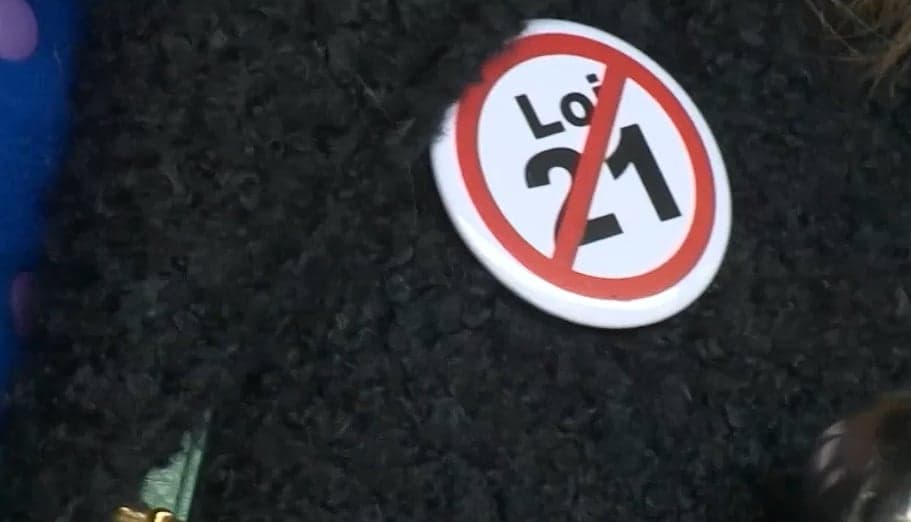
Supreme Court to Rule on Quebec's Controversial Bill 21 Secularism Law
National News
- 02
US Restricts Canada Defense Ties Amid Trade Tensions
National News
 03
House of Commons Passes 2026 Federal Budget Amid Fierce Opposition
National News
 04
Canada's Open Banking Framework Advances with FDX and OBSI Designations
National News
 05
Canadian Retail Sales Show Weakness, Raising Economic Concerns
National News
 06
Canada's S&P/TSX Composite Enters Correction Amid Tech Sell-Off and Commodity Slump
National News
- 07
Ford's Oakville Plant Secures Nearly $1 Billion in Joint Government Funding for Overhaul
National News
- 08
Ford Oakville Plant Gets $464.5 Million Boost for $5 Billion Overhaul
National News
- 09
Ottawa and Ontario Fund $250 Million Port Expansion in Sault Ste. Marie
National News
- 10
Ontario, Ottawa Launch $250M Great Lakes Port in Sault Ste. Marie
National News
 11
Environment Ministry Admits Political Directive Halted Coal Export Ban
National News
 12
Project Arma Dismantles Alberta-Saskatchewan Drug Trafficking Ring, 12 Charged
National News
 13
Regina Landlord Charged After Carbon Monoxide Death; 'Henry's Law' Enacted
National News
- 14
RCMP Dismantles Multi-Jurisdiction Theft Ring in Southern Alberta
National News
- 15
RBC Economics Warns Canada May Exceed Immigration Targets by 74% in 2027
National News
 16
Fatal Incident at Locked ER Highlights Rural Healthcare Crisis in British Columbia
National News
 17
Shenzhen Summit Sparks Western Alliance Fallout Over Great Power Dealings
World & Geopolitics
 18
EU-UK Summit Strengthens European Security, Rejects US Ukraine Aid Cut Demands
World & Geopolitics
 19
Russia Unleashes Massive Barrage on Ukraine, Targeting Infrastructure and Reviving Demands
World & Geopolitics
 20
Russian Missile Breaches NATO Airspace, Sparking Demands for Alliance Reinforcements
World & Geopolitics
- 21
Hormuz Tanker Strike Intensifies Gulf Standoff as Iran Challenges Blockade
World & Geopolitics
 22
Netanyahu Urges US to Authorize Joint Strikes on Iran Amid Gulf Tensions
World & Geopolitics
 23
Saudi Coalition Strikes Hodeidah as Houthis Retaliate Against Riyadh
World & Geopolitics
 24
Iraqi Forces Assert Control Over Jurf al-Sakhar, Challenging Kataib Hezbollah
World & Geopolitics
 25
WTO Warns of Record Surge in Global Trade Barriers Amidst Proliferating Protectionist Policies
World & Geopolitics
- 26
China Funds Expat Airlifts to Influence Taiwan Elections Amid Undersea Arms Buildup
World & Geopolitics
- 27
Finance Minister Champagne Travels to Gulf Region to Diversify Canadian Trade and Investment
World & Geopolitics
- 28
Canada and Ontario Invest $250 Million to Boost Port of Sault Ste. Marie, Fortify Supply Chains
World & Geopolitics
 29
Canada-US Trade Talks Hit New Low as Trump Accuses Ottawa of Becoming 'Emboldened'
World & Geopolitics
- 30
Canadian Retail Sales Stagnate, Signaling Consumer Fatigue and Potential Economic Contraction
World & Geopolitics
 31
COP31 Negotiations Stall as Fossil Fuel Language Omitted, Demands for Climate Action Rise
World & Geopolitics
 32
Toronto's King Street West Faces Multi-Year Infrastructure Overhaul and Transit Diversions
City News
 33
King Street West to Undergo Major Transit and Watermain Overhaul Until Late 2027
City News
 34
TTC Line 2 Shutdown and GO Rail Disruptions Intensify GTA Transit Congestion
City News
 35
Paul Ainslie Appointed TTC Board Chair Amid CEO Probe and Financial Challenges
City News
- 36
Mayor Chow Appoints Paul Ainslie as New TTC Chair Amidst Leadership Shake-up
City News
 37
Coyote Attacks Child in Toronto's Edwards Gardens, Sparking Public Safety Alert
City News
- 38
Toronto Police Dismantle Jewelry Theft Ring Targeting Elderly
City News
 39
Toronto Police Arrest Eight in Senior Distraction Theft Ring Bust
City News
- 40
Ontario Invests $32 Million in Mental Health Support for First Responders
City News
- 41
York Police Seek Suspect in Overnight Shooting at Occupied Newmarket Home
City News
- 42
Toronto and Ottawa Launch 92 Affordable Homes in Parkdale
City News
 43
GTA Housing Market Sees Slower Sales, Increased Buyer Leverage
City News
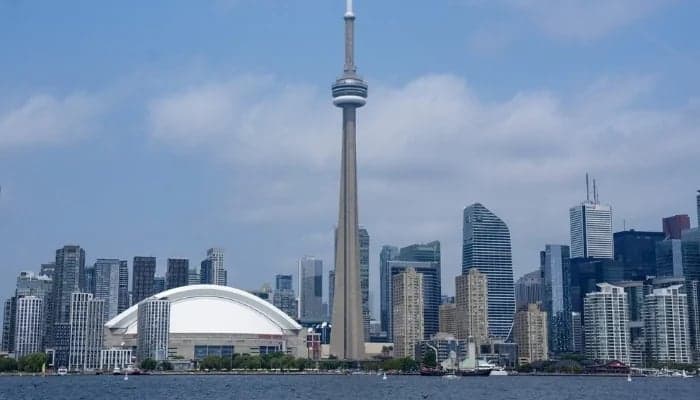 44
GTA Experiences Unseasonable Warmth Before Arctic Cold Front Arrives
City News
 45
Ford's Oakville Facility Begins Super Duty Truck Production After $5 Billion Retooling
City News
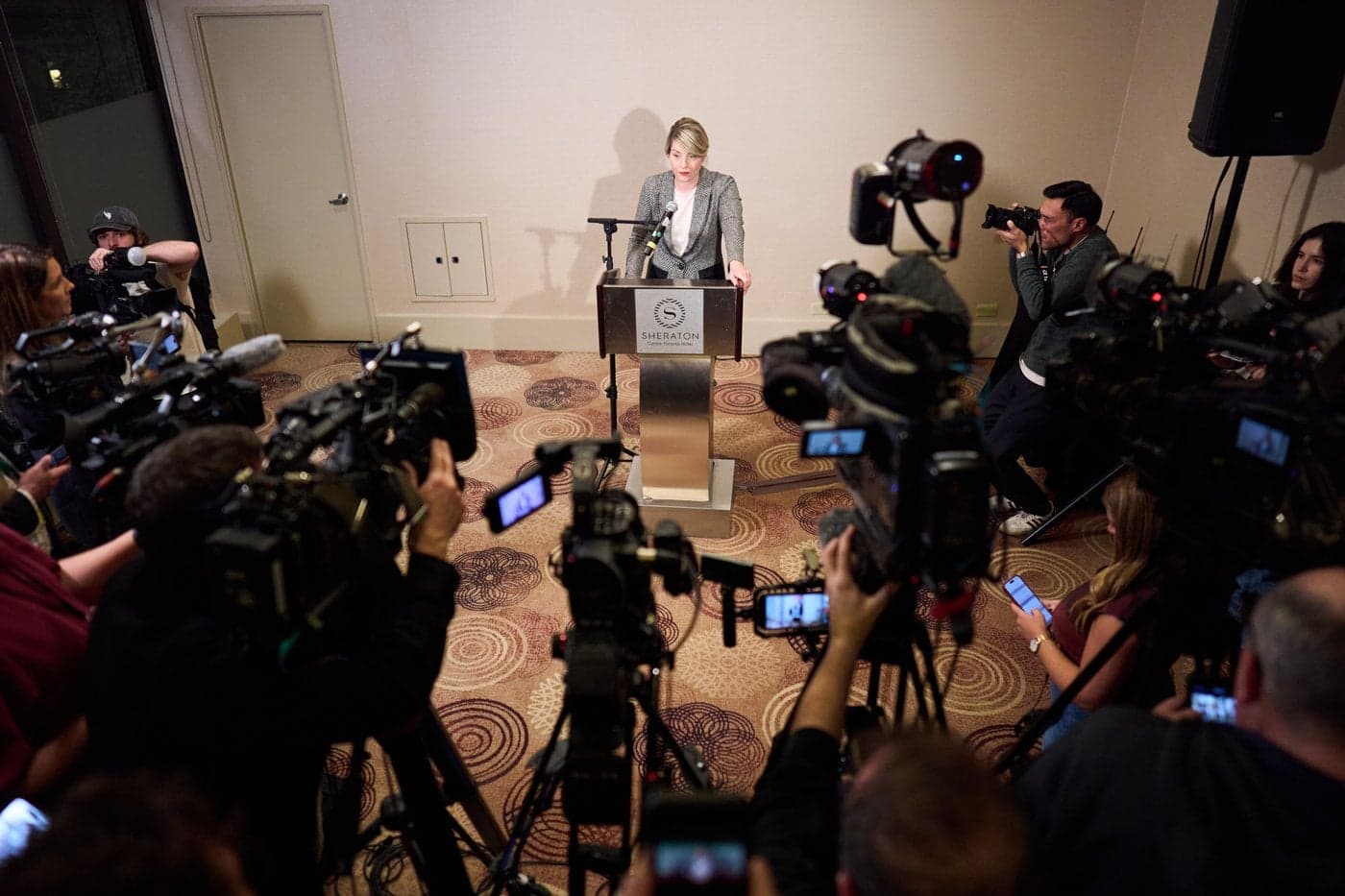 46
Stellantis Plant Sale Sparks Government Legal Threat Over Funding Clawbacks
City News
 47
Maple Leafs Coaching Under Fire After Eighth Straight Loss; McIlroy Consulted
Sports
 48
Maple Leafs Extend Losing Streak to Eight Games After Shootout Loss to Kings
Sports
 49
Maple Leafs Face Mounting Pressure After Collapse to Kings, NHL Fines Kempe
Sports
 50
Scottie Barnes Leads Raptors to Overtime Victory Amidst Trade Speculation
Sports
 51
Blue Jays Non-Tender Davis Schneider, Finalize Arbitration With Seven Players
Sports
See all 51 as a listHide the list
- Supreme Court to Rule on Quebec's Controversial Bill 21 Secularism Law
- US Restricts Canada Defense Ties Amid Trade Tensions
- House of Commons Passes 2026 Federal Budget Amid Fierce Opposition
- Canada's Open Banking Framework Advances with FDX and OBSI Designations
- Canadian Retail Sales Show Weakness, Raising Economic Concerns
- Canada's S&P/TSX Composite Enters Correction Amid Tech Sell-Off and Commodity Slump
- Ford's Oakville Plant Secures Nearly $1 Billion in Joint Government Funding for Overhaul
- Ford Oakville Plant Gets $464.5 Million Boost for $5 Billion Overhaul
- Ottawa and Ontario Fund $250 Million Port Expansion in Sault Ste. Marie
- Ontario, Ottawa Launch $250M Great Lakes Port in Sault Ste. Marie
- Environment Ministry Admits Political Directive Halted Coal Export Ban
- Project Arma Dismantles Alberta-Saskatchewan Drug Trafficking Ring, 12 Charged
- Regina Landlord Charged After Carbon Monoxide Death; 'Henry's Law' Enacted
- RCMP Dismantles Multi-Jurisdiction Theft Ring in Southern Alberta
- RBC Economics Warns Canada May Exceed Immigration Targets by 74% in 2027
- Fatal Incident at Locked ER Highlights Rural Healthcare Crisis in British Columbia
- Shenzhen Summit Sparks Western Alliance Fallout Over Great Power Dealings
- EU-UK Summit Strengthens European Security, Rejects US Ukraine Aid Cut Demands
- Russia Unleashes Massive Barrage on Ukraine, Targeting Infrastructure and Reviving Demands
- Russian Missile Breaches NATO Airspace, Sparking Demands for Alliance Reinforcements
- Hormuz Tanker Strike Intensifies Gulf Standoff as Iran Challenges Blockade
- Netanyahu Urges US to Authorize Joint Strikes on Iran Amid Gulf Tensions
- Saudi Coalition Strikes Hodeidah as Houthis Retaliate Against Riyadh
- Iraqi Forces Assert Control Over Jurf al-Sakhar, Challenging Kataib Hezbollah
- WTO Warns of Record Surge in Global Trade Barriers Amidst Proliferating Protectionist Policies
- China Funds Expat Airlifts to Influence Taiwan Elections Amid Undersea Arms Buildup
- Finance Minister Champagne Travels to Gulf Region to Diversify Canadian Trade and Investment
- Canada and Ontario Invest $250 Million to Boost Port of Sault Ste. Marie, Fortify Supply Chains
- Canada-US Trade Talks Hit New Low as Trump Accuses Ottawa of Becoming 'Emboldened'
- Canadian Retail Sales Stagnate, Signaling Consumer Fatigue and Potential Economic Contraction
- COP31 Negotiations Stall as Fossil Fuel Language Omitted, Demands for Climate Action Rise
- Toronto's King Street West Faces Multi-Year Infrastructure Overhaul and Transit Diversions
- King Street West to Undergo Major Transit and Watermain Overhaul Until Late 2027
- TTC Line 2 Shutdown and GO Rail Disruptions Intensify GTA Transit Congestion
- Paul Ainslie Appointed TTC Board Chair Amid CEO Probe and Financial Challenges
- Mayor Chow Appoints Paul Ainslie as New TTC Chair Amidst Leadership Shake-up
- Coyote Attacks Child in Toronto's Edwards Gardens, Sparking Public Safety Alert
- Toronto Police Dismantle Jewelry Theft Ring Targeting Elderly
- Toronto Police Arrest Eight in Senior Distraction Theft Ring Bust
- Ontario Invests $32 Million in Mental Health Support for First Responders
- York Police Seek Suspect in Overnight Shooting at Occupied Newmarket Home
- Toronto and Ottawa Launch 92 Affordable Homes in Parkdale
- GTA Housing Market Sees Slower Sales, Increased Buyer Leverage
- GTA Experiences Unseasonable Warmth Before Arctic Cold Front Arrives
- Ford's Oakville Facility Begins Super Duty Truck Production After $5 Billion Retooling
- Stellantis Plant Sale Sparks Government Legal Threat Over Funding Clawbacks
- Maple Leafs Coaching Under Fire After Eighth Straight Loss; McIlroy Consulted
- Maple Leafs Extend Losing Streak to Eight Games After Shootout Loss to Kings
- Maple Leafs Face Mounting Pressure After Collapse to Kings, NHL Fines Kempe
- Scottie Barnes Leads Raptors to Overtime Victory Amidst Trade Speculation
- Blue Jays Non-Tender Davis Schneider, Finalize Arbitration With Seven Players
Section 1 of 4
National News
16 stories · 8 min skim
National News
2 min read
Supreme Court to Rule on Quebec's Controversial Bill 21 Secularism Law
The Supreme Court of Canada will deliver its decision on Quebec's Bill 21, which prohibits public sector employees from wearing visible religious symbols. Enacted in 2019 and invoking the notwithstanding clause, the law has faced legal challenges from civil liberties groups. The ruling will set national precedent on the use of the notwithstanding clause and its impact on minority rights.
Read the full storyFold the full story1 min · 2 sources
The Supreme Court of Canada confirmed that it will hand down its long-awaited decision on Quebec's state secularism legislation, commonly known as Bill 21, on Friday, November 27[1][2]. The announcement by the registrar of the country's highest court marks the final legal chapter in a contentious, multi-year constitutional battle over civil liberties, religious freedoms, and the scope of provincial legislative sovereignty under the Canadian Charter of Rights and Freedoms[1][2].
Enacted in 2019, Bill 21 bars public-sector employees in positions of authority - including public school teachers, state prosecutors, and police officers - from wearing visible religious symbols such as hijabs, turbans, kippahs, and crucifixes while carrying out their official duties[2]. To shield the statute from anticipated constitutional invalidation under Section 2 of the Charter, the Quebec National Assembly invoked Section 33, known as the "notwithstanding clause," preemptively immunizing the statute against legal challenges asserting violations of fundamental freedoms and equality rights[2].
A coalition of civil liberties advocates and public organizations, including the Canadian Civil Liberties Association (CCLA), the National Council of Canadian Muslims (NCCM), and the English Montreal School Board, appealed earlier appellate rulings that upheld the law’s use of the clause[2]. The appellants argued that preemptive, blanket invocations of Section 33 inflict irreparable damage on minority rights and that courts retain the authority to review and declare laws unconstitutional even when the clause is used[2]. Conversely, the Quebec government argued that the notwithstanding clause provides absolute constitutional protection for provincial democratic choices, emphasizing that the secularism law reflects the collective will of the province[2].
The Supreme Court's ruling will establish binding national precedent on how and when Canadian legislatures can deploy the notwithstanding clause[2]. The impending decision carries major political sensitivity across Quebec, where the minority Parti Québécois government has pushed for even stricter cultural protections[2]. A ruling that constrains the use of Section 33 could trigger a serious constitutional clash between Quebec and the federal government, while a ruling upholding the broad application of the clause could prompt other provincial governments to utilize Section 33 more aggressively against Charter protections[2].
- Supreme Court of Canada
- Quebec
- Bill 21
National News
2 min read
US Restricts Canada Defense Ties Amid Trade Tensions
A classified Pentagon directive has imposed new restrictions on U.S.-Canada military cooperation, escalating a dispute over trade and political friction. The policy shift raises questions about how field interactions, defense planning, and joint exercises will be curtailed. Despite assurances that intelligence sharing and NORAD operations remain intact, analysts view the memo as a historic strain on the alliance.
Read the full storyFold the full story2 min · 7 sources
A classified memorandum issued by U.S. Defense Secretary Pete Hegseth has imposed new restrictions on bilateral military and defense cooperation between the United States and Canada, escalating a tense cross-border standoff driven by aggressive trade disputes and political friction[1][2]. News of the directive emerged following accounts from officials familiar with the classified guidance circulated inside the Pentagon[1][2]. One U.S. official characterized the policy shift as an unmistakable "slap in the face" to Ottawa, raising immediate operational questions regarding how field interactions, defense planning, joint training exercises, and bilateral defense initiatives will be curtailed[1][2][3].
The friction between Washington and Ottawa has grown increasingly volatile following President Donald Trump’s reelection, characterized by repeated threats of cross-border tariffs and public rhetoric suggesting Canada should be annexed as America’s 51st state[4][1]. Bilateral relations deteriorated further despite an Oval Office meeting where Canadian Prime Minister Mark Carney told Trump that Canada is "not for sale" and "won’t be for sale, ever"[1]. In the wake of new U.S. tariffs on Canadian industrial goods, including steel and aluminum, Ottawa responded with targeted retaliatory measures, prompting the White House and the Pentagon to adopt an increasingly confrontational posture[1][3].
In a public defense of the directive, chief Pentagon spokesman Sean Parnell stated that the Department of Defense is "taking steps to ensure its engagements with Canada advance tangible U.S. defense objectives and ultimately support a reinvigorated defense relationship"[2]. Parnell asserted that the Pentagon is prioritizing bilateral engagements that protect the homeland and the Western Hemisphere while enforcing Canada’s commitments to meet NATO defense-spending benchmarks[2]. Pentagon officials insisted, however, that the directive will not restrict intelligence sharing - such as through the Five Eyes alliance - nor will it impede core cooperation under the binational North American Aerospace Defense Command (NORAD) or multilateral NATO commitments[2][5].
Despite Washington's assurances that integrated aerospace defense and intelligence operations remain intact, defense analysts and Canadian national security observers view the memo as a historic strain on one of the world's closest military alliances[2][6]. Canadian military sources noted that operational contacts remain functionally intact in the immediate term, but defense procurement networks, joint operational drills, and military-to-military exchanges face uncertainty[3][7]. Hegseth’s directive underscores the deepening geopolitical fault lines dividing North America, transforming long-standing cross-border security cooperation into a coercive instrument of U.S. foreign and trade policy[2][3].
- Pete Hegseth
- United States
- Canada
National News
2 min read
House of Commons Passes 2026 Federal Budget Amid Fierce Opposition
The minority Liberal government has successfully passed the 2026 federal budget, securing billions in investments for industrial policy, housing, and social transfers. The passage follows weeks of heated debate, with the opposition criticizing the significant increase in spending and borrowing, arguing it fuels inflation. The government defended the budget, citing Canada's strong fiscal position and the necessity of investment.
Read the full storyFold the full story1 min · 5 sources
The minority Liberal government cleared a major legislative hurdle as the House of Commons voted to pass the 2026 federal budget[1]. Following the vote, Minister of Finance and National Revenue François-Philippe Champagne celebrated the passage of the government's economic agenda, raising his arms in triumph on the floor of the House[1]. The budget passage stabilizes the minority Parliament heading into the winter recess, formalizing billions of dollars in federal investments targeting industrial policy, housing development, and social transfers[2][1].
The passage caps weeks of acrimonious debate over Canada's fiscal trajectory[3][1]. Throughout committee hearings and Question Period, the Official Opposition hammered the government over its macroeconomic direction[3]. Conservative MP Kelly McCauley challenged the finance minister over the addition of $331 billion in new program spending and a quarter-trillion dollars in federal borrowing, arguing the expenditures fuel inflation and worsen the structural deficit[3]. Conservative MP Dane Lloyd also criticized targeted line-item reductions elsewhere in the budget, including cuts to federal cadet programs, accusing the government of prioritizing corporate subsidies over grassroots institutions[3].
Defending the spending blueprint, Champagne declared before a Senate committee that "confident countries invest," arguing that Canada boasts the lowest net debt-to-GDP ratio and the strongest overall fiscal position in the G7[2][1]. Champagne asserted that using fiscal buffers to protect income security, domestic supply chains, and green infrastructure is essential to shield Canadians from international economic shocks that remain outside domestic control[2]. He emphasized that the budget maintains the government’s core fiscal anchors while providing funding for major nation-building initiatives[2].
The budget's passage clears the way for complementary legislative measures, including the controversial Bill C-39, an act aimed at accelerating major industrial projects and regulatory approvals[3][4]. While business groups and trade unions largely supported the capital investments, the legislation drew condemnation from the Bloc Québécois and the New Democratic Party, who accused the government of rushing the bill through late-night committee hearings and eroding environmental and Indigenous consultation standards to expedite corporate developments[3][5][4].
- House of Commons
- Liberal government
- François-Philippe Champagne
National News
2 min read
Canada's Open Banking Framework Advances with FDX and OBSI Designations
Canada's open banking regime took a significant step forward with Finance Minister François-Philippe Champagne designating the Financial Data Exchange (FDX) as the technical standards body and the Ombudsman for Banking Services and Investments (OBSI) as the external complaints body. These designations under the Consumer-Driven Banking Act will standardize secure financial data sharing between consumers and third-party services.
Read the full storyFold the full story1 min · 4 sources
Finance Minister and Minister of National Revenue François-Philippe Champagne officially advanced Canada’s open banking regime on November 20, 2026, by issuing ministerial orders that designate two core governing institutions under the Consumer-Driven Banking Act[1]. The federal government named the Financial Data Exchange (FDX) as the official technical standards body for Canada and designated the Ombudsman for Banking Services and Investments (OBSI) as the framework's external complaints body, with both designations formally gazetted in Part I of the Canada Gazette[1][2].
The Consumer-Driven Banking Framework, enacted earlier this year, establishes a secure and standardized legal environment allowing Canadian consumers and small businesses to share their financial records with accredited third-party fintech services, lenders, and wealth management platforms[1][3]. Under the designation, FDX - a prominent North American non-profit technical standards organization comprising banks, credit unions, and technology providers - will define and maintain the common technical specifications, data definitions, and communication protocols for secure, interoperable data sharing without storing customer data directly[1][3].
To safeguard regulatory sovereignty, the government structured a unique governance model with FDX, establishing a dedicated "Canada Council"[1]. This council possesses the authority to make technical decisions independent of the broader FDX board, with voting membership strictly limited to Canadian residents and domestic businesses[1]. Canada retains permanent sovereign rights to use, update, and amend the open banking standard independently[1]. Concurrently, OBSI's appointment provides consumers with a clear, established pathway to file complaints and resolve disputes involving unauthorized transactions or data mishandling by accredited participants[1].
The move drew strong engagement from the domestic financial technology sector and banking leaders[4][3]. FDX CEO Kevin Feltes and FDX Canada Director Jason Chomik noted that Canadian institutions have collaborated within the organization since 2020, positioning the ecosystem for a structured transition away from unsecure screen-scraping practices toward standardized application programming interfaces (APIs)[4][3][3]. Fintech advocates consider this milestone a major structural shift toward dismantling the data dominance of Canada’s Big Six banks, lowering consumer banking costs, and accelerating financial innovation across Canada's financial system[1][4].
- François-Philippe Champagne
- Financial Data Exchange (FDX)
- Ombudsman for Banking Services and Investments (OBSI)
National News
2 min read
Canadian Retail Sales Show Weakness, Raising Economic Concerns
Statistics Canada reported a modest 0.8 percent rise in September retail sales, largely driven by higher gasoline prices, with core sales seeing only a 0.1 percent increase. A flash estimate for October projected a sharper 1.5 percent contraction, indicating a significant deceleration in consumer spending. This slowdown is attributed to high interest rates, debt servicing costs, and trade anxieties.
Read the full storyFold the full story1 min · 5 sources
On November 20, 2026, Statistics Canada released retail trade data for September showing a modest headline increase of 0.8 percent to $75.3 billion[1][2]. A closer examination of the underlying components revealed significant weakness across the consumer economy[1]. Growth was driven almost exclusively by rising energy prices at gasoline stations and fuel vendors, while core retail sales - which exclude automotive dealers and service stations - rose by a mere 0.1 percent during the month[1]. In volume terms, retail activity grew by only 0.1 percent[3].
The economic picture dimmed further with Statistics Canada's concurrent release of its flash estimate for October, which projected that retail sales contracted by 1.5 percent[1]. The abrupt reversal suggests that consumer momentum is decelerating sharply entering the fourth quarter[3]. Financial analysts pointed out that while retail trade demonstrated moderate growth in the first half of 2026, high interest rates, household debt servicing costs, and anxiety over U.S. trade relations are increasingly constraining discretionary household spending[1][3].
Market analysts voiced growing apprehension regarding the health of the broader economy[1]. Paul Harris, portfolio manager at Harris Douglas Asset Management, told BNN Bloomberg that the Canadian economy is showing substantial fragility, noting that the retail print reflected an economy that has "gotten much weaker than I think people were expecting"[1]. Sal Guatieri, senior economist at BMO Capital Markets, noted that retail growth slowed markedly in the second half of 2026, while Scotiabank economist Derek Holt cautioned that fourth-quarter consumer spending appears on track to contract at an annualized rate close to 2 percent[1][3].
The disappointing retail profile has immediate ramifications for monetary policy[4]. Following the Bank of Canada’s recent rate hike to 2.50 percent, undertaken to curb inflationary spillover from elevated energy prices, economists note that weak consumer data undercuts the case for further tightening[5][4]. Charles St-Arnaud, chief economist at Servus Credit Union, remarked that the probability of the central bank raising rates at its December meeting has dropped to around 50-50 and continues to diminish, with the Bank of Canada likely facing an annualized fourth-quarter GDP pace well below 1 percent[4].
- Statistics Canada
- Bank of Canada
- BMO Capital Markets
National News
2 min read
Canada's S&P/TSX Composite Enters Correction Amid Tech Sell-Off and Commodity Slump
Canada's main stock index, the S&P/TSX Composite, dropped into correction territory on November 20, 2026, declining 2.47 percent to close at 33,189.85. This marked the market's steepest weekly fall in over four years, exceeding 8 percent and pushing the index down about 10 percent from its August peak. The downturn was driven by global artificial intelligence trade unwinding and significant declines in commodity sectors like materials and gold, alongside concerns over U.S. Federal Reserve rate tightening.
Read the full storyFold the full story2 min · 8 sources
Canada’s benchmark stock index suffered a sharp decline on November 20, 2026, falling 838.88 points, or 2.47 percent, to close at 33,189.85[1][2]. The drop concluded the market’s steepest weekly contraction in more than four years - a slump exceeding 8 percent across the week - and pushed the S&P/TSX Composite down by roughly 10 percent from its late-August peak, formally crossing the threshold into a technical correction[3][4][5]. The Canadian dollar also saw downward pressure, trading at 69.81 cents U.S. at Friday's close[1].
The market rout was triggered by a combination of cross-border technology volatility and broad-based declines across cyclical commodity sectors[4][5]. A deepening global unwinding of artificial intelligence-related trades weighed heavily on both U.S. and Canadian markets, following governance upheaval at semiconductor leader Nvidia and trading pressures following Anthropic's record stock market debut[6][7][3]. The resulting risk-off sentiment hammered domestic technology leaders listed in Toronto[4]. Celestica dropped by as much as 17 percent during Friday's trading session, extending a 32 percent pullback since late August, while Shopify traded lower following a soft quarterly earnings showing that had missed analyst revenue expectations[4].
Simultaneously, commodity heavyweight sectors that had buttressed Canadian equities throughout the year sustained severe liquidations[4]. The materials sector has now contracted 32 percent since August, emerging as the worst-performing major group on the TSX[4]. Gold plummeted more than 9 percent over the week to settle around $3,625 per ounce, down roughly 35 percent from its January high above $5,400[6][3]. Copper dropped 15 percent across a three-week span as market forecasts for industrial and data center consumption softened[6]. Crude oil dropped to $83.21 per barrel, driven by lower geopolitical risk premiums and moderating U.S.-Iran friction[3][4].
Financial sector equities also felt the drag, with the National Bank of Canada dropping 2.66 percent during the session to trade at $197.27[8]. Economists and market strategists, including Douglas Porter of BMO Capital Markets and Derek Holt of Scotiabank, observed that hawkish rhetoric from the U.S. Federal Reserve - spurred by discussion among U.S. central bankers regarding potential late-year rate tightening - prompted flight-to-safety flows into sovereign debt[6][7][3]. Government bond yields retreated across both Canada and the U.S., while the confluence of softening domestic indicators and mounting trade tariff uncertainty compounded Bay Street's downward momentum[6][7][5].
- S&P/TSX Composite
- Nvidia
- Anthropic
National News
2 min read
Ford's Oakville Plant Secures Nearly $1 Billion in Joint Government Funding for Overhaul
The federal and Ontario governments are investing a combined $928.5 million to modernize Ford's Oakville Assembly Complex, supporting a nearly $5 billion overhaul. The funding will repurpose the plant to build F-Series Super Duty trucks and a new stamping facility, securing over 2,000 union jobs. This initiative aims to bolster Canada's automotive manufacturing capacity amid trade uncertainties.
Read the full storyFold the full story1 min · 3 sources
Federal Minister of Industry Mélanie Joly and Minister of Foreign Affairs Anita Anand joined Ontario Premier Doug Ford and provincial Economic Development Minister Vic Fedeli to announce a combined $928.5 million government investment into the Ford Motor Company of Canada[1][2]. Under the joint agreement, the federal government is providing $464.5 million through the Strategic Response Fund, matched by a $464 million commitment from the Government of Ontario[1]. The funding directly anchors Ford’s nearly $5 billion investment package to overhaul and modernize the Oakville Assembly Complex[1].
The retooling project will repurpose the sprawling facility to produce Ford’s flagship F-Series Super Duty trucks, including multi-energy and hybrid powertrain variants designed to support Canada’s broader industrial transition[1]. The investment also finances the construction of a new automotive stamping facility on-site to build large-scale automotive components domestically[1]. The project secures more than 2,000 unionized manufacturing jobs represented by Unifor, while supporting production capabilities designed to produce up to 100,000 commercial vehicles annually for both the domestic North American market and global export corridors[1].
The announcement represents a strategic recalibration for the Canadian automotive footprint[1]. Ford had previously delayed electric vehicle assembly plans at the site, raising significant anxieties about the long-term viability of the Oakville plant amidst persistent supply-chain volatility, cooling EV demand, and rising protectionist trade measures in the United States[1]. Lana Payne, National President of Unifor, and Ivan Boykin, President and CEO of Ford of Canada, appeared alongside ministers and the Premier to underscore that manufacturing heavy-duty and multi-energy trucks preserves vital high-wage industrial capacity in Ontario[1][2].
Government officials explicitly framed the package as an economic defense strategy amid ongoing tariff threats from the United States[3][1]. Minister Joly stressed that Canada is aggressively defending its domestic supply chain and manufacturing ecosystem, while Premier Ford emphasized that the provincial-federal alliance sends an unambiguous signal that Ontario will continue building vehicles and competing globally regardless of trade barriers erected south of the border[3][1][2].
- Ford Motor Company of Canada
- Oakville Assembly Complex
- Mélanie Joly
National News
2 min read
Ford Oakville Plant Gets $464.5 Million Boost for $5 Billion Overhaul
The Canadian federal government is investing $464.5 million into Ford's $5 billion modernization project at its Oakville Assembly Complex. This investment, part of the Strategic Response Fund, will help retool the plant to produce the Ford F-Series Super Duty trucks and construct a new stamping facility for large automotive components. The initiative aims to enhance Canada's manufacturing capabilities and secure jobs amidst rising trade friction.
Read the full storyFold the full story1 min · 4 sources
On November 20, 2026, the federal government unveiled a $464.5 million strategic investment to back Ford Motor Company of Canada’s nearly $5 billion modernization project at its Oakville Assembly Complex in Ontario[1]. The announcement was made directly at the Oakville site by Industry Minister and Minister responsible for Canada Economic Development for Quebec Regions Mélanie Joly, alongside Foreign Affairs Minister and Oakville East Member of Parliament Anita Anand[1]. The capital is deployed through Ottawa's Strategic Response Fund[1].
The capital injection directly supports the expansion and retooling of the historic Oakville plant to manufacture the Ford F-Series Super Duty truck lineup[1]. In addition to retooling the vehicle assembly line, the project encompasses the construction of a major new stamping plant designed to manufacture large-scale automotive components on domestic soil, expanding Canada’s component manufacturing capabilities[1]. While the initial manufacturing phase targets the high-margin Super Duty truck platform, the modernization agreement is structured to integrate with Canada’s broader industrial electric vehicle and decarbonization objectives[1].
This multi-million-dollar government backing arrives at a critical juncture for Canada’s manufacturing sector, which is navigating rising cross-border trade friction and heightened protectionist threats from Washington, including proposed tariffs on Canadian-built vehicles[2][3]. By securing large-scale production commitments and funding on-site component stamping, Ottawa is seeking to prevent production shifts to the United States and anchor thousands of well-paying assembly and engineering jobs in southern Ontario[1].
The partnership highlights Canada's defensive industrial policy, aimed at shielding key domestic industries from international supply chain shocks and policy instability abroad[1][4]. Automakers, union representatives, and provincial industry stakeholders have underscored that expanding the Oakville complex’s operational footprint into integrated parts stamping will enhance local supply chain integration, benefiting domestic tier-one and tier-two parts suppliers across the Windsor-to-Oshawa manufacturing corridor[1].
- Ford Motor Company
- Oakville Assembly Complex
- Mélanie Joly
National News
2 min read
Ottawa and Ontario Fund $250 Million Port Expansion in Sault Ste. Marie
The federal and Ontario governments are jointly investing $250 million to develop a major multimodal trade and shipping hub at the Port of Sault Ste. Marie. The project will create new marine berths, a rail transload yard, and industrial areas, aiming to triple the port's capacity. This expansion is designed to reduce shipping costs and congestion for regional industries.
Read the full storyFold the full story1 min · 2 sources
The federal government and the Province of Ontario announced a joint $250 million infrastructure investment to develop a major multimodal trade and shipping hub at the Port of Sault Ste. Marie[1][2]. Federal Minister of Transport and Government House Leader Steven MacKinnon unveiled a federal contribution of up to $125 million from the Trade Diversification Corridors Fund, matched by provincial commitments from the Government of Ontario alongside municipal and port partners[1][2]. The project will be managed in partnership with the Hamilton-Oshawa Port Authority[1][2].
The capital outlay will fund extensive construction on the north shore of the Saint Mary’s River, transforming approximately 243 acres of industrial and brownfield land into a modern logistics and marine cargo gateway[2]. The design includes two seaway-draft marine berths capable of handling Great Lakes freighter traffic, a rail transload yard to integrate marine cargo directly with continental rail lines, and dedicated industrial staging areas[2]. Transport Canada projects that the enhancements will triple the port’s capacity to more than 3.5 million metric tonnes annually by 2031, while generating an estimated 2,150 direct and 2,600 indirect jobs across Northern Ontario[2].
The terminal will serve as the first public, multi-user marine cargo port operating between Thunder Bay and southern Ontario, eliminating a critical logistics bottleneck along the Great Lakes marine highway[1]. By facilitating direct transshipment of natural resources, critical minerals, forestry products, and steel, the infrastructure is engineered to lower shipping costs for regional industries while reducing long-haul freight congestion along major highway routes[1][2].
Both federal and provincial leaders explicitly connected the port development to broader trade diversification efforts aimed at reducing economic exposure to U.S. markets[1]. Ontario Premier Doug Ford stated that with U.S. tariffs threatening Canadian jobs, building domestic corridors to access broader international markets is urgent[1]. Transport Minister MacKinnon echoed the sentiment, asserting that strengthening Great Lakes transit infrastructure ensures Canadian exporters maintain independent, reliable corridors to get domestic goods to global buyers[1][2].
- Port of Sault Ste. Marie
- Steven MacKinnon
- Doug Ford
National News
2 min read
Ontario, Ottawa Launch $250M Great Lakes Port in Sault Ste. Marie
Ontario and the federal government are jointly investing $250 million to build a new multimodal port in Sault Ste. Marie, a project managed by the Hamilton-Oshawa Port Authority (HOPA). The development aims to redevelop 98 hectares into a transportation terminal linking Great Lakes shipping with rail and highway networks. This initiative is designed to bolster northern Ontario's economic resilience and diversify export trade routes.
Read the full storyFold the full story1 min · 1 source
The Government of Ontario and the Government of Canada announced a joint $250 million investment on November 20, 2026, to construct a major new multimodal port facility in Sault Ste. Marie[1]. The project is structured as a trilateral partnership with the Hamilton-Oshawa Port Authority (HOPA)[1]. Ontario is delivering $125 million through a repayable financing loan, while the federal government is matching that with $125 million drawn from the Trade Diversification Corridors Fund[1].
The initiative involves redeveloping roughly 98 hectares of brownfield and industrial waterfront into a modern transportation terminal connecting Great Lakes commercial shipping directly with freight rail lines and provincial highway networks[1]. The port design is tailored to handle bulk, breakbulk, and specialized cargo, emphasizing the procurement of Canadian-produced steel, lumber, and aggregate throughout construction[1]. HOPA, which already manages commercial maritime assets across Hamilton, Oshawa, and the Niagara region, will oversee the site’s development and operational integration[1].
The port development is aimed at diversifying Canada’s export trade corridors away from reliance on U.S. border crossings[1]. Speaking at the announcement, Ontario Premier Doug Ford cited persistent trade tensions and tariff risks from the United States, stressing that developing alternative marine logistics hubs through the St. Lawrence Seaway is vital for northern Ontario’s economic resilience[1]. The gateway is designed to service regional heavy industries, including steel manufacturing, forestry, and mineral extraction projects linked to northern Ontario’s Ring of Fire critical minerals belt[1].
Provincial economic impact projections indicate the multimodal port will generate and support 2,150 direct jobs alongside 2,120 indirect positions annually across Ontario[1]. Business leaders in the Algoma region and northern mining advocates commended the move, emphasizing that the facility will lower outbound freight costs for natural resource producers, open access to European and global maritime shipping routes, and insulate northern Ontario manufacturers from cross-border overland transportation bottlenecks[1].
- Government of Ontario
- Government of Canada
- Hamilton-Oshawa Port Authority (HOPA)
National News
2 min read
Environment Ministry Admits Political Directive Halted Coal Export Ban
Environment and Climate Change Canada officials confirmed that the decision to abandon a federal thermal coal export ban was a direct political directive. Civil servants were verbally instructed to cease work on the ban, which had been in development for three years. This revelation follows an audit that found the project was quietly shelved after industry lobbying without formal documentation.
Read the full storyFold the full story1 min · 3 sources
Senior officials from Environment and Climate Change Canada (ECCC) confirmed to members of Parliament that the decision to abandon a long-standing federal promise to ban thermal coal exports came directly from the "political level," rather than from bureaucratic or environmental recommendations[1]. Testifying before the House of Commons Standing Committee on Environment, Megan Nichols, Assistant Deputy Minister of ECCC’s Environmental Protection Branch, revealed that civil servants were verbally instructed to cease all work on the ban and reallocate resources elsewhere[1].
The testimony follows an audit by Canada’s Commissioner of the Environment and Sustainable Development, Jerry DeMarco, which revealed that after three years of departmental work to establish enforcement mechanisms for a coal export ban, the project abruptly halted in late 2024 following extensive lobbying by the coal industry[2]. DeMarco’s audit highlighted that the government quietly shelved the commitment without formally notifying the public, publishing a regulatory explanation, or documenting who authorized the stoppage[2][1].
When pressed by opposition MPs to explain why no paper trail existed regarding the decision, Nichols explained that the order was communicated verbally to her through the deputy minister, who had received the direction directly from political leadership[1]. "I don’t know who it came from at that point," Nichols told the committee, noting that the department had submitted extensive economic analysis to ministers before being told to step down the initiative[1]. That analysis had examined whether an export halt from Canada would meaningfully cut global carbon emissions or merely divert overseas purchasers to alternative international coal suppliers[1].
The revelations prompted outrage from environmental advocacy organizations and opposition parties[3]. Green Party Leader Elizabeth May, along with NDP and Bloc Québécois members, characterized the verbal directive as an abdication of Canada’s climate commitments under the Paris Agreement and an example of corporate lobbying overriding published federal policy[3]. The department indicated that an official response clarifying the political decision will be formally tabled in Parliament, though the government faces mounting calls to reinstate the ban before the next legislative session[1].
- Environment and Climate Change Canada
- Megan Nichols
- Jerry DeMarco
National News
2 min read
Project Arma Dismantles Alberta-Saskatchewan Drug Trafficking Ring, 12 Charged
A joint police operation, Project Arma, has dismantled a drug trafficking network spanning Alberta and Saskatchewan, leading to charges against 12 individuals. The year-long investigation, involving the Regina and Edmonton Police Services, targeted a syndicate involved in distributing illicit narcotics and firearms across provincial borders. Seizures included cocaine, weapons, cash, and vehicles.
Read the full storyFold the full story1 min · 3 sources
The Regina Police Service announced that a sweeping, year-long interprovincial operation dubbed "Project Arma" has resulted in criminal charges against 12 individuals accused of orchestrating an extensive illegal distribution syndicate linking Alberta suppliers with illicit drug markets in Saskatchewan[1]. The complex investigation was conducted by the Regina Police Service Crime Reduction Team (CRT) in direct operational collaboration with the Edmonton Police Service, focusing on a multi-jurisdictional network responsible for moving illicit narcotics and prohibited weapons across provincial boundaries[1].
Project Arma commenced in late 2025 after intelligence analysts identified a structured criminal hierarchy operating in Regina with strong supply lines running from urban centers in Alberta[1]. Following months of synchronized surveillance and evidence gathering, police executed a wave of targeted vehicle stops and residential search warrants in Saskatchewan and Alberta[1]. The operation culminated in the seizure of bulk quantities of cocaine, multiple firearms and corresponding ammunition, cash suspected to be proceeds of crime, and several motor vehicles deemed instrumentalities of criminal offenses[1].
Law enforcement authorities laid a wide spectrum of indictable offenses against the accused, spanning participation in a criminal organization, trafficking of scheduled substances, conspiracy to commit an indictable offense, weapons possession, and possession of proceeds of crime over $5,000[2][1]. Key figures named in the charges include 20-year-old Asif Ullah of Regina and 19-year-old Abdirazak Kadir of Red Deer, Alberta, alongside a cadre of associates across both provinces[1]. Police noted that several of the individuals charged were already bound by conditional release orders and court-ordered undertakings, reflecting persistent compliance violations among organized distribution cells[1].
The dismantling of this interprovincial corridor underscores the growing reliance on joint intelligence teams among Western Canadian police agencies to counteract cross-border organized crime[3][1]. Police officials noted that street-level violence, gang intimidation, and the unregulated trafficking of stimulants and synthetic opioids are increasingly managed by decentralized criminal networks operating out of major metropolitan hubs in one province while targeting mid-sized regional centers in another[1]. Project Arma represents a significant operational victory for regional crime reduction teams seeking to suppress gang presence and weapon circulation in the Prairie provinces[1].
- Regina Police Service
- Edmonton Police Service
- Project Arma
National News
2 min read
Regina Landlord Charged After Carbon Monoxide Death; 'Henry's Law' Enacted
D.R. Anderson Holdings Inc., a Regina landlord, faces charges under fire safety codes following the carbon monoxide death of an 11-year-old boy. The incident, caused by a malfunctioning boiler, led to a lethal CO buildup. Tenants had reported issues prior to the tragedy. The boy's parents have filed a civil suit, and the province has passed 'Henry's Law' mandating CO detectors.
Read the full storyFold the full story2 min · 5 sources
Municipal authorities in the City of Regina confirmed the initiation of formal regulatory charges against corporate landlord D.R. Anderson Holdings Inc. following a catastrophic carbon monoxide leak that claimed the life of an 11-year-old child[1][2]. The corporate entity, which owns the Metro 1827 apartment complex in downtown Regina, faces multiple counts of violating provincial fire safety legislation and uniform building and accessibility standards[3][4]. The case has been placed directly onto the bylaw court docket, with an initial hearing scheduled for December 9[1][2].
The charges stem from an incident on December 19, 2025, when a malfunctioning and deteriorating boiler unit experienced delayed ignition and venting failure, triggering a lethal buildup of odorless carbon monoxide throughout the multi-family building[1][5]. The toxic fumes claimed the life of 11-year-old Henry Losco in his family's apartment[1][2]. Court documents and investigative filings reveal that in the hours prior to the boy’s death, other tenants reported alarming carbon monoxide readings; however, maintenance personnel reportedly advised residents to simply open their windows or dismantled detectors rather than executing an immediate emergency evacuation of the complex[2].
In parallel with the regulatory prosecution, Henry’s parents, Sergio Losco and Marina Hills, have initiated a substantial civil negligence lawsuit targeting D.R. Anderson Holdings Inc., property management firm Skyward Living, and equipment manufacturer Ariston Canada Inc.[2][5]. The lawsuit alleges gross corporate negligence, punitive damages, and severe psychological distress resulting from the preventable incident[2]. The tragedy has had a major legislative ripple effect, prompting the provincial government to pass "Henry’s Law," which enacted strict requirements making active carbon monoxide detection devices mandatory inside every individual residential suite across all multi-unit buildings in Saskatchewan, supported by corporate fines reaching up to $200,000[5].
The filing of regulatory charges marks a pivotal juncture in holding corporate residential property owners legally accountable for building safety failures[3][1]. Housing advocates and tenant defense groups have pointed to the Regina case as evidence of systemic enforcement gaps in aging residential rental infrastructure across the country[5]. The regulatory prosecution will test municipal enforcement powers in penalizing landlord negligence, while serving as a legal benchmark for ongoing residential property standard overhauls across Canada[1][5].
- D.R. Anderson Holdings Inc.
- Regina
- Skyward Living
National News
2 min read
RCMP Dismantles Multi-Jurisdiction Theft Ring in Southern Alberta
The RCMP has charged Dalton Winnipeg-Darling, 27, in connection with a prolific theft ring that impacted six jurisdictions across southern Alberta. The suspect is accused of numerous property crimes, including vehicle thefts, break-and-enters, and financial fraud. The arrest followed a tactical operation while the accused was in possession of a stolen vehicle.
Read the full storyFold the full story1 min · 2 sources
The Royal Canadian Mounted Police announced charges against 27-year-old Dalton Winnipeg-Darling of Strathmore, Alberta, putting an end to a prolific, multi-community crime spree that impacted six municipal jurisdictions across southern Alberta[1]. The suspect is accused of orchestrating an extensive wave of property theft, motor vehicle thefts, commercial and residential break-and-enters, and fraudulent financial transactions between October 15 and November 4[1]. The charges followed an arrest executed by tactical officers while the accused was operating a stolen vehicle[1].
Because the string of offenses crossed multiple jurisdictional borders - including offenses in Calgary, Airdrie, Chestermere, Okotoks, Claresholm, and Coaldale - local detachments enlisted the Southern Alberta District Crime Reduction Unit (SADCRU)[1]. SADCRU is a specialized intelligence-led policing division formed specifically to monitor, trace, and dismantle networks involving habitual and prolific property offenders whose activities overwhelm individual municipal police forces[1]. Through crime data mapping, behavioral analysis, and surveillance operations, investigators linked distinct regional offenses to a coordinated operational pattern[1].
RCMP representatives emphasized the disproportionate community harm generated by individual repeat offenders[1]. SADCRU Constable Bethany Simpson noted that a remarkably small group of prolific criminals is responsible for an inordinate percentage of structural crime, economic loss, and property destruction across southern Alberta’s rural-urban corridors[1]. In addition to vehicular and residential break-ins, the suspect allegedly used stolen payment cards to defraud local merchants before asset recovery teams could trace the illicit transactions[1].
The arrest has reignited regional discussions concerning repeat offending, bail management, and property crime prevention within Alberta’s justice framework[1][2]. Municipal councils and business owners in commuter towns outside Calgary have expressed growing alarm over cross-jurisdictional theft syndicates exploiting geographic gaps between municipal police services and rural RCMP detachments[1]. The deployment of specialized crime reduction units like SADCRU is increasingly viewed by provincial law enforcement authorities as an essential tool to contain mobile crime rings and alleviate pressure on front-line regional detachments[1].
- RCMP
- Dalton Winnipeg-Darling
- Southern Alberta District Crime Reduction Unit (SADCRU)
National News
2 min read
RBC Economics Warns Canada May Exceed Immigration Targets by 74% in 2027
RBC Economics projects Canada could admit up to 662,000 permanent residents in 2027, significantly surpassing the federal target of 380,000. This discrepancy arises from administrative streams and transition programs that operate outside headline immigration caps. The findings highlight a tension between domestic labor needs and concerns over housing and cost of living pressures.
Read the full storyFold the full story2 min · 9 sources
A detailed economic analysis released by RBC Economics indicates that Canada could admit as many as 662,000 permanent residents in 2027[1]. This figure stands in sharp contrast to the federal government’s official immigration target of 380,000, presenting a potential 74 percent overshoot[1]. The estimate, authored by financial and policy analysts scrutinizing federal projections, warns that while Ottawa has publicly committed to stabilizing population growth and cooling pressure on social infrastructure, an array of parallel administrative streams and transition programs could dramatically increase final intake numbers[1][2].
The discrepancy stems from consecutive federal immigration level plans that maintain formal headline caps while simultaneously introducing off-target adjustments, regional exemptions, and specialized pathways[1]. Key mechanisms driving the projected surge include policy tracks designed to transition existing temporary foreign workers and international student visa holders into permanent residency without drawing directly from headline economic intake caps[1]. The findings come shortly after Immigration, Refugees and Citizenship Canada (IRCC) unveiled the parameters for its multi-year levels plan, which aimed to hold baseline permanent admissions steady at 380,000 and cap temporary resident arrivals at 370,000 annually[3][2].
The report has fueled an immediate debate among economists, immigration lawyers, and business leaders regarding government transparency and infrastructure capacity[1]. Prominent Canadian immigration legal analysts, including Colin R. Singer, noted that the disconnect between stated headline targets and actual operational mechanisms creates major forecasting blind spots for municipalities and service providers[1]. Critics emphasize that regional planners rely on federal baseline figures to project capital investments for public transit, housing developments, school enrollments, and municipal utilities, all of which risk underfunding if real admissions surpass targets by hundreds of thousands[1][4].
Nationally, the findings highlight the ongoing structural bind confronting Canadian policymakers. On one side, domestic business groups and rural communities continue to report acute labor shortages in vital sectors - such as primary healthcare, elder care, and the skilled trades - and actively lobby Ottawa for dedicated immigration pathways[5][6]. On the other side, heightened public scrutiny over rental shortages and the broader cost of living has forced the federal cabinet to market strict caps to voters[7][8]. If RBC’s projections hold true, Canada’s total population trajectory could accelerate beyond planned thresholds, putting sustained pressure on provincial and territorial governments to absorb new arrivals into already strained public systems[9][1].
- RBC Economics
- Canada
- Immigration, Refugees and Citizenship Canada (IRCC)
National News
2 min read
Fatal Incident at Locked ER Highlights Rural Healthcare Crisis in British Columbia
A patient died outside the locked emergency room of Port Hardy Hospital due to its restricted daytime operating hours, a consequence of severe staffing shortages. Island Health is investigating the incident, which has intensified calls for immediate government intervention. The community faces significant risks due to the lack of overnight emergency care, forcing critical patients to endure long waits for transfers.
Read the full storyFold the full story2 min · 7 sources
The death of a patient on the grounds of Port Hardy Hospital on northern Vancouver Island has triggered widespread calls for emergency intervention across British Columbia's rural healthcare network[1][1]. The incident occurred during overnight hours when the hospital's emergency department doors were locked due to an ongoing, mandatory 5:00 p.m. daily closure policy[1]. The regional health authority, Island Health, confirmed that it has launched an investigation in tandem with BC Emergency Health Services (BCEHS) to examine the timeline of the emergency response and how the individual came to die outside the shuttered facility[1][1].
The tragedy has focused national attention on the chronic staffing shortages that have plagued Port Hardy and numerous remote Canadian communities for years[1][2]. Due to severe shortages of emergency-trained physicians and registered nurses, the Port Hardy emergency department has been restricted to daytime operating hours between 7:00 a.m. and 5:00 p.m., leaving a vast northern geographic area without immediate overnight emergency trauma coverage[3][1]. When life-threatening incidents occur outside these hours, residents are forced to wait for long-distance ambulance transfers or emergency airlift services to facilities tens or hundreds of kilometers away - routes that are frequently impeded by severe coastal weather conditions[4][5][1].
Dr. Alex Nataros, a local physician and founder of the North Island Community Health Centre who has long campaigned for the restoration of continuous emergency services, issued an urgent plea to the provincial government to mandate 24/7 operations[1][1]. Dr. Nataros stressed that elderly residents, Indigenous populations, and individuals with complex chronic health conditions are living in constant anxiety as 5:00 p.m. approaches each day[1][1]. The crisis has exposed bitter friction between front-line rural practitioners and regional health administrators over physician retention, locum coverage incentives, and institutional management[1].
The Port Hardy incident mirrors severe rural healthcare fragility documented across Canada, from the interior of British Columbia to rural Ontario and Atlantic communities[2]. Despite healthcare expenditure across the country hitting record highs - surpassing $10,000 per capita according to the Canadian Institute for Health Information (CIHI) - structural delivery deficits remain rampant[6]. The inability of public health networks to ensure baseline emergency room availability in remote regions has amplified calls from medical organizations for a national rural health workforce strategy that can guarantee minimum emergency care standards regardless of postal code[7][1].
- Port Hardy Hospital
- Island Health
- BC Emergency Health Services (BCEHS)
Section 2 of 4
World & Geopolitics
15 stories · 8 min skim
World & Geopolitics
2 min read
Shenzhen Summit Sparks Western Alliance Fallout Over Great Power Dealings
A trilateral summit in Shenzhen involving U.S. President Donald Trump, Chinese President Xi Jinping, and Russian President Vladimir Putin has caused significant diplomatic fallout among Western allies. The summit produced a declaration on strategic stability but lacked concrete resolutions on ongoing conflicts and trade. Details of the closed-door talks have alarmed European leaders and Indo-Pacific partners, who fear potential U.S. concessions without their participation.
Read the full storyFold the full story2 min · 9 sources
Diplomatic shockwaves reverberated across European capitals and Indo-Pacific partner governments in the wake of the historic trilateral summit between U.S. President Donald Trump, Chinese President Xi Jinping, and Russian President Vladimir Putin held on the margins of the Asia-Pacific Economic Cooperation (APEC) conference in Shenzhen, China[1][2]. The 70-minute, closed-door summit at Kylin Villa produced a broad four-point document titled the "Declaration Toward Peace," which formally committed the three nuclear superpowers to strategic stability and reiterated the historic doctrine that nuclear conflict "cannot be won and must never be fought"[3][2][4]. Despite the rhetoric, the joint text omitted concrete resolutions concerning the ongoing wars in Ukraine and the Middle East, while failing to extend the bilateral U.S.-China trade truce set to expire in January[3][4].
The primary geopolitical impact materialized in the immediate aftermath on November 20 and 21, as details of great-power backchannel talks triggered alarm among traditional U.S. allies[1][5]. European leaders convening an emergency session in Berlin expressed dismay over what they characterized as an impending "Yalta 2.0" scenario, fearing that Washington might negotiate a settlement to redraw European security architectures and freeze the conflict in Ukraine without direct European or Ukrainian participation[1][5][6]. British Prime Minister Andy Burnham and high-level EU diplomats raised urgent concerns regarding Trump’s personal overtures to Putin and Xi, warning that any separate great-power pact undermines the multilateral democratic framework that has stabilized the continent since 1945[7][6].
The fallout was equally pronounced across East Asia[1][8]. Defense officials in Taipei and Tokyo closely scrutinized the proceedings for any signal that Washington's defense commitments or arms sales in the Indo-Pacific could be leveraged as bargaining chips in exchange for Chinese cooperation on global trade or Russian concessions in Eastern Europe[8]. Strategic analysts at the Center for Strategic and International Studies (CSIS) and the Brookings Institution highlighted that the visual spectacle of Trump conferring with America’s two chief authoritarian rivals delivered major domestic and international propaganda victories to Beijing and Moscow, projecting a tripartite concert of nations that sidelines the broader NATO and Indo-Pacific alliance structures[1][7][4]. In Washington, senior congressional leaders from both parties voiced severe skepticism over the opaque declarations, pledging intensified oversight as U.S. envoys continue shuttling between Moscow, Kyiv, and European capitals[5][9].
- Donald Trump
- Xi Jinping
- Vladimir Putin
World & Geopolitics
2 min read
EU-UK Summit Strengthens European Security, Rejects US Ukraine Aid Cut Demands
The second EU-UK Summit in Brussels solidified bilateral defense, supply chain, and security cooperation, marking a move toward integrated strategic partnership. European leaders swiftly rejected a US proposal to halt aid to Ukraine, emphasizing continued support as essential for peace negotiations. This summit reinforces Europe's drive for strategic autonomy and independent deterrence.
Read the full storyFold the full story2 min · 7 sources
On November 20, 2026, European Union and British leaders concluded the second formal EU-UK Summit in Brussels, signing a landmark Joint Statement (Council document 16174/26) that significantly consolidates bilateral defense, critical supply chain, and security cooperation[1]. Convened under the Article 776 review mechanism of the Trade and Cooperation Agreement (TCA), the summit marked a decisive pivot away from years of post-Brexit friction toward an integrated strategic partnership[1]. Facing shared structural and geopolitical threats, Brussels and London committed to formal coordination across military mobility, defense procurement, sanctions enforcement, and critical mineral resilience[1][2].
The display of European unity was hastened by external diplomatic shockwaves[3][4]. Just prior to the Brussels summit, President Donald Trump held an unprecedented trilateral meeting with Chinese President Xi Jinping and Russian President Vladimir Putin on the sidelines of the APEC Summit in Shenzhen, where the three powers issued a broad declaration addressing global stability that bypassed European institutions entirely and avoided substantive commitments on Ukraine[5][3][4]. Flying back to Washington aboard Air Force One on November 20, Trump held a teleconference with European leaders assembled in Berlin, urging them to halt financial and military assistance to Kyiv and claiming that cutting Western funding would save billions and induce Moscow to make peace[4].
European leaders swiftly rejected the White House’s overture[4]. German Chancellor Friedrich Merz and Polish Prime Minister Donald Tusk emphasized that European support for Kyiv remains non-negotiable, with Tusk stating that Trump’s belief in Moscow's goodwill is unsupported by battlefield facts[4]. Rebuffing the U.S. proposal, European officials insisted that sustaining Ukraine's defense is essential to ensuring that any eventual ceasefire talks occur from a position of strength[4][6]. This strategic alignment between the UK, Germany, France, and Poland highlights a growing determination within Europe to build autonomous security deterrence capable of functioning independently of sudden swings in American foreign policy[1][3][4].
This drive toward strategic independence was reinforced in Frankfurt on November 20 by European Central Bank President Christine Lagarde during her keynote address at the 36th Frankfurt European Banking Congress[7]. In her final address to the congress as ECB President, Lagarde warned that Europe can no longer rely on external economic dependencies, highlighting vulnerabilities in European payments where international card schemes control over 60% of transactions and 14 of the 21 euro-area nations lack a sovereign domestic card processing architecture[7]. Between the launch of the CSIS Commission on Future Transatlantic Relations in Washington and the consolidation of security ties in Brussels, November 20 crystallized an assertive European effort to harden its economic, logistical, and defense structures against external coercion and multipolar realignment[1][2].
- European Union
- United Kingdom
- Brussels
World & Geopolitics
2 min read
Russia Unleashes Massive Barrage on Ukraine, Targeting Infrastructure and Reviving Demands
Russian forces launched their largest missile and drone strike of the month against Ukraine, severely damaging the national electrical grid and critical transit routes in Kyiv. The multi-wave assault included numerous missiles and drones, with ballistic missiles proving particularly difficult for Ukrainian air defenses to intercept. The attack on Kyiv specifically damaged three major bridges over the Dnipro River, forcing temporary closures.
Read the full storyFold the full story2 min · 3 sources
Russian military forces launched their largest coordinated missile and drone strike package of the month against Ukraine overnight into November 20, 2026, delivering extensive damage to Ukraine’s national electrical grid and directly targeting critical transit arteries in the capital city[1]. According to statements from Ukrainian President Volodymyr Zelenskyy and the Ukrainian Air Force Command, the multi-wave assault comprised 27 ballistic missiles, 84 cruise missiles, and 404 long-range Shahed and Gerbera-type strike drones[1]. The Russian Aerospace Forces deliberately staggered missile groups at 20- to 30-minute intervals to compromise emergency response measures, killing at least eight people and wounding dozens across 15 oblasts[1]. While Ukrainian air defense units intercepted roughly 94 percent of incoming cruise missiles and one-way attack drones, only approximately 11 percent of the high-velocity ballistic missiles were downed, allowing ordnance to strike electrical transmission lines, logistics nodes, and defense-industrial facilities[1].
The attack marked a notable tactical escalation in Kyiv, where strikes directly damaged three critical crossings over the Dnipro River: the Podilsko-Voskresensky, Darnytskyi, and Southern bridges[1]. Kyiv Mayor Vitaliy Klitschko confirmed that municipal authorities were forced to temporarily restrict transit across all three structures while engineering corps inspected structural integrity and cleared unexploded ordnance[1]. Russian President Vladimir Putin had signaled on November 19 that Moscow would impose "painful" retaliatory measures following recent Ukrainian precision strikes against logistics assets along the Kerch Strait[1]. However, Western military analysts note that Russian forces have systematically expanded interdiction strikes against major Dnipro river bridges since early October to sever Ukrainian military transit routes and break civilian resilience ahead of freezing winter temperatures[1]. On November 21, Ukraine’s General Staff reported sustaining 203 distinct ground engagements along the front lines over the preceding 24 hours, alongside severe enemy attrition, highlighting the sheer intensity of the simultaneous ground and air campaigns[2].
This military barrage coincided directly with diplomatic friction as Russian negotiators formally revived their maximalist December 2021 prewar demands during U.S.-facilitated peace channels[3]. In talks mediated in Abu Dhabi and Moscow by U.S. special envoys Steve Witkoff and Jared Kushner, Russian officials insisted that any durable ceasefire framework must involve an overhaul of European collective security architecture and legally binding guarantees forbidding NATO expansion to Ukraine, Georgia, or any former Soviet republic[3]. The Kremlin aggressively promoted this position following the high-profile trilateral discussions between Vladimir Putin, Donald Trump, and Xi Jinping in Shenzhen, China[3]. European leaders and Ukrainian officials strongly pushed back against the initiative[3]; President Zelenskyy emphasized that Ukrainian sovereignty cannot be traded for a hollow truce, while European Union and NATO officials underscored that collective European defense mechanisms cannot be subordinated to Moscow's sphere-of-influence demands[3].
- Russia
- Ukraine
- Kyiv
World & Geopolitics
3 min read
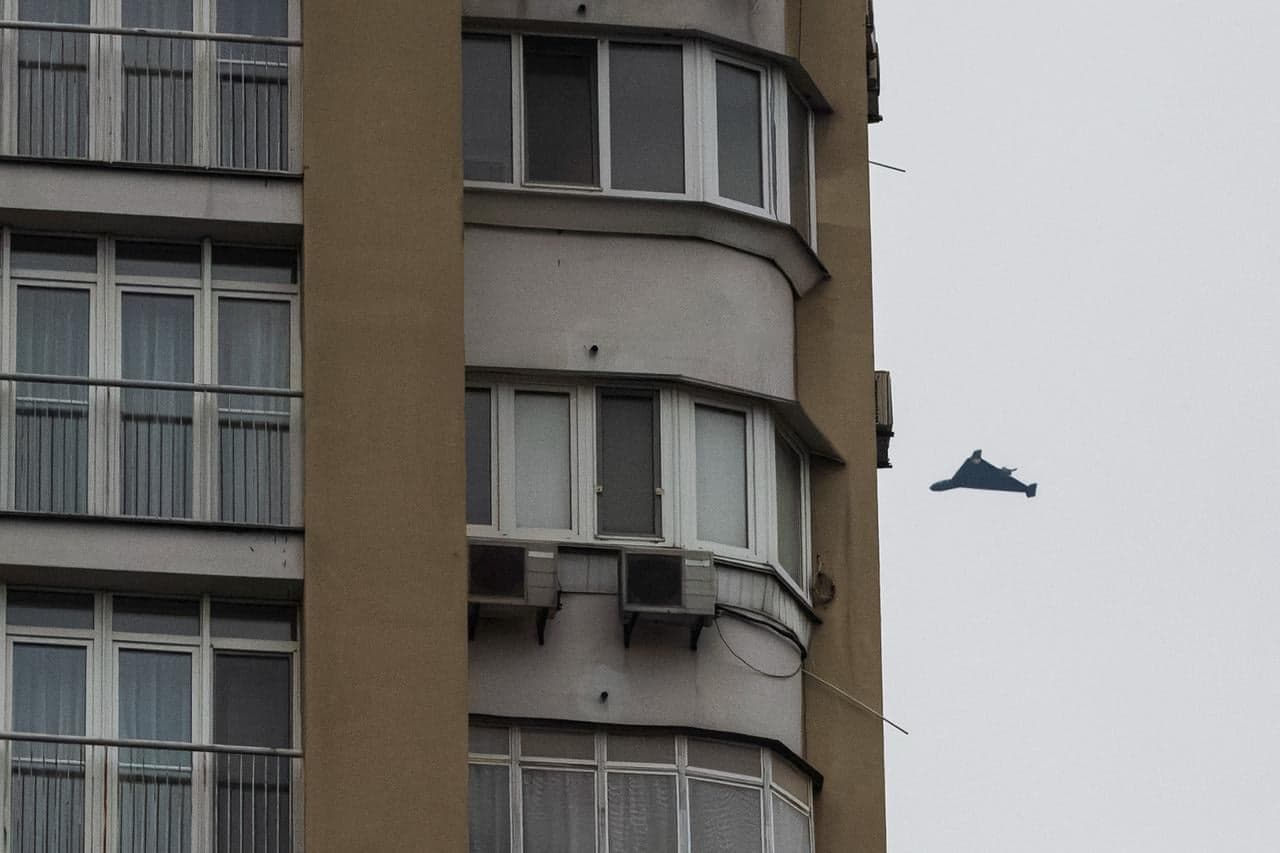
Russian Missile Breaches NATO Airspace, Sparking Demands for Alliance Reinforcements
A Russian Kh-101 cruise missile penetrated Polish airspace and crashed near Nowy Lipowiec, approximately 50 kilometers inside NATO territory. The incident occurred during a large-scale Russian aerial bombardment of Ukraine. Polish authorities identified two additional impact sites and recovered debris from a suspected drone. The breach prompted Polish leaders to demand reinforcements for NATO's eastern flank.
Read the full storyFold the full story2 min · 9 sources
On November 20, 2026, the ongoing war in Eastern Europe crossed physical borders into NATO territory when three Russian aerial weapons breached Polish airspace and crashed in southeastern Poland[1][2]. The incursion occurred during the largest Russian aerial bombardment of Ukraine in November 2026, which saw Russian forces launch a massive coordinated strike package comprising 27 ballistic missiles, 84 cruise missiles, and 404 Shahed and Gerbera strike drones targeting critical Ukrainian infrastructure and bridge crossings over the Dnipro River in Kyiv[1][3]. Polish military authorities confirmed that a Russian Kh-101 cruise missile crashed near the village of Nowy Lipowiec, approximately 50 kilometers inside Polish territory, coming down within 300 meters of residential buildings[4][5]. Security forces also cordoned off and secured two additional impact sites near Rudnik nad Sanem and Mołodycz, recovering debris from a suspected second missile and a jet-powered reconnaissance or attack drone[4].
The incident carried profound geopolitical weight due to its timing and proximity to high-level allied operations[6][2]. The impact near Rudnik nad Sanem occurred roughly 35 kilometers from Nowa Dęba, where approximately 2,800 troops from 11 allied nations were actively participating in "Exercise Koalicja 26.2"[6][7] - a joint drill led by the United Kingdom and France testing command structures, air operations, and rapid-deployment logistics for a multinational force[7]. At the exact time of the airspace violation, allied dignitaries - including British Defence Secretary Wes Streeting, French Minister of Armed Forces Catherine Vautrin, the defense chiefs of Lithuania and Estonia, and eight allied military commanders - were in or traveling to Nowa Dęba for the exercise's designated VIP day[6]. During the operational scramble, air-defense sirens sounded in Polish border villages, Patriot surface-to-air missile batteries were activated around the logistics hub of Rzeszów-Jasionka Airport, and regional civilian flight operations were temporarily grounded[4][5][7][8].
Polish Prime Minister Donald Tusk declared the crash was no mechanical mishap, publicly branding the incursion an "intentional provocation" aimed at probing allied resolve and intimidating European partners[6][4][3]. General Ireneusz Nowak, Poland's operational commander, explained that while Polish and allied interceptor aircraft were airborne, radar ambiguity and the acute risk of falling debris injuring civilians on the ground prevented Polish forces from engaging the low-flying cruise missile before it impacted[4]. Defense Minister Władysław Kosiniak-Kamysz immediately launched a formal push for NATO to reinforce Operation Eastern Sentry - the alliance’s enhanced air-policing and multi-domain defense mission established in late 2025[6][9][8]. Kosiniak-Kamysz confirmed he is petitioning NATO Secretary General Mark Rutte, scheduled to arrive in Poland on November 21, to immediately deploy additional Airborne Warning and Control System (AWACS) radar aircraft and fifth-generation F-35 fighter squadrons to the eastern border[6][6][3].
The breach has significantly heightened the debate among NATO capitals regarding defensive rules of engagement[9]. Streeting labeled the cross-border strikes "a very serious matter," while British Prime Minister Andy Burnham described the violations as "utterly unacceptable"[3][7]. Strategic analysts note that Russia’s willingness to fly strike packages along the razor-thin boundary of allied airspace demonstrates Moscow’s intent to test the seam between Ukrainian defense space and NATO territory[9][4]. With Warsaw pushing for an extraordinary North Atlantic Council meeting, the incident underscores the fragile margin separating localized escalation from direct treaty-level confrontations across NATO's eastern frontier[3][8].
- NATO
- Russia
- Poland
World & Geopolitics
2 min read
Hormuz Tanker Strike Intensifies Gulf Standoff as Iran Challenges Blockade
Naval confrontations in the Persian Gulf have escalated following a projectile strike on a commercial tanker in the Strait of Hormuz and previous incidents involving naval mines. Iran is reportedly preparing to challenge the U.S. naval blockade, leading to a strategic dilemma for the White House. Iranian officials have adopted an uncompromising stance, warning of significant retaliation if its domestic infrastructure is targeted.
Read the full storyFold the full story2 min · 6 sources
Naval confrontations and economic brinkmanship in the Persian Gulf deepened as Iran signaled an intent to challenge the United States naval blockade, following a sequence of kinetic incidents targeting maritime transit through the Strait of Hormuz[1][2]. On November 20, the United Kingdom Maritime Trade Operations (UKMTO) agency verified that an unidentified airborne projectile struck a commercial merchant tanker navigating the narrow waters of the Strait of Hormuz[2]. The strike followed an incident the previous day in which two commercial vessels sustained structural damage from naval mines deployed along primary shipping channels[2]. Compounding maritime friction, Iranian state outlets reported localized U.S. kinetic strikes targeting defensive installations on Qeshm Island, an Iranian outpost commanding the northern mouth of the strait[2].
Regional security assessments by the Institute for the Study of War (ISW) and the Critical Threats Project indicate that Tehran is actively preparing naval assets to physically run the U.S. naval blockade in the coming days[1]. Analysts emphasize that an Iranian effort to breach the cordon confronts the White House with a severe strategic dilemma: either interdict Iranian vessels and risk reigniting a direct regional shooting war that places Gulf partners under missile threat, or allow the blockade to collapse, severely eroding U.S. regional leverage[1]. In Tehran, top military officials adopted an uncompromising posture[3]. Islamic Revolutionary Guard Corps (IRGC) spokesman Hossein Mohebbi declared that Iran will neither accept a grinding war of attrition nor tolerate an indefinite state of "neither war nor peace," affirming that the Strait of Hormuz will remain sealed to standard global shipping until Washington lifts economic restrictions and meets Iranian security guarantees in a verifiable manner[3]. Concurrently, Brigadier General Abdolreza Abed, commander of the IRGC’s Khatam al-Anbiya Construction Headquarters, warned that any hostile strikes targeting Iranian domestic energy grids or dams would trigger direct retaliatory destruction against strategic infrastructure belonging to Western allies across the Persian Gulf[4].
The geopolitical confrontation is playing out against severe domestic resource strain within Iran[5]. Compounded by damage inflicted on South Pars natural gas production hubs during earlier rounds of military confrontation, Iranian municipal authorities announced widespread winter gas deficits, dropping pipeline pressure, and looming industrial shutdowns[5]. Government ministries mobilized thousands of Basij paramilitary personnel across major cities to monitor and forcibly reduce residential energy consumption[5]. Addressing reporters in Washington, U.S. President Donald Trump remarked that while Tehran appears eager to conclude a diplomatic settlement to relieve its domestic economic paralysis, the baseline terms offered by the Iranian government remain fundamentally unacceptable to the administration, hinting that decisive enforcement shifts could follow by January 1[4][6].
- Iran
- United States
- Strait of Hormuz
World & Geopolitics
3 min read
Netanyahu Urges US to Authorize Joint Strikes on Iran Amid Gulf Tensions
Israeli Prime Minister Benjamin Netanyahu is pressuring the United States to approve a multi-day joint air offensive against Iran, citing its regional activities and nuclear posture. Military planners from Israel and CENTCOM have reportedly finalized operational plans. The diplomatic push coincides with a maritime blockade of Iranian ports and escalating tensions around regional shipping lanes.
Read the full storyFold the full story2 min · 9 sources
A sharp diplomatic confrontation over military action in the Middle East broke into public view on November 20–21, 2026, as Israeli Prime Minister Benjamin Netanyahu intensified pressure on the United States to authorize and execute a multi-day joint air offensive against strategic targets in Iran[1][2][3]. During closed security consultations in Jerusalem, Netanyahu reportedly informed ministers that a renewed military operation against Tehran had become "unavoidable," with Israeli media citing senior defense figures confirming that the Israel Defense Forces (IDF) and U.S. Central Command (CENTCOM) have already finalized "shared and approved plans" awaiting executive political sign-off[1][2][3]. The push comes against the backdrop of a prolonged maritime blockade of Iranian ports and mounting attrition around regional shipping lanes[4][5][6].
The lobbying drive reached Washington through back-to-back intelligence meetings[5]. Mossad Director Roman Gofman traveled to the U.S. for discussions with CIA Director John Ratcliffe and White House special envoy Steve Witkoff, presenting assessments on Tehran's regional activities and nuclear posturing[5][6]. Concurrently, CENTCOM Commander Admiral Brad Cooper conducted urgent consultations in Tel Aviv with IDF Chief of Staff Lieutenant General Eyal Zamir and Gofman, before proceeding to Riyadh on November 19–20 to confer with Saudi Crown Prince Mohammed bin Salman and Defense Minister Prince Khalid bin Salman[2][7][6]. Despite the tactical readiness, notable rifts persist: General Zamir has emerged as an internal holdout cautioning against launching immediate unilateral strikes while sensitive coalition and ceasefire discussions remain in play[2][5][8].
In Washington, President Donald Trump signaled hesitation regarding immediate strikes[1][6]. Speaking at a White House press briefing on November 20, Trump noted that Tehran seeks a settlement to end ongoing hostilities but argued that the terms presented remain unacceptable to the U.S. administration[1][1]. The White House tasked the Pentagon and the U.S. intelligence community with assessing potential Iranian retaliation scenarios, specifically probing whether military strikes could be conducted without triggering sweeping Iranian missile strikes against Persian Gulf energy facilities and digital infrastructure[2][3]. Iranian Foreign Ministry spokesman Esmaeil Baqaei issued a fierce counter-statement on social platforms, condemning U.S. insinuations that Iran might be developing chemical or biological arms by invoking the false intelligence claims used ahead of the 2003 invasion of Iraq[1][1].
The regional stakes are expanding beyond the Strait of Hormuz[4]. Media outlets affiliated with Iran’s Islamic Revolutionary Guard Corps (IRGC), including the Fars News Agency, argued that Tehran should break the naval embargo by dispatching escorted oil tanker convoys and retaliating directly against regional energy grids and tech facilities if U.S. warships attempt interdictions[4]. In Iraq, political rifts inside the ruling Shia Coordination Framework are widening following confrontations between Prime Minister Ali al-Zaydi and the pro-Iranian militia Kataib Hezbollah over territorial security and oil smuggling in Jurf al-Sakhr[4][9]. With Gulf monarchies sounding alarm bells that a renewed wave of air strikes could unleash widespread retaliatory destruction on regional infrastructure, the White House’s contemplation of delaying any major military push until 2027 illustrates deep anxiety over oil shocks and uncontrollable escalation[1][6].
- Israel
- United States
- Iran
World & Geopolitics
2 min read
Saudi Coalition Strikes Hodeidah as Houthis Retaliate Against Riyadh
The Saudi-led coalition launched a major operation targeting Houthi infrastructure in Yemen, including strikes on Hodeidah port and facilities in Sana'a and Saada. The coalition stated the operation aimed to disrupt illicit arms supply chains. In response, the Houthis initiated retaliatory missile and drone attacks against Saudi Arabia, targeting Riyadh and critical infrastructure.
Read the full storyFold the full story2 min · 9 sources
The protracted conflict in Yemen erupted into a major cross-border escalatory spiral as the Saudi-led coalition initiated a sweeping "special operation" across Houthi-controlled territory, precipitating immediate retaliatory missile strikes against the Saudi capital[1][2]. Operating under directives to sever illicit maritime supply chains, coalition aircraft conducted heavy strikes targeting the Red Sea port city of Hodeidah, as well as weapon depots, drone production sites, and ballistic missile infrastructure across Sana'a, Saada, and Taiz governorates[1][3]. Coalition spokesman Brigadier General Turki al-Malki stated that the operation specifically neutralized operational capabilities at Hodeidah port utilized by Ansarallah (the Houthi movement) to transport and assemble advanced ballistic hardware smuggled into the country[4][3]. In contrast, Houthi-affiliated authorities and health officials claimed that the broad aerial campaign killed 41 people and struck civilian-adjacent logistics sites, including a coastal power facility in Mocha[3].
The strikes on Hodeidah provoked an immediate, high-tempo retaliatory campaign against civilian and strategic infrastructure across the Arabian Peninsula[1][3]. Early on November 21, Royal Saudi Air Defense forces, operating Patriot and THAAD interceptor systems, intercepted three ballistic missiles directed toward downtown Riyadh after civil defense sirens sounded across the capital for the third consecutive night[2][5][6]. Additional hostile drones were intercepted across southern border areas, including Jizan, where interceptor debris fell near a power station in Al-Shuqaiq[1][3][6]. The barrage came less than 48 hours after a preceding Houthi missile damaged the upper tiers of the Public Investment Fund (PIF) tower in Riyadh’s King Abdullah Financial District, the kingdom’s tallest skyscraper[7][2].
Houthi military spokesman Yahya Saree escalated the standoff further by issuing public warnings to international commercial airlines that sovereign Saudi airspace is now deemed an active, "unsafe" operational theater, excluding only the holy pilgrimage corridors over Mecca and Medina[8][9]. Saree explicitly advised civilians and businesses to evacuate the King Abdullah Financial District and commercial shipping centers along the Red Sea coast, threatening imminent strikes against port facilities in Jeddah, Yanbu, and Jizan[3][8]. The escalation signals the complete collapse of the fragile, multi-year de facto truce that frayed earlier in the summer, as Houthi ground units push offensive maneuvers toward the southern government stronghold of Aden[7][2]. At the United Nations in New York, associate spokesperson Farhan Haq expressed alarm over the strikes, warning that incapacitating Hodeidah port threatens the primary humanitarian artery delivering critical food, medical supplies, and fuel to millions of vulnerable Yemeni civilians[7][6].
- Saudi Arabia
- Yemen
- Houthi
World & Geopolitics
2 min read
Iraqi Forces Assert Control Over Jurf al-Sakhar, Challenging Kataib Hezbollah
Iraqi regular military and Federal Police units have deployed into Jurf al-Sakhar, a stronghold previously controlled by the Iran-aligned militia Kataib Hezbollah. This move represents a significant assertion of state sovereignty by the Iraqi federal government. The deployment followed a tense standoff and averted direct conflict through diplomatic intervention, with an agreement for Kataib Hezbollah to gradually withdraw.
Read the full storyFold the full story2 min · 9 sources
In what represents the Iraqi federal government’s most decisive assertion of state sovereignty in over a decade, Iraqi regular military forces and Federal Police units deployed in force into the fortified stronghold of Jurf al-Sakhar south of Baghdad[1][2]. Long treated as a restricted sovereign redoubt operated exclusively by the Iran-aligned militia Kataib Hezbollah (KH), the agricultural district in Babil Province had remained completely inaccessible even to Iraqi cabinet officials and senior security commanders since the expulsion of Islamic State militants in 2014[1][3]. Following an executive directive issued by Iraqi Prime Minister Ali al-Zaidi, convoys of armored personnel carriers and tanks entered the area to formally establish a centralized Joint Operations Command headquarters[4][2].
The deployment follows a tense, multi-day armed standoff that threatened to plunge Iraq into intra-Shiite fighting[5]. Prime Minister al-Zaidi had issued an ultimatum demanding that militia formations vacate military facilities and illicit oil-tapping infrastructure, accusing Kataib Hezbollah of siphoning millions of barrels of crude oil from transit pipelines traversing the sector[5][3]. Kataib Hezbollah representatives initially rejected the government’s demands, threatening armed resistance against state troops and declaring that government incursions served U.S. strategic objectives aimed at weakening the "Axis of Resistance"[6][5]. A direct armed conflict was narrowly averted through high-level diplomatic intervention led by Brigadier General Esmail Ghaani, commander of the IRGC’s expeditionary Quds Force, who traveled urgently between Baghdad and militia leadership councils to broker a compromise[7][8][6].
Under the compromise arrangement finalized on November 20, regular Iraqi Federal Police, Iraqi Army detachments, and Energy Police units will jointly oversee military checkpoints and perimeter security alongside institutionalized Popular Mobilization Forces (PMF) units, while Kataib Hezbollah fighters are scheduled to incrementally draw down and relocate their primary bases within the district over the course of a month[2][9]. In a televised address to armed forces personnel, Prime Minister al-Zaidi framed the operation as a non-negotiable benchmark in his administration’s broader agenda to demobilize and disarm non-state paramilitary factions by mid-2027[2][5]. However, regional intelligence observers note that the compromise leaves significant lingering questions unresolved; Kataib Hezbollah maintains an entrenched intelligence and logistical apparatus in the territory, and the sensitive issue of permitting thousands of Sunni residents displaced from Jurf al-Sakhar since 2014 to return to their homes has once again been deferred[1][3].
- Iraq
- Jurf al-Sakhar
- Kataib Hezbollah
World & Geopolitics
2 min read
WTO Warns of Record Surge in Global Trade Barriers Amidst Proliferating Protectionist Policies
The World Trade Organization (WTO) reported a historic surge in global trade barriers, with governments implementing 333 restrictive measures in the first half of 2026, affecting $2 trillion in merchandise trade. This signals a shift from multilateral trade to fragmented, strategic industrial policies focused on protecting domestic supply lines and critical minerals. The trend is destabilizing global supply chains and complicating monetary policy, as noted by U.S. Federal Reserve Governor Lisa Cook.
Read the full storyFold the full story1 min · 8 sources
The World Trade Organization (WTO) issued a stark assessment of the international commercial landscape on November 20, warning that trade restrictions across major global economies have accelerated to historic highs[1]. According to the WTO's latest monitoring report, governments introduced 333 restrictive or non-facilitating trade measures in the first half of 2026 alone, surpassing the 300 restrictive measures documented during the entirety of 2025[1]. The newly tracked import barriers affect an estimated $2 trillion in merchandise trade, representing roughly 8% of all global imports, while parallel export controls covered approximately $794 billion in goods[1].
The WTO's findings underscore a structural transition away from open multilateral trade frameworks toward fragmented, strategic industrial policies[1]. Rather than experiencing an outright shutdown of global commerce, international markets are seeing governments adopt highly selective, transactional barriers to protect domestic supply lines, secure critical minerals, and penalize foreign competitors[1][2]. Speaking at the Central Bank of Chile's annual conference on November 20, U.S. Federal Reserve Governor Lisa Cook reinforced these concerns, emphasizing that escalating trade interventions - such as widespread tariff actions and strict Chinese export restrictions on critical mineral processing - are reverberating globally, destabilizing cross-border supply chains, and complicating monetary policy[2][2].
For Canada, an economy structurally dependent on predictable cross-border commerce, this broad retreat from trade liberalization poses direct hazards[3][1]. The proliferation of non-tariff barriers, retaliatory duties, and resource quotas places Canadian resource extractors, manufacturers, and agricultural producers directly in the crosshairs of global regulatory friction[4][1][5]. As the Bank of Canada recently noted, the fragmentation of global commerce fundamentally alters domestic economic functionality, leaving export sectors vulnerable to sudden external disruptions[3][1].
The report highlights a growing dilemma for Canadian policymakers[1]. While Ottawa has pursued new trade accords in Asia and the Middle East, the rapid pace at which major trading blocs are implementing protectionist tools threatens to blunt the benefits of reciprocal tariff reductions[6][7][1]. Economists and trade analysts caution that navigating this restrictive trade environment will require Canadian exporters to carry higher compliance buffers and adjust to structurally elevated logistics expenses[1][8].
- WTO
- Lisa Cook
- Bank of Canada
World & Geopolitics
2 min read
China Funds Expat Airlifts to Influence Taiwan Elections Amid Undersea Arms Buildup
Taiwanese authorities have uncovered a Chinese campaign subsidizing air travel for mainland-based Taiwanese expatriates to influence upcoming elections. The initiative aims to mobilize business executives (*Taishang*) to vote for candidates favoring closer economic ties with Beijing. This operation coincides with reports of China's advancement in stealth submarine technology, enhancing its undersea warfare capabilities.
Read the full storyFold the full story2 min · 3 sources
A significant grey-zone influence operation surfaced on November 20, 2026, when Taiwanese national security agencies and intelligence updates confirmed that Beijing’s Taiwan Affairs Office (TAO) has systematically organized and financed a vast travel subsidy campaign targeting Taiwanese expatriates[1][1]. Aimed at swaying Taiwan’s pivotal municipal and legislative elections scheduled for November 28, the initiative offers heavily discounted airfares, travel packages, and priority bookings to mobilize thousands of mainland-based Taiwanese business executives (Taishang) and their families to return home and cast ballots[1][1][2]. Taiwanese authorities reported that Chinese state entities are working alongside commercial airlines - including China Eastern Airlines, which reserved blocks of up to 30 seats per flight exclusively for returning voters - as well as subsidizing transit links through the Kinmen-Xiamen ferry[1].
The logistical campaign targets prominent business networks with strong financial ties to the Chinese economy, such as the Huizhou Association of Taiwan-Invested Enterprises and organizations representing cross-Strait spouses[1]. Security officials noted that local mainland bureaus have pressured these business associations to compile rosters of potential voters, offering full or partial travel reimbursements conditioned on returning home to vote[1]. Intelligence analysts observe that Beijing’s calculus relies on the economic self-interest of Taishang, whose commercial dependency on mainland manufacturing and consumer markets incentivizes them to back political candidates favoring closer cross-Strait economic integration and political accommodation with the Chinese Communist Party[1][2].
Simultaneously, long-term security dynamics across the Indo-Pacific are compounding cross-Strait anxieties[3][2]. Maritime intelligence reports released on November 20 highlighted a critical evolution in the People’s Liberation Army Navy (PLAN) undersea warfare capability, citing developments around China's third 122-meter Type 095 nuclear attack submarine (SSN)[3]. Equipped with advanced pump-jet propulsion designed to suppress acoustic signatures, the vessel signals China’s accelerating operational pivot away from purely littoral defense toward extended, quiet blue-water patrols across the Western Pacific[3]. These advancements validate warnings delivered by U.S. Submarine Forces Pacific (SUBPAC) regarding the rapid technological modernization and expansion of Sino-Russian undersea fleets[3].
Taiwanese counterintelligence officials warned that Beijing’s combination of covert electoral subsidies and overt naval deterrence constitutes an asymmetric strategy to erode Taiwan's democratic institutions from within while raising the operational cost of Western deterrence[1][2][1]. Taiwanese prosecutors have expanded scrutiny into cross-Strait funding channels, following the recent indictment of private investigators hired by mainland handlers to monitor local political influencers[1]. As the November 28 election approaches, the voter-mobilization effort underscores Beijing’s evolving playbook: leveraging economic dependencies and grey-zone logistical manipulation to tilt domestic politics without deploying overt military aggression[1][2][1].
- China
- Taiwan
- Taiwan Affairs Office (TAO)
World & Geopolitics
2 min read
Finance Minister Champagne Travels to Gulf Region to Diversify Canadian Trade and Investment
Canada's Finance Minister François-Philippe Champagne is undertaking an economic mission to Qatar, the UAE, and Saudi Arabia to attract sovereign capital and expand partnerships in key sectors like AI, aerospace, and agri-food. The visit aims to bolster trade diversification efforts and establish new commercial pathways, particularly as cross-border relations with Washington remain strained. The mission also includes inaugurating new regional offices for the National Bank of Canada and Manulife in Dubai.
Read the full storyFold the full story1 min · 4 sources
Demonstrating Canada’s push to diminish its economic dependence on the United States, the Department of Finance announced on November 20 that Minister of Finance and National Revenue François-Philippe Champagne will embark on an official economic mission to the Gulf region from November 21 to 26[1][2]. The ministerial visit encompasses bilateral talks in Doha, Qatar, followed by high-level diplomatic and investment meetings in Abu Dhabi and Dubai within the United Arab Emirates[1][2].
The mission is engineered to attract sovereign capital, expand strategic partnerships, and secure new commercial pathways for Canadian enterprise in energy transition, artificial intelligence, aerospace, defense, and agri-food production[1][2]. During his stop in Dubai, Minister Champagne will formally participate in opening ceremonies for new overseas regional offices established by the National Bank of Canada and Manulife, showcasing the aggressive expansion of Canada’s major financial institutions into Gulf financial markets[1][2]. The trip follows an active year of bilateral diplomacy, including the Crown Prince of Abu Dhabi’s official state visit to Canada in October 2026[1][2].
The Gulf mission represents a key component of Ottawa’s broader trade diversification doctrine, which aims to double Canadian export volumes to non-U.S. destinations by 2035[1][3]. With prolonged trade disputes clouding cross-border relations with Washington, the federal government is attempting to establish institutional footholds in well-capitalized foreign jurisdictions that can serve as reliable trade and capital partners[1][3][4]. The Department of Finance highlighted that fostering long-term relationships with Gulf sovereign wealth funds and industrial entities is essential for financing major domestic clean-energy and natural resource projects at home[1][2].
The diplomatic initiative signals a pronounced shift in how Canadian economic statecraft is being deployed[1][3]. Rather than relying on traditional North American market proximity, Canadian commercial strategy is focusing on building integrated economic relationships across the Middle East and Asia[1][3]. For Canadian institutional investors and financial firms, the expansion provides a springboard into Middle Eastern and North African capital flows, while offering Canadian resource and technology sectors access to non-Western investment pools[1][2].
- François-Philippe Champagne
- Qatar
- United Arab Emirates
World & Geopolitics
2 min read
Canada and Ontario Invest $250 Million to Boost Port of Sault Ste. Marie, Fortify Supply Chains
The federal and Ontario governments are investing $250 million to modernize the Port of Sault Ste. Marie into a multimodal trade gateway, aiming to insulate domestic industries from volatile U.S. trade policies. The project includes expanding marine berths, rail integration, and storage facilities, projected to triple the port's cargo handling capacity. Managed by the Hamilton-Oshawa Port Authority (HOPA), this initiative aims to provide direct transit alternatives for northern Ontario's primary producers.
Read the full storyFold the full story1 min · 3 sources
In a targeted move to shield domestic industries from volatile U.S. trade policies, federal and provincial leaders announced a major $250 million infrastructure investment on November 20 to transform the Port of Sault Ste. Marie into a modern multimodal trade gateway[1][2]. Federal Transport Minister Steven MacKinnon and Ontario Premier Doug Ford unveiled the joint agreement, which commits $125 million from the federal Trade Diversification Corridors Fund alongside a $125 million repayable financing loan from the Government of Ontario[1][2]. The expansive project will be developed and managed by the Hamilton-Oshawa Port Authority (HOPA)[1][2].
The port modernization project involves redeveloping 243 acres (98 hectares) of industrial and brownfield property situated along the north shore of the Saint Mary's River[1][2]. Key capital works include the construction of two dedicated seaway-draft marine berths, a new rail transload yard to integrate marine cargo directly with continental rail lines, expanded laydown and storage terminals, and tenant-ready industrial lots[1]. Once completed, the facilities are projected to triple the port's cargo handling capacity from current levels to more than 3.5 million metric tonnes annually by 2031[1].
The geopolitical and trade motivation behind the project was articulated by both levels of government[2]. Premier Ford underscored that expanding deep-water marine access on the Great Lakes is a vital countermeasure against punitive foreign tariffs, specifically providing northern Ontario's primary producers with direct, domestic transit alternatives to global markets[2]. The facility is explicitly planned to serve as a conduit for heavy manufacturing, domestic steelmaking, forestry products, and critical minerals sourced from northern deposits, including the mineral-rich Ring of Fire basin[3][2].
Government projections estimate that the port expansion will support 2,150 direct jobs and over 2,100 indirect jobs across northern Ontario[1][2]. By enabling bulk commodities to bypass foreign rail corridors and border chokepoints, the project aims to lower freight costs for Canadian exporters while enhancing the resilience of internal trade lanes[1][2]. Industrial stakeholders, including regional mining operations and steel producers, welcomed the announcement as a tangible step toward building sovereign supply-chain autonomy in an increasingly unpredictable North American trade climate[1][2].
- Port of Sault Ste. Marie
- Steven MacKinnon
- Doug Ford
World & Geopolitics
2 min read
Canada-US Trade Talks Hit New Low as Trump Accuses Ottawa of Becoming 'Emboldened'
U.S. President Donald Trump stated that Canada has become increasingly difficult to negotiate with, accusing them of being "emboldened" by recent diplomatic engagements in Asia. Canadian negotiators face pressure to secure an agreement, as prolonged trade uncertainty impacts key industries like automotive and manufacturing. The situation is compounded by Canada's recent trade successes in Asia, which have bolstered its negotiating position but also increased friction with the U.S.
Read the full storyFold the full story2 min · 7 sources
Tensions between Ottawa and Washington escalated significantly following a November 20 press conference at the White House, where U.S. President Donald Trump addressed the stalled bilateral trade discussions[1]. Flanked by Vice President JD Vance and Secretary of State Marco Rubio, Trump stated that while he had a cordial conversation with Canadian Prime Minister Mark Carney on the sidelines of the Asia-Pacific Economic Cooperation (APEC) summit in Shenzhen, Canada has become increasingly difficult to negotiate with[1]. Trump asserted that Canada is feeling "emboldened" following its recent diplomatic engagements in Asia, reiterated his frequent criticism that Canadian trade practices have historically taken advantage of the U.S. market, and maintained that Washington will only sign an agreement that provides strictly "fair" terms for American industry[1].
The friction spilled into the open as closed-door deliberations within the Canadian federal advisory committee on Canada-U.S. Economic Relations were disclosed[2]. Chief trade negotiator Janice Charette and senior economic advisers to Prime Minister Carney presented an unvarnished assessment of the negotiating landscape to industry leaders[3][2]. According to officials familiar with the briefings, Ottawa has firmly dismissed the notion that Canadian exporters can simply "wait out" the Trump administration's protectionist posture[2]. Advisers warned committee members that tariff-battered sectors - most notably automotive, steel, and advanced manufacturing - do not possess an "endless runway" to absorb punitive cross-border levies, making an interim trade settlement an urgent operational priority rather than a distant goal[3][2].
The diplomatic standoff comes as Ottawa aggressively pursues bilateral market openings outside the continent to counteract U.S. trade policy[3]. Prime Minister Carney’s recent high-profile trips across Southeast Asia and China yielded preliminary tariff relief covering hundreds of millions of dollars in Canadian agri-food and seafood exports, as well as the substantial conclusion of negotiations for an ASEAN-Canada free trade agreement[4][3]. While Canadian officials emphasize that non-U.S. markets now account for approximately one-third of total Canadian exports - the highest proportion in four decades - the domestic manufacturing core remains deeply integrated into North American supply networks[3].
The stakes for Canadian businesses and consumers remain extraordinarily high[5][2]. With major industrial tariffs still hanging in the balance, Canadian manufacturers face elevated input costs and ongoing planning uncertainty[2][6]. Although federal officials maintain they will not sign a bad deal "at any cost," the advisory committee's urgent tone signals growing anxiety that prolonged trade skirmishes could erode capital investment in Canada and further depress domestic manufacturing output[7][2].
- Donald Trump
- Canada
- United States
World & Geopolitics
2 min read
Canadian Retail Sales Stagnate, Signaling Consumer Fatigue and Potential Economic Contraction
New data from Statistics Canada shows persistent stagnation in Canadian consumer demand, with core retail sales rising by only 0.1% in September. Preliminary October estimates project a significant 1.5% drop, indicating severe strain on household purchasing power due to trade uncertainty, high borrowing costs, and inflation. This slowdown coincides with flatlining wholesale volumes and factory output, raising concerns about a potential economic contraction.
Read the full storyFold the full story1 min · 4 sources
Fresh economic data released by Statistics Canada on November 20 painted a sobering picture of the Canadian household economy, revealing persistent stagnation in consumer demand[1]. While headline retail sales for September managed a modest 0.8% increase, the apparent gain was driven almost entirely by price spikes at gasoline stations and fuel vendors[1]. Core retail sales - a critical metric that strips out volatile gasoline purchases and motor vehicle and parts dealerships - advanced by just 0.1%, demonstrating near-total inertia in discretionary spending across Canadian households[1].
The broader trend triggered immediate concern across financial institutions, primarily due to Statistics Canada's preliminary "flash" estimate for October, which projected retail receipts falling by a sharp 1.5%[1]. Market analysts noted that the numbers reflect severe strain on domestic purchasing power resulting from prolonged trade uncertainty, elevated borrowing costs, and structural inflation[1]. Paul Harris, portfolio manager at Harris Douglas Asset Management, characterized the Canadian economy as "much weaker than people were expecting," noting on BNN Bloomberg that the deceleration mirrors both domestic vulnerabilities and a broadening global downturn[1].
This contraction in retail momentum coincides with broader structural adjustments across Canadian industry[1][2]. In forward-looking economic notes published the same day, RBC Economics pointed to flatlining wholesale volumes and factory throughput as early signals that Canada’s fourth-quarter gross domestic product could fall well short of central bank projections[2]. With the Bank of Canada holding inflation projections near 3% through much of 2027, the prospect of an extended household spending freeze significantly complicates the monetary policy roadmap[3][1].
For Canadian retailers, small business owners, and mortgage-burdened households, the data signals that economic headwinds are intensifying rather than abating[1]. The sharp projected drop for October suggests that consumer belt-tightening has moved beyond discretionary luxury goods into mainstream commercial categories[1]. As tariff-induced trade frictions continue to feed through intermediate wholesale channels, businesses are confronting compressed profit margins at the precise moment Canadian consumers are pulling back on everyday spending[4][1].
- Statistics Canada
- Bank of Canada
- Harris Douglas Asset Management
World & Geopolitics
2 min read
COP31 Negotiations Stall as Fossil Fuel Language Omitted, Demands for Climate Action Rise
The UN Climate Change Conference (COP31) in Antalya has gone into overtime after delegates failed to agree on emissions mitigation and finance. The primary deadlock centers on the removal of language regarding transitioning away from fossil fuels in the draft text, a move heavily criticized by vulnerable nations and environmental groups. Protests erupted within the plenary hall as negotiations faltered.
Read the full storyFold the full story2 min · 9 sources
The 31st United Nations Climate Change Conference (COP31), co-hosted by Türkiye and Australia in the Mediterranean city of Antalya, blew past its scheduled deadline on the evening of November 20, 2026, plunging into acrimonious overtime negotiations[1][2][3]. COP31 President Murat Kurum, Türkiye's Minister of Environment, Urbanization and Climate Change, was forced to adjourn a tense late-night plenary session after negotiators failed to resolve core deadlocks over emissions mitigation, climate finance mechanisms, and carbon markets[3][4]. Kurum's attempts to rally delegates behind an agreed text - dubbed the "Antalya Consensus" - were interrupted when a demonstrator broke into the plenary hall shouting, "You are killing the future!" reflecting the bitter frustration felt by observers inside the venue[3][4][5].
The flashpoint driving the summit to the brink was the decision by the presidency to strip out all references to transitioning away from or phasing down fossil fuels in the secondary draft text released late Thursday[4][6][5]. At the 2023 COP28 summit in Dubai, nearly 200 countries made a historic commitment to transition away from fossil fuels[5]. However, heavy pushback from petro-states, led by Saudi Arabia and Gulf delegations, resulted in the systematic dilution of explicit language targeting coal, oil, and gas[4][7][5]. In its place, the draft favored flexible electrification benchmarks coupled with unproven carbon-capture mechanisms, prompting the European Union to charge that the conference risked "turning this climate COP into a fossil summit"[1][4][6].
The omission ignited an immediate revolt among island states and Latin American delegations[4][6]. Panamanian Environment Minister Juan Carlos Navarro held an impassioned press briefing, issuing an ultimatum to the presidency with the words: "Don't ignore us"[2][8][4]. Navarro, backed by a coalition of European and vulnerable nations including France and the Solomon Islands, demanded that the summit freeze global oil and coal production, finance the Global South's energy transition, and abandon the strict consensus voting model in favor of simple-majority decision-making to circumvent oil-state obstructionism[4][7][6]. Over 100 civil society organizations, ranging from 350.org to the Africa Just Transition Network, released an emergency joint declaration warning that trading weak electrification targets for unconstrained carbon capture constitutes an indefensible abdication of climate responsibility[1].
The Antalya stalemate mirrors broader structural fractures in international politics[9]. With high oil prices driven by Middle Eastern conflict and conservative political shifts in key developed economies causing governments and private corporations to scale back their net-zero timelines, climate diplomacy is buckling under realpolitik pressures[9][4][6]. Australian Climate Change and Energy Minister Chris Bowen, who leads the ministerial negotiation tracks, remained in locked-door consultations through the morning of November 21 trying to cobble together a third text[3][4][6]. Negotiators face a stark binary: accept a severely weakened pact that abandons Dubai’s transition targets or oversee a high-profile collapse of multilateral climate consensus[6][5].
- COP31
- United Nations
- Türkiye
Section 3 of 4
City News
15 stories · 7 min skim
City News
2 min read
Toronto's King Street West Faces Multi-Year Infrastructure Overhaul and Transit Diversions
The City of Toronto and TTC are launching a significant, multi-year infrastructure project on King Street West, starting November 23 and continuing through late 2027. This initiative will replace underground utilities and renew the streetcar trackbed, causing substantial disruption. The 504 King and 304 King streetcar routes will be diverted to Queen Street West, and vehicle traffic will be significantly constrained.
Read the full storyFold the full story2 min · 5 sources
The City of Toronto and the Toronto Transit Commission (TTC) announced a sweeping, multi-year capital rehabilitation project along King Street West, set to break ground on Monday, November 23, and extend through late 2027[1][2]. The initiative combines urgent sub-surface utility replacements with a major renewal of the transit corridor's streetcar trackbed[2][3]. Under the joint municipal program, work will progress along several segments of the downtown corridor over the next year and a half, starting between Dufferin Street and Close Avenue before expanding eastward[2][4].
The project represents the latest installment in a coordinated municipal infrastructure renewal framework first established in 2020 to replace deteriorating subsurface utilities and aging transit infrastructure in tandem[1][5]. The City confirmed a phased schedule: the stretch between Dufferin Street and Close Avenue runs from November 23 through fall 2027; Spadina Avenue to Portland Street begins as early as December 2026 and continues to summer 2027; Bathurst Street to Shaw Street is slated for spring to late 2027; the critical intersection at King Street West and York Street will be rebuilt during summer 2027; and the final leg, spanning Charlotte Street to University Avenue, will conclude between fall and winter 2027[2][4]. Combining subterranean watermain replacement with surface trackbed upgrades is designed to prevent repetitive street excavations, though it locks one of Toronto’s densest economic and transit arteries into consecutive phases of physical disruption[4][5].
The operational impact on commuters, local commerce, and transit operations will be substantial[2][4]. The TTC confirmed that 504 King and 304 King streetcar routes - historically among the most heavily used surface transit routes in North America - will divert to Queen Street West between Shaw Street and Roncesvalles Avenue beginning November 23[2][4]. By December, as track work advances east, the Queen Street diversion will stretch from Spadina Avenue all the way to Roncesvalles[2][4]. Motor vehicle traffic along King Street West will be constrained to a single shared lane through active zones during watermain work and restricted to one lane in a single direction during track excavation[2][3]. Intersecting side streets may face intermittent closures and temporary conversions to two-way traffic patterns to preserve local circulation[3][4].
To manage congestion across the downtown core, the City’s Transportation Services division stated it will deploy dedicated traffic control personnel, make real-time signal timing adjustments, and maintain continuous corridor monitoring[3][4]. City officials highlighted that pedestrian walkways and direct access to street-level businesses, restaurants, and residential buildings will remain open throughout all phases[2][3]. Nevertheless, the diversion of thousands of daily streetcar riders onto Queen Street West - itself subject to heavy traffic friction - has raised concerns among local BIA stakeholders and transit advocates about cross-downtown commute times and delivery logistics along both corridors over the coming months[2][4].
- City of Toronto
- Toronto Transit Commission (TTC)
- King Street West
City News
2 min read
King Street West to Undergo Major Transit and Watermain Overhaul Until Late 2027
The City of Toronto and TTC are launching a significant 14-month infrastructure project on King Street West, combining watermain replacement with streetcar track reconstruction. The initiative, beginning November 23, 2026, will involve extensive road closures and transit diversions, impacting commuters and businesses.
Read the full storyFold the full story2 min · 4 sources
The City of Toronto and the Toronto Transit Commission (TTC) jointly unveiled a major infrastructure renewal project on November 20, 2026, that will disrupt vehicular and transit flow along King Street West beginning November 23 and continuing through late 2027[1][2]. The sweeping municipal capital initiative involves the coordinated replacement of century-old underground watermains alongside a comprehensive reconstruction and modernization of TTC streetcar track infrastructure along major downtown stretches[2][3]. To minimize repeated street disruptions, the city chose to combine subterranean utility renewal with surface transit replacement, requiring extensive rolling street closures, intersection shutdowns, and major streetcar diversions[2][3].
The construction plan will unfold in distinct phases over the next 14 months to prevent a complete corridor shutdown, though severe delays are anticipated[2][3]. The inaugural phase, beginning Monday, November 23, concentrates on the section between Dufferin Street and Close Avenue, which will experience lane restrictions and track excavation through fall 2027[2][3]. Subsequent phases will begin between Spadina Avenue and Portland Street starting as early as December 2026, shifting westward to Bathurst and Shaw streets in spring 2027, followed by high-impact intersection work at King Street West and York Street during summer 2027, and concluding between Charlotte Street and University Avenue by winter 2027[2][3].
Transit operations along Canada’s busiest surface transit corridor will see immediate operational overhauls[2][3]. Starting November 23, the 504 King and 304 King night streetcars will be diverted off King Street West onto Queen Street West between Shaw Street and Roncesvalles Avenue, with subsequent diversions scheduled to stretch across to Spadina Avenue as work advances eastward[4][3]. To manage passenger flow, 504C and 304C replacement bus operations will operate in targeted loops[4]. Vehicular traffic throughout the affected construction zones will be restricted to a single lane in each direction during excavation, dropping to an alternating single lane during heavy rail replacement, alongside full temporary closures at intersecting side streets[3]. Concurrently, the TTC announced state-of-good-repair tunnel closures in the Harbourfront rail tunnel along Queens Quay West commencing November 22[4].
The multi-year initiative carries profound implications for downtown commuters, local businesses, and hospitality districts along the King West and Liberty Village corridors[2][3]. Business Improvement Areas (BIAs) in the affected sectors have voiced urgency regarding customer access, foot traffic preservation, and patron navigation, recalling previous protracted transit rebuilds that strained retail revenues[2]. Municipal transportation officials confirmed that traffic agents will be deployed to congested choke points and signal timings will be dynamically modified, but cautioned that drivers and transit riders should anticipate substantial travel delays through the core over the next calendar year[3].
- City of Toronto
- Toronto Transit Commission (TTC)
- King Street West
City News
2 min read
TTC Line 2 Shutdown and GO Rail Disruptions Intensify GTA Transit Congestion
Multiple transit disruptions occurred across the GTA, including a TTC Line 2 subway shutdown between St. George and Broadview stations for infrastructure upgrades and track inspections. Concurrently, Metrolinx implemented major track work on Lakeshore East and Stouffville GO rail lines, limiting direct access to Union Station. These service suspensions coincided with civic and holiday events, exacerbating downtown gridlock.
Read the full storyFold the full story2 min · 7 sources
A convergence of planned capital infrastructure maintenance brought transit service suspensions across the Greater Toronto Area's subway and commuter rail networks[1][2]. On Line 2 Bloor-Danforth, the TTC suspended subway operations between St. George and Broadview stations on Saturday, November 21, shifting all travel along the east-west spinal corridor to surface replacement buses[3][1]. Concurrently, Metrolinx initiated major track and structural works across the Lakeshore East and Stouffville rail corridors, cutting direct weekend train access to Union Station for thousands of suburban commuters[4][5].
The Line 2 suspension is tied to two critical infrastructure modernization requirements[3]. Specialized transit crews were deployed to install upgraded cabling infrastructure needed for the eventual rollout of the Automatic Train Control (ATC) signaling system on Line 2, an ongoing modernization push following Line 1’s transition[3]. Concurrently, structural engineering teams utilized the track outage to carry out close-range structural inspections of the steel support beams along the Prince Edward Viaduct[3]. These assessments form the engineering groundwork for a series of complex beam rehabilitation and replacement projects scheduled to take place along the historic viaduct throughout 2027[3]. The closure required shuttering Bay and Sherbourne stations, as well as restricting the Line 2 Yonge Street entrance at Bloor-Yonge Station[3].
Regional rail infrastructure works led by Metrolinx introduced severe bottlenecks east of Toronto's core[2]. On the Stouffville line, track work between Scarborough GO and Union Station eliminated direct downtown train runs, truncating service so trains operated only between Old Elm/Mount Joy GO and Scarborough GO[1][2]. Passengers heading toward Union Station were forced to alight at Scarborough GO to transfer to Lakeshore East trains, which were themselves reduced to an hourly operating frequency to accommodate adjacent corridor rail works[1][2]. The resulting transfer volumes led Metrolinx to warn riders of substantial station and platform crowding at Scarborough GO, with secondary transfers to the GO Route 88 bus experiencing average delays of up to 45 minutes[1].
The systemic transit interruptions coincided with major surface gridlock caused by civic and holiday event preparations, including extensive road closures for the Bloor-Yorkville corridor and the 122nd Toronto Santa Claus Parade route[4][6]. Commuters attempting to bypass the Bloor-Danforth subway shutdown were diverted toward already burdened surface routes, including the 504 King and 505 Dundas streetcars, directly into downtown areas where traffic lanes were restricted[1]. Transit advocates and urban mobility analysts noted that the simultaneous execution of rail electrification, signal modernization, and structural maintenance underscores the GTA’s persistent tension between delivering necessary capital renewal projects and maintaining baseline mobility in a heavily populated urban network[7][1].
- TTC
- GO Rail
- Greater Toronto Area (GTA)
City News
2 min read
Paul Ainslie Appointed TTC Board Chair Amid CEO Probe and Financial Challenges
Scarborough-Guildwood Councillor Paul Ainslie has been appointed the new TTC Board Chair, succeeding Jamaal Myers. His tenure begins amidst an external investigation into CEO Mandeep Lali's conduct and significant multi-million-dollar operational deficits. Ainslie has pledged rigorous oversight of the agency's executive and financial health.
Read the full storyFold the full story2 min · 7 sources
In the wake of post-election appointments finalized at City Hall, Scarborough-Guildwood Councillor and Deputy Mayor Paul Ainslie officially stepped into the role of TTC Board Chair, immediately addressing a leadership probe and structural budgetary shortfalls facing the transit agency[1][2]. Ainslie takes over the board following Mayor Olivia Chow’s council realignment, succeeding former chair Jamaal Myers[3][4]. The transition places Ainslie at the helm during an investigation into TTC Chief Executive Officer Mandeep Lali, alongside multi-million-dollar operational deficits[1][3].
The leadership change comes as the TTC contends with an external workplace misconduct investigation examining Lali’s conduct toward subordinates and internal agency operations[1][5]. Reports also surfaced indicating that Lali awarded substantial sole-source consultancy contracts to a former professional associate from the United Kingdom[1]. In statements following his appointment, Ainslie voiced serious concern regarding the contractual and behavioral allegations, pledging that the newly configured board will conduct rigorous oversight[1]. Ainslie noted that while he had participated on the selection panel that hired Lali in 2025 and recognized some staff morale improvements, public trust and fiscal responsibility remain paramount given that Toronto taxpayers subsidize the transit commission by roughly $1.5 billion each year[1].
Beyond executive oversight, Ainslie and the reconstituted board face an increasingly precarious fiscal environment that threatens future system maintenance and transit service delivery[1][3]. The agency is preparing for the potential expiration of provincial operational subsidies that have funded the integration of Line 5 Eglinton and Line 6 Finch West, leaving an unhedged gap in the TTC’s operating outlook[3][6]. Concurrently, the commission must balance Mayor Chow’s election commitments to expand fare-capping programs and maintain fare affordability against rising system labor and maintenance costs[3][7]. Former commissioner Josh Matlow, who was not reappointed to the transit board by Chow, cautioned that council must not downplay capital and safety requirements, citing recent cost compromises surrounding platform safety measures across the system[3][7].
The appointment coincides with a significant restructuring of TTC board governance[3]. Under Chow's council reorganization, the board’s political composition was compressed from six city councillors and four citizen members down to four council representatives and three citizen appointees[3]. Ainslie will lead a legislative contingent that includes Councillors Alejandra Bravo, Mike Layton, and Neethan Shan, with citizen appointments scheduled to be expedited ahead of the board’s first formal session on December 15[3]. The downsized board will immediately be tasked with charting a capital delivery strategy, addressing contract procurement standards, and maintaining service reliability across a transit network grappling with simultaneous infrastructure overhauls and budget constraints[1][3].
- Paul Ainslie
- TTC
- Mandeep Lali
City News
2 min read
Mayor Chow Appoints Paul Ainslie as New TTC Chair Amidst Leadership Shake-up
Mayor Olivia Chow has appointed Councillor Paul Ainslie as the new Chair of the Toronto Transit Commission (TTC) as part of a significant administrative overhaul for the 2026–2030 term. Ainslie takes over the leadership of Toronto's transit agency during a period of financial strain and executive scrutiny, with CEO Mandeep Lali facing investigations into misconduct and controversial procurement practices. The TTC's governance structure has also been streamlined.
Read the full storyFold the full story2 min · 8 sources
Toronto City Hall underwent a substantial administrative realignment as Mayor Olivia Chow announced her leadership appointments for the 2026–2030 municipal term, culminating in City Council's approval of key committee and agency assignments[1][2]. The most prominent shift is the appointment of Deputy Mayor and Scarborough–Guildwood Councillor Paul Ainslie as the new Chair of the Toronto Transit Commission (TTC)[3][1]. Ainslie succeeds Jamaal Myers, who lost his council seat in October's municipal election, taking the helm of Canada's largest transit agency at a critical juncture[1][2].
Ainslie steps into the leadership post as the TTC confronts both deep financial deficits and severe executive turbulence[4][5]. Agency CEO Mandeep Lali is currently subject to an external investigation examining allegations of workplace misconduct and verbal mistreatment of staff[3][6]. In addition, investigative reporting recently revealed that Lali directed high-value, single-source consulting contracts to a former UK associate[3][6]. Addressing reporters at City Hall following his appointment, Ainslie stated that the revelations around procurement were "very concerning" and pledged that the newly reconstituted board will actively review the contracting practices[3][6]. He balanced this by acknowledging that Lali had made progress in bolstering frontline operational morale since being hired in 2025, but stressed that the transit system - subsidized by Toronto taxpayers to the tune of $1.5 billion annually - must demonstrate rigorous financial accountability[6].
The governance structure of the TTC itself has been downsized to improve oversight, reducing council representation from six members to four, alongside three public citizen members[7][8]. Ainslie will be joined on the board by Councillors Neethan Shan (Scarborough–Rouge River), Mike Layton (University–Rosedale), and Alejandra Bravo (Davenport)[1][8]. Key among Ainslie’s stated transit priorities will be securing federal and provincial capital commitments for the proposed 18-kilometre Scarborough East light rail transit line, as well as managing vehicle replacement backlogs[7][2].
Beyond transit, Chow used the municipal shuffle to reorganize policy files across council[2]. Newly elected Beaches–East York Councillor Nate Erskine-Smith was designated Chair of the Planning and Housing Committee, with Parkdale–High Park Councillor Diana Chan McNally appointed Vice-Chair, following the retirement of veteran councillor Gord Perks[1][2]. In a notable procedural move, Chow confirmed she has declined to take a seat on the Toronto Police Services Board, choosing instead to focus her executive capacity on transit operations, homelessness, and municipal budget balances[4][1].
- Olivia Chow
- Paul Ainslie
- TTC
City News
2 min read
Coyote Attacks Child in Toronto's Edwards Gardens, Sparking Public Safety Alert
Toronto Police have issued a public safety alert after a coyote attacked and dragged a child in Edwards Gardens. Bystanders intervened, and the child sustained minor injuries. The incident has heightened community concerns about urban wildlife encounters in the city's popular green spaces.
Read the full storyFold the full story2 min · 4 sources
The Toronto Police Service issued an urgent public safety alert on November 20, 2026, following a violent encounter in North York where a coyote attacked a child at Edwards Gardens[1][2]. According to law enforcement and emergency medical responders, the attack occurred shortly before 11:35 a.m. on Thursday, November 19, in the parkland area near Lawrence Avenue East and The Bridle Path[1][2]. The animal approached the young child unprovoked, bit them, and dragged the victim across the lawn for a distance before nearby bystanders and a caregiver quickly intervened to scare off the animal[1][3]. Toronto Paramedic Services treated the child at the scene for minor physical injuries, and the child was subsequently released into parental care[2]. Officers deployed to the area conducted searches of the park grounds and ravine system but were unable to locate the coyote[1].
The attack has reignited escalating community anxiety over urban wildlife encounters across Toronto’s green corridors[2]. Edwards Gardens, which connects directly into the broader Don Valley ravine network, represents one of the city’s most manicured and popular botanical attractions[2][3]. Eyewitness Anna Camille Tucci Patterson recounted that the child was simply playing on an open grassy lawn with family when the animal emerged from nearby bushes without warning[3]. Shortly after the incident, broadcast cameras from local news outlets documented a large coyote casually strolling through the public walking paths of the park in broad daylight, showing little fear of park visitors[2]. Municipal figures indicate that coyotes have attacked at least six people across Toronto throughout 2026, a notable uptick that has pushed municipal park authorities to re-evaluate monitoring programs[3].
The Toronto Police Service’s 33 Division is coordinating with City of Toronto Animal Services to address the immediate threat and remind park-goers of necessary precautions[1]. Authorities emphasized that while urban coyotes typically avoid humans, intentional feeding, unsecured domestic trash, and habituation to high pedestrian activity have degraded their natural wariness[4]. City officials strictly reiterated safety protocols: members of the public spotting a coyote should maintain distance, make loud noises to hazing standards, and report sightings to 311[1]. However, in circumstances involving aggressive posturing, stalking, or an active attack on humans or pets, residents are urged to dial 911 immediately[1].
For local families, daycare programs, and dog owners who frequent the Edwards Gardens and Wilket Creek corridors, the incident has prompted heightened vigilance and calls for stepped-up patrols[2]. Park advocates and local residents have expressed concern that the animal involved remains unaccounted for in a high-traffic recreational zone[2]. Animal behaviour specialists note that when coyotes begin demonstrating predatory curiosity toward young children, prompt intervention and potential targeted trapping by provincial and municipal wildlife authorities often become unavoidable to prevent severe injuries[4][3].
- Toronto Police Service
- Edwards Gardens
- Toronto
City News
2 min read
Toronto Police Dismantle Jewelry Theft Ring Targeting Elderly
Toronto Police have arrested eight individuals suspected of operating an organized distraction theft ring that targeted elderly residents across the city. Investigators recovered a significant amount of stolen luxury jewelry, with suspects using deceptive tactics and, in some cases, violence.
Read the full storyFold the full story2 min · 2 sources
The Toronto Police Service revealed on November 20, 2026, that investigators from the 31 Division Major Crime Unit have arrested eight individuals and recovered a significant quantity of stolen luxury jewelry linked to an organized distraction theft ring operating throughout Toronto[1][1]. The enforcement action followed an intensive investigation that began in late October 2026 after authorities documented a cluster of coordinated thefts specifically targeting vulnerable, elderly pedestrians in retail plazas, transit stops, and residential sidewalks[1][1]. Police allege that between October 28 and November 2, suspects approached senior citizens under false pretenses, engaging them in misleading conversations, asking for directions, or staging faux intimacy before surreptitiously removing high-value necklaces, watches, and rings[1].
Court documents and police filings disclose that the theft ring did not rely exclusively on sleight of hand; in multiple documented encounters where victims recognized the theft or where jewelry proved difficult to remove, suspects escalated to physical violence and forceful robbery[1][1]. Investigators cracked the operation after detectives from 31 Division tracked and identified a primary suspect vehicle linked to multiple crime scenes[1]. On November 3, officers intercepted the vehicle, arresting 21-year-old Alex Stoian and 21-year-old Cristina Miclescu, both listed of no fixed address[1][1]. Both suspects face extensive criminal indictments, including Robbery with Violence, Theft Under $5,000, two counts of Theft Over $5,000, and four counts of Possession of Property Obtained by Crime[1][1].
Subsequent intelligence gathering led detectives to execute a search warrant at a residence in the east-end neighborhood near Pharmacy Avenue and St. Clair Avenue East[1]. Tactical and investigative teams arrested six additional individuals inside the residence and seized an extensive cache of stolen luxury jewelry and heirlooms[1]. Among those charged was 28-year-old Bermondo-Mexicano Alexandru of Toronto, who faces multiple counts of possession of property obtained by crime[1]. Investigators suspect the residence served as a staging ground and distribution depot for fencing stolen gold and precious gems across regional black markets[1].
The operation highlights a growing law enforcement focus on syndicated property crime and elder abuse across the Greater Toronto Area[1][2]. With images of the accused and recovered items made public on November 20, investigators believe that numerous other elderly victims may have fallen prey to the ring without filing police reports due to language barriers, embarrassment, or fear[1][1]. Police are urging families of seniors across Toronto to inspect personal belongings and contact 311 or the 31 Division Major Crime Unit if they recognize the suspects or recover similar descriptions of fraudulent street encounters[1].
- Toronto Police Service
- 31 Division
- Elderly Residents
City News
2 min read
Toronto Police Arrest Eight in Senior Distraction Theft Ring Bust
The Toronto Police Service has dismantled an organized distraction theft ring targeting elderly residents across the city, leading to the arrest of eight individuals and 32 criminal charges. The suspects approached seniors, using deception and sometimes force to steal valuable jewellery between late October and early November 2026. Police recovered a significant amount of stolen jewellery after identifying a suspect vehicle and executing a search warrant.
Read the full storyFold the full story1 min · 5 sources
The Toronto Police Service announced a sweeping enforcement action on Friday, November 20, 2026, revealing the arrest of eight individuals who face a combined 32 criminal charges in connection with an organized distraction theft ring[1][2]. Investigators from the 31 Division Major Crime Unit uncovered an operation that systematically targeted elderly residents across diverse Toronto neighbourhoods between October 28 and November 2, using deception and physical force to strip victims of high-value jewellery[3][4].
According to police briefs, the suspects approached senior citizens under the pretense of asking for directions or making casual conversation[4][3]. While engaging the victims, members of the group surreptitiously slipped expensive rings, necklaces, and bracelets off the individuals[3][2]. In instances where victims noticed the theft or where jewellery could not be detached quickly, the suspects resorted to physical violence to overpower the seniors before escaping into awaiting vehicles[4][3].
The breakthrough in the investigation occurred when detectives identified a suspect vehicle linked to multiple incidents[4][3]. Officers tracked the vehicle on November 3, arresting two primary suspects: Alex Stoian, 21, and Cristina Miclescu, 21, both of no fixed address[3][5]. Both were charged with robbery with violence, multiple counts of theft over and under $5,000, and several counts of possession of property obtained by crime[3][5]. Subsequent intelligence led detectives to execute a search warrant at a residence in the area of Pharmacy Avenue and St. Clair Avenue East, where officers apprehended six additional suspects and recovered a significant cache of stolen heirloom jewellery[3][4].
The additional adult suspects were identified as Bermondo-Mexicano Alexandru (28), Beatrice Dutu (23), Raul Alexandru (21), Luminita Paun (40), and Ion Stoian (42), alongside a 17-year-old female who cannot be named under the Youth Criminal Justice Act[4][1]. Each has been charged with possession of property obtained by crime over and under $5,000, with court dates set at the Ontario Court of Justice[3][5]. Toronto Police have released photographs of the accused and the recovered items, warning families that distraction crews frequently target seniors around shopping plazas, places of worship, and quiet suburban residential streets[3][2][5].
- Toronto Police Service
- Alex Stoian
- Cristina Miclescu
City News
2 min read
Ontario Invests $32 Million in Mental Health Support for First Responders
The Ontario government is committing $32 million to expand specialized mental health services for first responders and public safety personnel across the province. This funding, part of the Mental Health Supports for Public Safety Personnel initiative, aims to combat high rates of work-related stress, trauma, and PTSD.
Read the full storyFold the full story2 min · 2 sources
The Ontario government announced a $32 million provincial investment on November 20, 2026, dedicated to expanding specialized mental health services and psychological support networks for public safety personnel and first responders across Ontario[1][2]. Rolled out under the Ministry of the Solicitor General as part of the 2026–27 Mental Health Supports for Public Safety Personnel (MHS4PSP) initiative, the dedicated funding provides targeted grants directly to emergency medical services, local police boards, Indigenous police organizations, and municipal fire services[2][2]. The funding allocation is designed to combat high rates of work-related stress injuries, acute operational trauma, and post-traumatic stress disorder (PTSD) among frontline emergency workers[2].
The announcement addresses longstanding appeals from emergency worker associations and labour unions regarding the compounding psychological toll faced by emergency workers across the Greater Toronto Area and broader Ontario[2]. Frontline responders have encountered mounting operational burdens driven by an unprecedented volume of overdose crises, complex mental health distress calls, rising urban violent crime, and recurring staffing shortages[1][2]. Under the program structure detailed by the Solicitor General's office, funding will flow directly to dozens of regional organizations - including large services across the GTA as well as smaller regional detachments such as the Algoma District Services Administration Board, Beausoleil First Nation, Anishinabek Police Service, and numerous municipal fire and police boards[2].
The capital will fund early intervention initiatives, specialized peer-support networks, confidential clinician networks, suicide prevention tools, and post-incident debriefing resources specifically tailored to the unique demands of emergency shifts[2]. Traditional mental health coverage often leaves first responders navigating disjointed public health channels that lack clinical specialization in acute operational stress[2]. By directly funding customized programs within emergency service branches, the province aims to lower barriers to entry, normalize mental healthcare among public safety staff, and provide immediate trauma therapy following catastrophic incidents[2].
Leadership within Ontario’s police, paramedic, and firefighter unions commended the funding envelope as a vital recognition of the intense physical and emotional toll endured on the front lines[2][2]. Mental health advocates stressed that the sustainability of Ontario's public safety infrastructure hinges on employee retention and wellbeing, pointing out that unaddressed psychological injury directly correlates with extended sick leave, operational burnout, and workforce attrition[2]. The Ministry confirmed that eligible service agencies can begin deploying these resources immediately to build out internal support programs throughout the 2026–2027 fiscal cycle[2].
- Ontario Government
- Ministry of the Solicitor General
- First Responders
City News
2 min read
York Police Seek Suspect in Overnight Shooting at Occupied Newmarket Home
York Regional Police are seeking public assistance to identify a suspect involved in a targeted shooting at an occupied home in Newmarket. The incident occurred early Sunday morning, resulting in damage to the property but no physical injuries to residents.
Read the full storyFold the full story2 min · 3 sources
The York Regional Police Firearms Investigations Team issued an appeal and released surveillance imagery on November 20, 2026, seeking public assistance in identifying an armed suspect who opened fire on an occupied home in Newmarket[1][2]. The incident occurred in the early morning hours of Sunday, November 15, at approximately 3:45 a.m., when officers responded to reports of multiple gunshots in the quiet residential vicinity of Yonge Street and Eagle Street West[2][3]. Upon arrival, frontline officers identified visible ballistic damage, including bullet holes through the garage door and multiple rounds striking a vehicle parked in the driveway[2][3]. Several residents were sleeping inside the home at the moment of the barrage, but no physical injuries were reported[2][3].
Surveillance footage and ballistic analysis gathered by investigators reveal that the lone gunman approached the residential target on foot before discharging multiple rounds directly toward the dwelling and then fleeing on foot[2][3]. The suspect is described by police as a male between 18 and 25 years old, of fair complexion with a medium build[2][3]. At the time of the shooting, he was observed wearing a black winter jacket over a light-colored hoodie, black pants featuring a distinctive white vertical stripe on the legs, grey running shoes, a full black balaclava covering his face, and an active headlamp mounted to his head[2][3].
The Firearms Investigations Team confirmed on November 20 that no motive has been definitively established, leaving investigators open to whether the residence was specifically targeted or mistakenly struck[2][3]. The escalation of firearm discharges in suburban residential neighborhoods across York Region and the northern GTA has prompted intensified concern among local municipal councils and policing boards[1][2]. Regional detectives note a worrying regional pattern where organized criminal groups or youth proxies carry out intimidation shootings against homes and vehicles, often coordinating through digital messaging apps and exploiting residential side streets for quick escapes[2][3].
Investigators are urgently appealing to residents, business owners, and early-morning motorists in the Yonge and Eagle streets corridor to review home surveillance systems, commercial video, and vehicular dashcam footage recorded between 3:00 a.m. and 4:30 a.m. on November 15[2][3]. York Regional Police reminded community members that any suspicious vehicle movements, unusual foot traffic, or individuals matching the suspect's attire could provide critical clues to solving the case[2][3]. Anyone holding relevant digital footage or background information is asked to contact the Firearms Investigations Team directly or submit tips anonymously through Crime Stoppers[2][3].
- York Regional Police
- Newmarket
- Firearms Investigations Team
City News
2 min read
Toronto and Ottawa Launch 92 Affordable Homes in Parkdale
The City of Toronto and the federal government have broken ground on a new 92-unit affordable rental housing development in the Parkdale neighbourhood. The project, a partnership with the Parkdale United Church Foundation, will offer units below market rates for low- and moderate-income individuals, seniors, and families. The development is supported by over $15.5 million in municipal funding and federal CMHC programs.
Read the full storyFold the full story1 min · 5 sources
Addressing one of the city's most acute socio-economic pressures, the City of Toronto and the federal government formally marked the start of construction on November 20, 2026, for a 92-unit affordable rental housing development in Toronto’s west-end Parkdale neighbourhood[1][1]. Located at 1337 to 1339 King Street West, the planned 10-storey building is being constructed through a non-profit partnership with the Parkdale United Church Foundation, designed by LGA Architectural Partners[1][2]. The development is backed by more than $15.5 million in municipal capital grant allocations alongside federal financing streams under Canada Mortgage and Housing Corporation (CMHC) programs[1][3].
The initiative represents an intentional deployment of public funds aimed at preserving housing affordability in Parkdale, an area historically vulnerable to gentrification and tenant displacement[1][4]. Under municipal affordability criteria, the units will be offered at rates well below average market rents, providing stable housing for low- and moderate-income individuals, seniors, and families[1][5]. The site design incorporates community-oriented amenity spaces and energy-efficient building standards, integrating the residential units with the existing institutional footprint of the church community[2].
The project arrives against a backdrop of broader structural policy debates over Toronto's capital budgets[4]. City officials have expressed ongoing concern regarding provincial planning legislation, such as Bill 23 and subsequent iterations, which reduced municipal development charge revenues and left cities struggling to fund supportive infrastructure[4]. City representatives emphasized that capital partnerships between municipal agencies and Ottawa remain one of the few functional pathways to build deep-affordability housing stock without solely relying on private-sector concessions[1][3][4].
The ground-breaking comes as the federal government ramps up housing announcements linked to its Budget 2026 commitments, which seek to expand purpose-built rentals through direct financing and tax incentive programs[3][5]. Local housing advocates in Parkdale have welcomed the start of physical construction, noting that with waitlists for subsidized housing in Toronto remaining extensive, non-profit developments with municipal backing offer vital stability for vulnerable local residents[1][4].
- City of Toronto
- Government of Canada
- Parkdale United Church Foundation
City News
2 min read
GTA Housing Market Sees Slower Sales, Increased Buyer Leverage
The Greater Toronto Area's housing market is in a sustained correction, with October 2026 sales down 7.9% year-over-year and active listings decreasing by 11.9%. The average selling price dropped 2.7% annually to $1,024,108, although the MLS Home Price Index benchmark fell 4.3%. The condominium market remains particularly subdued, offering buyers significant leverage due to high inventory and reduced investor demand.
Read the full storyFold the full story1 min · 6 sources
Real estate updates circulated across the Greater Toronto Area during the third week of November 2026 indicate a market continuing to operate in a prolonged correction[1][2]. Data compiled by the Toronto Regional Real Estate Board (TRREB) and analyzed in mid-to-late November reports shows home sales across the GTA reached 5,603 transactions in October, a 7.9% decrease compared to the same period in 2025[2]. Active new listings also receded by 11.9% year-over-year to 14,173 properties as prospective sellers pulled back from an unaccommodating market[2].
Pricing across the GTA reflects ongoing price adjustments, driven by cumulative mortgage borrowing costs and economic hesitation[2]. The average selling price across all home types settled at $1,024,108 - marking a 2.7% decline year-over-year, though showing a modest month-over-month increase of 1.7% from September[2][3]. Meanwhile, the MLS Home Price Index (HPI) Composite benchmark price slid 4.3% annually to $916,400[2][3]. Real estate analysts note that the condominium segment remains the most subdued corner of the GTA market, where elevated inventory levels and falling investor demand have given buyers substantial bargaining power and protracted closing timelines[1][4].
Market analysts point out that while overall activity remains subdued, the gap between buyer offers and seller expectations has narrowed compared to earlier in the year[5][6]. TRREB Chief Information Officer Jason Mercer noted that while elevated borrowing costs have kept buyers cautious, lower baseline prices have somewhat offset monthly carrying costs, preserving purchasing affordability for qualified households[2]. However, concerns remain regarding future supply pipelines: with high interest rates stalling multi-family groundbreaking starts and condo presales down significantly, developers warn of potential supply constraints entering late 2027 and 2028[1][2].
Industry attention is focused on federal policy measures introduced under Budget 2026, notably a proposal to raise the price cap for insured mortgages from $1 million to $1.5 million[5][6]. Mortgage brokers and real estate groups in Toronto suggest that if codified, the expanded cap could inject liquidity into entry-level detached and semi-detached homes across suburban GTA hubs such as Mississauga, Brampton, and Markham, allowing buyers with less than a 20% down payment to enter tiers previously out of reach[5][6].
- Toronto Regional Real Estate Board (TRREB)
- GTA
- Jason Mercer
City News
2 min read
GTA Experiences Unseasonable Warmth Before Arctic Cold Front Arrives
The Greater Toronto Area is enjoying a spell of unseasonably warm late-autumn weather, with temperatures reaching mid-teens Celsius on November 20-21, 2026, significantly above the seasonal average. This anomaly is attributed to a large southern air mass. However, Environment Canada forecasts a sharp transition as an Arctic cold front is expected to bring colder temperatures, rain, and potential snow flurries by Monday, November 23.
Read the full storyFold the full story1 min · 6 sources
Residents across the Greater Toronto Area experienced a remarkable spell of unseasonably warm conditions on Friday, November 20, and Saturday, November 21, 2026, with temperatures pushing into the mid-teens[1][2]. Official meteorological readings at Toronto Pearson International Airport (CYYZ) and downtown Billy Bishop Toronto City Airport (CYTZ) recorded daytime maximums hovering between 15°C and 16°C[3][4][2]. The readings were roughly double the region's historical seasonal average for late November, which typically sits near 7.5°C to 8°C[4][2].
The spring-like anomaly spurred heavy foot traffic along Toronto’s waterfront, parks, and retail districts, and even triggered active trading on climate prediction markets that had split odds on whether Friday’s Pearson METAR readings would crest into the 16°C or 17°C thresholds[4][4]. The uncharacteristic warmth was driven by an extensive southern air mass pulled across the lower Great Lakes by high-pressure ridges stationed over eastern North America, suppressing early-winter cloud systems and generating clear, sunny skies throughout southern Ontario[1][5][2].
However, meteorologists from Environment Canada warned that the autumn reprieve will be brief and abruptly curtailed[1][2]. Weather models indicate an Arctic cold front sweeping southward across Ontario starting late Sunday, November 22[1][2]. The approaching low-pressure boundary is forecast to introduce rain showers transitioning to sharp temperature declines, with mercury levels anticipated to plummet to daytime highs near freezing and overnight lows of -4°C by Monday, accompanied by a chance of localized snow flurries[1][2].
The impending transition has prompted municipal road maintenance departments across Toronto and neighboring GTA regions - including Peel, York, and Durham - to prepare winter service fleets[6]. Transit agencies and transportation officials have urged commuters to anticipate slippery morning conditions early next week as road surface temperatures fall below zero following the unseasonably dry, warm weekend[1][2].
- Greater Toronto Area
- Environment Canada
- Toronto Pearson International Airport
City News
2 min read
Ford's Oakville Facility Begins Super Duty Truck Production After $5 Billion Retooling
Ford of Canada has officially started commercial production of F-Series Super Duty trucks at its Oakville Assembly Complex, following a nearly $5 billion investment to retool the facility and add a new stamping plant. The move secures over 2,000 jobs and marks a strategic shift in Ford's Canadian manufacturing focus.
Read the full storyFold the full story2 min · 6 sources
Premier Doug Ford and senior members of the Ontario cabinet gathered in Halton Region on November 20, 2026, to celebrate the official start of commercial production for Ford of Canada’s F-Series Super Duty trucks at the Oakville Assembly Complex (OAC)[1][2][3]. The milestone marks the culmination of an investment package approaching $5 billion from Ford Motor Company to comprehensively retool the massive 5.4-million-square-foot manufacturing site and construct a brand-new, integrated metal stamping facility[4][2][3]. The provincial government and corporate executives framed the launch as an anchor for domestic automotive manufacturing, securing more than 2,000 direct jobs in Oakville and supporting Ford’s broader workforce of roughly 7,000 employees across Canada[4][2].
The completion of the Oakville plant overhaul represents a major strategic shift in regional automotive production[2][3]. The facility had previously been planned as a primary hub for next-generation electric sport utility vehicles[2][3]. However, amid evolving consumer demand and global automotive market realignments, Ford pivoted to retool Oakville to expand production of its high-demand, high-margin F-Series Super Duty trucks[4][2]. The addition of an on-site advanced metal stamping plant allows the Oakville facility to manufacture critical body panels and structural steel components internally, enhancing localized manufacturing capacity and bolstering the tier-one parts supply chain throughout southern Ontario[4][2].
The high-profile provincial celebration arrived against a backdrop of complex and intense industrial diplomacy regarding the future of the automotive corridor across the Greater Toronto Area[5][2]. Just hours prior to the Oakville announcement, Premier Doug Ford, federal Industry Minister François-Philippe Champagne's ministerial team, and Unifor leadership engaged in difficult closed-door negotiations regarding Stellantis and the preservation of automotive production lines in nearby Brampton[5]. The contrast between Ford’s operational rollout in Oakville and the ongoing headwinds confronting other regional assembly facilities underscored the stakes surrounding government manufacturing subsidies, industrial trade policies, and employment retention across Ontario’s industrial heartland[5][2].
Automotive market analysts and municipal leaders in Halton hailed the milestone as a major stabilizing economic development for the local economy[2][6]. Oakville officials highlighted that every primary automotive assembly role supports multiple indirect jobs across regional logistics, machine maintenance, parts supply, and retail services[2]. In statements at the assembly complex, provincial officials stressed that securing next-generation vehicle manufacturing pipelines remains foundational to the province's economic resilience, ensuring that Ontario retains manufacturing capacity amid international economic volatility and shifting trade frameworks[2][6].
- Ford of Canada
- Oakville Assembly Complex (OAC)
- F-Series Super Duty Trucks
City News
2 min read
Stellantis Plant Sale Sparks Government Legal Threat Over Funding Clawbacks
The federal and Ontario governments have issued an ultimatum to Stellantis, threatening legal action and multimillion-dollar clawbacks if the automaker proceeds with selling its Brampton Assembly Plant to Roshel. The governments aim to recover hundreds of millions of dollars previously allocated for retooling the plant for electric vehicle production. Stellantis's plan to sell the facility to a defence vehicle manufacturer, rather than retool it, has been met with strong opposition from federal and provincial leaders and the Unifor union.
Read the full storyFold the full story2 min · 9 sources
An eleventh-hour intervention by federal and provincial leaders has thrust the future of Ontario’s automotive manufacturing sector into high tension[1][2]. On Friday, November 20, 2026, federal Industry Minister Mélanie Joly and Ontario Premier Doug Ford convened a closed-door meeting in Toronto with top executives of automaker Stellantis, including global CEO Antonio Filosa - who participated virtually - and Stellantis Canada president and CEO Trevor Longley[1][3]. The confrontation was prompted by Stellantis’s decision to move forward with selling its idled Brampton Assembly Plant to Canadian defence vehicle manufacturer Roshel, rather than retooling the facility for passenger auto production as originally pledged under previous tripartite funding frameworks[1][4].
The conflict stems from a landmark 2022 deal under which Ottawa committed $529 million to support the retooling and electrification of Stellantis’s Brampton and Windsor assembly footprints[4]. While approximately $222 million of that sum had already been disbursed, Stellantis announced earlier this month that it would divest the Brampton plant to Roshel and offered to repay a modest $24 million[5][4]. In response, Minister Joly issued a 30-day ultimatum, warning the automaker that selling the plant constitutes a breach of contract that will trigger federal litigation to recover hundreds of millions of dollars - with government sources confirming the total clawback could climb as high as $831 million[6][5][4].
Emerging from the Friday afternoon meeting, Premier Doug Ford described the session as "challenging" but "productive," underscoring that both Queen's Park and Ottawa are unified in preventing the site from ceasing automotive assembly[1][7]. "We're just going to keep fighting. We were very clear. We don't want that facility to be closed or sold," Ford told reporters, flanked by Ontario Economic Development Minister Vic Fedeli[7][8]. Lana Payne, national president of Unifor - the union representing the plant’s auto workers - also attended the session, maintaining that offloading the facility amounts to a direct betrayal of thousands of skilled manufacturing workers in Peel Region[7][9].
Despite government efforts to present an "aggressive package" of additional financial incentives to entice Stellantis to reverse course, sources familiar with the negotiations indicate that Stellantis entered the talks with an expectation of finalizing the sale to Roshel by the end of the year[5][4][3]. For Roshel, acquiring the Brampton site offers substantial manufacturing capacity for its growing armoured vehicle order books[4]. However, the potential loss of a primary automotive assembly line represents a severe blow to the Greater Toronto Area's traditional manufacturing ecosystem, with ripple effects threatening tier-one and tier-two parts suppliers across Peel, Halton, and York regions[4].
- Stellantis
- Brampton Assembly Plant
- Roshel
Section 4 of 4
Sports
5 stories · 3 min skim
Sports
2 min read
Maple Leafs Coaching Under Fire After Eighth Straight Loss; McIlroy Consulted
The Toronto Maple Leafs extended their losing streak to eight games after blowing a 3-0 lead against the Los Angeles Kings, falling to 8-13-3. Head coach Jim Hiller faces intense scrutiny following the team's persistent struggles, particularly their inability to hold leads. In an unusual move, MLSE brought in golf champion Rory McIlroy and sports psychologist Dr. Bob Rotella for a team workshop.
Read the full storyFold the full story2 min · 11 sources
The Toronto Maple Leafs reached a breaking point within the organization on November 20, 2026, reeling from an eighth consecutive defeat that dropped the club to 8-13-3 and left them winless throughout the month of November[1][2][3]. The latest collapse occurred at Scotiabank Arena against the Los Angeles Kings, where the Maple Leafs squandered a comfortable 3-0 lead established on goals by Auston Matthews, John Tavares, and Dakota Joshua[4]. After Los Angeles erased the deficit in a 12-minute flurry during the middle frame, the game drifted into overtime and an eventual shootout, where Adrian Kempe scored the lone goal to deliver Los Angeles a 4-3 victory[4]. The setback marked Toronto’s fifth consecutive home defeat, plunging the squad nine points back of a playoff seed in the Eastern Conference[5][6].
The collapse has placed head coach Jim Hiller under unprecedented media and fan scrutiny[7][8][9]. Hiller, who took over behind the bench after the Kings fired him earlier that spring, faced sharp criticism for his in-game decisions, including rolling through nine distinct forward combinations and entirely benching rookie phenom Gavin McKenna during overtime[10][7][2][11]. Outside the Scotiabank Arena corridors, prominent analysts and local media questioned whether Hiller was "losing the room," noting recurring defensive miscommunications, blown coverage assignments between William Nylander and the defense, and a persistent inability to close out multi-goal leads[5][2][11]. Matthews, who netted his franchise-record 68th career game-opening goal in the loss, acknowledged that recurring miscues in the neutral and defensive zones were causing collective confidence to unravel[5][4].
Seeking to arrest the psychological slide, MLSE President and CEO Keith Pelley orchestrated an emergency off-ice meeting and team workshop at the Ford Performance Centre on Friday morning[6]. Pelley leveraged his long-standing ties from his tenure at the European Tour to bring in six-time major golf champion Rory McIlroy and legendary sports psychologist Dr. Bob Rotella to address the roster[6]. Rotella and McIlroy delivered an extensive address centered on overcoming performance anxiety, letting go of negative outcomes, and rediscovering joy in the daily process[6]. Hiller lauded the meeting as a "real reflective day," explaining that the team needed a mindset shift to prevent pressure from paralyzing their play[6]. Forward Jack Roslovic echoed the sentiment, stressing the need to break free from the dread of making mistakes[6].
The organizational intervention underscores the urgency gripping Maple Leaf Sports & Entertainment[6]. Having already endured their first playoff-less spring in a decade during the preceding season, Toronto cannot afford an insurmountable deficit before December arrives[5][6]. With goaltender Anthony Stolarz working through heavy workloads and captain Auston Matthews demanding an end to compounding blunders, Hiller’s immediate tenure hangs in the balance as the Maple Leafs prepare for a must-win Saturday evening contest against the Columbus Blue Jackets[1][5][8].
- Toronto Maple Leafs
- Jim Hiller
- Los Angeles Kings
Sports
2 min read
Maple Leafs Extend Losing Streak to Eight Games After Shootout Loss to Kings
The Toronto Maple Leafs suffered their eighth consecutive loss, falling 4-3 in a shootout to the Los Angeles Kings. The team blew a three-goal lead in the second period, highlighting ongoing structural breakdowns and offensive struggles. This extended winless streak through November has pushed their record to 8-13-3 and intensified pressure on head coach Jim Hiller and general manager Brad Treliving.
Read the full storyFold the full story2 min · 3 sources
The Toronto Maple Leafs sank deeper into a catastrophic autumn collapse, dropping their eighth consecutive game in a 4-3 shootout defeat to the Los Angeles Kings at Scotiabank Arena[1]. The loss extended Toronto’s winless drought through the entirety of November, pushing their record to 8-13-3 and cementing a seven-game home losing streak[2][1]. The Maple Leafs held a commanding 3-0 advantage midway through the contest before unraveling entirely, conceding three goals in a frantic 12-minute span during the second period[1]. Kings forward Adrian Kempe beat Toronto netminding in the shootout to seal the comeback, sending the home crowd into audible disarray and setting a bleak backdrop for Saturday night's meeting against the Columbus Blue Jackets[1].
Head coach Jim Hiller, facing off against the Los Angeles franchise that dismissed him from his post, was left searching for answers as structural breakdowns repeatedly betrayed his squad[3][1]. With the Maple Leafs struggling to maintain momentum, Hiller aggressively blended forward units throughout the third period and overtime, deploying nine distinct forward combinations according to Natural Stat Trick[1]. "We just took our foot off the gas a little bit, that's what I'd say," a visibly exasperated Hiller told reporters postgame[1]. "We certainly didn't dominate the game, but I thought we had our legs... then when we got up three, I don't know, we just didn't have as much energy or play with as much urgency. It's just been too many times where we've scored and the next shift they've scored. That's probably on me. I've got to find a better combination of players... I've never seen anything like it."[1]
The team's strategic posture has reached crisis territory just 24 games into the regular season[1]. The eight-game slide matches the team’s lowest mark from the 2025–26 campaign, in which they finished dead last in the Atlantic Division[1]. Predictive analytics illustrate a grim trajectory, with MoneyPuck calculating Toronto’s probability of missing the postseason in consecutive years at 98.7%[1]. The franchise sits just three defeats shy of matching its all-time losing streak record, compounding the urgency around Saturday's tilt with Columbus[1].
The protracted skid has triggered escalating speculation surrounding general manager Brad Treliving’s willingness to make seismic roster alterations via the trade market[1]. With the team lacking internal pushback and defensive consistency, league executives view Toronto as a prime candidate to execute an early-season shakeup[1]. While Hiller’s tactical shuffling indicates an attempt to spark production from within, Toronto’s inability to protect multi-goal leads has accelerated outside pressure to test the trade market for defensive upgrades and secondary scoring before the campaign spirals beyond recovery[1].
- Toronto Maple Leafs
- Los Angeles Kings
- Jim Hiller
Sports
2 min read
Maple Leafs Face Mounting Pressure After Collapse to Kings, NHL Fines Kempe
The Toronto Maple Leafs extended their winless streak to eight games after a 4-3 shootout loss to the Los Angeles Kings. The team squandered a 3-0 lead, drawing significant criticism towards head coach Jim Hiller. Adrian Kempe was also fined $3,500 for a first-period high-sticking incident.
Read the full storyFold the full story2 min · 6 sources
The Toronto Maple Leafs spent Friday and Saturday dealing with the fallout of another devastating collapse, as their winless streak expanded to eight consecutive games following a 4-3 shootout defeat to the Los Angeles Kings[1][2]. The loss drops Toronto to 8-13-3 on the season (and 1-9-1 across their last 11 outings), leaving the club in 27th place in the overall NHL standings and still searching for their first win in the month of November[1][2]. Toronto has not won a game at Scotiabank Arena since October 22, setting off escalating scrutiny directed at head coach Jim Hiller and the team's executive management, led by MLSE President Keith Pelley[3][4].
The defeat was particularly bitter given the game state and personal stakes for Hiller, who was coaching against the Kings for the first time since Los Angeles dismissed him following their first-round playoff exit[1]. Toronto commanded a 3-0 cushion early in the second period following goals from Auston Matthews, John Tavares, and Dakota Joshua[1]. However, the lead dissolved in a twelve-minute blitz[3]. Just 21 seconds after Joshua made it 3-0, Alex Turcotte scored for the Kings, followed shortly by a power-play marker from Alex Laferriere and an even-strength tally from Erik Haula to knot the game at 3-3[1]. Following a scoreless overtime, Adrian Kempe scored the lone goal of the shootout by pulling goaltender Anthony Stolarz to the ice and roofing a backhand[1].
The contest also triggered league disciplinary action on Friday[5]. The NHL Department of Player Safety announced that Kempe was fined $3,500 - the maximum allowable under the collective bargaining agreement - for high-sticking Dakota Joshua during the first period[5]. Kempe struck Joshua in the face with the butt end of his stick, drawing a double-minor penalty at 11:23 of the opening frame[5]. Joshua remained in the contest and scored his first goal of the season minutes later, but Kempe’s subsequent shootout winner rubbed salt into Toronto's wound[5].
Inside the locker room, accountability was at the forefront[3]. Hiller openly faulted his coaching staff for Toronto’s alarming habit of surrendering immediate goals after scoring: "I've never seen anything like it. That's probably on me. I got to find a better combination of players. It's happened too many times... get a group out there that's not going to get scored on," Hiller stated[3]. Matthews, who broke Mats Sundin’s franchise record by scoring his 68th career game-opening goal, expressed exasperation at the squad's inability to halt opposing runs[1][3]. With top blueliner Morgan Rielly battling through a lingering lower-body issue and Stolarz carrying a heavy workload in net, the Leafs host the Columbus Blue Jackets on Saturday night in an urgent effort to stave off further organizational upheaval[1][6].
- Toronto Maple Leafs
- Los Angeles Kings
- Jim Hiller
Sports
2 min read
Scottie Barnes Leads Raptors to Overtime Victory Amidst Trade Speculation
Scottie Barnes scored 29 points, including the game-winning layup and a crucial steal, to lead the Toronto Raptors to a 105-102 victory over the Detroit Pistons. This win ended a six-game losing streak for the Raptors, who played without key players Kawhi Leonard and RJ Barrett. Allen Graves contributed a breakout performance with 20 points and 10 rebounds.
Read the full storyFold the full story2 min · 11 sources
The Toronto Raptors halted a debilitating six-game losing streak by edging the Detroit Pistons 105-102 in an Emirates NBA Cup Group A clash at Little Caesars Arena[1][2]. Franchise cornerstone Scottie Barnes carried the Raptors down the stretch, racking up 29 points on 14-of-21 shooting, five rebounds, and five assists[1][3]. With Toronto trailing after Detroit's Cade Cunningham knocked down a clutch go-ahead three-pointer with 19.8 seconds left, Barnes responded with a decisive driving layup with 14 seconds remaining to regain a 103-102 edge[1][2]. Barnes followed the bucket by intercepting Cunningham’s inbound pass, enabling point guard Immanuel Quickley (18 points, 11 assists) to sink two game-icing free throws[1][3].
The victory represented a gritty tactical showing for a shorthanded Toronto roster competing without Kawhi Leonard and RJ Barrett[4][5][6]. After blowing a 14-point third-quarter cushion and weathering a 17-4 Detroit surge, the Raptors relied on standout contributions across their secondary rotation[7][2]. Power forward Allen Graves delivered a breakout performance in an expanded starting role, compiling 20 points, 10 rebounds, and three steals on 6-of-9 shooting[6][3]. Center Jakob Poeltl added 10 points and nine rebounds, including a vital tip-in basket with 27.1 seconds remaining that kept Toronto alive amidst late-game chaos[1][3]. "We fought, we stayed resilient, we stayed together," Barnes stated afterward, celebrating a rare moment of relief in a 6-10 start[8][2].
Despite the on-court triumph, the Raptors’ broader strategic direction remains at a critical crossroads[4][9]. The victory in Detroit marked only Toronto's third win in 13 contests played without Leonard, underscoring the severe structural limitations of the current rotation when their top veteran stars are sidelined[4]. The team continues to sit ninth in the Eastern Conference standings, trapped between short-term playoff ambitions and an unbalanced asset sheet[4][8].
Behind the scenes, front-office chatter regarding imminent trade moves has intensified considerably[4][9]. General manager Bobby Webster has reportedly been actively canvassing the market, with NBA insiders confirming that Toronto is exploring potential transaction frameworks involving core veterans RJ Barrett, Immanuel Quickley, and Jakob Poeltl[4][9]. The Raptors have been linked to multiple trade targets designed to resolve their chronic perimeter shooting voids and center dynamics - ranging from division rivals like Boston's Sam Hauser to Charlotte big man Naz Reid and Sacramento's Domantas Sabonis[4][10][11]. While Barnes' heroics in Detroit proved Toronto can manufacture clutch wins, the front office is actively gauging whether to execute a midseason blockbuster to balance the floor or leverage veteran salaries for long-term roster reconfiguration[4][9].
- Toronto Raptors
- Detroit Pistons
- Scottie Barnes
Sports
3 min read
Blue Jays Non-Tender Davis Schneider, Finalize Arbitration With Seven Players
The Toronto Blue Jays have non-tendered fan-favorite Davis Schneider, making him a free agent. Schneider's departure comes after a significant offensive regression in 2026, with the team citing roster flexibility and potential payroll crunch. The Blue Jays did, however, tender contracts to seven arbitration-eligible players, including Ernie Clement and José Soriano, committing an estimated $26 million.
Read the full storyFold the full story2 min · 8 sources
The Toronto Blue Jays made definitive roster maneuvers ahead of Major League Baseball’s annual non-tender deadline, parting ways with utility player Davis Schneider while securing contract control over seven arbitration-eligible contributors[1][2]. Schneider, 27, was officially non-tendered, immediately entering the open market as an unrestricted free agent[2]. In tandem with the tender deadline, general manager Ross Atkins orchestrated a minor trade, sending right-handed reliever Chase Lee to the Colorado Rockies in exchange for cash considerations[1][3]. Lee had previously been designated for assignment on Thursday to clear 40-man roster space following the waiver acquisition of infielder Christian Cairo from the Los Angeles Dodgers[1][3].
The decision to cut ties with Schneider represents an emotional transition for the franchise and its fan base[1][2]. Bursting onto the scene in historic fashion in August 2023 with a home run in his first major-league at-bat at Fenway Park, Schneider quickly established himself as a cult hero in Toronto[1]. His peak came during the 2025 postseason, notably stepping in as leadoff hitter in Game 5 of the World Series to launch a first-pitch homer off Blake Snell[1]. However, Schneider’s 2026 campaign was marred by severe offensive regression; he split the year between Triple-A Buffalo and Toronto, batting a meager .145 with five home runs, 16 RBIs, and a .624 OPS across 124 at-bats in 69 big-league games[2]. With MLB Trade Rumors projecting his arbitration figure at $1.3 million and a crunch for roster flexibility following Toronto’s last-place AL East finish, front-office leadership opted against committing further payroll to the struggling utility bat[4][5][2].
Conversely, the Blue Jays tendered 2027 contracts to the remaining seven arbitration-eligible players on the roster[5][2]. Leading the group in projected salary is versatile infielder Ernie Clement ($7.6 million), followed by rotation cornerstone José Soriano ($5.6 million), reigning American League Reliever of the Year Louis Varland ($3.8 million), utilityman Josh Smith ($3.7 million), and outfielder Nathan Lukes ($2.1 million)[4][5][2]. Pitchers Spencer Arrighetti ($1.9 million) and Bowden Francis ($1.3 million), the latter currently rehabilitating from Tommy John surgery, rounded out the tendered cohort[4][5][2]. The group represents an estimated $26 million commitment that Toronto must either negotiate ahead of the January deadline or resolve via formal arbitration panels[4][2].
Beyond mere cost management, the tender decisions carry significant trade implications[4]. Clement and Lukes have both emerged as prominent names in ongoing winter trade inquiries, with multiple rival clubs engaging Toronto regarding infield and corner-outfield depth[4]. With the expiration of the collective bargaining agreement looming and Toronto aggressively pursuing market-altering additions - including direct free-agent pitches to top-tier free-agent ace Tarik Skubal and Japanese outfielder Seiya Suzuki - Atkins is preserving payroll elasticity and movable trade chips[6][7][8]. Retaining Clement’s rights provides an asset that can either stabilize second base or serve as centerpiece collateral in upcoming swap discussions[4].
- Toronto Blue Jays
- Davis Schneider
- Ross Atkins
You're all caught up.
That's every story in Saturday's PiBrief Canada. The next edition is already in the works.
Subscribe to receive daily briefings about Canadian news in your email.
Get PiBrief Canada in your inbox
A free newsletter for Canadians. National news, the world stories that affect Canada, the Greater Toronto Area, and your Toronto teams, with an audio briefing in every edition.
Free forever / no account / 1-click unsubscribe