
Federal budget passes, Shenzhen summit & GTA bust
The House of Commons has passed the 2026 federal budget prioritizing economic investment, while global leaders conclude a high-stakes summit in Shenzhen amid ongoing tensions in Ukraine. Meanwhile, Ontario police have dismantled a violent tow-truck crime syndicate operating across the Greater Toronto Area.
59 stories4 sections315 sources checked
Listen to this edition
PiBrief Canada, November 20, 2026
The lineup
In this edition
 01
House of Commons Passes 2026 Federal Budget with Focus on Investment and Economic Growth
National News
- 02
Opposition Demands Probe into $2.3 Billion Telesat Contract Amid Conflict of Interest Concerns
National News
 03
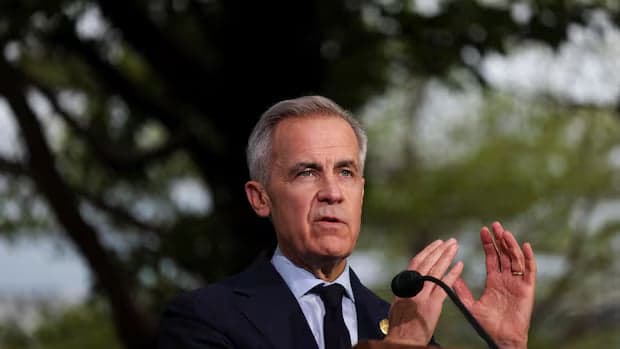
Prime Minister Carney Pursues Asian Trade Pivot and Thaws Relations with China at APEC Summit
National News
 04
Canada Pursues Interim Trade Deal with U.S. Amid Tariff Threats
National News
- 05
Independent Modern Treaty Commissioner Established as Bill C-10 Receives Royal Assent
National News
- 06
Canada Makes Rural Immigration Program Permanent to Fill Workforce Gaps
National News
- 07
Federal and Ontario Governments Invest Heavily in Oakville Auto Manufacturing Modernization
National News
- 08
Canada Launches First National Standing Offer for Permanent Carbon Removal Credits
National News
 09
OSFI Proposes Competitive Prudential Initiative to Aid Smaller Canadian Banks
National News
 10
Competition Bureau Orders Gap and Old Navy to Reveal Pricing Data
National News
 11
U.S. Sanctions Canadian 'Ndrangheta Network and Funeral Homes for Illicit Drug Trafficking
National News
 12
MP Urges Split of MAID Legislation on Mental Illness and Advance Directives
National News
 13
Skeena River Derailment Prompts First Nations Moratorium Demand on Rail Freight
National News
 14
Staples Canada Partners with Toys "R" Us for Nationwide Store-in-Store Expansion
National News
 15
Defence Claims 'Crypto King' Aiden Pleterski Faked Kidnapping for Investor Sympathy
National News
 16
Prairie Snowstorm Contrasts with Warmth in Eastern Canada Amid Polar Vortex Disruption
National News
 17
Former B.C. Mountie Receives Conditional Discharge for Assaulting Teen
National News
 18
Great Powers Forge 'Declaration Toward Peace' at Shenzhen Summit, Reshaping Global Security and Energy
World & Geopolitics
 19
Global Powers Clash Over Ukraine at Shenzhen Summit Amidst Escalating Battlefield Strikes
World & Geopolitics
 20
Trump-Putin-Xi Summit Followed by Russian Missile Strikes on Ukraine
World & Geopolitics
 21
Persian Gulf Tensions Surge: Mine Strikes and US Accusations Against Iran
World & Geopolitics
 22
Gaza Ceasefire Fails as Israeli Incursion Sparks Humanitarian Crisis and Official Condemnation
World & Geopolitics
 23
ICJ Rules Myanmar Committed Genocide Against Rohingya, Establishing Landmark State Liability
World & Geopolitics
 24
Türkiye Inducts Bayraktar Kızılelma, World's First Operational Unmanned Jet Fighter
World & Geopolitics
 25
COP31 Stalemate: Superpower Divergence and Energy Politics Thwart Global Climate Consensus
World & Geopolitics
 26
Carney Secures $400M China Trade Deal Amidst Diversification Strategy
World & Geopolitics
 27
Canada Urges Proactive Trade Talks with US Amid Trump Administration Tensions
World & Geopolitics
 28
EU and Jordan Launch Strategic Investment Accord, Enhancing Regional Geoeconomic Ties
World & Geopolitics
 29
Canada's 2026 Budget Passes Narrowly Despite Critical Fiscal Audit
World & Geopolitics
 30
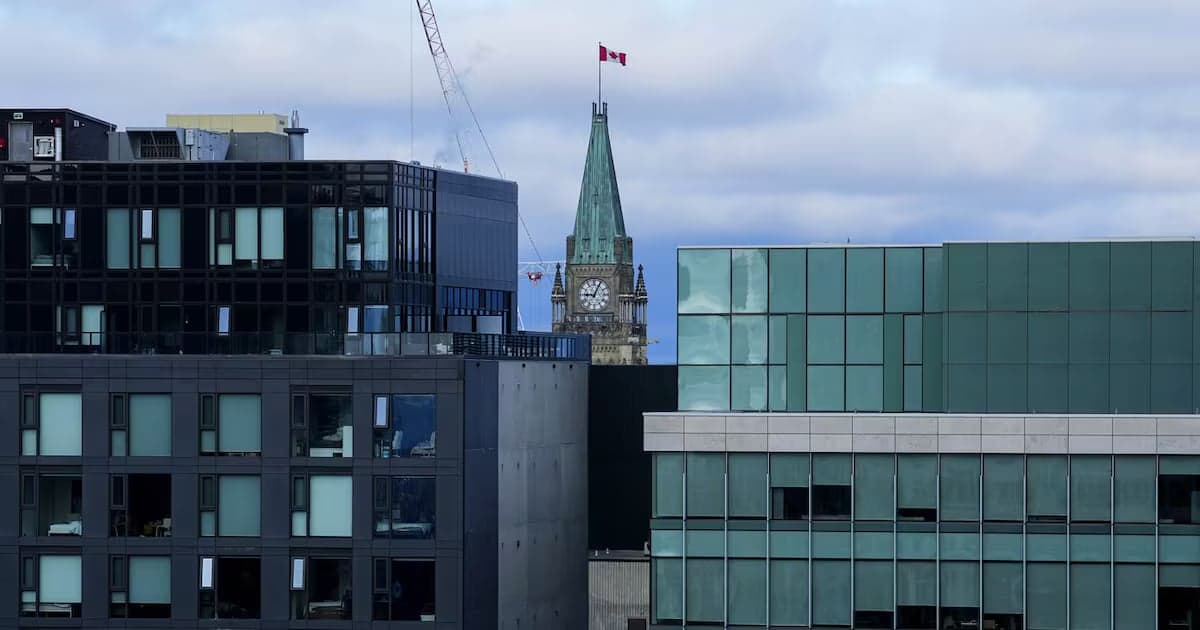
Environment Canada Admits Coal Export Ban Scrapped Due to Political Directive
World & Geopolitics
 31
Anthropic's Record IPO Sparks Tech Selloff Amid AI Risk Warnings
World & Geopolitics
 32
Police Dismantle Violent GTA Tow-Truck Crime Syndicate
City News
 33
U.S. Sanctions 'Ndrangheta Faction in Toronto for Global Narcotrafficking
City News
 34
New Synthetic Opioid Detected in Toronto Fentanyl Supply
City News
 35
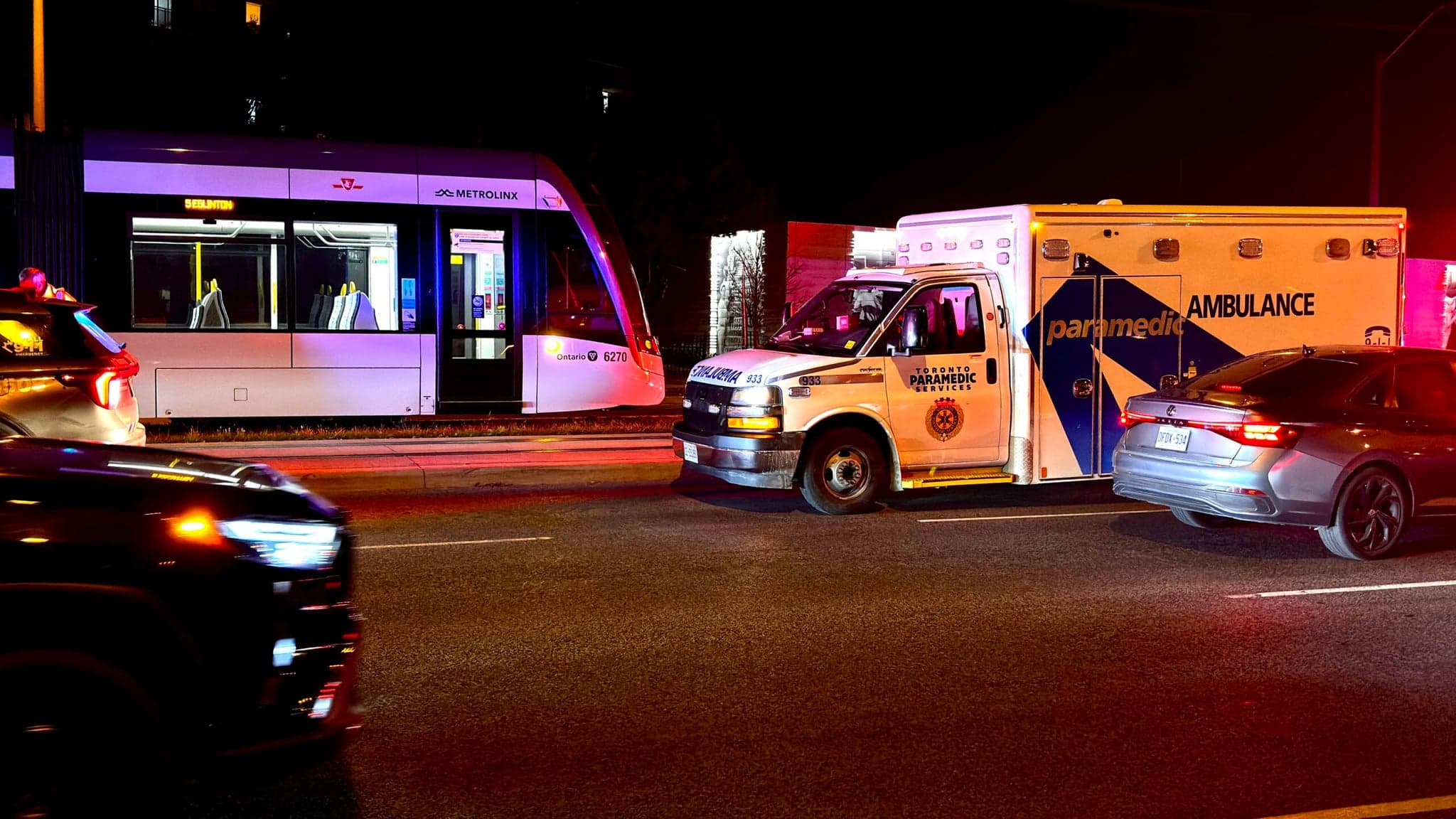
Fatal LRT Collision Sparks Safety Concerns for Toronto's Line 5 Eglinton
City News
 36
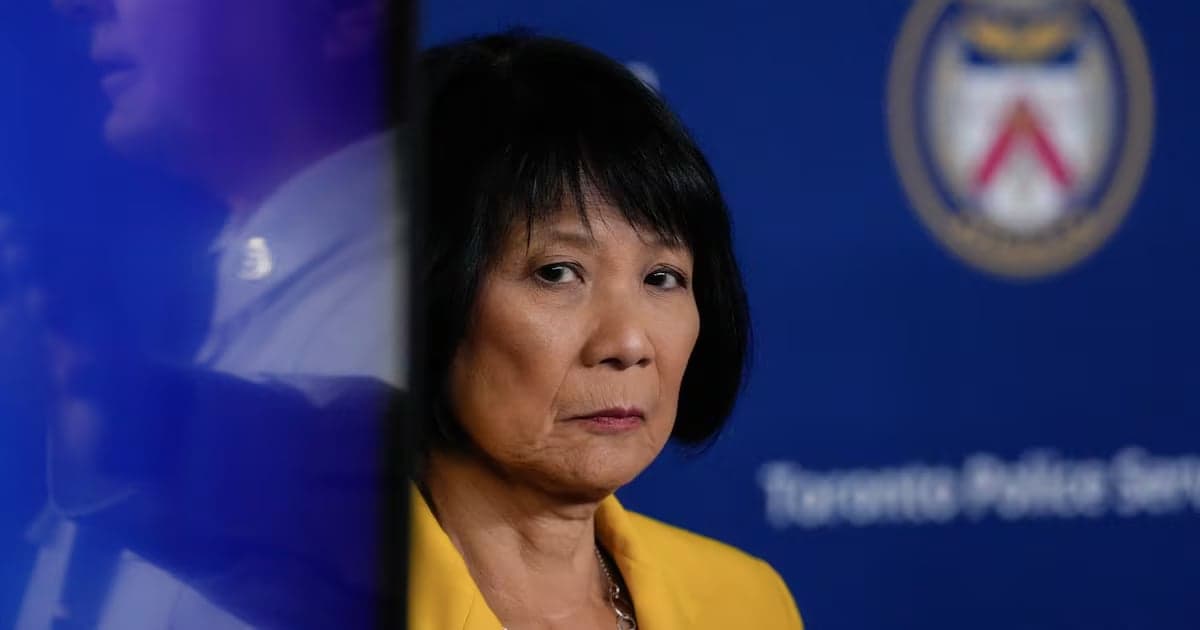
Mayor Chow Restructures Committees, Appoints Ainslie as TTC Chair
City News
 37
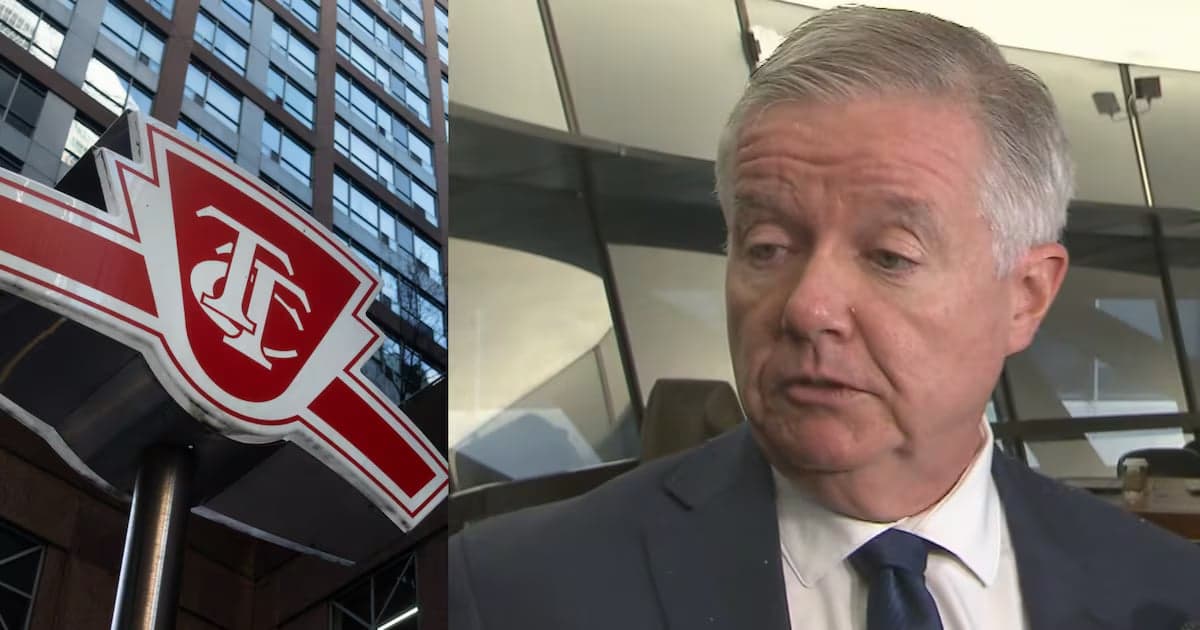
TTC Chair Ainslie to Probe CEO Misconduct Allegations and Contract Irregularities
City News
 38
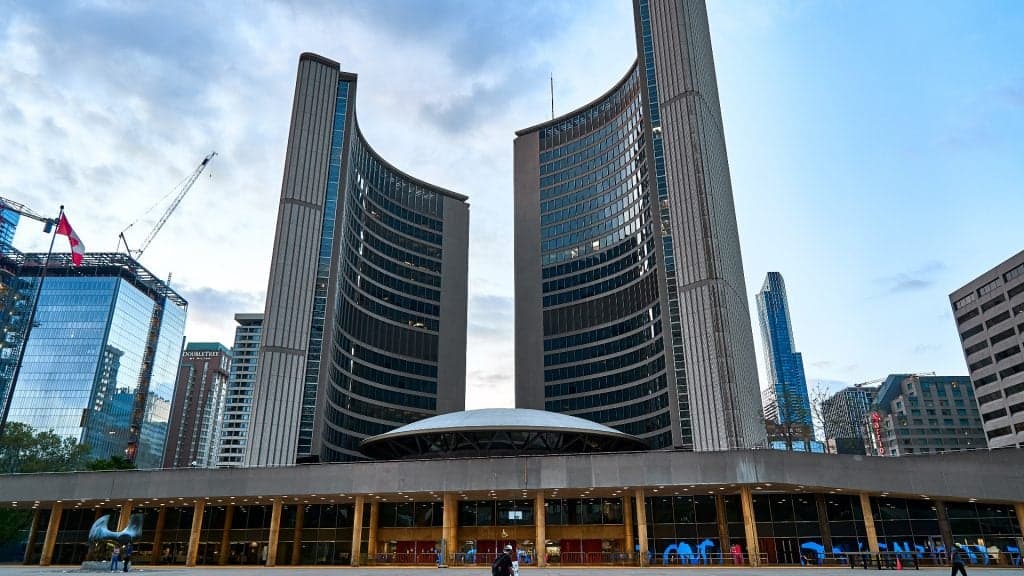
Chow Centralizes Homelessness File, Appoints New Housing Committee Leadership
City News
 39
AI Fugitive Models Debut as Suspect Arrested in Bolton Murder Case
City News
- 40
Bolo Program Uses AI Avatars for Fugitive Apprehension, Leading to Arrest
City News
 41
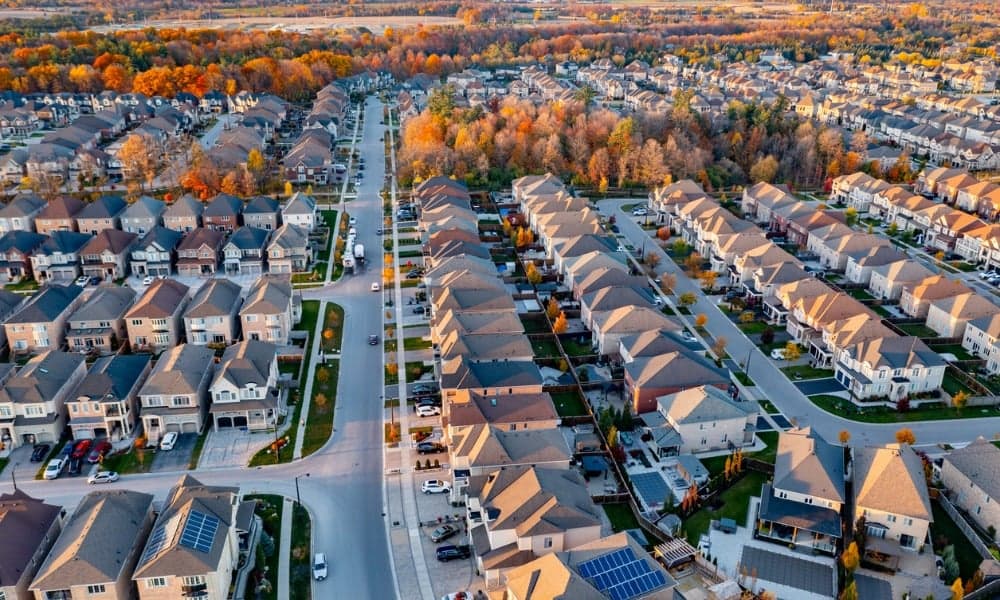
Housing Market Enters Prolonged Stagnation Due to Economic Headwinds
City News
- 42
Mayor Olivia Chow Announces Toronto Council Committee Reshuffle
City News
- 43
Extensive Weekend Transit Shutdowns Disrupt GTA Travel
City News
 44
Unseasonable Warmth Gives Way to Arctic Cold, Prompting City Mobilization
City News
- 45
Sagecare Opens New Specialized Dementia Care Residence in Toronto
City News
 46
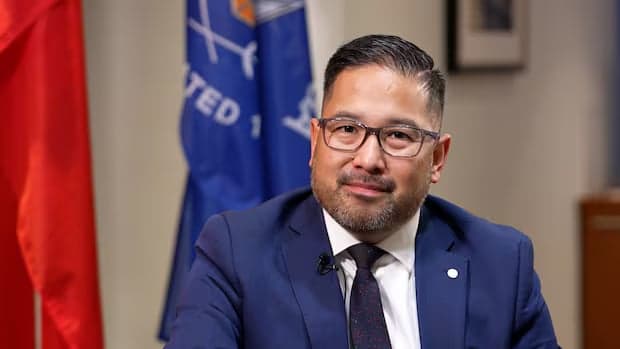
Mississauga Mayor Challenges Developers on AI Data Centre Freeze at Ontario Land Tribunal
City News
 47
University of Toronto Rejects Discrimination Report, Sparking Campus Backlash
City News
 48
Burlington Townhouse Fire Claims Fourth Victim, Mother Dies from Injuries
City News
 49
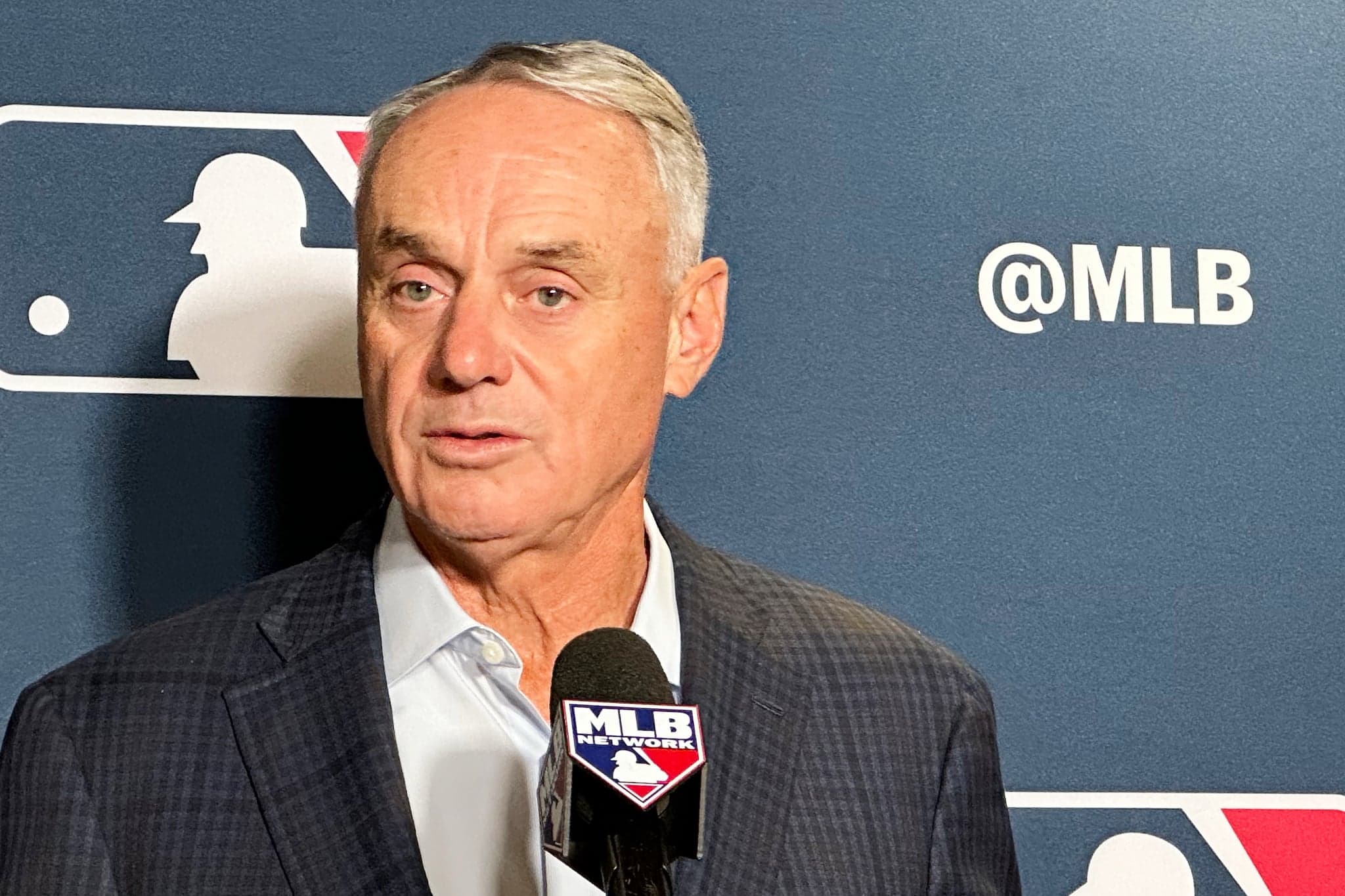
MLB Owners Demand Salary Cap, Threatening Dec. 2 Lockout
Sports
- 50
Trump Grants Posthumous Pardon to Pete Rose for Tax Fraud
Sports
 51
Penguins GM Kyle Dubas Signals Impending Fire Sale Amidst Struggles
Sports
 52
Maple Leafs Collapse Against Kings, Extend Losing Streak to Eight Games
Sports
 53
Maple Leafs Coach Benching McKenna Sparks Outcry Amid Eighth Straight Loss
Sports
 54
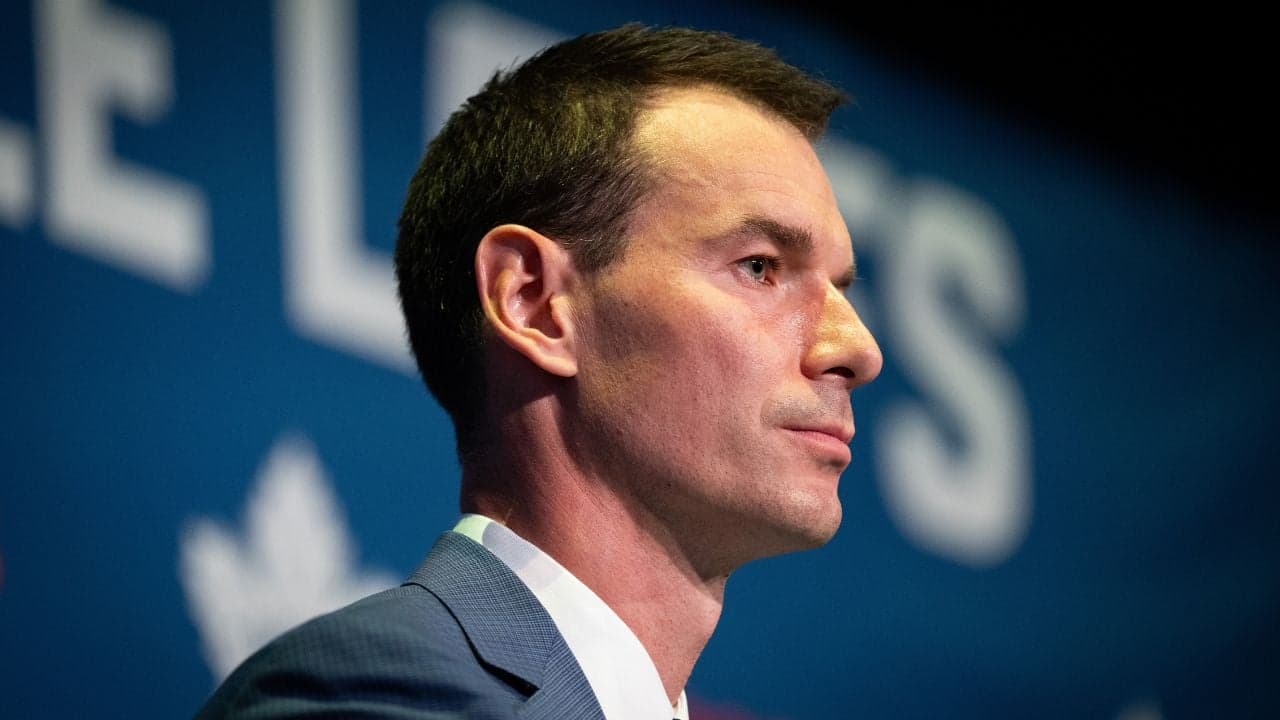
Toronto's Slump Creates Complex Draft Pick Scramble for Boston and Philadelphia
Sports
 55
Raptors Hampered by Key Injuries to Barrett and Murray-Boyles Ahead of NBA Cup Game
Sports
 56
Raptors Face Depth Crisis as Barrett and Murray-Boyles Sidelined Amid Six-Game Losing Streak
Sports
 57
Spurs' Dylan Harper Sidelined 1-3 Weeks With Hip Strain
Sports
 58
Blackhawks Star Connor Bedard Faces Surgery for Third Shoulder Injury
Sports
 59
Blue Jays Acquire Infielder Christian Cairo, Designate Pitcher Chase Lee
Sports
See all 59 as a listHide the list
- House of Commons Passes 2026 Federal Budget with Focus on Investment and Economic Growth
- Opposition Demands Probe into $2.3 Billion Telesat Contract Amid Conflict of Interest Concerns
- Prime Minister Carney Pursues Asian Trade Pivot and Thaws Relations with China at APEC Summit
- Canada Pursues Interim Trade Deal with U.S. Amid Tariff Threats
- Independent Modern Treaty Commissioner Established as Bill C-10 Receives Royal Assent
- Canada Makes Rural Immigration Program Permanent to Fill Workforce Gaps
- Federal and Ontario Governments Invest Heavily in Oakville Auto Manufacturing Modernization
- Canada Launches First National Standing Offer for Permanent Carbon Removal Credits
- OSFI Proposes Competitive Prudential Initiative to Aid Smaller Canadian Banks
- Competition Bureau Orders Gap and Old Navy to Reveal Pricing Data
- U.S. Sanctions Canadian 'Ndrangheta Network and Funeral Homes for Illicit Drug Trafficking
- MP Urges Split of MAID Legislation on Mental Illness and Advance Directives
- Skeena River Derailment Prompts First Nations Moratorium Demand on Rail Freight
- Staples Canada Partners with Toys "R" Us for Nationwide Store-in-Store Expansion
- Defence Claims 'Crypto King' Aiden Pleterski Faked Kidnapping for Investor Sympathy
- Prairie Snowstorm Contrasts with Warmth in Eastern Canada Amid Polar Vortex Disruption
- Former B.C. Mountie Receives Conditional Discharge for Assaulting Teen
- Great Powers Forge 'Declaration Toward Peace' at Shenzhen Summit, Reshaping Global Security and Energy
- Global Powers Clash Over Ukraine at Shenzhen Summit Amidst Escalating Battlefield Strikes
- Trump-Putin-Xi Summit Followed by Russian Missile Strikes on Ukraine
- Persian Gulf Tensions Surge: Mine Strikes and US Accusations Against Iran
- Gaza Ceasefire Fails as Israeli Incursion Sparks Humanitarian Crisis and Official Condemnation
- ICJ Rules Myanmar Committed Genocide Against Rohingya, Establishing Landmark State Liability
- Türkiye Inducts Bayraktar Kızılelma, World's First Operational Unmanned Jet Fighter
- COP31 Stalemate: Superpower Divergence and Energy Politics Thwart Global Climate Consensus
- Carney Secures $400M China Trade Deal Amidst Diversification Strategy
- Canada Urges Proactive Trade Talks with US Amid Trump Administration Tensions
- EU and Jordan Launch Strategic Investment Accord, Enhancing Regional Geoeconomic Ties
- Canada's 2026 Budget Passes Narrowly Despite Critical Fiscal Audit
- Environment Canada Admits Coal Export Ban Scrapped Due to Political Directive
- Anthropic's Record IPO Sparks Tech Selloff Amid AI Risk Warnings
- Police Dismantle Violent GTA Tow-Truck Crime Syndicate
- U.S. Sanctions 'Ndrangheta Faction in Toronto for Global Narcotrafficking
- New Synthetic Opioid Detected in Toronto Fentanyl Supply
- Fatal LRT Collision Sparks Safety Concerns for Toronto's Line 5 Eglinton
- Mayor Chow Restructures Committees, Appoints Ainslie as TTC Chair
- TTC Chair Ainslie to Probe CEO Misconduct Allegations and Contract Irregularities
- Chow Centralizes Homelessness File, Appoints New Housing Committee Leadership
- AI Fugitive Models Debut as Suspect Arrested in Bolton Murder Case
- Bolo Program Uses AI Avatars for Fugitive Apprehension, Leading to Arrest
- Housing Market Enters Prolonged Stagnation Due to Economic Headwinds
- Mayor Olivia Chow Announces Toronto Council Committee Reshuffle
- Extensive Weekend Transit Shutdowns Disrupt GTA Travel
- Unseasonable Warmth Gives Way to Arctic Cold, Prompting City Mobilization
- Sagecare Opens New Specialized Dementia Care Residence in Toronto
- Mississauga Mayor Challenges Developers on AI Data Centre Freeze at Ontario Land Tribunal
- University of Toronto Rejects Discrimination Report, Sparking Campus Backlash
- Burlington Townhouse Fire Claims Fourth Victim, Mother Dies from Injuries
- MLB Owners Demand Salary Cap, Threatening Dec. 2 Lockout
- Trump Grants Posthumous Pardon to Pete Rose for Tax Fraud
- Penguins GM Kyle Dubas Signals Impending Fire Sale Amidst Struggles
- Maple Leafs Collapse Against Kings, Extend Losing Streak to Eight Games
- Maple Leafs Coach Benching McKenna Sparks Outcry Amid Eighth Straight Loss
- Toronto's Slump Creates Complex Draft Pick Scramble for Boston and Philadelphia
- Raptors Hampered by Key Injuries to Barrett and Murray-Boyles Ahead of NBA Cup Game
- Raptors Face Depth Crisis as Barrett and Murray-Boyles Sidelined Amid Six-Game Losing Streak
- Spurs' Dylan Harper Sidelined 1-3 Weeks With Hip Strain
- Blackhawks Star Connor Bedard Faces Surgery for Third Shoulder Injury
- Blue Jays Acquire Infielder Christian Cairo, Designate Pitcher Chase Lee
Section 1 of 4
National News
17 stories · 8 min skim
National News
2 min read
House of Commons Passes 2026 Federal Budget with Focus on Investment and Economic Growth
Parliament has approved the 2026 federal budget, featuring a C$25-billion Canada Strong Fund for strategic investments and significant tax breaks for private capital. The budget passed with a majority, marking a key legislative win for Prime Minister Mark Carney's government. Opposition raised concerns about increased national debt and its impact on affordability.
Read the full storyFold the full story2 min · 5 sources
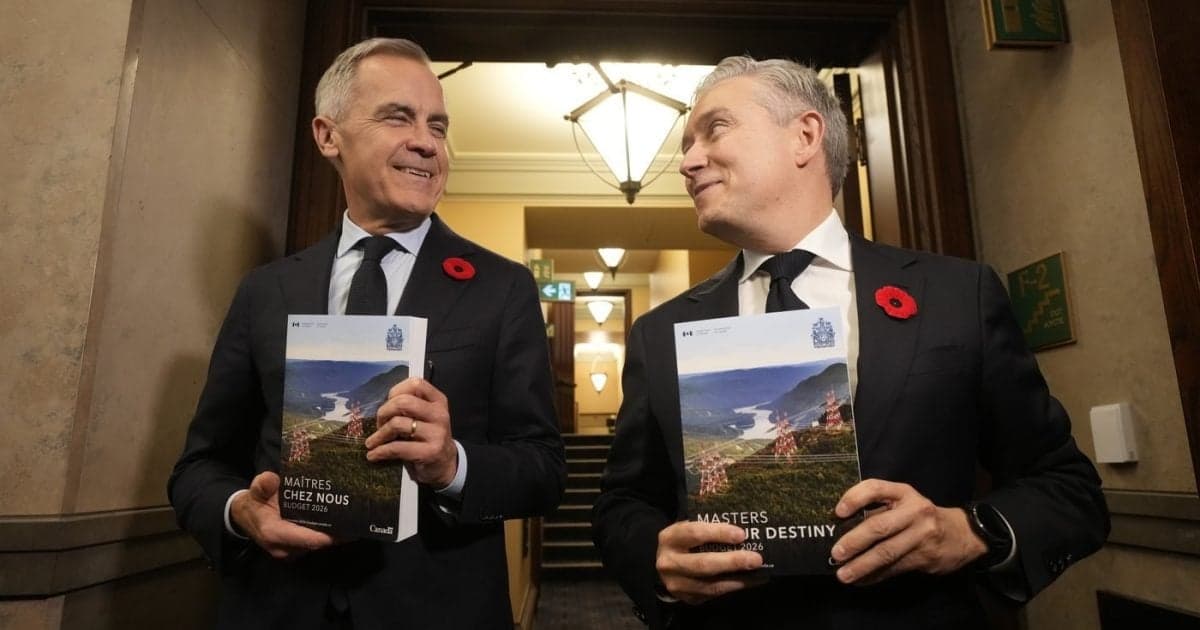
Members of Parliament voted 162 to 151 in the House of Commons to officially pass the federal government's 2026 budget[1]. Tabled earlier in the month by Finance Minister François-Philippe Champagne under the banner “Masters of Our Destiny,” the spending blueprint marks Prime Minister Mark Carney’s second federal budget and his first enacted under a parliamentary majority[2][3]. The legislative victory drew cheers and sustained applause from Liberal benches, solidifying the legal and financial foundations of the government’s economic agenda through the next fiscal cycle[1].
The budget outlines an ambitious policy turn toward capital-intensive investment, productivity growth, and strategic re-industrialization[1][3][4]. Central to the plan is the creation of the Canada Strong Fund, a C$25-billion sovereign wealth vehicle designed to take equity stakes in major national undertakings - such as critical minerals development, clean energy grids, and major transport links - to attract private institutional capital[5]. The legislation also establishes significant tax breaks for private capital investment, expands capital gains relief, introduces accelerated write-offs for industrial machinery, and commits $1.5 billion over nine years toward municipal infrastructure and recreation through the Build Communities Strong Fund[2][4].
Unlike the razor-thin minority parliament of 2025 - which relied on Green Party backing and opposition abstentions to survive - the Liberals navigated the 2026 vote with a working majority achieved through a sequence of byelection victories and strategic floor-crossings over the past year[1]. The vote nonetheless exposed deep partisan fractures over the government’s fiscal trajectory. Conservative Leader Pierre Poilievre denounced the budget as an irresponsible expansion of government borrowing, arguing that adding hundreds of billions of dollars to the national debt over five years will aggravate inflation and worsen cost-of-living strains for Canadian households[1][3].
The passage arrives alongside scrutiny from independent watchdogs and anti-poverty advocacy groups[2][1]. In a review of the legislation, Parliamentary Budget Officer Annette Ryan warned that although the federal government remains narrowly aligned with its fiscal anchor of balancing operational spending by 2027–28, high borrowing levels leave little room for error if global conditions sour[1][4]. Concurrently, social policy organizations and civil society leaders pointed to recent findings from the National Advisory Council on Poverty and Food Banks Canada, arguing that the budget’s corporate incentives disproportionately rely on supply-side economics while failing to deliver direct, immediate relief to the millions of Canadians facing acute grocery and shelter insecurity[2].
- House of Commons
- Mark Carney
- François-Philippe Champagne
National News
2 min read
Opposition Demands Probe into $2.3 Billion Telesat Contract Amid Conflict of Interest Concerns
Opposition parties are calling for a parliamentary investigation into a $2.3-billion federal satellite contract awarded to Telesat, citing potential conflicts of interest involving Prime Minister Mark Carney's past relationship with the company's CEO. The government defends the contract as a strategic national security investment.
Read the full storyFold the full story1 min · 2 sources
Scrutiny intensified on Parliament Hill as opposition parties pushed for a formal investigation by the House of Commons Standing Committee on Access to Information, Privacy and Ethics into a $2.3-billion federal satellite contract awarded to Telesat[1]. Led by Conservative MP John Brassard and Bloc Québécois MP Luc Thériault, lawmakers questioned the procurement processes surrounding the multi-billion-dollar aerospace commitment, demanding complete disclosure of communications and administrative decisions connected to the transaction[1].
The controversy centers on potential governance and conflict-of-interest concerns regarding Prime Minister Mark Carney’s prior professional relationship with Telesat Chief Executive Officer Dan Goldberg[1]. Ahead of the parliamentary push, Carney formally requested that the federal Conflict of Interest and Ethics Commissioner implement a specialized conflict-of-interest screen to recuse him from direct executive determinations involving Telesat[1]. However, opposition members argued that an internal screen is insufficient given the scale of public capital involved, insisting that the ethics committee conduct public hearings and subpoena key documentation[1].
Government ministers pushed back strongly against allegations of improper oversight[1]. Finance Minister François-Philippe Champagne defended the procurement as an essential strategic investment in Canada's aerospace and sovereign communications infrastructure, highlighting its importance for national security, rural broadband, and arctic communications resilience[1]. Liberal officials maintained that the contract was developed through standard institutional channels with strict adherence to established conflict screens and civil-service guidelines[1].
The clash over the Telesat contract is unfolding alongside broader parliamentary reviews of Canada’s industrial policy and manufacturing reorganizations[1]. With the federal government actively reviewing automotive and defence manufacturing shifts - including Stellantis’s arrangement to transfer its Brampton assembly plant to defence contractor Roshel - the dispute underscores the heightened political risks surrounding Ottawa’s interventionist industrial strategy as the Carney administration ramps up public spending on major corporate contracts[2][1].
- Telesat
- Mark Carney
- Dan Goldberg
National News
2 min read
Prime Minister Carney Pursues Asian Trade Pivot and Thaws Relations with China at APEC Summit
Prime Minister Mark Carney announced new bilateral trade agreements and expanded market access in China at the APEC summit, a move seen as a strategic pivot away from over-reliance on the U.S. amid ongoing trade disruptions. Canada secured preferential access to over two billion consumers across 60 nations.
Read the full storyFold the full story1 min · 7 sources
Concluding engagements at the 33rd Asia-Pacific Economic Cooperation (APEC) Economic Leaders’ Meeting in Shenzhen, China, Prime Minister Mark Carney unveiled major new trade and diplomatic milestones aimed at accelerating Canada’s economic diversification[1]. Addressing global partners and international business forums, Carney announced that Canada has secured two new bilateral trade agreements and reached arrangements to expand market access in China, solidifying preferential access to more than two billion consumers across 60 nations and 20 free trade agreements[1].
The breakthrough at APEC reflects a deliberate, strategic pivot away from traditional reliance on the United States[1][2]. With North American trade disrupted by persistent tariff barriers and protectionist policies from Washington, Ottawa has adopted an overt policy of “economic independence,” operating under the premise that previous tariff-free trade structures will not fully return[3][2]. Carney underscored this stance during sideline discussions, noting that while Canada remains open to productive trade resolutions with the U.S., the federal government will aggressively build alternative commercial corridors across the Indo-Pacific and European markets[1][3][4].
Accompanying the Prime Minister, Foreign Affairs Minister Anita Anand detailed concrete steps toward normalizing Canada-China economic relations[5]. Anand confirmed that reciprocal tariff rollbacks have been implemented alongside modernized protocols governing bilateral commerce and travel security[5]. At the broader summit level, Canada helped lead the renewal of APEC’s Connectivity Blueprint, which seeks to insulate cross-Pacific logistics networks, streamline financial services integration, and protect critical supply chains against geopolitical shocks[1].
While the administration hailed the summit as a major diplomatic success that establishes Canada as one of the most interconnected trading nations globally, the shift continues to generate domestic debate[1]. Trade analysts point out that expanding commercial volumes across Asia will require substantial domestic infrastructure upgrades, including port and pipeline buildouts on Canada’s West Coast[6][7]. Furthermore, independent polling data from the Asia Pacific Foundation of Canada suggests that while the Canadian public overwhelmingly supports European and Asian market access in principle, building genuine commercial fluency and consumer confidence in nontraditional Asian export markets remains a long-term undertaking[7].
- APEC
- Mark Carney
- Anita Anand
National News
2 min read
Canada Pursues Interim Trade Deal with U.S. Amid Tariff Threats
Canada is actively seeking a targeted interim bilateral trade agreement with the United States before the end of the year to mitigate immediate protectionist threats and looming tariff risks. High-level talks are focused on sector-specific provisional compacts for critical areas like steel, aluminum, automotive components, and softwood lumber, rather than awaiting comprehensive CUSMA revisions.
Read the full storyFold the full story1 min · 5 sources
Senior federal officials and private-sector leaders assembled in Ottawa for the tenth formal session of the Advisory Committee on Canada-U.S. Economic Relations as the federal government actively shifts its negotiating posture toward securing a targeted, interim bilateral trade deal before the end of the year[1][2]. Chaired by Dominic LeBlanc, President of the King’s Privy Council and Minister responsible for Canada-U.S. Trade, Internal Trade, and One Canadian Economy, the high-stakes talks centered on mitigating immediate protectionist threats emerging from Washington[2].
The meeting, which included Chief Trade Negotiator Janice Charette and Canadian Ambassador Mark Wiseman dialing in from Washington, highlighted an evolving trade landscape fraught with aggressive U.S. rhetoric[2]. Amid heightened political tensions and looming 50 percent tariff threats against Canadian exports[3], federal negotiators are focusing on carving out sector-specific provisional compacts rather than waiting for comprehensive multilateral revisions to the Canada-United States-Mexico Agreement (CUSMA)[1][4]. Key pressure points dominating discussions include trade actions on steel, aluminum, automotive components, and softwood lumber[1].
Trade analysts, including international trade counsel William Pellerin, pointed out that an interim agreement, while limited in scope, represents a vital tactical measure to protect vulnerable supply chains from sudden border disruptions[1]. During the closed-door proceedings, representatives from domestic manufacturing, agricultural, and energy sectors raised concerns about the compounding drag on business investment and called for enhanced federal liquidity and tariff-mitigation programs to shield capital-intensive supply chains[2].
Prime Minister Mark Carney, who also addressed international trade predictability during multilateral meetings at the Asia-Pacific Economic Cooperation (APEC) summit in Shenzhen[5], affirmed that maintaining open economic corridors with the United States remains the government's paramount economic priority[2]. Minister LeBlanc stressed that while Canada remains committed to crafting a mutually beneficial arrangement supporting cross-border industrial integration, Ottawa is simultaneously preparing retaliatory tariff countermeasures should negotiations break down[2].
- Canada-U.S. Economic Relations
- Dominic LeBlanc
- Janice Charette
National News
2 min read
Independent Modern Treaty Commissioner Established as Bill C-10 Receives Royal Assent
Bill C-10 has received Royal Assent, establishing the Commissioner of Modern Treaty Implementation as an independent Agent of Parliament. This move follows two decades of advocacy by Indigenous groups for greater accountability in federal implementation of modern treaties. The Commissioner will oversee federal adherence to 27 active Modern Treaties, reporting directly to Parliament.
Read the full storyFold the full story1 min · 1 source
Crown-Indigenous Relations and Northern Affairs Canada confirmed that Bill C-10 has formally received Royal Assent, officially establishing the Commissioner of Modern Treaty Implementation as an independent Agent of Parliament[1][1]. The enactment concludes more than two decades of sustained lobbying by Indigenous treaty partners seeking statutory accountability and oversight over how federal departments implement the terms of modern self-government and land claim agreements[1].
The newly created Commissioner operates outside the direct authority of the executive branch and reports findings, annual reviews, and performance audits directly to the Senate and House of Commons[1]. The mandate focuses exclusively on overseeing federal adherence to the country's 27 active Modern Treaties, agreements that span more than 40 percent of Canada’s sovereign land and marine territories[1][1]. The office has been financed through a dedicated $10.6-million multi-year funding allocation to recruit legal experts, regional investigators, and audit personnel[1].
The push for an independent commissioner stems from systemic friction and historic delays in how federal bureaucracies have executed land transfer timelines, resource royalty sharing, capital commitments, and co-management protocols outlined in modern treaties[1]. Indigenous leadership has long argued that when departments monitor their own treaty compliance, unresolved disputes inevitably bog down regional economic development and trigger protracted, costly litigation[1]. Minister of Crown-Indigenous Relations Rebecca Alty noted that the establishment of the role fulfills a core promise under Canada’s Collaborative Modern Treaty Implementation Policy and the United Nations Declaration on the Rights of Indigenous Peoples (UNDRIP) Action Plan[1][1].
Modern treaty signatory groups, including self-governing First Nations across Yukon, the Northwest Territories, British Columbia, and northern Quebec, welcomed the passage of the legislation as a major institutional advance for reconciliation and economic autonomy[1][1]. Legal scholars and commercial stakeholders emphasize that clearer enforcement and independent auditing of treaty obligations will dramatically improve regulatory certainty for major infrastructure, mining, and clean energy projects located across treaty lands[1].
- Bill C-10
- Commissioner of Modern Treaty Implementation
- Crown-Indigenous Relations and Northern Affairs Canada
National News
2 min read
Canada Makes Rural Immigration Program Permanent to Fill Workforce Gaps
Canada is formalizing its Rural Community Immigration Pilot (RCIP) into a permanent program to address labor shortages and population decline in non-metropolitan areas. The program will set targets for permanent resident admissions, scaling up over the next few years, and empowers local economic development organizations in selecting immigrants.
Read the full storyFold the full story2 min · 6 sources
Immigration, Refugees and Citizenship Canada (IRCC) detailed operational frameworks for making the Rural Community Immigration Pilot (RCIP) a permanent fixture of the national economic immigration system, following formal government directives aimed at decentralizing immigrant settlement away from major metropolitan cores[1][2][3]. Under the permanent Rural Community Immigration Program, Ottawa has established an initial target of 5,500 permanent residence admissions, with planned expansions scaling intake to 6,000 and 6,500 in subsequent years under the 2027–2029 Immigration Levels Plan[1][2][3].
The initiative represents an evolution of regional economic migration pilots originally launched in 2019 and refined in early 2025[1][2]. Designed to counteract acute population decline, low birth rates, and rapid workforce aging outside Canada's major urban centres, the program delegates substantial selection authority to local economic development organizations (EDOs)[2][4]. The permanent program will initially operate across 14 designated communities spanning five provinces, including Pictou County in Nova Scotia; North Bay, Sudbury, Timmins, Sault Ste. Marie, and Thunder Bay in northern Ontario; Steinbach, Brandon, and Altona/Rhineland in Manitoba; Moose Jaw in Saskatchewan; Claresholm in Alberta; and the West Kootenay, North Okanagan-Shuswap, and Peace Liard regions in British Columbia[2][3].
Unlike traditional federal points-based pathways that heavily favour candidates settling in Toronto, Montreal, or Vancouver, the permanent rural program is strictly employer-driven and community-vetted[2][3]. Local steering committees determine occupational shortages within priority sectors - predominantly healthcare, skilled construction trades, agriculture, and early childhood education - and designate qualified local employers[5][2][3]. Participating foreign workers must secure genuine job offers from these vetted businesses, along with formal community recommendations confirming their integration potential[3]. Under new program rules, community recommendations will remain valid for 12 months (an increase from the six-month window under the pilot), while mandatory employer-compliance training has been introduced to prevent workplace exploitation[2][6].
Business groups and municipal associations strongly endorsed the transition, noting that the program primarily targets workers and international graduates who are already resident and actively contributing within these rural zones[2][4]. Donna Backer, CEO of the North Bay & District Chamber of Commerce, stressed that permanence provides planning certainty for regional employers struggling to maintain public infrastructure and retail operations[4]. Across the country, between early 2025 and mid-2026, participating municipalities approved over 4,700 job recommendations across 1,950 designated regional employers, demonstrating substantial local reliance on regionalized immigration streams[1].
- Immigration, Refugees and Citizenship Canada (IRCC)
- Rural Community Immigration Program (RCIP)
- Economic Development Organizations (EDOs)
National News
2 min read
Federal and Ontario Governments Invest Heavily in Oakville Auto Manufacturing Modernization
Federal and provincial governments, alongside industry leaders, have announced a significant funding package to modernize automotive manufacturing facilities in Oakville, Ontario. The investment aims to secure thousands of skilled union jobs and bolster the region's industrial cluster amidst global supply chain shifts.
Read the full storyFold the full story1 min · 4 sources
Federal and provincial officials joined automotive industry leadership in Oakville, Ontario, to announce a major public-private investment package dedicated to expanding domestic automotive manufacturing[1]. The announcement featured Federal Minister of Industry Mélanie Joly alongside Ontario Premier Doug Ford, Ontario Minister of Economic Development Vic Fedeli, Ford Motor Company of Canada President and CEO Ivan Boykin, and Unifor National President Lana Payne[1].
The joint funding initiative provides substantial capital support to modernize assembly facilities in Oakville, bolstering high-volume vehicle manufacturing and reinforcing Southern Ontario’s industrial cluster[1]. The funding framework is designed to protect thousands of skilled union jobs, support specialized equipment procurement, and ensure that the facility remains an anchor in Canadian advanced manufacturing amidst continuous shifts in global vehicle platforms and international supply logistics[1][2].
The agreement comes at a critical juncture for Canada’s automotive corridor, which has faced severe turbulence stemming from bilateral cross-border tariff disputes and aggressive industrial subsidies deployed across North America[3][4]. Federal and provincial leaders emphasized that maintaining competitive domestic production requires direct public co-investment to anchor manufacturing mandates in Ontario[1]. Premier Ford and Minister Joly presented the initiative as an example of intergovernmental cooperation aimed at defending Canadian manufacturing sovereignty against foreign market volatility[1].
Union leadership praised the joint investment as a vital stabilizer for plant workers and secondary auto-parts suppliers throughout the Golden Horseshoe[1]. Unifor President Lana Payne emphasized that long-term capital commitments are essential to guarantee job security and fair wage standards as the broader automotive sector adapts to shifting regulatory environments and technological demands[1]. The capital rollout is scheduled to commence immediately, with retooling and facility expansion timelines set to roll out across the coming fiscal year[1].
- Mélanie Joly
- Doug Ford
- Vic Fedeli
National News
2 min read
Canada Launches First National Standing Offer for Permanent Carbon Removal Credits
Canada has become the first nation to establish a national master standing offer for permanent carbon dioxide removal (CDR) credits. This procurement mechanism allows federal departments to purchase certified carbon removals from 19 Canadian projects, primarily for emissions that are hard to abate directly, such as those from long-distance aviation and naval operations.
Read the full storyFold the full story1 min · 1 source
The Treasury Board of Canada Secretariat announced the establishment of a national master standing offer for permanent carbon dioxide removal (CDR) credits, making Canada the first national government in the world to implement a standardized public procurement mechanism for engineered and nature-based atmospheric carbon extraction[1]. The agreement establishes a centralized procurement pipeline allowing federal departments and agencies to purchase certified carbon removals generated by 19 commercial projects operating across Canada[1].
The standing offer is designed to address emissions from federal operations that prove technically difficult or economically prohibitive to abate directly[1]. A primary beneficiary will be the Department of National Defence, whose long-distance aviation, search-and-rescue, and naval operations cannot immediately transition to electric or alternative zero-emission fuel architectures[1]. To qualify for the standing offers, carbon removal vendors must demonstrate permanent carbon storage within stable mineral formations, geologic reservoirs, or durable industrial materials, supported by third-party verification protocols conforming to international scientific accounting standards[1].
Shafqat Ali, President of the Treasury Board, framed the procurement policy as a critical lever of Canada’s broader industrial strategy, linking it directly to the "Innovate" pillar of the federal climate plan[1]. Rather than depending solely on government grant subsidies, the initiative leverages federal purchasing power to act as an anchor customer for early-stage carbon management technologies[1]. Canadian policymakers believe the country holds unique competitive advantages in carbon management due to its extensive sedimentary basins, geological storage capacity, and advanced engineering expertise rooted in the traditional resource sector[1].
The announcement has been hailed by cleantech investors and climate policy advocates as a key milestone for commercial-scale carbon capture and storage (CCS)[1]. Clean-technology analysts note that securing predictable public-sector offtake agreements resolves a major bottleneck in project financing, enabling domestic carbon removal startups to de-risk capital expenditures and attract foreign institutional investment[1]. The standing offers will serve as a pilot model as Ottawa evaluates widening the framework to provincial partners and crown corporations ahead of Canada’s statutory 2050 net-zero targets[1].
- Treasury Board of Canada Secretariat
- Permanent Carbon Removal Credits
- Carbon Dioxide Removal (CDR)
National News
2 min read
OSFI Proposes Competitive Prudential Initiative to Aid Smaller Canadian Banks
The Office of the Superintendent of Financial Institutions (OSFI) has proposed the Competitive Prudential Initiative, aiming to reduce capital adequacy requirements for small and medium-sized banks and federal credit unions. This reform seeks to level the playing field by narrowing the capital requirement gap with larger domestic banks, particularly in residential mortgages, SME lending, and commercial loans. It also includes revisions to covered bond caps to enhance access to wholesale funding for regional lenders.
Read the full storyFold the full story2 min · 6 sources
In a bid to dismantle longstanding structural advantages enjoyed by the country’s dominant financial institutions, the Office of the Superintendent of Financial Institutions (OSFI) proposed a major overhaul of capital adequacy requirements for small and medium-sized banks (SMSBs) and federal credit unions[1][2]. The framework, formally dubbed the Competitive Prudential Initiative and introduced as the centerpiece of OSFI’s fourth quarterly release of 2026, aims to make regulatory burdens proportionate to institution size while preserving the stability of the broader financial sector[2].
The proposed reforms would substantially ease capital intensity rules across three core portfolios: residential mortgages, small and medium-sized enterprise (SME) lending, and commercial corporate loans[1][2]. Under the blueprint, the capital requirement gap between small lenders and Canada’s domestic systemically important banks (D-SIBs) - often referred to as the "Big Six" - will narrow by between 50 percent and two-thirds depending on the loan asset class[1]. For instance, on low-risk residential mortgages where the loan-to-value ratio is below 50 percent, the risk weight for smaller lenders will be cut from 20 percent to 10 percent, with proportional reductions applied across other mortgage tiers[1]. In addition, OSFI plans to revise covered bond caps, boosting the ceiling on pledged assets from 5.5 percent of total assets up to 7 percent for certain institutions, providing regional lenders with expanded access to wholesale funding mechanisms[3].
The regulatory move addresses decades of increasing concentration within the Canadian banking landscape[1]. Currently, the Big Six control upwards of 90 percent of domestic banking assets, a dominance accelerated in recent years by the acquisition of regional players such as Canadian Western Bank, HSBC Bank Canada, and segments of Laurentian Bank[1]. OSFI Superintendent Peter Routledge emphasized that the historic capital framework inadvertently placed smaller institutions at an artificial competitive disadvantage, as larger banks could rely on internal ratings-based models that lowered their required capital reserves compared to the standardized models imposed on smaller lenders[1][2]. The changes also reflect federal legislative priorities introduced in Budget 2026 to add a secondary competition mandate to OSFI’s core mission[4].
Industry groups have responded enthusiastically to the consultation paper[5]. Mortgage Professionals Canada praised the initiative, observing that lowering capital friction for smaller lenders will directly translate into sharper pricing, broader product availability, and lower borrowing costs for Canadian consumers navigating elevated interest rates[5]. OSFI has also published complementary revisions to Guideline B-10 regarding third-party risk management to align prudential oversight with upcoming federal open-banking implementations under the Consumer-Driven Banking Act[6]. Following public consultations, the final capital framework is slated to take effect between late 2027 and early 2028[1].
- OSFI
- Competitive Prudential Initiative
- Canadian banks
National News
2 min read
Competition Bureau Orders Gap and Old Navy to Reveal Pricing Data
Canada's Competition Bureau has obtained a Federal Court order compelling Gap and Old Navy to provide internal records and marketing materials as part of an investigation into alleged deceptive pricing practices. The probe focuses on misleading regular price claims, artificial savings, and the use of inflated 'reference prices' to create a false sense of urgency for consumers.
Read the full storyFold the full story1 min · 2 sources
Canada’s Competition Bureau obtained an order from the Federal Court requiring retail giants Gap and Old Navy to turn over internal records, transactional data, and digital marketing materials as part of an expanding probe into deceptive pricing and promotional tactics[1]. The enforcement action represents the latest deployment of the watchdog’s enhanced investigative powers under recent amendments to the federal Competition Act[1][2].
The investigation focuses on whether the apparel retailers engaged in misleading advertising by publishing deceptive regular price claims, artificial "savings" margins, and urgent online discount counters designed to manufacture artificial consumer urgency[1]. Central to the inquiry is the practice of "reference pricing" - inflating baseline prices to make ongoing promotional discounts appear far steeper than they are in reality[1]. The Bureau is scrutinizing both online storefronts and brick-and-mortar promotional signage operated across Canada by Gap (Canada) Inc.[1]
The action reflects a sharp pivot toward aggressive enforcement by the Competition Bureau under recent statutory reforms passed between 2023 and 2024[2]. Regulatory changes eliminated traditional defenses and empowered the Bureau to scrutinize deceptive digital practices, including hidden consumer fees and fabricated countdown clocks[1][2]. The agency has signaled that e-commerce platforms operating in Canada will face heightened liability if their algorithmically generated promotions manipulate consumer purchase decisions without reflecting genuine market pricing[1].
Legal analysts note that court orders obtained under Section 11 of the Competition Act are compulsory mechanisms that precede formal tribunal proceedings or substantial administrative monetary penalties[1]. If the Bureau determines that deceptive ordinary selling price representations occurred, the companies could face structural behavioral remedies and financial penalties reaching millions of dollars or up to 3 percent of domestic turnover[1]. Neither Gap Inc. nor Old Navy has commented publicly on the ongoing legal proceedings[1].
- Competition Bureau
- Gap
- Old Navy
National News
2 min read
U.S. Sanctions Canadian 'Ndrangheta Network and Funeral Homes for Illicit Drug Trafficking
The U.S. Treasury has sanctioned key figures linked to the Canadian arm of the 'Ndrangheta organized crime syndicate and Toronto-area funeral homes. These individuals are accused of managing international drug distribution pipelines and financial flows, allegedly using legitimate businesses for money laundering. The action aims to disrupt their illicit operations and financial networks.
Read the full storyFold the full story2 min · 4 sources
The United States Department of the Treasury’s Office of Foreign Assets Control (OFAC) announced sweeping sanctions targeting key figures in what North American law enforcement identifies as the Canadian arm of Italy's powerful 'Ndrangheta organized crime syndicate[1][2]. The cross-border enforcement action specifically sanctions six prominent men in the Greater Toronto Area alongside three of their relatives, alleging they manage sprawling international narcotics distribution pipelines and illicit financial flows that funnel profits between Mexican drug cartels, European distributors, and domestic markets[1][2][3]. In a parallel action, OFAC also sanctioned leadership elements of the Australia-based Comanchero Outlaw Motorcycle Gang for similar cartel alignments[2][3].
According to American authorities, the Canadian faction of the Calabrian-based 'Ndrangheta has developed such extraordinary operational and financial reach that it regularly directs criminal logistics in Italy from across the Atlantic[3]. Among the primary individuals designated is Rocco Remo Commisso, alleged to head U.S.-bound illicit drug pipelines operating out of Canada, and Vincenzo "Jimmy" DeMaria, identified by federal officials as one of the preeminent 'Ndrangheta bosses in the Greater Toronto Area[1]. U.S. officials stated that these leaders sit on the "Camera di Controllo" - an elite, Toronto-based governing council designed to arbitrate territorial conflicts, supervise capital allocations, and resolve operational disputes across clan lines[2].
A central revelation of the sanctions docket is the alleged integration of legitimate business infrastructure into the syndicate’s money laundering machinery[2][3]. OFAC designated Luigi Vescio Sr., his wife Rose Vescio, and adult children Luigi Vescio Jr. and Laura Vescio, alleging their commercial network served to clean proceeds from the illicit drug trade[2]. Vescio Sr. serves as president of funeral homes operating across Toronto, Maple, and Woodbridge, Ontario - enterprises that, alongside a limousine service, were blacklisted by the U.S. Treasury for facilitating cash integration into the regulated banking systems of Canada and the United States[1][2].
The multilateral enforcement effort relied on intelligence sharing between the U.S. Federal Bureau of Investigation (FBI), Drug Enforcement Administration (DEA), and Homeland Security Investigations (HSI), working alongside the Royal Canadian Mounted Police (RCMP) and Ontario’s York Regional Police[2]. U.S. Treasury Secretary Scott Bessent stressed that transnational cartels do not operate within closed domestic silos, relying instead on heavily networked global syndicates like the 'Ndrangheta to handle distribution logistics and launder proceeds through North American commerce[2][3].
The sanctions effectively freeze all U.S.-based assets tied to the named individuals and corporate entities while prohibiting American financial institutions and citizens from engaging in transactions with them[2][4]. For Canadian financial regulators and law enforcement agencies, the designations intensify domestic pressure to address systemic gaps in Canada’s anti-money-laundering regimes, where organized crime groups have long exploited commercial fronts and real estate to shield criminal wealth[1][4].
- 'Ndrangheta
- U.S. Department of the Treasury
- Office of Foreign Assets Control (OFAC)
National News
2 min read
MP Urges Split of MAID Legislation on Mental Illness and Advance Directives
A Liberal MP and chair of the Special Joint Parliamentary Committee on MAID is calling for the separation of legislation concerning Medical Assistance in Dying (MAID) for mental illness and advance directives for degenerative conditions. This split aims to allow for independent votes on these ethically complex issues, which are currently bundled in Bill C-41.
Read the full storyFold the full story2 min · 4 sources
A prominent federal lawmaker and healthcare professional broke ranks with his party's parliamentary handling of Canada's assisted dying framework, formally urging the federal government to decouple controversial provisions in its Medical Assistance in Dying (MAID) legislation[1]. Liberal Member of Parliament Dr. Marcus Powlowski, who served as chair of the Special Joint Parliamentary Committee on MAID, called for splitting Bill C-41 so that lawmakers can vote independently on barring access for individuals with mental illness while separately considering advance requests for patients diagnosed with degenerative cognitive conditions[2][1].
Bill C-41 was tabled by Justice Minister Sean Fraser to amend the Criminal Code ahead of a critical March 17 deadline, after which existing sunset provisions would have automatically extended MAID eligibility to individuals whose sole underlying medical condition is a mental illness[2][3]. The legislation indefinitely excludes mental illnesses from eligibility while simultaneously introducing provisions allowing individuals diagnosed with incurable, capacity-eroding diseases - such as Alzheimer's and other forms of dementia - to register binding advance requests while they remain mentally competent[2][1][3]. The House of Commons voted 225 to 89 to advance the bill to the Standing Committee on Justice and Human Rights, following a contentious government motion that truncated debate at second reading[2][3].
Dr. Powlowski pointed out that combining these two profound ethical questions into an omnibus legislative package places parliamentarians in an untenable philosophical bind[2][4]. He noted that broad cross-partisan consensus exists regarding the need to protect vulnerable individuals with psychiatric illnesses from accessing MAID, but significant disagreement persists over the clinical safeguards and execution of advance directives[1][4]. Although nearly 40 Conservative MPs broke party lines to vote in favour of sending Bill C-41 to committee, many expressed deep reservations[2][3]. Conservative MP Ben Lobb demanded stronger statutory protections against wrongful deaths among the psychiatrically impaired, while Conservative MP Corey Tochor voiced moral revulsion over the existing scope of the program, underscoring that bundling both issues creates needless political resistance[1][4].
The dispute over legislative mechanics holds immense ramifications for provincial health authorities, palliative care networks, and clinical practitioners across Canada[1][3]. If Parliament fails to pass statutory revisions prior to the March 17 deadline, the exclusion for sole psychiatric conditions expires by default, creating legal uncertainty for physicians and psychiatric care facilities nationwide[3]. Meanwhile, families and patient advocacy groups representing Canadians diagnosed with neurodegenerative diseases have argued that delaying advance directive legislation denies patients dignity and self-determination before irreversible cognitive decline sets in[2][1].
- Medical Assistance in Dying (MAID)
- Bill C-41
- Dr. Marcus Powlowski
National News
2 min read
Skeena River Derailment Prompts First Nations Moratorium Demand on Rail Freight
Following a CN Rail train derailment and diesel spill into the Skeena River, the Gitxsan Huwilp Government is demanding a complete moratorium on rail freight through their territory. This incident, the second major CN derailment in the river within eight months, raises serious concerns about the safety of the aging rail corridor and its environmental impact on the river ecosystem.
Read the full storyFold the full story2 min · 4 sources
The Gitxsan Huwilp Government and hereditary chiefs issued an urgent demand for a complete moratorium on commercial rail freight moving through their ancestral territories following a CN Rail train derailment and hazardous chemical spill into northwestern British Columbia's Skeena River[1][2]. The accident occurred along a remote, 103-year-old rail corridor running parallel to the river and Highway 16, roughly 15 kilometres southwest of Terrace, B.C., when a mid-day rockslide struck a moving freight train[1][3].
The impact derailed two locomotives and five freight cars, tumbling shipping containers laden with forest products into the river and fracturing the diesel fuel tanks of the lead locomotive[3][1]. Emergency health personnel transported two injured crew members to hospital in serious but stable condition, while the British Columbia Ministry of Environment confirmed that leaked diesel fuel had formed a visible oil sheen spreading approximately 1.3 kilometres down the Skeena River[3][4]. Although CN Rail announced that emergency crews had repaired the broken track and resumed limited train traffic, specialized spill response crews and environmental containment booms remained deployed on the water to recover floating diesel fuel and salvage wreckage[1].
The incident represents the second catastrophic CN Rail derailment into the Skeena River within an eight-month window, following a March landslide near Port Edward that dumped roughly 8,000 litres of diesel fuel into the same watershed[2][4]. Gitxsan Simogyet Skogam’Lahkx and regional leaders warned that repeated industrial accidents along the century-old, geotechnically vulnerable rail line directly threaten wild salmon populations, downstream ecosystems, and indigenous food sovereignty[2][4]. Hereditary chiefs stated that all commercial hauling along the river corridor should be frozen until the federal Department of Transport and CN Rail independently verify track safety and overhaul emergency spill protocols, which currently rely heavily on volunteer rural emergency services[2][4].
The environmental accident has acquired sharp national prominence due to competing federal infrastructure proposals[4]. Industry consortiums and energy developers have actively lobbied Ottawa for a "national interest" infrastructure designation to construct a corridor transporting up to 250,000 litres of crude oil daily by rail through the Skeena River canyon to the deepwater port of Prince Rupert[4]. Regional leaders, conservationists, and former federal lawmakers noted that this latest derailment illustrates the environmental fragility of mountainous northern corridors subject to climate-induced slope instability, warning that a derailment involving toxic bitumen or hazardous petroleum distillates would permanently decimate the Skeena’s wild fisheries[2][4].
- Gitxsan Huwilp Government
- CN Rail
- Skeena River
National News
2 min read
Staples Canada Partners with Toys "R" Us for Nationwide Store-in-Store Expansion
Staples Canada is launching a significant retail overhaul by opening dedicated Toys "R" Us and Parties "R" Us sections within approximately 300 Staples stores across the country. This partnership aims to transform existing retail footprints into convenience hubs for consumers, offering a broader range of products beyond office supplies.
Read the full storyFold the full story1 min · 3 sources
Staples Canada and the revived brand of Toys “R” Us Canada initiated the commercial opening of their expanded retail format at a pilot site in Richmond Hill, Ontario, outlining plans to construct dedicated toy and celebration departments inside approximately 300 Staples stores nationwide by the end of 2027[1][2]. The partnership marks a substantial reimagining of commercial floor space for both legacy retail operators[1].
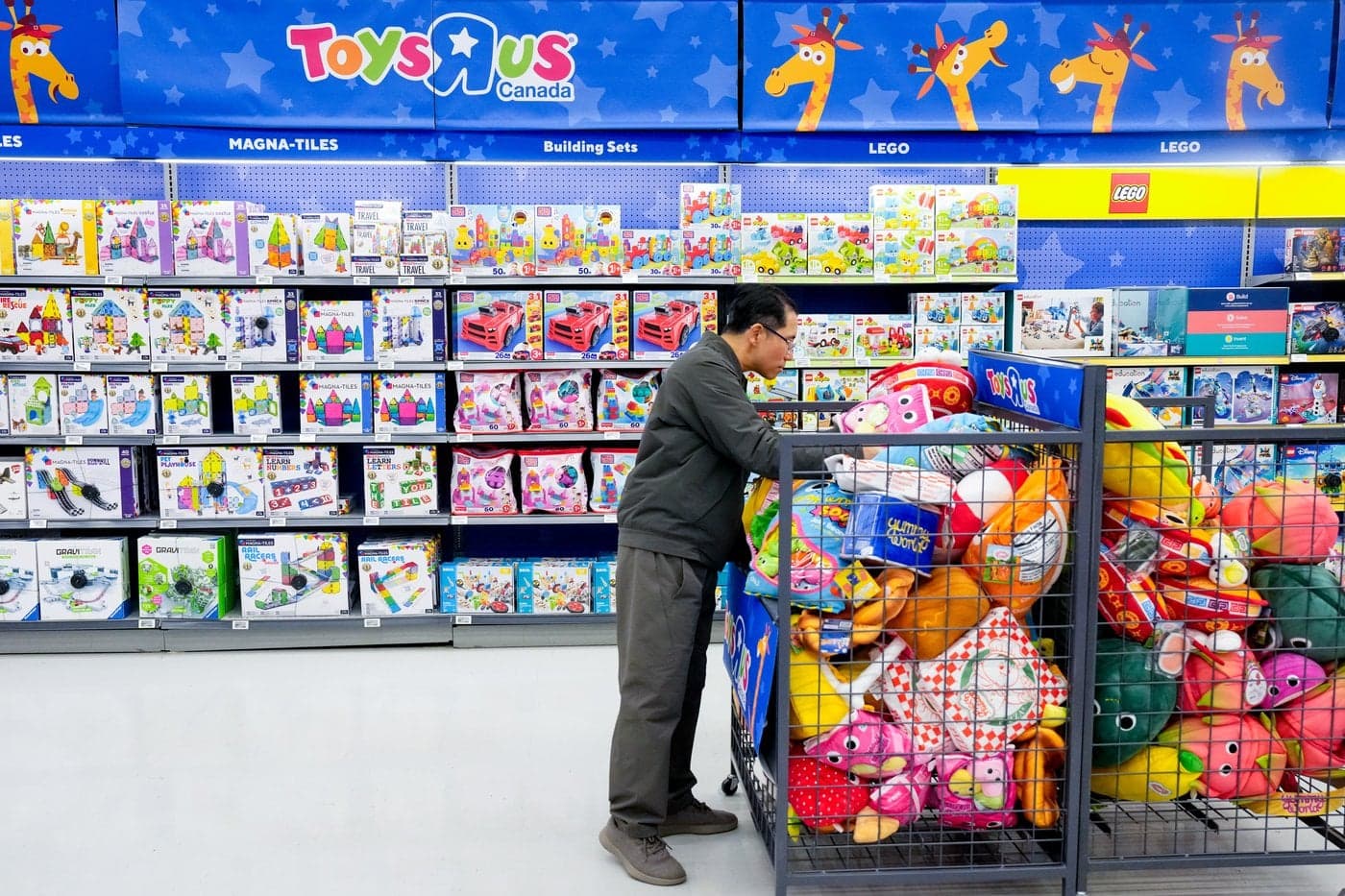
The store-in-store concept introduces dedicated Toys “R” Us and Parties “R” Us sections into Staples outlets, featuring prominent product displays of major licensed properties, building sets, plush toys, and party essentials[1][2]. The initiative follows the restructuring of Toys “R” Us Canada, which emerged from court-supervised creditor protection earlier in the year following severe financial headwinds and store closures[1][2]. Intellectual property and assets associated with the toy brand were acquired by Next Century Ipco Can ULC, an operating affiliate of U.S.-based brand holding firm Ad Populum[1][2].
For Staples Canada, the strategy represents an aggressive pivot to monetize existing retail footprints and reverse falling foot traffic[1]. Confronted by shifting workplace habits and fierce online competition in office supplies from Amazon and Walmart, the company has diversified its service mix[1][3]. Over the past three years, Staples has added on-site ServiceOntario counters, co-working suites, specialty cafes, and parcel logistics hubs[1]. Mike Rinaldi, Chief Merchandising Officer at Staples Canada, noted that adding toys and celebration supplies completes the transition of stores into convenience hubs for suburban consumers needing to accomplish multiple household errands under one roof[1].
Retail analysts note that the venture is an asset-light test of brand equity for Toys “R” Us, which avoids the crippling overhead costs of freestanding big-box real estate while tapping into established suburban foot traffic[1][3]. However, market experts caution that competing with discount behemoths like Walmart and digital channels during the critical holiday quarter will require precise localized inventory curation and competitive pricing, particularly as household discretionary budgets face ongoing cost-of-living constraints[3].
- Staples Canada
- Toys "R" Us Canada
- Parties "R" Us
National News
2 min read
Defence Claims 'Crypto King' Aiden Pleterski Faked Kidnapping for Investor Sympathy
In a Toronto courtroom, defence lawyers for three men accused of kidnapping Aiden Pleterski argued that the alleged 2022 abduction was a staged event. They contend Pleterski orchestrated the incident, including a video apology to defrauded investors, to generate sympathy and deflect creditors amid massive financial losses from his cryptocurrency ventures.
Read the full storyFold the full story2 min · 2 sources
In a high-profile criminal proceeding before the Ontario Superior Court of Justice in Toronto, defence attorneys representing men accused of abducting and extorting self-proclaimed "Crypto King" Aiden Pleterski argued that the alleged kidnapping was an orchestrated sham designed to manipulate defrauded investors[1]. Pleterski took the witness stand for cross-examination in the jury trial of Alfredo Paladino, Akil Heywood, and Rakeem Henry, who face charges of kidnapping, forcible confinement, and extortion stemming from a December 2022 incident[1].
The legal confrontation centred on a video recording made during the alleged abduction, which was played in open court for the jury[1]. The video depicts a visibly injured Pleterski - sporting prominent facial contusions and two black eyes - issuing an emotional apology to clients whose capital had vanished under his cryptocurrency and foreign exchange investment vehicle, AP Private Equity[1]. Leora Shemesh, defence counsel for Paladino, asserted during cross-examination that the abduction was a staged "farce" choreographed by Pleterski himself[1]. Shemesh argued that as bankruptcy trustees and angry creditors closed in to recover tens of millions of dollars in lost funds, Pleterski fabricated the dramatic ordeal to generate public pity and defuse hostile creditor proceedings[1].
On the stand, Pleterski rejected the defence’s allegations, insisting he was legitimately kidnapped from downtown Toronto, transported to multiple rural and residential properties, repeatedly beaten, and subjected to days of physical and psychological torment while his captors demanded millions of dollars in ransom[1]. Previous court findings and bankruptcy reports revealed that Pleterski took in over $40 million from roughly 140 investors, but invested less than two per cent of the capital, spending tens of millions on private jet charters, multi-million-dollar waterfront mansions, and a personal fleet of luxury sports cars[1]. One of the co-accused on trial, Akil Heywood, was himself an investor who had lost substantial personal savings with Pleterski prior to the alleged abduction[1][2].
The trial has captured national attention as a symbol of unregulated cryptocurrency schemes and the violent vigilantism that has emerged in their aftermath[1]. Legal observers note that the jury's verdict hinges heavily on evaluating the credibility of a convicted financial fraudster against the testimony of individuals accused of taking the law into their own hands[1][2]. The proceedings illustrate the broader criminal fallout that continues to roil Canadian courts following the collapse of speculative investment vehicles across the country[1].
- Aiden Pleterski
- Alfredo Paladino
- Akil Heywood
National News
2 min read
Prairie Snowstorm Contrasts with Warmth in Eastern Canada Amid Polar Vortex Disruption
A severe early-winter snowstorm has blanketed the Prairies with heavy snowfall, causing travel disruptions. Meanwhile, an intense polar vortex breakdown is bringing unseasonable warmth to Ontario and Quebec, creating a stark meteorological divide across Canada.
Read the full storyFold the full story1 min · 3 sources
A powerful early-winter meteorological pattern swept across central and western Canada, producing dangerous heavy snowfall across the Prairies while an intensifying atmospheric divide brought unseasonable warmth to central and eastern provinces[1][2]. Originating from a deep low-pressure system moving north from Montana, the storm triggered extensive Environment Canada snowfall warnings across southern Alberta and southwestern Saskatchewan, dumping up to 25 centimetres of heavy, wet snow across the foothills, the Cypress Hills, and the highway corridor connecting Lethbridge, Brooks, and Medicine Hat[1].
The heavy accumulations led to poor highway visibility and multiple vehicle collisions, prompting transportation authorities to issue severe travel advisories across southern prairie transit corridors[1][3]. The precipitation preceded an incoming surge of dense Arctic air advancing eastward across Manitoba[3]. Meteorologists warned that daytime rain in Winnipeg would transition into blowing flurries, followed by a freeze that plunged overnight temperatures toward -10°C, posing severe black-ice hazards on regional transportation arteries[3].
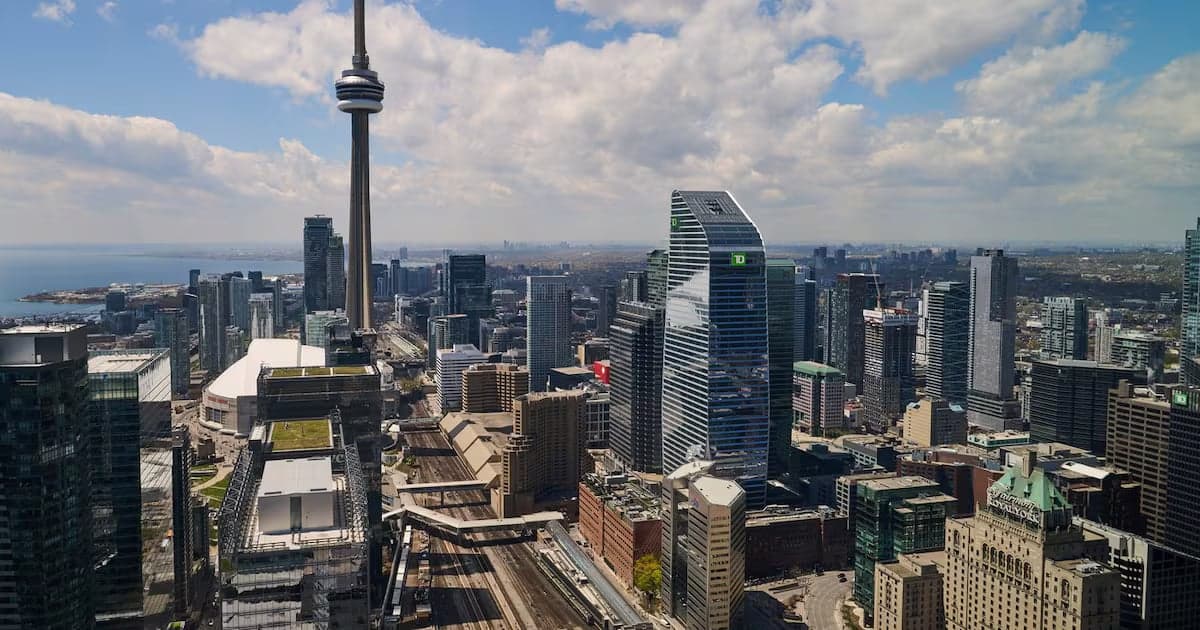
The winter conditions in Western Canada stood in stark contrast to weather across Ontario and Quebec, where unseasonably warm temperatures dominated mid-November[1][2]. In southern Ontario, daytime highs surged significantly above seasonal norms, leaving metropolitan centres like Toronto experiencing mild conditions while western communities contended with winter-storm protocols[1].
Meteorologists at The Weather Network highlighted that these localized disruptions are early manifestations of unusual macro-climatic disruptions across North America[2]. Forecasters are tracking an unprecedentedly early split and breakdown of the polar vortex in the high northern latitudes - occurring three weeks earlier than historical records indicate - interacting with an intense Pacific El Niño pattern[2]. Climate scientists note that these competing forces are producing sharp jet-stream undulations, increasing the frequency of rapid swings between unseasonable regional warmth and sudden Arctic cold blasts across Canadian population corridors[2].
- Environment Canada
- Polar Vortex
- Prairies
National News
2 min read
Former B.C. Mountie Receives Conditional Discharge for Assaulting Teen
A former senior RCMP officer in British Columbia, David Teboul, received a conditional discharge after being convicted of assaulting a teenager. The sentence means Teboul will avoid a criminal record if he successfully completes his probation, which includes reporting to a probation officer and a weapons prohibition.
Read the full storyFold the full story1 min · 3 sources
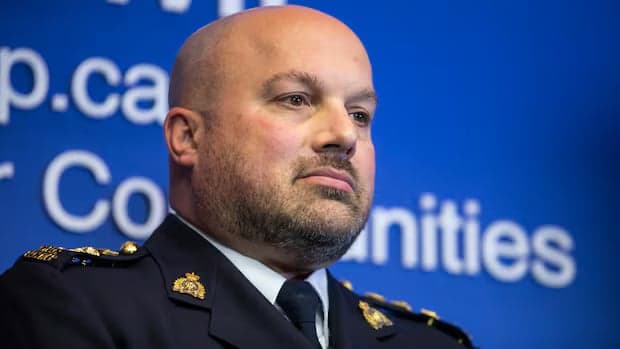
Public scrutiny over law enforcement accountability reignited in British Columbia after David Teboul, a former high-ranking officer with the Royal Canadian Mounted Police, was granted a conditional discharge in provincial court following his conviction for assaulting a teenager[1][2]. The sentence, delivered by a provincial judge in Abbotsford, ensures that the 52-year-old former senior officer will not carry a permanent criminal record if he successfully completes the terms of his probation[1][2].
The case arose from an altercation during the summer of 2025 at the Abbotsford Recreation Centre, a municipal athletic complex in the Fraser Valley[2][3]. Court records documented that Teboul engaged in a confrontation with a youth that escalated into physical violence[1][2]. Teboul, who served in high-profile executive and command capacities within the federal policing apparatus in British Columbia, was subsequently charged with assault, ultimately entering a guilty plea prior to the sentencing hearing[1][2].
Under the terms of the conditional discharge, Teboul is subject to a period of supervised probation requiring him to report regularly to a probation officer, keep the peace, and abide by a formal weapons prohibition[1]. In granting a discharge rather than imposing a suspended sentence or jail time, the court determined that sparing Teboul a permanent criminal record was not contrary to the public interest, considering his absence of a prior criminal record and his decades of public service[1][2].
The judicial resolution generated swift debate among community advocates and legal commentators, with critics drawing comparisons to the sentences routinely handed down to civilians for assaults on minors[1][2]. The case highlighted enduring public sensitivities surrounding judicial equity, disciplinary oversight within the RCMP, and the perceived double standard applied to veteran policing executives navigating Canada’s criminal justice system[1][2].
- Royal Canadian Mounted Police (RCMP)
- David Teboul
- Abbotsford
Section 2 of 4
World & Geopolitics
14 stories · 7 min skim
World & Geopolitics
2 min read
Great Powers Forge 'Declaration Toward Peace' at Shenzhen Summit, Reshaping Global Security and Energy
Leaders of the U.S., China, and Russia held an unprecedented trilateral summit in Shenzhen, China, issuing a joint 'Declaration toward Peace.' The agreement commits the three preeminent military powers to high-level security dialogues to manage strategic stability and nuclear risks, alongside cooperation to increase refined petroleum production and stabilize global energy markets. This meeting marks a significant shift toward direct great-power diplomacy outside existing multilateral frameworks.
Read the full storyFold the full story2 min · 15 sources
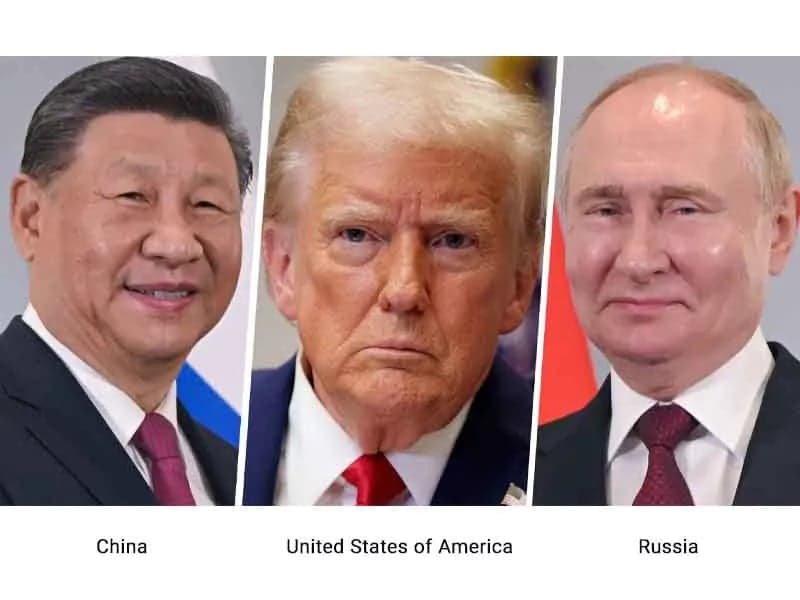
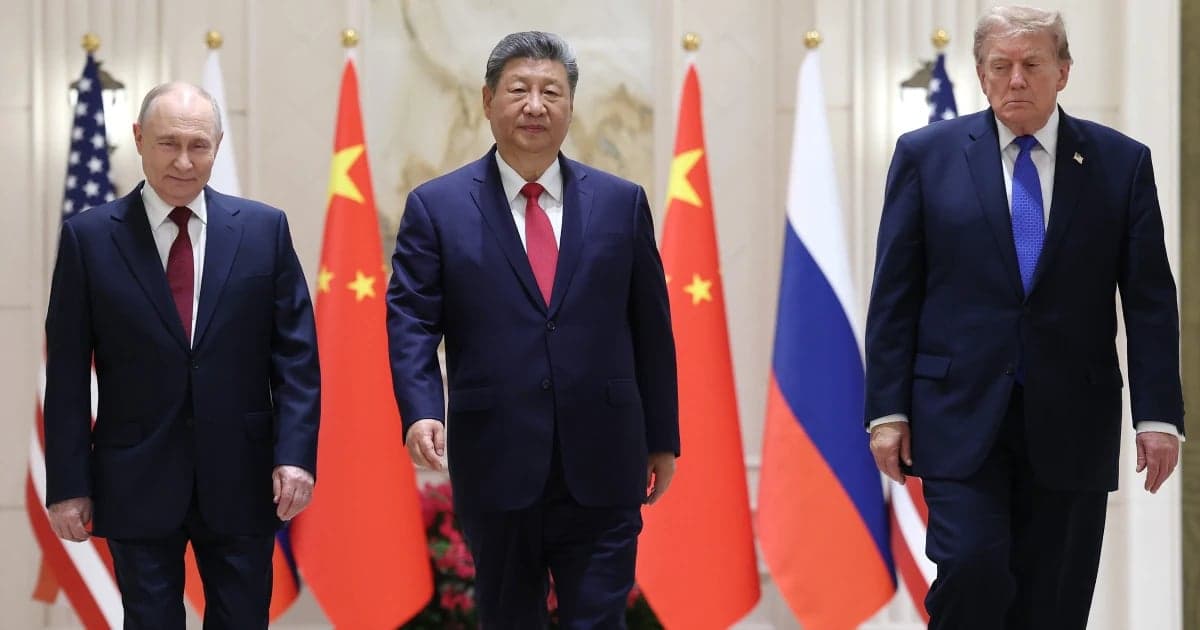
On November 19, 2026, U.S. President Donald Trump, Chinese President Xi Jinping, and Russian President Vladimir Putin convened at Kylin Villa in Shenzhen, China, on the sidelines of the 33rd Asia-Pacific Economic Cooperation (APEC) Leaders' Meeting for an unprecedented trilateral summit[1][2][3]. Following an opening media session and an eighty-minute closed-door conference, the three leaders issued a joint statement titled the "Declaration toward Peace"[4][5][6]. In the communique, the tripartite powers committed to opening high-level security dialogues aimed at managing strategic stability, reducing nuclear risks, and reforming the United Nations system to better align with current international dynamics[7][4][5]. In a development that caught global markets off guard, the leaders also pledged concerted cooperation to increase the production and cross-border distribution of refined petroleum products to stabilize international energy supply lines[7].
The meeting represents the first formal trilateral heads-of-state gathering of the world's three preeminent military powers, materializing against a backdrop of acute institutional erosion[4][8]. The bilateral New START arms control agreement between Washington and Moscow expired in February 2026 without a successor framework in place[9]. In parallel, China's nuclear arsenal has expanded past 600 warheads toward an estimated 1,000 by 2030, while the United States has accelerated investments in its "Golden Dome" multi-tier space- and ground-based missile interceptor architecture[9]. The Shenzhen conclave served as an assertive bid by Beijing and Moscow to establish a direct great-power mechanism outside existing multilateral forums, with Washington signaling an openness to transactional diplomacy that prioritizes strategic stabilization over conventional treaty architectures[1][10].
Reaction across Western Europe and among Eastern European allies has been marked by apprehension[1][11]. Ukrainian President Volodymyr Zelenskyy and senior European leaders cautioned against the emergence of a "Yalta 2.0," warning that discussions of continental security architectures and spheres of influence conducted without regional stakeholders risk compromising sovereignty[1][10]. Analytical commentary from the Belfer Center and the Council on Foreign Relations emphasized that while the declaration lacks binding disarmament quotas, the mandate for trilateral nuclear consultation establishes an unexpected diplomatic conduit between competitors[12][9]. Furthermore, the explicit agreement to ramp up petroleum refining and coordinate energy distribution introduces an axis of energy realpolitik capable of blunting independent sanctions regimes and exerting coordinated downward pressure on global fuel inflation[7][13].
The implications of the Shenzhen declaration point to a fundamental shift toward an opportunistic concert of powers, where major adversaries manage existential security dilemmas through bilateral and trilateral pacts while bypassing broader multilateral institutions[1][14]. Middle powers and traditional allies must now recalibrate their national defense doctrines to navigate a more transactional security environment, in which traditional security guarantees are continuously negotiated alongside energy quotas and trade concessions[14][15].
- Donald Trump
- Xi Jinping
- Vladimir Putin
World & Geopolitics
3 min read
Global Powers Clash Over Ukraine at Shenzhen Summit Amidst Escalating Battlefield Strikes
President Trump, Putin, and Xi Jinping met in Shenzhen to discuss global security and the Ukraine war, drawing parallels to the Yalta Conference. Trump urged a negotiated settlement, while Putin rejected ceasefires and vowed retaliation for Ukrainian strikes. European leaders convened in Berlin, dismissing the summit and affirming unified opposition to any deal lacking continental representation. Kinetic operations escalated, with Ukrainian drones hitting Russian infrastructure and Russia launching retaliatory strikes on Kyiv.
Read the full storyFold the full story2 min · 8 sources
A high-stakes diplomatic confrontation over the future of Eastern Europe took center stage on November 19, 2026, when U.S. President Donald Trump, Russian President Vladimir Putin, and Chinese Communist Party General Secretary Xi Jinping convened on the sidelines of the Asia-Pacific Economic Cooperation (APEC) summit in Shenzhen, China[1][2]. The historic trilateral gathering - coupled with an extensive bilateral meeting between Trump and Putin - marked the first time the leaders of the three nuclear superpowers met simultaneously to address broad global security architectures and the war in Ukraine[3][2]. Observers and Kremlin officials drew parallels to the 1945 Yalta Conference, raising alarms in European capitals that major powers might attempt to negotiate European spheres of influence without continental representation[4][1]. Trump told European leaders via a phone hookup that Putin appeared "tired of the war" and urged them to seek a negotiated settlement, suggesting that resources spent supporting Kyiv could be redirected to domestic priorities[5].
The optimistic American tone stood in stark contrast to the hardened rhetoric emanating directly from Moscow[5]. In a press conference following the Shenzhen trilateral session, President Putin rejected any prospects of a limited ceasefire or moratoriums on strikes against energy and maritime infrastructure[1][5]. Pointing directly to Ukraine's repeated strikes against the strategic Kerch Strait Bridge earlier in the week, Putin asserted that negotiations were off the table and vowed that Russian forces would execute retaliatory strikes against Ukrainian critical assets[1][5]. The Kremlin reiterated its baseline demands, emphasizing that Russia will not entertain a frontline cessation of hostilities without a comprehensive, legally binding war termination treaty that addresses NATO expansion and reshapes European security[6][1].
European capitals mounted an immediate, coordinated counter-offensive against the Shenzhen talks[7]. In Berlin, leaders of the European "Coalition of the Willing" - including German Chancellor Friedrich Merz, British Prime Minister Andy Burnham, and Ukrainian President Volodymyr Zelensky - gathered for emergency deliberations[7][8]. Chancellor Merz dismissed the Shenzhen summit as a superficial "photo op" and explicitly warned that any peace framework drafted without direct European and Ukrainian participation is doomed to collapse[7]. Prime Minister Burnham affirmed that Europe holds a unified negotiating position and will reject any bilateral carve-outs, while President Zelensky told reporters that global powers wishing to halt Russian aggression must abandon halfway measures and completely sever economic and trade ties with Moscow[7][8].
On the ground, kinetic operations escalated sharply alongside the diplomatic maneuvering[1][8]. Deep inside the Russian Federation, Ukrainian long-range strike drones hit the Kaleikino oil pumping station near Almetyevsk in the Republic of Tatarstan - over 1,000 kilometers from the border - damaging key storage and pumping installations along the Transneft-Prikamye pipeline network[1]. Simultaneously, Russian forces launched a retaliatory barrage of loitering munitions and cruise missiles at Kyiv, killing at least one person, inflicting structural damage on St. Volodymyr's Cathedral, and striking near foreign diplomatic residences, including the Austrian and Dutch missions[8]. In response, Ukrainian defense units deployed experimental localized laser defense systems to counter Shahed-style drones, highlighting how tactical technology continues to evolve amid grinding attrition and diplomatic deadlock[8].
- Donald Trump
- Vladimir Putin
- Xi Jinping
World & Geopolitics
2 min read
Trump-Putin-Xi Summit Followed by Russian Missile Strikes on Ukraine
An unprecedented trilateral summit between Presidents Trump, Putin, and Xi in Shenzhen concluded with a joint "peace declaration" addressing nuclear risks and oil supplies, and calling for UN and ICC reforms. However, the diplomatic overtures were immediately overshadowed by a significant Russian missile attack across Ukraine, causing casualties and widespread damage.
Read the full storyFold the full story2 min · 9 sources
In an extraordinary diplomatic development, U.S. President Donald Trump, Russian President Vladimir Putin, and Chinese President Xi Jinping convened for an unprecedented trilateral summit at Kylin Villa in Shenzhen, China[1][2]. The three leaders concluded their discussions by issuing a 226-word joint "peace declaration" that outlined a shared framework to reduce nuclear risks and increase global refining and supplies of petroleum products[3][4]. Crucially, the declaration took direct aim at international governance architecture, agreeing to pursue sweeping reforms to the United Nations and explicitly seeking to limit the jurisdiction of the International Criminal Court (ICC) - which currently holds an outstanding arrest warrant against Putin for war crimes committed in Ukraine[3][4].
The warm public camaraderie on display in Shenzhen, where Trump praised Xi and referred to Putin as "my friend," sent shockwaves through traditional Western alliances[3]. Polish Prime Minister Donald Tusk voiced the alarm of European partners, publicly stating, "God, protect us from such friends," while leaders of the European "Coalition of the Willing" held urgent consultations in Berlin[3][5]. French President Emmanuel Macron declared that reopening discussions regarding Ukraine's NATO membership remains urgent and necessary for continental defense[5]. Observers noted that the summit essentially bypassed decades of multilateral diplomacy in favor of great-power realpolitik that diminishes the legal and institutional protections historically relied upon by middle powers[4][2].
Any diplomatic optics of peace quickly unraveled. Hours after the leaders concluded their Shenzhen meetings, the Russian military launched a devastating wave of strikes across Ukraine using Tu-160 strategic bombers and ballistic missiles[6][5]. The attack struck Kyiv and Kryvyi Rih, killing at least three people, severely damaging two major bridges in the capital, and triggering emergency power outages across western and central regions, including Lviv, Zakarpattia, and Ivano-Frankivsk[7][5][8]. The bombardment was billed by the Kremlin as retaliation for a Ukrainian missile strike on the Kerch Strait Bridge earlier in the week, directly exposing the fragility of the trilateral summit's high-minded pronouncements[9][5].
The geopolitical upheaval carries grave implications for Canada. As a founding champion of the rules-based international order and the Rome Statute, Canada faces a profound foreign policy crisis as its chief security guarantor works in concert with authoritarian rivals to dilute international law and international courts[3][4]. The rapid deterioration of allied unity puts intense pressure on Canada’s defense posture, accelerating scrutiny of Ottawa’s military spending commitments, its operational contributions to NATO's eastern flank in Latvia, and its strategic sovereignty across the Canadian Arctic.
- Donald Trump
- Vladimir Putin
- Xi Jinping
World & Geopolitics
2 min read
Persian Gulf Tensions Surge: Mine Strikes and US Accusations Against Iran
Geopolitical friction escalated in the Persian Gulf as commercial oil tankers reportedly struck naval mines, and President Trump accused Iran of developing chemical weapons. The U.S. warned of overwhelming force if Iran deploys non-conventional devices. The incidents occurred amid ongoing maritime skirmishes and U.S. naval escorts in the Strait of Hormuz. Houthi forces advanced in Yemen, and tensions rose in Iraq over militia strongholds, while Tehran sought to bolster its internal security.
Read the full storyFold the full story2 min · 8 sources
Geopolitical friction surrounding the nine-month war between the United States and Iran escalated dramatically between November 19 and November 20, 2026, as both military exchanges and rhetorical brinkmanship reached new thresholds[1][2]. Speaking to news outlets, President Trump leveled serious allegations against Tehran, claiming that intelligence reports indicate the Iranian regime is exploring the development of biological and chemical weapons capabilities following heavy damage inflicted upon its nuclear installations[2]. Trump cautioned that if Iran attempted to deploy non-conventional or "dirty" explosive devices, the United States would respond with overwhelming force, while simultaneously hinting at potential deadline escalations set for early 2027[3].
The physical battlespace in the Persian Gulf and the Strait of Hormuz saw immediate disruption[4][5]. Iranian state outlets claimed that two commercial oil tankers struck naval mines while navigating non-cleared routes in the Strait, igniting fires onboard[1][2]. While independent verification of Iranian claims remained patchy, state energy operators in the United Arab Emirates confirmed that a commercial vessel had been struck by an aerial projectile, leaving at least one crew member missing[2]. Defense forces in Bahrain and Kuwait reported intercepting several hostile projectiles and drones launched toward regional transit corridors[2]. The incidents follow months of maritime friction, during which commercial vessels have regularly turned off automated identification system (AIS) transponders and navigated the southern shipping corridor under U.S. naval escort[5].
The widening confrontation is destabilizing adjacent regional theaters[6]. In Yemen, Iranian-backed Houthi forces launched ground offensives in the Abyan Governorate designed to fix government-aligned forces and open a secondary avenue of pressure against the provisional capital in Aden[6]. Concurrently in Iraq, significant tensions surfaced between the federal government in Baghdad and the Iranian-aligned militia Kataib Hezbollah over demands that the militia vacate its strongholds in Jurf al Sakhr[6]. Intelligence reports also noted institutional shifts in Tehran, where the regime submitted structural overhauls to the Ministry of Intelligence and Security to counter deep foreign penetration and reinforce internal counterintelligence mechanisms[6].
The administration's operational conduct has met mounting resistance on Capitol Hill[2][7]. On the afternoon of November 19, the U.S. Senate narrowly blocked a War Powers Resolution designed to halt unauthorized military actions against Iran, voting 48 to 51[2]. Although Republican Senators Susan Collins, Lisa Murkowski, and Rand Paul joined the Democratic caucus in supporting the measure, the defection of Democratic Senator John Fetterman helped maintain executive authority[2]. Following the vote, Senator Tim Kaine strongly criticized congressional leadership for backing a protracted and economically destabilizing campaign, pointing to clear voter anxiety regarding energy prices in the wake of the recent midterm elections[2][7]. Global energy markets registered immediate strain, with maritime insurers assessing steep war-risk surcharges across Gulf transit lines[8][5].
- United States
- Iran
- Donald Trump
World & Geopolitics
3 min read
Gaza Ceasefire Fails as Israeli Incursion Sparks Humanitarian Crisis and Official Condemnation
A ceasefire in Gaza was severely undermined by an Israeli ground operation that breached agreed-upon lines, leading to the demolition of militant infrastructure and civilian evacuations. Humanitarian agencies released a critical report detailing the catastrophic collapse of aid, scoring the one-year peace plan a failure due to ongoing casualties and restricted access. Israeli forces have expanded territorial control, while severe shortages of essential supplies plague the population.
Read the full storyFold the full story2 min · 7 sources
A tenuous cease-fire arrangement in the Gaza Strip deteriorated significantly on November 19, 2026, as Israeli forces conducted an armored ground operation beyond agreed lines, while international relief organizations issued a damning indictment of the enclave's humanitarian collapse[1][2]. The Israeli Coordinator of Government Activities in the Territories (COGAT) announced the completion of an intensive 14-hour ground operation north of the Nuseirat and Bureij refugee camps in central Gaza[2]. Israeli armored units, accompanied by heavy engineering bulldozers, crossed the designated "Yellow Line" to demolish what the military categorized as rebuilt militant infrastructure[2]. The incursion leveled residential blocks, commercial facilities, and farmlands, prompting panicked civilian evacuations under artillery fire[2]. Hamas denounced the maneuver as an overt ceasefire breach, while the Israeli military maintained the strike was an operational necessity following localized attacks[2][3].
The military flare-up coincided with the release of a comprehensive one-year evaluation report by five leading humanitarian non-governmental organizations - Oxfam, the Norwegian Refugee Council, the Danish Refugee Council, Save the Children, and Refugees International[1]. Auditing the internationally backed 20-point peace plan endorsed by UN Security Council Resolution 2803 in late 2025, the coalition awarded the framework a failing score of 4 out of 26, down from a score of 5 recorded in April 2026[1]. The documentation revealed that over the preceding year of nominal ceasefire, at least 1,650 Palestinians had been killed and nearly 6,000 injured in persistent localized strikes and cross-boundary incursions[1].
The audit painted a dire picture of humanitarian deprivation and expanding territorial control[1]. Israeli forces have steadily broadened their physical footprint, controlling up to 70 percent of the Gaza Strip compared to 58 percent when the ceasefire was signed[1]. Concurrently, humanitarian access received a zero rating[1]. Despite international mandates requiring 600 truckloads of humanitarian assistance daily, entry rates dwindled to an average of just 49 trucks per day in recent months, with medical supplies accounting for only two percent of cargo[1]. Severe restrictions on construction materials, piping, and medical consumables have left the vast majority of Gaza's 2.1 million inhabitants enduring severe shortages of potable water, sewage treatment, and basic medical care[1].
This field-level erosion unfolds against a volatile political paralysis within Israel following the general election of late October[4][5]. With Prime Minister Benjamin Netanyahu operating in a caretaker capacity, President Isaac Herzog formally tasked opposition figure Gadi Eisenkot with attempting to form a governing coalition[5]. Netanyahu's Likud party has challenged the election outcome, alleging procedural irregularities by Arab-led parties[4], while right-wing factions push for full-scale military resumptions[6]. Aid directors and regional analysts warn that without a functioning political authority in Jerusalem committed to phased demilitarization and genuine humanitarian access, the Gaza ceasefire exists in name only, leaving the territory vulnerable to a catastrophic resurgence of regional conflict[1][7].
- Israel
- Gaza Strip
- Hamas
World & Geopolitics
2 min read
ICJ Rules Myanmar Committed Genocide Against Rohingya, Establishing Landmark State Liability
The International Court of Justice has ruled that Myanmar's military committed genocide against the Rohingya population in 2017, finding the state liable under the Genocide Convention. The court ordered Myanmar to conduct investigations, punish perpetrators, and provide restitution and citizenship pathways for refugees. This judgment is the first time the ICJ has found a sovereign state directly responsible for committing genocide.
Read the full storyFold the full story2 min · 7 sources
On November 19, 2026, the International Court of Justice (ICJ) in The Hague delivered its merits judgment in the landmark case of The Gambia v. Myanmar, ruling 9–6 that Myanmar's military apparatus committed genocide against the Rohingya population during its 2017 "clearance operations" in Rakhine State[1][2][3]. The ruling found Myanmar in breach of multiple provisions of the 1948 Convention on the Prevention and Punishment of the Crime of Genocide, specifically Article II(a), (b), and (d), citing state-sponsored mass murder, widespread sexual violence causing severe bodily and psychological trauma, and measures designed to prevent births within the protected minority group[2]. The Court formally ordered the military-led government in Naypyidaw to implement judicial investigations, punish responsible commanders, provide explicit guarantees of non-repetition, and facilitate safe, dignified restitution and citizenship pathways for Rohingya refugees[2].
The judgment marks an unprecedented milestone in international jurisprudence: it is the first time the United Nations' principal judicial organ has found an entire sovereign state directly liable for committing the crime of genocide, rather than merely failing to prevent it[2][3]. The proceedings, initiated in 2019 by The Gambia on behalf of the Organisation of Islamic Cooperation and supported by eleven intervening states, systematically dismantled Myanmar’s primary defense that the atrocities were incidental to legitimate counter-insurgency warfare against the Arakan Rohingya Salvation Army[2][4]. Most critically, the Court established a definitive legal standard clarifying that genocidal intent (dolus specialis) can legally coexist alongside legitimate military operational objectives, provided that the physical acts reflect an intent to destroy a substantial part of a group[1][5].
Human rights organizations, civil society leaders, and international legal scholars reacted to the decision with widespread praise, while noting the formidable operational hurdles ahead[6][1][3]. UN Special Rapporteur Kelley E. Currie and Amnesty International Secretary General Agnès Callamard characterized the ruling as a long-delayed moment of accountability for survivors and a vital reaffirmation of the rules-based order[1][7]. International jurist Philippe Sands, representing the Gambian legal team, emphasized that the verdict prevents the Genocide Convention from becoming a "dead letter" by establishing concrete evidentiary pathways for evaluating state responsibility[3]. Conversely, Myanmar’s governing military council, headed by Senior General Min Aung Hlaing, has historically rejected the court’s jurisdiction, meaning actual enforcement will hinge on third-party diplomatic isolation and unilateral secondary sanctions[1][3].
The broader geopolitical reverberations of the ICJ’s ruling extend far beyond Southeast Asia[3]. By determining that military objectives do not negate genocidal intent, the Hague judgment establishes an immediate legal benchmark for ongoing deliberations at the Court, most notably South Africa’s genocide lawsuit against Israel and Nicaragua’s complicity case against Germany[1][3]. Furthermore, it affirms the viability of "erga omnes partes" litigation, empowering small and middle-tier states to enforce international humanitarian law against abusive powers regardless of geographic proximity, setting a structural precedent for global conflict accountability[1][2].
- International Court of Justice
- Gambia
- Myanmar
World & Geopolitics
2 min read
Türkiye Inducts Bayraktar Kızılelma, World's First Operational Unmanned Jet Fighter
Türkiye has officially inducted the Bayraktar Kızılelma unmanned fighter jet into its armed forces, marking a significant advancement in autonomous warfare. The jet-powered UCAV is designed for air-to-air combat and can operate from naval vessels. This induction follows extensive testing and signifies Türkiye's progress in achieving strategic defense autonomy.
Read the full storyFold the full story2 min · 8 sources
In a major transformation of modern military aviation, Turkish President Recep Tayyip Erdoğan and defense aerospace manufacturer Baykar announced on November 19, 2026, the official handover and induction of the first three Bayraktar Kızılelma unmanned fighter jets into the Turkish Armed Forces' operational inventory[1][2]. The induction follows an extensive flight-testing regimen comprising over 600 sorties since the aircraft's maiden flight in December 2022[3][4]. Baykar and Turkish military leadership confirmed that the acceptance trials had concluded, asserting that the Kızılelma is the world's first jet-powered, uncrewed combat aerial vehicle (UCAV) designed for air-to-air engagements to enter operational service within an active military branch[1][4][5].
Engineered under the MIUS (National Unmanned Aircraft System) program, the Kızılelma features a stealth-optimized airframe with a low-radar cross-section, an 8.5-metric-ton maximum takeoff weight, a 1,500-kilogram payload capacity, and near-sonic cruise speeds of Mach 0.9[1][2][3]. Over the past twelve months, the platform completed crucial milestones, including live-fire engagements using Roketsan's JET-230 supersonic air-to-surface missiles, Gökdoğan air-to-air missiles, and Toygun electro-optical targeting suites[4][6]. Crucially, the platform demonstrated advanced fleet autonomy, conducting close-formation flight tests alongside manned Italian M-346 aircraft, and was built specifically to operate from short-deck naval aviation vessels such as the amphibious assault ship TCG Anadolu[1][6].
The deployment of the Kızılelma represents the culmination of Ankara’s decadelong drive for strategic defense autonomy[2]. Following Türkiye's exclusion from the U.S.-led F-35 fighter consortium and the imposition of CAATSA sanctions, Turkish defense planners prioritized domestic drone architecture to bridge potential regional air-superiority deficits[2]. Baykar Chairman Selçuk Bayraktar described the handover as the fulfillment of a twenty-year indigenous industrial vision[3][5]. Beyond domestic deployment, the platform is rapidly gaining international traction; Baykar has already secured a framework export agreement with Indonesia for twelve Kızılelma jets, with procurement options for forty-eight additional units[6].
The strategic implications for regional deterrence and global defense procurement are extensive. By transitioning uncrewed combat aircraft from technology-demonstrator status into fielded frontline service ahead of Western and Asian sixth-generation "loyal wingman" programs, Türkiye has demonstrated how middle powers can achieve asymmetric air capabilities without relying on traditional aerospace superpowers[7][8]. The operationalization of carrier-capable, low-observable unmanned fighters introduces a cost-effective blueprint for force projection across the Mediterranean, Black Sea, and Middle Eastern theaters, accelerating the transition toward hybrid doctrine in contested airspace[7][2][3].
- Türkiye
- Baykar
- Bayraktar Kızılelma
World & Geopolitics
2 min read
COP31 Stalemate: Superpower Divergence and Energy Politics Thwart Global Climate Consensus
The UN Climate Change Conference (COP31) in Antalya, Türkiye, has reached an impasse over climate finance and fossil-fuel phase-out commitments. A significant deadlock persists between Global South nations and developed economies, exacerbated by the absence of the United States and a joint commitment by major powers to increase petroleum production. This failure highlights the growing disconnect between climate diplomacy and geopolitical realities.
Read the full storyFold the full story2 min · 9 sources
The 31st United Nations Climate Change Conference (COP31) in Antalya, Türkiye, entered its final scheduled day of plenary negotiations on November 20, 2026, locked in an intractable stalemate over climate finance targets and binding fossil-fuel phase-out language[1][2]. The conference, co-administered by Turkish Environment Minister Murat Kurum as COP President and Australian Climate Change Minister Chris Bowen presiding over negotiations, gathered a record 93,000 registered participants and 77 heads of state[3][4][5]. Despite the high turnout, delegations from the Global South, small island developing states (AOSIS), and European economies found themselves deadlocked against major fossil fuel producers regarding the terms of a proposed "Climate Justice Compact"[6][1][2].
The impasse highlights the widening gap between multilateral environmental diplomacy and the geopolitical realities of great-power competition[3][2]. The Antalya talks operated without the official participation of the United States, following the Trump administration's complete withdrawal from the Paris Agreement and 46 associated international organizations[7][2]. Simultaneously, a stark UN climate report released during the summit projected that current national trajectory policies will push global temperatures to an overshoot of at least 2.8 degrees Celsius above pre-industrial levels, far outstripping the 1.5-degree threshold[2]. Efforts to broker compromise language on accelerating low-carbon transitions were directly undermined when the United States, China, and Russia explicitly committed at the Shenzhen summit to increase global supplies of refined petroleum[8][2].
Negotiators in Antalya faced a contentious battle over financing allocations[1][2]. Developing countries argued that without enforceable, non-debt climate adaptation funding from industrialized economies, national net-zero pledges remain unworkable[2]. In contrast, several wealthy states, dealing with domestic inflation and resurgent national-industrial agendas, resisted expansive capital commitments, while corporate participants increasingly scaled back previous net-zero timelines[3][2]. UN Secretary-General António Guterres urged delegates to reject surrender, warning that failing to organize and finance an orderly energy transition would trigger severe economic fallout[6]. However, ministerial roundtables failed to produce consensus text, pushing negotiations toward an uncertain, extended overtime session[1][2].
The standoff in Antalya demonstrates that global environmental governance is increasingly fractured by transactional energy realpolitik[3][2]. As major powers pursue domestic resource extraction and unilateral manufacturing resilience, the multilateral consensus framework is losing its leverage over national policy agendas[7][3]. This fragmentation forces vulnerable economies to reassess climate adaptation not as an international treaty exercise, but as a critical geoeconomic risk to be managed through bilateral, regional, and non-traditional partnerships[3][9].
- COP31
- Antalya
- Türkiye
World & Geopolitics
2 min read
Carney Secures $400M China Trade Deal Amidst Diversification Strategy
Prime Minister Mark Carney has finalized an expanded trade agreement with China, extending tariff relief on approximately $400 million of Canadian exports through 2028. In return, Canada will grant exemptions on certain Chinese steel and aluminum imports where domestic supply is insufficient. The deal significantly benefits Canadian agri-food and seafood exporters.
Read the full storyFold the full story2 min · 9 sources
Prime Minister Mark Carney concluded his bilateral engagement with Chinese President Xi Jinping at the 33rd APEC Economic Leaders' Summit in Shenzhen by finalizing an expanded trade and tariff relief pact[1][2][3]. The agreement extends tariff-free treatment and tariff relief across roughly $400 million worth of Canadian exports through 2028, significantly widening an earlier agricultural arrangement[1][2]. In exchange, Canada agreed to grant critical exemptions from its 25 percent surtax on Chinese steel and aluminum imports, adding 23 steel and 9 aluminum tariff categories to its relief roster where domestic Canadian suppliers are unable to fulfill market demand[4].
The new measures provide substantial financial relief for Canada’s agri-food and seafood exporters, particularly across Atlantic Canada and British Columbia[1]. The tariff reductions cover frozen pork cuts, Greenland halibut ($96 million), Pacific spot prawns and cold-water shrimp ($87.5 million), geoduck ($61.4 million), and sea cucumbers ($39.4 million), while preserving previously established access for Canadian canola meal and peas[1][2]. Bilateral goods trade between the two nations had already climbed 17.1 percent year-over-year through the first eight months of the year, and official readouts noted that more than 90 percent of Canada-China trade is now operating under reduced tariff schedules[2][5].
The deal delivers immediate, tangible cost reductions for Canadian infrastructure and mining developments, as developers can now source essential specialized steel and aluminum at lower duties over the 2027–2028 construction seasons[4]. Speaking before an audience of global chief executives in Shenzhen, Carney actively pitched Asian partners to finance Canadian megaprojects, including port expansions and energy transportation corridors, declaring that "Canada is building more ambitiously and rapidly than at any time in our history" and preparing alternative partnerships across Asia and Europe should North American economic integration falter[6][5].
However, the strategy is inflaming tensions with Washington and stirring domestic debate. U.S. officials have openly criticized Canada's rapprochement with Beijing, viewing Canadian concessions on Chinese metals as a breach in allied trade alignment[7]. Domestically, Canadian foreign policy analysts and opposition critics have cautioned that deepening reliance on Chinese markets exposes Canadian resource sectors to economic coercion, while complicating sensitive negotiations with the White House[8][9]. Carney maintained that Canada’s foreign economic strategy must remain pragmatic and multifaceted, but the diplomatic balancing act between its Southern neighbour and its largest Asian market is entering a precarious phase[3][9].
- Mark Carney
- Xi Jinping
- APEC
World & Geopolitics
2 min read
Canada Urges Proactive Trade Talks with US Amid Trump Administration Tensions
Canadian trade and diplomatic officials have warned that the country cannot wait out the remainder of the Trump administration, especially with persistent tariff threats impacting key industries like automotive manufacturing. Officials briefed the advisory committee on Canada-U.S. Economic Relations, emphasizing the urgent need for bilateral trade resolution. The warning follows increased volatility and public criticism from a senior Trump trade adviser.
Read the full storyFold the full story2 min · 8 sources
Canada’s top trade and diplomatic officials delivered an urgent, closed-door assessment to the federal advisory committee on Canada-U.S. Economic Relations, warning that the country cannot afford to try to wait out the final two years of the Trump administration[1]. In a high-stakes briefing, trade minister Dominic LeBlanc, chief trade negotiator Janice Charette, Canadian ambassador to the United States Mark Wiseman, and clerk of the Privy Council Michael Sabia cautioned that tariff-battered domestic industries - most notably automotive manufacturing and sectors penalized under Section 338 actions - face rapidly depleting financial runways[2][1]. Officials emphasized that holding out for a friendlier American political landscape after the recent U.S. midterm elections carries unacceptable risks, and Ottawa must actively pursue a bilateral trade resolution in the near term[1].
The advisory committee, established to navigate heightened protectionism after the Trump administration allowed the Canada-United States-Mexico Agreement (CUSMA) to lapse into an uncertain rolling annual review structure, met amid increasingly volatile rhetoric between Washington and Ottawa[3]. The private briefing came immediately after a 20-minute meeting between Prime Minister Mark Carney and President Donald Trump on the margins of the Asia-Pacific Economic Cooperation (APEC) summit in Shenzhen[4][5]. Tensions spiked sharply when a senior Trump trade adviser launched a scathing public attack against the Canadian government, accusing Ottawa of "arrogance and dishonesty" and warning that its current negotiating posture "doesn't end well for Canada"[6][7]. The outburst was partly triggered by an opinion piece published in The New York Times by former trade minister Chrystia Freeland, which called on global democracies to view U.S. midterm results as a mandate to renegotiate relations with Washington on more balanced footing[7].
For Canadian businesses and workers, the stakes could hardly be higher. The integrated North American industrial base, long the cornerstone of central Canada's manufacturing economy, is experiencing severe friction under persistent tariff threats and regulatory divergence[8]. Charette stressed that negotiators are aiming for the lowest possible tariff levels across the narrowest possible basket of goods, prioritizing protection for Canadian supply chains[3]. However, Canadian business leaders and organized labour representatives on the advisory council have raised alarms that prolonged uncertainty is already choking off capital expenditure in Ontario’s auto corridor and resource processing sectors[3].
While Canadian negotiators insist they will not accept an agreement at any cost, the stark message from Ottawa's inner circle signals a tactical pivot[1]. Faced with aggressive rhetoric from the White House and mounting domestic industrial strain, the federal government is under severe pressure to reach an economic armistice with its largest trading partner before further cross-border trade barriers become permanent[1][3].
- Donald Trump
- Dominic LeBlanc
- Janice Charette
World & Geopolitics
2 min read
EU and Jordan Launch Strategic Investment Accord, Enhancing Regional Geoeconomic Ties
The European Union and Jordan have initiated negotiations for a bilateral Sustainable Investment Facilitation Agreement (SIFA), the first of its kind between the EU and a MENA nation. Alongside this, Brussels has committed €3 billion in financial support for Jordan's development, focusing on renewable energy, industrial modernization, and water management. This partnership aims to foster deeper geoeconomic integration and stability.
Read the full storyFold the full story2 min · 6 sources
On November 19, 2026, European Commission President Ursula von der Leyen and King Abdullah II of Jordan convened at the EU-Jordan Investment Conference along the Dead Sea to formally launch negotiations for a bilateral Sustainable Investment Facilitation Agreement (SIFA)[1][2]. The trade architecture is the first of its kind ever negotiated between the European Union and a partner in the Middle East and North Africa (MENA) region[3][4]. Running parallel to the regulatory pact, Brussels unveiled a comprehensive financial package of €3 billion for the 2025–2027 cycle, combining €500 million in sovereign macro-financial assistance (MFA) loans, direct budgetary support of €110 million, and a suite of strategic infrastructure investments focused on renewable energy, industrial modernization, and critical water management[5][2][3].
The agreement marks a deliberate evolution in European foreign policy, moving away from conventional development aid toward deep geoeconomic integration[6]. Surrounded by active security crises across the Levant, Jordan has served as a pivotal political buffer, despite suffering severe fiscal pressure, high regional trade disruptions, and acute natural resource strains[5][3]. Under the auspices of the EU's Global Gateway framework and the newly formulated Pact for the Mediterranean, the SIFA aims to streamline administrative authorization, enhance legal predictability, and lower compliance hurdles for European direct investments, specifically targeting Jordanian manufacturing, logistics, and desalinization infrastructure[1][5][2].
Strategic connectivity forms a key pillar of the partnership[2][6]. European Commissioner for the Mediterranean Dubravka Šuica confirmed that the European Investment Bank (EIB) will allocate an €11.3 million grant to extend the Medusa subsea fiber-optic telecommunications cable to the Aqaba Digital Hub, integrating Jordan directly into high-speed digital conduits linking Southern Europe and the Middle East[5][2]. EU Trade and Economic Security Commissioner Maroš Šefčovič and EU Ambassador to Jordan Pierre-Christophe Chatzisavas underscored that Jordan's domestic regulatory alignment is intended to occur swiftly, targeting the conclusion of the SIFA within three months to catalyze private capital deployment across 41 identified national infrastructure ventures valued at $15 billion[5][4][6].
For Brussels, hardwiring Jordan into European supply chains serves vital security and economic objectives[5][3]. By stabilizing Amman's balance of payments and investing in critical water supply initiatives that fulfill roughly 40% of the kingdom's drinking needs, the EU seeks to forestall state fragility on its southeastern periphery[5][3]. Simultaneously, this arrangement cements Jordan as a stable transshipment and clean-energy corridor running from the Arabian Peninsula to the Mediterranean, demonstrating how regional powers can construct resilient economic alliances to mitigate broader geopolitical volatility[5][6].
- European Union
- Jordan
- Ursula von der Leyen
World & Geopolitics
2 min read
Canada's 2026 Budget Passes Narrowly Despite Critical Fiscal Audit
The Canadian federal government has narrowly passed its 2026 budget, securing its mandate to implement significant corporate tax reforms, including a $36-billion "productivity mega-deduction." This legislative victory averted a political crisis, but it follows a scathing report from the Parliamentary Budget Officer detailing substantial increases in government spending and a low proportion allocated to long-term assets.
Read the full storyFold the full story2 min · 4 sources
The minority federal government cleared a critical hurdle in the House of Commons as Members of Parliament voted 162 to 151 to approve the 2026 federal budget, entitled Maîtres Chez Nous ("Masters of our Destiny")[1][2]. The legislative victory secures the Carney government’s mandate to implement sweeping changes to Canadian corporate taxation, anchored by a signature $36-billion "productivity mega-deduction" intended to spur private capital investment, machinery modernization, and industrial capacity across the country[2]. The adoption of the budget averted an immediate political crisis, giving the Liberals room to advance major spending priorities[2].
The vote unfolded under intense scrutiny following a damning report released by Parliamentary Budget Officer Annette Ryan[2][3]. Ryan’s analysis determined that cumulative spending commitments under Prime Minister Mark Carney have expanded by $331.6 billion across three successive fiscal plans[4][3]. Crucially, the PBO revealed that the government absorbed 96 percent of newly discovered fiscal room generated from higher-than-expected revenues through additional spending commitments rather than deficit reduction[3]. The report pointed out that the vast bulk of this expenditure was funneled into day-to-day government operations and bureaucracy rather than the long-term capital assets and infrastructure promised by the prime minister[3].
The findings provided sharp ammunition for opposition parties during debate. Conservative Leader Pierre Poilievre denounced the budget's borrowing trajectory as reckless fiscal mismanagement that threatens to fuel persistent inflation and keep borrowing costs elevated for Canadian households[2][3]. New Democratic Party Leader Avi Lewis attacked the plan from the left, arguing that the $36-billion productivity deduction constitutes an unwarranted windfall for large corporations while working Canadians battle elevated living costs[2]. In Quebec, Bloc Québécois Leader Yves-François Blanchet dismissed the budget’s title as political appropriation, arguing that Ottawa continues to infringe on provincial jurisdictions without granting Quebec meaningful self-determination over its economic levers[2].
For everyday Canadians and financial markets, the passage of the budget provides short-term tax incentives for corporate balance sheets, but leaves long-term structural questions unanswered[2]. Debt service charges continue to consume a substantial share of federal revenues, and economists warn that failing to constrain operational expenditures limits Ottawa's ability to respond to future external economic shocks, especially if cross-border tariff disputes escalate[2][3].
- Mark Carney
- Annette Ryan
- Pierre Poilievre
World & Geopolitics
2 min read
Environment Canada Admits Coal Export Ban Scrapped Due to Political Directive
Senior Environment Canada officials testified that the initiative to ban thermal coal exports was abandoned due to a verbal political directive from the Liberal government, not on technical or legal grounds. This admission follows an audit revealing the government quietly dropped its 2030 ban promise without explanation.
Read the full storyFold the full story2 min · 2 sources
In an explosive hearing before the House of Commons Environment Committee, senior civil servants confirmed that Environment and Climate Change Canada (ECCC) halted its years-long initiative to ban Canadian thermal coal exports solely because of a political directive from the Liberal government[1][2]. Megan Nichols, assistant deputy minister of ECCC’s environmental protection branch, told parliamentarians that after three years of technical and legal work aimed at treating thermal coal as a toxic substance to halt shipments, officials received verbal instructions handed down from political leadership to abandon the regulatory framework and redirect departmental resources elsewhere[1][1].
The testimony comes in the wake of an audit by Canada’s Commissioner of the Environment and Sustainable Development, which exposed that the federal government quietly abandoned its high-profile electoral promise to eliminate thermal coal exports by 2030 without any public explanation or formal paper trail[1][1]. Under sharp questioning by MPs regarding the absence of documentation, Nichols acknowledged that the directive was entirely verbal, moving from the political level to the deputy minister and subsequently down to departmental managers[1]. Government spokespersons had previously attempted to shift responsibility by claiming the decision originated under "the previous government," despite current Environment Minister Julie Dabrusin having served as parliamentary secretary to the portfolio during that exact period[2].
The revelation has provoked sharp condemnation from domestic environmental organizations and opposition legislators, who accuse the federal government of hypocrisy and capitulation to fossil fuel lobby groups[1][1]. Audit records revealed that departmental efforts to formulate the ban were systematically decelerated and terminated following extensive lobbying campaigns by coal producers and transport terminal operators, who export tens of millions of tonnes of Canadian and U.S.-mined thermal coal annually through west coast ports in British Columbia[1].
The fallout deals a significant blow to Canada’s climate credibility on the international stage, especially as Canadian diplomats attempt to position the country as a leader in global decarbonization at multilateral forums[1][1]. Back home, the admission sharpens the debate over natural resource extraction and federal accountability. Indigenous communities near export terminals, port authorities, and clean-energy advocates are demanding to know whether other federal environmental commitments have been discarded behind closed doors to accommodate commercial and economic pressures[1][1].
- Environment Canada
- Megan Nichols
- Julie Dabrusin
World & Geopolitics
2 min read
Anthropic's Record IPO Sparks Tech Selloff Amid AI Risk Warnings
AI developer Anthropic launched the largest IPO in history, valued at $1.5 trillion, raising over $81 billion. Despite the massive figures, the listing triggered a broad market selloff due to concerns about an AI valuation bubble and high operational costs. Anthropic's prospectus also warned of potential "catastrophic or existential risks" from advanced AI models.
Read the full storyFold the full story2 min · 9 sources
Artificial intelligence developer Anthropic officially debuted on the Nasdaq Global Select Market under the ticker ANT, completing the largest initial public offering in financial history[1][2]. The company raised $81.34 billion gross ($78.84 billion net) after pricing 980 million shares at $83 each, establishing an initial valuation of $1.5 trillion that eclipsed previous mega-cap offerings, including SpaceX[1][3][2]. During heavy first-day trading, shares surged to an intraday high above $111 - pushing Anthropic’s market capitalization over $2 trillion - before settling with a 17 percent gain to close at $97.17[3][2]. Goldman Sachs and Morgan Stanley secured underwriting windfalls of approximately $113 million each for orchestrating the landmark transaction[4].
Despite the debut's astronomical headline figures, the listing triggered widespread market unease rather than a sustained broad-market rally[5][3]. Wall Street’s three primary indices tumbled more than 2 percent overnight, weighed down by growing anxiety over an unsustainable artificial intelligence valuation bubble and massive capital expenditure requirements[5][3]. In Asia, South Korea’s benchmark KOSPI index suffered a steep rout, plunging more than 4 percent to drop below the psychological 5,000 threshold[5]. Market participants pointed to Anthropic’s prospectus disclosures, which revealed staggering operational costs - including $70.7 billion in contractual commitments through late 2027 - alongside unusual corporate governance structures and an explicit warning from its founders that frontier models present potential "catastrophic or existential risks to humanity" without strict guardrails[6][1][2].
The public listing immediately reverberated into international policy discussions. Speaking from the APEC summit, Prime Minister Mark Carney issued a stark warning that the global absence of standardized regulatory governance over advanced AI systems poses an "enormous risk" to financial markets, labor dynamics, and democratic institutions[7]. Carney asserted that the international community has lagged dangerously behind private developers in constructing binding legal frameworks to rein in systemic AI vulnerabilities and societal disruption[7].
For Canadians, the explosive commercialization of frontier AI models creates immediate economic and regulatory challenges. Canada's competitive tech ecosystems in Toronto, Montreal, and Waterloo face acute talent competition from heavily capitalized Silicon Valley giants[1]. Furthermore, the exponential computing resources demanded by foundational AI models are placing severe strain on Canadian energy grids, prompting provincial utilities and municipal planners from British Columbia to Quebec to reassess industrial electricity allocations and green energy quotas for incoming hyperscale data centers[8][9].
- Anthropic
- Nasdaq
- Goldman Sachs
Section 3 of 4
City News
17 stories · 9 min skim
City News
2 min read
Police Dismantle Violent GTA Tow-Truck Crime Syndicate
Toronto Police Service's Project Swords has dismantled a violent organized crime syndicate operating within the Greater Toronto Area's towing industry. The 14-month investigation led to 21 arrests and 112 charges, uncovering activities such as staged collisions, arson, extortion, and auto theft. The syndicate's alleged leader, Manoharan Subramaniam, was identified as controlling a company contracted by TPS for towing services, leading to the immediate termination of that contract.
Read the full storyFold the full story1 min · 4 sources
The Toronto Police Service revealed the results of Project Swords, an extensive 14-month multi-jurisdictional probe that systematically dismantled an organized crime syndicate operating inside the Greater Toronto Area’s towing industry[1][2]. Supported by regional policing agencies across York, Peel, and Durham, investigators arrested 21 individuals and filed 112 charges[3][1][2]. The investigation uncovered a violent criminal enterprise implicated in staged collisions, gun violence, widespread arson, extortion, auto theft, and fraudulent rehabilitation clinics[1][4][2].
At the center of the investigation, detectives arrested 43-year-old Manoharan (Mano) Subramaniam of Whitby, identified by police as the leader of the syndicate[1][2]. Police allege that Subramaniam and his network orchestrated a violent turf war against rival towing factions, notably an opposing group known as "The Union," which was separately targeted under Project Yankee[1]. Among the charges, Subramaniam and two close associates face conspiracy to commit murder after tactical officers intercepted a plot to assassinate two industry rivals, intervening just as surveillance of the intended targets was underway[1][2].
The probe uncovered compromising institutional vulnerabilities within municipal policing supply chains[4][2]. Investigators discovered that Subramaniam acted as the de facto owner and controller of Williams Towing - one of four contracted towing operators officially authorized by the Toronto Police Service to remove impounded and collision-damaged vehicles across Divisions 41, 42, 43, and 55[1][2]. While the business was registered under third-party nominees, operational revenue flowed directly into Subramaniam's syndicate[1]. TPS Chief Superintendent Joe Matthews confirmed that the service’s official commercial contract with Williams Towing was immediately terminated[1][4].
The investigation also led to breach of trust charges against a provincial correctional employee stationed at the Toronto East Detention Centre, who allegedly provided logistical assistance and illicit communications to Subramaniam while he was previously in custody[1][4]. Police teams seized illegal firearms, interrupted an international auto theft trafficking ring, and shut down corrupt healthcare clinics established to bill auto insurers for fabricated physical therapy claims[1][4]. Law enforcement officials noted that the dismantlement of the syndicate deals a major blow to violent organized crime and corruption that have long plagued highway towing operations throughout the GTA[1][2].
- Toronto Police Service (TPS)
- Project Swords
- Manoharan (Mano) Subramaniam
City News
2 min read
U.S. Sanctions 'Ndrangheta Faction in Toronto for Global Narcotrafficking
The U.S. Treasury has imposed sweeping financial sanctions on a Toronto-based faction of the Italian 'Ndrangheta criminal syndicate, accusing them of facilitating global narcotrafficking and money laundering. The sanctions target key Canadian figures, including alleged cell boss Angelo Figliomeni, and several businesses, such as Vescio Funeral Homes and Phantom Limousine Services. This action freezes U.S. assets and prohibits transactions with designated individuals and entities, highlighting concerns about the vulnerability of Ontario's corporate sector to organized crime.
Read the full storyFold the full story2 min · 9 sources
The United States Department of the Treasury’s Office of Foreign Assets Control (OFAC), in coordinated action with the U.S. Department of State and Italian authorities, announced sweeping financial sanctions targeting the Greater Toronto Area faction of the Italy-based 'Ndrangheta criminal syndicate[1][2]. Federal officials allege that the southern Ontario branch of the Calabria-rooted mafia has expanded so aggressively in recent years that it now dictates criminal and financial operations in Italy from across the Atlantic[3][4]. Designated under Executive Order 14059 for international illicit drug trafficking and money laundering, the Toronto network is accused of providing critical logistical pipelines and laundering infrastructure to Latin American narcotics cartels, including groups formally categorized by Washington as foreign terrorist organizations[1][5].
The sanctions name six key Canadian figures operating across the Greater Toronto Area, centered on alleged cell boss Angelo Figliomeni (known as "Don Angelino") of Vaughan, who initially fled Italy in the early 2000s to evade a 20-year sentence on weapons charges[1][6]. Other high-ranking associates designated include Cosimo Figliomeni ("Cosimino"), long-time leaders Francesco Commisso ("U Scelto") and Rocco Remo Commisso, and Vincenzo "Jimmy" DeMaria[1][6][3]. U.S. officials identified several of these figures as core leaders of the Toronto Camera di Controllo - a high-level governing council responsible for mediating syndicate disputes, coordinating cross-border drug logistics, and enforcing disciplinary edicts spanning international jurisdictions[5].
In a significant blow to the network's commercial apparatus, U.S. authorities also blacklisted prominent commercial enterprises allegedly controlled by designated member Luigi Vescio Sr. ("The Undertaker")[3]. The designated commercial entities comprise three locations of Vescio Funeral Homes - operating in Woodbridge, Maple, and Toronto - as well as Toronto-based luxury vehicle operator Phantom Limousine Services Inc.[3][7] Alongside Vescio Sr., three family members alleged to manage administrative functions on his behalf were named[5]. OFAC issued Illicit Drugs General License 1, establishing a strict wind-down period ending December 18, 2026, for external entities to sever business relationships and transfer any blocked funds into designated U.S. accounts[6][8].
The international designations freeze all U.S.-based assets linked to the named individuals and corporate entities, prohibit American citizens and financial institutions from executing transactions with them, and expose foreign financial institutions to secondary sanctions if they handle related funds[7][5]. In a public statement, U.S. Treasury Secretary Scott Bessent emphasized that transnational drug cartels do not operate in a vacuum, relying instead on integrated syndicates like the 'Ndrangheta to clean illicit capital and distribute narcotics[9]. The action reflects intensified bilateral law enforcement pressure on Canadian financial conduits, underscoring persistent concerns from international regulators regarding the vulnerabilities of the Ontario corporate and real estate sectors to transnational organized crime[2].
- 'Ndrangheta
- U.S. Department of the Treasury
- Angelo Figliomeni
City News
2 min read
New Synthetic Opioid Detected in Toronto Fentanyl Supply
Toronto's Drug Checking Service has identified a potent, previously undetected synthetic opioid circulating within the city's street fentanyl supply. The substance, belonging to the 'orphine' class, was found in multiple fentanyl samples collected across the city. Public health officials are concerned due to the lack of clinical data on its effects and the potential for severe, unpredictable reactions when mixed with other illicit drugs.
Read the full storyFold the full story2 min · 4 sources
An urgent public safety advisory was issued across the Greater Toronto Area after Toronto’s Drug Checking Service detected a novel designer opioid circulating in the city's unregulated street fentanyl supply[1][2]. Operating out of St. Michael’s Hospital in partnership with clinical laboratories at the Centre for Addiction and Mental Health (CAMH), the surveillance service identified the synthetic compound in multiple fentanyl samples collected across Toronto neighborhoods[1][2][3]. The compound represents the sixth entirely new psychoactive substance detected in the city’s illicit drug market so far this year, signaling an accelerating wave of chemical manipulation by clandestine manufacturers[1][2].
The substance belongs to the emerging "orphine" class of synthetic opioids and is chemically designated as either N'-Phenethyl-5-chloro nor-orphine or N'-Phenethyl-6-chloro nor-orphine[1][2]. Because the two structural isomers are nearly identical, current mass spectrometry and analytical methods cannot reliably distinguish between them, and the substance does not yet possess an approved generic pharmacological designation[1][2]. Karen McDonald, Executive Director of Toronto's Drug Checking Service, warned that virtually no clinical or pharmacological literature exists regarding the drug's human toxicity, half-life, or binding affinity[1][3].
Public health experts and laboratory directors expressed alarm over the unpredictable physiological reactions triggered when novel orphines are combined with unregulated fentanyl and benzodiazepine derivatives[3][4]. Dr. Cristiana Stefan, clinical biochemist and laboratory director at CAMH, noted that it took diagnostic teams weeks of advanced spectral analysis to isolate the chemical fingerprint of the new orphine, emphasizing that novel adulterants introduce immense risk because consumers and healthcare providers cannot anticipate their strength[3]. The discovery follows the emergence late last year of cychlorphine - another orphine-class analogue documented to be roughly ten times more potent than pharmaceutical fentanyl[2].
The alert comes amid a persistent surge in toxic drug overdoses and 911 paramedic dispatches across southern Ontario, including Toronto and Hamilton[2]. Frontline harm reduction workers caution that individuals exposed to designer orphine compounds may not respond to standard single-dose administration of naloxone, often requiring multiple high-volume doses, prolonged oxygen therapy, and intensive clinical resuscitation[4]. The findings have prompted public health units across the GTA to urge drug-checking participation and alert hospital emergency departments to the potential for protracted, atypical opioid poisonings[2][4].
- Toronto's Drug Checking Service
- St. Michael's Hospital
- Centre for Addiction and Mental Health (CAMH)
City News
2 min read
Fatal LRT Collision Sparks Safety Concerns for Toronto's Line 5 Eglinton
A pedestrian fatality on the surface alignment of Toronto's Line 5 Eglinton LRT has intensified scrutiny of transit safety and at-grade light rail operations. A woman was struck and killed by a westbound LRT vehicle near Victoria Park Avenue, prompting service suspensions and investigations into the incident. This tragedy, occurring outside a designated crossing, raises concerns about pedestrian safety along busy arterial roads where the LRT operates at street level.
Read the full storyFold the full story2 min · 5 sources
A fatal collision along the surface alignment of the newly operational Line 5 Eglinton LRT has placed transit safety and pedestrian infrastructure under renewed scrutiny across the Greater Toronto Area[1][2]. Toronto Police Service units, along with emergency paramedics, responded to Eglinton Avenue East just west of Victoria Park Avenue following reports that a light rail transit vehicle had struck a pedestrian[1][3]. Life-saving efforts were administered at track level before the victim, a woman in her 40s, was transported to hospital in life-threatening condition, where she was pronounced dead[1].
During an on-site briefing, Toronto Police Duty Inspector Jeff Allington reported that the pedestrian was walking northbound across the tracks outside of a designated or signalized pedestrian intersection when she was struck by the westbound light rail vehicle[1]. Light rail service along Line 5 was temporarily suspended, with transit authorities deploying replacement shuttle buses between Sloan Avenue and Pharmacy Avenue while traffic collision reconstruction teams preserved track-level physical evidence[1]. Forensic investigators are reviewing forward-facing cab cameras, onboard black box telemetry, and wayside sensors to verify train speeds, braking distances, and horn-sounding protocols leading up to the impact[1].
The fatality marks at least the second serious pedestrian strike along this specific surface corridor in Scarborough, following a pre-opening incident in which a 64-year-old woman sustained critical injuries after crossing into the path of an oncoming test train[1]. Unlike underground subway corridors, the eastern stretch of Line 5 operates in a dedicated median at street level, relying on overhead catenary wires, track fences, and coordinated traffic signals[1][2]. Community advocates and pedestrian safety organizations have expressed deep concern over mid-block crossing points along wide, high-speed arterial roadways like Eglinton Avenue, where pedestrians often cut through surface corridors between distant signalized intersections[1][4].
The incident arrives as municipal transit administrators and the TTC Board evaluate comprehensive rail corridor security reviews, including artificial intelligence-assisted track intrusion warning pilots[5]. With suburban light rail expansions continuing across the GTA, transit planners are facing mounting pressure from municipal leaders and safety watchdogs to install physical track barriers, improve perimeter lighting, and introduce enhanced automated braking systems at exposed median intervals[5][1].
- Line 5 Eglinton LRT
- Toronto Police Service
- TTC
City News
2 min read
Mayor Chow Restructures Committees, Appoints Ainslie as TTC Chair
Toronto Mayor Olivia Chow has initiated a significant administrative overhaul, appointing Councillor Paul Ainslie as the new Chair of the Toronto Transit Commission (TTC). Ainslie takes the helm amid ongoing fiscal challenges and operational reviews within the transit agency. The mayor also made key appointments to other executive committees, including housing and infrastructure, signaling a strategic shift in city governance as council confronts a substantial budget deficit.
Read the full storyFold the full story1 min · 9 sources
As Toronto City Council convened following the swearing-in of the mayor and council, Mayor Olivia Chow enacted a major administrative restructuring of her governing team, positioning key allies atop portfolios confronting multi-million dollar structural deficits[1][2]. Heading the changes, Chow appointed Scarborough-Guildwood Councillor and regional Deputy Mayor Paul Ainslie as the new Chair of the Toronto Transit Commission (TTC)[1][2]. Ainslie succeeds former chair Jamaal Myers, who was unseated in Scarborough North in the recent municipal election, leaving a leadership vacuum at the head of Canada's largest transit agency[1][2].
Ainslie steps into the TTC chairmanship at a turbulent time for the transit agency[3][4]. In his opening remarks following the Striking Committee’s confirmation vote, Ainslie acknowledged that recent executive reviews, administrative spending inquiries surrounding senior TTC leadership, and persistent operational deficits are "very concerning" matters that require immediate oversight[5][4]. Ainslie will lead a revamped transit commission that includes Councillors Neethan Shan, Mike Layton, and Alejandra Bravo, tasked with stabilizing operational service, restoring post-pandemic rider volumes, and addressing safety vulnerabilities across subway, surface rail, and bus routes[6][2].
Chow’s broader council appointments balanced political continuity with deliberate strategic shifts[1]. Ausma Malik was re-confirmed as First Deputy Mayor alongside Chow's returning regional deputies[1][7]. In housing, Chow tapped former federal Liberal Member of Parliament Nate Erskine-Smith to chair the Planning and Housing Committee, partnered with newly elected Parkdale-High Park Councillor and long-time community housing advocate Diana Chan McNally as vice-chair, taking over the portfolio from retiring councillor Gord Perks[1]. Meanwhile, veteran downtown representative Mike Layton was installed to head the Infrastructure and Environment Committee[1].
For the second consecutive term, Chow formally declined to take a designated seat on the Toronto Police Services Board[1][7]. City hall observers note that the restructured council apparatus must immediately tackle an estimated $1 billion municipal budget shortfall heading into the fiscal year[8]. Chow signaled intentions to exert direct executive control over the city's homelessness and shelter files, warning that negotiations with provincial and federal partners over infrastructure funding and transit subsidies will dominate the council agenda[9][8][1].
- Olivia Chow
- Paul Ainslie
- Toronto Transit Commission (TTC)
City News
2 min read
TTC Chair Ainslie to Probe CEO Misconduct Allegations and Contract Irregularities
The new TTC Board Chair, Paul Ainslie, has pledged an aggressive investigation into serious allegations against CEO Mandeep Lali, including staff complaints of abusive behavior and the approval of sole-source consulting contracts to a former associate. Ainslie acknowledged the gravity of the reports, emphasizing the TTC's reliance on public funds and the need for ethical procurement.
Read the full storyFold the full story2 min · 2 sources
Newly appointed Toronto Transit Commission (TTC) Board Chair Paul Ainslie confronted mounting scrutiny over transit leadership, confirming that the agency's governing body will aggressively investigate serious allegations surrounding TTC Chief Executive Officer Mandeep Lali[1]. Reports revealed that Lali has been the subject of an external investigation launched this fall following complaints from staff alleging demeaning, insulting, and abusive workplace behavior toward subordinates[1]. Compounding the workplace culture controversy are emerging allegations regarding procurement integrity, specifically that Lali approved lucrative sole-source consulting contracts to a former professional associate based in the United Kingdom[1].
Ainslie, appointed to lead the transit board as part of Mayor Chow’s executive shuffle, addressed the controversy directly at City Hall, characterizing the reports as deeply troubling[2][1]. He emphasized that the city provides an annual operating subsidy of approximately $1.5 billion to the transit agency, creating an unyielding obligation to protect taxpayer funds and maintain ethical procurement standards[1]. Ainslie noted that while he sat on the selection panel that recruited Lali and credited the executive with initial efforts to lift operational morale, the gravity of the allegations leaves no room for complacency[1]. The board, he stated, intends to review the external investigation's findings promptly and take whatever corrective action is warranted[1].
The controversy has galvanized transit worker unions and rider advocacy organizations, who are demanding immediate accountability[1]. Frontline transit workers represented by ATU Local 113 have expressed outrage over the allegations of administrative misconduct, especially amid persistent frontline staffing shortages and rising safety incidents across the network. Critics argue that any improper diversion of funds into non-competitive consulting agreements erodes internal morale and public trust at a time when the transit agency is lobbying senior levels of government for long-term capital recapitalization.
The leadership crisis lands at an already precarious operational juncture for the TTC. Beyond personnel investigations, Ainslie must navigate chronic capital maintenance deficits, declining farebox recovery, and the delivery of critical suburban projects, most notably the proposed 18-kilometre Scarborough East LRT[2]. Ainslie’s dual mandate - serving as both TTC Chair and Chow’s deputy mayor representing Scarborough - was designed to elevate suburban transit expansion[2]. However, handling internal executive misconduct hearings threatens to overshadow strategic capital planning, forcing the board to manage an administrative storm before it can advance broader service modernization goals[1].
- Paul Ainslie
- Mandeep Lali
- Toronto Transit Commission (TTC)
City News
2 min read
Chow Centralizes Homelessness File, Appoints New Housing Committee Leadership
Mayor Olivia Chow has restructured Toronto City Hall by bringing the homelessness portfolio directly under her Executive Committee and appointing Nate Erskine-Smith as chair of the Planning and Housing Committee. This move signals a significant recalibration of municipal priorities amid a worsening housing crisis, with over 12,000 residents experiencing homelessness and a substantial waitlist for affordable housing. The changes aim to expedite decision-making and implement the HousingTO 2020-2030 Action Plan.
Read the full storyFold the full story2 min · 3 sources
Mayor Olivia Chow reshuffled her leadership team at Toronto City Hall, appointing former federal Liberal MP Nate Erskine-Smith as chair of the Planning and Housing Committee and selecting prominent advocate Diana Chan McNally as vice-chair[1]. In a parallel structural shift, Chow announced that she will consolidate the city's homelessness file directly under her own Executive Committee, signaling an executive takeover of emergency shelter operations and long-term supportive housing strategies[1]. While the mayor maintained continuity across several key portfolios - retaining her core roster of deputy mayors and keeping Shelley Carroll as budget chief - the structural reorganization of housing marks a pivotal recalibration of municipal priorities[1][2].
The policy shift arrives as municipal data highlights the intensifying strain on Toronto’s shelter network and broader residential ecosystem[3]. More than 12,000 residents are currently experiencing homelessness across the city, while the waitlist for rent-geared-to-income (RGI) housing exceeds 100,000 households[3]. Compounding the crisis, private residential development has stalled dramatically, with housing starts dropping 44% year-over-year amid prohibitive borrowing costs and high construction expenses[3]. Chow emphasized that her direct oversight of homelessness aims to break the cycle of temporary, reactive sheltering in favor of permanent, dignified housing solutions[1]. She noted that other major metropolitan jurisdictions have outpaced Toronto in curbing chronic homelessness and stressed that the executive transfer is intended to expedite decision-making without bureaucratic bottlenecks[1].
The elevation of Erskine-Smith to the head of the Planning and Housing Committee places a seasoned, progressive federal policymaker in charge of Toronto's zoning reforms and affordable housing targets[1]. Erskine-Smith, who previously served in Ottawa and ran for the Ontario Liberal leadership before winning the Beaches-East York council seat vacated by Brad Bradford, brings a mandate to accelerate municipal land activation and streamline approvals[1]. Together with Chan McNally - a frontline community worker and researcher known for challenging past city shelter clearings - the new housing leadership is tasked with delivering on the ambitious HousingTO 2020–2030 Action Plan[3][1]. That blueprint calls for the approval of 65,000 rent-controlled and affordable homes, including 18,000 supportive units and 6,500 RGI units[3].
This reorganization carries substantial political and fiscal implications as Toronto prepares its forthcoming capital and operating budgets. By placing the homelessness response within the mayor’s inner circle, Chow is directly tethering her political legacy to tangible reductions in encampments and shelter demand. The committee leadership will also be responsible for deploying capital unlocked under recent intergovernmental arrangements, such as the $2.7 billion federal Build Canada Homes program, which targets construction across nine city-owned properties[3]. Advocates have praised the appointment of Chan McNally as a crucial conduit for marginalized voices, while developers and municipal observers will be watching closely to see whether Erskine-Smith can break through municipal planning inertia to expedite high-density and purpose-built rental construction[3][1].
- Olivia Chow
- Nate Erskine-Smith
- Diana Chan McNally
City News
2 min read
AI Fugitive Models Debut as Suspect Arrested in Bolton Murder Case
The Bolo Program, in partnership with Canadian law enforcement, has launched an innovative AI-driven initiative to generate realistic, life-sized fugitive models for public recognition. These digital avatars are designed to help identify suspects in everyday settings. Coinciding with the launch, Filmon Fesshaghirgis, wanted for a 2021 murder in Bolton, Ontario, was apprehended in Winnipeg after being listed on the national 'Most Wanted' list. His arrest highlights the program's immediate effectiveness.
Read the full storyFold the full story2 min · 8 sources
At a joint press conference held at the Toronto Police College in Etobicoke, the Bolo Program and Canadian law enforcement partners debuted an artificial intelligence-driven overhaul of Canada’s Top 25 Most Wanted fugitives[1][2]. The initiative, delivered alongside Toronto Police Chief Myron Demkiw and Winnipeg Police Deputy Chief Cam Mackid, presented the country’s most sought-after criminal suspects as life-sized, moving AI-generated models and holographic video projections[1][2]. The digital avatars depicted fugitives blinking, shifting weight, and looking in different directions while dressed in common casual clothing, a strategic shift intended to help witnesses recognize suspects in public transit stations, retail settings, and border hubs[2][2][3]. Bolo Program Executive Director Max Langlois defended the realistic visual simulations, acknowledging that while the lifelike representations might feel uncomfortable, that disruptive psychological response is critical for public vigilance[2][2].
The updated 2026 list highlights six suspects with direct connections to Toronto and the broader GTA, featuring local cases in two of the top three national positions[4][5]. Ranked second overall is 53-year-old Kyle Douglas Prouse, wanted for attempted murder and armed robbery in connection with an April 2026 jewelry heist and the shooting of a security guard inside Fairview Mall[4][5]. Ranked third is 32-year-old Cody Rudifo, wanted for first-degree murder following the October 2026 fatal shooting of 34-year-old Christopher Gordon in Lawrence Heights[4][5]. Chief Demkiw stressed that investigative awareness campaigns deliver tangible results, pointing out that since 2018, 19 out of 28 Toronto-specific suspects highlighted by the Bolo Program have been successfully apprehended[2].
Within hours of the technology's debut, the campaign yielded an immediate operational success[6][7]. In Winnipeg, a joint task force consisting of the RCMP and the Winnipeg Police Service tracked down and arrested 28-year-old Filmon Fesshaghirgis of London, Ontario, who had just been listed as the No. 14 fugitive on the national list[7]. Fesshaghirgis is wanted on a Canada-wide warrant by the Ontario Provincial Police (OPP) in connection with the January 2021 fatal shooting of 65-year-old Giovanni Costa at a residence in Bolton, Ontario[7].
Arrangements are currently underway to extradite Fesshaghirgis back to Ontario, where he faces formal charges of first-degree murder, two counts of attempted murder, and conspiracy to commit murder[7]. Investigators had already charged five other accomplices in connection with Costa’s death, but Fesshaghirgis had successfully evaded law enforcement for nearly five years[7]. Officials emphasized that his rapid apprehension following the national campaign underscores the effectiveness of coordinated interprovincial tracking and wide-reach technological visualization in cornering violent fugitives[7][8].
- Bolo Program
- Toronto Police Service
- Winnipeg Police Service
City News
2 min read
Bolo Program Uses AI Avatars for Fugitive Apprehension, Leading to Arrest
The Bolo Program has launched an innovative initiative at the Toronto Police College, featuring life-sized AI avatars of its Top 25 Most Wanted list. These dynamic projections illustrate how fugitives might appear in public settings, aiming to improve apprehension rates. The technology was quickly put to the test, with the suspect at No. 14, Filmon Fesshaghirgis, arrested in Winnipeg shortly after the list's release.
Read the full storyFold the full story1 min · 6 sources
At an operational conference hosted at the Toronto Police College, the Bolo Program launched an updated Top 25 Most Wanted list featuring life-sized, animated artificial intelligence avatars designed to illustrate how fugitive suspects look and carry themselves in daily environments[1][2]. Bolo Program Executive Director Max Langlois, joined by Toronto Police Chief Myron Demkiw and regional policing partners, revealed that the initiative utilizes algorithmic movement modeling to transform static, years-old booking photos into life-sized video projections showing suspects moving as they might on transit, in grocery stores, or at airport terminals[1][2].
The utility of the campaign was demonstrated within hours of the public briefing[3][4]. Twenty-eight-year-old Filmon Fesshaghirgis, placed at No. 14 on the new national list, was arrested in Winnipeg by a joint task force consisting of the RCMP and Winnipeg Police Service[2][4]. Fesshaghirgis had evaded capture on Canada-wide warrants for first-degree murder, two counts of attempted murder, and conspiracy to commit murder in connection with the fatal January 2021 home-invasion shooting of 65-year-old Giovanni Costa in Bolton, as well as an earlier shooting in Vaughan[3][4]. Ontario Provincial Police confirmed that tip-offs and rapid information sharing followed immediately after the suspect's updated visual profile was circulated nationwide[4][5].
Chief Demkiw emphasized during the announcement that community-based visual campaigns remain one of the most effective levers for municipal policing, noting that 19 of the 28 Toronto-based cases spotlighted by Bolo since 2018 have resulted in apprehensions[1]. While the top spot on the national list remains occupied by Satinderjeet Singh (known as Goldy Brar) with a $250,000 reward, the fast arrest in the Peel and York Region homicide files has fueled broader law-enforcement interest in deploying dynamic AI visual synthesis to break through cold-case investigative barriers[1][6][3].
- Bolo Program
- Toronto Police College
- Artificial Intelligence
City News
2 min read
Housing Market Enters Prolonged Stagnation Due to Economic Headwinds
The Greater Toronto Area housing market is projected to experience a prolonged period of subdued activity and falling prices through late 2026 and into 2027, according to analyses from TD Bank Economics and TRREB. Elevated borrowing costs and persistent economic headwinds have significantly reduced buyer activity and transaction velocity. Sales in October were down 7.9% year-over-year, with prices also declining.
Read the full storyFold the full story2 min · 8 sources
A wave of market analyses from leading financial institutions and the Toronto Regional Real Estate Board (TRREB) warned that the Greater Toronto Area housing market is entering an extended period of subdued activity and falling prices through late 2026 and well into 2027[1][2]. Following the Bank of Canada’s monetary policy decision in late October, TD Bank Economics published an updated outlook detailing how elevated bond yields and persistent borrowing costs have effectively sidelined buyers and chilled transactional velocity across Ontario[1][3]. TD economist Rishi Sondhi reported that loose supply-demand dynamics and an affordability impasse will exert continued downward pressure on home valuations across the fourth quarter[1].
Fresh monthly performance metrics from TRREB corroborate the cooling trajectory. GTA realtors recorded 5,603 residential sales in October, reflecting a 7.9% drop compared to the same period in 2025[2]. Although sales saw a modest seasonal uptick from September, total transactions remain far below historical norms[2][4]. On the pricing side, the MLS Home Price Index Composite benchmark fell 4.3% year-over-year, while the unadjusted average selling price settled at $1,024,108, down 2.7% from twelve months earlier[2][4]. Market liquidity remains tight, with the median property sitting on the market for 28 days and sellers increasingly compelled to negotiate, producing an average sale-to-list ratio hovering around 97%[5][6].
The downturn has hit the high-density condominium sector with exceptional force[5]. A significant supply glut of investor-owned resale condos has accumulated across the downtown core, where buyers have pulled back due to high maintenance fees, elevated mortgage carrying costs, and softer rental yields[5][7]. Simultaneously, low-rise pre-construction projects in the suburban 905 region have increasingly undercut older resale housing stock by offering aggressive builder incentives, diverting demand away from the traditional market[5]. TRREB Chief Information Officer Jason Mercer observed that while the affordability quotient has improved marginally relative to peak price spikes, household purchasing power remains constrained by elevated debt-service burdens[2][4].
Industry observers anticipate that the prolonged freeze in market momentum will have cascading repercussions for municipal revenues and regional housing supply pipelines. The sharp reduction in sales volume directly depresses the City of Toronto’s Municipal Land Transfer Tax intake, constraining funding for municipal services. Furthermore, with developers continuing to pause new project launches due to high construction costs and sluggish pre-sales, housing analysts warn that the current slump will induce a severe deficit of newly completed housing units by late 2028, setting the stage for future affordability shocks once macroeconomic demand eventually rebounds[8].
- Toronto Regional Real Estate Board (TRREB)
- TD Bank Economics
- Bank of Canada
City News
2 min read
Mayor Olivia Chow Announces Toronto Council Committee Reshuffle
Toronto Mayor Olivia Chow has announced significant changes to her leadership and standing committee assignments for the 2026-2030 council term. Key appointments include Nate Erskine-Smith chairing the Planning and Housing Committee and Paul Ainslie taking over as chair of the TTC Board. Councillor Ausma Malik was elected Council Speaker and will also serve as first statutory deputy mayor.
Read the full storyFold the full story1 min · 7 sources
Toronto Mayor Olivia Chow officially announced her leadership and standing committee assignments to the municipal Striking Committee, implementing significant adjustments to the teams steering Toronto City Hall’s housing, transit, and infrastructure portfolios[1]. The appointments take place as council opens the 2026–2030 term, which formally commenced with ceremonial proceedings and the election of Downtown councillor Ausma Malik as Council Speaker[2][3]. Malik will also continue serving as Chow’s first statutory deputy mayor, alongside a familiar regional deputy mayor contingent[1][4].
The leadership restructuring introduces fresh faces to council’s most critical policy tables following key retirements and election turnover[5][1]. Former federal Member of Parliament Nate Erskine-Smith has been tapped to chair the influential Planning and Housing Committee, partnered with newly elected Parkdale-High Park councillor and long-time community housing worker Diana Chan McNally as vice-chair[1]. Together, they replace outgoing housing chair Gord Perks[1]. On transit, veteran Scarborough councillor Paul Ainslie takes over as chair of the TTC Board, filling the vacancy left by defeated councillor Jamaal Myers, while returning councillor Mike Layton was appointed to lead the Infrastructure and Environment Committee[1].
Chow confirmed through formal correspondence that she will once again decline an executive seat on the Toronto Police Services Board, opting instead to delegate the municipal seat while focusing administrative capital on the city's broader operating budget negotiations[1][4]. With the landmark Ontario-Toronto "New Deal" fiscal framework nearing its next phase and severe deficits persisting in transit operations and state-of-good-repair infrastructure, Chow’s newly aligned leadership group faces immediate pressure to balance municipal services without aggressive property tax hikes[6][7][1].
- Olivia Chow
- Toronto City Hall
- Ausma Malik
City News
2 min read
Extensive Weekend Transit Shutdowns Disrupt GTA Travel
Commuters across the Greater Toronto Area face significant travel disruptions this weekend due to coordinated maintenance shutdowns by Metrolinx and the TTC. Line 2 subway service on the TTC will be suspended between St. George and Broadview, with shuttle buses replacing trains. GO Transit is also reducing service on the Stouffville and Lakeshore East lines, leading to expected severe crowding and delays.
Read the full storyFold the full story2 min · 1 source
Metrolinx and the Toronto Transit Commission issued joint travel warnings detailing extensive, coordinated transit shutdowns and service reductions that will disrupt travel across the Greater Toronto Area[1]. On Saturday, the TTC will halt all Line 2 (Bloor-Danforth) subway service between St. George and Broadview stations to conduct essential track and signal modernization work[1]. Both Bay and Sherbourne subway stations will be closed entirely, and the Yonge Street entrance to Line 2 at Bloor-Yonge will be barricaded, forcing hundreds of thousands of cross-town riders onto fleets of replacement shuttle buses navigating congested downtown corridors[1].
Compounding the subway shutdown, regional rail operator GO Transit will impose substantial service reductions along two of its busiest lines to accommodate corridor infrastructure upgrades[1]. Stouffville line train service will be truncated, operating exclusively between Old Elm/Mount Joy GO and Scarborough GO, severing direct weekend rail access to Union Station[1]. Meanwhile, the Lakeshore East line will be scaled down to hourly frequencies between Durham College Oshawa GO and Union Station[1]. Because Stouffville rail passengers are being redirected to transfer to Lakeshore East trains at Scarborough GO, transit officials warn that platforms, stairwells, and transfer buses will experience severe crowding[1]. Connections on feeder services, including GO bus route 88, are projected to experience delays ranging from 30 to 45 minutes beyond standard schedules[1].
The transit curtailments coincide with major road closures, most notably preparations and route restrictions for the annual Toronto Santa Claus Parade, setting up severe gridlock across the downtown core[1]. The simultaneous convergence of street closures, replacement shuttle bus corridors on Bloor Street, and curtailed commuter rail frequencies is expected to stretch the city’s surface transportation network beyond practical capacity[1]. The TTC has advised passengers travelling between the east end and downtown to bypass Line 2 shuttles where possible by diverting onto the 504 King or 505 Dundas streetcars to reach Line 1[1].
The disruptions highlight the chronic challenge of maintaining and upgrading century-old transit infrastructure in Canada’s largest urban center. While agency engineers defend the synchronized closures as necessary to complete state-of-good-repair signal upgrades that prevent unpredictable weekday breakdowns, transit advocacy groups argue that the lack of inter-agency coordination imposes an unsustainable burden on working-class commuters and retail workers. With vital commercial districts bracing for reduced foot traffic, the weekend’s disruptions serve as a stark reminder of the fragile balance between critical infrastructure rehabilitation and civic mobility.
- Metrolinx
- Toronto Transit Commission (TTC)
- GO Transit
City News
2 min read
Unseasonable Warmth Gives Way to Arctic Cold, Prompting City Mobilization
Toronto is experiencing unseasonably warm temperatures reaching up to 15°C, significantly above the historical average for November. However, meteorologists predict a sharp drop into sub-zero temperatures, with wind chills reaching -4°C, starting early next week. This rapid thermal shift is expected to bring widespread showers, flurries, and lake-effect snow.
Read the full storyFold the full story2 min · 5 sources
Toronto experienced another day of record-challenging, unseasonable warmth, with daytime temperatures climbing to 15°C across the city, according to Environment Canada meteorological data[1][2]. The balmy conditions, which are expected to continue through Friday and Saturday with daytime highs hovering between 14°C and 16°C, stand in sharp contrast to Toronto’s historical mid-November daily average high of approximately 7.5°C[3][2]. However, meteorologists warned that this late-autumn warmth is directly preceding an aggressive polar vortex shift expected to trigger a severe temperature plunge across Southern Ontario early next week[2].
Environment Canada’s extended modeling indicates that the mild air mass will rapidly collapse beginning Sunday evening as a low-pressure system delivers widespread showers and shifting wind patterns[1][2]. By Monday and Tuesday, temperatures are projected to plummet below freezing, with daytime highs barely reaching 2°C and overnight wind chills dropping to -4°C alongside scattered flurries and lake-effect snow showers[1][2]. Forecasters cautioned that such abrupt thermal declines create severe hazards for municipal infrastructure, including rapid freeze-thaw cycles that accelerate road asphalt degradation, water main ruptures, and sudden icing on untreated bridges and expressways.
The impending Arctic front has triggered immediate operational readiness across Toronto’s emergency social services. The City of Toronto initiated activation protocols under its 2026–2027 Winter Homelessness Response Plan, an emergency framework designed to shield the city's vulnerable unsheltered population from hypothermia and winter exposure[4]. Municipal officials announced that the city is integrating roughly 500 additional temporary spaces into the shelter system between mid-November and mid-April[4]. These resources include the phased opening of 24/7 Warming Centres during extreme cold weather alerts, expanded daytime drop-in hours, and surged street outreach teams equipped with thermal supplies and transportation support to bring unhoused individuals indoors[4].
The rapid transition from mild autumn afternoons to sub-zero winter conditions presents acute life-safety risks for the thousands of individuals sleeping rough in public parks and transit corridors[5]. Frontline outreach workers and healthcare providers warned that sudden cold snaps following prolonged unseasonable warmth are particularly perilous, as individuals often lack winter clothing and access to heated survival gear. With city shelter facilities already operating near capacity, city officials and housing advocates are under intense pressure to ensure emergency warming spaces open quickly ahead of Sunday's freeze[4][2].
- Environment Canada
- City of Toronto
- Arctic front
City News
2 min read
Sagecare Opens New Specialized Dementia Care Residence in Toronto
Sagecare, in partnership with SE Health and Cairn Merchant Partners, has opened its second specialized memory care and assisted living facility in Toronto, located at 2 O’Connor Drive. This expansion aims to address the critical shortage of dedicated memory care accommodations in the Greater Toronto Area. The new residence is designed to provide nursing-led, community-integrated care focused on residents' personal histories and well-being.
Read the full storyFold the full story1 min · 3 sources
Sagecare, in collaboration with national healthcare provider SE Health and advisory firm Cairn Merchant Partners, announced the launch of its second Toronto specialized memory care and assisted living facility[1]. The new residence, situated on a 2.3-acre parcel at 2 O’Connor Drive on the edge of the Don Valley, represents a capital-intensive expansion aimed at easing the chronic shortage of targeted memory care accommodations within the central GTA[2][1]. Building upon the organization's existing location on Elder Street in North York, the site is designed to offer specialized nursing-led assisted living in a domestic, community-integrated setting[1].
The announcement comes against a backdrop of severe demographic pressure on Ontario’s senior housing and healthcare systems[1]. Forecasts from the Alzheimer Society of Ontario indicate that more than 432,000 individuals across the province will be living with dementia by 2030, underscoring an acute need for purpose-built residences that provide high-acuity memory support outside of institutional hospital settings[1]. Sagecare Chief Executive Officer Sharon Toor emphasized that the O'Connor Drive location will center care around personal histories, interdisciplinary wellness plans, and daily engagement activities rather than clinical isolation[1].
Healthcare sector analysts view the joint venture among Sagecare, SE Health, and Cairn Merchant Partners as an emerging template for addressing complex elder care in high-value urban real estate markets[1]. By pooling clinical management, operational scale, and private infrastructure funding, the group seeks to provide an alternative for GTA families navigating long waitlists for public long-term care and under-equipped traditional retirement homes[1]. Community admissions and specialized residential intake for the midtown facility will ramp up over the coming quarters[1][3].
- Sagecare
- SE Health
- Cairn Merchant Partners
City News
2 min read
Mississauga Mayor Challenges Developers on AI Data Centre Freeze at Ontario Land Tribunal
Mississauga Mayor Alvin Tedjo is standing firm against commercial developers like Prologis and Montcrest Asset Management who are legally challenging the city's one-year moratorium on new AI data centres. The interim control bylaw was enacted to assess the infrastructure demands of these facilities, including electricity and water usage, and their job creation impact. The Mayor has stated the city will defend its decision, setting the stage for a significant legal battle.
Read the full storyFold the full story1 min · 4 sources
Mississauga Mayor Alvin Tedjo has publicly drawn a hard line against major commercial developers challenging the city’s moratorium on artificial intelligence data centres[1][2]. Speaking in his first major policy address and interviews following the start of the municipal term, Tedjo responded to formal legal challenges filed with the Ontario Land Tribunal (OLT) by U.S.-based industrial real estate investment trust Prologis and Toronto-based asset management firm Montcrest Asset Management[1][2]. The firms are attempting to overturn Mississauga’s interim control bylaw, passed earlier this fall, which enacted a 12-month freeze on new data centre applications while municipal staff assess their cumulative demands on civic infrastructure[1][2].
The conflict highlights an escalating debate across the Greater Toronto Area regarding the hyper-expansion of data processing facilities[3]. Under the moratorium, Mississauga paused all pending data centre developments - including a massive facility proposed by Prologis in the city's northwest industrial sector - to evaluate intense electricity consumption, water-cooling demands, localized noise pollution, and the relatively low volume of permanent jobs these facilities yield compared to manufacturing or traditional warehousing[1][2]. Tedjo adopted an assertive stance, stating "Bring it on" regarding the tribunal appeals and emphasizing that municipal planning decisions should reflect community well-being rather than external corporate mandates[1][2].
The municipal stance gained broader momentum across the GTA as Queen’s Park addressed the friction between municipal land-use powers and critical digital infrastructure[4]. Ontario Premier Doug Ford indicated that the provincial government will not force AI data centres onto unwilling municipalities, providing political weight to local councils seeking tighter regulatory guardrails[4]. The impending battle before the Ontario Land Tribunal is anticipated by urban planners and developers as a landmark test case that will determine how much authority Ontario municipalities have to restrict energy-intensive technology infrastructure[1][2].
- Mississauga
- Alvin Tedjo
- Prologis
City News
2 min read
University of Toronto Rejects Discrimination Report, Sparking Campus Backlash
The University of Toronto is facing significant backlash after its administration refused to accept the recommendations of a commissioned report on anti-Muslim and anti-Arab discrimination. The report, titled 'Over-Policed, Under-Protected,' detailed findings from extensive consultations regarding systemic issues on campus. Despite acknowledging discrimination, the university cited concerns that recommendations overstepped equity mandates and impacted academic freedom.
Read the full storyFold the full story1 min · 6 sources
A deepening institutional crisis unfolded across the University of Toronto’s three campuses after university administration publicly released the final report of its Muslim, Arab, and Palestinian Discrimination Working Group (MAP DWG) while simultaneously refusing to accept its recommendations[1][2]. Titled "Over-Policed, Under-Protected," the comprehensive 175-page review was led by law professor and former Institute of Islamic Studies director Anver Emon[3][2][4]. The document compiled findings from 85 consultation sessions and 525 community survey responses, detailing systemic harassment, classroom stereotyping, arbitrary campus security interventions, and a pervasive institutional mistrust stemming from the handling of pro-Palestinian student demonstrations[1][3].
Despite acknowledging the presence of discrimination, U of T President Melanie Woodin and Provost Trevor Young issued a formal statement confirming that the administration "cannot accept" the report’s 57 actionable recommendations as written[1][2]. The executive leadership argued that the working group’s proposals exceeded standard equity mandates by attempting to alter university policies regarding academic freedom, institutional neutrality, and geopolitical speech[2][5]. Emon condemned the administration's categorical rejection as "startling" and insufficient, while student unions representing roughly 100,000 undergraduate and graduate students across the St. George, Mississauga, and Scarborough campuses issued joint statements demanding public accountability and line-by-line responses to each recommendation[1][2].
Advocacy groups, including the Canadian Muslim Public Affairs Council (CMPAC), warned that the refusal to implement binding policy changes undermines safety assurances for Arab and Muslim scholars and students[6]. The decision represents an unusual flashpoint in Canadian higher education governance, where an equity report commissioned directly by an institution's administration is repudiated upon delivery[2]. Student organizations and campus unions have announced plans to press the university's Governing Council, arguing that the administration's response treats systemic inclusion as performative while maintaining status quo speech policing[1][6].
- University of Toronto
- Anver Emon
- Melanie Woodin
City News
2 min read
Burlington Townhouse Fire Claims Fourth Victim, Mother Dies from Injuries
A devastating townhouse fire in Burlington has resulted in a fourth fatality, with the death of Talika Stuart, who succumbed to critical injuries sustained in the blaze. The fire previously claimed the lives of her husband and two children. The community is mourning the loss, with city flags lowered and a relief fund established to support the sole surviving child, who remains hospitalized. Investigations into the fire's ignition source are ongoing.
Read the full storyFold the full story1 min · 5 sources
The death toll from a weekend residential townhouse blaze in Burlington reached four after local officials confirmed that 32-year-old Talika Stuart died in hospital from severe injuries sustained in the fire[1][2]. Burlington Mayor Marianne Meed Ward and the Office of the Fire Marshal (OFM) released statements announcing that the mother had passed away, leaving only one surviving family member from the household[3][1]. City flags at Burlington City Hall were ordered to remain lowered to half-mast in tribute to the victims[1][2].
The tragedy originated when emergency crews responded to reports of heavy smoke and active flames erupting from a residential complex at 1300 Maple Crossing Boulevard[1][2]. First responders encountered extreme heat and thick smoke throughout the second floor of the residence[2]. Five individuals were pulled from the structure in critical condition[2]. The mother’s death follows the passing of her 30-year-old husband, Hanson Stuart, and two of their children: 12-year-old Marquis Stuart and one-year-old Zaeyan Stuart[1]. The couple’s five-year-old son, Te'Jaun Stuart, remains hospitalized with severe injuries[1].
Ontario Fire Marshal Jon Pegg commended Burlington firefighters who pushed through heavy flame conditions in an attempt to save the family[2]. OFM investigators have concluded their physical examination of the townhouse, with forensic testing continuing at the provincial laboratory in Toronto to pinpoint the ignition source, electrical anomalies, and burn patterns[3][2]. Investigators have not confirmed whether operable smoke alarms were functional inside the property when the blaze ignited[2].
The disaster has triggered widespread mourning across Halton Region and galvanized community action, with a certified relief fund raising over $85,000 to cover pending funeral expenses, legal trusts, and extensive psychological and rehabilitative support for young Te'Jaun[4][5]. In response to the fatal fire, Mayor Meed Ward and the Burlington Fire Department announced an expanded, no-cost smoke and carbon monoxide alarm inspection initiative, ensuring that vulnerable residents, seniors, and tenants can request direct, in-home fire prevention assessments without financial barriers[4].
- Burlington
- Talika Stuart
- Hanson Stuart
Section 4 of 4
Sports
11 stories · 5 min skim
Sports
2 min read
MLB Owners Demand Salary Cap, Threatening Dec. 2 Lockout
Major League Baseball owners are taking an uncompromising stance on salary caps and floors in the next collective bargaining agreement, pushing the league toward a potential lockout on December 2. Commissioner Rob Manfred stated owners will not ratify a deal without these measures. Owners cite growing payroll disparities and an erosion of competitive balance as key drivers for their position.
Read the full storyFold the full story2 min · 8 sources
Major League Baseball moved toward an intense labor confrontation as Commissioner Rob Manfred declared that team owners will not compromise on their demand for a salary cap and floor system in the next collective bargaining agreement[1][2][3]. Addressing reporters following league meetings, Manfred stated bluntly that he "cannot imagine the owners ratifying a deal that does not include a cap and floor," drawing an explicit line that all but guarantees a management lockout when the current CBA expires on December 2[4]. With the sport's economic framework set to expire, Manfred’s remarks signal an uncompromising battle that could threaten the 2027 season if the league and the Major League Baseball Players Association (MLBPA) remain entrenched[4].
The commissioner’s declaration was supported by an exhaustive, 40-minute presentation delivered by MLB Executive Vice President of Baseball Operations Morgan Sword, who outlined the economic data driving management's position[1][4][5]. According to Financial Information Questionnaires submitted by franchises, total league revenue reached $12.9 billion this season - a 246% surge since 2003[1][4]. However, MLB highlighted that player payrolls rose by only 147% over the same timeframe, while pointing out an acute structural imbalance in how money is distributed among players[1][4]. According to league research, pre-arbitration and arbitration-eligible players with six or fewer years of service time generated 71% of MLB’s collective Wins Above Replacement (WAR) but received just 31% of total payroll compensation, while players with more than six years of service received 69% of the pay while generating only 29% of on-field value[6].
Sword argued that competitive balance has eroded under the current payroll disparity, noting that four high-spending franchises - the Los Angeles Dodgers, New York Mets, New York Yankees, and Philadelphia Phillies - have combined to commit $5.95 billion to free agents since the March 2022 agreement, exceeding the combined $5.41 billion spent by the bottom 22 teams[1]. Under MLB's proposed 2028 model, which pairs a 50/50 revenue split with an equal national distribution of local media rights across all 30 clubs, top spenders would face severe payroll rollbacks: the Dodgers would need to cut approximately $174 million, the Mets $108 million, the Yankees $83 million, and the Phillies $64 million[1][5]. Sword described small-market title runs, such as the Milwaukee Brewers' recent championship, as "aberrational" in a landscape where eight of the top-10 payroll teams reached the postseason[1].
The MLBPA quickly disputed management's figures and economic framing, reiterating its historical opposition to any mechanism resembling a salary cap[1][7]. The union argues that the league's proposals serve primarily to artificially restrict top-end salaries and depress overall player compensation, rather than address competitive balance[6]. As the December 2 expiration draws near, front offices and free-agent markets have effectively ground to a halt, with players and agents anticipating an immediate transaction freeze and an extended, bitter winter standoff reminiscent of the sport's 1994 labor dispute[8][7].
- Major League Baseball
- Rob Manfred
- Morgan Sword
Sports
2 min read
Trump Grants Posthumous Pardon to Pete Rose for Tax Fraud
President Donald Trump has granted a posthumous presidential pardon to Pete Rose, the MLB all-time hits leader, for his 1990 federal tax fraud conviction. Trump criticized baseball's treatment of Rose, who was also banned from baseball for life due to gambling on games. The pardon absolves Rose of his tax evasion charges but does not affect his lifetime ban from MLB.
Read the full storyFold the full story2 min · 6 sources
President Donald Trump announced he has granted a full posthumous presidential pardon to Major League Baseball’s all-time hits leader, Pete Rose[1][2]. Announcing the decision on Truth Social while traveling aboard Air Force One, Trump praised Rose as an iconic sports legend whose mark of 4,256 career hits remains unmatched, while sharply criticizing baseball administrators for excluding him from the National Baseball Hall of Fame[1][3]. The pardon represents the culmination of a prolonged public campaign by Trump, who has frequently argued that Rose was subjected to excessively punitive treatment by both the federal government and professional sports institutions[1][3].
The presidential pardon specifically absolves Rose of his 1990 federal criminal conviction for filing false income tax returns[4][3]. In April 1990, Rose entered guilty pleas to two counts of tax fraud after failing to report more than $354,000 in income, largely derived from autograph appearances, memorabilia sales, and gambling[2]. He was sentenced by U.S. District Judge S. Arthur Spiegel to five months in federal prison, fined $50,000, ordered to complete 1,000 hours of community service, and required to repay $366,042 in back taxes and interest[2][5]. The legal case followed his August 1989 lifetime ban from baseball, an agreement negotiated after an extensive investigation led by John M. Dowd revealed that Rose had repeatedly bet on MLB games - including contests involving the Cincinnati Reds while he served as player-manager[4][2][5].
While a presidential pardon carries no legal authority over the internal operating policies of Major League Baseball or the National Baseball Hall of Fame, it arrives during a pivotal period for Rose’s historical candidacy[3][2]. In May 2025, Commissioner Rob Manfred issued an executive ruling determining that lifetime bans for individuals on MLB's permanently ineligible list conclude upon their death[2][5]. That administrative shift restored the posthumous eligibility of 17 figures, most notably Rose and Shoeless Joe Jackson, clearing the way for their names to be evaluated by the Hall of Fame's Era Committees[2][5]. Under current Hall rules, the Historical Overview Committee can review Rose's candidacy as early as the 2028 election cycle[4][5].
The move has reopened debates across baseball over morality, rules compliance, and institutional hypocrisy[1][3]. Critics maintain that Rose’s systematic gambling compromised the foundational integrity of the sport and justified his ostracization[3][6]. Conversely, supporters contend that his exile became obsolete in an era where MLB and major media partners have deeply integrated commercial sports gambling into daily operations[4][1]. Trump’s pardon adds significant political and cultural momentum to Rose’s legacy ahead of the Hall of Fame’s future ballot considerations[1][3].
- Donald Trump
- Pete Rose
- Major League Baseball
Sports
2 min read
Penguins GM Kyle Dubas Signals Impending Fire Sale Amidst Struggles
Pittsburgh Penguins President of Hockey Operations Kyle Dubas has publicly acknowledged that significant roster changes are imminent unless the team drastically improves its performance. The Penguins are struggling near the bottom of the Eastern Conference, prompting Dubas to consider a 'future-oriented' approach involving trades of veteran players. This signals a potential end to the team's current era.
Read the full storyFold the full story2 min · 7 sources
Pittsburgh Penguins President of Hockey Operations and General Manager Kyle Dubas delivered a public ultimatum regarding the future of the franchise, acknowledging that significant, "future-oriented" roster moves are imminent unless the team stages an immediate turnaround[1][2]. Speaking to reporters at the quarter-mark of the NHL season, Dubas expressed mounting frustration with the team's inconsistency and admitted that management is actively evaluating the trade market[1][3]. Pittsburgh has endured a miserable opening stretch, tumbling toward the basement of the Eastern Conference with a 7-11-2 record and just three regulation wins across their first 20 contests[3][4].
Dubas’s unusually candid assessment signaled that the organization can no longer justify maintaining an expensive, aging roster in pursuit of marginal playoff contention[3][4]. “The core group, you can only squeeze so much out of them,” Dubas stated, speaking openly about the reality facing his veteran lineup[3]. “We have to continue to make sure that this team isn't a decade-long in the abyss”[3]. Following his remarks, the Penguins delivered another flat performance on home ice, falling 5-2 to the St. Louis Blues and cementing their slide into last place in the conference standings, reinforcing the likelihood of impending roster changes[5].
Industry reporting indicates that Pittsburgh’s mid-tier veteran stars are being actively shopped ahead of the NHL's trade deadline[2]. Winger Rickard Rakell - who holds an eight-team no-trade list - along with forward Bryan Rust and pending unrestricted free-agent defenseman Erik Karlsson are viewed as the primary trade chips capable of returning prime draft capital and high-end prospects[2]. While veteran centers Evgeni Malkin and Kris Letang carry more restrictive contractual hurdles, Malkin must submit a three-team trade list in January, with contenders such as the Florida Panthers, Tampa Bay Lightning, and Dallas Stars mentioned as potential destinations[2].
The central question surrounding Pittsburgh remains the future of longtime captain Sidney Crosby[2][6]. Dubas emphasized that Crosby's status is entirely unique, explaining that the future Hall of Famer will be given full autonomy to dictate his future in direct discussions with agent Pat Brisson[1]. While Crosby has reiterated his desire to find solutions internally in Pittsburgh, Dubas noted that age and the team's performance create unavoidable variables[1][7]. Dubas’s public repositioning confirms to rival general managers that Pittsburgh is open for business, signaling the formal end of an era and the beginning of a rebuild[3][4].
- Kyle Dubas
- Pittsburgh Penguins
- Sidney Crosby
Sports
2 min read
Maple Leafs Collapse Against Kings, Extend Losing Streak to Eight Games
The Toronto Maple Leafs suffered a devastating collapse on November 19, 2026, squandering a 3-0 lead to the Los Angeles Kings before losing 4-3 in a shootout. This marked the Maple Leafs' eighth consecutive loss and their tenth defeat in the last eleven games. The team now sits 27th overall in the NHL standings.
Read the full storyFold the full story2 min · 4 sources
The Toronto Maple Leafs suffered another collapse on Thursday night, November 19, 2026, surrendering a 3–0 lead on home ice before falling 4–3 in a shootout to the Los Angeles Kings at Scotiabank Arena[1][2]. Adrian Kempe tallied the solitary marker across five rounds of the shootout, beating Toronto goaltender Anthony Stolarz after seemingly losing handle of the puck on his approach[2]. The defeat marked Toronto’s eighth consecutive loss and deepened a mid-season tailspin that has seen the club drop 10 of its past 11 contests (1–9–1)[1]. The loss dropped Toronto's record to 8–13–3, sinking the club to 27th place in the NHL's overall standings[1].
The contest initially unfolded as a potential turning point for Toronto[1]. Team captain Auston Matthews inaugurated the scoring at 13:54 of the first period on the power play, collecting a low pass from William Nylander and snapping a wrist shot past Kings netminder Darcy Kuemper[2]. The goal marked Matthews' 68th career game-opening goal, establishing a new franchise record[2]. Toronto capitalized on the momentum early in the second period, extending the lead to 2–0 when Jack Roslovic intercepted an errant clearing attempt by Drew Doughty and fed Matthews, who slid a pass under a sprawling defender to set up John Tavares for a back-door finish[2]. When Dakota Joshua found the back of the net moments later to make it 3–0, Toronto appeared firmly in command[1].
However, the Maple Leafs unraveled within minutes[2]. Just 21 seconds after Joshua's tally, Alex Turcotte beat Stolarz to ignite the Kings' offense[3]. Los Angeles cut the deficit to one shortly thereafter on a power-play strike from Alex Laferriere, before Erik Haula leveled the score at 3–3 with 5:09 remaining in the middle frame, pouncing on a loose rebound in the slot off a Troy Stecher deflection[2][3]. Los Angeles erased the three-goal deficit in an elapsed time of just 12 minutes[2]. Neither side broke through during a frantic third period or overtime, setting the stage for Kuemper - who turned aside 24 shots in regulation and extra time - to turn away every Toronto shooter in the shootout[1][2]. Stolarz stopped 25 of 28 shots in the loss[1].
The result carries acute professional and competitive ramifications for Toronto head coach Jim Hiller[1]. Facing the Kings for the first time since Los Angeles dismissed him in April following three consecutive first-round playoff exits, Hiller watched his Maple Leafs squander critical points against another struggling opponent (Los Angeles entered the game at 6–11–2)[1][3]. With six home losses on their ledger during this slump, the Maple Leafs face heightened scrutiny from the Toronto market regarding their defensive structure and consistency[1]. The team will look to halt the slide when they host the Columbus Blue Jackets on Saturday, November 21[4].
- Toronto Maple Leafs
- Los Angeles Kings
- Scotiabank Arena
Sports
2 min read
Maple Leafs Coach Benching McKenna Sparks Outcry Amid Eighth Straight Loss
The Toronto Maple Leafs' losing streak extended to eight games with a shootout loss to the Los Angeles Kings, after blowing a three-goal lead. Coach Jim Hiller's decision to bench rookie Gavin McKenna during overtime and the shootout drew significant criticism from fans and analysts. This decision adds to the pressure on General Manager John Chayka regarding his coaching staff's strategies.
Read the full storyFold the full story1 min · 12 sources
The Toronto Maple Leafs suffered a collapse against the Los Angeles Kings, surrendering a commanding 3-0 lead before falling 4-3 in a shootout[1][2]. The defeat marks Toronto’s eighth consecutive loss and leaves the franchise entirely winless through the month of November[3][2]. Beyond the on-ice collapse, the postgame discourse has been dominated by head coach Jim Hiller’s decision to keep rookie sensation and 2026 No. 1 overall pick Gavin McKenna off the ice for the entirety of the five-minute three-on-three overtime period[4][2][5]. Hiller doubled down on his conservative approach during the subsequent shootout, opting to send out veteran Jack Roslovic rather than turning to McKenna or captain John Tavares[6].
Addressing reporters after the loss, Hiller provided a candid yet polarizing explanation for the teenage forward's benching during the extra session[2][7]. "He's watched. We've had him up. And then called him off. He'll get out there eventually," Hiller stated, arguing that he wanted to ensure the 18-year-old was properly prepared for high-leverage defensive responsibilities against physical NHL competition[4][2]. While Hiller noted McKenna’s early-season struggles with creating separation in heavy traffic, analysts and fans immediately pushed back, pointing out that open-ice, three-on-three play is precisely the environment where McKenna's playmaking and puck skills translate best[2].
The decision has cast an uncomfortable spotlight on Toronto’s broader structural and leadership direction[8][6]. General manager John Chayka, who took the reins of the front office in May 2026, now finds himself navigating mounting pressure regarding his coaching staff's deployment strategies and bench management[8][9]. McKenna entered the league as a foundational piece intended to accelerate Toronto’s retooling phase, yet persistent benchings in crucial moments have raised concerns about his developmental arc under Hiller's system[10][11][12]. With captain Auston Matthews vocalizing frustration over blown third-period leads, Toronto’s prolonged slump is forcing difficult questions about whether the current coaching philosophy aligns with the long-term potential of its youngest star[8][1][2].
- Toronto Maple Leafs
- Jim Hiller
- Gavin McKenna
Sports
2 min read
Toronto's Slump Creates Complex Draft Pick Scramble for Boston and Philadelphia
The Toronto Maple Leafs' extended losing streak has significant implications for their future draft picks, complicating asset management for the Boston Bruins and Philadelphia Flyers. Trades made in March 2025 involving conditional first-round picks have created a complex scenario where Toronto may lose its 2027 first-round selection. This situation arises from their current standings and past transactions, including the acquisition of Scott Laughton and Brandon Carlo.
Read the full storyFold the full story1 min · 4 sources
As the Maple Leafs continue their descent down the NHL standings, front-office strategists across the league have turned their attention to the complicated mechanics of Toronto’s future draft capital[1][1][2]. Detailed reports from Sportsnet's Emily Sadler and TSN hockey insider Darren Dreger have outlined how Toronto’s current slump carries severe secondary repercussions due to aggressive trades executed in March 2025[1][1][2]. In their push for a playoff run that spring, the Maple Leafs dealt away two separate first-round draft picks with intricate conditional protections that are now converging in an unprecedented logistical dilemma[1][1].
The quagmire stems from two pivotal transactions: acquiring Scott Laughton from the Philadelphia Flyers for a conditional 2027 first-round pick, and acquiring defenceman Brandon Carlo from the Boston Bruins for a conditional 2026 first-round pick[1]. The 2026 selection sent to Boston was top-five protected[1]. Because Toronto tumbled in the standings last season and won the draft lottery to select Gavin McKenna first overall, the Bruins' acquired pick was officially deferred to the 2027 draft without protection[1][1]. Simultaneously, the 2027 selection owed to Philadelphia carried top-10 protection, allowing Toronto to push the Flyers' compensation into 2028 if the pick lands within the draft lottery's upper echelon[1][3].
Consequently, Toronto enters the upcoming draft cycle without control over its own 2027 first-rounder, with both Boston and Philadelphia front offices closely monitoring the team's slide[1][2]. If the Maple Leafs fail to reverse their course and finish near the bottom of the league, the Bruins stand to inherit a high lottery pick[3]. Meanwhile, Philadelphia would see its asset roll over into 2028 unconditionally[4][3]. For general manager John Chayka, the compounding conditions remove the traditional silver lining of a high draft pick during a miserable regular season, leaving the organization vulnerable to surrendering an elite prospect to a primary divisional rival[1][1][2].
- Toronto Maple Leafs
- Boston Bruins
- Philadelphia Flyers
Sports
2 min read
Raptors Hampered by Key Injuries to Barrett and Murray-Boyles Ahead of NBA Cup Game
The Toronto Raptors face a deepening injury crisis with the announcement that RJ Barrett and Collin Murray-Boyles will miss significant time. Barrett is sidelined for at least two weeks with a hamstring strain, while Murray-Boyles is in concussion protocol. These absences compound an already depleted roster, impacting the team's performance and depth.
Read the full storyFold the full story2 min · 5 sources
The Toronto Raptors’ injury crisis deepened significantly on Thursday, November 19, 2026, when the franchise announced that starting swingman RJ Barrett and starting power forward Collin Murray-Boyles will miss extended time[1]. Barrett, who was scratched shortly before tipoff in Toronto's loss the previous evening, underwent evaluation that confirmed a mild right hamstring strain[2][1]. The Raptors announced that Barrett will be sidelined for at least two weeks before being re-evaluated[1]. Simultaneously, rookie forward Murray-Boyles was placed into the NBA's concussion protocol after exiting Wednesday's contest after just five minutes of action due to symptoms initially labeled as an undisclosed illness[2][1]. He must clear the league-mandated return-to-participation process before returning to basketball activities[1].
These medical developments compound an already brutal stretch on the hardwood for Toronto[1]. On Wednesday night, November 18, 2026, the undermanned Raptors dropped a 103–99 decision to the Washington Wizards at Scotiabank Arena, handing Washington a win that snapped their eight-game losing streak while extending Toronto’s own skid to six consecutive games[2]. Despite 24 points from Immanuel Quickley and 19 points (including five three-pointers) from Jamison Battle, Toronto shot just 7-of-14 from the free-throw line and surrendered an 11–0 fourth-quarter run led by Washington's Anthony Davis (25 points, 14 rebounds) and rookie AJ Dybantsa (23 points, 12 rebounds)[2].
The roster attrition leaves Toronto severely shorthanded across the starting lineup[2][1]. Barrett has served as the offensive focal point this season, averaging 20.9 points on 47% shooting alongside 6.4 rebounds and 4.3 assists per game[1]. Murray-Boyles has been a dependable contributor in the frontcourt, providing 9.3 points, 4.6 rebounds, 1.0 steal, and 1.1 blocks per game[1]. Their absences exacerbate an injury report that already includes superstar forward Kawhi Leonard (out due to left knee injury management) and franchise cornerstone Scottie Barnes, who missed Wednesday’s game while managing a left groin issue[2].
The timing could hardly be worse for Toronto (5–10), which currently sits ninth in the Eastern Conference standings[1]. The Raptors travel to Little Caesars Arena on Friday night, November 20, 2026, to battle the 10–4 Detroit Pistons in an NBA Cup East Group A stage game[3][4][5]. While Toronto manages a depleted rotation, the Pistons received positive news when franchise guard Cade Cunningham (averaging 25.8 points and 7.8 assists) was upgraded to probable after sitting out Tuesday's action with right knee soreness[3][4]. Following Friday’s tournament clash, Toronto returns home for a challenging three-game slate against the Milwaukee Bucks, Brooklyn Nets, and Denver Nuggets[1].
- Toronto Raptors
- RJ Barrett
- Collin Murray-Boyles
Sports
2 min read
Raptors Face Depth Crisis as Barrett and Murray-Boyles Sidelined Amid Six-Game Losing Streak
The Toronto Raptors are battling a growing injury crisis, with key players RJ Barrett and Collin Murray-Boyles now sidelined. Barrett is out for at least two weeks with a hamstring strain, while Murray-Boyles entered concussion protocol after a recent game. These absences exacerbate the team's current six-game losing streak and their 5-10 record. Star forward Kawhi Leonard also remains inactive.
Read the full storyFold the full story1 min · 12 sources
The Toronto Raptors’ early-season campaign absorbed a pair of severe physical setbacks with the medical staff announcing that starting wing RJ Barrett and forward Collin Murray-Boyles have both been sidelined[1][2]. Barrett underwent an MRI and was diagnosed with a mild right hamstring strain, with team officials confirming he will miss at least the next two weeks before being formally re-evaluated[1][3]. In tandem, Murray-Boyles was placed into the NBA’s official concussion protocol after sustaining a head blow and experiencing recurring symptoms following Toronto's 103-99 loss to the Washington Wizards[4][3][5].
Barrett’s injury arrives on the heels of heavy workloads; the Mississauga native logged nearly 39 minutes in an overtime battle against the New York Knicks before reporting acute tightness during pregame warmups against Washington[6][7]. His extended absence represents a blow to Toronto’s offensive continuity[8]. Through the opening weeks of the season, Barrett has served as the team's primary offensive engine, averaging 20.9 points, 6.4 rebounds, and 4.3 assists while shooting 47.3 percent from the field[2]. Meanwhile, Murray-Boyles, who has started eight contests while supplying rim protection and interior rebounding (averaging 9.3 points, 4.6 rebounds, and 1.1 blocks), must remain symptom-free through a multi-step exertion process before returning to contact drills[3][2].
The dual absences compound an injury crisis for head coach Darko Rajaković[3][2]. The Raptors have dropped six consecutive games, stumbling to a 5-10 record that leaves them teetering near ninth place in the Eastern Conference standings[9][2]. Star forward Kawhi Leonard remains inactive due to persistent knee swelling, having appeared in only two games this season[10][3][2]. While franchise cornerstone Scottie Barnes was cleared to shed his injury designation, Toronto's upcoming schedule features a demanding slate that includes matchups against the Detroit Pistons, Denver Nuggets, Houston Rockets, and San Antonio Spurs[4][3]. The vacancies will test the playmaking capacity of Immanuel Quickley and place heavy scoring expectations on rookie Ja'Kobe Walter and reserve forward Jamison Battle[11][12].
- Toronto Raptors
- RJ Barrett
- Collin Murray-Boyles
Sports
2 min read
Spurs' Dylan Harper Sidelined 1-3 Weeks With Hip Strain
San Antonio Spurs guard Dylan Harper will miss one to three weeks with a left hip external rotator strain, a diagnosis that came as a relief after a scary fall. Harper, a key player averaging 18.4 points, has been crucial to the Spurs' strong start. His absence disrupts the team's lineup and its defense in the NBA Cup tournament.
Read the full storyFold the full story2 min · 8 sources
The San Antonio Spurs received encouraging medical news after second-year guard Dylan Harper avoided structural catastrophe, with MRI testing revealing a left hip external rotator strain that is expected to sideline him for one to three weeks[1][2]. The diagnosis came as a substantial relief to the organization after Harper suffered a frightening fall in the final minute of a 105-93 loss to the Detroit Pistons, which snapped San Antonio’s 12-game winning streak[1][3][2]. The 20-year-old guard slipped awkwardly while attempting to receive a pass, remaining down on the hardwood in severe distress before being assisted to the locker room by medical staff[2][4].
Spurs head coach Mitch Johnson admitted that initial evaluations caused significant alarm among the coaching staff and players, calling the visual of the injury "impressionable" and noting that the final diagnosis represents the "very best case scenario"[5]. Harper was seen walking without a limp at team shootarounds, confirming the absence of muscle tears or labral damage[6]. Selected second overall in the 2025 NBA Draft, Harper has established himself as an early candidate for the league's Most Improved Player, averaging 18.4 points, 5.4 rebounds, and 4.5 assists on 50.5% shooting while cementing a full-time role in San Antonio’s starting backcourt[1][7][6][3].
The injury disrupts an exceptional opening quarter for the Spurs, who reached the NBA Finals last season and opened the new campaign as one of the league’s most dominant units[6][3]. San Antonio’s preferred starting lineup - featuring Harper alongside Stephon Castle, Devin Vassell, De’Aaron Fox, and Victor Wembanyama - had registered a defensive rating of 84.5 and a net rating of +35.0, the best efficiency differential of any five-man combination in the NBA[6]. In Harper’s absence, fourth-year swingman Julian Champagnie has been elevated to the starting group to provide defensive length and perimeter shooting[1][6].
Harper’s recovery timeline directly impacts San Antonio’s defense in the NBA Cup tournament[1]. The Spurs currently sit atop West Group C with a 2-0 record and a +53 point differential, but Harper will miss critical matchups against the Portland Trail Blazers and the Los Angeles Lakers[1]. In their first game without Harper, the Spurs leaned on Victor Wembanyama, who delivered a dominant 32-point, 11-rebound performance to defeat the Los Angeles Clippers 124-112[8]. While San Antonio proved capable of absorbing his absence in the short term, Harper’s rapid return remains essential if the Spurs hope to secure Cup qualification and preserve home-court advantage at the top of the Western Conference[1].
- Dylan Harper
- San Antonio Spurs
- Mitch Johnson
Sports
2 min read
Blackhawks Star Connor Bedard Faces Surgery for Third Shoulder Injury
Chicago Blackhawks captain Connor Bedard is facing a critical decision on whether to undergo season-ending surgery for a third shoulder injury. The young star suffered a right shoulder subluxation during a recent game, adding to previous injuries that have hampered his season. Medical specialists are evaluating options for long-term joint stability.
Read the full storyFold the full story2 min · 6 sources
The Chicago Blackhawks and franchise cornerstone Connor Bedard are confronting a major decision regarding the superstar center’s health, weighing season-ending right shoulder surgery against conservative physical rehabilitation[1][2]. Blackhawks head coach Jeff Blashill announced that the 21-year-old captain has been ruled out indefinitely, confirming he will miss the team's upcoming road trip through Western Canada and the Pacific Northwest while medical specialists review diagnostic imaging[3][1]. Blashill noted that the club and Bedard’s representation are gathering multiple opinions to determine whether an operative repair is necessary to stabilize the joint long-term[3][1].
The injury occurred early in the third period of Chicago’s 6-3 victory over the Toronto Maple Leafs, when Bedard lined up for a faceoff against veteran forward Nick Paul[3][1]. As Bedard set his stick on the ice, Paul’s stick made contact with Bedard’s hands and arm, causing an awkward torque that prompted Bedard to drop to the ice in visible distress before rushing straight to the locker room[3][1]. The incident marks Bedard’s third major shoulder complication in less than 12 months[4][5]. He previously suffered a right shoulder subluxation that sidelined him for 12 games, and subsequently underwent surgery on his left shoulder during the summer after an off-season training accident, which delayed his debut in the current 2026–27 campaign[1][4][5].
Bedard’s potential prolonged absence comes as a blow to a struggling Blackhawks franchise that sits in last place in the Central Division at 6-14-2[3][6]. Despite battling ongoing physical ailments, Bedard has operated at an elite level, registering a team-high 18 points (seven goals, 11 assists) through 15 games[3][1]. Named the 37th captain in franchise history after signing a landmark five-year, $75 million contract extension carrying an annual $15 million cap hit, Bedard represents the foundation of Chicago’s long-term competitive rebuild[6]. Teammates, including Patrick Kane, acknowledged the psychological toll the recurring injuries are taking on the young star as the team struggled in his absence during a 4-2 loss to Columbus[3].
The medical decision carries implications across the NHL[3][6]. Independent orthopedic analysts have emphasized that repeated subluxations or labral tears in a young shooting center risk permanent joint instability if addressed solely through non-operative rehabilitation[2]. While an immediate surgical procedure would terminate Bedard’s 2026–27 season, it offers the highest probability of restoring full mechanical stability before the 2027–28 campaign[2]. For Chicago’s front office, balancing short-term competitive development against the long-term career durability of the league's brightest young talent represents an inflection point for the franchise[5][2].
- Connor Bedard
- Chicago Blackhawks
- Jeff Blashill
Sports
2 min read
Blue Jays Acquire Infielder Christian Cairo, Designate Pitcher Chase Lee
The Toronto Blue Jays have claimed infielder Christian Cairo off waivers from the Los Angeles Dodgers and designated pitcher Chase Lee for assignment. Cairo, who has yet to make his MLB debut, brings infield depth and base-running acumen. Lee, a relief pitcher, spent time between Triple-A and the major league roster in 2026.
Read the full storyFold the full story2 min · 7 sources
The Toronto Blue Jays reshaped the fringes of their 40-man roster on Thursday, November 19, 2026, announcing they claimed 25-year-old infielder Christian Cairo off waivers from the Los Angeles Dodgers[1]. To open a spot on an otherwise full 40-man roster, the Blue Jays designated right-handed relief pitcher Chase Lee for assignment[2][1]. The transactions represent an effort by general manager Ross Atkins to balance upper-minors infield defensive depth against bullpen flexibility during an unusually volatile period in the baseball calendar[3][4].
Cairo arrives in Toronto following a chaotic few months across multiple organizations[5][4]. Originally a fourth-round selection by the Cleveland Guardians in the 2019 MLB Draft, Cairo has spent seven seasons in the minor leagues without yet making his Major League debut[1][6]. In 2026, the middle infielder split 130 games between the Triple-A affiliates of the Philadelphia Phillies (Lehigh Valley) and the New York Mets (Syracuse)[1]. While posting a modest .230 batting average and .300 slugging percentage with four home runs and 36 RBIs, Cairo showcased elite plate discipline and base-running acumen, producing a .381 on-base percentage and swiping 25 bases in 37 attempts[1][7]. The Mets designated him for assignment on November 2, the Dodgers claimed him on November 9, and Los Angeles DFA’d him once again on November 17 to clear roster space, opening the door for Toronto’s claim[1].
In designating Chase Lee for assignment, the Blue Jays parted with an arm that shuffled between Triple-A Buffalo and the big-league roster throughout 2026[1]. Acquired from the Detroit Tigers the previous winter, the 26-year-old sidearmer appeared in eight games for Toronto in 2026, registering a 1–0 record with one save, a 6.52 ERA, a 1.66 WHIP, five strikeouts, and eight walks over 9.2 innings[1][7]. Major League clubs now have a seven-day window to either trade for Lee or claim him on outright waivers[7][3]. Should he clear waivers, the Blue Jays would retain the right to outright him to Triple-A Buffalo off the 40-man roster[7].
This transaction carries heightened significance due to the looming calendar deadlines across Major League Baseball[2][5]. Toronto's 40-man roster had just been filled earlier in the week when the club added prospects Nolan Perry (the system's No. 2 prospect), Daniel Guerra, and RJ Schreck to protect them from exposure in the upcoming Rule 5 Draft[2]. Roster maneuvers are further accelerated by the pending expiration of the MLB Collective Bargaining Agreement on December 1, 2026, where a potential owner-imposed lockout could freeze all major-league transactions and 40-man roster communications[2][5]. By claiming Cairo now, the Blue Jays secure an experienced utility infielder for spring depth while preserving roster flexibility ahead of potential high-profile free-agent pursuits[2][3].
- Toronto Blue Jays
- Christian Cairo
- Los Angeles Dodgers
You're all caught up.
That's every story in Friday's PiBrief Canada. And there's a newer edition waiting for you.
Subscribe to receive daily briefings about Canadian news in your email.
Get PiBrief Canada in your inbox
A free newsletter for Canadians. National news, the world stories that affect Canada, the Greater Toronto Area, and your Toronto teams, with an audio briefing in every edition.
Free forever / no account / 1-click unsubscribe