
Quebecor's Telus bid, Maple Leafs skid & Gulf crisis
Quebecor is defending its proposed 31-billion-dollar takeover bid for Telus as it faces mounting regulatory and political scrutiny. The Toronto Maple Leafs suffered their ninth consecutive loss following another third-period collapse. Meanwhile, strikes in Bahrain and Saudi Arabia have sharply escalated tensions across the Gulf.
42 stories4 sections247 sources checked
Listen to this edition
PiBrief Canada, November 22, 2026
The lineup
In this edition
 01
Quebecor's $31B Telus Bid Faces Political and Regulatory Hurdles
National News
 02
Canada Joins NATO Innovation Fund, Bolsters Deep Tech and Allied Cooperation
National News
 03
Canada's $14-Billion Bay du Nord Offshore Oil Project Receives Final Regulatory Approval
National News
 04
Canada Overhauls Immigration: Prioritizing In-Canada PR, Tightening Express Entry
National News
- 05
BC Hydro Export Hearing Concludes Amidst Local Opposition
National News
 06
B.C. Premier Establishes Red Tape Ministry to Accelerate Project Approvals
National News
 07
Measles Surge Across North America Raises Alarms for Canada's Herd Immunity
National News
 08
Health Canada Loses $2 Million in Pharmaceuticals Due to Freezer Malfunction
National News
- 09
Top Fugitive Devondre Hall Arrested in Toronto for Burning-Vehicle Homicide
National News
 10
Staples Canada Reports Data Breach on Commercial Printing Platform
National News
 11
Navdeep Bains Elected Ontario Liberal Leader in Tight Race
National News
- 12
Northern Ontario Hit by Heavy Snowfall and Treacherous Travel Conditions
National News
 13
Dense Fog Causes Widespread Disruption Across Southern Ontario and GTA
National News
 14
Iranian Strikes in Bahrain and Houthi Attacks on Riyadh Escalate Gulf Crisis
World & Geopolitics
 15
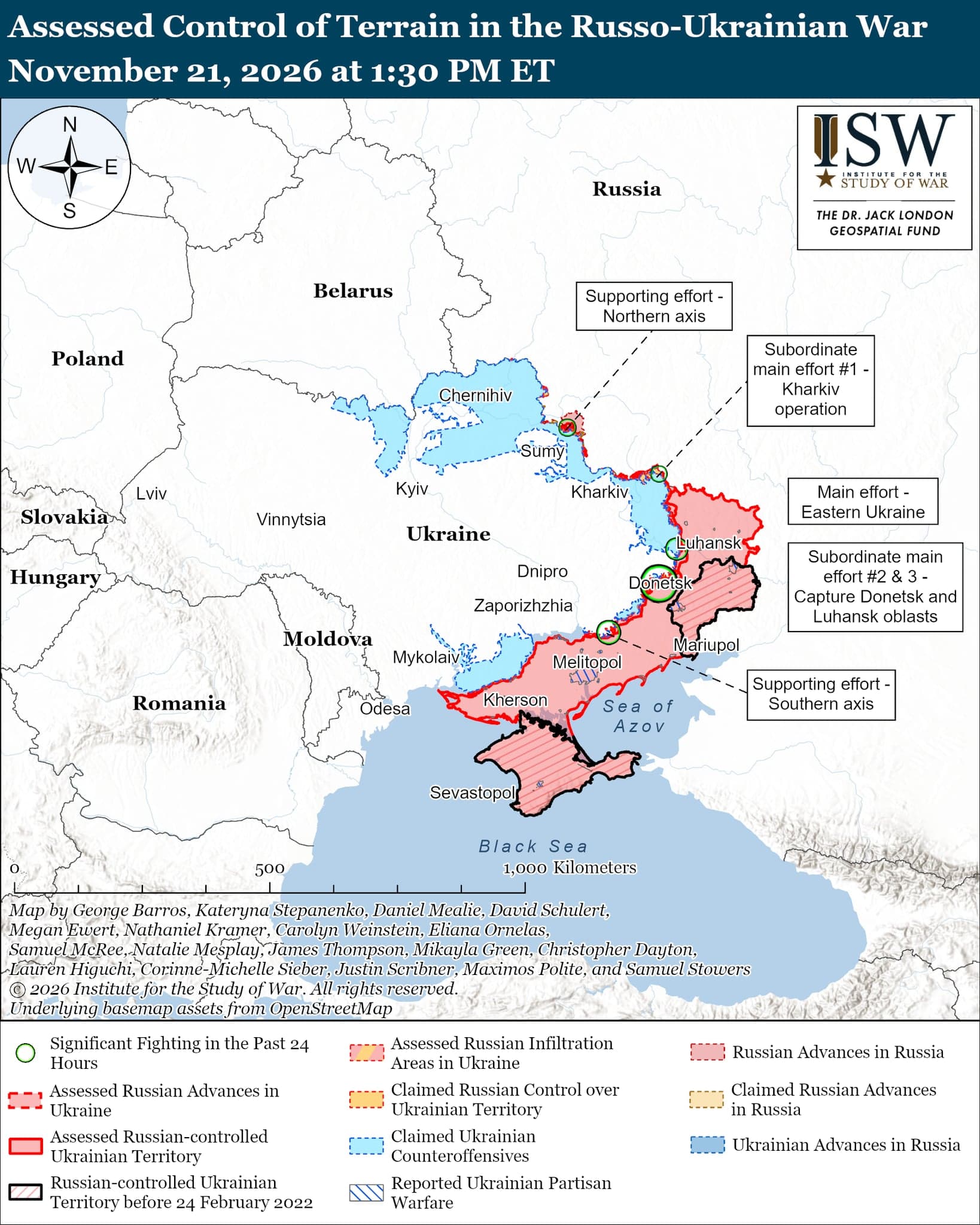
Moscow Rejects Peace Talks, Demands NATO Rollback and Claims Ukrainian Territory
World & Geopolitics
 16
US Restricts Canada Defense Ties, Exposing Bilateral Rift at Halifax Forum
World & Geopolitics
 17
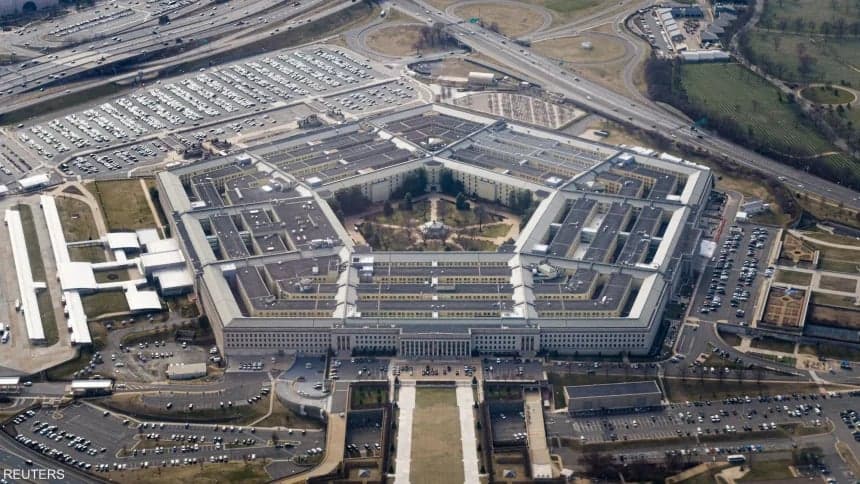
Pentagon Restricts Ties with Canada Amidst Transatlantic Alliance Friction at Halifax Forum
World & Geopolitics
 18
US Democrats Urge Interim Canada-US Trade Deal as Tariff Threat Looms
World & Geopolitics
 19
Trump Seeks 'Permanent' Iran Nuclear Deal Amid Global Energy Volatility
World & Geopolitics
 20
Shenzhen APEC Summit Triggers Canada and Pacific Allies to Forge Minilateral Ties
World & Geopolitics
- 21
COP31 Climate Summit Stalls Over Fossil Fuel Phaseout and Public Finance Demands
World & Geopolitics
- 22
Defense Review Reveals Critical Gaps in Canada's Undersea Surveillance Capabilities
World & Geopolitics
 23
Taiwan Warns Canada Over China Trade Deal Amid Geopolitical Concerns
World & Geopolitics
 24
Trump Tariffs on Overseas AI Data Centers Threaten Canadian Green-Tech Ambitions
World & Geopolitics
 25
Aswan Forum: Developing Nations Demand Overhaul of Global Financial Architecture
World & Geopolitics
- 26
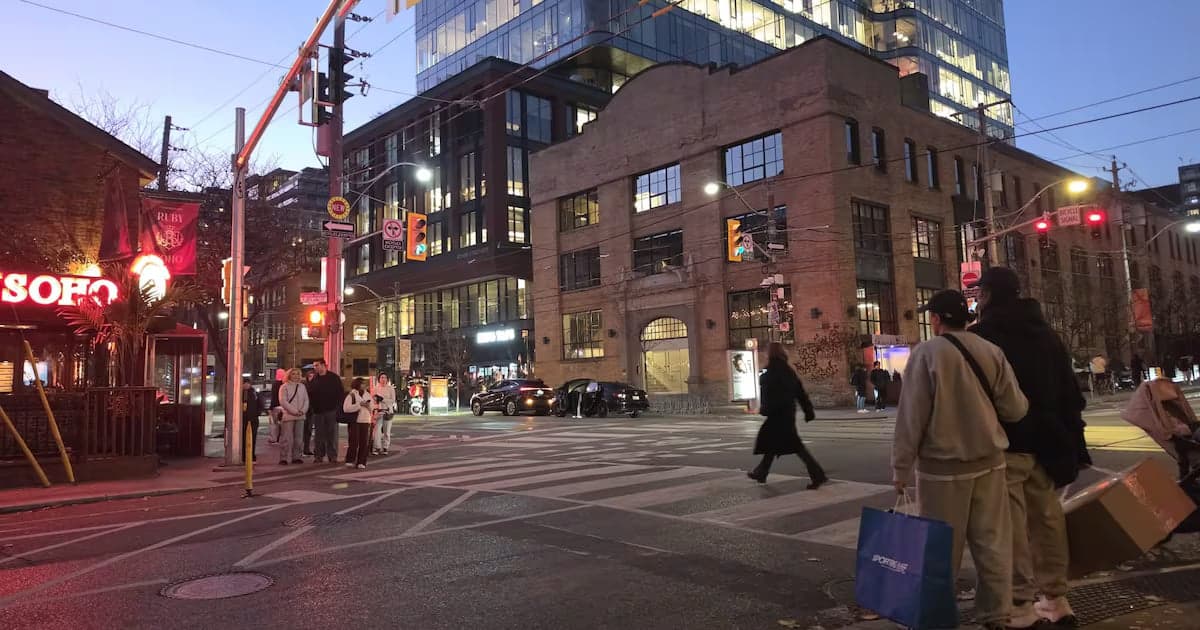
King Street West Infrastructure Overhaul Begins in Toronto
City News
 27
Toronto Launches Multi-Year King Street West and Waterfront Transit Overhaul
City News
 28
Santa Claus Parade, Transit Work Paralyze Downtown Toronto
City News
- 29
Toronto Breaks Ground on 92-Unit Affordable Housing Project in Parkdale
City News
 30
Public Safety Alert After Coyote Attacks Child in North York Park
City News
- 31
National Fugitive Arrested in Homicide Investigation; East York Assault Case Update
City News
- 32
Scarborough Pedestrian Collision Shuts Intersection, Fuels Safety Debate
City News
- 33
GTA Housing Market Cools Significantly Amidst Interest Rate Hikes
City News
 34
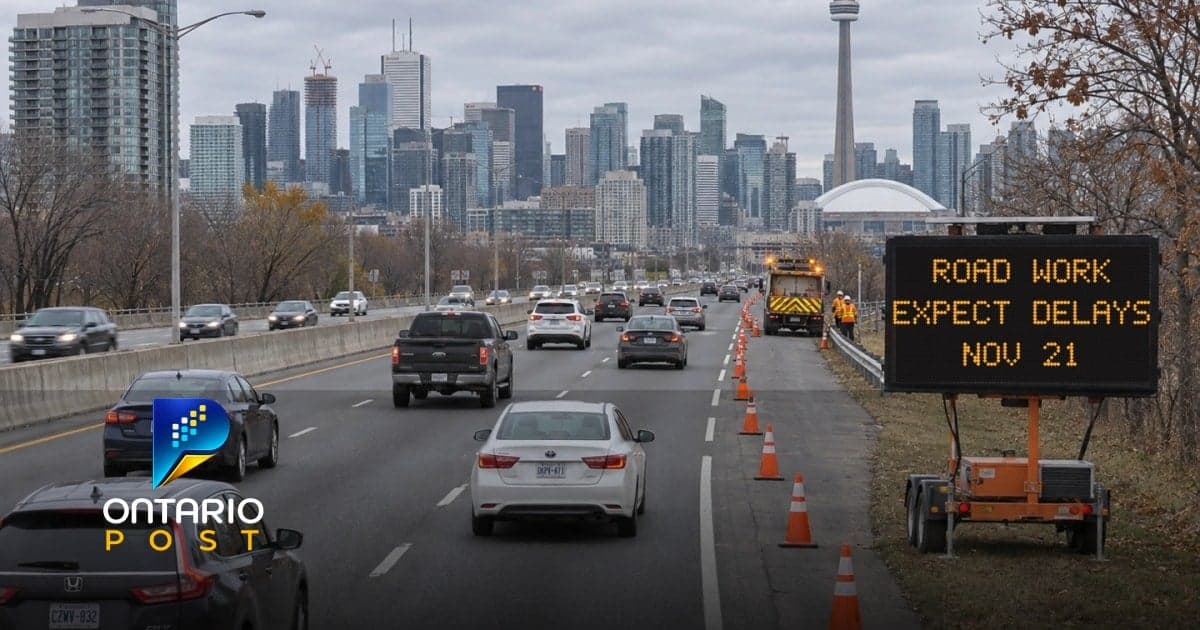
Highway 407 ETR Announces 2027 Toll Rate Hikes Amidst GTA Gridlock
City News
- 35
Dense Fog Advisories Issued for GTA Ahead of Arctic Cold Front
City News
- 36
Dense Fog Disrupts GTHA Travel with Near-Zero Visibility
City News
 37
Maple Leafs Suffer Ninth Straight Loss After Third-Period Collapse
Sports
 38
Raptors End Six-Game Losing Streak with NBA Cup Victory Over Pistons
Sports
 39
Blue Jays Non-Tender Davis Schneider, Reshaping Offseason Roster
Sports
 40
Maple Leafs Injury Update: Marchenko and Blankenburg Day-to-Day
Sports
 41
Raptors Battle Injuries Amidst Losing Streak and Player Absences
Sports
 42
Blue Jays Target Pitching Market; Giants Offer Logan Webb
Sports
See all 42 as a listHide the list
- Quebecor's $31B Telus Bid Faces Political and Regulatory Hurdles
- Canada Joins NATO Innovation Fund, Bolsters Deep Tech and Allied Cooperation
- Canada's $14-Billion Bay du Nord Offshore Oil Project Receives Final Regulatory Approval
- Canada Overhauls Immigration: Prioritizing In-Canada PR, Tightening Express Entry
- BC Hydro Export Hearing Concludes Amidst Local Opposition
- B.C. Premier Establishes Red Tape Ministry to Accelerate Project Approvals
- Measles Surge Across North America Raises Alarms for Canada's Herd Immunity
- Health Canada Loses $2 Million in Pharmaceuticals Due to Freezer Malfunction
- Top Fugitive Devondre Hall Arrested in Toronto for Burning-Vehicle Homicide
- Staples Canada Reports Data Breach on Commercial Printing Platform
- Navdeep Bains Elected Ontario Liberal Leader in Tight Race
- Northern Ontario Hit by Heavy Snowfall and Treacherous Travel Conditions
- Dense Fog Causes Widespread Disruption Across Southern Ontario and GTA
- Iranian Strikes in Bahrain and Houthi Attacks on Riyadh Escalate Gulf Crisis
- Moscow Rejects Peace Talks, Demands NATO Rollback and Claims Ukrainian Territory
- US Restricts Canada Defense Ties, Exposing Bilateral Rift at Halifax Forum
- Pentagon Restricts Ties with Canada Amidst Transatlantic Alliance Friction at Halifax Forum
- US Democrats Urge Interim Canada-US Trade Deal as Tariff Threat Looms
- Trump Seeks 'Permanent' Iran Nuclear Deal Amid Global Energy Volatility
- Shenzhen APEC Summit Triggers Canada and Pacific Allies to Forge Minilateral Ties
- COP31 Climate Summit Stalls Over Fossil Fuel Phaseout and Public Finance Demands
- Defense Review Reveals Critical Gaps in Canada's Undersea Surveillance Capabilities
- Taiwan Warns Canada Over China Trade Deal Amid Geopolitical Concerns
- Trump Tariffs on Overseas AI Data Centers Threaten Canadian Green-Tech Ambitions
- Aswan Forum: Developing Nations Demand Overhaul of Global Financial Architecture
- King Street West Infrastructure Overhaul Begins in Toronto
- Toronto Launches Multi-Year King Street West and Waterfront Transit Overhaul
- Santa Claus Parade, Transit Work Paralyze Downtown Toronto
- Toronto Breaks Ground on 92-Unit Affordable Housing Project in Parkdale
- Public Safety Alert After Coyote Attacks Child in North York Park
- National Fugitive Arrested in Homicide Investigation; East York Assault Case Update
- Scarborough Pedestrian Collision Shuts Intersection, Fuels Safety Debate
- GTA Housing Market Cools Significantly Amidst Interest Rate Hikes
- Highway 407 ETR Announces 2027 Toll Rate Hikes Amidst GTA Gridlock
- Dense Fog Advisories Issued for GTA Ahead of Arctic Cold Front
- Dense Fog Disrupts GTHA Travel with Near-Zero Visibility
- Maple Leafs Suffer Ninth Straight Loss After Third-Period Collapse
- Raptors End Six-Game Losing Streak with NBA Cup Victory Over Pistons
- Blue Jays Non-Tender Davis Schneider, Reshaping Offseason Roster
- Maple Leafs Injury Update: Marchenko and Blankenburg Day-to-Day
- Raptors Battle Injuries Amidst Losing Streak and Player Absences
- Blue Jays Target Pitching Market; Giants Offer Logan Webb
Section 1 of 4
National News
13 stories · 7 min skim
National News
2 min read
Quebecor's $31B Telus Bid Faces Political and Regulatory Hurdles
Quebecor Inc.'s unsolicited $31-billion bid to acquire Telus Corp. is facing increased political scrutiny and regulatory pressure. The proposed merger would consolidate Canada's wireless market from four major players to three, a move that has drawn criticism from the NDP and consumer advocates concerned about rising prices and job losses. Prime Minister Mark Carney's comments have fueled speculation about the government's stance, while Telus's board has expressed significant concerns about the deal's financing and integration.
Read the full storyFold the full story2 min · 4 sources
A multi-billion-dollar corporate bid in Canada’s telecommunications sector generated heightened political scrutiny over the weekend, as business executives, opposition party leaders, and regulators traded public salvos regarding Quebecor Inc.’s unsolicited $31-billion proposal to acquire Vancouver-based rival Telus Corp.[1][2]. Announced in mid-November, the proposed buyout would absorb the third-largest carrier into the fourth-largest, condensing the national wireless landscape from four major competitors back down to three[1][2][3]. On November 22, Quebecor CEO Pierre Karl Péladeau issued a defense of the transaction, framing it as a critical move for Canadian corporate sovereignty against foreign satellite broadband providers, including SpaceX’s Starlink[1][2].
The corporate maneuver has faced mounting resistance from federal lawmakers and consumer advocacy groups[2][3]. Federal New Democratic Party (NDP) Leader Avi Lewis renewed demands for the federal cabinet and the Competition Bureau to block the sale outright, arguing that dismantling the four-player framework would reverse recent declines in mobile pricing, harm consumers, and cause significant job cuts across Western Canada[2][3][4]. Critics pointed to federal regulatory history: Ottawa previously mandated the sale of Freedom Mobile to Quebecor during the 2023 Rogers-Shaw merger explicitly to maintain a four-carrier marketplace, which Statistics Canada data shows helped drive wireless prices down by 35.4 percent between 2023 and 2026[3].
The federal government’s posture on the bid has faced intense examination[2]. Prime Minister Mark Carney generated debate when he suggested that, under specific regulatory and structural conditions, an oligopoly with fewer, better-capitalized players can sometimes foster stronger infrastructure investment and competition[2][3]. While Carney emphasized that consumer pricing, service quality, and market competition remain non-negotiable priorities for any regulatory review, opposition critics seized on his comments as evidence that Ottawa might permit the transaction[1][2].
Meanwhile, Telus’s corporate governance has resisted the overture[1]. The company’s board of directors, chaired by former federal cabinet minister John Manley, established an independent special committee that reported finding "significant risks" and structural uncertainties associated with Quebecor’s financing and operational integration plans[1]. Any completed transaction would face statutory review from Innovation, Science and Economic Development Canada (ISED) regarding spectrum license transfers, alongside public-interest determinations by the Canadian Radio-television and Telecommunications Commission (CRTC) and the Competition Bureau[1][3].
- Quebecor Inc.
- Telus Corp.
- Mark Carney
National News
2 min read
Canada Joins NATO Innovation Fund, Bolsters Deep Tech and Allied Cooperation
Canada has officially joined the NATO Innovation Fund (NIF) as its 25th member, committing over $100 million to invest in early-stage deep-tech startups. The announcement was made by Defence Minister David McGuinty at the Halifax International Security Forum. This move marks Canada as the first North American nation to join the fund, which targets sectors like AI, quantum computing, and advanced communications. The initiative aims to foster innovation and strengthen allied defense capabilities.
Read the full storyFold the full story2 min · 6 sources
Canada formally concluded negotiations and joined the NATO Innovation Fund (NIF) as its 25th member country, committing more than $100 million to the multinational venture capital initiative[1][2]. The announcement was delivered on Saturday, November 21, 2026, by Minister of National Defence David J. McGuinty during a joint press briefing at the 18th Halifax International Security Forum[3][4]. He was joined by Ari Jónsson, president of the NATO Innovation Fund, and Isabelle Hudon, president and CEO of the Business Development Bank of Canada (BDC)[4]. The move establishes Canada as the first North American country to participate in the fund[5], which was originally established by allied nations in 2022 to inject strategic capital into early-stage deep-tech startups across artificial intelligence, quantum computing, biotechnology, space technologies, and secure communications[2].
The Halifax forum also became the staging ground for McGuinty to address growing cross-border unease following revelations that United States Secretary of Defense Pete Hegseth had issued a classified directive restricting certain aspects of U.S. military cooperation with Canada[3][6]. Speaking directly to reporters, McGuinty stated that Ottawa had not received the document, remarking, “There is some sort of document we haven’t seen”[3]. However, he moved quickly to reassure domestic and international observers that high-level defense, intelligence, and aerospace coordination remains fully intact[3]. Canadian defense officials emphasized that operational partnerships - most notably within the North American Aerospace Defense Command (NORAD) and NATO frameworks - remain steady and uninterrupted[6].
The leaked Pentagon directive sparked immediate bipartisan reaction from high-ranking American lawmakers attending the forum[3]. Democratic Senator Chris Coons of Delaware lamented the friction, urging Washington to avoid actions that aggravate division between the two historical allies and reaffirming Congress's commitment to bilateral defense ties[3]. Republican Senator Mike Rounds of South Dakota clarified that the memo was not targeted at core joint military operations, NORAD, or deployed U.S. defense personnel, but instead pertained to secondary administrative and diplomatic activities, such as Department of Defense participation in cross-border think-tank panels and conferences[2].
By joining the NATO Innovation Fund against this backdrop of geopolitical friction, Canada intends to secure dual advantages: bolstering its national defense research and development ecosystem while reaffirming its multilateral defense commitments with European allies[3][5][2]. The $100-million capital injection provides Canadian emerging-technology ventures with direct pathways to international defense procurement contracts, commercialization opportunities, and capital syndicates[5][2]. It also signals Ottawa’s commitment to modernizing allied readiness in autonomous systems, sovereign data protection, and surveillance infrastructure across the Arctic and North Atlantic corridors.
- Canada
- NATO Innovation Fund
- David J. McGuinty
National News
2 min read
Canada's $14-Billion Bay du Nord Offshore Oil Project Receives Final Regulatory Approval
Equinor Canada Ltd. and Shell have secured final regulatory approval for their $14-billion Bay du Nord offshore oil project from federal and provincial governments. This landmark decision allows the advancement of one of Canada's most remote deepwater developments, with an estimated 400 million barrels of recoverable crude. The project is projected to generate substantial government revenues and significant employment in the Atlantic region.
Read the full storyFold the full story2 min · 7 sources
Equinor Canada Ltd. and its joint-venture partner Shell have cleared the final regulatory hurdle required to advance the $14-billion Bay du Nord offshore oil project, following formal approvals granted by the federal and Newfoundland and Labrador governments[1][2][3]. The sign-off ratifies the decision issued by the Canada-Newfoundland and Labrador Offshore Energy Regulator (C-NLOER) endorsing the project's Development Plan and updated Benefits Plan[1][4]. The milestone was announced jointly in St. John’s by provincial Premier Tony Wakeham, provincial Energy Minister Lloyd Parrott, and federal Fisheries Minister Joanne Thompson, representing Energy and Natural Resources Minister Tim Hodgson[1][5].
Bay du Nord, situated approximately 500 kilometers east of St. John's in the deep waters of the Flemish Pass Basin, represents Canada’s first deepwater oil development and one of the most remote offshore hydrocarbon projects in the world[1][2][3]. Equinor plans to drill wells more than a kilometer beneath the ocean surface to tap recoverable reserves estimated at more than 400 million barrels of crude, with first oil targeted for 2031[1][3]. Following this governmental green light, the operating partners will focus entirely on formulating their commercial Final Investment Decision (FID), which is anticipated in early 2027[1][2][3].
The macroeconomic scope of the project is massive for the Atlantic region. Projections indicate Bay du Nord will generate more than $20 billion in total government revenues and contribute an estimated $50 billion to Canadian gross domestic product over a 20-year operational life cycle[2][6]. In Newfoundland and Labrador, where the offshore energy sector directly and indirectly supports roughly 20,000 jobs, the project will generate more than 31 million person-hours of labor[1][2]. Premier Wakeham confirmed that the provincial government continues to actively assess whether to exercise an option to take a direct 10 percent equity stake in the development to secure long-term public dividends[3].
The regulatory approval arrives amid sharp debate over Canadian energy policy. While federal and provincial officials highlighted that extraction from Flemish Pass crude produces roughly 30 to 50 percent lower greenhouse gas emissions per barrel than the international offshore average, environmental advocacy groups criticized the decision[2][5]. The timing of the approval - coinciding with international discussions at global climate summits - draws scrutiny to Canada's dual track of promoting energy transition while expanding capital-intensive, long-horizon fossil fuel extraction[7][5].
- Equinor Canada Ltd.
- Shell
- Bay du Nord
National News
2 min read
Canada Overhauls Immigration: Prioritizing In-Canada PR, Tightening Express Entry
Immigration, Refugees and Citizenship Canada (IRCC) is implementing significant changes to its 2026–2028 Immigration Levels Plan, prioritizing permanent residency (PR) for individuals already in Canada. This includes accelerated pathways for Hong Kong and Ukraine applicants, and a large-scale transition for temporary foreign workers. Express Entry rules are also reformed, recalibrating points for Canadian work experience and job offers to favor high-wage sectors.
Read the full storyFold the full story2 min · 10 sources
Immigration, Refugees and Citizenship Canada (IRCC) and immigration legal practitioners have detailed the active rollout of key measures under the federal government's recalibrated 2026–2028 Immigration Levels Plan, highlighted by accelerated permanent residency (PR) pathways for individuals already living and working in Canada[1][2]. Following policy frameworks championed by Immigration Minister Lena Metlege Diab, the federal administration is prioritizing domestic conversions over net-new foreign arrivals[3][4]. This initiative aims to reduce Canada's overall temporary resident volume to below 5 percent of the national population by the end of 2027 while protecting broader social infrastructure[1].
Central to these operational updates are targeted, time-limited humanitarian cohorts designed to clear substantial legacy inventories[4][2]. IRCC is actively processing backlogged files under established streams, including up to 32,000 admissions for applicants under previously closed Hong Kong pathways and up to 18,800 admissions under the Ukraine Family Reunification pathway[4]. Additionally, federal and provincial authorities have aligned on a one-time initiative to transition up to 100,000 temporary foreign workers and their families into permanent status through increased Provincial Nominee Program (PNP) quotas[5]. Federal officials stressed that because these applicants already reside, work, and rent homes across Canadian municipalities, their transitions do not create new housing demand or immediate strains on local services[3][4].
Simultaneously, major systemic updates to the Comprehensive Ranking System (CRS) within Express Entry have come into effect, altering how economic applicants are evaluated[6][7]. The reforms recalibrate the weighting of Canadian work experience, establish stricter verification thresholds for qualifying job offers, and integrate allowances for academic researchers funded through stipends, grants, and bursaries rather than standard wages[6]. Conversely, teaching assistantships and low-wage classifications have seen points eliminated or capped to steer economic immigration directly toward high-wage sectors facing persistent shortages[6][8].
The shift reflects the broader economic blueprint of Prime Minister Mark Carney’s administration, which seeks to transition the national economy away from reliance on low-wage temporary foreign labor toward high-skill productivity[9][1]. While business groups in manufacturing and healthcare have welcomed pathways that retain skilled foreign workers already embedded in the workforce, regulatory bodies and immigration consultants are warning applicants of tightened eligibility scrutiny, longer processing holds for pending Labour Market Impact Assessments (LMIAs), and stricter compliance penalties for prospective employers[5][10].
- Immigration
- Refugees and Citizenship Canada (IRCC)
- Lena Metlege Diab
National News
2 min read
BC Hydro Export Hearing Concludes Amidst Local Opposition
The Canada Energy Regulator (CER) has concluded a hearing on Powell River Energy Inc.'s (PREI) application for a 30-year permit to export all electricity from its British Columbia hydro dams to the U.S. PREI, a Brookfield subsidiary, seeks the long-term export license to fund dam improvements. The application faces strong opposition from the Tla'amin First Nation, local governments, and business groups who argue the power is needed for regional economic development.
Read the full storyFold the full story2 min · 1 source
A major energy dispute reached a critical milestone on Sunday, November 22, 2026, as the Canada Energy Regulator (CER) concluded a weeklong hearing into an application by Powell River Energy Inc. (PREI) to secure a 30-year export permit sending all power generated by two British Columbia hydroelectric dams to the United States[1]. PREI, a subsidiary of Brookfield Renewable Partners, operates power generation facilities at Powell Lake and Lois Lake[1]. The electricity was historically dedicated to powering a local pulp and paper mill in Powell River, but following the mill's permanent closure in 2021, PREI began exporting the entirety of the facilities' generating output south of the border[1].
The application has triggered sharp resistance across municipal, Indigenous, and regional business lines[1]. The Tla'amin First Nation, local municipal governments, and the Cranberry Business Group - the entity that purchased the former mill industrial lands - intervened aggressively during the hearings to oppose the long-term export licence[1]. Opponents argue that transferring clean, firm baseload electricity to American buyers for the next three decades deprives the Sunshine Coast of the primary industrial asset needed to attract clean-technology ventures, revitalize manufacturing, and replace regional employment lost after the mill shuttered[1].
During the regulatory proceedings, PREI defended the application, asserting that a 30-year export contract is necessary to provide the long-term commercial certainty and revenue required to fund critical capital improvements across the aging hydro dams[1]. The company noted that its operations contribute approximately $10 million annually in local taxes and related revenues to the regional economy[1]. PREI also testified that it had negotiated with provincial utility BC Hydro for two years to find a domestic agreement, but claimed that the Crown corporation refused to offer commercially competitive pricing and contract terms[1].
BC Hydro strongly disputed PREI's narrative before the regulator[1]. Legal counsel representing the Crown utility challenged the transparency of PREI’s domestic marketing efforts, alleging inconsistencies in how the power was offered and arguing that the operator failed to provide fair access to Canadian purchasers as intended under federal energy export guidelines[1]. The decision now rests with the CER, which must balance commercial utility rights against national energy security, regional Indigenous economic self-determination, and the domestic prioritization of clean power resources[1].
- Canada Energy Regulator
- Powell River Energy Inc.
- Brookfield Renewable Partners
National News
2 min read
B.C. Premier Establishes Red Tape Ministry to Accelerate Project Approvals
British Columbia's Premier Lorne Doerkson has created a dedicated cabinet ministry focused on reducing regulatory 'red tape' and fast-tracking approvals for natural resource, housing, and capital investments. The new Minister of State for Cutting Red Tape, Carson Binda, is tasked with streamlining the administrative burden on businesses. This initiative has garnered support from business associations citing significant costs associated with current bureaucratic delays.
Read the full storyFold the full story1 min · 2 sources
In British Columbia, newly installed Premier Lorne Doerkson moved to enact a centerpiece of his economic platform by establishing a dedicated cabinet post tasked with regulatory deregulation, appointing Carson Binda as the Minister of State responsible for cutting red tape[1][2]. The directive, which follows the formal swearing-in of the provincial Conservative government, establishes a mandate to systematically reduce the administrative burden on enterprises operating within the province and fast-track natural resource, housing, and major capital investments[1][2].
The move received immediate backing from provincial and national commercial associations. The Canadian Federation of Independent Business (CFIB) praised the dedicated portfolio as an essential measure to address an ongoing "entrepreneurial drought" across British Columbia[1][2]. According to data highlighted by CFIB Legislative Affairs Director Ryan Mitton, red tape and bureaucratic delays cost B.C. businesses an estimated $8.3 billion in 2024 - a 26 percent increase compared to 2017 levels - with compliance consuming the equivalent of 32 working days annually per small business operator[1][2].
Premier Doerkson’s policy program includes establishing a "one-approach-one-review" framework for regulatory compliance, reversing total provincial regulations back to baseline 2017 counts within the government’s first legislative mandate, and tabling statutory project-approval limits[1][2]. Central to the administration’s strategy is proposed legislation that would require all industrial and infrastructure projects exceeding $250 million in capital value to receive permitting decisions within a binding 120-day timeframe[1][2].
Business chambers, including the Surrey and White Rock Board of Trade led by CEO Joslyn Young, argued that persistent administrative backlogs have placed local firms at a severe competitive disadvantage relative to rival regional jurisdictions[1][2]. However, the ambitious deregulation mandate is expected to face resistance in the legislature from municipal authorities, environmental organizations, and Indigenous communities concerned that mandatory 120-day approval windows could restrict consultations and undermine local environmental protections[1][2].
- British Columbia
- Lorne Doerkson
- Carson Binda
National News
2 min read
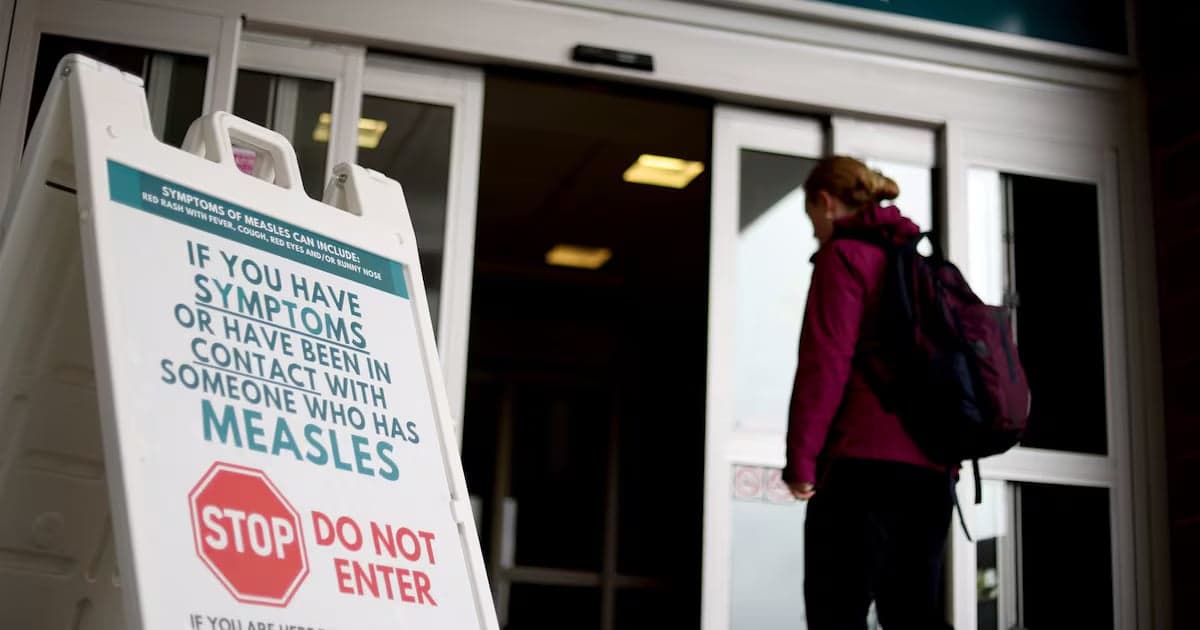
Measles Surge Across North America Raises Alarms for Canada's Herd Immunity
Canada is facing renewed concerns over waning herd immunity as the US, Mexico, and Bolivia lose their measles elimination status. This regional trend, driven by vaccine hesitancy and falling inoculation rates, mirrors Canada's own loss of elimination status. Public health authorities are urging vaccinations and increasing surveillance, especially given cross-border travel and strains on primary care access.
Read the full storyFold the full story1 min · 4 sources
Public health authorities across Canada have renewed urgent vaccination appeals following an international declaration by the Pan American Health Organization (PAHO) that the United States, alongside Mexico and Bolivia, has officially lost its measles elimination status[1]. Measles transmission is formally classified as re-established when a country documents uninterrupted spread from a single viral genotype and lineage for more than 12 consecutive months[1]. The regional milestone mirrors Canada’s own loss of elimination status in late 2025, underscoring a continent-wide erosion of herd immunity against one of the world's most transmissible respiratory viruses[1].
Epidemiologists and infectious disease specialists, including Dr. Amesh Adalja of Johns Hopkins University, emphasized that the regional resurgence does not stem from vaccine failure or viral mutation, but from persistent vaccine hesitancy and falling inoculation rates among pediatric and adult populations[1]. PAHO Director Dr. Jarbas Barbosa noted that sustained community spread has steadily exploited growing pockets of unvaccinated individuals across North America[1]. In Canada, provincial healthcare systems have grappled with cluster outbreaks in urban centres, leading public health agencies to issue reminders on severe complications associated with the disease, including encephalitis and acute respiratory failure[1].
The loss of elimination benchmarks across neighbouring jurisdictions complicates Canadian infection-control strategies, given the high volume of cross-border travel between Canada and the United States[2]. Public health teams in Ontario, Quebec, and British Columbia are increasing surveillance in acute care centres and school districts, where unimmunized cohorts remain most vulnerable. Clinic directors have pointed to structural gaps in primary care access - where millions of Canadians remain without consistent access to family doctors - as a compounding barrier to catching up on childhood immunization schedules[3][4].
Provincial medical associations are urging municipal public health units to deploy targeted, community-based mobile vaccination clinics and combat online misinformation regarding the measles, mumps, and rubella (MMR) vaccine[1]. With the winter respiratory virus season entering full swing, healthcare professionals warn that unchecked measles transmission risks overloading emergency departments already experiencing historic staffing shortages and wait-time backlogs[4].
- Pan American Health Organization (PAHO)
- Canada
- United States
National News
2 min read
Health Canada Loses $2 Million in Pharmaceuticals Due to Freezer Malfunction
The Public Health Agency of Canada (PHAC) has reported a $2 million loss of critical countermeasures from its National Emergency Strategic Stockpile. A mechanical freezer breakdown caused specialized therapeutic treatments to spoil due to a failure to maintain ultra-cold temperatures. This incident has reignited scrutiny over federal stockpile management, particularly after a similar $20 million loss the previous year.
Read the full storyFold the full story1 min · 3 sources
The Public Health Agency of Canada (PHAC) has suffered another multimillion-dollar setback in its national medical reserves, confirming the loss of approximately $2 million worth of critical countermeasures from the National Emergency Strategic Stockpile (NESS)[1]. According to disclosures made public in federal accounting reports, the loss was caused by a mechanical freezer breakdown that failed to maintain mandatory ultra-cold temperatures, spoiling specialized therapeutic treatments designated to counter specific biological threats[1].
Health Canada spokesperson Hélène-Annie Lavoie confirmed that a mechanical breakdown caused internal temperatures to deviate outside regulated thresholds, necessitating the total destruction and disposal of the affected pharmaceuticals[1]. Following the incident, federal officials initiated an internal operational review to determine the exact nature of the refrigeration failure[1]. Federal authorities declined to name the specific medication involved, citing national security protocols designed to prevent adversaries from gauging Canadian preparedness against chemical, biological, radiological, or nuclear risks[1].
The revelation has reignited scrutiny over federal stockpile management and infrastructure resilience. Just one year prior, the agency was forced to write off $20 million in medications from the same national stockpile after a freezer door was left compromised in late 2024[1]. Although PHAC emphasized that the latest failure did not compromise Canada’s immediate emergency response capability because secondary reserves of alternative treatments remain in place, consecutive cold-chain failures have raised alarms among public health observers regarding federal equipment monitoring and physical security protocols[1].
The inventory destruction comes at a sensitive time for the broader healthcare portfolio. Recent analyses from the Canadian Institute for Health Information (CIHI) indicate that national health spending is expanding to record highs, topping $433 billion, driven by urgent investments in system capacity, technology, and facility modernization[2][3]. Lawmakers and healthcare policy analysts are demanding greater transparency regarding supply chain integrity, urging the federal government to implement automated, fail-safe monitoring mechanisms across all critical federal pharmaceutical warehouses to avoid preventable waste[1].
- Health Canada
- Public Health Agency of Canada (PHAC)
- National Emergency Strategic Stockpile (NESS)
National News
2 min read
Top Fugitive Devondre Hall Arrested in Toronto for Burning-Vehicle Homicide
Toronto Police have arrested Devondre Hall, a high-priority fugitive wanted for first-degree murder, in connection with the homicide of Marcus Charles. Hall was discovered inside a burned vehicle in Scarborough in September 2026. His arrest follows a Canada-wide manhunt and highlights the effectiveness of the BOLO Program and inter-agency cooperation. Two other individuals have been charged in relation to the crime.
Read the full storyFold the full story1 min · 4 sources
In a major nationwide public safety development, the Toronto Police Service (TPS) announced the arrest of 25-year-old Devondre Hall on Saturday, November 21, 2026[1]. Hall had been the subject of a Canada-wide warrant for first-degree murder and was listed as the number nine most-wanted fugitive on the BOLO (Be On The Lookout) Program’s national top 25 fugitives list[2][1]. The arrest occurred on the evening of Friday, November 20, just one day after police agencies nationwide convened to unveil the program’s updated top 25 registry[1][3].
The charges stem from a violent incident on the night of September 21, 2026[2][1]. At approximately 11:24 p.m., emergency personnel responded to reports of a vehicle fire burning in a rural field in Scarborough near the intersection of Steeles Avenue East and Reesor Road[2][4]. After extinguishing the flames, first responders discovered the body of 32-year-old Marcus Charles inside the burned vehicle; he was pronounced dead at the scene[2][1]. TPS Homicide and Missing Persons Unit investigators launched an extensive investigation, ultimately identifying three primary suspects in connection with the homicide[2].
During the initial phase of the investigation in October 2026, police apprehended 25-year-old Rushon Powell and charged him with first-degree murder, while charging 25-year-old Shakurwa Jeffrey with accessory after the fact to murder[2][4]. However, Hall evaded arrest, prompting authorities to issue a countrywide alert and partner with the BOLO Program, which utilizes targeted amplification, social media campaigns, and public billboards to capture dangerous fugitives[2][1]. Alongside Hall’s apprehension on Friday, officers also arrested 26-year-old Shyanne Miller of Toronto, who was formally charged with accessory after the fact to murder[1][4].
Hall made his first court appearance at the Toronto Regional Bail Centre on the morning of Saturday, November 21[2][1]. TPS homicide detectives noted that the rapid capture following the renewed public appeal demonstrates the efficacy of inter-agency data sharing and the national BOLO network in high-stakes public safety cases[1][3]. Investigators emphasized that the homicide probe remains active, reiterating calls for anyone with information about the events leading up to the vehicle fire to contact law enforcement[3].
- Toronto Police Service
- Devondre Hall
- BOLO Program
National News
2 min read
Staples Canada Reports Data Breach on Commercial Printing Platform
Staples Canada has confirmed a cybersecurity breach affecting its `staplesprint.ca` platform, where customer names, email addresses, physical addresses, and order histories were compromised over a five-day intrusion in early November. The company stated that financial information was not affected, as transactions are processed separately. Affected customers have been advised to monitor their accounts for suspicious activity.
Read the full storyFold the full story1 min · 4 sources
Staples Canada ULC has confirmed a significant cybersecurity breach affecting its specialized commercial printing platform, `staplesprint.ca`, revealing that an unauthorized third party maintained access to sensitive customer data over a five-day intrusion window in early November[1][2][3]. In notices distributed to impacted enterprise and retail clients, the Richmond Hill-based retailer disclosed that the incident exposed names, contact email addresses, physical shipping and billing addresses, detailed order histories, and encrypted passwords[1][2][4].
The breach was initially detected after anomalous system interactions pointed to unauthorized external access between November 1 and November 5, 2026[1][3]. Staples Chief People and Legal Officer Adrian Lang stated that internal security teams promptly intervened to eject the threat actor and secure the compromised systems[1][2]. The company stressed that customer financial and payment card information was not compromised during the incident, as transactions are processed through segregated systems, and clarified that core consumer platforms across staples.ca were unaffected[1][2][4].
The attack has raised concerns given the nature of the print service’s clientele, which regularly includes small businesses, corporate institutions, and individual consumers submitting high-value marketing and commercial print jobs[1][2]. The theft of order summaries combined with physical addresses and verified login data exposes affected accounts to targeted phishing, corporate impersonation, and credential-stuffing attacks across other platforms[1][2]. Staples has instructed affected customers to monitor their accounts closely for suspicious activity and exercise caution when interacting with unsolicited correspondence[2].
The breach is currently being assessed under the scrutiny of federal and provincial privacy authorities, including the Office of the Privacy Commissioner of Canada, as mandatory breach reporting standards require companies to demonstrate adequate safeguards for personal and corporate customer records[2]. The event adds Staples Canada to a growing list of national retail and service brands hit by targeted cyber intrusions, reinforcing calls from corporate cybersecurity analysts for stricter data segregation and heightened endpoint protections across third-party commercial portals[2].
- Staples Canada ULC
- staplesprint.ca
- Adrian Lang
National News
2 min read
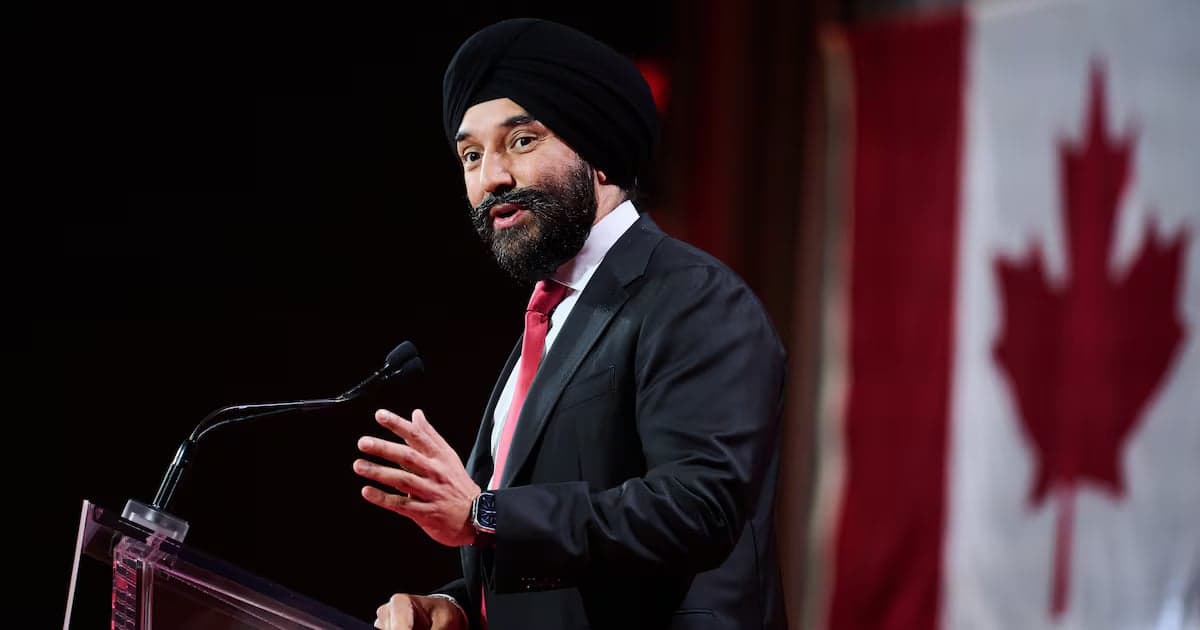
Navdeep Bains Elected Ontario Liberal Leader in Tight Race
Navdeep Bains, former federal minister, has been elected the new leader of the Ontario Liberal Party. He secured a narrow victory, winning 50.29% of the vote on the third ballot against MPP Lee Fairclough. The election saw a significant increase in member participation, highlighting renewed engagement within the party. Bains, who has extensive experience in innovation and industry, aims to present the Liberals as a strong alternative to the current Progressive Conservative government.
Read the full storyFold the full story2 min · 6 sources
The Ontario Liberal Party concluded its leadership election on Saturday, November 21, 2026, electing former federal cabinet minister Navdeep Bains as its new leader in an exceptionally tight ranked-ballot contest[1][2]. Gathering at the Metro Toronto Convention Centre, more than 20,500 party members cast ballots, marking a 15 percent increase in voter participation over previous leadership votes[3][2]. After two weeks of voting and three successive elimination rounds, Bains captured 50.29 percent of the points on the third ballot, edging out Ontario Member of Provincial Parliament (MPP) for Etobicoke - Lakeshore Lee Fairclough, who finished at 49.71 percent[3][2]. Fellow contenders Stephanie Bowman, MPP for Don Valley West, and public policy strategist Dylan Marando were eliminated in earlier stages[2].
Bains’s victory returns the seasoned Mississauga politician to active frontline politics after five years in the private sector[2][4]. Prior to stepping down from the House of Commons in 2021, Bains spent 13 years as a federal Member of Parliament and held the high-profile post of Minister of Innovation, Science and Industry[5][4]. He subsequently served in executive roles at CIBC and Rogers Communications[5][4]. In his victory speech, Bains positioned the party as a united, revitalized counterweight to Premier Doug Ford’s governing Progressive Conservatives, asserting that the provincial Liberals would present an ambitious economic alternative focused on trust, integrity, and good job creation[3][2]. Kathryn McGarry, president of the Ontario Liberal Party, praised the membership turnout as a sign of renewal[3].
Despite the win, Bains confronts immediate structural and strategic hurdles[1]. Like his immediate predecessors Steven Del Duca and Bonnie Crombie, Bains does not hold a seat in the provincial legislature, leaving interim leader John Fraser and the Liberal caucus to manage daily legislative operations at Queen’s Park while Bains focuses on outside party rebuilding[1][4]. While Bains confirmed he will seek a seat in the provincial legislature, he has not named a targeted riding or specific timeline for a by-election bid[1].
The razor-thin margin of victory underscored internal party divisions between the grassroots membership favoring provincial legislative experience and those seeking high-profile federal executive pedigree[1][2]. Opposition parties quickly signaled their battle lines; Progressive Conservative cabinet minister Graham McGregor, attending the convention as an observer, previewed an offensive strategy aimed at tying Bains directly to former federal policy debates and legacy issues[1]. Meanwhile, accessibility advocacy groups, including the Accessibility for Ontarians with Disabilities Act (AODA) Alliance, noted that Bains entered office backed by specific commitments to overhaul compliance standards, reform education funding formulas, and remove systemic barriers across provincial systems[6].
- Navdeep Bains
- Ontario Liberal Party
- Lee Fairclough
National News
2 min read
Northern Ontario Hit by Heavy Snowfall and Treacherous Travel Conditions
A strong Arctic front has brought heavy snowfall, with accumulations expected between 10 to 20 cm and up to 30 cm in some areas, to northeastern and northern Ontario. The weather system, transitioning from rain to heavy, wet snow, has created flash-freeze hazards and dangerous driving conditions on major highways. Residents are advised to delay non-essential travel due to reduced visibility and potential utility disruptions.
Read the full storyFold the full story1 min · 4 sources
Environment and Climate Change Canada (ECCC) and provincial meteorologists have issued special weather statements and snowfall warnings across northeastern and northern Ontario as a sharp Arctic front collides with a departing moist air mass[1][2]. The dramatic weather shift is bringing an abrupt end to an unseasonably mild mid-November period that had previously driven daytime temperatures above 14°C[1][2]. Through Sunday, the low-pressure system is expected to deliver widespread accumulations between 10 and 20 centimetres, with localized bands reaching up to 30 centimetres in higher-terrain corridors[1][2].
The most severe impacts are concentrated along western and central corridors of northeastern Ontario, encompassing communities such as Hearst, Kapuskasing, Smooth Rock Falls, Manitouwadge, Hornepayne, and Moosonee[1]. Meteorologists reported that the system initially began as periods of rain and intermittent freezing rain before rapidly transitioning to heavy, wet snow as cold sub-zero air surged in from the northwest[1][2]. The rapid drop in temperature is creating flash-freeze hazards, turning untreated road surfaces into sheets of ice[3].
Provincial police and highway maintenance authorities have warned motorists of treacherous conditions along major transit routes, including Highway 11 and critical stretches of the Trans-Canada Highway[2]. High sustained winds accompanying the frontal passage have significantly degraded visibility, producing localized whiteout conditions and hazardous driving conditions for commercial transport trucks and regional transit[1][2]. Residents in affected townships were advised to delay non-essential travel and prepare for possible disruptions to municipal utilities, telecommunications, and power lines due to heavy, snow-laden tree branches[1][2].
The storm marks the seasonal transition to true winter weather across Ontario's resource and mining belts after an extended autumn thaw[2]. Road maintenance contractors have deployed snowplow fleets and anti-icing units across regional highway divisions, while emergency dispatch centers remain on high alert for weather-related collisions and ditch rollovers[2][4]. Meteorologists forecast that the heaviest accumulations will taper off by Sunday evening, leaving behind persistent sub-zero conditions and gusty northwest winds that will anchor cold winter weather across the region through the coming week[1][2].
- Environment and Climate Change Canada (ECCC)
- Ontario
- Arctic front
National News
2 min read
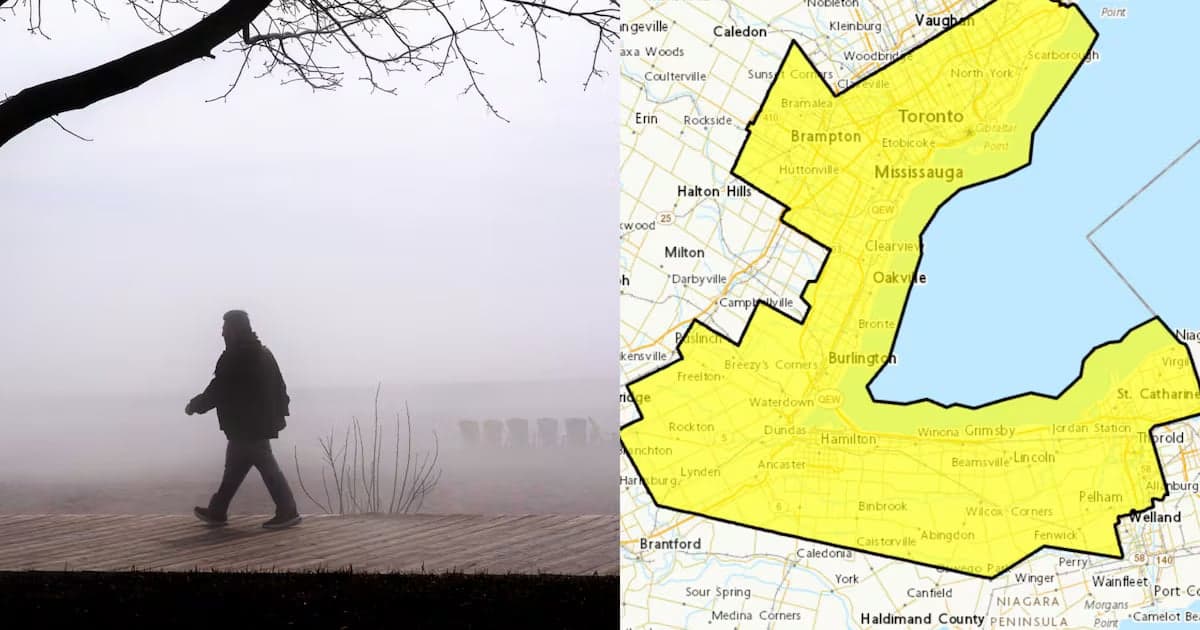
Dense Fog Causes Widespread Disruption Across Southern Ontario and GTA
A prolonged period of dense fog has blanketed southern Ontario and the Greater Toronto Area, causing near-zero visibility and triggering yellow-level weather advisories. The fog, rolling off Lake Ontario, has created hazardous travel conditions on major highways, led to delays at airports, and complicated logistics for freight movements. The event coincided with the annual Santa Claus Parade, requiring careful traffic management.
Read the full storyFold the full story1 min · 2 sources
A prolonged, dense fog event triggered widespread yellow-level weather advisories across southern Ontario, enveloping the Greater Toronto Area (GTA) and the wider Golden Horseshoe in near-zero visibility[1][2]. Issued by Environment and Climate Change Canada, the advisories covered high-density population centres, including Toronto, Mississauga, Markham, Halton Hills, Oshawa, and neighbouring lakeshore communities[1][2]. The thick blanket of radiation and marine fog rolled off Lake Ontario, creating sudden and hazardous travel conditions across major municipal and provincial transit arteries[1][2].
The meteorological event was driven by moist air lingering over the cold lake waters against the backdrop of unusual late-autumn warmth, with ambient regional temperatures pushing up to 14°C before cooler evening air condensed near the surface[1][2]. After partially lifting for a brief period on Saturday afternoon, the fog quickly re-thickened into Sunday morning, cutting visibility on highways such as the Queen Elizabeth Way (QEW), Highway 401, and the Don Valley Parkway to mere meters[1][2].
Municipal transport authorities and emergency services urged drivers to use low-beam headlights, maintain generous following distances, and anticipate abrupt slowdowns[1][2]. The dense fog created operational complications for surface transit networks and regional air travel, leading to controlled ground traffic and localized delays at Toronto Pearson International Airport and Billy Bishop Toronto City Airport. Furthermore, the impaired visibility caused logistics disruptions for morning freight movements and regional deliveries traversing the commercial transit hub of southern Ontario.
The hazardous weather also intersected with major community events, including crowds gathering in downtown Toronto for the annual Santa Claus Parade, requiring event organizers and municipal police to manage traffic with extra caution[1]. While clearing patterns developed as daytime heating advanced on Sunday, meteorologists noted that the persistent boundary-layer moisture serves as the precursor to an encroaching low-pressure trough, which is set to introduce cloud cover, scattered showers, and a seasonal temperature tumble across the lower Great Lakes heading into the work week[1][2].
- Environment and Climate Change Canada
- Southern Ontario
- Greater Toronto Area (GTA)
Section 2 of 4
World & Geopolitics
12 stories · 6 min skim
World & Geopolitics
3 min read
Iranian Strikes in Bahrain and Houthi Attacks on Riyadh Escalate Gulf Crisis
Regional stability in the Middle East has been severely destabilized by coordinated military escalations. Iran launched an attack on an industrial facility in Bahrain, drawing regional condemnation. Simultaneously, Houthi forces conducted intensive missile and drone strikes against Saudi Arabia, targeting Riyadh and other key locations in retaliation for coalition operations.
Read the full storyFold the full story2 min · 19 sources
Regional stability in the Middle East has suffered severe destabilization following coordinated military escalations targeting Gulf infrastructure over November 21–22, 2026[1][2][3]. In Bahrain, the Ministry of Interior reported that a hostile Iranian attack struck a civilian industrial facility, igniting large fires and inflicting substantial structural damage[1][2]. The strike triggered immediate regional condemnation on November 22 from the United Arab Emirates, Jordan, and Gulf Cooperation Council partners, who denounced the strike as a blatant violation of sovereignty, international law, and regional stability[1][2]. The Bahraini attack occurred alongside ongoing strikes against regional security infrastructure amid the broader confrontation between Tehran, regional states, and the U.S. military footprint across the Gulf[4][1][2].
Simultaneously, Yemen’s Iran-aligned Houthi movement launched intensive cross-border missile and drone strikes against Saudi Arabia, forcing emergency alerts across the Saudi capital for three consecutive nights[5][3][6]. The Saudi-led coalition confirmed that on November 21 and overnight into November 22, coalition air defense batteries intercepted three ballistic missiles and armed unmanned aerial vehicles targeting Riyadh, with additional interceptions reported near Mecca and across southern border provinces[7][3][8][9]. The strikes were launched in direct retaliation for a coalition “special operation” conducted on November 20 that heavily bombarded Houthi-held missile supply corridors and smuggling facilities in the Red Sea port of Hodeidah, as well as operational hubs in Sanaa, Saada, and Taiz[10][8]. Houthi military spokespersons warned international commercial airlines that Saudi airspace remains unsafe and threatened further strikes against energy infrastructure and Red Sea shipping terminals, following damage inflicted on Riyadh’s Public Investment Fund (PIF) tower[3][10].
The escalation has spread across vital maritime trade corridors. In the Strait of Hormuz, the United Kingdom Maritime Trade Operations (UKMTO) documented projectile strikes against two commercial oil tankers near Khasab, Oman, including one that sustained engine room damage[11]. Defense intelligence assessments published by the Institute for the Study of War on November 21 revealed that Houthi forces are actively constructing hardened fortifications, subterranean tunnels, and radar tracking sites overlooking the Bab al-Mandeb Strait, preparing long-term capabilities to threaten commercial and naval traffic at close range[11]. With Iran and its regional proxies systematically targeting Gulf energy networks and commercial routes, efforts to manage the escalation ladder appear increasingly fragile[12][13][11].
For global markets, the convergence of strikes against Gulf industrial centers, commercial shipping lanes, and capital financial districts introduces severe volatility into world energy supplies and maritime insurance rates[12][14][15]. For Canada, the crisis carries profound geopolitical and economic implications. While high crude benchmarks can bolster revenue for Canadian oil and gas producers, the disruption of critical maritime chokepoints strains global supply chains and drives inflationary pressure across Western economies[16][14][15]. Politically, Canada faces renewed pressure to support allied freedom-of-navigation missions and diplomatic de-escalation frameworks[17][15]. However, with Ottawa's own defense resources constrained and bilateral defense cooperation with Washington under friction, Canada’s ability to project naval support or protect commercial shipping interests overseas remains sharply challenged[18][19].
- Iran
- Bahrain
- Houthi movement
World & Geopolitics
3 min read
Moscow Rejects Peace Talks, Demands NATO Rollback and Claims Ukrainian Territory
Russia has rejected U.S.-backed peace proposals for Ukraine, dismissing guarantees of NATO-style collective defense and reaffirming maximalist territorial claims. Russian officials explicitly rejected any 'creative solutions' and asserted that central and southeastern Ukraine, including Kyiv, are 'traditionally Russian lands'. This hardline stance undermines diplomatic efforts and continues on-ground military operations.
Read the full storyFold the full story2 min · 14 sources
Hopes for a diplomatic breakthrough in the Russia-Ukraine war were firmly derailed over November 21–22, 2026, as the Kremlin aggressively dismissed U.S.-backed peace parameters and reaffirmed maximalist territorial objectives[1][2][3]. Speaking in Moscow, Russian Deputy Foreign Minister Sergey Ryabkov flatly rejected proposals that would grant post-war Ukraine NATO-style collective defense guarantees under Article 5[1][1]. Ryabkov’s statements directly contradicted public assertions made days earlier by U.S. presidential envoy Jared Kushner, who had briefed European allies and Ukrainian President Volodymyr Zelenskyy in Berlin that Washington had made substantive progress in getting Moscow “comfortable” with binding security guarantees in exchange for territorial concessions in the Donbas[1][1][4]. Ryabkov dismissed any "creative solutions" or formulas establishing quasi-NATO membership as entirely unacceptable to the Kremlin, declaring that any security discussions must focus strictly on Russia's own demands[1][1].
The diplomatic rift expanded dramatically with public remarks by Russian Foreign Minister Sergei Lavrov, broadcast over the weekend on Russian state television[5][3]. Lavrov asserted that central and southeastern Ukraine, explicitly including the capital city of Kyiv, are "without a doubt traditionally Russian lands" that Moscow is determined to recover to defeat alleged "Russophobia"[5][3][6]. The aggressive rhetoric prompted a sharp response from Ukrainian Foreign Minister Andriy Sybiha, who condemned Lavrov's historical justifications, affirming that Ukraine's sovereign borders are governed strictly by international law and the UN Charter rather than "Russian historical delusions"[6][6]. On the ground, Russian forces pressed offensive operations in Kharkiv and eastern Ukraine, while President Zelenskyy pushed for localized humanitarian ceasefires along the Dnipro River to evacuate endangered civilians from 15 settlements[3][3][3].
The collapse of Kushner's diplomatic initiative illustrates the vast chasm separating Washington’s transactional approach from Moscow’s strategic ambitions[1][2][7]. Following trilateral discussions in Abu Dhabi between U.S., Ukrainian, and Russian envoys - as well as side meetings between Donald Trump, Vladimir Putin, and Xi Jinping at the APEC summit in Shenzhen - the Kremlin has systematically leveraged U.S. calls for a ceasefire to insist upon an overhaul of the entire European security architecture[8][2][9]. Moscow continues to demand a complete cessation of NATO expansion, the withdrawal of allied military infrastructure to pre-1997 lines, and the formal neutrality of Ukraine[2][9]. European leaders have expressed deep alarm that bilateral talks spearheaded by Kushner and U.S. envoy Steve Witkoff risk conceding foundational security principles without binding enforcement mechanisms, leaving Europe sidelined in negotiations concerning its own territorial integrity[8][2][4][9].
This hardline impasse poses immense challenges for Canadian foreign policy interests[10][2]. Canada is home to one of the world's largest Ukrainian diasporas and has anchored its European foreign policy in unconditional support for Ukrainian sovereignty, international legal norms, and the preservation of NATO's eastern perimeter[10][2][6]. Russia’s explicit assertion of claims over Kyiv and its total rejection of Western security guarantees undermine the rules-based order that Ottawa champions[1][3][6]. Furthermore, as European allies grapple with the prospect of an American administration willing to trade NATO guarantees for an unstable ceasefire, Canada's forward military commitments - most notably leading NATO's multinational brigade in Latvia under Operation REASSURANCE - face mounting strategic and operational burdens[11][12]. With Washington displaying wavering multilateral commitments and Moscow holding fast to imperial ambitions, Ottawa is confronted with the reality that European stability will require sustained defense spending and deeper integration with European partners[13][11][14].
- Russia
- Ukraine
- NATO
World & Geopolitics
3 min read
US Restricts Canada Defense Ties, Exposing Bilateral Rift at Halifax Forum
A classified Pentagon directive has curtailed U.S. military interactions with Canada, limiting informal contacts outside core commands. This move, revealed during the Halifax International Security Forum, follows President Trump's aggressive rhetoric and trade disputes with Ottawa. Canadian officials expressed surprise and concern, stating they had no prior notification of the policy shift.
Read the full storyFold the full story2 min · 17 sources
The United States has formally curtailed aspects of its military relationship with Canada under a classified directive issued by U.S. Defense Secretary Pete Hegseth[1][2]. The secret memorandum, circulated across the Department of Defense and disclosed over November 21–22, 2026, instructs U.S. defense personnel to limit specific forms of bilateral defense interactions with Ottawa[1][2][3]. While Chief Pentagon Spokesman Sean Parnell stated that the measures are designed to ensure engagements advance tangible American defense priorities - expressly keeping intelligence sharing, North American Aerospace Defense Command (NORAD) operations, and NATO obligations intact - the directive marks an unprecedented institutional downgrading of ties between the two founding NATO allies[1][4]. Addressing the revelations at the 18th annual Halifax International Security Forum, U.S. Senator Mike Rounds (R-SD) indicated that the directive largely restricts informal military contacts, social engagements, joint appearances, and participation in academic and think-tank forums, essentially codifying an institutional freeze outside core operational commands[5][4][6].
The directive arrives amid escalating geopolitical friction ignited by President Donald Trump’s aggressive posture toward Canada, including sweeping bilateral tariffs, trade disputes, and repeated public rhetoric questioning Canadian sovereignty and suggesting its annexation as a 51st state[1][7][4]. Speaking from the White House, President Trump renewed sharp public criticisms of Ottawa, asserting that Canadian leaders had become “emboldened” in trade negotiations and warning that Washington “can’t let them feel that way anymore”[7]. The defense relationship had already deteriorated in previous months following public disparagements by Defense Secretary Hegseth regarding Canadian Armed Forces personnel and historical contributions to allied missions, culminating in the Trump administration barring senior Pentagon leaders from attending this year's Halifax Forum[4][8].
Canadian officials were caught completely off-guard by the secret directive[9]. Speaking in Halifax alongside Chief of the Defence Staff General Jennie Carignan, Canadian Defence Minister David McGuinty told reporters that Ottawa had neither seen the classified memo nor received formal notification of any policy shift[1][10][9]. McGuinty insisted that day-to-day operations remain "business as usual," highlighting ongoing joint counternarcotics patrols in the Caribbean, shared fighter scrambles, and continuous NORAD vigilance[2][11]. However, Canadian defence officials privately characterized the move as a diplomatic slight designed to coerce Ottawa during ongoing negotiations[8][12][3]. The fallout dominated the Halifax Forum, where Forum President Peter Van Praagh delivered an uncharacteristically stark opening warning, declaring that the international community can "no longer count on the United States as a predictable leader of the democratic world" and urging middle powers to chart an independent course[7].
This rupture strikes at the core of Canadian national security and foreign policy interests. Historically reliant on the security umbrella of NORAD and deep military integration with the U.S., Canada is being compelled to fundamentally reassess its continental defense strategy[1][11]. In response to rising pressure on defense spending and cross-border strains, Minister McGuinty underscored Canada's push to assume greater responsibility for its own Arctic sovereignty and hemispheric defense, pointing to domestic capacity rebuilding and space-launch initiatives like Maritime Launch Services in Nova Scotia[1][13][14]. Concurrently, Prime Minister Mark Carney's government has accelerated an economic and strategic pivot to offset American unpredictability, completing major trade negotiations with ASEAN, securing a bilateral pact with the Philippines, entering a strategic partnership with Turkey, and re-evaluating tariff frameworks with China[5][15][16]. In Halifax, U.S. lawmakers including Senator Chris Coons (D-DE) and Senator Tim Kaine (D-VA) openly criticized the administration's memo, warning that isolating Canada only weakens Western cohesion while adversaries like China, Russia, and Iran deepen their strategic alignment[5][17][4].
- U.S. Department of Defense
- Canada
- Pentagon
World & Geopolitics
2 min read
Pentagon Restricts Ties with Canada Amidst Transatlantic Alliance Friction at Halifax Forum
Escalating tensions between the U.S. and Canada were publicly revealed at the Halifax International Security Forum. The Pentagon circulated a classified memo restricting military and diplomatic interactions with Canada, although core NORAD missions and NATO mechanisms remain unaffected. This diplomatic chill occurred against a backdrop of intensifying economic coercion and political rhetoric from the U.S. administration.
Read the full storyFold the full story2 min · 8 sources
At the 18th Halifax International Security Forum, escalating friction between Washington and Ottawa surfaced publicly following revelations that United States Defense Secretary Pete Hegseth circulated a classified memorandum curbing military and diplomatic interactions with Canada[1][2]. While Pentagon spokesperson Sean Parnell clarified that the operational scope of binational North American Aerospace Defense Command (NORAD) missions, intelligence sharing, and core NATO mechanisms remain protected, the directive formally restricts U.S. defense officials from participating in Canadian-hosted security conferences, think-tank panels, and bilateral social engagements[2]. The diplomatic chill cast a long shadow over the proceedings at the Westin Nova Scotian, where Peter Van Praagh, president of the Halifax Forum, delivered an opening address warning that the international democratic community can no longer rely on Washington as a predictable leader[3].
The institutional retreat comes against a backdrop of intensifying economic coercion and political rhetoric from the second Trump administration[2][3]. U.S. President Donald Trump has repeatedly threatened punitive trade tariffs on critical Canadian export sectors - including automotive, steel, aluminum, and lumber - while publicly renewing provocative suggestions regarding Canadian sovereignty[2][3][4]. Speaking from Washington shortly after returning from high-stakes summits in Asia, Trump explicitly criticized Ottawa, arguing that Canadians had become too emboldened in their international posturing[2][3]. In response, the administration of Canadian Prime Minister Mark Carney has pushed to systematically diversify trade and security partnerships toward Europe and the Asia-Pacific to diminish structural dependency on the American market[5][3].
The Halifax proceedings highlighted deep tactical divisions over how Ottawa should manage its primary bilateral relationship[6][4]. Speaking during forum panels, U.S. Senator Chris Coons (D-Delaware), slated to assume leadership positions on the Senate Foreign Relations Committee, publicly urged Prime Minister Carney to negotiate an immediate, interim trade deal with the White House rather than wait for the convening of a new U.S. Congress[4]. Coons warned that scheduled tariff spikes slated for early next year would deliver crippling economic blows to Canadian heavy manufacturing[4]. Conversely, Canadian Minister of National Defence David McGuinty struck a defiant tone, emphasizing that Canada is moving ahead with historic military spending expansions, recapitalizing its domestic defense-industrial base, and bolstering sovereign programs without capitulating to external pressure[6].
The fallout from the Pentagon’s memorandum signals a long-term erosion of North American defense interoperability[1][2]. By formalizing restrictions on defense policy dialogue and intellectual exchanges, Washington risks isolating its northern ally at a moment when joint Arctic domain awareness, NORAD modernization, and sub-surface surveillance demand unprecedented coordination[7][8][2]. For Canada, the institutional estrangement accelerates a broader geopolitical pivot[3]. Rather than relying unconditionally on traditional bilateral arrangements, Ottawa is compelled to bolster self-reliant defense capabilities, forge direct industrial pacts with European partners, and navigate an increasingly transactional security environment[5][6][3].
- Pentagon
- Canada
- Halifax International Security Forum
World & Geopolitics
2 min read
US Democrats Urge Interim Canada-US Trade Deal as Tariff Threat Looms
Key US Democratic lawmakers have urged Canada to secure an interim trade agreement with the Trump administration before year-end to avoid doubled auto tariffs. Incoming House Speaker Hakeem Jeffries indicated that unwinding trade hostilities with Canada will be a priority for the new Congress. Canada is seeking to remove existing tariffs and secure temporary relief for key sectors.
Read the full storyFold the full story2 min · 9 sources
Key U.S. lawmakers have called on Canada to finalize an interim tariff agreement with the Trump administration before the end of the calendar year, advising Ottawa to secure temporary relief and let the incoming Congress legislate a long-term solution[1]. Speaking on the sidelines of high-level diplomatic engagements, senior Democratic Senator Chris Coons described sweeping U.S. tariffs levied against Canada on national security grounds as an “insult to Canada,” pledging that the Democratic-led House majority taking office in January will make unwinding trade hostilities with northern neighbors a primary priority[2][1].
The push for an interim settlement comes after Canadian Minister Dominic LeBlanc, who oversees Canada-U.S. Trade, briefed the Advisory Committee on Canada-U.S. Economic Relations in Ottawa[3][4]. Joined by Chief Trade Negotiator Janice Charette and Ambassador Mark Wiseman, LeBlanc detailed the federal government’s race to establish an interim tariff pact before January 1, when existing U.S. duties on Canadian automobiles are scheduled to double[4][5]. Canada is seeking the total removal of 50 percent duties imposed in August under Section 338 of the 1930 Tariff Act on approximately $20 billion in goods, alongside reductions in Section 232 duties affecting autos, steel, aluminum, and softwood lumber[4].
The negotiations reflect a fraught dynamic between Ottawa and Washington[6]. Talks originally fractured in August after President Trump accused Canada of inflexible bargaining, triggering 50 percent punitive levies across multiple sectors[6]. While President Trump acknowledged following an APEC encounter with Carney that a "fair" deal might be reached, he continued to claim that Canada has historically treated the U.S. unfairly and that substantial hurdles remain[7][8]. Meanwhile, American political pressure has begun shifting following U.S. midterm elections that saw Democrats win the House of Representatives under incoming Speaker Hakeem Jeffries, driven partly by exit polls demonstrating voter pushback against universal import tariffs[9][6].
For Canada's domestic economy, the stakes are existential[7][4]. Flavio Volpe, president of the Automotive Parts Manufacturers’ Association (APMA), emphasized that maintaining duty-free access for North America's tightly integrated vehicle supply chain is critical to the survival of thousands of manufacturing jobs in Ontario and Quebec[4]. Minister LeBlanc conceded that any interim arrangement concluded with the White House by year-end would likely require Canada to stomach a lingering baseline level of tariffs on select industrial goods to prevent an immediate doubling of auto duties, leaving Canadian manufacturers to weigh the certainty of a compromise against holding out for congressional intervention in 2027[4][5].
- Canada
- United States
- Donald Trump
World & Geopolitics
2 min read
Trump Seeks 'Permanent' Iran Nuclear Deal Amid Global Energy Volatility
President Trump announced his administration's intention to pursue a permanent nuclear agreement with Iran, focusing on preventing Tehran from acquiring weapons indefinitely. This diplomatic push occurs as Iran faces severe economic sanctions and international pressure due to instability in the Strait of Hormuz. Trump aims to create a lasting framework, not focused on regime change.
Read the full storyFold the full story1 min · 9 sources
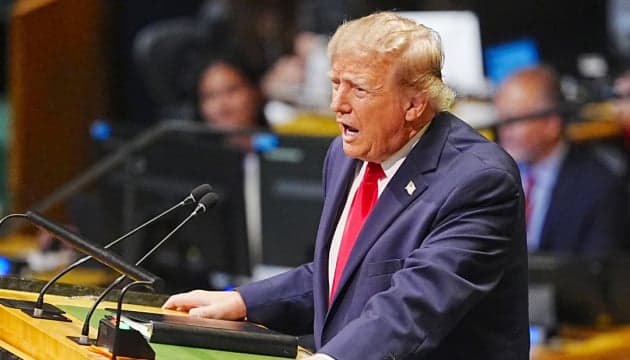
In an interview with Fox News, President Donald Trump declared that his administration will pursue a "permanent" deal with Iran designed to categorically prevent Tehran from acquiring nuclear weapons across future American presidencies[1][2]. Trump stated that he is focused on creating an airtight framework rather than pursuing active regime change in Tehran, asserting that any future pact must be structured so that "incompetent presidents 4, 15, or 20 years from now" cannot allow Iran to resume enrichment[2]. Trump noted that the U.S. has already disrupted successive tiers of Iranian command through combined military and financial actions, creating an opening for a definitive settlement[2].
The diplomatic overtures emerge against a backdrop of acute economic distress inside Iran and simmering tensions across critical shipping choke points[3][4]. The Iranian government introduced strict nationwide electricity rationing and emergency food purchase controls following sweeping international sanctions[4][5]. Meanwhile, maritime commercial lanes in the Strait of Hormuz continue to face severe instability, with ongoing naval skirmishes and tanker explosions disrupting crude transportation routes[3]. U.S. Treasury Secretary Scott Bessent reaffirmed that Washington’s enforcement apparatus has virtually severed Iran’s access to international crude payments, warning that Tehran’s offshore reserves are dwindling[5].
The fluctuating prospect of either military escalation or a comprehensive, sanctions-lifting nuclear deal carries significant economic ramifications for Canada's commodity sector and exchange rate[6][7]. Geopolitical conflict in the Middle East has supported global crude pricing by pricing in supply-interruption premiums, bolstering Canadian energy equities and revenue for major western producers of Western Canadian Select (WCS)[6][7].
Market analysts point out that if Trump successfully negotiates a permanent accord that unwinds sanctions on Iranian oil exports, a massive influx of Iranian barrels into global oil markets would quickly erode current crude price floors[7]. For Canada, where energy exports constitute a pillar of the merchandise trade balance and underpin the strength of the Canadian dollar, a sudden deflation in global oil benchmarks would weaken domestic terms of trade, curtail royalty revenues in energy-producing provinces like Alberta, and present an additional headwind to a Canadian economy already under severe pressure from North American trade disputes[8][6][9].
- Donald Trump
- Iran
- United States
World & Geopolitics
2 min read
Shenzhen APEC Summit Triggers Canada and Pacific Allies to Forge Minilateral Ties
Following trilateral discussions between China, the U.S., and Russia at the APEC summit in Shenzhen, Canada, Australia, and New Zealand issued a joint ministerial declaration to counter the perceived shift toward great-power bilateralism. The declaration reaffirmed international law and condemned Russia's war in Ukraine, pushing back against attempts by Beijing and Moscow to normalize revised regional borders.
Read the full storyFold the full story2 min · 9 sources
The conclusion of the Asia-Pacific Economic Cooperation (APEC) summit in Shenzhen, China, produced a major geopolitical realignment following private trilateral discussions between Chinese President Xi Jinping, U.S. President Donald Trump, and Russian President Vladimir Putin[1][2]. While public statements from the three powers emphasized great-power conflict management, nuclear non-proliferation dialogue, and energy transit security, strategic analysts noted that the encounter signaled an unsettling shift toward great-power bilateralism and sphere-of-influence politics[1][3]. The direct summitry among Washington, Beijing, and Moscow heightened apprehensions across middle-tier democracies that smaller economies could see their territorial, legal, and economic interests negotiated away by dominant military powers[3].
Reacting to the concentrated diplomatic maneuvering in Shenzhen, Canada, Australia, and New Zealand moved rapidly to establish a counterweight, issuing a robust joint ministerial declaration[4]. The tripartite statement reaffirmed unconditional support for international law, regional sovereignty, and open maritime corridors, while delivering an unyielding condemnation of the ongoing Russian war in Ukraine[4]. By highlighting the war's compounding damage to global food stability, merchant shipping, and Indo-Pacific supply chains, the three middle powers deliberately pushed back against efforts by Beijing and Moscow to normalize revised regional borders through great-power diplomacy[4][3].
The joint diplomatic front reflects a calculated hedging strategy pursued by Canadian Prime Minister Mark Carney and Foreign Affairs Minister Anita Anand[5][4][6]. Recognizing that great powers are increasingly weaponizing economic interdependencies - deploying tariffs, financial clearing networks, and critical mineral restrictions as geopolitical leverage - Ottawa is maneuvering to protect Canadian market access while asserting national autonomy[7][6]. Throughout his engagements in Shenzhen, Carney advanced bilateral commercial arrangements with China in targeted areas such as agriculture and select energy sectors, yet simultaneously reinforced Canada’s strategic alignment with democratic partners across the Pacific rim[5][4].
This recalibration points toward a permanent fragmentation of the post-Cold War multilateral system into flexible "minilateral" coalitions[8][4]. As institutional bodies like the United Nations and APEC face gridlock from escalating superpower rivalries, Canada’s diplomatic posture is pivoting toward coalitions of shared interest[5][4][3]. By binding its Indo-Pacific strategy directly to like-minded middle powers like Australia and New Zealand, Canada aims to insulate itself against the instability of great-power bargaining, ensuring its voice remains potent in defending the rules-based maritime order[9][4].
- APEC
- Shenzhen
- China
World & Geopolitics
2 min read
COP31 Climate Summit Stalls Over Fossil Fuel Phaseout and Public Finance Demands
The UN Climate Change Conference (COP31) in Antalya, Turkey, entered contentious overtime negotiations due to disagreements over fossil fuel language and financial obligations. A coalition of vulnerable and developed states clashed with oil-exporting nations, particularly over an explicit commitment to phase out fossil fuels. Developing nations also intensified demands for concrete financial commitments for climate adaptation and loss recovery.
Read the full storyFold the full story2 min · 6 sources
The United Nations Climate Change Conference (COP31) in Antalya, Turkey, descended into contentious overtime negotiations after high-stakes plenary sessions stalled over fossil fuel language and financial obligations[1][2]. The co-presidencies - led by Australian Climate Change and Energy Minister Chris Bowen and Turkish Environment Minister Murat Kurum - convened emergency ministerial discussions late into the night to bridge an ideological impasse between a coalition of over 130 climate-vulnerable and developed states and a Saudi-led bloc of oil-exporting nations[1]. The primary point of rupture centers on whether the summit's final "cover decision" will explicitly commit parties to an accelerated global transition away from fossil fuels or dilute the mandate into voluntary references to previous communiqués[1].
Tensions mounted after the presidency released an updated draft text attempting to circumvent the deadlock by merely recalling the language established three years prior at COP28 in Dubai[1]. The compromise draft immediately drew fierce condemnation from low-lying island states and environmental groups[1][3]. Maina Talia, Climate Minister of Tuvalu, declared the explicit phaseout language an non-negotiable red line, stressing that omitting direct references to burning coal, oil, and gas ignores the primary cause of planetary warming[1]. Moments later, German negotiators announced that Berlin and several European partners would formally reject the compromise text, while Climate Action Network International Executive Director Tasneem Essop criticized the Australian presidency for yielding to fossil fuel interests by inserting provisions that prioritize carbon capture and storage (CCS) over genuine production declines[3][2].
Parallel to the energy dispute, developing nations intensified demands for concrete financial commitments under the New Collective Quantified Goal (NCQG) on climate finance[1][3]. Delegates from the African Group of Negotiators and small-island coalitions stressed that wealthy nations cannot demand ambitious domestic mitigation targets while obstructing public, grant-based financing mechanisms required for climate adaptation and loss recovery[1][3]. Civil society groups, including the Global Climate and Health Alliance, pointed out that the latest text systematically deleted crucial references to International Court of Justice (ICJ) advisory obligations regarding state responsibility for transboundary environmental damage, further undermining multilateral accountability[4].
The Antalya stalemate highlights the growing inability of consensus-based multilateral diplomacy to manage competing national economic survival strategies[1][5]. For Canada, an economy navigating the dual pressures of major hydrocarbon extraction and progressive domestic emissions targets, the paralysis poses complex strategic hurdles[1]. As global climate governance fractures into regional blocs and carbon-border tariff regimes, Ottawa faces intensifying pressure from both European allies demanding stringent transition timetables and domestic natural resource sectors demanding infrastructure longevity, testing the viability of Canada's traditional multilateral mediator role[6][3][2].
- COP31
- Antalya
- Turkey
World & Geopolitics
2 min read
Defense Review Reveals Critical Gaps in Canada's Undersea Surveillance Capabilities
An internal defense document revealed Canada possesses fewer than 20 uncrewed underwater vehicles (UUVs) to monitor its vast coastline, highlighting an urgent lack of autonomous underwater surveillance capabilities. Despite identified operational requirements, the military's existing drones are primarily adapted for testing and mine countermeasures, not long-range maritime domain awareness.
Read the full storyFold the full story1 min · 2 sources
An investigative disclosure based on internal defense documents revealed that Canada possesses only around 20 uncrewed underwater vehicles (UUVs) to monitor the world’s longest national coastline, spanning 243,000 kilometers across the Atlantic, Pacific, and Arctic oceans[1]. Royal Canadian Navy Commander Vice-Admiral Dan Charlebois confirmed that despite urgent operational requirements identified by senior defense planners over the past year, Canada currently lacks an operational interim solution for autonomous underwater surveillance[1]. The military's existing miniature fleet consists predominantly of U.S.-manufactured drones adapted for testing and mine-countermeasure operations rather than long-range subsea maritime domain awareness[1].
The revelation comes amid acute vulnerability regarding global subsea critical infrastructure[1]. Benthic communication cables carry over 95 percent of international internet traffic and support trillions of dollars in daily financial transfers, making them priority targets for hybrid warfare and state-sponsored sabotage[1]. While allied nations across NATO and the Indo-Pacific have rapidly deployed uncrewed autonomous fleets to safeguard maritime sea lines of communication, Canadian maritime forces continue to face capability voids along sparsely monitored ocean flanks, particularly in the warming, increasingly accessible Arctic corridors[2][1].
The technological deficit is compounded by an procurement irony: Canadian commercial enterprises are world leaders in subsea autonomous robotics[1]. Companies such as Newfoundland-based Kraken Robotics and British Columbia-based Cellula Robotics have secured contracts across Europe, the United States, and Asia to deliver deep-water sensor systems and autonomous long-endurance patrol drones[1]. Yet, bureaucratic procurement delays have prevented the Canadian Armed Forces from integrating these homegrown systems into a operational surveillance architecture[1]. Vice-Admiral Charlebois acknowledged that while naval leadership is consulting closely with the private sector, contractual deployment remains unrealized[1].
The lack of robust subsea surveillance poses direct consequences for Canada’s international standing and Arctic sovereignty[2][1]. As adversary submarines and specialized dual-use research vessels expand operations near Canadian territorial waters, Ottawa's inability to police its seabed weakens its contributions to collective NATO defense architectures and bilateral continental defense arrangements[2][1]. Closing this capability gap is rapidly transforming from a domestic defense dilemma into a geopolitical test of Canada’s capacity to protect critical allied transit corridors in the circumpolar north[2][1].
- Canada
- Royal Canadian Navy
- Vice-Admiral Dan Charlebois
World & Geopolitics
2 min read
Taiwan Warns Canada Over China Trade Deal Amid Geopolitical Concerns
Taiwan's Deputy Foreign Minister Chen Ming-chi cautioned Canada against deepening economic ties with China, citing potential vulnerability to coercion. This warning comes after Canadian Prime Minister Mark Carney and Chinese President Xi Jinping agreed to expand a tariff-relief agreement. Taiwan has experienced direct negative consequences from China leveraging trade dependencies for geopolitical gain.
Read the full storyFold the full story2 min · 10 sources
Taiwan’s Deputy Foreign Minister Chen Ming-chi issued an explicit warning to Canadian Prime Minister Mark Carney, cautioning that Ottawa’s recent efforts to thaw and expand trade relations with Beijing could leave Canada vulnerable to economic coercion[1][2]. Speaking in an interview at the Halifax International Security Forum, Chen expressed deep unease over Canada’s shift toward closer bilateral economic cooperation with China[2]. “We worry. We worry,” Chen said, pointing out that Taipei has extensive, painful experience with the Chinese Communist Party utilizing trade dependencies as geopolitical leverage against democratic trading partners[2].
The diplomatic friction follows a high-profile bilateral meeting earlier in the week in Shenzhen, China, where Prime Minister Mark Carney and Chinese President Xi Jinping agreed to expand a tariff-relief agreement on the sidelines of the Asia-Pacific Economic Cooperation (APEC) summit[3][4]. Under the arrangement, Beijing agreed to lower or eliminate tariffs on approximately C$400 million ($280 million) worth of Canadian agricultural and seafood exports, including frozen pork cuts, Pacific spot prawns, geoduck, and Greenland halibut[3][5]. In exchange, Canada agreed to grant a two-year extension on tariff remission measures for select Chinese steel and aluminum imports through 2028[3][5]. The move builds on previous concessions, such as Beijing easing duties on Canadian canola meal, peas, and seafood, alongside Ottawa capping tariffs on tens of thousands of Chinese electric vehicles[3][6].
Carney has defended his China strategy as a pragmatic diversification drive aimed at shielding Canada from escalating protectionism in the United States[4][7]. The Prime Minister has publicly targeted a 50 percent increase in Canadian exports to China by 2030, declaring progress on that front ahead of schedule[4][8]. Carney has also dismissed assertions that Ottawa must make a zero-sum choice between Beijing and Taipei, maintaining that Canada hopes to finalize a long-delayed bilateral investment and trade arrangement with Taiwan while expanding access to mainland Chinese markets[9].
However, the warnings from Taiwanese leadership spotlight the mounting domestic and geopolitical blowback facing Ottawa[1][2]. Critics in Canada, including national security analysts and opposition parliamentarians, have raised concerns over deepening dependencies with Beijing following historical episodes of retaliatory trade embargoes, the detention of Canadian nationals, and foreign interference inquiries[2][10]. For Canadian exporters - particularly within the agricultural, fisheries, and manufacturing sectors - the opening of the Chinese market presents immediate economic relief, but it introduces renewed vulnerability to political volatility if relations deteriorate[3][2].
- Taiwan
- Canada
- China
World & Geopolitics
2 min read
Trump Tariffs on Overseas AI Data Centers Threaten Canadian Green-Tech Ambitions
President Trump proposed significant penalties on US tech companies building AI data centers abroad, aiming to keep critical compute infrastructure within the US. This move could severely impact Canada's strategy to attract US cloud giants for its green-energy data center projects. Provinces like Quebec and Ontario have been actively promoting their clean energy resources for these investments.
Read the full storyFold the full story2 min · 12 sources
In a post-summit press conference and subsequent policy briefings, President Donald Trump unveiled plans to impose "tremendous penalties" and heavy taxes on U.S. technology companies that construct artificial intelligence data centers on foreign soil[1][2]. Trump stated that the U.S. must preserve exclusive control over cutting-edge digital compute infrastructure to retain dominance in artificial intelligence and prevent critical assets from falling under Chinese influence[2][3]. “We're not allowing data centers to go into other countries because China will take all of them,” Trump said, arguing that American firms should instead be forced to keep their server farms and capital spending domestic[2][4].
The sudden threat roiled equity markets, pulling down major infrastructure-exposed hyperscalers and data center operators - including Microsoft, Alphabet, Amazon, Digital Realty, and Equinix[5]. While Trump acknowledged that he had not formally previewed the mechanism to his cabinet, the proposed penalty targets an industry currently wrestling with widespread domestic bottlenecks[2][6]. Hyperscale data center developers in the United States have faced severe local resistance over electrical grid strain, water depletion, and spikes in regional retail utility prices, forcing tech companies to search for international sites equipped with abundant, scalable, and low-carbon electricity[2][7].
Trump's pronouncement creates major risks for Canada’s domestic tech ecosystem and green-energy export ambitions[8][9]. Over the past two years, Canadian provinces - most notably Quebec, Ontario, and Saskatchewan - have aggressively courted U.S. cloud giants, pitching cold weather, plentiful fresh water for server cooling, and clean baseload hydropower and nuclear energy as an ideal foundation for next-generation AI clusters[10][9]. Multibillion-dollar foreign direct investment proposals have been structured around American tech firms expanding their infrastructure footprints across Canadian borders to satisfy artificial intelligence compute demand[8].
If the White House enacts taxes or export control restrictions on the hardware, capital, or compute capacity of overseas data centers, Canadian utilities and developers could see lucrative project pipelines halted[11][7]. Provincial energy grid operators that have been structuring multi-year capital plans around enterprise data center load growth could face stranded grid expansion costs[7]. Furthermore, Canadian corporate and research entities that depend on cross-border cloud infrastructure and collaborative computing networks with American partners risk facing higher subscription costs and operational barriers if Washington strictly walls off U.S.-funded computing capacity[8][12].
- Donald Trump
- United States
- Canada
World & Geopolitics
2 min read
Aswan Forum: Developing Nations Demand Overhaul of Global Financial Architecture
African leaders and Global South policymakers at the Aswan Forum called for a significant overhaul of the international financial architecture. They argued that existing lending frameworks perpetuate liquidity crises and that developing nations need greater agency in global economic governance to address debt, climate adaptation, and security breakdowns.
Read the full storyFold the full story2 min · 10 sources
The sixth edition of the Aswan Forum for Sustainable Peace and Development opened with a unified demand from African leaders and Global South policymakers for an overhaul of the international financial architecture[1][2]. In an opening address, Egyptian President Abdel Fattah Al-Sisi warned that compound global crises - ranging from high food and energy inflation to disruptions in critical maritime chokepoints - are disproportionately destabilizing developing nations[1][2]. Gathering senior ministers from across the African Union alongside United Nations Secretary-General António Guterres, the forum centered on the reality that African economies are caught between rising debt service obligations and the capital demands of climate adaptation[1][2].
Al-Sisi outlined a strategic framework arguing that developing countries must transition from passive consumers of international rules to active architects of global economic governance[1]. Key participants, including Egyptian Foreign Minister Badr Abdelatty and incoming UNESCO leadership, emphasized that existing lending frameworks overseen by the International Monetary Fund and the World Bank remain structured to perpetuate liquidity crises rather than facilitate structural industrialization[3][1][2]. African delegates pointed to the worsening armed conflicts in Sudan and the Horn of Africa as stark reminders that economic marginalization and fiscal insolvency rapidly spill over into systemic regional security breakdowns[4][1][2][5].
The forum’s core diplomatic push coincided with parallel Global South strategy conferences, including the Cape Town Conversation, where leaders from over 50 nations convened to address supply chain disruptions and techno-economic sovereignty[6]. Throughout these discussions, emerging economies underscored the necessity of strategic autonomy, calling for debt-for-climate swaps, accessible long-term capital at concessional interest rates, and local currency clearing mechanisms to bypass vulnerability to dollar-denominated financial instruments and great-power economic warfare[7][1][6].
The structural pushback from the Global South carries significant implications for Western donor states, notably Canada[8][9]. As Global Affairs Canada undertakes a renewal of its foreign policy framework, international development policy experts emphasize that traditional development assistance is no longer sufficient to secure geopolitical influence[10][9]. To remain a relevant international partner, Canada faces calls to align its foreign statecraft with developing nations' demands for sovereign debt reform, equitable critical mineral supply partnerships, and multilateral institutional restructuring[7][1][9]. Ignoring these structural demands risks driving developing economies toward alternative, non-Western economic institutions, permanently altering the balance of influence in international affairs[3][1][6].
- Aswan Forum
- African Union
- Global South
Section 3 of 4
City News
11 stories · 5 min skim
City News
2 min read
King Street West Infrastructure Overhaul Begins in Toronto
The City of Toronto and TTC are commencing a multi-phase infrastructure renewal program along King Street West, set to continue until late 2027. The project involves replacing subterranean watermains and renewing streetcar trackbeds. Construction will be divided into phases to minimize disruption, with significant traffic and transit diversions anticipated.
Read the full storyFold the full story2 min · 2 sources
The City of Toronto, in direct coordination with the Toronto Transit Commission (TTC), announced the commencement of a comprehensive, multi-phase capital infrastructure renewal program along King Street West, scheduled to begin street-level operations on Monday, November 23[1][1]. Designed as a co-ordinated upgrade extending through late 2027, the initiative bundles the full replacement of critical subterranean watermains with the structural renewal and modernization of streetcar trackbeds along the heavily trafficked downtown transit artery[1].
The extensive construction timeline has been broken down into geographically separated phases to mitigate continuous gridlock across the downtown core[1]. The inaugural phase, which mobilizes work crews along King Street West between Dufferin Street and Close Avenue, will run through fall 2027[1]. A secondary phase spanning Spadina Avenue to Portland Street begins in December, followed by scheduled trackbed and utility work between Bathurst and Shaw streets, the intersection of King Street West and York Street, and Charlotte Street to University Avenue through the end of 2027[1]. By sequencing underground utility replacement directly prior to laying reinforced streetcar track beds, municipal planners aim to avoid having to re-excavate newly paved roadway corridors in subsequent budget cycles[1].
The project will entail major traffic disruptions, lane closures, and transit adjustments along the 504 King corridor - traditionally one of the highest-ridership surface transit routes in North America[1]. While one travel lane in each direction will be preserved during initial watermain extraction, full vehicular and transit detours will be enacted as rail installation commences[1]. The TTC has mapped out temporary diversion plans for streetcar routes, rerouting cars via Queen Street and deploying replacement bus shuttles, while the City is stationing Dedicated Traffic Control Personnel and fine-tuning traffic signal operations along alternative downtown corridors[1]. Pedestrian access to commercial storefronts and residential properties will be maintained throughout all phases[1].
The announcement reflects City Hall's wider shift toward bundled capital delivery to tackle aging core utility assets[1]. Much of the subterranean piping in the King West corridor dates back several decades, presenting mounting risks of main breaks and transit stoppages if left unaddressed[1]. Concurrently, the municipal engineering division awarded an allied contract for watermain and bikeway reconstruction along University Avenue, signaling a coordinated infrastructure delivery push under the City’s capital budget[2].
- City of Toronto
- Toronto Transit Commission
- King Street West
City News
2 min read
Toronto Launches Multi-Year King Street West and Waterfront Transit Overhaul
The City of Toronto and TTC are commencing a major multi-year capital renewal project on King Street West and the Queens Quay West streetcar line. The project bundles critical underground water infrastructure overhauls with surface track replacements, aiming to prevent future excavations. This initiative will cause significant disruptions to transit services and traffic along key corridors through late 2027.
Read the full storyFold the full story2 min · 7 sources
The City of Toronto and the Toronto Transit Commission (TTC) have finalized and publicized plans for a major multi-year capital renewal project on King Street West, set to disrupt one of the city's busiest surface transit corridors starting Monday, November 23, and extending through late 2027[1][2]. Beginning the same weekend - specifically at 11:00 p.m. on Sunday, November 22 - the TTC is simultaneously launching state-of-good-repair rehabilitation along the Queens Quay West streetcar right-of-way and inside the Harbourfront Tunnel[3]. The concurrent initiatives form a cornerstone of the municipality’s coordinated capital work strategy, designed to bundle major subsurface water infrastructure overhauls with surface track replacements before future rapid transit projects come online[4].
The King Street West renewal tackles critical underground and above-ground municipal assets[4]. The initial phase between Dufferin Street and Close Avenue begins with the replacement of two aging municipal watermains - both approximately 139 years old - followed immediately by the structural renewal of TTC streetcar tracks and track beds[4]. By bundling the watermain and transit work, municipal planners aim to prevent repetitive street excavations in future years[4]. The project is staged across several phases through 2027, eventually expanding east to span segments between Spadina Avenue and Portland Street (slated from late 2026 to summer 2027), Bathurst Street to Shaw Street, the intersection of King Street West and York Street, and Charlotte Street to University Avenue[4][2].
The operational impact on commuters, local businesses, and transit operations is extensive[4][5]. Starting Monday, November 23, 504 and 304 King streetcars will be diverted around the initial western work zone, rerouting via Queen Street West between Shaw Street and Roncesvalles Avenue[4]. To mitigate congestion along the detour route, the City has implemented expanded parking bans, enhanced no-stopping regulations, and turn restrictions along Queen Street West, supported by dedicated traffic control personnel and recalibrated signal timings[4][5]. Motor vehicle traffic along active King Street construction zones will be reduced to a single lane in each direction during watermain work and constricted to a single lane operating one-way during rail installation, prompting local councillor Ausma Malik and city staff to advise motorists to seek alternate east-west corridors[5][6].
Meanwhile, along the central waterfront, the TTC’s month-long closure of the Queens Quay corridor from Spadina Avenue to Union Station will address critical structural rail repairs, track switches, and underground tunnel inspections until December 19[3]. Service on the 509 Harbourfront streetcar has been truncated to run between Exhibition Loop and Queens Quay Loop, supplemented by 509B replacement bus service routed along Lake Shore Boulevard and Front Street West[3]. Transit authorities intentionally scheduled the start of this heavy civil work late Sunday night to avoid interfering with crowds attending the 122nd Original Santa Claus Parade through downtown Toronto[3][7].
- City of Toronto
- Toronto Transit Commission (TTC)
- King Street West
City News
3 min read
Santa Claus Parade, Transit Work Paralyze Downtown Toronto
A convergence of the Santa Claus Parade's altered route, regional transit restructuring, and significant infrastructure work caused severe travel disruptions across downtown Toronto over a weekend. The parade's new route and extensive TTC and Metrolinx subway closures led to widespread traffic lockdowns, shuttle bus delays, and frustrated commuters. Multiple transit lines experienced significant diversions and cancellations.
Read the full storyFold the full story2 min · 7 sources
Commuters and holiday crowds across the Greater Toronto Area experienced severe travel disruptions throughout the November 21–22 weekend as a convergence of heavy infrastructure work, regional transit restructuring, and the 122nd Original Santa Claus Parade took over the city center[1][2]. The central disruption was anchored by the parade on Sunday, November 22, which drew hundreds of thousands of spectators but triggered sweeping traffic lockdowns due to an unprecedented route change[2]. For the first time in its more than a century-long history, the seven-kilometer parade route redirected down Yonge Street rather than its traditional path along University Avenue, starting at Christie Pits Park and terminating at the St. Lawrence Market[2]. The reconfiguration required Toronto Police to enforce rolling closures across more than two dozen major downtown intersections, alongside an aggressive towing operation that cleared parked vehicles along the route starting at 6:00 a.m. Sunday[1][3].
The resulting strain on surface travel was exacerbated by a cascading series of public transit adjustments managed by the Toronto Transit Commission (TTC) and Metrolinx[1][4]. Ahead of Sunday’s festivities, the TTC completely halted subway operations on Line 2 (Bloor-Danforth) between St. George and Broadview stations for the entirety of Saturday, November 21[1][5]. The closure - which shuttered Bay and Sherbourne stations and closed the Line 2 Yonge Street entrance at Bloor-Yonge - was implemented so engineering crews could install cabling for a future Automatic Train Control (ATC) signaling modernizing system and perform critical structural inspections on supporting beams along the Prince Edward Viaduct ahead of broader 2027 rehabilitation work[5]. A fleet of replacement shuttle buses attempted to manage cross-town passenger volume, though severe road congestion led to transit delays that rippled into the surrounding street network[1][6].
Surface street transit faced additional diversions on Sunday to skirt the parade corridor[3]. Key transit arteries were truncated or rerouted, including the 19 Bay bus - which was diverted away from Bay Street between Davenport Road and King Street West toward Church and Adelaide - and the 94A Wellesley bus, which was forced to detour along Dupont and Davenport to avoid Queen’s Park and the hospital corridor[3]. TTC operations officials urged commuters to rely strictly on Line 1 and unaffected Line 2 segments, while dispatching extra Wheel-Trans vehicles to maintain accessible connections amid road blockades[5].
Regional transit riders traveling into Toronto via GO Transit faced an equally complicated operating environment[1][6]. While Metrolinx added specialized morning and late-afternoon train trips on Sunday along the Barrie and Stouffville corridors to facilitate family travel to Union Station, Saturday passengers bore the brunt of network modifications[1][7]. Because of ongoing construction, GO Stouffville line trains were canceled between Union Station and Scarborough GO on Saturday, forcing riders to board Lakeshore East trains and transfer at Scarborough[6]. Concurrently, Lakeshore East train service was restricted to hourly intervals between Union Station and Durham College Oshawa GO[6]. The resulting bottlenecks left many regional travelers frustrated with overlapping weekend schedule changes, even as transit advocates commended the coordination required to balance long-term capital maintenance with massive civic gatherings[1].
- Toronto Transit Commission (TTC)
- Metrolinx
- GO Transit
City News
2 min read
Toronto Breaks Ground on 92-Unit Affordable Housing Project in Parkdale
Construction has officially begun on Green Phoenix II, a 10-storey affordable rental development in Toronto's South Parkdale neighborhood. The project will deliver 92 affordable rental units, including 10 replacement homes, with integrated community supports. The development is backed by significant funding from the City of Toronto and the federal government through CMHC.
Read the full storyFold the full story2 min · 7 sources
Federal and municipal representatives officially launched construction on Green Phoenix II, a 10-storey affordable rental development situated at 1337–1339 King Street West in Toronto’s South Parkdale neighborhood[1][2]. The project will introduce 92 purpose-built affordable rental units targeted at low-income individuals and families, including 10 dedicated rental replacement homes to safeguard existing community tenancies[2]. Spearheaded by the Parkdale United Church Foundation (PUCF), a non-profit housing provider with more than four decades of experience developing social infrastructure in western Toronto, the building will be integrated with on-site community supports and situated near public transit and commercial corridors[1][2].
The development is supported through combined public funding instruments across municipal and federal jurisdictions[1][2]. The City of Toronto is contributing more than $15.5 million in direct capital funding through its Rental Housing Supply Program - bolstered by Ontario’s Build Faster Fund allocations - alongside $2 million in municipal property tax exemptions designed to guarantee long-term operational affordability for at least four decades[2][3]. The federal government has matched this commitment with $29 million in financing delivered through Canada Mortgage and Housing Corporation’s (CMHC) Affordable Housing Fund under the Budget framework[1][2].
The ceremonial start of construction coincided with the opening days of Toronto City Council’s 2026–2030 mandate[4][5]. The official announcement featured Karim Bardeesy, Member of Parliament for Taiaiako’n–Parkdale–High Park, representing Minister of Housing and Infrastructure Gregor Robertson, alongside newly sworn-in Ward 4 Councillor Diana Chan McNally and Mayor Olivia Chow[1][4]. For Chan McNally, a veteran frontline housing and anti-poverty advocate who assumed office following the municipal election, the project represents an immediate delivery on campaign priorities that centered on anti-displacement policies in high-density renter communities[4][2].
This groundbreaking arrives as South Parkdale experiences sustained real estate pressures that have challenged non-profit retention of low-cost housing stock[2]. Addressing the structural crisis requires moving beyond standalone shelter provision to integrate supportive health frameworks[1]. City briefing documents released for the incoming council term reveal that 20 percent of Toronto households are currently in core housing need - over 70 percent of whom are renters - while an estimated 15 existing affordable units are lost across the private market for every single new affordable unit built[6][7]. Green Phoenix II is designed as a direct countermeasure to this trend, permanently locking the 92 units under non-profit covenant[2].
- Parkdale United Church Foundation
- City of Toronto
- Canada Mortgage and Housing Corporation
City News
2 min read
Public Safety Alert After Coyote Attacks Child in North York Park
Toronto Police issued a public safety alert after a coyote attacked and dragged a five-year-old child in Edwards Gardens, North York. Bystanders intervened, scaring the coyote away. The child sustained minor injuries. Extensive searches for the animal have been unsuccessful, and residents are advised on safety measures.
Read the full storyFold the full story1 min · 5 sources
The Toronto Police Service (TPS) issued an urgent public safety alert after a five-year-old child was attacked and dragged by an aggressive coyote at Edwards Gardens in North York[1][2][3]. The attack occurred late Thursday morning near Lawrence Avenue East and The Bridle Path, prompting a multi-agency response from TPS 33 Division, Toronto Animal Services (TAS), and Toronto Paramedic Services, culminating in formal community warnings issued throughout the weekend[4][3].
According to investigators, the child was walking in the park grounds when the coyote approached unexpectedly, bit the child, and dragged the victim across the terrain for a short distance[5][3]. Several quick-thinking adult bystanders intervened by shouting, advancing toward the animal, and throwing objects, which ultimately startled the coyote into releasing the child and fleeing into the dense brush of the surrounding ravine system[4][3]. Emergency medical responders attended the scene and confirmed the child sustained minor puncture and abrasive injuries that did not necessitate transport to a trauma center[3].
Officers and wildlife management personnel conducted extensive searches of Edwards Gardens and adjacent sections of Wilket Creek Park and the Don Valley trail network, but the animal was not located[4]. CP24 news crews subsequently captured footage of coyotes roaming the manicured grounds of the botanical gardens on Friday and Saturday, while nearby residents reported an uptick in sightings near off-leash zones and wooded footpaths over recent weeks[5].
TPS and the City of Toronto underscored in their alert that while coyotes are a permanent fixture of Toronto’s extensive urban ravine network and typically avoid contact with humans, predatory or charging behavior toward people constitutes an acute danger[3]. Authorities instructed park visitors to report aggressive wildlife sightings directly to 311 and dial 911 immediately during active encounters[5]. The public was reminded never to leave domestic pets unleashed, never to attempt feeding wild animals, and, if approached, to stand firm, make themselves appear large, make loud noises, and avoid turning their backs or running away[3].
- Toronto Police Service (TPS)
- Edwards Gardens
- North York
City News
2 min read
National Fugitive Arrested in Homicide Investigation; East York Assault Case Update
Toronto Police arrested Devondre Hall, a national fugitive, on a first-degree murder warrant related to a homicide investigation in Scarborough. Concurrently, police are seeking Thorn Busch-Cameron for multiple offenses, including sexual assault, stemming from an incident in East York. Public assistance is requested for both cases.
Read the full storyFold the full story2 min · 2 sources
The Toronto Police Service announced a breakthrough in a high-profile homicide investigation with the apprehension of 25-year-old Devondre Hall, who was listed as the ninth most wanted fugitive nationwide under Canada’s 25 Most Wanted list[1]. Hall was arrested by TPS officers on a Canada-wide warrant charging him with first-degree murder in connection with the death of 32-year-old Marcus Charles, whose remains were discovered inside a burning vehicle in northeast Scarborough near Reesor Road and Steeles Avenue East in September[1]. Alongside Hall, police arrested a 26-year-old Toronto woman, charging her with accessory after the fact to murder[1]. Both accused appeared in court at the Toronto Regional Bail Centre on Saturday morning[1].
The capture of Hall follows an intensive inter-jurisdictional manhunt coordinated through the BOLO Program and the TPS Homicide Squad, building upon the earlier arrests of two other individuals who were charged in October with first-degree murder and accessory after the fact[1]. Investigators noted that tracking down outstanding suspects linked to violent gang and firearms activity in east Toronto remains an active operational focus, with Hall’s arrest closing out a critical national warrant[1].
Simultaneously, Toronto Police 55 Division launched a high-priority public appeal and released photographs of 27-year-old Thorn Busch-Cameron, who is wanted on an arrest warrant for multiple offenses, including sexual assault, fail to comply with probation, and four counts of sexual interference with a person under 16 years of age[2]. The charges stem from an incident at a commercial establishment near Danforth Avenue and Main Street in East York, where a suspect approached two youth victims and sexually assaulted them before the youths were able to break away, escape the premises, and contact emergency services[2].
TPS corporate communications circulated descriptions of Busch-Cameron, advising members of the public not to approach the suspect if spotted, but to immediately contact 55 Division investigators or submit anonymous tips through Crime Stoppers[2]. Police noted that the suspect was not previously known to the victims and that community resources and specialized survivor support services had been deployed to assist the involved families as patrol units stepped up monitoring around commercial nodes along the Danforth corridor[2].
- Toronto Police Service (TPS)
- Devondre Hall
- Marcus Charles
City News
2 min read
Scarborough Pedestrian Collision Shuts Intersection, Fuels Safety Debate
A severe pedestrian collision at Finch Avenue East and McCowan Road in Scarborough resulted in life-threatening injuries and extensive road closures. The incident has intensified public calls for improved road safety, particularly in outer suburban areas. Community groups are advocating for enhanced pedestrian protection and traffic calming measures.
Read the full storyFold the full story2 min · 2 sources
A severe pedestrian collision at a major intersection in Scarborough on Saturday evening, November 21, forced emergency road shutdowns and intensified mounting public discourse surrounding street safety in Toronto's suburban wards[1][2]. Toronto Police Service units, along with Toronto Paramedic Services and fire crews, were dispatched at approximately 6:03 p.m. to the intersection of Finch Avenue East and McCowan Road following reports of a pedestrian struck by a vehicle[1]. Paramedics initiated an emergency trauma run to transport the adult male victim to a local trauma center with critical, life-threatening injuries[1].
The driver of the vehicle remained at the scene to cooperate with authorities, while the Toronto Police Collision Reconstruction Unit cordoned off the entire intersection for several hours into late Saturday night to gather forensic evidence[1]. The emergency closure halted east-west traffic along Finch Avenue East and shut down north-south movement on McCowan Road, forcing substantial detours for private vehicles and prompting the TTC to reroute major suburban bus lines servicing northern Scarborough[1]. The shutdown produced gridlock across neighboring collector roads as police directed motorists to alternate corridors along Sheppard and Steeles avenues[1].
The critical injury incident arrives against a backdrop of vocal community demonstrations across the city demanding improved road safety and pedestrian protection infrastructure[2]. Over recent weeks, pedestrian safety advocacy groups and local demonstrators have rallied at City Hall and along major corridors, warning that arterial road configurations in outer suburbs like Scarborough remain disproportionately lethal for pedestrians due to wide lane designs, elevated vehicle speeds, and sparse crossing infrastructure[2]. The debate has been further inflamed by contentious provincial and municipal discussions concerning the deployment and retention of automated speed enforcement cameras and suburban bike lane infrastructure[2].
While investigators have not yet finalized the factors contributing to the Finch and McCowan collision, the incident underscores the vulnerability of outer-suburban pedestrians navigating wide, high-speed multi-lane intersections during evening hours[1]. Local transit users and neighborhood safety organizations continue to press city council for structural safety enhancements, arguing that state-of-good-repair funding and street design guidelines must prioritize physical pedestrian safety barriers and tighter traffic calming measures on outer arterial thoroughfares just as aggressively as downtown transit corridors[1][2].
- Scarborough
- Toronto Police Service
- Toronto Paramedic Services
City News
2 min read
GTA Housing Market Cools Significantly Amidst Interest Rate Hikes
The Greater Toronto Area's resale housing market has entered an early winter slump, with sales volumes and property values declining. The Bank of Canada's recent interest rate increase has heightened borrowing costs, pushing potential buyers to the sidelines. New listings have also decreased, leading to a contraction in market activity.
Read the full storyFold the full story2 min · 6 sources
The Greater Toronto Area (GTA) resale housing market has entered an early winter slump, characterized by declining sales volumes, softening property values, and an abrupt retreat in new listing activity[1][2]. The latest data releases and market assessments from the Toronto Regional Real Estate Board (TRREB) and the Canadian Real Estate Association (CREA) indicate that GTA transactions slid 7.9 to 10.6 percent year-over-year, settling at 5,603 completed sales for the month[3][2]. The average selling price across all property segments dropped 2.7 percent to $1,024,108, while the MLS Home Price Index (HPI) composite benchmark recorded a 4.3 percent annual contraction, reflecting softened valuation across lower-density and condominium sectors alike[2].
Market observers attribute the ongoing chill to renewed monetary friction and heightened borrowing costs[3][4]. Following the Bank of Canada’s decision to elevate its policy rate by 25 basis points to 2.50 percent - its first rate increase in over three years to counter lingering headline inflation risks - commercial chartered banks promptly raised prime lending rates[3][5]. This move triggered automatic upward adjustments in variable-rate mortgage payments and pushed qualification stress-test hurdles higher for prospective purchasers[3][2]. According to Oxford Economics and CREA market analysts, the rate adjustment has effectively pushed the residential market into seasonal "hibernation," with buyers waiting on the sidelines due to economic uncertainty and strained household budgets[3].
Rather than driving price liquidation, however, the softening market has triggered a supply contraction[2]. New GTA listings fell by 11.9 percent year-over-year to 14,173 units, while total active inventory dropped 10 percent to 25,098 listings[2]. Average property days on market (PDOM) expanded to 49 days, pointing to longer negotiation windows[2]. TRREB Chief Information Officer Jason Mercer noted that while lower prices provide some relief against heightened borrowing costs, structural affordability issues remain difficult for first-time buyers to overcome without broader macroeconomic recovery[4].
The prolonged resale slump is compounding broader development challenges in the region[1]. Municipal and industry data published by the Building Industry and Land Development Association (BILD) and the City of Toronto highlight that private housing starts collapsed 44 percent year-over-year, forcing the development sector to cut project pipelines[6][1]. In response, banking institutions and real estate coalitions have renewed urgent appeals to provincial and federal authorities to implement targeted tax reforms, including making the HST rebate on new purpose-built and family-oriented home construction permanent to avert multi-year deficits in residential construction capacity[1].
- Greater Toronto Area
- Toronto Regional Real Estate Board
- Canadian Real Estate Association
City News
2 min read
Highway 407 ETR Announces 2027 Toll Rate Hikes Amidst GTA Gridlock
The 407 ETR Concession Company Limited has announced its 2027 toll rate increases, set to take effect January 1, 2027. Per-kilometre charges for light vehicles will rise, with the operator citing increased traffic volumes and the need for price signals to manage flow. The increases come as public transit capacity across the GTA faces significant bottlenecks due to ongoing construction.
Read the full storyFold the full story2 min · 3 sources
Regional transportation dynamics across the GTA were injected with fresh economic debate as the 407 ETR Concession Company Limited announced its comprehensive 2027 toll rate and fee schedule, slated to take effect on January 1, 2027[1][2]. The announcement revealed that per-kilometre charges for light vehicles will climb by between five and 24 cents, depending heavily on the specific highway zone, travel direction, and time of day[2]. The 108-kilometre privately operated tollway - spanning from Burlington through York Region to Pickering - serves as the primary congestion-relief bypass for Highway 401, making any adjustment to its rate structure a critical pocketbook issue for regional commuters and commercial logistics operators[2].
The concession operator defended the scheduled price increases by pointing to growing traffic volumes and the necessity of price signals to preserve rapid transit flow across its 12 operational zones[2]. Jose Espinosa, President and Chief Executive Officer of 407 ETR, highlighted the balance between variable pricing and congestion management, stating that the rate framework ensures the highway moves reliably while saving daily commuters up to an hour per round trip compared to parallel public routes[2]. To soften public reaction, the company estimated that regular commuters equipped with transponders would experience an average bill increase of $3.28 per month[2]. The company also noted that more than 1.6 million drivers currently tap into dynamic driving promotions that trim bills by an average of 30 percent, alongside the "Route Relief" program, which provided roughly $3.3 million in free travel to 4,700 low-income households over the past year[2].
Despite the operator citing a recent Economic Impact Assessment showing the tollway produces $1.2 billion in annual socioeconomic benefits through travel time savings and reduced arterial wear, the rate adjustments drew pointed critique from suburban commuters and logistics advocates[2]. Transportation analysts highlighted that the timing of the toll increase comes as public highway capacity across the GTA faces historic bottlenecks[3]. With long-term construction projects closing critical access points - such as the permanent closure of the Lake Shore Boulevard East on-ramp to the westbound Gardiner Expressway at Logan Avenue and extended ramp restrictions at Park Lawn Road and the Don Valley Parkway - motorists have fewer viable bypasses[3].
The widening price gap between free public expressways and the private toll route continues to fuel political debate over highway access in Ontario[3][2]. Commercial transport organizations have repeatedly urged provincial authorities to negotiate commercial toll subsidies or buyouts to siphon heavy freight off Highway 401, where severe gridlock costs the regional economy billions annually. With the 2027 rate hikes locked in, industry experts warn that smaller commercial fleets and lower-income commuters will be increasingly priced off the 407 ETR and pushed back into the heavily congested public arterial grid, blunting the region's overall productivity gains[2].
- 407 ETR
- Highway 401
- GTA
City News
2 min read
Dense Fog Advisories Issued for GTA Ahead of Arctic Cold Front
Environment Canada issued consecutive dense fog advisories across the Greater Toronto and Hamilton Area (GTHA) due to stagnant, moist air over Lake Ontario. The advisories warned of hazardous driving conditions with sudden drops in visibility. This weather event marks the end of unseasonably warm autumn temperatures before a significant Arctic cold front arrives.
Read the full storyFold the full story1 min · 7 sources
Environment Canada issued consecutive yellow-level fog advisories across the Greater Toronto and Hamilton Area (GTHA) spanning November 21 and the morning of November 22, alerting motorists and residents to sudden drops in visibility to near zero[1][2][3]. After an initial dense fog advisory shrouded morning commuters across Toronto, Peel, York, Halton, and Durham on Saturday, the agency rescinded the alert midday as temperatures climbed, only to re-issue a second advisory late Saturday afternoon as dense ground moisture redeveloped near Lake Ontario[1][2][3].
The atmospheric conditions were driven by persistent late-autumn high-pressure systems trapping stagnant, moist air over the relatively warm waters of western Lake Ontario and inland lowlands[1][4][5]. The agency advised motorists across Toronto, Mississauga, Brampton, Markham, Oshawa, and Oakville that travel would become hazardous with minimal warning[1][6]. Highway safety officials and police services urged motorists to significantly reduce speeds, leave additional space between vehicles, and use dedicated low-beam headlights rather than high beams to minimize glare against the reflective fog bank[5].
While Saturday afternoon offered a temporary clearing with unseasonably warm temperatures reaching 14°C, meteorologists tracked the fog event as the precursor to a major seasonal transition[1][4]. Weather models monitored by CityNews and Environment Canada indicated that Sunday afternoon's mild weather - projected at 11°C to 14°C - would mark the final day of prolonged above-average autumn temperatures before an aggressive Arctic cold front pushes through southern Ontario[4][3].
The shifting front brought an increasing chance of showers by late Sunday evening, with temperatures anticipated to tumble sharply by Monday morning[4][3]. Meteorologists project daytime highs falling to approximately 4°C by Monday afternoon and overnight lows plunging to -4°C, accompanied by scattered rain showers shifting to the season's first flurries[4]. Municipal winter maintenance operations across the GTA began staging equipment and monitoring bridge deck surfaces for potential freezing conditions following the wet, fog-saturated weekend[7][4].
- Environment Canada
- Greater Toronto and Hamilton Area (GTHA)
- Lake Ontario
City News
2 min read
Dense Fog Disrupts GTHA Travel with Near-Zero Visibility
Dense fog advisories issued by Environment Canada caused hazardous travel conditions across the Greater Toronto and Hamilton Area over a weekend. Visibility dropped to near-zero, particularly along low-lying areas and lakeside corridors, leading to significant disruptions on major highways and arterial roads. The fog was attributed to an unusual late-autumn temperature swing.
Read the full storyFold the full story2 min · 5 sources
A series of dense, erratic fog advisories issued by Environment Canada disrupted road transit and highway traffic throughout the Greater Toronto and Hamilton Area (GTHA) during the November 21–22 weekend[1][2]. The national weather agency issued a yellow-level fog warning across the region early Saturday, warning motorists of sudden visibility drops that approached near-zero along low-lying terrain and lakeside corridors[1][2]. Although daytime heating temporarily dissipated the fog layer on Saturday afternoon, dense fog rapidly redeveloped by late afternoon and evening as saturated, warm air hovered over the cold waters of Lake Ontario, prompting the agency to reinstate hazardous travel warnings through Sunday morning[1][2].
The geographical impact of the atmospheric disturbance was widespread, blanketing urban and suburban transportation corridors from Halton Hills, Mississauga, and Oakville through Toronto, Markham, and Oshawa[1]. Environment Canada repeatedly urged motorists to reduce travel speeds, maintain extended following distances, and rely on low-beam headlights rather than high beams, which reflect against dense water vapor and blind drivers[2]. The sudden blanket of fog significantly hindered operations along major provincial transit routes, particularly the Queen Elizabeth Way (QEW), Highway 401 collectors, and the Gardiner Expressway corridor, where drivers reported sudden pockets of blinding mist near shoreline off-ramps[2][3].
Meteorological experts noted that the severe fog conditions were directly tied to an abnormal late-autumn temperature swing across Southern Ontario[1][4]. Daytime highs peaked near 14°C on Saturday and Sunday - well above historical mid-November averages of roughly 7.5°C - creating high relative humidity that met cold surface ground layers overnight[1][4]. The fog advisory served as the prelude to a sharp incoming arctic front forecasted to drop temperatures to minus 4°C with early winter flurries by Monday, creating volatile transitions for municipal road operations preparing for winter maintenance shifts[2][4].
For transit agencies, the persistent fog exacerbated the difficulties of managing heavy surface rerouting[1][5]. Shuttle bus drivers navigating TTC Line 2 replacements and streetcar detours faced compounded travel delays on Saturday morning and evening, with blind spots complicating curb drop-offs and tight city turning maneuvers[1][5]. The atmospheric conditions prompted increased police patrols along arterial highways to mitigate multi-vehicle pileups, while municipal traffic management teams actively refreshed digital highway signage across the 400-series network to alert drivers to sudden visibility dead zones[1][2].
- Environment Canada
- Greater Toronto and Hamilton Area (GTHA)
- Queen Elizabeth Way (QEW)
Section 4 of 4
Sports
6 stories · 3 min skim
Sports
2 min read
Maple Leafs Suffer Ninth Straight Loss After Third-Period Collapse
The Toronto Maple Leafs extended their winless streak to nine games after a devastating 4-3 loss to the Columbus Blue Jackets. Toronto surrendered a late lead, with former Maple Leaf Matthew Knies playing a pivotal role in the comeback. The defeat further deepens the crisis surrounding the team, highlighting significant defensive issues and mounting pressure on head coach Jim Hiller.
Read the full storyFold the full story2 min · 9 sources
The Toronto Maple Leafs reached a new low in their spiraling season on Saturday night, squandering a multi-goal lead to drop a 4-3 decision to the Columbus Blue Jackets at Scotiabank Arena[1][2]. Toronto appeared in command midway through the contest after building a 3-1 advantage, but Columbus mounted a furious third-period comeback powered by a former Maple Leaf[1]. The dagger arrived with under five minutes remaining when winger William Nylander committed an unforced giveaway deep in his own zone, presenting former Maple Leaf Matthew Knies with an easy look to tie the score 3-3[1][3]. Less than two minutes later, Blue Jackets defenseman Zach Werenski beat Toronto netminder Anthony Stolarz with 3:28 left in regulation to complete the comeback and silence the home crowd[2].
The defeat extended Toronto's disastrous winless streak to nine games (0-8-1) and left them with just a single victory over their last 12 outings (1-10-1)[3]. The slide follows a similarly agonizing collapse just 48 hours earlier, when the Maple Leafs surrendered a 3-0 cushion to the Los Angeles Kings before falling in a shootout[3]. Toronto's record plummeted to 8-14-3 (19 points), anchoring the club near the basement of the Eastern Conference[4][5]. Auston Matthews had opened the scoring for Toronto with his 14th goal of the campaign and fifth on the power play, while defenseman Jake McCabe and center Teddy Blueger also tallied for the home side[4][2]. Stolarz turned away 31 shots in the loss, while Columbus netminder Cam Talbot stopped 23 pucks, aided by goals from Damon Severson and Adam Fantilli alongside Knies and Werenski[2].
The narrative surrounding the game was heavily colored by the return of Knies, who was playing his first game in Toronto since being traded to Columbus in late September[6]. Knies, who had signed a long-term contract through 2030-31 before being dealt on the eve of the regular season, expressed gratitude for his time in Toronto during the morning skate, only to deliver the game's most pivotal blow hours later[6][1]. Meanwhile, the pressure mounted considerably on Maple Leafs head coach Jim Hiller, who opted to make veteran defenseman Oliver Ekman-Larsson a healthy scratch in an unsuccessful effort to spark accountability and defensive discipline[7][8].
The immediate fallout inside Scotiabank Arena was visceral, with frustrated fans raining boos down on the ice as the final horn sounded[9]. With captain Auston Matthews already facing trade speculation across national media circles despite leading the club with 30 points, the Maple Leafs enter a critical juncture[7][5]. Toronto now faces an urgent test as they travel to New York on Monday night to face the Islanders, desperately seeking a blueprint to halt what has become the franchise's longest slide of the decade[9].
- Toronto Maple Leafs
- Columbus Blue Jackets
- Matthew Knies
Sports
2 min read
Raptors End Six-Game Losing Streak with NBA Cup Victory Over Pistons
The Toronto Raptors snapped their six-game losing streak by defeating the Detroit Pistons 105-102 in an NBA Cup game. Scottie Barnes and rookie Allen Graves were instrumental in the win, with Barnes hitting the go-ahead basket and securing a crucial steal. The victory was vital for the Raptors' standing in the tournament and provided a much-needed morale boost.
Read the full storyFold the full story2 min · 10 sources
The Toronto Raptors halted their six-game losing streak in dramatic fashion on Friday night, grinding out a 105-102 road victory over the Detroit Pistons at Little Caesars Arena in NBA Cup East Group A play[1]. Facing a Pistons squad that entered the contest at 10-4, the Raptors leaned on the clutch heroics of All-Star Scottie Barnes and an unexpected breakout performance from rookie forward Allen Graves[1][2]. The game hung in the balance in the final minute after Detroit's Cade Cunningham sank a contested three-pointer with 19.8 seconds remaining to give Detroit a 102-101 lead[3][4]. Barnes answered immediately, driving down the lane to convert a tough go-ahead layup with 14 seconds left[5][3]. Toronto sealed the victory after Barnes stole Cunningham's subsequent inbound pass, allowing Immanuel Quickley to sink two ice-cold free throws to secure the three-point cushion[3][4]. A last-second game-tying attempt by Detroit's Kevin Huerter rimmed out at the buzzer[6][4].
Barnes delivered a masterclass performance, finishing with 29 points, five rebounds, and five assists while shooting 14-of-21 from the floor[1]. The 25-year-old forward set the tone early by going a perfect 7-for-7 in the first half, repeatedly punishing Detroit's perimeter defenders with pull-up mid-range jumpers[7][4]. With this performance, Barnes tied franchise icon DeMar DeRozan for the most games with at least 25 points, five rebounds, and five assists in Raptors franchise history[6]. Quickley provided steady floor leadership with an 18-point, 11-assist double-double, while starting center Jakob Poeltl chipped in 10 points and nine rebounds, including a vital tip-in off a Barnes miss in the final minute[8][6][4].
The primary catalyst alongside Barnes was rookie forward Allen Graves, the 19th overall pick out of Santa Clara, who made the first start of his NBA career[1][9]. Graves delivered a double-double, recording career highs of 20 points and 10 rebounds while shooting 6-of-9 from the field and converting two shots from beyond the arc[10][1]. In addition to his scoring efficiency, Graves played disruptive defense, tallying three steals and forcing critical Detroit turnovers during the fourth-quarter crunch[9][4]. Head coach Darko Rajakovic praised Graves postgame for playing with composure and aggressive poise rather than tentative rookie hesitation[9].
The victory carries significant implications for Toronto both in the standings and tournament play[1][9]. The Raptors improved their season record to 6-10 and elevated their NBA Cup Group A record to 2-1, keeping them squarely in contention for a knockout-round berth behind the 3-0 Orlando Magic[8][1]. After suffering several agonizing fourth-quarter collapses over the past fortnight, snapping the losing streak against a winning conference opponent provides much-needed validation for Rajakovic’s developmental system as Toronto prepares to host the Milwaukee Bucks on Monday night[6][4].
- Toronto Raptors
- Detroit Pistons
- Scottie Barnes
Sports
3 min read
Blue Jays Non-Tender Davis Schneider, Reshaping Offseason Roster
The Toronto Blue Jays non-tendered utility player Davis Schneider, making him a free agent and seeking to reallocate resources for the 2027 season. Schneider's departure follows a significant drop in offensive production in 2026. The team also traded reliever Chase Lee and signed Taiwanese pitcher Harris Miller Jackson.
Read the full storyFold the full story2 min · 15 sources
The Toronto Blue Jays took decisive steps to reshape their roster margins as the front office navigates the aftermath of the non-tender deadline and begins reallocating resources for the 2027 campaign[1][2]. The most prominent shift saw the departure of fan-favorite utility player Davis Schneider, whom the club officially non-tendered, granting him immediate unrestricted free agency rather than committing to a projected $1.3 million arbitration contract[3]. Schneider’s tenure in Toronto concluded after parts of four seasons[3][4]. While Schneider famously homered in his major-league debut in 2023 and served as an energetic contributor during the club’s 2025 American League pennant run, his offensive production cratered in 2026, batting just .145 with a 33 percent strikeout rate across 156 major league plate appearances[3][4].
Schneider's removal from the 40-man roster immediately accentuated the Blue Jays' glaring need for outfield depth and offensive production[5][6]. The decision came in tandem with additional lower-profile roster transactions[7]. Toronto traded right-handed reliever Chase Lee to the Colorado Rockies for cash considerations after previously designating him for assignment to accommodate waiver claim Christian Cairo on the 40-man roster[7]. Concurrently, the Blue Jays reinforced their international talent pipeline by agreeing to terms with 19-year-old Taiwanese right-handed pitcher Harris Miller Jackson[8]. Sourced from Toronto’s remaining 2026 international bonus pool for an agreement valued near $400,000, Miller Jackson impressed international scouts at the U-23 Baseball World Cup with a mid-90s fastball and sharp secondary offerings, marking the club's third Taiwanese pitching acquisition in the cycle[8].
Simultaneously, the trade market around the Blue Jays' existing outfield assets has begun to heat up[9]. Reports by the Toronto Star and MLB Trade Rumors revealed that 32-year-old outfielder Nathan Lukes is attracting active trade interest from several rival organizations[9]. Lukes, who is entering his first year of salary arbitration as a Super Two player with four years of remaining team control, has quietly produced as an effective platoon bat over the past two campaigns, recording a 103 wRC+ and 4.0 fWAR over 2025-26 primarily against right-handed pitching[9]. With the Blue Jays aiming to rebuild everyday lineup consistency, rival front offices are inquiring whether Toronto might be willing to flip Lukes to secure high-leverage bullpen arms or bolster minor-league depth before making splashier outfield additions[9].
These procedural moves arrive amid intense pressure on general manager Ross Atkins following Toronto's 79-83 collapse and last-place AL East finish in 2026[10][11]. League insiders indicate that Toronto is pursuing sweeping upgrades to pair alongside Vladimir Guerrero Jr. and Dylan Cease[5][12]. In addition to meeting with premier free-agent left-hander Tarik Skubal, the Blue Jays have surfaced in Hot Stove reports as suitors for San Francisco Giants ace Logan Webb, who has reportedly become available via trade on his five-year, $90 million deal[12][13]. On the positional front, the front office is aggressively exploring the market for offensive power, monitoring top-tier free-agent bats such as Seiya Suzuki, Brandon Lowe, and incoming Japanese slugger Teruaki Sato to rebuild a lineup that lacked power throughout the previous summer[14][15].
- Toronto Blue Jays
- Davis Schneider
- Chase Lee
Sports
2 min read
Maple Leafs Injury Update: Marchenko and Blankenburg Day-to-Day
The Toronto Maple Leafs received a small boost amidst their losing streak with positive injury updates on Kirill Marchenko and Nick Blankenburg. Both players have been upgraded from week-to-week to day-to-day status and participated in practice. Marchenko, sidelined since October, and Blankenburg, out with an upper-body injury, could provide much-needed reinforcements.
Read the full storyFold the full story1 min · 6 sources
Amidst the turmoil of their extended losing streak, the Maple Leafs received a glimmer of positive news on Saturday regarding their depleted roster[1]. Ahead of their matchup with Columbus, the team announced that winger Kirill Marchenko and defenseman Nick Blankenburg have officially been upgraded from week-to-week to day-to-day status[1]. Both players participated in the club's Saturday morning skate at Scotiabank Arena, signaling that their returns to game action could be imminent as Toronto looks for reinforcements to stabilize its lineup[1][2].
Marchenko, who was acquired from the Blue Jackets in late September as the central piece in the Matthew Knies blockbuster trade, skated in a red non-contact sweater[3][2]. The 24-year-old forward had made an immediate impact upon arriving in Toronto, notching six goals and eight assists for 14 points in his first 14 appearances before suffering a lower-body injury on October 26[1][2]. His absence has correlated directly with Toronto's offensive drought and lack of five-on-five scoring punch over the past month[1]. Team medical staff indicated that while Marchenko still requires full-contact clearance, his progression to skating with the main group represents a significant step forward[1].
Blankenburg appears even closer to game readiness, having integrated into drills with fewer restrictions[1]. The 28-year-old blueliner earned a one-year, $1.4 million contract after an impressive showing on a professional tryout (PTO) during training camp[1]. He dressed in six regular-season contests before being sidelined by an upper-body injury in late October[1]. Once cleared, Blankenburg is anticipated to slot into Toronto's third defensive pairing or serve as a reliable seventh defenseman, providing depth for a blue line that has dealt with inconsistency and personnel shuffling, including recent healthy scratches[1][4].
The status upgrades come at a crucial time for Toronto's front office and coaching staff, who are desperate to inject energy and defensive reliability into a squad struggling to preserve third-period leads[5]. Getting Marchenko back into the top six would take considerable pressure off Matthews and Nylander, while Blankenburg's physical, low-mistake defensive style could help patch the costly coverage breakdowns that have derailed Toronto's campaign over the past three weeks[1][6].
- Toronto Maple Leafs
- Kirill Marchenko
- Nick Blankenburg
Sports
2 min read
Raptors Battle Injuries Amidst Losing Streak and Player Absences
The Toronto Raptors are navigating significant roster challenges due to ongoing injuries to key players, including Kawhi Leonard and RJ Barrett. Leonard is dealing with persistent knee issues, while Barrett is out with a hamstring strain. These absences have forced head coach Darko Rajakovic to constantly adjust lineups, accelerating the development of younger players like Allen Graves.
Read the full storyFold the full story1 min · 5 sources
While Friday night’s victory provided immediate relief, the Toronto Raptors continue to operate under severe roster strain due to significant injuries across their primary rotation[1][2]. The club entered Detroit missing three projected starters: veteran superstar forward Kawhi Leonard, swingman RJ Barrett, and rookie forward Collin Murray-Boyles[1]. The ongoing absences have forced head coach Darko Rajakovic to constantly shuffle his rotations, deploying his 10th distinct starting lineup through just 16 regular-season games[3].
The most concerning situation surrounds Leonard, who has been sidelined with persistent left knee complications[4][2]. Reporting over the weekend confirmed that Leonard is managing left patellar tendinopathy, a recurring, painful condition affecting the tendon connecting the kneecap to the shinbone[4]. While Leonard recently advanced to individual, non-contact on-court workouts, the Raptors medical staff is exercising extreme caution to prevent structural inflammation[4]. Inside the organization, there is growing acknowledgment that while Leonard provides late-game shot creation, Toronto must build functional offensive schemes that do not depend on his daily availability[4].
Complicating matters further is the absence of RJ Barrett, who missed his second consecutive game on Friday with a hamstring strain[3]. Barrett had been Toronto's second-leading scorer through the opening month, carrying substantial ball-handling and downhill driving responsibilities[3]. His sidelined status has forced expanded minutes onto second-year wing Jamison Battle - who hit two crucial fourth-quarter three-pointers in Detroit - and placed an outsized burden on Barnes to create offense in isolation[3][5].
Rajakovic and front-office leadership are using the adversity to accelerate the development of young assets, as seen with Graves’ sudden elevation into the starting five[1][3]. However, the physical toll on Barnes, who logged 37 grueling minutes against Detroit while nursing lingering groin soreness, remains a delicate balancing act[3][4]. How quickly Barrett recovers from his soft-tissue issue and how effectively Leonard can be phased back into game action will largely dictate whether Toronto can translate Friday's cup win into sustained momentum[3][4].
- Toronto Raptors
- Kawhi Leonard
- RJ Barrett
Sports
2 min read
Blue Jays Target Pitching Market; Giants Offer Logan Webb
The Toronto Blue Jays are actively pursuing pitching reinforcements in the offseason, with reports indicating the San Francisco Giants are open to trading ace Logan Webb. Webb, a highly accomplished pitcher with two years left on his contract, represents a significant target. The Blue Jays are also eyeing free agents and other outfield bats to address needs after a poor 2026 season.
Read the full storyFold the full story2 min · 6 sources
With the non-tender deadline behind them, the Blue Jays front office has actively turned its attention to the open trade and free-agent markets to address substantial deficiencies left by a disappointing 2026 season[1][2]. Following an injury-ravaged campaign that saw 28 players land on the injured list - including season-ending surgeries for starting pitchers José Berríos and Cody Ponce - the Blue Jays enter the winter with aggressive mandates to reload their pitching staff and acquire dynamic outfield bats[1][3].
The trade landscape shifted considerably over the past 24 hours with reports confirming that the San Francisco Giants have signaled an openness to listen to trade offers for ace right-hander Logan Webb[2]. For years, San Francisco had treated the 30-year-old workhorse as untouchable, but rival executives confirmed that the Giants are now fielding inquiries[2]. Webb, who led Major League Baseball in strikeouts in 2025 (224) and exceeded 204 innings in three consecutive seasons from 2023 to 2025, has two years remaining on his team-friendly five-year, $90 million contract[2]. Despite an inconsistent 8-9 record and a 4.31 ERA in 2026, Webb represents the most accomplished starting pitcher known to be available on the trade market outside of free-agent left-hander Tarik Skubal[2].
Toronto has been closely linked by industry insiders to both Skubal and Webb as they look to build a dominant rotation pairing alongside Dylan Cease, whom the club inked to a seven-year pact last winter[4][2][5]. With veteran rotation pieces like Shane Bieber and Max Scherzer entering unrestricted free agency or nearing retirement, Atkins must decide whether to part with premier prospect capital to acquire an established innings-eater like Webb or engage in an escalating bidding war for top-tier free agents[4][5].
Beyond the pitching staff, Toronto's front office faces intense pressure to reinforce an outfield that was weakened by the departure of Myles Straw and the non-tender of Schneider[4][1]. Free-agent outfield targets such as Seiya Suzuki, Randy Arozarena, and Gold Glover Ian Happ have emerged as primary targets capable of providing complementary power protection around franchise cornerstone Vladimir Guerrero Jr.[6][1]. With the winter meetings approaching, the Blue Jays' aggressive posture on high-profile trade targets underscores an organizational urgency to rebound immediately from their 2026 collapse[6][3].
- Toronto Blue Jays
- San Francisco Giants
- Logan Webb
You're all caught up.
That's every story in Sunday's PiBrief Canada. The next edition is already in the works.
Subscribe to receive daily briefings about Canadian news in your email.
Get PiBrief Canada in your inbox
A free newsletter for Canadians. National news, the world stories that affect Canada, the Greater Toronto Area, and your Toronto teams, with an audio briefing in every edition.
Free forever / no account / 1-click unsubscribe