
Skubal's Mets deal, Canada-US trade talks & COP31 failure
The New York Mets secure pitcher Tarik Skubal with a record breaking contract while US Canada trade negotiations stall over policy toward Beijing. Meanwhile the COP31 climate summit concludes without an agreement following a European Union walkout.
22 stories4 sections129 sources checked
Listen to this edition
PiBrief Canada, November 23, 2026
The lineup
In this edition
 01
Pentagon Restricts Engagements with Canada Following Halifax Security Forum
National News
 02
U.S.-Canada Trade Talks Stalled Over Ottawa's New Economic Ties With China
National News
 03
Conservative Party Challenges Carney Government Immigration Targets
National News
 04
Unauthorized Drone Incursions Expose Gaps in Military Base Security
National News
 05
Rural Healthcare Crisis Deepens Following Fatal Incident in Port Hardy
National News
- 06
Toronto Police Identify Teenage Suspects in Fatal Etobicoke Shooting Case
National News
 07
Former PC Minister Becky Druhan Elected Nova Scotia Liberal Leader
National News
 08
Canada Struggles to Meet Ambitious COP31 Electrification Targets
National News
 09
COP31 Climate Summit Ends in Failure After EU Delegation Walks Out
World & Geopolitics
- 10
U.S. Signals Progress in Canada Trade Talks While Criticizing Beijing Ties
World & Geopolitics
 11
Halifax International Security Forum Secures Key Arctic and Naval Defense Pacts
World & Geopolitics
 12
India and China Hold Military Talks to Ease Border Tensions in Arunachal Pradesh
World & Geopolitics
 13
Houthi Strikes on Saudi Infrastructure Highlight Risks to Global Energy Transit
World & Geopolitics
 14
Global Markets Face Sell-off as U.S. Tightens Export Controls on AI Chips
World & Geopolitics
 15
Nepal Prime Minister Balendra Shah Visits New Delhi to Strengthen Bilateral Ties
World & Geopolitics
- 16
Police Secure Rare Youth Identity Disclosure in Fatal Etobicoke Shooting Investigation
City News
- 17
Tenant Advocates Protest Federal Housing Strategy at Toronto Constituency Offices
City News
 18
Toronto Luxury Real Estate Market Experiences Sustained Transactional Standoff
City News
 19
Tarik Skubal Inks Record $450 Million Deal with New York Mets
Sports
 20
Raptors Lean Into Youth Movement Amid Eastern Conference Realignment
Sports
 21
Blue Jays Aggressively Target Randy Arozarena Before Impending Lockout
Sports
 22
Maple Leafs Face Existential Crisis During Nine-Game Winless Streak
Sports
See all 22 as a listHide the list
- Pentagon Restricts Engagements with Canada Following Halifax Security Forum
- U.S.-Canada Trade Talks Stalled Over Ottawa's New Economic Ties With China
- Conservative Party Challenges Carney Government Immigration Targets
- Unauthorized Drone Incursions Expose Gaps in Military Base Security
- Rural Healthcare Crisis Deepens Following Fatal Incident in Port Hardy
- Toronto Police Identify Teenage Suspects in Fatal Etobicoke Shooting Case
- Former PC Minister Becky Druhan Elected Nova Scotia Liberal Leader
- Canada Struggles to Meet Ambitious COP31 Electrification Targets
- COP31 Climate Summit Ends in Failure After EU Delegation Walks Out
- U.S. Signals Progress in Canada Trade Talks While Criticizing Beijing Ties
- Halifax International Security Forum Secures Key Arctic and Naval Defense Pacts
- India and China Hold Military Talks to Ease Border Tensions in Arunachal Pradesh
- Houthi Strikes on Saudi Infrastructure Highlight Risks to Global Energy Transit
- Global Markets Face Sell-off as U.S. Tightens Export Controls on AI Chips
- Nepal Prime Minister Balendra Shah Visits New Delhi to Strengthen Bilateral Ties
Section 1 of 4
National News
8 stories · 4 min skim
National News
2 min read
Pentagon Restricts Engagements with Canada Following Halifax Security Forum
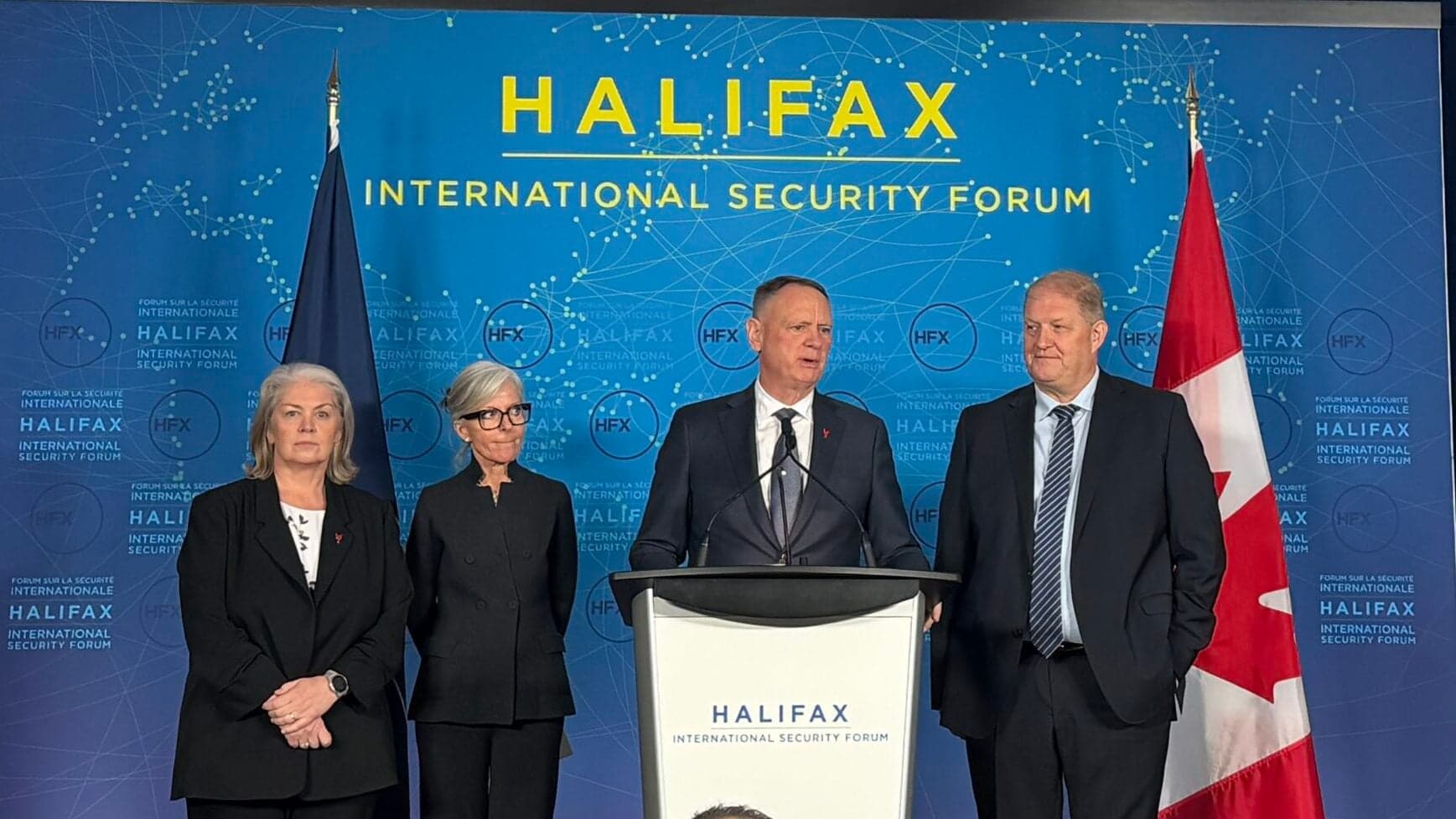
Bilateral defense relations between Canada and the United States are facing tension following reports of a classified Pentagon directive limiting military and diplomatic exchanges with Canadian counterparts. While Canadian officials assert that operational collaboration like NORAD remains stable, the policy mandates formal approval for informal interactions. U.S. officials link the heightened scrutiny to pressure for Canada to meet its NATO spending obligations.
Read the full storyFold the full story2 min · 10 sources
Bilateral defense ties between Ottawa and Washington faced fresh friction as the 18th Halifax International Security Forum concluded[1]. National Defence Minister David McGuinty was forced to address reports that U.S. Defense Secretary Pete Hegseth had issued a classified directive restricting military and diplomatic engagements with Canada[1][2][3]. McGuinty insisted that military-to-military cooperation remains "business as usual," emphasizing that operational collaborations across the North American Aerospace Defense Command (NORAD), NATO missions, and Five Eyes intelligence sharing continue uninterrupted[1][4][3]. However, the revelation that the Pentagon had formalized barriers on bilateral exchanges sparked concern among Canadian defense officials and foreign policy analysts[2][5].
The controversy broke following reports that Hegseth had circulated a classified memorandum curbing departmental interaction with Canada[1][3]. Addressing reporters in Halifax, Republican Senator Mike Rounds of South Dakota sought to clarify the directive, stating that the restrictions were drafted months earlier and are designed primarily to curb informal, non-operational engagements[4][3]. According to Rounds, the memo mandates that American military personnel and flag officers seek explicit Pentagon permission to attend Canadian think-tank forums, academic conferences, and related social functions, while preserving primary defense channels[6][4][3]. Meanwhile, Chief Pentagon Spokesman Sean Parnell confirmed that the Department is "taking steps to ensure its engagements with Canada advance tangible U.S. defense objectives and ultimately support a reinvigorated defense relationship," explicitly connecting future bilateral defense cooperation to Canada meeting its NATO defense spending commitments[2][3].
The development arrives against a backdrop of geopolitical friction[1]. While democratic allies met in Halifax to debate middle-power security, trade protectionism, and emerging technological threats, visiting bipartisan lawmakers - including Democratic Senators Chris Coons and Tim Kaine - lamented the combative tone emerging from Washington[1][7]. The memo underscores growing U.S. frustration with Canadian defense spending timelines and procurement delays[3]. Simultaneously, high-level diplomatic contacts remain active: U.S. Under Secretary of State for Political Affairs Allison M. Hooker conducted official travel to Canada, holding private discussions intended to stabilize bilateral channels amid contentious trade and defense reviews[8][8].
The broader implications for Canada are profound. Although NORAD modernization and tactical border surveillance remain operational, restricting Canadian access to high-level U.S. defense strategic planning and informal military-academic exchanges risks eroding the informal trust that has anchored continental defense for more than seven decades[9][10][3]. Security analysts warn that being sidelined from Pentagon strategic discussions could diminish Canadian influence over Joint Chiefs planning, Arctic defense doctrines, and shared procurement initiatives, putting pressure on Ottawa to accelerate defense outlays to avert further strategic estrangement[1][3].
- David McGuinty
- Pete Hegseth
- NORAD
National News
2 min read
U.S.-Canada Trade Talks Stalled Over Ottawa's New Economic Ties With China
Bilateral trade negotiations between Washington and Ottawa are nearing a potential framework agreement but face significant hurdles. U.S. officials are expressing alarm over Canada's recent trade deals with Beijing, which include tariff exemptions for Chinese industrial goods. U.S. trade representatives warn that these concessions threaten North American supply chains and continental security, creating a major friction point in diplomatic relations.
Read the full storyFold the full story2 min · 6 sources
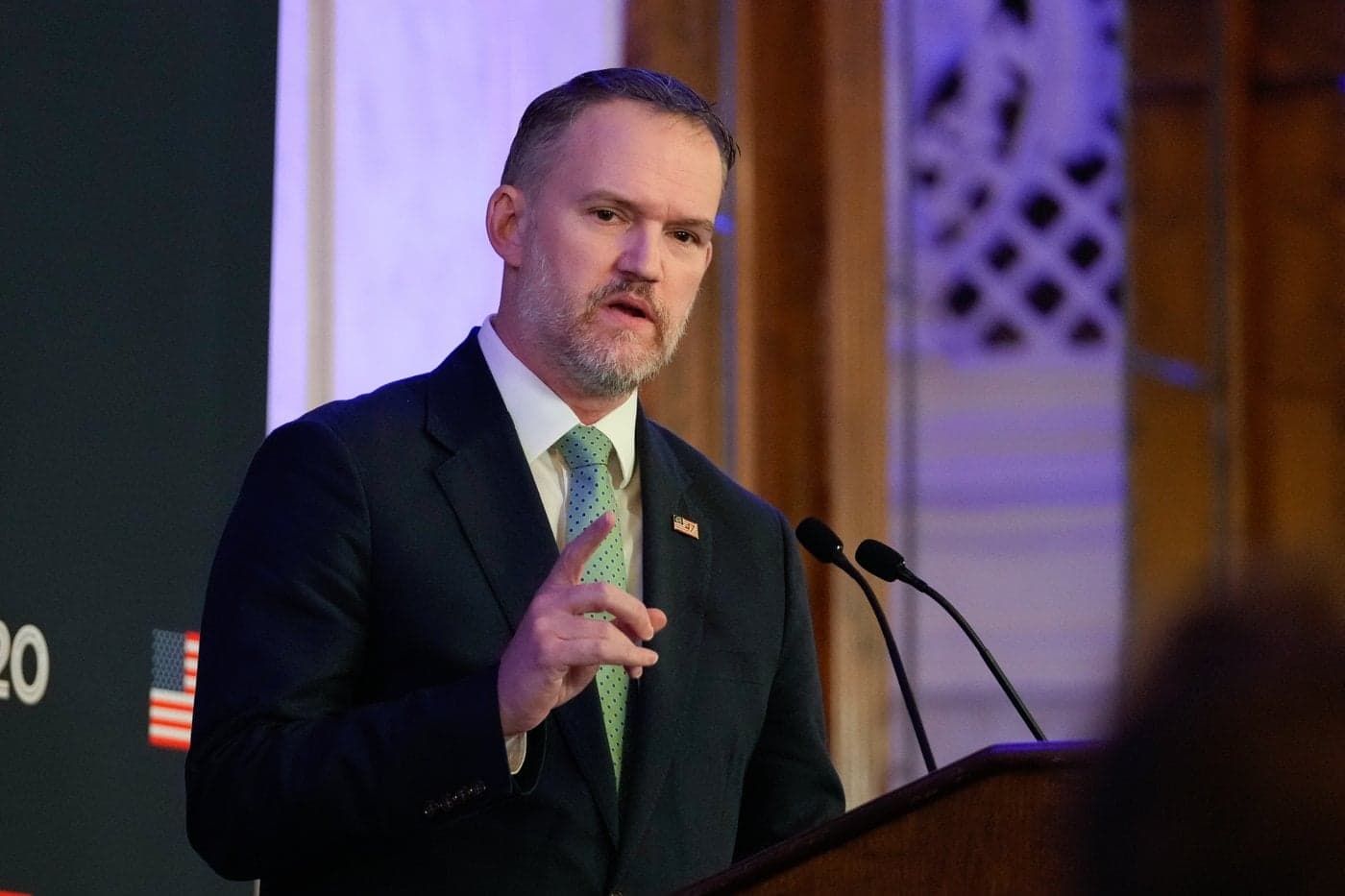
Bilateral trade talks between Washington and Ottawa have entered a decisive phase, with United States Trade Representative Jamieson Greer confirming that both governments are making headway toward an agreement while warning that Canada’s growing commercial ties with Beijing pose a serious stumbling block[1][2]. Speaking in a national television interview, Greer indicated that negotiators have narrowed their differences and are "fairly close on finding a landing zone" for a bilateral framework[1][2]. However, the U.S. administration delivered sharp rebukes regarding Prime Minister Mark Carney's recent trade agreements with China, specifically criticizing Ottawa's willingness to grant tariff exemptions on Chinese steel, aluminum, and electric vehicles in return for agricultural concessions[1][2][3].
The friction highlights a fundamental divergence in economic statecraft between the two North American allies[1]. Prime Minister Mark Carney’s government has actively pursued a pragmatic diversification strategy, meeting with Chinese President Xi Jinping to restore Canadian export access for key goods such as canola, pork, seafood, and pulses[4]. In contrast, the Trump administration has intensified its trade posture, seeking to erect regional tariff walls around manufacturing, metals, and automotive supply chains to shield North America from Chinese industrial overcapacity[1]. Greer characterized the Canadian approach as running counter to collective continental security, pointing out that expanding access for subsidized Chinese industrial goods directly undermines shared supply chains[1][2].
The negotiations involve major federal players on both sides of the 49th parallel, including Greer, Prime Minister Carney, and members of Canada’s Cabinet and bilateral advisory bodies[1][5][4]. U.S. President Donald Trump underscored the tension during remarks in Washington, noting that while an agreement with Canada is achievable, "more work remains to be done" following decades of contentious cross-border trade spats[6]. Adding diplomatic weight to the dispute, Taiwan’s Deputy Minister of Foreign Affairs, Chen Ming-chi, raised similar concerns on the sidelines of the Halifax International Security Forum, cautioning Canadian officials that deep economic integration with Beijing carries profound risks of foreign economic coercion[3].
For Canadian industry, the outcome of these negotiations carries immense economic stakes. While cross-border trade of goods between the two countries remains predominantly duty-free, preserving uninterrupted access to the American market is critical for Canada’s manufacturing, automotive, and resource sectors[1]. Should Washington determine that Canadian regulatory concessions create a backdoor for Chinese industrial exports into North America, Ottawa could face secondary tariffs or tightened border enforcement under North American trade mechanisms[1]. Federal officials are now tasked with convincing Washington that Canada's trade diversification efforts do not compromise the integrity of the integrated continental economy[1].
- Jamieson Greer
- Mark Carney
- Xi Jinping
National News
2 min read
Conservative Party Challenges Carney Government Immigration Targets
Opposition Leader Pierre Poilievre has announced a formal motion to force a parliamentary vote against the government's 2027–2029 immigration roadmap. The Conservatives argue that the current intake levels exacerbate the housing crisis, strain public infrastructure, and pressure healthcare. The government maintains that the targets are essential to address structural labor shortages in key economic sectors.
Read the full storyFold the full story2 min · 10 sources
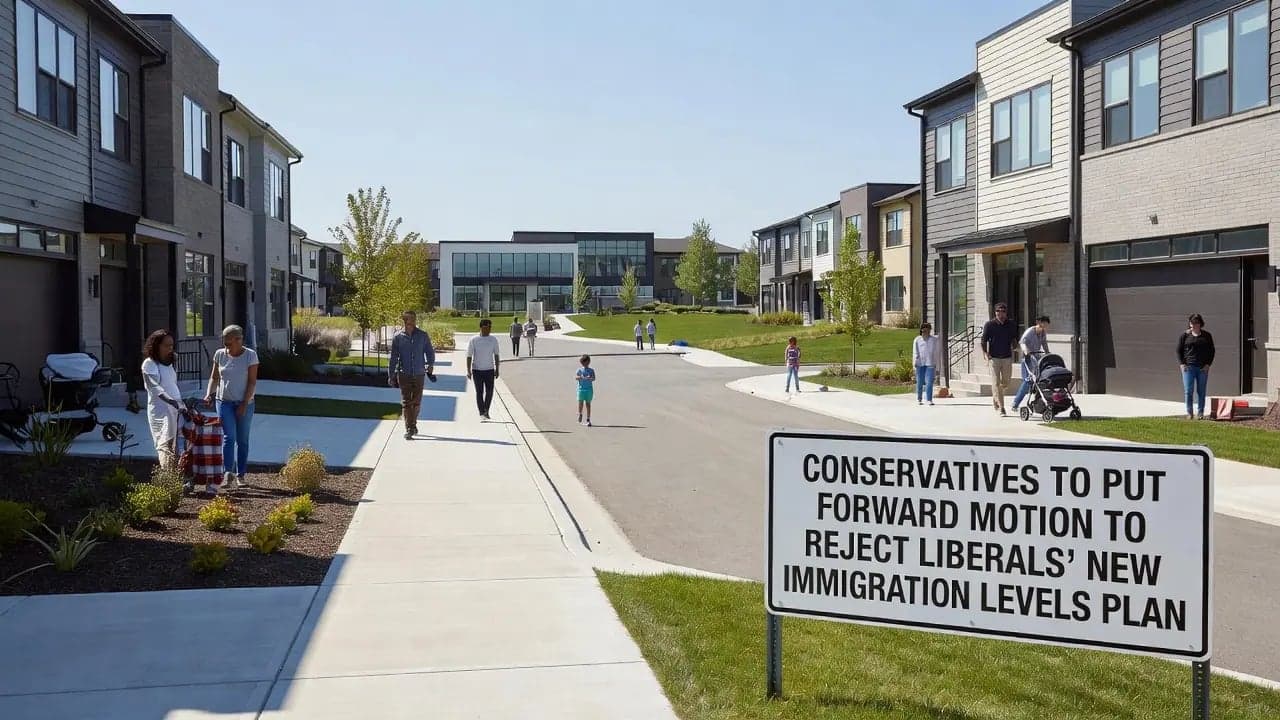
Official Opposition Leader Pierre Poilievre announced that the Conservative Party will table a formal motion in the House of Commons demanding parliamentarians reject Prime Minister Mark Carney's newly tabled Immigration Levels Plan[1]. Speaking at a press conference, Poilievre stated that Conservative immigration critic Michelle Rempel Garner will present the motion to mandate a drastic recalculation of national intake figures[1]. The motion directly targets the multi-year immigration roadmap unveiled alongside the 2026 federal budget, which sets targets of 380,000 permanent residents annually through 2029 alongside a stabilization target of 370,000 incoming temporary residents - divided between students and workers[2][1][3].
The Conservative challenge sharpens a national economic and demographic debate[1]. Under the Carney government's plan, economic immigration constitutes roughly 64.4% of total permanent admissions, an emphasis intended to fill structural labor deficits in healthcare, green energy, and construction[2]. Ottawa's numbers follow two years of policy tightening that reduced annual permanent targets from peak levels of 500,000 and triggered a sharp reduction in international student visas and temporary worker permits[4][5]. In 2026, Canada recorded approximately 352,500 fewer new student and foreign worker arrivals compared to previous peak periods[5]. Nonetheless, Poilievre argued that the government’s figures remain unsustainably high, asserting that the intake pace outstrips domestic infrastructure, overwhelms provincial healthcare delivery, inflates housing rents, and depresses entry-level wages for Canadian youth[1]. He reiterated calls to dismantle major segments of the low-wage Temporary Foreign Worker Program[1].
The political pushback coincides with growing economic headwinds and diverging expert perspectives[6][7]. Recent central bank data and a comprehensive report from RBC highlighted that population growth historically shielded Canada from an outright technical recession, warning that aggressive cutbacks risk exacerbating an aging workforce and shrinking consumer spending[6][7]. Business lobby groups, including the Canadian Chamber of Commerce and the Business Council of Canada, have expressed concerns that severe caps on talent pipelines could undermine corporate scale-up efforts[8][9].
Concurrently, public policy researchers point to a separate structural crisis: "onward migration"[10]. New data from the Institute for Canadian Citizenship and the Conference Board of Canada indicates that skilled immigrants are leaving Canada in record numbers, citing steep housing costs, stagnant real wages, and barriers to credential recognition[10]. As Parliament prepares to debate the Conservative motion, the confrontation highlights a political divide between federal Liberals seeking managed economic stabilization and an Opposition demanding a complete pause to restore public service capacity[1].
- Pierre Poilievre
- Mark Carney
- Michelle Rempel Garner
National News
2 min read
Unauthorized Drone Incursions Expose Gaps in Military Base Security
The Canadian Armed Forces have recorded at least seven unauthorized drone incursions over military bases since 2024, revealing significant weaknesses in domestic detection capabilities. In several instances, existing counter-drone technology failed to identify or track the aerial systems. Defense analysts warn that these vulnerabilities leave critical infrastructure open to potential reconnaissance or disruption.
Read the full storyFold the full story1 min · 3 sources
An investigative disclosure revealed that the Canadian Armed Forces (CAF) have recorded at least seven unauthorized drone incursions over military installations since 2024, exposing vulnerabilities in Canada's domestic air-defense architecture[1]. The incidents, logged across several air bases and training grounds, involved unmanned aerial systems (UAS) operating within strictly controlled military airspace[1]. Most alarmingly for defense planners, internal records indicate that in multiple instances, the Department of National Defence's existing detection and counter-drone technologies struggled or entirely failed to track, identify, or intercept the aircraft[1].
The revelation sparked alarm among defense analysts and military leadership[1]. Retired Major-General David Fraser described the recurring base incursions as an urgent "wake-up call" for the federal government[1]. Fraser emphasized that commercial and specialized drone capabilities are accelerating faster than procurement pipelines can respond, leaving critical sovereign defense infrastructure vulnerable to domestic surveillance, tactical reconnaissance, or potential hostile disruption[1]. While military officials confirmed that the motives and operators of the drones remain unconfirmed, the inability of domestic forces to defend base perimeter airspaces has heightened anxiety within the defense establishment[1].
The issue connects directly to long-standing procurement bottlenecks and shifting threat environments[1][2]. Counter-UAS capabilities have become a central focus of modern military strategy, yet Canada’s tactical electronic warfare and low-altitude radar systems remain limited. Industry analysts note that Canadian bases are largely reliant on outdated perimeter-monitoring methods ill-suited to detect low-radar-cross-section commercial drones operating on autonomous waypoint navigation. The findings intensify scrutiny on the federal government’s defense policy updates, which have promised investments in counter-UAS sensors and directed-energy testing but have struggled with acquisition delays[1].
The implications of these defense gaps extend to allied partnerships[2][1]. As Canada negotiates joint continental aerospace modernization under NORAD and faces pressure from NATO allies regarding homeland defense readiness, domestic base security lapses weaken Ottawa's leverage[2][3]. Experts caution that if the CAF cannot secure its own perimeters against civilian-grade drone technology, foreign adversaries and domestic bad actors could easily exploit blind spots above sensitive command installations, munitions depots, and naval stations across the country[1].
- Canadian Armed Forces
- Department of National Defence
- NORAD
National News
2 min read
Rural Healthcare Crisis Deepens Following Fatal Incident in Port Hardy
Public outcry has intensified after a woman died outside the locked emergency department of Port Hardy Hospital. The facility, which has been plagued by staffing shortages, currently operates on a daytime-only schedule. Local leaders and medical professionals are demanding the provincial government fulfill promises for round-the-clock emergency access to prevent further avoidable tragedies in rural communities.
Read the full storyFold the full story2 min · 5 sources
The death of a woman outside the closed emergency department of Port Hardy Hospital on northern Vancouver Island has triggered widespread public outrage and intensified calls for an immediate overhaul of rural acute-care coverage[1][2]. The tragedy unfolded when a patient in acute medical distress arrived outside the facility, only to find the emergency room doors locked[2][3]. According to British Columbia Emergency Health Services (BCEHS), an on-site paramedic noticed the individual in the parking lot at 5:11 p.m. - eleven minutes after the facility's scheduled 5:00 p.m. daily closure[1][2]. Although two dispatched ambulances provided emergency treatment and brought the patient into the hospital's trauma room, medical staff were unable to revive her[1][2][3].
The incident brought scrutiny to the practice of rolling rural ER shutdowns[1][2][4]. Due to chronic physician and nursing shortages, Island Health reduced Port Hardy’s emergency department operations to daytime-only hours (7:00 a.m. to 5:00 p.m.) in early 2023[2]. Patients requiring critical or trauma care overnight are routed via rural highways to Port McNeill Hospital, situated roughly 45 kilometers away[2][3]. Despite former provincial announcements pledging tens of millions of dollars for emergency facility upgrades, rural staffing deficits have persisted, leaving approximately 4,000 local residents and three neighboring First Nations reserves without round-the-clock emergency medical access[3].
The political fallout was immediate[5]. Dr. Anna Kindy, the newly sworn-in Member of the Legislative Assembly for North Island and Minister of State for Rural Development under Premier Lorne Doerkson's new provincial administration, offered condolences to the victim's family while acknowledging that rural emergency access remains in crisis[1][3][5]. Port Hardy Mayor Pat Corbett-Labatt reiterated demands for the province to fulfill its promise of 24/7 service[2]. Prominent local physicians, including Dr. Alex Nataros of the North Island Community Health Centre, directly implored provincial Health Minister Ryan Peterson to intervene, arguing that chronic overnight closures are causing preventable mortality and severe mental anguish across remote communities[3][5].
The tragedy reflects a systemic challenge that extends far beyond Vancouver Island[4]. Across rural Ontario, Quebec, Alberta, and Atlantic Canada, regional hospital networks have increasingly relied on temporary emergency room closures and service diversions to cope with workforce shortages[4]. Paul Adams, Executive Director of the B.C. Rural Health Network, warned that without emergency retention premiums, expedited credential recognition for foreign-trained physicians, and regional clinical staffing models, the divide between metropolitan healthcare and rural survival rates will widen further[2].
- Port Hardy Hospital
- British Columbia Emergency Health Services
- Anna Kindy
National News
2 min read
Toronto Police Identify Teenage Suspects in Fatal Etobicoke Shooting Case
The Toronto Police Service has made a significant breakthrough in the investigation of a fatal shooting that claimed the life of 18-year-old Malik Abass. Authorities arrested 19-year-old Armani Callender and issued a nationwide warrant for a 17-year-old co-suspect after a judge lifted a standard publication ban. The case has intensified public and political concern regarding youth participation in organized gun violence and the prevalence of illicit firearms.
Read the full storyFold the full story1 min · 1 source
In a significant development concerning gun violence in the Greater Toronto Area, the Toronto Police Service’s Homicide and Missing Persons Unit announced an arrest alongside the issuance of a Canada-wide warrant in connection with the fatal shooting of 18-year-old Malik Abass[1]. Abass was killed on the afternoon of November 7 near Rathburn Road and The East Mall in Etobicoke, an incident officially cataloged as Toronto’s 33rd homicide of the year[1]. After an intensive two-week forensic and tactical investigation, authorities apprehended 19-year-old Armani Callender of Toronto, formally charging him with second-degree murder, attempted murder, possession of an unauthorized firearm, and possession of a loaded regulated firearm[1].
In an extraordinary legal step, investigators successfully petitioned the court to obtain an extended judicial authorization under Section 110 of the Youth Criminal Justice Act (YCJA)[1]. The emergency order temporarily lifts the standard statutory publication ban protecting the identity of underage accused persons, permitting police to publicly identify a 17-year-old co-suspect, Cameron Marlor of Toronto[1]. A nationwide arrest warrant has been executed for Marlor on identical charges of second-degree murder, attempted murder, and two firearm violations, with the judicial disclosure authorization set to remain in effect until noon on November 24[1].
The coordinated enforcement action underscores ongoing national anxiety surrounding youth involvement in organized gun violence and the availability of illegal firearms across metropolitan Canada[1]. Major municipal police forces have reported increasing instances where teenagers are recruited or deployed in brazen daylight shootings involving untraced regulated firearms[1]. Law enforcement agencies across the country have been alerted to the outstanding nationwide warrant, with Toronto investigators warning the public that the suspect should be considered armed and dangerous[1].
The proceedings have also reinvigorated debates surrounding judicial bail frameworks and youth sentencing guidelines for serious firearm offences[1]. With Callender remanded in custody pending court appearances at the Toronto Regional Bail Centre, municipal and federal leaders are facing heightened pressure from community groups to tackle both root causes and cross-border handgun smuggling channels that fuel urban gang disputes[1].
- Toronto Police Service
- Malik Abass
- Armani Callender
National News
2 min read
Former PC Minister Becky Druhan Elected Nova Scotia Liberal Leader
Becky Druhan has been elected as the new leader of the Nova Scotia Liberal Party, securing a decisive victory at the party's convention. Druhan, a former Progressive Conservative cabinet minister who crossed the floor to sit as an Independent, is the first woman to lead the provincial Liberals. She plans to focus her leadership on challenging the incumbent government's record on healthcare and infrastructure.
Read the full storyFold the full story2 min · 5 sources
The Nova Scotia Liberal Party elected Becky Druhan as its new leader during a weekend convention in Halifax, marking a historic and unusual political realignment in Atlantic Canada[1][2]. Druhan, the sitting MLA for Lunenburg West, captured approximately 68 percent of the delegate points across the province’s 56 electoral districts, decisively defeating Richmond County municipal councillor Amanda Mombourquette[1][2]. The victory establishes Druhan as the first woman to lead the Nova Scotia Liberal Party in its history[1][2].
Druhan's victory is politically notable due to her recent legislative history[1][3]. First elected in 2021 as a Progressive Conservative, Druhan served as a cabinet minister under PC Premier Tim Houston, holding high-profile portfolios including Minister of Education and Early Childhood Development and later Minister of Justice and Attorney General[3][4]. After clashes with the party's central leadership, Druhan severed ties with the governing Tories in late 2025, sat as an Independent MLA in Province House, and subsequently crossed the floor to join the Liberals, immediately launching her bid for the party leadership[3][4]. In her victory address to over 500 delegates, Druhan pledged to build an open, accountable movement capable of holding Houston’s government to account on rural service failures, chronic doctor shortages, and community infrastructure[1][5].
The leadership change represents a strategic shift for the Nova Scotia Liberals[1][2]. By elevating a seasoned former conservative minister with established credentials in education, labor negotiation, and legal administration, the party is positioning itself to capture moderate "Red Tory" voters and disaffected suburban ridings outside the Halifax Regional Municipality[1][3][5]. Regional political strategists note that Premier Houston's government has encountered growing public discontent regarding ballooning provincial debt, infrastructure delays, and emergency room congestion - issues Druhan frequently highlighted during her leadership campaign[4][5].
The wider implications signal potential instability for traditional party lines in the Maritimes[2]. Druhan’s transition from Houston’s cabinet table to Leader of the Official Opposition provides the Nova Scotia Liberals with an insider's critique of the current government's operational vulnerabilities[3][2]. Her commanding win indicates that party members are prioritizing legislative experience and centrist appeal over partisan pedigree, setting the stage for a competitive provincial campaign centered on fiscal management and public healthcare reform[1][5].
- Becky Druhan
- Nova Scotia Liberal Party
- Tim Houston
National News
2 min read
Canada Struggles to Meet Ambitious COP31 Electrification Targets
Canada has committed to a global pledge requiring 35 percent of energy demand to be met by electricity by 2035, necessitating a massive expansion of national power infrastructure. However, experts warn of significant bureaucratic hurdles, jurisdictional conflicts between provinces, and slow permitting processes that threaten these climate goals. Meanwhile, the energy sector continues to pursue a dual track by simultaneously investing in expanded hydrocarbon logistics.
Read the full storyFold the full story1 min · 4 sources
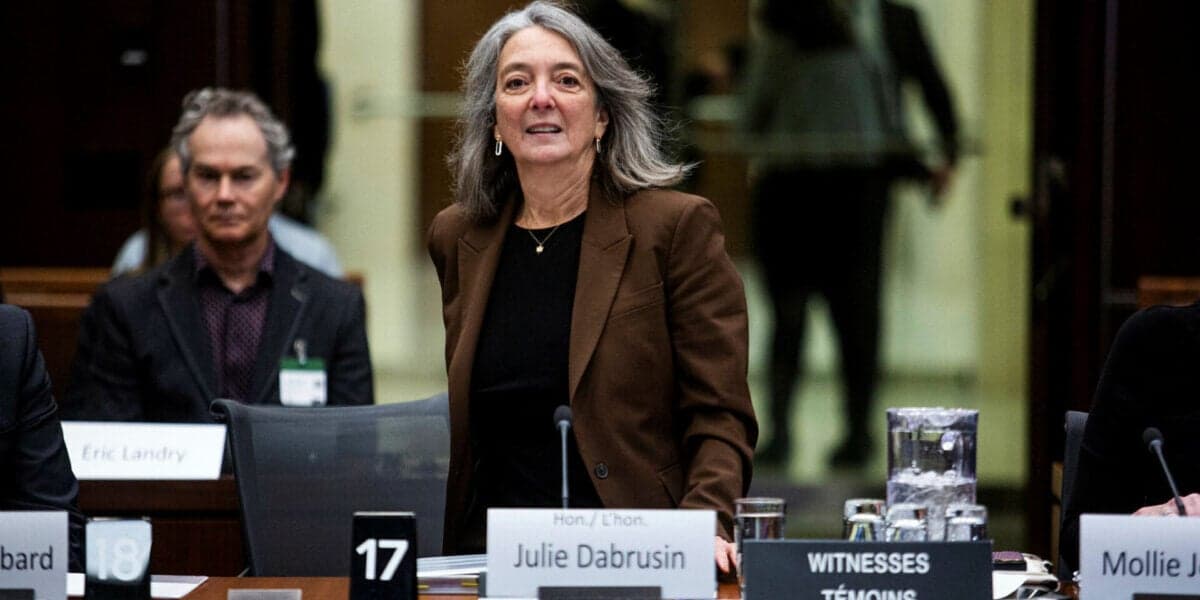
Federal climate and infrastructure policies have come under heightened scrutiny in the wake of the COP31 global climate summit, where Environment Minister Julie Dabrusin officially committed Canada to the 35-by-35 Global Electrification Pledge[1]. The international pact mandates accelerating energy transitions so that electricity satisfies 35 percent of all national energy demand by 2035, compared to approximately 23 percent currently[1]. However, national energy assessments and legislative debate in Ottawa reveal a significant structural gap between Canada’s international clean-energy promises and the domestic capacity required to expand electricity transmission and generation[1].
Reaching the target requires Canada to nearly double its domestic power generation and distribution capacity within the coming decade to support clean heating systems, electrified transport fleets, and power-intensive industrial applications[1]. Policy analysts and provincial grid operators have warned that bureaucratic gridlock, fractured federal-provincial jurisdictional disputes over resource development, and lengthy environmental assessment processes threaten to stall major infrastructure deployments[1]. Energy sector stakeholders argue that without an integrated "Team Canada" approach - streamlining project approvals across interprovincial transmission corridors - Canada will fail to achieve the required scale, repeating the trajectory of past missed climate targets[1].
The federal government has initiated supplementary industrial investments to bolster the mineral and technological inputs essential for energy infrastructure, including new federal capital allocations for digital core scanning announced by Energy and Natural Resources Parliamentary Secretary Claude Guay[2]. At the same time, regional energy providers are expanding midstream hydrocarbon logistics, exemplified by Keyera Corporation moving forward with natural gas liquids (NGL) fractionation and infrastructure expansions at its Fort Saskatchewan complex in Alberta[3]. This coexistence of expanded hydrocarbon handling alongside ambitious clean electrification pledges highlights the dual-track reality confronting Canadian energy policymakers[1][3].
Provincial governments, particularly in energy-producing regions, continue to insist on regional autonomy over power-generation asset mixes, rejecting unilateral federal mandates on grid decarbonization timelines. As the House of Commons resumes legislative deliberations on the Carney government’s major project permitting bills, the electrification debate is emerging as a primary test of whether Ottawa can effectively align environmental targets with industrial development and provincial jurisdiction[1][4].
- Julie Dabrusin
- Claude Guay
- Keyera Corporation
Section 2 of 4
World & Geopolitics
7 stories · 3 min skim
World & Geopolitics
3 min read
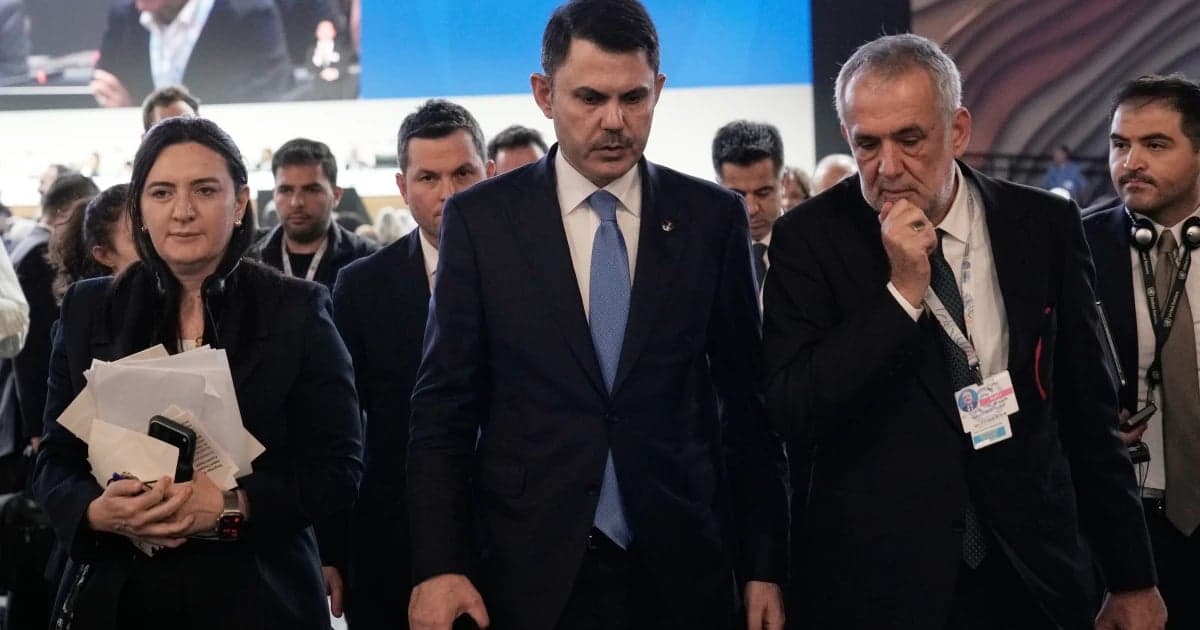
COP31 Climate Summit Ends in Failure After EU Delegation Walks Out
The UN COP31 climate conference in Türkiye concluded without a final agreement after negotiations hit a dead end over the language regarding fossil fuel phase-outs. The European Union delegation exited the summit in protest, citing a lack of meaningful commitment to climate goals as temperatures continue to rise. This is the first time a COP summit has failed to produce an agreement since 2009.
Read the full storyFold the full story2 min · 7 sources
The 31st United Nations Climate Change Conference (COP31), hosted in Antalya, Türkiye, ended in complete diplomatic failure on Sunday, November 22, 2026, after negotiations running two days past their scheduled deadline failed to yield an overarching political consensus[1][2]. The summit closed without a final cover text or any new multilateral commitments regarding the transition away from fossil fuels, marking the first time a COP gathering has broken down without an agreement since the contentious Copenhagen summit (COP15) in 2009[2].
The stalemate escalated during frantic overtime discussions when major petrostates, led by Saudi Arabia, refused any draft text explicitly reiterating the need to phase down or transition away from fossil fuels, which account for approximately 73 percent of global greenhouse gas emissions[1]. Emerging economies and oil-producing blocs simultaneously pushed to emphasize carbon capture and storage (CCS) technologies while deadlocking over the establishment of a quantified dollar figure to triple adaptation finance for developing nations[3][3]. The conference reached a dramatic climax when the European Union delegation abruptly walked out[1]. EU Commissioner for Climate, Net Zero and Clean Growth Wopke Hoekstra and Irish Environment Minister Darragh O’Brien, representing the bloc, stated that with climate data confirming the planet is effectively crossing the 1.5-degree Celsius warming threshold, the EU could not endorse a hollow final document that omitted fossil fuels[1]. Delegations from vulnerable island states, including Vanuatu and the Marshall Islands, similarly registered formal objections[1].
The summit’s unraveling drew sharp rebuke from international organizations and global leaders[3][4]. Reacting to the collapse, UN Secretary-General António Guterres warned that persistent diplomatic delay will only heighten the physical and economic costs of climate disruption, observing that global temperatures and severe weather events continue to shatter historical records[4]. Market analysts and environmental observers characterized the summit’s failure as a sign that multilateral climate governance is fracturing under geopolitical fragmentation and economic nationalism[5][3]. In energy markets on November 23, oil prices dropped slightly, with Brent crude dipping to $92.10 per barrel and West Texas Intermediate settling near $82.98, as traders weighed a forecasted buildup in global supply inventories against the complete absence of new regulatory phase-out mandates[2].
The collapse at COP31 bears substantial consequences for Canada’s international standing, energy policy, and external trade partnerships. Canada occupies a dual position on the global stage: it presents itself as an ambitious green transition leader allied with Europe, yet remains one of the world's largest conventional energy producers[6]. Domestic resource developments - such as the federal and provincial regulatory approvals recently cleared for Newfoundland and Labrador's offshore Bay du Nord deepwater project - highlight Canada's continued reliance on oil production[7]. While the lack of a binding multilateral phase-out agreement spares Canadian oil and gas producers from immediate international regulatory mandates, the demise of consensus-driven governance threatens to accelerate unilateral trade instruments. European and Asian partners are increasingly expected to rely on domestic carbon border adjustments, tariffs, and bilateral green standards to enforce decarbonization, forcing Canadian industrial and energy exporters to navigate an increasingly fragmented and contentious regulatory environment abroad.
- COP31
- European Union
- United Nations
World & Geopolitics
3 min read
U.S. Signals Progress in Canada Trade Talks While Criticizing Beijing Ties
U.S. Trade Representative Jamieson Greer stated that trade negotiations with Canada are nearing a breakthrough. However, he sharply criticized Prime Minister Mark Carney for Canada's growing economic cooperation with China, which Washington views as undermining North American security. Canada recently secured tariff relief for certain exports to China in exchange for allowing Chinese electric vehicle quotas.
Read the full storyFold the full story2 min · 12 sources
United States Trade Representative Jamieson Greer confirmed on Sunday, November 22, 2026, that Washington and Ottawa are making tangible progress toward resolving their protracted trade dispute, stating that negotiators are “fairly close on finding a landing zone”[1][2]. However, Greer paired this optimism with an explicit warning regarding Canada’s foreign economic policy, sharply criticizing Prime Minister Mark Carney’s recent trade overtures to Beijing[3][1]. Speaking on Fox News, Greer asserted that Canada’s growing trade relationship with China is generating serious bipartisan concern across Washington, characterizing Ottawa’s approach as going “a little bit backwards” from North American security and manufacturing objectives[4][2].
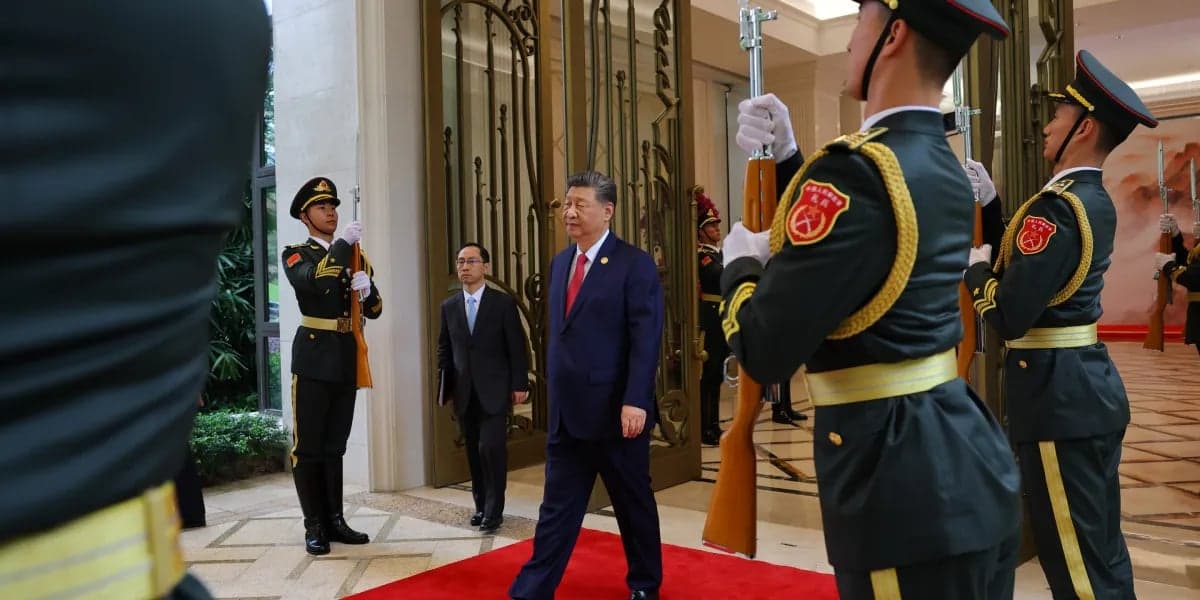
The bilateral trade negotiations resumed after collapsing in August 2026, when Ottawa walked away from the bargaining table following eleventh-hour American demands, including stipulations that sought to constrain Canada’s ability to enter independent free trade pacts with third nations[5]. In the aftermath of that breakdown, U.S. President Donald Trump enacted 50 percent tariffs on an extensive array of Canadian goods under Section 338 of the Tariff Act of 1930, prompting Ottawa to counter with dollar-for-dollar retaliatory duties[4][6]. Seeking to insulate Canada’s economy from American tariff exposure, Prime Minister Carney pursued an aggressive international diversification campaign[7]. Just days prior to Greer’s remarks, Carney met Chinese President Xi Jinping in Shenzhen, finalizing an agreement granting tariff relief on approximately $400 million in Canadian agricultural and seafood exports - such as frozen pork, crab, and shrimp - in exchange for Canadian tariff concessions on Chinese steel and aluminum and a quota allowing 49,000 Chinese electric vehicles annually into Canada at reduced rates[3][8].
Greer framed the friction between Washington and Ottawa as a fundamental philosophical divide[1][2]. According to Greer, the Trump administration remains focused on shielding the North American economy and addressing the systemic distortions caused by globalization, particularly in key industrial sectors like automotive, steel, and aluminum manufacturing[1][2]. In contrast, Greer argued, Canada appears intent on "doubling down on globalization" by strengthening economic ties with Beijing[2]. While Greer emphasized that the overwhelming majority of cross-border goods between Canada and the U.S. remain duty-free and that both administrations want a mutually beneficial resolution, Canadian trade officials have struck a considerably more cautious tone[1][9]. Sources briefed on internal Canadian discussions noted that Chief Trade Negotiator Janice Charette recently informed a federal advisory panel that multiple substantive disputes remain unresolved, the most contentious being the existing 25 percent U.S. tariff on Canadian automotive exports[9].
For Canada’s international standing and long-term economic architecture, this development underscores the acute dilemma of trade diversification[7]. The federal government has pursued a strategy to broaden its economic footprint through newly concluded agreements with the Association of Southeast Asian Nations (ASEAN) and the Philippines, alongside strategic partnerships in the Gulf[10][11]. However, Greer’s direct intervention signals that deep integration with the United States - which still accounts for over 70 percent of Canadian export volume - comes with non-negotiable geopolitical conditions[7]. As talks continue toward a potential interim agreement, Ottawa faces intense pressure to demonstrate alignment with Washington’s industrial and national security parameters, or risk entrenching punitive sectoral duties that threaten core Canadian manufacturing jobs[12][9].
- Jamieson Greer
- Mark Carney
- Donald Trump
World & Geopolitics
2 min read
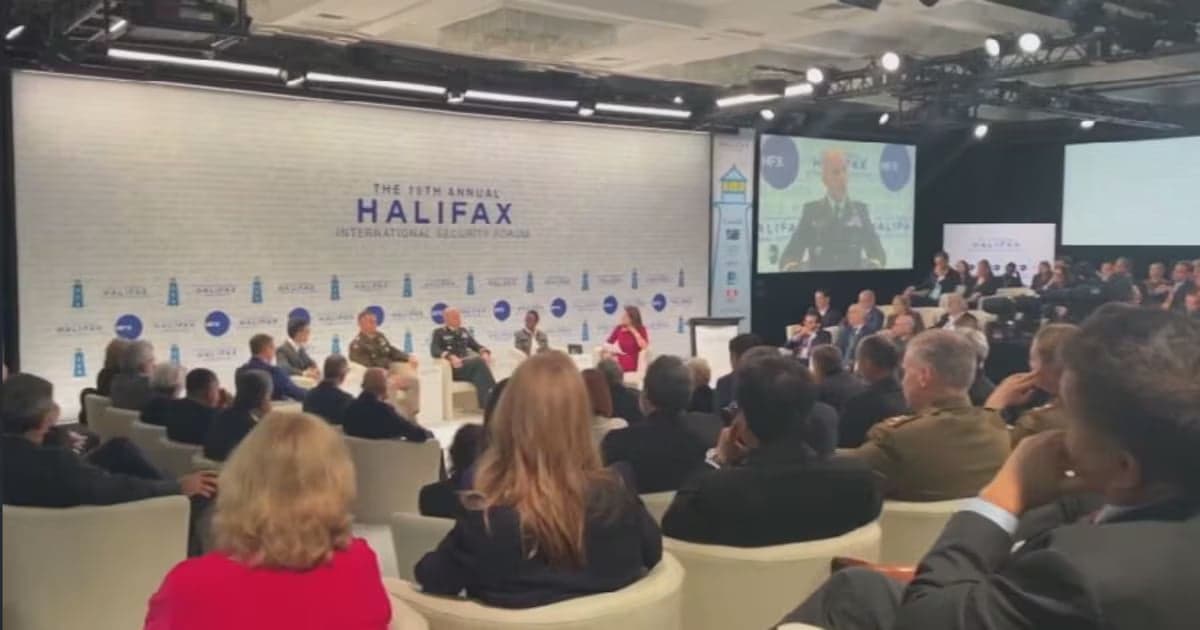
Halifax International Security Forum Secures Key Arctic and Naval Defense Pacts
The 18th annual Halifax International Security Forum concluded with Canada signing major naval cooperation agreements with Germany and Norway. Canada also pledged $100 million to the NATO Innovation Fund and partnered with Isar Aerospace to establish a domestic orbital launch site in Nova Scotia. These developments aim to strengthen Canada's maritime and space surveillance capabilities amidst heightened regional tensions.
Read the full storyFold the full story2 min · 5 sources
The 18th annual Halifax International Security Forum (HISF) concluded on November 22, 2026, with Canadian Minister of National Defence David J. McGuinty unveiling a series of multilateral defence agreements and strategic investments[1]. During the summit, Canada convened the inaugural Maritime Security Partnership (MSP) meeting hosted on Canadian soil, bringing together senior defence officials from Germany, Iceland, Denmark, and Norway to reinforce North Atlantic and High North security[1]. A central outcome of the talks was an initiative to establish a shared logistical and tactical air-support framework for maritime surveillance and anti-submarine warfare (ASW) operations, anchored by a proposed operational pilot project based out of Keflavík, Iceland[1].
In a significant push toward Allied interoperability and industrial recapitalization, Minister McGuinty signed a trilateral Memorandum of Understanding (MOU) for Naval Defence Materiel Cooperation with Germany and Norway[1]. The pact establishes a binding collaborative arrangement to jointly design, procure, and maintain advanced naval defence equipment and combat systems, directly supporting the Royal Canadian Navy's fleet renewal while integrating Canadian industrial supply chains with European defence manufacturers[1]. McGuinty also announced that Canada has committed approximately $100 million to formally participate in the NATO Innovation Fund (NIF), enabling the venture fund to back dual-use deep-tech startups and defence innovators across Canada alongside Allied partners[1].
The forum also marked a milestone for Canada’s sovereign aerospace capabilities[1]. Maritime Launch Services formally transferred operations at its Canso, Nova Scotia, commercial spaceport to German aerospace manufacturer Isar Aerospace[1][2]. Supported by federal and provincial leaders - including federal Justice Minister Sean Fraser and Nova Scotia Minister of Growth, Development, and Defence Industries Colton LeBlanc - the deal aims to establish Canada’s first domestic orbital launch facility, ensuring sovereign satellite access for defence intelligence, surveillance, and reconnaissance without relying entirely on foreign launch sites[1][2].
The multilateral breakthroughs unfolded against a tense diplomatic backdrop concerning Canada–U.S. defence relations[3]. Conference proceedings were shadowed by reports of a classified memorandum issued by U.S. Defense Secretary Pete Hegseth allegedly seeking to place restrictions on certain military-to-military engagements with Canada[4]. Addressing the matter at the forum, U.S. Senator Mike Rounds (R-SD), leading a bipartisan congressional delegation alongside Senator Tim Kaine (D-VA), clarified that the Pentagon directive applied narrowly to attendance at civilian think tanks and informal social gatherings, rather than operational military integrations, NORAD commands, NATO joint missions, or the Five Eyes intelligence alliance[5][4]. McGuinty reaffirmed that bilateral military operations remain "business as usual," though international attendees noted the growing pressure on Ottawa to rapidly ramp up its independent Arctic and Atlantic defence capabilities[3][4].
- David J. McGuinty
- Halifax International Security Forum
- NATO Innovation Fund
World & Geopolitics
2 min read
India and China Hold Military Talks to Ease Border Tensions in Arunachal Pradesh
Indian and Chinese military commanders concluded a 10-day negotiation round aimed at de-escalating tensions along the Line of Actual Control in Arunachal Pradesh. While the talks established new communication protocols and rules of engagement ahead of the harsh winter, there was no agreement to withdraw heavy forces from the frontier. The region remains a focal point for regional security and long-term bilateral friction.
Read the full storyFold the full story1 min · 5 sources
On November 22, 2026, Indian and Chinese military commanders concluded a critical, 10-day second round of Corps Commander-level negotiations designed to disengage forces and reduce the risk of armed conflict along the eastern sector of the Line of Actual Control (LAC) in Arunachal Pradesh[1][2]. The marathon talks, which began on November 8, brought together Lieutenant-General Girish Kalia, General Officer Commanding of the Indian Army’s III Corps (Spear Corps), and senior People’s Liberation Army (PLA) commanders, alongside diplomatic representatives from India’s Ministry of External Affairs[1][2].
The negotiations were initiated with urgency ahead of harsh winter conditions in the high-altitude Himalayan frontier, where deep snow and sub-zero temperatures routinely complicate logistical sustainment and increase the volatility of close-quarters patrolling[1][2]. Tensions had surged following confrontation incidents in the Taksing area of Upper Subansiri district, which had threatened a broader operational standoff similar to past confrontations in Ladakh[3][4][2]. Following initial meetings at the Wacha-Damai Border Personnel Meeting point in Kibithoo, this second round focused on establishing ground-level rules of engagement, codifying strict de-confliction protocols, and securing direct hotline communications between local field commanders[5][2].
While defence sources described the atmosphere of the talks as cordial, security analysts noted that neither side announced an immediate withdrawal of the heavy armor, artillery, and specialized mountain infantry deployed along the frontier[1][2]. The fragile stability along the LAC remains a bellwether for Indo-Pacific security[2]. For Western partners - including Canada and Quad allies - the persistence of militarized friction along the Sino-Indian border ensures that New Delhi remains focused on continental deterrence against Beijing, directly influencing regional maritime commitments and middle-power security architectures across Asia[1][2].
- Indian Army
- People's Liberation Army
- Girish Kalia
World & Geopolitics
3 min read
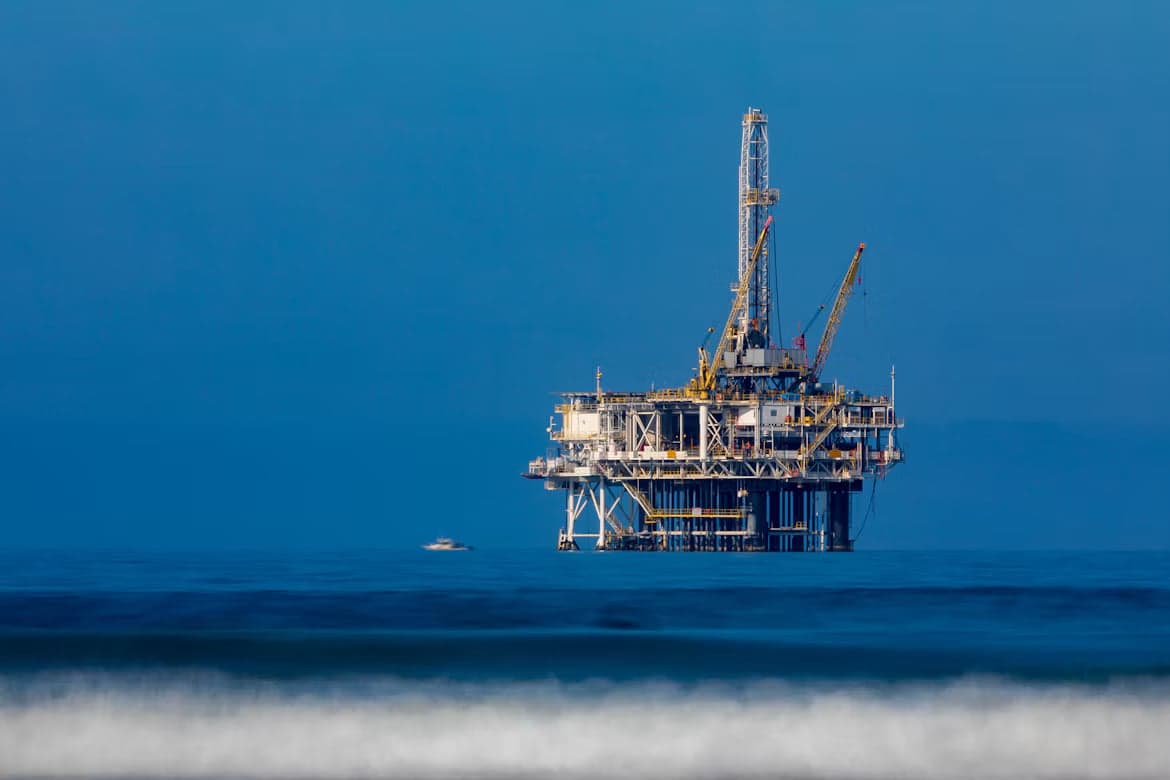
Houthi Strikes on Saudi Infrastructure Highlight Risks to Global Energy Transit
Houthi militants launched drone and projectile attacks against key Saudi oil refineries and radar facilities, further destabilizing the Red Sea region. Despite these security threats and the lack of a clear regional ceasefire, energy markets remain in a state of flux with demand concerns balancing potential supply disruptions. Diplomatic efforts to establish a lasting peace remain stalled as both sides consider their next moves.
Read the full storyFold the full story2 min · 7 sources
Security along global energy transit routes deteriorated sharply over the weekend of November 21–22, 2026, as the Houthi movement carried out a series of long-range projectile attacks against critical infrastructure inside Saudi Arabia[1]. The Yemen-based movement claimed responsibility for striking the Petro Rabigh oil refinery, a key processing facility in Mecca Province on the Red Sea coast, alongside targeting a Saudi radar facility in Wadi ad Dawasir, located in Riyadh Province[1]. In tandem with the inland strikes, maritime reporting bodies - including the United Kingdom Maritime Trade Operations (UKMTO) - flagged renewed harassment and drone activity directed at commercial tankers transiting the Red Sea and Gulf waterways[2].
The strikes reflect the ongoing spillover of the broader regional war involving Iran, which expanded significantly after an earlier Yemen ceasefire deteriorated, reigniting hostilities along the Arabian Peninsula[1][3]. According to analytical briefings from the Institute for the Study of War (ISW) and the Critical Threats Project (CTP), the Houthi strikes form part of a deliberate economic attrition strategy aimed at compelling Saudi Arabia to concede to maritime and financial demands while complicating broader regional security architecture[1]. The security escalation comes as political dialogue remains stalled[3]. Over the weekend, U.S. President Donald Trump claimed on social media and in televised interviews that the war is "effectively over" and that he seeks a "permanent" deal; however, he simultaneously told reporters he is "not rushing" and could defer major strategic decisions into 2027[3][4]. Meanwhile, defense sources indicate that the United States and Israel continue to assess short-term military options to target Iranian defense production lines[3].
The geopolitical confrontation has caused persistent friction across commodity markets[4]. Energy market analysts from Bain & Company and Project Syndicate noted on November 23 that the prolonged conflict has sustained elevated trading profits for global liquefied natural gas (LNG) and crude suppliers by effectively delaying an anticipated supply glut[5][4]. Disruptions across the Strait of Hormuz and the Bab el-Mandeb have increased freight rates and created structural bottlenecks for critical non-energy inputs, including global helium shipments from Qatar, an essential supply line for international semiconductor fabrication[4]. In crude trading, despite physical strikes on Saudi refining capacity, Brent futures held near $92.10 on November 23 as market concerns over near-term demand weakness balanced out geopolitical supply shocks[2].
These escalating Middle Eastern tensions carry direct strategic ramifications for Canada’s economic positioning and international energy partnerships[6]. Canada is already the United States’ largest foreign energy partner, supplying crude oil, natural gas, uranium, and electricity[6]. As Middle Eastern maritime corridors remain volatile and refining complexes face persistent drone and missile threats, North American energy independence has re-emerged as a paramount strategic objective[6]. Canadian Minister of Energy and Natural Resources Tim Hodgson is scheduled to engage in bilateral discussions in Washington with the Brookings Institution on the evolving cross-border energy framework, centering on how Canada can reinforce continental energy security amid Persian Gulf instability[6]. While elevated baseline crude prices provide substantial tax and export windfalls for Canadian resource-producing provinces, the persistent geopolitical risk premium sustains headline inflationary pressures, complicating Canada's domestic cost-of-living landscape while cementing its status as an indispensable, secure energy provider to Western allies[7][6].
- Houthi
- Saudi Arabia
- Petro Rabigh
World & Geopolitics
3 min read
Global Markets Face Sell-off as U.S. Tightens Export Controls on AI Chips
Global equity markets experienced significant volatility, with tech and AI stocks suffering heavy losses as investors reacted to economic uncertainty. The U.S. is implementing new export controls to prevent Chinese entities from accessing high-performance American chips through third-party data centers. Various international financial regulators have responded with emergency measures to curb market instability.
Read the full storyFold the full story2 min · 9 sources
Global financial stability concerns flared across Asia, North America, and Europe over the November 22–23, 2026 window as major equity indices slipped into correction territory[1][2]. The market retreat was punctuated by a sharp sell-off in artificial intelligence and technology stocks, which saw the S&P 500 fall by more than 11 percent and the Nasdaq Composite drop roughly 18 percent from their October record highs[2]. In response to the market turbulence, South Korea’s Ministry of Finance and Economy convened an Emergency Market Situation Review Meeting on November 22, presided over by Deputy Prime Minister and Minister of Finance and Economy Lee Hyoung Il, to evaluate systemic vulnerabilities stemming from heightened uncertainty in the semiconductor industry and volatile cross-border capital flows[3]. In parallel, Taiwan’s financial regulators instituted emergency bans on short-selling to curb destabilizing declines in local chipmakers[4].
Investor unease has been driven by mounting questions regarding the profitability, power constraints, and financing models supporting massive generative AI data center buildouts, compounded by heightened geopolitical friction[1][3]. Tensions intensified on November 23 when U.S. Trade Representative Jamieson Greer confirmed that Washington is implementing new extraterritorial export controls designed to prevent foreign competitors, particularly China, from circumventing preexisting technology embargoes[1][5]. Speaking on the expanded measures, Greer explained that the United States is focused on safeguarding its technological edge by closing structural loopholes that allowed Chinese entities to rent processing capacity on high-performance American chips located in third-party overseas data centers[5]. This escalation follows regulatory disruptions across major semiconductor firms, including governance upheavals at Nvidia, and clashes over regional grid capacity in U.S. states where infrastructure projects, such as SpaceX's $74 billion AI computing push, face mounting resistance over power costs[1][6].
Economic consultancies, including Capital Economics, warned in research published on the controls that targeting remote computing access will substantially curb global rollout trajectories for frontier models while triggering wider supply-chain reconfigurations[1]. Analysts at Fortune and Wall Street investment houses noted that the ongoing market reset reflects an absence of traditional safe havens, as broader equity corrections coincide with sovereign bond volatility driven by persistent global inflationary pressures and hawkish central bank policies[2][2]. Although U.S. futures posted a technical rebound of two to three percent during Asian trading hours on Monday, sentiment surrounding the technology complex remains distinctly fragile[7].
For Canada, the technology sell-off and tightening American export controls represent a double-edged risk to its economic trajectory and bilateral commercial alignment. AI-related capital expenditure has served as a critical pillar of support for Canadian economic growth in 2026, partially cushioning the domestic drag created by trade disputes and sluggish consumer spending, which was underscored by Statistics Canada’s recent retail sales slowdown[8][9]. However, as noted by Vanguard Senior Economist Adam Schickling, the Canadian economy faces tight constraints: while underlying domestic inflation has cooled, an unyielding global policy environment and a weakened Canadian dollar leave the Bank of Canada with minimal room to diverge from foreign monetary benchmarks[8]. Furthermore, as Washington aggressively extends regulatory restrictions over foreign data centers and cloud computing networks that utilize American chips, Canadian technology hubs and enterprise data infrastructure providers must maintain rigorous regulatory compliance to prevent secondary U.S. sanctions, directly impacting cross-border research and foreign direct investment in Canada’s tech ecosystem[5].
- S&P 500
- Nasdaq Composite
- Nvidia
World & Geopolitics
2 min read
Nepal Prime Minister Balendra Shah Visits New Delhi to Strengthen Bilateral Ties
Nepalese Prime Minister Balendra Shah visited New Delhi for high-level meetings with Prime Minister Narendra Modi to reset relations between the two nations. The summit resulted in a significant development assistance package for reconstruction and new infrastructure projects, including railways and energy agreements. This visit aims to stabilize the Himalayan buffer zone and modernize economic cooperation.
Read the full storyFold the full story1 min · 7 sources
Nepal’s 36-year-old Prime Minister Balendra "Balen" Shah arrived in New Delhi on November 22, 2026, embarking on a high-stakes, two-day state visit aimed at reshaping bilateral relations between Kathmandu and New Delhi[1][2]. The trip marks Shah’s first official foreign bilateral visit since leading his Rastriya Swatantra Party (RSP) to power in March 2026, following the transformative political mobilization of late 2025 that unseated Nepal’s traditional political parties[1][2]. Shah was received at the airport by Union Minister Jitin Prasada before entering high-level discussions with External Affairs Minister S. Jaishankar on Sunday evening[1][2].
On November 23, Shah joined Indian Prime Minister Narendra Modi at Hyderabad House and Rashtrapati Bhavan for delegation-level summitry that produced immediate structural outcomes[3][4][5]. Prime Minister Modi announced a development assistance package of 24,000 crore Nepalese rupees to finance post-flood civil reconstruction and strategic transport corridors in Nepal[3][6]. The two leaders virtually inaugurated the Saryu-Kamala Express passenger railway linking Janakpur directly to Ayodhya, formalized plans to establish an offshore Indian Institute of Technology (IIT) campus within Nepal, and advanced energy transit arrangements allowing Nepal to import 350 megawatts of winter electricity while expanding Himalayan hydropower exports to Indian power grids[3][4][1].
Shah arrived in New Delhi accompanied by an extensive official delegation, including Finance Minister Dr. Swarnim Wagle, Foreign Minister Shishir Khanal, and over 50 prominent business representatives, signaling a shift toward economic modernization and institutional transparency[7][6]. The diplomatic reset carries major regional implications: Nepal has long served as a geopolitical battleground between Indian influence and Chinese infrastructure diplomacy[1][6]. By securing critical transit routes, reconstruction aid, and energy security agreements with New Delhi, Shah’s government has balanced Nepal’s non-aligned stance while stabilizing a vital Himalayan buffer zone essential to wider South Asian security[3][6].
- Balendra Shah
- Narendra Modi
- S. Jaishankar
Section 3 of 4
City News
3 stories · 1 min skim
City News
2 min read
Police Secure Rare Youth Identity Disclosure in Fatal Etobicoke Shooting Investigation
Authorities have arrested 19-year-old Armani Callender for a fatal shooting in Etobicoke and are searching for a 17-year-old suspect. The court granted a rare authorization to release the name of the minor suspect for a limited time to aid in the apprehension. The case involves an intersectional violent incident affecting multiple regional municipalities.
Read the full storyFold the full story2 min · 1 source
A significant investigative breakthrough was announced by the Toronto Police Service regarding a fatal shooting that occurred earlier in the month in central Etobicoke[1]. Detectives from the Homicide and Missing Persons Unit arrested 19-year-old Armani Callender of Toronto, formalizing charges of second-degree murder, attempted murder, possession of an unauthorized firearm, and possession of a loaded regulated firearm[1]. The charges stem from the November 7 shooting death of 18-year-old Malik Abass of Mississauga, who was fatally struck by gunfire near Rathburn Road and The East Mall in an incident cataloged as Toronto’s 33rd homicide of the year[1].
Alongside Callender’s arrest, police took the rare legal step of securing an extended judicial authorization under Section 110 of the Youth Criminal Justice Act (YCJA)[1]. The order permits investigators to temporarily bypass publication bans on minor identities to solicit public assistance in locating a second suspect, identified as 17-year-old Cameron Marlor of Toronto[1]. Marlor is currently wanted on a Canada-wide warrant facing identical charges, including second-degree murder and firearm offenses[1]. Authorities emphasized that the special publication authorization expires at noon on Tuesday, November 24, imposing a tight window for law enforcement to leverage public media channels[1].
The investigation highlights the cross-jurisdictional nature of violent incidents affecting the GTA, involving young individuals residing in Mississauga and Toronto[1]. Shootings within multi-unit residential enclaves near major highway arteries like Highway 427 and Rathburn Road have repeatedly drawn calls from Etobicoke residents for enhanced neighborhood security and proactive policing[1]. The utilization of Section 110 provisions illustrates the gravity of the public safety risk perceived by the judiciary, balancing juvenile privacy rights against the immediate need to locate an individual believed to be armed and dangerous[1].
Callender made his preliminary court appearance at the Toronto Regional Bail Centre, while tactical units and neighborhood officers continue their search for Marlor[1]. Legal analysts and community advocates follow such cases closely to gauge how judicial authorizations under the YCJA impact community relations and suspect apprehension. For residents living along The East Mall corridor, the arrests offer partial relief while renewing conversations about systemic youth violence prevention strategies spanning regional boundaries[1].
- Toronto Police Service
- Armani Callender
- Cameron Marlor
City News
2 min read
Tenant Advocates Protest Federal Housing Strategy at Toronto Constituency Offices
Housing activists from ACORN organized protests across Canada to challenge the federal National Housing Strategy. They argue the government's approach favors market-rate developers over the needs of low-income renters. The group is demanding stronger legal protections against displacement and formal representation in housing policy discussions.
Read the full storyFold the full story2 min · 2 sources
Grassroots housing advocates gathered outside the Davenport constituency office of Member of Parliament Julie Dzerowicz to protest the direction of Canada’s revamped National Housing Strategy[1]. The demonstration, coordinated by the tenant advocacy union ACORN, featured life-sized cut-outs of Prime Minister Mark Carney and Federal Minister of Housing and Infrastructure Gregor Robertson, symbolizing what organizers characterized as an ongoing refusal by senior government leadership to offer renters direct representation in national housing reform[1]. ACORN members called for enforceable safeguards against tenant displacement, stricter accountability for institutional property owners, and legally binding protections for naturally occurring affordable rental stock[1].
The demonstration arrives at a pivotal juncture for Toronto’s strained residential market, where municipal and community leaders continue to grapple with persistent affordability pressures and an acute shortage of deeply affordable units[2]. While the original 10-year, $115-billion National Housing Strategy established a broad framework under the previous federal administration, tenant groups argue that the program has disproportionately incentivized market-rate development without establishing safeguards against predatory investment and "renovictions"[1]. The Davenport demonstration was one of 15 synchronized demonstrations orchestrated at parliamentary ridings across the country, highlighting growing national alignment among urban tenant coalitions seeking structured input into federal budget allocations[1].
Alejandra Ruiz Vargas, National President of ACORN, pressed the case that billions of dollars in taxpayer investments will fail to stem the housing deficit unless paired with rent controls and strict eviction protections[1]. In an open letter addressed to Prime Minister Carney and Minister Robertson, Ruiz Vargas argued that expanding supply without protecting vulnerable renters amounts to "bailing water out of a sinking boat," citing the ongoing attrition of low-cost apartment buildings across Toronto’s urban core and inner suburbs[1]. In response to the inquiries, Soraya Lemur, press secretary for Minister Robertson, issued an emailed statement stating that the federal government recognizes the unique challenges renters encounter regarding stability and affordability, but the ministry did not commit to granting tenant organizations formal seats in policy negotiations[1].
The standoff highlights deepening divisions over urban housing remedies in Toronto, where local councils have turned toward municipal bylaws - such as the Rental Renovation Licence Bylaw and density incentives along transit avenues - to bridge the affordability gap[2]. For low- and moderate-income tenants across neighborhoods like Davenport, Parkdale, and Scarborough, the federal strategy represents one of the few mechanisms capable of imposing nationwide conditions on institutional housing capital[1]. Advocacy organizations maintain that without aggressive tenant protections built into federal funding agreements, public subsidies will accelerate real estate speculation at the expense of longtime residents[1].
- ACORN
- National Housing Strategy
- Julie Dzerowicz
City News
2 min read
Toronto Luxury Real Estate Market Experiences Sustained Transactional Standoff
A report from Engel & Völkers indicates that the high-end real estate market in the GTA is facing a standoff as buyers and sellers remain at odds. While transaction volumes have dropped, sellers are largely refusing to lower prices, leading to a significant supply bottleneck. The market remains resilient to devaluation despite higher interest rates and economic uncertainty.
Read the full storyFold the full story2 min · 1 source
A comprehensive luxury market assessment released by international brokerage Engel & Völkers revealed a pronounced standoff between high-net-worth buyers and sellers across the Greater Toronto Area and Vancouver[1]. The findings indicate that throughout 2026, transactions in the upper tiers of the housing market experienced a significant volume deceleration, driven by sustained borrowing costs, broader inflationary headwinds, and macroeconomic trade uncertainties[1]. However, unlike downturns marked by steep asset devaluations, luxury sellers who possess the financial flexibility to hold their properties have largely refused to reduce listing prices, creating a supply bottleneck[1].
Brokers tracking the GTA luxury segment noted that although affluent purchasers enjoy expanded room for negotiation compared to previous market peaks, properties that successfully trade hands continue to close within 10 percent of their original asking prices[1]. In high-value enclaves across central Toronto and surrounding suburban corridors, luxury listings have shrunk significantly as a proportion of overall inventory, reflecting a cautious wait-and-see strategy among high-net-worth property owners[1]. Real estate analysts liken the current luxury ecosystem to an under-fueled engine: while underlying equity and buyer capital remain substantial, transactional momentum has stalled in the absence of urgent motivating factors[1].
Andrew Carros, Managing Broker and Chief Operating Officer for Engel & Völkers, observed that the high-end property sector remains remarkably resilient regarding floor pricing, even as sales velocities reach cyclical lows[1]. In comparable high-tier markets, homes priced above $4 million recorded only 17 sales per 100 new listings during the first ten months of the year, compared to 29 sales per 100 listings in the $2-million to $4-million bracket[1]. Carros pointed out that the current proportion of luxury supply sits at less than half of what was routinely seen during peak market activity, proving that sellers are comfortable remaining in place rather than accepting perceived market discounts[1].
The implications of this standoff extend well beyond individual high-value transactions, influencing broader real estate dynamics across southern Ontario[1]. With luxury real estate remaining frozen, capital velocity slows down across downstream construction, renovation, and professional service sectors[1]. Nevertheless, brokerage executives anticipate that prolonged buyer restraint could trigger substantial pent-up demand heading into 2027, provided macroeconomic conditions stabilize and financing predictability returns to mortgage lending[1]. For urban neighborhoods that depend on turnover to stimulate local business and secondary renovations, the standoff underscores the stubborn entrenchment of Toronto’s real estate valuations[1].
- Engel & Völkers
- Greater Toronto Area
- Vancouver
Section 4 of 4
Sports
4 stories · 2 min skim
Sports
3 min read
Tarik Skubal Inks Record $450 Million Deal with New York Mets
Star pitcher Tarik Skubal has agreed to a nine-year, $450 million contract with the New York Mets, establishing a new record for the largest deal ever awarded to a pitcher. The Toronto Blue Jays were aggressive finalists in the pursuit, offering a contract exceeding $400 million, but ultimately failed to secure the ace. Toronto will now pivot to spreading their remaining budget across multiple roster targets to bolster their struggling team.
Read the full storyFold the full story2 min · 9 sources
The Toronto Blue Jays found themselves on the losing end of another monumental free-agent pursuit as two-time Cy Young Award winner Tarik Skubal reached an agreement with the New York Mets on a nine-year, $450 million contract[1][2]. The pact represents the largest contract ever awarded to a pitcher in Major League Baseball history, eclipsing Yoshinobu Yamamoto’s 12-year, $325 million contract with the Los Angeles Dodgers and trailing only the guarantees awarded to Shohei Ohtani, Juan Soto, and Vladimir Guerrero Jr.[1][3] Multiple industry reports confirmed that the Blue Jays were aggressive finalists right to the wire, tabling a formal nine-year proposal valued north of $400 million[1][4]. Had Skubal accepted, the contract would have shattered pitching financial records and become the second-largest commitment in Toronto franchise history behind Guerrero’s 14-year, $500 million extension signed in April 2025[1].
The pursuit underscores a recurring narrative for general manager Ross Atkins and the Blue Jays' front office, who have repeatedly demonstrated financial backing from ownership to pursue top-tier free agents but have struggled to close deals against large-market competition[1][5]. Toronto reportedly entered discussions aware that Skubal was inclined toward the National League or New York, but ownership authorized an all-out effort to secure an established frontline ace[1][4]. Skubal entered the market as the undisputed crown jewel of the class[1]. After dominating with the Detroit Tigers, winning back-to-back Cy Young Awards and the 2024 American League Triple Crown, the southpaw was traded to the Los Angeles Dodgers at the 2026 deadline[2]. Skubal went 12-7 with a 2.72 ERA, 0.96 WHIP, and 186 strikeouts across 158.2 innings in 2026 while helping guide Los Angeles to the NLCS[1][2].
For the Blue Jays, missing out on Skubal forces an immediate pivot in offseason strategy[5][6]. Toronto is looking to rebound from a turbulent 2026 campaign that saw the club finish in the basement of the AL East, heavily weighed down by a major offensive slump and an MLB-worst 648 runs scored[4][5]. While the pitching rotation retains frontline stability with Dylan Cease, José Soriano, and rising prospect Trey Yesavage, front-office insiders indicate that the $400 million purse initially earmarked for Skubal will now be deployed across multiple premier targets[7][6]. Toronto has already trimmed payroll and cleared 40-man roster spots by non-tendering fan favorite Davis Schneider, trading Chase Lee to Colorado, and declining outfielder Myles Straw's club option[8][9].
Industry analysts expect Toronto to aggressively redirect its financial resources toward elite hitting and upper-tier rotation depth[7][6]. Japanese outfielder Seiya Suzuki has emerged as Toronto’s top position-player target, with reports identifying the Blue Jays as a leading candidate to secure his power bat to fortify the heart of the order alongside Guerrero and Kazuma Okamoto[9][5]. On the pitching side, the front office is expected to examine starters such as Freddy Peralta and Michael King[6]. While failing to land Skubal reinforces frustration among a fan base tired of second-place finishes in free agency, the sheer scale of Toronto's $400 million-plus bid reaffirms that ownership intends to spend aggressively before spring training[1][4].
- Tarik Skubal
- New York Mets
- Toronto Blue Jays
Sports
2 min read
Raptors Lean Into Youth Movement Amid Eastern Conference Realignment
The Toronto Raptors are shifting their focus to developing younger talent, highlighted by the breakout performance of rookie Allen Graves. Despite injuries to key veterans like RJ Barrett and Kawhi Leonard, the team is finding success behind consistent play from Scottie Barnes and Immanuel Quickley. They face a struggling Milwaukee Bucks squad that is currently undergoing its own major roster transition.
Read the full storyFold the full story2 min · 12 sources
The Toronto Raptors (6-10) enter Monday night’s tilt at Scotiabank Arena against the Milwaukee Bucks (1-16)[1] searching to snap a disheartening six-game home losing streak[2][3]. While the Raptors have dropped four of their last five contests overall[4], they arrive buoyed by a thrilling 105-102 road victory over the Detroit Pistons on Friday night in NBA Cup group play[5][6]. Facing severe personnel shortages with RJ Barrett (hamstring)[7] and Kawhi Leonard (knee)[7] sidelined, and rookie Collin Murray-Boyles under concussion evaluation[7], head coach Darko Rajakovic has been forced to dramatically shorten his rotation and accelerate the franchise’s strategic timeline around its next generation[8].
The central force of Toronto's competitive engine remains 25-year-old franchise pillar Scottie Barnes[9][8]. Against Detroit, Barnes delivered a masterclass in two-way shot creation, scoring 29 points - including the decisive go-ahead layup with 14 seconds remaining - alongside five rebounds, five assists, and the game-sealing interception of a Cade Cunningham pass[5][6]. Through the first month of the season, Barnes has produced at an All-NBA clip, averaging a team-leading 24.3 points, 7.2 rebounds, and 1.8 steals per game[8]. He has received steady orchestration from point guard Immanuel Quickley, who notched 18 points and 11 assists in Detroit while executing clutch free throws to close out the contest[5].
The primary tactical revelation from the weekend, however, has been the breakout emergence of 2026 first-round pick Allen Graves[8]. Selected 19th overall out of Santa Clara, the rookie forward earned his first career NBA start on Friday and turned in an eye-opening double-double with 20 points, 10 rebounds, and three steals on efficient interior shooting[5][8]. Expert commentary across Toronto media has framed Graves' performance as an organizational milestone, giving the Raptors a physically versatile frontcourt partner alongside veteran rim protector Jakob Poeltl[5][6]. Graves addressed his sudden elevation during weekend media availability, crediting the veteran coaching staff for instilling an aggressive, attacking mindset that has allowed him to translate collegiate defensive instincts directly into NBA-caliber floor spacing[8].
At the macro level, this tactical evolution intersects with a stunning reconfiguration of the Eastern Conference[1][9]. Monday’s opponent, the Bucks, have endured a historic franchise implosion[9], sitting at 1-16 on a 13-game losing streak following their off-season decision to trade icon Giannis Antetokounmpo to the Miami Heat[10][9][4]. Although Tyler Herro exploded for 50 points on Saturday in a narrow 132-129 defeat to Philadelphia[10][9], Milwaukee’s hollowed-out roster has surrendered 121.1 points per game and remains winless on the road[11][12]. With former perennial contenders crumbling and league powers realigning, the Raptors' competitive trajectory is crystallizing: rather than chasing short-term veteran band-aids, Toronto is leveraging its developmental runway to let Barnes, Quickley, and Graves build structural chemistry that could fast-track their return to playoff contention[9][8].
- Toronto Raptors
- Scottie Barnes
- Allen Graves
Sports
3 min read
Blue Jays Aggressively Target Randy Arozarena Before Impending Lockout
The Toronto Blue Jays have joined the race to sign free-agent outfielder Randy Arozarena, aiming to secure an elite right-handed bat before a potential MLB lockout begins on December 1. General Manager Ross Atkins is aggressively pursuing upgrades following a series of missed offseason targets. The team recently cleared roster space and payroll capacity by non-tendering several players.
Read the full storyFold the full story2 min · 11 sources
The Toronto Blue Jays have emerged as aggressive pursuers in the high-stakes sweepstakes for free-agent outfielder Randy Arozarena[1][1], as reported over the last 24 hours by MLB insiders and Francys Romero[1][1]. Toronto, alongside the Houston Astros and San Diego Padres, is closely monitoring Arozarena’s market following his career-best 2026 campaign with the Seattle Mariners, in which the 31-year-old slashed .281/.381/.484 with 26 home runs, 79 RBIs, 26 stolen bases, and a 151 wRC+[1][1]. That platform year earned Arozarena an AL Silver Slugger award and an eighth-place finish in AL MVP voting[1][1]. Represented by Scott Boras, Arozarena is seeking a contract in the range of five to six years and $135 million to $150 million[1][1][2], with industry outlets projecting a four-year, $100 million baseline[1][1].
This sudden escalation in Toronto’s pursuit comes against the backdrop of an impending deadline: the expiration of Major League Baseball’s Collective Bargaining Agreement on December 1, where a looming league-wide lockout is expected to freeze all transactions for an extended duration[3][4][5]. General manager Ross Atkins and the Blue Jays' front office were forced to pivot their winter blueprint after missing out on their top targets in rapid succession[4][2]. Former AL Cy Young candidate Tarik Skubal agreed to a nine-year, nearly $400 million megadeal with the New York Mets[6][2], while top bullpen target Jonathan Loáisiga chose the New York Yankees on a two-year, $18 million pact[4]. Flush with payroll flexibility following their 2025 World Series run[7][3][2], Toronto's strategic focus has shifted decisively toward injecting elite right-handed offense into an outfield that struggled for consistent power throughout 2026[4][5].
The pursuit of Arozarena directly aligns with a decisive roster purge executed over the weekend[3][4]. At Friday’s non-tender deadline, the Blue Jays severed ties with long-time fan favorite Davis Schneider[8][3], allowing the 27-year-old utility player to enter free agency after a difficult 2026 season where he slashed .145/.310/.315 across 156 plate appearances[3]. While Schneider provided iconic franchise moments - including a leadoff home run in Game 5 of the 2025 World Series[3] - his projected $1.3 million arbitration salary was deemed expendable as Toronto prioritized 40-man roster spots[3]. Concurrently, the club traded right-handed reliever Chase Lee to Colorado for cash considerations[9][4], claimed infielder Christian Cairo off waivers from the Dodgers[9][10], and tendered arbitration-eligible contributors including Ernie Clement, José Soriano, Josh Smith, Spencer Arrighetti, Louis Varland, Nathan Lukes, and rehabbing starter Bowden Francis[3].
Industry analysts emphasize that securing Arozarena would fundamentally recalibrate Toronto’s competitive ceiling in the American League East[1][5]. Slotting Arozarena into left field would give the Blue Jays an everyday middle-of-the-order run producer to pair with Anthony Santander[1] and Vladimir Guerrero Jr., reducing the pressure on complementary bats like Addison Barger and Josh Smith[3][11][9]. However, baseball analysts also note calculated risks: despite Arozarena’s gaudy 2026 numbers, underlying metrics revealed a sharp drop in bat speed and continued swing-and-miss tendencies[1]. Nonetheless, with the December 1 labor deadline fast approaching and rival suitors hovering, Toronto is positioned as one of the most motivated buyers in the sport, willing to leverage draft capital and capital reserves to avoid entering the lockout empty-handed[1][2][5].
- Toronto Blue Jays
- Randy Arozarena
- Ross Atkins
Sports
3 min read
Maple Leafs Face Existential Crisis During Nine-Game Winless Streak
The Toronto Maple Leafs are mired in a nine-game winless skid that has dropped them to the bottom of the Atlantic Division. Recent collapses, including a blown lead against Columbus, have led to fan unrest and mounting pressure on head coach Jim Hiller. Despite strong individual efforts from core players like Auston Matthews, structural defensive issues and inconsistent goaltending continue to plague the roster.
Read the full storyFold the full story2 min · 8 sources
The Toronto Maple Leafs have tumbled into an existential regular-season crisis, dragging a nine-game winless slide (0-8-1)[1][2] into their November 23 showdown against the New York Islanders at UBS Arena[3]. The boiling point arrived over the weekend after Toronto squandered a 3-1 second-period lead against the Columbus Blue Jackets at Scotiabank Arena, allowing two goals in 52 seconds late in the third period to lose 4-3[4]. The collapse was delivered with poetic cruelty: former Maple Leafs winger Matthew Knies scored the unassisted equalizer at 15:40, followed moments later by Zach Werenski’s game-winner off a setup from Adam Fantilli[4]. Toronto was met with furious boos on home ice alongside widespread fan chants demanding the firing of head coach Jim Hiller[5], sparking immediate soul-searching within the organization[6][5].
Following Sunday’s practice, team captain Auston Matthews addressed the turmoil publicly, characterizing the club’s collapses as "inexcusable"[5] and frankly admitting that the skid is "crushing the locker room"[6]. Matthews - who opened the scoring against Columbus for his 14th goal of the campaign[1] - has continued his individual production alongside veteran forward John Tavares[6], but the top-heavy core has been unable to mask structural defensive breakdowns and persistent late-game paralysis[4][6]. Goaltending has emerged as an acute vulnerability: while Anthony Stolarz turned in 31 saves against Columbus and publicly called on the roster to adopt a "playoff urgency" mentality[7], tandem partner Sergei Bobrovsky has struggled immensely, posting a 3-9-2 record and an .874 save percentage in 14 appearances[6]. The decision by Hiller to healthy-scratch veteran defenseman Oliver Ekman-Larsson prior to Saturday's contest underscores a coaching staff frantically cycling through combinations to generate defensive stability[5].
Beneath the surface of Toronto’s veteran woes lies an under-reported narrative: the developmental strain on 2026 No. 1 overall draft selection Gavin McKenna[2]. The teenage forward has faced the full glare of the Toronto market, skating in all 25 contests this season and ranking fifth among NHL rookies with 14 points (six goals, eight assists)[2]. However, McKenna has experienced a noticeable slump amid the team's wider spiral, registering just a single assist over his last five games and enduring a seven-game goal drought[2]. Hockey analysts and insiders note that thrusting a teenage prodigy into heavy middle-six minutes during an eight-game division descent - leaving Toronto eighth in the Atlantic Division at 8-14-3 with a minus-11 goal differential[1][6] - threatens to compound organizational tension rather than relieve it[2][6].
The broader strategic implication for the Maple Leafs and front office management is an evaporating margin of error[6][7]. With the Ottawa Senators surging to the top of the Atlantic Division[5] and the Islanders carrying a seven-game point streak into Monday’s matchup[3], Toronto's competitive trajectory for 2026–27 has deteriorated from Stanley Cup contender to a group searching for fundamental cohesion[6]. League observers note that if Hiller and his staff cannot stem the bleeding against New York, management may face external and internal pressure to consider a leadership reset or accelerate trade discussions to reshape their defensive depth before the playoff picture slips entirely out of reach[6][5][8].
- Toronto Maple Leafs
- Jim Hiller
- Auston Matthews
You're all caught up.
That's every story in Monday's PiBrief Canada. The next edition is already in the works.
Subscribe to receive daily briefings about Canadian news in your email.
Get PiBrief Canada in your inbox
A free newsletter for Canadians. National news, the world stories that affect Canada, the Greater Toronto Area, and your Toronto teams, with an audio briefing in every edition.
Free forever / no account / 1-click unsubscribe