
Housing leadership changes, Bank of Canada rates & trade talks
Toronto Mayor Olivia Chow has restructured city hall leadership to accelerate housing efforts as the Bank of Canada raises interest rates amid stubborn inflation. Meanwhile, Premiers Ford and Smith are discussing ways to remove barriers to interprovincial trade and labor.
31 stories4 sections151 sources checked
Listen to this edition
PiBrief Canada, November 24, 2026
The lineup
In this edition
 01
Quebec Court Rules Royal Oath Mandatory, Creating Legislative Crisis
National News
 02
Bank of Canada Raises Rates Amid Stubborn Inflation and Stagnant Growth
National News
 03
Canada Joins NATO Innovation Fund With $100 Million Venture Commitment
National News
 04
Genetic Genealogy Solves 1968 Cold-Case Murder of London Teenager
National News
 05
Pentagon Issues Public Rebuke of Canada Over Defence Spending and Readiness
National News
 06
Canada and India Advance Trade Pact Negotiations Toward 2026 Goal
National News
 07
Ottawa Launches Tariff Response Programs and Geospatial Mining Initiatives
National News
 08
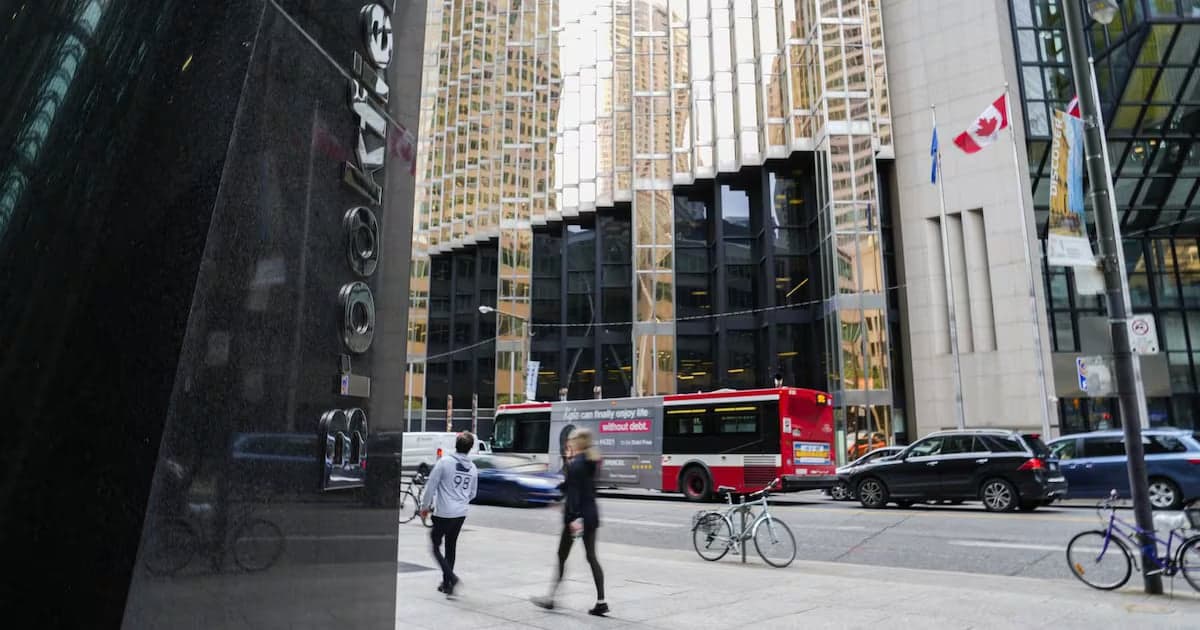
Brookfield Acquires PGP Glass for $1.7 Billion in Industrial Expansion
National News
 09
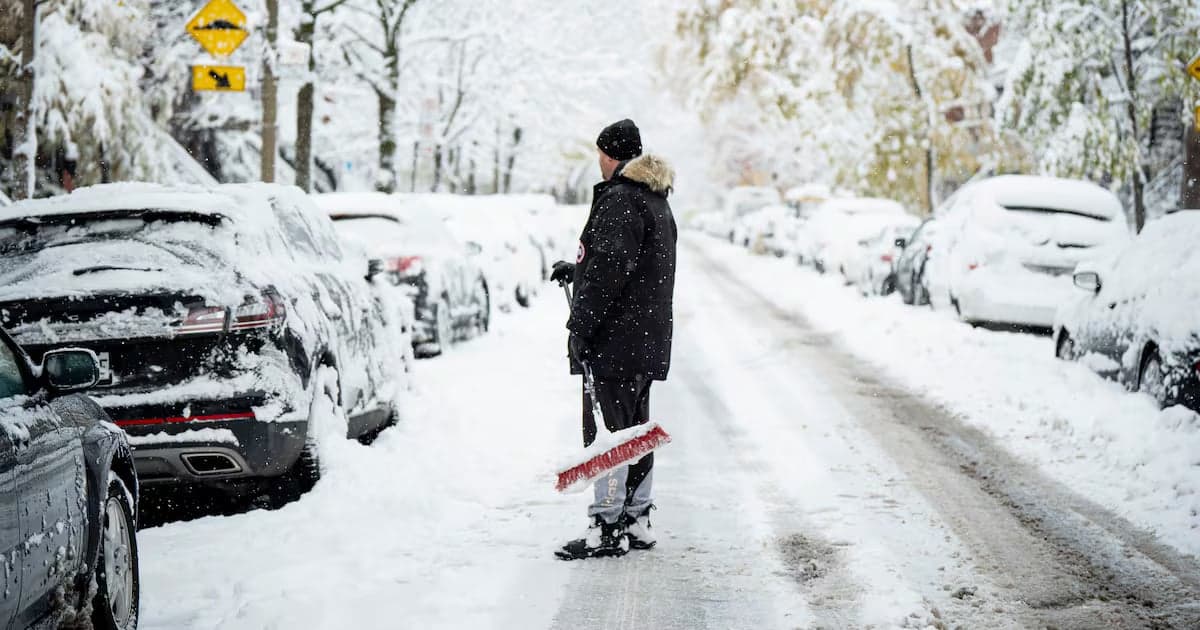
Montreal Records Latest First Snowfall Ever Amid Unseasonable Autumn Warmth
National News
 10
CSIS Launches Major Overseas Expansion Backed by $6-Billion Funding Boost
World & Geopolitics
 11
U.S. Treasury Targets Iranian Shadow Banking in Operation Economic Outcast
World & Geopolitics
 12
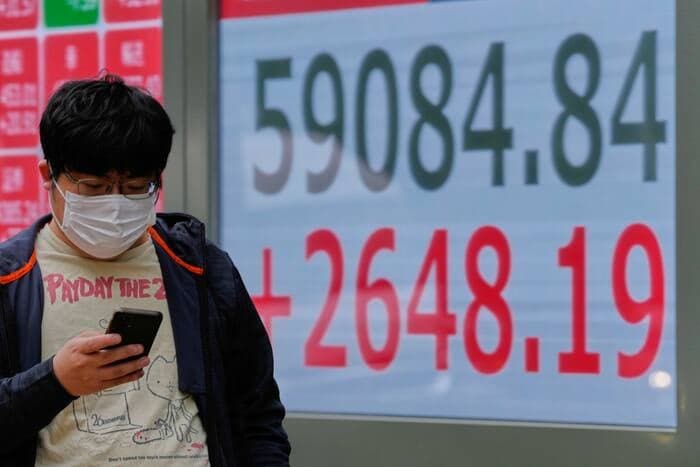
Jensen Huang Reinstated at Nvidia Amid Tech Supply Chain Uncertainty
World & Geopolitics
 13
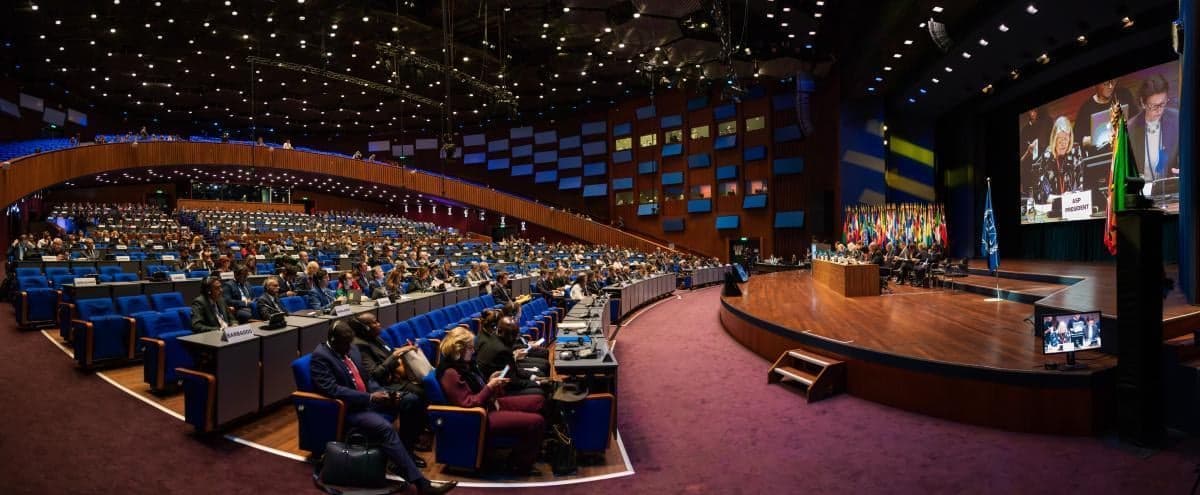
Tajikistan Initiates Withdrawal from International Criminal Court
World & Geopolitics
 14
Canada Designates Masar Badil as Terrorist Entity Due to Samidoun Ties
World & Geopolitics
 15
Pentagon Criticizes Canada’s Defence Spending and F-35 Procurement Strategy
World & Geopolitics
- 16
Canada and India Near Finalization of Comprehensive Economic Partnership Agreement
World & Geopolitics
 17
NATO Operationalizes STARLIFT Space Initiative with Key Canadian Commercial Integration
World & Geopolitics
- 18
Canada and Qatar Launch Inaugural Strategic Dialogue to Strengthen Bilateral Ties
World & Geopolitics
 19
Quebec Court Suspends Law Abolishing Monarchical Oath
World & Geopolitics
 20
Mayor Olivia Chow Restructures Toronto City Hall Leadership to Accelerate Housing Efforts
City News
 21
Premiers Ford and Smith Discuss Removing Barriers to Interprovincial Trade and Labor
City News
- 22
Police Manhunt for Teen Suspects Reaches Critical Legal Deadline
City News
 23
Mayor Chow Pledges Youth Support Following Deadly Double Shooting in Scarborough
City News
 24
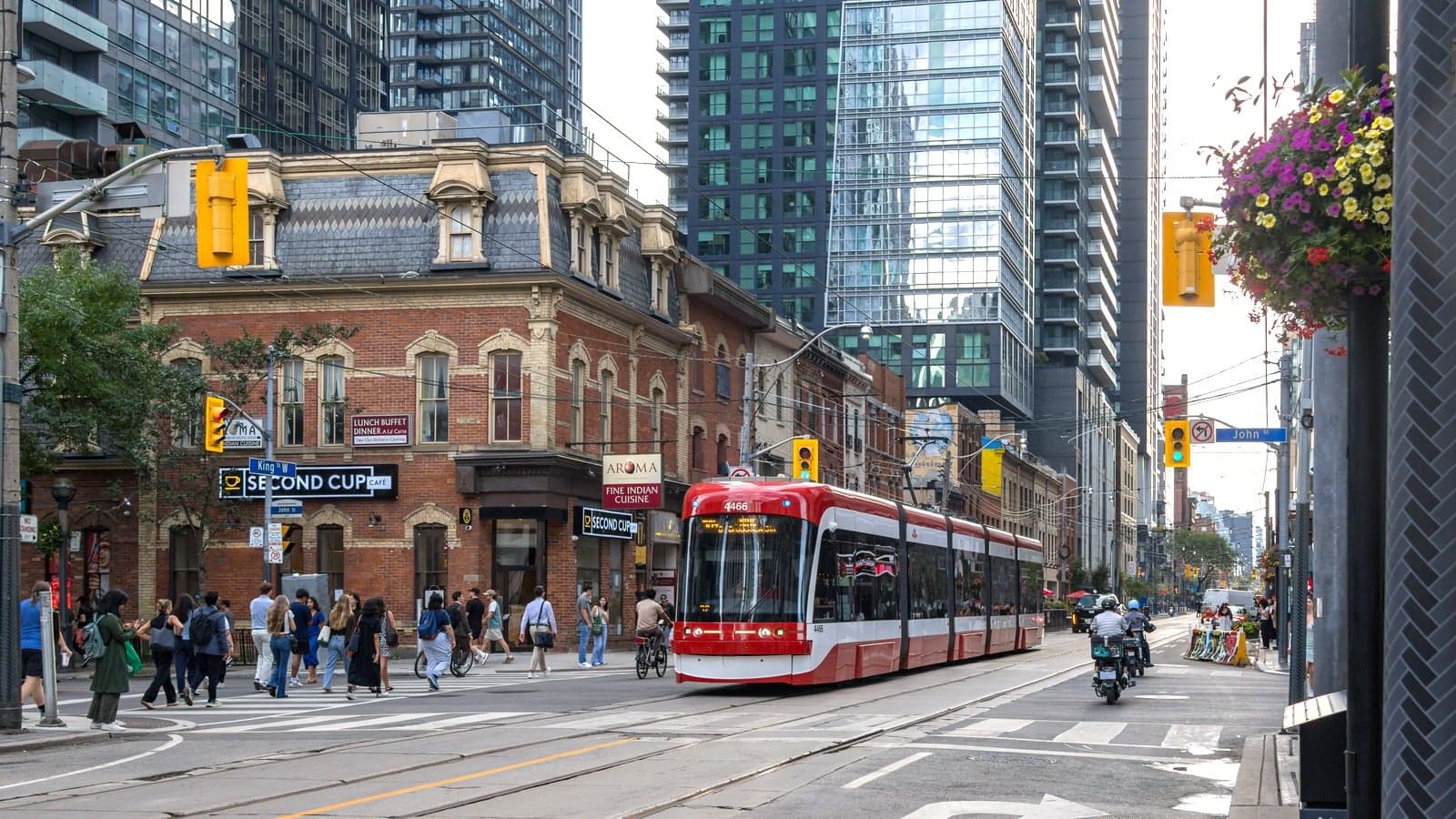
TTC 504 King Streetcar Route Diverted for Major Parkdale Construction
City News
 25
Toronto Hosts Sustainable Finance Summit Focused on Urban Decarbonization and Climate Adaptation
City News
 26
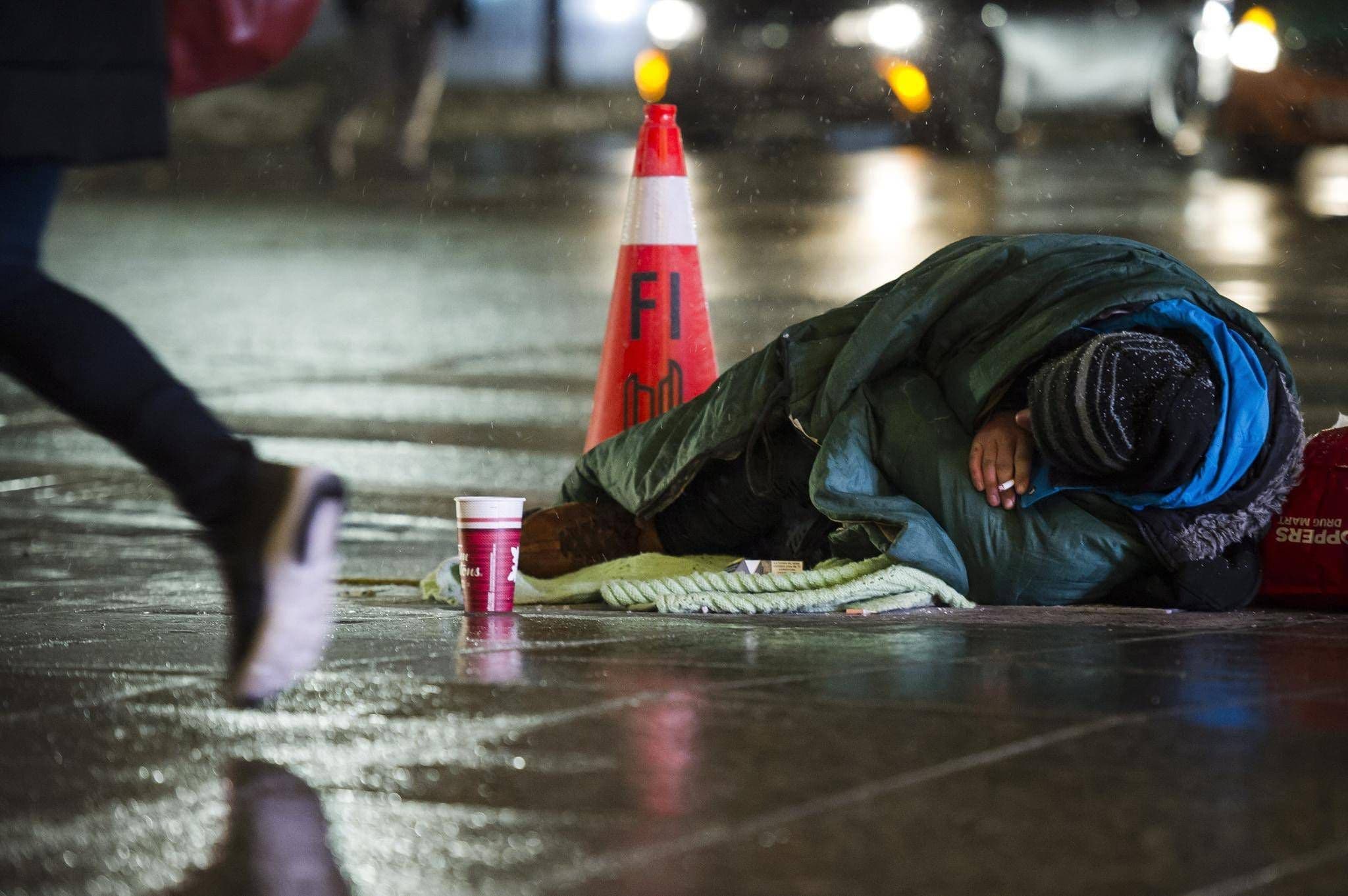
Toronto Activates Emergency Warming Centres Following Sudden Freezing Temperature Drop
City News
 27
Critically Injured Victim Found Following Violent Melee in North York Park
City News
 28
Peel Regional Police Cruiser Involved in Mississauga Collision
City News
 29
Gavin McKenna Leads Maple Leafs Past Islanders as Front Office Seeks Defensive Help
Sports
 30
Blue Jays Miss Out on Pitching Targets Skubal and Rogers
Sports
 31
Short-Handed Raptors Fall to League-Worst Bucks Amid Defensive Struggles
Sports
See all 31 as a listHide the list
- Quebec Court Rules Royal Oath Mandatory, Creating Legislative Crisis
- Bank of Canada Raises Rates Amid Stubborn Inflation and Stagnant Growth
- Canada Joins NATO Innovation Fund With $100 Million Venture Commitment
- Genetic Genealogy Solves 1968 Cold-Case Murder of London Teenager
- Pentagon Issues Public Rebuke of Canada Over Defence Spending and Readiness
- Canada and India Advance Trade Pact Negotiations Toward 2026 Goal
- Ottawa Launches Tariff Response Programs and Geospatial Mining Initiatives
- Brookfield Acquires PGP Glass for $1.7 Billion in Industrial Expansion
- Montreal Records Latest First Snowfall Ever Amid Unseasonable Autumn Warmth
- CSIS Launches Major Overseas Expansion Backed by $6-Billion Funding Boost
- U.S. Treasury Targets Iranian Shadow Banking in Operation Economic Outcast
- Jensen Huang Reinstated at Nvidia Amid Tech Supply Chain Uncertainty
- Tajikistan Initiates Withdrawal from International Criminal Court
- Canada Designates Masar Badil as Terrorist Entity Due to Samidoun Ties
- Pentagon Criticizes Canada’s Defence Spending and F-35 Procurement Strategy
- Canada and India Near Finalization of Comprehensive Economic Partnership Agreement
- NATO Operationalizes STARLIFT Space Initiative with Key Canadian Commercial Integration
- Canada and Qatar Launch Inaugural Strategic Dialogue to Strengthen Bilateral Ties
- Quebec Court Suspends Law Abolishing Monarchical Oath
- Mayor Olivia Chow Restructures Toronto City Hall Leadership to Accelerate Housing Efforts
- Premiers Ford and Smith Discuss Removing Barriers to Interprovincial Trade and Labor
- Police Manhunt for Teen Suspects Reaches Critical Legal Deadline
- Mayor Chow Pledges Youth Support Following Deadly Double Shooting in Scarborough
- TTC 504 King Streetcar Route Diverted for Major Parkdale Construction
- Toronto Hosts Sustainable Finance Summit Focused on Urban Decarbonization and Climate Adaptation
- Toronto Activates Emergency Warming Centres Following Sudden Freezing Temperature Drop
- Critically Injured Victim Found Following Violent Melee in North York Park
- Peel Regional Police Cruiser Involved in Mississauga Collision
Section 1 of 4
National News
9 stories · 4 min skim
National News
2 min read
Quebec Court Rules Royal Oath Mandatory, Creating Legislative Crisis
The Quebec Superior Court has suspended a provincial law that made the oath of allegiance to King Charles III optional for members of the National Assembly. Justice Ian Demers ruled the oath is a constitutional requirement under the Constitution Act, 1867. This decision potentially invalidates legislative actions taken by representatives who refused to swear the oath.
Read the full storyFold the full story2 min · 7 sources
The Quebec Superior Court delivered a landmark ruling that threw the provincial legislature into administrative and legal disarray by suspending Law 4, the 2022 provincial statute that made the oath of allegiance to King Charles III optional for Members of the National Assembly (MNAs)[1][2]. In a strongly worded decision, Justice Ian Demers ruled that the National Assembly overstepped its constitutional boundaries when attempting to unilaterally eliminate the requirement[1]. Writing that "the Constitution is not an à la carte menu from which an individual subject to its authority may choose to follow only what suits them," Justice Demers concluded that the oath is an essential national constitutional mandate under Section 128 of the Constitution Act, 1867[1][3].
The court action was brought by the Public Interest Litigation Institute, led by University of Ottawa constitutional law professor Lawrence David, which filed an emergency injunction arguing that provincial lawmakers cannot unilaterally bypass foundational constitutional rules[2][4]. Because Justice Demers ruled that his injunction takes immediate effect and cannot be automatically suspended during an appeal, the decision creates a severe institutional crisis: any laws introduced, debated, or enacted by legislators who have not sworn the royal oath risk being deemed unconstitutional and legally void[1][5][6]. Following the province's recent election, all 127 elected MNAs refused to swear allegiance to the King during their swearing-in ceremonies[4][5][6].
The ruling drew an immediate, defiant response from Quebec Premier Paul St-Pierre Plamondon of the Parti Québécois[1][5]. At a press conference in Montreal, the Premier called the requirement a democratic "disgrace" and declared that he "cannot take an oath to the King of England," vowing to appeal the judgment and explore every legal and political avenue available[1][5]. While interim Coalition Avenir Québec (CAQ) Leader Mathieu Lévesque and Quebec Conservative Leader Éric Duhaime similarly urged the government to challenge the ruling, the opposition parties face the immediate problem of legal legitimacy ahead of the legislative sitting scheduled for December 1[1][7][5].
Constitutional analysts note that amending Section 128 of the Canadian Constitution intersects with the status of the Crown and the Lieutenant-Governor, potentially requiring the unanimous consent of the Senate, the House of Commons, and all ten provincial legislatures[3]. With Premier St-Pierre Plamondon ruling out compliance and opposing counsel maintaining that MNAs cannot legally assemble or exercise legislative powers until they take the oath, Quebec’s National Assembly faces an unprecedented political standoff that tests the boundaries between provincial democratic mandates and federal constitutional law[1][5].
- Quebec Superior Court
- National Assembly of Quebec
- King Charles III
National News
2 min read
Bank of Canada Raises Rates Amid Stubborn Inflation and Stagnant Growth
The Bank of Canada has increased its benchmark interest rate by 25 basis points to 2.50%, marking its first hike since 2023. Governor Tiff Macklem emphasized the need to control inflation, which is expected to remain high through 2027 despite weak GDP and retail data. The central bank faces the dual pressure of cooling demand and rising energy-driven price expectations.
Read the full storyFold the full story1 min · 7 sources
Bank of Canada Governor Tiff Macklem addressed the Economic Club of Canada in Toronto to outline the central bank’s economic outlook and explain the delicate policy path facing monetary authorities[1]. The speech at the Westin Harbour Castle arrives on the heels of the governing council’s late-October decision to raise the benchmark overnight rate by 25 basis points to 2.50% - the central bank’s first interest rate hike since 2023[1][2][3]. Macklem reiterated that while the domestic economy faces sluggish household demand, monetary policy cannot afford to tolerate persistent upward revisions to medium-term inflation expectations driven by stubborn energy prices and global tariff friction[2][4].
The Bank of Canada finds itself contending with conflicting macroeconomic signals[4]. Released deliberation summaries revealed that the governing council anticipates headline inflation could climb to 3.5% by year-end and remain above the 3% upper bound of its control band for substantial portions of 2027[4]. While upstream wholesale input costs have not yet translated into comprehensive consumer price hikes, central bank business surveys indicate that firms across distribution and retail plan to pass elevated freight and operating costs down to retail consumers[4]. Conversely, high-frequency domestic data paints a fragile portrait of growth: core retail sales excluding gasoline and vehicles expanded by just 0.1% in September, October unemployment ticked up to 6.7%, and third-quarter GDP growth tracked virtually flat[5][6].
The policy challenge is further compounded by the recent five-year renewal of Canada's monetary policy framework, jointly executed with the federal government on November 5, which reaffirmed the Bank’s strict 2% inflation target within a 1% to 3% control range[7]. Forecasters at major Canadian financial institutions, including RBC Economics, note that the central bank appears prepared to deliver further incremental tightening if secondary energy spillovers take hold, projecting that overnight rates could crest at 3.25% by mid-2027[6]. Macklem stressed to business leaders that monetary policy must look through short-term output volatility to preserve price stability, acknowledging that keeping borrow costs restrictive while consumption weakens poses heightened downside risks for debt-burdened Canadian mortgage holders and small businesses[1][7][4].
- Bank of Canada
- Tiff Macklem
- RBC Economics
National News
2 min read
Canada Joins NATO Innovation Fund With $100 Million Venture Commitment
Canada has officially become the 25th member of the NATO Innovation Fund, contributing €64.6 million in capital. The Business Development Bank of Canada will manage the investment to support early-stage, dual-use deep technology. This move aims to bolster national defence capabilities and provide Canadian firms access to allied procurement markets.
Read the full storyFold the full story2 min · 2 sources
Canada officially became the 25th Allied nation to join the NATO Innovation Fund (NIF), deploying a capital commitment of €64.6 million (approximately $100 million CAD)[1][2]. Defence Minister David McGuinty announced the milestone at the Halifax International Security Forum, marking Canada’s status as the fund's first North American participant[2]. Under the agreed structure, the Business Development Bank of Canada (BDC) will hold and manage the federal stake through its specialized Defence Platform, coordinating directly with the Department of National Defence (DND) and Innovation, Science and Economic Development Canada (ISED)[1]. The sovereign venture capital pool, which now exceeds €1.1 billion ($1.7 billion CAD), focuses on early-stage, dual-use deep technology designed for defence, security, and resilience applications[1][2].
The accession resolves a multi-year delay in Canadian participation[1][2]. While Ottawa signed off on the fund’s establishment in 2022 and earmarked $107 million over 20 years within its 2024 defence policy paper, Our North, Strong and Free, negotiations to formalize limited-partner status had stalled[2]. Final approval from the 24 existing allied members clears the runway for Canadian dual-use technology firms, which were previously excluded from the vehicle’s deal flow[2]. McGuinty underscored that this $100-million capital injection directly supports Canada’s commitments under NATO to expand defence investments, serving as a pillar of Prime Minister Mark Carney’s mandate to modernize the Canadian Armed Forces and rebuild sovereign capabilities[1][2]. The announcement arrives amid shifting geopolitical alignments and defence-cooperation pressures between Ottawa and Washington[2].
Operationally, the fund offers domestic tech firms a substantial funding alternative in an environment where venture capital for capital-intensive hardware and deep tech has remained constrained[1][2]. The NIF typically deploys between €3 million and €15 million (up to $24 million CAD) from seed to Series B stages across artificial intelligence, autonomous systems, advanced manufacturing, and quantum computing[1][2]. Peter Dawe, BDC’s senior vice-president of defence strategy, emphasized that the initiative extends beyond mere balance-sheet financing, functioning as an entry point for Canadian enterprises into the procurement pipelines of 24 allied markets[1]. By integrating BDC’s domestic venture architecture with NATO’s innovation apparatus, federal policymakers aim to foster a self-sustaining domestic defence industrial base that commercializes intellectual property locally rather than selling off early-stage innovations to foreign buyers[1].
- NATO Innovation Fund
- Business Development Bank of Canada
- David McGuinty
National News
2 min read
Genetic Genealogy Solves 1968 Cold-Case Murder of London Teenager
London Police have identified Michael Joseph Moore as the killer of 16-year-old Jacqueline Dunleavy, a case that remained cold for over 56 years. Using Forensic Investigative Genetic Genealogy, police linked preserved crime scene evidence to Moore, who died in 2018. This marks the first time London Police have successfully resolved a homicide using this specific advanced forensic technology.
Read the full storyFold the full story2 min · 6 sources
The London Police Service (LPS) announced a major investigative breakthrough in one of Ontario’s most enduring cold cases, confirming that modern forensic DNA testing and Forensic Investigative Genetic Genealogy (FIGG) have formally identified the killer of 16-year-old Jacqueline "Jackie" Dunleavy, who was murdered in January 1968[1][2][3]. During a press conference led by London Police Chief Thai Truong and Major Crime Section Detective Mike Budzyn, authorities identified the perpetrator as Michael Joseph Moore, a 25-year-old London resident at the time of the crime who subsequently spent decades working as a local firefighter and retired as a fire captain[4][1][2]. Moore died in March 2018 at the age of 75, precluding any formal criminal charges[1][2].
The crime took place on the evening of January 9, 1968[1][2]. Dunleavy, a Grade 10 student at Westminster Secondary School and the daughter of a London police officer, completed a part-time shift at Stanley Variety Store near Wharncliffe Road and set out on foot toward home[1][2][3]. Approximately ninety minutes later, three youths discovered her body in the snow on the grounds of Katherine Harley School (now Matthews Hall) on Oxford Street[1][2][3]. A subsequent post-mortem examination determined that she had sustained blunt force trauma to the head and died from strangulation[2][5]. Despite decades of investigation, hundreds of interviews, and inclusion in historical task forces such as "Project Angel" in the late 1990s, the case went cold due to the limitations of twentieth-century forensic techniques[2][5].
The breakthrough was achieved after the LPS Major Crime Section submitted carefully preserved biological evidence from the crime scene to Texas-based forensic genomics laboratory Othram[1][5]. Othram's scientists built a comprehensive Single Nucleotide Polymorphism (SNP) profile, which was subsequently analyzed through genetic genealogy search teams led in collaboration with the Toronto Police Service and the Ontario Provincial Police[1][5]. The genealogical family tree traced the biological material directly to Moore, an Irish national who had emigrated to Canada in 1967 and lived in an apartment near the crime scene[1][3]. Detective Budzyn confirmed that the evidentiary threshold had been fully met, stating that had Moore been alive today, he would have been arrested and prosecuted for first-degree murder[3].
Chief Truong highlighted that this investigation represents the first time the London Police Service has resolved a cold-case homicide using forensic investigative genetic genealogy[3]. The resolution has provided long-awaited answers to the Dunleavy family while underscoring how advanced genealogical mapping is enabling Canadian law enforcement agencies to resolve historical violent crimes that previously seemed permanently out of reach[1][6].
- London Police Service
- Jacqueline Dunleavy
- Michael Joseph Moore
National News
2 min read
Pentagon Issues Public Rebuke of Canada Over Defence Spending and Readiness
The U.S. Department of Defense has issued a critical fact sheet alleging Canada has failed to meet NATO investment pledges. The Pentagon cited operational deficits in military capabilities and expressed frustration over procurement delays regarding F-35 fighters. Despite the public reprimand and internal administrative restrictions, Canadian officials maintain that operational interoperability remains intact.
Read the full storyFold the full story2 min · 6 sources
The United States Department of Defense issued an unusually blunt public fact sheet sharply criticizing Canada’s defence posture[1][2]. The document stated that Ottawa has repeatedly failed to make the difficult decisions required to fulfill its commitments under NATO’s Defence Investment Pledge and become a credible partner in defending North America[1][2]. Pointing directly to operational deficits spanning air, land, and naval capabilities, the Pentagon asserted that "Canada's defense shortfalls speak for themselves" and urged the Canadian federal government to get serious and focused on military modernizations[1][2].
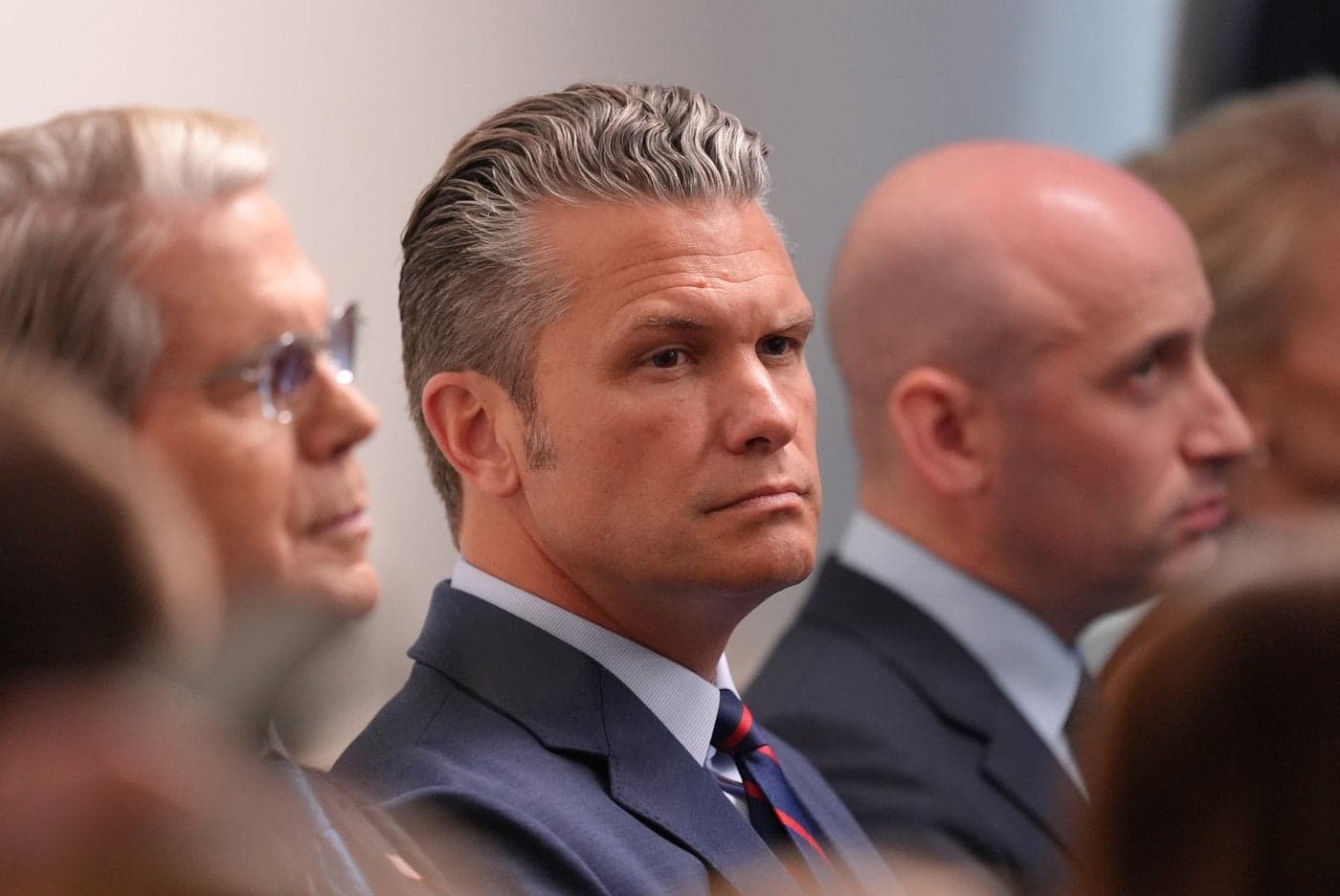
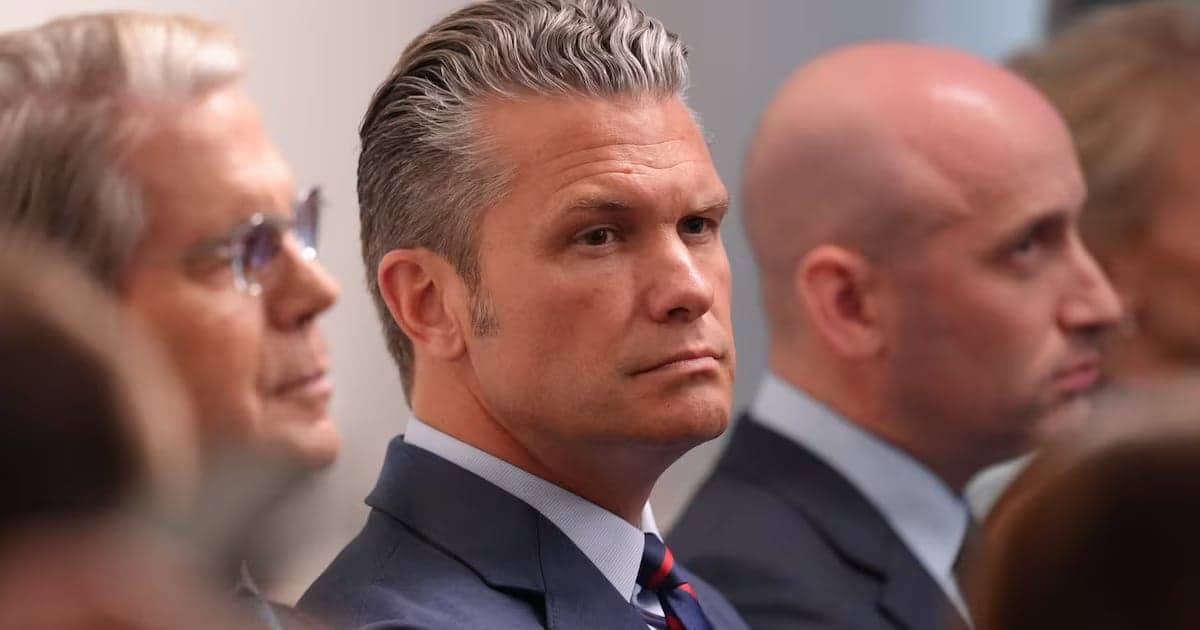
The public reprimand followed a classified directive issued by U.S. Defense Secretary Pete Hegseth that imposed restrictions on military cooperation with Canada, particularly concerning joint engagements with think tanks and official social functions[1][3]. Tensions between the two traditional continental defence allies have heightened following Ottawa’s prolonged political review of its procurement order for Lockheed Martin F-35 fifth-generation fighter aircraft[4][5]. Although the Canadian federal budget under Prime Minister Mark Carney laid out projections to reach roughly 4 percent of gross domestic product on defence by the decade's end - encompassing investments in new submarines and early warning aircraft - Washington officials have voiced growing frustration over procurement delays and an alleged lack of near-term readiness[4][4].
Key figures engaged in the developing dispute include U.S. Defense Secretary Pete Hegseth, Canadian Minister of National Defence David McGuinty, and Prime Minister Mark Carney[1][6][2]. Addressing bilateral ties at the Halifax International Security Forum over the weekend, Minister McGuinty characterized military relations as "business as usual," noting that operational interoperability remains intact[1]. That assessment was echoed by visiting U.S. Republican Senator Mike Rounds, who emphasized that high-level operational missions and continental security patrols have not been compromised by the Pentagon's administrative memo[1][3].
The diplomatic fallout carries significant geopolitical implications for North American Aerospace Defense Command (NORAD) operations and the broader NATO alliance[4][1][6]. The Trump administration has intensified pressure on all partner nations to accelerate compliance with expanded allied targets, where NATO members committed in principle to spending up to 5 percent of GDP on core defence and security investments by 2035[6][2]. While European allies such as Germany and Poland have earned praise from U.S. defence planners for aggressive military budget surges, Canada faces mounting bilateral scrutiny that could influence impending renegotiations over border security, continental air defence modernization, and broader cross-border trade agreements[5][2].
- United States Department of Defense
- NATO
- Pete Hegseth
National News
2 min read
Canada and India Advance Trade Pact Negotiations Toward 2026 Goal
Canadian and Indian trade negotiators are nearing a final Comprehensive Economic Partnership Agreement, with a goal to conclude by the end of 2026. High-level bilateral discussions have helped thaw diplomatic relations, opening pathways for increased agricultural and energy exports. The agreement is intended to improve trade resilience and strengthen institutional cooperation.
Read the full storyFold the full story1 min · 5 sources
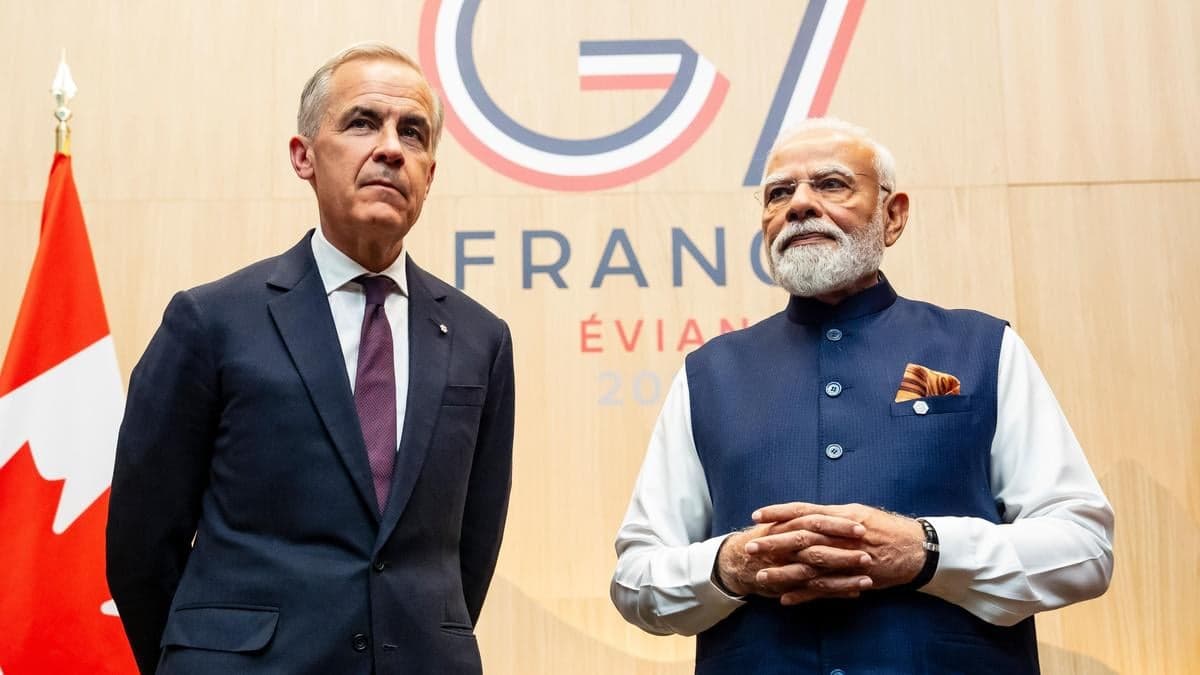
Senior trade negotiators from Canada and India are holding daily closed-door sessions and are "very close" to finalizing the long-pending Comprehensive Economic Partnership Agreement (CEPA), with both nations targeting a conclusion before the close of 2026[1]. The intensified technical engagements follow high-level bilateral discussions between Canadian Prime Minister Mark Carney and Indian Prime Minister Narendra Modi, reflecting an active effort to restore diplomatic momentum and institutional trade ties following multiple years of geopolitical strain[1].
The acceleration of trade talks is driven by Ottawa’s strategic imperative to diversify export destinations amid escalating tariff risks and protectionist sentiment in North America[1][2]. Under Carney’s administration, the Canadian government has recalibrated its Indo-Pacific economic outreach, focusing heavily on bilateral commercial corridors[1]. Canadian negotiators are seeking streamlined access for agricultural commodities - notably lentils and specialty pulses - alongside long-term contracts for clean energy technologies, metallurgical coal, and critical minerals essential for India’s manufacturing infrastructure[3][1][4]. Concurrently, Indian negotiators are pursuing improved mobility provisions for high-skilled tech professionals, reciprocal digital services trade, and reduced non-tariff barriers on manufactured goods[1].
Business associations across Canada have welcomed the closing window of negotiation, identifying the pact as a buffer against trade concentration risks[1][5]. Bilateral merchandise and services flows between the two economies had continued under bilateral friction, but institutional investors have cited regulatory ambiguity as a persistent drag on foreign direct investment[1]. Securing CEPA by year-end would unlock formal dispute resolution frameworks, mutual recognition of professional standards, and lower tariff regimes across vital sectors[1]. Analysts note that successful ratification would represent Canada's most consequential bilateral trade agreement outside the Americas in nearly a decade, resetting Ottawa’s engagement in South Asia and securing critical supply linkages for the Canadian industrial base[1].
- Canada
- India
- Mark Carney
National News
2 min read
Ottawa Launches Tariff Response Programs and Geospatial Mining Initiatives
The federal government has unveiled new initiatives to support domestic commerce and resource development, including funding for trade missions and digitizing geological data in the Northwest Territories. These programs are designed to help SMEs navigate trade disruptions and lower exploration costs for critical minerals. This is part of the larger 'Building Canada Strong' industrial policy agenda.
Read the full storyFold the full story2 min · 4 sources
The federal government announced targeted economic initiatives aimed at strengthening internal domestic commerce and de-risking natural resource development[1][2]. In Toronto, Evan Solomon, Minister of Artificial Intelligence and Digital Innovation and Minister responsible for FedDev Ontario, unveiled nearly $1 million in funding for the Toronto Region Board of Trade through the Regional Tariff Response Initiative[1]. The capital is earmarked to finance targeted domestic trade missions and support Ontario small and medium-sized enterprises (SMEs) in navigating cross-border trade disruptions by expanding their supply chains and commercial footprints into other Canadian provinces[1][3]. Concurrently, Parliamentary Secretary Claude Guay announced nearly $3 million in federal backing to scan and digitize drill core archives across the Northwest Territories under the Canadian Digital Core Library (CDCL) initiative[2].
These targeted programs form operational components of Ottawa's expanded industrial policy agenda[4][1]. In an analysis published by Policy Options, researchers examined the operationalization of the federal budget's $140-billion "Building Canada Strong" industrial commitments[4]. A central element of this program is the confirmed $25-billion capitalization over three years for the Canada Strong Fund - the country's first national sovereign wealth fund - which is scheduled to open direct public participation via "Canada Strong Notes" beginning in 2027[4]. However, policy analysts emphasize that massive capital envelopes for clean electricity ($50 billion), national housing supply ($44.7 billion), and domestic automotive modernization ($9 billion) face logistical bottlenecks unless community-level infrastructure, circular supply chains, and interprovincial trade barriers are concurrently addressed[4].
The digital mapping of the Northwest Territories' drill cores - which joins parallel scanning efforts active at Winnipeg’s Midland Sample and Core Library and scanning facilities in Thunder Bay, Ontario - addresses long-standing productivity deficits in exploration[2]. By generating open-access, high-resolution geoscience data, Natural Resources Canada intends to lower pre-competitive exploration expenditures for mining operators pursuing rare earths, lithium, and critical battery minerals[2]. Simultaneously, FedDev Ontario’s deployment to the Toronto Region Board of Trade reflects growing recognition that Canadian manufacturers must reduce reliance on single foreign export channels by optimizing domestic procurement[1][3]. Industry groups note that harmonizing interprovincial commerce and unlocking geological data represent low-cost, high-leverage policy mechanisms to stimulate capital formation while broader fiscal investments work their way through the real economy[4][2][3].
- Evan Solomon
- Toronto Region Board of Trade
- Natural Resources Canada
National News
2 min read
Brookfield Acquires PGP Glass for $1.7 Billion in Industrial Expansion
Brookfield is purchasing global glass packaging manufacturer PGP Glass from Blackstone for US$1.7 billion. The deal involves manufacturing operations in India and Sri Lanka and leverages Brookfield's strategy of optimizing industrial assets in emerging markets. The acquisition is expected to close in early 2027.
Read the full storyFold the full story1 min · 6 sources
Canadian alternative asset manager Brookfield agreed to acquire PGP Glass, a global specialty glass packaging manufacturer, from funds managed by Blackstone Private Equity for US$1.7 billion[1][2]. The transaction will be funded through the Brookfield Capital Partners private equity platform and its affiliate Brookfield Business Corporation[2][3]. Headquartered in India, PGP Glass operates three primary manufacturing complexes across India and Sri Lanka with an aggregate production capacity surpassing 1,800 tonnes per day[1][2]. The acquisition is scheduled to close in the first quarter of 2027, subject to customary regulatory reviews and cross-border investment clearances[4][2].
The deal underscores Brookfield’s strategy of identifying industrial targets benefiting from cost-structure disparities between emerging and developed markets[4]. While container glass in standard consumer segments has faced substitution pressures from aluminum and alternate packaging, premium packaging for high-end cosmetics, perfumery, pharmaceutical vials, and specialty spirits continues to experience durable end-market demand[4][1]. Brookfield identified structural margin compression and capacity rationalization among European and North American bottle manufacturers as a catalyst for low-cost, high-precision producers like PGP to capture international market share[4][5]. Blackstone had acquired the business, then known as Piramal Glass, for approximately $1 billion in 2021 before executing operational upgrades and sustainability initiatives[4][1].
Key executives highlighted that Brookfield intends to implement an enterprise-wide, AI-driven transformation program to optimize furnace efficiency, batch formulation, and automated defect sorting across PGP's facilities[1][6]. Aditya Joshi, Managing Partner and Head of Private Equity for Brookfield in Asia Pacific and the Middle East, stated that the packaging firm's entrenched relationships with global luxury and pharmaceutical brands in over 70 countries provide a resilient base for cash flow compounding[1]. PGP Chief Executive Officer Vijay Shah noted that Brookfield’s global real estate and supply chain reach will assist the manufacturer in scaling customer service networks across North America and Europe[1][5]. For Canadian institutional investors, the $1.7-billion deployment demonstrates ongoing confidence in industrial value-add strategies despite high global capital costs[1][3].
- Brookfield
- PGP Glass
- Blackstone Private Equity
National News
2 min read
Montreal Records Latest First Snowfall Ever Amid Unseasonable Autumn Warmth
Montreal has shattered its record for the latest first snowfall, as persistent warm temperatures have kept the city entirely snow-free through late November. Meteorologists attribute this anomaly to broader climate trends impacting Eastern Canada. The lack of winter weather has impacted local industries, causing delays in mandated winter tire installations and municipal snow-clearing readiness.
Read the full storyFold the full story1 min · 5 sources
Environment and Climate Change Canada (ECCC) confirmed that Montreal officially set an all-time record for its latest first snowfall in modern meteorological history[1][2]. Crossing the previous benchmark set on November 23, 2011, the city recorded zero measurable snowfall on the ground, with weather stations across Greater Montreal registering clear, dry, or mildly rainy conditions[1][3]. The historical milestone highlights an exceptionally warm autumn across southern Quebec and much of Eastern Canada, disrupting normal seasonal transitions[1][3][4].
According to ECCC meteorologist Simon Legault and agency climatological data, Montreal experienced average temperatures throughout November hovering near 8°C, dramatically higher than the normal historical average of 2.3°C[1][3]. The contrast with recent years is stark: by this exact date in 2025, Montreal had already accumulated nearly 23 centimetres of snow and had weathered freezing winter precipitation starting in early November[1]. Forecasters noted that while seasonal temperatures are anticipated to moderate down toward typical daytime highs of 4°C, immediate weather models show low-pressure systems bringing predominantly rain rather than snow, leaving the record to extend further into late November[1].
The record-breaking weather patterns have created notable operational and commercial ripple effects across the province[1][5]. In Quebec, where provincial transport law mandates that all passenger vehicles must be equipped with certified winter tires by December 1, automotive service centres reported unprecedented delays in consumer booking rushes, with motorists postponing tire appointments due to spring-like driving conditions[1]. Municipal public works departments in Montreal also experienced altered timelines, with city crews delaying the full deployment of snow-clearing fleets while monitoring the ongoing vulnerability of unsheltered populations as emergency warming shelters prepared for delayed openings[3][5].
Climate scientists with Environment Canada emphasized that while individual late starts have occurred sporadically over the past century, a complete absence of snow cover well into late November aligns with broader climatic warming trends observed across the Great Lakes and St. Lawrence Valley basins[1][4]. With winter precipitation records falling across Eastern Canada, municipal and provincial authorities are increasingly recalibrating operational budgets and environmental response strategies to adapt to more unpredictable winter timelines[3][4].
- Environment and Climate Change Canada
- Montreal
- Simon Legault
Section 2 of 4
World & Geopolitics
10 stories · 4 min skim
World & Geopolitics
2 min read
CSIS Launches Major Overseas Expansion Backed by $6-Billion Funding Boost
The Canadian Security Intelligence Service (CSIS) is set to undergo a historic expansion of its foreign intelligence-gathering capabilities. A new $6-billion government investment will support the deployment of specialized officers and advanced infrastructure to strategic locations worldwide. This shift aims to transition Canada from a passive consumer of allied intelligence to an active, sovereign collector of foreign intelligence.
Read the full storyFold the full story1 min · 6 sources
The Canadian Security Intelligence Service (CSIS) has unveiled plans to initiate a significant expansion of its overseas stations, intelligence-gathering footprint, and foreign liaison postings[1][1]. The operational pivot follows the allocation of a sweeping $6-billion budgetary enhancement designed to modernize Canada’s sovereign intelligence architecture and fundamentally transform how the agency identifies and confronts national security threats outside Canadian borders[1][1][2].
Historically, CSIS has operated primarily within a domestic mandate, depending heavily on Five Eyes intelligence partners for raw foreign intelligence and offshore field surveillance[3][4]. However, successive federal evaluations and strategic directives have stressed that rising transnational threats, hostile state espionage, and covert interference campaigns require Canada to project autonomous intelligence capabilities abroad[3][1]. The multi-billion-dollar funding injection will underwrite the deployment of specialized intelligence officers into key strategic corridors across Europe, the Indo-Pacific, and the Middle East, while financing advanced cyber and signals surveillance infrastructure[1][2].
The overseas surge comes in direct response to internal warnings that the global security environment has fractured into intense geopolitical competition[5][1]. Agency reports have highlighted an acute operational paradox: even as Ottawa vigorously pursues trade agreements and deeper commercial ties with foreign powers to diversify its export economy, several of those dynamic trading environments host state apparatuses identified by security officials as the foremost perpetrators of foreign interference and illicit technology transfers[1].
The overseas buildout represents one of the largest structural shifts in Canadian intelligence history[1][2]. National security analysts note that establishing dedicated, sovereign collection stations overseas enables Canada to independently verify geopolitical risks, shield sensitive supply chains - including critical minerals, quantum innovation, and defense manufacturing - and provide real-time strategic intelligence directly to cabinet[6][1][2]. The initiative is expected to reshape Ottawa’s intelligence-sharing posture, transforming Canada from a frequent net consumer of allied intelligence into an active contributor of forward-deployed operational data[1][2].
- CSIS
- Five Eyes
- Government of Canada
World & Geopolitics
2 min read
U.S. Treasury Targets Iranian Shadow Banking in Operation Economic Outcast
The U.S. Treasury Department has imposed sweeping sanctions against a network of intermediaries across Iran, the UAE, Turkey, and Hong Kong to dismantle Tehran’s state-supervised financial apparatus. FinCEN reports indicate billions in potentially illegal transfers, while the rial faces record lows. The move comes amid rising maritime security concerns in the Persian Gulf.
Read the full storyFold the full story2 min · 11 sources
The United States Department of the Treasury's Office of Foreign Assets Control (OFAC) unveiled sweeping sanctions on November 23 targeting more than two dozen exchange houses, front companies, and key intermediaries across Iran, the United Arab Emirates, Turkey, and Hong Kong[1][2]. The punitive measures, announced as part of the broader "Operation Economic Outcast" campaign spearheaded by Treasury Secretary Scott Bessent, seek to dismantle Tehran’s state-supervised "rahbar" financial apparatus[1][3]. The targeted network - supervised by the Central Bank of Iran and managed through bank-affiliated commercial entities - functions as a multi-jurisdictional clearinghouse enabling sanctioned Iranian exporters to convert local revenue into foreign hard currencies and maintain overseas trade[3][4].
Concurrently, the Financial Crimes Enforcement Network (FinCEN) issued an alert revealing that suspicious activity reports filed by financial institutions identified approximately $14.7 billion in potential Iranian shadow banking transfers processed between January 2025 and August 2026[4]. American officials noted that the intensified clampdown comes as Iran struggles with depleted domestic currency reserves, with the rial sliding to record lows of more than two million per U.S. dollar under the weight of an escalating commercial blockade and declining physical oil volumes[1][5]. The action was closely followed by bilateral discussions during the eighth U.S.-Qatar Strategic Dialogue in Washington, where U.S. Secretary of State Marco Rubio and Qatari Prime Minister Sheikh Mohammed bin Abdulrahman Al Thani highlighted the acute necessity of preserving freedom of navigation through the Strait of Hormuz amid mounting maritime cyber incidents and supply disruptions[6][7].
For Canada, the intensification of sanctions enforcement and maritime friction across the Persian Gulf carries far-reaching macro-economic and trade implications[8][6]. Global energy markets have reacted with renewed volatility, maintaining upward pressure on benchmark crude spreads and reinforcing bond yield fluctuations globally[8]. Furthermore, prolonged regional shipping instability is accelerating shifts among major energy importers in the Indo-Pacific - such as the Philippines and other ASEAN members - toward North American suppliers to offset Persian Gulf vulnerability[9][10]. For Canadian energy producers and federal trade planners seeking to diversify market exposure beyond traditional channels, these supply-chain shifts increase both strategic demand for West Coast energy export infrastructure and heightened scrutiny from international partners demanding rigorous anti-money laundering (AML) and sanctions compliance across Canadian financial institutions[11][4].
- U.S. Department of the Treasury
- OFAC
- FinCEN
World & Geopolitics
2 min read
Jensen Huang Reinstated at Nvidia Amid Tech Supply Chain Uncertainty
Jensen Huang has been reinstated as CEO of Nvidia shortly after his resignation, following high-level political intervention from the U.S. government. The leadership shuffle occurred amidst concerns over potential ties to Chinese intelligence operations and the broader battle for AI infrastructure dominance. The reversal highlights the extreme concentration of power and risk within the global semiconductor supply chain.
Read the full storyFold the full story1 min · 8 sources
Global technology equity markets and semiconductor supply networks experienced substantial volatility through November 24 following the sudden reinstatement of Jensen Huang as President and Chief Executive Officer of Nvidia[1][2]. Huang had abruptly resigned just days earlier following public disclosures regarding personal relationships allegedly tied to Chinese intelligence operations[3][4]. The reversal was orchestrated directly by Nvidia’s board of directors following public intervention from U.S. President Donald Trump, who advocated for Huang’s rapid return to maintain corporate continuity and safeguard American dominance in artificial intelligence infrastructure[3][2]. The news triggered a strong recovery across Asian technology exchanges, with Taiwan’s Taiex surging nearly 9 percent led by heavy institutional buying of Taiwan Semiconductor Manufacturing Company (TSMC) and MediaTek[1].
The leadership upheaval at the world’s foremost AI chipmaker has reignited intense political scrutiny in Washington[5][2]. Democratic lawmakers on Capitol Hill immediately promised investigations into the extent of executive branch influence over corporate governance decisions at publicly traded defence-critical tech enterprises[5]. The incident underscored the hyper-politicised environment governing the semiconductor ecosystem, occurring against the backdrop of tightened trade representative rules designed to systematically throttle Beijing’s access to next-generation computing architectures[6]. Technology analysts noted that the intersection of personal intelligence concerns and national security highlights how dependent the global computing stack remains on a small handful of corporate leaders and concentrated geographic manufacturing hubs[7][1].
For Canada, the turbulent governance of central semiconductor suppliers carries long-term consequences for national industrial strategy and technology security[8][7]. The Canadian federal government has invested heavily in domestic AI research, computing capacity, and critical mineral extraction intended to feed the North American microelectronics supply chain[8]. When leadership stability and corporate oversight at the core of the Western hardware stack become subject to sudden geopolitical intervention and intelligence scrutiny, secondary allied ecosystems are exposed to severe planning risks[7][3]. Furthermore, as the United States intensifies its technology decoupling from China, Canadian technology enterprises face rising regulatory pressures to audit international partnerships, secure advanced data infrastructure, and insulate domestic computing investments from cross-border political shocks[8][7].
- Nvidia
- Jensen Huang
- Donald Trump
World & Geopolitics
2 min read
Tajikistan Initiates Withdrawal from International Criminal Court
Tajikistan has formally triggered the withdrawal process from the International Criminal Court, becoming the latest nation to abandon the Rome Statute. The move follows diplomatic meetings between Tajik President Emomali Rahmon and Russian President Vladimir Putin. This decision underscores a growing trend of nations moving away from multilateral accountability systems.
Read the full storyFold the full story2 min · 8 sources
The international legal framework suffered a significant setback on November 23 as the United Nations Secretariat and the Assembly of States Parties to the Rome Statute confirmed that Tajikistan has formally triggered the one-year process to withdraw from the International Criminal Court (ICC)[1][2]. The formal notification of withdrawal, submitted under Article 127 of the Rome Statute, was officially dated November 20, 2026 - coinciding directly with Russian President Vladimir Putin’s official state visit to Dushanbe following his trilateral meetings in Shenzhen, China[3][4]. Tajikistan, which ratified the Rome Statute in 2000 and has long stood as the only Central Asian signatory to the treaty, was facing mounting international pressure to execute the outstanding 2023 ICC arrest warrant against Putin concerning the unlawful transfer of children from Ukraine[3][2].
The withdrawal notice drew swift condemnation from international bodies and Western diplomatic missions[1][5]. The Presidency of the Assembly of States Parties expressed deep concern, stating that unilateral disengagements fundamentally undermine collective efforts to combat impunity for grave international crimes[1]. In Brussels, the European Union issued a formal diplomatic reprimand, noting that Tajikistan’s exit follows a troubling wave of similar treaty abandonments earlier in the year by nations including Chad, Venezuela, and Naoero[5][6]. Legal analysts pointed out that the timing of the exit served as an overt political choice by Tajik President Emomali Rahmon to prioritize geopolitical alignment with Moscow over statutory international obligations, especially amidst renewed trilateral great-power rhetoric challenging the institutional jurisdiction of international tribunals[3][4][7].
This acceleration in the fragmentation of international legal norms presents a distinct diplomatic challenge for Canadian foreign policy[8][1]. Canada played an instrumental historical role in drafting the Rome Statute and has consistently positioned the ICC as a foundational pillar of the rules-based international order[1][5]. As regional blocs in Central Asia and parts of the Global South increasingly pull away from multilateral accountability systems, Canada’s traditional diplomatic posture - heavily reliant on treaty compliance and universal legal frameworks - faces structural marginalization[8][5]. The loss of institutional consensus over international criminal jurisdiction weakens Canadian multilateral advocacy, complicating Ottawa's ongoing efforts to build diverse, values-aligned coalitions in developing and non-aligned states[8][5].
- International Criminal Court
- Tajikistan
- Vladimir Putin
World & Geopolitics
2 min read
Canada Designates Masar Badil as Terrorist Entity Due to Samidoun Ties
The Canadian government has officially added Masar Badil, also known as the Palestinian Alternative Revolutionary Path Movement, to its list of designated terrorist entities under the Criminal Code. Investigations by federal agencies confirmed the organization operates as a proxy for the already-outlawed Samidoun Palestinian Prisoner Solidarity Network. The designation mandates that financial institutions freeze any assets associated with the group.
Read the full storyFold the full story1 min · 6 sources
Public Safety Minister Gary Anandasangaree announced that the Government of Canada has formally placed Masar Badil - also known as the Palestinian Alternative Revolutionary Path Movement - on its designated list of terrorist entities under the Criminal Code[1]. Federal intelligence and law enforcement assessments concluded that Masar Badil functions not as an autonomous political movement, but as a direct proxy, faction, and operating alias for the Samidoun Palestinian Prisoner Solidarity Network, which Canada outlawed as a terrorist entity[2][1].
Federal findings documented shared operational leadership, integrated fundraising infrastructure, and overlapping public coordination between Masar Badil and Samidoun[2][1]. The listing details extensive institutional linkages to other established terrorist groups, including the Popular Front for the Liberation of Palestine (PFLP), Hamas, Palestinian Islamic Jihad, and Hezbollah[2][1]. The action mirrors earlier enforcement taken by the United States Department of the Treasury, which previously designated Masar Badil as a Specially Designated Global Terrorist entity[2][1]. The domestic urgency surrounding the Canadian decision intensified as Masar Badil prepared to host an international assembly in Toronto, drawing significant national security scrutiny[2][3][4].
The legal consequences of the listing take effect immediately across Canadian jurisdiction[2][1]. Under the Criminal Code, it is an indictable offense to knowingly deal with property owned or controlled by Masar Badil, provide financial or material assistance, or facilitate its organizational operations[2][1]. Canadian chartered banks and financial institutions are mandated to immediately freeze all assets linked to the movement, which are now liable to federal seizure and forfeiture[2].
The federal enforcement action drew strong commendation from major national civil society and legal watchdog groups[4][5]. Organizations including B’nai Brith Canada, the Centre for Israel and Jewish Affairs (CIJA), and the Friends of Simon Wiesenthal Center issued statements welcoming the designation, describing it as an essential safeguard against transnational extremist networks using Canadian soil to stage international operations[2][4][5]. Officials emphasized that the move arms domestic law enforcement agencies with robust legal tools to suppress terrorist financing networks and enforce public order against foreign-linked radical factions[1][6].
- Public Safety Canada
- Gary Anandasangaree
- Masar Badil
World & Geopolitics
2 min read
Pentagon Criticizes Canada’s Defence Spending and F-35 Procurement Strategy
The U.S. Department of Defense has issued a formal rebuke regarding Canada’s failure to meet NATO defence investment commitments. Officials specifically criticized Canada’s procurement timeline for F-35 aircraft and the government's tendency to backload military capital expenditures. This dispute highlights broader tensions over North American security burden-sharing and fiscal credibility.
Read the full storyFold the full story1 min · 6 sources
The United States Department of Defense escalated bilateral friction on November 23 by releasing a detailed fact sheet that sharply criticized Canada’s defence commitments and ongoing procurement timeline for the Lockheed Martin F-35 Lightning II[1][2]. The release, which followed a classified directive issued by U.S. Defense Secretary Pete Hegseth, openly challenged Ottawa’s fiscal credibility, alleging that the Canadian government has failed to make the domestic fiscal tradeoffs required to fulfill its commitments under the NATO Defense Investment Pledge[3][2]. The Pentagon argued that decades of American security underwriting have fostered complacency in Canadian defence policy, stating bluntly that “Canada must get serious and focused” on its continental and collective defence obligations[3].
The immediate catalyst for Washington's scrutiny is Canada's defence and security budgeting trajectory[3]. While Ottawa previously met NATO's baseline of spending 2 percent of gross domestic product (GDP) and endorsed allied ambitions to target 5 percent by 2035, the Pentagon pointed out significant structural deficits in how Canada plans to meet these thresholds[3]. According to U.S. defence officials, Canada’s current budgetary framework projects combined defence and national security expenditures at 4.1 percent of GDP by fiscal year 2027–2028, but only 2.6 percent of that figure represents direct, core military outlays[3]. The Pentagon specifically faulted Ottawa for backloading the bulk of its capital expenditures until after the 2029 federal election, a timeline that Canadian Parliamentary Budget Officer assessments have similarly described as lacking firm fiscal backing[3].
This confrontation has direct ramifications for Canadian foreign and economic policy under Prime Minister Mark Carney[3][4]. Hegseth’s directive, which Republican Senator Mike Rounds noted has already begun restricting formal channels of high-level military collaboration, strikes at the core of the shared North American Aerospace Defense Command (NORAD) and NATO operational frameworks[3]. The dispute also threatens to compound existing trade friction with Washington, where cross-border trade discussions remain fragile and broader industrial relations are strained by tariff threats[5][4]. Canadian policymakers now face intense pressure to balance heavy domestic social spending with accelerated capital allocation toward military modernisation to prevent spillover penalties on Canadian market access to the United States[6][3].
- Department of Defense
- Lockheed Martin
- F-35 Lightning II
World & Geopolitics
2 min read
Canada and India Near Finalization of Comprehensive Economic Partnership Agreement
Canada and India are in the final stages of negotiating a landmark Comprehensive Economic Partnership Agreement (CEPA). The deal seeks to boost two-way trade to $50 billion by 2030, targeting a reduction in tariffs and the removal of regulatory barriers. The agreement covers multiple sectors, including energy, agriculture, pharmaceuticals, and technology.
Read the full storyFold the full story1 min · 4 sources
Bilateral trade negotiations between Canada and India have reached a critical stage, with senior officials confirming that both nations are "very close" to finalizing the terms of the comprehensive India-Canada Comprehensive Economic Partnership Agreement (CEPA)[1]. The bilateral pact, which is being negotiated alongside a dedicated Foreign Investment Promotion and Protection Agreement, aims to establish an ambitious target of expanding two-way merchandise and services trade to $50 billion by 2030[1].
The trade track reflects an accelerated push by Prime Minister Mark Carney and Indian Prime Minister Narendra Modi to reset relations and insulate commercial ties from prior political strains[2][1]. Bilateral merchandise trade fell 8.23% to $7.95 billion ($4.67 billion in Indian exports versus $3.28 billion in Canadian exports), underscoring an urgent imperative to eliminate tariff barriers, simplify customs mechanisms, and open restricted sectors[1]. Over 600 Canadian companies maintain permanent operating footprints in India, and Canadian cumulative foreign direct investment in the subcontinent exceeds $4.8 billion, positioning Canada as India’s 16th largest source of foreign capital[1].
The prospective agreement holds major structural implications for core Canadian export engines[1]. Under the negotiated chapters, Canadian producers of potash fertilizers, pulses, mineral fuels, industrial equipment, and advanced aerospace components stand to secure stabilized preferential access to the world’s most populous consumer market[1]. In exchange, Indian manufacturers of pharmaceuticals, organic chemicals, electronics, textiles, and iron and steel will receive expanded access into Canadian distribution pipelines, accompanied by commitments on service-sector mobility and tech services[1].
The economic realignment is bolstered by deep societal links, with more than 1.7 million Canadians of Indian descent and approximately 425,000 Indian students currently in Canada[3][1]. As community organizations in Toronto prepare to receive Prime Minister Modi for an upcoming official visit, business councils and trade envoys have characterized the impending CEPA as a crucial pillar in Canada’s broader geopolitical strategy to diversify commercial dependencies, safeguard critical supply chains, and reduce economic exposure to traditional North American trade vulnerabilities[4][3][1].
- Mark Carney
- Narendra Modi
- CEPA
World & Geopolitics
2 min read
NATO Operationalizes STARLIFT Space Initiative with Key Canadian Commercial Integration
NATO has launched the STARLIFT initiative, a new framework to ensure allied access to space by utilizing commercial launch providers during international crises. Canada has joined the project and secured long-term agreements with domestic commercial spaceports in Nova Scotia and Newfoundland. This integration links Canadian aerospace capabilities directly to the alliance's collective deterrence architecture.
Read the full storyFold the full story1 min · 4 sources
NATO has operationalized its STARLIFT initiative, a multinational operational framework designed to guarantee responsive, allied military access to space by reserving launch capacity on commercial rockets and coordinating rapid-response satellite deployments during international crises[1][2]. Canada has formally integrated into the initiative as one of 10 participating NATO allies financing the effort alongside non-NATO partner South Korea through the NATO Support and Procurement Agency (NSPA)[2].
The operational launch of STARLIFT directly links Canada's burgeoning domestic commercial space infrastructure with allied deterrence architecture[1][2]. The multilateral framework establishes operational protocols to launch surveillance, reconnaissance, and communication satellites on short notice from allied spaceports[2]. It also harmonizes international air and maritime traffic clearances for rapid launches and pools alliance-wide launch demand[2]. To anchor Canada's contribution, the Department of National Defence finalized long-term sovereign access agreements, notably securing a 10-year, C$20-million standby contract with Newfoundland-based NordSpace for operations at the Atlantic Spaceport Complex, alongside a 10-year lease for a dedicated launch pad with Maritime Launch Services at Spaceport Nova Scotia[2][3].
The deployment of STARLIFT arrives amid heightened international alarm over the vulnerability of orbital assets and aggressive adversarial counterspace testing[1][1]. Western military planners have cited acute threats including anti-satellite (ASAT) technologies and advanced Russian counterspace programs, such as the Sputnik-S initiative, which have exacerbated fears of orbital disruption and potential nuclear threats in low Earth orbit[1][1]. STARLIFT provides NATO with resilient redundancy, ensuring that if an adversary blinds or disables an allied orbital communications constellation, replacement payloads can be deployed within days[2][4].
For Canada, participation in STARLIFT intersects with national Arctic and northern defense priorities[4]. Complementing the launch agreements, the Department of National Defence has paired its STARLIFT membership with targeted contracts - such as funding optical inter-satellite links with Kepler Communications - to fortify space-based surveillance and secure communications across the Canadian Arctic under the NORTHWATCH program[4]. Defense Minister David McGuinty and senior military planners have emphasized that the integration elevates Canadian commercial spaceports onto the world stage, ensuring that Canadian territory and private aerospace technology serve as an indispensable pillar in the Alliance’s orbital defense network[2][4].
- NATO
- STARLIFT
- Department of National Defence
World & Geopolitics
2 min read
Canada and Qatar Launch Inaugural Strategic Dialogue to Strengthen Bilateral Ties
Canada and Qatar have initiated their first annual Strategic Dialogue in Ottawa, marked by a high-level ministerial summit. The meetings aim to formalize cooperation across trade, national security, and energy resilience, building upon a multi-year diplomatic roadmap. Foreign Affairs Minister Anita Anand and Qatari officials discussed both economic opportunities and critical regional security cooperation.
Read the full storyFold the full story1 min · 3 sources
Global Affairs Canada announced that Foreign Affairs Minister Anita Anand will host the Prime Minister and Minister of Foreign Affairs of Qatar, Sheikh Mohammed bin Abdulrahman Al Thani, in Ottawa for the first annual Canada-Qatar Strategic Dialogue[1]. The high-level bilateral summit is accompanied by a formal ministerial signing ceremony involving Minister Anand, Qatari Minister of State for Foreign Trade Dr. Ahmad bin Mohammed Al-Sayed, and Minister of State for Foreign Affairs Dr. Mohammed bin Abdulaziz bin Saleh Al Khulaifi[2]. The meetings establish a formalized ministerial framework aimed at setting the strategic trajectory of Canada-Qatar relations across trade, national security, energy resilience, and multilateral diplomacy[1][3].
The convening represents the culmination of a multi-year diplomatic roadmap between Ottawa and Doha[1][3]. In May 2024, the two nations established an annual bilateral political consultation mechanism, which was subsequently elevated when Minister Anand visited Doha and signed a memorandum of understanding establishing this comprehensive, ministerial-level dialogue[1][3]. Commercial relations between the two countries have steadily grown; two-way merchandise trade reached $355.2 million, with Canadian exports - principally industrial machinery, electrical equipment, scientific instruments, and aerospace components - accounting for $141.9 million[1][3].
Beyond trade, the dialogue carries acute geopolitical weight as Minister Anand and Prime Minister Al Thani hold closed-door consultations regarding escalating tensions and security dynamics across the Middle East[1]. Qatar continues to serve as an indispensable mediator in protracted regional negotiations and hostage diplomacy[1]. For Canada, institutionalizing direct ties with Doha provides Canadian diplomats with greater insight into Gulf stability and facilitates joint coordination on regional de-escalation, conflict resolution, and humanitarian corridors[1].
The ministerial summit signals Ottawa’s broader strategic effort to diversify its diplomatic and economic partnerships across the Middle East and the Global South. For Canadian commercial sectors, the formal agreements signed in Ottawa establish regulatory certainty and open channels for institutional investment, particularly in civil aviation, infrastructure, and high-tech supply chains[1][2]. In turn, Qatari sovereign investment funds gain structured access to Canadian energy transition projects and capital markets, reflecting an evolving alliance that blends hard security consultation with economic statecraft[1][3].
- Anita Anand
- Sheikh Mohammed bin Abdulrahman Al Thani
- Global Affairs Canada
World & Geopolitics
2 min read
Quebec Court Suspends Law Abolishing Monarchical Oath
The Quebec Superior Court has ruled that a provincial law making the oath of allegiance to the monarch optional for assembly members is unconstitutional. Justice Ian Demers stated that the province lacks the jurisdiction to unilaterally alter constitutional requirements. This ruling places the legal validity of recent provincial legislation into question.
Read the full storyFold the full story2 min · 4 sources
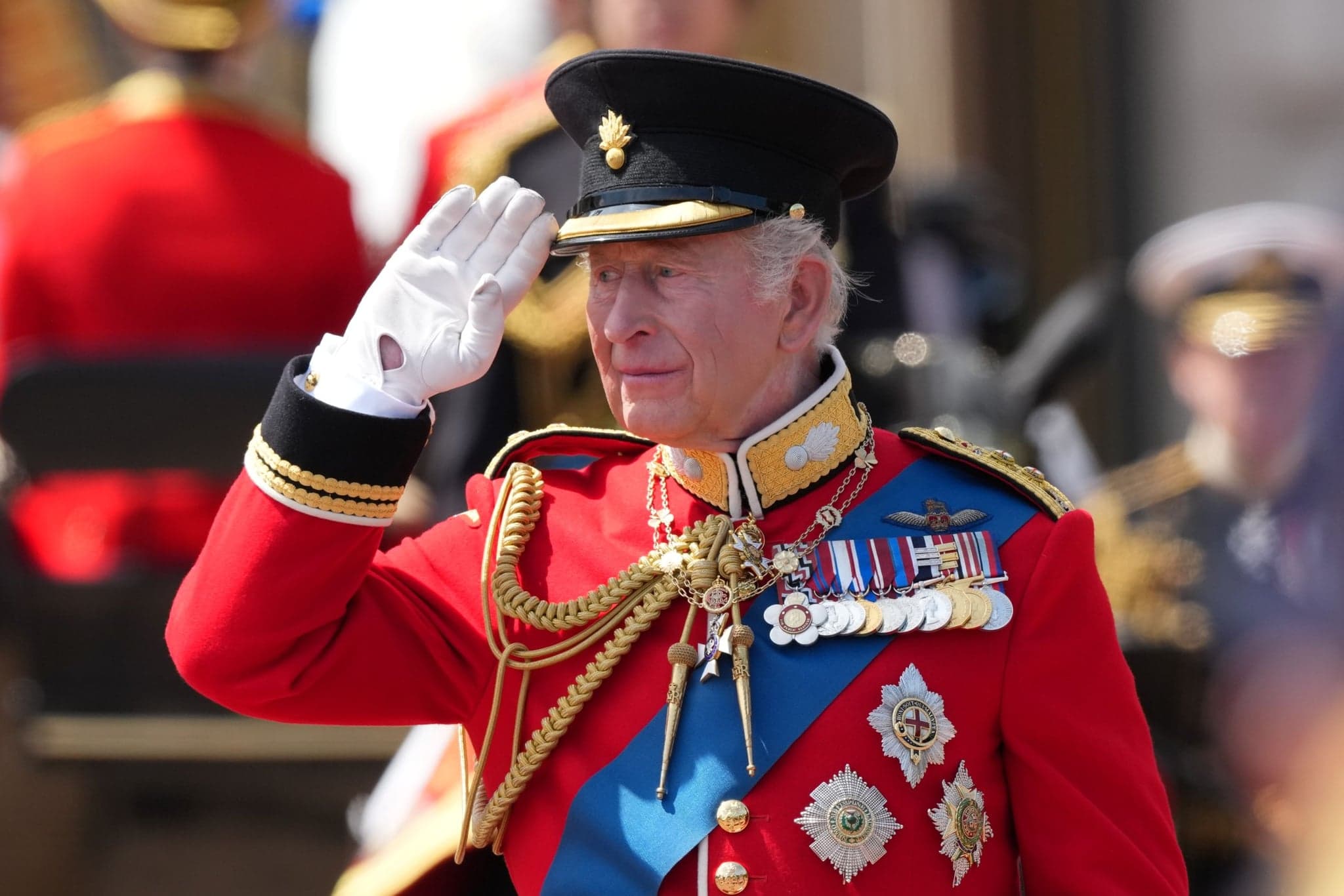
In a legal ruling delivered on November 23, the Superior Court of Quebec struck down key elements of Quebec’s 2022 Bill 4, declaring unconstitutional the provincial legislation that had made the oath of allegiance to Canada's head of state optional for members of the National Assembly[1]. Justice Ian Demers suspended the statutory modification, determining that the provincial legislature exceeded its jurisdictional boundaries by attempting to unilaterally alter the oath required by Section 128 of the Constitution Act, 1867[1]. The ruling mandates that all provincial parliamentarians must swear allegiance to King Charles III before they are constitutionally permitted to sit and vote in the National Assembly, effectively placing the upcoming legislative calendar in immediate institutional jeopardy[1].
The legal challenge was initiated by University of Ottawa constitutional scholar Lawrence David, representing the Public Interest Litigation Institute[1]. David successfully argued that eliminating the oath unilaterally infringed upon the formal constitutional authority of the Crown, as represented by the lieutenant governor, and that such institutional modifications legally require the unanimous consent of the federal Parliament and all ten provincial legislatures under Section 41 of the Constitution Act, 1982[1]. Quebec’s legislature originally enacted Bill 4 in December 2022 following the refusal of elected Parti Québécois members to pledge allegiance to the British monarch[1]. Since that time, dozens of legislators across various parties have sat and passed laws without taking the monarchical oath[1].
The suspension of the law introduces a complex constitutional dilemma that affects both domestic governance and Canada’s sovereign profile[1][2]. The decision threatens the legal validity of statutes adopted by unsworn provincial legislators over the past several sessions, while provoking sharp pushback from Quebec's political class, which views the ruling as an infringement on provincial autonomy[1]. For Ottawa, the judgment creates an acute political hazard: the federal government must uphold the judicial and constitutional framework of the country without triggering an explosive sovereignist backlash in Quebec ahead of future electoral cycles[1][3]. Internationally, the friction illustrates persistent institutional tensions between Canada’s historic constitutional architecture and domestic provincial autonomy, complicating internal legal certainty at a time when the federal government is attempting to project political stability to global investors[4][1].
- Quebec Superior Court
- National Assembly of Quebec
- King Charles III
Section 3 of 4
City News
9 stories · 4 min skim
City News
2 min read
Mayor Olivia Chow Restructures Toronto City Hall Leadership to Accelerate Housing Efforts
Toronto Mayor Olivia Chow has utilized her provincial strong mayor powers to replace City Manager Paul Johnson and several high-ranking administrators. The reorganization is designed to streamline operations and focus on the city's housing and infrastructure priorities. Stephen Conforti has been named the interim city manager while the administration moves to expedite housing approvals.
Read the full storyFold the full story2 min · 8 sources
Toronto Mayor Olivia Chow executed an unexpected restructuring of the city’s top executive ranks, invoking her provincial “strong mayor” powers to remove City Manager Paul Johnson and several senior administrators[1][2]. Under the directive issued at City Hall, Johnson - who had served as Toronto’s highest-ranking civil servant since December 2022 - will formally depart alongside Deputy City Managers Jag Sharma and Kate Bassil[2]. Stephen Conforti, the city’s Chief Financial Officer, was appointed as interim city manager to oversee administrative functions while a permanent replacement is sought[1][2]. Chow announced that the restructuring would reallocate several key operating divisions under revised portfolios to streamline operational agility without reducing frontline staff[2].
The shakeup marks Chow’s most assertive administrative intervention since securing a renewed four-year mandate in the recent municipal election[3][4]. Following that victory, Chow initiated a broader overhaul of municipal governance, appointing former federal Liberal MP Nate Erskine-Smith to chair the Planning and Housing Committee and moving homelessness policy under her direct purview on the Executive Committee[5]. Johnson had shepherded the administration through major milestones, such as securing the multi-billion-dollar provincial “New Deal” and preparing municipal infrastructure for the upcoming FIFA World Cup[2]. However, persistent fiscal shortfalls, bottlenecks in the delivery of social housing, and bureaucratic inertia over city services pushed the mayor’s office toward a more centralized administrative posture[6][2][7].
This administrative realignment holds immediate ramifications for housing development pipelines and municipal public-service execution across Toronto. By pairing interim leadership under a finance-focused executive like Conforti with an aggressive housing mandate led by Erskine-Smith and Vice-Chair Diana Chan McNally, the mayor is positioning the bureaucracy to prioritize rapid site approvals, affordable rental incentives, and tighter fiscal oversight[1][5][2]. For housing providers, urban developers, and non-profit housing coalitions, the management shifts represent a break from bureaucratic deliberation in favor of top-down delivery targets, particularly as the city attempts to convert municipal land into long-term affordable dwellings[8][5].
While civic watchdogs and progressive councillors welcomed the prospect of breaking operational logjams, the unilateral invocation of strong mayor powers continues to draw scrutiny from municipal governance analysts[1][6]. Critics argue that utilizing executive provincial powers - originally enacted by Premier Doug Ford’s provincial government - sidesteps council deliberation and risks destabilizing the civil service during an acute affordability crisis[6][7]. Nevertheless, Chow defended the decision in a communication to municipal personnel, affirming that the adjustments are confined to the executive suite and designed specifically to dismantle administrative silos and deliver immediate improvements to Toronto's urban landscape[2].
- Olivia Chow
- Paul Johnson
- Stephen Conforti
City News
2 min read
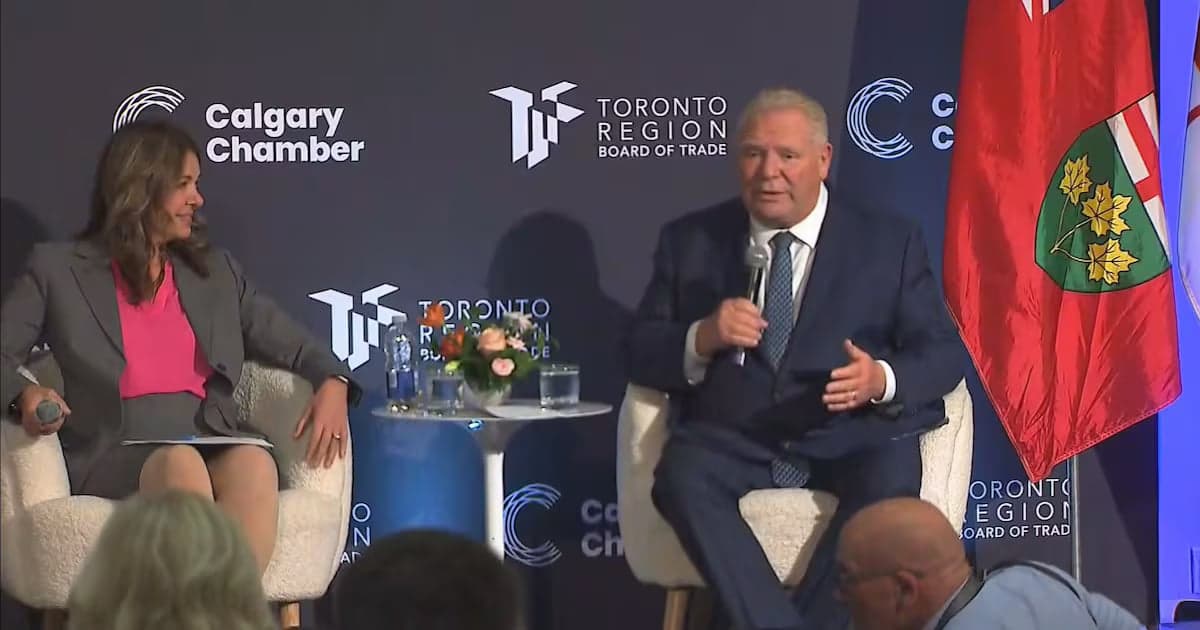
Premiers Ford and Smith Discuss Removing Barriers to Interprovincial Trade and Labor
Ontario Premier Doug Ford and Alberta Premier Danielle Smith met at the Toronto Region Board of Trade to push for the removal of interprovincial trade barriers. The leaders discussed standardizing professional credentials to enable freer labor mobility between provinces, specifically to address construction and healthcare labor shortages. The meeting aimed to align economic policies to improve market access and lower infrastructure development costs.
Read the full storyFold the full story2 min · 5 sources
At a fireside summit co-hosted by the Toronto Region Board of Trade and the Calgary Chamber of Commerce, Ontario Premier Doug Ford and Alberta Premier Danielle Smith addressed business leaders and municipal officials on interprovincial trade, infrastructure, and national market access[1][2][3]. The discussion, moderated by CTV and BNN Bloomberg chief financial correspondent Amanda Lang, tackled internal regulatory friction, the removal of interprovincial trade barriers, national energy corridor expansion, and broader economic realignments prompted by prospective shifts in cross-border trade policy[2][3][4]. Both premiers voiced optimism that ongoing cross-border trade discussions with the United States could yield bilateral stability before year-end[2].
A central issue affecting Toronto’s urban development was the call for frictionless mobility of skilled labor and standardized professional credentials[3][4]. Following bilateral memorandums of understanding between Ontario and Alberta, Ford highlighted steps taken to eliminate provincial exemptions and streamline trade, pointing to mutual recognition frameworks for certified tradespeople, engineers, and healthcare personnel[4]. In Toronto - where major transit projects like the Ontario Line and ambitious residential construction targets continually face skilled-labor shortages - easing cross-provincial labor mobility was framed by business leaders as a requirement for lowering construction costs and accelerating home completions[3][4].
The leaders also addressed bureaucratic frictions that continue to hamper interprovincial commerce despite recent agreements[4][5]. Smith cited ongoing regulatory bottlenecks, noting imbalances in retail distribution systems such as the Liquor Control Board of Ontario (LCBO), where bureaucratic rules limit the availability of Alberta-made products compared to Ontario products sold in western markets[4]. Ford acknowledged that while Ontario has systematically removed trade barriers, municipal and provincial agencies across the country continue to maintain subtle regulatory impediments that hinder the free movement of goods, commercial fleet transport, and construction materials[4].
For Toronto’s commercial and residential development sectors, the discussions highlight the broader macroeconomic forces dictating municipal construction timelines[3][4]. Representatives from the Toronto Region Board of Trade stressed that the city’s competitiveness hinges on stabilizing national supply lines for structural materials and fostering a unified Canadian internal market[3]. As the city attempts to balance aggressive urban housing mandates against supply-chain volatility, the ability of Ontario and Alberta to dismantle jurisdictional boundaries on labor and materials represents an essential lever for Toronto's urban growth[3][4].
- Doug Ford
- Danielle Smith
- Toronto Region Board of Trade
City News
2 min read
Police Manhunt for Teen Suspects Reaches Critical Legal Deadline
Toronto police are conducting a nationwide search for two teenage murder suspects, Cameron Marlor and Joseph Kunene, amid strict judicial timelines under the Youth Criminal Justice Act. Police successfully obtained a court order to publish identities to aid the manhunt, but the authorization is set to expire shortly, after which media will be restricted from identifying the suspect. The search is connected to multiple fatal shootings across the Greater Toronto Area.
Read the full storyFold the full story1 min · 3 sources
The Toronto Police Service Homicide and Missing Persons Unit has escalated an active Canada-wide manhunt tied to a string of deadly shootings across the GTA, centering on a critical legal deadline under the Youth Criminal Justice Act (YCJA)[1][2]. Police announced the arrest of 19-year-old Armani Callender, who was taken into custody and charged with second-degree murder, attempted murder, and two firearm-related offenses in connection with the fatal shooting of 18-year-old Malik Abass of Mississauga[1][3]. Abass was killed on November 7 near Rathburn Road and The East Mall, marking Toronto's 33rd homicide of the year[1].
Simultaneously, detectives issued an urgent public appeal to locate 17-year-old Cameron Marlor, who remains at large and is wanted on nationwide arrest warrants for second-degree murder in the Abass homicide, as well as first-degree murder in the November 10 shooting of 18-year-old Brandon Blake near Martin Grove Road and Finch Avenue West - Toronto's 34th homicide[1][2]. Police previously arrested a 16-year-old Vaughan male in connection with Blake's death, while 19-year-old Joseph Kunene remains wanted alongside Marlor for first-degree murder[2].
Because Marlor is legally a minor, investigators were required to obtain a special court order pursuant to Section 110 of the YCJA to temporarily release his identity and photographs to the public[1][2]. That judicial authorization is set to expire strictly at 12:00 p.m., placing extreme investigative urgency on locating the suspect before statutory publication bans re-engage[1][2]. Once the order lapses, Canadian media and law enforcement are legally barred from displaying his name or likeness, complicating public assistance efforts[1].
The dual investigations underscore cross-jurisdictional cooperation between Toronto Police, the Ontario Court of Justice, and surrounding regional police services[1][2]. Authorities caution members of the public not to approach Marlor or Kunene, warning that they should be considered armed and dangerous, and urge anyone harboring information regarding their whereabouts to contact police immediately[1][2].
- Toronto Police Service
- Youth Criminal Justice Act
- Ontario Court of Justice
City News
2 min read
Mayor Chow Pledges Youth Support Following Deadly Double Shooting in Scarborough
Mayor Olivia Chow has called for increased investment in youth violence prevention after a shooting in Scarborough resulted in the deaths of two 16-year-old boys. The incident occurred following a gathering in an industrial area, where a dispute escalated into gunfire. Police are actively investigating the shooting, which is the latest in a series of violent events involving youth in the city.
Read the full storyFold the full story1 min · 2 sources
Toronto Mayor Olivia Chow addressed the public at Toronto City Hall following a double homicide in Scarborough that left two teenagers dead and another injured[1][2]. Addressing reporters, Chow called the weekend shooting "heartbreaking" and extended condolences to the victims' families, while issuing an urgent call for expanded municipal investment in community-based youth intervention and mentorship infrastructure[1].
The address comes as Toronto Police Service homicide detectives formally identified the deceased victims as 16-year-old Ezekiel Tarrance Joseph-Jeffrey and 16-year-old Jakson Robin Clifford Persaud, both Toronto residents[2]. The teens represent the city’s 35th and 36th homicides of the year[2]. Emergency personnel originally responded to a barrage of 911 calls around 12:30 a.m. outside a Petro-Canada service station near Ellesmere Road and Brimley Road, where officers found three 16-year-old boys suffering from gunshot wounds[2]. Despite life-saving efforts, two were pronounced dead at Sunnybrook Health Sciences Centre, while the third was treated for serious, non-life-threatening injuries at The Hospital for Sick Children[2].
According to Lead Investigator Det. Sgt. Trevor Grieve of the Homicide and Missing Persons Unit, the shooting erupted following a confrontation that spilled out of a private social gathering attended by roughly 50 young people in an adjacent industrial facility[2]. Gunfire sparked mass panic, with dozens of attendees fleeing the scene in multiple directions before officers arrived[2]. Police have spent the last 24 hours reviewing surveillance footage, interviewing witnesses, and processing forensic evidence across the gas station forecourt and surrounding industrial access roads[2].
Chow emphasized that law enforcement alone cannot solve systemic youth vulnerability, urging city council and community partners to scale up investments in grassroots violence-prevention initiatives[1]. She stressed that early mentorship pipelines are critical in high-risk neighborhoods to provide teenagers with alternatives before disputes escalate into gun violence[1]. Investigators continue to urge any attendees who left the scene or motorists with dashcam video from Ellesmere and Brimley to contact the Homicide and Missing Persons Unit[2].
- Olivia Chow
- Toronto Police Service
- Sunnybrook Health Sciences Centre
City News
2 min read
TTC 504 King Streetcar Route Diverted for Major Parkdale Construction
The Toronto Transit Commission has implemented a significant diversion for the 504 King streetcar line to accommodate essential watermain and track infrastructure upgrades in the Parkdale area. Streetcars are currently being rerouted along Queen Street West, with replacement bus services provided for the disconnected segment of King Street. Construction is expected to continue for several weeks, potentially impacting transit efficiency and traffic flow along the corridor.
Read the full storyFold the full story1 min · 1 source
A major transit disruption has taken effect across Toronto's downtown west end as the Toronto Transit Commission (TTC) implemented a route diversion on the 504 King streetcar line and its overnight 304 King service[1]. Streetcars on one of North America's busiest surface transit corridors are now being diverted along Queen Street West between Shaw Street and Roncesvalles Avenue, bypassing regular stops through the heart of Parkdale[1].
The extensive rerouting is necessary to accommodate coordinated City of Toronto infrastructure work, specifically a major watermain replacement and comprehensive track renewal along King Street West between Dufferin Street and Close Avenue[1]. While through-service on the 504 and 304 routes continues between Broadview Station in the east and Dundas West Station in the west via the Queen West corridor, direct service on the King alignment has been severed in the construction zone[1]. To maintain localized access, transit planners have deployed 504C and 304C replacement bus services operating between Sunnyside Loop in the west and Distillery Loop in the east[1].
The disruption heavily impacts tens of thousands of daily commuters and local businesses along King West[1]. Riders traveling between the western neighborhoods and central downtown destinations - including the bustling Distillery Winter Village - are advised to verify journey routes, as journeys east of Shaw now require transfers or a choice between Queen-routed streetcars and King-routed replacement buses[1]. TTC officials caution that traffic congestion along Queen Street West will likely intensify due to the shared tracks and localized auto diversions around the active construction perimeter[1].
City engineering departments and the TTC have indicated that staged road work and lane closures along King Street West will persist for several weeks[1]. Furthermore, municipal planners warned that the west-end diversion could be expanded eastward as far as Spadina Avenue depending on construction progress and underground utility assessments[1].
- Toronto Transit Commission
- TTC
- City of Toronto
City News
2 min read
Toronto Hosts Sustainable Finance Summit Focused on Urban Decarbonization and Climate Adaptation
The Canada Climate Week Xchange and the Sustainable Finance Summit have opened in downtown Toronto, drawing experts to discuss urban emissions reduction and climate-resilient infrastructure. Sessions focused on data-driven emissions tracking for buildings and financing strategies to retrofit urban areas against climate shocks like flooding and freezing. The events emphasize the need to bridge the gap between private capital and municipal climate goals.
Read the full storyFold the full story2 min · 5 sources
Toronto served as the primary stage for national climate and infrastructure strategy as the annual Canada Climate Week Xchange (CCWX) officially launched, accompanied by the opening of the 2026 Sustainable Finance Summit in the financial core[1][2][3]. Convening at the EY Towers and surrounding downtown venues, the gatherings brought together municipal planners, corporate sustainability executives, institutional investors, and environmental engineers[1][3]. The opening sessions centered on urban decarbonization pathways, corporate climate disclosures, climate stress-testing models, and sustainable investment mechanisms tailored to retrofitting Canadian municipal infrastructure[3][4].
A primary focus of the Toronto proceedings involved addressing local urban emissions, particularly the decarbonization of commercial and multi-residential building stock[1][3]. Discussions led by climate-tech firms and ESG analysts, including platform innovators like Carbonhound, highlighted the growing necessity of localized, data-driven emissions tracking to help property managers comply with stricter civic standards and green procurement expectations[1]. Emerging sessions also explored the intersection between climate adaptation and urban equity, presenting findings developed in partnership with organizations like UN Global Compact Network Canada on how climate shocks - such as flash floods, severe freezes, and heat anomalies - disproportionately impact low-income and racialized neighbourhoods in dense metropolitan areas[4].
The events reflect increasing urgency among municipal and private sector stakeholders regarding the pace of Toronto’s climate-resilience investments[5][3]. Municipal delegates and green finance leaders debated strategies for closing the funding gap for civic infrastructure, arguing that private institutional capital must be leveraged to upgrade stormwater retention systems, shore up energy grids against peak weather anomalies, and transition residential buildings away from fossil-fueled heating systems[5][3]. This financial push coincides with heightened pressure on city planners to insulate local communities from costly property damages and supply-chain interruptions stemming from severe localized weather incidents[3][4].
The week’s discussions also laid bare lingering tensions between grassroots climate advocates and corporate transition timelines[1][4]. While institutional investors at the Sustainable Finance Summit focused on risk-weighted assets, transition taxonomies, and climate resilience disclosures, community-led roundtables emphasized the need for immediate, place-based climate interventions[3][4]. Delegates highlighted that without explicit public policies linking sustainable finance directly to community benefit agreements, green building upgrades risk driving gentrification and accelerating displacement among vulnerable renters, underscoring the tight connection between urban climate policy and housing security[5][4].
- Canada Climate Week Xchange
- Sustainable Finance Summit
- Carbonhound
City News
2 min read
Toronto Activates Emergency Warming Centres Following Sudden Freezing Temperature Drop
Following an unseasonably warm spell, an abrupt temperature drop to -4°C prompted the City of Toronto to open its network of emergency Warming Centres. These facilities provide low-barrier access to rest, nutrition, and social services for the city's unhoused population. Outreach teams have also been deployed to provide winter survival gear and coordinate shelter transfers.
Read the full storyFold the full story2 min · 7 sources
The City of Toronto officially activated its network of emergency Warming Centres across the urban core and surrounding boroughs as an abrupt climatic transition ended an unseasonably warm November stretch[1][2]. According to municipal directives and meteorological alerts from Environment and Climate Change Canada, temperatures that reached a mild 13°C early in the day plummeted toward -4°C overnight, propelled by shifting northwest winds gusting between 15 and 30 km/h with accompanying freeze hazards[1]. Under city operational guidelines, Warming Centres are triggered when forecasts anticipate temperatures dropping below -5°C or when adverse winter weather advisories are declared[1].
The sudden activation mobilizes five walk-in facilities distributed across strategic urban nodes: 136 Spadina Road, 81 Elizabeth Street behind City Hall, 12 Holmes Avenue in North York, 885 Scarborough Golf Club Road, and 349 George Street[1]. Unlike standard emergency shelters, which mandate registration through Central Intake, these walk-in centers provide immediate low-barrier rest spaces, hot nutrition, washroom access, and direct transfers to extended social services[1]. Simultaneously, the city’s mobile Streets to Homes outreach units deployed across downtown corridors, ravines, and known encampment sites to distribute emergency winter clothing, sleeping bags, and blankets while coordinating voluntary transport for unhoused residents[1].
This rapid weather-response mobilization underscores the persistent vulnerability of Toronto’s housing landscape[3]. The city’s recently implemented 2026/2027 Winter Services Plan aims to add approximately 1,500 system and housing spaces across the season, incorporating 505 temporary shelter and 24-hour respite beds alongside 588 supportive and social housing vacancies[4]. However, frontline housing workers and community organizers point out that walk-in warming locations remain a precarious stopgap rather than a systemic solution[3][1][5]. While the Financial Accountability Office of Ontario recently tracked an 8.2% reduction in Toronto's unhoused figures relative to previous provincial surges, shelter occupancy across the Greater Toronto Area remains near maximum capacity nightly, leaving spaces strained during sudden cold snaps[6].
The immediate drop into freezing temperatures also highlights how climate volatility exacerbates urban inequality[3][5]. In recent years, Toronto’s late-autumn weather patterns have swung wildly between record-setting warmth and freezing overnight drops, placing severe physiological strain on the city’s street population and complicating municipal logistics[1][7][2]. City officials reiterated appeals for residents to utilize the 311 reporting system to dispatch street outreach workers, while advocates emphasize that long-term stabilization hinges entirely on whether upcoming municipal budgets can convert emergency respites into permanent, rent-geared-to-income supportive housing[3][1].
- City of Toronto
- Streets to Homes
- Environment and Climate Change Canada
City News
1 min read
Critically Injured Victim Found Following Violent Melee in North York Park
Authorities are investigating a chaotic brawl at Derrydowns Park in North York that involved individuals wielding clubs, sticks, and cricket bats. One person sustained a critical stab wound during the altercation and was transported to a trauma center in life-threatening condition. Police have secured the scene for forensic analysis and are seeking witnesses to assist in identifying those involved.
Read the full storyFold the full story1 min · 1 source
Toronto Police have launched an intensive investigation after a violent brawl involving an assortment of blunt weapons and an edged weapon left one person fighting for their life in North York[1]. First responders were dispatched to Derrydowns Park, located in the Jane Street and Finch Avenue corridor, following emergency calls regarding a large altercation among a crowd of individuals[1].
Upon arrival, officers discovered an active and chaotic crime scene where participants had reportedly engaged in combat using sticks, clubs, and cricket bats[1]. During the confrontation, one individual sustained a severe stab wound[1]. Paramedics treated the victim on scene before rushing them to a local trauma center, where they were listed in life-threatening condition[1].
The suspect or suspects involved fled Derrydowns Park before police established a perimeter[1]. 31 Division investigators, supported by canine units and forensic identification officers, secured the park grounds through the early morning hours, cataloging evidence and canvassing adjacent residential complexes for surveillance video[1]. No arrests have been announced, and police have not yet released suspect descriptions or confirmed whether the altercation was premeditated or spontaneous[1].
The incident has heightened community safety concerns in the Jane-Finch community, where residents and neighborhood groups frequently advocate for enhanced park lighting and late-night municipal safety patrols[1]. Authorities are appealing to anyone who witnessed the altercation in Derrydowns Park or has security footage of individuals arriving or fleeing the area to contact investigators or Crime Stoppers anonymously[1].
- Toronto Police Service
- Derrydowns Park
- North York
City News
1 min read
Peel Regional Police Cruiser Involved in Mississauga Collision
A two-vehicle collision involving a Peel Regional Police cruiser and a civilian vehicle forced the closure of a major Mississauga thoroughfare for several hours. While two people were taken to the hospital, authorities reported their injuries as minor. The Major Collision Bureau is currently investigating the cause of the crash and the status of the cruiser at the time of impact.
Read the full storyFold the full story1 min · 2 sources
A multi-vehicle crash involving a marked Peel Regional Police cruiser caused major traffic disruptions and emergency closures along a key transit artery in Mississauga[1][2]. Emergency responders arrived near Dixie Road and Rathburn Road after a cruiser collided with another civilian passenger vehicle[1][2].
Peel Regional Paramedic Services responded to the scene and transported two individuals to a local hospital for assessment and medical treatment[2]. Authorities confirmed that the injuries sustained were minor and non-life-threatening[1][2]. The driver of the second vehicle remained at the scene and cooperated with responding traffic officers[1][2].
Following the collision, police shut down Dixie Road completely in both directions between Rathburn Road and Burnhamthorpe Road, diverting heavy evening commuter traffic for several hours while collision reconstruction specialists inspected the wreckage and cleared debris[1]. Motorists and MiWay transit buses experienced extensive delays across the central Mississauga transit corridor[1].
Peel Regional Police Major Collision Bureau has opened an inquiry into the circumstances surrounding the crash, including whether the cruiser was responding to an emergency call with active emergency equipment at the time of impact[2]. Investigators have asked motorists who witnessed the collision or captured dashboard camera footage along Dixie Road to contact Peel Regional Police[1].
- Peel Regional Police
- Peel Regional Paramedic Services
- Mississauga
Section 4 of 4
Sports
3 stories · 1 min skim
Sports
2 min read
Gavin McKenna Leads Maple Leafs Past Islanders as Front Office Seeks Defensive Help
The Toronto Maple Leafs broke a nine-game losing streak with a 4-2 win against the New York Islanders. Rookie Gavin McKenna scored the decisive goal, while goaltender Anthony Stolarz held firm during a difficult start. Despite the victory, management is urgently seeking a top-four defenseman to address ongoing structural issues.
Read the full storyFold the full story2 min · 5 sources
The Toronto Maple Leafs halted a franchise-threatening skid on Monday night, rallying from an early deficit to secure a 4-2 victory against the New York Islanders at UBS Arena[1][2]. The win marked Toronto’s first victory of November, snapping a nine-game losing streak that dated back to Halloween and averting what would have been the organization's first 10-game slide in over a decade[1][3]. The decisive breakthrough came with just over 11 minutes remaining in regulation, when 18-year-old rookie sensation Gavin McKenna - the first overall pick in the NHL Draft - buried a point-blank wrist shot during a delayed penalty to break a 2-2 tie[1][2]. Dakota Joshua and veteran defenseman Chris Tanev provided the equalizing offense, while goaltender Anthony Stolarz stabilized the squad by turning away 20 of 22 shots, including 14 high-danger attempts during a lopsided opening period[1][2][4].
The result arrived against a backdrop of acute institutional pressure inside the Scotiabank Arena front office[1][5]. Over the weekend, the club’s downward spiral reached a crescendo following a 4-3 home collapse against the Columbus Blue Jackets, which provoked intense public booing and led team captain Auston Matthews to brand the roster’s play "embarrassing" and "inexcusable"[3][5]. In his debut campaign behind the Toronto bench, head coach Jim Hiller saw his seat warm considerably after broadcast cameras caught heated sideline exchanges between coaching staff and general manager John Chayka late in Saturday's defeat[1][5]. Despite McKenna’s heroics easing immediate calls for managerial upheaval, Toronto remains mired near the bottom of the league standings at 8-14-3, sitting 27th overall with an eighth-place standing in the Atlantic Division and a -12 goal differential[5].
Behind the scenes, the prolonged slump has mobilized Toronto's management into an urgent pursuit of blue-line reinforcements[5]. According to NHL insider David Pagnotta on the Tom Gazzola Show, John Chayka is actively shopping the trade market for an established top-four defenseman with legitimate zone-exit mobility and dependable defensive metrics[5]. Pagnotta reported that while the front office has quietly explored blue-line upgrades since the summer, November’s repeated systemic breakdowns and blown third-period leads have escalated the timeline, turning what was a luxury into an absolute organizational imperative[5].
The impending push for defensive stability carries major implications for the Maple Leafs' roster structure and asset pool[5]. Facing an upcoming December schedule filled with divisional contenders, Chayka will likely be forced to weigh parting with future draft capital or high-end prospect depth to land an impact defenseman capable of sheltering Tanev and Jake McCabe[3][4][5]. With secondary scoring still volatile and stars such as William Nylander navigating prolonged dry spells, the front office is operating under the reality that Monday's relief in New York will be brief unless structural roster changes are finalized before the playoff threshold slips out of reach[1][2][3].
- Toronto Maple Leafs
- Gavin McKenna
- John Chayka
Sports
3 min read
Blue Jays Miss Out on Pitching Targets Skubal and Rogers
The Toronto Blue Jays failed to secure two major starting pitching targets after missing out on free agents Tarik Skubal and Trevor Rogers. Despite offering $420 million for Skubal, the team was outbid by the New York Mets, while Rogers chose to sign a $120 million deal with the Chicago Cubs. The team must now pivot to other options like Freddy Peralta and Kaima Taira before the impending transaction deadline.
Read the full storyFold the full story2 min · 10 sources
The Toronto Blue Jays experienced an aggressive yet frustrating 24-hour cycle on the Major League Baseball free-agent market as the club sought to overhaul its starting pitching rotation[1][2]. Details confirmed Monday by baseball insiders Jon Heyman and Mitch Bannon revealed that Toronto made a staggering nine-year offer in the range of $420 million for two-time Cy Young Award winner Tarik Skubal[3][4]. Despite offering what would have been the second-richest contract in franchise history - trailing only Vladimir Guerrero Jr.’s $500 million extension - the Blue Jays were outbid by the New York Mets, who signed Skubal to a historic nine-year, $450 million agreement on Sunday[3][4]. The outcome relegated Toronto to the role of runner-up for a premier free agent once again, echoing previous pursuit heartbreaks[1][5].
Toronto’s front office moved quickly to initiate contingency plans, but that pursuit was dealt an immediate secondary blow late Monday night[2][6]. Left-hander Trevor Rogers, widely projected by industry analysts as Toronto’s foremost fallback target to address their rotation imbalance, reached an agreement with the Chicago Cubs on a five-year, $120 million contract[6][7]. Rogers, 29, was among the most coveted arms remaining on the open market after producing a 4.03 ERA (with an underlying 3.45 FIP) over 169.2 innings for the Baltimore Orioles in 2026, highlighted by a 2.90 ERA across his final 20 starts[2][8]. The Blue Jays had reportedly engaged in serious discussions for Rogers alongside Milwaukee’s Freddy Peralta, viewing the southpaw as an ideal fit to balance a starting staff that currently leans entirely right-handed with Dylan Cease, José Soriano, Trey Yesavage, and Cody Ponce[2].
The urgency surrounding Toronto’s pitching pursuit is dictated both by the baseball calendar and the team’s recent competitive tumble[1][3]. After capturing the American League pennant and reaching the World Series in 2025, the Blue Jays suffered a precipitous decline in 2026, finishing last in the American League East amid widespread rotation injuries and systemic offensive regression[3][9]. With the collective bargaining agreement expiration and an impending December 1/2 league-wide transaction lockout fast approaching, general manager Ross Atkins is operating under tight timelines to reconstruct a viable championship contender[1][3][10].
With Skubal in Queens and Rogers bound for Chicago, the Blue Jays' focus shifts squarely toward the remaining upper tier of the starting pitching market[1][6]. Sportsnet's Ben Nicholson-Smith reported that Toronto's ongoing rotation targets now prominently feature veteran right-hander Freddy Peralta, free-agent starter Michael King, and 27-year-old Japanese sensation Kaima Taira[2]. Taira, who is being actively courted by multiple contenders including the Mets, Cubs, and White Sox, is widely expected to choose a destination prior to next week's December 1 deadline[10]. Having demonstrated a willingness to commit more than $400 million to top-tier pitching over the weekend, Toronto's front office remains aggressively positioned to deploy significant payroll, though the shrinking pool of elite free-agent starters drastically magnifies the pressure to execute a secondary deal[2][3].
- Toronto Blue Jays
- Tarik Skubal
- Trevor Rogers
Sports
3 min read
Short-Handed Raptors Fall to League-Worst Bucks Amid Defensive Struggles
The Toronto Raptors suffered a disappointing 116-111 loss to the Milwaukee Bucks, allowing the visitors to snap their 13-game losing streak. Despite a strong performance from Scottie Barnes, the Raptors' defense collapsed in the second half, surrendering 67 points. Toronto remains hampered by significant injuries to key players including Kawhi Leonard and RJ Barrett.
Read the full storyFold the full story2 min · 5 sources
The Toronto Raptors reached a new low point in their early 2026–27 campaign on Monday night, dropping a 116-111 decision at Scotiabank Arena to the league-worst Milwaukee Bucks[1][2]. The defeat handed Milwaukee just its second victory of the season (2-16) and snapped the Bucks’ 13-game losing streak, which stood as the second-longest skid in Milwaukee franchise history[2][3]. Toronto entered the fourth quarter trailing 85-80 and failed to contain a second-half offensive explosion from the visitors, surrendering 67 points across the final 24 minutes to drop to 6-11 on the season and an alarming 0-6 on home court throughout November[1][2].
Milwaukee's offense ran through Tyler Herro and Myles Turner, both of whom thoroughly exploited Toronto’s interior and perimeter defensive rotations[2][4]. After being held to just three points in the opening half, Herro erupted for 15 third-quarter points, finishing the night with 32 points on 10-of-16 shooting and eight assists[2]. Turner added a season-high 27 points and 11 rebounds before fouling out, sinking 5 of 6 attempts from beyond the arc[2]. For Toronto, All-Star forward Scottie Barnes generated 31 points to lead the team, while center Jakob Poeltl chipped in 15 points and 10 rebounds before also fouling out late in regulation[2]. Ja'Kobe Walter tallied 15 points, and Jamison Battle and Immanuel Quickley each scored 13, but the Raptors’ inability to string together stops down the stretch nullified their offensive output[2].
The game also featured notable roster developments and ongoing health concerns[2]. Toronto received a boost prior to tip-off when forward Collin Murray-Boyles was officially cleared from the NBA's concussion protocol[5]. Murray-Boyles, who sustained the injury against Washington and sat out Friday's road win over Detroit, contributed six points and 10 rebounds in 20 minutes off the bench[2][5]. Rookie guard Jaden Bradley was also activated and available after overcoming a right ankle sprain[5]. However, the Raptors remained significantly shorthanded at the top of their rotation: veteran star Kawhi Leonard missed his 15th straight contest due to left knee injury management, while starting swingman RJ Barrett was sidelined for a third consecutive game with a right hamstring strain[2][5]. The Raptors have gone 4-11 since Leonard exited the lineup following the second game of the regular season[2].
Following the loss, head coach Darko Rajakovic offered a blunt assessment of his squad's lack of focus, discipline, and interior execution[1]. "Allowing them to score 67 points [in the second half alone], it's gonna be really hard," Rajakovic told reporters, stressing that the team must rebuild defensive habits and dominance on the glass to survive their offensive cold spells[1]. The defeat underscores Toronto's ongoing inconsistency; despite a gritty road victory over the Detroit Pistons three days prior, the Raptors have been unable to sustain momentum or string together consecutive wins since late October[1][2]. Toronto now sits tenth in the Eastern Conference standings as they prepare for a Friday home tilt against the Brooklyn Nets[1][2].
- Toronto Raptors
- Milwaukee Bucks
- Scottie Barnes
You're all caught up.
That's every story in Tuesday's PiBrief Canada. The next edition is already in the works.
Subscribe to receive daily briefings about Canadian news in your email.
Get PiBrief Canada in your inbox
A free newsletter for Canadians. National news, the world stories that affect Canada, the Greater Toronto Area, and your Toronto teams, with an audio briefing in every edition.
Free forever / no account / 1-click unsubscribe