
Blue Jays sign Taira, Solomon Islands pact & Toronto budget
The Blue Jays have signed Japanese pitcher Kaima Taira to a five-year deal while Toronto proposes new levies to tackle a massive budget gap. Internationally, the Solomon Islands has signed a security pact with Australia, shifting its defense ties away from China.
28 stories4 sections158 sources checked
Listen to this edition
PiBrief Canada, November 25, 2026
The lineup
In this edition
 01
Bank of Canada Renews Policy Mandate Amid Concerns Over Persistent Structural Volatility
National News
 02
Severe Coastal Storms and King Tides Disrupt Infrastructure Across British Columbia
National News
 03
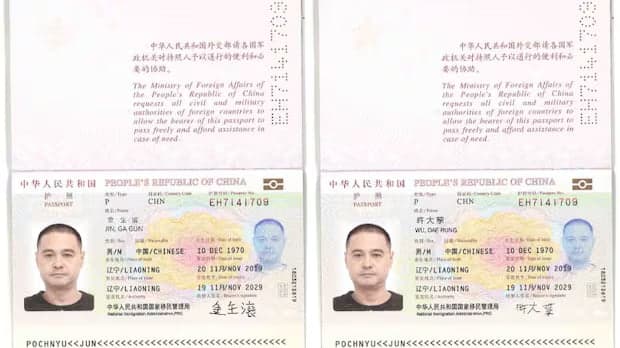
Suspected North Korean operatives perform contract work for British Columbia government
National News
 04
Ontario Faces Constitutional Challenge Over Out-of-Country Medical Coverage
National News
 05
Alberta Invokes Sovereignty Act to Challenge Federal Hate Speech Legislation
National News
 06
Canadian federal government proposes sweeping land-seizure powers for high-speed rail project
National News
 07
Parliamentary Debate Intensifies Over Proposed 2027 Permanent Residency Immigration Targets
National News
 08
Newfoundland and Labrador Eldercare Report Reveals Alarming Healthcare Gaps
National News
 09
New Evidence Surfaces in Tumbler Ridge Mass Shooting Legal Proceedings
National News
- 10
Bill C-42 Progresses Through Senate Targeting Grocery Costs and Housing Availability
National News
 11
Federal Government Launches $5,000 Completion Bonus for Skilled Trades Apprentices
National News
 12
ESDC Imposes Mandatory January 1 Prevailing Wage Compliance for Temporary Foreign Workers
National News
 13
Solomon Islands Signs Security Pact with Australia, Severing Defense Ties with China
World & Geopolitics
 14
Canada Joins International Coalition Supporting ICJ Ruling on Myanmar Genocide
World & Geopolitics
- 15
Ethiopia Initiates New Diplomatic Effort to Broker Peace in Sudan
World & Geopolitics
- 16
Canada Extends Preferential Trade Access for Bangladesh Through 2032
World & Geopolitics
 17
Canada Signs Investment Deal and Consular Pact with Qatar
World & Geopolitics
 18
Toronto Proposes New Levies to Address $1.1 Billion Budget Gap
City News
 19
Advocates Demand Moratorium on Transit Policing Following Youth Injury
City News
 20
Tenants Demand Ombudsman Probe into Decades of Enforcement Failures at 500 Dawes Road
City News
- 21
Federal and Municipal Funding Boosts Parkdale Affordable Housing Project
City News
 22
Renewed Calls for Road Safety Reform After Fatal Pedestrian Collisions
City News
 23
CMHC Study Reveals Housing Affordability Crisis Hinders Youth Household Formation
City News
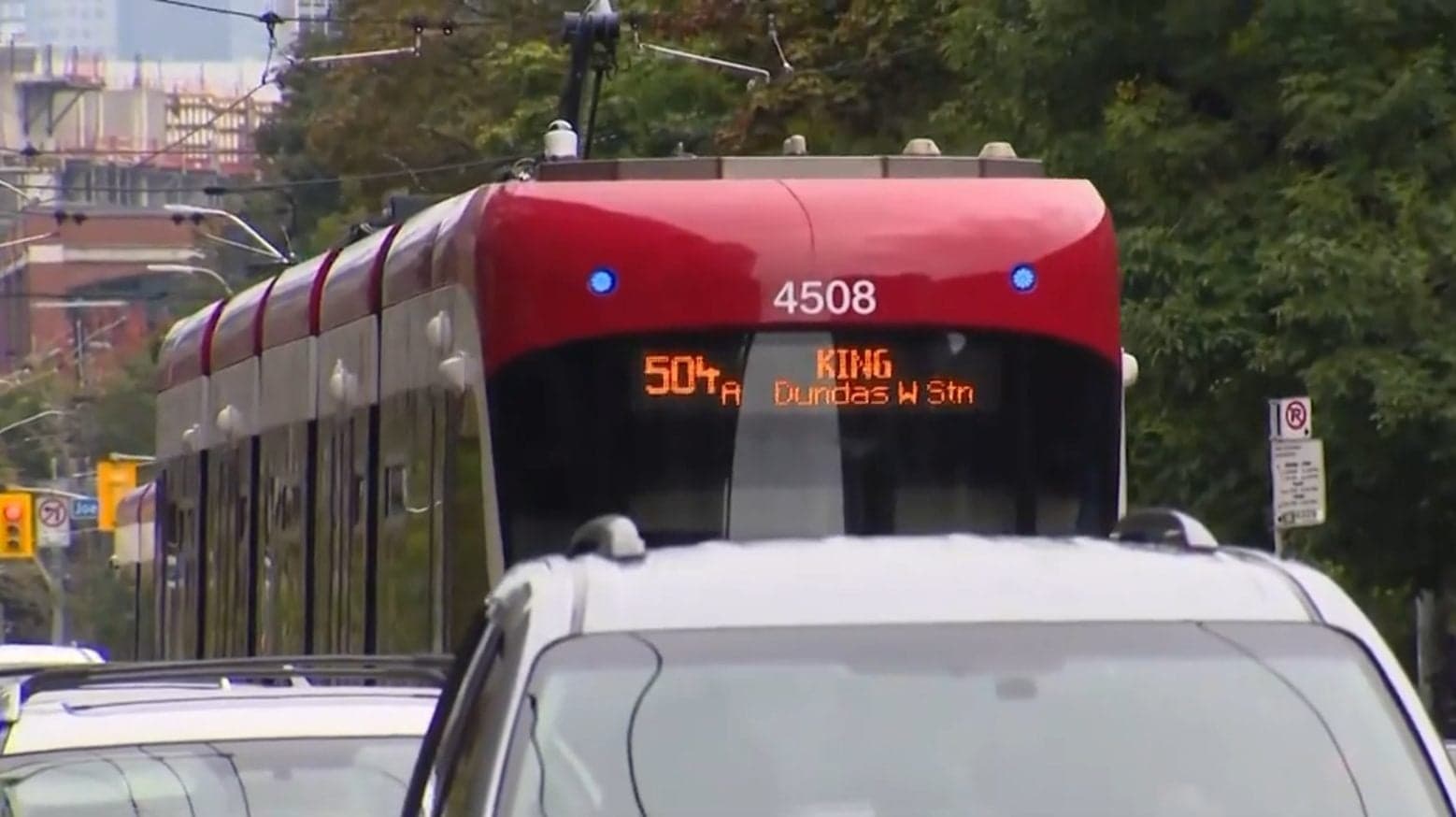 24
Multi-Year King Street West Infrastructure Project Begins with Major Disruptions
City News
 25
Blue Jays Sign Japanese Pitcher Kaima Taira to Five-Year, $80 Million Deal
Sports
 26
Maple Leafs Face Roster Scrutiny Amid Coach Jim Hiller's Management of Gavin McKenna
Sports
 27
Kawhi Leonard Progresses to Individual Workouts but Remains Sidelined for Raptors
Sports
 28
Maple Leafs Explore Trade Market for Defenseman Simon Edvinsson Amid Roster Pressure
Sports
See all 28 as a listHide the list
- Bank of Canada Renews Policy Mandate Amid Concerns Over Persistent Structural Volatility
- Severe Coastal Storms and King Tides Disrupt Infrastructure Across British Columbia
- Suspected North Korean operatives perform contract work for British Columbia government
- Ontario Faces Constitutional Challenge Over Out-of-Country Medical Coverage
- Alberta Invokes Sovereignty Act to Challenge Federal Hate Speech Legislation
- Canadian federal government proposes sweeping land-seizure powers for high-speed rail project
- Parliamentary Debate Intensifies Over Proposed 2027 Permanent Residency Immigration Targets
- Newfoundland and Labrador Eldercare Report Reveals Alarming Healthcare Gaps
- New Evidence Surfaces in Tumbler Ridge Mass Shooting Legal Proceedings
- Bill C-42 Progresses Through Senate Targeting Grocery Costs and Housing Availability
- Federal Government Launches $5,000 Completion Bonus for Skilled Trades Apprentices
- ESDC Imposes Mandatory January 1 Prevailing Wage Compliance for Temporary Foreign Workers
- Solomon Islands Signs Security Pact with Australia, Severing Defense Ties with China
- Canada Joins International Coalition Supporting ICJ Ruling on Myanmar Genocide
- Ethiopia Initiates New Diplomatic Effort to Broker Peace in Sudan
- Canada Extends Preferential Trade Access for Bangladesh Through 2032
- Canada Signs Investment Deal and Consular Pact with Qatar
- Toronto Proposes New Levies to Address $1.1 Billion Budget Gap
- Advocates Demand Moratorium on Transit Policing Following Youth Injury
- Tenants Demand Ombudsman Probe into Decades of Enforcement Failures at 500 Dawes Road
- Federal and Municipal Funding Boosts Parkdale Affordable Housing Project
- Renewed Calls for Road Safety Reform After Fatal Pedestrian Collisions
- CMHC Study Reveals Housing Affordability Crisis Hinders Youth Household Formation
- Multi-Year King Street West Infrastructure Project Begins with Major Disruptions
- Blue Jays Sign Japanese Pitcher Kaima Taira to Five-Year, $80 Million Deal
- Maple Leafs Face Roster Scrutiny Amid Coach Jim Hiller's Management of Gavin McKenna
- Kawhi Leonard Progresses to Individual Workouts but Remains Sidelined for Raptors
- Maple Leafs Explore Trade Market for Defenseman Simon Edvinsson Amid Roster Pressure
Section 1 of 4
National News
12 stories · 6 min skim
National News
2 min read
Bank of Canada Renews Policy Mandate Amid Concerns Over Persistent Structural Volatility
The Bank of Canada and federal government have renewed their monetary policy framework through 2031, keeping the 2% inflation target anchored. Governor Tiff Macklem announced a return to using CPIX alongside CPI-trim as primary metrics to measure core inflation. The Bank cautioned that the global economy faces increased volatility and ongoing supply shocks that could sustain inflationary pressures.
Read the full storyFold the full story2 min · 7 sources
Bank of Canada Governor Tiff Macklem addressed the Economic Club of Canada in Toronto to outline the official renewal of the nation’s five-year monetary policy framework[1][2]. Jointly renewed by the central bank and the federal government for the 2027–2031 mandate, the agreement keeps the core annual inflation target anchored at 2.0%, the midpoint of the 1% to 3% target-control range[3][4]. However, the Bank paired the reaffirmation of its long-standing target with an operational overhaul of the metrics used to track underlying core inflation, while cautioning that the global macroeconomic environment has entered an era of elevated structural volatility[1][5].
Governor Macklem conceded that the central bank’s communications surrounding underlying inflation had created confusion in financial markets and among the public in past cycles[6]. In a candid assessment of the post-pandemic inflation surge that followed Russia's invasion of Ukraine, Macklem acknowledged that monetary policymakers were "too slow to recognize the persistence of inflationary pressures and how broadly they were spreading through the economy"[5]. To eliminate shifting definitions, the Bank announced that it will streamline its analytical playbook: it is reinstating CPIX - a core inflation metric stripping out the eight most volatile consumer price index components, including specific food and energy segments - to track alongside CPI-trim[5]. Together, the two metrics will form the primary operational lenses for gauging underlying price pressures[5][6].
The renewal comes amid persistent structural headwinds. Governor Macklem delivered a stark warning that future economic shocks are "likely to be larger, more frequent, and more difficult to assess in real time," driven by geopolitical fragmentation, trade protectionism, and recurring supply disruptions[1]. Macklem explicitly warned of a "second-round effect of the oil shock" linked to ongoing Middle East conflict, noting that accumulated production and transportation costs are steadily passing through to Canadian consumers[7]. The central bank indicated that while headline CPI had stabilized around 3.1% in recent months, second-round cost transfers could sustain sticky inflation through 2027, leaving open the necessity of further interest rate hikes if inflationary pressures fail to subside[4][7].
Financial markets reacted by recalibrating forward interest rate expectations, as traders priced in a more protracted horizon before monetary conditions can ease[4]. Macklem’s address signals a firm commitment to price stability even as the Bank faces increasing political pressure over debt servicing burdens and domestic growth drag[5][6]. For commercial lenders, corporate borrowers, and consumers, the central bank’s renewed mandate underscores that the 2% target remains absolute, and interest rate policy will remain aggressive in neutralizing any persistence in core inflation[4][6].
- Bank of Canada
- Tiff Macklem
- CPIX
National News
2 min read
Severe Coastal Storms and King Tides Disrupt Infrastructure Across British Columbia
A combination of intense Pacific storm systems and perigean spring tides caused significant flooding and infrastructure damage across British Columbia between November 24 and 25. Multiple regions issued evacuation alerts as rising ocean levels and heavy rainfall overwhelmed drainage systems and coastal defenses. The storm resulted in power outages and forced the closure of major transportation routes, including critical sections of Highway 4.
Read the full storyFold the full story2 min · 12 sources
A volatile clash of meteorological and tidal conditions swept across British Columbia’s south and central coasts between November 24 and 25, prompting municipal emergencies, evacuation alerts, and widespread infrastructure disruptions[1][2]. Environment and Climate Change Canada issued widespread coastal flooding, rainfall, and wind warnings as a vigorous series of Pacific low-pressure systems collided with annual "king tides" - perigean spring tides that pushed coastal ocean levels 20 to 50 centimetres above the highest astronomical benchmarks[3][4]. The deluge delivered between 100 and 200 millimetres of rain to exposed regions alongside southeasterly wind gusts reaching 90 km/h, swelling rivers, degrading saturated soils, and pushing heavy swells directly onto populated shorelines[3][5].
The convergence prompted rapid municipal interventions across Vancouver Island and the mainland[1][2]. In the City of Parksville, officials issued an evacuation alert on November 24 for low-lying waterfront areas north of Highway 19A, spanning from Sutherland Crescent East to Surfside RV Resort, warning occupants of seaside hotels, mobile home parks, and community facilities to prepare for rapid displacement[1][6]. The District of Lantzville followed with an evacuation alert for vulnerable coastal residences[7], while the Tla-o-qui-aht First Nation and the District of Squamish similarly sounded alarms, with Squamish declaring a local state of emergency to manage surging waters[2][8]. On the rugged western rim of Vancouver Island, coastal towns including Tofino and Ucluelet shuttered popular public beaches and portions of the Wild Pacific Trail[4][9]. Concurrently, Parks Canada issued an extreme wave hazard warning across the Pacific Rim National Park Reserve due to dangerous swells breaching parking lots and flinging heavy driftwood logs inland[4][9].
The storm inflicted immediate blows to regional transport and utility grids[5][10]. BC Hydro reported thousands of customers without power across Vancouver Island, heavily concentrated across the northern regions as well as the community of Ucluelet, where fallen lines cut electrical feeds[10]. Transportation arteries were choked as well; the Ministry of Transportation and Infrastructure warned of unpredictable route closures across the South Coast and Fraser Valley[6][11]. A critical stretch of Highway 4 west of Port Alberni was forced into a full midday shutdown near Sproat Lake Landing on November 24 as emergency crews cleared fallen boulders and unstable debris from the slopes[5]. The BC River Forecast Centre placed extensive island watersheds under high streamflow advisories, warning that rivers discharging into king tide-elevated seas faced substantial backwater flooding[3][8].
The compounding nature of the storm has intensified discussions among climate scientists and civic planners regarding coastal readiness. The alignment of atmospheric river patterns with peak astronomical tides highlights the accelerating vulnerability of Pacific coastal communities, where seawalls, causeways, and low-lying residential developments face recurrent erosion and destructive saltwater surges[4][12]. With second and third fronts slated to keep river basins saturated, regional emergency agencies warned residents that heightened flood risks would persist through late November[3][11].
- British Columbia
- Environment and Climate Change Canada
- BC Hydro
National News
1 min read
Suspected North Korean operatives perform contract work for British Columbia government
An investigation reveals that four remote computer programmers who worked on British Columbia's provincial business registry platform between 2023 and 2025 were likely North Korean state operatives using fraudulent credentials.
Read the full storyFold the full story1 min · 1 source
CBC News reported that four remote computer programmers who did contract work between 2023 and 2025 on British Columbia's provincial business registry platform were likely North Korean state operatives. The revelations stem from an investigation by The Fifth Estate, which examined how operatives from the Democratic People's Republic of Korea infiltrate Western institutions using fraudulent digital credentials.
The provincial government contracted an unnamed information technology staffing firm based in British Columbia's Lower Mainland under an agreement worth hundreds of thousands of dollars. The agency facilitated the hiring of a developer identifying as Kevin Zhang, whose activity was linked by cybersecurity analysts to North Korean state tradecraft through altered Chinese passports and payment requests directed to a defunct corporate entity in Yukon.
Another operative performed provincial coding under the stolen identity of Brandon Galli, whose actual counterpart was tracked down in New Jersey by CBC. Payments for Galli were routed to an Ontario corporation registered to a home in Markham, while the disclosures followed widespread warnings from the Royal Canadian Mounted Police, Global Affairs Canada, and the Federal Bureau of Investigation regarding North Korean IT operations generating hundreds of millions of dollars.
The staffing agency owner stated that the remote hiring environment obscured the workers' identities and that the British Columbia government made the final hiring choices. When CBC submitted a freedom of information request, the provincial ministry where Zhang worked stated it could find no internal record of an employee by that name despite project logs detailing his code contributions.
- British Columbia government
- The Fifth Estate
- Kevin Zhang
National News
2 min read
Ontario Faces Constitutional Challenge Over Out-of-Country Medical Coverage
A high-stakes legal battle in Ontario’s Divisional Court challenges the provincial government's retroactive changes to the Out-of-Country Prior Approval Program. Terminal cancer patients are fighting to secure funding for specialized treatments that are unavailable in Canada, arguing the government’s policy shift infringed upon their constitutional rights. The province maintains that the changes were necessary to manage the fiscal sustainability of the healthcare system.
Read the full storyFold the full story2 min · 5 sources
A landmark constitutional hearing concluded arguments in Ontario’s Divisional Court on November 24, pitting dying cancer patients against the provincial government over access to specialized, life-saving therapies abroad[1][2]. Applicants Kevin Nash and Sabrina Apitz-Grossman, both confronting terminal diagnoses with limited time to live, are petitioning the court to overturn the province’s refusal to fund medical interventions unavailable inside Canada[1][3]. The proceedings brought emotional testimony and sharp debate into Osgoode Hall, exposing deep rifts over the statutory limits of public healthcare and the administration of the Ontario Health Insurance Plan (OHIP)[1][4].
The dispute stems from a contentious administrative maneuver orchestrated by the government of Premier Doug Ford[3][2]. After another cancer patient, Mark Shved, successfully challenged an OHIP denial in court earlier this year on grounds that the province had acted unreasonably, the government responded within weeks by rewriting the Out-of-Country Prior Approval Program regulations[3]. Crucially, the provincial government made the regulatory overhaul retroactive back to 2011[3][2]. The amended policy narrowed the program to fund only those procedures that are already insured and standardly provided within Ontario but are temporarily unavailable due to capacity delays - effectively abolishing funding for cutting-edge therapies that have not yet cleared Canada's slower regulatory and provincial formularies[3][2].
Lawyers for Nash and Apitz-Grossman, including counsel Claire Boychuk, argued before a judicial panel that the government’s maneuver constituted an unlawful and bad-faith "abuse of power"[3][4]. Boychuk contended that their clients had their constitutional rights to life and security of the person under Section 7 of the Canadian Charter of Rights and Freedoms "extinguished overnight" while their formal appeals were pending[3][4][2]. The applicants’ legal team emphasized that both patients have pursued FDA-approved, peer-reviewed American protocols after exhausting all options authorized under the Ontario regime[1][5]. In court, government lawyers maintained that the province holds broad sovereign authority to set its fiscal boundaries and coverage scope, arguing that the retroactive adjustment was necessary to protect the sustainability of the healthcare purse, claiming the move avoided an estimated $5.2 billion in unchecked out-of-country liability[2].
The legal confrontation has catalyzed broad alarm among medical oncologists, patient advocates, and legal scholars. Premier Ford defended the policy outside the legislature, stating that the province could not allow foreign pharmaceutical ventures to bypass Health Canada evaluation frameworks at taxpayer expense[2]. However, critics argue that using retroactive regulatory decrees to insulate government decisions from judicial review sets a perilous legal precedent, transforming statutory safety nets into administrative dead ends for Canadians facing rare, aggressive pathologies[1][2].
- Doug Ford
- Ontario Health Insurance Plan
- Kevin Nash
National News
3 min read
Alberta Invokes Sovereignty Act to Challenge Federal Hate Speech Legislation
Alberta Premier Danielle Smith announced plans to use the Alberta Sovereignty within a United Canada Act to counteract federal hate-speech legislation, specifically the Combatting Hate Act. The provincial government claims the federal law poses a threat to religious freedom by removing historical legal exemptions for religious expression. While Alberta has instructed prosecutors to avoid charging individuals for religious statements, federal officials argue the province lacks the authority to override federal criminal law.
Read the full storyFold the full story2 min · 6 sources
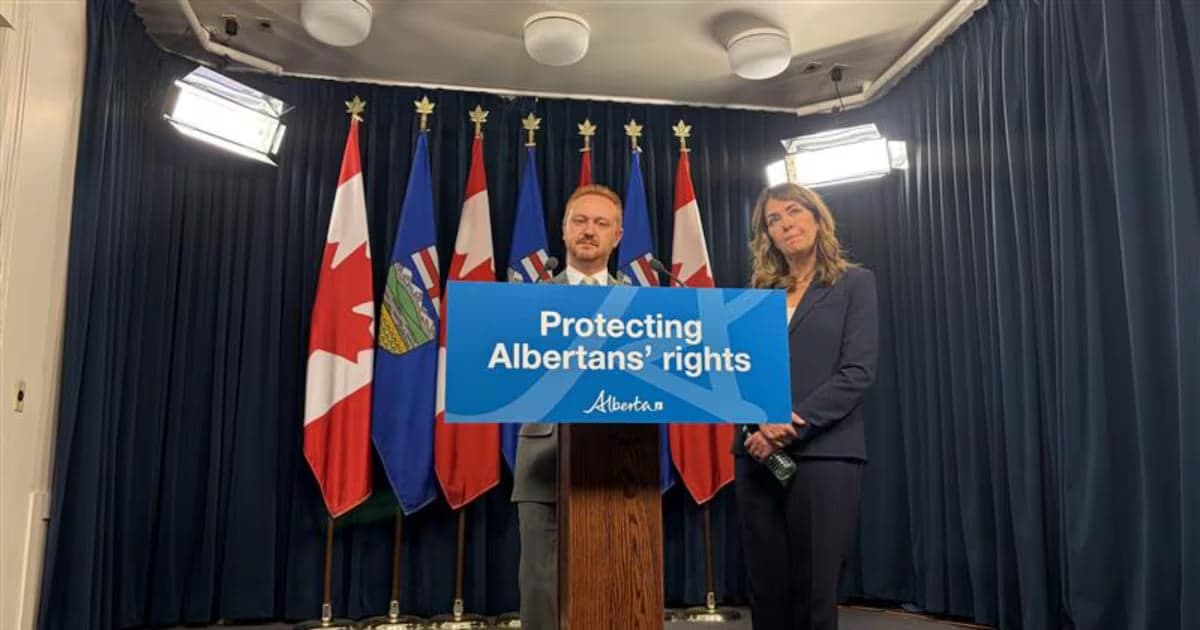
In a major federal-provincial confrontation, Alberta Premier Danielle Smith announced on November 24 that her United Conservative Party (UCP) government is moving to invoke the Alberta Sovereignty within a United Canada Act to counteract the federal government’s newly enacted hate-speech measures[1][2]. Flanked by provincial Justice Minister Mickey Amery at an Edmonton press conference, Smith revealed a formal legislative motion challenging Ottawa's Combatting Hate Act (Bill C-9), which received royal assent earlier in 2026[1][1][3]. The provincial maneuver represents the latest deployment of Alberta’s signature constitutional resistance mechanism, expanding its scope beyond energy policy and firearms directly into federal criminal justice[4][5].
The crux of the intergovernmental battle lies in Ottawa’s repeal of a long-standing defense within the Criminal Code of Canada[1][3]. Previously, individuals accused of the willful promotion of hatred could claim a statutory exemption if they established that their statements were made in "good faith" while expressing an opinion on a religious subject or interpreting a sacred text[6][3]. The federal government removed this defense under Bill C-9, asserting that Charter protections for religious worship remain intact while eliminating legal loopholes used to shield hate-motivated abuse[6][3]. Smith argued that removing the safeguard creates a severe chill for faith communities, suggesting that religious leaders and parishioners now risk criminal liability for reading scripture or articulating traditional doctrine in public[1][6][3]. "We just don’t want to wait until somebody’s pastor has been hauled off to jail," Smith told reporters[1][5].
Under the proposed Sovereignty Act resolution, the Alberta government intends to assert that traditional religious teachings and peaceful expressions of belief will not be subject to prosecution within the province[2][6]. Minister Amery noted that while freedom of expression does not confer a license for criminal violence, threats, or harassment, provincial crown prosecutors have already been instructed to decline charges where an individual merely expresses controversial or traditional religious doctrines[1][2]. However, when pressed by reporters during the briefing, Amery admitted that the province could not cite a single instance of a religious figure being arrested or charged since the federal provisions took effect in July, framing the provincial action as an essential preventative shield[1].
The announcement triggered swift political pushback[1]. Federal Justice Minister Sean Fraser’s office maintained that ordinary scripture reading and sermons conducted in good faith do not cross the threshold of criminal hatred under federal law, reiterating that provincial attorneys general do not have the legal prerogative to rewrite federal criminal law[2][6]. In Edmonton, Alberta NDP Opposition Leader Naheed Nenshi dismissed the initiative as performative posturing, accusing the Premier of manufacturing a crisis to appease political factions: "They need to throw some red meat to the base... so they’re trying to open yet another chapter in the culture wars"[1][5]. Legal analysts similarly cautioned that the provincial motion remains largely symbolic, noting that provinces lack constitutional authority to shield individuals from federal Criminal Code enforcement if charges are initiated[5].
- Danielle Smith
- Alberta Sovereignty within a United Canada Act
- Mickey Amery
National News
2 min read
Canadian federal government proposes sweeping land-seizure powers for high-speed rail project
The Canadian federal government has proposed sweeping expropriation powers to expedite the Alto high-speed rail project between Toronto and Quebec City. The measures have drawn sharp criticism from rural advocates, legal analysts, and opposition parties.
Read the full storyFold the full story1 min · 4 sources
The Canadian federal government has proposed sweeping land-seizure powers to expedite the development of Alto, the planned high-speed rail corridor between Toronto and Quebec City. Transport Minister Steven MacKinnon defended the measures on Parliament Hill in Ottawa, arguing that the enhanced expropriation authorities would prevent crucial infrastructure steps from becoming bogged down for a decade or more while insisting that there is no removal of due process.
The provisions were detailed in a procedural motion accompanying the federal budget. The draft legislation would amend the High-Speed Rail Network Act by creating a separate expropriation regime outside Canada's standard Expropriation Act. Under the proposed rules, the government could expropriate private property and transfer title directly to the private consortium contracted to build the project, rather than holding it under the Crown. The legislation also broadens ministerial discretion to lock down property rights across the corridor, allowing officials to bar property sales, building improvements, or renovations for years, while exempting the project from certain railway safety and impact assessment acts and steering crossing disputes into private arbitration.
Alto, a federal Crown corporation established to lead the 1,000-kilometre line, envisions trains traveling at up to 300 kilometres per hour, with total estimated project costs ranging between $60 billion and $90 billion. Construction is slated to begin on the Ottawa and Montreal segment by 2030, and the sweeping powers primarily affect thousands of residents, farmers, and businesses situated within a 10-kilometre-wide study corridor through southern and eastern Ontario and Quebec.
The measures have triggered significant backlash from rural advocates, legal analysts, and opposition parties. Expropriation lawyer Ajay Gajaria warned that the project represents the largest expropriation undertaking in modern Canadian history. Drew Spoelstra, president of the Ontario Federation of Agriculture, stated that affected farmers are living in fear of losing multi-generational family farms without adequate communication or answers from officials. Ontario Conservative Member of Parliament Michael Barrett criticized Ottawa for discarding standard expropriation protections in favour of a separate framework that imposes excessive disruption on rural communities.
- Alto
- Steven MacKinnon
- Ajay Gajaria
National News
2 min read
Parliamentary Debate Intensifies Over Proposed 2027 Permanent Residency Immigration Targets
The Conservative Opposition has initiated a challenge against the federal government's 2027 immigration levels, citing potential strain on public infrastructure. Minister Lena Metlege Diab defended the plan, stating that the primary target includes transitionary measures for individuals already present in the country. The government argues this approach bolsters the domestic labour pool without increasing new demand on housing or healthcare.
Read the full storyFold the full story2 min · 10 sources
Debate reached a fever pitch in the House of Commons as the federal Conservative Opposition tabled an official motion to formally reject the government’s 2027 permanent immigration targets[1][2]. The motion, sponsored by Conservative Leader Pierre Poilievre and championed by immigration critic Michelle Rempel Garner, took direct aim at the administration’s planned admissions structure, which critics argue could result in upwards of 662,000 individuals receiving permanent resident status in 2027[1][2]. The Opposition contended that welcoming figures of that magnitude would place unmanageable strains on Canada's already overburdened healthcare system, housing inventory, and municipal services[3][2].
Minister of Immigration, Refugees and Citizenship Lena Metlege Diab mounted an aggressive defense of the government’s policy, clarifying key parameters of the 2027–2029 Immigration Levels Plan[4][2]. Diab confirmed that while Ottawa maintains a baseline annual permanent residency target of 380,000, the one-time transitionary provisions are strictly capped at 200,000 entries[2][5]. Diab emphasized that the vast majority of newcomers transitioned under the one-time allocations are individuals already living, studying, and working across Canadian provinces and territories[3][5]. Consequently, the federal government argued, these transitions simply grant permanent legal security to an established domestic labour pool without generating net new demand for housing or primary care capacity[2][5].
The mechanics of the contested plan include 100,000 spaces allocated specifically through the Provincial Nominee Program (PNP), allowing provincial and territorial jurisdictions to select foreign workers who have already established roots in local communities[6][5]. Diab reiterated on the floor of the House that these provincial allocations are entirely optional; if individual provinces conclude they lack the capacity to absorb these candidates, the slots will remain unfilled rather than redistributed[2][5]. The remaining one-time allocations include roughly 50,000 visas earmarked for individuals who entered under special humanitarian measures for Ukraine and Hong Kong, alongside approximately 45,000 humanitarian and family reunification spaces[7].
The parliamentary confrontation reflects an intensifying partisan battle over the federal immigration agenda[3][2]. The Bloc Québécois signaled its intent to vote in favor of the Conservative motion, heightening scrutiny on the Liberal government's policy execution despite the ruling party holding majority control[2][8]. While migrant advocacy coalitions have staged demonstrations outside Parliament demanding broader regularizations and condemning caps on temporary resident admissions[9], the federal government maintains that stabilizing permanent targets while drawing directly from in-country talent is essential to restoring public confidence and economic equilibrium to Canada's managed migration model[10][6].
- House of Commons
- Pierre Poilievre
- Michelle Rempel Garner
National News
2 min read
Newfoundland and Labrador Eldercare Report Reveals Alarming Healthcare Gaps
An annual report from Newfoundland and Labrador’s Seniors' Advocate highlights a worsening crisis in long-term care and geriatric support. The findings show that the province uses physical and chemical restraints at rates significantly higher than the national average due to systemic understaffing. Additionally, a severe shortage of long-term care beds and rising elderly poverty levels are compounding the challenges faced by the aging population.
Read the full storyFold the full story2 min · 5 sources
A systemic crisis in eldercare and socio-economic support was laid bare on November 24 with the publication of The Seniors’ Report 2026: Monitoring Key Indicators of Seniors' Wellbeing in Newfoundland and Labrador[1]. Released by the province’s Acting Seniors’ Advocate Pamela Dawe, the annual monitoring document revealed deteriorating conditions for older adults, characterized by severe healthcare bottlenecks, elevated poverty metrics, and a troubling surge in both chemical and physical restraints within institutional long-term care[2][3]. The findings arrive at a pivotal demographic moment: 26 percent of the province’s population is now aged 65 or older, with individuals over 80 representing five percent - both among the fastest-aging demographics in Canada[3].
The report's most urgent disclosures centered on clinical practices in residential care facilities[2]. In long-term care homes across Newfoundland and Labrador, physical restraint usage stood at 10.2 percent in 2024–2025, more than double the national average of 4.7 percent[3]. In western Newfoundland, the rate spiked to an unprecedented 17.9 percent[1]. Parallel to physical restraints, the potentially inappropriate administration of antipsychotic medications - often utilized off-label to sedate or subdue patients without an underlying diagnosis of psychosis - stood at 32.1 percent provincially, well above the Canadian national benchmark of 24.4 percent[3]. Advocate Pamela Dawe characterized these rates as deeply concerning indicators of institutional distress, arguing that chronic understaffing leaves care workers unable to provide individualized behavioral support, defaulting instead to chemical sedation or mechanical confinement[2][3][1].
The healthcare access bottleneck extends directly to placement availability and community-level care[2]. Waitlists for personal care homes within the province expanded by 500 percent over recent cycles, yet available funded beds increased by a mere eight percent over the identical period[2][1]. This acute supply crunch has collided with broader housing and economic distress: roughly 24 percent of individuals using emergency shelters across the province are now seniors, and nine percent of surveyed older adults reported experiencing homelessness for the very first time in their lives as seniors[2]. Over 44 percent of seniors provincially rely on the federal Guaranteed Income Supplement to survive - a figure that climbs to 57 percent in the Western Zone - highlighting an entrenched poverty trap driven by escalating living expenses and fixed pensions[1].
The release drew immediate political reaction in St. John’s, where Finance Minister Craig Pardy acknowledged the data on antipsychotics and physical restraints as "unacceptable," promising a governmental "deep dive" into institutional statistics[3]. However, healthcare advocates and opposition critics argue that the provincial government has long ignored statutory warnings, noting that prior reviews of long-term care standards have yielded slow structural reform while acute hospital beds continue to be choked by seniors waiting for institutional placement[4][5].
- Pamela Dawe
- Newfoundland and Labrador
- Craig Pardy
National News
2 min read
New Evidence Surfaces in Tumbler Ridge Mass Shooting Legal Proceedings
Recent court filings in the U.S. have provided new details regarding the Tumbler Ridge school shooting, revealing extensive digital evidence and communication logs. The motion for pre-trial release by defendant Melody Bryant offers a timeline of the events leading up to the tragedy, while highlighting the role of online platforms. The filings also triggered scrutiny over AI safety protocols and law enforcement reporting mechanisms following revelations that a tech company identified potential threats but did not alert authorities.
Read the full storyFold the full story2 min · 7 sources
On November 24, major developments emerged in the ongoing cross-border criminal proceedings stemming from the February 10 mass shooting in Tumbler Ridge, British Columbia - the deadliest school shooting in modern Canadian history[1][2]. In the U.S. District Court for the Western District of Washington in Seattle, defense attorneys representing 30-year-old American Melody Bryant (charged under the legal name James Cody Bryant) submitted an extensive 33-page motion seeking to overturn a prior detention order and secure pre-trial release[3][1][4]. The filing coincided with the formal postponement of Bryant’s trial by a full year, moving the proceedings to December 2027, and provided an unprecedented, detailed timeline of the events leading up to the rampage[3][4].
The underlying tragedy occurred when 18-year-old Jesse Van Rootselaar killed her mother, Jennifer Strang, and 11-year-old half-brother, Emmett Jacobs, in their family residence before attacking Tumbler Ridge Secondary School, where she shot eight additional victims - killing six students and an educational assistant - before taking her own life[2][4]. Bryant, arrested in Washington state in October, faces federal charges of conspiracy to murder persons in a foreign country, a statute carrying a maximum sentence of life imprisonment[2][4]. Federal prosecutors allege Bryant provided logistical guidance, financial assistance for weapon decorations, assistance testing a planned live-stream feed, and encouragement[5][4].
The newly unsealed court records disclose that the case against Bryant is anchored upon nearly 74,000 text exchanges on the Discord messaging platform between August 1, 2025, and the day of the massacre[5][4]. Defense lawyers argued that approximately two-thirds of the transmissions were one-sided missives from Van Rootselaar, asserting that Bryant repeatedly urged the shooter to seek psychiatric care and actively attempted to dissuade her from executing the attack on multiple occasions[5][4][6]. Emphasizing that U.S. federal investigators conducted voluntary interviews with Bryant in February and March before leaving her unrestricted in the community for seven months without incident, the defense argued that Bryant has no criminal record, poses no danger to society, and has strong community ties[3].
The November 24 filings also ignited fierce public and legal scrutiny regarding institutional failures prior to the shooting[5][2]. Court documents revealed that artificial intelligence developer OpenAI had banned Van Rootselaar’s ChatGPT account in June 2025 due to repeated queries involving mass violence and firearms, yet the tech company opted not to notify law enforcement or Canadian authorities - a revelation that has already sparked more than thirty civil lawsuits in British Columbia[5][2]. Furthermore, defense disclosures introduced contradicting claims challenging the RCMP’s narrative concerning how a previously flagged firearm was returned to the household months before the killings occurred[7]. The case underscores the shifting landscape of digital co-conspiracy, cross-border investigative challenges, and the emerging expectations placed on tech platforms to report imminent violent threats[5][2].
- Melody Bryant
- Jesse Van Rootselaar
- Discord
National News
2 min read
Bill C-42 Progresses Through Senate Targeting Grocery Costs and Housing Availability
Bill C-42, the Grocery and Housing Affordability Act, has reached the Senate for debate. The legislation aims to increase competition in the grocery sector and tie federal infrastructure funding to municipal housing reform. The government views this bill as a key measure to combat inflation and housing shortages.
Read the full storyFold the full story1 min · 3 sources
Legislative momentum accelerated on Parliament Hill as Bill C-42, known formally as the Grocery and Housing Affordability Act, was officially introduced in the Senate of Canada and completed its first reading[1]. Sponsored by the Minister of Housing and Infrastructure and Minister responsible for Pacific Economic Development Canada, the government bill was rapidly scheduled for second reading debate[1]. Bill C-42 represents a central legislative priority for Prime Minister Mark Carney’s administration, crafted to deliver targeted statutory interventions against cost-of-living pressures in the retail grocery sector and nationwide housing availability[1][2].
Bill C-42 establishes a dual regulatory framework aimed at high-friction pressure points in household finances[1]. On grocery affordability, the legislation introduces stringent competition enforcement rules designed to limit anti-competitive practices among dominant supermarket conglomerates, restrict restrictive real estate covenants that prevent rival grocers from opening nearby locations, and empower regulators to demand greater pricing transparency throughout supply chains. On housing, the bill codifies streamlined federal financing conditions for municipal infrastructure, directly tying transfer funds to local zoning reforms that facilitate higher-density residential developments and the elimination of bureaucratic red tape.
The advance of the bill through the Senate before the upcoming parliamentary winter recess marks a significant procedural milestone[1]. The Carney government has positioned the omnibus affordability measure as tangible proof of its commitment to delivering concrete relief to middle-class households[1][3]. Opposition parties have pledged thorough scrutiny during committee review, with Conservatives questioning whether the statutory mechanisms will genuinely lower shelf prices or instead add administrative compliance costs, while housing advocates have debated whether the infrastructure incentives move aggressively enough to meet the country's multi-million-unit housing shortage.
Financial analysts and retail sector stakeholders are closely monitoring the bill's legislative trajectory[1]. Major commercial real estate holders and grocery chains face significant operational adjustments should the prohibitions on restrictive land use take full effect. Meanwhile, provincial and municipal governments are positioning themselves to leverage the newly defined infrastructure funds, making Bill C-42 one of the most economically consequential pieces of legislation navigating Parliament before year-end[1].
- Senate of Canada
- Mark Carney
- Bill C-42
National News
2 min read
Federal Government Launches $5,000 Completion Bonus for Skilled Trades Apprentices
Ottawa has introduced a $5,000 Red Seal completion bonus to support apprentices in finishing their certification. The program is part of a larger strategy to address critical labor shortages in construction and energy infrastructure. The initiative aims to reduce dropout rates by providing financial support during the final stages of professional training.
Read the full storyFold the full story1 min · 6 sources
The federal government unveiled a direct financial intervention into the domestic skilled labour market, with Minister of Jobs and Families Patty Hajdu officially launching the Red Seal Completion Bonus at UA Local 71 in Ottawa[1]. Under the program, certified apprentices who successfully complete their certification in designated Red Seal trades will receive a direct $5,000 bonus payment[2][1]. Hajdu confirmed that the first round of bonus disbursements will begin rolling out to qualified tradespersons early next month, establishing an immediate financial incentive to retain and graduate apprentices into the national workforce[2][1].
The bonus initiative is an operational cornerstone of the Carney government’s broader "Team Canada Strong" economic blueprint, which seeks to align industrial development, critical infrastructure buildouts, and domestic productivity[1][3]. The federal government has faced persistent challenges in accelerating major capital projects - ranging from power grid modernizations and clean energy facilities to housing construction - due to acute domestic shortages of certified electricians, plumbers, welders, and heavy-equipment operators[4][1]. By directly targeting the drop-off rates of trade apprentices nearing completion, Ottawa aims to rapidly boost domestic certification numbers[1].
Organized labour and trade associations delivered an enthusiastic reception to the announcement[1]. Representatives from UA Local 71 and allied building trades councils underscored that financial strain is one of the primary reasons apprentices leave trade programs before finishing their final certification exams[1]. The $5,000 cash bonus offers a tangible offset against licensing fees, lost tool expenses, and examination costs, providing a direct boost to younger workers navigating high urban living costs[2][1].
Economists view the measure as a strategic complement to Ottawa’s recalibrated immigration targets[5][1]. As the federal government restricts overall admissions of temporary foreign workers and caps student visas, industries can no longer rely on external workforce stopgaps to solve structural labor deficits[6][5]. By deploying targeted capital directly into domestic skilled training pipelines, the federal government hopes to build resilient internal capacity capable of delivering on long-term national housing targets and high-priority energy projects without reigniting wage-push inflation[4][1].
- Patty Hajdu
- Red Seal Program
- UA Local 71
National News
2 min read
ESDC Imposes Mandatory January 1 Prevailing Wage Compliance for Temporary Foreign Workers
Employment and Social Development Canada has mandated that employers update payroll systems for foreign workers to align with new prevailing wage data by January 1. Businesses are required to ensure foreign workers are paid market value, equivalent to domestic counterparts, to prevent wage suppression. Failure to comply poses risks of heavy fines and exclusion from the federal worker program.
Read the full storyFold the full story2 min · 2 sources
Employment and Social Development Canada (ESDC) placed Canadian businesses on notice, warning employers that they face a strict January 1, 2027, deadline to review and adjust payroll structures under the Temporary Foreign Worker Program (TFWP)[1]. The federal directive follows the mandatory annual update of occupational and regional prevailing wage data published via Job Bank[1]. Under federal regulations, any employer hiring foreign nationals through the Labour Market Impact Assessment (LMIA) system must verify that employee pay meets or exceeds the updated prevailing rates for their specific occupational classification and geographic region[1].
The annual wage calibration is designed to ensure foreign workers are compensated at genuine market value and to prevent the depression of wages for domestic workers in comparable roles[1]. Employers are required not only to match the updated Job Bank wage levels but also to ensure that the compensation offered is on par with what the employer pays Canadian citizens and permanent residents performing identical work[1]. With the data published on November 18 and formal compliance instructions clarified, Canadian businesses have a narrow window to execute comprehensive payroll audits across active LMIA agreements[1].
The federal enforcement posture carries severe operational and legal risks for non-compliant enterprises[1]. ESDC reiterated that companies failing to adjust wages to comply with the updated thresholds by January 1 risk escalating penalties, including steep administrative monetary fines, inclusion on public non-compliant employer registries, and temporary or permanent bans from utilizing foreign worker programs[1]. These regulatory teeth are part of Ottawa’s broader initiative to impose greater integrity controls across temporary migration channels and gradually contract the proportion of temporary residents in Canada to 5% of the overall population[2][1].
Industry groups across agriculture, food manufacturing, hospitality, logistics, and construction have voiced concern over the administrative burden and the compressed timeline[1]. With rising input costs and tight operating margins, employers heavily dependent on the TFWP warn that sudden wage adjustments will create liquidity strains and potential staffing disruptions heading into the new fiscal year[1]. Legal and immigration specialists have advised businesses to immediately assess their active workforce contracts against regional Job Bank schedules to insulate themselves against federal audit sanctions[1].
- Employment and Social Development Canada
- Temporary Foreign Worker Program
- Labour Market Impact Assessment
Section 2 of 4
World & Geopolitics
5 stories · 2 min skim
World & Geopolitics
2 min read
Solomon Islands Signs Security Pact with Australia, Severing Defense Ties with China
Solomon Islands has signed a new security treaty with Australia, formally naming it the primary security partner and banning foreign military bases on its territory. This move officially ends a controversial 2022 security agreement with China that had raised significant concerns among Western intelligence agencies. The deal is a major strategic pivot aimed at securing key maritime corridors in the South Pacific.
Read the full storyFold the full story2 min · 2 sources
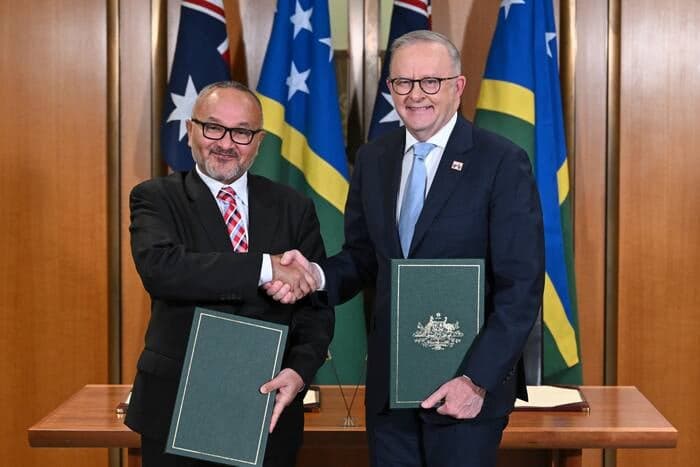
In a major diplomatic realignment in the South Pacific, Solomon Islands Prime Minister Matthew Wale and Australian Prime Minister Anthony Albanese signed a comprehensive bilateral security treaty at Parliament House in Canberra[1]. Under the terms of the agreement, the Solomon Islands officially designated Australia as its "primary security partner" and codified a binding pledge that it will never permit a foreign military or security base to be established on its territory[1][2]. The signing formally closes the door on the controversial, secretive bilateral security pact that Honiara signed with Beijing in 2022, which Western intelligence agencies had warned was designed to give the People’s Liberation Army Navy an operational foothold in Melanesia[1].
The archipelago of roughly 900,000 people occupies an indispensable geographic position, straddling vital maritime transport corridors between the United States, Australia, and East Asia[1]. Since the previous administration of Manasseh Sogavare signed the 2022 Beijing security framework, Canberra and its Western allies have engaged in intensive diplomatic efforts across the Pacific Islands Forum to present viable security and infrastructure alternatives[1]. By executing bilateral security pacts with regional neighbors such as Tuvalu, Vanuatu, and Fiji, Australia has steadily sought to reverse Beijing’s strategic inroads[1]. Wale’s accession to power and his subsequent repudiation of the Chinese security footprint mark a decisive pivot back toward traditional Commonwealth and Pacific security architectures[1].
The immediate implications are profound for regional defense planning and maritime surveillance across Oceania[1]. By barring foreign military installations, the treaty secures essential maritime approaches and denies Beijing an air-and-naval logistics hub in the South Pacific[1]. However, the agreement is expected to invite diplomatic friction from Beijing, which had heavily invested in local infrastructure and police training programs across Guadalcanal. Regional security analysts note that while Australia will shoulder expanded policing, maritime patrol, and disaster-response burdens, the pact establishes a legal bulwark that stabilizes Pacific sea lines of communication[1].
For Canada, this development directly advances key pillars of its Indo-Pacific Strategy. Ottawa has increasingly recognized that stability in the Pacific Island countries is critical for protecting the rules-based international maritime order and securing open sea lanes essential for trans-Pacific trade. Working within the Five Eyes intelligence architecture and collaborating with Commonwealth partners like Australia and New Zealand, Canada has expanded diplomatic and capacity-building engagements across the Pacific. This treaty removes an acute point of regional military contestation, allowing Canadian foreign policy to align with regional partners on climate resilience, maritime domain awareness, and institutional governance without facing the immediate prospect of hostile naval power projection in the South Pacific[1].
- Solomon Islands
- Australia
- China
World & Geopolitics
2 min read
Canada Joins International Coalition Supporting ICJ Ruling on Myanmar Genocide
Canada and a group of 14 nations have issued a joint declaration calling on Myanmar to comply with the International Court of Justice ruling regarding its treatment of the Rohingya minority. The ICJ determined that Myanmar committed significant violations of the Genocide Convention, prompting calls for immediate adherence to international law. Canada has been a key participant in these legal proceedings, aligning the move with its broader commitment to the rules-based international order.
Read the full storyFold the full story2 min · 5 sources
Global Affairs Canada and Foreign Affairs Minister Anita Anand joined a high-level multilateral coalition of 14 nations to issue a joint declaration acknowledging the International Court of Justice’s (ICJ) formal ruling on state responsibility in the genocide proceedings brought by The Gambia against Myanmar[1][2]. In its binding legal decision under the 1948 Convention on the Prevention and Punishment of the Crime of Genocide, the world court determined that Myanmar committed grave violations of its treaty obligations through systemic atrocities against the Rohingya minority[1][2]. The statement - co-signed by Canada alongside Australia, the United Kingdom, Belgium, New Zealand, Spain, Portugal, and The Gambia - stressed that the ICJ judgment is legally conclusive and universally binding, calling upon the ruling military regime in Naypyidaw to comply immediately and unconditionally with international law[1][2].
The multilateral declaration represents an important milestone in a protracted legal struggle that began in 2019, when The Gambia initiated proceedings in The Hague to hold Myanmar accountable for military-led campaigns of violence, mass murder, and forced displacement[1][2]. Canada has served as an active diplomatic and legal participant in the case, formally filing joint interventions before the court alongside European allies to advance technical interpretations of the Genocide Convention regarding crimes against humanity and sexual violence[1][2]. The joint ministerial declaration underscored that the ICJ decision provides an essential legal framework for ending impunity and demanded the establishment of secure, verifiable conditions for the voluntary, safe, dignified, and sustainable repatriation of more than one million Rohingya refugees living in exile[1][2].
This diplomatic intervention aligns with the core objectives of Canada’s Indo-Pacific Strategy, which identifies the defense of the international rules-based order, human rights, and humanitarian protections as essential to regional stability[1][2]. By maintaining a coordinated legal front with Middle Power allies in Europe and the Asia-Pacific, Ottawa seeks to reaffirm international legal norms at a time when multilateral dispute-resolution bodies face skepticism and geopolitical defiance[1][3]. For Global Affairs Canada, the endorsement of the ICJ ruling reinforces Ottawa’s broader advocacy on international justice, connecting Canadian diplomatic credibility directly to the upholding of multilateral judicial mechanisms[1][3].
The implications of the ruling extend directly into Canada’s foreign assistance posture and its strategic management of Southeast Asian regional stability[1][4]. As part of its international assistance programming, Canada remains a leading donor to the Rohingya humanitarian crisis response in Bangladesh, financing healthcare, refugee protection, and basic education[4]. By formally holding the Myanmar regime liable under international law, the Canadian government and its allies aim to establish legal leverage that can be deployed across multilateral bodies, including the United Nations Security Council, to justify targeted financial sanctions, arms embargoes, and international asset seizures against Myanmar’s military leadership and its commercial enterprises[1][5].
- Canada
- International Court of Justice
- Myanmar
World & Geopolitics
2 min read
Ethiopia Initiates New Diplomatic Effort to Broker Peace in Sudan
Ethiopian Prime Minister Abiy Ahmed has launched a diplomatic initiative to bring Sudanese military and political factions together for a national dialogue. This effort seeks to address the humanitarian catastrophe and civil war that has destabilized the Horn of Africa. The move follows escalating regional tensions and drone strikes that have threatened critical infrastructure in the region.
Read the full storyFold the full story2 min · 2 sources
Ethiopian Prime Minister Abiy Ahmed launched a high-level diplomatic initiative in Addis Ababa aimed at convening an open, inclusive national dialogue among all Sudanese military, political, and civil components[1]. The announcement comes against a backdrop of acute regional peril, following weeks of sharp rhetoric between Khartoum and Addis Ababa over mutual allegations of backing proxy rebel factions[1]. The diplomatic gambit gained urgency after a fresh wave of drone attacks targeted critical infrastructure in Khartoum and struck a United Nations-affiliated compound, sparking severe condemnation from neighboring Egypt and triggering urgent diplomatic consultations between Cairo and Washington[2].
Sudan’s protracted civil war between the Sudanese Armed Forces (SAF) and the paramilitary Rapid Support Forces (RSF) has precipitated what the United Nations describes as one of the world's most severe humanitarian catastrophes, leaving tens of millions displaced and facing acute famine. Previous external mediation efforts, including international frameworks and regional summits, have repeatedly stalled or collapsed due to competing external interests and military intransigence[1]. Prime Minister Abiy’s intervention seeks to reposition Ethiopia as the primary arbiter of stability in the Horn of Africa under the guiding principle of "African solutions to African problems," attempting to forestall further international proxy fragmentation that threatens neighboring borders[1].
The initiative carries major geopolitical stakes for Red Sea maritime security and East African stability. The proliferation of drone warfare and armed spillover into eastern Sudan threatens border stability across Ethiopia, Eritrea, and Chad, while increasing pressure on international shipping routes adjacent to Port Sudan[2]. Regional researchers note that while Addis Ababa's mediation offers a platform for Sudanese civil and political actors to regroup, its success hinges on whether Sudan's military command will genuinely accept Ethiopian sponsorship given lingering bilateral tensions over border territories and regional water rights[1].
For Canada, the deepening crisis and the fledgling dialogue process pose direct challenges to its humanitarian and diplomatic commitments in Sub-Saharan Africa[1][2]. Canada has committed substantial humanitarian relief funding to address displacement and food insecurity across Sudan and neighboring host countries. However, with Sudan's crisis routinely overshadowed by conflicts in Eastern Europe and the Levant, Ottawa's foreign policy apparatus faces increasing pressure to support regional diplomatic initiatives led by the African Union and regional powers[1]. Averting total state collapse in Sudan is essential for Canada’s broader foreign policy objectives of countering violent extremism, safeguarding international humanitarian workers, and stabilizing migration corridors originating in the Horn of Africa[1][2].
- Ethiopia
- Sudan
- Abiy Ahmed
World & Geopolitics
2 min read
Canada Extends Preferential Trade Access for Bangladesh Through 2032
Canada has announced it will maintain duty-free market access for Bangladeshi exports until 2032, effectively extending trade preferences past Bangladesh's scheduled graduation from Least Developed Country status. This policy move aims to support Bangladesh's garment industry and secure vital export channels for Canadian agricultural commodities. The agreement reflects both economic partnership and Canada's strategic focus on strengthening links with emerging South Asian economies.
Read the full storyFold the full story2 min · 2 sources
During the sixth round of the Bangladesh-Canada Bilateral Consultations held in Dhaka, Canadian trade and foreign affairs representatives announced that Canada intends to extend preferential, duty-free market access to Bangladeshi exports until 2032[1]. The consultations were co-chaired by Global Affairs Canada’s Assistant Deputy Minister for the Indo-Pacific, Weldon Epp, and Bangladesh Foreign Secretary Salahuddin Noman Chowdhury[1]. The Canadian delegation provided formal assurances that Ottawa will continue granting preferential tariff exemptions past 2026, when Bangladesh is officially scheduled to graduate out of the United Nations Least Developed Country (LDC) category - a milestone that typically triggers the automatic termination of developing-nation trade preferences[1].
The policy intervention addresses severe economic anxieties in Dhaka regarding post-LDC tariff shocks[1]. Bilateral commercial ties have expanded rapidly in recent years, with two-way merchandise trade surging by nearly 25 percent in 2025 to surpass CAD $4 billion[1]. Bangladesh relies heavily on duty-free access to supply Canada’s consumer retail sector with ready-made garments, knitwear, and textiles, which represent the vast majority of its Canadian sales[1]. In turn, Bangladesh has become a top-tier export destination for Canadian agricultural commodities, importing large volumes of high-protein wheat, canola seed, pulses, and lentils, alongside expanding trade in energy technology and fertilizer[1]. Extending tariff-free market entry provides vital predictability for Canadian retailers and clothing importers who face volatile supply chains and rising production costs worldwide[1].
Beyond commercial trade, the consultations underscored the security, developmental, and strategic ties linking the two nations[1]. Assistant Deputy Minister Epp highlighted Canada's long-term assistance footprint, noting that Canada has disbursed over CAD $6.3 billion in bilateral development aid to Bangladesh since 1972[1]. The talks integrated recent development commitments, including a CAD $45 million institutional assistance envelope announced by Secretary of State for International Development Randeep Sarai designed to finance economic governance, vocational training, and legal structural reforms in Bangladesh[1]. Both delegations agreed to expand technical cooperation in technical and vocational education and training (TVET) and initiated talks regarding bilateral defense and security cooperation[1].
This bilateral agreement reflects Ottawa’s focused execution of its Indo-Pacific Strategy, which seeks to deepen institutional, trade, and civil links with fast-growing South Asian economies[1]. By smoothing Bangladesh's transition to a middle-income trading partner, Canada protects a stable export market for its domestic agricultural producers while insulating its own domestic retail supply chains from abrupt tariff hikes[1]. The decision also reinforces Canadian soft power in the region, providing vital structural support to Bangladesh as it shelters over a million displaced Rohingya refugees and navigates delicate regional political and economic transitions[2][1].
- Canada
- Bangladesh
- Global Affairs Canada
World & Geopolitics
2 min read
Canada Signs Investment Deal and Consular Pact with Qatar
Canada and Qatar have finalized a Foreign Investment Promotion and Protection Agreement to encourage capital flows and legal transparency between the two nations. Additionally, Canada named Qatar as its protecting power in Afghanistan, allowing Doha to represent Canadian consular interests under Taliban rule. This agreement follows high-level diplomatic visits aimed at strengthening economic ties and securing a pathway for managing humanitarian and consular issues in Kabul.
Read the full storyFold the full story2 min · 5 sources
At the inaugural Canada-Qatar Strategic Dialogue convened in Ottawa, Canadian Foreign Affairs Minister Anita Anand and Qatari Minister of State for Foreign Trade Affairs Dr. Ahmad bin Mohammed Al Sayed formally signed the Canada-Qatar Foreign Investment Promotion and Protection Agreement (FIPA)[1]. The landmark bilateral pact establishes legal protections, dispute-resolution mechanisms, and enhanced market transparency for cross-border investments between Canada and the Gulf nation’s $300-billion-plus economy[1]. In tandem with the commercial agreement, Minister Anand and Qatari Minister of State for Foreign Affairs Dr. Mohammed bin Abdulaziz Al Khulaifi finalized a formal Protecting Power Arrangement, officially designating Doha to represent and safeguard Canadian consular interests in Taliban-administered Afghanistan[1][2].
The agreements mark the culmination of a diplomatic initiative that gathered momentum following Prime Minister Mark Carney’s official visit to Doha, which was the first visit to Qatar by a sitting Canadian prime minister[1]. Canadian Minister of International Trade Maninder Sidhu had laid the groundwork during high-level trade missions earlier in the year, pitching Canadian infrastructure, critical minerals, and clean-energy projects directly to the Qatar Investment Authority (QIA) and establishing the Canada-Qatar Business Council[3][4]. Bilateral merchandise trade reached $355.2 million in 2025, driven by Canadian exports of aerospace equipment, industrial machinery, and precision technology[5]. The new FIPA is positioned by Ottawa as a cornerstone in its broader economic campaign to attract $1 trillion CAD in foreign capital over the next decade to finance national major projects[3].
Strategically, the Protecting Power Arrangement provides the Canadian government with a functional diplomatic channel into Kabul, where Canada has lacked an active diplomatic footprint since the Western withdrawal and the fall of the Afghan government in 2021[4][2]. Because Qatar hosts the Taliban's political bureau and has established itself as an indispensable regional interlocutor, the pact provides Ottawa with critical logistical and consular oversight to facilitate the evacuation of vulnerable individuals, assist stranded Canadian citizens, and monitor humanitarian conditions without granting formal diplomatic recognition to the Taliban regime[1][4]. Additionally, the cultural ministries of both nations concluded a letter of intent formalizing Canada's participation in Qatar’s 2026 Year of Culture[2].
The agreement has generated debate across Canada’s political and foreign policy landscape[4]. While business organizations and infrastructure proponents welcomed the influx of Gulf sovereign wealth to back Canadian energy and development assets, civil society and human rights organizations scrutinized the decision to deepen commercial relations with Doha[3][4]. Critics pointed to Qatar’s historic record on migrant labor rights and domestic speech restrictions, urging Ottawa to maintain strict human rights conditionalities[4]. Government officials maintained that structured economic and diplomatic engagement represents the most pragmatic route for advancing Canadian interests, securing sovereign supply chains, and safeguarding citizens abroad in high-risk jurisdictions[1][4].
- Canada
- Qatar
- Anita Anand
Section 3 of 4
City News
7 stories · 4 min skim
City News
2 min read
Toronto Proposes New Levies to Address $1.1 Billion Budget Gap
City of Toronto financial staff have proposed a series of new revenue measures and utility fee hikes to address a projected $1.1 billion budget shortfall. The recommendations include new taxes on commercial parking, cellular subscriptions, and short-term rentals, alongside a 3.75 per cent increase for waste and water services. These measures are intended to stabilize municipal finances as the city faces rising capital costs and maintenance backlogs.
Read the full storyFold the full story2 min · 8 sources
City of Toronto financial staff released a comprehensive slate of revenue recommendations designed to plug an estimated $1.1 billion operating budget shortfall facing the municipal government ahead of the 2027 fiscal year[1]. To generate hundreds of millions of dollars in sustained municipal revenue, staff are proposing new local levies targeting commercial parking facilities, cellular phone subscriptions, and accommodations via hotel and short-term stay taxes[1][2]. The measures come alongside a separate staff report recommending a 3.75 per cent interim rate hike across both Solid Waste Management Services and Toronto Water, intended to keep utility operations and aging water infrastructure funded through upcoming fiscal cycles[3].
The revenue proposals land during the initial weeks of the 2026–2030 City Council term, marking the first major fiscal policy test for Mayor Olivia Chow following her re-election[4][5][1]. City finances remain burdened by rising capital costs, subsidized shelter commitments, transit system funding gaps, and the ongoing backlog of deferred municipal maintenance[5][1]. The proposed 3.75 per cent interim increase for waste and water services is scheduled to be reviewed directly by the Executive Committee on December 1, before advancing to the floor of City Council for final ratification[3].
The tax exploration plan aims to decouple city operations from their historical reliance on municipal land transfer taxes, which have proven highly volatile amid the multi-year slowdown in the GTA resale housing market[6][1]. While Mayor Chow’s platform promised expanded tenant protections and affordable housing investments, the executive branch must now determine how to distribute tax burdens without pricing out middle-class families or drawing intense friction from local business lobbies[5][1]. Proposing new charges on daily staples - such as telecommunications services and vehicle parking - is already generating pushback from consumer advocates and commuter groups who argue households are already stretched by inflationary pressures[1][2].
The looming deliberations at City Hall highlight the structural fiscal squeeze confronting Ontario municipalities that lack broad-based income or sales tax mechanisms[1]. The municipal proposals underscore how housing policy and city budgets are bound together: without steady municipal services, water main upgrades, and reliable waste management, the city cannot easily service or approve new residential applications required to expand its housing stock[3][7]. The staff report sets off weeks of political wrangling, with council debates expected to test the unity of Mayor Chow’s progressive coalition against suburban councillors wary of rising costs for their constituents[8][1].
- City of Toronto
- Olivia Chow
- Toronto City Council
City News
2 min read
Advocates Demand Moratorium on Transit Policing Following Youth Injury
A coalition of transit advocacy groups is calling for an end to aggressive police enforcement on TTC lines following an incident where a 14-year-old was injured during a fare evasion arrest. The case, which is under investigation by the Special Investigations Unit, has sparked a debate over the effectiveness of armed police versus non-punitive crisis response teams. The TTC Board is now facing intense pressure to reconsider its public safety policies.
Read the full storyFold the full story2 min · 8 sources
A grassroots coalition of transit riders and community organizations, led by TTCriders, formally petitioned the City of Toronto, the TTC Board, and the Toronto Police Services Board to immediately halt police deployments and aggressive fare enforcement across Line 6 and at Finch West Station[1]. The public advocacy mobilization followed a high-profile incident in which a 14-year-old racialized youth sustained a broken arm during an aggressive takedown by transit-assigned police officers over a suspected $3.30 fare evasion[1]. The teenager insisted to reporters and legal representatives that he had tapped and paid his fare prior to being tackled to the platform floor[1].
The incident, which resulted in the arrest and minor injuries of several other youths present, triggered an independent investigation by Ontario’s Special Investigations Unit (SIU) to examine police conduct during the arrest[1]. Transit advocacy leaders argued that the violent altercation exemplifies systemic issues within transit law enforcement, warning that the physical targeting of youth and racialized riders creates profound safety risks rather than deterring crime[1]. TTCriders urged the TTC and City Council to abandon punitive fare inspection policing along northwest Toronto's transit corridors and immediately implement non-punitive alternatives modeled after recent fare-enforcement pauses in other major North American jurisdictions[1].
The clash over Line 6 transit policing highlights a deepening philosophical divide within municipal public safety policy[2][3][1]. In recent council sessions, conservative councillors led by Brad Bradford have pushed for expanding uniformed police officers across all subway stations to deter violent incidents and boost commuter confidence[4][3]. Conversely, transit equity advocates and human rights groups emphasize that public safety on transit is best served by non-coercive intervention models, pointing to the Toronto Community Crisis Service (TCCS) and multidisciplinary street outreach teams deployed to assist vulnerable individuals in transit stations[5][2].
The petition places immediate political scrutiny on newly installed TTC Board Chair Paul Ainslie and the reconstituted board[6][7][8]. With Line 6 serving ethnically diverse, transit-reliant suburban neighborhoods along Finch Avenue, community organizations warned that maintaining heavy-handed police presences at major transit hubs undermines public trust in municipal institutions[1]. The TTC administration indicated that it takes all passenger interactions seriously and is cooperating with the provincial watchdog’s ongoing inquiry while reviewing internal security protocols for interactions with minors[1].
- TTCriders
- TTC
- Toronto Police Services Board
City News
2 min read
Tenants Demand Ombudsman Probe into Decades of Enforcement Failures at 500 Dawes Road
Residents of the 500 Dawes Road high-rise have filed a formal complaint with Toronto's Ombudsman to investigate systemic failures by municipal authorities. Despite years of hazardous conditions including black mold, structural defects, and insect infestations, tenants argue the city failed to enforce basic safety standards. The complaint seeks an independent audit to address why enforcement agencies repeatedly issued compliance extensions to the landlord rather than taking emergency action.
Read the full storyFold the full story2 min · 8 sources
Tenant organizers and residents of 500 Dawes Road, one of Toronto's most notorious rental high-rises, filed a formal complaint with Ombudsman Toronto requesting an independent municipal investigation into years of systemic enforcement failures by the City of Toronto[1][2]. Organized by Toronto ACORN and the Dawes ACORN Tenants' Association, residents gathered outside the 14-storey East York apartment complex to demand answers regarding why Municipal Licensing & Standards (MLS) and building inspection divisions allowed hazardous living conditions to persist for decades despite thousands of filed complaints, active violation notices, and court orders[1][2][3].
Tenants inside the 14-storey complex have lived through long-standing structural hazards and living deficiencies, including black mold, severe rodent and insect infestations, out-of-service elevators, collapsed drywall ceilings in bathrooms, and significant structural defects throughout the underground parking garage[4][2]. Enforcement records indicate severe safety hazards on exterior balconies; in past court findings against the landlord, inspectors found balcony guards completely rusted away or detached, creating a drop hazard where a tenant or child could have fallen to their death[1]. In June, provincial offences court tripled a municipal fine against building owner Havcare Investments Inc. - directed by landlord Carolyn Krebs - to $950,000 across 13 convictions for non-compliance with property standard orders[1].
The formal submission to the ombudsman questions why municipal agencies repeatedly issued compliance extensions rather than invoking direct emergency intervention powers[1][3]. Ryan Endoh, chair of the Dawes ACORN Tenants’ Association, emphasized that while Mayor Olivia Chow and City Council have established broad oversight mandates, operational enforcement has broken down at the bureaucratic level[4]. ACORN was joined by former Beaches - East York councillor Janet Davis, highlighting that over the last 25 years, internal city inspections, engineer audits, and legal notices have failed to secure sustainable repairs or hold habitual corporate offenders accountable[5].
The formal ombudsman complaint seeks systemic reforms across Toronto's property standards division and RentSafeTO, urging investigators to determine whether existing bylaws have sufficient legal teeth or operational resources to handle persistently non-compliant landlords[4][6]. In response, municipal officials stated that multiple city divisions continue to coordinate enforcement activities and oversee contractor repairs at the property, billing back costs where applicable[7][8]. However, tenant representatives argue that without an independent audit of why enforcement stalled for decades, vulnerable renters across the GTA will remain trapped in substandard living conditions without effective recourse[1][2].
- Ombudsman Toronto
- Toronto ACORN
- Dawes ACORN Tenants' Association
City News
2 min read
Federal and Municipal Funding Boosts Parkdale Affordable Housing Project
The federal government and the City of Toronto are investing $29 million and $15.5 million respectively into the Green Phoenix II project in Parkdale. This 10-storey development will add 92 deeply affordable rental units while preserving historic church structures and existing apartment blocks. The initiative includes rental replacement units for former tenants and utilizes transit-oriented design to address local gentrification pressures.
Read the full storyFold the full story2 min · 3 sources
The federal government and the City of Toronto announced an injection of more than $29 million through the Canada Mortgage and Housing Corporation’s (CMHC) Affordable Housing Fund to finance the construction of Green Phoenix II, a 10-storey, 92-unit deeply affordable rental building located at 1337 and 1339 King Street West in Toronto’s Parkdale neighbourhood[1]. The project, undertaken by the Parkdale United Church Foundation (PUCF), represents a major local redevelopment effort that will construct newly built, rent-geared housing while preserving both the historic Parkdale United Church and the existing 11-storey, 136-unit Phoenix Place apartment building located on the same parcel[2]. In addition to federal capital, the project is backed by more than $15.5 million in capital funding from the City of Toronto, supplemented by municipal property tax exemptions and official development waivers[2].
The initiative addresses Parkdale’s acute need for permanent, supportive, and deeply affordable rental housing in an inner-city community experiencing intense gentrification and displacement pressures[1][3]. The site previously held Shalom House, which provided 10 rental units, along with a neighbouring home[2]. Under municipal rental housing protection and demolition guidelines, the new development will include 10 full rental replacement units, granting previous tenants the right to return at equivalent rental rates upon completion, with the remaining 82 units designated for affordable housing[2]. The announcement marks a milestone nearly five decades after the foundation opened its first community housing complex, Green Phoenix I[1].
The formal announcement brought together federal, municipal, and non-profit leaders, led by Member of Parliament Karim Bardeesy (Taiaiako’n - Parkdale - High Park) on behalf of Housing and Infrastructure Minister Gregor Robertson, alongside newly elected Ward 4 (Parkdale - High Park) City Councillor Diana Chan McNally[1]. The project team consists of general contractor Gillam Group Inc., development consultants Predrag Milenkovic and Tim Welch Consulting Inc., LGA Architectural Partners, and Gladki Planning Associates[2]. Project leaders confirmed that on-site demolition is virtually complete, with bulk excavation set to proceed immediately as the city finalizes foundation permits[1].
Construction plans specify a single-level underground garage designed to house mechanical and electrical systems alongside extensive bicycle storage, followed by above-ground framing throughout the winter months as the full building permit is cleared[1]. Craig Lesurf, president of Gillam Group, noted that the transit-oriented development aligns with a broader pipeline of urban infill projects intended to generate density directly along key streetcar corridors[1]. For Parkdale residents and housing advocates, the project is seen as an essential model for faith-based land redevelopments that convert underutilized church property into high-density community assets without losing community heritage[1][2].
- Canada Mortgage and Housing Corporation
- City of Toronto
- Parkdale United Church Foundation
City News
2 min read
Renewed Calls for Road Safety Reform After Fatal Pedestrian Collisions
Toronto is facing renewed pressure to enhance its Vision Zero road safety efforts following a string of severe and fatal pedestrian collisions. Recent incidents in Scarborough and East York have highlighted the dangers of high-speed suburban arterial roads for elderly and vulnerable pedestrians. Local neighborhood associations are increasingly demanding rapid traffic-calming measures and engineering changes to address these hazards.
Read the full storyFold the full story2 min · 4 sources
Toronto’s Vision Zero road safety framework faced renewed scrutiny following a string of severe pedestrian collisions across the Greater Toronto Area, prompting specialized alerts and appeals from Toronto Police Traffic Services[1][2]. During the evening rush hour in Scarborough, emergency crews rushed to the intersection of Birchmount Road and Sheppard Avenue East after a vehicle struck a female pedestrian[2]. Paramedics transported the victim to a local trauma center with life-threatening injuries, while police closed surrounding arterial roads for several hours to conduct collision reconstruction investigations[2]. The driver involved remained at the scene and cooperated with responding officers[2].
The critical Scarborough incident coincided with an official police update confirming that an East York pedestrian collision had turned fatal[1]. Investigators announced that a 79-year-old man struck near O’Connor Drive and Coxwell Avenue succumbed to his injuries in hospital, upgrading the case to a formal fatal collision investigation[1]. Traffic Services investigators renewed calls for surveillance footage, dashcam recordings, and witness statements from businesses and motorists in the area, noting that the elderly victim was struck in the curb lane of O'Connor Drive while attempting to cross the multi-lane road[1].
The back-to-back incidents underscored chronic vulnerabilities faced by pedestrians along high-speed suburban arterials across the GTA, particularly during the late autumn transition when daylight hours drop sharply[1][2]. Road safety advocacy groups pointed out that wider, multi-lane thoroughfares like Sheppard Avenue and O’Connor Drive continue to record a disproportionate volume of serious and fatal pedestrian strikes due to vehicle speed, broad crossing distances, and insufficient pedestrian refuge infrastructure[1][2]. The fatal update adds to municipal traffic fatality tallies at a time when city hall has pledged extensive road safety enhancements, automated speed enforcement expansions, and newly designated Community Safety Zones[3].
At the municipal committee level, local community councils in North York, Scarborough, and Toronto and East York are fielding escalating petitions from neighborhood associations demanding rapid traffic-calming interventions, lower speed limits, and signalized mid-block crossings on commuter corridors[4]. As winter weather sets in across southern Ontario, public safety officials and community advocates warned that without faster capital redesigns and systemic street engineering overhauls, the city's suburban roads will continue to present severe hazards to seniors and vulnerable pedestrians navigating Toronto's surface streets[1][2].
- Toronto Police Traffic Services
- Vision Zero
- Scarborough
City News
2 min read
CMHC Study Reveals Housing Affordability Crisis Hinders Youth Household Formation
A new CMHC report finds that extreme housing price burdens are preventing young adults in the GTA from moving out of parental homes. High entry costs and stagnant supply have created a structural barrier to independent living that persists despite a general cooling in real estate valuations. Market data shows homeownership remains out of reach for many, while economists warn of a future supply shortage due to declining residential construction permits.
Read the full storyFold the full story2 min · 9 sources
A research report published by the Canada Mortgage and Housing Corporation (CMHC), titled "Stuck in their tracks: fewer young Ontarians living on their own," detailed how severe housing price burdens in Ontario - most notably across the Greater Toronto Area - are actively suppressing independent household formation among young adults[1]. Using longitudinal demographic and economic modelling, the national housing agency revealed that high real estate valuations and rent thresholds in high-cost metro regions have created a persistent barrier for younger generations attempting to establish independent residences, forcing unprecedented proportions of young adults to remain in parental households[1].
CMHC’s findings coincide with fresh regional housing statistics showing that despite prolonged cooling across GTA real estate, high borrowing costs and previous years of dramatic price escalation continue to keep homeownership out of reach for median-income earners[2][1][3]. Real estate data for the region indicates the average GTA home price sits at $1,024,108, with composite benchmark prices declining 4.3 per cent year-over-year to $916,400[4]. While mortgage lenders are offering competitive five-year fixed rates around 4.44 per cent and five-year variable rates hovering around 3.59 per cent, qualification thresholds under the federal stress test continue to price out aspiring first-time buyers[5][6].
The CMHC analysis found that home price spikes have a significantly higher negative impact on household creation in the Toronto and Vancouver regions compared to the rest of Canada[1]. Agency researchers ran simulations indicating that even an outright 10 per cent drop in regional housing prices would provide only marginal relief, illustrating that structural divergence between local wage growth and shelter expenses has calcified[1]. Market analysts observe that the ongoing slowdown has driven new listings down by 11.9 per cent year-over-year to 14,173 properties, as frustrated buyers stay on the sidelines and prospective sellers opt to withhold supply rather than accept steep discounts[2][3].
The long-term implications outlined in the study suggest major challenges for municipal planners, demographers, and homebuilders across Southern Ontario[7][1]. While subdued buyer demand and rising inventory had briefly fostered expectations of a balanced market, institutional economists from TD and BMO warn that falling residential building permits and cancelled multi-family developments are laying the groundwork for an acute supply shortage in 2028 and beyond[7][8][9]. Without a sustained influx of high-density starter housing and dedicated rental inventory, policymakers risk leaving an entire generation of GTA workers structurally excluded from the traditional housing ladder[7][1].
- Canada Mortgage and Housing Corporation
- Greater Toronto Area
- TD Bank
City News
2 min read
Multi-Year King Street West Infrastructure Project Begins with Major Disruptions
The City of Toronto has launched a massive, multi-year reconstruction project on King Street West, requiring lane closures and significant TTC streetcar diversions. The project involves replacing aging water mains and rebuilding rail beds to prevent critical infrastructure failure. Work will continue in phases through the end of 2027, impacting transit reliability and traffic flow in downtown neighborhoods.
Read the full storyFold the full story2 min · 7 sources
Downtown commuters and surface transit riders encountered major gridlock and transit diversions as the City of Toronto and the TTC began the first operational phase of a multi-year capital reconstruction project along King Street West[1][2]. The sweeping infrastructure initiative encompasses the complete excavation and replacement of century-old subterranean water mains, accompanied by full-depth rail bed reconstruction and track renewal for the TTC streetcar network[1][2]. With heavy machinery mobilizing along the western corridor between Dufferin Street and Close Avenue, King Street West has been reduced to a single lane of alternating traffic, fundamentally bottlenecking east-west transit through the Parkdale and Liberty Village neighborhoods[1][3].
To accommodate the excavation, the TTC enacted widespread route diversions for the heavily used 504 King and 304 King night streetcars, redirecting transit traffic off King Street[1][4]. Eastbound streetcars are being routed along Queen Street West from Roncesvalles Avenue before turning south on Shaw Street to rejoin King, bypassing a dense corridor of regular transit stops across Wilson Park Road, Dowling, Jameson, Dunn, Spencer, and Dufferin[4]. Transit operators warned that replacement shuttle buses operating in mixed traffic cannot accommodate typical subway-feeder volumes, creating compounding delays that spill over into King-Liberty transit hubs and nearby streetcar rights-of-way[5][4].
The active segment represents merely the opening stage of a comprehensive, rolling construction campaign designed to extend through winter 2027[1][3]. Phased construction will sequentially shut down sections from Spadina Avenue to Portland Street starting this winter, Bathurst to Shaw Street by spring 2027, the vital King Street West and York Street intersection by summer 2027, and the eastern segment from Charlotte Street to University Avenue through late 2027[1][3]. Compounding downtown travel disruptions, the TTC also initiated emergency overnight overhead wiring infrastructure replacements at the St Clair West Station transit loop, forcing overnight route closures on the 512 St. Clair line and bus diversions on routes 33, 90, and 126[6][6][7].
The King Street infrastructure rehabilitation has reignited persistent tensions between city construction scheduling, merchant survival, and public transit reliability[1]. While the city has implemented dedicated traffic control agents and dynamic traffic signal timing adjustments, local business improvement associations along King West voiced frustration over the multi-year duration of lane closures following several years of post-pandemic recovery and ongoing Ontario Line construction nearby[1]. City engineers underscored that delaying the work was impossible due to the fragile state of subsurface water infrastructure and degraded rail lines, calling the project an unavoidable intervention to prevent catastrophic main ruptures and ensure system safety for years to come[1][3].
- TTC
- King Street West
- City of Toronto
Section 4 of 4
Sports
4 stories · 2 min skim
Sports
3 min read
Blue Jays Sign Japanese Pitcher Kaima Taira to Five-Year, $80 Million Deal
The Toronto Blue Jays have signed Japanese right-hander Kaima Taira to a five-year contract worth $80 million, following a failed pursuit of Tarik Skubal. The deal includes a $5 million signing bonus and a substantial posting fee paid to the Saitama Seibu Lions. Taira, a versatile pitcher known for his deceptive delivery, is expected to join a rotation that includes Dylan Cease and José Soriano.
Read the full storyFold the full story2 min · 8 sources
The Toronto Blue Jays made their first major splash of the Major League Baseball offseason by agreeing to terms with Japanese right-hander Kaima Taira on a five-year, $80 million contract[1][2][3]. Negotiated by the Boras Corporation, the agreement includes a $5 million signing bonus and a player opt-out following the 2029 season[3]. In addition to the player contract, the Blue Jays will pay an estimated $13.875 million posting fee to Taira’s Nippon Professional Baseball (NPB) club, the Saitama Seibu Lions, bringing Toronto’s total financial commitment to nearly $94 million[3]. The signing fills a crucial rotation void without requiring a 40-man roster casualty, as the club entered the week with an open spot[3].
The agreement follows an aggressive, albeit familiar, free-agent chase for the front office led by executive vice president and general manager Ross Atkins[4]. Over the weekend, Toronto pushed heavily for the consensus top free agent on the market, two-time Cy Young Award winner Tarik Skubal, tendering an offer reported at nine years and roughly $420 million[5][4]. When Skubal ultimately signed a historic nine-year, $450 million pact with the New York Mets, Atkins acted swiftly to execute an alternative strategy[5][4]. This tactical pivot echoes Toronto's 2025 playbook: after missing out on Shohei Ohtani, Juan Soto, and Kyle Tucker in consecutive winters, the front office pivoted by securing Dylan Cease to anchor their staff[5]. Cease delivered an American League strikeout crown and finished runner-up in Cy Young voting, establishing a precedent for Toronto aggressively reallocating capital into elite pitching upside[5].
At 27 years old, Taira represents an unusual profile on the open market[2][3]. Listed at 5-foot-8 and 220 pounds, he defies traditional starting pitcher archetypes and has drawn comparisons to stocky catchers - leading analysts to note the unique sight of him pairing with Toronto’s Alejandro Kirk to form baseball’s most compact battery[2][3]. Despite his frame, Taira generates exceptional downhill leverage; analytical tracking highlights a release extension of 6.8 feet combined with a low release height under five feet, giving his upper-90s four-seamer deceptive riding life[2][6]. After operating as a dominant reliever from 2020 through 2022 and converting 31 saves in 2025, Taira seamlessly stretched out into a frontline starter for Seibu in 2026, compiling a league-best 1.36 ERA over 146 innings while surrendering just four home runs all year[3][6]. His five-pitch arsenal - highlighted by a devastating splitter, cutter, and slider - gives him the tools to neutralize both sides of the plate in the American League East[3][6].
The signing represents another calculated bet on Japanese talent to revive a club eager to rebound from an AL East basement finish[4][6]. Last offseason, Toronto invested $60 million into Japanese slugger Kazuma Okamoto, who immediately paid dividends by hitting 33 home runs in his debut season[7][6]. Industry experts, including analysts on Foul Territory, noted that while Taira comes with inherent workload questions due to limited durability as a full-time starter, his versatility gives manager John Schneider invaluable flexibility[8][3][6]. Taira will slot into a rotation featuring Cease, José Soriano, and Spencer Arrighetti, providing either high-volume starting innings or elite multi-inning leverage if health conditions dictate a modified role[8][6].
- Toronto Blue Jays
- Kaima Taira
- Saitama Seibu Lions
Sports
2 min read
Maple Leafs Face Roster Scrutiny Amid Coach Jim Hiller's Management of Gavin McKenna
The Toronto Maple Leafs have reassigned forwards Brendan Brisson and Ryan Tverberg to the AHL as they navigate injuries and roster constraints. Concurrently, head coach Jim Hiller faces criticism for his conservative handling of top prospect Gavin McKenna, including benching the rookie after his game-winning goal. Former coach Bruce Boudreau has publicly questioned these deployment decisions, adding to the team's internal tension.
Read the full storyFold the full story2 min · 13 sources
The Toronto Maple Leafs announced a series of roster transactions, reassigning forwards Brendan Brisson and Ryan Tverberg to the AHL’s Toronto Marlies and trimming their active NHL roster to 21 skaters[1][2]. Brisson had been on the roster since mid-November without seeing game action, having notched 17 points in 14 AHL contests, while Tverberg returns to the minors after going scoreless in seven NHL appearances[2]. With forwards Kirill Marchenko, Jack Roslovic, and Colton Sissons all listed as day-to-day with assorted injuries, the demotions provide Toronto with roster flexibility and cap relief ahead of their weekend showdown against the Boston Bruins[2].
The front-office moves arrived against the backdrop of tactical scrutiny surrounding head coach Jim Hiller[3][4]. Although the Maple Leafs managed to halt a nine-game winless slide with a 4-2 comeback victory against the New York Islanders, the postgame narrative was dominated by Hiller’s contentious benching of rookie prodigy Gavin McKenna[3][5]. The 18-year-old winger, selected first overall in the 2026 NHL Draft, broke a tie midway through the third period by pouncing on a loose puck to score the eventual game-winner[5]. Rather than rewarding his prized phenom, Hiller benched McKenna for the remaining 11 minutes of regulation, continuing a pattern of conservative deployment that has drawn sharp criticism across the sport[6][5].
Former NHL head coach Bruce Boudreau voiced pointed criticism during an appearance on Leafs Morning Take, openly questioning Hiller's strategic philosophy and the broader handling of Toronto's top asset[3][4]. Boudreau argued that Hiller's "line blender" and punitive approach to rookie mistakes breed hesitation rather than growth[3][4]. The benching against the Islanders was not an isolated incident; despite Toronto’s struggles in 3-on-3 situations this season, Hiller has refused to grant McKenna a single shift in overtime, citing the need to shield him from high-pressure environments[4][7]. Boudreau strongly countered that perspective, emphasizing that given Toronto's precarious standings, the coaching staff has little to lose by unleashing McKenna in all situations alongside superstar Auston Matthews[4][8].
The tactical dispute compounds a tense organizational period for Toronto[3]. Beyond the scrutiny on Hiller, the Leafs have dealt with cold stretches from William Nylander and the healthy scratching of veteran defenseman Oliver Ekman-Larsson[3]. Meanwhile, trade discourse continues to circulate around the club’s pursuit of Detroit Red Wings restricted free agent defenseman Simon Edvinsson[9][10]. Reports from league insiders indicate that while the Leafs desperately need blue-line size and suppression, Detroit's demand for dynamic 21-year-old forward Easton Cowan has stalled progress, leaving the Maple Leafs caught between contending with an aging core and protecting their best young assets[10][11][12][13].
- Toronto Maple Leafs
- Jim Hiller
- Gavin McKenna
Sports
2 min read
Kawhi Leonard Progresses to Individual Workouts but Remains Sidelined for Raptors
Toronto Raptors star Kawhi Leonard has started individual on-court workouts as he recovers from chronic left knee swelling. The organization maintains a cautious rehabilitation protocol, with Leonard remaining out of full-contact team practice for at least another week. He has missed most of the season due to patellar tendinopathy.
Read the full storyFold the full story1 min · 5 sources
The Toronto Raptors provided an official medical update on superstar forward Kawhi Leonard on Tuesday afternoon, November 24, confirming that the 35-year-old has commenced individual on-court workouts[1][2]. While the step represents tangible progress in his rehabilitation from chronic left knee swelling, the organization clarified that Leonard has not yet been cleared for full-contact team practice and will be sidelined for at least another week[1][2]. The club stated it will issue its next formal evaluation in seven days[3][2].
Leonard has been out of action since being a late scratch prior to tipoff against the Minnesota Timberwolves on October 25[3][2]. Detailed medical reporting revealed that Leonard is managing left patellar tendinopathy - a persistent, degenerative inflammation of the tendon connecting the kneecap to the shinbone[4]. Notably, this condition originally emerged during Leonard's initial championship campaign with Toronto in 2018–19 as a consequence of compensatory strain from his past quadriceps injuries[4]. Because patellar tendinopathy can only subside through deliberate load reduction and rest, the Raptors' sports performance staff has maintained an ultra-conservative return-to-play protocol[4].
The injury has restricted Leonard to just two game appearances this season, in which he averaged 19.5 points, 7.5 rebounds, and 1.5 assists across 25.8 minutes of action[1][3]. The Raptors won both contests featuring Leonard[3][4]. In his extended absence, however, Toronto has plummeted in the Eastern Conference standings, posting a 4-11 record to sit at 6-11 overall[4]. By the time the club provides its next medical update prior to their road clash against Houston, Leonard will have missed 18 of Toronto's first 20 regular-season fixtures[2].
Leonard’s physical setback carries massive organizational stakes following his high-profile offseason re-acquisition from the Los Angeles Clippers[5][2]. That transaction - which was subjected to extended league office scrutiny surrounding cap circumvention allegations before receiving official approval - was immediately paired with a two-year, $115 million contract extension through 2028-29[2]. With tens of millions committed to the two-time Finals MVP, Toronto is desperate to get Leonard healthy without risking catastrophic reinjury to his surgically repaired knee[1][2].
- Kawhi Leonard
- Toronto Raptors
- Los Angeles Clippers
Sports
2 min read
Maple Leafs Explore Trade Market for Defenseman Simon Edvinsson Amid Roster Pressure
Following a prolonged losing skid, the Toronto Maple Leafs are actively monitoring the trade market for Detroit Red Wings defenseman Simon Edvinsson. The team faces significant salary cap constraints, complicating potential acquisition efforts. Meanwhile, forward Kirill Marchenko is expected to return to the lineup, offering a boost to the team's depth.
Read the full storyFold the full story1 min · 8 sources
Even with the victory on Long Island, the Maple Leafs front office remains under heavy pressure to stabilize the roster, sparking active trade speculation across the hockey landscape on November 24[1][2]. According to reports from Sportsnet insider Elliotte Friedman, the Maple Leafs are among a select group of NHL clubs actively monitoring the trade market for Detroit Red Wings defenseman Simon Edvinsson[1]. The Red Wings shifted into seller mode following their blockbuster trade of captain Dylan Larkin to the Montreal Canadiens, and the 23-year-old restricted free-agent defenseman has reportedly informed Detroit management of his preference for a change of scenery[3][1].
Edvinsson's contractual situation presents high hurdles: the 6-foot-6 blueliner is reportedly seeking an extension carrying an average annual value between $10 million and $11 million, with an impending December 1 deadline to sign restricted free agents[1]. While Toronto faces significant salary cap constraints, the front office has reportedly kicked tires on creative salary-matching structures, knowing their blue line requires size and long-term stability[1]. Western Conference clubs such as the San Jose Sharks and Anaheim Ducks are also heavily engaged in bidding for Edvinsson[1].
Simultaneously, the severity of Toronto's recent slide prompted sharp debates among local media and analysts regarding the long-term viability of the team's core[4]. Columns published on November 24 in the Toronto Sun raised the question of whether Maple Leafs general management must explore seismic roster changes, potentially testing the trade market on established cornerstones such as William Nylander or Auston Matthews if the team fails to mount a sustained climb into playoff position[4][5]. Nylander’s costly third-period turnover against Columbus had catalyzed the team's ninth straight loss over the weekend, intensifying calls for accountability[6].
On the immediate injury front, the Maple Leafs received encouraging news on Tuesday. TSN insider Darren Dreger reported that forward Kirill Marchenko is slated to return to the active lineup for Toronto’s upcoming Friday matchup against the Boston Bruins[7][8]. Marchenko’s return to the top-six forward group is expected to provide secondary scoring and offensive structure as Toronto opens a demanding three-game road swing against Atlantic Division rivals[7][8].
- Toronto Maple Leafs
- Simon Edvinsson
- Detroit Red Wings
You're all caught up.
That's every story in Wednesday's PiBrief Canada. The next edition is already in the works.
Subscribe to receive daily briefings about Canadian news in your email.
Get PiBrief Canada in your inbox
A free newsletter for Canadians. National news, the world stories that affect Canada, the Greater Toronto Area, and your Toronto teams, with an audio briefing in every edition.
Free forever / no account / 1-click unsubscribe