
Real-Time Rail, rural immigration & Ukraine talks
Payments Canada has officially launched its new Real-Time Rail network under Bank of Canada oversight, while the federal government makes its rural immigration pilot a permanent economic stream. Meanwhile, representatives convene in Abu Dhabi for peace talks between Russia and Ukraine as European security frameworks face realignment.
50 stories4 sections265 sources checked
Listen to this edition
PiBrief Canada, November 10, 2026
The lineup
In this edition
 01
Payments Canada Launches Real-Time Rail Network Under Bank of Canada Oversight
National News
 02
Federal Government Makes Rural Community Immigration Pilot a Permanent Economic Pathway
National News
 03
Canada Reimburses Sanctions on 11 Iranian Entities Due to Nuclear Non-Compliance
National News
 04
Bridgewater Executive Karen Karniol-Tambour Appointed Inaugural CEO of Canada Strong Fund
National News
 05
Canada and China Agree to Deepen Financial Sector Cooperation
National News
- 06
Finance Canada Adjusts Tariff Relief for Domestic Manufacturing and Trade
National News
 07
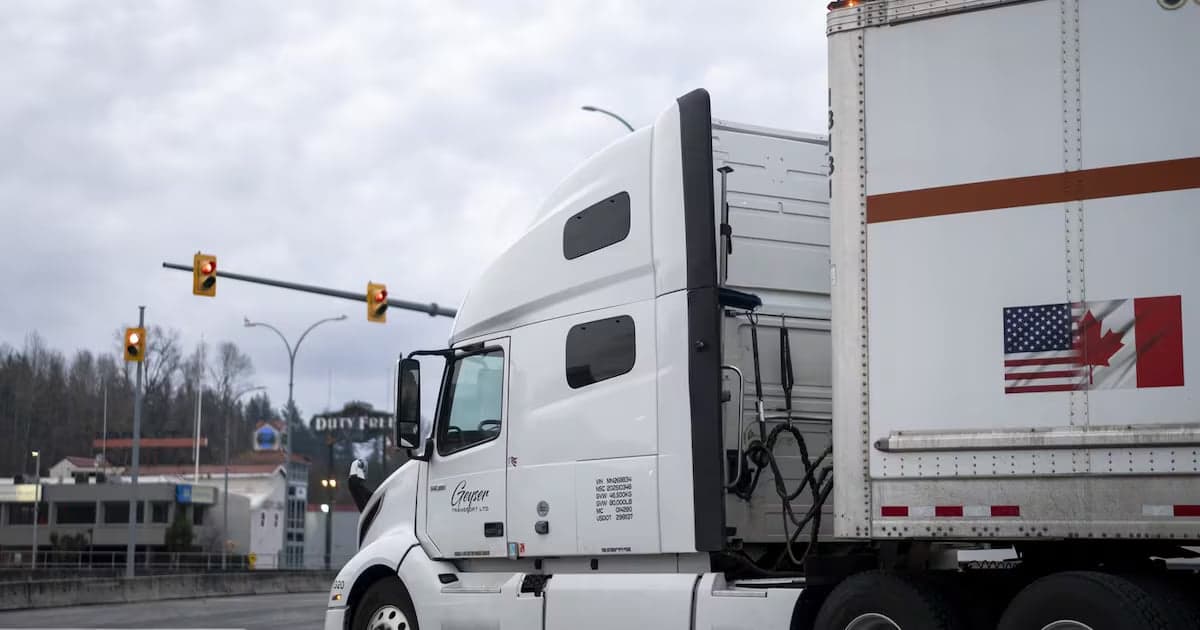
Ottawa Extends U.S. Tariff Remission Program Through Mid-2028 with Recalibrated Eligibility
National News
- 08
Energy Producers Analyze Impact of Federal 'Productivity Mega Deduction'
National News
 09
Supreme Court of Canada Hears Challenge to Federal Assault-Style Firearms Ban
National News
 10
Canadian Healthcare Spending to Hit $433 Billion in 2026, Shifting to System Capacity
National News
 11
Bank of Canada Survey Predicts Rate Pause After One More Hike
National News
 12
Canada Implements New Fines for Immigration Consulting Fraud
National News
- 13
RBC to Acquire Australia's Yarra Capital Management for Asia-Pacific Expansion
National News
- 14
Cenovus Energy Approved for Up to 126.5 Million Share Buyback
National News
 15
Russia-Ukraine Peace Talks Open in Abu Dhabi Amid European Security Realignment
World & Geopolitics
 16
US Proposes Integrating Ukraine War Settlement into Broader European Security Talks
World & Geopolitics
 17
White House Urges Israel to Advance Gaza Peace Plan Post-Election
World & Geopolitics
- 18
Gaza Floods Spark Humanitarian Crisis Amidst Diplomatic Stalemate
World & Geopolitics
 19
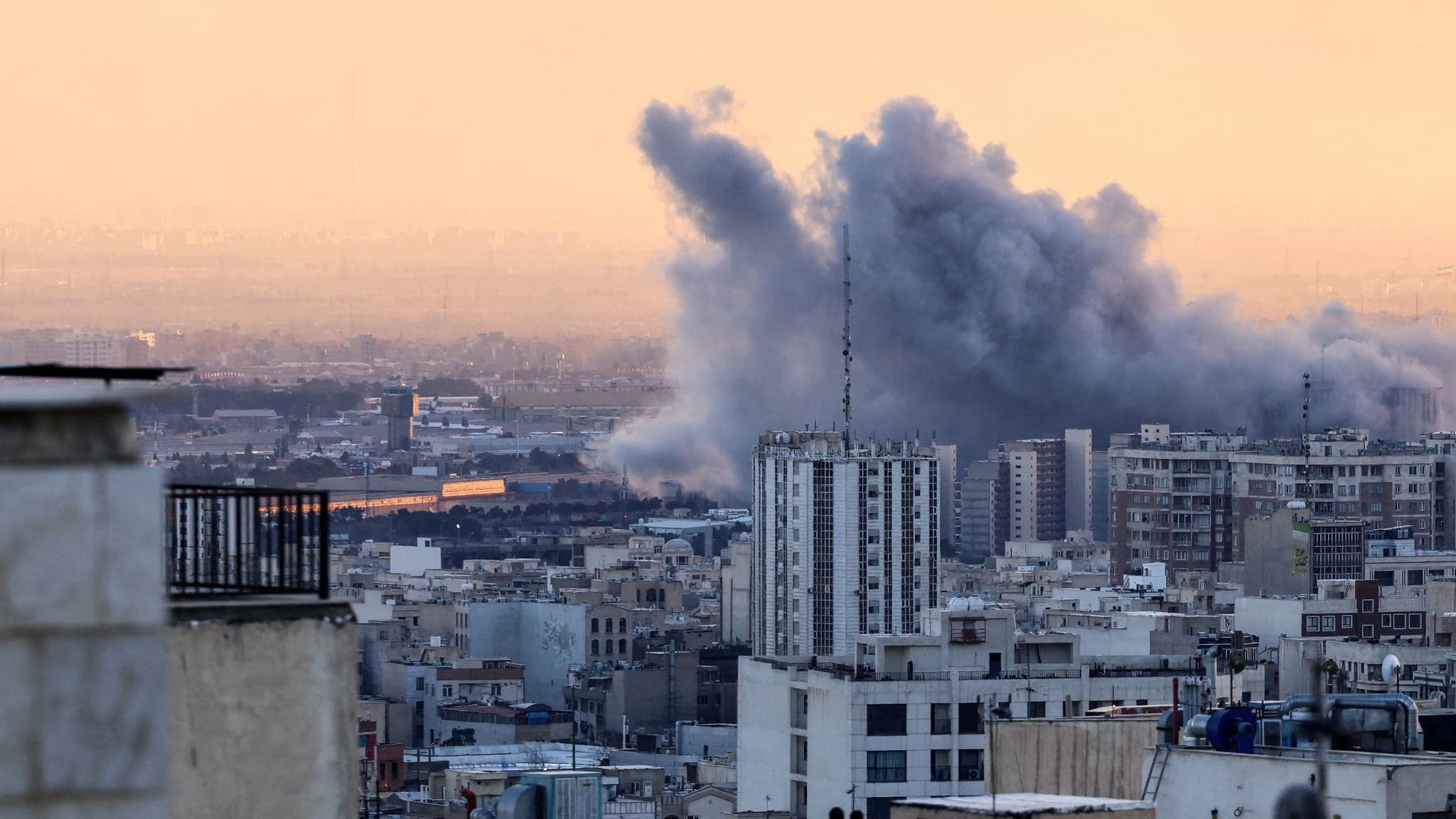
U.S. Declares Iran Conflict 'Effectively Over' Amid Ongoing Blockade and Sanctions
World & Geopolitics
- 20
France Blames Iran's IRGC for Nation-Wide Cold-Chain Cyberattacks
World & Geopolitics
- 21
US and China Clash Over APEC Summit Format and Regional Containment
World & Geopolitics
 22
US and China Extend Maritime and Critical Mineral Truce Amid Trade Tensions
World & Geopolitics
 23
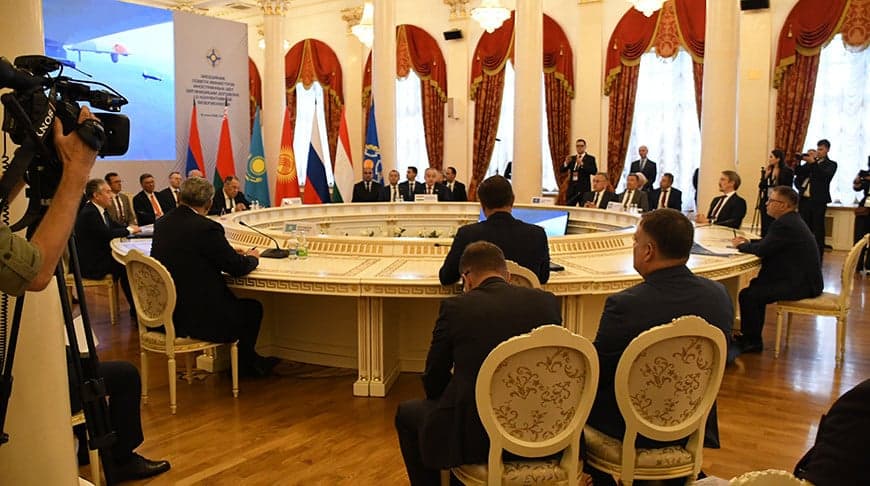
CSTO Forum Highlights Internal Fractures Amid Reassertion of Eurasian Security
World & Geopolitics
 24
Houthi Missile Strike on Riyadh Financial District Escalates Gulf Tensions
World & Geopolitics
 25
Canada and China Revive Economic Dialogue Amid Prime Minister's Global Summit Tour
World & Geopolitics
 26
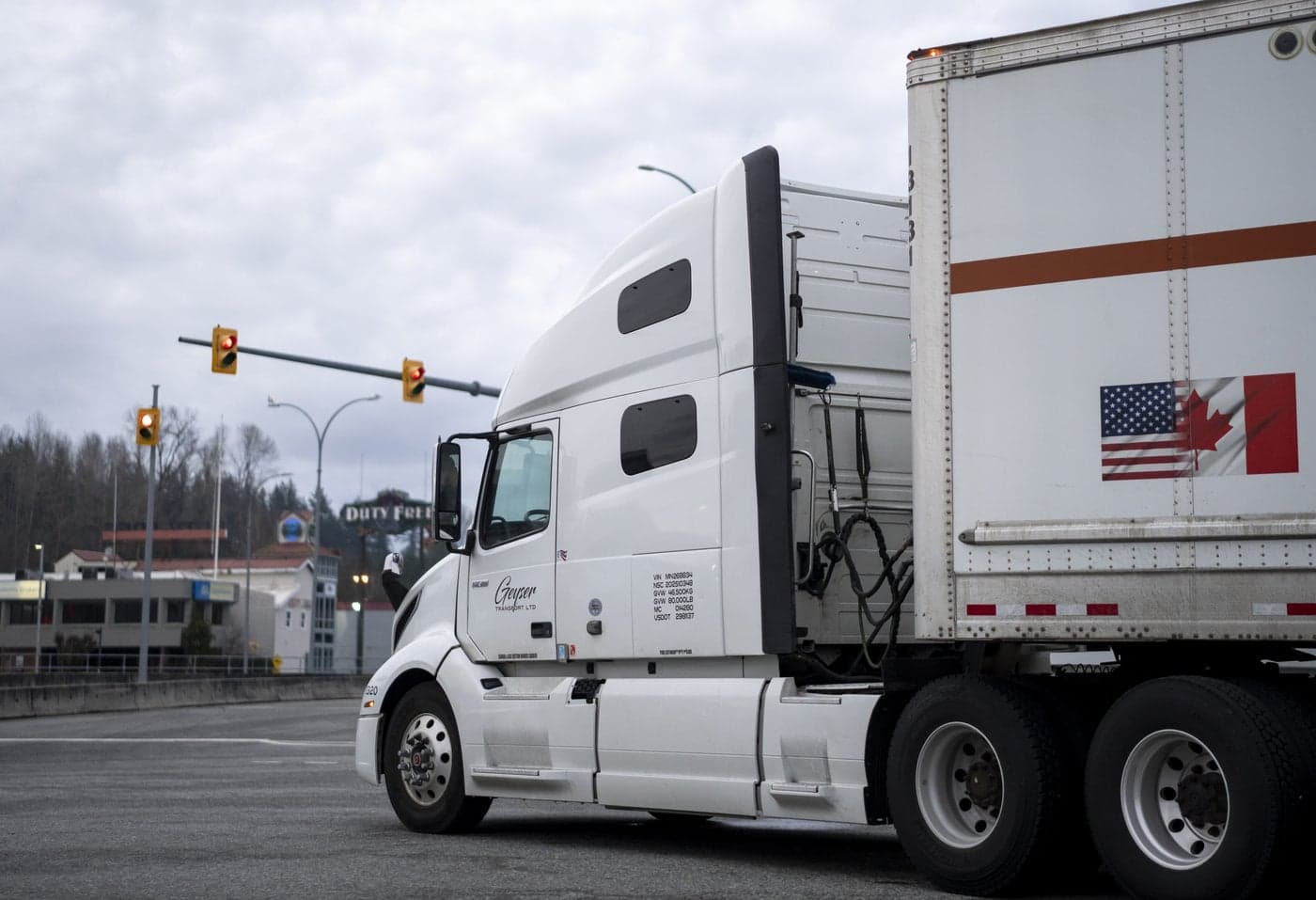
Canada Extends Tariff Relief, Adjusts Scope to Shield Core Industries
World & Geopolitics
 27
U.S. Midterms Spark Tariff Debate, Leaving Canadian Exporters in Limbo
World & Geopolitics
 28
Toronto Expands Homeless Services for 2026-2027 Winter with More Shelter and Respite Spaces
City News
- 29
TTC Implements Weeknight and Weekend Line 2 Closures for Crucial Upgrades
City News
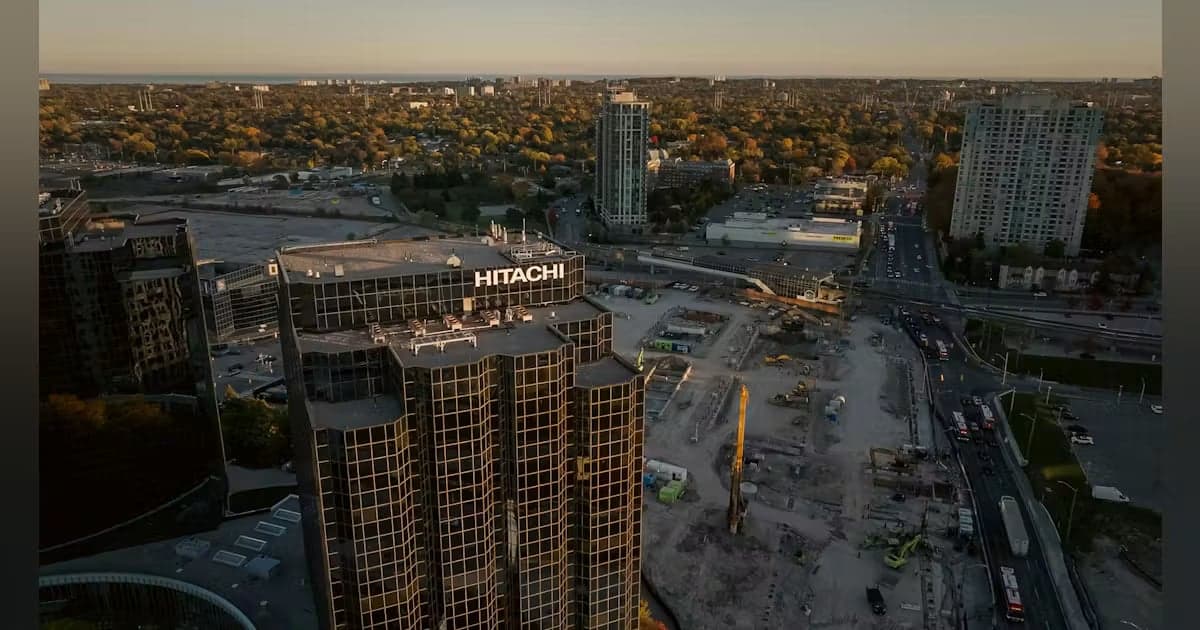 30
Hitachi Rail Inaugurates $30M Scarborough Hub for Major Transit Signaling Projects
City News
 31
Ontario's Bill 140 Reshapes Toronto Planning Amid $22B Infrastructure Push
City News
 32
Toronto Police Respond to Violent Incidents: Serious Stabbing and Shooting
City News
 33
GTA Housing Market Stalled as Rate Hikes Deter Buyers, Sellers Hold Firm
City News
 34
Stellantis Sells Brampton Plant to Roshel, Sparks Union Outrage and Zoning Clash
City News
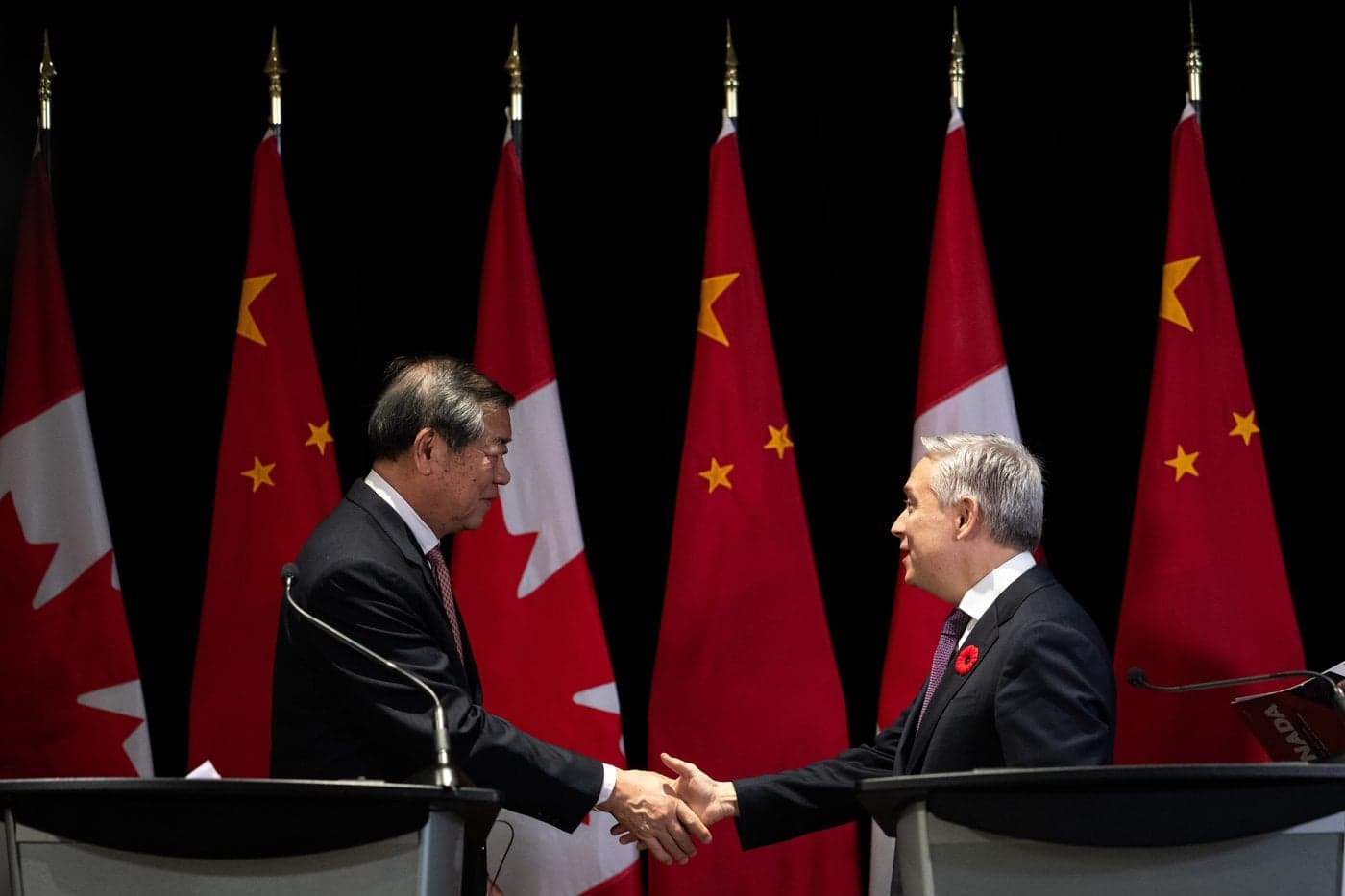 35
Premier Ford Criticizes Student Walkouts Over OSAP Policy Changes
City News
- 36
Three Youths Charged with Arson After Massive Milton Commercial Blaze
City News
 37
Royal Agricultural Winter Fair Draws Crowds to Toronto Amid Busy Event Season
City News
 38
Toronto Investigates Illegal Tree Felling and Suspected Forged Permits in Long Branch
City News
 39
GTA Experiences Unseasonable Warmth Followed by High Winds and Temperature Drop
City News
 40
Maple Leafs Grapple With Injuries and Inconsistency Amidst Losing Streak
Sports
 41
Maple Leafs Face Leadership Challenge and Defensive Woes After Danford Injury
Sports
 42
McGonigle and Stewart Named 2026 MLB Rookie of the Year Winners
Sports
 43
NHL Roundup: Hellebuyck's Return Delayed, Weekly Stars Announced
Sports
 44
Raptors Fall to Grizzlies Amidst Injuries, Jamal Shead Shows Playmaking Promise
Sports
- 45
MLB Labor Deadline Looms Over GM Meetings, Threatening Lockout
Sports
- 46
Blue Jays Aim for Roster Overhaul at MLB GM Meetings Amidst Free Agency
Sports
 47
Maple Leafs Prospect Ben Danford Suffers Broken Wrist, Deepening Defensive Crisis
Sports
 48
Depleted Raptors Fall to Grizzlies Amidst Mounting Player Absences
Sports
- 49
Raptors Rout Grizzlies Amid Avalanche of Injuries to Key Starters
Sports
 50
NBA Hit by Early-Season Injury Wave Affecting Key Players
Sports
See all 50 as a listHide the list
- Payments Canada Launches Real-Time Rail Network Under Bank of Canada Oversight
- Federal Government Makes Rural Community Immigration Pilot a Permanent Economic Pathway
- Canada Reimburses Sanctions on 11 Iranian Entities Due to Nuclear Non-Compliance
- Bridgewater Executive Karen Karniol-Tambour Appointed Inaugural CEO of Canada Strong Fund
- Canada and China Agree to Deepen Financial Sector Cooperation
- Finance Canada Adjusts Tariff Relief for Domestic Manufacturing and Trade
- Ottawa Extends U.S. Tariff Remission Program Through Mid-2028 with Recalibrated Eligibility
- Energy Producers Analyze Impact of Federal 'Productivity Mega Deduction'
- Supreme Court of Canada Hears Challenge to Federal Assault-Style Firearms Ban
- Canadian Healthcare Spending to Hit $433 Billion in 2026, Shifting to System Capacity
- Bank of Canada Survey Predicts Rate Pause After One More Hike
- Canada Implements New Fines for Immigration Consulting Fraud
- RBC to Acquire Australia's Yarra Capital Management for Asia-Pacific Expansion
- Cenovus Energy Approved for Up to 126.5 Million Share Buyback
- Russia-Ukraine Peace Talks Open in Abu Dhabi Amid European Security Realignment
- US Proposes Integrating Ukraine War Settlement into Broader European Security Talks
- White House Urges Israel to Advance Gaza Peace Plan Post-Election
- Gaza Floods Spark Humanitarian Crisis Amidst Diplomatic Stalemate
- U.S. Declares Iran Conflict 'Effectively Over' Amid Ongoing Blockade and Sanctions
- France Blames Iran's IRGC for Nation-Wide Cold-Chain Cyberattacks
- US and China Clash Over APEC Summit Format and Regional Containment
- US and China Extend Maritime and Critical Mineral Truce Amid Trade Tensions
- CSTO Forum Highlights Internal Fractures Amid Reassertion of Eurasian Security
- Houthi Missile Strike on Riyadh Financial District Escalates Gulf Tensions
- Canada and China Revive Economic Dialogue Amid Prime Minister's Global Summit Tour
- Canada Extends Tariff Relief, Adjusts Scope to Shield Core Industries
- U.S. Midterms Spark Tariff Debate, Leaving Canadian Exporters in Limbo
- Toronto Expands Homeless Services for 2026-2027 Winter with More Shelter and Respite Spaces
- TTC Implements Weeknight and Weekend Line 2 Closures for Crucial Upgrades
- Hitachi Rail Inaugurates $30M Scarborough Hub for Major Transit Signaling Projects
- Ontario's Bill 140 Reshapes Toronto Planning Amid $22B Infrastructure Push
- Toronto Police Respond to Violent Incidents: Serious Stabbing and Shooting
- GTA Housing Market Stalled as Rate Hikes Deter Buyers, Sellers Hold Firm
- Stellantis Sells Brampton Plant to Roshel, Sparks Union Outrage and Zoning Clash
- Premier Ford Criticizes Student Walkouts Over OSAP Policy Changes
- Three Youths Charged with Arson After Massive Milton Commercial Blaze
- Royal Agricultural Winter Fair Draws Crowds to Toronto Amid Busy Event Season
- Toronto Investigates Illegal Tree Felling and Suspected Forged Permits in Long Branch
- GTA Experiences Unseasonable Warmth Followed by High Winds and Temperature Drop
- Maple Leafs Grapple With Injuries and Inconsistency Amidst Losing Streak
- Maple Leafs Face Leadership Challenge and Defensive Woes After Danford Injury
- McGonigle and Stewart Named 2026 MLB Rookie of the Year Winners
- NHL Roundup: Hellebuyck's Return Delayed, Weekly Stars Announced
- Raptors Fall to Grizzlies Amidst Injuries, Jamal Shead Shows Playmaking Promise
- MLB Labor Deadline Looms Over GM Meetings, Threatening Lockout
- Blue Jays Aim for Roster Overhaul at MLB GM Meetings Amidst Free Agency
- Maple Leafs Prospect Ben Danford Suffers Broken Wrist, Deepening Defensive Crisis
- Depleted Raptors Fall to Grizzlies Amidst Mounting Player Absences
- Raptors Rout Grizzlies Amid Avalanche of Injuries to Key Starters
- NBA Hit by Early-Season Injury Wave Affecting Key Players
Section 1 of 4
National News
14 stories · 7 min skim
National News
2 min read
Payments Canada Launches Real-Time Rail Network Under Bank of Canada Oversight
Payments Canada has launched its Real-Time Rail (RTR) network, enabling 24/7/365 instantaneous payment clearing and settlement across Canada. The Bank of Canada has designated RTR a 'prominent payment system,' subjecting it to direct regulatory oversight. This marks the end of years of delays, positioning Canada with a modern payment infrastructure and setting the stage for open banking.
Read the full storyFold the full story1 min · 7 sources
Payments Canada officially launched the Real-Time Rail (RTR), delivering Canada’s first national, 24/7/365 instantaneous payment clearing and settlement network[1][2]. Concurrently, Bank of Canada Governor Tiff Macklem designated the RTR as a "prominent payment system" under the Payment Clearing and Settlement Act[3][3]. This formal central bank designation subjects the system to direct Bank of Canada regulatory oversight, mandating strict compliance with operational resilience standards, cyber safeguards, and systemic risk-management controls to protect the broader financial ecosystem[3][3].
The deployment marks the end of years of delays that previously left Canada as the only G7 nation lacking an operational real-time payments backbone[4][5]. Built in collaboration with key technical partners - including Interac Corp., IBM Canada, and Deloitte Canada - the RTR facilitates instantaneous data-rich transactions using the ISO 20022 messaging standard[1][2]. Unlike legacy settlement mechanisms, which rely on batch processing and multi-day clearing delays, the RTR enables funds to clear and settle within seconds across participating financial institutions, credit unions, and registered payment service providers[1][2].
The initial cohort of participating institutions going live on the system includes fintechs and specialty lenders such as Wealthsimple, Questbank, Peoples Trust Company, KOHO, Paramount Commerce, Digital Commerce Bank, DoBusiness.com, and Bank of America[2][6]. While Canada's dominant domestic Tier-1 commercial banks were not in the first wave, they are slated to integrate into the network over the coming year, with Payments Canada projecting that coverage will reach 90% of Canadian bank accounts by the end of its first anniversary[2][6].
Finance Minister François-Philippe Champagne and Payments Canada CEO Susan Hawkins positioned the launch as an essential foundation for the government's broader consumer-driven banking (open banking) framework[7][1][5]. Economic projections from the C.D. Howe Institute indicate that eliminating transaction float times, reducing operational processing overhead, and phasing out paper cheques could generate upwards of $14.5 billion in cumulative cost savings for the Canadian economy over the next decade[2]. Industry analysts noted that while the rail resolves an urgent infrastructure deficit, its long-term impact hinges on how swiftly the Big Six banks roll out consumer-facing instant payment products to the general public[2][5].
- Payments Canada
- Bank of Canada
- Real-Time Rail (RTR)
National News
2 min read
Federal Government Makes Rural Community Immigration Pilot a Permanent Economic Pathway
The federal government is transitioning the Rural Community Immigration Pilot (RCIP) into a permanent economic immigration program, effective January 1, 2027. This employer-led, community-based pathway aims to address labor shortages and demographic imbalances in rural areas. The program will have a dedicated annual intake quota, starting at 5,500 admissions in 2027.
Read the full storyFold the full story1 min · 6 sources
Minister of Immigration, Refugees and Citizenship Lena Metlege Diab announced that the federal government is converting the Rural Community Immigration Pilot (RCIP) into a permanent, statutory economic immigration pathway[1][2]. Speaking at an industrial manufacturing facility in Stellarton within Pictou County, Nova Scotia, Diab confirmed that the pilot will formally conclude its temporary run and become a permanent economic class program effective January 1, 2027[3][4].
The permanent program addresses persistent regional demographic imbalances and chronic skilled-labour shortages that exist outside major metropolitan centers[2][5]. Designed as an employer-led, community-based framework, candidates must secure an approved job offer from a designated local business and obtain an endorsement from regional economic development bodies[2][3]. The permanent rollout retains the 14 regional zones currently enrolled - including Pictou County in Nova Scotia; Timmins, Sudbury, Sault Ste. Marie, Thunder Bay, and North Bay in Ontario; Brandon, Steinbach, and Altona/Rhineland in Manitoba; Moose Jaw in Saskatchewan; Claresholm in Alberta; and the West Kootenay, North Okanagan Shuswap, and Peace Liard regions in British Columbia - with ministerial provisions to accept additional rural municipalities over time[5][3].
The structural shift aligns with targets established in the newly released 2027–2029 Immigration Levels Plan and Budget 2026, which prioritize targeted economic retention over broad-based temporary arrivals[1][3]. The federal plan designates a dedicated annual intake quota for the permanent rural pathway, beginning at 5,500 admissions in 2027 and rising notionally to 6,000 in 2028 and 6,500 in 2029[3]. Previously, the trial pilot competed against various smaller regional initiatives within a combined pool of 8,175 entries[3].
Municipal leaders and rural business alliances praised the permanent framework for offering long-term staffing stability in resource extraction, healthcare, agriculture, and manufacturing[2][6]. Diab emphasized that a uniform, metropolitan-centric immigration policy had exacerbated housing and infrastructure pressures in major urban centers while leaving smaller towns starved of specialized labor[2][6]. By tying permanent residency approvals to localized employer sponsorship and sustained settlement ties, Ottawa aims to elevate long-term immigrant retention rates across rural Canada[1][2].
- Rural Community Immigration Pilot (RCIP)
- Lena Metlege Diab
- Immigration
National News
2 min read
Canada Reimburses Sanctions on 11 Iranian Entities Due to Nuclear Non-Compliance
Global Affairs Canada has reimposed sanctions on 11 Iranian entities previously delisted in 2016. These entities are accused of contributing to Iran's nuclear and ballistic missile programs and financing regional proxies. The sanctions were restored due to Tehran's non-compliance with IAEA protocols and continued uranium enrichment activities.
Read the full storyFold the full story1 min · 5 sources
Minister of Foreign Affairs Anita Anand announced that Canada has reimposed sweeping economic sanctions against 11 Iranian entities under the Special Economic Measures (Iran) Regulations[1][2]. Speaking from the G7 Foreign Ministers' Meeting in Paris, Anand stated that the designated organizations have contributed directly to the Iranian regime’s proliferation-sensitive nuclear activities, ballistic missile development programs, and international financial networks financing regional proxy networks[1][2].
The targeted entities had originally been delisted by Ottawa in 2016 following the adoption of the 2015 Joint Comprehensive Plan of Action (JCPOA), an international accord that offered economic sanctions relief in exchange for verifiable monitoring of Iran’s nuclear research[1][2]. Global Affairs Canada stated that the decision to restore these targeted restrictions follows repeated and escalating non-compliance by Tehran with the International Atomic Energy Agency (IAEA), alongside persistent obstructions of international nuclear inspectors and the ongoing expansion of uranium enrichment activities[1][2].
The Canadian announcement was coordinated alongside G7 partners and international allies gathering in France to formulate a joint response to escalating Middle Eastern regional security crises[1][3][4]. Under the reimposed sanctions, any assets or property held by these 11 entities within Canadian jurisdiction are subject to immediate asset freezes, and individuals or corporate entities in Canada are strictly prohibited from engaging in financial dealings, providing technical support, or transferring sensitive technologies to them[1][2].
During her diplomatic appearances in Paris, Anand addressed broader international uncertainties stemming from shifting U.S. political dynamics following the U.S. midterm elections, affirming that Canada remains committed to maintaining multilateral pressure against nuclear proliferation[5][3]. Anand reaffirmed that Canada will continue enforcing stringent export controls and financial interdictions until Iran returns to full, unconditional cooperation with IAEA protocols and ceases activities threatening international stability[1][2].
- Global Affairs Canada
- Iranian entities
- Anita Anand
National News
2 min read
Bridgewater Executive Karen Karniol-Tambour Appointed Inaugural CEO of Canada Strong Fund
Prime Minister Mark Carney announced Karen Karniol-Tambour as the first CEO of the Canada Strong Fund, a new federal sovereign wealth fund. Karniol-Tambour joins from Bridgewater Associates, where she was Co-Chief Investment Officer for two decades. The fund, initially capitalized at $25 billion, aims to invest in critical domestic enterprises, clean infrastructure, and nation-building initiatives, with a unique retail component for individual Canadians.
Read the full storyFold the full story2 min · 6 sources
Prime Minister Mark Carney announced the appointment of Karen Karniol-Tambour as the inaugural Chief Executive Officer of the Canada Strong Fund, the federal government’s newly established national sovereign wealth fund[1][2]. Karniol-Tambour will step down from her position as Co-Chief Investment Officer at Bridgewater Associates, one of the world’s largest hedge funds, where she spent two decades directing macro investment research and quantitative investment strategies[1][2]. Her departure represents a major institutional leadership shift for the Connecticut-based asset manager, which oversees approximately $102 billion in global assets[2].
The Canada Strong Fund serves as an economic cornerstone of the Carney administration's Budget 2026, titled "Masters of our destiny," which was tabled by Minister of Finance François-Philippe Champagne[3][1]. Initially unveiled with a federal capital commitment of $25 billion, the fund was structured to address long-standing Canadian productivity concerns by investing capital on a commercial basis into strategically critical domestic enterprises, clean infrastructure, and major nation-building initiatives[2][4]. Governed as an independent Crown corporation operating at arm's length from political interference through the Canada Development Investment Corporation, the fund is also designed to feature a retail component allowing individual Canadians to hold a direct stake and share in long-term financial returns[2][4].
Karniol-Tambour, a Canadian citizen and Princeton University graduate, previously served as Bridgewater's Head of Investment Research starting in 2013 and Co-CIO for Sustainability in 2021 before being elevated to Co-CIO in 2023[1][2]. Bridgewater CEO Nir Bar Dea acknowledged her transition as a significant opportunity to serve her home country’s public sector, while federal officials underscored her deep background in macroeconomic systemic risk and global sustainability portfolios as critical assets for scaling domestic sovereign investments[1][2].
The appointment drew immediate attention across Canadian financial and political spheres. Supporters emphasized that recruiting a globally recognized Wall Street executive lends instant institutional credibility and market acumen to Ottawa’s goal of crowding in private capital alongside state resources[2][4]. Meanwhile, domestic commentators and opposition figures scrutinized the decision to appoint a leader whose career has been anchored in U.S. private high finance[5][6]. As Karniol-Tambour assumes the helm, her immediate mandate will involve assembling the fund's independent leadership team and determining the initial allocation strategy across energy infrastructure, digital industry assets, and domestic supply chains[1][2].
- Canada Strong Fund
- Bridgewater Associates
- Karen Karniol-Tambour
National News
1 min read
Canada and China Agree to Deepen Financial Sector Cooperation
Canada and China have reached a bilateral agreement to enhance cooperation and regulatory collaboration between their financial sectors. The pact includes reciprocal market access for banking and asset management firms, communication channels between regulators, and support for institutional investment. This agreement precedes Prime Minister Mark Carney's visit to China for the APEC summit.
Read the full storyFold the full story1 min · 2 sources
Federal cabinet officials concluded bilateral discussions with senior Chinese delegates in Vancouver, formalizing an agreement to deepen engagement and regulatory collaboration between the Canadian and Chinese financial sectors[1]. Minister of Finance François-Philippe Champagne and Minister of International Trade Maninder Sidhu hosted a delegation led by Chinese Vice-Premier He Lifeng, concluding two days of bilateral talks aimed at stabilizing cross-border economic ties[1].
A joint communiqué published by Finance Canada confirmed that both governments agreed to establish structured mechanisms to "enhance financial sector co-operation"[1]. The framework involves reciprocal market access concessions for commercial banking and asset management firms, structured communication channels between financial regulatory agencies, and support for predictable environments for institutional investment[1]. The dialogue in Vancouver also coincided with efforts by Chinese issuers to market renminbi-denominated green bonds to Canadian institutional portfolios[2].
The financial pact serves as an economic prelude to Prime Minister Mark Carney’s scheduled official visit to China for the upcoming Asia-Pacific Economic Cooperation (APEC) summit[1]. Ottawa has sought to recalibrate its diplomatic stance toward Beijing, pursuing pragmatic access in green financing and financial services while retaining selective trade and security guardrails[1].
Financial institutions in both jurisdictions expressed interest in the development, noting that standardized regulatory channels could ease compliance hurdles for multinational asset managers operating across the Pacific[1]. However, trade policy observers note that the initiative will require delicate navigation, balancing cross-border capital integration against broader allied scrutiny over foreign economic exposure[1].
- Canada
- China
- François-Philippe Champagne
National News
2 min read
Finance Canada Adjusts Tariff Relief for Domestic Manufacturing and Trade
The Department of Finance Canada has revised its tariff relief measures, extending remission for affected U.S. imports by one year to June 30, 2028. The adjustments include non-steel goods for mining and oil/gas, capital goods for educational institutions, and specific consumer goods. However, relief will be phased out for certain trailer and aluminum products to support domestic manufacturing.
Read the full storyFold the full story1 min · 1 source
The Department of Finance Canada announced substantial modifications to the federal tariff relief framework, adjusting import remission orders to insulate domestic industries from cross-border trade friction with the United States while safeguarding homegrown manufacturers[1]. Under the revisions unveiled by Minister of Finance and National Revenue François-Philippe Champagne, the federal government extended horizontal tariff remission for affected U.S. imports by an additional full year, establishing a new expiration date of June 30, 2028[1].
The broadened horizontal remission explicitly incorporates non-steel goods used directly in mining, quarrying, and oil and gas extraction, as well as capital goods procured by public educational institutions and entities operating under Indigenous mandates[1]. These measures are structured to contain operating expenses for capital-intensive extraction projects and public bodies facing elevated input costs from ongoing trade disputes[1]. Additionally, the Department of Finance introduced targeted remissions on a case-by-case basis for critical goods experiencing domestic supply shortages or where businesses are bound by rigid, pre-existing commercial supply contracts[1].
Concurrently, the federal government moved to retract horizontal tariff protections where domestic manufacturing capacity is demonstrably viable[1]. Horizontal relief will be terminated for specified trailer categories effective December 1, 2026, and for certain aluminum wire, extruded profiles, and paperboard products on February 1, 2027[1]. This advance phase-out window was specifically designed to allow commercial importers sufficient runway to either onshore their procurement to Canadian suppliers or file for individualized exception reviews[1].
To accelerate administrative responsiveness, product schedules will now be managed directly on the Department of Finance’s official digital registry and incorporated by reference into the statutory orders, replacing lengthy legislative amendments[1]. Business organizations welcomed the extension of relief for heavy industrial equipment, though manufacturing segments reliant on cross-border supply chains face impending operational adjustments to avoid the newly reinstated tariffs[1].
- Department of Finance Canada
- François-Philippe Champagne
- United States
National News
2 min read
Ottawa Extends U.S. Tariff Remission Program Through Mid-2028 with Recalibrated Eligibility
The Canadian federal government has extended its temporary tariff remission program for importers by an additional year, now running through June 30, 2028. The program provides relief from U.S. retaliatory tariffs. Eligibility has been recalibrated to include more non-steel inputs for key export sectors while excluding specific materials where Canadian alternatives exist.
Read the full storyFold the full story1 min · 2 sources
The federal government issued an order extending and restructuring its temporary tariff remission program, granting Canadian importers relief from retaliatory customs duties levied in the ongoing trade dispute with the United States[1]. The relief framework, originally designed as an interim measure to buffer domestic supply chains from escalating cross-border commercial friction, was formally extended by an additional 12 months, locking in relief through June 30, 2028[1].
The extension is paired with a deliberate recalibration of product eligibility designed to balance industrial necessity with domestic procurement[1]. Ottawa broadened the remission framework to encompass non-steel imports that serve as essential production inputs across key export sectors, including advanced manufacturing, agricultural machinery, mineral extraction, and oil and gas operations[1]. Furthermore, tariff exemptions were expanded to include specialized goods procured by public educational institutions and Indigenous-mandated organizations[1].
In tandem with these expansions, the Department of Finance tightened boundaries by excluding specific materials where reliable Canadian-made alternatives have been established[1]. Products losing their tariff exemptions include certain classes of industrial trailers, aluminum wire, and paperboard packaging materials[1]. Federal trade officials emphasized that these selective clawbacks are necessary to prevent tariff relief from undermining domestic suppliers that have expanded output capacity to fill cross-border trade voids[1].
The policy recalibration reflects Canada's delicate balancing act amid protracted U.S. trade pressure and protectionist policies under the Trump administration[2][1]. Canadian manufacturing and trade associations had heavily lobbied for the relief extension, arguing that without continued tariff relief on specialized inputs that cannot easily be substituted at home, downstream industrial processors would face severe margin compression[1]. While the policy offers medium-term cost certainty for primary industrial operators, it signals that Ottawa will increasingly use import remissions to penalize reliance on American vendors when domestic capacity exists[1].
- U.S. Tariff Remission Program
- Department of Finance
- Trump administration
National News
1 min read
Energy Producers Analyze Impact of Federal 'Productivity Mega Deduction'
Western Canadian oil and gas producers anticipate significant near-term cash tax savings from the federal government's proposed 'Productivity Mega Deduction,' allowing immediate expensing of capital investments. Companies like Whitecap Resources and Tourmaline Oil have projected substantial retained cash due to this measure, which aims to accelerate investments in productivity and infrastructure.
Read the full storyFold the full story1 min · 2 sources
Major Western Canadian oil and natural gas producers released corporate estimates detailing hundreds of millions of dollars in near-term cash tax savings resulting from the federal government’s proposed "Productivity Mega Deduction" introduced in Budget 2026[1][2]. The tax incentive allows corporations to immediately expense capital investments in productivity-enhancing equipment and extraction infrastructure rather than amortizing costs over extended depreciation schedules[1].
Corporate guidance underscored the immediate cash flow impact across key exploration and production companies[1]. Whitecap Resources disclosed that the provisions would yield an estimated C$400 million in cumulative liquidity, while Tourmaline Oil guided toward C$200 million to C$300 million in retained cash[1]. Ovintiv outlined cash tax reductions of approximately $100 million for the 2027 fiscal year alone[1]. Across the entire economy, the federal Department of Finance projects the capital expensing package will total C$36 billion over five years[1].
The tax measure is strategically calibrated to accelerate capital investment into major energy transportation infrastructure[1]. A primary objective of the accelerated deductions is to ensure sufficient upstream supply feeds the 1-million-barrel-per-day Pacific Link pipeline and supporting coastal export facilities, ensuring export corridors operate at full capacity[1].
While fiscal analysts raised questions regarding the multi-billion-dollar impact on the federal deficit trajectory, market reception across Canadian energy equities has been constructive[1][2]. Industry executives asserted that full upfront expensing lowers project capital hurdles, accelerating modernization and carbon-abatement investments across the Western Canadian Sedimentary Basin[1].
- Energy sector
- Productivity Mega Deduction
- Budget 2026
National News
3 min read
Supreme Court of Canada Hears Challenge to Federal Assault-Style Firearms Ban
The Supreme Court of Canada is holding a two-day hearing on a constitutional challenge to the federal government's ban on assault-style firearms. The case consolidates four separate appeals contesting the May 2020 Order in Council that prohibited over 2,500 firearm models. Appellants argue the ban exceeds regulatory powers and infringes on Charter rights.
Read the full storyFold the full story3 min · 10 sources
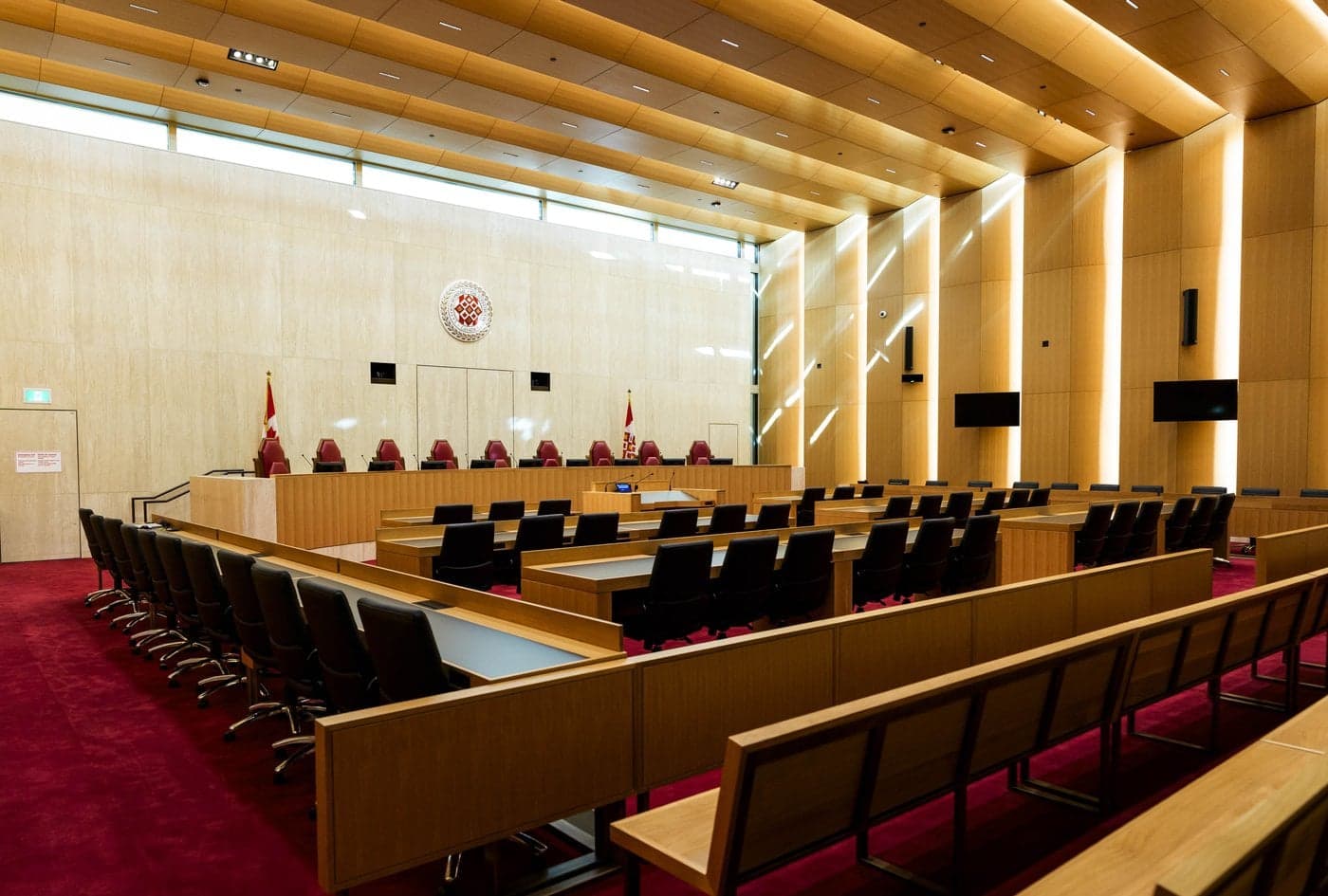
On November 9 and 10, 2026, the Supreme Court of Canada in Ottawa heard oral arguments in a consolidated, high-stakes constitutional challenge contesting the federal government’s sweeping prohibition of assault-style firearms[1][2]. The landmark proceedings combine four separate civil appeals - Christine Generoux, et al. v. Attorney General of Canada, Canadian Coalition for Firearm Rights (CCFR), et al. v. Attorney General of Canada, Michael John Doherty, et al. v. Attorney General of Canada, and Jennifer Eichenberg, et al. v. Attorney General of Canada - against the federal government[1][3]. At issue is the legality of the May 2020 Order in Council (SOR/2020-96), which unilaterally reclassified approximately 1,500 firearm models and variants from restricted or non-restricted status into the prohibited category, a prohibited roster that Ottawa has since expanded to more than 2,500 firearm varieties[4][2].
The legal showdown marks the culmination of more than six years of litigation initiated after the federal Cabinet enacted the ban via executive regulation in the wake of the April 2020 mass shooting in Portapique, Nova Scotia[5][4]. The restrictions immediately outlawed the importation, sale, transport, and recreational use of popular sporting and hunting rifles, most notably the AR-15 and the Ruger Mini-14[5][6]. After six separate applications for judicial review were consolidated, Federal Court Justice Catherine Kane dismissed the challenges in October 2023 (Parker v. Canada), ruling that Cabinet had not overstepped its statutory powers, that the regulations were not unconstitutionally vague, and that Charter rights were not infringed[4]. The Federal Court of Appeal affirmed that ruling in April 2025, prompting the gun owners, sporting organizations, and firearms retailers to seek leave at the country’s highest court, which granted a hearing in March 2026[7][2].
The case presents a fundamental administrative and constitutional question: whether the Governor in Council exceeded the regulatory powers delegated by Parliament under Section 117.15 of the Criminal Code[8][2][9]. The appellants - led in part by self-represented Ottawa gun owner Christine Generoux alongside CCFR legal counsel Michael Loberg, and joined by retailers such as Wolverine Supplies Ltd. and Maccabee Defence Inc. - argue that Section 117.15 expressly restricts Cabinet from banning firearms that are considered reasonable for hunting or sporting purposes in Canada[1][5][3][2]. Appellants further argue that the policy violates Sections 7, 8, and 15 of the Canadian Charter of Rights and Freedoms, contending that the phrase "variants and modified versions" is impermissibly vague and unlawfully sub-delegated lawmaking authority to the Royal Canadian Mounted Police (RCMP), which interprets the classification via its internal Firearms Reference Table[4][10][9].
The Attorney General of Canada, represented by Crown counsel including Zoe Oxaal and Amy Martin-LeBlanc, maintained before the bench that Cabinet acted reasonably within statutory boundaries to protect public safety, asserting that the targeted firearms possess combat-oriented capabilities that make them inappropriate for civilian hunting or sport[1][7][2]. The proceedings drew a broad array of interveners; provincial Attorneys General from Alberta, Saskatchewan, and Ontario delivered arguments challenging federal overreach into lawful property rights and hunting practices[1][9], joined by advocacy groups like the Canadian Constitution Foundation (CCF)[10]. Conversely, public safety organizations, including the Canadian Coalition for Gun Control, intervened to defend the regulations as a necessary public safety imperative[3][1].
The Supreme Court’s eventual ruling carries profound consequences for hundreds of thousands of licensed gun owners across the country, as well as the commercial firearms industry[4][6]. Because the federal government has repeatedly postponed the associated firearms amnesty - now formally scheduled to expire precisely 90 days after the Supreme Court issues its written decision - the court's judgment will directly dictate whether owners must surrender their weapons under the federal buyback program, have them permanently deactivated, or see the ban vacated as an improper exercise of executive power[7][2].
- Supreme Court of Canada
- Canadian Coalition for Firearm Rights
- Order in Council
National News
2 min read
Canadian Healthcare Spending to Hit $433 Billion in 2026, Shifting to System Capacity
The Canadian Institute for Health Information (CIHI) projects that national health spending will reach $433 billion in 2026, a 5% increase from the previous year. This growth outpaces economic expansion, representing nearly 13% of Canada's GDP. A significant portion of the increased funding is now being directed toward structural capacity and new care models rather than solely mitigating inflation and demographic pressures.
Read the full storyFold the full story2 min · 3 sources
On November 10, 2026, the Canadian Institute for Health Information (CIHI) released its 30th annual National Health Expenditure Trends report alongside a focused national analysis titled "Spending Trends in Health Service Delivery"[1][2]. The findings project that overall health spending in Canada will reach $433 billion in 2026, representing an annual expenditure increase of approximately 5% from 2025[3]. The rate of health spending continues to outpace national economic expansion, bringing total health spending to nearly 13% of Canada's gross domestic product (GDP)[3].
Significantly, CIHI reported that health spending expanded by more than $5 billion above the combined pressures of general inflation and demographic changes this year[3]. This surplus spending above traditional baseline cost drivers signals a transition in public healthcare administration: as the peak pressures of general inflation and demographic growth moderate slightly, health authorities are redirecting funding from short-term emergency mitigation toward permanent structural capacity, capital infrastructure, and new models of care delivery[3]. Lacey Langlois, Director of Health Spending at CIHI, noted that the factors behind expenditure growth are visibly shifting, allowing new funding to translate into sustainable clinical operations rather than absorbing price surges[3].
Hospitals remain the single largest expenditure category, accounting for more than 25% of total national health spending after experiencing a 5.1% spending increase over the previous year[3]. While public expenditures on private nursing agencies, emergency overtime, and sick leave compensation have moderated from post-pandemic record highs, CIHI noted that hospital workforce expenses remain persistently elevated compared to pre-2020 benchmarks[3]. Concurrently, pharmaceutical drugs and physician compensation constituted the second and third largest expenditure blocks, driven by higher utilization and the integration of novel, specialized medical therapies[3].
The accompanying study on service delivery laid bare stark, systemic structural disparities between urban medical networks and rural health systems[2]. CIHI found that while overall hospital staffing expanded faster than general population growth nationwide, rural facilities continue to endure severe recruitment and retention crises[2]. Over the past decade, national population growth outstripped the addition of acute care beds; however, while urban centers maintained or slowly increased bed ratios, rural Canada suffered an outright decline in acute care bed capacity despite population increases[2]. Consequently, smaller community hospitals remain disproportionately reliant on costly contract agency staffing and high rates of overtime just to avoid rolling emergency room closures[2].
The report also detailed the financial ramifications of technology adoption across the healthcare sector, particularly the rapid integration of artificial intelligence tools, digital documentation workflows, and integrated health networks[1]. CIHI emphasized that while artificial intelligence and workflow automation are showing early potential to ease clinician burnout and administrative burdens, near-term deployment necessitates heavy capital investments in cybersecurity, digital infrastructure, and provider training - expenditures that will shape provincial health balance sheets for years to come[1].
- Canadian Institute for Health Information (CIHI)
- National Health Expenditure Trends
- GDP
National News
2 min read
Bank of Canada Survey Predicts Rate Pause After One More Hike
A Bank of Canada survey indicates market participants expect the central bank to implement at most one more interest rate hike, reaching a peak of 2.75 percent by March 2027, before a prolonged pause. This forecast diverges from the Bank's own projections for inflation and economic growth, with respondents anticipating inflation returning to the 2.0 percent target by late 2027.
Read the full storyFold the full story1 min · 2 sources
A quarterly survey of financial market participants published by the Bank of Canada revealed growing consensus that the central bank will enact at most one additional interest rate hike before implementing a prolonged pause through 2028[1]. The survey of 25 institutional traders and market strategists showed a median expectation that the benchmark overnight lending rate will crest at 2.75 percent by March 2027, up from the current 2.50 percent level established following the Bank's quarter-point hike on October 28[1][2].
Market expectations outlined in the report reflect a distinct divergence from the central bank's published inflation path[1]. The median survey respondent projected that Canadian headline inflation will normalize back to the official 2.0 percent midpoint target by late 2027, driven by softening domestic demand[1]. Conversely, the Bank of Canada’s internal projections have held that inflation could persist above 3.0 percent well into late 2027, not settling to the 2.0 percent mark until mid-2028[1].
The surveyed participants forecast modest annual economic growth for Canada, pinning real GDP expansion in the 1.0 to 2.0 percent range across both 2026 and 2027[1]. This subdued macro trajectory aligns with recent labor market signals, including an unexpected drop of 4,700 jobs in October that nudged national unemployment to 6.7 percent, while annual wage gains cooled to 2.2 percent[2].
Market commentary highlights that tightening momentum may face friction sooner than anticipated[1]. BMO Capital Markets Chief Economist Douglas Porter noted that recent contractions in global crude oil prices, equity market volatility, and consecutive months of labor market softness could provide compelling arguments for central bank policymakers to hold the overnight rate steady at their upcoming December policy meeting rather than enacting an additional hike[1].
- Bank of Canada
- Overnight lending rate
- Inflation
National News
2 min read
Canada Implements New Fines for Immigration Consulting Fraud
The federal government has introduced a new administrative monetary penalty system to combat fraud and misconduct within the immigration consulting sector. Individuals and businesses providing unauthorized or non-compliant advice now face fines ranging from $5,000 to $1.5 million. This measure aims to deter predatory practices and protect vulnerable applicants.
Read the full storyFold the full story1 min · 2 sources
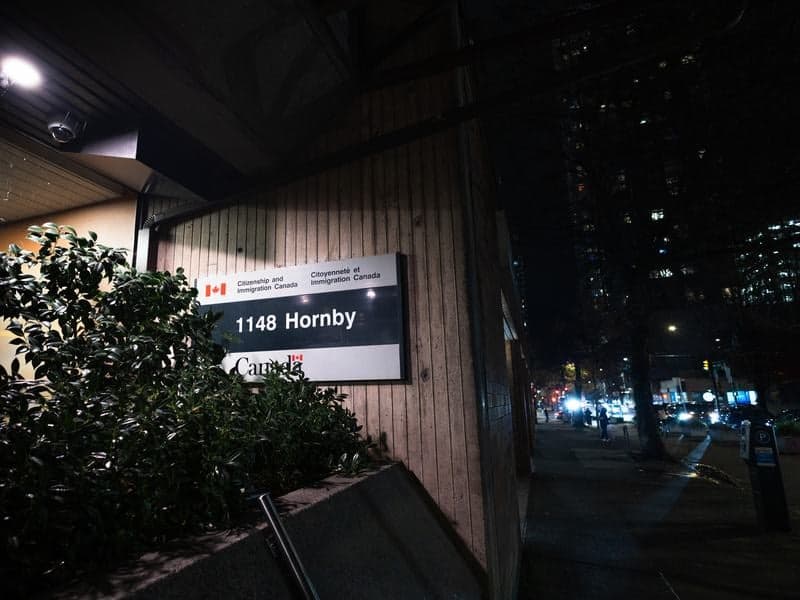
In a major regulatory enforcement move, the federal government enacted an aggressive new administrative monetary penalty system on November 10, 2026, designed to crack down on fraud, misrepresentation, and misconduct across the immigration advisory sector[1]. Under the new operational enforcement framework rolled out by Immigration, Refugees and Citizenship Canada (IRCC), individuals and businesses providing unauthorized, exploitative, or non-compliant paid immigration advice now face administrative fines ranging from a minimum of $5,000 to as much as $1.5 million[1].
The regulatory penalties arrive amid sustained scrutiny over fraudulent immigration schemes, underground recruiters, and unlicensed "ghost consultants" who prey on prospective immigrants, foreign students, and temporary workers[1]. In recent years, widespread reports have documented bad actors selling bogus Labour Market Impact Assessments (LMIAs), orchestrating fraudulent job offers, and misrepresenting legal residency rules[2][1]. Minister of Immigration, Refugees and Citizenship Lena Metlege Diab stated that the punitive monetary measures are engineered to close administrative loopholes and provide federal regulators with direct enforcement authority to hold unscrupulous actors accountable without having to rely exclusively on protracted criminal court prosecutions[1].
The enforcement regime gives IRCC enhanced latitude to directly sanction unlicensed intermediaries and licensed practitioners who breach established professional conduct standards, commit regulatory non-compliance, or mislead clients navigating visa and permanent residency pathways[1]. International student advocacy bodies, post-secondary advisors, and legal clinics - including representatives from the University of British Columbia - described the rollout of the financial penalties as a critical and positive step toward protecting vulnerable applicants from financial devastation and legal jeopardies resulting from predatory representation[1].
However, legal aid organizations and immigrant rights advocates noted that monetary fines address only part of the problem. Advocates cautioned that bad actors frequently operate cross-border or dissolve corporate entities to evade domestic monetary sanctions. They also underscored that immigration enforcement must be accompanied by comprehensive protections for foreign victims who report fraudulent representatives, ensuring that defrauded candidates do not face automatic inadmissibility determinations or deportation due to documentation falsified by third-party advisors[1].
- Immigration
- Refugees and Citizenship Canada (IRCC)
- Lena Metlege Diab
National News
2 min read
RBC to Acquire Australia's Yarra Capital Management for Asia-Pacific Expansion
Royal Bank of Canada has agreed to acquire Yarra Capital Management, an Australian independent asset manager, through its RBC Global Asset Management division. This move is a key part of RBC's strategy to expand its presence in the Asia-Pacific investment markets and diversify its earnings. Yarra Capital manages approximately A$18 billion in assets across various active strategies.
Read the full storyFold the full story1 min · 2 sources
Royal Bank of Canada (TSX: RY; NYSE: RY) entered into a definitive agreement to acquire Yarra Capital Management Limited, a prominent Australian independent active asset manager[1]. The acquisition, executed through RBC Global Asset Management (RBC GAM), forms a core pillar of the Canadian banking giant's strategic push to broaden its footprint in the Asia-Pacific institutional and wholesale investment markets and diversify earnings beyond North America[1].
Established in 2017 with primary hubs in Melbourne and Sydney, Yarra Capital Management oversaw approximately A$18 billion in assets under management as of September 30, 2026, supported by an operational team of roughly 75 professionals[1]. The firm is recognized for its active strategies across Australian equities, Australian fixed-income securities, and specialized alternative products[1]. The transaction incorporates Yarra’s investment management capabilities directly into RBC GAM's international distribution engine[1].
Damon Williams, CEO of RBC Global Asset Management, highlighted that Australian institutional superannuation funds and wealth intermediaries maintain a structurally high appetite for global asset allocation, providing an ideal conduit to scale RBC's global fixed-income, equity, and multi-asset capabilities[1]. Dion Hershan, Executive Chairman of Yarra Capital Management, noted that the merger follows a strategic search for a long-term institutional partner, pointing to alignment in client stewardship and active investment performance[1].
Financial markets viewed the acquisition as an efficient capital deployment move for Canada's largest lender, reinforcing RBC’s fee-based revenue streams in a growing Pacific wealth hub[1][2]. The transaction is subject to customary regulatory clearances in Australia and Canada before closing[1].
- Royal Bank of Canada
- RBC Global Asset Management
- Yarra Capital Management
National News
2 min read
Cenovus Energy Approved for Up to 126.5 Million Share Buyback
Cenovus Energy has received approval from the Toronto Stock Exchange to renew its normal course issuer bid (NCIB), allowing it to repurchase up to 126.5 million common shares over the next 12 months. This follows a successful previous buyback program where the company repurchased nearly 88.3 million shares. An automatic share purchase plan is in place to facilitate repurchases.
Read the full storyFold the full story1 min · 1 source
Calgary-based integrated energy producer Cenovus Energy Inc. (TSX: CVE; NYSE: CVE) secured formal regulatory approval from the Toronto Stock Exchange to renew its normal course issuer bid (NCIB), permitting the company to repurchase up to 126,482,982 common shares over a 12-month period running from November 11, 2026, through November 10, 2027[1]. The authorization covers approximately 10 percent of the energy producer's total public float, which stood at roughly 1.26 billion shares out of 1,807,322,179 total shares outstanding as of October 31, 2026[1].
The renewed buyback program replaces an expiring NCIB facility that concluded on November 10, 2026[1]. Under the prior 12-month program, Cenovus demonstrated aggressive capital return execution, repurchasing 88,320,447 common shares at a volume-weighted average price of $38.35 per share, representing an outlay of approximately $3.39 billion, excluding brokerage commissions and corporate buyback taxes[1]. Repurchases took place across the TSX, the New York Stock Exchange, and alternative Canadian and U.S. electronic platforms[1].
Cenovus confirmed it has established an automatic share purchase plan (ASPP) with a designated broker[1]. This mechanism permits share buybacks to proceed dynamically during internal blackout periods or times when trading would otherwise be restricted under securities laws[1]. Company leadership reiterated that open-market repurchases will be executed selectively whenever market valuations do not reflect underlying asset quality, prioritizing shareholder distributions alongside debt reduction[1].
The sizable buyback renewal underscores the sustained cash flow generation of Canadian oil sands operators[1]. Energy sector analysts interpret the move as a demonstration of balance-sheet resilience, signaling management's intent to channel excess liquidity into equity per-share accretion amid ongoing global oil price fluctuations[1].
- Cenovus Energy Inc.
- Toronto Stock Exchange
- NCIB
Section 2 of 4
World & Geopolitics
13 stories · 6 min skim
World & Geopolitics
3 min read
Russia-Ukraine Peace Talks Open in Abu Dhabi Amid European Security Realignment
Trilateral talks involving Russia, Ukraine, and the U.S. have begun in Abu Dhabi to establish a framework for ending the conflict and reshaping European security. Led by U.S. Special Envoy Steve Witkoff and Jared Kushner, the negotiations aim to bridge diplomatic gaps and create conditions for a sovereign Ukraine within a stable regional architecture. The discussions focus on a comprehensive settlement for European security arrangements, a long-standing demand from Russia, which has caused friction with European allies who were largely excluded from the primary negotiations.
Read the full storyFold the full story2 min · 8 sources
Trilateral negotiations between Russia, Ukraine, and the United States commenced in Abu Dhabi, United Arab Emirates, marking the resumption of direct diplomatic engagements between the three parties after talks were frozen[1][2]. The American negotiating team is led by U.S. Special Envoy Steve Witkoff and Jared Kushner, while the Ukrainian delegation is headed by Rustem Umerov, chief of Ukraine’s Foreign Intelligence Service[3][4]. The talks aim to establish a framework for ending the conflict, with Kushner stating that Washington has identified remaining diplomatic gaps and is proposing mechanisms to bridge them to create the conditions for a sovereign Ukraine within a stable regional architecture[1][5].
The renewed push is defined by an effort by the Trump administration to broaden the scope of the peace process from narrow territorial questions into a comprehensive settlement on European security arrangements[6][3]. Acceding to a longstanding Kremlin demand championed by Russian President Vladimir Putin - which NATO and European allies have consistently opposed - U.S. officials indicated that settling territorial sovereignty inside Ukraine requires redesigning Europe's postwar security architecture[3]. Moscow continues to demand that Kyiv pull forces back from the four partially occupied regions of Donetsk, Luhansk, Zaporizhzhia, and Kherson, abandon all aspirations to join NATO, accept strict statutory ceilings on its armed forces, and eliminate legal restrictions on the Russian language and the Moscow-affiliated Orthodox Church[1].
The diplomatic format has generated friction across European capitals, as European representatives were barred from the primary trilateral negotiating table in Abu Dhabi due to objections from Moscow[6][7]. Ahead of the trilateral session, Umerov, Kushner, and Witkoff conducted a preliminary meeting with European and NATO representatives to brief them on the agenda[5]. Meanwhile, European Union foreign policy chief Kaja Kallas warned against crafting security arrangements over the heads of continental partners, emphasizing that NATO and the EU already provide a framework and cautioning against concessions that grant Moscow an expanded sphere of influence[6]. Concurrently, G7 foreign ministers and Ukrainian Foreign Minister Andrii Sybiha met in Paris alongside U.S. Secretary of State Marco Rubio, where European allies expressed apprehension regarding reduced U.S. defense aid to Kyiv and the risk of unilateral American compromises[7].
The outcome of the Abu Dhabi summit will directly influence transatlantic security architecture and the trajectory of the war[3][7]. Ukrainian President Volodymyr Zelenskyy has insisted on an immediate ceasefire and ironclad security guarantees, firmly rejecting unilateral territorial concessions or limits on Ukraine’s military partnerships[1]. While U.S. officials expressed cautious optimism that Witkoff and Kushner could use the discussions to clarify core decisions for Putin and Zelenskyy before possible follow-up visits to Moscow and Kyiv, European leaders fear that Washington’s willingness to entertain sweeping revisions to continental defense could fracture NATO unity and leave Eastern Europe exposed[3][8].
- Russia
- Ukraine
- United States
World & Geopolitics
2 min read
US Proposes Integrating Ukraine War Settlement into Broader European Security Talks
The United States is initiating a significant diplomatic shift by proposing to integrate the resolution of the Russia-Ukraine war into a comprehensive European security agreement. U.S. envoys presented this expanded negotiating framework in Abu Dhabi, including Russian demands for regional security arrangements, buffer zones, and institutional guarantees. European nations have been excluded from these initial talks, causing friction within NATO and alarm over the potential renegotiation of continental security structures without their direct involvement.
Read the full storyFold the full story1 min · 3 sources
The United States administration initiated a contentious diplomatic shift regarding negotiations over the Russia-Ukraine war, confirming that upcoming talks will seek to integrate the settlement into a comprehensive, continental European security agreement[1][2]. U.S. special envoys Steve Witkoff and Jared Kushner were dispatched to Abu Dhabi to introduce the expanded negotiating parameters during trilateral discussions with Russian and Ukrainian delegates[1][2]. The move explicitly accommodates Moscow’s long-standing demand that any cessation of hostilities must address broader regional security arrangements, buffer zones, and institutional guarantees - a proposition that NATO allies have historically resisted[1][2].
Direct European representatives remain entirely absent from the negotiating room in Abu Dhabi, having been excluded at the insistence of the Kremlin[1]. While Washington indicated that European governments would be invited to select representatives for subsequent rounds once broad parameters are established, the exclusion has prompted sharp friction among NATO member states[1]. The diplomatic development unfolded alongside hardline rhetoric from Moscow; during a United Nations Security Council briefing on November 9, Russian Permanent Representative Vassily Nebenzia declared that Russia's military objectives remain absolute, warning European nations that attempting to sustain military confrontation against a major nuclear power could trigger uncontrollable regional escalation[3].
European capitals expressed immediate alarm over the prospect of Washington and Moscow negotiating European border security and defense posturing without continental consensus[1]. European Union High Representative for Foreign Affairs Kaja Kallas publicly pushed back against the initiative, emphasizing that the European Union and NATO already provide the established institutional architecture for continental stability and cautioning that rewriting agreements to placate Russian terms risks undermining international law and rewarding territorial revisionism[1].
Diplomatic observers and defense analysts emphasize that framing the resolution of the war around a broader European security treaty carries profound long-term consequences[1]. By opening the door to structural negotiations on regional security arrangements, Washington risks validating Russian aspirations to dismantle the post-Cold War security order and establish negotiated spheres of influence[1]. Strategic planners note that this dynamic threatens to drive a wedge between Washington and its European allies, creating profound uncertainty regarding the future durability of transatlantic defense commitments[1].
- United States
- Russia
- Ukraine
World & Geopolitics
2 min read
White House Urges Israel to Advance Gaza Peace Plan Post-Election
The White House is pressing Israeli Prime Minister Benjamin Netanyahu to implement the U.S.-drafted Gaza peace plan, particularly Phase Two, which involves the demilitarization of Gaza and the transition of civilian administration to a Palestinian technocratic committee. This push comes after Israel's parliamentary elections, with the U.S. insisting that implementation must proceed regardless of the new government's composition. Significant obstacles remain, including Israeli skepticism about Hamas's rearmament and Hamas's conditions for ceding power.
Read the full storyFold the full story2 min · 7 sources
Diplomatic sources revealed that President Donald Trump conducted a high-level telephone conference with Israeli Prime Minister Benjamin Netanyahu, demanding that Israel move forward with the implementation of the U.S.-drafted Gaza peace plan following the conclusion of Israel's parliamentary elections[1][2]. The call, which also included U.S. Secretary of State Marco Rubio, Special Envoy Steve Witkoff, and advisor Jared Kushner, was described as a direct push to break months of inertia on Phase Two of the Comprehensive Plan to End the Gaza Conflict[1][3]. Washington had previously paused pressure during the Israeli election campaign to avoid political fallout, but U.S. officials indicated that implementation must now proceed regardless of the government's eventual composition[3][2].
The peace blueprint, originally agreed to in principle following earlier ceasefire negotiations and prisoner exchanges, outlines the demilitarization of the Gaza Strip and the decommissioning of Hamas weapons caches under international oversight[3][2]. Under Phase Two, civilian administration is slated to transition to a non-partisan Palestinian technocratic committee - the National Committee for Gaza Administration - supported by the deployment of an International Stabilization Force and a phased withdrawal of Israeli forces to facilitate international reconstruction[1][2]. To reinforce the diplomatic push, former British Prime Minister Tony Blair, serving as a senior emissary for Trump’s Board of Peace, traveled to Israel to meet Netanyahu and opposition figure Gadi Eisenkot, who has been tapped to explore forming a government[4][2].
Significant obstacles remain regarding enforcement on the ground[3][5]. Netanyahu expressed skepticism over the viability of the demilitarization mandate, arguing that Hamas is actively rearming and reconstituting command nodes across Gaza[3]. For its part, Hamas maintained that its commitment to step aside and transfer administrative power to the technocratic committee remains contingent on Israel halting operations and withdrawing from the territory[5]. In Gaza, the Board of Peace issued urgent warnings regarding an escalating humanitarian emergency, as winter conditions approach displaced populations living in tent encampments across the shattered coastline[6][7][5].
The diplomatic friction has mobilized broader international action at the United Nations[7]. Israel’s diplomatic mission to the UN reported that the British government is spearheading an international coalition of roughly 50 nations to issue a joint declaration demanding that Israel ease cross-border logistics and open access for humanitarian convoys[7]. With Palestinian casualty counts exceeding 74,000 dead and 175,000 injured since October 2023, the White House’s insistence on moving toward reconstruction and stabilization marks a test of U.S. leverage over Israeli decision-making amid delicate coalition dynamics in Jerusalem[3][2].
- Israel
- Gaza
- Donald Trump
World & Geopolitics
2 min read
Gaza Floods Spark Humanitarian Crisis Amidst Diplomatic Stalemate
Heavy rainfall has caused a severe humanitarian crisis in the Gaza Strip, inundating displacement camps with floodwaters and sewage. A mudslide near Deir al-Balah resulted in civilian deaths. An estimated 1.4 million Palestinians remain in precarious temporary settlements lacking basic infrastructure. The U.S.-backed Board of Peace has publicly criticized Israeli authorities for restricting essential relief materials, a claim Israel disputes.
Read the full storyFold the full story2 min · 2 sources
A severe autumn storm across the eastern Mediterranean has triggered an immediate humanitarian catastrophe throughout the Gaza Strip, prompting sharp public interventions from the U.S.-backed Board of Peace[1]. Days of intense, unseasonal rainfall inundated vast low-lying displacement encampments, submerging tens of thousands of makeshift canvas and plastic shelters in standing water and raw sewage[1]. The crisis worsened substantially following a severe, rain-induced mudslide near Deir al-Balah, where a massive sandstone collapse buried several family dwellings, killing five civilians - including two young children and their mother[2][1].
Humanitarian agencies estimate that roughly 1.4 million Palestinians - representing nearly 65 percent of the territory's population - continue to live in precarious temporary encampments with virtually no drainage, insulation, or sewage infrastructure[1]. Long-term reconstruction remains largely paralyzed due to persistent diplomatic and security deadlocks stemming from last year’s ceasefire accord, primarily surrounding contentious conditions regarding Hamas disarmament protocols and the phased withdrawal of Israeli forces[1]. As temperatures dropped and stormwater overwhelmed coastal camps, child welfare advocates from Save the Children reported that approximately 350,000 people are currently stranded in flooded, waterlogged tents[1].
The worsening conditions prompted a rare, explicit reprimand from the Board of Peace, which publicly accused Israeli authorities of restricting the volume of essential relief materials permitted across border checkpoints[1]. The board disclosed that it had submitted repeated requests to Israeli defense officials demanding expedited clearance for heavy water pumps, reinforced winterized tenting, drainage piping, and civil engineering machinery to mitigate flooding[1]. Israeli officials countered by stating that targeted shipments of winter survival gear and basic tents had been cleared for delivery, attributing distribution failures to localized logistics breakdown and ongoing security screening protocols[1].
Public health officials and relief coordinators warn that without immediate interventions to manage runoff and provide reinforced shelter, Gaza faces catastrophic secondary crises[1][1]. Saturated ground and inundated latrines have created ideal vectors for waterborne illnesses, acute respiratory infections, and severe hypothermia among vulnerable populations, particularly young children and the elderly[1][1]. The open rift between the Board of Peace and Israeli oversight mechanisms underscores the mounting administrative strain on transitional management frameworks when political reconstruction agreements stall amid worsening environmental emergencies[1][1].
- Gaza Strip
- Board of Peace
- Save the Children
World & Geopolitics
2 min read
U.S. Declares Iran Conflict 'Effectively Over' Amid Ongoing Blockade and Sanctions
President Donald Trump has declared the military confrontation with Iran 'effectively over,' though the U.S. maintains a naval blockade that continues to disrupt shipping and affect global oil prices. Iran has rejected this assertion, demanding the lifting of sanctions and a blockade as preconditions for any negotiations. Despite differing postures within Iran's political establishment, the country remains firm on its demands.
Read the full storyFold the full story2 min · 5 sources
From the White House Brady Briefing Room, Donald Trump declared that the military confrontation with Iran is "effectively over," asserting that the Pentagon is maintaining the "status quo" and downplaying the likelihood of renewed large-scale combat operations[1][2]. However, the declaration comes against the backdrop of an ongoing U.S. naval and port blockade of Iran that continues to destabilize commercial shipping lanes, constrain Iranian energy exports, and drive global crude oil price fluctuations between $92 and $118 per barrel[1]. Despite Washington’s claims of military pacification, the strategic confrontation has shifted into economic disruption and geopolitical posturing[1].
Tehran rejected Trump’s rhetoric, denying that active hostilities have ceased or that backchannel negotiations have yielded common ground[1]. Mohsen Rezaei, Secretary of Iran’s Supreme National Security Council (SNSC), publicly denounced what he described as fabricated claims of talks, reiterating that the United States must meet Iran's seven non-negotiable preconditions[1]. These demands include lifting the maritime blockade on Iranian ports, removing primary economic sanctions, unfreezing approximately $12 billion in blocked financial assets, paying war reparations, and halting regional combat operations before nuclear negotiations can be considered[1]. In Washington, U.S. Secretary of State Marco Rubio dismissed Iran's checklist as unrealistic, signaling that both sides remain at a diplomatic impasse[1].
Inside Iran's political establishment, differing postures have surfaced[1]. Iranian President Masoud Pezeshkian emphasized to international media that the country will not capitulate to military pressure, quoting Supreme Leader Mojtaba Khamenei’s assessment that the nation exists in a precarious state of "neither war nor peace"[1]. Concurrently, Iranian Foreign Ministry spokesperson Esmaeil Baghaei confirmed that Tehran’s proposal to lift its own restrictions in the Strait of Hormuz within 48 hours remains viable - conditioned entirely upon the immediate lifting of the U.S. naval blockade[1]. Regional intermediaries, including Qatar, Oman, and Turkey, have been shuttling proposals between Washington and Tehran, with Trump scheduled to meet the Qatari Prime Minister to review mediation options[1][3].
Multilateral pressure on Iran intensified simultaneously on the diplomatic and regulatory fronts[4]. At the G7 Foreign Ministers’ Meeting in Paris, Canadian Foreign Affairs Minister Anita Anand announced that Canada is reimposing sanctions against 11 Iranian entities under its Special Economic Measures Regulations due to their roles in advancing Tehran’s nuclear proliferation, ballistic missile development, and illicit financing networks[4]. These actions reflect concerns among Western allies regarding Iran’s failure to cooperate with the International Atomic Energy Agency (IAEA)[4]. With financial constraints mounting, regional maritime corridors contested, and asymmetric actions continuing across the Gulf, the absence of an enforceable political settlement keeps the energy sector and Middle Eastern security on a volatile footing[5][1].
- Iran
- United States
- Donald Trump
World & Geopolitics
2 min read
France Blames Iran's IRGC for Nation-Wide Cold-Chain Cyberattacks
France has formally attributed a widespread cyberattack on its critical infrastructure, affecting around 700 sites including food distribution and power facilities, to Iran's Islamic Revolutionary Guard Corps (IRGC). The coordinated assault, carried out by an IRGC unit named Shahid Kaveh, caused significant damage, including ruined food supplies and electrical fires, resulting in tens of millions of euros in losses. France has summoned Iran's ambassador and is seeking EU sanctions, alongside requesting international arrest warrants for key IRGC cyber personnel.
Read the full storyFold the full story2 min · 9 sources
In a dramatic escalation of operational-technology warfare spilling from the Middle East into Europe, the French government formally attributed a sweeping wave of destructive cyberattacks on critical domestic infrastructure to the Islamic Revolutionary Guard Corps (IRGC)[1][2][3]. On November 9, French Foreign Minister Jean-Noël Barrot announced that state investigators had linked intrusions affecting roughly 700 retail food distribution sites, independent supermarkets, small hydroelectric plants, and blood storage facilities directly to an IRGC offensive cyber unit designated as Shahid Kaveh[1][2][4]. Characterizing the operation as the first large-scale physical cyber sabotage campaign executed on French territory, Barrot confirmed that Paris summoned Iran’s ambassador and will formally lobby European Union partners to implement coordinated sanctions against the network[2][5][3].
Simultaneously, the Paris Public Prosecutor’s Office, led by Laure Beccuau, initiated a formal judicial investigation into organized computer system sabotage committed to serve the strategic interests of a foreign power[2][6][3]. French authorities took the rare step of requesting international arrest warrants for the commanding officer of Shahid Kaveh and two principal deputies[1][2]. Technical forensic evaluations led by France’s National Cybersecurity Agency (ANSSI) revealed that the attackers breached internet-facing Danfoss and Dixell industrial controllers via web management interfaces[2][6][3]. In the initial October assault, the perpetrators overrode control sequences to initiate indefinite defrost cycles that drove temperatures up to 50°C (122°F) for six consecutive hours while systematically disabling automated safety sirens and remote emergency alerts[6][7][3].
The operational sabotage ruined thousands of tons of fresh and frozen food across major grocery brands, triggered at least 15 electrical fires, and caused tens of millions of euros in direct inventory losses for retailers such as the Intermarché chain[1][2][7][3]. Investigators noted that Shahid Kaveh - which operates behind hacktivist fronts including "CyberAveng3rs" and the "Cyber Isnaad Front" - had left digital footprints, Farsi-language strings, and Iranian IP infrastructure across European targets[2][7][4]. Subsequent attacks spread across more than 100 commercial and public sites throughout Belgium, the Netherlands, Ireland, and Sweden, including an attempted intrusion against three storage facilities run by the French Blood Establishment (EFS) that was thwarted just before blood plasma supplies were compromised[1][8][4].
Cybersecurity analysts and critical infrastructure experts warn that this operation marks a dangerous crossing of thresholds, moving cyber confrontation beyond espionage and data theft into the realm of kinetic supply-chain disruption[9][4]. Specialists highlighted that commercial cooling, agricultural ventilation, pharmaceutical distribution, and industrial data centers rely heavily on legacy building management systems that lack adequate segmentation or modern firmware patches[9]. With Paris moving aggressively toward international criminal indictments and diplomatic retaliation, European security officials fear that asymmetric attacks on civilian logistics and food security will become a normalized extension of Middle Eastern geopolitical conflict[5][9].
- France
- Iran
- IRGC
World & Geopolitics
2 min read
US and China Clash Over APEC Summit Format and Regional Containment
Disputes between Washington and Beijing have intensified over the proposed trilateral summit at the upcoming APEC summit, with the U.S. advocating for an open-ended leaders' meeting and China insisting on pre-negotiated agendas. A key disagreement involves strategic arms control, with the U.S. pushing for China's inclusion in nuclear limitation treaties, which Beijing rejects. Meanwhile, the U.S. maintains its naval blockade of Iranian ports, citing regional security concerns.
Read the full storyFold the full story2 min · 3 sources
Diplomatic preparations for the November 18–19 Asia-Pacific Economic Cooperation (APEC) summit in China have devolved into an intense dispute between Washington and Beijing over the framework of a proposed trilateral summit[1]. U.S. President Donald Trump has actively pushed for a three-way leaders' meeting with Chinese President Xi Jinping and Russian President Vladimir Putin, envisioning an unscripted, high-stakes forum to address global strategic stability, bilateral trade friction, and diplomatic off-ramps to the ongoing conflict with Iran[1]. However, Beijing has pushed back aggressively against the format, demanding that any trilateral engagement be preceded by pre-negotiated agendas and strictly scripted joint communiqués, while signaling a distinct preference for separate bilateral dialogues[1][1].
A primary sticking point centers on strategic arms control following the expiration of the New START treaty without a replacement framework[1]. The U.S. administration has repeatedly insisted that future nuclear limitation treaties must include China, citing the steady expansion of Beijing’s nuclear capabilities[1][1]. Beijing, however, flatly rejected tripartite nuclear negotiations in the lead-up to APEC, maintaining that its warhead stockpile remains a fraction of U.S. and Russian arsenals and that parity discussions are fundamentally premature[1][1]. Furthermore, while Washington hopes to enlist Beijing's leverage to force concessions from Tehran, Chinese foreign policy analysts reiterated that Beijing views itself as an independent diplomatic platform rather than an instrument of Western economic pressure[1].
This diplomatic impasse coincides with complex maneuvers regarding American operations in the Persian Gulf[1][1]. Following high-level discussions in Washington with Qatari Prime Minister Sheikh Mohammed bin Abdulrahman bin Jassim Al Thani, Trump publicly declared that the military phase of the confrontation with Iran was effectively drawing to a close[1][1]. Yet, the U.S. administration simultaneously confirmed that its naval blockade of Iranian commercial ports will remain fully enforced, framing the maritime cordon as an indispensable shield for Gulf Arab partners against potential Iranian aggression[1][1]. Trump added that three U.S. aircraft carrier strike groups remain deployed in regional waters, warning that target lists encompassing 38 major Iranian logistics bridges remain prepared should hostilities resume[2].
The strategic collision at APEC illustrates the increasingly fractured nature of multipolar diplomacy[3][1]. With China unwilling to submit to open-ended summitry or accept tripartite nuclear caps, Washington faces severe limitations in attempting to forge multilateral grand bargains[1][1]. Meanwhile, the continuation of the U.S. naval blockade ensures that global energy flows through the Strait of Hormuz remain perpetually exposed to sudden disruption, sustaining systemic volatility across international commodity and maritime logistics markets[3][1].
- APEC
- United States
- China
World & Geopolitics
2 min read
US and China Extend Maritime and Critical Mineral Truce Amid Trade Tensions
The United States and China have agreed to a two-month extension, until January 10, 2027, of their truce on punitive trade actions impacting maritime logistics and critical minerals. This decision averts immediate disruptions to Pacific trade flows and the supply of rare earths and battery technologies.
Read the full storyFold the full story2 min · 5 sources
The Office of the United States Trade Representative (USTR) finalized a two-month extension suspending punitive Section 301 actions against China's maritime, logistics, and shipbuilding sectors, delaying the imposition of heavy port-service fees and crane tariffs until January 10, 2027[1]. The suspension order, issued pursuant to presidential direction and scheduled for official publication in the Federal Register, prevents maritime transport surcharges on Chinese container traffic from taking effect[1]. Concurrently, China’s Ministry of Commerce confirmed a reciprocal extension through January 10, 2027, maintaining a freeze on planned export curbs for critical rare earth minerals, industrial diamonds, and lithium battery manufacturing technologies destined for Western markets[2].
The reciprocal standstill averts an immediate disruption to Pacific trade flows, which was set to trigger as a previous one-year truce negotiated between President Donald Trump and Chinese President Xi Jinping reached its expiration[1][3]. The original confrontation stemmed from a USTR investigation under Sections 301 and 304 of the Trade Act of 1974 into Beijing's dominance in state-subsidized maritime shipbuilding and cargo infrastructure[3]. Had the suspension expired, maritime carriers utilizing Chinese vessels or port equipment would have accrued immediate liability for U.S. port levies, prompting Beijing to halt key shipments of refined battery components and magnet-grade rare earths to North American supply chains[1][2].
This temporary accord directly impacts global logistics conglomerates, electric vehicle manufacturers, and trans-Pacific freight corridors[1][2]. For Canada, the extension averts sharp logistical dislocations across its western gateway ports[1]. The Port of Vancouver and the Port of Prince Rupert, which handle substantial volumes of trans-Pacific intermodal cargo that connect with U.S. rail networks, faced immediate threats of diversion and port congestion if American maritime fees had penalized joint carrier alliances[1]. Furthermore, Canadian automotive component plants integrated into the North American electric vehicle ecosystem remain dependent on Chinese processed lithium and rare earths while domestic refining capacity is still being scaled up[2].
Diplomatic and market observers view the two-month reprieve as a tactical stabilization measure ahead of scheduled bilateral talks between President Trump and President Xi at the Asia-Pacific Economic Cooperation (APEC) Leaders' Summit in Shenzhen[4][5]. Trade litigators at Holland & Knight highlighted that while the postponement provides short-term predictability through the holiday shipping season, it prolongs long-term regulatory uncertainty for logistics operators and industrial supply chain planners[1][3]. Financial markets responded with modest relief, reflected in an easing of container shipping rate volatility across trans-Pacific routes[1].
- United States
- China
- Office of the United States Trade Representative (USTR)
World & Geopolitics
2 min read
CSTO Forum Highlights Internal Fractures Amid Reassertion of Eurasian Security
The Collective Security Treaty Organization (CSTO) convened a security forum in Moscow to reassert its role in a multipolar world, focusing on counteracting Western dominance and addressing regional threats from Central Asia and Afghanistan. Hosted by Russia, the forum was intended to solidify a Eurasian security perimeter. However, the meeting underscored internal divisions, most notably Armenia's boycott and potential suspension of voting rights due to its freeze on alliance activities and unpaid dues.
Read the full storyFold the full story2 min · 8 sources
The Collective Security Treaty Organization (CSTO) held the plenary session of the International Forum on Collective Security in Moscow, bringing together foreign ministers and defense chiefs from across the post-Soviet space[1]. Hosted under the official Russian Chairmanship motto, “Collective Security in a Multipolar World: A Common Goal, Shared Responsibility,” the forum was chaired by CSTO Secretary General Talatbek Masadykov and Russian Foreign Minister Sergey Lavrov[1]. High-ranking attendees included Belarusian Foreign Minister Maxim Ryzhenkov, Kazakh Foreign Minister Mukhtar Tleuberdi, Kyrgyz Foreign Minister Jeenbek Kulubaev, and Tajik Foreign Minister Sirojiddin Muhriddin[1].
Discussions focused on solidifying a polycentric Eurasian security perimeter to counteract Western strategic dominance[1]. Addressing delegates, Masadykov and Lavrov warned that strategic stability dialogues among global powers have largely broken down, citing the development of offensive aerospace systems, discussions surrounding the resumption of nuclear testing, and the integration of artificial intelligence into automated weapons systems as destabilizing threats[1][2]. The session also addressed regional security in Central Asia, focusing on border defense and the threat of instability spilling over from Afghanistan[3][4]. CIS Secretary General Sergei Lebedev emphasized that institutional coordination between the CSTO, the Commonwealth of Independent States (CIS), and the Shanghai Cooperation Organisation (SCO) is vital to maintaining stability across Greater Eurasia[3].
The plenary served as the final ministerial review prior to the full CSTO Collective Security Council summit in Moscow, highlighting the bloc's internal fissures[5][6]. Armenia boycotted the proceedings, continuing its freeze on alliance activities that began earlier in the year[7]. Armenian Prime Minister Nikol Pashinyan has questioned the viability of remaining in the alliance, while CSTO officials noted that Yerevan has left its leadership quotas unfilled and accumulated unpaid membership dues[6][8]. Russian Deputy Foreign Minister Mikhail Galuzin confirmed that leaders gathered at the summit are expected to formally consider suspending Armenia's voting rights - a disciplinary measure that would penalize Yerevan while technically keeping an institutional door open for its return[6][8].
The Moscow gathering reflects the consolidation of rival security architectures across the Eurasian landmass[1][2]. As Russia seeks to institutionalize mutual defense commitments with Central Asian partners and Belarus, the CSTO's hardening posture against NATO underscores the structural divide defining modern geopolitics[1][4]. While the alliance attempts to project unified military readiness across the Caucasus and Central Asia, the loss of member states like Armenia illustrates the centrifugal strains confronting Moscow’s regional influence[6][8].
- CSTO
- Russia
- Talatbek Masadykov
World & Geopolitics
2 min read
Houthi Missile Strike on Riyadh Financial District Escalates Gulf Tensions
Yemen's Houthi movement launched ballistic and cruise missiles targeting Saudi Arabia's capital, Riyadh, causing damage to a Saudi Aramco skyscraper in the King Abdullah Financial District. While air defenses intercepted most projectiles, debris caused structural damage. This attack follows the breakdown of a UN-brokered truce and represents an escalation of Houthi long-range strikes against Saudi infrastructure.
Read the full storyFold the full story2 min · 7 sources
A significant cross-border strike by Yemen’s Houthi movement targeted the commercial heart of Saudi Arabia, causing physical damage to a skyscraper owned by state energy company Saudi Aramco within Riyadh’s King Abdullah Financial District (KAFD)[1][2]. Although the Saudi-led military coalition confirmed that air defense systems intercepted two ballistic missiles and two cruise missiles targeting the capital, falling warhead debris and explosive concussion shattered commercial exterior facades across multiple floors of the Aramco facility[2]. While the Saudi Ministry of Energy reported no immediate civilian casualties, eyewitness accounts and video evidence documented structural destruction throughout the district[1][2].
The attack represents an alarming escalation following the complete breakdown in July of the United Nations-brokered nationwide truce in Yemen, a collapse that has led to the deaths of more than 1,600 people in renewed fighting[2]. In the months preceding this strike, Houthi forces have systematically expanded their operational scope, launching recurring long-range drone and missile assaults against regional shipping, Saudi crude storage networks, and offshore loading infrastructure[1]. The strike on the KAFD skyscraper demonstrates the group’s persistent capability to penetrate dense urban air defense networks surrounding Saudi administrative and financial hubs[2].
The targeting of flagship financial infrastructure places immense pressure on Saudi Arabia’s strategic posturing[2][3]. Crown Prince Mohammed bin Salman’s economic diversification program, Vision 2030, relies extensively on attracting foreign direct investment, establishing multinational corporate headquarters in Riyadh, and presenting the kingdom as a stable, insulated commercial haven[3]. By striking the country’s premier financial hub, the Houthis demonstrated that regional commercial centers remain directly within their ballistic crosshairs, challenging the perception of domestic security that Riyadh has sought to project[2].
Energy market analysts emphasize that the renewal of strikes against high-profile Aramco infrastructure injects fresh geopolitical risk premiums into regional crude transport and commercial insurance markets[4][1]. The assault severely complicates regional mediation led by Gulf Arab states seeking to de-escalate hostilities between Washington and Tehran[5][6]. With the Saudi military carrying out retaliatory strikes against launch emplacements inside Yemen, regional security experts warn that the erosion of deterrence mechanisms threatens to pull the Gulf into a prolonged cycle of asymmetric infrastructure warfare[1][2][7].
- Houthi movement
- Saudi Arabia
- Riyadh
World & Geopolitics
2 min read
Canada and China Revive Economic Dialogue Amid Prime Minister's Global Summit Tour
Canada and China have concluded their first Economic and Financial Strategic Dialogue in eight years, establishing a financial working group and discussing extended tariff exemptions. This occurs as Prime Minister Mark Carney embarks on a four-summit tour to diversify trade relationships.
Read the full storyFold the full story2 min · 9 sources
Senior officials from Canada and China completed the revived China-Canada Economic and Financial Strategic Dialogue in Vancouver, restoring a high-level consultation platform after an eight-year freeze[1][2]. Co-chaired by Chinese Vice-Premier He Lifeng, Canadian Finance Minister François-Philippe Champagne, and International Trade Minister Maninder Sidhu, the bilateral meetings brought together top economic officials, including Bank of Canada Governor Tiff Macklem[1][2]. The discussions established an institutionalized China-Canada Financial Working Group and reviewed terms to extend mutual tariff exemptions across critical agricultural and manufacturing categories through the end of 2028[1].
The dialogue concluded as Canadian Prime Minister Mark Carney prepared to embark on a diplomatic tour spanning four international summits across Europe and Asia[3][2]. Beginning with the Summit of the European Political Community in Dublin, Carney’s itinerary includes the ASEAN Summit in Manila, the Sommet de la Francophonie in Phnom Penh, and culminates at the APEC Economic Leaders' Meeting in Shenzhen[3][4]. The diplomatic swing represents a concerted effort by Ottawa to operationalize its "strategic autonomy" doctrine, seeking structural economic diversification away from its overwhelming reliance on the American market amid escalating U.S. trade confrontation[5][6].
The initiative involves critical ministerial leadership and international regional blocs[3][1]. In Manila, Carney aims to finalize the comprehensive ASEAN-Canada Free Trade Agreement, which trade officials estimate will unlock $3.5 billion in annual export value across Southeast Asia, while concluding parallel bilateral talks on a new Canada-Philippines Free Trade Agreement[3]. In Dublin, discussions will center on Canada’s bid to become an Associate Member of the European Union under the newly minted "Alliance for the Future" framework, expanding cross-Atlantic labor mobility and technical standards integration[3].
For the Canadian economy, this strategic pivot is intended to hedge against persistent protectionist shocks emanating from Washington[7][5]. However, foreign policy analysts writing in Policy Magazine and the Centre for Strategic Statecraft noted that while stabilizing agricultural and mineral export flows to Beijing provides immediate relief to Canadian canola, lentil, and pork producers, it reintroduces strategic vulnerabilities[5][8][4]. Deepening economic ties with China while simultaneously managing national security scrutiny and navigating U.S. technology export restrictions presents a complex diplomatic tightrope for Canadian policymakers[9][8].
- Canada
- China
- Vancouver
World & Geopolitics
2 min read
Canada Extends Tariff Relief, Adjusts Scope to Shield Core Industries
Canada has restructured and extended its tariff relief program for businesses importing goods subject to U.S. retaliatory tariffs until June 30, 2028. The program now includes broader exemptions for critical imports in mining, oil and gas, and public services. However, relief will be phased out for goods that can be reliably produced domestically.
Read the full storyFold the full story2 min · 8 sources
The Canadian government formally announced a comprehensive restructuring and multi-year extension of its tariff relief program for domestic businesses importing goods subject to retaliatory surtaxes on imports from the United States[1][2]. Under the directive published by the Department of Finance, horizontal tariff relief has been extended through June 30, 2028[1][2]. The modified framework broadens exemptions to include non-steel goods utilized in mining, quarrying, and oil and gas extraction, as well as essential imports for public health, public safety, national security, and public education institutions, including Indigenous-mandated schools[1][2]. The order simultaneously institutes a phased withdrawal of relief for products that can be reliably manufactured domestically, scheduling the exclusion of specialized transport trailers on December 1, followed by aluminum wire, aluminum extrusions, and paperboard products on February 1, 2027[2].
The policy recalibration reflects Ottawa’s effort to manage economic fallout from a protracted cross-border tariff battle with the Trump administration[3][2]. Washington invoked Section 338 of the Trade Act of 1974 to levy 50 percent duties across an estimated $20 billion worth of Canadian non-energy exports - including machinery, apparel, cosmetics, and beverages[4] - while threatening automotive tariffs[5]. In response, the federal government had instituted reciprocal counter-tariffs ranging between 15 and 50 percent on select American imports[2]. However, Canadian manufacturers and natural resource extractors faced severe cost inflation when sourcing indispensable intermediate machinery and operational inputs from long-standing American suppliers[2].
Key institutional players in this development include Minister of Finance François-Philippe Champagne, Prime Minister Mark Carney, and the Department of Finance’s Trade and Tariffs directorate[1][6]. By expanding exemptions to industrial components in oil, natural gas, and mineral extraction, the Carney administration is shielding Canada’s largest export engines from the crossfire of retaliatory duties[1][2]. Extractive sectors have carried the national trade balance, with recent Statistics Canada data revealing that surging crude oil, bitumen, and mineral exports helped widen Canada's merchandise trade surplus to $5.4 billion[7].
The immediate economic impact offers operational certainty and margin relief for Canadian heavy industry, municipal agencies, and agricultural packaging operations that were facing escalating costs[1][2]. Nevertheless, trade analysts at organizations like the C.D. Howe Institute noted that removing domestic tariff remissions on goods like aluminum extrusions and trailers will impose transition frictions on manufacturers that must rapidly pivot to Canadian suppliers[2][8]. Industry associations representing the automotive and equipment manufacturing sectors have largely welcomed the extension through mid-2028, pointing out that an earlier expiration date would have exacerbated corporate distress while North American supply chains remain destabilized[5][2].
- Canada
- Department of Finance
- François-Philippe Champagne
World & Geopolitics
2 min read
U.S. Midterms Spark Tariff Debate, Leaving Canadian Exporters in Limbo
Following the U.S. midterm elections, Democratic leaders are prioritizing the repeal of President Trump's tariffs, while Trump defends his 'America First' economic policies. This political standoff continues to create uncertainty for Canadian exporters facing trade penalties.
Read the full storyFold the full story2 min · 8 sources
Following the U.S. midterm elections that delivered control of both chambers of the U.S. Congress to the Democratic Party, Democratic leaders initiated an aggressive legislative offensive targeting President Donald Trump’s protectionist trade regime[1]. House Democratic Leader Hakeem Jeffries publicly announced that repealing broad executive tariffs would serve as a central priority of the incoming legislative agenda, characterizing the levies as an inflationary burden on American households[1]. In response, President Trump used a nationwide 60 Minutes broadcast to forcefully defend his "America First" economic model, pointing to strong domestic job gains, factory investments, and record equity index levels as evidence of the policies' success[2][3].
The confrontation between Capitol Hill and the White House has direct bearings on Canadian cross-border commerce[1]. Over the preceding two years, Canadian manufacturers, forestry exporters, and farmers have faced sweeping trade penalties, including the Section 338 duties that hit $20 billion of non-energy goods and repeated threats of 50 percent tariffs on the integrated North American automotive sector[4][5]. Canadian export volumes to the U.S. have contracted, forcing the Bank of Canada and the federal government to grapple with softening domestic employment, high debt-servicing burdens, and complex supply-chain reconfigurations[6][4].
The political standoff involves key figures in Washington and Ottawa, including Jeffries, President Trump, U.S. Trade Representative officials, and Canadian trade envoys[1][7]. While Canadian industrial lobbies and provincial leaders initially welcomed the prospects of congressional tariff rollbacks, constitutional and legislative analyses published by the C.D. Howe Institute caution against premature optimism[1][8]. Trade law experts pointed out that even if the new Democratic majority passes tariff repeals, they lack the two-thirds supermajority required to override a presidential veto, while the White House retains broad discretionary authority under the Trade Expansion Act of 1962 and the Trade Act of 1974[1][8].
The lingering institutional gridlock leaves Canadian businesses in an enduring state of commercial ambiguity[1][8]. Fitch Ratings warned in a macro assessment that although consumer spending has remained resilient, the ongoing trade friction with the U.S. represents a significant downside risk that threatens business investment and dampens hiring across central Canada’s manufacturing belt[4]. Rather than anticipating near-term legislative relief from Washington, Canadian policymakers are being advised by trade experts to pursue bilateral exemptions directly with the administration while accelerating industrial diversification into non-U.S. markets[6][1][8].
- United States
- Canada
- Hakeem Jeffries
Section 3 of 4
City News
12 stories · 6 min skim
City News
2 min read
Toronto Expands Homeless Services for 2026-2027 Winter with More Shelter and Respite Spaces
The City of Toronto has unveiled its Winter Services Plan for 2026-2027, aiming to support individuals experiencing homelessness. The plan includes adding approximately 505 temporary shelter beds and establishing 24-hour winter respite sites. It also integrates efforts to move individuals into 588 permanent supportive housing units. The initiative runs from mid-November to mid-April.
Read the full storyFold the full story1 min · 8 sources
The City of Toronto officially published details of its 2026–2027 Winter Services Plan for People Experiencing Homelessness, rolling out a seasonal emergency response designed to protect vulnerable residents as temperatures drop[1][2]. Scheduled to run from Sunday, November 15, through April 15, 2027, the coordinated municipal plan introduces an array of emergency measures across shelter capacity, warming facilities, and daytime services[2]. Municipal officials confirmed the plan will add approximately 505 temporary shelter beds and 24-hour winter respite site spaces across the city[2]. Concurrently, the municipal housing strategy will mobilize up to 588 permanent supportive and rent-geared-to-income housing units to transition individuals out of the emergency shelter pipeline entirely[2].
This winter response arrives during an acute, protracted strain on Toronto’s emergency shelter system, which has been operating at virtual capacity for months amid severe housing affordability pressures, inflation, and a surge in refugee claimant arrivals[3][4]. Under the newly detailed winter protocol, the city will activate a network of dedicated Warming Centres whenever temperatures drop or inclement weather conditions dictate[2]. The municipal strategy also extends daytime operating hours at several key community drop-in centres and deploys expanded Street Outreach teams to actively canvas streetscapes, ravines, and transit hubs to transport unhoused residents into indoor facilities during extreme cold alerts[2][5].
The announcement coincides with heightened municipal lobbying for sustainable provincial and federal funding allocations. While Mayor Olivia Chow’s administration has prioritized rapid supportive housing completions - including hundreds of recent units in Etobicoke, Trinity-Bellwoods, and the Danforth - city staff emphasize that temporary winter surges are an expensive stopgap measure[3][6]. Federal officials, including Minister of Public Safety Gary Anandasangaree, have made recent appearances across the GTA reiterating broader federal budget commitments to curb chronic homelessness over a ten-year horizon[7][8]. However, frontline advocacy organizations underscore that the immediate 500-space shelter increase will be heavily tested by the reality of Toronto’s sub-zero winter temperatures[1][4].
- City of Toronto
- Olivia Chow
- People Experiencing Homelessness
City News
2 min read
TTC Implements Weeknight and Weekend Line 2 Closures for Crucial Upgrades
The TTC has initiated significant service disruptions on Line 2 Bloor-Danforth, involving early closures on weeknights between Keele and St. George stations for cable installation, and a full weekend shutdown on the eastern branch from Victoria Park to Kennedy for track replacement. These measures aim to expedite critical infrastructure modernization.
Read the full storyFold the full story2 min · 3 sources
The Toronto Transit Commission (TTC) implemented a series of major subway service adjustments on Line 2 Bloor-Danforth beginning Monday, November 9, 2026, warning commuters of substantial disruptions on both central and eastern portions of the line[1][2]. From Monday, November 9 through Thursday, November 12, subway service between Keele and St George stations is terminating early each evening at 11:59 p.m. to allow work crews to install over 1,500 feet of critical communication cabling required for the modernization of the corridor's signaling equipment[1].
The early weeknight shutdown has altered normal passenger flows across the central-west corridor. During the closures, Christie, Dufferin, and Lansdowne subway stations are closed entirely to the public, while secondary entrance gates - including the Delaware Avenue entrance at Ossington, the Markham Street entrance at Bathurst, and the Kendal Avenue entrance at Spadina - are locked[1]. Frequent replacement shuttle buses have been deployed along Bloor Street West to connect passengers between Keele and St George, while remaining stations stay open strictly to facilitate transfers to surface bus and streetcar routes and to permit riders to load PRESTO fare cards[1].
Simultaneously, transit officials confirmed a five-kilometre weekend shutdown scheduled for Saturday, November 14 and Sunday, November 15 on the eastern branch of Line 2[2]. The full weekend closure will eliminate subway service between Victoria Park, Warden, and Kennedy stations to accommodate intensive track replacement and state-of-good-repair operations[2]. While Victoria Park and Kennedy stations will remain open for connecting surface routes, Warden Station will be shut completely for the duration of the weekend, with transit fleets shifting hundreds of shuttle buses into the corridor to bridge commuters toward the downtown core[2].
These ongoing closures have drawn scrutiny from transit advocacy groups and riders, reigniting debates documented in the TTC’s 2026 Annual Network Plan regarding the cumulative burden of weekend infrastructure maintenance[2]. The plan emphasized public demands for better construction bundling and more dependable shuttle bus operations[2]. Despite the commuting inconvenience, transit administrators maintain that mid-week early closures and targeted weekend shutdowns remain the only practical method to upgrade aging tracks and replace legacy wiring without creating catastrophic, unmanaged service failures during daytime peak commuting hours[3].
- Toronto Transit Commission (TTC)
- Line 2 Bloor-Danforth
- Keele Station
City News
2 min read
Hitachi Rail Inaugurates $30M Scarborough Hub for Major Transit Signaling Projects
Hitachi Rail has opened a new C$30-million Canadian headquarters and rail technology center in Scarborough, consolidating over 1,100 employees. The facility will serve as its global engineering hub for Communications-Based Train Control (CBTC) digital subway signaling. It is tasked with critical upgrades for the TTC's Line 2 and the new Ontario Line.
Read the full storyFold the full story2 min · 8 sources
In a major milestone for provincial and municipal transit expansion, Hitachi Rail officially commenced operations at its new C$30-million Canadian headquarters and rail technology center in Scarborough, with formal industry briefings detailing the facility's operations rolling out on November 9 and 10, 2026[1][2][3]. The 125,000-square-foot facility consolidates more than 1,100 high-skilled engineering, system design, and software employees under one roof, while creating 100 paid engineering internships annually[4][5]. The center functions as Hitachi Rail’s primary operations hub in Canada and serves as its global engineering center for Communications-Based Train Control (CBTC) digital subway signaling[4][1].
The Scarborough site is directly responsible for executing two of the largest transit overhauls in North American history: the comprehensive resignaling of the Toronto Transit Commission’s (TTC) Line 2 Bloor-Danforth and the delivery of digital systems for the Ontario Line[4][6]. Following the award of the Line 2 contract in July, the Scarborough team has begun engineering the replacement of the subway corridor's legacy 1960s fixed-block signaling with Hitachi’s Toronto-born SelTrac CBTC technology[6][7]. The modernized signaling project, scheduled to deploy in phases through 2037, will allow trains to operate safely with significantly closer headways via automatic train operation, expanding Line 2's capacity by up to 40 percent from 23,400 passengers per hour to 33,000 passengers per hour during peak periods[6][7].
The launch event brought together key political and transportation leadership, including Ontario Premier Doug Ford, Toronto Mayor Olivia Chow, Ontario Transportation Minister Prabmeet Sarkaria, Metrolinx CEO Michael Lindsay, TTC CEO Mandeep Lali, and Hitachi Rail Canadian Managing Director Arnaud Besse[6]. Hitachi highlighted an additional $105-million investment program dedicated to integrating artificial intelligence, 5G networks, and edge computing into future rail signaling architectures[4]. Premier Ford praised the consolidation of engineering jobs in Scarborough as a buffer against broader economic headwinds and U.S. tariffs, framing it within Ontario’s broader $236-billion infrastructure capital program[6].
For GTA transit riders and east-end residents, the establishment of the headquarters represents a substantial economic anchor that strengthens Scarborough’s employment base[8]. From a transit rider perspective, the facility will serve as the technical engine supporting the 7.8-kilometre Scarborough Subway Extension to Sheppard Avenue and the downtown Ontario Line, with engineers using the facility's 3,250 square metres of dedicated simulation laboratories to test, validate, and debug automated train control systems locally before they are deployed onto active TTC and Metrolinx rail corridors[3][7].
- Hitachi Rail
- Scarborough
- Toronto Transit Commission (TTC)
City News
2 min read
Ontario's Bill 140 Reshapes Toronto Planning Amid $22B Infrastructure Push
Infrastructure Ontario has announced over $22 billion in active projects, coinciding with the enactment of Bill 140, which alters planning appeal rights in Ontario. The legislation restricts appeals to the Ontario Land Tribunal for ministerial decisions on Official Plan Amendments, impacting Toronto's plans for employment area conversions.
Read the full storyFold the full story2 min · 4 sources
Infrastructure Ontario (IO) published its November 2026 Market Update on Monday, November 9, detailing 21 major infrastructure projects currently in active procurement and pre-procurement across the province, representing more than $22 billion in design and construction value[1]. The update outlines progress across Ontario’s record $236-billion capital infrastructure program, identifying 20 additional provincial projects in early planning stages, with heavy emphasis on transit-oriented communities (TOCs), hospital expansions, and rapid transit extensions throughout the Greater Golden Horseshoe[2][1].
Simultaneously, legal and municipal planning sectors across the GTA responded on November 9 to new provincial legislation under the Building Ontario Faster Act, 2026 (Bill 140)[3]. The omnibus legislation introduces amendments to the Planning Act that retroactively eliminate the right to appeal ministerial decisions to the Ontario Land Tribunal (OLT) when Official Plan Amendments are referred to the tribunal by the Minister of Municipal Affairs and Housing[3]. Legal analyses published on November 9 confirmed that this procedural change directly impacts the City of Toronto’s Official Plan Amendment 804 (OPA 804), an initiative adopted by City Council to convert roughly 255 hectares of designated General Employment Areas into Regeneration and Institutional designations to stimulate mixed-use development and housing[3].
The combination of the IO market update and Bill 140 lands as the provincial government and municipal leaders navigate housing delivery challenges along major transit lines[2][3]. While the province previously approved broad density and height increases around 120 major transit station areas across Toronto to enable up to 1.5 million future homes over 25 years, several major TOC sites along the Ontario Line and GO Transit networks have experienced procurement timeline shifts due to construction costs and economic headwinds[2][4].
For Toronto residents and property developers, the legislative shift in Bill 140 severely curtails third-party appeals and municipal delays on ministerially directed land redesignations[3]. The provincial government argues that streamlining these planning regulations is essential to eliminate bureaucratic bottlenecks and get shovels into the ground faster for high-density housing[4][3]. Conversely, municipal planners and urban advocates express concern that curtailing OLT appeal processes diminishes local oversight over the preservation of vital industrial employment lands as high-density residential developments expand across the GTA[3].
- Infrastructure Ontario (IO)
- Building Ontario Faster Act
- 2026
City News
2 min read
Toronto Police Respond to Violent Incidents: Serious Stabbing and Shooting
Toronto Police are investigating multiple violent incidents, including a life-threatening stabbing in East York and an unprovoked shooting in the Scarborough/North York boundary area. In the East York incident, an adult male was critically injured. The Scarborough incident involved a male in his 20s with non-life-threatening gunshot wounds. Suspects fled the scenes in both cases.
Read the full storyFold the full story1 min · 6 sources
Public safety officials across Toronto faced multiple serious violent crimes over a 24-hour span, led by an outdoor stabbing that left a victim fighting for his life in East York[1][2][3]. According to Toronto Police Service (TPS) reports, emergency responders were called to the vicinity of Overlea Boulevard and Thorncliffe Park Drive at approximately 8:34 p.m.[2][3]. Arriving officers located an adult male suffering from catastrophic, life-threatening knife wounds sustained in an outdoor area[2][3]. Paramedics executed an emergency trauma run to transport the patient to a downtown level-one trauma centre, while forensic investigators cordoned off the intersection to gather evidence and review security camera feeds[2][3]. No immediate suspect descriptions were issued[3].
The stabbing followed another severe overnight violent incident near the Scarborough and North York boundary[4][5]. Shortly after midnight, TPS units responded to gunfire outside a residential building in the area of Victoria Park Avenue and Lawrence Avenue East[4][5]. Officers discovered a man in his 20s who had sustained gunshot wounds[4][5]. The victim was treated at the scene and transported to a local hospital with non-life-threatening injuries[4][5]. As with the East York stabbing, suspects fled prior to police arrival, prompting an extensive neighbourhood canvas by divisional officers[4][5].
In tandem with these investigations, TPS 41 Division issued an urgent public advisory regarding a dangerous individual who breached strict court-mandated conditions[6]. Police confirmed that 32-year-old Cody Brabant, who was on conditional court release with orders to wear a GPS ankle monitor, fled after the tracking device was tampered with and severed near Eglinton Avenue East and Midland Avenue[6]. Investigators recovered the broken hardware, launched a manhunt, and warned the public not to approach Brabant, who faces multiple counts of failure to comply with a release order alongside mischief charges[6]. The cluster of violent events and bail enforcement failures continues to fuel acute public scrutiny over municipal crime prevention and judicial supervision throughout Toronto's inner suburbs[6].
- Toronto Police Service
- East York
- Scarborough
City News
2 min read
GTA Housing Market Stalled as Rate Hikes Deter Buyers, Sellers Hold Firm
The Greater Toronto Area's resale housing market is experiencing a buyer-seller standoff, with sales down nearly 8% year-over-year in October 2026. New listings also contracted significantly, leading to a 10% drop in active inventory. Prices continue to decline moderately, influenced by the Bank of Canada's recent 25-basis-point rate hike.
Read the full storyFold the full story2 min · 6 sources
The Toronto Regional Real Estate Board (TRREB) released its October 2026 market data on November 9, 2026, confirming that the Greater Toronto Area resale housing market remains in an extended standoff between reluctant buyers and unyielding sellers[1][2]. A total of 5,603 residential sales were recorded across the region in October, representing a 7.9 percent decrease compared to October 2025[2]. New listings coming onto the market experienced an even sharper contraction, falling 11.9 percent year-over-year to 14,173 properties, while overall active inventory dropped by 10 percent[2][3].
Home prices across the GTA continued their gradual downward trajectory under the weight of tight financing conditions. The MLS Home Price Index (HPI) Composite benchmark price declined 4.3 percent year-over-year to $916,400, while the average selling price across all property types settled at $1,024,108 - a 2.7 percent decrease compared to twelve months prior[2][4]. Despite these annual declines, the market demonstrated minor month-over-month resilience, with seasonally adjusted sales and average pricing ticking upward slightly from September[2]. Market segmentation revealed that single-family detached homes maintained modest price stability in the City of Toronto, averaging $1,292,016, whereas semi-detached homes averaged $1,015,202, townhomes recorded $907,849, and the condominium apartment sector continued to lag, averaging $605,257[3][5].
The market’s sluggish momentum has been compounded by renewed monetary pressure following the Bank of Canada’s decision on October 28, 2026, to raise its policy overnight rate by 25 basis points to 2.50 percent, prompting Canada’s major financial institutions to lift their prime lending rate to 4.70 percent[5]. The rate increase ended a prolonged holding pattern and immediately pushed up debt servicing costs for buyers with variable-rate mortgages or home equity lines of credit[5]. TRREB Chief Information Officer Jason Mercer explained that prospective purchasers have enjoyed notable leverage in negotiating final purchase prices, which has helped offset the impact of increased monthly mortgage payments, keeping overall affordability within reach for active buyers[2].
For GTA residents, the data illustrates a frozen marketplace. Many would-be sellers who do not face pressing relocations are actively removing their listings or postponing sales until spring 2027 rather than accepting steep buyer discounts[1]. Buyers, on the other hand, are exercising extreme discretion, resulting in properties remaining on the market for an average of 27 to 34 days[5][6]. While first-time homebuyers continue to face qualification bottlenecks from the stress test and recent prime rate shifts, the persistent pull-back in new inventory has prevented home prices from experiencing a steep collapse, sustaining a fragile equilibrium heading into the winter months[1][2].
- Toronto Regional Real Estate Board (TRREB)
- Bank of Canada
- Greater Toronto Area (GTA)
City News
2 min read
Stellantis Sells Brampton Plant to Roshel, Sparks Union Outrage and Zoning Clash
Stellantis has agreed to sell its idled Brampton Assembly Plant to defense contractor Roshel Inc., with the deal set to close by the end of 2026. The sale will convert the facility from automotive manufacturing to defense technology production, impacting over 2,200 laid-off autoworkers. Unifor, the auto union, has strongly condemned the deal, calling it a betrayal and a breach of agreements, while local officials debate zoning protections.
Read the full storyFold the full story2 min · 6 sources
Automaker Stellantis entered into a definitive asset purchase agreement to sell its idled Brampton Assembly Plant and related equipment to Canadian defence technology contractor Roshel Inc. for an undisclosed amount[1][2][3]. The corporate transaction is scheduled to close by the end of 2026[3]. Under the arrangement, Roshel - an established manufacturer of armoured military and law enforcement vehicles - will take ownership of the sprawling Peel Region industrial site[2]. In joint announcements, both companies indicated that the sale will return the facility to active industrial operations and establish a strategic framework to explore future joint collaboration across defence-related vehicle technologies and manufacturing services[2][3].
The move brings a drastic conclusion to years of labor uncertainty surrounding one of Ontario’s flagship manufacturing installations. The Brampton facility, which formerly produced vehicles such as the Chrysler 300, Dodge Charger, and Dodge Challenger, had its assembly operations paused in December 2023[2][3]. More than 2,200 unionized autoworkers have remained on layoff since that shutdown[2][3]. Stellantis had previously planned to retool the site to assemble the next-generation Jeep Compass[2]. However, amid evolving cross-border tariff disputes and broader market recalibrations, production of the Compass was shifted south of the border to an assembly plant in Illinois, leaving the Brampton facility shuttered and workers in limbo[2].
Reaction to the transaction was swift and volatile. Unifor National President Lana Payne condemned the agreement as an "underhanded deal" and an outright betrayal of Canadian auto workers[4][5][3]. Payne pointed out that Unifor had been in the middle of four-party negotiations involving Stellantis, the federal government, and the Ontario provincial government to preserve the facility within Canada’s commercial automotive footprint[5]. Unifor maintains that abandoning automotive assembly breaches both collective bargaining agreements and federal policy compacts designed to shield domestic automotive capacity[5]. Flavio Volpe, President of the Automotive Parts Manufacturers' Association (APMA), and labor leaders noted that losing a dedicated automotive assembly line creates a severe domino effect that could wipe out thousands of upstream parts-supply and logistics jobs across the Greater Toronto Area[5][6].
Municipal leadership in Brampton now faces a major regulatory and legal confrontation over the property’s future. Earlier this year, Brampton City Council voted unanimously to pass a specific zoning bylaw amendment that restricted the site strictly to automotive assembly and associated automotive manufacturing[5]. Unifor has formally called on Brampton Mayor Patrick Brown and Ontario Premier Doug Ford to enforce that zoning protection and block the non-automotive repurposing[5]. While Stellantis Chief Executive Officer Antonio Filosa stated the company remains committed to negotiating a fair resolution with Unifor following three years of paid layoff provisions, Roshel CEO Roman Shimonov argued the acquisition will drive critical local economic development by scaling up Canada’s domestic sovereign defence manufacturing base[2][3].
- Stellantis
- Brampton Assembly Plant
- Roshel Inc.
City News
2 min read
Premier Ford Criticizes Student Walkouts Over OSAP Policy Changes
Ontario Premier Doug Ford has strongly criticized thousands of students who participated in walkouts across campuses to protest changes to the Ontario Student Assistance Program (OSAP). Ford dismissed the protesting students as 'naive' and urged them to return to their studies, emphasizing career preparation in trades. Student groups and opposition leaders have countered his remarks, citing financial hardships faced by undergraduates.
Read the full storyFold the full story1 min · 6 sources
Ontario Premier Doug Ford delivered a sharp rebuke to thousands of college and university students who walked out of lectures across Toronto and southern Ontario campuses to protest recent alterations to the Ontario Student Assistance Program (OSAP)[1][2][3]. During public remarks, Ford dismissed the student demonstrators as "naive," comparing their collective political protest to "sheep" following social media algorithms[3]. Ford urged students to abandon street protests, return immediately to their classrooms, and show appreciation for existing provincial investments in advanced education, arguing that classroom focus and career preparation in high-demand trades should remain their sole objective[2][3].
The Premier’s comments follow widespread student mobilization organized across major GTA academic institutions, including the University of Toronto and Toronto Metropolitan University. Demonstrators have voiced alarm over adjusted OSAP eligibility parameters, changes in grant-to-loan ratios, and an ongoing funding freeze on institutional operations that students argue has driven up ancillary costs and stretched campus resources thin. Student groups have also expressed frustration over specific restrictions that have placed private vocational and professional training colleges under acute administrative and fiscal duress[4].
Student federations and opposition lawmakers quickly rebuffed the Premier’s characterizations. Cyrielle Ngeleka, Ontario chairperson for the Canadian Federation of Students (CFS), stated that students expected policy solutions from Queen’s Park rather than public disparagement[3]. Ngeleka highlighted that the skyrocketing cost of living in the GTA - where the living wage benchmark has approached $28 an hour - leaves many undergraduates struggling with food insecurity, transit costs, and housing rent while attempting to balance full-time course loads[5][3]. Ontario Official Opposition NDP Leader Marit Stiles echoed these concerns, arguing that the government has consistently downplayed the profound financial realities facing young Ontarians who are attempting to complete degrees in a volatile economy[6].
- Doug Ford
- Ontario
- OSAP
City News
2 min read
Three Youths Charged with Arson After Massive Milton Commercial Blaze
Halton Regional Police have charged three 14-year-old youths with break and enter and arson following a significant fire at a vacant commercial building in Milton. The blaze, which occurred at the former Habitat for Humanity ReStore and RONA site, produced thick smoke visible across the region and necessitated a defensive firefighting approach. Nearby residents were evacuated as a precaution.
Read the full storyFold the full story1 min · 5 sources
The Halton Regional Police Service (HRPS) arrested and criminally charged three 14-year-old youths with break and enter and arson following a major commercial structure fire that tore through an abandoned complex in Milton[1][2]. Emergency dispatchers were initially alerted around 5:30 p.m. to reports of thick black smoke and intense fire billowing from the long-vacant former Habitat for Humanity ReStore and RONA building located at 700 Main Street East, near Wilson Drive and the Milton GO Station corridor[2][3][4]. The blaze quickly escalated, generating massive plumes of smoke visible across southern Halton Region[1][5].
When Milton Fire and Emergency Services personnel arrived on scene, they encountered a fully involved structure fire[4]. Given the intense heat, interior deterioration, and a partial roof collapse, incident commanders were forced to pull crews back into a defensive exterior attack[4]. Due to hazardous smoke drifts and falling embers, authorities ordered the precautionary evacuation of a neighbouring multi-storey condominium building, while police cordoned off surrounding arterial thoroughfares, snarling regional transit connections and road traffic for hours[2][3][4]. No civilian or emergency personnel injuries were reported in the incident[4].
Following a preliminary investigation by Halton detectives and the Ontario Office of the Fire Marshal, authorities deemed the incident deliberate[3][4]. Three 14-year-olds from the local area were taken into custody and formally charged with one count each of break and enter and arson[2]. Under provisions of Canada’s Youth Criminal Justice Act, the identities of the accused cannot be released[2][4]. Firefighters remained stationed at the Main Street site throughout the following day to douse smoldering hot spots and suppress particulate emissions while heavy machinery commenced structural demolition[2]. The event has reignited municipal discussions across the GTA regarding municipal code enforcement and security standards for derelict commercial real estate[4].
- Halton Regional Police Service
- Milton
- Habitat for Humanity ReStore
City News
2 min read
Royal Agricultural Winter Fair Draws Crowds to Toronto Amid Busy Event Season
The 104th Royal Agricultural Winter Fair is underway at Exhibition Place, attracting an estimated 260,000 visitors for its agricultural and equestrian events. This major fair coincides with several large downtown conventions and trade shows, creating significant economic activity and impacting local transit and traffic.
Read the full storyFold the full story1 min · 11 sources
Exhibition Place in Toronto saw heavy crowds on November 9 and 10, 2026, as the 104th Royal Agricultural Winter Fair completed its first full weekend of programming and entered its peak weekday schedules[1][2]. Running from November 6 through November 15, the historic fair serves as the world’s largest combined indoor agricultural and equestrian exhibition, drawing an estimated 260,000 visitors, exhibitors, and competitors from across Canada and internationally[1][3]. The fair features more than 30,000 daily attendees across its agricultural pavilions, livestock rings, and culinary competitions, centered at the Enercare Centre and Coca-Cola Coliseum[4][5].
The 2026 fair is helmed by Chief Executive Officer Cyrus Cooper and Board President Joe Parker, with official delegations led by Ontario Minister of Rural Affairs Lisa Thompson and Mississaugas of the Credit First Nation Chief Margaret Sault[4]. Among the headline events active on November 9 and 10 were the Royal Horse Show’s national show jumping and hunter derby championships, the indoor eventing series, and the annual showcase of Royal Food Competition champions celebrating Ontario livestock, dairy, butter tarts, and artisanal agriculture[6][7][5]. The event also generated significant youth interest via the presence of the 2026 Royal Ambassador twin Angora goats, named Sugar and Spice[1][4].
The influx of visitors to Exhibition Place coincided with major downtown convention activity, creating substantial local economic activity alongside transit rerouting[8]. The Canadian Council for Public-Private Partnerships (CCPPP) convened its annual national infrastructure conference at the Metro Toronto Convention Centre on November 9 and 10, running parallel with the D2L Ignite Canada national educational technology summit and national employment recruitment fairs[9][10][11].
For local residents and commuters in Liberty Village, Parkdale, and the Waterfront, the high concentration of event traffic has resulted in noticeable congestion and transit adjustments[8]. The TTC implemented route detours through November 16, rerouting the 29 Dufferin bus to turn around at the Dufferin Gate Loop to avoid internal road closures within the Exhibition Grounds[8]. Meanwhile, local hospitality venues, hotels, and restaurants across the downtown core reported full capacity as the fair’s agricultural delegates, equestrian athletes, and corporate conference attendees converged across the city[9][1].
- Royal Agricultural Winter Fair
- Exhibition Place
- Toronto
City News
3 min read
Toronto Investigates Illegal Tree Felling and Suspected Forged Permits in Long Branch
Toronto municipal authorities are investigating the unauthorized removal of four mature trees at a residential property in Long Branch, after contractors used what appear to be fraudulent City of Toronto permits. The property, recently acquired by an entity linked to multiplex builder Modcity, saw significant trees felled, including a protected white fir. This incident marks the tenth inquiry into Modcity for tree-related or bylaw violations.
Read the full storyFold the full story2 min · 6 sources
Municipal authorities in Toronto launched an active investigation on November 9, 2026, following the unauthorized removal of four mature trees at a residential property in south Etobicoke[1][2]. The incident occurred at 65 Fortieth Street in the lakeside neighbourhood of Long Branch, where contractors cut down four substantial shade trees without legal authorization[1][2]. The situation escalated into a broader regulatory and potential criminal inquiry after it was discovered that printed permits featuring official City of Toronto emblems were posted at the site[3][2]. The City’s Urban Forestry division confirmed that municipal staff never approved or issued any tree removal permits for the civic address, raising serious concerns that counterfeit permits were utilized to bypass local tree protection bylaws[3][2].
Property registry records revealed that ownership of the Long Branch parcel was transferred on October 23, 2026, to a corporate entity tied to Ron Shinen and Rohan Sadana, co-founders of Modcity, a prominent multiplex residential builder operating across Toronto[2]. The chainsaw work commenced the following day, October 24, drawing immediate outcry from local residents who documented the felling and alerted municipal enforcement[2]. The destruction carries particular community weight because among the felled trees was a towering, mature white fir that neighbourhood activists and the municipality had spent years fighting to protect[3][2]. In 2018, a previous property owner sought to split the residential lot and demolish the single-family house to build two infill structures, a move resisted by city arborists due to the tree's health and significance[2]. Although a municipal planning committee initially greenlit that severance, the City of Toronto appealed the decision, securing a landmark victory at the Toronto Local Appeal Body (TLAB) in 2022 to preserve the tree canopy and limit construction encroachment[2].
The investigation marks the tenth time Modcity has faced municipal inquiries related to tree cutting, environmental non-compliance, or bylaw violations across its redevelopment sites[4][5]. While representatives for the developer have publicly denied any wrongdoing or illicit conduct in connection with the Fortieth Street site, the repeated friction between the firm and municipal regulators has fueled frustration among surrounding residents and urban planning advocates[1][2]. Neighbourhood groups argue that standard municipal administrative penalties - which historically fine non-compliant developers amounts far below potential unit profit margins - are increasingly treated by residential builders as an ordinary business expense rather than a genuine deterrent[6].
The Long Branch controversy has amplified calls for the Toronto City Council to significantly tighten tree protection bylaws and escalate enforcement mechanisms to include criminal investigations when forged government seals or permits are suspected[3][2]. Urban canopy loss in older Toronto neighbourhoods has emerged as a major municipal challenge under current provincial and local multiplex zoning reforms designed to boost housing density[6][4]. As city arborists and compliance inspectors continue their probe into the documentation used at 65 Fortieth Street, ward councillors and community associations are demanding stricter stop-work order enforcement and mandatory site restoration provisions to prevent the systematic loss of mature urban forests[6][2][4].
- City of Toronto
- Modcity
- Ron Shinen
City News
2 min read
GTA Experiences Unseasonable Warmth Followed by High Winds and Temperature Drop
Southern Ontario, including the Greater Toronto Area, is experiencing unseasonable November warmth with temperatures reaching 15-16°C, significantly above average. This mild weather is accompanied by high winds gusting up to 60 km/h, creating hazardous conditions. Meteorologists forecast a sharp temperature drop towards freezing by the weekend, with the potential for wintry precipitation.
Read the full storyFold the full story2 min · 9 sources
Toronto experienced dramatic late-autumn meteorological volatility across November 9 and 10, 2026, as an unseasonably warm airmass pushed into southern Ontario, driving daytime high temperatures to between 15°C and 16°C[1][2]. The surge in temperature represents a stark departure from the region’s typical mid-November climatic normals, where daytime highs historically average between 7°C and 9°C and overnight lows hover near 0°C to 1°C[1][3][2]. Environment and Climate Change Canada (ECCC) monitored the warming trend across the Greater Toronto Area (GTA), noting that the conditions extend an unusual stretch of mild fall weather that earlier in the month saw afternoon highs approach 20°C[4][2].
However, the late-season warmth brought severe atmospheric turbulence to the region[5][2]. A tightening pressure gradient pushed sustained winds of 30 km/h across the GTA, with turbulent southwesterly gusts reaching 50 km/h in metropolitan Toronto and up to 60 km/h across surrounding communities, including Barrie, Peterborough, and the Niagara corridor[2]. The high winds, accompanied by overcast skies and intermittent passing showers, prompted warnings for motorists and cyclists across the urban core[6][2]. Strong wind gusts combined with damp, fallen autumn foliage created hazardous, low-friction conditions along major surface transit arteries and arterial roadways, triggering isolated transit delays and complicating municipal street maintenance[7][6].
Meteorological data from ECCC and The Weather Network indicate that the unseasonal November warmth is a temporary precursor to a sharp, destabilizing temperature drop forecasted for later in the week[5]. Numerical weather models indicate that the warm front will quickly erode as a colder polar boundary moves across the Great Lakes basin, pulling temperatures downward toward freezing by the coming weekend and introducing the likelihood of wintry precipitation[5]. The rapid fluctuation follows an extended regional autumn trend influenced by larger macro-climatic patterns, which have simultaneously prolonged insect activity, delayed typical frost cycles, and complicated winter readiness transitions across municipal operations[4].
The abrupt shift from unseasonable warmth to gale-force winds and near-freezing conditions underscores operational strain for city infrastructure teams and social service providers[8][5]. Municipal arborists and road maintenance crews have spent the 24-hour cycle monitoring wind-related branch damage and clearing catch basins overwhelmed by saturated leaf debris ahead of heavier anticipated rainfall[5][2]. Concurrently, social service leaders noted that sudden temperature whiplashes pose distinct survival risks for unsheltered residents sleeping in ravine networks and makeshift structures, where wind exposure significantly accelerates convective heat loss even during relatively mild temperature spikes[9][8].
- Environment and Climate Change Canada (ECCC)
- The Weather Network
- Greater Toronto Area (GTA)
Section 4 of 4
Sports
11 stories · 5 min skim
Sports
2 min read
Maple Leafs Grapple With Injuries and Inconsistency Amidst Losing Streak
The Toronto Maple Leafs are facing significant challenges with three consecutive losses and an 8-9-2 record. The team's performance is hampered by an inability to maintain consistency for a full 60 minutes, according to captain Auston Matthews and coach Jim Hiller. Compounding these issues is an escalating injury crisis, with key defensemen and forwards sidelined.
Read the full storyFold the full story2 min · 6 sources
The Toronto Maple Leafs find themselves grappling with a turbulent stretch in their 2026–27 campaign following a 4-0 shutout loss to the New Jersey Devils[1][2]. The defeat marked Toronto's third consecutive loss and dropped the club to 1-5 over its last six contests, leaving the team with an 8-9-2 record[3][2]. Despite being tied for the league lead in games played with 19, the Maple Leafs have slipped to 12th in the Eastern Conference in points percentage[3]. The downward slide has prompted candid assessments from leadership, with team captain Auston Matthews and head coach Jim Hiller publicly diagnosing the squad's inability to maintain performance across 60 minutes as their persistent "Achilles' heel"[2].
Compounding the team's on-ice struggles is an escalating series of injuries[3][2]. The defensive corps was hit hard on Monday when reporting confirmed that Ben Danford, the organization’s top defensive prospect and 31st overall pick in the 2024 NHL Entry Draft, suffered a broken wrist while blocking a pass playing for the AHL’s Toronto Marlies[3]. Danford, who had recorded four assists through 11 AHL games this season, is officially listed as week-to-week[3]. The setback severely dampens Toronto’s defensive depth at a moment when the NHL roster is already stripped of frontline personnel[3].
At the NHL level, Toronto contested the New Jersey matchup without veteran defensemen Morgan Rielly, who is sidelined with a lower-body injury, and Chris Tanev, who missed time for maintenance[3]. Up front, forward Jack Roslovic remained unavailable, and depth forward Colton Sissons was forced out of Sunday's game early after sustaining a lower-body injury[3][2]. Although former captain John Tavares made his return to the lineup on Saturday against Montreal, the Maple Leafs remain without offseason acquisition Kirill Marchenko, who has been sidelined since October 26[4][3].
The Leafs' organizational depth faces immediate pressure as the team continues a critical six-game homestand at Scotiabank Arena[3][5]. With heavyweights like the Colorado Avalanche visiting on Tuesday, followed by upcoming visits from the Minnesota Wild and Edmonton Oilers, the coaching staff must rapidly reconfigure its blue-line pairings and defensive structure to prevent the season from slipping further off track[3][6].
- Toronto Maple Leafs
- New Jersey Devils
- Auston Matthews
Sports
3 min read
Maple Leafs Face Leadership Challenge and Defensive Woes After Danford Injury
The Toronto Maple Leafs are experiencing a leadership crisis and defensive depletion following back-to-back losses and the indefinite sidelining of top defensive prospect Ben Danford due to a broken wrist. Captain Auston Matthews publicly urged his teammates to self-reflect after the team's inconsistent performances, which have dropped them to seventh in the Atlantic Division. The blueline is further weakened by the absence of Morgan Rielly.
Read the full storyFold the full story2 min · 14 sources
Tensions reached a boiling point in the Toronto Maple Leafs' locker room over the past 24 hours as captain Auston Matthews issued a blunt public challenge to his team, urging players to "look in the mirror" following back-to-back weekend defeats that left Toronto languishing in seventh place in the Atlantic Division with an 8-6-2 record (18 points)[1][2][3]. The Maple Leafs suffered an agonizing 4-2 loss to the rival Montreal Canadiens before getting dismantled 4-0 on home ice by the New Jersey Devils[1][4]. Matthews lamented the club’s glaring lack of consistency across full 60-minute windows, an issue head coach Jim Hiller echoed as Toronto prepared to close out its grueling homestand against the powerhouse Colorado Avalanche at Scotiabank Arena[5][6][3].
Toronto’s uphill climb was dealt another severe blow on Monday when it was confirmed that top defensive prospect Ben Danford will be sidelined indefinitely with a broken wrist[2]. The injury occurred while Danford was blocking a shot during an AHL appearance for the Toronto Marlies, prematurely pausing what team insiders projected would be an imminent promotion to the NHL[7][8]. With veteran minute-eater Morgan Rielly already sidelined with a lower-body ailment, the loss of Danford robs the organization of its most NHL-ready defensive insurance policy[8][3]. Tagging and salary-cap constraints have severely limited general manager Brad Treliving’s flexibility, prompting Toronto to actively monitor the waiver wire - including exploring former division rival Cameron Crotty - to stabilize an increasingly porous blueline that yielded seven goals over the weekend[9].
The blueline hemorrhaging is compounded by intense tactical scrutiny surrounding the handling of 2026 No. 1 overall pick Gavin McKenna[10][11]. The rookie sensation has encountered severe growing pains, headlined by costly defensive-zone turnovers against Montreal and New Jersey that prompted mid-game benchings from Hiller[11][12]. In response to the slump, the coaching staff activated veteran forward John Tavares off injured reserve on Monday and immediately reinstalled him onto the top power-play unit, bumping McKenna to the secondary squad[13][11]. The decision has drawn criticism from hockey analysts who argue that stripping McKenna of top-unit ice time alongside Matthews and William Nylander undermines his creative upside at a juncture where Toronto desperately requires offensive dynamism[11]. In a corresponding move, Toronto recalled netminder Artur Akhtyamov from the Marlies to stabilize depth behind Anthony Stolarz[13][1].
The statistical reality facing the Maple Leafs is sobering: their five-on-five expected goals share has dipped precipitously during this homestand, with recurring breakdowns in neutral-zone coverage leading directly to high-danger counter-attacks[14][11]. As Hiller faces early season scrutiny over his lineup adjustments and deployment strategies, Matthews’s vocal leadership signals that the margin for error in Toronto has fully evaporated[8][2]. How the team responds against Nathan MacKinnon and the Avalanche will serve as an early litmus test for whether the Maple Leafs possess the structural discipline to prevent their season from spiraling into an existential crisis[5][8].
- Toronto Maple Leafs
- Auston Matthews
- Ben Danford
Sports
2 min read
McGonigle and Stewart Named 2026 MLB Rookie of the Year Winners
Kevin McGonigle of the Detroit Tigers and Sal Stewart of the Cincinnati Reds have been awarded the 2026 Jackie Robinson Rookie of the Year honors by the BBWAA. McGonigle showcased exceptional offensive production and positional flexibility in the American League, while Stewart delivered a historic run-producing season in the National League.
Read the full storyFold the full story1 min · 11 sources
Major League Baseball kicked off its annual awards week on Monday evening with the Baseball Writers' Association of America (BBWAA) announcing Detroit Tigers infielder Kevin McGonigle and Cincinnati Reds first baseman Sal Stewart as the 2026 Jackie Robinson Rookies of the Year[1][2][3]. The awards, televised live by MLB Network from Las Vegas, recognized two of the most statistically dominant debut seasons across the major leagues[1][4][5].
In the American League, the 22-year-old McGonigle dominated the voting by capturing 28 of 30 first-place votes[6][7]. McGonigle made an immediate impression on Opening Day with a four-hit debut against San Diego and sustained elite offensive production all season, finishing with a .278 batting average, .376 on-base percentage, 18 home runs, and 12 stolen bases[6][8]. Defensively, he displayed rare positional flexibility, splitting his season almost equally between shortstop (96 games) and third base (94 games)[7]. McGonigle became the sixth player in Tigers history to capture the honor, beating out Cleveland Guardians workhorse pitcher Parker Messick (2.56 ERA over 186 1/3 innings) and Boston Red Sox left-hander Payton Tolle[7][8].
The National League award went to Cincinnati slugger Sal Stewart, who produced one of the most prolific run-producing rookie campaigns in modern National League history[5]. Stewart hit .263/.330/.457 with 32 home runs, 15 steals, and 112 RBIs while appearing in all 162 regular-season games for the Reds[8][9]. His 112 RBIs ranked third in all of Major League Baseball[8]. Stewart was the only player to appear on all 30 National League ballots, besting fellow finalists JJ Wetherholt of the St. Louis Cardinals and Carson Benge of the New York Mets[5][10]. He becomes the ninth player in Reds franchise history to take home the Rookie of the Year trophy[5].
The selections of McGonigle and Stewart set the tone for the remaining BBWAA honors scheduled throughout the week, including Manager of the Year on Tuesday, Cy Young and Reliever of the Year on Wednesday, and Most Valuable Player honors on Thursday[1][11].
- Kevin McGonigle
- Sal Stewart
- Detroit Tigers
Sports
2 min read
NHL Roundup: Hellebuyck's Return Delayed, Weekly Stars Announced
Connor Hellebuyck, newly acquired by the New Jersey Devils, will not start against his former team, the Winnipeg Jets, due to the emotional weight of the matchup. The NHL also announced its Three Stars of the Week, with Cutter Gauthier earning First Star honors. Several games occurred on Monday, including a shootout win for the Sharks and a Flyers victory.
Read the full storyFold the full story1 min · 8 sources
League-wide attention in the NHL turned to Winnipeg on Monday after the New Jersey Devils announced that newly acquired goaltender Connor Hellebuyck will not start Tuesday night against his former club, the Winnipeg Jets[1][2]. The Jets traded the former Vezina Trophy winner to New Jersey on October 23, making Tuesday's contest one of the most anticipated dates on the early-season schedule[1]. However, the Devils front office and coaching staff confirmed that Hellebuyck would sit out the contest, explaining that the emotional weight and distraction of the matchup could undermine the team’s objective of securing two points[1][2]. Hellebuyck will travel with the team and address local media, but the decision to bench him has drawn widespread debate across the hockey community[3][1].
Elsewhere in the league, the NHL named its Three Stars of the Week for the period ending November 8[4]. Anaheim Ducks forward Cutter Gauthier captured the First Star after an offensive explosion in which he scored eight goals across four games[4]. Devils center Jack Hughes was named Second Star for his playmaking streak that helped power New Jersey into first place in the Metropolitan Division, while Nashville Predators goaltender Juuse Saros earned Third Star honors following a stellar stretch in net[4].
On the ice Monday night, a compact three-game slate saw the San Jose Sharks snap a five-game losing streak by outlasting the New York Islanders in a dramatic eight-round shootout at SAP Center, securing their sixth comeback victory of the year[5][6]. In Vancouver, the Philadelphia Flyers held off the struggling Canucks behind a strong road performance to snap their own three-game slide, while the Edmonton Oilers hosted the New York Rangers at Rogers Place[7][8].
- NHL
- Connor Hellebuyck
- New Jersey Devils
Sports
2 min read
Raptors Fall to Grizzlies Amidst Injuries, Jamal Shead Shows Playmaking Promise
The Toronto Raptors lost to the Memphis Grizzlies 118-102, dropping their season record to 5-5. The team was significantly shorthanded due to multiple key players being sidelined with injuries, including Kawhi Leonard, Scottie Barnes, and Immanuel Quickley. Despite the team's struggles, second-year guard Jamal Shead had a breakout performance, recording a 20-point, 11-assist double-double.
Read the full storyFold the full story2 min · 6 sources
The Toronto Raptors dropped to an even 5-5 on the season Monday night, succumbing 118-102 to the Memphis Grizzlies at Scotiabank Arena in a contest that laid bare both Toronto’s extreme depth vulnerabilities and a silver lining in its developmental backcourt[1][2]. Facing a Memphis team that improved to an unblemished 5-0 on the road behind a 27-point barrage from Ty Jerome and a versatile 22-point, 8-assist, 7-rebound performance from rookie sensation Cameron Boozer, Toronto found itself severely outgunned over the final 12 minutes[1]. The Grizzlies pulled away in the fourth quarter with a 29-21 frame, capitalizing on defensive breakdowns and transition mismatches to hand head coach Darko Rajaković’s squad their latest setback in an early season defined by persistent inconsistency[1][2].
The defeat was heavily dictated by a medical ward that gutted Toronto’s core rotation before tip-off[1]. The Raptors were forced to play without three primary starters: veteran forward Kawhi Leonard sat out his sixth consecutive contest managing left knee swelling, while franchise cornerstone Scottie Barnes (left groin strain) and lead ball-handler Immanuel Quickley (right hamstring strain) each missed their second consecutive game[3][1]. Compounding the crisis, versatile reserve forward Collin Murray-Boyles was downgraded to out just hours before the game after falling ill during morning shootaround[3]. The sweeping absences forced Rajaković to elevate two-way contract players and lean heavily on untested lineup combinations, leaving Toronto lacking both defensive versatility on the perimeter and reliable shot creation in crunch time[3].
Despite the team's structural disadvantages, the game served as an individual breakout for second-year guard Jamal Shead[4]. Thrust into lead playmaking duties, Shead authored a career milestone by logging a 20-point, 11-assist double-double, demonstrating commanding poise in half-court orchestration[1]. Shead routinely manipulated Memphis’s drop coverage, developing instant pick-and-roll synergy with center Jakob Poeltl (18 points) and setting up open looks for RJ Barrett (19 points) and Jamison Battle (18 points)[1][2]. Advanced tracking within Toronto’s offense underscored Shead’s vision, as his downhill attacks generated high-percentage interior scoring opportunities that kept the Raptors competitive through three quarters[2][5]. However, Memphis’s second-half adjustments - spearheaded by physical backcourt traps and interior deterrence from Toronto native Zach Edey - ultimately forced Shead into difficult late-clock distributions[1].
The strategic fallout from Monday's performance creates a complex dilemma for Toronto's front office and coaching staff[2]. While Shead's emergence provides an answer for the team's secondary playmaking deficits, the Raptors’ defense continues to hemorrhage points at the point of attack in the absence of Quickley and Barnes[1]. Toronto has not won back-to-back games since opening the campaign 2-0, and the upcoming schedule offers zero respite, with the Boston Celtics visiting Scotiabank Arena on Wednesday night[1]. Rajaković emphasized post-game that while player development remains paramount during this transitional stretch, team-wide defensive connectivity and 48-minute stamina cannot be sacrificed, even when relying heavily on youth and end-of-bench rotations[2][6].
- Toronto Raptors
- Memphis Grizzlies
- Jamal Shead
Sports
2 min read
MLB Labor Deadline Looms Over GM Meetings, Threatening Lockout
The MLB General Manager Meetings are overshadowed by the impending expiration of the Collective Bargaining Agreement on December 1, with a potential owner lockout anticipated. Disagreements over a salary cap and floor remain the central issue in negotiations between MLB and the players' union. Hall of Famer Pedro Martinez voiced concerns about the potential damage to the sport.
Read the full storyFold the full story1 min · 5 sources
Beneath the transactional buzz at the ARIA Resort in Las Vegas, a sense of collective apprehension has settled over MLB front offices as the expiration of the sport's Collective Bargaining Agreement draws near[1][2]. The current agreement between MLB and the MLB Players Association expires on December 1, 2026, and league executives widely anticipate an immediate owner lockout if a successor deal is not reached[2][3]. At the center of the labor impasse is the league's renewed push for a salary cap and salary floor, an economic model that the players' union has vehemently rejected for decades[2][3].
Frustration over the potential disruption boiled over publicly during the past 24 hours[3]. Hall of Fame pitcher Pedro Martinez delivered a sharp rebuke of both ownership and the union while speaking at his foundation’s charity gala, criticizing both sides for putting the sport's health and fan base at risk[3]. Martinez emphasized that baseball has seen significant international growth and cultural resurgence, warning that another work stoppage would cause irreversible damage to fan engagement and player relations[3].
The looming labor deadline is already exerting a chilling effect on early-market free agency[4][5]. Several high-revenue clubs have expressed caution regarding long-term, big-money commitments[4]. The Chicago Cubs, despite carrying an acute need for a top-of-the-rotation arm, signaled on Monday that they are unlikely to make an aggressive bid for marquee free-agent left-hander and two-time Cy Young winner Tarik Skubal[4]. Front offices are weighing whether to accelerate transactions before December 1 to lock in rosters under existing rules or wait out an uncertain landscape that could rewrite payroll structures entirely[5].
- MLB
- MLB Players Association
- Pedro Martinez
Sports
2 min read
Blue Jays Aim for Roster Overhaul at MLB GM Meetings Amidst Free Agency
The Toronto Blue Jays, coming off a disappointing season, are actively seeking to retool their roster at the MLB's GM Meetings. With several key players entering free agency, including George Springer and pitchers Shane Bieber and Max Scherzer, the team is prioritizing upgrades at middle infield and in the bullpen. Trade discussions for Ketel Marte and interest in closer David Bednar are prominent.
Read the full storyFold the full story2 min · 10 sources
Following a disappointing 79-83 finish to the 2026 Major League Baseball season, the Toronto Blue Jays have arrived at the annual GM Meetings at the ARIA Resort in Las Vegas with an aggressive mandate to reconstruct their core[1][2]. After advancing to the World Series in 2025, Toronto suffered significant roster attrition over the past calendar year[3][4]. The expiration of the exclusive negotiating window on November 2 formally pushed several long-standing franchise anchors into free agency[3]. Most notably, veteran outfielder and designated hitter George Springer reached the open market following the conclusion of his landmark six-year, $150 million contract, alongside free-agent pitchers Shane Bieber, Max Scherzer, Jameson Taillon, Patrick Corbin, and Yimi García[3].
To address their most glaring lineup deficits, Toronto front-office discussions on Monday and Tuesday centered heavily on middle-infield and bullpen upgrades[5][6]. Industry reports identified the Blue Jays as the foremost trade suitor for Arizona Diamondbacks infielder Ketel Marte, who remains under contract on a multi-year deal[6]. Following the earlier departure of Bo Bichette in free agency and subsequent deadline trades, Toronto general manager Ross Atkins is under pressure to import experienced infield hitting to support first baseman Vladimir Guerrero Jr. and foreign-league import Kazuma Okamoto, who was the club's lone hitter to surpass 15 home runs in 2026[6][7][3][8].
Parallel to trade inquiries for middle-infield help, Toronto's baseball operations department is evaluating free-agent options to fortify a relief corps that proved to be a rare bright spot in 2026[5][6]. The Blue Jays bullpen logged a 3.58 ERA last season - seventh-best in baseball - and team decision-makers are exploring a multi-year contract for elite free-agent closer David Bednar[5]. Bednar, who spent the 2026 season closing games for the New York Yankees and converted 90 percent of his save opportunities, is being viewed as the ideal high-leverage anchor to recreate a shutdown, late-inning bullpen structure in Toronto[5][9].
With major financial flexibility clearing from the payroll as multiple contracts expire, Toronto is positioned as an active player in Las Vegas[3][2]. However, front-office personnel must balance long-term contract commitments with the broader uncertainty hanging over the sport's upcoming collective bargaining negotiations, making trade acquisitions with fixed salaries particularly attractive assets[6][10].
- Toronto Blue Jays
- George Springer
- Shane Bieber
Sports
2 min read
Maple Leafs Prospect Ben Danford Suffers Broken Wrist, Deepening Defensive Crisis
Top Maple Leafs prospect Ben Danford has a broken wrist and is out week-to-week, a significant blow to the team's defensive depth. The injury occurred during an AHL game, halting Danford's impressive development season. He was on track for an NHL call-up.
Read the full storyFold the full story2 min · 7 sources
The Toronto Maple Leafs’ organizational depth absorbed another blow on November 9, 2026, when it was confirmed that premier defensive prospect Ben Danford suffered a broken wrist and is sidelined week-to-week[1][2]. The injury occurred on November 4 during an American Hockey League game between the Toronto Marlies and the Hamilton Hammers, when Danford threw himself into a shooting lane to block a pass[2]. Marlies head coach Steve Sullivan confirmed the diagnosis to reporters following evaluations, bringing a sudden halt to what had been an impressive developmental campaign for the young blueliner[2].
Danford, selected 31st overall by Toronto in the 2024 NHL Entry Draft, is widely regarded as the cornerstone of the franchise’s defensive pipeline[1][3]. After wrapping up his junior career in the Ontario Hockey League with the Oshawa Generals and Brantford Bulldogs - where he registered 99 points across 233 regular-season contests - Danford made his professional leap during the Marlies’ 2026 Calder Cup playoff run[2]. Entering his first full AHL season in 2026–27, the 20-year-old had assumed top-pairing responsibilities under Sullivan, averaging upwards of 25 minutes per night while tallying four assists and a plus-5 rating through his first 11 games[2][4]. Sullivan praised his poise and ability to log heavy defensive reps, making the wrist fracture a tough developmental pause for a player on the cusp of an NHL call-up[2].
The setback could not have come at a worse time for the parent club[4]. The Maple Leafs are navigating a severe wave of injuries across their roster, having fallen 4–0 to the New Jersey Devils over the weekend without veteran defensive anchors Morgan Rielly (lower-body injury) and Chris Tanev (maintenance)[5][1]. The NHL club also lost forward Colton Sissons to a lower-body ailment during Sunday's contest, adding to a casualty list that already features forward Jack Roslovic and marquee addition Kirill Marchenko, who has been sidelined since late October[5][1]. In addition, head coach Jim Hiller has been adjusting combinations on the fly, including shifting rookie sensation Gavin McKenna off the top power-play unit following the return of former captain John Tavares[6].
Now sitting at an 8-9-2 mark and tied for the league lead in games played, Toronto has slipped to 12th in the Eastern Conference points percentage after dropping five of its last six games in regulation[5][1]. With salary cap limitations further restricting general manager John Chayka's roster maneuvering, losing Danford deprives the organization of its most NHL-ready defensive reinforcement[7][3]. As the Maple Leafs prepare to continue an arduous six-game homestand against the Colorado Avalanche, Minnesota Wild, and Edmonton Oilers, the team will be forced to lean on depth options while Danford begins rehabilitation to regain stick-handling strength and mobility[1][4].
- Toronto Maple Leafs
- Ben Danford
- Toronto Marlies
Sports
2 min read
Depleted Raptors Fall to Grizzlies Amidst Mounting Player Absences
The Toronto Raptors suffered a 118-102 home defeat to the Memphis Grizzlies, dropping their season record to 5-5. The team was severely short-handed, missing key players like Scottie Barnes and Immanuel Quickley due to injuries. Offensive efficiency waned in the second half, allowing Memphis to secure the win.
Read the full storyFold the full story1 min · 6 sources
The Toronto Raptors dropped to 5-5 on the season after falling 118-102 to the Memphis Grizzlies at Scotiabank Arena on Monday night[1][2]. Toronto was forced to navigate the contest severely short-handed, missing cornerstone All-Star forward Scottie Barnes, who was sidelined by a left adductor/groin issue[3]. The perimeter attack was further compromised with starting guard Immanuel Quickley ruled out due to right hamstring tightness, rookie Collin Murray-Boyles scratched late because of an acute illness, and veteran forward Kawhi Leonard and center Nate Bittle also unavailable[3].
The Raptors kept pace through the opening period, trailing 59-53 at halftime, but their offensive efficiency deteriorated in the fourth quarter when Memphis tightened its half-court defense[4][5]. Coming off a high-scoring road victory against the Milwaukee Bucks where RJ Barrett and Alijah Martin both scored 27 points, Toronto was unable to replicate that perimeter punch on Monday[6]. Memphis capitalized on Toronto’s lack of playmaking depth, outscoring the Raptors 29-21 in the final frame to seal the road victory[4].
Memphis entered Toronto determined to snap a three-game losing skid and relied on a dynamic inside-out combination[3][4]. Guard Ty Jerome generated a team-high 27 points, including five three-pointers, while rookie forward Cameron Boozer turned in a versatile performance with 22 points, eight rebounds, and eight assists[4]. Jerami Grant chipped in 17 points, and sophomore wing Jaylen Wells added 14 points on 4-of-5 shooting from beyond the arc[4]. The victory preserved the Grizzlies' undefeated road run, moving Memphis to 7-3[3][2].
The setback underscores Toronto's razor-thin margin for error when forced to operate without Barnes and Quickley, who combine for nearly 41 points and 11 assists per game[3]. Head coach Darko Rajaković’s rotation relied heavily on extended bench minutes, but Toronto struggled to generate secondary shot creation and contain Memphis in transition[3][4]. The Raptors now face a demanding schedule stretch where managing player recoveries will determine whether they stay in the upper tier of the Eastern Conference play-in race[6].
- Toronto Raptors
- Memphis Grizzlies
- Scotiabank Arena
Sports
2 min read
Raptors Rout Grizzlies Amid Avalanche of Injuries to Key Starters
The Toronto Raptors were severely shorthanded for their game against the Memphis Grizzlies due to multiple late injuries, resulting in a 118-102 loss. Scottie Barnes, Immanuel Quickley, and Collin Murray-Boyles were all ruled out, significantly impacting the team's lineup. Kawhi Leonard also remains sidelined.
Read the full storyFold the full story2 min · 8 sources
A series of late roster scratches left the Toronto Raptors severely shorthanded on the night of November 9, 2026, setting the stage for a 118–102 defeat at the hands of the Memphis Grizzlies at Scotiabank Arena[1][2]. Franchise centerpiece Scottie Barnes was officially downgraded to out just hours before tip-off due to a lingering left groin and adductor strain, missing his second consecutive matchup[3][2]. The bad news cascaded from there: starting point guard Immanuel Quickley was sidelined after experiencing tightness in his right hamstring, and standout forward/center Collin Murray-Boyles was abruptly ruled out following morning shootaround due to an acute illness[2]. With superstar wing Kawhi Leonard still working through knee swelling protocols, Toronto was stripped of four projected starters[1][2].
The mounting injuries placed an immense burden on the Raptors’ depth against an aggressive Memphis squad[1][4]. Despite the talent deficit, Toronto displayed resilience through the middle quarters, briefly slicing Memphis’ lead down to a single point at the onset of the fourth quarter behind spirited minutes from Jamal Shead and Jamison Battle[1][5]. However, the Grizzlies ruthlessly punished Toronto's depleted ball-handling rotation[1]. Although the Raptors won the raw turnover battle 18–14, Memphis generated 26 points off Toronto miscues compared to just 16 points scored the other way[1]. The transition defense collapsed down the stretch, allowing Memphis forward Jerami Grant and rookie Cameron Boozer to orchestrate an unanswered run that put the game out of reach[1].
The absence of Barnes and Quickley exposes the thin margin for error on head coach Darko Rajaković’s roster[6][2]. Prior to his injury, Barnes had been playing at an All-NBA level, averaging 23.5 points, 7.6 rebounds, 5.1 assists, and 2.3 steals per game while functioning as the defensive and playmaking heartbeat of the team[2]. Murray-Boyles’ absence was equally jarring; the 21-year-old was fresh off a dominant 19-point, seven-rebound, four-steal performance in a victory over the Milwaukee Bucks[2]. Without his interior presence and Quickley’s steady perimeter facilitation, Toronto’s offense frequently stalled in half-court sets, forcing RJ Barrett and two-way depth call-ups into high-difficulty isolation possessions[1][2].
The loss leveled the Raptors’ record at 5–5, keeping them mired in the congested middle tier of the Eastern Conference[1][4]. With Leonard's status set for re-evaluation and both Barnes and Quickley remaining day-to-day, the Raptors face an unforgiving stretch of the schedule with upcoming tests against Boston, Philadelphia, and New York[3][2][7]. Unless the medical staff clears Barnes and Quickley to return shortly, the team risks squandering its solid start to the 2026–27 campaign[3][8].
- Toronto Raptors
- Memphis Grizzlies
- Scottie Barnes
Sports
1 min read
NBA Hit by Early-Season Injury Wave Affecting Key Players
A significant wave of soft-tissue injuries is impacting NBA teams just three weeks into the season, forcing major rotation adjustments. Key players like Kon Knueppel of the Hornets and Jalen Duren of the Pistons are sidelined with extended recovery timelines. The Houston Rockets secured a victory over the Denver Nuggets amidst this injury-riddled landscape.
Read the full storyFold the full story1 min · 6 sources
A wave of high-profile soft-tissue injuries dominated NBA transaction and status reports on Monday, forcing coaching staffs around the league to overhaul their rotations just three weeks into the regular season[1]. Teams submitted extensive medical updates to the league office detailing extended timelines for several rising stars and foundational veterans[1][2].
In Charlotte, the Hornets announced that sophomore sharpshooter Kon Knueppel suffered a significant hamstring setback that will keep him sidelined until at least December 12[1][3]. Knueppel, who connected on 42 percent of his three-point attempts, had already missed the opening week of the season, and his prolonged absence leaves the 3-7 Hornets struggling for floor spacing[1]. Similarly, the Detroit Pistons confirmed that center Jalen Duren, who recently signed a $200 million contract extension, is expected to miss action until late November after aggravating his right hamstring just two games into his campaign[1].
The rash of injuries coincided with notable movement on Monday's game schedule[4][5]. In Houston, the Rockets halted a mini-slump by securing a 110-100 home victory over the Denver Nuggets[4]. Kevin Durant spearheaded the Rockets' offense alongside Alperen Sengun, with Houston orchestrating a 9-0 run late in the third quarter to pull away from Nikola Jokic and Jamal Murray[4]. The result leveled the Rockets' footing in a congested Western Conference where several contenders are leaning heavily on secondary depth to survive the early-season physical toll[6][4].
- NBA
- Charlotte Hornets
- Detroit Pistons
You're all caught up.
That's every story in Tuesday's PiBrief Canada. And there's a newer edition waiting for you.
Subscribe to receive daily briefings about Canadian news in your email.
Get PiBrief Canada in your inbox
A free newsletter for Canadians. National news, the world stories that affect Canada, the Greater Toronto Area, and your Toronto teams, with an audio briefing in every edition.
Free forever / no account / 1-click unsubscribe