
Stellantis Brampton sale, Toronto shelters & peace talks
The sale of the Stellantis Brampton assembly plant to a defence contractor has triggered political fallout and outrage from autoworkers. In Toronto, the city is rolling out more than 1,500 new shelter spaces ahead of the winter cold. Meanwhile, US-brokered talks between Russia and Ukraine have gotten underway in Abu Dhabi.
51 stories4 sections249 sources checked
Listen to this edition
PiBrief Canada, November 11, 2026
The lineup
In this edition
 01
Stellantis Brampton Plant Sale Sparks Political Firestorm, Demands for Minister's Ouster
National News
 02
Government Launches Landmark $4 Billion Investment in Canadian Arts and Media
National News
 03
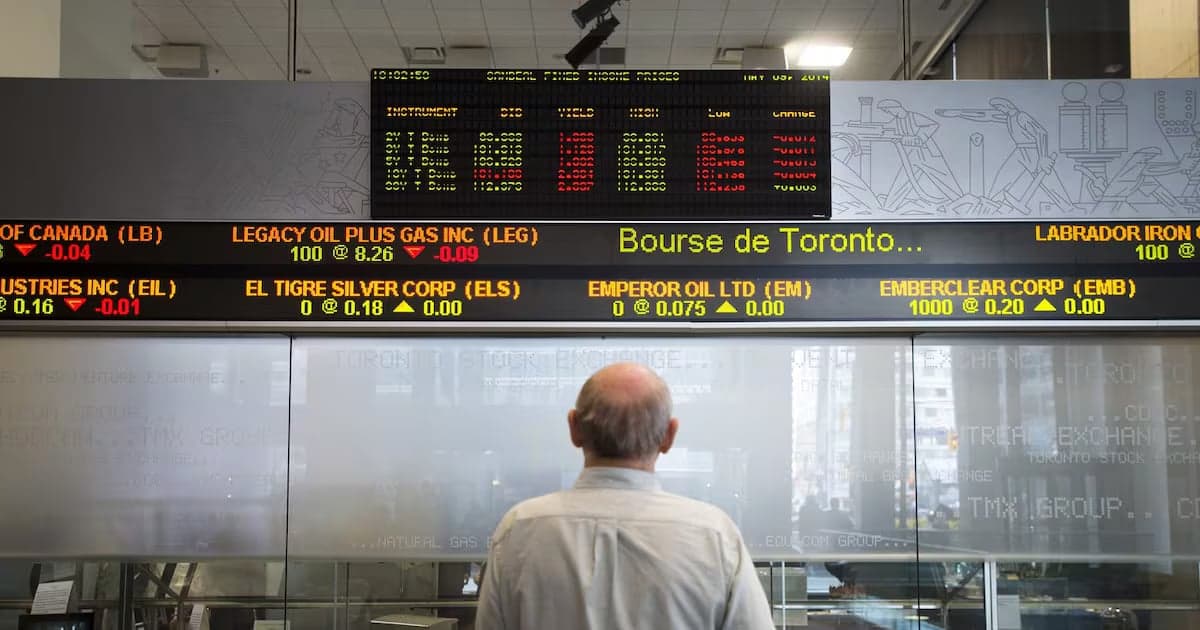
TSX Drops Sharply as Gold Plunge and Hawkish Inflation Signals Batter Miners
National News
- 04
Canada Expedites Permanent Residency for Hong Kongers and Ukrainians Amidst Provincial Objections
National News
 05
Bank of Canada Signals Prolonged Rate-Hike Threat Amid Inflationary Pressures
National News
- 06
Ottawa Allocates 50,800 PR Spaces to Clear Backlogs for Existing Residents
National News
 07
Supreme Court Reserves Decision on Federal Firearms Ban Challenge
National News
 08
Canadian Exports to China Hit Record High Ahead of Carney-Xi Summit
National News
 09
Federal Major Projects Office Under Fire for Private Sector Secondments
National News
- 10
Consultations Begin on Future of Arctic Offshore Oil and Gas Moratorium
National News
- 11
Police Operation Dismantles Interprovincial Drug Trafficking Network
National News
- 12
Cartel Figure Tied to Ex-Canadian Olympian's Drug Syndicate Indicted in US
National News
- 13
Chronic Pain's Economic Burden Now Exceeds Cancer in Canada, Advocates Warn
National News
- 14
Canadian Healthcare Spending to Hit $433 Billion as Investment Shifts to Capacity
National News
- 15
Carney: Trump Dictates Canada-U.S. Trade Policy Despite U.S. Midterms
National News
 16
US-Brokered Russia-Ukraine Peace Talks Begin in Abu Dhabi Amid Security Demands
World & Geopolitics
 17
G7 Ministers Clash Over Ukraine Aid, Maritime Security, and AI Governance in Paris
World & Geopolitics
 18
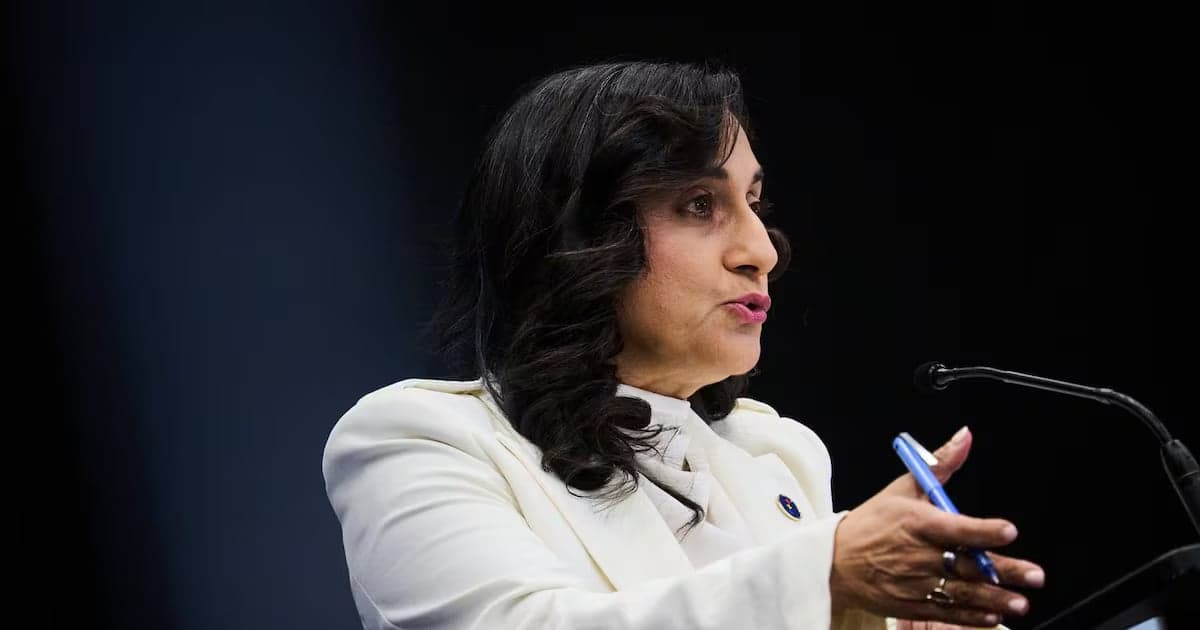
Canada Re-Imposes Sanctions on 11 Iranian Entities Amid Escalating Nuclear and Missile Threats
World & Geopolitics
 19
Carney to Confront Xi on Interference, Eyeing Deeper China Trade Ties
World & Geopolitics
 20
Canada Extends Trade Pact with China to 2028, Deepens Financial Regulatory Ties
World & Geopolitics
 21
Canada Seeks US Tariff Relief, Diversifies Trade Toward Asia Post-Midterms
World & Geopolitics
 22
Ottawa Seeks De-escalation with U.S. While Pursuing Doubled Non-U.S. Trade
World & Geopolitics
 23
Canadian Public Sentiment Shifts Dramatically Towards Asian Trade Partnerships
World & Geopolitics
 24
Ottawa Navigates US Trade Tensions, Pursues Middle Power Alliances
World & Geopolitics
 25
Bank of Canada Notes AI-Driven Global Growth Amid Trade Uncertainty and Labour Slack
World & Geopolitics
- 26
Canada Deepens African Mineral Ties via Lusaka Accords and Lobito Corridor
World & Geopolitics
 27
Canada Extends Tariff Relief on U.S. Imports, Prioritizes Domestic Suppliers
World & Geopolitics
 28
Arctic Drilling Moratorium Unchanged Amid Resource Security Debate
World & Geopolitics
 29
Toronto Expands Winter Services for Homelessness with 1,533 New Spaces
City News
 30
Stellantis Sells Brampton Plant to Defence Firm, Sparking Worker Outrage
City News
 31
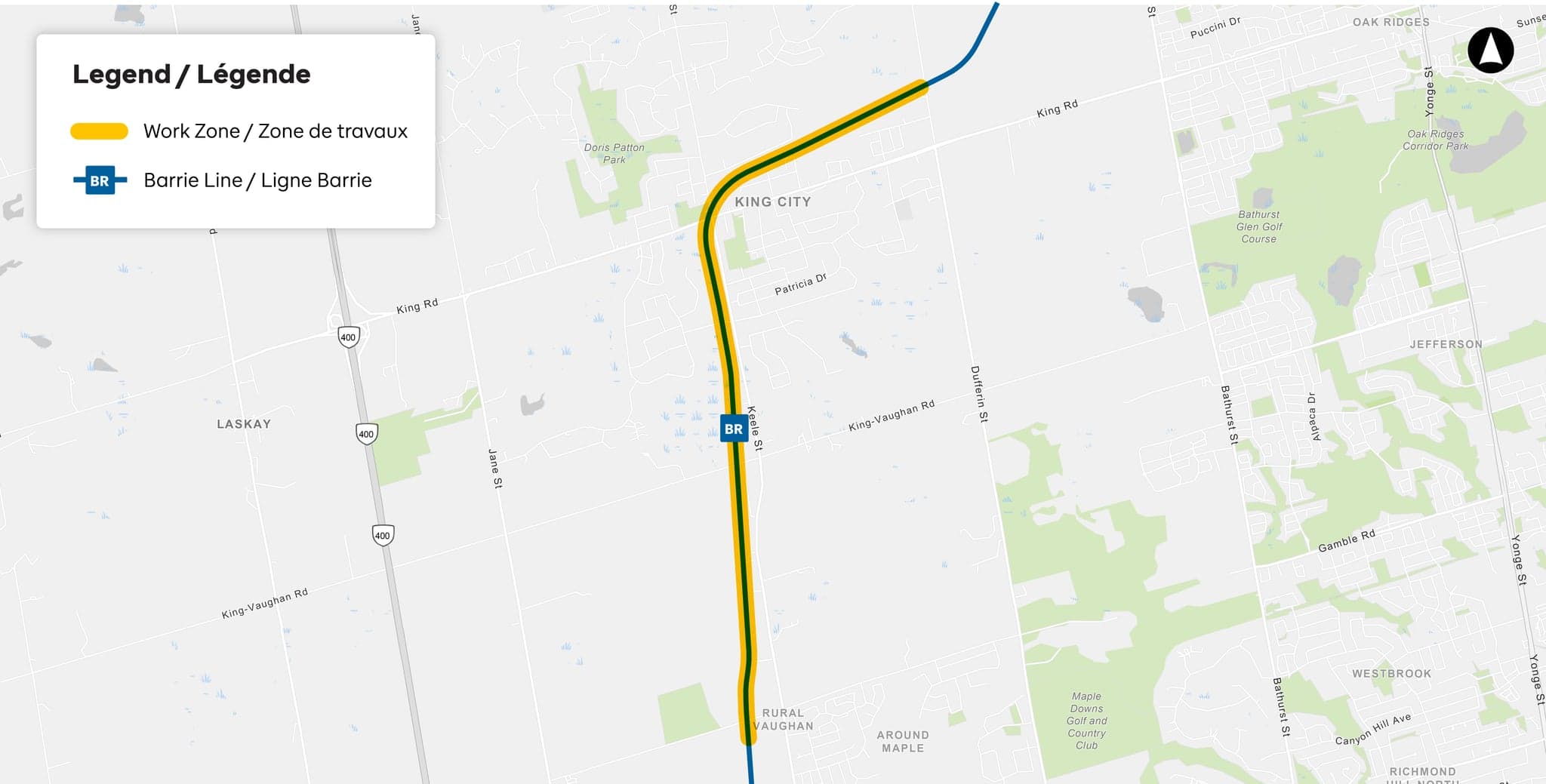
Metrolinx and TTC Announce Major Weekend Transit Shutdowns Impacting UP Express, Barrie GO, and Line 2
City News
 32
Dual Track Emergencies Disrupt TTC Line 1 and Line 2 Service Across Downtown Toronto
City News
- 33
TTC Reroutes Queen Street East Buses to Eastern Avenue After Pilot Diversion Fails
City News
 34
Toronto Police Seek Suspects in Fatal Rexdale Shooting of Barrie Teen
City News
- 35
Fatal Shooting Outside Rexdale Community Centre Ignites Safety Concerns
City News
- 36
Public Safety Alert: Man Found Not Criminally Responsible Escapes Custody in Little Portugal
City News
- 37
GTA Observes Remembrance Day with Ceremonies and Downtown Road Closures
City News
 38
Metrolinx Extends Military PRESTO Fare to UP Express, Enhancing Regional Fare Integration
City News
- 39
Minister Sarkaria Details Ontario's Infrastructure Plan and Centralized Transit Governance
City News
 40
GTA Faces Sharp Weather Shift from Autumn Warmth to Winter Flurries
City News
 41
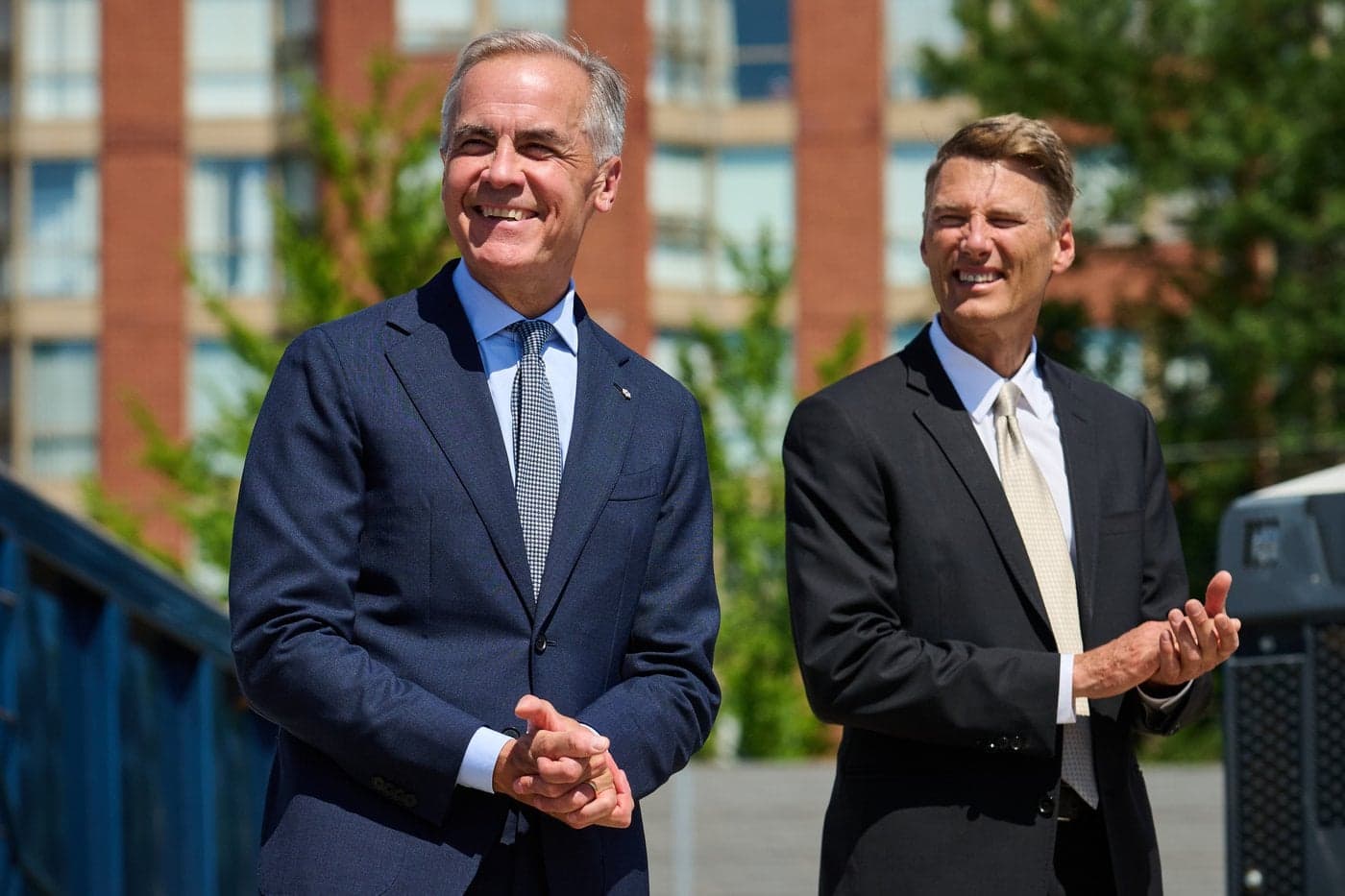
Federal Budget Shifts Housing Focus to Non-Market Construction, Impacting GTA Real Estate
City News
 42
Maple Leafs Suffer Fourth Straight Loss Amidst Deepening Goaltending Crisis
Sports
 43
Blue Jays GM Condemns Outfielder's Islamophobic Social Media Posts
Sports
 44
Raptors' Kawhi Leonard Facing Extended Absence Due to Knee Swelling
Sports
 45
Blue Jays Bolster Depth with Four Minor League Signings Amidst Off-Field Controversy
Sports
 46
Maple Leafs' Slump Worsens Amidst Injuries and Goaltending Woes
Sports
- 47
Blue Jays Secure Minor League Contracts and Pursue Offensive Upgrades
Sports
 48
Blue Jays Fire Mental Skills Coach John Lannan Amid Offensive Woes
Sports
 49
Maple Leafs Recall Tverberg, Reassign Lettieri for Bottom-Six Boost
Sports
 50
Raptors Grapple with Severe Injury Crisis as Barnes and Leonard Remain Sidelined
Sports
- 51
Kawhi Leonard's Knee Swelling Sidelines Raptors Star, Depleting Team Depth
Sports
See all 51 as a listHide the list
- Stellantis Brampton Plant Sale Sparks Political Firestorm, Demands for Minister's Ouster
- Government Launches Landmark $4 Billion Investment in Canadian Arts and Media
- TSX Drops Sharply as Gold Plunge and Hawkish Inflation Signals Batter Miners
- Canada Expedites Permanent Residency for Hong Kongers and Ukrainians Amidst Provincial Objections
- Bank of Canada Signals Prolonged Rate-Hike Threat Amid Inflationary Pressures
- Ottawa Allocates 50,800 PR Spaces to Clear Backlogs for Existing Residents
- Supreme Court Reserves Decision on Federal Firearms Ban Challenge
- Canadian Exports to China Hit Record High Ahead of Carney-Xi Summit
- Federal Major Projects Office Under Fire for Private Sector Secondments
- Consultations Begin on Future of Arctic Offshore Oil and Gas Moratorium
- Police Operation Dismantles Interprovincial Drug Trafficking Network
- Cartel Figure Tied to Ex-Canadian Olympian's Drug Syndicate Indicted in US
- Chronic Pain's Economic Burden Now Exceeds Cancer in Canada, Advocates Warn
- Canadian Healthcare Spending to Hit $433 Billion as Investment Shifts to Capacity
- Carney: Trump Dictates Canada-U.S. Trade Policy Despite U.S. Midterms
- US-Brokered Russia-Ukraine Peace Talks Begin in Abu Dhabi Amid Security Demands
- G7 Ministers Clash Over Ukraine Aid, Maritime Security, and AI Governance in Paris
- Canada Re-Imposes Sanctions on 11 Iranian Entities Amid Escalating Nuclear and Missile Threats
- Carney to Confront Xi on Interference, Eyeing Deeper China Trade Ties
- Canada Extends Trade Pact with China to 2028, Deepens Financial Regulatory Ties
- Canada Seeks US Tariff Relief, Diversifies Trade Toward Asia Post-Midterms
- Ottawa Seeks De-escalation with U.S. While Pursuing Doubled Non-U.S. Trade
- Canadian Public Sentiment Shifts Dramatically Towards Asian Trade Partnerships
- Ottawa Navigates US Trade Tensions, Pursues Middle Power Alliances
- Bank of Canada Notes AI-Driven Global Growth Amid Trade Uncertainty and Labour Slack
- Canada Deepens African Mineral Ties via Lusaka Accords and Lobito Corridor
- Canada Extends Tariff Relief on U.S. Imports, Prioritizes Domestic Suppliers
- Arctic Drilling Moratorium Unchanged Amid Resource Security Debate
- Toronto Expands Winter Services for Homelessness with 1,533 New Spaces
- Stellantis Sells Brampton Plant to Defence Firm, Sparking Worker Outrage
- Metrolinx and TTC Announce Major Weekend Transit Shutdowns Impacting UP Express, Barrie GO, and Line 2
- Dual Track Emergencies Disrupt TTC Line 1 and Line 2 Service Across Downtown Toronto
- TTC Reroutes Queen Street East Buses to Eastern Avenue After Pilot Diversion Fails
- Toronto Police Seek Suspects in Fatal Rexdale Shooting of Barrie Teen
- Fatal Shooting Outside Rexdale Community Centre Ignites Safety Concerns
- Public Safety Alert: Man Found Not Criminally Responsible Escapes Custody in Little Portugal
- GTA Observes Remembrance Day with Ceremonies and Downtown Road Closures
- Metrolinx Extends Military PRESTO Fare to UP Express, Enhancing Regional Fare Integration
- Minister Sarkaria Details Ontario's Infrastructure Plan and Centralized Transit Governance
- GTA Faces Sharp Weather Shift from Autumn Warmth to Winter Flurries
- Federal Budget Shifts Housing Focus to Non-Market Construction, Impacting GTA Real Estate
- Maple Leafs Suffer Fourth Straight Loss Amidst Deepening Goaltending Crisis
- Blue Jays GM Condemns Outfielder's Islamophobic Social Media Posts
- Raptors' Kawhi Leonard Facing Extended Absence Due to Knee Swelling
- Blue Jays Bolster Depth with Four Minor League Signings Amidst Off-Field Controversy
- Maple Leafs' Slump Worsens Amidst Injuries and Goaltending Woes
- Blue Jays Secure Minor League Contracts and Pursue Offensive Upgrades
- Blue Jays Fire Mental Skills Coach John Lannan Amid Offensive Woes
- Maple Leafs Recall Tverberg, Reassign Lettieri for Bottom-Six Boost
- Raptors Grapple with Severe Injury Crisis as Barnes and Leonard Remain Sidelined
- Kawhi Leonard's Knee Swelling Sidelines Raptors Star, Depleting Team Depth
Section 1 of 4
National News
15 stories · 7 min skim
National News
2 min read
Stellantis Brampton Plant Sale Sparks Political Firestorm, Demands for Minister's Ouster
Prime Minister Mark Carney denounced Stellantis's decision to close and sell its Brampton assembly plant to Roshel, calling it a betrayal of Canadian workers and a breach of investment agreements. The move has intensified political pressure, with opposition leaders demanding Industry Minister Mélanie Joly's dismissal and the clawback of federal subsidies. Union representatives warn of wider economic impacts on parts suppliers and workers in other regions.
Read the full storyFold the full story1 min · 6 sources
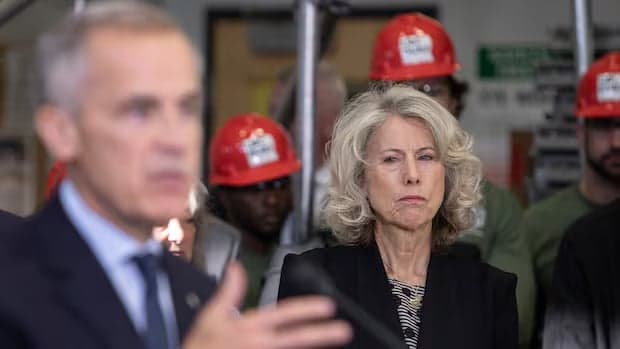
Prime Minister Mark Carney publicly condemned automaker Stellantis’s decision to shutter and sell its Brampton, Ontario vehicle assembly plant to armoured vehicle manufacturer Roshel, calling the move "unacceptable" and a fundamental "betrayal" of Canadian autoworkers[1][2][3]. Addressing reporters in Montreal on November 10, Carney stated that the multinational automaker had breached commitments made under several investment agreements with the Canadian government[2]. Stellantis had previously idled the facility in 2023 for planned retooling to build the next-generation Jeep Compass[3][4], only to subsequently pause that transition and redirect production to its Belvidere Assembly Plant in Illinois[3][4].
The closure triggered an immediate political escalation on Parliament Hill[2]. Conservative Leader Pierre Poilievre staged a press conference outside the shuttered Brampton facility, pointing to approximately $222 million in federal funding extended to Stellantis and demanding that Carney immediately dismiss Industry Minister Mélanie Joly[5][2]. Poilievre accused the Liberal administration of a string of industrial failures, drawing parallels to recent layoffs by Cleveland-Cliffs at Stelco and asserting that federal subsidies had failed to safeguard Canadian manufacturing jobs[2]. Poilievre also insisted that the federal government claw back every dollar of public support delivered to Stellantis[6][4].
Prime Minister Carney defended Joly, asserting that the industry minister has done an "exceptional job" navigating volatile automotive supply chains and hostile trade environments[4]. Stellantis has reportedly offered to return federal funding associated with the scrapped Compass retooling plan[4]. However, labour representatives, led by Unifor Local 444 president James Stewart, warned that the fallout will extend beyond the more than 2,000 laid-off workers in Brampton to touch parts-suppliers and assembly workers in Windsor, where hundreds of employees had transferred under the assumption that the Brampton facility would eventually reopen[3][4].
- Stellantis
- Brampton Assembly Plant
- Roshel
National News
2 min read
Government Launches Landmark $4 Billion Investment in Canadian Arts and Media
Prime Minister Mark Carney announced a historic $4 billion package aimed at revitalizing Canada's cultural sector, including funding for infrastructure, broadcasting, and journalism. The multi-year investment will support national institutions, CBC/Radio-Canada, and the Local Journalism Initiative, while expanding the Canadian Journalism Labour Tax Credit. New tax measures are also introduced to encourage investment in creative technology and equipment.
Read the full storyFold the full story1 min · 6 sources
In a major policy rollout in Montreal, Prime Minister Mark Carney and senior cabinet officials outlined the operational framework for the $4 billion cultural sector package included in the 2026 federal budget, framing cultural funding as a cornerstone of national sovereignty under the theme "Maîtres chez nous" (Masters of our destiny)[1][2]. The sweeping multi-year commitment represents the largest single investment in Canadian cultural infrastructure, domestic broadcasting, and independent journalism in the country's history[1][1].
The funding envelope allocates nearly $800 million over five years on a cash basis to repair and modernize facilities across national cultural institutions, including national museums, Library and Archives Canada, the National Arts Centre, and the National Battlefields Commission[1]. CBC/Radio-Canada is slated to receive $300 million over two years to expand domestic storytelling and stabilize public broadcasting operations[3][1]. To counter mounting media insolvency risks, the government confirmed $134 million for the Local Journalism Initiative and officially broadened the 35% Canadian Journalism Labour Tax Credit to include qualified private audio and audiovisual news organizations[1][3].
Minister of Public Safety Gary Anandasangaree and other cabinet ministers fanned out across the country to outline accompanying initiatives[3][4], including $393.2 million over three years to advance Canada's international leadership in the Francophonie and prepare to host the 2028 Francophonie Summit[3][5]. The government also highlighted corporate tax adjustments, led by a new "Productivity Mega Deduction" designed to let production studios and commercial creators accelerate capital deductions on advanced equipment and creative technology investments[6][3][5]. Cultural industry associations largely praised the intervention, though fiscal critics questioned the scale of spending during an era of tighter federal budgetary discipline.
- Mark Carney
- CBC/Radio-Canada
- Local Journalism Initiative
National News
2 min read
TSX Drops Sharply as Gold Plunge and Hawkish Inflation Signals Batter Miners
Canada's S&P/TSX Composite Index fell significantly, mirroring Wall Street's downturn, driven by a steep correction in gold prices and hawkish inflation signals from the Bank of Canada. The materials and mining sectors were hit particularly hard, with major Canadian gold producers experiencing substantial losses.
Read the full storyFold the full story2 min · 3 sources
Canada's benchmark equities gauge retreated sharply as the S&P/TSX Composite Index dropped 275.81 points, or 0.76%, to finish at 36,170.45[1][2]. The decline abruptly halted a two-session rally and pulled the index 2.13% below its record peak of 36,957.63 reached in late August[2]. Trading was marked by broad risk-off sentiment that mirrored downturns on Wall Street, where the Dow Jones Industrial Average dropped nearly 158 points, the S&P 500 slipped 29 points, and the tech-heavy Nasdaq Composite dropped 187 points[1]. In currency markets, the Canadian dollar weakened, sliding to 70.52 cents US from 70.81 cents US in the previous session[1].
The primary catalyst behind the TSX’s drop was severe weakness in the materials and mining sectors, which heavily weight the Canadian index[1][3]. Gold bullion suffered a steep correction, with the December futures contract plunging US$84.30 to settle at US$4,030.20 per ounce[1]. The precious metal's slump was ignited by hotter-than-expected United States inflation prints and hawkish rhetoric from Federal Reserve officials, both of which dampened expectations for near-term interest rate cuts and lifted sovereign bond yields[3]. Large-cap Canadian gold miners absorbed heavy losses: Barrick Gold sank 5.6%, Agnico Eagle Mines dropped 4.5%, Wheaton Precious Metals shed 4.4%, and Franco-Nevada dropped 2.5%[3]. Mid-tier producers experienced steeper volatility, with Equinox Gold tumbling 6.2% after missing third-quarter earnings expectations and Endeavour Silver falling 2.8% following a revision to its full-year output guidance[3].
Commodity markets also saw pressure in the energy sector, where West Texas Intermediate crude for December delivery slipped 81 cents to US$86.04 per barrel amid speculative hopes that diplomatic talks could ease Middle Eastern conflict scenarios[1][3]. However, the pullback in energy prices and the prospect of easing supply-side logistics offered a modest buffer for rate-sensitive financial institutions and insurers[3]. Great-West Lifeco advanced 2.7% and Fairfax Financial added 2.5%, while iA Financial rose 1.5% after topping third-quarter earnings consensus and announcing an increase to its quarterly dividend[3].
Despite resilience in select financial names, broader market breadth remained decidedly negative, with major domestic commercial banks slipping lower following the Bank of Canada's hawkish policy minutes[3]. Market strategists highlighted that the TSX is navigating cross-currents between elevated baseline resource valuations and the headwinds of higher-for-longer borrowing costs, leaving resource-heavy Canadian portfolios particularly susceptible to sudden commodity and foreign exchange shifts[1][3].
- S&P/TSX Composite Index
- Bank of Canada
- Federal Reserve
National News
2 min read
Canada Expedites Permanent Residency for Hong Kongers and Ukrainians Amidst Provincial Objections
Immigration, Refugees and Citizenship Canada is accelerating permanent residency for tens of thousands of Hong Kongers and Ukrainians already in Canada. The initiative aims to clear processing backlogs for specific pathways that have closed to new applicants. Federal officials state this will not increase net population growth or strain housing, as targeted individuals already live and work in Canadian communities. The move, however, has sparked criticism from some provinces, particularly Alberta, regarding consultation processes and concerns about overall migrant intake figures.
Read the full storyFold the full story2 min · 6 sources
Immigration, Refugees and Citizenship Canada (IRCC) detailed a major time-limited humanitarian measure under Canada’s 2027–2029 Immigration Levels Plan to expedite permanent residency for tens of thousands of Hong Kongers and Ukrainians already residing in the country[1]. Formally outlined by Immigration Minister Lena Metlege Diab following consultations with diaspora leaders, the initiative establishes dedicated permanent resident admission spaces to clear processing backlogs[1]. The policy aims to process all remaining applicants under the Hong Kong permanent residence pathways, which closed to new applicants in August 2026 and represent up to 32,000 admissions, as well as the remaining 18,800 applications under the Ukraine Family Reunification Pathway, which ceased accepting submissions in October 2024[1].
The accelerated pathway is part of a broader federal push to transition temporary residents into permanent status without adding net new population pressures[1]. Because targeted applicants already live, work, and study in Canadian communities, federal officials stressed that the allocation will not exacerbate ongoing housing shortages or strained infrastructure[1]. The move follows data showing non-permanent residents constituted 6.7 percent of the national population as of July 1, down from an October 2024 peak of 7.4 percent[2]. Despite this downward trend, the broader immigration targets face sharp domestic scrutiny following federal budget releases and an annual immigration report that noted roughly 3.3 million people held temporary visas in Canada during 2025[2][3].
The policy has exposed jurisdictional friction between Ottawa and the provinces[4]. Alberta Premier Danielle Smith criticized the federal government, stating that provinces were not adequately consulted before opening the door to permanent residency transitions for nearly 200,000 individuals nationwide across various immigration programs next year[4]. Meanwhile, federal Conservative immigration critic Michelle Rempel Garner accused the administration of utilizing humanitarian carve-outs to mask total migrant intake figures[3]. In response, Minister Diab defended the framework as an essential step toward providing administrative certainty to displaced individuals who have faced years of precarious status and wait times that have historically exceeded a decade under standard humanitarian streams[1][2][3].
Beyond resolving legal uncertainty for displaced nationals, the measure directly impacts regional labor markets where these cohorts are heavily employed[1][5]. Social service providers and community settlement agencies in major metropolitan hubs welcomed the accelerated timeline, citing that permanent residency will unlock access to standardized social security nets, educational subsidies, and stable healthcare coverage that are often restricted under temporary visas[1][6]. The federal government confirmed that clearing these humanitarian backlogs will also help normalize broader family sponsorship processing timelines, aiming to bring extended waiting periods closer to the federal standard 12-month service target[3].
- Immigration
- Refugees and Citizenship Canada
- Hong Kong
National News
2 min read
Bank of Canada Signals Prolonged Rate-Hike Threat Amid Inflationary Pressures
The Bank of Canada's latest meeting deliberations indicate a hawkish stance, suggesting that further interest rate increases may be necessary to combat persistent inflation. Officials are concerned about energy price shocks from Middle Eastern conflict and businesses passing on higher costs, leading to upward revisions in inflation forecasts.
Read the full storyFold the full story2 min · 7 sources
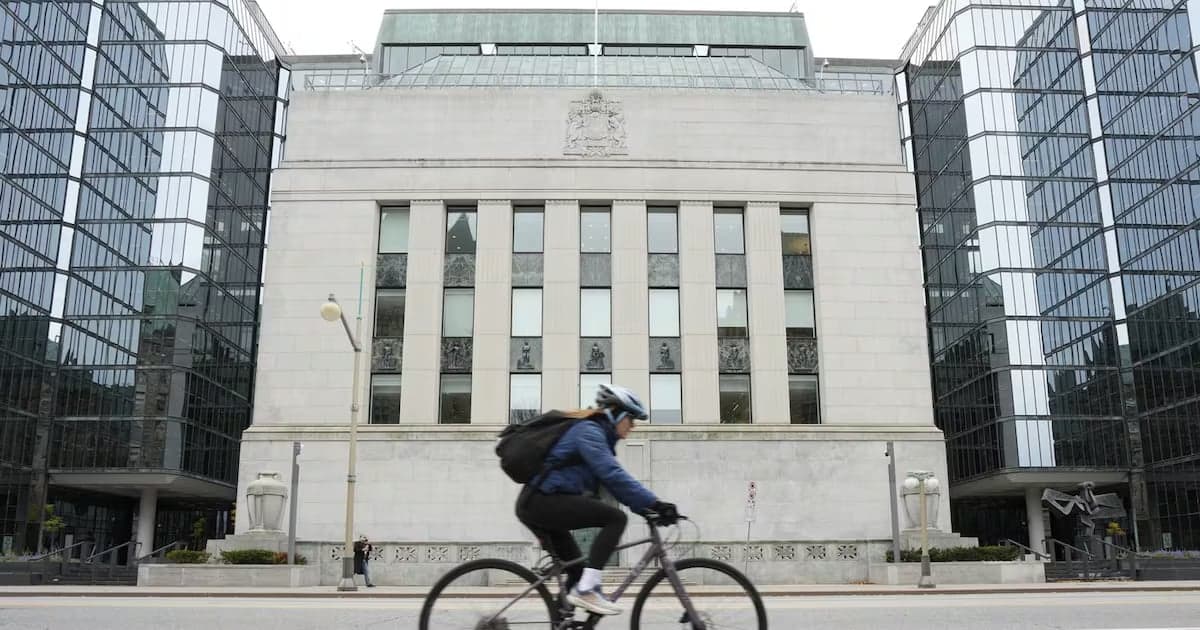
The Bank of Canada released the official Summary of Governing Council Deliberations from its late-October monetary policy meeting, sending a hawkish signal to financial markets that further interest rate increases may be necessary[1][2]. On October 28, the central bank raised its benchmark overnight policy rate by 25 basis points to 2.50% - marking its first rate increase since July 2023[3][2]. The published summary revealed that Governing Council members, led by Governor Tiff Macklem and Senior Deputy Governor Carolyn Rogers, concluded that pervasive macroeconomic uncertainty could not justify policy paralysis when faced with mounting inflationary impulses[2][4].
The deliberations detailed the council's growing concern over the ongoing conflict in the Middle East, which has entered its eighth month and kept global energy markets under sustained pressure[2]. Central bank officials acknowledged that while monetary policy has no direct leverage to suppress global crude oil prices, higher borrowing costs are critical to prevent elevated fuel and transportation overhead from becoming deeply embedded in core consumer prices and broad-based inflation expectations[1][2]. Governing Council members noted that near-term inflation expectations among businesses have shifted upward[4]. While higher supply-chain costs have not yet been fully passed through to end-consumers, the bank’s internal enterprise surveys indicate that Canadian firms plan to roll out broader price increases over the coming year[1][5].
In light of these persistent cost pressures, the Bank of Canada revised its macroeconomic projections, warning that annual headline inflation is likely to hit 3.5% by the end of 2026 and stay above the 3% upper bound of its control band through much of 2027[1][2]. Council members deliberated on whether an aggressive multi-meeting tightening cycle would be necessary, but ultimately settled on proceeding on a meeting-by-meeting basis to evaluate how heavily cross-border trade friction, global financing conditions, and debt-laden Canadian households respond to higher debt-servicing costs[2].
The hawkish undertone of the minutes quickly reverberated through domestic capital markets and banking institutions[1]. Economists noted that the release effectively extinguishes market expectations of a pause or quick retreat, shifting commercial bank expectations toward a potentially prolonged tightening bias[3][6]. Commercial lenders and fixed-income analysts pointed out that rising yields on Guaranteed Investment Certificates (GICs) and mortgage bonds will continue to tighten financial conditions for home buyers and businesses[1][7], underscoring the delicate policy tightrope Ottawa and the central bank face as they attempt to tame inflation without driving consumer credit into a severe contraction[6].
- Bank of Canada
- Tiff Macklem
- Carolyn Rogers
National News
2 min read
Ottawa Allocates 50,800 PR Spaces to Clear Backlogs for Existing Residents
The government is dedicating 50,800 permanent residence spaces over three years to process backlogged applications from individuals already in Canada, primarily from Hong Kong and Ukraine. This measure targets those who arrived under emergency pathways and aims to expedite their transition to permanent status without increasing overall immigration intake. Officials state the goal is to reduce system backlogs and administrative burdens while integrating residents already established in Canadian communities.
Read the full storyFold the full story1 min · 3 sources
Minister of Immigration, Refugees and Citizenship Lena Metlege Diab announced a time-limited humanitarian adjustment within the 2027–2029 Immigration Levels Plan, allocating up to 50,800 dedicated permanent residence (PR) spaces to clear processing backlogs for foreign nationals already residing in Canada[1][2]. The policy specifically targets individuals who arrived under emergency pathways established in response to unrest and geopolitical conflict in Hong Kong and Ukraine[1].
The targeted measure designates up to 32,000 permanent resident spaces in 2027 to finalize all remaining applications submitted under the Hong Kong humanitarian pathway, which closed to new applicants in August 2026[1]. An additional 18,800 admissions are allocated to process outstanding files under the Ukraine Family Reunification Pathway, which ceased accepting new applications in October 2024[1]. Departmental officials emphasized that the measure creates no new programs and does not expand intake; rather, it expedites backlogged files for individuals already integrated into local labour markets, communities, and housing sectors[1][3].
The announcement forms part of an overarching recalibration intended to curb Canada’s temporary resident volume while ensuring administrative fairness[1]. By transitioning individuals already residing in Canada into permanent status rather than admitting net-new arrivals, the Immigration Department aims to reduce system backlogs without placing additional strain on municipal public services and rental supply[1]. Immigration advocacy groups and diaspora organizations welcomed the move, noting that years of processing uncertainty had left thousands of workers and families in legal limbo[1].
- Lena Metlege Diab
- Hong Kong
- Ukraine
National News
1 min read
Supreme Court Reserves Decision on Federal Firearms Ban Challenge
The Supreme Court of Canada has reserved its judgment on a legal challenge to the federal government's ban on assault-style firearms, enacted via an order-in-council. Appellants argue the government exceeded its authority, while the Crown maintains it acted within its regulatory powers to ensure public safety. The ruling, expected in early 2027, will define executive regulatory powers and impact the future of the government's firearm buyback program.
Read the full storyFold the full story1 min · 3 sources
The Supreme Court of Canada completed hearing oral arguments and formally reserved judgment on the constitutional challenge against the federal government’s sweeping ban on assault-style firearms[1][2]. The legal challenge, spearheaded by multiple firearms rights organizations and licensed gun owners, questions whether cabinet overstepped its statutory and constitutional jurisdiction by using an order-in-council rather than direct parliamentary legislation to outlaw hundreds of firearm models and variants[3][2].
Counsel for the appellants argued before the nine-judge panel that the Governor-in-Council exceeded the scope of the Criminal Code by classifying commonly owned sport-shooting and hunting rifles as prohibited without adequate individual assessment or legislative debate[2]. Federal government attorneys countered that Parliament lawfully delegated broad regulatory authority to cabinet to define and reclassify dangerous weapons to protect public safety, pointing out that lower courts had consistently upheld the executive order as a valid exercise of federal criminal law authority[1][2].
The high court's eventual ruling, anticipated in early 2027, will establish an authoritative precedent defining the boundaries of executive regulatory powers in Canadian administrative and criminal law[1]. With the federal firearm buyback program stalled and repeated extensions granted to the general amnesty period protecting existing owners from criminal liability, the impending judgment will determine whether Ottawa can proceed with mandatory compensation and confiscation schemes or must repeal the regulatory restrictions entirely[1].
- Supreme Court of Canada
- Governor-in-Council
- Criminal Code
National News
2 min read
Canadian Exports to China Hit Record High Ahead of Carney-Xi Summit
Canadian merchandise exports to China have surged to record levels, driven by significant increases in natural resources and agricultural commodities. This economic acceleration follows a period of strained bilateral relations and precedes Prime Minister Mark Carney's state mission to Beijing for a summit with President Xi Jinping.
Read the full storyFold the full story2 min · 9 sources
Canadian trade with China has surged to historical peaks, driven by massive increases in Western Canadian natural resources and agricultural commodities[1][2]. Fresh third-quarter trade data compiled by the China Institute at the University of Alberta shows that Canadian merchandise exports to China have expanded 41% year-to-date in 2026 compared to the same period in the prior year[3]. The acceleration has elevated bilateral shipments to new heights, marking a dramatic economic turnaround from the diplomatic and trade chill that characterized bilateral relations over much of the past decade[2]. Philippe Rheault, director of the China Institute, noted that outbound export volumes are on track to set an all-time annual record as shipping volumes through West Coast ports continue to accelerate[2].
The export boom is heavily anchored in Western Canada's energy and agro-industrial sectors[1][2]. Canadian crude oil shipments to China surged by 159% over the past quarter alone, leveraging expanded tidewater delivery capabilities provided by the expanded Trans Mountain pipeline system to access Pacific basin refiners[4][5]. Simultaneously, Canadian agricultural products have regained massive market share in Chinese supply chains[6]: canola meal exports jumped to $360.3 million from just $12.9 million during the equivalent period last year[4], dry pea exports surged to $147.6 million from $9.2 million[4], and Canadian beef exports reached $181.4 million after being virtually locked out of Chinese markets twelve months ago[4].
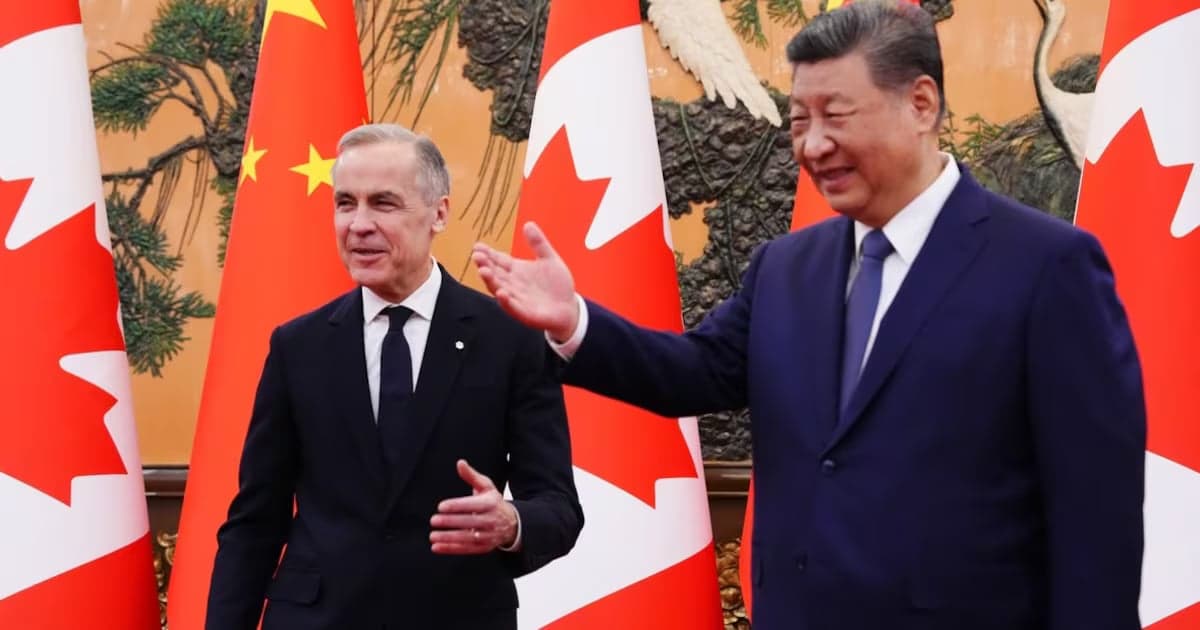
The trade milestone unfolds against high-stakes diplomatic maneuvering, as Prime Minister Mark Carney finalizes preparations for an official state mission to Beijing next week that will feature a direct bilateral summit with Chinese President Xi Jinping[1][2]. The upcoming summit follows a preliminary framework agreed upon earlier in the year to restore ministerial communications and economic dialogues[7][6]. Concrete bilateral steps were cemented when International Trade Minister Maninder Sidhu announced a two-year extension of the bilateral steel and aluminum trade arrangement through the end of 2028, ensuring mutual remission and export continuity[7]. The discussions have also established three strategic institutional pacts between Ottawa and Beijing covering joint regulatory oversight, financial sector cooperation, and direct coordination between their respective central banks and finance ministries[3].
The rapid expansion of Chinese trade forms the operational centerpiece of the Carney administration's broader economic doctrine, which targets a 50% expansion in exports to China by 2030 and a doubling of total non-U.S. exports by 2035[3][4]. This aggressive diversification strategy is designed to insulate the domestic economy from intensifying protectionist policies, tariff threats, and regulatory volatility in the United States[8][3]. While Canadian exporters and Western agricultural producers have strongly welcomed the surge in demand[1][4], trade policy analysts observe that expanding economic interdependence with Beijing presents delicate geopolitical balances, especially as ongoing trilateral CUSMA reviews and contentious bilateral trade negotiations with Washington hang in the balance[9][3].
- Canada
- China
- Mark Carney
National News
2 min read
Federal Major Projects Office Under Fire for Private Sector Secondments
The federal government has revealed that 17 private-sector employees are on secondment to the Major Projects Office (MPO), tasked with expediting infrastructure approvals. These employees, from financial institutions and energy corporations, remain paid by their parent companies, raising concerns about transparency, lobbying, and regulatory capture. Opposition parties are demanding greater scrutiny of potential conflicts of interest.
Read the full storyFold the full story1 min · 5 sources
The federal government tabled internal records with the House of Commons Standing Committee on Environment and Sustainable Development revealing that 17 private-sector corporate employees have been seconded to the federal Major Projects Office (MPO)[1][2]. Established by Prime Minister Carney to fast-track regulatory reviews and coordinate approvals for major infrastructure deemed in the national interest - such as cross-provincial energy transmission and proposed export pipelines - the MPO has drawn sharp questions from opposition parties regarding transparency, corporate lobbying, and regulatory capture[2].
The disclosure confirmed that the loaned personnel originate from major Canadian financial institutions, national rail networks, and heavy energy corporations, including ATCO EnPower and Pembina Pipeline Corporation[2][3]. According to the government briefing documents, the parent companies continue to cover 100 percent of the salaries and benefits of their employees while they serve inside the federal regulatory machinery[2]. Conservative and Bloc Québécois MPs pushed for months to force the release of this list, alleging inherent conflicts of interest when private infrastructure and resources firms provide direct staff to government offices responsible for accelerating project approvals[2].
Appearing before committee members, Internal Trade Minister Dominic LeBlanc defended the public-private staffing arrangement, cautioning that disclosing the individuals’ identities risks staging an "artificial, fabricated gotcha moment" that unfairly impugns dedicated professionals[4]. LeBlanc maintained that all seconded staff remain bound by federal conflict-of-interest statutes, ethics screens, and confidentiality covenants that formally recuse them from files directly involving their parent employers[2]. Despite these assurances, watchdogs and opposition critics argue that embedding corporate personnel into executive regulatory hubs erodes public trust in environmental review independence[2][5].
- Major Projects Office (MPO)
- Mark Carney
- ATCO EnPower
National News
1 min read
Consultations Begin on Future of Arctic Offshore Oil and Gas Moratorium
The federal government has launched consultations with territorial governments and Indigenous leaders regarding the future of the Arctic offshore oil and gas moratorium. While acknowledging discussions on resource access for energy security, Prime Minister Carney emphasized that the process respects Indigenous self-determination and environmental protection. The government has allocated funds to support regional consultations, not to signal an immediate lifting of the ban.
Read the full storyFold the full story1 min · 2 sources
Prime Minister Mark Carney confirmed that the federal government has initiated formal consultations with territorial governments and northern Indigenous leadership concerning the future of Canada's moratorium on Arctic offshore oil and gas exploration[1]. The moratorium, originally enacted in 2016 across Canadian Arctic waters, has been a key flashpoint between natural resource developers and environmental groups[2].
Carney clarified that provisions in the 2026 budget dedicating $11 million for Arctic energy governance are intended to build capacity for regional consultation rather than signal an imminent decision to repeal the drilling ban[1]. The talks centre primarily on the Beaufort Sea and involve the Inuvialuit, whose settled land claim encompasses significant offshore marine territory[1]. Carney emphasized that the process reflects a 2023 co-management agreement with Inuit leadership, stating that any dialogue regarding the offshore energy regime must respect Indigenous self-determination while upholding strict environmental protections[1].
The confirmation followed media scrutiny over leaked Department of Finance discussions exploring whether resource access in the Arctic could bolster national energy security and northern infrastructure[2]. Northern leaders have voiced divergent views on the issue, with some community leaders prioritizing economic self-sufficiency and resource royalties, while environmental organizations warn that lifting the ban would jeopardize fragile marine ecosystems and run counter to federal decarbonization commitments[1].
- Mark Carney
- Beaufort Sea
- Inuvialuit
National News
2 min read
Police Operation Dismantles Interprovincial Drug Trafficking Network
A coordinated police operation led by the Winnipeg Police Service has dismantled a significant interprovincial drug trafficking network. The investigation, involving multiple federal and provincial law enforcement agencies, targeted the movement of large quantities of methamphetamine, cocaine, ketamine, and prescription opioids into Manitoba from Western Canada and Ontario. The syndicate utilized various methods, including personal vehicles, courier services, and postal shipments, to distribute narcotics.
Read the full storyFold the full story1 min · 1 source
The Winnipeg Police Service (WPS) Organized Crime Unit, operating in coordination with federal and interprovincial law enforcement agencies, dismantled an organized crime network responsible for moving commercial quantities of illicit narcotics across Canada[1]. The months-long investigation, funded through Manitoba Justice and conducted alongside the Canada Border Services Agency (CBSA), the Ontario Provincial Police (OPP), Peel Regional Police, and the Royal Canadian Mounted Police (RCMP), targeted high-level distribution pipelines funneling methamphetamine, cocaine, ketamine, and prescription opioids directly into Manitoba[1].
The illicit enterprise relied on an extensive cross-country logistics apparatus, sourcing narcotics primarily from British Columbia, Alberta, and Ontario before moving them into distribution hubs across Winnipeg[1]. Investigators revealed that the syndicate exploited multiple transit vectors to bypass traditional detection, utilizing personal vehicles, third-party courier services, postal shipments, and commercial airline passengers[1]. Upon arrival in Manitoba, the shipments were secured in a series of stash houses and staging properties before being distributed through local street gangs and secondary criminal networks[1].
The operation culminated in the coordinated execution of search warrants spanning residences and storage sites across Winnipeg and the Greater Toronto Area[1]. Law enforcement officers seized approximately 29 kilograms of methamphetamine valued at $174,000, 12 kilograms of cocaine worth $360,000, 3 kilograms of ketamine valued at $101,000, and roughly 25,000 prescription opioid pills with an estimated street value of $312,000[1]. In addition, officers confiscated commercial quantities of MDMA, approximately 1,800 doses of LSD, and substantial cash reserves linked to illicit proceeds[1].
Public safety officials highlighted the operation as a critical blow against the supply lines feeding the ongoing toxic drug and overdose crises in central Canada[1]. By severing the interprovincial logistics chain connecting suppliers in Ontario and Western Canada to regional markets, police disrupted supply streams that have fueled violence and property crime across urban centers[1]. Manitoba authorities indicated that the coordinated multi-agency framework established during the investigation will serve as a continuing operational model to target interprovincial trafficking syndicates exploiting commercial transport networks[1].
- Winnipeg Police Service
- Manitoba Justice
- Canada Border Services Agency
National News
2 min read
Cartel Figure Tied to Ex-Canadian Olympian's Drug Syndicate Indicted in US
US federal prosecutors have unsealed an indictment against Roberto Gomez, a fugitive Mexican cartel operative allegedly linked to the international drug trafficking enterprise of former Canadian Olympic snowboarder Ryan James Wedding. Gomez is accused of being a high-ranking operative orchestrating drug shipments and using illicit contacts to gain sensitive law enforcement intelligence to help the syndicate evade detection.
Read the full storyFold the full story1 min · 1 source
United States federal prosecutors in the Central District of California, working in collaboration with RCMP Federal Policing and the Los Angeles Police Department, unsealed a six-count indictment targeting a fugitive Mexican cartel operative connected to an international narcotics enterprise led by former Canadian Olympic snowboarder Ryan James Wedding[1]. The indictment charges 51-year-old Roberto Gomez - known within illicit networks as "Rob Flores" and "Fat Boy" - with conspiracy to distribute narcotics and possession with intent to distribute[1].
According to prosecutors, Gomez operated out of Mexico as a high-ranking cartel plaza boss and reputed member of South Los Angeles’s 38th Street gang, serving as an operational linchpin for Wedding’s billion-dollar transnational drug operation[1]. In addition to orchestrating bulk drug shipments, Gomez is accused of leveraging illicit political and security contacts to obtain sensitive law enforcement intelligence[1]. This information was allegedly funneled to Wedding and his lieutenants to help the syndicate evade detection, track police activities, and compromise active investigations conducted by both American and Canadian authorities[1].
The case was prosecuted under the Homeland Security Task Force (HSTF) framework, an international enforcement initiative aimed at taking down sophisticated cross-border criminal organizations, gang networks, and cartel distribution hubs[1]. Investigative units noted that Wedding, who represented Canada at the 2002 Winter Olympics, transformed his illicit network into a major pipeline supplying cocaine and synthetic opioids from South America and Mexico through the United States into Ontario, Quebec, and British Columbia[1].
The charges underscore the expanding footprint of transnational cartels within Canada’s domestic illicit narcotics markets and the critical role Canadian federal law enforcement plays in cross-border operations[1]. If convicted of the federal conspiracy charges, Gomez faces a mandatory minimum sentence of 10 years and a statutory maximum sentence of life in federal prison[1]. Officials from the RCMP Federal Policing unit reiterated their commitment to tracking down the network's outstanding fugitives, cautioning that organized crime figures operating across national borders will continue to face integrated legal action from allied enforcement agencies[1].
- United States federal prosecutors
- RCMP Federal Policing
- Los Angeles Police Department
National News
2 min read
Chronic Pain's Economic Burden Now Exceeds Cancer in Canada, Advocates Warn
A new analysis reveals that chronic pain imposes a greater economic burden on Canada's healthcare system and national productivity than cancer. Advocates highlight that millions of Canadians face fragmented care and lengthy waitlists for specialized treatment, with significant service gaps in non-metropolitan areas. The lack of timely access to integrated pain management programs contributes to increased reliance on emergency departments and premature labor market exits.
Read the full storyFold the full story1 min · 2 sources
A healthcare analysis released by clinical leaders highlighted the escalating crisis of chronic pain management in Canada, revealing that the condition now imposes a heavier economic burden on the healthcare system and national productivity than cancer[1]. Drawing on findings from the Canadian Pain Task Force, advocates from Pain BC emphasized that millions of Canadians suffer from persistent, unmanaged pain while encountering fragmented care pathways and multi-year waitlists for specialized clinical intervention[1].
Maria Hudspith, Chief Executive Officer of Pain BC and former co-chair of the Canadian Pain Task Force, pointed out that access to multidisciplinary pain clinics varies widely across the country, with non-metropolitan and rural communities facing near-total service voids[1]. While primary care providers are frequently the first line of defense, widespread family doctor shortages mean that chronic pain patients are disproportionately forced to rely on emergency departments that are ill-equipped to treat long-term neurological or musculoskeletal conditions[2][1]. This dynamic exacerbates hospital overcrowding and heightens the risk of acute patient crises[2][1].
The analysis underscored the direct relationship between inadequate pain care and the broader public health crisis around substance use and disability[1]. With timely access to specialized physical therapy, psychological support, and targeted pain interventions severely restricted by public insurance limitations, patients often face unmanaged symptoms that lead to premature labor market exits and mental health deterioration[1]. Clinical experts called on provincial health authorities to immediately implement low-barrier, integrated pain programs and shorten diagnostic wait times to mitigate both human suffering and compounding costs to the healthcare safety net[1].
- Pain BC
- Canadian Pain Task Force
- Maria Hudspith
National News
2 min read
Canadian Healthcare Spending to Hit $433 Billion as Investment Shifts to Capacity
Canada's healthcare expenditures are projected to reach $433 billion in 2026, a nearly 5% increase year-over-year, consuming about 13% of GDP. This spending growth, while moderated from pandemic peaks, significantly exceeds pre-pandemic levels. A key driver identified is a shift towards strategic investments in health system capacity, including advanced technologies and streamlined care pathways, rather than solely covering inflationary costs and population growth.
Read the full storyFold the full story2 min · 4 sources
Total health expenditures across Canada are projected to reach $433 billion in 2026, marking an increase of nearly 5 percent from the previous year, according to a national report published by the Canadian Institute for Health Information (CIHI)[1]. The projection establishes that healthcare spending is continuing to outpace national economic growth, consuming roughly 13 percent of Canada’s gross domestic product (GDP)[1]. While growth rates have moderated compared to the sharp spikes witnessed during the pandemic years, overall spending trajectories remain significantly higher than historical pre-pandemic baselines[1].
The report highlights a critical shift in the structural drivers of public healthcare expenditures[1]. In the immediate post-pandemic period, budgetary surges were predominantly consumed by inflationary costs, population growth, and the immediate pressures of an aging society[1]. In 2026, CIHI estimates that health spending will outgrow those baseline demographic and inflationary demands by more than $5 billion[1]. Lacey Langlois, director of Health Spending at CIHI, noted that this excess spending reflects deliberate, systemic capital investments aimed at expanding health system capacity, overhauling care delivery pathways, and deploying advanced clinical technologies, including artificial intelligence and diagnostic modernization[1].
Hospitals and clinical staffing continue to account for the largest single share of Canada's health envelope, absorbing more than 25 percent of all national spending[1]. Rising compensation costs for nurses, physicians, and allied health professionals represent the primary component of institutional budgets as provincial health authorities attempt to stabilize emergency departments and curb severe staffing attrition[1][2]. Despite increased outlays, frontline healthcare delivery remains under immense strain[2]. Health policy researchers and patient advocacy groups pointed out that emergency rooms across multiple provinces continue to grapple with record wait times and overcrowding, with an increasing proportion of patients leaving triage centers without receiving care[2].
The economic burden of managing complex, chronic conditions has also prompted targeted interventions from non-governmental and philanthropic sectors[3][4]. To address structural gaps in specialized disciplines, institutional donors stepped in with targeted private capital; the RBC Foundation announced a $1.5 million three-year grant to the Women's College Hospital Foundation in Toronto to establish clinical training and treatment models for menopause care and hereditary cancer detection[3]. Healthcare analysts caution that while heavy capacity spending may cause short-term budgetary friction for provincial treasuries, expanding specialized and preventative infrastructure remains the only viable path to alleviating downstream pressure on acute care facilities[1][3].
- Canadian Institute for Health Information
- CIHI
- RBC Foundation
National News
1 min read
Carney: Trump Dictates Canada-U.S. Trade Policy Despite U.S. Midterms
Prime Minister Mark Carney stated that U.S. President Donald Trump retains ultimate authority over Canada-U.S. trade policy, regardless of the U.S. midterm election outcomes. He cautioned Canadian businesses against expecting legislative changes from Congress to resolve trade disputes or lift tariffs, emphasizing that direct engagement with the Trump administration remains the most effective strategy for Ottawa.
Read the full storyFold the full story1 min · 6 sources
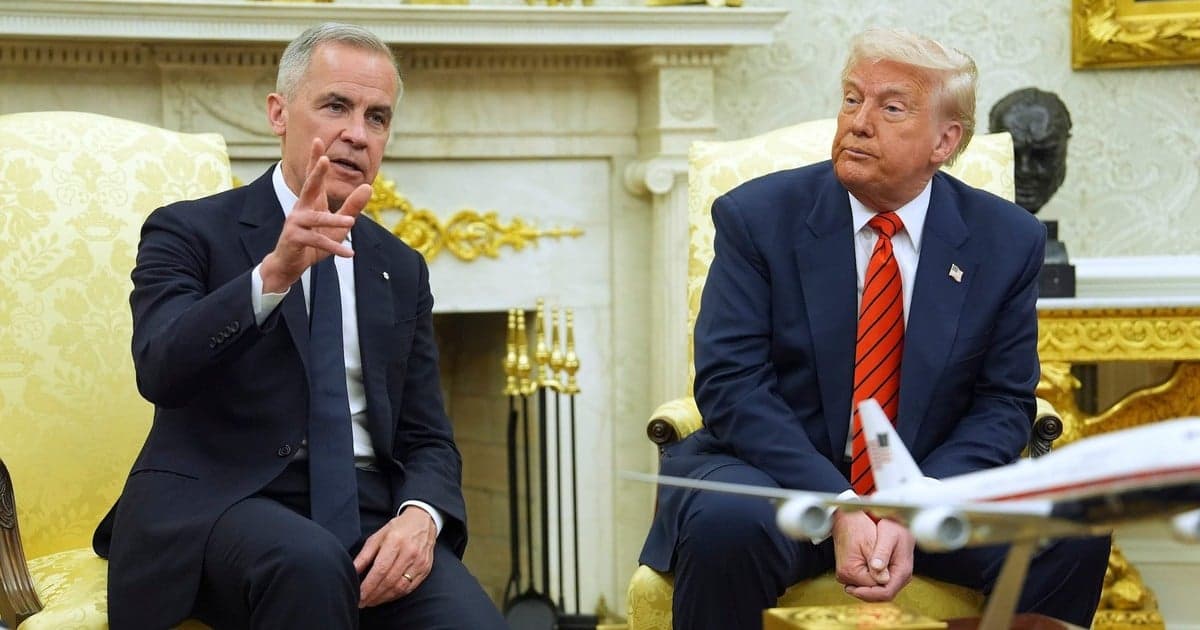
Prime Minister Mark Carney tempered expectations that Democratic gains in the recent U.S. midterm elections would ease bilateral trade friction, asserting that U.S. President Donald Trump and his executive administration remain the sole arbiters of cross-border trade policy[1][2]. Speaking to reporters in Montreal on November 10, Carney addressed hopes among Canadian business groups that a newly divided or Democratic-leaning U.S. Congress might dismantle White House tariffs levied against Canadian commodities and goods[3][2].
Carney explicitly stated that constitutional authority over foreign commerce and executive trade implementation will keep the Trump White House at the center of all bilateral negotiations over the next two to three years[2]. Congressional Democrats had campaigned extensively against consumer price spikes attributed to cross-border duties, pledging to push back against broad tariff regimes on key trading allies[3][2]. However, Carney cautioned that relying on legislative interventions in Washington would be a strategic miscalculation for Canadian negotiators[2].
The remarks signal that Ottawa’s high-level trade delegations will continue direct engagement with the Executive Branch as the Carney government seeks sector-specific exemptions on steel, aluminum, and automotive components[4][2]. The comments come as Carney prepares for upcoming international summits, including the APEC gathering in Shenzhen, where trade realignments and middle-power supply chain strategies are set to dominate the bilateral agenda[5][6].
- Mark Carney
- Donald Trump
- APEC
Section 2 of 4
World & Geopolitics
13 stories · 7 min skim
World & Geopolitics
2 min read
US-Brokered Russia-Ukraine Peace Talks Begin in Abu Dhabi Amid Security Demands
High-stakes peace negotiations between Russia, Ukraine, and the United States have commenced in Abu Dhabi, marking the first direct talks between Moscow and Kyiv since February. Mediated by U.S. envoys, the summit aims to establish postwar security guarantees, but initial sessions revealed significant ideological divides. Russia is prioritizing a restructuring of European security architecture, demanding NATO roll back post-1997 expansions.
Read the full storyFold the full story2 min · 9 sources
Delegations from Russia, Ukraine, and the United States convened in Abu Dhabi, United Arab Emirates, for high-stakes, two-day trilateral peace negotiations mediated by U.S. envoys Jared Kushner and Steve Witkoff[1][2][3]. Marking the first direct talks between Moscow and Kyiv since February, the sessions brought together a substantial Russian delegation led by Kremlin aide Vladimir Medinsky, GRU military intelligence chief Igor Kostyukov, and General Staff Information Directorate Deputy Head Alexander Zorin, alongside high-ranking Ukrainian officials including Defense and Intelligence leadership[4][2][5]. While the United States framed the summit as a genuine opportunity to end nearly five years of full-scale warfare and establish concrete postwar security guarantees, the opening sessions revealed deep ideological divides between the belligerents[1][5][6].
Diplomatic tensions surged when Russian Foreign Minister Sergei Lavrov declared that it is "absolutely reasonable" to negotiate the fundamental restructuring of the entire European security architecture before any resolution to the war in Ukraine can take place[7][7]. Russian envoys in Abu Dhabi reiterated that ending the conflict is merely subordinated to Moscow's primary demand: reviving its December 2021 ultimatums that NATO halt military deployments and roll back personnel and weapons infrastructure across all member states that joined the alliance after 1997[7][7]. This proposal, which seeks to grant the Kremlin an effective veto over NATO’s eastern defense posture, was rejected by Ukrainian officials and contradicts previous assertions by Western diplomats that state sovereignty and alliance choices must remain inviolable[7][7][8]. On the battlefield, fighting continued unabated; overnight, Russian forces launched 162 strike drones and a ballistic missile at Ukrainian population centres, while Ukraine deployed 155 drones targeting facilities across eight Russian regions and occupied Crimea[5].
The geopolitical ramifications of these negotiations pose critical questions for Canadian foreign and defense policy[9][2]. Speaking on the sidelines of the G7 summit in Paris, Canadian Foreign Affairs Minister Anita Anand confirmed that Canada is closely monitoring the Abu Dhabi framework, specifically regarding long-term security guarantees for Kyiv, the protection of Ukrainian energy infrastructure, and the security of agricultural corridors in the Black Sea[9]. As a core NATO ally with thousands of personnel rotating through Eastern Europe - most notably leading NATO’s multinational enhanced Forward Presence Battle Group in Latvia - Canada has a massive operational and strategic stake in resisting Russian attempts to undermine the alliance's post-1997 collective defense guarantees[7]. Any proposed European security architecture that compromises NATO’s forward posture would fundamentally disrupt the Canadian Armed Forces' primary overseas defense commitments.
- Russia
- Ukraine
- United States
World & Geopolitics
2 min read
G7 Ministers Clash Over Ukraine Aid, Maritime Security, and AI Governance in Paris
G7 foreign ministers concluded a summit in Paris marked by significant policy disagreements, particularly concerning U.S. foreign policy shifts and burden-sharing for Ukraine's support. Discussions also focused on safeguarding maritime waterways against Iranian aggression and Houthi attacks. A French proposal for a unified AI testing framework stalled due to U.S. objections.
Read the full storyFold the full story2 min · 9 sources
The foreign ministers of the Group of Seven wrapped up two days of intensive multilateral deliberations at the French Foreign Ministry in Paris, confronting stark policy disagreements and heightened uncertainty surrounding American foreign policy[1][2]. Chaired by French Foreign Minister Jean-Noël Barrot, the summit convened U.S. Secretary of State Marco Rubio, Canadian Foreign Minister Anita Anand, British Foreign Secretary Ed Miliband, German Foreign Minister Johann Wadephul, Italian Foreign Minister Antonio Tajani, Japanese Foreign Minister Toshimitsu Motegi, and EU High Representative Kaja Kallas, alongside invited regional representatives from Egypt, Saudi Arabia, Brazil, and Ukraine[1][2][3]. The meeting - Secretary Rubio’s first foreign trip following his party’s midterm congressional defeat - was heavily shaped by European and Canadian anxieties regarding Washington's retrenchment from international alliances[1].
A primary point of friction occurred during an expanded working lunch on security assistance with Ukrainian Foreign Minister Andrii Sybiha[4][5]. Allied diplomats pressed Secretary Rubio over the Trump administration's unilateral reductions in defense and financial assistance to Kyiv, warning that withholding vital weapons and funding risks forcing Ukraine into an unviable capitulation during the parallel peace negotiations in Abu Dhabi[4][6][7]. Concurrently, Middle East stability discussions featuring Saudi Foreign Minister Prince Faisal bin Farhan and Egyptian Foreign Minister Badr Abdelatty focused on safeguarding strategic maritime waterways against Houthi missile strikes and Iranian aggression[2]. Rubio repeatedly urged G7 and regional partners to "step up" their military commitments and shoulder a greater portion of the burden to secure maritime traffic moving through the Strait of Hormuz and the Bab el-Mandeb strait[2][7].
The ministerial discussions underscored growing transatlantic divergences across defense burden-sharing, energy markets, and global tech governance[1][8]. A French initiative to establish a unified G7 frontier artificial intelligence testing framework and incident-sharing clearinghouse stalled after U.S. officials refused to endorse the multilateral agreement[8]. For Canada, participating in these fractured deliberations highlights the challenge of balancing historic security integration with the United States against common cause with European and Indo-Pacific democracies[9][5]. With disruptions in critical maritime chokepoints threatening export shipments and maintaining upward pressure on commodity prices, Ottawa faces mounting pressure to augment its defense contributions while defending multilateral norms across both the Atlantic and Indo-Pacific theaters[2][5][7].
- G7
- United States
- Ukraine
World & Geopolitics
2 min read
Canada Re-Imposes Sanctions on 11 Iranian Entities Amid Escalating Nuclear and Missile Threats
Canada has reimposed comprehensive sanctions on 11 major Iranian corporate and financial entities, including key players in the energy, shipping, and banking sectors. This action reverses a 2016 relief package and is a direct response to Iran's non-compliance with IAEA regulations and its accelerated ballistic missile and nuclear activities. The sanctions aim to disrupt Iran's weapons programs and financial networks, coordinating with G7 partners.
Read the full storyFold the full story2 min · 11 sources
Canadian Foreign Affairs Minister Anita Anand announced at the Group of Seven (G7) Foreign Ministers’ meeting in Paris that Canada is reimposing comprehensive sanctions on 11 major Iranian corporate and financial entities[1][2]. The measures, enacted under the Special Economic Measures (Iran) Regulations, target key pillars of Iran’s energy, shipping, and banking systems, including the National Iranian Oil Company, the National Iranian Tanker Company, Kala Naft, the Naftiran Intertrade Company, Bank Mellat, Bank Melli, the Iran Bank of Industry and Mine, the Export Development Bank of Iran, and the Iran Insurance Company[2][3]. The sanctions strictly prohibit Canadians and Canadian entities worldwide from engaging in financial transactions or commercial relations with the listed organizations, effectively severing their direct and indirect ties to the Canadian financial system[4].
The move reverses a sanction relief package that Canada introduced in 2016 following the 2015 Joint Comprehensive Plan of Action (JCPOA)[2][3]. Global Affairs Canada stated that Tehran’s chronic non-compliance with the International Atomic Energy Agency (IAEA) and its accelerated ballistic missile and nuclear activities made the return to sanctions essential[2][3]. The announcement arrived against a backdrop of intensifying military brinkmanship in the Persian Gulf[5]. On the same day, the Islamic Revolutionary Guard Corps (IRGC) unveiled an extensive underground "missile city" at an undisclosed location, with Iranian Armed Forces Chief of Staff Major General Ali Abdollahi and IRGC Aerospace Force Commander Brigadier General Majid Mousavi warning that any renewed American or allied military action would provoke retaliation "beyond the region"[6][7]. Regional instability has been further exacerbated by Iran formally lifting its self-imposed 2,000-kilometre ballistic missile limit and persistent drone and missile threats targeting commercial shipping and energy infrastructure across the Persian Gulf[8][8][5].
The sanctions are designed to coordinate with like-minded G7 partners to choke off technical procurement and illicit financial networks that feed Iran’s weapons programs[2]. For Canada, the policy shift directly affects domestic financial institutions, regulatory bodies, and compliance departments, which must immediately freeze assets and report any associated accounts[2][4]. The escalating confrontation also heightens security concerns for the extensive Iranian-Canadian diaspora and complicates ongoing consular efforts stemming from past conflicts with Tehran, which severed formal bilateral diplomatic ties with Ottawa in 2012[4]. Furthermore, Iranian threats against strategic waterways like the Strait of Hormuz continue to disrupt global tanker traffic and push global oil prices toward $90 a barrel, driving up inflationary pressures on fuel and import prices across the Canadian economy[9][10][11].
- Canada
- Iran
- G7
World & Geopolitics
2 min read
Carney to Confront Xi on Interference, Eyeing Deeper China Trade Ties
Prime Minister Mark Carney will meet with Chinese President Xi Jinping at the APEC summit to discuss allegations of foreign interference and unauthorized Chinese police stations in Canada. Carney aims to establish 'clear guardrails' for bilateral engagement, focusing on advanced manufacturing and vehicle trade while safeguarding against strategic vulnerabilities. China denies any involvement in Canadian internal affairs.
Read the full storyFold the full story2 min · 5 sources
Prime Minister Mark Carney is embarking on a multi-nation diplomatic circuit culminating at the Asia-Pacific Economic Cooperation (APEC) Leaders' Summit in Shenzhen, China[1]. In a press conference, Carney confirmed that he will hold a formal, direct bilateral meeting with Chinese President Xi Jinping - marking his second face-to-face visit with the Chinese leader this year[1][2]. Addressing national security concerns, the Prime Minister announced that he intends to directly confront Beijing regarding documented allegations of foreign interference in Canadian democratic institutions, unauthorized Chinese "police stations" on Canadian soil, and state-sponsored espionage[2][3].
Carney maintained that Ottawa’s commercial engagement with the world’s second-largest economy is entering a deeper phase, while emphasizing that this relationship must operate within "clear guardrails"[2]. The Prime Minister identified advanced manufacturing and select vehicle trade as specific avenues of growth, but stressed that such integration will remain tightly compartmentalized away from strategic vulnerabilities[2]. Carney argued that Canada's exposure and defensive profile differ from Washington's, asserting that Ottawa is managing its sovereign risks through calculated bilateral engagement rather than blanket confrontation[2]. In response, Chinese Foreign Ministry spokesperson Guo Jiakun dismissed Ottawa's concerns, stating that Beijing has always upheld the principle of non-interference and possesses no interest in meddling in Canadian internal affairs[2].
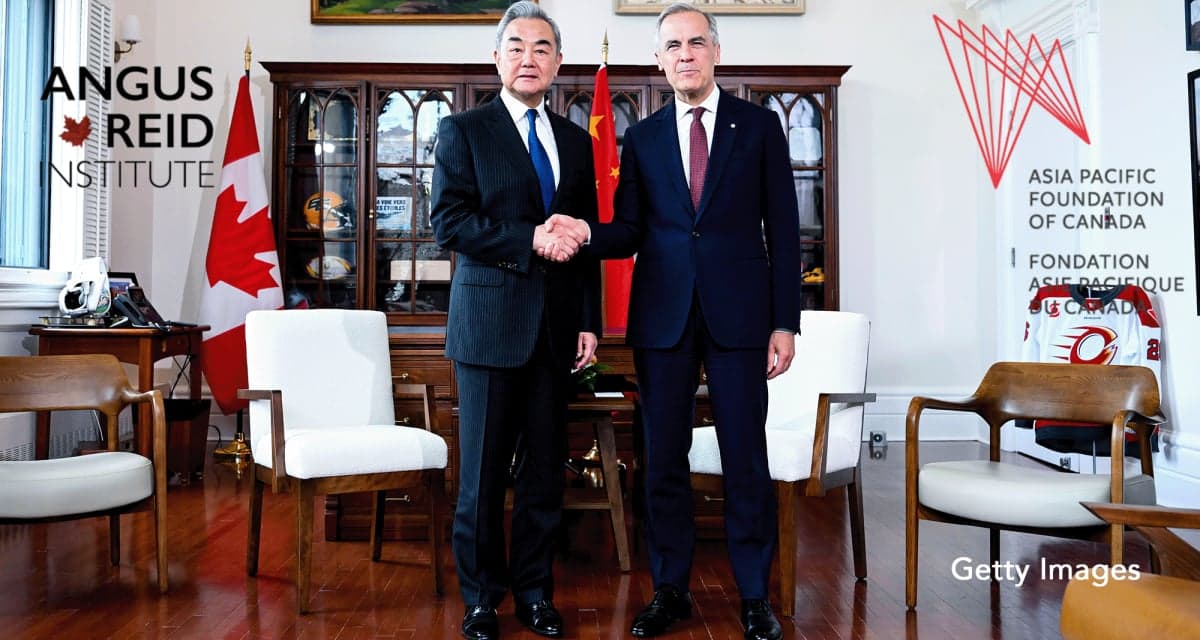
Carney’s strategic posture aligns with a marked transformation in domestic public opinion[1]. Comprehensive polling released jointly by the Angus Reid Institute and the Asia Pacific Foundation of Canada reveals that escalating trade hostility with Washington has driven Canadians toward Indo-Pacific economic engagement[1]. The survey shows that Canadian favourability toward China has climbed to 38 percent - more than double the 15 percent recorded in late 2024 - while favourability toward India rose to 36 percent[1]. Crucially, 69 percent of surveyed Canadians now view strengthening commercial ties with China as essential to offsetting trade vulnerability to the United States, while 87 percent support deeper integration with Japan and 76 percent with South Korea[1][4].
Despite warming public sentiments, geopolitical analysts are sounding alarms over the long-term systemic risks of this rebalancing[1][5]. Vina Nadjibulla, CEO of the Centre for Strategic Statecraft, cautioned that while expanding alternative markets is necessary, Canadian policymakers must remain vigilant against swapping one strategic vulnerability for another[5]. Nadjibulla highlighted historical precedents, including agricultural coercion where Beijing leveraged its dominant share of Canadian canola seed exports during diplomatic disputes[5]. As Carney prepares to sit down with Xi, experts warn that balancing critical economic lifelines with strict intelligence and democratic integrity safeguards will present the defining foreign policy challenge of his tenure[2][3].
- Mark Carney
- Xi Jinping
- China
World & Geopolitics
2 min read
Canada Extends Trade Pact with China to 2028, Deepens Financial Regulatory Ties
Canada and China have agreed to extend their trade framework until 2028, ensuring continued preferential access for Canadian agricultural and seafood exports while maintaining duty-free exemptions for specialized Chinese steel and aluminum imports. They also signed a Memorandum of Understanding between their finance ministries and established a formal financial regulatory cooperation pact. This development marks a significant diplomatic and commercial reset, occurring as Prime Minister Mark Carney prepares for a meeting with Chinese President Xi Jinping at the APEC summit.
Read the full storyFold the full story2 min · 4 sources
In a major bilateral breakthrough announced following ministerial meetings in Vancouver, the Canadian government and the People's Republic of China have agreed to extend their existing trade framework through the end of 2028[1]. The agreement preserves preferential access for critical Canadian agricultural and seafood exports - including canola meal, peas, lobster, and crab - while ensuring Canadian industrial manufacturers continue to receive duty-free exemptions on specialized Chinese steel and aluminum imports that are difficult to procure domestically[1]. Alongside the trade extension, the two sides signed an intergovernmental Memorandum of Understanding between their finance ministries and executed a formal regulatory cooperation pact establishing the Canada-China Financial Regulatory and Supervisory Dialogue (FRSD)[2].
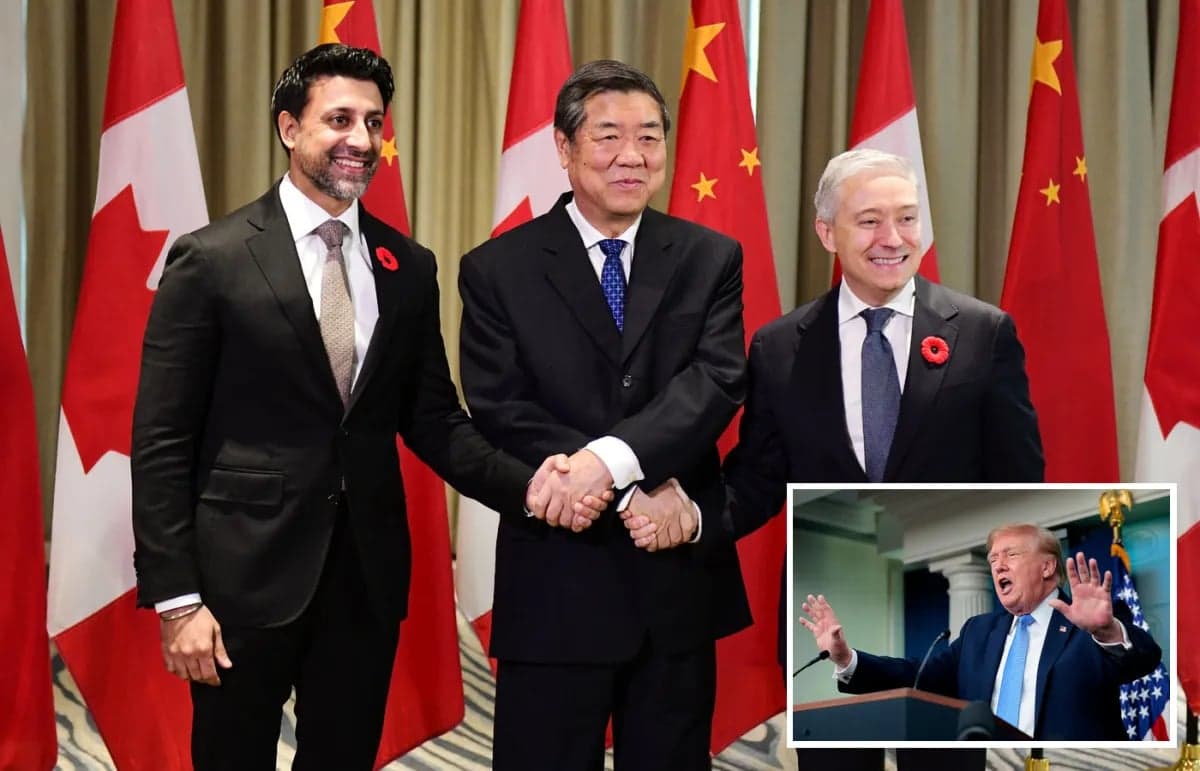
The bilateral framework was negotiated during the Canada-China Economic and Financial Strategic Dialogue (EFSD), co-chaired by Canada’s Minister of Finance and National Revenue François-Philippe Champagne, International Trade Minister Maninder Sidhu, and Chinese Vice Premier He Lifeng[2]. The regulatory agreement directly engages the Office of the Superintendent of Financial Institutions (OSFI) and China’s National Financial Regulatory Administration (NFRA) to facilitate cross-border oversight and technical engagement across commercial banking and asset management[2]. The meetings concluded with a high-level corporate roundtable featuring Canadian and Chinese industry executives focused on expanding two-way institutional capital flows and supply chain resilience[2].
This diplomatic and commercial reset marks a sharp reversal from years of diplomatic estrangement that followed the 2018 detentions of Canadians Michael Kovrig and Michael Spavor[3]. Bilateral merchandise trade between Canada and China climbed to $125.7 billion in 2025, up 5.7 percent year-over-year, with Canadian merchandise exports surging 16.8 percent to $35.0 billion[2]. New third-quarter figures compiled by the China Institute at the University of Alberta indicate that Canadian exports - spearheaded by Western Canadian energy and agri-food shipments - are pacing toward all-time highs[3]. Philippe Rheault, director of the China Institute, noted that export volumes to China are accelerating faster than historical baselines, driven by acute demand for Canadian natural resources and agricultural commodities[3].
The commercial pact arrives as Prime Minister Mark Carney embarks on an extensive four-summit global tour, which culminates in a bilateral meeting with Chinese President Xi Jinping at the Asia-Pacific Economic Cooperation (APEC) Economic Leaders' Meeting in Shenzhen[4][3]. Under its current trade policy roadmap, Ottawa has established an official target to expand Canadian exports to China by 50 percent by 2030 as part of an aggressive push to insulate domestic industries from American trade barriers[2]. For Canadian exporters, the extension provides vital commercial certainty, while cementing China as Canada’s second-largest destination globally for agricultural and forestry products[2].
- Canada
- China
- APEC Summit
World & Geopolitics
2 min read
Canada Seeks US Tariff Relief, Diversifies Trade Toward Asia Post-Midterms
Following U.S. midterm election results, Canada is seeking immediate relief from significant cross-border tariffs imposed by the Trump administration. Simultaneously, Canada is intensifying trade diversification efforts toward Asia, with the Prime Minister undertaking diplomatic circuits to China and attending the APEC summit. This strategy aims to reduce economic reliance on the United States.
Read the full storyFold the full story2 min · 9 sources
In an interview from the G7 ministerial summit in Paris, Foreign Affairs Minister Anita Anand stated that Canada is actively positioning itself to negotiate immediate relief from severe cross-border U.S. tariffs, following midterm elections in the United States that stripped the Republican Party of congressional control[1][2][3]. Over recent months, the Trump administration’s sweeping trade actions - enacted across Canadian softwood lumber, steel, aluminum, and automobile imports - have placed acute strain on the Canadian economy, with industrial tariffs reaching as high as 50% on certain specialized goods and triggering widespread plant cutbacks and layoffs[4][2]. Anand noted that the electoral repudiation of aggressive protectionist policies by American voters creates a timely diplomatic opening for bilateral detente on trade barriers[1][2].
Simultaneously, Canadian Prime Minister Mark Carney initiated an extensive global diplomatic circuit intended to structurally reduce Canada’s economic reliance on the United States[5][6]. Carney's itinerary includes his second bilateral trip of the year to China, culminating in his attendance at the Asia-Pacific Economic Cooperation (APEC) Leaders’ Meeting in Shenzhen[5][6]. This overseas push represents the operational execution of Canada's "principled pragmatism" doctrine - a values-based realist policy designed by Ottawa to expand foreign trade partners beyond North America[7]. Canada has concluded more than 20 bilateral and multilateral security, defense, and economic agreements over the past year, becoming the only G7 member with active free trade agreements linking every other member nation, as it pursues a formal goal to double non-U.S. trade volumes over the next decade[8][2].
This diplomatic reorientation reflects major shifts in domestic public opinion[5][6]. A comprehensive national study released by the Angus Reid Institute in partnership with the Asia Pacific Foundation of Canada revealed that Canadian attitudes toward global partnerships have altered under persistent cross-border trade strife[5][6]. A significant majority of Canadians now view cultivating stronger trade relationships with Japan (87%), South Korea (76%), China (69%), and India (61%) as essential for national economic resilience[5][6]. Favourable views of China among Canadians have risen to 38% - more than double the 15% measured in late 2024 - while positive sentiment toward India expanded to 36%[5][6]. While over half of Canadians still express reservations regarding governance and human rights in Beijing, the data highlights that public sentiment is coalescing behind aggressive trade diversification to shield domestic industries and employment from American unilateralism[5][9][6].
- Canada
- United States
- China
World & Geopolitics
2 min read
Ottawa Seeks De-escalation with U.S. While Pursuing Doubled Non-U.S. Trade
Foreign Affairs Minister Anita Anand indicated that Canada aims to de-escalate commercial frictions with the United States following the recent U.S. midterm elections, seeking tariff rollbacks on key Canadian exports. Despite these efforts, Canada is actively diversifying its global trade architecture to reduce its structural vulnerability to U.S. trade volatility, with a long-term goal to double non-U.S. trade over the next decade. This strategy involves numerous bilateral and multilateral agreements and positions Canada as a reliable global supplier of critical minerals, agri-food, and clean energy.
Read the full storyFold the full story2 min · 4 sources
Foreign Affairs Minister Anita Anand signaled that the federal government is moving to de-escalate commercial frictions with Washington following the U.S. midterm elections, framing the congressional results as a decisive pushback by American consumers and businesses against protectionist policies[1]. In an appearance on Bloomberg Television, Anand stated that Ottawa views the shifting legislative balance in the United States as a strategic window to seek tariff rollbacks on core Canadian export sectors[1]. The Canadian government has faced heavy economic headwinds from broad U.S. duties levied against Canadian softwood lumber, steel, aluminum, and automotive manufacturing, which Anand warned have led to compounding factory layoffs and domestic job losses[1].
Despite seeking near-term tariff relief from Washington, Anand underscored that Canada is systematically transforming its global commercial architecture to permanently reduce structural vulnerability to U.S. trade volatility[1][2]. The federal government has committed to a long-term economic mandate to double non-U.S. trade over the next decade[1]. Over the past year, Ottawa has concluded more than 20 bilateral and multilateral pacts across national security, commercial trade, and defence procurement[1]. This diplomatic initiative has made Canada the only Group of Seven (G7) nation to hold comprehensive free trade agreements with every single fellow G7 member state[1].
The policy shift is being coordinated alongside broad diplomatic engagements with international allies[1]. Anand recently met with U.S. Secretary of State Marco Rubio at the G7 Foreign Ministers' summit in Paris and concluded talks in the United Arab Emirates regarding diplomatic solutions to the war in Ukraine, focusing on securing critical energy infrastructure and export passages for agricultural goods[1]. By leveraging what Anand described as "middle power diplomacy," Canada is actively positioning itself as a dependable global supplier of critical minerals, agri-food, and clean energy to counter unilateral trade actions from larger economic powers[3][2].
The economic stakes are particularly acute for Canadian manufacturing hubs in Ontario and Quebec, which remain tightly integrated into North American supply chains[1]. Federal policymakers are balancing two divergent mandates: negotiating relief with U.S. counterparts on existing Section 232 and emergency economic levies, while simultaneously committing billions in public capital toward alternative overseas export infrastructure to prevent future commercial coercion[1][4].
- Canada
- United States
- Anita Anand
World & Geopolitics
2 min read
Canadian Public Sentiment Shifts Dramatically Towards Asian Trade Partnerships
A new Angus Reid Institute poll reveals a significant shift in Canadian public opinion, with a strong majority now favoring expanded trade and political relations with Asian partners, including China, Japan, South Korea, and India. This change is largely attributed to mounting trade conflicts with the United States. Notably, Canadian views on China have softened considerably, with more prioritizing economic considerations over human rights concerns in bilateral dealings.
Read the full storyFold the full story2 min · 3 sources
A public opinion survey released by the Angus Reid Institute, conducted in partnership with the Asia Pacific Foundation of Canada, documents a historic shift in Canadian attitudes toward international commerce and diplomacy[1]. Driven by mounting trade conflict with the United States, an overwhelming majority of Canadians now favor expanding trade and political relations across Asia[1]. According to the study, 87 percent of Canadians view stronger economic ties with Japan as essential, followed by South Korea at 76 percent, China at 69 percent, and India at 61 percent, as a deliberate counterweight to American economic volatility[1].
The polling highlights an abrupt change in public sentiment regarding the People's Republic of China[1]. In November 2024, only 15 percent of Canadians held a favorable view of China[1]. Following two years of escalating U.S. tariffs and North American trade disputes, that favorable assessment has surged to 38 percent[1]. While a 53 percent majority of respondents still hold an unfavorable view, the rapid softening of skepticism represents a profound shift in Canada's political landscape[1]. Similarly, favorable views of India have risen to 36 percent, marking a 10-point gain over the same two-year timeline[1].
Even more significant for Canadian foreign policy is the public’s realignment regarding international values and trade priorities[2]. In 2021, during the diplomatic standoff surrounding the detention of Meng Wanzhou and the two Michaels, 77 percent of Canadians maintained that "human rights and the rule of law" should be the primary focus of Canada's China policy, compared to just 23 percent who favored trade[2]. The new polling reveals that 57 percent of Canadians now believe economic and commercial considerations should take precedence over human rights concerns when dealing with Beijing[2].
The public opinion shift provides significant political cover for the federal government's diplomatic pivot[1]. Fifty-eight percent of respondents indicated that U.S. protectionism has made them actively more supportive of expanded trade with Northeast Asian economies including Japan, South Korea, and Taiwan, while 49 percent reported greater support for bilateral agreements with Southeast Asian nations[1]. These figures align directly with Prime Minister Mark Carney’s current overseas summit agenda, where Canadian envoys are seeking to finalize free trade negotiations with the Association of Southeast Asian Nations (ASEAN) and conclude a bilateral pact with the Philippines[3].
- Canada
- China
- United States
World & Geopolitics
2 min read
Ottawa Navigates US Trade Tensions, Pursues Middle Power Alliances
Prime Minister Mark Carney cautioned Canadian businesses about US trade relations post-midterms, emphasizing the enduring influence of presidential executive powers. Despite ongoing US tariffs on key Canadian exports like vehicles and steel, Carney confirmed open communication lines with President Trump. Concurrently, Foreign Affairs Minister Anita Anand is pursuing a strategy to double non-US trade volume within a decade through middle-power coalitions.
Read the full storyFold the full story2 min · 9 sources
Following sweeping Democratic victories in the United States midterm elections, Prime Minister Mark Carney issued a sober assessment of cross-border relations, cautioning Canadian businesses and provincial leaders against premature optimism[1][2]. Speaking in Montreal, Carney stated that despite shifting majorities on Capitol Hill, executive power in the White House will remain the decisive force directing American trade architecture and cross-border tariffs over the next two to three years[2]. The Prime Minister’s remarks were aimed partly at dampening unilateral diplomatic maneuvers by provincial premiers - specifically Quebec’s attempts to bypass the White House by lobbying U.S. governors and senators directly[2].
Carney confirmed that he engaged in weekend discussions directly with U.S. President Donald Trump, noting that while bilateral communication lines remain open, several structural disputes remain unresolved[2]. U.S. trade actions - predicated on Section 338 statutory duties and retaliatory tariffs targeting Canadian motor vehicles, lumber, steel, and aluminum - have exerted heavy pressure on domestic manufacturing and employment[3][4]. While legislative leaders in Washington have cited these duties as contributors to domestic inflationary pressures, the White House has shown few signs of abandoning its transactional posture toward international trade partners[1][2].
On the international stage, Foreign Affairs Minister Anita Anand reinforced Ottawa's shift toward counterbalancing U.S. protectionism through proactive middle-power coalition building[5][3]. Speaking to global media during the G7 meetings in France, Anand reaffirmed Canada’s strategic target: to double non-U.S. trade volume over the next 10 years[3]. Pointing to more than 20 bilateral and multilateral agreements finalized across security, commercial trade, and advanced technologies, Anand emphasized that Canada remains the only G7 nation maintaining active free trade pacts with every fellow member of the group[3].
This strategic pivot reflects a consensus within Ottawa’s foreign policy apparatus: while maintaining access to the American market is critical, over-dependence on a volatile southern neighbour constitutes an acute risk to Canadian sovereignty[6][3]. The Canadian Department of Finance took steps to buffer domestic producers against retaliatory ripples, adjusting import relief frameworks and prolonging general remission orders for select industrial inputs through mid-2028[7]. Nevertheless, corporate advisors caution that achieving a sustained geographic rebalancing of supply chains will require massive capital outlays, accelerated port expansions, and long-term regulatory endurance[8][9].
- Mark Carney
- Donald Trump
- Anita Anand
World & Geopolitics
2 min read
Bank of Canada Notes AI-Driven Global Growth Amid Trade Uncertainty and Labour Slack
The Bank of Canada's latest deliberations highlight a global economy experiencing growth driven by AI infrastructure investment, particularly in the U.S. and Asia, though unevenly distributed. Domestically, Canadian GDP remains stable, supported by raw material exports and federal capital spending, with non-U.S. export corridors acting as a buffer against softening North American demand. However, the Bank notes persistent slack in the Canadian labor market and ongoing trade policy unpredictability deterring corporate hiring.
Read the full storyFold the full story2 min · 3 sources
The Bank of Canada’s Summary of Governing Council deliberations from its late-October monetary policy decision outlines a divergent global economic landscape that continues to shape Canadian monetary and trade policy[1]. Bank officials observed that global economic growth has outperformed mid-year baseline forecasts, propelled by substantial private and public capital expenditures tied to artificial intelligence (AI) infrastructure across the United States and parts of Asia[1]. However, the central bank cautioned that this momentum is fragmented; high energy costs and supply bottlenecks continue to depress economic growth across the euro area and other major oil-importing economies[1].
Within the domestic economy, the Governing Council noted that Canadian gross domestic product is exhibiting stability despite elevated trade uncertainty[1]. Household consumption and business investment have remained steady, bolstered by robust raw material exports and newly announced federal capital expenditure measures designed to spur long-term GDP growth through 2027[1]. The Bank noted that early data shows Canadian export corridors to non-U.S. markets are providing a crucial economic buffer against softening North American demand[2][1].
Despite these positive tailwinds, the Governing Council underscored that the broader Canadian labour market remains soft, exhibiting persistent signs of slack[1]. Central bank members debated whether headline employment metrics fully reflect structural domestic resilience, but they agreed that prolonged trade policy unpredictability is deterring corporate hiring in export-oriented sectors[1]. A central theme of the deliberations was that it remains too early to gauge the ultimate economic toll of U.S. tariffs on Canadian supply networks, as corporate entities are still adjusting their operational models and supply contracts to navigate cross-border trade friction[1].
Market participants and currency analysts have responded to the Bank's deliberations by pricing in monetary divergence between Canada and the United States[3]. Sticky U.S. consumer inflation figures - rising 0.4 percent in October - have complicated expectations for Federal Reserve interest rate cuts, widening the policy spread between Washington and Ottawa and applying downward pressure on the Canadian dollar[3]. With the Bank of Canada monitoring persistent labour slack against foreign trade risks, monetary policymakers noted that domestic economic performance through early 2027 will depend largely on how quickly Canadian businesses diversify trade channels and execute planned capital outlays[1].
- Bank of Canada
- Artificial Intelligence (AI)
- United States
World & Geopolitics
2 min read
Canada Deepens African Mineral Ties via Lusaka Accords and Lobito Corridor
Canada has expanded its strategic presence in Southern Africa by signing development and resource pacts in Zambia, including the inauguration of its High Commission in Lusaka. Agreements focus on critical mineral extraction, particularly copper, cobalt, and lithium, vital for the energy transition. Canada is also supporting initiatives along the Lobito Corridor to enhance trade capacity and facilitate mineral exports.
Read the full storyFold the full story2 min · 4 sources
Concurring with broader global supply chain realignment, Secretary of State for International Development Randeep Sarai concluded a multi-day diplomatic and economic mission to Zambia, locking in bilateral development and resource pacts[1]. The mission culminated in the formal inauguration of the High Commission of Canada in Lusaka alongside Zambian Minister of Foreign Affairs and International Cooperation Mulambo Haimbe and Minister of Finance and National Planning Situmbeko Musokotwane[1]. The opening marks an upgrade in Ottawa’s permanent diplomatic, trade, and defense presence across Southern Africa[1].
During the mission, Ottawa formalized a comprehensive Memorandum of Understanding on Economic and Development Cooperation, aimed squarely at expanding strategic trade, institutional capital development, and critical mineral extraction[1]. Securing non-adversarial access to high-demand critical minerals - specifically copper, cobalt, and lithium vital for the energy transition and advanced defense manufacturing - has emerged as a central objective under Canada’s broader Africa Strategy[1][2]. The agreements directly position Canadian mining, engineering, and infrastructure firms at the centre of Zambia's rapidly modernizing extractives sector[1].
To underwrite the initiative, Secretary of State Sarai rolled out a series of targeted financial contributions totaling over $10.5 million, anchored by $7.5 million allocated toward an initiative executed by iDE Canada[1]. This flagship project aims to unlock trade and investment capacity along the Lobito Corridor, the strategic trans-African rail and road trade route designed to connect the resource-heavy interiors of Zambia and the Democratic Republic of Congo directly to Atlantic shipping ports in Angola[1]. Additional allocations include $2 million for the Toronto Centre to help develop Zambia’s regulatory capital markets, alongside technical grid-resilience and security sector governance programs[1].
The mission also advanced a $50 million loan by FinDev Canada to the Zambia National Commercial Bank (Zanaco), providing long-term liquidity for mid-market commercial operations[1]. For a Canadian audience, this targeted diplomacy represents a concrete step in diversifying critical mineral supply chains away from Chinese refining dominance and Russian export markets[3][4]. By synchronizing development finance, institutional technical assistance, and commercial infrastructure investment into the Lobito transit corridor, Ottawa is executing a niche geopolitical strategy to secure vital clean-technology inputs while cementing its standing as an active commercial actor across the Global South[1].
- Canada
- Zambia
- Randeep Sarai
World & Geopolitics
2 min read
Canada Extends Tariff Relief on U.S. Imports, Prioritizes Domestic Suppliers
The Department of Finance has extended tariff relief on certain U.S. imports until June 2028, aiming to shield domestic manufacturers from rising input costs due to retaliatory duties. However, the government is simultaneously revoking exemptions on goods that can be manufactured domestically to encourage a transition to Canadian suppliers. This policy aims to balance cost relief with incentives for domestic procurement, particularly benefiting Canadian primary metals producers.
Read the full storyFold the full story1 min · 4 sources
The Department of Finance has updated Canada’s counter-tariff framework, formalizing an extension of tariff relief on select United States imports until June 30, 2028, while revoking exemptions on products that can be manufactured domestically[1]. The policy update, administered under the federal government's "horizontal remission" programme, is engineered to shield domestic manufacturers from input cost spikes resulting from retaliatory duties on U.S. raw materials[1]. At the same time, the government is pruning the list of eligible imported goods to compel domestic industrial buyers to transition to Canadian suppliers[1].
Finance Minister François-Philippe Champagne stated that the modifications aim to balance immediate cost relief for businesses vulnerable to cross-border supply chain shocks with aggressive incentives for domestic procurement[1]. Canadian manufacturing supply chains have faced sharp margin compression due to tit-for-tat trade measures between Ottawa and Washington[2]. By locking in import relief on select specialized inputs through mid-2028, Ottawa provides multi-year operational visibility for domestic fabricators and equipment manufacturers that are unable to source specific industrial components in Canada[3][1].
Conversely, the targeted revocation of tariff relief on goods like select American aluminum products directly benefits Canadian primary metals producers in provinces such as Quebec and British Columbia[2][1]. The federal government is using tariff levers to penalize specific U.S. industrial sectors while creating a protected domestic marketplace for Canadian metals[3][1]. This approach reflects Ottawa’s broader domestic policy strategy outlined in its $142 billion economic development budget, which channels federal procurement and capital subsidies toward Canadian-made metals, clean infrastructure, and industrial fabrication[4].
The policy announcement presents operational trade-offs across Canada’s commercial manufacturing base[2]. While primary producers have praised the move to curtail duty-free American metals imports, midstream processors and downstream manufacturers face potential localized cost pressures if domestic substitution capacity lags behind industrial demand[2][1]. The horizontal remission programme will undergo regular departmental evaluations ahead of the 2028 expiration date to calibrate import relief against emerging trade negotiations in Washington[1].
- Canada
- United States
- Department of Finance
World & Geopolitics
2 min read
Arctic Drilling Moratorium Unchanged Amid Resource Security Debate
Prime Minister Mark Carney denied reports suggesting a shift in Canada's offshore Arctic oil and gas exploration moratorium. Funds allocated in the federal budget are for administrative support of Arctic Ocean resource governance and oversight, not for commercial drilling. The clarification addresses concerns from northern communities seeking economic self-sufficiency and aligns with international scrutiny of Canada's climate leadership.
Read the full storyFold the full story1 min · 6 sources
Prime Minister Mark Carney rejected reports suggesting that his government is moving toward lifting Canada’s long-standing federal moratorium on offshore Arctic oil and gas exploration[1]. Speaking to reporters in Montreal, the Prime Minister clarified that a newly unveiled provision in the federal budget - allocating $11 million over four years for the governance and oversight of Arctic Ocean resource basins - does not signal a shift toward commercial drilling[1]. Carney emphasized that the funds are designated as administrative and capacity support for northern Inuit leadership, who co-manage Arctic marine resources under self-governance frameworks[1].
The clarification comes as northern community leaders and territorial officials examine resource development strategies to achieve economic self-sufficiency and buffer local communities against volatile global shocks[1]. Canada’s moratorium on offshore exploration in Arctic waters, originally decreed alongside the United States in 2016, has restricted hydrocarbon exploration across vast stretches of the Canadian North[1]. Minister of Northern and Arctic Affairs Rebecca Chartrand reiterated that any eventual reassessment of the moratorium would demand full institutional consultation with territorial and Inuit self-governments, alongside uncompromising adherence to Arctic ecological protections[1].
The domestic policy debate coincides with geopolitical scrutiny regarding Canada's climate leadership and energy stance[1][2]. Prime Minister Carney has faced criticism from domestic and international environmental organizations over the federal government’s relaxation of select regulatory burdens designed to bolster natural resource production[1]. During the ongoing United Nations Climate Conference in Turkey, Climate Action Network International singled out Carney and other absent world leaders, awarding them their critical "fossil of the day" designation[3][2].
Beyond environmental politics, the Arctic basin is an increasingly contested theater of great-power competition[4][5]. Policy analysts note that as shipping channels open and foreign powers modernize polar-capable surface fleets and underwater monitoring, northern infrastructure and resource control have evolved into central matters of national defense[5]. Defense experts argue that whether Ottawa retains its offshore moratorium or explores joint Arctic resource pathways with Indigenous governance bodies, Canada must dramatically scale up dual-use maritime surveillance, cold-weather port assets, and icebreaking platforms to defend northern territorial sovereignty[6][5].
- Mark Carney
- Canada
- Arctic
Section 3 of 4
City News
13 stories · 6 min skim
City News
2 min read
Toronto Expands Winter Services for Homelessness with 1,533 New Spaces
The City of Toronto has launched its 2026/2027 Winter Services Plan, aiming to provide 1,533 temporary shelter and supportive housing spaces. This represents an 18% increase in seasonal capacity, including new permanent housing units, 24-hour respite beds, and warming centres activated by temperature thresholds. The plan also enhances outreach services and drop-in centre hours.
Read the full storyFold the full story2 min · 6 sources
The City of Toronto officially rolled out its 2026/2027 Winter Services Plan for People Experiencing Homelessness, outlining an aggressive strategy to add 1,533 temporary shelter and supportive housing spaces between November 15, 2026, and April 15, 2027[1][2]. The blueprint represents an 18 percent increase in seasonal capacity compared to the 1,275 surge beds mobilized the previous winter[2][3]. Gord Tanner, General Manager of Toronto Shelter and Support Services, announced the operational details, underscoring that the municipal response is designed to provide immediate life-saving refuge from dropping temperatures while accelerating placements into permanent, stable housing[4][2][3].
The initiative distributes capacity across four distinct tiers of municipal intervention[1][2]. The city is bringing online 588 permanent supportive and subsidized housing units and opening 505 new 24-hour winter respite and shelter beds[1][2]. To shield unsheltered residents from acute cold snaps, 254 warming centre spaces across five fixed locations will be automatically activated when temperatures drop to -5°C or when adverse winter weather warnings are issued by Environment Canada[1][2][5]. An additional 186 emergency surge spaces will unlock during severe meteorological emergencies when ambient temperatures hit -15°C[1]. On-the-ground support is also receiving a significant logistical boost: daytime drop-in centres will expand operating hours by a cumulative 252 hours per week, providing unhoused residents with access to warm meals, clinical healthcare, laundry, and showers, while mobile outreach teams distribute cold-weather survival gear, sleeping bags, and heavy clothing[1][2].
The plan’s release coincides with significant demographic shifts in Toronto’s homelessness landscape over the past two years[3]. Municipal data indicates that nighttime shelter usage has receded to approximately 7,000 individuals, down from 9,000 nightly users in late 2025 and record highs exceeding 12,000 in October 2024[2][3]. Furthermore, documented encampment sites across Toronto parks and public spaces declined by 67 percent year-over-year, dropping from 353 tents in October 2025 to 118 in October 2026[2][3]. City officials attribute the easing strain largely to federal adjustments in immigration intakes - which reduced the daily number of refugee claimants in municipal shelters from 6,500 in late 2024 to roughly 1,200 - alongside municipal housing programs that moved more than 4,158 individuals into permanent accommodations over the past twelve months[2][3].
Despite these statistical improvements, community advocates and shelter directors caution that the crisis is far from over[1][6]. Frontline groups like Covenant House emphasized that emergency surge beds represent an essential stopgap rather than a structural solution for vulnerable youth and chronic rough sleepers[6]. Municipal leaders stressed that the successful rollout of an additional 1,600 planned long-term shelter spaces will remain entirely contingent on sustained, predictable operating subsidies from the provincial and federal governments[2].
- City of Toronto
- Gord Tanner
- Environment Canada
City News
3 min read
Stellantis Sells Brampton Plant to Defence Firm, Sparking Worker Outrage
Stellantis has agreed to sell its Brampton Assembly Plant to defence contractor Roshel, a move that has drawn sharp criticism from autoworkers and labor unions. The sale, which resolves years of uncertainty for the idled facility, is expected to close by the end of 2026. While Stellantis cites its FaSTLAne 2030 strategy, unions call the deal a betrayal that threatens thousands of auto-related jobs.
Read the full storyFold the full story2 min · 8 sources
In a major development reshaping Ontario’s automotive and manufacturing landscape, multinational automaker Stellantis officially announced an asset purchase agreement to sell its idled 2.95-million-square-foot Brampton Assembly Plant to Roshel, an Ontario-based defence technology contractor known for producing armoured vehicles[1][2]. While financial terms of the deal remain undisclosed, the transaction is slated to close by the end of 2026, subject to regulatory clearances and government approvals[3][2]. The announcement resolves nearly three years of limbo over the historic facility, which has sat idle since December 2023 when production of the Chrysler 300, Dodge Charger, and Dodge Challenger ceased[2]. Stellantis framed the divestment as part of its FaSTLAne 2030 strategy to streamline operations and reach 80% manufacturing capacity utilization across North America[2].
The sale has sparked sharp backlash from autoworkers and labor representatives across the Greater Toronto Area[4][5]. More than 2,000 unionized workers have been laid off since late 2023[4][3]. Although Stellantis had initially pledged to invest in retooling the Brampton facility to manufacture the next-generation Jeep Compass, that project was halted in early 2025[2]. Ottawa had subsequently issued a formal notice of default over the automaker’s commitments under federal funding agreements[6]. Unifor National President Lana Payne denounced the transaction as an outright “betrayal” of Canadian autoworkers, stating that Stellantis walked away from binding collective bargaining commitments and four-party discussions involving the union, provincial, and federal governments[5]. Payne warned that relinquishing the assembly plant to a defence supplier constitutes a severe contraction in Canada’s civilian automotive footprint, with cascading supply-chain impacts threatening thousands of spin-off parts-manufacturing jobs across the GTA[5].
In response to the union's criticism, Roshel founder and Chief Executive Officer Roman Shimonov strongly defended the acquisition[3]. Shimonov announced intentions to repurpose the site into a state-of-the-art Centre of Excellence for advanced defence manufacturing, directly aligned with Canada’s National Defence Industrial Strategy[2]. He expressed surprise at government pushback, stressing that the expansion is poised to generate thousands of advanced manufacturing jobs and noting that Roshel is actively prepared to hire back laid-off Stellantis workers[3]. Meanwhile, Stellantis CEO Antonio Filosa stated the automaker remains committed to fulfilling its contractual obligations and intends to negotiate an adjustment settlement with Unifor[2].
The corporate transaction has escalated into a high-stakes political crisis in Ottawa and Queen’s Park[7][8]. Prime Minister Mark Carney labeled the unilateral sale “unacceptable” and pledged that the federal government would “fully enforce” its legal rights under previous public financing agreements, while federal cabinet minister Mélanie Joly convened urgent multi-party meetings with Stellantis executives, Ontario officials, and union leadership[7][8]. The fallout represents a critical test for Brampton City Council - which had previously moved to protect the site's automotive zoning designations - as regional stakeholders grapple with the sudden pivot from consumer vehicle assembly to military vehicle manufacturing[5][2].
- Stellantis
- Brampton Assembly Plant
- Roshel
City News
2 min read
Metrolinx and TTC Announce Major Weekend Transit Shutdowns Impacting UP Express, Barrie GO, and Line 2
Metrolinx and the TTC are implementing significant transit service shutdowns this weekend, affecting the UP Express, Barrie GO line, and a section of TTC Line 2. These closures are necessary for critical infrastructure upgrades and maintenance on both regional rail corridors and the subway network. Replacement bus services will be in operation, but commuters should expect altered routes and longer travel times.
Read the full storyFold the full story2 min · 3 sources
Metrolinx and the Toronto Transit Commission (TTC) have finalized plans for sweeping transit service shutdowns scheduled for the coming weekend, impacting two major regional rail corridors and a critical stretch of the municipal subway network[1]. Beginning Saturday, November 14, and continuing through Sunday, November 15, Metrolinx will completely suspend train service on both the UP Express airport link and the Barrie GO line[1]. Simultaneously, the TTC will halt subway service along a roughly five-kilometre section of Line 2 Bloor-Danforth in the east end, isolating several stations, including the Kennedy interchange[1].
The double commuter rail closure is designed to provide work crews with uninterrupted track access to advance long-term corridor infrastructure programs[1]. Along the Barrie corridor, contractor crews will operate around the clock between Friday night and Monday morning to carry out extensive rail expansion work, including heavy grading, utility realignments, the installation of noise barriers, high-security fencing, and supporting electrical systems around King City GO and Aurora GO stations[2][3]. These upgrades are foundational to Metrolinx’s GO Expansion initiative, which aims to bring two-way, 15-minute, all-day electrified service to the route[3]. Concurrently, necessary maintenance along the Union Pearson Express corridor requires grounding rail operations between Toronto’s downtown core and Pearson International Airport[1].
To mitigate the suspension, Metrolinx is deploying replacement bus networks, though commuters face significantly altered routings and increased trip lengths[1]. On the Barrie Line, all rail trips will be substituted by GO buses shuttling riders between Allandale Waterfront, Rutherford GO, and the Highway 407 Bus Terminal[1]. At Highway 407, passengers must manually transfer to the TTC’s Line 1 subway to complete their journeys into downtown Toronto[1]. For airport travelers, UP Express rail operations will be replaced entirely by express GO buses running direct between the Union Station Bus Terminal and Pearson Airport’s Terminal 1[1]. However, these direct shuttles will completely bypass the intermediate Bloor, Mount Dennis, and Weston stations, leaving local riders in those communities reliant on municipal surface transit alternatives[1].
The commuter rail outages will compound transit friction across the Greater Toronto Area due to the simultaneous TTC shutdown on Line 2[1]. With Line 2 shuttered at its eastern terminus, the crucial interchange at Kennedy Station - which connects suburban commuters to the GO Stouffville line and regional bus routes - will be temporarily severed from the subway grid[1]. Commuter advocacy groups and transit observers warn that the overlap will funnel high volumes of passengers onto replacement bus fleets along congested municipal roadways, testing the region’s transit resilience as holiday-season travel activity accelerates[1].
- Metrolinx
- TTC
- UP Express
City News
2 min read
Dual Track Emergencies Disrupt TTC Line 1 and Line 2 Service Across Downtown Toronto
Two separate track-level emergencies on TTC Line 1 and Line 2 caused significant disruptions and widespread delays across central Toronto. The incidents, one on Line 2 impacting service between St. George and Broadview, and another on Line 1 between St. Clair and College, paralyzed transit commutes during the evening rush hour.
Read the full storyFold the full story2 min · 5 sources
Toronto transit commuters faced widespread chaos and severe delays following back-to-back emergency track-level incidents that disabled critical segments of both Line 1 Yonge-University and Line 2 Bloor-Danforth within hours of each other[1][2]. The dual disruptions paralyzed travel through the core of the city, highlighting the vulnerability of Toronto’s heavily congested rapid transit backbone[1][2]. Emergency responders and TTC operational crews were deployed across multiple central stations to manage massive crowd surges and clear track areas[1][2].
The first crisis struck Line 2 shortly after 6:10 p.m. during the height of the evening rush hour[1]. Subway service was suspended between St. George and Broadview stations following reports of an injury at track level, an incident later investigated by Toronto Police Service and deemed non-criminal[1]. The shutdown severed transit connectivity across the Prince Edward Viaduct, requiring the transit agency to muster large fleets of emergency shuttle buses between St. George, Bloor-Yonge, and Broadview[3][1]. Thousands of displaced commuters spilled onto Danforth Avenue and Bloor Street, overwhelming street-level sidewalks and surface boarding loops[1].
Before Line 2 could return to regular headways, a second track-level emergency occurred on Line 1 at approximately 7:40 p.m.[2]. The TTC was forced to shut down train operations between St. Clair and College stations[2]. The secondary closure created compounding gridlock in the core; as safety personnel worked at track level, Line 2 trains were ordered to bypass Bloor-Yonge station entirely to prevent platform overcrowding and maintain life-safety clearances at the city's busiest transfer hub[2]. Transit operators managed to clear the tracks and restore normal Line 1 service by 8:43 p.m., though residual delays lingered across the system until late in the evening[2].
The unplanned evening shutdowns occurred against a backdrop of intensifying planned maintenance closures across the subway network[3][4]. TTC maintenance crews have been executing scheduled early weeknight closures ending at 11:59 p.m. between Keele and St. George stations to install critical communication cables for signal upgrades[4]. The combination of planned overnight work and severe emergency disruptions has amplified public scrutiny of the TTC's capital repair backlogs and rider-safety management, as commuters voiced frustration over compounding delays across the central transit grid[5][1][2].
- TTC
- Line 1 Yonge-University
- Line 2 Bloor-Danforth
City News
2 min read
TTC Reroutes Queen Street East Buses to Eastern Avenue After Pilot Diversion Fails
The TTC has revised its bus diversion plan for Queen Street East, moving all 501, 301, and 503 buses to operate solely along Eastern Avenue in both directions. This change comes after the initial plan to keep westbound buses on Queen Street East proved unworkable due to construction and traffic congestion.
Read the full storyFold the full story2 min · 1 source
The Toronto Transit Commission abruptly modified its surface transit detour plan for Queen Street East, abandoning a split-route diversion after field tests proved that the agency's original westbound operations were functionally unworkable[1]. Under the revised detour, replacement buses operating on the 501 and 301 Queen corridors, alongside the 503 Kingston Road bus route, will divert entirely along Eastern Avenue in both directions between Leslie Street and the intersection of Coxwell and Emdaabiimok avenues[1]. The emergency realignment will remain in effect until at least mid-December[1].
The revision stems from complex ongoing capital works along Queen Street East, where the City of Toronto and the TTC are executing streetcar track reconstruction in tandem with critical water main and sewer infrastructure renewals[1]. Initially, TTC traffic planners had attempted to maintain westbound replacement bus service directly on Queen Street East while routing eastbound buses south along Eastern Avenue[1]. However, test runs conducted in active mixed traffic revealed that narrow roadway clearances, ongoing excavation trenches, and heavy local vehicle congestion caused severe bottlenecks, making schedule adherence impossible and creating safety hazards for boarding passengers[1].
As a direct consequence of shifting both directions to Eastern Avenue, transit service has been completely vacated from Queen Street East between Leslie Street and Coxwell Avenue[1]. Local residents and transit riders along this busy stretch of the Leslieville and Beaches communities must now walk several blocks south to Eastern Avenue to catch transit services[1]. TTC officials noted that while leaving Queen Street East without bus coverage is suboptimal, routing two-way service along the wider Eastern Avenue corridor is the only measure capable of ensuring reliable running times and preventing severe service bunching across the broader streetcar network[1].
The sudden change has drawn sharp reactions from east-end business associations and merchant groups[1]. Retailers along Queen Street East, already coping with sidewalk disruptions and street tear-ups from the civil engineering works, expressed dismay over the total loss of public transit foot traffic directly in front of commercial storefronts[1]. The TTC stated that traffic operations teams will continue to monitor intersection signal timing along Eastern Avenue to facilitate bus movements and pledged that regular streetcar routing will be restored as soon as track bed concrete cures and roadway resurfacing reaches completion next month[1].
- TTC
- Queen Street East
- Eastern Avenue
City News
2 min read
Toronto Police Seek Suspects in Fatal Rexdale Shooting of Barrie Teen
Toronto Police are investigating the homicide of 18-year-old Brandon Blake from Barrie, who was fatally shot in Rexdale. The incident occurred near the Elmbank Community Centre after an altercation believed to have started in a nearby residential complex. Police are seeking information and have released descriptions of two male suspects who fled the scene.
Read the full storyFold the full story2 min · 6 sources
The Toronto Police Service’s Homicide and Missing Persons Unit has launched a wide-scale investigation and public appeal for information following the fatal shooting of 18-year-old Brandon Blake of Barrie, Ontario, outside a community hub in north Etobicoke[1][2]. Emergency services were dispatched shortly before 1:00 a.m. on Tuesday, November 10, following frantic calls reporting multiple gunshots near Martin Grove Road and Finch Avenue West[2][3]. First responders arrived to discover Blake suffering from critical gunshot trauma in an open area near the Elmbank Community Centre, situated at 10 Rampart Road[1][4]. Despite immediate, life-saving CPR performed by police and paramedics, Blake succumbed to his injuries and was pronounced dead at the scene[2].
During a media briefing Tuesday afternoon, lead investigator Detective-Sergeant Sandra Arruda stated that the deadly confrontation is believed to have originated during an altercation in an adjacent townhouse complex on Pittsboro Drive[2][4]. Investigators believe Blake fled on foot from the residential complex across open grounds toward the community centre as shots were fired[4]. Police forensic teams recovered numerous spent shell casings scattered across the scene[2]. Detective Arruda noted that it remains undetermined how many firearms were discharged, whether multiple shooters exchanged gunfire, or if the incident was a targeted, gang-involved dispute[1][2]. The circumstances surrounding why Blake had traveled from Barrie to the north Etobicoke neighborhood also remain under active investigation[2][4].
Toronto Police have issued descriptions for two male suspects who fled the scene immediately following the gunfire[1][2]. The first suspect is described as a light-skinned male with a thin build, wearing all-black clothing, a dark hooded sweater with the hood pulled up, and a face mask covering the lower half of his face[1][2]. The second suspect is described as a brown-skinned male with a medium build, similarly clad in all-black attire with a hood up and a face mask[1][2]. Police are urging area motorists who were traveling along Finch Avenue West, Martin Grove Road, or Rampart Road between 12:30 a.m. and 1:30 a.m. to review and preserve dashcam recordings, while canvassing local residents and housing complexes for private security footage[1][2].
The killing marks Toronto’s 34th homicide of the year and has renewed serious public safety anxieties throughout the Jamestown and Rexdale communities[2][5]. Because the shooting occurred steps away from the Elmbank Community Centre - a heavily frequented neighborhood facility serving local youth and families - community leaders and anti-violence advocates voiced acute frustration over persistent gun violence in public spaces[6][1]. A heightened, visible police presence remains deployed across the area as 23 Division officers and homicide detectives conduct door-to-door witness inquiries[1][2].
- Toronto Police Service
- Homicide and Missing Persons Unit
- Brandon Blake
City News
2 min read
Fatal Shooting Outside Rexdale Community Centre Ignites Safety Concerns
A fatal shooting outside the Elmbank Community Centre in Etobicoke has prompted a homicide investigation by the Toronto Police Service. An 18-year-old from Barrie was pronounced dead at the scene after being found with critical gunshot wounds. Investigators are searching for two male suspects and are examining surveillance footage to understand the events leading to the incident. The community is expressing outrage and concern over the violence occurring near a youth-focused facility.
Read the full storyFold the full story1 min · 4 sources
The Toronto Police Service Homicide Unit initiated an intensive investigation following the fatal shooting of an 18-year-old man outside the Elmbank Community Centre in northern Etobicoke[1][2]. Emergency crews were dispatched around 1:10 a.m. on Tuesday to the intersection of Martin Grove Road and Finch Avenue West following reports of multiple gunshots fired near the community centre and an adjacent residential housing complex[1][2][3]. First responders located the victim suffering from critical gunshot wounds; despite life-saving efforts by paramedics, he was pronounced dead at the scene[1][2].
Toronto Police Det.-Sgt. Sandra Arruda publicly identified the deceased as Brandon Blake, an 18-year-old resident of Barrie, Ontario[1]. Addressing reporters during an on-scene media briefing, Arruda confirmed that investigators discovered multiple spent shell casings scattered across the pavement[1]. Forensic teams and tactical officers cordoned off the facility's grounds throughout the day, canvassing surrounding residential properties, interviewing witnesses, and collecting closed-circuit surveillance footage to determine the events leading to the gunfire[1].
Investigators are currently seeking two unidentified male suspects observed fleeing the area immediately after the gunfire[1]. The first suspect is described as having a light complexion and a thin build, while the second suspect is described as having a brown complexion and a medium build; both individuals were seen wearing all-black clothing, hooded sweatshirts, and facial masks[1]. Police emphasized that the investigation remains in its preliminary stages and that it is not yet clear whether the shooting was targeted, related to local gang disputes, or what brought the Barrie teenager to the Rexdale neighbourhood late at night[1][3].
The violent incident has shaken the surrounding Rexdale community, reigniting intense local discussions surrounding youth violence, the security of public neighbourhood infrastructure, and community trauma[4][1]. Local residents and anti-violence advocates expressed distress that the killing occurred directly outside a community centre dedicated to local youth programming and recreational services[4][1]. Community leaders are urging municipal officials to invest more heavily in neighborhood-level social safety nets, while police maintain an elevated presence in the area to reassure anxious families and secure further investigative leads[4][1].
- Toronto Police Service Homicide Unit
- Elmbank Community Centre
- Brandon Blake
City News
2 min read
Public Safety Alert: Man Found Not Criminally Responsible Escapes Custody in Little Portugal
Toronto Police have issued a public safety alert for Christopher Palmieri, a 40-year-old man found Not Criminally Responsible for previous offenses, who has eloped from custody. He was last seen in the Little Portugal neighborhood and is subject to a warrant of committal from the Ontario Review Board. The public is warned not to approach him.
Read the full storyFold the full story1 min · 2 sources
Toronto Police Service issued an urgent public safety notice and request for assistance after 40-year-old Christopher Palmieri eloped from custody in Toronto’s west end[1][2]. Authorities reported that Palmieri was last seen on the morning of Tuesday, November 10, at approximately 11:30 a.m., walking in the vicinity of Dundas Street West and Shaw Street within the Little Portugal neighborhood[1][2]. The matter was immediately escalated through 14 Division corporate communications, prompting an active search by frontline officers[1].
Palmieri is currently bound by a Form 49 Warrant of Committal, a disposition order issued by the Ontario Review Board[1]. The warrant stems from a legal finding in court that Palmieri was Not Criminally Responsible (NCR) on account of a mental disorder for multiple index offenses, including three counts of Failure to Comply with a Probation Order and one count of Being Unlawfully in a Dwelling House[1]. Under provincial mental health and criminal statutes, a Form 49 disposition of detention legally commits an individual to the designated custody and supervision of a provincial psychiatric hospital facility, requiring strict adherence to medical and geographical conditions[1].
In their public advisory, Toronto Police specifically warned members of the public who may encounter Palmieri not to approach him under any circumstances, but instead to immediately dial 911[1]. Palmieri is described as a white male, approximately 5-foot-7 in height, weighing 185 pounds, with a medium build, a shaved head, brown hair, brown eyes, and blue eyes[1]. At the time of his disappearance, he was wearing a black long-sleeved Adidas shirt, black pants, and black shoes[1]. Investigators are appealing to transit operators, business owners, and residents across the downtown west end to remain vigilant and report any sightings directly to 14 Division investigators[1].
The incident highlights ongoing logistical and safety protocols surrounding community-supervised psychiatric patients in the province[1]. Elopee alerts involving NCR individuals frequently draw public scrutiny regarding hospital escort policies and community reintegration safeguards, particularly when patients subject to court-mandated institutional detention depart without legal authorization in densely populated urban corridors.
- Toronto Police Service
- Christopher Palmieri
- Ontario Review Board
City News
2 min read
GTA Observes Remembrance Day with Ceremonies and Downtown Road Closures
Communities across the GTA are holding Remembrance Day ceremonies on November 11, 2026, honoring Canadian Armed Forces personnel. Major services are taking place at Old City Hall Cenotaph and Queen's Park, featuring veteran organizations, military contingents, and aerial flypasts. Extensive road closures are in effect downtown to facilitate these events.
Read the full storyFold the full story2 min · 4 sources
Communities across Toronto and the Greater Toronto Area finalized preparations and began observances for Remembrance Day on November 11, 2026, marking national tributes to past and present Canadian Armed Forces personnel[1][2]. Toronto’s premier civic service takes place at the historic Old City Hall Cenotaph at 60 Queen Street West, led by Mayor Olivia Chow alongside veteran organizations, military contingents, and faith leaders[2]. Concurrently, the Government of Ontario is hosting its provincial Ceremony of Remembrance at the Ontario Veterans’ Memorial on the front lawn of the Legislative Building at Queen’s Park[1]. The provincial ceremony features a full ceremonial guard, a traditional 21-gun artillery salute at 11:00 a.m., and an aerial flypast conducted by aircraft from the Royal Canadian Air Force[1].
To facilitate the large-scale public assemblies and formal military parades, Toronto Police Service (52 Division) and municipal transit agencies coordinated extensive street shutdowns throughout the downtown core[3]. Road closures began at 10:00 a.m., shutting Queen Street West between York Street and Bay Street, and closing Bay Street entirely from Dundas Street West south to Richmond Street West[3]. Around the provincial legislature, Wellesley Street West was closed to all vehicular traffic between Queen's Park Crescent East and Queen's Park Crescent West through the early afternoon[1][3]. The Toronto Transit Commission (TTC) implemented rolling diversions on streetcar and bus routes while pausing all subway, bus, and streetcar service for two minutes of silence at the eleventh hour[3].
Beyond the major government cenotaphs, tributes were held across GTA institutions[4]. At the Sunnybrook Veterans Centre - Canada's largest veterans' care facility - hundreds of community volunteers, local students, and healthcare staff completed the annual "Operation Raise a Flag" effort[4]. By sunrise, participants had planted 50,000 miniature Canadian flags across the sprawling hospital grounds, creating an expansive visual memorial to greet the wartime veterans and service members residing in long-term care[4].
The 2026 ceremonies arrive amid heightened local reflection on Canadian defence policy, military heritage, and support for aging veterans[4]. Municipal and provincial leaders emphasized the importance of public attendance across local legion halls, civic cenotaphs in North York, Scarborough, and Etobicoke, and school assemblies throughout the GTA, reinforcing regional recognition of sacrifice against a backdrop of contemporary international conflicts[1][2].
- Remembrance Day
- Greater Toronto Area
- Old City Hall Cenotaph
City News
2 min read
Metrolinx Extends Military PRESTO Fare to UP Express, Enhancing Regional Fare Integration
Metrolinx has expanded its PRESTO fare system to include Canadian Armed Forces members and veterans on the UP Express, aligning fare policies across GO Transit and UP Express. This integration was implemented alongside Remembrance Day protocols, which included complimentary transit for military personnel and a system-wide pause for two minutes of silence.
Read the full storyFold the full story1 min · 7 sources
Metrolinx implemented an expansion of its electronic ticketing system, officially extending the Canadian Armed Forces (CAF) Members and Veterans PRESTO fare category to the Union Pearson (UP) Express[1][2]. The policy change eliminates a lingering gap in the regional fare structure, establishing full fare compatibility between GO Transit and UP Express networks for military personnel[1][2]. Eligible passengers can now apply the designated concession directly to physical or digital PRESTO cards, allowing seamless tap-on and tap-off functionality across both services while maintaining eligibility for regional One Fare transfer subsidies[1][3].
The integration took effect alongside annual Remembrance Day transit protocols observed across the Greater Toronto Area[1][4]. Metrolinx provided complimentary transit across all GO trains, GO buses, and the UP Express network to veterans and active CAF personnel, extending the one-day benefit to travel companions and the immediate families of deceased veterans[1][2]. Municipal transit systems throughout the Greater Golden Horseshoe - including the TTC, MiWay, Brampton Transit, and York Region Transit - similarly provided fare-free passage to uniform personnel and veterans holding recognized military documentation[4].
In addition to fare exemptions, transit operators coordinated an operational pause across the regional transit network at 11:00 a.m. on November 11[5][4][6]. In accordance with long-standing civic tradition, all TTC subway trains halted at station platforms, while municipal buses, streetcars, and Wheel-Trans paratransit vehicles across Toronto, Hamilton, and surrounding regions pulled over at designated stops to observe two minutes of silence[4][6]. Metrolinx similarly conducted system-wide announcements and paused operations where safe to honour Canada’s military fallen[4][6].
The expansion of the military PRESTO fare to UP Express reflects broader efforts by Metrolinx to streamline regional fare policies under a modernized digital ticketing framework[1][3]. Up until this rollout, veterans and service members eligible for year-round free travel on GO Transit faced inconsistent digital payment protocols when boarding UP Express trains at shared hubs like Union Station, Bloor, and Weston[1][7]. Metrolinx officials confirmed that riders can activate the new fare profile immediately via station ambassadors across staffed terminals throughout the Greater Toronto Area[1][2].
- Metrolinx
- PRESTO
- Union Pearson (UP) Express
City News
2 min read
Minister Sarkaria Details Ontario's Infrastructure Plan and Centralized Transit Governance
Ontario's Minister of Transportation, Prabmeet Sarkaria, outlined the province's extensive infrastructure investment plans, emphasizing highway expansion and transit projects aimed at boosting the economy and alleviating gridlock. He highlighted the proposed 'Building Ontario Faster Act, 2026' which would centralize transit planning for the GTHA under the Minister of Transportation, reducing Metrolinx's operational independence.
Read the full storyFold the full story2 min · 7 sources
Ontario Minister of Transportation Prabmeet Sarkaria addressed civic and business leaders at the Empire Club of Canada, delivering a keynote and fireside chat focused on the province’s transportation and infrastructure roadmap[1][2]. Sarkaria framed the provincial government’s multi-billion-dollar transit and highway expansion program as essential to shielding Ontario’s economy against broader macroeconomic pressures and regional supply-chain bottlenecks[1][3]. The address coincided with broader provincial capital updates detailing more than $210 billion in planned infrastructure allocations over the next decade, with over $94 billion directed into transit, highways, and bridge infrastructure[4][5].
Sarkaria emphasized the province's aggressive highway building agenda, citing external economic evaluations that place the current annual cost of regional gridlock at $56.4 billion[4]. The Minister reiterated the government's commitment to advancing procurement and early works on the 52-kilometre Highway 413 corridor, the Bradford Bypass, and the ongoing Highway 400 widening project, while maintaining feasibility evaluations for an expressway tunnel beneath Highway 401[6][4][5]. He emphasized that addressing highway congestion is necessary alongside heavy rail expansion, arguing that goods movement across the Greater Golden Horseshoe will collapse without expanded highway capacity[1][4].
A central focus of the address and subsequent discussions was the provincial government's legislative maneuver through Bill 140, the Building Ontario Faster Act, 2026[7]. The proposed legislation formally restructures transit governance in the region, shifting centralized transit planning for the Greater Toronto and Hamilton Area (GTHA) directly under the authority of the Minister of Transportation[7]. Under the proposed statute, Metrolinx will be legally required to align all operational decisions and capital planning directly with provincial ministerial directives, effectively curtailing the agency’s historical operational independence[7].
The presentation sparked pointed discourse among industry stakeholders and municipal observers[7]. Construction industry leaders have welcomed elements of the accompanying legislative amendments, such as revisions to holdback release structures under the Construction Act to improve contractor cash flows[7]. However, municipal planners and urban transit analysts expressed apprehension regarding the formal politicization of regional route alignments and service targets[7]. With Queen's Park actively consolidating decision-making over rapid transit delivery and municipal rights-of-way, Sarkaria maintained that central oversight is the only way to overcome chronic project delays and accelerate infrastructure construction[1][7].
- Prabmeet Sarkaria
- Ontario
- Metrolinx
City News
2 min read
GTA Faces Sharp Weather Shift from Autumn Warmth to Winter Flurries
The Greater Toronto Area is experiencing a dramatic weather transition, moving from unseasonably warm autumn temperatures to an early winter air mass. Forecasters predict a significant drop in temperatures, with potential for wet flurries. This rapid change prompts immediate operational adjustments for municipal services, including road maintenance and preparations for Remembrance Day ceremonies. The impending freeze also poses public health risks to vulnerable populations.
Read the full storyFold the full story1 min · 7 sources
Environment and Climate Change Canada (ECCC) and regional meteorological outlets issued advisories warning GTA residents to brace for a sharp, turbulent weather transition as an unseasonable autumn warm spell gives way to an early winter air mass[1][2]. Toronto experienced an unseasonable daytime high of 15°C - roughly seven degrees above the typical seasonal normal of 8°C - accompanied by sunny intervals and northwest wind gusts reaching 50 km/h[1][2]. However, forecasters warned that this fleeting period of warmth is coming to an abrupt conclusion as an expansive cold front moves across southern Ontario[1].
The weather outlook indicates a steady drop in daytime and overnight conditions[1]. While the morning of November 11 is projected to reach daytime highs between 11°C and 12°C under overcast skies, a 40 percent probability of rain showers will accompany an influx of arctic air by the afternoon[1][3][2]. By the evening, ambient temperatures will slide to 4°C, deteriorating further into Thursday, when daytime highs will struggle to reach 8°C before bottoming out at 0°C overnight[1][2]. CP24 Meteorologist Bill Coulter warned that the sudden thermal plunge will likely transform lingering precipitation into the Greater Toronto Area's first scattered wet flurries of the season[1].
The rapid meteorological shift creates multi-sector operational considerations across the GTA[1]. Municipal transportation and road maintenance departments across Toronto, York, Peel, and Durham regions are shifting into pre-winter readiness, monitoring bridges, overpasses, and expressways for icy patches caused by freezing moisture[4][1]. Concurrently, public event coordinators are monitoring conditions for Remembrance Day outdoor ceremonies, where hundreds of veterans, officials, and attendees are expected at civic sites such as the Old City Hall Cenotaph and Sunnybrook Veterans Centre[5][6][1].
The imminent freeze also represents an immediate public health vulnerability, arriving several days before the formal November 15 activation date of Toronto's municipal winter shelter framework[7][1]. Outreach nurses and community care workers have warned that rapid temperature swings frequently trigger severe cold-stress illnesses, respiratory distress, and exacerbated chronic health conditions among individuals residing in temporary encampments, unheated vehicles, or substandard housing[7][1].
- Environment and Climate Change Canada (ECCC)
- Greater Toronto Area (GTA)
- CP24 Meteorologist
City News
2 min read
Federal Budget Shifts Housing Focus to Non-Market Construction, Impacting GTA Real Estate
The federal government has revised its housing strategy, pivoting from doubling overall home construction to tripling the pace of non-market and social housing starts. This shift targets 24,000 non-market units annually over the next decade. The move coincides with a bifurcated GTA real estate market, where rentals are tightening rapidly, but the condo market faces stagnation due to high costs and buyer hesitancy. Private developers are halting projects, raising concerns about future supply deficits.
Read the full storyFold the full story2 min · 9 sources
A major policy shift at the federal level intersected with shifting conditions across the Greater Toronto Area's real estate sector as the federal housing minister's office clarified changes to home construction benchmarks[1][2]. Budget 2026 has quietly altered Ottawa's longstanding language on national housing targets, dropping previous marquee pledges to double the overall annual pace of home construction across Canada[1]. In its place, the federal government - under Housing Minister Gregor Robertson and Prime Minister Mark Carney - has pivoted toward a specialized framework that aims to triple the pace of non-market and social housing construction, establishing a target of 24,000 non-market housing starts annually over the next decade[1].
The pivot arrives as Toronto's broader residential market navigates what industry analysts characterize as a critical "inflection point."[2][3] GTA market data indicates an increasingly divided housing environment[4]. The regional rental sector is tightening rapidly, with prospective tenants confronting intensified competition and rising monthly rates as vacancy compresses[2][5]. Conversely, the condominium resale and pre-construction sectors remain weighed down by elevated inventory, cautious consumer sentiment, and significant buyer hesitancy, despite earlier easing of borrowing costs[6][4][3].
The divergence between market segments is fueling widespread concern across the development industry[6][7]. While federal policy shifts prioritize public capital and non-market supply - backed by nearly $30 billion in broad housing, supportive shelter, and infrastructure funds highlighted by cabinet officials in Regent Park and Peel Region - private sector developers are halting new projects due to high construction financing costs and soft pre-sale absorption[1][8][6]. Real estate economists warn that the ongoing collapse in high-density private condo starts threatens to create severe supply deficits in the GTA within the next three to five years, potentially overwhelming the rental market once current completions are fully absorbed[6][5].
Market analysts note that although the federal government's refocused attention on non-market housing delivers crucial funding for subsidized and supportive dwellings, non-market projects represent only a fraction of the aggregate volume needed to meet GTA population demands[1][5]. In response, local housing advocates argue that without coordinated efforts between municipal zoning authorities, provincial infrastructure builders, and private developers, the structural affordability crisis across the GTA will persist, leaving first-time homebuyers sidelined and lower-income tenants vulnerable to relentless rental escalation[2][9].
- Federal Government
- Greater Toronto Area (GTA)
- Gregor Robertson
Section 4 of 4
Sports
10 stories · 5 min skim
Sports
2 min read
Maple Leafs Suffer Fourth Straight Loss Amidst Deepening Goaltending Crisis
The Toronto Maple Leafs lost their fourth consecutive game, falling 6-3 to the Colorado Avalanche. Goaltending has become a major concern, with veteran netminder Sergei Bobrovsky struggling significantly this season. The team's overall record drops to 8-10-2, and roster instability further complicates their trajectory.
Read the full storyFold the full story2 min · 7 sources
The Toronto Maple Leafs suffered their fourth consecutive defeat on Tuesday night, November 10, falling 6-3 to the visiting Colorado Avalanche at Scotiabank Arena[1][2]. Darren Raddysh opened the scoring for Toronto just 3:33 into the first period with a 92.89 mph blast - the fourth-fastest goal recorded in the NHL this season - assisted by Auston Matthews[3][4]. However, Colorado answered with first-period goals from Brock Nelson and Gabriel Landeskog[3][4]. Although Toronto battled back - Easton Cowan scored late in the second period and Jack Roslovic tied the game 3-3 at 4:11 of the third - Landeskog capitalized on a rebound just 51 seconds later to restore Colorado's lead[3][4]. Artturi Lehkonen and Martin Necas sealed the victory for Colorado in the final minutes[3][4].
The loss drops Toronto to an 8-10-2 record through 20 games, with the team losing six of its last seven contests[1][4]. Goaltending has emerged as the central crisis of the Leafs' campaign[1]. Veteran netminder Sergei Bobrovsky, who signed a three-year, $21 million free-agent contract on July 1, stopped just 22 of 27 shots against Colorado[1][2][4]. The 38-year-old two-time Stanley Cup champion and two-time Vezina Trophy winner has now surrendered three or more goals in 12 of his 13 starts, prompting mounting scrutiny over Toronto's offseason roster reconstruction[1][4].
Following the final horn, head coach Jim Hiller delivered an unfiltered assessment of his squad’s current state[1]. "We played a lot of good hockey this year. Our results suck," Hiller told reporters[1]. "You can write those stories, there's no question and we deserve that, but we've played some good hockey at times. I thought tonight was another night where, for a large part of the game, we played some really good hockey. They win[1]." Colorado head coach Jared Bednar’s lineup, conversely, received standout contributions from Mackenzie Blackwood, who turned aside 28 shots, and Cale Makar, who registered two assists[2][4].
Roster instability has further complicated Toronto’s early-season trajectory. While Jack Roslovic returned from a lower-body injury and veteran shutdown defenseman Chris Tanev rejoined the lineup following load management, top blueliner Morgan Rielly was sidelined day-to-day with a lower-body ailment[4][5]. In the pipeline, the organization suffered another setback as top defensive prospect Ben Danford was diagnosed with a broken wrist while skating for the AHL's Toronto Marlies[6]. The Maple Leafs must regroup quickly on their current homestand, facing tests against the Minnesota Wild and the Edmonton Oilers later this week[7].
- Toronto Maple Leafs
- Colorado Avalanche
- Sergei Bobrovsky
Sports
2 min read
Blue Jays GM Condemns Outfielder's Islamophobic Social Media Posts
Toronto Blue Jays general manager Ross Atkins publicly addressed and condemned outfielder Anthony Santander's anti-Islamic social media posts shared after the midterm elections. Atkins expressed his disappointment and emphasized that Santander's behavior does not align with the organization's values, stating that the team is working to ensure a safe and inclusive environment.
Read the full storyFold the full story2 min · 5 sources
At Major League Baseball’s annual General Managers Meetings in Las Vegas on Tuesday, November 10, Toronto Blue Jays general manager Ross Atkins publicly denounced social media activity from veteran outfielder Anthony Santander[1]. Following the U.S. midterm elections, Santander shared video clips to his Instagram stories that contained explicit anti-Islamic rhetoric, including claims about the implementation of Sharia law in the United States and a recording of a Christian speaker asserting there is "no such thing as kind Muslims"[1][2]. Although Santander deleted the clips within 48 hours, he had offered no public clarification or apology[3][1].
Atkins addressed the situation candidly, revealing that he had spoken directly with Santander to voice the organization's displeasure and demand accountability[1]. "There really aren't words to express my level of disappointment with him making those comments," Atkins said[4][2]. "I've expressed that to him... anything exacerbating some level of anti-Islamic hate is just extremely concerning, extremely disappointing[4][2]. I also talked to Anthony about his lack of awareness, realizing that he has a very large microphone, what that meant[1]. We're working exceptionally hard internally to ensure, and we have been, that it's a safe environment, that baseball is for everyone[1]. It's a part of our organizational values, and his behavior did not align with that[1]." When pressed on how Santander reacted, Atkins noted that he firmly informed him that "he needed to and that he should" issue an apology to the public[1][2].
The controversy has generated widespread backlash across the Greater Toronto Area's diverse sports and civic communities[5]. Steven Zhou, media and communications lead for the National Council of Canadian Muslims (NCCM), acknowledged the posts were "disconcerting" and "disappointing," but stressed that Muslim community leaders hope the episode can serve as a catalyst for cultural education and stronger institutional relationships[5]. Local recreation leaders, including One Ummah Softball commissioner Abdul Murad, expressed sharp disappointment over the sentiment shared by a prominent Toronto athlete, while fans noted frustration over the delay in disciplinary measures[5].
The situation adds tension to Santander's tenure in Toronto, where he is entering the third season of a five-year, $92.5 million contract signed ahead of the 2025 season[4][1]. After a 44-home run campaign in 2024 for the Baltimore Orioles, the 32-year-old switch-hitter was limited to just 54 games in 2025 due to injuries and missed the entire 2026 season following left shoulder surgery and subsequent rehabilitation setbacks[5][4]. Atkins noted that the organization intends to continue working with Santander in hopes that he learns from the incident, while community observers watch closely to see if a formal apology materializes[1].
- Toronto Blue Jays
- Ross Atkins
- Anthony Santander
Sports
2 min read
Raptors' Kawhi Leonard Facing Extended Absence Due to Knee Swelling
The Toronto Raptors announced that forward Kawhi Leonard will remain sidelined for at least another week due to persistent left knee swelling. Leonard has only played in two games this season, and while scans show no structural damage, inflammation is preventing him from practicing. This extended absence impacts the team's performance as they navigate other injuries.
Read the full storyFold the full story2 min · 7 sources
The Toronto Raptors announced on Tuesday, November 10, that forward Kawhi Leonard remains sidelined and will not play for at least another week as he continues his reconditioning regimen to manage persistent left knee swelling[1][2]. Leonard has appeared in only two games this season, last playing on October 25, when he contributed 16 points, nine rebounds, and three steals in a victory over the Washington Wizards[1][2]. Subsequent MRI scans confirmed no acute structural damage, but lingering inflammation has prevented him from participating in team practices[1].
The updated medical timeline confirms Leonard will miss Toronto's Atlantic Division clash against the 9-2 Boston Celtics at Scotiabank Arena on Wednesday[1][3]. The Raptors’ formal statement noted that Leonard is continuing a phased reconditioning program under team medical staff supervision, with the next official evaluation scheduled for mid-November[1][4]. Independent reports previously indicated that Leonard faced an anticipated recovery timeline of three to four weeks from late October, making a return before late November unlikely[5].
Leonard's limited availability highlights the delicate nature of his second stint in Toronto[2]. The two-time NBA Finals MVP was brought back to the Raptors in a blockbuster trade with the Los Angeles Clippers that was initially delayed by an exhaustive league investigation into salary-cap circumvention[2]. The NBA subsequently penalized the Clippers by stripping five future first-round draft picks (2029–2033), issuing a $30 million team fine, and levying front-office suspensions against Steve Ballmer, Gillian Zucker, and Lawrence Frank[2]. Leonard himself was assessed a $700,000 fine for undisclosed off-court benefits, yet entered the 2026–27 campaign as a cornerstone for Toronto's competitive hopes[2].
Without Leonard on the floor, head coach Darko Rajakovic's squad has struggled to maintain momentum, falling to 5-5 after dropping five of their last eight games[4][2]. The club is also navigating injuries across the rest of its core[1]. All-Star forward Scottie Barnes will miss his third straight contest with a strained left groin, while rotational contributors including JT Toppin and Collin Murray-Boyles have battled illness[1]. The depleted rotation contributed to a 118-102 home loss on Monday to Toronto native Zach Edey and the Memphis Grizzlies, forcing rookie point guard Jamal Shead and veteran Jakob Poeltl into heavy minute loads ahead of a grueling Eastern Conference schedule[6][7].
- Toronto Raptors
- Kawhi Leonard
- Scottie Barnes
Sports
2 min read
Blue Jays Bolster Depth with Four Minor League Signings Amidst Off-Field Controversy
The Toronto Blue Jays have signed four players to minor-league contracts with invitations to spring training, aiming to reinforce organizational depth. The group includes outfielders Victor Arias and Rudy Martin Jr., and pitchers Lazaro Estrada and Josh Stephan. This occurs as the team navigates off-field discourse surrounding Anthony Santander's social media activity.
Read the full storyFold the full story2 min · 6 sources
The Toronto Blue Jays took their first formal steps of the 2026–2027 offseason by announcing minor-league contracts with non-roster invitations to Major League Spring Training for four players on November 10[1][2]. The transactions include outfielders Victor Arias and Rudy Martin Jr., as well as right-handed pitchers Lazaro Estrada and Josh Stephan[1][2]. While not blockbuster additions, the moves reflect an organizational imperative to reinforce roster depth across the upper minor leagues following a frustrating 79-83 campaign in 2026 that left Toronto at the bottom of the AL East[1][3].
Among the signees, Martin Jr. provides veteran outfield resilience after completing a decade-plus minor-league journey to make his MLB debut with Toronto in September 2026[1]. Estrada, who logged eight appearances out of the Blue Jays' bullpen in 2026, along with Stephan - acquired from the Texas Rangers organization in August - bolster an arm-depth pool that Toronto regularly tapped into during periods of rotation fatigue[1]. In tandem with young outfield farmhand Arias, these signings offer cost-effective internal coverage ahead of an unpredictable winter market and looming labor considerations[1][2].
At the same time, the Blue Jays front office is navigating off-field controversy surrounding veteran slugger Anthony Santander[4]. On November 10, the National Council of Canadian Muslims (NCCM) publicly addressed deleted social media videos previously shared by Santander following the U.S. midterm elections, which drew sharp backlash from local community members and supporters[4]. NCCM media lead Steven Zhou expressed concern over the shared content while framing the situation as an opportunity for constructive dialogue, cultural education, and a formal player apology[4]. Santander, who joined Toronto after a 44-homer season in 2024 but missed substantial time due to injury in 2025, is projected to occupy an everyday middle-of-the-order role in 2027[4].
These personnel and public relations developments establish the backdrop as general manager Ross Atkins and team president Mark Shapiro convene at the annual Major League Baseball General Managers Meetings[1][5]. With former backup catcher Brian Serven officially electing free agency from his subsequent organization and Toronto facing an offensive drought that left them without Silver Slugger honors, external pressure is mounting to overhaul the lineup[3][6]. Establishing depth through low-risk signings represents standard offseason maintenance, but the Blue Jays' broader competitive trajectory will hinge on resolving clubhouse dynamics and acquiring legitimate frontline bats before pitchers and catchers report in the spring[1][5].
- Toronto Blue Jays
- Victor Arias
- Rudy Martin Jr.
Sports
2 min read
Maple Leafs' Slump Worsens Amidst Injuries and Goaltending Woes
The Toronto Maple Leafs lost 6-3 to the Colorado Avalanche, marking their fourth straight home loss and bringing their season record to 8-10-2. Despite a third-period comeback, defensive errors and inconsistent goaltending led to the defeat. The team is also contending with significant injuries to key players.
Read the full storyFold the full story2 min · 4 sources
The Toronto Maple Leafs suffered a 6-3 defeat against the Colorado Avalanche at Scotiabank Arena on November 10, 2026, marking their fourth consecutive loss on home ice and dropping their record to 8-10-2 through the opening 20 games of the season[1][2]. The Maple Leafs initially opened the scoring early in the first period courtesy of a Darren Raddysh point blast, but Colorado answered swiftly with goals from Brock Nelson and Gabriel Landeskog[1]. After Devon Toews extended the Avalanche’s lead in the middle frame, Toronto mounted a spirited pushback with goals from sophomore winger Easton Cowan and Jack Roslovic to tie the game at 3-3 early in the third[1][2]. However, defensive lapses proved fatal as Landeskog capitalized on a low-to-high feed from Nazem Kadri just 51 seconds later to restore Colorado’s lead, followed by an Artturi Lehkonen insurance marker that sealed the victory for the visitors[1].
The setback sharpens scrutiny on head coach Jim Hiller and the Maple Leafs' goaltending stability[2]. Starting goaltender Sergei Bobrovsky endured another difficult outing, continuing an uneven stretch that has left Toronto struggling to establish defensive consistency[2]. Hiller’s tactical decisions - particularly regarding the role and power-play deployment of blue-chip rookie sensation Gavin McKenna following John Tavares’s return to the lineup - have generated significant debate among analysts and fans alike[2]. While captain Auston Matthews and Roslovic have produced offensively, the Maple Leafs have consistently surrendered high-danger chances, mirroring the structural frailties that derailed previous campaigns[1][2].
Compounding the loss on the ice is a barrage of injuries that hit the roster on November 10[3]. Team reports confirmed that veteran center Colton Sissons has been sidelined week-to-week due to a lower-body injury, while top-pairing defenseman Morgan Rielly was ruled day-to-day with a lower-body issue[3]. These setbacks coincide with the ongoing absence of dynamic winger Kirill Marchenko, who remains week-to-week after an explosive start to the season with 14 points in 14 games - a stretch during which Toronto has gone 1-4-0 in his absence[3]. Additionally, organizational depth took another blow with news that top defensive prospect Ben Danford suffered a broken wrist while playing for the AHL’s Toronto Marlies[4].
The compounding woes arrive at a pivotal juncture in the Maple Leafs' schedule. Toronto approaches the official one-quarter mark of the regular season with looming tests against the Minnesota Wild and Edmonton Oilers[2]. If Toronto cannot stabilize its blue line and stem the tide in net, the early-season deficit could push the club into an insurmountable hole in the competitive Atlantic Division, forcing general management to consider early structural interventions or roster moves ahead of the winter trade window.
- Toronto Maple Leafs
- Colorado Avalanche
- Jim Hiller
Sports
2 min read
Blue Jays Secure Minor League Contracts and Pursue Offensive Upgrades
The Toronto Blue Jays have signed four minor league players to contracts with non-roster invitations to spring training, aiming to strengthen their upper-minors depth. Concurrently, the team is exploring trade opportunities to address significant offensive weaknesses, having finished last season ranked lowest in runs scored in MLB.
Read the full storyFold the full story1 min · 7 sources
On Tuesday, November 10, the Toronto Blue Jays officially finalized four minor league player contracts featuring non-roster invitations to Major League spring training[1]. The signings include outfielders Rudy Martin Jr. and Victor Arias, alongside right-handed pitchers Lazaro Estrada and Josh Stephan[1]. The transactions mark Toronto's first personnel additions of the 2026–27 offseason, aimed at reinforcing upper-minors depth and creating competition ahead of camp[1].
The veteran among the signees, the 30-year-old Martin Jr., reached the major leagues for the first time in September 2026 after a 12-season journey through affiliated baseball, having originally been drafted by Kansas City in 2014 before Toronto claimed him off waivers from Baltimore in July[1]. Estrada, a 27-year-old Cuban right-hander, re-signs after posting a 3.25 ERA across 36 innings for Triple-A Buffalo and appearing in eight relief games for the Blue Jays in 2026[1][2]. Stephan arrives after being acquired in August from the Texas Rangers, while the 23-year-old Arias returns to the organization after hitting 10 home runs with 43 RBIs in Double-A New Hampshire last summer[3][1].
Simultaneously, Blue Jays executives at the GM Meetings in Las Vegas initiated trade discussions to address significant offensive deficiencies[4]. Toronto finished the 2026 regular season ranked last in Major League Baseball in total runs scored, turning lineup upgrades into the front office's primary winter objective[4][5]. Reports from team insiders confirmed Toronto has expressed concrete trade interest in power-hitting second baseman Brandon Lowe, who posted a 35-home-run campaign with the Pittsburgh Pirates in 2026[6][5].
The front office's exploratory conversations at the GM Meetings also encompassed the starting pitching market[1]. With rotation veterans Shane Bieber and Max Scherzer entering free agency, the Blue Jays have surfaced in industry discussions surrounding high-profile free-agent left-hander Tarik Skubal[7]. Toronto is positioned as an aggressive bidder possessing the payroll flexibility to target top-tier pitching, while simultaneously seeking veteran bats to reconfigure an offense that stagnated throughout 2026[7][4].
- Toronto Blue Jays
- Rudy Martin Jr.
- Victor Arias
Sports
2 min read
Blue Jays Fire Mental Skills Coach John Lannan Amid Offensive Woes
The Toronto Blue Jays have parted ways with major league mental performance coach John Lannan, effective November 10, 2026. This move comes as the team undergoes a sweeping re-evaluation of its offensive struggles, having finished last in MLB in home runs and runs scored in 2026. Lannan's departure follows a six-year tenure with the organization. The Blue Jays are reportedly looking to make significant moves in the free-agent market to address these deficiencies.
Read the full storyFold the full story2 min · 7 sources
The Toronto Blue Jays announced on November 10, 2026, that major league mental performance coach John Lannan will not return to the organization for the 2027 season[1][1]. General manager Ross Atkins confirmed the staff departure during a media availability, specifying that while Lannan has been relieved of his duties, it represents the only coaching change the organization has made entering the winter[1][1]. Manager John Schneider remains under contract through 2028 after signing an extension earlier in the year[1], maintaining managerial stability despite the club’s stark regression[1].
Lannan’s dismissal marks the end of a six-year tenure within the Blue Jays’ development ecosystem[1][1]. A former major league left-handed pitcher with the Washington Nationals and Philadelphia Phillies, Lannan joined Toronto in 2020 as a mental performance coach for Triple-A Buffalo and Single-A Dunedin before earning a promotion to the major league staff in January 2024[1][1][2]. During his tenure in the dugout, Toronto experienced contrasting extremes: the franchise reached Game 7 of the World Series against the Los Angeles Dodgers in 2025, only to plummet to a 79-83 record and a last-place finish in the American League East in 2026[1][3].
The decision to target the mental performance department reflects acute internal scrutiny following a season in which Toronto’s offensive production collapsed[1]. The Blue Jays finished the 2026 regular season ranked last in Major League Baseball in both home runs and runs scored[1][4]. Atkins had explicitly stated in post-season assessments that the club needed to scrutinize every phase of player preparation and development[1][3]. The lineup suffered from prolonged slumps among its core hitters, compounded by the departures of veterans Bo Bichette and Chris Bassitt in the previous offseason, as well as an injury crisis that sidelined outfielder Anthony Santander for the entirety of 2026 and limited Addison Barger to just nine games[1].
Beyond internal personnel adjustments, the front office is signaling an aggressive push on the free-agent market to address these roster deficiencies[5][4]. Early reports indicate the Blue Jays have registered interest in 32-year-old infielder Brandon Lowe to inject left-handed power into the lineup[4]. Concurrently, market projections from industry insiders have linked the club with potential reunions, including high-profile interest in bringing back free-agent starter Kevin Gausman on a projected multi-year pact to reinforce the pitching staff alongside a bullpen that finished fourth in the majors with a 3.30 ERA[6][7].
- Toronto Blue Jays
- John Lannan
- Ross Atkins
Sports
2 min read
Maple Leafs Recall Tverberg, Reassign Lettieri for Bottom-Six Boost
The Toronto Maple Leafs have recalled forward Ryan Tverberg from the AHL's Toronto Marlies and reassigned Vinni Lettieri to the minors, as announced on November 10, 2026. This roster move aims to inject energy and checking reliability into the team's bottom six forward lines. Tverberg earned the promotion with strong two-way play in the AHL, while Lettieri struggled to make an impact in his limited NHL appearances.
Read the full storyFold the full story2 min · 8 sources
Seeking to alter their bottom-six forward dynamic amid their November slump, the Toronto Maple Leafs executed a roster shakeup on November 10, 2026, by recalling 24-year-old forward Ryan Tverberg from the American Hockey League’s Toronto Marlies and reassigning 31-year-old veteran Vinni Lettieri to the minors[1][2]. The transaction, confirmed by the club on Tuesday morning, comes as head coach Jim Hiller searches for checking reliability and forechecking pace[1][3].
Tverberg, a seventh-round draft selection by Toronto in 2020 out of the University of Connecticut, earned the promotion after demonstrating strong two-way form in the AHL[1]. After signing a two-way contract over the summer worth $850,000 at the NHL level and a guaranteed $350,000, Tverberg posted four goals and seven points through 14 games with the Marlies[1]. His recall followed an upward scoring trend where he logged five points in his last five minor-league outings[4]. The Richmond Hill, Ontario native had previously appeared in two regular-season NHL games late in the 2024-25 campaign and served as a vital checking cog in the Marlies’ 2025-26 Calder Cup championship run, producing 14 points in 24 playoff contests[1][4].
In a corresponding move, the Maple Leafs ended their initial NHL look at Lettieri, who managed one goal while recording a single shot and less than 10 minutes of ice time per game across nine appearances[1][4]. The 31-year-old forward had earned an early-season call-up behind a hot AHL start of nine points in five games, but struggled to establish consistent offensive traction against NHL pacing[1]. By demoting Lettieri, the front office cleared roster flexibility to integrate Tverberg’s physical, straight-line skating style[1][3].
The roster movement coincided with broader structural shuffling across Toronto’s lines[5][6]. In pre-game skates leading up to the Colorado contest, Tverberg was tested in top-six drills alongside captain John Tavares and William Nylander[5][6]. Concurrently, 18-year-old rookie sensation and 2026 first-overall selection Gavin McKenna has seen his deployment adjust, shifting to the second power-play unit following Tavares’ return from a lower-body injury[7][8]. Hiller and the coaching staff are actively experimenting with these lineup configurations to generate defensive awareness, secondary scoring, and high-energy shifts to compensate for the team's ongoing defensive lapses[5][1][3].
- Toronto Maple Leafs
- Ryan Tverberg
- Vinni Lettieri
Sports
2 min read
Raptors Grapple with Severe Injury Crisis as Barnes and Leonard Remain Sidelined
The Toronto Raptors are facing a severe health crisis with key players Scottie Barnes and Kawhi Leonard out due to injuries. Barnes is sidelined with a groin strain, while Leonard continues his reconditioning program for a recurring knee issue. The team's depth is further tested by other players dealing with hamstring strains and illnesses.
Read the full storyFold the full story2 min · 4 sources
The Toronto Raptors face a mounting operational challenge as injuries continue to ravage their starting core[1]. Ahead of their November 11 matchup against the Boston Celtics, the Raptors officially ruled out All-Star forward Scottie Barnes for a third consecutive game due to a strained left groin suffered earlier in the month[2][3]. The announcement came alongside a formal medical update regarding marquee offseason acquisition Kawhi Leonard, confirming that the two-time Finals MVP will remain sidelined for at least another week to continue a reconditioning program following recurring swelling in his left knee[2][4].
The injury update on Leonard introduces protracted uncertainty to the Raptors' strategic vision[4]. Leonard, who returned to Toronto during the summer to headline the franchise's competitive reboot, has been limited to just two regular-season appearances before knee complications arose prior to late-October action[3][4]. Although medical imaging indicated no acute structural damage and Leonard has completed his targeted clinical treatment, team officials noted that he remains strictly in the reconditioning phase, with a follow-up medical evaluation not scheduled until around mid-November[4]. The absence of Barnes - who has anchored the lineup with averages of 23.5 points, 7.6 rebounds, and 5.1 assists per game - deprives head coach Darko Rajakovic of his primary ball-handler and defensive disruptor[2][3].
The Raptors' depth chart is further strained across the rotation[1]. Starting point guard Immanuel Quickley has missed consecutive games with a hamstring strain and was listed as questionable for the Boston clash alongside frontcourt rotation players Collin Murray-Boyles and Trayce Jackson-Davis, both battling illnesses[3]. The roster shortage was evident during Monday’s 118-102 defeat against the Memphis Grizzlies, where Toronto was forced to debut its sixth different starting lineup in just 10 games[1]. Second-year guard Jamal Shead seized the expanded opportunity by posting a 20-point, 11-assist double-double, but Toronto's perimeter defense and interior rebounding have predictably suffered without their frontline stars[1].
Sitting at an even 5-5 mark, the Raptors are managing a fine balance between long-term player preservation and current playoff positioning in a crowded Eastern Conference[3][1]. While internal development has yielded productive auditions for complementary pieces like Shead and rookie Ja'Kobe Walter, the prolonged absence of both Leonard and Barnes limits Rajakovic's capacity to build tactical chemistry[2][1]. With high-caliber opponents on the immediate slate, Toronto's ability to maintain a .500 baseline through mid-November will largely determine whether their season is characterized by a push for high playoff seeding or a recalibration toward draft capital.
- Toronto Raptors
- Scottie Barnes
- Kawhi Leonard
Sports
2 min read
Kawhi Leonard's Knee Swelling Sidelines Raptors Star, Depleting Team Depth
The Toronto Raptors announced on November 10, 2026, that star forward Kawhi Leonard will miss at least another week due to persistent swelling in his left knee. This update rules him out of crucial upcoming games against division rivals, including the Boston Celtics. Leonard has played only two games this season, and his absence, coupled with Scottie Barnes' injury, has severely impacted the team's performance, which stands at 5-5 overall.
Read the full storyFold the full story2 min · 6 sources
The Toronto Raptors announced on November 10, 2026, that All-Star forward Kawhi Leonard remains sidelined with persistent swelling in his left knee and will miss at least one additional week while continuing a reconditioning process[1][2]. The medical update, confirmed prior to a critical homestand, effectively rules Leonard out of Toronto’s marquee matchup against the division-leading Boston Celtics, as well as subsequent contests against the Philadelphia 76ers and New York Knicks[2][3]. The team indicated that Leonard’s condition will be formally re-evaluated in mid-November[1][2].
Leonard has been restricted to just two appearances for Toronto this season, averaging 19.5 points, 7.5 rebounds, and 3.5 steals[1][2]. He has not appeared in a game since an October 25 victory over the Washington Wizards[1][2]. An MRI showed no structural damage to the knee, but chronic swelling has protracted his recovery timetable well beyond initial projections, necessitating extended rehabilitation before he can resume full basketball activities[4][2]. The Raptors are currently 5-5 overall, struggling to maintain pace in the Eastern Conference with a 3-5 record in games played without Leonard[1][3].
Leonard's health status carries added weight given the turbulent circumstances surrounding his reunion with Toronto[1][2]. Acquired in a blockbuster trade from the Los Angeles Clippers over the summer, the transaction was briefly held up by a league investigation into salary cap circumvention[1]. The NBA ultimately issued unprecedented penalties against Los Angeles, forfeiting five Clippers first-round draft selections (2029 through 2033), levying a $30 million fine against the franchise, and handing down suspensions to Clippers owner Steve Ballmer, business president Gillian Zucker, and basketball operations president Lawrence Frank[1]. Leonard himself was assessed a $700,000 fine for circumvention violations involving unapproved off-court financial arrangements and unreimbursed expenses[1].
On the court, head coach Darko Rajaković faces an acute depth crisis[3]. In addition to Leonard’s absence, team leading scorer Scottie Barnes - who is averaging 23.5 points and 7.6 rebounds per contest - is sidelined due to an adductor strain[3]. The injuries have forced Toronto to lean heavily on wing RJ Barrett (averaging 21.3 points and 5.8 rebounds) and young guard Jamal Shead, who registered 20 points and 11 assists in a recent loss to the Memphis Grizzlies[5][3]. With perimeter shooting woes dragging the Raptors to 27th in the NBA in three-point percentage, trade chatter has already intensified around the viability of the current rotation, including potential moves involving veteran center Jakob Poeltl to acquire complementary perimeter shooting and floor spacing[6].
- Toronto Raptors
- Kawhi Leonard
- Scottie Barnes
You're all caught up.
That's every story in Wednesday's PiBrief Canada. And there's a newer edition waiting for you.
Subscribe to receive daily briefings about Canadian news in your email.
Get PiBrief Canada in your inbox
A free newsletter for Canadians. National news, the world stories that affect Canada, the Greater Toronto Area, and your Toronto teams, with an audio briefing in every edition.
Free forever / no account / 1-click unsubscribe