
Canada tariff shifts, Rexdale manhunt & Blue Jays
Canada has adjusted its tariff relief framework to navigate escalating trade tensions with the United States. In Toronto, police continue an active manhunt for suspects tied to a fatal youth shooting in Rexdale. Meanwhile, European leaders at a G7 summit in Paris are asserting red lines on security negotiations regarding the war in Ukraine.
56 stories4 sections243 sources checked
Listen to this edition
PiBrief Canada, November 12, 2026
The lineup
In this edition
- 01
Canada Adjusts Tariff Relief Framework Amid US Trade Tensions
National News
 02
Fitch Ratings: Federal Budget 2026 Absorbs Resource Windfall with Aggressive Spending
National News
 03
Housing Ministry Reaffirms Doubling Homebuilding Target Amid Budget Scrutiny
National News
 04
Canada Plans Long-Term Airport Privatization via Concession Models
National News
 05
Ottawa Facilitates Stellantis Plant Conversion to Armored Vehicle Production
National News
 06
Ford Urges Ottawa to Block Chinese EV Kit Assembly at Brampton Plant
National News
 07
Canada Bans Russian and Belarusian Athletes from World Junior Championship
National News
 08
Independent TV Providers Accuse Rogers of Anti-Competitive Hockey Streaming Practices
National News
 09
RCMP and Partners Dismantle Cybercrime Networks in Operation Maple Disruption 2.0
National News
 10
Canadian Public Transit Generates $65.6B GDP, Supports 500K Jobs: Chamber of Commerce
National News
 11
Advocates Warn Pension Funds Over $3.1B LNG Investments
National News
 12
US Tariffs Push Canadian Textile Firm Fine Cotton Factory to Consider US Production
National News
 13
Public Safety Canada Advises 72-Hour Emergency Kit Readiness
National News
 14
Alberta's Urgent-Care Strategy Faces Municipal Backlash Over Cancelled Hospital
National News
 15
Saskatoon Police Capture Federal Inmate After 14-Month Manhunt
National News
 16
Pilot Dies in Plane Crash After Remembrance Day Flyover in Quebec
National News
 17
G7 Paris Declaration Demands European Inclusion in Security Talks, Signals Red Lines
World & Geopolitics
 18
Ukraine War Dominates European Summit Amidst Russian Maximalism and Cyber Threats
World & Geopolitics
 19
US, Russia, Ukraine Conclude Abu Dhabi Talks With Prisoner Swap; Security Disagreements Linger
World & Geopolitics
 20
Canadian PM Carney Attends Dublin Summit to Forge Closer Ties with Europe
World & Geopolitics
 21
Canada Pursues EU Associate Membership Amid Global Trade Diversification Tour
World & Geopolitics
 22
Prime Minister Carney Begins Trade Summit Tour in Europe and Asia to Counter U.S. Protectionism
World & Geopolitics
 23
Western Allies Blame Iran for Coordinated Cyberattack on French Supermarket Refrigeration Systems
World & Geopolitics
- 24
Canada and India Expedite CEPA Talks Amidst Global Trade Fragmentation
World & Geopolitics
 25
Canada's Ambassador Criticizes U.S. Tariffs at B20 Summit, Cites Increased Capital Costs
World & Geopolitics
 26
KPMG Outlook Forecasts Potential December Rate Hike and Persistent Trade Headwinds for Canada
World & Geopolitics
 27
Canadian Investors Urge Mandatory Climate Disclosure Amidst EU Alignment Push
World & Geopolitics
 28
U.S. Tech Export Controls Scrutinize North American Supply Chains, Burdening Canadian Firms
World & Geopolitics
 29
Manhunt Underway for Suspect in Deadly Rexdale Youth Shooting; Second Suspect Sought
City News
- 30
Toronto Police Seek Man for First-Degree Murder in Rexdale Shooting
City News
 31
Ontario Line Construction Advances with Leslieville Elevated Station Taking Shape
City News
- 32
Metrolinx Reduces Public Board Meetings Despite Oversight Concerns
City News
- 33
Metrolinx Cuts Public Board Meetings, Sparking Backlash Over Transit Project Accountability
City News
 34
Ottawa Reaffirms Housing Targets Amid GTA Development Concerns
City News
 35
Home Builders Criticize Housing Policies for Neglecting Homeownership
City News
- 36
Toronto Community Housing Discusses Capital Projects Amid Funding Shifts
City News
 37
Poll Reveals Divided GTA Public Opinion on Housing and Newcomer Services
City News
 38
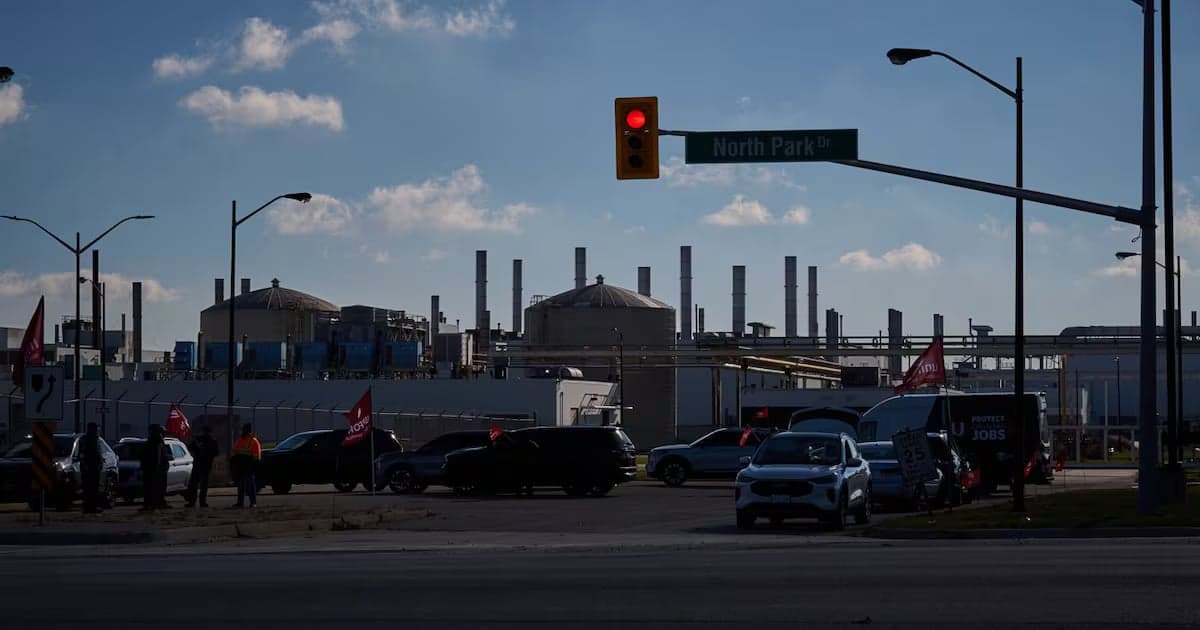
Ontario Premier Demands Federal Ban on Chinese EV Kits at Brampton Stellantis Plant
City News
- 39
Premier Ford Urges Federal Ban on Chinese EV Components in Brampton
City News
- 40
GTA Condo Market Faces Correction Amid Rising Interest Rates
City News
 41
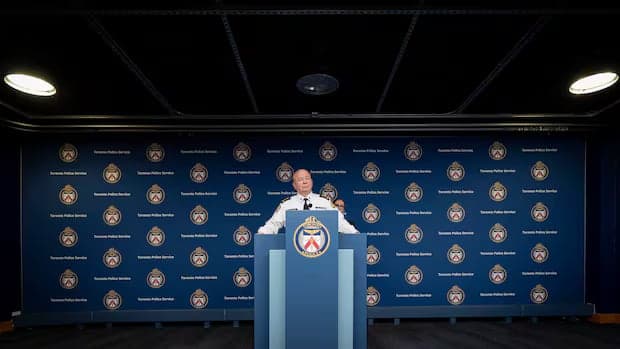
Toronto Police Chief Halts Community Safety Hub Expansion for Performance Review
City News
- 42
TTC Implements Nightly Service Disruptions for Major Infrastructure Work
City News
 43
Cold Front Brings Sharp Temperature Drop and Gale Winds to Toronto
City News
 44
Blue Jays Target Ace Tarik Skubal Amidst High-Stakes Free Agency Frenzy
Sports
 45
MLB Offseason Frenzy: Boras Warns of Lockout, GM Meetings Intensify
Sports
 46
Louis Varland Wins Inaugural AL Reliever of the Year Award
Sports
 47
Louis Varland Named Inaugural AL Reliever of the Year, Highlighting Blue Jays Bullpen Success
Sports
 48
Maple Leafs Demote Tanev, Challenge Nylander Amidst Arena Slump
Sports
 49
Maple Leafs Revamp Defense After Fourth Straight Home Loss
Sports
 50
Maple Leafs Coach Jim Hiller Publicly Challenges Star Player Amidst Losing Streak
Sports
 51
Raptors Collapse Against Celtics, Squandering 22-Point Lead Without Barnes and Leonard
Sports
- 52
Raptors Blow 22-Point Lead in Frustrating Loss to Celtics
Sports
 53
Raptors' Depth Exposed in Collapse Against Celtics, Forcing Front Office Concern
Sports
 54
NBA Injury Woes: Curry Exits With Abdominal Issue, Reaves Leaves With Heel Injury
Sports
- 55
Anthony Santander's Silence Fuels Controversy for Toronto Blue Jays
Sports
 56
Blue Jays Bolster Minor League Depth with Four Spring Training Signings
Sports
See all 56 as a listHide the list
- Canada Adjusts Tariff Relief Framework Amid US Trade Tensions
- Fitch Ratings: Federal Budget 2026 Absorbs Resource Windfall with Aggressive Spending
- Housing Ministry Reaffirms Doubling Homebuilding Target Amid Budget Scrutiny
- Canada Plans Long-Term Airport Privatization via Concession Models
- Ottawa Facilitates Stellantis Plant Conversion to Armored Vehicle Production
- Ford Urges Ottawa to Block Chinese EV Kit Assembly at Brampton Plant
- Canada Bans Russian and Belarusian Athletes from World Junior Championship
- Independent TV Providers Accuse Rogers of Anti-Competitive Hockey Streaming Practices
- RCMP and Partners Dismantle Cybercrime Networks in Operation Maple Disruption 2.0
- Canadian Public Transit Generates $65.6B GDP, Supports 500K Jobs: Chamber of Commerce
- Advocates Warn Pension Funds Over $3.1B LNG Investments
- US Tariffs Push Canadian Textile Firm Fine Cotton Factory to Consider US Production
- Public Safety Canada Advises 72-Hour Emergency Kit Readiness
- Alberta's Urgent-Care Strategy Faces Municipal Backlash Over Cancelled Hospital
- Saskatoon Police Capture Federal Inmate After 14-Month Manhunt
- Pilot Dies in Plane Crash After Remembrance Day Flyover in Quebec
- G7 Paris Declaration Demands European Inclusion in Security Talks, Signals Red Lines
- Ukraine War Dominates European Summit Amidst Russian Maximalism and Cyber Threats
- US, Russia, Ukraine Conclude Abu Dhabi Talks With Prisoner Swap; Security Disagreements Linger
- Canadian PM Carney Attends Dublin Summit to Forge Closer Ties with Europe
- Canada Pursues EU Associate Membership Amid Global Trade Diversification Tour
- Prime Minister Carney Begins Trade Summit Tour in Europe and Asia to Counter U.S. Protectionism
- Western Allies Blame Iran for Coordinated Cyberattack on French Supermarket Refrigeration Systems
- Canada and India Expedite CEPA Talks Amidst Global Trade Fragmentation
- Canada's Ambassador Criticizes U.S. Tariffs at B20 Summit, Cites Increased Capital Costs
- KPMG Outlook Forecasts Potential December Rate Hike and Persistent Trade Headwinds for Canada
- Canadian Investors Urge Mandatory Climate Disclosure Amidst EU Alignment Push
- U.S. Tech Export Controls Scrutinize North American Supply Chains, Burdening Canadian Firms
- Manhunt Underway for Suspect in Deadly Rexdale Youth Shooting; Second Suspect Sought
- Toronto Police Seek Man for First-Degree Murder in Rexdale Shooting
- Ontario Line Construction Advances with Leslieville Elevated Station Taking Shape
- Metrolinx Reduces Public Board Meetings Despite Oversight Concerns
- Metrolinx Cuts Public Board Meetings, Sparking Backlash Over Transit Project Accountability
- Ottawa Reaffirms Housing Targets Amid GTA Development Concerns
- Home Builders Criticize Housing Policies for Neglecting Homeownership
- Toronto Community Housing Discusses Capital Projects Amid Funding Shifts
- Poll Reveals Divided GTA Public Opinion on Housing and Newcomer Services
- Ontario Premier Demands Federal Ban on Chinese EV Kits at Brampton Stellantis Plant
- Premier Ford Urges Federal Ban on Chinese EV Components in Brampton
- GTA Condo Market Faces Correction Amid Rising Interest Rates
- Toronto Police Chief Halts Community Safety Hub Expansion for Performance Review
- TTC Implements Nightly Service Disruptions for Major Infrastructure Work
- Cold Front Brings Sharp Temperature Drop and Gale Winds to Toronto
- Blue Jays Target Ace Tarik Skubal Amidst High-Stakes Free Agency Frenzy
- MLB Offseason Frenzy: Boras Warns of Lockout, GM Meetings Intensify
- Louis Varland Wins Inaugural AL Reliever of the Year Award
- Louis Varland Named Inaugural AL Reliever of the Year, Highlighting Blue Jays Bullpen Success
- Maple Leafs Demote Tanev, Challenge Nylander Amidst Arena Slump
- Maple Leafs Revamp Defense After Fourth Straight Home Loss
- Maple Leafs Coach Jim Hiller Publicly Challenges Star Player Amidst Losing Streak
- Raptors Collapse Against Celtics, Squandering 22-Point Lead Without Barnes and Leonard
- Raptors Blow 22-Point Lead in Frustrating Loss to Celtics
- Raptors' Depth Exposed in Collapse Against Celtics, Forcing Front Office Concern
- NBA Injury Woes: Curry Exits With Abdominal Issue, Reaves Leaves With Heel Injury
- Anthony Santander's Silence Fuels Controversy for Toronto Blue Jays
- Blue Jays Bolster Minor League Depth with Four Spring Training Signings
Section 1 of 4
National News
16 stories · 7 min skim
National News
2 min read
Canada Adjusts Tariff Relief Framework Amid US Trade Tensions
The Department of Finance has extended Canada's tariff relief framework for targeted U.S. tariffs until June 30, 2028. This program grants import duty waivers to domestic businesses facing supply shortages or economic disruptions due to U.S. trade actions. The framework has been broadened to include more non-steel goods for mining and energy sectors, as well as educational institutions, while narrowing eligibility for certain manufactured goods with established domestic supply chains.
Read the full storyFold the full story1 min · 1 source
The federal government announced significant revisions to Canada’s tariff relief architecture, recalibrating protections for domestic businesses and critical industries grappling with heightened trade friction from the United States[1]. The Department of Finance confirmed an extension of the horizontal remission framework for targeted U.S. tariffs by an additional year, moving the expiration date to June 30, 2028[1]. The relief program, initially developed to mitigate the financial pain of U.S. cross-border trade actions, grants import duty waivers to domestic entities facing acute short supply or exceptional economic disruptions[1].
The updated framework broadens the scope of eligible imports while simultaneously pruning sectors where Canadian production can fill market demand[1]. Under the new rules, horizontal tariff remissions will now cover non-steel goods utilized in mining, quarrying, and oil and gas extraction, alongside all supplies imported by public educational institutions and Indigenous-mandated educational bodies[1]. Conversely, to stimulate the uptake of domestic manufactured inputs, the government will terminate horizontal relief on select goods with established local supply chains[1]. Tariff exemptions will expire on December 1, 2026, for designated commercial trailers, followed by the elimination of relief for specific aluminum wire, extrusions, and paperboard products on February 1, 2027[1].
To reduce administrative friction for Canadian supply chains, the Department of Finance has shifted away from ad-hoc legislative orders by publishing detailed, dynamic product schedules directly on its departmental platform[1]. Business groups and resource operators welcomed the extended operational buffer for energy and mining inputs, but domestic fabricators have pressed Ottawa to aggressively phase out exemptions across more industrial categories[1]. Government officials emphasized that the tiered lead times will allow commercial importers sufficient runway to either reconfigure supply chains toward domestic vendors or apply for individual, case-by-case remission orders under strict necessity tests[1].
- Department of Finance
- United States
- Canada
National News
2 min read
Fitch Ratings: Federal Budget 2026 Absorbs Resource Windfall with Aggressive Spending
Fitch Ratings has analyzed Canada's Budget 2026, noting that a projected stable deficit of 1.8% of GDP masks a significant fiscal shift. Substantial revenue gains from higher commodity prices and taxes have been entirely consumed by new spending on capital projects and defence.
Read the full storyFold the full story2 min · 3 sources
Fitch Ratings released a sovereign credit analysis of Canada’s Budget 2026, evaluating the federal government's economic strategy and fiscal projections[1][1]. While the headline federal deficit is projected to hold steady at 1.8 percent of GDP for the fiscal year ending March 2028 (FY27/28), Fitch cautioned that this apparent stability masks a significant structural shift in public finances[1][1]. According to the rating agency, substantial revenue gains resulting from higher oil prices, elevated commodity receipts, and robust personal income tax revenue have been completely absorbed by expansive new spending commitments[1].
Prior to the introduction of the new measures in Budget 2026, titled Masters of Our Destiny, Canada’s fiscal trajectory had improved substantially[2][1]. Fitch noted that the projected FY25/26 deficit had fallen by 41 percent - from an earlier baseline forecast of CAD $67 billion down to CAD $39 billion[1]. Over the outer forecast horizon, pre-budget revenue improvements averaged CAD $34 billion annually relative to the 2026 economic baseline[1]. Rather than applying this fiscal windfall to accelerate debt reduction or rebuild fiscal buffers, the Carney government channeled the revenue into new operational programs and a major ramp-up in infrastructure and defence procurement[1][1].
The central pillar of this fiscal strategy is a surge in non-financial asset acquisitions, led primarily by military spending and industrial investments[1]. Non-financial capital acquisitions are forecast to rise to CAD $36 billion in FY27/28 and approximately CAD $40 billion by FY29/30 - nearly doubling earlier long-term projections of CAD $20 billion and CAD $17 billion, respectively[1]. To manage the balance sheet, the government introduced a formal accounting separation between operating spending and capital expenditures, while funding new social and digital initiatives through expenditure reductions and federal workforce streamlining[1][1].
Fitch affirmed that Canada’s sovereign profile remains anchored by its 'AA+' rating and institutional stability, but stressed that the medium-term economic outlook is heavily contingent on whether these capital outlays translate into tangible productivity gains[1][3]. With operational savings partially offsetting gross expenditures, the government's fiscal headroom will depend heavily on sustained commodity pricing and the successful deployment of capital to crowd in private-sector business investment[1].
- Fitch Ratings
- Canada
- Budget 2026
National News
2 min read
Housing Ministry Reaffirms Doubling Homebuilding Target Amid Budget Scrutiny
Federal Housing Minister Gregor Robertson has reiterated the government's commitment to doubling Canada's annual homebuilding rate over the next decade, despite the omission of this pledge from Budget 2026. The budget instead focuses on tripling non-market housing construction to 24,000 units annually. This shift has raised concerns among economists and critics about the government's broader housing construction goals amid high interest rates and labor shortages.
Read the full storyFold the full story1 min · 1 source
The office of Federal Housing Minister Gregor Robertson moved to quell mounting controversy over Canada’s national housing strategy, reasserting that Ottawa remains committed to its long-term ambition of doubling the country's annual homebuilding pace over the next decade[1]. The government’s public clarification followed intense scrutiny from parliamentarians and industry analysts who observed that the Liberals completely omitted their landmark doubling pledge from the newly tabled Budget 2026[1]. The original construction target had formed the core pillar of the governing party's 2025 campaign platform and fiscal policy rhetoric[1].
In place of the overarching private-and-public construction targets, the 511-page Budget 2026 shifted institutional focus to a narrower metric: tripling the rate of non-market housing construction to achieve 24,000 public and community starts annually over the next decade[1]. While affordable and subsidized housing providers lauded the dedicated funding mechanisms, the pivot raised sharp questions among housing economists and opposition critics regarding whether the Carney administration is quietly retreating from aggregate building goals as high interest rates and labour bottlenecks constrain residential developers[1].
Scrutiny intensified as Parliamentary Budget Officer Annette Ryan reiterated concerns that federal fiscal blueprints have increasingly lacked clear, auditable benchmarks for broader residential market output[1]. In defense of its trajectory, Robertson’s office highlighted that national housing starts remain roughly 20 percent above pre-pandemic baselines, maintaining that specialized capital allocations in the budget will indirectly stimulate market-rate density[1]. Nevertheless, urban policy organizations and municipal leaders continue to demand binding milestones, warning that tripling non-market development addresses only a fraction of Canada's structural housing deficit[1].
- Gregor Robertson
- Budget 2026
- Annette Ryan
National News
2 min read
Canada Plans Long-Term Airport Privatization via Concession Models
The federal government has outlined a strategy to transition Canada's major airports, including Toronto Pearson and Vancouver International, to long-term private concession models. Under this framework, the Crown will retain land ownership while private consortiums manage operations and commit to capital investments. This aims to attract private capital for modernization and overhaul the National Airports Policy established in 1994.
Read the full storyFold the full story1 min · 2 sources
In detailed policy disclosures and credit agency briefings following the tabling of Budget 2026, the federal government clarified its operational roadmap to shift Canada’s largest commercial airports toward long-term private concession models[1][2]. Ottawa’s framework outlines plans to attract substantial private capital by tendering operating concessions for Toronto Pearson, Vancouver International, Montréal-Trudeau, and Calgary International airports[2]. Under the proposed structure, the federal Crown will maintain absolute ownership of the underlying land and physical runway assets while granting private consortiums operational management rights in exchange for major upfront concession revenues and ongoing infrastructure capital commitments[2].
The policy shift seeks to overhaul Canada’s decades-old National Airports Policy, established in 1994, which placed facility management under regional, not-for-profit airport authorities that relied primarily on user fees and commercial debt to finance terminal upgrades[2]. Under the new model, concessionaires will be authorized to leverage equity markets to modernize capacity and integrate advanced logistics hubs[2]. Concurrently, an evaluation published by Fitch Ratings underscored that the government’s structural fiscal framework now formally separates operating expenditures from capital infrastructure outlays[1]. This accounting split has enabled the federal government to channel a multi-billion-dollar revenue windfall from sustained oil and natural resources prices directly into large-scale capital investments without expanding the federal deficit, which remains targeted at 1.8 percent of GDP through fiscal year 2027/28[1].
While business groups and private equity funds have signaled strong appetite for Canadian infrastructure assets, the concession strategy faces significant resistance from passenger advocacy groups and aviation labour unions[2]. Critics caution that private operators seeking returns on multi-billion-dollar investments could drive up landing fees, security surcharges, and retail leasing costs, which would ultimately be passed on to Canadian travelers[2]. The Carney administration maintains that the public concession model provides the fiscal leverage needed to upgrade trade-enabling air transport corridors without draining federal operational coffers[1][2].
- Toronto Pearson
- Vancouver International
- Montréal-Trudeau
National News
2 min read
Ottawa Facilitates Stellantis Plant Conversion to Armored Vehicle Production
Federal officials have confirmed their supportive role in the sale of Stellantis' Brampton, Ontario, automotive assembly plant to defense contractor Roshel. The government, which engaged with both parties, did not impede the transaction, viewing it as a strategic move to retain manufacturing capacity. The plant will be repurposed for the production of armored vehicles, shifting from its original electric vehicle manufacturing plans.
Read the full storyFold the full story1 min · 2 sources
Federal officials addressed the government's behind-the-scenes involvement in the landmark transaction between automotive giant Stellantis and defence contractor Roshel, which saw the sale of the Brampton, Ontario automotive assembly facility to the armoured vehicle manufacturer[1]. Ministerial spokespersons confirmed that the federal government had maintained regular contact with both corporations since August 2026 and opted not to impede the sale, viewing the transaction as a strategic avenue to preserve high-value manufacturing capacity in Southern Ontario[1]. Clarifications were issued by the office of Minister Mélanie Joly to dispel claims that ministerial leadership held formal pre-closing negotiations with Roshel executives[1].
The commercial transaction marks a notable transition point for Canadian industrial policy, shifting a legacy automotive facility originally slated for consumer electric vehicle manufacturing into a major production hub for military and security platforms[1]. Brampton's plant had faced significant headwinds amid fluctuating consumer EV demand and corporate restructuring at Stellantis, prompting the Carney government to back industrial conversion rather than permit the site to fall dormant[1]. Roshel, which has grown into a major supplier of armoured personnel carriers to Ukraine and NATO-allied defence agencies, plans to repurpose the sprawling plant to scale production of combat vehicles[2][1].
The transaction has sparked vigorous debate across organized labour and economic policy circles[1]. Auto workers and local union leaders expressed relief that heavy industrial employment will remain at the Brampton plant, avoiding mass localized job losses[1]. However, manufacturing policy analysts pointed out that the plant’s conversion reflects Ottawa’s tacit admission that federal electric vehicle mandates face ongoing execution challenges, accelerating a broader realignment toward sovereign defence production and military industrial capability under the current mandate[1].
- Stellantis
- Roshel
- Brampton
National News
2 min read
Ford Urges Ottawa to Block Chinese EV Kit Assembly at Brampton Plant
Ontario Premier Doug Ford has formally requested Prime Minister Mark Carney to prevent the assembly of Chinese electric vehicle (EV) kits at the Brampton Assembly Plant. This move follows Stellantis's agreement to sell the plant to defence manufacturer Roshel. Ford is concerned that allowing Chinese EV assembly would undermine Canada's domestic automotive industry and jobs.
Read the full storyFold the full story2 min · 8 sources
Ontario Premier Doug Ford escalated political and industrial tensions by sending a formal letter to Prime Minister Mark Carney, urging the federal government to prohibit the assembly of Chinese-manufactured electric vehicle (EV) kits at the Brampton Assembly Plant[1]. The intervention comes in the immediate wake of an agreement by multinational automaker Stellantis to sell the idled auto plant in Brampton, Ontario, to Canadian defence and armoured vehicle manufacturer Roshel[1][2]. Ford’s letter demands federal regulatory guarantees to ensure the shuttered automotive hub does not become a backdoor assembly site for Chinese electric vehicles, which he warned would undermine the country’s domestic automotive ecosystem[1][3].
The Brampton facility, which historically employed more than 2,000 unionized autoworkers represented by Unifor Local 1285, has been dormant since December 2023[2][4]. Retooling was initially planned to produce electric Jeep Compass SUVs backed by over $1 billion in combined public funding commitments - including $529 million from the federal government and more than $500 million from the province of Ontario[2][4]. However, following the introduction of 25 percent tariffs on Canadian-built vehicles by the United States, Stellantis halted capital spending at Brampton and redirected Jeep Compass production to Belvidere, Illinois[2][4]. Stellantis subsequently formalized an asset-purchase agreement with Roshel, offering to voluntarily return an estimated $24 million in received subsidies, a fraction of the original government commitments[5][2].
Ford's letter aligns with warnings issued by automotive supply-chain groups, including Automotive Parts Manufacturers' Association (APMA) President Flavio Volpe, who cautioned that allowing Chinese "knock-down kits" to be assembled in Ontario would directly imperil hundreds of Canadian parts suppliers and upwards of 100,000 manufacturing jobs[6]. The Ontario government’s push seeks to enforce strict rules-of-origin standards and industrial safeguards to protect domestic parts producers from low-cost Asian supply chains amid broader North American trade renegotiations[6].
The transaction has touched off fierce political and labour recriminations across Canada. Unifor National President Lana Payne denounced the sale as an "underhanded deal" and a blatant breach of contractual commitments made to Canadian autoworkers[4]. Prime Minister Carney labeled the plant closure a "betrayal of obligations" and affirmed that the federal government would rigorously enforce its contractual rights under past industrial agreements, despite revelations that federal officials had engaged in discussions regarding the site's fate[7][8][2]. In contrast, Roshel Chief Executive Officer Roman Shimonov defended the transaction, arguing that repurposing the plant for defence and tactical vehicle production represents the most viable path to restoring thousands of industrial jobs to Brampton[4].
- Doug Ford
- Mark Carney
- Stellantis
National News
2 min read
Canada Bans Russian and Belarusian Athletes from World Junior Championship
Canada has officially denied entry visas to all Russian and Belarusian athletes and officials for the upcoming IIHF World Junior Championship. The federal government's directive extends to all individuals associated with the teams, regardless of prior visa status. This decision reflects Canada's firm stance against Russia's invasion of Ukraine and aims to prevent Canadian sporting events from being used for state propaganda.
Read the full storyFold the full story1 min · 3 sources
The federal government notified Hockey Canada that it will deny entry visas to all Russian and Belarusian players seeking to participate in the upcoming IIHF World Junior Championship[1]. In a sweeping directive announced by Secretary of State for Sport Adam Van Koeverden, Ottawa confirmed that the ban will apply comprehensively, barring Russian athletes even if they currently hold valid visas to play for club teams in Canada[1]. The decision effectively precludes any Russian participation in the international tournament, closing off avenues for athletes to compete under a neutral banner as part of a collective national delegation[1].
The measure reinforces Ottawa’s foreign policy stance against the Russian Federation's continued invasion of Ukraine[2][1]. Under the directive, Immigration, Refugees and Citizenship Canada (IRCC), led by Minister Lena Metlege Diab, has been instructed to individually assess and prevent Russian and Belarusian athletes, coaches, and team officials from crossing Canadian borders for the tournament[1][3]. Van Koeverden stated that while the restrictions are not aimed at individual citizens, Ottawa refuses to permit Canadian sporting events to serve as platforms for state legitimacy or propaganda for the Kremlin and its allies[1]. Prime Minister Mark Carney previously warned that state-affiliated teams from aggressor nations would not be welcomed on Canadian soil while hostilities persist[1].
The ruling carries major sporting and diplomatic implications, significantly altering the composition of the marquee holiday tournament and generating tension with international athletic governing bodies[1]. While international frameworks like the International Olympic Committee have carved out conditions allowing Russian athletes to compete as individual neutral competitors, Canadian authorities have drawn a firm line against team sports representing national federations[1]. The decision affects Russian prospects across the Canadian Hockey League and European leagues who had anticipated showcasing their talent at the event, while reaffirming Canada’s hardline diplomatic posture alongside G7 allies[2][1].
- Hockey Canada
- IIHF World Junior Championship
- Adam Van Koeverden
National News
2 min read
Independent TV Providers Accuse Rogers of Anti-Competitive Hockey Streaming Practices
Cogeco Communications, Eastlink, and SaskTel have filed a complaint with the CRTC, alleging Rogers Communications Inc. engaged in anti-competitive practices by moving Monday Night Hockey broadcasts exclusively to its Sportsnet+ streaming service. They claim this unfairly disadvantages rival providers and inflates costs for consumers.
Read the full storyFold the full story1 min · 4 sources
A coalition of independent and regional telecommunications providers - Cogeco Communications, Eastlink, and SaskTel - filed a joint regulatory complaint with the Canadian Radio-television and Telecommunications Commission (CRTC), accusing Rogers Communications Inc. of anti-competitive practices and artificial price inflation in sports broadcasting[1][2][3]. The dispute centers on Rogers' decision to shift live national broadcasts of NHL Monday Night Hockey games exclusively onto its proprietary Sportsnet+ streaming service for the ongoing hockey season, stripping the broadcasts from standard linear television feeds[2][4].
The competing distributors allege that Rogers is using its dominant control over Canadian NHL broadcast rights to undermine competitive pay-TV distribution[3]. According to the filings, consumers subscribing to television packages through Cogeco, Eastlink, or SaskTel must purchase an additional Sportsnet+ streaming subscription - typically costing approximately $12.99 per month - to watch the Monday night matchups[3]. In contrast, the complainants point out that Rogers has packaged and integrated Sportsnet+ access directly into its own Rogers Xfinity television offerings at no additional charge, placing competing video distributors at a competitive disadvantage[3].
Cogeco, Eastlink, and SaskTel argue that the carve-out erodes consumer value in standard multichannel video packages and violates Canadian regulatory provisions against undue preference and anti-competitive distribution[3]. The coalition requested that the CRTC intervene to mandate non-discriminatory wholesale terms, including a wholesale rate of zero dollars for distributing the exclusive games across linear systems, so third-party cable and IPTV subscribers can access all national NHL games without incurring duplicative subscription costs[3].
The challenge comes at a sensitive time for Canadian sports media, as major broadcast rights holders increasingly migrate premium live sports to digital, direct-to-consumer platforms. Rogers had previously argued that other telecommunications distributors possessed avenues to negotiate access terms for their customer bases, but independent operators maintain that the current licensing framework fragments the market and inflates household entertainment costs[3]. The CRTC has acknowledged the dispute but has yet to schedule formal hearings or release an interim ruling on the distribution framework[3].
- Cogeco Communications
- Eastlink
- SaskTel
National News
2 min read
RCMP and Partners Dismantle Cybercrime Networks in Operation Maple Disruption 2.0
The RCMP and over 50 public and private sector partners have concluded Operation Maple Disruption 2.0, a nationwide effort to dismantle cybercrime networks. The operation targeted infrastructure used for financial scams and cryptocurrency fraud, resulting in thousands of disruptive actions. Over $1 million in victim funds were recovered.
Read the full storyFold the full story1 min · 3 sources
Federal law enforcement authorities and private-sector financial partners announced the conclusions of Operation Maple Disruption 2.0, a coordinated nationwide enforcement sprint targeting the technical infrastructure underpinning organized financial scams and illicit cryptocurrency operations across Canada[1][2]. Led by the Royal Canadian Mounted Police's National Cybercrime Coordination Centre (NC3) and the Canadian Anti-Fraud Centre (CAFC), the operation integrated resources from more than 50 organizations, including domestic telecommunications carriers, major chartered banks, regulatory bodies, and digital asset networks[1][2].
Over the course of the multi-agency operation, investigators executed 10,987 targeted disruptive actions designed to dismantle the technical assets fraudsters use to contact Canadian victims and extract capital[1]. Interventions included shutting down thousands of fraudulent email domains, terminating deceptive telephone lines, taking phishing portals offline, blocking unauthorized bank transfers, and blocklisting illicit cryptocurrency wallet addresses[1]. The CAFC confirmed that 4,264 individual fraud files were actively actioned during the blitz, leading to the direct recovery and preservation of more than $1,063,809 in victim funds[1].
A major focus of this year's operation was the interdiction of criminal networks leveraging automated kiosks[3]. Localcoin, Canada’s largest operator of Bitcoin automated teller machines (ATMs), participated directly in the sweep, collaborating with federal investigators to implement advanced transaction filtering and prevent money laundering rings from exploiting retail digital cash endpoints[3]. RCMP Deputy Commissioner Marie-Claude Dandenault highlighted the operation as a model for future enforcement, noting that seizing and disabling criminal digital architecture upstream is far more effective at preventing public financial harm than traditional post-offense investigation[1]. The enforcement sweep coincides with legislative scrutiny surrounding Bill S-8, which aims to impose stricter registration mandates, criminal screening, and transaction reporting on virtual asset service providers and kiosk networks nationwide[2].
- RCMP
- Canadian Anti-Fraud Centre
- Operation Maple Disruption 2.0
National News
2 min read
Canadian Public Transit Generates $65.6B GDP, Supports 500K Jobs: Chamber of Commerce
A new report by the Canadian Chamber of Commerce reveals that public transit systems contribute C$65.6 billion to Canada's GDP annually and support over 500,000 jobs. The study emphasizes that every dollar invested in transit yields more than C$3.50 in economic output.
Read the full storyFold the full story1 min · 2 sources
The Canadian Chamber of Commerce's Business Data Lab released a national economic study, titled Move Canada, showing that urban public transit networks serve as a foundation for national economic productivity and labor mobility[1][1]. According to the study, public transit infrastructure directly and indirectly supports C$65.6 billion (approximately US$46 billion) in annual Canadian gross domestic product and sustains more than 500,000 jobs across the country[1].
The report's central economic finding is a quantifiable multiplier on public transit financing: every C$1.00 invested in public transit capital projects and transit agency operations yields more than C$3.50 in broader economic output[1][2]. The analysis emphasizes that transit systems create economic value that extends far beyond daily passenger fares, providing the baseline infrastructure required to link urban workforces with commercial centers, ease regional road congestion, and optimize urban logistics corridors[1].
Regional transit leaders, including TransLink Chief Executive Officer Kevin Quinn in Metro Vancouver, cited the study's findings to emphasize the risks of infrastructure underinvestment[1]. TransLink pointed to complementary regional research indicating that service reductions resulting from operational funding shortfalls would increase annual household transportation expenses by up to C$1,000 across Metro Vancouver while exacerbating road congestion by up to 20 percent[1]. Business groups noted that chronic road gridlock acts as a direct drag on regional trade by delaying commercial freight and reducing overall worker productivity[1].
The Business Data Lab’s findings arrive as Canadian municipalities and transit operators negotiate with provincial and federal finance ministries over permanent, predictable operational funding models[1]. Business leaders and commercial associations are leveraging the report to argue that public transit spending must be evaluated as direct economic capacity building rather than simple municipal service subsidies, warning that insufficient operating funds will degrade labor access across major Canadian urban economies[1].
- Canadian Chamber of Commerce
- Business Data Lab
- Move Canada
National News
2 min read
Advocates Warn Pension Funds Over $3.1B LNG Investments
Environmental advocates and a class action law firm have sent legal warnings to six major Canadian pension funds regarding their substantial investments in liquefied natural gas (LNG) export infrastructure. The letters argue that these investments may violate fiduciary duties due to climate transition risks and volatile future demand.
Read the full storyFold the full story2 min · 4 sources
Environmental advocacy organisation Stand.earth joined forces with Montreal-based litigation firm Trudel Johnston & Lespérance to deliver formal legal warnings to the governing boards of six of Canada's largest public pension funds[1]. The letters caution trustees that continuing to allocate capital to liquefied natural gas (LNG) export infrastructure could violate their legal and statutory fiduciary duties[2][1]. Together, the targeted institutions - including the Canada Pension Plan Investment Board (CPP Investments), the Public Sector Pension Investment Board (PSP Investments), the Ontario Municipal Employees Retirement System (OMERS), Ontario Teachers' Pension Plan (OTPP), University Pension Plan (UPP), and Healthcare of Ontario Pension Plan (HOOPP) - manage in excess of $1.6 trillion in Canadian retirement assets[2][1].
The legal warning was spurred by a transaction in which CPP Investments, OMERS, PSP Investments, and the Investment Management Corporation of Ontario (IMCO) joined American alternative asset manager Blackstone in a US$3.1 billion acquisition[3][4]. The investor consortium agreed to purchase a 49.9 percent non-controlling stake in a Mitsubishi Corporation subsidiary that holds an equity interest in the LNG Canada liquefaction terminal located in Kitimat, British Columbia, as the project works toward a final investment decision for its Phase 2 expansion[2][3]. The letters also cautioned against direct or fund-level exposures to other proposed export ventures, such as Ksi Lisims LNG[1].
The legal challenge is spearheaded by Anne-Julie Asselin, a partner at Trudel Johnston & Lespérance known for leading high-stakes class actions, including Canada's historic $32.5 billion tobacco settlement[1]. Asselin asserted that fiduciary duties under Canadian law require pension trustees to account for foreseeable climate transition risks, volatile long-term global gas demand, and asset stranding[2][1]. The letters state that near-term energy returns generated by geopolitical supply disruptions cannot legally justify exposing members' retirement savings to mid- and long-term decarbonization shifts[2][3].
Richard Brooks, Climate Finance Director at Stand.earth, noted that global capital markets are accelerating investments into low-carbon infrastructure, which threatens the economic viability of multi-decade fossil fuel export infrastructure[3]. Stand.earth and its legal counsel stated they will scrutinize pension boardroom approvals and consider litigation remedies if trustees fail to publish rigorous, climate-aligned risk evaluations regarding direct fossil asset allocations[2]. The action mirrors an international wave of climate-related legal challenges facing institutional investors, increasing regulatory and reputational pressures across Canada's financial sector[2].
- Stand.earth
- Trudel Johnston & Lespérance
- CPP Investments
National News
2 min read
US Tariffs Push Canadian Textile Firm Fine Cotton Factory to Consider US Production
Toronto-based textile manufacturer Fine Cotton Factory is considering relocating production to the United States due to escalating U.S. import tariffs. The company, which relies heavily on U.S. sales, has seen its business impacted by duties that make its products less competitive south of the border.
Read the full storyFold the full story1 min · 4 sources
Toronto-based fabric manufacturer Fine Cotton Factory Inc. confirmed that it is actively exploring plans to establish manufacturing facilities inside the United States, illustrating the escalating operational fallout of cross-border trade friction on Canadian industry[1][2]. The family-owned business, which operates a 60,000-square-foot knitting facility and a 160,000-square-foot dyeing and finishing plant in Toronto employing approximately 250 workers, produces advanced circular knit fabrics for sleep, mattress, and apparel brands[3][4]. Following the implementation of steep U.S. import tariffs reaching up to 50 percent on select consumer and industrial goods, the company saw its U.S. sales decline[1][3].
Fine Cotton Factory historically generated between 30 and 50 percent of its revenue from American buyers[3]. The imposition of the tariffs caused U.S. customers to delay purchasing contracts, exhaust existing inventories, and demand localized sourcing to avoid border duties[1][3]. Skip Kann, the company's Executive Vice President of sales and marketing, stated that while orders have begun to stabilize, continued policy volatility surrounding the Canada-U.S. trade corridor makes direct investment in an American manufacturing plant an operational necessity to retain market share[1].
The company's dilemma highlights the vulnerability facing small- and medium-sized Canadian manufacturers that lack the scale or geographic footprint of multinational corporations[3]. Federal financial support programs and export loan buffers have helped manage immediate cash-flow volatility, but executives note that temporary subsidies cannot resolve long-term structural cost disparities created by 50 percent border duties[3]. With domestic Canadian sales offering limited room for expansion, businesses reliant on high export volumes are finding cross-border relocations increasingly difficult to avoid[2][3].
Ari Van Assche, a professor of international business at HEC Montréal, noted that while macroeconomic foreign direct investment data compiled by Statistics Canada has not yet reflected a systemic exodus of Canadian manufacturing capacity to the U.S., individual mid-market producers are being pushed to an inflection point[1]. Van Assche warned that prolonged trade conflicts could accelerate capital flight, as mid-tier producers conclude they can no longer absorb cross-border trade barriers while maintaining all their production infrastructure inside Canada[1].
- Fine Cotton Factory Inc.
- United States
- Toronto
National News
1 min read
Public Safety Canada Advises 72-Hour Emergency Kit Readiness
Public Safety Canada is urging all Canadian households to prepare an emergency kit stocked for at least 72 hours. The advisory highlights vulnerabilities in critical infrastructure, severe weather, and strained electrical grids as reasons for heightened preparedness.
Read the full storyFold the full story1 min · 1 source
Public Safety Canada issued an operational advisory urging all Canadian households to review their domestic contingency plans and ensure they possess an emergency survival kit capable of sustaining them for a minimum of 72 hours without power, running water, or access to municipal services[1]. The federal safety reminder instructs residents to stockpile non-perishable food, potable water, battery-powered communications equipment, and critical prescription medications[1].
The directive comes amid an increasingly complex threat environment characterized by vulnerabilities in critical national infrastructure, severe early-season winter weather patterns, and rising strains on electrical grids[1]. Public safety officials noted that civil protection agencies across several allied jurisdictions, including the United Kingdom and France, have issued similar household preparedness warnings[1]. The objective is to cultivate community-level resilience that reduces pressure on municipal emergency first responders during the acute opening phase of widespread emergencies[1].
Emergency management experts emphasize that personal self-sufficiency is vital during regional blackouts and extreme climate incidents, when local paramedics, fire rescue, and police resources are tied up responding to life-threatening incidents[1]. Public Safety Canada stressed that while federal and provincial disaster management frameworks remain on high alert heading into the winter months, individual household readiness remains the frontline barrier against public safety disruptions during major utility failures[1].
- Public Safety Canada
- emergency kit
- critical infrastructure
National News
2 min read
Alberta's Urgent-Care Strategy Faces Municipal Backlash Over Cancelled Hospital
Municipal leaders in Alberta, particularly in Edmonton, are criticizing the provincial government's $39 million investment in nine new urgent-care facilities. They argue this strategy is an inadequate substitute for much-needed full-scale acute care hospitals, citing the cancellation of a major hospital project in South Edmonton.
Read the full storyFold the full story1 min · 5 sources
Tensions between municipal leaders and the Alberta provincial government escalated following an update regarding hospital infrastructure and emergency healthcare access across the province[1]. The controversy stems from the provincial government’s commitment of $39 million to acquire land and begin site planning for nine new urgent-care facilities, including two locations earmarked for Edmonton, alongside sites in Fort McMurray, Stony Plain-Spruce Grove, and Cold Lake[1]. While the Ministry of Hospital and Surgical Health Services frames the buildout as a fast-track solution to decompress emergency rooms, municipal officials in Edmonton publicly criticized the program as an inadequate substitute for full-scale acute care facilities[1].
Edmonton city councillors voiced frustration, emphasizing that the urgent-care centers do nothing to resolve the long-delayed and ultimately cancelled hospital project for South Edmonton[1][2]. The planned 500-bed hospital in the Heritage Valley district, first proposed in 2017 for $1.8 billion, was terminated after revised cost projections surged past $5 billion[1]. Municipal leaders pointed out that South Edmonton has not seen a new hospital built since 1988, despite unprecedented population growth over the past three decades[1]. Critics argue that prioritizing small outpatient centers leaves the 320-acre Heritage Valley medical plot vacant while stranding critical arterial transit infrastructure, including light-rail extensions that were designed to terminate at the promised medical campus[1][2].
Defending the initiative, Minister for Hospital and Surgical Health Services Adrianna LaGrange argued that emergency rooms across Alberta handle over two million patient visits annually, with clinical analytics indicating that more than one-third of those cases involve non-life-threatening ailments that are better handled in an urgent-care environment[1]. However, healthcare advocates and emergency physicians countered that the crisis in Canadian emergency departments is primarily driven by "access blocks" - the inability to admit complex, acutely ill patients into inpatient hospital beds[3][4]. The clash underscores broader national friction across provincial healthcare systems, where hospital administrations are struggling with severe staffing shortages and record emergency department boarding times[3][5].
- Alberta
- Edmonton
- Ministry of Hospital and Surgical Health Services
National News
1 min read
Saskatoon Police Capture Federal Inmate After 14-Month Manhunt
Donald Buchanan, a federal inmate who escaped custody 14 months ago, has been apprehended in Saskatoon. Buchanan had been unlawfully at large since September 2025 from a minimum-security unit in Prince Albert. He was serving a sentence for multiple drug and weapons offenses.
Read the full storyFold the full story1 min · 5 sources
Federal corrections authorities and municipal law enforcement confirmed the capture of Donald Buchanan, a federal offender who had been unlawfully at large for nearly 14 months after escaping custody in central Saskatchewan[1][2]. Buchanan was apprehended without further incident in Saskatoon on Wednesday, November 11, at approximately 2:20 p.m. by officers with the Saskatoon Police Service[1][2]. The arrest brings an end to an interprovincial warrant that had been active since late summer 2025[2][3].
Buchanan, 29, originally escaped from the minimum-security unit of the Saskatchewan Penitentiary in Prince Albert on the evening of September 13, 2025[2][4]. Correctional officers discovered he was unaccounted for during a routine 9:30 p.m. headcount, prompting an immediate notification to the Prince Albert Police Service and the Royal Canadian Mounted Police[4]. At the time of his escape, Buchanan was serving a federal sentence for multiple convictions, including possession of Schedule I and II controlled substances for the purpose of trafficking, possession of property obtained by crime exceeding $5,000, possession of a weapon contrary to a prohibition order, and possession of an unauthorized prohibited weapon[4].
Following the arrest, Correctional Service Canada (CSC) stated that an administrative investigation is underway to examine how Buchanan managed to breach the perimeter of the minimum-security unit and remain undetected for more than a year[5]. CSC reaffirmed that institutional security and the safeguarding of neighboring communities remain its primary operational priorities[5]. Buchanan will face additional charges relating to escaping lawful custody and being unlawfully at large, and is slated for reassessment to a higher-security facility pending formal court proceedings.
- Saskatoon Police Service
- Donald Buchanan
- Saskatchewan Penitentiary
National News
2 min read
Pilot Dies in Plane Crash After Remembrance Day Flyover in Quebec
A pilot was killed when a small plane crashed and caught fire near the Saint-Georges airport shortly after participating in a Remembrance Day flyover. The aircraft went down in a wooded residential area, and the pilot, the sole occupant, was pronounced dead at the scene. The crash occurred during the return flight to the airport.
Read the full storyFold the full story1 min · 1 source
A commemorative flight marking Remembrance Day ended in tragedy late Wednesday morning when a small plane crashed and caught fire near the Saint-Georges airport, located south of Quebec City[1]. The aircraft went down around 11:00 a.m. local time shortly after taking part in an aerial flyover organized as part of regional Remembrance Day ceremonies[1]. First responders who arrived at the scene discovered the aircraft engulfed in flames in a wooded residential area behind local properties[1]. The pilot, identified as a man in his 60s residing in the region and the sole occupant of the plane, was pronounced dead at the scene[1].
According to Sûreté du Québec (SQ) spokesperson Audrey-Anne Bilodeau, the pilot had been flying in formation with a group of other civil aircraft prior to the incident[1]. As the flight returned toward the municipal airfield to land, the plane suddenly deviated from its path[1]. Local eyewitnesses, including area resident Dominique Maheux, recounted observing the aircraft abruptly veer to the right before plunging toward the tree canopy, followed immediately by an explosion, a ball of fire, and heavy plumes of black smoke[1]. Municipal emergency crews, including local firefighters and SQ officers, mobilized rapidly to contain the fire and prevent flames from spreading to nearby homes[1].
The accident cast a solemn shadow over local commemorative events in the Chaudière-Appalaches region, where communities had gathered to honor military veterans[1]. The City of Saint-Georges released a formal statement acknowledging the pilot’s contribution to the local ceremony and extending condolences to the victim's family[1]. Investigators from the Sûreté du Québec and aviation safety authorities have initiated a comprehensive inquiry into the incident, focusing on potential mechanical malfunctions, flight telemetry, and local meteorological conditions during the approach[1].
- Saint-Georges
- Quebec
- Remembrance Day
Section 2 of 4
World & Geopolitics
12 stories · 6 min skim
World & Geopolitics
2 min read
G7 Paris Declaration Demands European Inclusion in Security Talks, Signals Red Lines
G7 foreign ministers issued the Paris Declaration, reaffirming support for Ukraine and demanding European inclusion in security architecture talks. The declaration condemned Russian attacks on civilians and shipping, pushing for a reciprocal ceasefire as a precondition for broader negotiations. It also signaled concerns over being marginalized in discussions about European stability.
Read the full storyFold the full story2 min · 10 sources
On November 11, 2026, the Group of Seven (G7) foreign ministers released a comprehensive joint declaration marking the conclusion of their ministerial summit in Paris under the French presidency[1][2]. The declaration reaffirmed the bloc’s unwavering commitment to Ukraine’s territorial integrity and sovereignty, while issuing a direct diplomatic signal that any negotiated settlement regarding European stability must involve European capitals[1]. The ministers condemned Russia’s persistent strikes against civilian targets and energy networks, as well as an intensifying campaign of attacks targeting civilian shipping and supply routes across the Black Sea, which has threatened international food security[1]. Most crucially, the statement formally endorsed the pursuit of a full, reciprocal ceasefire covering energy facilities and maritime corridors as a vital precursor to broader negotiations[1].
The release of the communiqué arrives at a precarious juncture for Western unity, as parallel bilateral and trilateral diplomatic efforts between the United States, Russia, and Ukraine in the Middle East have caused mounting unease among European capitals[3][4]. European leaders have expressed urgent concerns over being marginalized in discussions regarding the future security arrangements of their own continent[1][5]. Against this backdrop, the joint declaration deliberately emphasized that European security negotiations cannot occur over the heads of European nations, serving as a consensus baseline among Canada, France, Germany, Italy, Japan, the United Kingdom, the United States, and the European Union[1][6]. The statement also addressed wider geopolitical friction points, warning Beijing against destabilizing actions east of Taiwan, condemning North Korean and Iranian military backing for Moscow, and cautioning against escalating border tensions between Ethiopia and Eritrea[6][7][8].
For Canada, the ministerial gathering served as an operational platform to advance its targeted economic pressure campaign against Moscow[9]. On the margins of the Paris meetings, Canadian Minister of Foreign Affairs Anita Anand unveiled sweeping sanctions under the Special Economic Measures Regulations, targeting 38 entities and 24 individuals[9]. The listings focused heavily on Russia’s defence industrial base, specifically actors facilitating ballistic missile technology, malicious state-sponsored cyber activity, and sanctions-evasion channels such as cryptocurrency exchanges[9]. Global Affairs Canada stated that these measures are intended to degrade Russia's capacity to replenish its long-range missile inventory and sustain offensive operations against Ukrainian municipal hubs[9].
The broader implications for global stability rest on whether the G7’s collective posture can bridge emerging strategic divergences among allies[6]. While U.S. Secretary of State Marco Rubio highlighted the effectiveness of ongoing naval blockades and financial sanctions in curtailing adversarial state capabilities, European counterparts emphasized the urgent need to shore up domestic industrial manufacturing licences and air defense interceptors pledged at earlier summits[1][10]. By firmly establishing red lines around Black Sea trade routes and continental defence consultations, the G7 declaration sets the diplomatic parameters that will constrain any forthcoming peace settlement framework[1].
- G7
- Ukraine
- Russia
World & Geopolitics
2 min read
Ukraine War Dominates European Summit Amidst Russian Maximalism and Cyber Threats
The European Political Community Summit in Dublin focused on European defense and the Ukraine war, overshadowed by Russia's uncompromising peace terms and ongoing hybrid threats. Russian officials reiterated demands for Ukrainian withdrawal and demilitarization, while European infrastructure faced coordinated cyberattacks and bomb hoaxes with a suspected Russian link. Discussions also covered vulnerabilities in military communications, exacerbated by restrictions on commercial satellite access for Ukrainian systems.
Read the full storyFold the full story2 min · 6 sources
At the European Political Community Summit in Dublin, Ukrainian President Volodymyr Zelenskyy, European Council President António Costa, NATO Secretary General Mark Rutte, and Prime Minister Mark Carney gathered under extraordinary security precautions to assess the future of European defense[1][2]. The summit’s security agenda was dominated by the diplomatic fallout from parallel U.S.-mediated negotiations in Abu Dhabi, where American envoys Steve Witkoff and Jared Kushner conducted exploratory talks to end the nearly five-year war following meetings with Russian leadership in Moscow[1].
The diplomatic atmosphere in Dublin was sharpened by a coordinated push from Moscow reiterating an uncompromising, maximalist position[3]. Senior Russian presidential aide and Abu Dhabi delegation lead Vladimir Medinsky declared that Russia will capture "every inch of [Russian] land one way or another" and that "wherever a Russian soldier has set foot belongs to Russia," ruling out any territorial concessions or land swaps[3]. Russian Foreign Minister Sergei Lavrov reiterated that Moscow’s terms remain fixed on the complete withdrawal of Ukrainian armed forces from the entirety of Luhansk, Donetsk, Zaporizhia, and Kherson oblasts - including areas Russia does not hold militarily - alongside Ukraine's full demilitarization and permanent renunciation of NATO membership[3].
The discussions in Dublin also addressed a wave of hybrid and asymmetric threats targeting European infrastructure[2][4]. Irish authorities, overseeing the largest security mobilization in the state's history, revealed that Dublin and national transport systems had recently endured coordinated cyberattacks and bomb hoaxes carrying a clear "Russian dimension" that disrupted flight operations for Aer Lingus and Ryanair[5][2][4]. Compounding these concerns, summit discussions included vulnerabilities within military communications and critical infrastructure, following recent incidents where commercial satellite connectivity for Ukrainian uncrewed systems was restricted by private U.S. infrastructure providers[2].
For Canada, the geopolitical confrontation unfolding in Dublin carries direct strategic implications for its own sovereignty and defense procurement[6]. As transatlantic allies contemplate a post-settlement deterrence framework, Canadian Foreign Affairs Minister Anita Anand and defense officials have increasingly linked European theater stability with security in the Canadian Arctic, where Russian northern capabilities have expanded[6]. The ongoing crisis has already accelerated Canada's defense spending commitments, including a major acquisition contract with Germany’s ThyssenKrupp Marine Systems (TKMS) for up to 12 new conventionally powered submarines to safeguard northern waters and bolster collective NATO interoperability[6].
- Volodymyr Zelenskyy
- António Costa
- Mark Rutte
World & Geopolitics
2 min read
US, Russia, Ukraine Conclude Abu Dhabi Talks With Prisoner Swap; Security Disagreements Linger
Trilateral negotiations between the US, Ukraine, and Russia in Abu Dhabi concluded with an agreement in principle for a prisoner of war exchange. However, the talks failed to achieve breakthroughs on a ceasefire or resolving territorial disputes. Russian negotiators resisted expanding the dialogue to include European representatives, citing fundamental disagreements over European security architecture.
Read the full storyFold the full story2 min · 12 sources
A critical two-day round of trilateral peace negotiations between delegations from the United States, Ukraine, and the Russian Federation concluded on November 11, 2026, in Abu Dhabi[1][2]. Hosted at Al Shati Palace by the United Arab Emirates and mediated by UAE Foreign Minister Sheikh Abdullah bin Zayed Al-Nahyan, the talks marked the first major trilateral diplomatic contact between the three nations since February[1][2][3]. While the session yielded an agreement in principle on a large-scale exchange of prisoners of war, negotiators failed to achieve any breakthrough regarding a durable ceasefire or the resolution of disputed frontline territories[4][2]. Following the conclusion of talks, Russian chief negotiator Vladimir Medinsky noted that mutual understanding had been reached on limited humanitarian files, but pushed back sharply against the prospect of expanding the negotiating table to include European representatives[4].
The Abu Dhabi summit unfolded in the aftermath of a localized, intelligence-negotiated humanitarian evacuation in the Russian-occupied southern Ukrainian town of Oleshky, an initiative that demonstrated limited room for transactional coordination[5]. The high-level delegations featured prominent intelligence and military officials, including U.S. Special Envoy Steve Witkoff and presidential adviser Jared Kushner; Ukrainian Foreign Intelligence Service head Rustem Umerov and President's Office Head Kyrylo Budanov; and Russian GRU military intelligence chief Igor Kostyukov alongside Kirill Dmitriev and Vladimir Medinsky[1][6]. While Washington characterized the engagement as an effort to establish preconditions for a secure, prosperous Ukraine within a modernized security environment, the talks brought long-standing Russian demands for a complete overhaul of the European post-Cold War security architecture into active dialogue[7][3].
The proceedings have generated severe anxiety across NATO and European capitals, sparking fears of a revived "Yalta 2.0" where continental spheres of influence are negotiated bilaterally between major powers without collective European consent[8][7]. European national security advisers from France, Germany, Britain, and Italy, who traveled to the Gulf to coordinate alongside the trilateral room, voiced apprehension that American negotiators might accede to Moscow’s demands to reopen foundational treaties governing NATO force postures[7][6]. Following the Abu Dhabi discussions, the American diplomatic delegation prepared to travel directly to Moscow for consultations with Russian President Vladimir Putin before flying to Dublin to brief European leaders and Ukrainian President Volodymyr Zelenskyy[9][2].
For Canadian policymakers and allied strategists, the resumption of these talks signals a pivot in the conflict from pure attrition to contested diplomatic maneuvering[2][5]. Ottawa has maintained that any diplomatic framework must strictly adhere to the United Nations Charter and Ukraine’s pre-2014 territorial boundaries[10]. The potential decoupling of American diplomatic strategy from traditional multilateral frameworks presents Canadian foreign policy with the difficult challenge of supporting Kyiv’s defense while preventing structural fractures within the trans-Atlantic alliance[11][12][7].
- United States
- Ukraine
- Russia
World & Geopolitics
2 min read
Canadian PM Carney Attends Dublin Summit to Forge Closer Ties with Europe
Canadian Prime Minister Mark Carney arrived in Dublin to attend the European Political Community summit, positioning Canada as a key partner in European discussions on defence, energy, and conflict resolution. Canada is pursuing 'Associate Member' status with the European Union, aiming to deepen institutional and trade anchors beyond North America.
Read the full storyFold the full story2 min · 13 sources
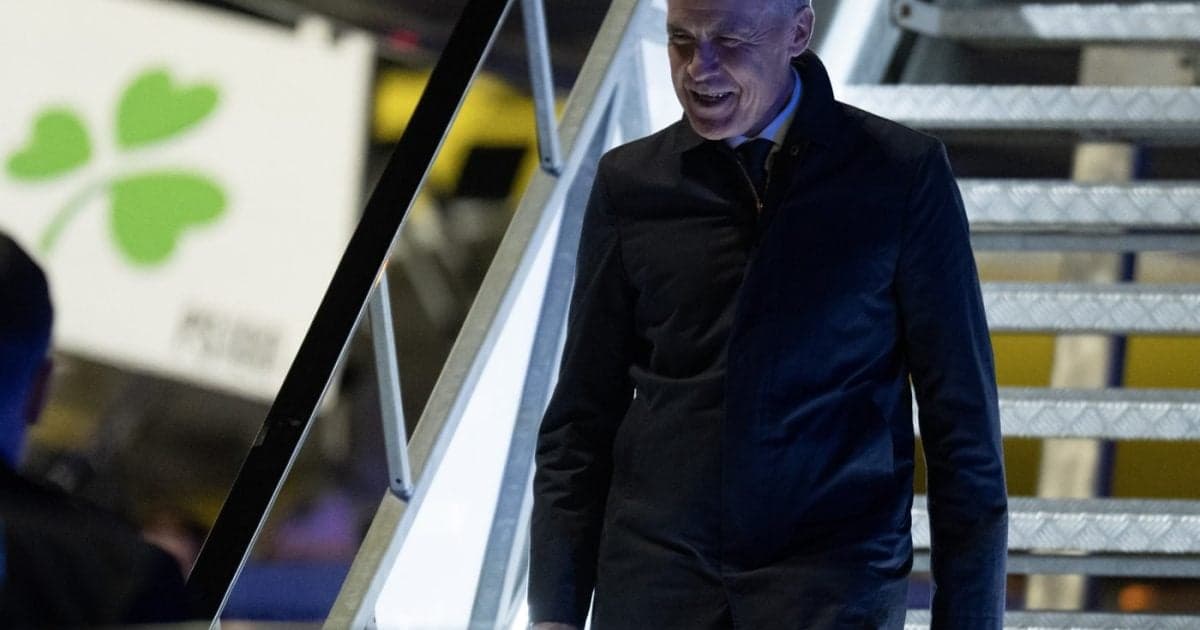
On November 11, 2026, Canadian Prime Minister Mark Carney departed Ottawa following national Remembrance Day ceremonies and touched down in Dublin early on November 12 to attend the ninth European Political Community (EPC) summit[1][2][3]. Hosted by Irish Taoiseach Micheál Martin, the gathering brings together leaders from more than 40 European nations alongside NATO Secretary-General Mark Rutte and European Commission President Ursula von der Leyen[4][5]. Marking only the second time Canada has participated in the forum, Carney stands as the sole non-European head of government present at the summit, positioning Ottawa at the center of high-level European discussions on continental defence, energy security, and regional conflict resolution[1][2].
The Dublin summit is the opening leg of an intensive nine-day international tour that will take Carney to Ireland, the Philippines, Cambodia, and China[6][3]. Central to Carney’s presence in Ireland is the acceleration of negotiations regarding Canada becoming the European Union’s first-ever "Associate Member," a prospective partnership framework formalized under the recent "Alliance for the Future" initiative agreed upon in Montreal[7][8][6]. During his single-day stop in Dublin, Carney is conducting bilateral discussions with Cyprus President Nikos Christodoulides and Greek Prime Minister Kyriakos Mitsotakis, whose national parliaments have maintained domestic hurdles to full ratification of the Comprehensive Economic and Trade Agreement (CETA)[1][3].
Carney’s European intervention reflects an intentional shift in Canadian foreign policy toward strategic diversification and "principled pragmatism"[9][10][11]. With evolving political currents in the United States threatening new trade tariffs and raising questions over continental integration, Canadian officials are prioritizing the expansion of institutional and trade anchors across non-U.S. partners[9][11]. Foreign Minister Anita Anand emphasized this direction concurrently, framing Ottawa’s posture as a "middle power strategy" aimed at doubling Canada’s trade outside North America over the next decade through deeper alignments in high-tech, defence manufacturing, artificial intelligence governance, and critical mineral supply chains[12][13].
The presence of Ukrainian President Volodymyr Zelenskyy and the imminent arrival of American envoys from the Abu Dhabi peace talks have turned the Dublin summit into an urgent council of war and diplomacy[4][5]. For European leaders, Canada serves as an essential bridge and like-minded partner capable of supplying clean energy, transition fuels, and critical raw materials to replace Russian imports[7][3]. If Ottawa succeeds in institutionalizing an associate relationship with the European bloc, it will mark one of the most fundamental structural realignments of Canadian foreign policy since the post-war era[9][11].
- Canada
- Ireland
- European Union
World & Geopolitics
2 min read
Canada Pursues EU Associate Membership Amid Global Trade Diversification Tour
Prime Minister Mark Carney is in Dublin for the 9th European Political Community Summit, aiming to advance Canada's potential status as the first associate member of the European Union. This initiative, part of the Canada-EU “Alliance for the Future,” seeks to deepen institutional and trade alignment. Carney is also using the tour to resolve ratification hurdles for the Comprehensive Economic and Trade Agreement (CETA) and diversify Canada's trade partnerships beyond North America.
Read the full storyFold the full story2 min · 12 sources
Prime Minister Mark Carney arrived in Dublin, Ireland, to participate in the 9th European Political Community (EPC) Summit held at the Convention Centre Dublin[1][2]. For the second time following his participation in Armenia earlier in the year, Canada is the sole non-European nation invited to take a seat at the high-level plenary table[3][4]. Co-chaired by European Council President António Costa and Irish Taoiseach Micheál Martin, the gathering convenes leaders from roughly 50 European countries under the official theme “Europe: strong, secure and connected” to address pressing continental security architecture, economic competitiveness, and energy independence[2][5][6].
The primary geopolitical objective of Ottawa’s participation in Dublin centers on advancing discussions surrounding Canada’s potential status as the first-ever “associate member” of the European Union[7][3][4]. Emerging from the recently established Canada-EU “Alliance for the Future,” the proposed framework seeks to deepen institutional, trade, and regulatory alignment across the Atlantic[8]. While in Dublin, Carney scheduled dedicated bilateral meetings with Taoiseach Micheál Martin, President Nikos Christodoulides of Cyprus, and Greek Prime Minister Kyriakos Mitsotakis - a diplomatic push aimed at resolving long-standing ratification hurdles among EU member states regarding the decade-old Comprehensive Economic and Trade Agreement (CETA)[1][4].
This European visit represents the opening leg of an intensive 36,000-kilometre, four-country diplomatic tour designed to diversify Canada’s economic and strategic partnerships away from unilateral reliance on North American trade[3][9]. Following less than 24 hours on the ground in Ireland, Carney departs for Manila to attend the Association of Southeast Asian Nations (ASEAN) Summit to work toward completing the ASEAN-Canada free trade agreement and advance a bilateral Canada-Philippines pact[1][8]. His itinerary continues onward to Phnom Penh for the Sommet de la Francophonie and culminates in Shenzhen, China, for the Asia-Pacific Economic Cooperation (APEC) Leaders' Meeting, where Carney is slated to hold bilateral talks with Chinese President Xi Jinping and announce Canada's next ambassador to Beijing[3][9][8].
Foreign policy analysts, including Vina Nadjibulla of the Centre for Strategic Statecraft, note that Canada is entering a consequential implementation phase for its middle-power diversification strategy[10]. With rising trade barriers, unilateral policy maneuvers, and protectionist tariffs emanating from Washington, Ottawa is attempting to institutionalize enduring ties with democratic blocs abroad[11][12]. While domestic critics question the Prime Minister's extensive travel amid domestic affordability concerns, Canadian trade officials assert that locking in associate status with Europe and solidifying non-tariff access to European supply chains are vital safeguards against potential future disruptions in North American commerce[3][8].
- Mark Carney
- European Political Community Summit
- European Union
World & Geopolitics
2 min read
Prime Minister Carney Begins Trade Summit Tour in Europe and Asia to Counter U.S. Protectionism
Prime Minister Mark Carney is undertaking a significant international tour across Europe and Asia, including stops in Dublin, Manila, Phnom Penh, and Shenzhen. The mission aims to diversify Canada's trade alliances and mitigate the effects of U.S. protectionist policies. Key objectives include advancing the ASEAN-Canada Free Trade Agreement and finalizing bilateral talks, though Carney also intends to confront Chinese interference.
Read the full storyFold the full story2 min · 9 sources
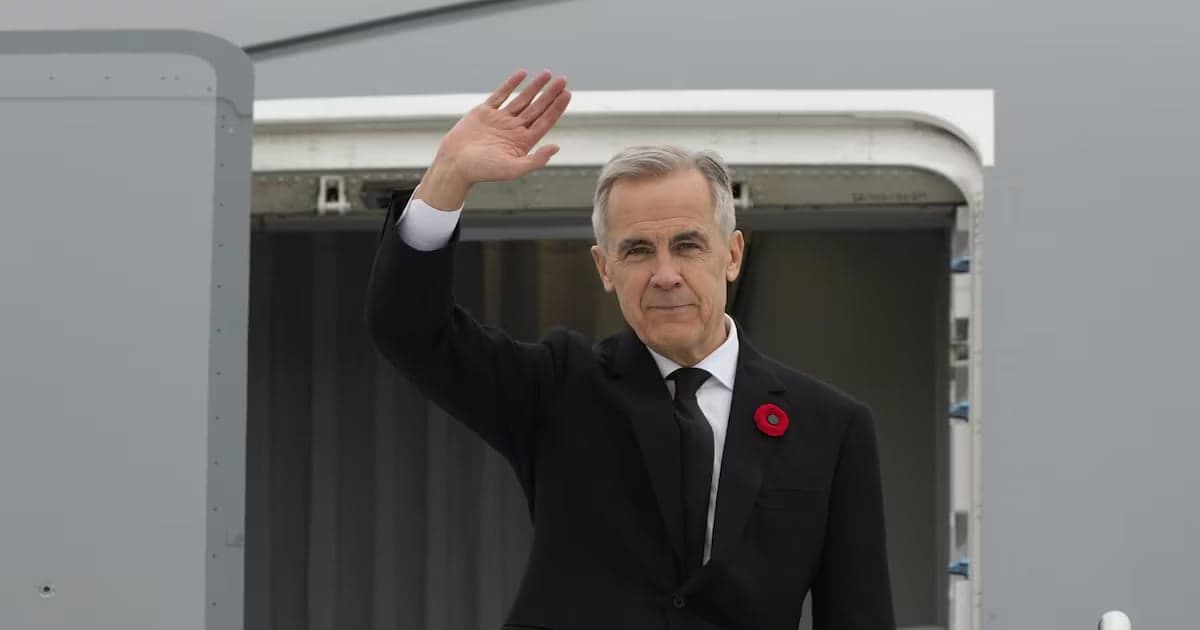
Prime Minister Mark Carney departed Ottawa following Remembrance Day ceremonies to begin an intensive nine-day international mission spanning Europe and the Indo-Pacific, arriving in Dublin on November 12, 2026, for the 9th European Political Community (EPC) Summit[1][2]. The itinerary - which takes Carney from Ireland to Manila for the 49th ASEAN Summit, Phnom Penh for the Sommet de la Francophonie, and Shenzhen for the Asia-Pacific Economic Cooperation (APEC) Leaders' Meeting - represents the cornerstone of Ottawa’s strategy to insulate the Canadian economy from U.S. protectionism by diversifying international trade alliances[1][3]. In Dublin, Carney met with Irish Taoiseach Micheál Martin, Greek Prime Minister Kyriakos Mitsotakis, and Cypriot President Nikos Christodoulides, while progressing talks on Canada’s bid to become the European Union's first non-European Associate Member through the recently formed "Alliance for the Future" framework[1][3].
The diplomatic circuit follows the rollout of Canada’s C$142.1 billion federal budget, which reallocated state resources toward infrastructure, domestic procurement, and overseas market expansion in response to American tariff measures[4]. A major focus of the Asian legs of the tour is finalizing bilateral agreements to boost Canadian agrifood, clean energy, and manufacturing exports[1][3]. In Manila, Carney aims to conclude the ASEAN-Canada Free Trade Agreement, an initiative projected to unlock more than $3.5 billion in export value across Southeast Asia, while advancing parallel bilateral negotiations with the Philippines designed to triple two-way trade by 2035[3].
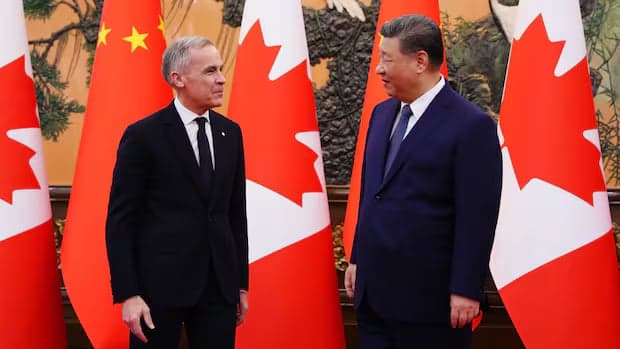
The culmination of the tour - a scheduled bilateral meeting with Chinese President Xi Jinping on the sidelines of the APEC Summit in Shenzhen - has drawn significant domestic and international scrutiny[5][3]. Relations between Ottawa and Beijing have undergone a rapid tactical shift following high-level ministerial meetings in Vancouver earlier this month between Canadian Finance Minister François-Philippe Champagne and Chinese Vice Premier He Lifeng, which yielded extensions on tariff relief for Canadian agricultural goods like peas and canola meal in exchange for access for certain Chinese metal products[6]. However, speaking ahead of his departure, Carney confirmed he will directly challenge Xi over foreign interference, citing findings from Canada’s public inquiry that identified Beijing as an active source of political meddling[5][7].
The diplomatic gambit has triggered notable friction at home and abroad[8][7]. On November 11, Chinese Foreign Ministry spokesman Guo Jiakun dismissed Carney’s concerns, reiterating that Beijing maintains a policy of non-interference in foreign domestic affairs[7]. Domestically, Carney faced tension with Quebec Premier Paul St-Pierre Plamondon, who met with Bloc Québécois Leader Yves-François Blanchet to coordinate independent provincial outreach to the U.S. market, prompting Carney to assert that trade diplomacy must remain an exclusively federal purview[8]. Meanwhile, federal Conservatives questioned the timing of the summit tour, arguing that overseas accords have yet to deliver concrete relief for Canadian consumers grappling with lingering domestic affordability challenges[9].
- Mark Carney
- European Political Community (EPC) Summit
- ASEAN Summit
World & Geopolitics
2 min read
Western Allies Blame Iran for Coordinated Cyberattack on French Supermarket Refrigeration Systems
France, with support from allies, attributed a large-scale cyber-sabotage campaign targeting supermarket refrigeration systems to Iran's Islamic Revolutionary Guard Corps. The attacks spoiled vast quantities of food and caused fires, prompting condemnation from France and leading to criminal inquiries. Similar disruptions were reported in other European nations.
Read the full storyFold the full story2 min · 10 sources
International security relations faced severe escalation on November 11–12, 2026, as France, supported by European and American intelligence partners, formally attributed an aggressive, large-scale cyber-sabotage campaign to the Islamic Republic of Iran[1][2]. The destructive attacks specifically compromised the automated industrial refrigeration and environmental management controllers across roughly 700 supermarkets, grocery stores, and butcher shops throughout France[1][3][4]. The intrusions caused systems to abruptly shut down cooling or heat up during overnight hours, spoiling tens of millions of euros worth of perishable foodstuffs and triggering approximately 20 electrical fires[2][3]. French National Cybersecurity Agency (ANSSI) investigations pinned the operation on "Shahid Kaveh," a specialized cyber unit of the Islamic Revolutionary Guard Corps (IRGC)[2][4].
French Foreign Minister Jean-Noël Barrot condemned the operation as the first offensive cyber campaign executed on French territory purely for industrial sabotage, labeling it an unprecedented assault on national security and essential civilian supply chains[1][2]. Barrot warned that Paris "rules out nothing" in response, as the Paris Public Prosecutor’s Office opened criminal inquiries seeking international arrest warrants for the military operatives involved[3][4]. Tehran’s Ministry of Foreign Affairs issued an angry rebuttal rejecting the allegations as baseless and politically motivated, claiming Western states were deflecting from domestic governance shortfalls[4][5]. However, allied investigations revealed that similar operational disruptions hit refrigeration equipment across Belgium, Luxembourg, Sweden, and Ireland, alongside failed cyber attempts against French regional hydroelectric facilities and medical blood preservation centers[3][4][6].
The incident represents a threshold crossing in state-sponsored hybrid warfare, transitioning from conventional espionage and data exfiltration to kinetic-equivalent attacks against food supply chains and civilian operational technology[1][2]. In Brussels, the European Union announced that member states are preparing a coordinated response under the EU Cyber Diplomacy Toolbox, including punitive sanctions and heightened defensive standards for operational technology (OT) assets[7]. Sweden's civil defense leadership warned that rogue state actors are increasingly weaponizing commercial artificial intelligence tools to scan, identify, and exploit low-security industrial controllers at national scale[7].
The attack has direct implications for Western defensive planning, including for Canada, which has aligned with G7 warnings over Iranian cyber operations and proxy warfare[8][9][10]. With Canadian national security agencies actively reviewing vulnerabilities across critical energy, agrifood, and logistics systems, the European crisis demonstrates how easily interconnected commercial internet-of-things (IoT) systems can be manipulated to disrupt food security and create widespread economic panic[8][1]. The G7 foreign ministers highlighted Iran's destabilizing activities across multiple domains in their joint declaration, reinforcing calls for expanded defensive cyber cooperation across the NATO alliance[8][9].
- France
- Iran
- Islamic Revolutionary Guard Corps
World & Geopolitics
2 min read
Canada and India Expedite CEPA Talks Amidst Global Trade Fragmentation
Canada and India are accelerating negotiations for their Comprehensive Economic Partnership Agreement (CEPA), with ministers committing to finalize key chapters by year-end. This push aims to rebuild bilateral commercial ties following diplomatic strains and secure market access for Canadian agrifood and critical minerals. The agreement is seen as crucial for diversifying Canada's export markets and reducing reliance on the U.S.
Read the full storyFold the full story2 min · 3 sources
On November 11, 2026, Canadian Minister of International Trade Maninder Sidhu met with India's Minister of Commerce and Industry Piyush Goyal in New Delhi to fast-track negotiations on the long-delayed India-Canada Comprehensive Economic Partnership Agreement (CEPA)[1]. The ministerial breakfast meeting marked a significant operational step forward in thawing bilateral commercial relations, with both trade chiefs formally committing to finalize key market access chapters before the close of the year[1]. Goyal confirmed via official statements that both delegations exchanged detailed positions focused on establishing mutually beneficial terms that exploit economic complementarities and open new corridors for cross-border capital investment[1].
The renewed momentum reflects a concerted effort by Ottawa and New Delhi to rebuild institutional ties following several years of diplomatic strain[2][1]. The ministerial session follows diplomatic groundwork laid between Canadian Foreign Affairs Minister Anita Anand and Indian External Affairs Minister S. Jaishankar, who established that Indian Prime Minister Narendra Modi will visit Canada in December 2026 - a visit both capitals consider a foundational turning point for economic normalization[1]. Bilateral working groups are prioritizing tariff reductions on Canadian agrifood shipments - specifically pulses, grains, and specialty agricultural commodities - alongside formalized trade channels for Canadian critical minerals, potash, and clean energy technology required for India’s industrial base[3][1].
The commercial rationale for the agreement has intensified as both nations seek counterweights to global trade fragmentation and aggressive U.S. tariff actions[2][1]. For Canada, market access in the world's most populous nation provides essential export diversification away from North American retail channels[2][1]. For India, locking in long-term trade frameworks with Canada secures access to critical resources and agricultural commodities without incurring prohibitive tariffs or regulatory unpredictability[1].
The push to finalize CEPA aligns with an evolving shift in Canadian public opinion[2]. Survey data published on November 10 by the Angus Reid Institute, conducted in partnership with the Asia Pacific Foundation of Canada, revealed that 61% of Canadians now view stronger commercial ties with India as critical to reducing economic reliance on the United States[2]. Furthermore, public favourability toward India among Canadians rose by 10 percentage points over the past two years to reach 36%[2]. Trade analysts note that if concluded by December, CEPA would represent Canada's most significant market-opening achievement in South Asia in decades, cementing India as an anchor partner in Canada’s revised Indo-Pacific economic framework[1].
- Maninder Sidhu
- Piyush Goyal
- New Delhi
World & Geopolitics
2 min read
Canada's Ambassador Criticizes U.S. Tariffs at B20 Summit, Cites Increased Capital Costs
Canada's Ambassador to the U.S., Mark Wiseman, urged the swift repeal of U.S. tariffs, stating they elevate capital costs and deter business investment. He highlighted that the costs are largely borne by North American industries and consumers, contributing to inflation. Wiseman contrasted U.S. trade policy with Canada's C$1 trillion infrastructure development push, advocating for North American competitiveness.
Read the full storyFold the full story2 min · 5 sources
Speaking at the B20 Summit in Washington hosted by the U.S. Chamber of Commerce on November 11, 2026, Canada’s Ambassador to the United States, Mark Wiseman, issued a blunt critique of escalating American trade policy, warning that cross-border tariffs are depressing long-term business investment[1][2]. Wiseman delivered a clear message to American business executives and global policymakers, asserting that policy volatility and import levies directly increase the "cost of capital," leaving corporate boards hesitant to commit funds to factory construction, fleet expansion, and research and development[1][2]. The ambassador formally called for the swift repeal of duties levied under Sections 232 and 338 of U.S. trade law, arguing that industrial stability must be restored "the sooner, the better"[1][3].
The intervention comes as Washington and Ottawa attempt to resolve protracted trade disputes that have severely disrupted cross-border supply chains during President Donald Trump’s second administration[1][3]. While two-way merchandise trade reached approximately $570 billion over the first nine months of 2026 - a modest rebound from 2025 - overall trade volumes remain below comparable spans recorded during the Biden presidency[1][3]. Data from the Congressional Research Service underscores the scale of the friction: U.S. customs duties collected on Canadian goods surged from $400 million in 2024 to $10 billion in 2025, after the White House imposed tariffs as high as 50% on select goods, triggering retaliatory countermeasures from Ottawa[3]. Formal bilateral negotiations had broken down in August before restarting recently with a concentrated focus on lowering duties on steel, aluminum, and automotive components[3].
Wiseman, a former senior BlackRock executive who assumed the diplomatic post in February, emphasized that the costs of tariff friction are predominantly borne by domestic North American industries rather than foreign exporters[1][4]. Citing recent research by Federal Reserve Bank of New York economists, Wiseman pointed out that nearly 90% of tariff costs have been absorbed directly by U.S. importers, with roughly a quarter filtering into final retail prices[4]. This price transfer occurs alongside broader inflationary pressures; U.S. consumer prices climbed 0.4% in October, raising alarms that trade duties will extend cost-of-living burdens well into 2027[1][4].
Beyond trade litigation, Wiseman joined a panel of Transatlantic ambassadors - including German Ambassador Jens Hanefeld, French Ambassador Aurélien Lechevallier, and Italian Ambassador Marco Peronaci - to outline competitive growth strategies[5]. Wiseman contrasted Washington’s tariff barriers with Ottawa’s own industrial push, highlighting Canada’s commitment to mobilize more than $1 trillion in domestic infrastructure and capital development[5]. He argued that eliminating cross-border friction is critical to ensuring North America remains globally competitive against state-subsidized manufacturing in Asia, urging corporate leaders to lobby Capitol Hill for regulatory clarity and an end to punitive bilateral trade actions[5].
- Mark Wiseman
- B20 Summit
- U.S. Chamber of Commerce
World & Geopolitics
2 min read
KPMG Outlook Forecasts Potential December Rate Hike and Persistent Trade Headwinds for Canada
KPMG Canada's Fall 2026 Economic Outlook warns of a possible Bank of Canada interest rate hike in December due to persistent inflation. The report highlights trade disputes and widening capital spreads as factors pressuring the Canadian dollar, with relief expected only in late 2027. A potential U.S. trade settlement is identified as a key upside risk for Canadian growth.
Read the full storyFold the full story2 min · 2 sources
In its Fall 2026 Economic Outlook released on November 11, 2026, KPMG Canada warned that persistent inflation and elevated energy prices could force the Bank of Canada to raise its benchmark policy interest rate to 2.75% as early as December[1]. The forecast indicates that while Canada’s economy has avoided an outright contraction, stubborn consumer price pressures - sustained by resilient retail demand and elevated prices for refined fuels - are preventing monetary authorities from easing policy further[1]. The report projects that tight monetary conditions will keep 10-year Canadian government bond yields near 3.8% through the end of 2027, trailing U.S. 10-year Treasury yields, which are anticipated to stay elevated near 4.8%[1].
The outlook projects sustained short-term strain for the Canadian dollar, forecasting that the currency will trade in a subdued band of C$1.40 to C$1.42 per U.S. dollar over the coming months[1]. Foreign exchange analysts at KPMG point to cross-border tariff disputes and widening capital spreads as the primary factors weighing on the loonie[1]. Relief is not expected until the second half of 2027, when domestic growth metrics are forecast to firm up, potentially lifting the currency back toward C$1.38 to C$1.39[1].
Compounding the macro friction is a marked widening in the heavy crude discount[1]. The price spread between Western Canadian Select (WCS) and West Texas Intermediate (WTI) has widened toward $30 per barrel[1]. KPMG attributes this divergence to bottlenecks in regional U.S. refinery capacity, compounded by increased Venezuelan heavy crude shipments into Gulf Coast facilities, which have displaced Canadian heavy barrels in the short term[1]. However, the report’s authors suggest the spread will normalize throughout 2027 as downstream maintenance concludes and structural production ceilings in Venezuela limit additional market disruption[1].
KPMG’s baseline projections pivot on clear upside and downside external risks[1]. The primary upside catalyst for Canadian growth remains a potential trade settlement with the United States[1]. Following the shift in U.S. congressional power after the midterm elections, KPMG analysts observe growing potential for a bilateral tariff thaw; a comprehensive deal could accelerate Canadian annual GDP growth to 2.0% or higher, provide substantial relief to manufacturing hubs in Ontario and Quebec, and appreciate the Canadian dollar toward C$1.35[2][1]. Conversely, the report identifies serious tail risks that could destabilize Canadian markets, citing potential shocks from debt stress in corporate artificial intelligence spending, another unexpected energy price spike, or sovereign debt distress in the Eurozone[1].
- KPMG Canada
- Bank of Canada
- Canadian dollar
World & Geopolitics
2 min read
Canadian Investors Urge Mandatory Climate Disclosure Amidst EU Alignment Push
A Canadian investor advocacy group, SHARE, is calling on securities regulators to implement mandatory corporate climate disclosure rules, warning that current delays risk isolating Canadian companies from global capital markets. This call comes as Canada seeks closer ties with the European Union, which has stringent sustainability reporting standards. The group highlights that many of Canada's international trading partners have already adopted mandatory reporting.
Read the full storyFold the full story1 min · 3 sources
A leading Canadian institutional investor advocacy group, the Shareholder Association for Research and Education (SHARE), issued a formal call urging Canadian securities regulators to enact mandatory corporate climate disclosure rules[1][2]. The intervention, highlighted in a statement and policy brief by SHARE Chief Executive Officer Kevin Thomas, warns that Canada's ongoing regulatory delay risks isolating Canadian corporations from global capital markets at the exact moment Ottawa is seeking institutional rapprochement with the European Union[1][2][2].
The regulatory standoff stems from an April 2025 decision by the Canadian Securities Administrators (CSA) - the umbrella organization representing provincial securities commissions, chaired by Alberta Securities Commission CEO Stan Magidson - to pause development of national climate transparency guidelines[1]. At the time, provincial regulators cited sudden shifts in the "economic and geopolitical landscape," widely interpreted as a response to the second Trump administration’s rollback of ESG initiatives and the U.S. Securities and Exchange Commission’s refusal to enforce federal corporate climate reporting rules[1]. Thomas argued that while Canada followed Washington into regulatory paralysis, it must now follow its European partners out of it[1][2].
Data compiled by SHARE illustrates that 13 of Canada’s 15 largest international trading partners have implemented or are moving forward with compulsory corporate sustainability reporting[2]. By failing to mandate equivalent standards, Canadian public companies face competitive penalties and exclusion from sustainability-focused European capital allocations[2][2]. While the Canadian Sustainability Standards Board (CSSB) released voluntary climate-reporting criteria, the absence of an enforceable CSA framework leaves major emitters and publicly traded Canadian entities operating under a disjointed voluntary regime[2].
The push by institutional shareholders creates friction between traditional Canadian energy sector stakeholders and international capital managers[1][2]. As Prime Minister Carney pitches Canada in Dublin as a natural associate member of the EU and a stable destination for green capital, European regulators expect prospective partners to demonstrate reciprocal transparency norms[3][2]. Market analysts observe that bridging the regulatory divergence between the deregulatory posture in Washington and the stringent oversight enforced in Brussels represents a critical policy test for Canada’s financial watchdogs[1].
- SHARE
- Kevin Thomas
- Canadian Securities Administrators (CSA)
World & Geopolitics
2 min read
U.S. Tech Export Controls Scrutinize North American Supply Chains, Burdening Canadian Firms
U.S. congressional committees have demanded records on export controls for AI semiconductors and fabrication equipment, coinciding with expanding regulatory bans on foreign-produced electronic components. These actions, enforced by the FCC and CBP, shift liability to the origin of embedded hardware and software. For Canada, this poses significant challenges to cross-border manufacturing integration, particularly in the automotive and aerospace sectors, which rely on just-in-time component flows.
Read the full storyFold the full story1 min · 5 sources
On Capitol Hill, senior members of congressional oversight committees issued formal preservation notices to Commerce Secretary Howard Lutnick, White House Chief of Staff Stephen Miller, and Secretary of State Marco Rubio[1]. The directive demands the immediate safeguarding of all federal interagency records, communications, and intelligence assessments concerning the enforcement and evasion of export control restrictions on advanced artificial intelligence semiconductors and high-end fabrication equipment[1].
The congressional oversight pressure coincides with an expanding regulatory enforcement wave across executive agencies[2]. Recent legal guidance highlighted that the Federal Communications Commission (FCC) and Customs and Border Protection (CBP) are transitioning from targeting individual sanctioned companies to enforcing categorical, sector-wide bans on foreign-produced electronic equipment and sensitive sub-tier components[2]. Under the FCC’s updated Covered List enforcement and stepped-up Department of Justice actions targeting transshipment and tariff evasion, liability attaches to the origin of embedded hardware, microcode, and software layers rather than final corporate brand labels[2].
For Canada, these regulatory maneuvers directly threaten cross-border manufacturing integration[3][2]. The industrial corridor spanning from Windsor to Montreal represents an $850-billion manufacturing network deeply embedded within U.S. automotive, aerospace, robotics, and defense supply lines[3]. With Canadian auto assembly plants, aerospace manufacturers, and electronics suppliers reliant on just-in-time cross-border component flows, heightened tracing mandates by CBP require Canadian producers to verify every Tier-2 and Tier-3 supplier against shifting U.S. restricted lists[3][2].
The intensifying tech scrutiny creates a complex policy balancing act for Ottawa[4][1]. At the same time as Canadian manufacturers face mounting compliance burdens under U.S. export controls, Canadian domestic firms and provincial governments are pursuing major investments in domestic AI compute facilities and energy-intensive data centers[3][5]. Canadian firms navigating these new restrictions face increasing regulatory exposure, where minor documentation oversights or foreign-sourced circuit components can trigger seizure, trade penalties, and exclusion from the American defense and industrial ecosystem[2].
- Howard Lutnick
- Stephen Miller
- Marco Rubio
Section 3 of 4
City News
15 stories · 7 min skim
City News
2 min read
Manhunt Underway for Suspect in Deadly Rexdale Youth Shooting; Second Suspect Sought
A province-wide manhunt is underway for Joseph Kunene, 19, wanted for first-degree murder in the fatal shooting of 18-year-old Brandon Blake outside the Elmbank Community Centre in Etobicoke. Police have described Kunene as armed and dangerous. Investigators are also seeking a second suspect and are appealing for witnesses and surveillance footage. The shooting has intensified concerns among Rexdale residents about youth violence and safety around community facilities.
Read the full storyFold the full story1 min · 4 sources
The Toronto Police Service Homicide and Missing Persons Unit has launched a province-wide manhunt after identifying a suspect wanted for first-degree murder in connection with the fatal shooting of an 18-year-old man outside an Etobicoke community centre[1][2]. Investigators announced that an arrest warrant has been issued for 19-year-old Joseph Kunene of Toronto, whom police caution is armed and dangerous[1][3]. The shooting claimed the life of Brandon Blake, an 18-year-old resident of Barrie, marking the 34th homicide recorded in Toronto[1].
Emergency responders were dispatched to the vicinity of Martin Grove Road and Finch Avenue West following multiple 911 calls reporting gunfire[1]. Officers arrived outside the Elmbank Community Centre to find Blake suffering from severe gunshot wounds[1][2]. Despite life-saving efforts performed by paramedics and responding officers at the scene, Blake succumbed to his injuries and was pronounced dead[1][2]. Witnesses reported seeing two individuals fleeing the area on foot immediately following the discharge of firearms[1].
Lead investigator Detective-Sergeant Sandra Arruda stated that while Kunene has been formally identified and charged, police are continuing their search for a second suspect described as a white male with a thin build, last seen wearing a face mask and all-black hooded clothing[1][4]. Kunene is described as standing 6 feet tall, weighing approximately 175 pounds, with black hair, brown eyes, and a distinctive tattoo on his right hand[1]. Police have circulated his photograph to law enforcement agencies across the GTA and southern Ontario, warning members of the public not to approach him and to contact emergency services immediately if spotted[1][3].
The killing has renewed safety concerns among Rexdale residents regarding violent youth altercations around community infrastructure and recreational centres[4]. Community leaders in Etobicoke noted that the violence outside a public recreation centre undermines neighbourhood stability, calling for targeted youth engagement and intensified gun violence suppression efforts[2][4]. Homicide detectives continue to canvas surrounding businesses and residential buildings for surveillance video, urging anyone with dashcam or security footage from the intersection to contact investigators[1].
- Toronto Police Service
- Joseph Kunene
- Brandon Blake
City News
1 min read
Toronto Police Seek Man for First-Degree Murder in Rexdale Shooting
Toronto Police have issued an arrest warrant for Joseph Kunene, 19, in connection with a fatal shooting in Rexdale. The incident occurred early Tuesday morning, resulting in the death of 18-year-old Brandon Blake. Kunene is considered armed and dangerous, and police are searching for a second suspect. The shooting has intensified community concerns about safety and youth violence in the area.
Read the full storyFold the full story1 min · 1 source
The Toronto Police Service Homicide and Missing Persons Unit issued an urgent public appeal and arrest warrant for 19-year-old Joseph Kunene in connection with a fatal shooting in North Etobicoke[1]. Police identified Kunene as wanted for first-degree murder following a violent incident early Tuesday morning near Martin Grove Road and Finch Avenue West[1]. Emergency responders had rushed to the Rexdale neighborhood at approximately 12:56 a.m. after receiving 9-1-1 reports detailing the sound of gunshots[1].
Upon arriving at the scene, responding officers discovered 18-year-old Brandon Blake of Barrie suffering from critical gunshot wounds[1]. Despite immediate life-saving interventions by first responders, Blake succumbed to his injuries and was pronounced dead at the scene, marking Toronto’s 34th homicide[1]. Investigators confirmed that two suspects fled the scene before officers arrived[1]. Detectives described Kunene as standing 6 feet tall, weighing 175 pounds, with black hair, brown eyes, and a distinctive tattoo on his right hand[1]. A second suspect, described as a male with a thin build dressed entirely in black clothing with an obscured face, remains unidentified[1].
The shooting has heightened safety concerns across Rexdale, where community members have renewed calls for targeted youth interventions and violence prevention strategies. Toronto Police have released Kunene’s image and cautioned the public that he is considered armed and dangerous[1]. Investigators from the Homicide and Missing Persons Unit are urging anyone with dashboard camera footage or surveillance video from the Martin Grove and Finch corridor to come forward[1].
- Toronto Police Service
- Joseph Kunene
- Brandon Blake
City News
2 min read
Ontario Line Construction Advances with Leslieville Elevated Station Taking Shape
Construction on Toronto's Ontario Line has reached a significant milestone with progress on the elevated Leslieville Station, located over Queen Street East. Pouring of foundations and erection of concrete piers are underway, supporting the future rail bridge. This section is part of the 15.6-kilometre rapid transit project, designed to ease transit congestion and provide direct transfers. Meanwhile, tunneling downtown has also seen breakthroughs, with one tunnel boring machine completing its initial drive.
Read the full storyFold the full story1 min · 7 sources
Construction on the Ontario Line has reached a visible milestone in Toronto’s east end as structural work accelerates on the new elevated Leslieville Station, bridging Queen Street East at De Grassi Street[1]. Detailed progress reports released by Metrolinx confirm the completion of piling and sub-utility investigation test pits, allowing construction crews to pour foundations and begin erecting the concrete piers that will support the rail bridge overhead[1]. Excavation and structural steel rebar installation are also advancing at the south headhouse site, which will serve as the station’s main public entrance[1].
The Leslieville station build represents one of the most complex above-ground segments of the 15.6-kilometre, 15-station rapid transit project[2][1]. Running inside the shared GO Transit Lakeshore East rail corridor, the elevated structure is designed to ease transit bottlenecks across south Riverdale and Leslieville, offering direct transfers while relieving pressure on the busy 501 Queen streetcar route[1]. Over recent days, corridor crews executed full weekend track closures between Eastern and Jones avenues to install extensive noise barriers intended to mitigate train operations for adjacent residential neighbourhoods[1].
This milestone comes as the project's downtown tunneling reaches significant breakthroughs[3]. The first tunnel boring machine (TBM), nicknamed "Libby," completed a 1.3-kilometre drive from the Exhibition Station launch shaft to break through the headwall of the future underground King West Station at Bathurst and King streets[3][4]. Following maintenance at King West, the machine will advance toward the future Chinatown Station at Queen and Spadina, while a second TBM, "Corkie," bores the parallel tube from the west[3][4].
To keep nearby communities informed of disruptions and structural engineering phases, Metrolinx has scheduled a series of public open houses throughout November, including sessions focused on Osgoode and Queen stations on November 19 and the Moss Park and Distillery District segments on November 21[5][6]. When fully operational in the early 2030s, the Ontario Line is projected to handle roughly 390,000 daily boardings and place 230,000 residents within walking distance of rapid transit, representing the largest rapid transit expansion in the city's modern history[3][7].
- Ontario Line
- Metrolinx
- Leslieville Station
City News
2 min read
Metrolinx Reduces Public Board Meetings Despite Oversight Concerns
Metrolinx, Ontario's transit agency, has cut its public board meetings from four to two annually, citing cost savings and streamlining. This decision has drawn criticism from transit advocates and municipal officials, particularly as Metrolinx manages billions in public transit projects across the Greater Toronto Area. Critics argue the savings are minimal and the reduction undermines transparency and accountability, especially given past project delays and cost issues.
Read the full storyFold the full story1 min · 3 sources
Ontario’s regional transportation agency, Metrolinx, confirmed a structural change to its governing schedule that cuts its public board meetings from four to two per year, triggering sharp criticism from transit advocates and municipal stakeholders[1][2]. The provincial Crown agency defended the decision as a cost-saving and streamlining initiative, noting that the board approved the calendar reduction to eliminate administrative overhead, projecting taxpayer savings of more than $50,000 annually[2]. Metrolinx reiterated that its board will maintain its internal schedule and continue to post agendas and minutes online following sessions[2].
The move arrives at a critical juncture for Greater Toronto’s transit landscape, as Metrolinx oversees dozens of billions of dollars in public capital projects[2]. Key initiatives currently under construction include the multi-billion-dollar Ontario Line subway, the Scarborough Subway Extension, and the 9.2-kilometre Eglinton Crosstown West Extension, which stretches LRT service into Etobicoke and Mississauga[3][2]. Historically, public board meetings served as one of the few formal avenues where journalists, municipal leaders, and riders could observe executive presentations on delivery timelines, technical hurdles, and budget updates in real time[2].
Critics and urban governance experts have voiced alarm over the retreat from public-facing forums, pointing out that transit infrastructure across the Greater Toronto and Hamilton Area (GTHA) has experienced recurring delays and cost disputes[2]. Slashing the frequency of open sessions effectively halves the public opportunities to question leadership directly on project accountability[2]. Advocacy groups argue that a $50,000 savings figure represents a negligible fraction of Metrolinx’s multi-billion-dollar capital portfolio and comes at an unacceptable expense to civic transparency and rider confidence[2].
- Metrolinx
- Ontario
- Greater Toronto Area
City News
2 min read
Metrolinx Cuts Public Board Meetings, Sparking Backlash Over Transit Project Accountability
Provincial transit agency Metrolinx is reducing its public board meetings to twice annually, drawing sharp criticism from transit advocates and watchdogs. This decision occurs while the agency manages tens of billions in major transit infrastructure projects across the Greater Toronto and Hamilton Area. Critics argue this move undermines transparency, as crucial decisions regarding multi-billion dollar projects may now be made with less public oversight. The reduction contrasts with the more frequent meetings held by other transit agencies like the TTC.
Read the full storyFold the full story1 min · 4 sources
Provincial transit agency Metrolinx is facing sharp condemnation from transit advocates, municipal officials, and governance watchdogs following an administrative move to reduce its public board meetings to only two per calendar year[1][2]. The decision to scale back open public deliberations comes at a time when the agency is managing tens of billions of dollars in major capital transit infrastructure across the Greater Toronto and Hamilton Area, including the $34-billion Ontario Line subway, the Scarborough Subway Extension, and the delayed Eglinton Crosstown and Finch West light rail transit projects[2][3].
Critics argue the reduction represents an erosion of transparency at an agency that relies on massive public financing and has repeatedly faced scrutiny over cost overruns, commercial settlements, and delivery timelines[2]. Historically, Metrolinx held quarterly or bi-monthly public meetings where board members heard deputations, debated project milestones, and took public questions regarding transit delivery performance. By reducing open sessions to just twice annually, watchdogs argue that crucial contract awards, change orders, and delivery delays will increasingly be handled behind closed doors, away from public view.
The move has drawn criticism from transportation advocacy groups such as TTCRiders and local transit analysts, who argue that the agency is sidestepping accountability[2]. Opposition politicians at Queen’s Park have pressed the Ministry of Transportation, led by Minister Prabmeet Sarkaria, to reverse the policy and mandate greater open-door transparency[2][4]. Critics note that peer transit agencies, including the Toronto Transit Commission (TTC), maintain frequent monthly public board meetings where riders and stakeholders can voice operational and capital concerns in person.
Metrolinx’s governance change lands amid heightened political sensitivity over infrastructure accountability in the GTA. With ongoing surface construction disrupting retail strips along Queen Street, Eglinton Avenue, and Finch Avenue, regional business owners and transit users have demanded clearer communication on project milestones. The reduction in formal public sessions is likely to intensify friction between provincial transit planners and municipal partners, who must absorb local traffic disruptions while having fewer formal venues to address ongoing project delivery challenges.
- Metrolinx
- Prabmeet Sarkaria
- Ontario Line
City News
2 min read
Ottawa Reaffirms Housing Targets Amid GTA Development Concerns
The federal housing minister's office clarified Ottawa's commitment to doubling national home construction pace after Budget 2026 omitted housing start pledges. The budget instead focused on tripling non-market housing starts, raising questions from GTA municipalities about broader housing goals. This policy shift occurs as Ontario's home construction cools and calls for intergovernmental funding intensify, with CMHC warning of a significant unit shortage by 2036.
Read the full storyFold the full story2 min · 5 sources
The federal housing minister’s office moved to reassert Ottawa’s commitment to doubling the pace of national home construction on November 11, 2026, following mounting pushback from municipal leaders, housing analysts, and opposition critics over omissions in Budget 2026[1][2]. The federal budget, tabled just days prior by Finance Minister François-Philippe Champagne, omitted references to the government’s hallmark pledge to double housing starts - a policy cornerstone originally highlighted during the 2025 federal campaign[1][3][2]. Instead, the updated federal framework pivoted toward tripling the rate of non-market housing starts to 24,000 annually over the coming decade, prompting questions from municipal officials across the Greater Toronto Area regarding how broader housing targets will be met[2].
The policy clarification arrives amid cooling home construction figures in Ontario and escalating calls for coordinated intergovernmental funding[4][1]. The Canada Mortgage and Housing Corporation (CMHC) highlighted in its fall housing supply assessment that Canada is averaging roughly 231,000 housing starts per year under business-as-usual conditions, warning that this pace leaves the market roughly 238,000 units short of restoring baseline affordability by 2036[1][2]. In the Greater Toronto Area, where municipal planning departments rely heavily on federal financing through programs like the Housing Accelerator Fund and the newly established $13 billion Build Canada Homes agency, the absence of aggressive private-market targets has raised concerns about housing shortfalls[2][1].
The shifting stance drew sharp criticism from federal and regional stakeholders. Scott Aitchison, the federal Conservative housing critic, characterized the revised language as a retreat from real affordability, arguing that focusing narrowly on non-market housing fails to address systemic private-sector supply barriers across urban centers like Toronto[1][1]. Academic experts, including Mike Moffatt of the Missing Middle Institute and Andy Yan of Simon Fraser University’s City Program, observed that reaching 500,000 annual starts was always highly ambitious under prevailing economic constraints, but noted that backing away from broader production goals could weaken developer and municipal planning momentum[1][1].
For the GTA municipal sector, the clarification means local councils must navigate tighter federal funding parameters that prioritize non-profit, transitional, and municipal-led housing projects[4][2][5]. While initiatives such as Toronto's Dunn House project demonstrate the efficacy of social medicine housing models, municipal planners caution that without accelerated market-rate housing production, the broader regional vacancy crunch and high shelter costs will remain entrenched[3].
- Ottawa
- Budget 2026
- Greater Toronto Area
City News
2 min read
Home Builders Criticize Housing Policies for Neglecting Homeownership
The Canadian Home Builders’ Association is warning that federal and provincial housing policies, which heavily favor non-market housing, risk stalling long-term residential construction by neglecting homeownership supports. The association argues that current measures fail to address development charges, material costs, and regulatory delays, which are hindering private developers. They advocate for stronger programs to facilitate entry-level homeownership to encourage private capital investment.
Read the full storyFold the full story1 min · 7 sources
The Canadian Home Builders’ Association (CHBA) issued a detailed industry response on November 11–12, 2026, cautioning that federal and provincial housing policies risk stalling long-term residential construction by neglecting private-market homeownership[1]. The statement followed the tabling of Budget 2026 and accompanying municipal infrastructure announcements across Ontario, which heavily emphasized non-market housing, social rental acquisitions, and homelessness relief[1][2].
While welcoming targeted funding for social housing, CHBA interim CEO Frank Lohmann emphasized that non-market housing represents only a fraction of total annual starts and cannot single-handedly solve Ontario's housing affordability crisis[3][1]. The association stated that the current policy envelope fails to address high municipal development charges, rising construction material costs, and onerous regulatory delays that are sidelining private developers throughout the GTA[1]. Construction industry representatives noted that without robust programs to facilitate entry-level homeownership, private capital will continue to retreat from the residential building sector[1].
The industry pushback comes as Queen’s Park and GTA municipalities test varied incentive structures to jump-start construction[4][5]. The Government of Ontario recently rolled out measures under the $1.8 billion municipal housing infrastructure framework, including the Non-Development Charge (Non-DC) Stream and regional funding pacts that reward municipalities for reducing development fees on residential construction[6][5]. However, builder associations argue that piecemeal municipal fee adjustments are insufficient to offset elevated borrowing costs and soft pre-construction sales across the Greater Golden Horseshoe[7][1].
The debate carries significant weight for municipal budgets across York, Peel, Halton, and Durham regions, where development charges traditionally fund local water, wastewater, and road expansions[4][6]. The Federation of Canadian Municipalities (FCM) underscored that while municipalities stand ready to deploy a newly announced $100 million three-year permitting modernization initiative, sustaining broader housing construction requires provincial and federal partners to bridge infrastructure funding shortfalls directly[2].
- Canadian Home Builders’ Association
- Budget 2026
- Ontario
City News
2 min read
Toronto Community Housing Discusses Capital Projects Amid Funding Shifts
The Toronto Community Housing Corporation's finance committee met to review capital deployment, facility audits, and social housing modernization. The meeting followed the city's winter plan announcement, which includes increased shelter spaces and permanent supportive units. TCHC is seeking to maximize grant matching to address repair backlogs, particularly as federal funding channels are increasingly directed toward new non-market construction initiatives.
Read the full storyFold the full story1 min · 6 sources
The Toronto Community Housing Corporation (TCHC) convened its Building Investment, Finance and Audit Committee (BIFAC) on the morning of Thursday, November 12, 2026, at Toronto City Hall (100 Queen St. W.) to assess capital deployment, facility audits, and social housing modernization projects[1][2]. The scheduled public meeting, held in Committee Room 1 following the November 11 Remembrance Day administrative closure, brought together municipal housing executives, board directors, and tenant representatives to address the city’s social housing infrastructure[1][2].
The committee's deliberations take place at a critical operational period for Toronto’s housing administration, coming immediately after the presentation of the City of Toronto’s 2026–2027 Winter Plan for People Experiencing Homelessness[3][3]. That municipal framework outlines the delivery of 1,533 shelter and housing spaces across the city from November 15 to April 15, representing an 18% increase over the previous winter season[3][3]. Included within the overall municipal plan are 588 permanent supportive and subsidized units, requiring strict coordination with TCHC's capital maintenance programs and physical building readiness[3][3].
A central focus of the November 12 meeting involved financial oversight of multi-year building revitalization budgets and compliance with municipal procurement rules[2]. With federal funding channels shifting heavily toward the newly formed Build Canada Homes agency and specialized non-market construction, TCHC is seeking to maximize grant matching to address lingering state-of-good-repair backlogs across aging high-rise towers[4][5].
The outcomes of BIFAC’s assessments will feed into the Toronto City Council Executive Committee's broader mandate to convert appropriate emergency shelter locations into permanent supportive housing[6]. As winter weather approaches, municipal administrators face intensifying pressure from community organizations to ensure that physical capital allocations translate into immediate, safe occupancy for vulnerable residents[3].
- Toronto Community Housing Corporation
- Building Investment, Finance and Audit Committee
- Toronto City Hall
City News
2 min read
Poll Reveals Divided GTA Public Opinion on Housing and Newcomer Services
A recent survey indicates deep public division across the GTA regarding local settlement capacity and affordable housing distribution for newcomers. While non-housing newcomer services like language programs and job assistance are widely approved, opinions on housing support are polarized. Immigrant respondents showed a higher tendency to feel municipalities provide too much support for refugee settlement compared to Canadian-born residents.
Read the full storyFold the full story1 min · 4 sources
A new demographic survey released on November 11, 2026, by Canada Pulse Insights for CityNews revealed deep public division across Toronto and surrounding GTA municipalities regarding local settlement capacity and affordable housing distribution[1]. The poll examined public perceptions of settlement support, language programs, job placement services, and housing availability across the region’s diverse urban and suburban centers[1].
The data uncovered stark fault lines when respondents evaluated local housing availability[1]. In the City of Toronto, 28% of residents felt municipalities do not provide enough suitable and affordable housing options for newcomers, while 29% stated that municipalities provide too much housing support[1]. Across the wider GTA suburbs, the sentiment was equally polarized, with 25% responding that housing supports were insufficient and 29% answering that local resources were overextended[1]. In contrast, non-housing newcomer services enjoyed widespread approval, with 61% of respondents agreeing that language programs were sufficient and 56% satisfied with municipal employment assistance[1].
The survey also identified distinctions between immigrant respondents and Canadian-born residents on municipal refugee settlement programs[1]. Approximately 38% of immigrant respondents stated that their municipality provides too much support for refugee settlement, compared to 30% of Canadian-born respondents[1]. Furthermore, respondents were split evenly regarding federal funding transfers to GTA municipalities for newcomer intake, with 29% in Toronto characterizing funding as excessive and an identical 29% calling it inadequate[1].
The survey findings mirror growing fiscal and social tension within regional councils, including Brampton, Mississauga, and Markham, where emergency shelter networks and municipal social services operate near capacity[2][3]. With local governments grappling with housing affordability challenges for long-term residents and newcomers alike, municipal councillors are confronting heightened constituent pressure to balance municipal tax burdens against expanding demands for social and supportive housing infrastructure[4][1].
- GTA
- Canada Pulse Insights
- CityNews
City News
2 min read
Ontario Premier Demands Federal Ban on Chinese EV Kits at Brampton Stellantis Plant
Ontario Premier Doug Ford has urged the federal government to prohibit the assembly of Chinese-made electric vehicle kits at the former Stellantis plant in Brampton. The plant was recently sold to defence firm Roshel Inc., with Stellantis reportedly leasing back a portion for EV production. Ford's concern is that this arrangement could bypass domestic suppliers and undermine industrial policy by using 'knock-down kits' manufactured in China. This situation adds to the complex transition for the plant and its former autoworkers.
Read the full storyFold the full story1 min · 10 sources
Ontario Premier Doug Ford has issued a strong warning to the federal government, demanding that Ottawa explicitly prohibit the assembly of Chinese-made electric vehicle kits at the former Stellantis assembly facility in Brampton[1][2]. In a letter addressed to Prime Minister Mark Carney following the announced sale of the massive manufacturing complex to Canadian defence firm Roshel Inc., Ford argued that assembling imported foreign knocked-down vehicle kits would compromise the province's automotive supply chain and undermine domestic industrial policy[2][3].
The dispute stems from commercial details emerging from the transaction between Stellantis and Roshel[2][3]. While Roshel acquired the idled plant to establish an advanced production hub for light armoured vehicles such as the Senator, reports revealed that Stellantis plans to lease back approximately 25 per cent of the industrial floor space to produce "affordable" electric vehicles for the domestic market[2][4]. Automotive industry insiders and provincial officials raised alarms that Stellantis could rely on partially assembled "knock-down kits" manufactured in China, avoiding Canadian part suppliers and standard assembly operations[2].
The controversy adds further friction to an already contentious transition for the Brampton complex[5][6]. The plant had been idle since December 2023, leaving more than 2,200 Unifor Local 1285 autoworkers on temporary layoff after Stellantis diverted the manufacturing of the next-generation Jeep Compass to an assembly plant in Illinois[5][7]. While Roshel’s acquisition promises to bring heavy defense manufacturing jobs to Peel Region, Unifor leadership, led by National President Lana Payne, condemned Stellantis’s departure as an underhanded abandonment of its contractual commitments and government-backed retooling agreements[8][5].
In response to the public outcry, Stellantis offered to voluntarily repay undisclosed public subsidies previously received for its cancelled electric vehicle retooling plans, though the company cited non-disclosure provisions regarding the precise figures[9]. Industry Minister Mélanie Joly and federal authorities face mounting political pressure to clarify the terms of the Roshel transaction and protect local supply networks[5][10]. The confrontation highlights growing economic nationalism and supply-chain protectionism across Ontario's industrial corridor as traditional automotive manufacturing intersects with defense production and federal trade strategy[2][4].
- Doug Ford
- Stellantis
- Roshel Inc.
City News
1 min read
Premier Ford Urges Federal Ban on Chinese EV Components in Brampton
Ontario Premier Doug Ford is pressing the federal government to prevent Chinese-manufactured electric vehicle (EV) components from being used in the former Stellantis plant in Brampton. Ford expressed concern that foreign firms might assemble imported parts to bypass tariffs and undermine domestic policies. He emphasized the importance of protecting Ontario's automotive industry, jobs, and sensitive manufacturing infrastructure.
Read the full storyFold the full story1 min · 1 source
Ontario Premier Doug Ford intervened in the evolving industrial restructuring of the Greater Toronto Area’s automotive base, urging the federal government to block Chinese-manufactured electric vehicle (EV) knock-down kits from entering production in Brampton[1]. Ford’s warning follows the high-profile transaction involving the former Stellantis auto assembly complex in Brampton, which was acquired by Mississauga-headquartered defense manufacturer Roshel[1].
The Premier expressed direct concern over reports and speculation that foreign firms might attempt to leverage Canadian facilities to assemble imported Chinese parts, circumventing North American supply-chain tariffs and domestic procurement policies[1]. Ford stressed that Ontario’s economic and industrial strategy relies on sustaining a homegrown automotive ecosystem, safeguarding high-skill manufacturing jobs, and protecting sensitive manufacturing infrastructure against subsidised foreign components[1]. The province has invested billions of dollars in electric vehicle battery plants, mineral supply corridors, and retooling initiatives, making foreign entry into Ontario manufacturing a contentious policy issue.
The Brampton facility transition represents a notable pivot for Peel Region's manufacturing economy, shifting from legacy passenger vehicle production to defense technology under Roshel[1]. Ford’s demands place pressure on federal trade and national security regulators to introduce strict compliance oversight on industrial repurposing. Automotive industry representatives and labor organizations across Ontario are monitoring Ottawa’s response, warning that national security reviews and foreign direct investment policies must align to protect local industrial hubs across the Golden Horseshoe.
- Doug Ford
- Ontario
- Federal Government
City News
2 min read
GTA Condo Market Faces Correction Amid Rising Interest Rates
The GTA housing market is showing a divergence, with the condominium sector experiencing a significant correction due to rising borrowing costs. October sales declined year-over-year, and the average selling price dropped, with condos seeing the sharpest price decrease. This downturn is impacting private lenders and developers, leading to lower appraisals and increased vulnerability.
Read the full storyFold the full story1 min · 8 sources
Comprehensive real estate analytics and market commentary published across the Greater Toronto Area on November 11–12, 2026, revealed deepening divergence across housing segments, punctuated by higher borrowing costs and an expanding inventory backlog in the condominium sector[1][2]. Market analyses following the Bank of Canada’s late-October overnight rate increase to 2.50% - the first rate hike in over three years - indicated that commercial prime rates reaching 4.70% and rising five-year bond yields have subdued homebuyer activity, blunting the momentum typical of the fall sales window[1][3].
Data compiled by the Toronto Regional Real Estate Board (TRREB) and regional market observers reflected a mixed landscape[4][5][6]. The GTA recorded 5,603 home sales in October, a 7.9% decline compared to the previous year, though seasonally adjusted transactions edged higher by 1.2% relative to September[4][3]. The average selling price across all home classes settled at $1,024,108 - down 2.7% year-over-year - while the MLS Home Price Index Composite benchmark dropped 4.3% annually to $916,400[4][6]. The condominium apartment segment has absorbed the sharpest correction, with average selling prices declining 5.9% year-over-year to approximately $621,000[6].
The distress in the multi-family and condominium sector is beginning to ripple through private credit and development balance sheets[2]. In-depth market analyses published on November 11 and 12 highlighted that discounted transactions and completed unsold inventory are resetting neighborhood appraisal benchmarks lower[7][2]. As institutional and alternative lenders adjust their loan provisions, private mortgage lenders and Mortgage Investment Entities (MIEs) face increased vulnerability[2]. In the Greater Toronto and Hamilton Area (GTHA), interest-only loans constitute 69.7% of total MIE balances, significantly higher than the 57.3% seen across the rest of Canada, compounding exposure to defaults and power-of-sale proceedings[7].
TRREB Chief Information Officer Jason Mercer and TRREB President Daniel Steinfeld noted that while buyers currently possess substantial price-negotiating leverage, sustained uncertainty over inflation and cross-border trade policy continues to suppress transaction volume[4][4]. Housing analysts warn that the simultaneous halt in new pre-construction condo marketing could trigger an acute ownership supply crunch later in the decade, creating a structural supply gap once current inventories are absorbed[8][2].
- Greater Toronto Area
- Bank of Canada
- Toronto Regional Real Estate Board
City News
2 min read
Toronto Police Chief Halts Community Safety Hub Expansion for Performance Review
Toronto Police Chief Myron Demkiw has paused the expansion of community safety hubs, halting new applications to conduct a performance review and establish metrics. This decision comes despite significant public interest from commercial entities seeking increased police presence. The review aims to assess the effectiveness of these hubs as crime deterrents and their impact on front-line officer deployment. The safety hubs are storefronts where residents can engage with uniformed officers in a non-enforcement capacity. The pause will not affect the planned Union Station police office.
Read the full storyFold the full story2 min · 2 sources
Toronto Police Service Chief Myron Demkiw has officially paused the expansion of the city’s high-profile community safety hub program, halting all new applications to conduct a formal review and develop performance metrics[1]. The decision follows an influx of requests from commercial landlords, business improvement areas, and community groups seeking an increased police presence in their facilities[1]. The freeze comes despite high public interest, as command staff seek to assess whether the hubs serve as an effective crime deterrent without pulling critical front-line officers away from routine patrol duties[1][2].
Community safety hubs are designed as physical storefronts within private or public complexes where residents and shoppers can engage with uniform officers in a non-enforcement setting[1]. The initiative kicked off in early 2025 with an initial outpost at Fairview Mall in North York following a series of retail robberies and safety complaints[1]. Since then, three additional locations have opened across the city: Lawrence Heights, the Shops at Don Mills, and most recently, Dufferin Mall in September[1]. While property managers and local retailers have praised the visible presence, the rapid expansion has sparked internal discussions regarding resource deployment and measurable returns on public safety[1].
The pause will not affect the planned rollout of a dedicated Toronto Police office inside Union Station, which the service confirmed is proceeding separately under a distinct pilot project aimed at downtown transit hub security[1]. Demkiw noted that while enthusiasm among commercial property owners remains high, the service must avoid ad-hoc expansion and instead rely on evidence-based deployment strategies[1]. The review will examine crime trends around existing locations, foot-traffic engagement metrics, and community feedback before any additional locations are approved[1].
The operational pause highlights the delicate balancing act facing police leadership amid ongoing budgetary constraints and staffing debates across the Greater Toronto Area. While retail associations and local city councillors often view these storefronts as rapid solutions to property crime and localized disorder, community advocates and policing analysts have questioned whether dedicating officers to stationary mall locations is an equitable and effective use of emergency services. The findings of the internal evaluation are expected to determine whether the model becomes a permanent fixture of municipal policing or a limited pilot.
- Toronto Police Service
- Myron Demkiw
- Community Safety Hubs
City News
2 min read
TTC Implements Nightly Service Disruptions for Major Infrastructure Work
The Toronto Transit Commission (TTC) is conducting significant track and infrastructure upgrades on Line 1 and Line 2, leading to nightly closures and single-track operations. These disruptions are necessary for tunnel maintenance, signal modernization, and cable installations, aiming to improve system reliability without impacting daytime service. Shuttle buses are replacing some services, and commuters are experiencing delays on affected routes.
Read the full storyFold the full story1 min · 6 sources
Riders across Toronto’s transit network encountered widespread operational adjustments as the Toronto Transit Commission (TTC) implemented major track and infrastructure work on both Line 1 (Yonge-University) and Line 2 (Bloor-Danforth)[1][2][3]. To facilitate necessary tunnel maintenance, signal modernization, and the installation of over 1,500 feet of communications cables, the TTC enforced early nightly closures on Line 2 between Keele and St George stations starting at 11:59 p.m.[1][2][3] Surface stations including Christie, Dufferin, and Lansdowne were shuttered during the work windows, with replacement shuttle buses deployed along the Bloor Street corridor[1].
Simultaneously, structural work and cable installations prompted nightly single-track operations on the northwest leg of Line 1 between Vaughan Metropolitan Centre and Finch West stations, starting at 11:00 p.m.[1][2][3] The single-track setup required northbound and southbound trains to share a single rail line, causing transit delays of up to 15 minutes for late-evening commuters connecting between Toronto and York Region[1]. The commission emphasized that these nocturnal disruptions are essential to replace aging legacy systems with resilient communication infrastructure without halting daytime service[1].
The maintenance activities coincided with system-wide ceremonies marking Remembrance Day, during which the TTC paused all subways, buses, and streetcars for two minutes of silence at 11:00 a.m. on November 11[4]. The transit agency, alongside Metrolinx, offered complimentary travel across transit networks for Canadian Armed Forces personnel, veterans, and peacekeepers, while localized downtown diversions on bus and streetcar routes - including the 19 Bay and 94's route near Queen's Park - concluded as civic ceremonies wrapped up[4][5][6].
- Toronto Transit Commission
- TTC
- Line 1
City News
1 min read
Cold Front Brings Sharp Temperature Drop and Gale Winds to Toronto
Toronto is experiencing a dramatic shift in weather as a strong cold front brings gusty winds and a significant temperature drop. After mild autumn temperatures, sub-arctic air has moved in, with winds reaching up to 50 km/h and temperatures falling below freezing overnight. The weather change serves as a reminder for commuters and city services to prepare for winter conditions.
Read the full storyFold the full story1 min · 4 sources
Toronto residents experienced a dramatic seasonal transition as an energetic autumn cold front swept across Southern Ontario, wiping out unseasonably mild temperatures and introducing early wintry chill[1][2]. After daytime highs peaked at an unseasonable 15°C to 16°C on November 11, atmospheric conditions shifted rapidly as a brisk low-pressure system pulled sub-arctic air over Lake Ontario[3][2].
Winds swung to the northeast and north, generating sustained gusts between 30 km/h and 50 km/h throughout the morning and afternoon[3][2]. Scattered showers and dense morning cloud cover accompanied the frontal passage, holding daytime temperatures around 6°C before values dropped below freezing[2]. Overnight projections forecast lows plunging to -2°C, with gusty northern winds generating wind chills as cold as -7°C across the city and outer GTA suburbs[2]. Northern portions of the metropolitan area were placed on notice for the possibility of wet flurries mixed with late precipitation[4].
The abrupt freeze marks the onset of late-autumn conditions for city departments and commuters[1][2]. Toronto transportation officials and emergency services issued routine seasonal reminders for drivers to prepare for slick roadway patches on bridges, expressways, and high-volume arteries like the Don Valley Parkway and Gardiner Expressway[2]. With seasonal low temperatures set to hover near or below freezing, municipal shelters and civic agencies are transitioning their operational focus toward winter services across the urban core.
- Toronto
- Southern Ontario
- Lake Ontario
Section 4 of 4
Sports
13 stories · 6 min skim
Sports
2 min read
Blue Jays Target Ace Tarik Skubal Amidst High-Stakes Free Agency Frenzy
The Toronto Blue Jays are actively pursuing top free-agent pitcher Tarik Skubal, scheduling a crucial meeting with the star left-hander. This move signals the team's intent to significantly bolster their rotation for the upcoming season after a disappointing previous campaign. Skubal, a Cy Young candidate, is expected to command a massive contract, with an impending labor deadline adding urgency to negotiations.
Read the full storyFold the full story2 min · 6 sources
The Toronto Blue Jays have inserted themselves firmly into the sweepstakes for the premier prize of the Major League Baseball offseason. Star left-hander Tarik Skubal is officially scheduled to meet with Blue Jays leadership next week in Orange County, California[1][2]. Skubal, a two-time American League Cy Young Award winner, is holding private summit meetings with a select group of contenders that also includes the New York Mets, Los Angeles Dodgers, San Diego Padres, and two unidentified suitors[1][2]. The development signals that Toronto ownership is once again prepared to operate at the top of the financial market following a disappointing 2026 campaign in which the club missed the postseason[3][4].
Speaking at the General Managers Meetings in Las Vegas, Blue Jays general manager Ross Atkins confirmed that upgrading the starting rotation and adding run-production are the organization’s top winter priorities[1]. Atkins noted that the front office has been "seriously exploring fits for some prominent arms" and emphasized that calculated aggression requires meticulous groundwork[1]. Toronto previously demonstrated its appetite for premium pitching by signing Dylan Cease to a seven-year, $210 million pact last offseason, but the front office views Skubal as a generational southpaw capable of fronting a rotation that also features Cease, Jose Soriano, and top prospect Trey Yesavage[1][5].
Skubal enters free agency with unmatched leverage after splitting 2026 between the Detroit Tigers and the Dodgers, finishing with a 12-7 record, a 2.72 ERA, a 0.96 WHIP, and 186 strikeouts over 158.2 innings[1]. The 29-year-old southpaw, represented by Scott Boras, is projected to command an eight-year agreement in excess of $350 million to $400 million[6][4]. An impending hard deadline adds significant urgency to the courtship: with Major League Baseball's collective bargaining agreement set to expire on December 1, Skubal is widely expected to sign before a management lockout freezes all transactions, forcing suitors to bring their absolute best financial structures to the table immediately[2][5][6].
For Toronto, landing Skubal would dramatically change the narrative for a franchise that has repeatedly finished as the runner-up in pursuit of elite free agents, including Shohei Ohtani, Juan Soto, and Kyle Tucker[2]. Industry executives view the Mets and Dodgers as formidable rivals with deep financial reserves, but the Blue Jays' willingness to secure an in-person pitch in California demonstrates their intent to exhaust every avenue to land an authentic ace before baseball's transaction freeze takes hold[2][5].
- Toronto Blue Jays
- Tarik Skubal
- Ross Atkins
Sports
2 min read
MLB Offseason Frenzy: Boras Warns of Lockout, GM Meetings Intensify
The MLB General Managers Meetings are characterized by an intense free agency period driven by the looming December 1 deadline for the collective bargaining agreement's expiration. Super-agent Scott Boras is actively negotiating for his high-profile clients, warning of a potential owner-initiated lockout. This has created a frenzied environment for marquee contracts to be finalized before any transaction freeze.
Read the full storyFold the full story2 min · 5 sources
The Major League Baseball General Managers Meetings in Las Vegas took on an intensely combative tone Wednesday as super-agent Scott Boras held his annual media address against the backdrop of an imminent labor war[1]. Boras, who represents the offseason’s most lucrative class of free agents - headlined by Skubal, Randy Arozarena, and veteran starters Nick Martinez and Max Scherzer - interrupted his opening remarks when his phone rang, quipping to the assembled press: "Just another owner begging to meet with Skubal"[1].
Beneath the trademark puns, Boras delivered a serious warning regarding the impending expiration of MLB’s five-year collective bargaining agreement on December 1 at 12:59 p.m. EST[1]. League owners are widely expected to initiate a lockout immediately on December 2 as they push aggressively for the institution of a salary cap - a mechanism players have adamantly rejected since the catastrophic 1994–95 strike[1]. Boras asserted that veteran players are fully prepared to endure an extended work stoppage to preserve free-market mechanics, dismissing owners' proposals to raise the major-league minimum salary to $900,000 as mere "carrots" that fail to address fundamental compensation structures[1].
The threat of a freeze has created an unprecedented front-loaded transactional environment[2][1]. General managers and agency heads are trying to hammer out marquee contracts before the calendar flips to December, mirroring the 2021 pre-lockout rush that saw over $1.4 billion committed in a single 24-hour span[1]. Skubal’s camp is deliberately moving at high speed, using intense cross-bidding between market heavyweights like the Dodgers, Mets, and Blue Jays to maximize contract guarantees before the curtain comes down on front-office communications[3][2][1].
Amidst the labor posturing, Major League Baseball handed out its first round of year-end hardware Wednesday night at the MLB Awards in Las Vegas[4][5]. Philadelphia Phillies ace Zack Wheeler and Houston Astros designated hitter Yordan Alvarez were officially voted the National League and American League Comeback Players of the Year[5]. Meanwhile, Kansas City Royals shortstop Bobby Witt Jr. earned his third consecutive All-MLB First Team nod, joining Alvarez, Pete Crow-Armstrong, and Junior Caminero on the sport's premier honor squad[4]. Yet even as baseball celebrated its individual brilliance on stage, the shadow of December 1 ensured that every roster move and contract negotiation in Vegas was filtered through the lens of an approaching shutdown[4][1].
- Scott Boras
- Major League Baseball
- Tarik Skubal
Sports
2 min read
Louis Varland Wins Inaugural AL Reliever of the Year Award
Louis Varland of the Toronto Blue Jays has been named the first-ever American League Reliever of the Year by the BBWAA. Varland secured the award with 16 first-place votes, narrowly defeating Cade Smith and Bryan Baker. His dominant performance included a 1.27 ERA and 35 saves in 37 opportunities over 78 innings.
Read the full storyFold the full story2 min · 5 sources
Toronto Blue Jays right-hander Louis Varland was officially named the winner of the inaugural American League Reliever of the Year award by the Baseball Writers’ Association of America (BBWAA)[1][2]. Varland garnered 16 first-place votes out of 30 ballots, amassing 146 total points to edge out Cleveland Guardians reliever Cade Smith (133 points) and Tampa Bay Rays right-hander Bryan Baker (111 points)[1][2]. While Smith was the sole relief arm named across all 30 submitted ballots, Varland appeared on 27, with his commanding share of first-place endorsements carrying him to victory[2]. The ballot, which evaluates regular-season performance prior to postseason play on a weighted point scale, also recognized veterans such as Aroldis Chapman and Josh Hader[2].
The accolade represents a watershed moment for both the franchise and Major League Baseball’s award structure. This is the first new major award introduced by the BBWAA since 1983, implemented specifically to reflect the modern game’s escalating reliance on high-leverage bullpen specialization[2]. Prior to this season, Varland had never received a vote for the Cy Young Award[2]. Acquired by the Blue Jays at the 2025 trade deadline from the Minnesota Twins, the 28-year-old took over Toronto’s primary closer duties in April and evolved into one of the league’s most dominant late-inning stoppers[1].
Varland turned in an extraordinary campaign, converting 35 of 37 save opportunities while logging a 1.27 earned-run average[1]. Over 78 innings of work, he surrendered virtually nothing to opposing lineups, racking up 97 strikeouts and earning his first career All-Star selection in July[1]. His emergence as a shutdown ninth-inning presence provided rare stability for a Toronto pitching staff that dealt with widespread volatility and injuries throughout 2026[3]. Fellow Blue Jays relievers Spencer Miles and Tyler Rogers also picked up down-ballot votes, underscoring the collective efficacy of Toronto’s bullpen unit[2].
For the Blue Jays front office, Varland’s breakout award cements one of general manager Ross Atkins’ most successful bullpen acquisitions in recent years[1][4]. After reaching Game 7 of the World Series in 2025, Toronto experienced a difficult 83-loss regression in 2026 and missed postseason play[3][5]. Securing a premier closer under club control offers the organization an elite foundation as it retools its roster for the 2027 campaign[1][3].
- Louis Varland
- Toronto Blue Jays
- Baseball Writers’ Association of America
Sports
2 min read
Louis Varland Named Inaugural AL Reliever of the Year, Highlighting Blue Jays Bullpen Success
Louis Varland of the Toronto Blue Jays has been awarded the first-ever American League Reliever of the Year Award. He secured the honor with 35 saves and a 1.27 ERA, becoming a crucial part of the Blue Jays' pitching staff after being acquired mid-season. This recognition marks a significant development in specialized relief pitching awards.
Read the full storyFold the full story2 min · 6 sources
In a landmark recognition of modern bullpen specialization, Toronto Blue Jays right-hander Louis Varland was officially named the recipient of the American League Reliever of the Year Award by the Baseball Writers' Association of America (BBWAA)[1]. The honor marks the first year of the BBWAA's newly created category honoring top relievers - the first new permanent major award introduced by the association since 1983[1]. In a closely contested ballot tabulated prior to the postseason, Varland garnered 16 first-place votes and 146 total points, narrowly outpointing Cleveland Guardians closer Cade Smith (7 first-place votes, 133 points) and Tampa Bay Rays reliever Bryan Baker (6 first-place votes, 111 points)[2][1]. Smith was the only pitcher listed on all 30 ballots, but Varland's high concentration of first-place endorsements across 27 ballots sealed the historic win[1].
Varland's award-winning campaign served as the backbone of Toronto’s pitching staff[3][4]. Originally acquired by the Blue Jays at the 2025 trade deadline from the Minnesota Twins, Varland transitioned from a versatile multi-inning weapon to one of the most dominant closers in baseball[5][4]. Pitching to an elite 1.27 ERA, he converted 35 saves, stepping into the primary closing duties after veteran Jeff Hoffman surrendered ninth-inning leverage duties early in the season[1][4]. While manager John Schneider initially announced a committee approach to save situations, Varland quickly established sole ownership of the ninth inning, earning the affectionate moniker "The Committee" among the Toronto fan base[4]. Pitching coach Pete Walker and bullpen coach Graham Huckaby helped refine Varland's arsenal, leaning into an upper-90s fastball that anchored a Toronto bullpen that ranked fourth across Major League Baseball with a collective 3.30 ERA[3][4].
The recognition carries substantial implications for both the franchise and the league's competitive landscape. For the Blue Jays, who struggled with offensive production and finished last in the American League East with a 79-83 record, Varland’s emergence validates front-office investments in power relief pitching alongside setup arms Tyler Rogers and Spencer Miles[3][6][1]. Speaking after the award presentation, Varland credited the organizational staff and expressed pride in adapting from an unheralded setup role to an elite closer[4]. Industry analysts note that the BBWAA's new award fundamentally elevates the arbitration and long-term contract valuation of non-traditional closers, while setting a high bar for high-velocity relief pitching across the American League heading into the hot-stove season[1][3].
- Louis Varland
- Toronto Blue Jays
- American League Reliever of the Year Award
Sports
2 min read
Maple Leafs Demote Tanev, Challenge Nylander Amidst Arena Slump
The Toronto Maple Leafs have made significant roster adjustments, demoting defenseman Chris Tanev and challenging forward William Nylander to improve performance amid a troubling home-ice slump. The team has lost four consecutive games at Scotiabank Arena, surrendering numerous goals and dropping their season record to 8-10-2. Head coach Jim Hiller emphasized the need for increased effort from all players.
Read the full storyFold the full story2 min · 6 sources
The Toronto Maple Leafs took decisive measures at practice to halt an alarming early-season spiral, demoting veteran shutdown defenseman Chris Tanev to the third pairing alongside Dakota Mermis ahead of Thursday’s clash against the Minnesota Wild[1][2]. The shakeup follows a 6-3 regulation defeat to the Colorado Avalanche on Tuesday night - Toronto’s fourth consecutive loss on home ice - which dropped the club to an uninspiring 8-10-2 record[1][2][3]. Over the first four games of their crucial six-game Scotiabank Arena homestand, the Maple Leafs have surrendered 17 goals, demonstrating systemic defensive breakdowns that forced head coach Jim Hiller to abandon his standard combinations[1][3].
Tanev, who signed a multi-year deal in 2024 to stabilize Toronto’s top four, was on the ice alongside regular partner Oliver Ekman-Larsson for two even-strength goals against against Colorado[1]. Hiller made it clear in post-practice remarks that tenure and status will no longer guarantee top-four ice time. "Work your way out. It’s the only way," Hiller told reporters when addressing the team's collective rut[4]. "You can’t hope. You can’t be average. You’ve got to work your way out. Every guy." Hiller was equally blunt about star winger William Nylander, openly challenging the dynamic forward to become an active line driver rather than drifting through shifts when the club falls behind[4].
The tactical recalibration comes at an exceptionally perilous moment on Toronto's schedule[3]. The Maple Leafs face a daunting test Thursday against the surging Minnesota Wild, who enter Scotiabank Arena boasting a 13-3-4 record and riding a six-game road winning streak[2][3]. Minnesota’s offense is led by Kirill Kaprizov, who has erupted for 17 goals in 20 contests and converted at a blistering 27.4 percent shooting clip[5].
The pressure on Hiller and general manager Brad Treliving is reaching a boiling point among the Toronto market[4]. The Maple Leafs have dropped 14 of their last 20 home contests dating back to last spring, exposing flaws in physical zone exits and secondary scoring[6]. If demoting Tanev and challenging Nylander fails to generate defensive structure and an emotional spark against Minnesota, Toronto risks falling into an early-winter deficit in the Atlantic Division standings that will prove difficult to recover from[6][4].
- Toronto Maple Leafs
- Chris Tanev
- Dakota Mermis
Sports
2 min read
Maple Leafs Revamp Defense After Fourth Straight Home Loss
The Toronto Maple Leafs have made significant defensive reassignments following a 6–3 loss to the Colorado Avalanche, their fourth consecutive home defeat. Veteran defenseman Chris Tanev has been moved to the third pairing, and head coach Jim Hiller is adjusting pairings to address systemic defensive issues. This comes as the team struggles to contain opponents, having allowed 17 goals in their last four home games.
Read the full storyFold the full story1 min · 7 sources
The Toronto Maple Leafs implemented substantial changes to their defensive pairings during Wednesday’s practice, responding to an escalating defensive slump that culminated in a 6–3 loss to the Colorado Avalanche on Tuesday[1][2]. Head coach Jim Hiller dismantled Toronto's second pair, demoting veteran shutdown defenseman Chris Tanev to the third pairing alongside Dakota Mermis[1]. Tanev and regular partner Oliver Ekman-Larsson had suffered a brutal outing against Colorado, finishing on the ice for two crucial goals against as the Leafs unraveled in the third period[1].
Tuesday’s defeat marked the Maple Leafs’ fourth consecutive regulation loss on home ice, pushing their record down to 8–10–2[1][3]. After Toronto fought back to tie the game 3–3 early in the final frame courtesy of Jack Roslovic, Avalanche captain Gabriel Landeskog answered just 51 seconds later to score the game-winner[2]. A bright spot came earlier in the game when newly integrated blueliner Darren Raddysh converted a pass from Auston Matthews to record his first goal in a Toronto uniform, but defensive breakdowns quickly overshadowed individual milestones[4][2]. Through the first four games of a critical six-game homestand, the Maple Leafs have yielded 17 goals[2].
Following Wednesday’s skate, leadership held an extended media availability addressing the team’s ongoing defensive miscues[5]. John Tavares, William Nylander, Brandon Duhaime, and Hiller fielded questions regarding systemic coverage errors, lack of puck support in the neutral zone, and inconsistent forechecking[5]. By separating Tanev and Ekman-Larsson, Hiller is attempting to spread veteran defensive awareness across all three tandems and provide shelter for lower-pairing assignments against top-six opposition[1].
The urgency surrounding the reshuffled blue line is heightened by the arrival of the Minnesota Wild at Scotiabank Arena on Thursday night[6][2]. The Wild (13–3–4) enter Toronto carrying a six-game road winning streak and showcase one of the league's most potent offensive attacks, anchored by Hart Trophy candidate Kirill Kaprizov and breakout winger Maxim Shabanov[6][3][7]. For a Toronto club hunting for its first victory of November, containing Minnesota's transition offense will serve as an immediate referendum on the effectiveness of the restructured defense[2].
- Toronto Maple Leafs
- Colorado Avalanche
- Jim Hiller
Sports
2 min read
Maple Leafs Coach Jim Hiller Publicly Challenges Star Player Amidst Losing Streak
Head coach Jim Hiller has directly challenged William Nylander and other core players following the Toronto Maple Leafs' fourth consecutive loss. Hiller expressed dissatisfaction with their current performance, urging them to improve their play. This public call-out occurs as the team's new front office faces increasing scrutiny over the team's slow start to the season.
Read the full storyFold the full story1 min · 9 sources
Tensions reached an inflection point within the Toronto Maple Leafs' organization following a 6-3 home defeat against the Colorado Avalanche, which extended Toronto's losing streak to four games and plunged their record to 8-10-2 through the first quarter of the regular season[1][2][3]. At post-game availabilities and Wednesday team practices, head coach Jim Hiller departed from diplomatic coaching platitudes to issue a direct, public challenge to his roster, singling out high-priced star winger William Nylander[1][4][5]. Nylander finished the Colorado loss without a point and recorded a team-worst minus-four rating, drawing sharp words from Hiller: "I know he can play better than he is right now... Work your way out. It’s the only way. You can't hope. You can't be average"[1][5].
The friction between the bench boss and Toronto's top earners comes as the Maple Leafs' newly restructured front office faces mounting pressure[2]. General manager John Chayka undertook an aggressive offseason overhaul, turning over more than half of the dressing room, bringing in veteran blueliner Chris Tanev and winger Kirill Marchenko, and hiring Hiller to institute a more demanding, defensively structured identity[6][2]. Instead, Toronto has surrendered 17 goals across the first four games of a critical six-game homestand[3]. The slump has sparked widespread scrutiny on sports talk programs and digital outlets, where speculation has emerged over captain Auston Matthews' future and whether the core can maintain long-term championship viability under Chayka's reimagined framework[2][7].
Compounding Hiller’s tactical puzzle is an uneven mix of injury recoveries and line readjustments[8][2]. Veteran centre John Tavares returned to the lineup after missing nine games due to a lower-body injury, an adjustment that forced 18-year-old rookie sensation Gavin McKenna off the top power-play unit and down to secondary minutes[8]. With Marchenko sidelined by injury and goaltending consistency wavering, Hiller's public callout of Nylander is seen as a high-stakes motivational gamble[2][9][4]. If Toronto cannot snap their slide when they host Kirill Kaprizov and the Minnesota Wild, the unrest surrounding Chayka and Hiller's early tenure could force mid-season roster surgery[2][3].
- Jim Hiller
- Toronto Maple Leafs
- William Nylander
Sports
2 min read
Raptors Collapse Against Celtics, Squandering 22-Point Lead Without Barnes and Leonard
The Toronto Raptors suffered a demoralizing 98-93 loss to the Boston Celtics after blowing a 22-point lead at Scotiabank Arena. Despite a strong offensive start, the Raptors went cold in the second half, allowing the Celtics to rally behind Jayson Tatum. The team's struggles are exacerbated by the continued absence of key players Scottie Barnes and Kawhi Leonard.
Read the full storyFold the full story2 min · 6 sources
A promising night for the Toronto Raptors unraveled in catastrophic fashion Wednesday at Scotiabank Arena, as the club squandered a 22-point first-half lead to fall 98-93 against the defending-contender Boston Celtics[1]. Toronto opened the contest in historic fashion, tying a franchise single-quarter record by knocking down 10 three-pointers in the first quarter to build an early cushion that expanded to 59-37 midway through the second quarter[2][1]. However, the Celtics mounted a ferocious 16-0 counter-punch spearheaded by Jayson Tatum - who finished with 24 points, eight assists, and seven rebounds - while Derrick White clamped down defensively with 19 points and four blocks to seal Boston's fifth straight victory[2][1].
The collapse highlighted Toronto’s glaring offensive fragility without its primary facilitators[1]. While rookie Ja'Kobe Walter provided an electric spark with 17 points on five three-pointers and RJ Barrett stuffed the stat sheet with 12 points, eight rebounds, and seven assists, the Raptors went cold over the final 36 minutes, shooting just 6-for-25 from beyond the arc following their initial explosion[2][1]. The loss dropped Toronto to 5-6, pushing the team below .500 for the first time this season[1].
Compounding the sting of defeat is an increasingly troublesome medical bulletin[3]. Franchise pillar Scottie Barnes sat out his third consecutive game due to a strained left groin, while newly re-acquired superstar Kawhi Leonard was officially ruled out for at least another week as he continues treatment and reconditioning for persistent swelling in his left knee[3][4]. Leonard has been limited to just two appearances since returning to Toronto in the blockbuster offseason trade that rocked the NBA and led to massive league sanctions against the Los Angeles Clippers for salary circumvention[4]. Though starting point guard Immanuel Quickley and rookie forward Collin Murray-Boyles were cleared to return from hamstring and illness designations, Toronto clearly missed late-game shot creation[3][5].
With a grueling back-to-back requiring an immediate turnaround Thursday against the Philadelphia 76ers, head coach Darko Rajaković must find ways to arrest scoring droughts without running his young core into the ground[3][6]. Toronto is 3-5 without Leonard on the floor this season, proving that until Barnes and Leonard can establish consistent availability, the Raptors will struggle to protect leads against elite Eastern Conference opponents[1][4].
- Toronto Raptors
- Boston Celtics
- Scottie Barnes
Sports
2 min read
Raptors Blow 22-Point Lead in Frustrating Loss to Celtics
The Toronto Raptors lost 98–93 to the Boston Celtics, squandering a 22-point lead in a disappointing home defeat. After a strong start where they tied a franchise record with 10 first-quarter three-pointers, the Raptors' offense faltered significantly, scoring only 34 points in the final 29 minutes. Jayson Tatum's late free throws sealed the win for Boston.
Read the full storyFold the full story2 min · 2 sources
The Toronto Raptors suffered one of their most frustrating losses of the young season on Wednesday night at Scotiabank Arena, squandering a 22-point advantage in a 98–93 defeat against the Boston Celtics[1]. Toronto commanded the contest early, racing out to a 59–37 lead with 5:24 left in the second quarter[1]. However, Boston responded with an unanswered 16–0 run before halftime to cut the deficit to manageable territory[1]. In the final seconds of regulation, Celtics superstar Jayson Tatum drew contact and made the game-tying and go-ahead free throws with 25.2 seconds remaining to seal Boston's fifth consecutive victory[1].
The defeat highlighted a sharp offensive drought for Toronto[1]. After setting an electric perimeter pace by tying a franchise record with 10 three-pointers in the opening period (shooting 10-of-18 from beyond the arc), Toronto’s offense stagnated completely[1]. The Raptors converted just 6 of their final 25 three-point attempts over the remaining three quarters and mustered only 34 total points across the game’s final 29 minutes and 24 seconds[2][1]. A disastrous fourth quarter saw Toronto manage a mere 13 points, shooting 37.6% from the field overall[2].
Boston mounted their comeback despite playing on the second half of a back-to-back without Paul George, who was sidelined due to an unexpected illness[2][1]. Tatum paced the Celtics with 24 points, Derrick White contributed 19, and center Neemias Queta dominated the glass with 11 points and 13 rebounds[1]. For the Raptors, sophomore guard Ja'Kobe Walter led the scoring with 17 points - all from long range in the first half - while rookie Allen Graves supplied a career-high 13 points off the bench[1]. RJ Barrett struggled to generate efficient half-court offense against Boston’s second-half adjustments, as the Celtics held Toronto to just 32 second-half points[2][1].
The setback dropped Toronto below the .500 mark at 5–6[1]. Head coach Darko Rajakovic continues to navigate a heavily depleted lineup, with Scottie Barnes sidelined for a third straight game because of a left groin strain and Kawhi Leonard missing his ninth consecutive game with left knee inflammation[1]. While point guard Immanuel Quickley made his return from a sore right hamstring, the team's ongoing health hurdles and execution woes down the stretch exposed critical vulnerabilities against elite Atlantic Division competition[1].
- Toronto Raptors
- Boston Celtics
- Jayson Tatum
Sports
2 min read
Raptors' Depth Exposed in Collapse Against Celtics, Forcing Front Office Concern
The Toronto Raptors squandered a significant lead against the Boston Celtics, ultimately losing 98-93. This defeat highlighted the team's severe lack of depth, exacerbated by injuries to key players Scottie Barnes and Kawhi Leonard. The Raptors' offense faltered significantly in the second half without their primary playmakers.
Read the full storyFold the full story1 min · 8 sources
The Toronto Raptors suffered one of their most dispiriting defeats of the early NBA season on Wednesday night at Scotiabank Arena, surrendering a 22-point advantage to fall 98-93 to the Eastern Conference-leading Boston Celtics[1][2]. Toronto seized control with a blistering 38-point first quarter driven by sharp three-point perimeter shooting and energetic defensive transitions[3][4]. However, the contest took a catastrophic turn late in the second quarter when Boston initiated a 17-2 run to claw back into contention[2]. The Raptors' offense completely stagnated over the final 29 minutes, producing only 34 total points after scoring 59 in the opening 18 minutes[3]. A 13-point fourth quarter sealed Toronto's fate as Jayson Tatum (24 points, 8 assists) and Neemias Queta dominated the final possessions[3][2][4].
The second-half implosion cast an unforgiving spotlight on Toronto's acute lack of front-line depth resulting from key injuries[1][5]. The Raptors entered the contest stripped of their two primary offensive initiators: franchise cornerstone Scottie Barnes sat out due to an aggravated injury, while veteran star Kawhi Leonard missed his eighth consecutive game as his cautious knee rehabilitation protocol drags on[1][6]. Without Barnes and Leonard to orchestrate the half-court set against Boston’s suffocating switches, head coach Darko Rajakovic was forced to lean heavily on second-year guard Ja'Kobe Walter (team-high 17 points on 32% team shooting) and point guard Jamal Shead, whose missed open look in the closing two minutes preceded Tatum's decisive transition sequence[7][3][2].
The defeat pushed Toronto's record below .500 at 5-6 and revealed structural limitations that league insiders believe will force front-office action[1][3]. Center Jakob Poeltl has rebounded defensively with four-block games and Collin Murray-Boyles has provided interior hustle, but both lack the lateral speed to defend elite stretch bigs for heavy stretches without compromising rim protection[1][7]. With Jamison Battle pushing for increased minutes and rotational experiments continuing, Toronto's front office faces growing urgency to pursue frontcourt reinforcements on the trade market rather than banking entirely on Leonard's eventual return to save their season[8].
- Toronto Raptors
- Boston Celtics
- Scottie Barnes
Sports
2 min read
NBA Injury Woes: Curry Exits With Abdominal Issue, Reaves Leaves With Heel Injury
Two of the NBA's prominent guards, Stephen Curry and Austin Reaves, exited their respective games due to injuries on Wednesday night. Curry left the Golden State Warriors' game with an abdominal issue, while Reaves departed the Los Angeles Lakers' contest with a left heel injury. Both teams are awaiting further evaluation, casting uncertainty on their star players' availability.
Read the full storyFold the full story2 min · 4 sources
A dramatic Wednesday night across the NBA was overshadowed by major injury scares involving two of the league's most prominent backcourt stars[1][2]. In Houston, Golden State Warriors icon Stephen Curry exited during the first quarter of an eventual 115-108 defeat to the Rockets, clutching his right abdomen immediately after knocking down a three-pointer[1]. Curry winced, backpedaled toward the bench, and walked directly into the locker room[1]. Warriors head coach Steve Kerr admitted postgame that the organization's "concern is high," revealing that Curry experienced an unfamiliar abdominal tweak and left the Toyota Center during the second half to undergo an MRI[1]. The defeat snapped Golden State's eight-game winning streak and leaves the Warriors holding their breath regarding the 38-year-old superstar, who entered the game second in the NBA in scoring at 30.6 points per night[1].
Simultaneously in Milwaukee, the Los Angeles Lakers suffered an untimely blow to their offensive core despite pulling off their seventh consecutive victory[3][2]. Guard Austin Reaves, who had poured in 18 points, five assists, and three steals through 25 minutes, was ruled out in the fourth quarter with an acute left heel injury[2]. Lakers head coach JJ Redick stated that initial X-rays returned negative and clarified that the team does not suspect an Achilles rupture, but confirmed Reaves will undergo advanced imaging on Thursday to assess structural damage[2].
The Reaves scare comes amidst a career year for the 28-year-old guard, who signed a maximum contract extension in the offseason and entered Wednesday averaging 25.3 points while shooting 41.3 percent from distance[3][2]. Reaves and Luka Doncic have formed the highest-scoring tandem in basketball this season, but Los Angeles had to hold its collective breath twice in the final period after Doncic briefly twisted his right ankle on a long jumper before playing through the discomfort[3]. Doncic finished with 32 points in the win, but urged a "next-man-up mentality" if Reaves is forced to miss extended time[3].
The twin injury scares unfolded on the same evening the San Antonio Spurs solidified their status as a rising Western powerhouse[4]. San Antonio rallied from 22 points down at the United Center to defeat the Chicago Bulls 124-119, capturing their 10th consecutive win[4]. Victor Wembanyama dominated with 32 points, while rookie guard Dylan Harper posted a masterful 18-point, 10-assist, four-steal performance, highlighting a shifting balance of power across the league as older contenders battle wear and tear[4].
- Stephen Curry
- Austin Reaves
- Golden State Warriors
Sports
2 min read
Anthony Santander's Silence Fuels Controversy for Toronto Blue Jays
Outfielder Anthony Santander is facing intense criticism for remaining silent and offering no apology after sharing anti-Muslim content on social media. General manager Ross Atkins expressed deep disappointment and urged Santander to address the matter publicly. However, the player has refused to engage with media, leaving the franchise in a public relations crisis.
Read the full storyFold the full story2 min · 6 sources
The Toronto Blue Jays find themselves embroiled in an escalating controversy involving veteran outfielder Anthony Santander, who has remained publicly silent and has not issued an apology more than a week after sharing anti-Muslim content on social media[1][2]. During media sessions at the Major League Baseball General Managers meetings in Las Vegas, Blue Jays general manager Ross Atkins publicly rebuked the 32-year-old outfielder, stating there were "really aren't words to express my level of disappointment" regarding posts that exacerbated anti-Islamic hate[2][3]. Santander's posts on Instagram in the wake of the U.S. midterm elections included video from a Christian pastor declaring "there is no such thing as kind Muslims" and inflammatory claims that Sharia law would spread nationwide following the election of Michigan Senator-elect Abdul El-Sayed[2][3].
Although Santander subsequently scrubbed the offending clips from his social media channels, the institutional fallout has only intensified[2]. Atkins confirmed that he met directly with the outfielder to articulate the club's profound dismay and told him explicitly that "he needed to and that he should" address the matter publicly to repair damage done to the community[2][3]. However, as of November 11, Santander has refused to issue a formal apology or face media questions, leaving the franchise in public relations limbo[1]. Sport management analysts and community advocates have criticized the organization for failing to levy formal internal discipline, cautioning that Santander's silence threatens to carry a dark cloud over the organization all the way through spring training[1][4].
The predicament is compounded by contractual and labor complexities under the MLB Collective Bargaining Agreement[5]. Santander, who signed a five-year, $92.5-million heavily deferred contract with Toronto prior to the 2025 season, missed the entire 2026 campaign due to injury and has been limited to just 54 games over the past two years[6][2][3]. Under union regulations, franchises face severe restrictions against unilaterally terminating or designating for assignment a player who is currently on the injured list recovering from physical rehabilitation[5]. With three guaranteed seasons remaining on his deal, the front office is trapped between a player refusing to show contrition and a collective bargaining framework that makes outright release or unpaid suspension legally fraught without a major union grievance[3][5]. The ongoing controversy threatens to alienate one of the most culturally diverse sports fan bases in North America while fracturing clubhouse chemistry ahead of 2027[1].
- Anthony Santander
- Toronto Blue Jays
- Ross Atkins
Sports
2 min read
Blue Jays Bolster Minor League Depth with Four Spring Training Signings
The Toronto Blue Jays have signed four players to minor league contracts, including invitations to Major League Spring Training, as they aim to improve organizational depth. The additions include pitchers Lazaro Estrada and Josh Stephan, outfielder Rudy Martin Jr., and prospect Victor Arias. This move comes as the team resets its player development approach following a disappointing 2026 season.
Read the full storyFold the full story1 min · 3 sources
As part of an organizational effort to address roster depth following a disappointing 2026 campaign, the Toronto Blue Jays officially signed four players to minor league contracts for the 2027 season, complete with invitations to Major League Spring Training[1][2]. The transactions, executed in conjunction with Triple-A affiliate Buffalo Bisons, secure the return of right-handed pitchers Lazaro Estrada and Josh Stephan, alongside outfielder Rudy Martin Jr. and outfield prospect Victor Arias[1]. Estrada, Stephan, and Martin spent meaningful stretches at Buffalo last season, while Arias re-signs after advancing through the system with the Double-A New Hampshire Fisher Cats[1].
The targeted depth additions arrive during a broader reset of Toronto's player development apparatus[1][2]. General manager Ross Atkins confirmed earlier in the week that Major League mental performance coach John Lannan will not return to the staff for 2027[2]. Lannan, who joined the organization in 2020 working with Buffalo and Dunedin before receiving a big-league promotion in 2024, was the lone coaching casualty announced by the club as manager John Schneider prepares to fulfill a multi-year extension running through 2028[2]. The dismissal reflects front-office dissatisfaction with player execution and resilience during a season where the Major League club ranked last in home runs and plummeted to the basement of the division[2].
By securing upper-minor-league arms like Estrada and Stephan, Toronto is attempting to build cost-effective rotational coverage to insulate a pitching staff that experienced high usage in 2026[3][1]. Organizationally, the Blue Jays enter the winter with clear mandates: improve outfield power, acquire high-velocity left-handed relief arms, and upgrade internal depth to prevent injuries from gutting their big-league roster[3][2]. The low-risk signings of Estrada, Stephan, Martin, and Arias represent the first logistical steps in what promises to be an aggressive offseason reconstruction under pressure[1][2].
- Toronto Blue Jays
- Lazaro Estrada
- Josh Stephan
You're all caught up.
That's every story in Thursday's PiBrief Canada. And there's a newer edition waiting for you.
Subscribe to receive daily briefings about Canadian news in your email.
Get PiBrief Canada in your inbox
A free newsletter for Canadians. National news, the world stories that affect Canada, the Greater Toronto Area, and your Toronto teams, with an audio briefing in every edition.
Free forever / no account / 1-click unsubscribe