
Budget 2026, ASEAN trade pact & global summit warnings
Canada has introduced new industrial tax measures in Budget 2026 alongside finalized free trade agreements with the Philippines and the ASEAN bloc. Meanwhile, European leaders are expressing unease over potential great-power talks ahead of an anticipated summit involving Donald Trump, Xi Jinping, and Vladimir Putin. At home, federal and provincial ministers are meeting to address urgent winter shelter shortages and coordinate housing investments.
58 stories4 sections271 sources checked
Listen to this edition
PiBrief Canada, November 14, 2026
The lineup
In this edition
 01
Budget 2026 Unveils Industrial Supports and Productivity Mega Deduction for Canadian Businesses
National News
- 02
Canada Invests $200M in Woodfibre LNG and Introduces Productivity Mega Deduction
National News
 03
Canada Secures Free Trade Agreements with Philippines and ASEAN Bloc
National News
- 04
Canada Finalizes Free Trade Agreement with Philippines, Boosting Indo-Pacific Economic Ties
National News
 05
Canada Pursues EU Associate Membership and Strengthens Transatlantic Security Ties
National News
 06
Federal Government to Enhance Benefits for Families of Fallen First Responders
National News
- 07
Ottawa Launches Ten-Year Homelessness Strategy and Community Infrastructure Funding
National News
 08
Transnational Crime Probe Links 'Baweja Group' to Lawrence Bishnoi Extortion Network in Canada
National News
 09
CBC Investigation into Elder Exploitation Sparks Calls for Justice System Reforms
National News
 10
Atmospheric River Flooding in BC Claims Three Lives in Squamish Valley Boating Tragedy
National News
 11
Cargojet Soars on Record Q3 Earnings; AutoCanada Faces Tariff Headwinds
National News
 12
TSX Remains Stable Amid Wall Street Declines, Driven by Energy and Telecom Gains
National News
 13
Toronto Police Halt Mall Community Safety Hub Expansion Amidst High Public Demand
National News
 14
Fears of 'Yalta 2.0' Emerge as Trump-Xi-Putin Summit Discussions Intensify Amidst Ukraine Talks
World & Geopolitics
 15
European Allies Warn Against "Yalta 2.0" Ahead of Trump, Putin, Xi APEC Summit
World & Geopolitics
- 16
Europe Demands Central Role in Ukraine Peace Talks Amid U.S. Diplomatic Overtures
World & Geopolitics
- 17
Abu Dhabi Peace Talks Strain as Russian Strikes Pressure Ukraine into Asymmetric Negotiations
World & Geopolitics
- 18
Nvidia CEO's Departure Spurs Scrutiny on Tech Espionage and Taiwan's 'Silicon Shield'
World & Geopolitics
 19
Nvidia CEO Jensen Huang Resigns Amid Chinese Espionage Concerns
World & Geopolitics
 20
China and Thailand Forge Deeper Trade Ties: High-Speed Rail, EVs, and AI Agreements Signed
World & Geopolitics
- 21
China Connects Poles via GuoWang Network, Demonstrating Arctic Icebreaker Communication Milestone
World & Geopolitics
 22
IAEA Raises Alarm Over Iran Nuclear Program Access Void at Isfahan Facility
World & Geopolitics
- 23
IAEA Warns of Uninspected Isfahan Nuclear Site Amidst Middle East Logistics Fragmentation
World & Geopolitics
- 24
Solar Geoengineering Risks Global Conflict as Governance Lags Behind Technological Advance
World & Geopolitics
 25
UAE Linked to $74 Billion in Illicit Conflict Gold, Swissaid Report Warns of Watchlist Risks
World & Geopolitics
- 26
Turkey and Qatar Sign Mutual Defense Pact Amidst Middle East Regional Security Fractures
World & Geopolitics
- 27
US Wholesale Inflation Surges to 6.5%, Downgrading Rate-Cut Hopes and Shaking Markets
World & Geopolitics
 28
FAA Communications Failure Sparks Nationwide Ground Stop, Halting U.S. and Transatlantic Flights
World & Geopolitics
 29
University of Toronto Rejects Campus Equity Report on Policing and Discrimination
City News
- 30
Ministers Meet in Toronto to Tackle Homelessness Crisis and Winter Shelter Shortages
City News
- 31
Federal, Provincial Ministers Meet to Streamline $44.7 Billion Housing Investment for Homelessness Reduction
City News
 32
Multiple Violent Incidents and Collisions Across GTA Prompt Police Investigations
City News
 33
Canada Overhauls Airport Security After Pearson Drug-Trafficking Probe
City News
- 34
Toronto Council Opposes Ontario's Bike Lane Removal Law, Rejects Costs
City News
- 35
Council Grants Metrolinx Extended Authority for GO Expansion Highway Closures
City News
 36
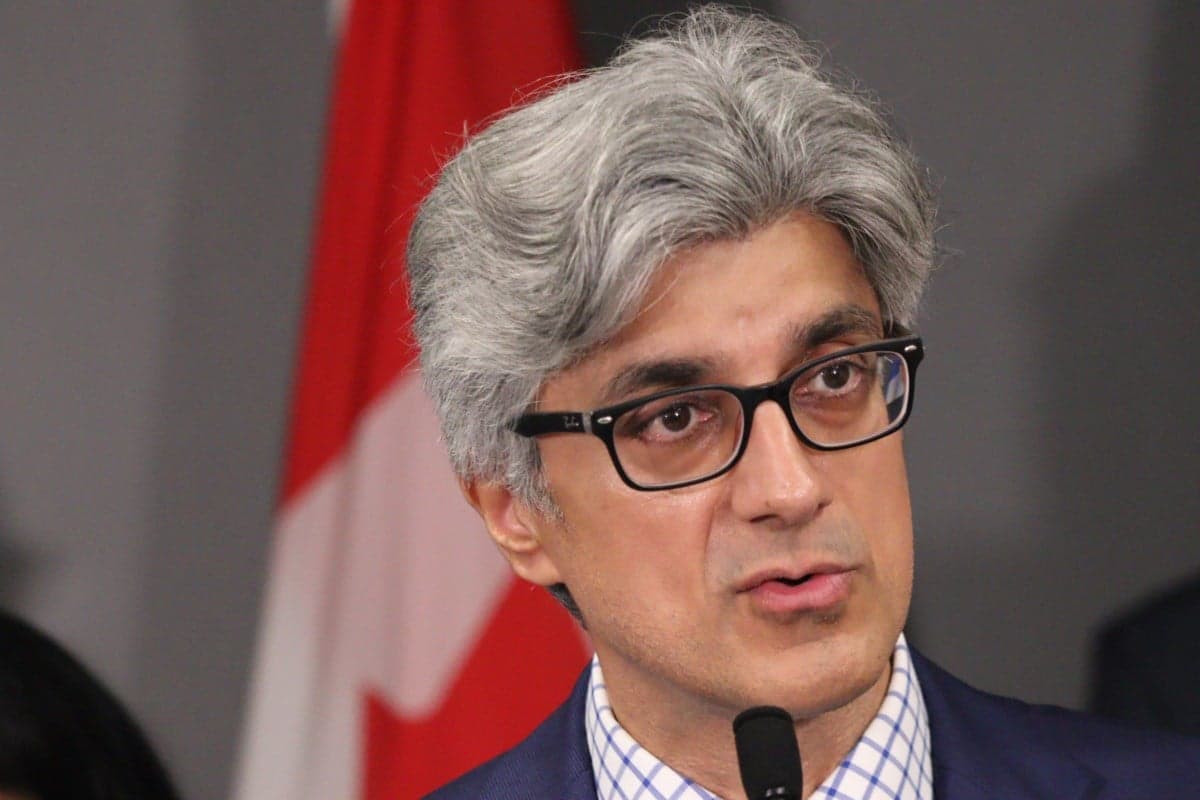
TTC CEO Mandeep Lali Under External Investigation for Workplace Conduct
City News
- 37
Ontario Schools Maintain Higher Lead in Drinking Water Limits, Leaked Memo Reveals
City News
- 38
Line 2 Subway Closure Between Victoria Park and Kennedy for Weekend Maintenance
City News
 39
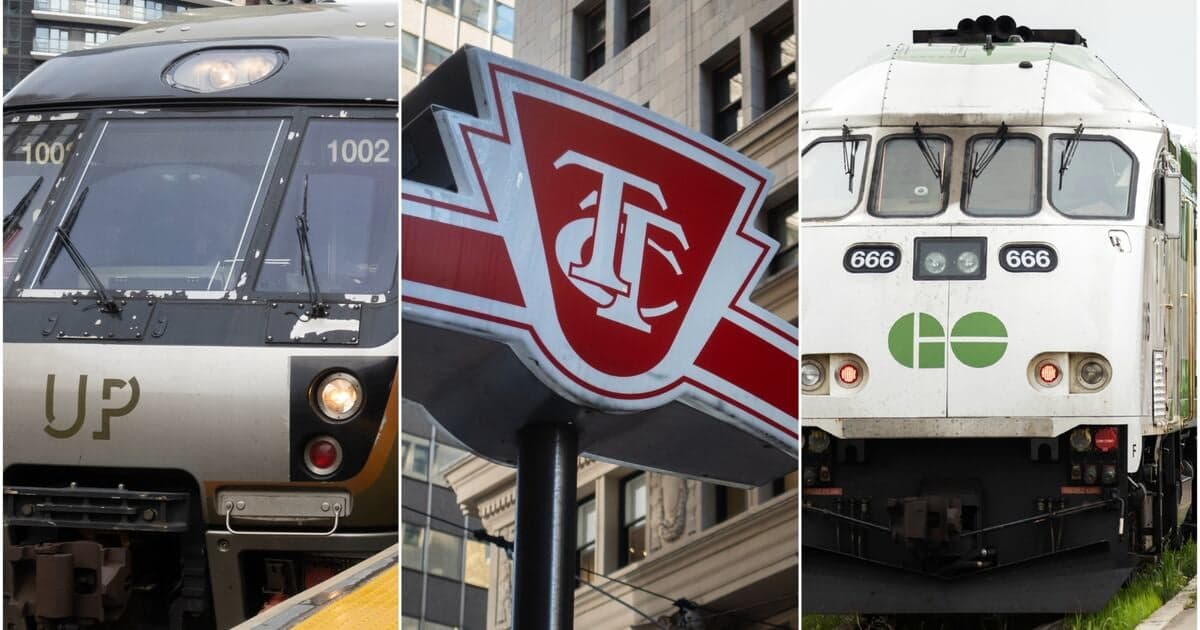
Major Weekend Rail Shutdowns Disrupt UP Express, Barrie, and Kitchener Lines
City News
 40
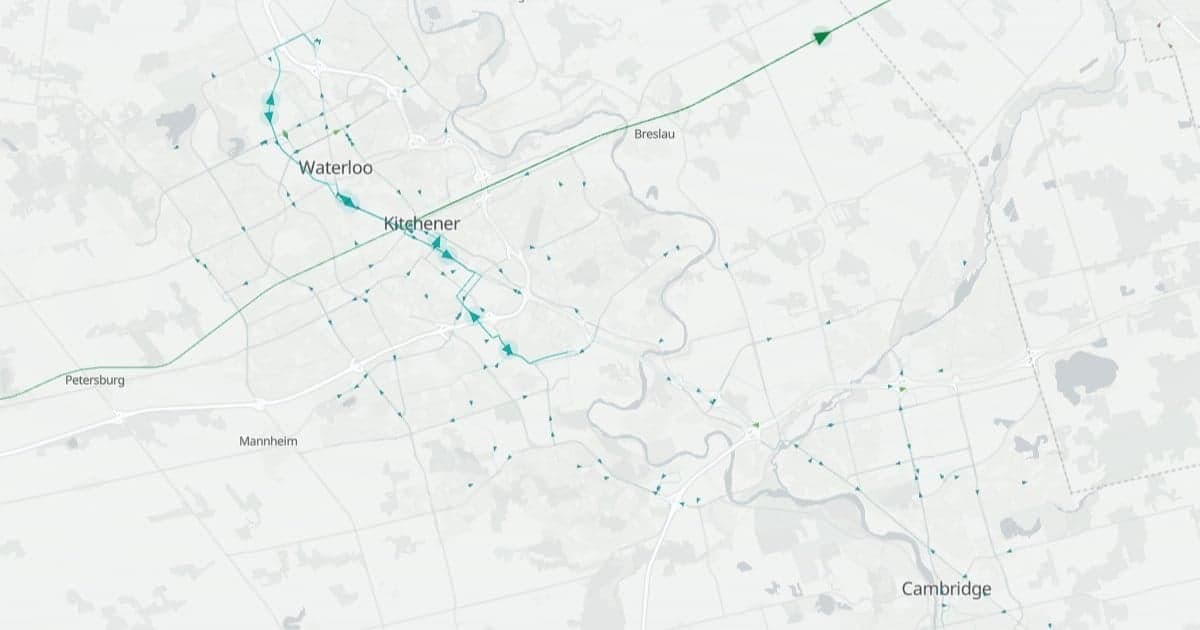
Ontario Commences Construction on Hazel McCallion LRT Extension into Downtown Brampton
City News
 41
Ontario Living Wage Benchmark Hits $27.60/Hour in GTA Amidst Soaring Shelter Costs
City News
 42
GTA Housing Market Sees Seasonal Sales Lift, But Volumes Down Year-Over-Year Amidst Buyer Caution
City News
- 43
Toronto Real Estate Cycle Nears Floor Amidst Prolonged Buyer Hesitation and Collapsing Construction
City News
 44
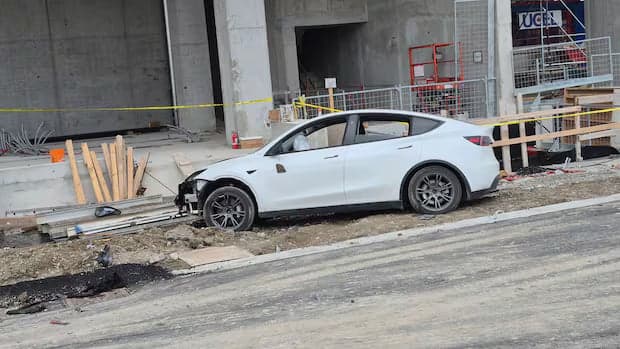
Tesla Crashes into Pickering Construction Site, Critically Injuring Two Workers
City News
- 45
Toronto Launches Distillery Winter Village and Neighbourhood Festivals, Boosting Seasonal Economy
City News
 46
Blue Jays Outfielder Anthony Santander Apologizes for Anti-Muslim Social Media Posts
Sports
 47
Alperen Sengun's 43-Point Game Lifts Rockets Over Winless Jazz in NBA Cup
Sports
 48
Maple Leafs Suffer Fifth Straight Loss as Matt Boldy's Hat Trick Dominates
Sports
 49
Maple Leafs Aim for Defensive Overhaul Amid Losing Streak
Sports
- 50
Maple Leafs Scramble for Defense, Goaltending Under Fire Amid Losing Streak
Sports
 51
MacKinnon and Makar Injured in Avalanche's Overtime Loss to Senators
Sports
- 52
Short-Handed Raptors Fall to 76ers Despite Strong Play from Barrett and Quickley
Sports
- 53
Raptors Grapple with Identity Crisis as Injuries Cloud Star-Studded Roster
Sports
 54
Raptors Suffer Back-to-Back Collapses Amidst Key Injuries
Sports
- 55
Angels Sign Catcher Tyler Heineman to One-Year Contract
Sports
 56
Doug McDermott Retires After a 12-Year NBA Career Focused on Three-Point Shooting
Sports
 57
Blue Jays Target Steven Kwan Amidst CBA Deadline Pressure and Roster Moves
Sports
 58
Blue Jays Pursue Pitching Upgrades Amidst Santander Controversy
Sports
See all 58 as a listHide the list
- Budget 2026 Unveils Industrial Supports and Productivity Mega Deduction for Canadian Businesses
- Canada Invests $200M in Woodfibre LNG and Introduces Productivity Mega Deduction
- Canada Secures Free Trade Agreements with Philippines and ASEAN Bloc
- Canada Finalizes Free Trade Agreement with Philippines, Boosting Indo-Pacific Economic Ties
- Canada Pursues EU Associate Membership and Strengthens Transatlantic Security Ties
- Federal Government to Enhance Benefits for Families of Fallen First Responders
- Ottawa Launches Ten-Year Homelessness Strategy and Community Infrastructure Funding
- Transnational Crime Probe Links 'Baweja Group' to Lawrence Bishnoi Extortion Network in Canada
- CBC Investigation into Elder Exploitation Sparks Calls for Justice System Reforms
- Atmospheric River Flooding in BC Claims Three Lives in Squamish Valley Boating Tragedy
- Cargojet Soars on Record Q3 Earnings; AutoCanada Faces Tariff Headwinds
- TSX Remains Stable Amid Wall Street Declines, Driven by Energy and Telecom Gains
- Toronto Police Halt Mall Community Safety Hub Expansion Amidst High Public Demand
- Fears of 'Yalta 2.0' Emerge as Trump-Xi-Putin Summit Discussions Intensify Amidst Ukraine Talks
- European Allies Warn Against "Yalta 2.0" Ahead of Trump, Putin, Xi APEC Summit
- Europe Demands Central Role in Ukraine Peace Talks Amid U.S. Diplomatic Overtures
- Abu Dhabi Peace Talks Strain as Russian Strikes Pressure Ukraine into Asymmetric Negotiations
- Nvidia CEO's Departure Spurs Scrutiny on Tech Espionage and Taiwan's 'Silicon Shield'
- Nvidia CEO Jensen Huang Resigns Amid Chinese Espionage Concerns
- China and Thailand Forge Deeper Trade Ties: High-Speed Rail, EVs, and AI Agreements Signed
- China Connects Poles via GuoWang Network, Demonstrating Arctic Icebreaker Communication Milestone
- IAEA Raises Alarm Over Iran Nuclear Program Access Void at Isfahan Facility
- IAEA Warns of Uninspected Isfahan Nuclear Site Amidst Middle East Logistics Fragmentation
- Solar Geoengineering Risks Global Conflict as Governance Lags Behind Technological Advance
- UAE Linked to $74 Billion in Illicit Conflict Gold, Swissaid Report Warns of Watchlist Risks
- Turkey and Qatar Sign Mutual Defense Pact Amidst Middle East Regional Security Fractures
- US Wholesale Inflation Surges to 6.5%, Downgrading Rate-Cut Hopes and Shaking Markets
- FAA Communications Failure Sparks Nationwide Ground Stop, Halting U.S. and Transatlantic Flights
- University of Toronto Rejects Campus Equity Report on Policing and Discrimination
- Ministers Meet in Toronto to Tackle Homelessness Crisis and Winter Shelter Shortages
- Federal, Provincial Ministers Meet to Streamline $44.7 Billion Housing Investment for Homelessness Reduction
- Multiple Violent Incidents and Collisions Across GTA Prompt Police Investigations
- Canada Overhauls Airport Security After Pearson Drug-Trafficking Probe
- Toronto Council Opposes Ontario's Bike Lane Removal Law, Rejects Costs
- Council Grants Metrolinx Extended Authority for GO Expansion Highway Closures
- TTC CEO Mandeep Lali Under External Investigation for Workplace Conduct
- Ontario Schools Maintain Higher Lead in Drinking Water Limits, Leaked Memo Reveals
- Line 2 Subway Closure Between Victoria Park and Kennedy for Weekend Maintenance
- Major Weekend Rail Shutdowns Disrupt UP Express, Barrie, and Kitchener Lines
- Ontario Commences Construction on Hazel McCallion LRT Extension into Downtown Brampton
- Ontario Living Wage Benchmark Hits $27.60/Hour in GTA Amidst Soaring Shelter Costs
- GTA Housing Market Sees Seasonal Sales Lift, But Volumes Down Year-Over-Year Amidst Buyer Caution
- Toronto Real Estate Cycle Nears Floor Amidst Prolonged Buyer Hesitation and Collapsing Construction
- Tesla Crashes into Pickering Construction Site, Critically Injuring Two Workers
- Toronto Launches Distillery Winter Village and Neighbourhood Festivals, Boosting Seasonal Economy
- Blue Jays Outfielder Anthony Santander Apologizes for Anti-Muslim Social Media Posts
- Alperen Sengun's 43-Point Game Lifts Rockets Over Winless Jazz in NBA Cup
- Maple Leafs Suffer Fifth Straight Loss as Matt Boldy's Hat Trick Dominates
- Maple Leafs Aim for Defensive Overhaul Amid Losing Streak
- Maple Leafs Scramble for Defense, Goaltending Under Fire Amid Losing Streak
- MacKinnon and Makar Injured in Avalanche's Overtime Loss to Senators
- Short-Handed Raptors Fall to 76ers Despite Strong Play from Barrett and Quickley
- Raptors Grapple with Identity Crisis as Injuries Cloud Star-Studded Roster
- Raptors Suffer Back-to-Back Collapses Amidst Key Injuries
- Angels Sign Catcher Tyler Heineman to One-Year Contract
- Doug McDermott Retires After a 12-Year NBA Career Focused on Three-Point Shooting
- Blue Jays Target Steven Kwan Amidst CBA Deadline Pressure and Roster Moves
- Blue Jays Pursue Pitching Upgrades Amidst Santander Controversy
Section 1 of 4
National News
13 stories · 7 min skim
National News
2 min read
Budget 2026 Unveils Industrial Supports and Productivity Mega Deduction for Canadian Businesses
Federal ministers have announced significant industrial support measures and tax incentives under Budget 2026. The Strategic Response Fund will provide $1 billion over six years for technological adoption and R&D in critical sectors. Additionally, the "Productivity Mega Deduction" allows immediate 100% write-off of eligible capital assets, aiming to significantly lower Canada's corporate investment tax rate.
Read the full storyFold the full story2 min · 6 sources
Cabinet ministers and senior officials fanned out across the country to outline major industrial policies and tax incentives authorized under Budget 2026: Masters of our destiny[1][2]. In Woodbridge, Ontario, Minister of Industry Mélanie Joly met with executives at automotive supplier Martinrea to outline the federal government’s expanded Strategic Response Fund[1]. The initiative commits $1 billion over six years to finance technological adoption, capital expansion, and research and development in critical domestic sectors, including artificial intelligence, agri-food, defence, aerospace, biomanufacturing, and clean technology[1]. The program will inject an additional $300 million over three years starting in 2028–2029, alongside $200 million in subsequent years, to build domestic manufacturing capacity and cushion Canadian industries against volatile international trade policies[1][2].
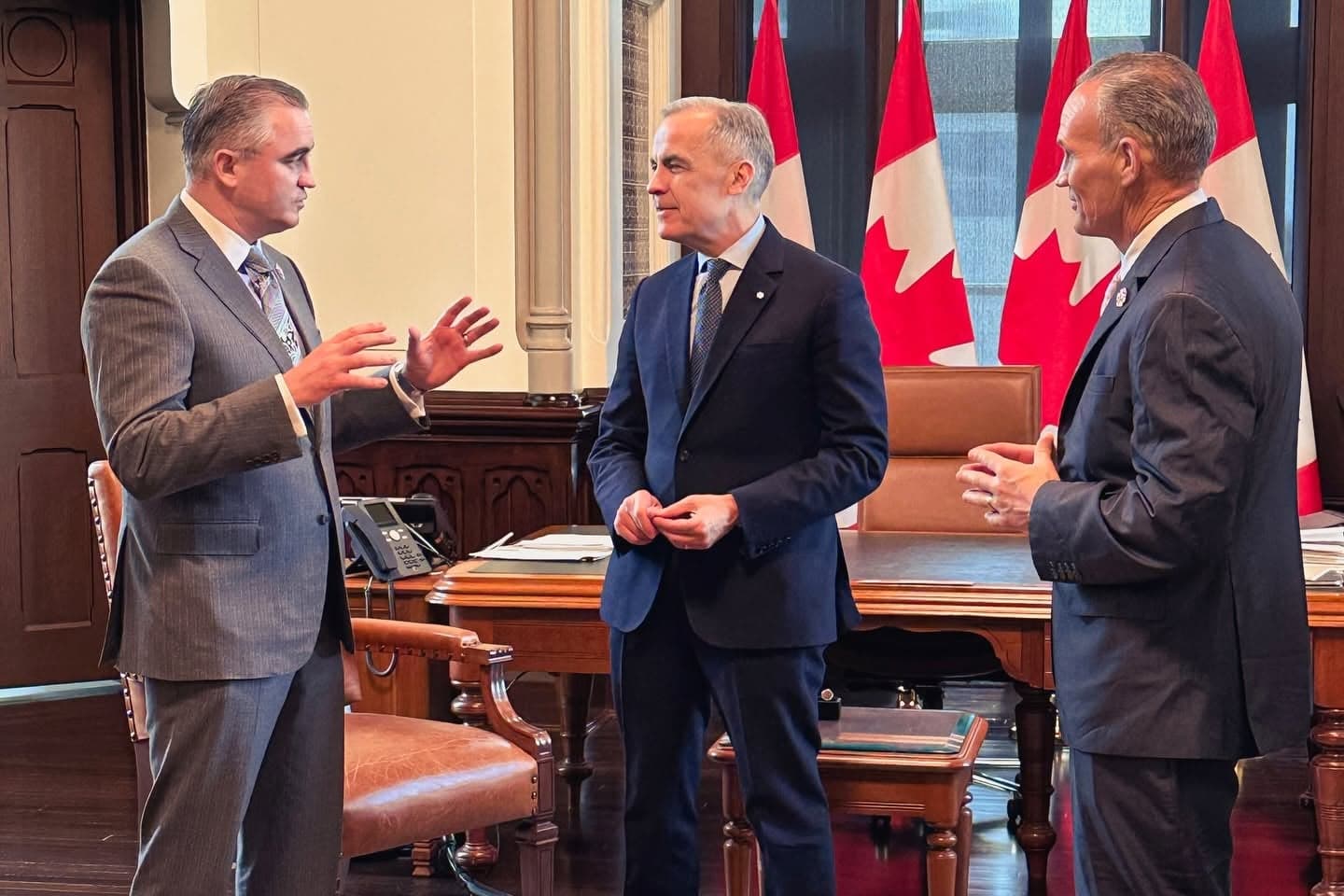
Simultaneously in Winnipeg, Kevin Lamoureux, Parliamentary Secretary to the Leader of the Government in the House of Commons, announced implementation guidelines for the budget’s "Productivity Mega Deduction" during a visit to Fort Garry Fire Trucks[3]. Superseding earlier capital cost allowances, the measure creates a permanent tax regime allowing Canadian enterprises of all sizes to immediately write off 100 percent of the cost of eligible capital assets, expanding immediate expensing to cover more than 65 percent of business investment[3]. Federal finance projections indicate that this deduction will reduce Canada’s marginal effective tax rate (METR) on new capital investments from 13 percent to 6.4 percent - positioning it as the lowest corporate investment tax rate in the G7 and less than half that of the United States[3].
The national rollout underscores the federal government’s effort to stimulate private sector productivity while adhering to fiscal guardrails[1][3]. Finance Minister François-Philippe Champagne’s budget maintains two explicit fiscal anchors: balancing federal day-to-day operating expenditures against baseline revenues by 2027–2028 - achieving operating balance a full fiscal year ahead of previous projections - while keeping the federal net debt-to-GDP ratio on a steady downward trajectory[1][4]. In Guelph, Parliamentary Secretary Ryan Turnbull emphasized at Fostet Manufacturing that these fiscal anchors are designed to preserve Canada's AAA credit rating while channeling targeted state capital toward high-growth commercial scaling[2].
Business associations and industrial manufacturers have largely welcomed the capital write-off provisions, citing the acute need for long-term tax certainty amid heightened North American competition[3][5]. Corporate tax experts highlighted that lowering the marginal effective tax rate to 6.4 percent gives Canada an immediate competitive edge in attracting green manufacturing and automated assembly facilities[3]. However, parliamentary budget watchdogs and opposition critics continue to question whether the government's aggressive timeline for balancing operating accounts can withstand potential revenue volatility and mounting global borrowing costs[6].
- Budget 2026
- Mélanie Joly
- Strategic Response Fund
National News
2 min read
Canada Invests $200M in Woodfibre LNG and Introduces Productivity Mega Deduction
The Canadian government has announced significant support for its industrial sector, including a $200-million direct investment in the Woodfibre LNG export terminal. This funding will aid in completing the facility, which is Indigenous-led and designed for low emissions. Alongside this, the government has rolled out the "Productivity Mega Deduction," making immediate expensing permanent for over 65% of business capital investments, lowering Canada's tax rate on new investments to be the lowest in the G7.
Read the full storyFold the full story2 min · 5 sources
The federal government announced significant capital commitments and industrial policy measures under its Budget 2026 platform, headlined by a $200-million federal direct investment into the Woodfibre LNG export terminal in Squamish, British Columbia[1]. Announced by Minister of Energy and Natural Resources Tim Hodgson on Friday, the capital infusion directly supports the completion of the facility, which is currently approximately three-quarters built[1]. The terminal, developed in historic partnership with the Squamish Nation (Sḵwx̱wú7mesh Úxwumixw), represents the first major Canadian industrial project approved through an Indigenous-led environmental assessment process and is designed to run on British Columbia's clean hydroelectricity to achieve one of the lowest emissions intensities among global liquefied natural gas facilities[1].
Simultaneously, cabinet ministers fanned out across key manufacturing corridors to outline aggressive public policy incentives designed to boost domestic business investment[2][3][4]. In Newfoundland and Labrador, Minister Joanne Thompson highlighted the formal rollout of the "Productivity Mega Deduction," an expansion of previous accelerated capital write-offs[4]. The policy makes immediate expensing permanent for more than 65% of business capital investments, slashing Canada’s marginal effective tax rate (METR) on new capital expenditures from 13% down to 6.4%[4]. This adjustment positions Canada's corporate tax burden on new investment as the lowest in the G7 and less than half of the prevailing rate in the United States, designed specifically to offset cross-border tariff threats and stimulate domestic productivity[5][4].
In central Canada, Minister of Industry Mélanie Joly met with automotive supplier Martinrea in Woodbridge, Ontario, to outline an expanded $1-billion Strategic Response Fund geared toward helping industrial firms scale automation, biomanufacturing, aerospace, and clean technologies[2]. The federal policy measures dovetail with Ontario's recently enacted $8.7-billion joint trade action plan to safeguard automotive supply chains against escalating U.S. tariffs[5]. The regional supply network recently received a critical boost from Honda Canada's $867-million project to retool its Alliston plant for hybrid and internal combustion engines, backed by $156 million in provincial assistance[5]. Industry groups have welcomed the capital allowances and energy investments as vital hedges against an uncertain international trading environment, emphasizing that lowering upfront capital costs is essential for long-term supply chain retention[1][5][4].
- Woodfibre LNG
- Squamish Nation
- Productivity Mega Deduction
National News
2 min read
Canada Secures Free Trade Agreements with Philippines and ASEAN Bloc
Prime Minister Mark Carney announced the conclusion of bilateral free trade negotiations with the Philippines and the finalization of terms for the comprehensive ASEAN-Canada Free Trade Agreement (ACAFTA). These agreements aim to diversify Canadian supply chains and expand export access to a market of nearly 700 million consumers. The federal government is committing over $15.9 million to support trade capacity-building and regional integration in Southeast Asia.
Read the full storyFold the full story2 min · 8 sources
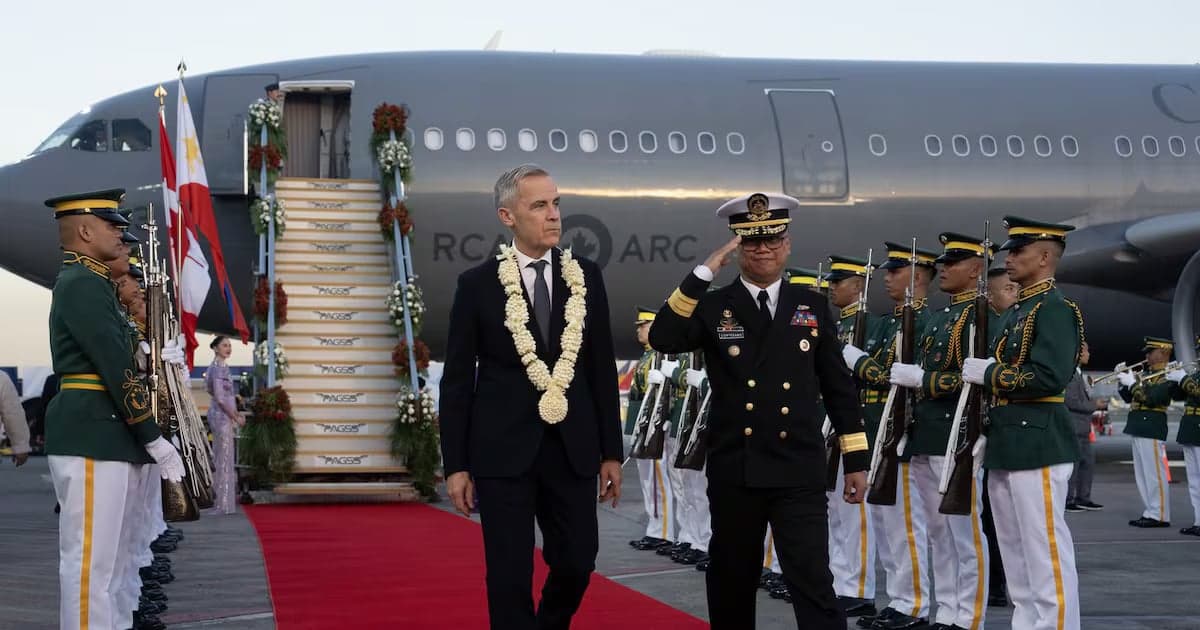
Prime Minister Mark Carney announced in Manila the formal conclusion of negotiations for a bilateral free trade agreement with the Philippines, alongside the substantial conclusion of talks toward the comprehensive ASEAN-Canada Free Trade Agreement (ACAFTA)[1][2]. Meeting on the sidelines of the 49th Association of Southeast Asian Nations (ASEAN) Summit with Philippine President Ferdinand Marcos Jr., Carney confirmed that both nations have signed a joint declaration concluding their nine-month bilateral talks, setting the stage for formal ratification and implementation targeted for 2027[3][2]. In parallel, the multilateral ACAFTA framework establishes terms across ASEAN’s 10 member states, opening preferential access to a trading bloc representing nearly 700 million consumers and a combined gross domestic product approaching $6 trillion[1].
The twin trade breakthroughs are central components of Ottawa’s long-term economic strategy to pivot Canadian supply chains and diversify exports away from traditional single-partner dependence[1]. Canada and the Philippines initiated formal bilateral trade talks following the 2025 ASEAN Summit in Kuala Lumpur, accelerating negotiations to align with Ottawa's broader Indo-Pacific Strategy[3][4]. Addressing President Marcos in Manila, Carney used maritime imagery to characterize the geopolitical moment, remarking that "a ship that stays in the harbour is safe, but that's not what a ship is for. And it takes a leader to take the ship out of the harbour into choppy waters and reach a destination"[2]. President Marcos echoed the sentiment, noting that the agreement converts the bilateral relationship into concrete commercial and strategic outcomes while strengthening people-to-people connections[3].
To ensure the execution of the multilateral pact, the Prime Minister’s Office committed more than $15.9 million in federal investments dedicated to trade capacity-building and regional integration across Southeast Asia[5]. A centerpiece of this funding includes a $5 million, three-year institutional partnership with Ottawa-based Cowater International to deploy technical advisors and regulatory experts to ASEAN member states[5]. This initiative aims to assist regional governments in harmonizing trade rules, expediting legal scrubbing, and accelerating domestic ratification processes[5]. Additional allocations within the envelope target joint maritime security, ocean protection, nuclear safeguards, and clean energy transition projects in the region[5].
Economically, bilateral commerce between Canada and the Philippines is projected to triple over the next decade as tariff barriers fall across agriculture, critical minerals, advanced manufacturing, and service industries[3]. For Canadian exporters, ACAFTA provides tariff-free access and regulatory certainty across Southeast Asia’s fastest-growing economies, shielding domestic producers against rising global protectionism[1][6]. Industry analysts noted that while expanding trade with Southeast Asia brings immense market upside, it will also necessitate sustained Canadian diplomatic and security engagement across the Pacific to safeguard regional maritime transit corridors and maintain supply-chain stability[7][8].
- Mark Carney
- Philippines
- ASEAN
National News
2 min read
Canada Finalizes Free Trade Agreement with Philippines, Boosting Indo-Pacific Economic Ties
Canada has successfully concluded negotiations for a bilateral free trade agreement with the Philippines, a move aimed at expanding its export markets in the Indo-Pacific. The pact, expected to be finalized by 2027, could potentially triple bilateral trade to over $10 billion annually and provide Canadian businesses with preferential access to a rapidly growing Southeast Asian economy. This agreement is part of Canada's strategy to diversify trade relationships beyond the United States and build a robust network of international partners.
Read the full storyFold the full story2 min · 2 sources
Canada has officially concluded negotiations on a bilateral free trade agreement with the Philippines, marking a major milestone in Ottawa’s aggressive push to diversify its export markets across the Indo-Pacific region[1][2]. Prime Minister Mark Carney announced the successful conclusion of talks on Friday in Manila ahead of the Association of Southeast Asian Nations (ASEAN) summit, indicating that both governments plan to finalize the legal text quickly to bring the agreement into force in 2027[2]. The pact is projected to potentially triple bilateral trade between the two countries to more than $10 billion annually, providing Canadian exporters with preferential market access to one of Southeast Asia's fastest-growing economies[2].
The announcement comes amid broader efforts by the federal government to shield Canadian industries from mounting protectionist sentiment and geopolitical friction by reducing trade reliance on the United States[2]. Highlighting Canada’s strategy of building a "dense web of reliable partners," Carney framed the deal as a pivotal commercial gateway for high-value Canadian goods and services[2]. Parallel to the bilateral treaty, Ottawa continues to advance negotiations for a broader Canada-ASEAN free trade agreement, which would unlock access to a combined economic bloc encompassing nearly 700 million consumers and a regional gross domestic product exceeding US$6 trillion[2]. In tandem with the trade pact, private-sector partnerships were announced, including a memorandum of understanding between Canadian renewable developer JCM Power and the Aurora Pacific Economic Zone Authority to finance and build green energy infrastructure powering Philippine manufacturing hubs and data centers[1].
The commercial implications of the agreement span several cornerstone Canadian sectors, offering immediate tariff relief and regulatory certainty for agri-food producers, advanced manufacturing, and emerging technology ventures[2]. Agricultural groups reacted with enthusiasm; Kyle Larkin, president and chief executive officer of the Canadian Meat Council, praised the conclusion of negotiations as a critical growth catalyst for Canadian pork producers seeking stable foreign demand[2]. Western Canadian grain and canola exporters, who have navigated recurring trade barriers elsewhere in Asia, are also positioned to benefit substantially from standardized phytosanitary rules and lowered duty barriers[2]. For Canadian technology and clean-tech startups, the pact establishes explicit digital trade protections, intellectual property safeguards, and public procurement access in a region undergoing rapid digital modernization[2].
- Canada
- Philippines
- Indo-Pacific
National News
2 min read
Canada Pursues EU Associate Membership and Strengthens Transatlantic Security Ties
Prime Minister Mark Carney is actively seeking EU Associate Membership for Canada at the European Political Community Summit in Dublin. The initiative focuses on integrating supply chains, enhancing mutual defence procurement, and establishing critical energy partnerships. Progress was also made on CETA ratification, with Cyprus signalling steps towards passing the agreement.
Read the full storyFold the full story2 min · 4 sources
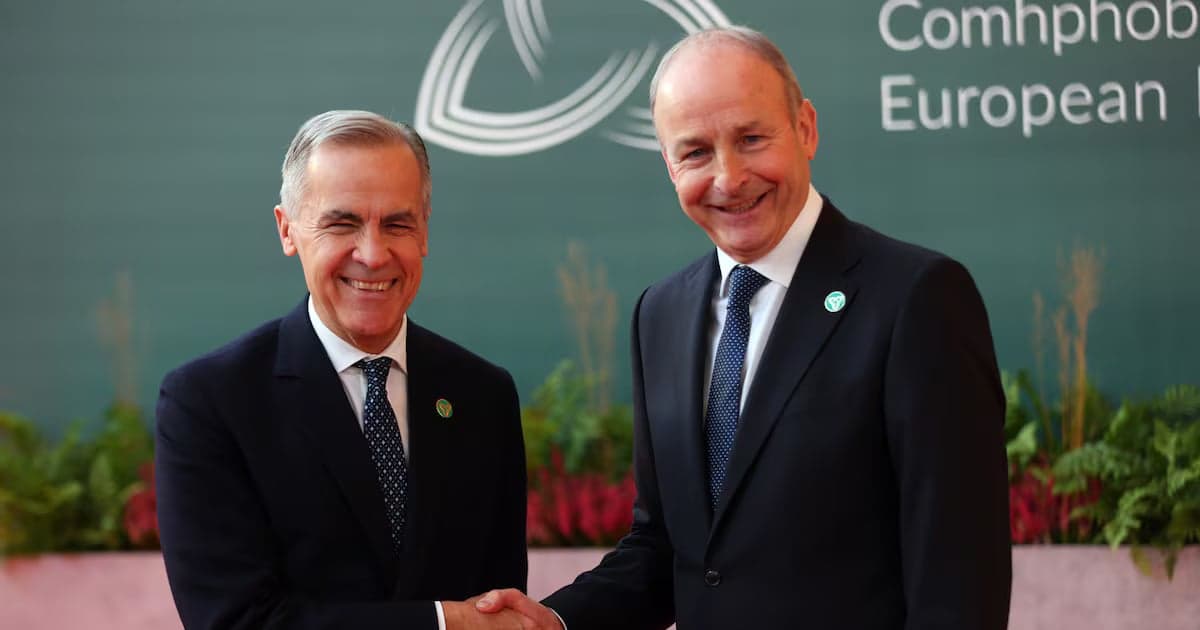
The Prime Minister’s Office released details of Canada’s participation in the 9th Summit of the European Political Community (EPC) in Dublin, Ireland, outlining Ottawa’s formal diplomatic push to become the European Union’s first non-continental Associate Member[1][1]. Building on the "Alliance for the Future" launched in Montréal with European Commission President Ursula von der Leyen and European Council President António Costa, Prime Minister Mark Carney held a series of high-level bilateral meetings to deepen cross-Atlantic institutional ties[1][1]. Canada remains the sole non-European sovereign state invited to address the EPC plenary, using the Dublin forum to pitch integrated supply chains, mutual defence procurement, and critical energy partnerships[1][2].
A major breakthrough on the summit’s margins centered on overcoming stubborn holdouts to the ratification of the decade-old Comprehensive Economic and Trade Agreement (CETA)[3]. Carney convened face-to-face sessions with Cypriot President Nikos Christodoulides and Greek Prime Minister Kyriakos Mitsotakis, both of whose nations had long delayed full legislative ratification over geographic indications for food exports like halloumi and feta cheese[3]. Following the talks, President Christodoulides announced publicly that Cyprus is actively taking steps to pass the agreement, praising Carney’s "pro-European Canadian approach" and marking the first bilateral meeting between a Canadian prime minister and a Cypriot head of state in eight decades[3]. Carney also held separate sessions with French President Emmanuel Macron and Irish Taoiseach Micheál Martin, urging them to advance ratification in their domestic parliaments[3].
The diplomatic mission yielded significant progress on defence and security integration[1]. Since Canada became the first third-party country permitted into the EU’s Strategic Alignment and Financing for Equipment (SAFE) Instrument, Canadian defence contractors have secured key European contracts, including Montréal-based Marconi Technologies supplying tactical radios to Poland's Cyber Command and Galvion securing a $44 million contract to deliver ballistic helmets to Latvia[1]. In Dublin, Carney participated in a multilateral security session co-hosted by Ukrainian President Volodymyr Zelenskyy and British Prime Minister Andy Burnham, where Carney reiterated Ottawa’s steadfast backing for long-term security guarantees and Ukraine’s reconstruction[1].
On energy security, the federal government reinforced multi-decade liquefied natural gas (LNG) export arrangements with European conglomerates, including Germany’s SEFE and Uniper, France’s TotalEnergies, and the UK’s Shell and Centrica[1]. These deals cover up to 8 million tonnes of Canadian LNG annually over a 20-year term starting in 2032, tied to upcoming final investment decisions on the Ksi Lisims LNG terminal in British Columbia[1]. While European leaders voiced strong appreciation for Canada’s reliable energy and security partnership, domestic environmental policy organizations raised concerns about locking in fossil-fuel infrastructure, urging Ottawa to maintain equivalent focus on the international climate finance commitments made concurrently by Environment Minister Julie Dabrusin at the COP31 climate summit in Antalya[1][4].
- Mark Carney
- European Political Community (EPC)
- European Union
National News
2 min read
Federal Government to Enhance Benefits for Families of Fallen First Responders
The federal government has pledged to increase and permanently index the Memorial Grant Program for First Responders, addressing concerns about inflationary erosion of survivor benefits. This initiative, driven by lobbying from first responder unions, will raise the tax-free lump sum for families of those who die in the line of duty. The program previously had its $300,000 benefit frozen for years.
Read the full storyFold the full story1 min · 1 source
The federal government has formally committed to increasing and permanently indexing the Memorial Grant Program for First Responders (MGP), moving to rectify years of inflationary erosion affecting survivor benefits for Canadian public safety personnel[1]. The decision follows focused lobbying from the International Association of Fire Fighters (IAFF), alongside partner associations representing paramedics, municipal police officers, and correctional workers[1]. First established in 2018, the federal grant provides a direct, tax-free lump-sum payout to the families of frontline personnel who die as a direct result of their duties, encompassing catastrophic traumatic incidents, job-induced operational stress injuries, and occupational cancers[1].
Under the baseline framework, the memorial benefit had remained frozen at $300,000 for nearly eight years without automatic cost-of-living adjustments[1]. First responder organizations argued that cumulative inflation had substantially diminished the real financial cushion provided to grieving families, undermining the program's original protective intent[1]. IAFF leadership presented the case directly to Prime Minister Mark Carney and federal parliamentarians, demanding a 25 percent immediate uplift to $375,000 to match inflation, coupled with a mandatory annual indexation mechanism going forward[1]. Following commitments embedded in the federal budget tabled in Parliament, the government confirmed that technical implementation details will be finalized in the forthcoming Spring Economic Update[1].
The policy change carries significant healthcare and operational implications across Canadian emergency services[1]. Occupational disease, particularly line-of-duty cancers arising from toxic exposures during structural and wildland firefighting, now accounts for the vast majority of recognized first responder fatalities nationwide[1]. Furthermore, expanding mental health coverage under the program acknowledges the chronic occupational trauma faced by paramedics and law enforcement personnel, establishing a more equitable standard for what constitutes a line-of-duty casualty[1].
Union representatives and emergency service leaders praised the federal decision, describing the planned enhancement as a fundamental obligation to workers who risk their health in service of public protection[1]. Stakeholders emphasized that as municipalities and provinces grapple with recruitment and retention difficulties in fire services and healthcare paramedicine, federal guarantees of financial security for families represent an indispensable component of modern public safety infrastructure[1].
- Memorial Grant Program for First Responders
- International Association of Fire Fighters
- Prime Minister Mark Carney
National News
2 min read
Ottawa Launches Ten-Year Homelessness Strategy and Community Infrastructure Funding
The federal government has launched a $29 billion, ten-year strategy to combat chronic homelessness across Canada, alongside a new $1.5 billion Build Communities Strong Fund. The homelessness strategy involves intergovernmental consultations on renewed bilateral funding frameworks. The Build Communities Strong Fund will support the construction and modernization of municipal recreational facilities, including ice rinks.
Read the full storyFold the full story2 min · 6 sources
Housing, Infrastructure and Communities Canada issued a joint ministerial communiqué following the annual Federal-Provincial/Territorial (FPT) Ministers' Forum on Housing and Homelessness, marking a critical checkpoint for the federal government's $29 billion strategy to end chronic homelessness across Canada within a decade[1][2][3]. Co-chaired by federal Housing Minister Gregor Robertson and Ontario Minister of Municipal Affairs and Housing Robert J. Flack, the summit centered on negotiating renewed, predictable bilateral funding frameworks[2]. Minister Flack stressed that while Budget 2026’s housing initiatives represent a constructive baseline, provincial administrations require long-term federal funding guarantees to protect existing rent-geared-to-income housing stock and prevent frontline homelessness service providers from facing fiscal cliffs[2].
The joint communiqué follows Prime Minister Carney’s rollout of the 10-year homelessness eradication framework, which established an initial multi-billion-dollar provincial-federal prototype agreement with Manitoba[1]. Housing policy experts and municipal associations, however, published detailed critiques of the federal strategy, arguing that while the $29 billion financial envelope is historically unprecedented, it suffers from structural gaps in tenant protection and rent-relief mechanisms[3]. Independent policy analysts pointed out that capital expenditures to construct modular and permanent supportive housing must be coupled with immediate rent-bank subsidies and operational healthcare transfers, which fall squarely under provincial jurisdiction[2][3].
Complementing its core housing strategy, the federal government initiated nationwide announcements for the newly minted $1.5 billion Build Communities Strong Fund[4]. Spanning nine years, the fund allocates $750 million specifically for the construction, modernization, and decarbonization of municipal ice rinks, with an identical $750 million dedicated to multi-sport community recreational facilities[4]. Parliamentary Secretary to the President of the Treasury Board Tom Osborne announced the program details in Newfoundland and Labrador, while Secretary of State for Seniors Stephanie McLean held a concurrent event at the Juan de Fuca Recreation Centre arena in British Columbia[5][4].
Federal officials maintain that direct community-level infrastructure investments are vital for social cohesion and municipal economic resilience, especially in suburban and rural regions feeling the pinch of population growth[5][4]. Mayors and local administrators welcomed the capital allocations, noting that aging municipal arenas and aquatic centres have faced severe deferred-maintenance backlogs[4]. Concurrently, national public safety organizations - including the International Association of Fire Fighters (IAFF) - confirmed that parallel federal commitments made in the budget to expand the Memorial Grant Program for First Responders from $300,000 to $375,000 will be formally finalized in the government's upcoming Spring Economic Update, concluding months of direct union negotiations on Parliament Hill[6].
- Housing, Infrastructure and Communities Canada
- Gregor Robertson
- Robert J. Flack
National News
2 min read
Transnational Crime Probe Links 'Baweja Group' to Lawrence Bishnoi Extortion Network in Canada
Federal investigation reveals a cell of the Lawrence Bishnoi syndicate, dubbed the 'Baweja group,' operating across Canada. This faction is linked to extortions, shootings, and auto fraud, with alleged leader Kawanmeet Singh and associates declared inadmissible to Canada. Transcripts expose how syndicate members exploit Canadian legal loopholes, calculating deportation as their most likely consequence.
Read the full storyFold the full story2 min · 6 sources
A trove of Immigration and Refugee Board (IRB) transcripts disclosed under federal Access to Information legislation has revealed the inner workings of a previously undisclosed cell of the Lawrence Bishnoi transnational criminal syndicate operating across Canada[1][2]. The faction, identified in security findings as the "Baweja group," has been formally tied by law enforcement and immigration adjudicators to an aggressive string of extortions, drive-by shootings, arsons, and auto fraud spanning British Columbia, Alberta, and Ontario[1][2][1]. Central to the proceedings is alleged cell leader Kawanmeet Singh - who bears an AK-47 tattoo on his neck - along with associates Ekamjot Singh and Sukhdeep Singh, all of whom have been declared inadmissible to Canada on grounds of organized criminality[1][2].
The newly unsealed documents detail the violent retaliatory friction erupting on the periphery of these extortion networks[3]. In one October incident highlighted before the tribunal, an ambush unfolded in a Calgary college parking lot where masked assailants in a van cornered Kawanmeet Singh and several associates inside a white Ford Mustang[1][4][3]. The attackers deployed pepper spray, wielded baseball bats and swords, and filmed the entire confrontation[1][4][3]. In a brazen psychological manoeuvre, the assailants forwarded the video recording directly to Singh’s parents in an explicit warning concerning their son's illicit activities[1][3]. Singh was later arrested by Calgary police following another violent confrontation outside a local Tim Hortons involving firearm threats and coercive financial demands[1].
Crucially, the IRB transcripts disclose intelligence from a confidential informant outlining how syndicate operatives navigate and exploit the Canadian legal framework[2][3]. According to the informant's testimony to law enforcement, overseas-directed gang members routinely exhibit indifference toward Canadian judicial penalties, openly calculating that the most severe repercussion they are likely to encounter is administrative deportation and a government-funded return flight to India[2][3]. During his own detention hearings, Singh insisted that the "Baweja group" was non-existent and expressed an eagerness to leave Canadian custody, stating he had no desire to remain in the country[1].
The revelations place heightened scrutiny on the intersection of national public safety and immigration enforcement[5]. The Canada Border Services Agency (CBSA) and provincial anti-extortion task forces have stepped up deportations and inadmissibility reviews against foreign nationals linked to overseas crime networks[5][6]. While municipal police agencies note that public reports of extortion-related gunfire have ebbed compared to earlier spikes, the newly exposed intelligence underscores deep-seated organizational linkages, prompting calls across Canadian law enforcement for tighter border surveillance, faster admissibility proceedings, and enhanced intelligence-sharing to prevent overseas cartels from establishing durable domestic command structures[5][3][1].
- Baweja group
- Lawrence Bishnoi
- Kawanmeet Singh
National News
2 min read
CBC Investigation into Elder Exploitation Sparks Calls for Justice System Reforms
A CBC investigation into the predatory financial exploitation and subsequent death of an 86-year-old Toronto woman has prompted widespread calls for systemic reforms. The report details how two tenants manipulated their way into becoming caregivers, secured power of attorney, and were named beneficiaries before the woman's death under severe neglect. Despite concerns raised by family and guardianship officials, no criminal charges were laid.
Read the full storyFold the full story2 min · 3 sources
A national investigative report by CBC’s The Fifth Estate and The Current detailing the financial takeover and subsequent death of an 86-year-old Toronto resident has ignited calls for systemic reforms across Canadian healthcare, adult protection, and law enforcement agencies[1][2]. The investigation traces the final months of Dorelia Licorish, an independent senior who was gradually isolated by two men who moved into her home as tenants before declaring themselves her full-time caregivers[1]. Within months, the pair secured power of attorney over her affairs, had her execute a new will naming them her sole beneficiaries, and transported her to Guyana during an ongoing legal attempt by Ontario’s Office of the Public Guardian and Trustee to intervene on her behalf[1][2].
The case culminated in tragedy when Licorish died in a Toronto hospital from an advanced, systemic infection originating from a pressure ulcer so severe that bone tissue was exposed[1]. Despite warnings filed by concerned family members and provincial guardianship staff indicating cognitive impairment and potential exploitation, no criminal charges were laid by police[1]. Today, the two individuals remain in possession of Licorish's Toronto home, leaving her family without legal recourse or closure[1]. Healthcare practitioners and social workers interviewed in the wake of the broadcast emphasized that frontline medical teams often find themselves powerless to intervene when manipulative figures hold legal power-of-attorney documents, even in instances of blatant physical deterioration and neglect[3][1].
The investigation arrives at a critical demographic threshold: Canada has officially crossed the boundary into becoming a "super-aged" society, with seniors aged 65 and older now comprising more than 20 percent of the national population[1]. Geriatric care advocates and legal researchers point out that Canada lacks a unified national tracking mechanism for elder neglect and financial exploitation, leaving adult protective services fragmented along municipal and provincial borders[1]. In many jurisdictions, police services designate such conflicts as civil estate disputes rather than criminal predatory conduct, creating enforcement vacuums that sophisticated bad actors routinely exploit[1].
Advocacy groups and legal scholars are leveraging the broadcast to press federal and provincial justice ministries for sweeping regulatory changes. Demanded reforms include stricter oversight mechanisms for powers of attorney, mandatory registry systems for private caregivers handling vulnerable adults, and enhanced investigative training for municipal police officers. As public awareness around predatory elder abuse grows, healthcare networks are similarly facing pressure to build integrated early-warning protocols linking hospital discharge desks, primary care physicians, and community social workers to prevent vulnerable seniors from slipping unnoticed through institutional cracks[3].
- Dorelia Licorish
- CBC
- The Fifth Estate
National News
2 min read
Atmospheric River Flooding in BC Claims Three Lives in Squamish Valley Boating Tragedy
A severe atmospheric river storm system has caused widespread flooding in coastal British Columbia, resulting in a fatal boating incident in the Squamish Valley where three individuals died. Emergency services worked under treacherous conditions to manage the aftermath of extreme river flows and debris. The region experienced heavy rainfall, leading to flood warnings, evacuations, and closures of major roads.
Read the full storyFold the full story2 min · 7 sources
Torrential precipitation driven by a potent atmospheric river storm system across coastal British Columbia has triggered localized disasters, capped by a fatal boating incident in the flooded Squamish Valley[1][2][3]. Squamish RCMP confirmed that three individuals died after a vessel capsized in hazardous, fast-moving floodwaters that overwhelmed the regional river network[4][4][2]. Search and rescue personnel from Squamish Search and Rescue, North Shore Rescue, and B.C. Emergency Health Services mobilized air ambulances and water rescue units under treacherous conditions marked by extreme river flow rates and floating timber debris[1][4][5]. While emergency crews managed to assist some survivors ashore, the incident represents the deadliest outcome of the severe weather sequence to strike the Sea-to-Sky corridor[1][2].
The disaster followed consecutive days of relentless downpours, with Environment and Climate Change Canada recording upwards of 135 millimetres of rainfall at the Squamish Airport over a 48-hour window[1]. The resulting runoff triggered major flood warnings from the B.C. River Forecast Centre, forcing the Village of Pemberton and the Paradise Valley community into emergency shelter-in-place status[1][4]. Evacuation orders were enacted across multiple rural properties, including areas within the Líl̓wat Nation, while structural flooding prompted the closure of key arterial corridors such as Highway 99 and Squamish Valley Road[1][3]. Police and provincial emergency officials issued urgent warnings barring recreational and commercial watercraft from swollen rivers throughout the lower mainland[4][4].
The West Coast deluge coincided with an abrupt arrival of hazardous winter conditions across other parts of the country[6]. While British Columbia struggled with persistent atmospheric river moisture, flooding risks, and dense valley fog advisories, central and eastern Canada confronted an Arctic cold front[6][7]. Southern Ontario and parts of Quebec registered freezing temperatures alongside localized lake-effect snow squalls across highway corridors near London and Barrie, triggering early-season transport advisories and maintenance deployments[6].
Provincial and municipal emergency management agencies noted that the back-to-back atmospheric storms highlight the growing strain placed on civic infrastructure and volunteer search-and-rescue networks[6][2]. With extreme weather events striking coastal and mountainous regions in close succession, public safety planners are renewing calls for accelerated investments in flood-mitigation dikes, upgraded regional culverts, and tighter seasonal backcountry closures to protect both residents and emergency first responders[2][3].
- Squamish Valley
- B.C. River Forecast Centre
- Environment and Climate Change Canada
National News
2 min read
Cargojet Soars on Record Q3 Earnings; AutoCanada Faces Tariff Headwinds
Canadian corporate earnings reports showed mixed results, with air freight company Cargojet Inc. experiencing a significant stock price increase following a third quarter marked by record revenues and doubled profits. Conversely, AutoCanada Inc., a multi-brand dealership group, reported a return to profitability but warned of ongoing margin pressures due to consumer financing issues and trade tariffs, with recovery expected in spring 2027. Other companies like Aya Gold & Silver and Onex Corporation also reported varied financial outcomes.
Read the full storyFold the full story2 min · 4 sources
Third-quarter corporate earnings generated sharp single-stock divergence on the Toronto Stock Exchange, led by a double-digit surge in shares of air freight carrier Cargojet Inc. (TSX: CJT)[1]. Cargojet shares jumped more than 10% during Friday's trading, finishing as the exchange's top individual performer after the carrier released third-quarter results highlighted by record revenue and a dramatic expansion in profitability[1]. Total revenue surged 30.3% year-over-year, propelled by volume increases in domestic network operations, expanded charter activity, and growing demand for specialized aircraft leasing contracts[1]. As a result of tighter operational efficiencies and improved fleet utilization, the company’s quarterly net profit more than doubled to $19.1 million[1].
In the automotive and retail distribution space, multi-brand dealership group AutoCanada Inc. (TSX: ACQ) reported a return to profitability for the third quarter, even as executive leadership warned of continued margin headwinds stemming from consumer financing pressures and international trade tariffs[2]. Revenue from continuing operations expanded 3.1% year-over-year to $1.2 billion, driven by stronger unit volumes in new and used vehicle sales alongside steady collision repair demand, which counterbalanced softening parts and service revenues[2]. The company posted net income from continuing operations of $40.3 million ($1.63 per diluted share), reversing a net loss of $2.9 million ($0.14 per share) in the third quarter of last year, while adjusted EBITDA reached $48.4 million[2]. Chief Executive Officer Samuel Cochrane noted that vehicle gross margins remain compressed as dealers discount inventory to adapt to affordability constraints, adding that margins are unlikely to stabilize fully until the spring of 2027[2].
The broader third-quarter earnings cycle delivered contrasting outcomes across Canadian resource and alternative asset operators[1][3]. Montreal-based producer Aya Gold & Silver reported a 182% surge in third-quarter net income to US$35 million, accompanied by operating cash flow rising to US$48 million, which prompted management to raise the lower bound of its 2026 production guidance for the Zgounder silver mine[1]. However, Aya shares experienced selling pressure following a 9% year-over-year contraction in physical silver ounces sold and softer realized quarterly commodity pricing[1]. Meanwhile, alternative asset manager Onex Corporation closed out the corporate reporting slate by delivering a third-quarter profit of US$97 million, up from the prior-year period, driven by improved fee-related earnings across its private equity and credit management platforms[3][4].
- Cargojet Inc.
- AutoCanada Inc.
- Aya Gold & Silver
National News
2 min read
TSX Remains Stable Amid Wall Street Declines, Driven by Energy and Telecom Gains
Canada's main stock market, the S&P/TSX Composite Index, showed resilience by posting only a minor decline, contrasting with significant losses on U.S. exchanges, particularly in the technology sector. The stability was largely due to strong performance in utilities and telecommunications stocks, which counteracted weakness in other areas. The Canadian dollar remained steady, and commodity prices saw mixed trading.
Read the full storyFold the full story1 min · 8 sources
Canada’s benchmark stock market demonstrated resilience on Friday, largely decoupling from steep losses across U.S. exchanges triggered by volatility in the artificial intelligence and semiconductor sectors[1][2]. The S&P/TSX Composite Index concluded Friday’s trading session down a modest 31.29 points, or 0.09%, to close at 36,105.90[3][1]. By contrast, Wall Street experienced notable pullbacks, with the tech-heavy Nasdaq Composite falling 229.82 points (0.9%) to 25,136.27 and the S&P 500 shedding 30.73 points to 7,561.67[1]. The TSX’s comparatively steady performance was underpinned by broad strength in utilities and telecommunications equities, which helped mitigate selling pressure across base metals and technology counters[4].
Commodity and currency markets exhibited stable trading ranges through the close of the week[4][1]. The Canadian dollar held essentially flat, trading at 70.14 cents US compared to 70.15 cents US in the previous session[1]. In commodity trading, the December crude oil contract settled at US$88.56 per barrel, off 18 cents on the day, while spot and front-month gold contracts firmed slightly, trading near US$3,886.30 an ounce[1]. Upstream energy equities on the Toronto exchange continued to draw support from substantial ongoing asset monetization and consolidation across the Montney and Western Canadian Sedimentary Basin, where sustained flows through the expanded Trans Mountain pipeline and operational start-up at LNG Canada Phase 1 have supported structural domestic production[5].
The market’s defensive posture arrives as investors analyze mixed signals regarding the health of the broader macro economy[6]. Statistics Canada reported on Friday that national manufacturing sales were essentially unchanged in September at $80.2 billion, reflecting lingering industrial plateauing amid global economic headwinds[7]. Financial markets are now squarely focused on Monday’s release of the October Consumer Price Index (CPI)[8]. With the Bank of Canada’s policy rate sitting at 2.50% following a sustained easing cycle, economists are debating whether recent firming in energy prices will generate renewed core inflationary pressures or whether soft domestic labor conditions - marked by an unemployment rate hovering near 6.7% - will maintain sufficient slack to justify an accommodative monetary stance[6][8].
- S&P/TSX Composite Index
- Nasdaq Composite
- S&P 500
National News
2 min read
Toronto Police Halt Mall Community Safety Hub Expansion Amidst High Public Demand
The Toronto Police Service has paused the expansion of its community safety hubs in retail and neighborhood centers, pending a review of their effectiveness. This decision comes despite significant demand from commercial and community groups for increased police presence. The hubs, designed for non-enforcement interactions and crime deterrence, are currently under scrutiny for their actual impact on crime reduction.
Read the full storyFold the full story1 min · 1 source
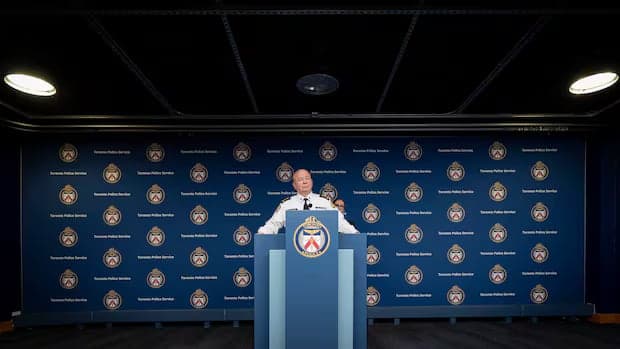
The Toronto Police Service has placed a formal moratorium on launching new community safety hubs across the city’s retail and neighbourhood centres, halting further rollouts while command staff conduct a comprehensive efficacy review[1]. The decision, confirmed by Police Chief Myron Demkiw, comes in response to an overwhelming volume of requests from commercial landlords, business improvement associations (BIAs), and residential groups seeking dedicated, high-visibility police footprints on their properties[1]. The hubs, which first debuted at Fairview Mall and subsequently expanded to Dufferin Mall, Lawrence Heights, and Shops at Don Mills, were designed to provide accessible, non-enforcement touchpoints where frontline officers could interact directly with visitors while deterring opportunistic and organized retail crime[1].
Chief Demkiw stated that although institutional and community enthusiasm for the installations is exceptionally high, the force must implement rigid evaluation metrics before committing additional operational resources[1]. The evaluation will assess whether the presence of mall stations yields measurable drops in property offenses, auto thefts, and violent retail robberies, or whether they primarily serve a public-relations and comfort function[1]. With frontline officer deployment remaining a constrained resource across Toronto's divisional commands, internal leadership aims to ensure that stationary community hubs do not diminish rapid-response coverage in surrounding residential neighbourhoods[1].
The initiative reflects an ongoing divergence between statistical crime indicators and public safety perceptions in Canada’s largest urban centre[1]. Although citywide data tracks broad stabilizations in several major crime categories, public anxiety over violent robberies, carjackings, and random public disturbances remains acute[1]. This disconnect has made police visibility a central topic in municipal politics, with civic leaders debating how to balance neighborhood patrols, crisis response teams, and commercial storefront stations[1].
Retailers and commercial developers have expressed concern over the pause, arguing that visible police hubs provide an indispensable psychological buffer for workers and shoppers navigating high-profile retail theft waves. Police leadership maintained that existing hubs will remain operational throughout the review period, but stressed that any future expansion across Toronto will hinge entirely on verifiable crime-reduction data and optimized deployment logistics[1].
- Toronto Police Service
- Myron Demkiw
- Fairview Mall
Section 2 of 4
World & Geopolitics
15 stories · 8 min skim
World & Geopolitics
2 min read
Fears of 'Yalta 2.0' Emerge as Trump-Xi-Putin Summit Discussions Intensify Amidst Ukraine Talks
Preparations for a potential trilateral meeting between U.S. President Trump, Chinese President Xi, and Russian President Putin on the sidelines of the APEC summit have sparked significant anxiety in European capitals. This prospect has led to concerns among allies about spheres of influence being redrawn without their input, drawing parallels to the Yalta Conference of 1945. These diplomatic maneuvers occur alongside concluded, difficult talks in Abu Dhabi between Ukrainian, Russian, and American delegations, the first direct negotiations between Kyiv and Moscow in nine months.
Read the full storyFold the full story2 min · 6 sources
A diplomatic firestorm has erupted across European capitals following confirmations that preparatory discussions are underway for an anticipated trilateral meeting between U.S. President Donald Trump, Chinese President Xi Jinping, and Russian President Vladimir Putin on the sidelines of the upcoming Asia-Pacific Economic Cooperation (APEC) summit in Shenzhen[1][2]. The prospect of the world’s three most prominent leaders convening without European or regional representation has prompted acute anxiety among U.S. allies[1]. Ukrainian President Volodymyr Zelenskyy and senior diplomats from Baltic and Eastern European nations have voiced alarm that the summit risks degenerating into a contemporary "Yalta 2.0," echoing the 1945 conference where great powers demarcated spheres of influence over the heads of sovereign states[1]. German Chancellor Friedrich Merz intervened directly on November 13, cautioning the White House against unilateral concessions and urging President Trump to avoid springing destabilizing diplomatic surprises that bypass European security architectures[3][4].
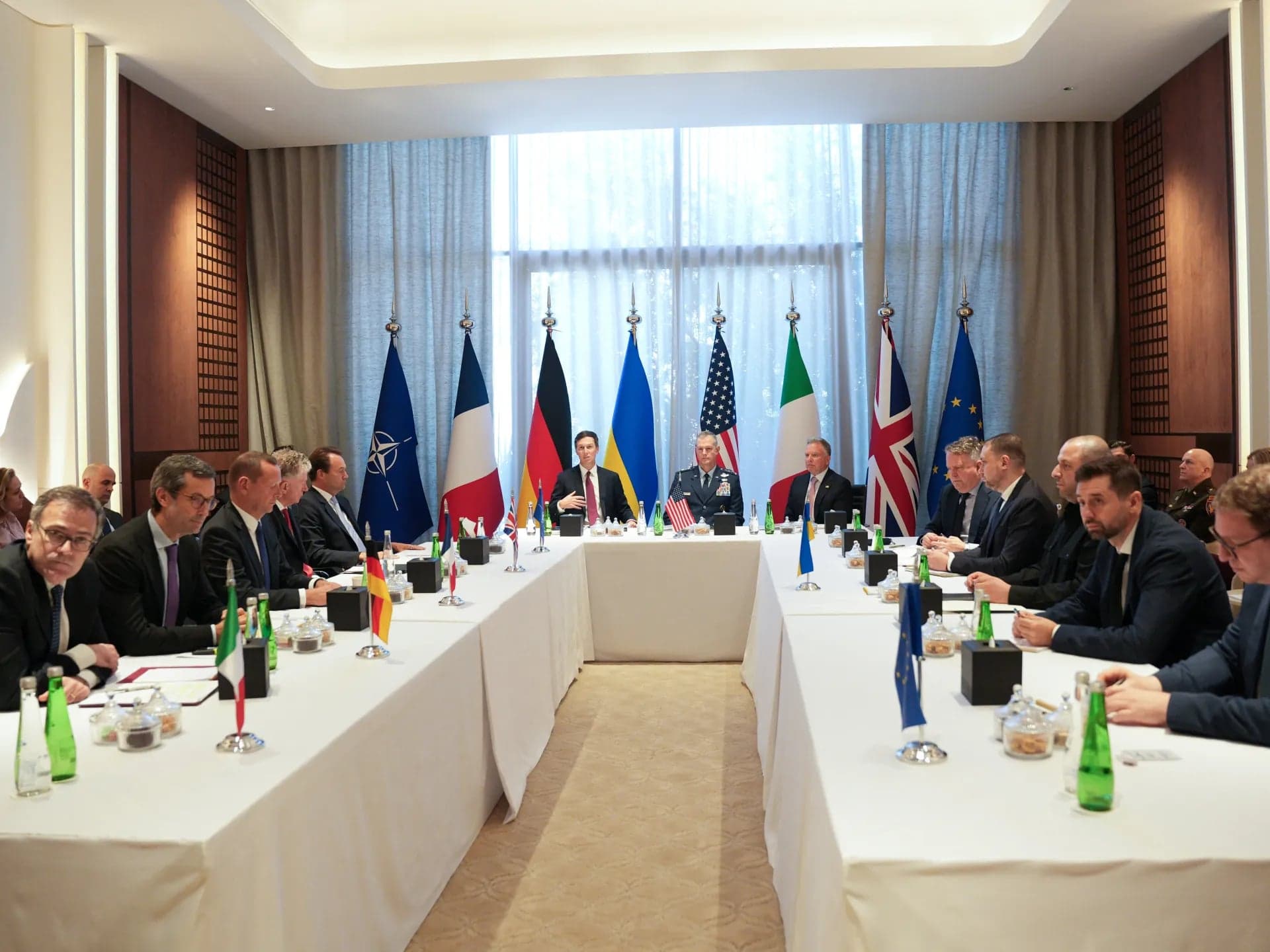
This diplomatic maneuvering coincides with the conclusion of tense, trilateral closed-door talks in Abu Dhabi involving Ukrainian, Russian, and American delegations[5]. Marking the first substantive direct negotiations between Kyiv and Moscow in nine months, the discussions were convened against the backdrop of sustained Russian air assaults against Ukraine's civilian infrastructure and energy grid[5][6]. David Arakhamia, leader of Zelenskyy’s parliamentary faction and a principal negotiator for Kyiv, described the sessions as among the most difficult since the full-scale invasion began, observing that Russian delegates operated under rigid Kremlin mandates designed to negotiate from a position of tactical force[5]. While U.S. special envoys Steve Witkoff and Jared Kushner have sought Russian agreement to integrate European representatives into future negotiation rounds, Moscow has continued to condition durable agreements on a total renegotiation of the post–Cold War European security apparatus[5][6].
The structural implications of these parallel diplomatic tracks are profound[1]. For Ukraine and front-line NATO states, the specter of Washington engaging in grand-bargain diplomacy alongside Beijing and Moscow threatens to marginalize smaller states and undermine the principle of self-determination[1]. Observers note that while Putin seeks to leverage the Shenzhen setting to project Russia as an indispensable peer among superpowers despite its isolated, heavily sanctioned economy, Beijing remains wary of formal tripartite security entanglements that could compromise its diplomatic neutrality or thrust contentious topics - such as nuclear disarmament - onto the agenda[1]. Should Washington, Moscow, and Beijing outline terms without direct European buy-in, the transatlantic alliance faces its most severe legitimacy crisis in decades[1][6].
- Donald Trump
- Xi Jinping
- Vladimir Putin
World & Geopolitics
3 min read
European Allies Warn Against "Yalta 2.0" Ahead of Trump, Putin, Xi APEC Summit
European leaders are on high alert following confirmation of a trilateral meeting between US President Trump, Russian President Putin, and Chinese President Xi at the APEC summit in Shenzhen. Germany's Chancellor Friedrich Merz issued a public warning against "surprises" and urged Trump to remain aligned with European interests, reflecting widespread fear of a geopolitical settlement over Ukraine without European consent. The summit draws historical parallels to the Yalta Conference, raising concerns about potential deals that could redraw European security architecture.
Read the full storyFold the full story2 min · 6 sources
Diplomatic anxieties reached a fever pitch across European capitals following confirmations that United States President Donald Trump, Russian President Vladimir Putin, and Chinese President Xi Jinping are slated to meet trilaterally on the sidelines of the Asia-Pacific Economic Cooperation (APEC) Leaders' Meeting in Shenzhen[1][2]. On November 13, German Chancellor Friedrich Merz issued a pointed public warning to Washington from an informal European Union gathering in Dublin, urging President Trump to spring "no surprises" and remain firmly aligned with "Team Europe" and "Team Ukraine"[3][4]. Merz's statements reflected widespread panic among continental allies that Washington and Moscow, with Beijing serving as host, could negotiate a high-level geopolitical settlement over Ukraine and the future security architecture of Europe without European or Ukrainian consent[1][3][4].
The looming summit has drawn explicit historical comparisons to the February 1945 Yalta Conference, where allied great powers carved up postwar Europe[1]. European leaders and Ukrainian President Volodymyr Zelenskyy have openly voiced apprehension over a potential "second Anchorage moment" - a reference to the previous bilateral summit in Anchorage, Alaska, where Trump and Putin engaged in direct discussions regarding the recognition of Russian control over occupied Ukrainian territories, including Crimea, Donetsk, Luhansk, Zaporizhzhia, and Kherson, while bypassing Kyiv[4][5]. European security officials fear that Putin envisions a grand bargain in Shenzhen where Russian territorial gains are traded for strategic concessions, with China mediating and simultaneously shielding its own interests regarding Taiwan and regional influence[1].
The primary actors involved encompass the core leadership of the United States, Russia, and China, alongside European and Ukrainian leaders who find themselves excluded from the Shenzhen trilateral framework[1]. US envoys Steve Witkoff and Jared Kushner briefed European counterparts following their recent preparatory engagements with Putin in Moscow, prompting Merz and other EU heads of state to accelerate efforts to secure a unified Western front[4]. Chancellor Merz explicitly rejected the Kremlin's proposal to place the entirety of Europe’s post-Cold War security architecture up for negotiation, emphasizing that Europe's security is already grounded in NATO[3][6]. Simultaneously, Merz used the Dublin platform to lobby EU members to lock in binding, long-term financial commitments to support Ukraine within the bloc’s multi-year budget, though unanimous consensus has yet to be reached[3][5].
The implications of the planned Shenzhen talks threaten to alter transatlantic relations and the balance of power across Eurasia. Excluded states spanning the Baltic rim, Central Europe, and Ukraine view the trilateral format as an existential challenge to the principle that sovereign European borders cannot be redrawn through bilateral deals among superpowers[1]. China, acting as host, is already seeking to narrow the agenda by pushing contentious issues like nuclear disarmament to the periphery, aiming instead to position itself as a traditional global broker[1]. With substantive peace negotiations expected to commence in the coming weeks, European officials are scrambling to ensure that Kyiv retains veto power over any prospective settlement and that robust, enforceable security guarantees are established before any peace agreement is signed[4][6].
- Donald Trump
- Vladimir Putin
- Xi Jinping
World & Geopolitics
2 min read
Europe Demands Central Role in Ukraine Peace Talks Amid U.S. Diplomatic Overtures
European nations are pushing for a direct seat at the negotiating table for potential Ukraine peace talks, spurred by reported U.S. diplomatic discussions. European leaders emphasize the need for a unified negotiation stance to safeguard their security and economic interests, fearing a bilateral U.S.-Russia agreement that overlooks European concerns. Ukrainian President Zelenskyy has welcomed increased European involvement.
Read the full storyFold the full story2 min · 1 source
European governments mobilized diplomatically on November 13, 2026, demanding a formal, direct seat at the negotiating table for emerging peace frameworks intended to settle the war in Ukraine[1]. The diplomatic maneuver was triggered by reported closed-door discussions held by American diplomatic figures Steve Witkoff and Jared Kushner, which signaled that talks concerning the parameters of a conflict resolution were advancing into a decisive phase[1]. Ukrainian President Volodymyr Zelenskyy publicly welcomed the push for enhanced European participation, while European foreign ministries worked urgently across Brussels, Paris, and Berlin to establish a unified negotiation posture[1].
The background to this diplomatic urgency is grounded in deep European anxieties over sovereignty and future security architecture[1]. Throughout the conflict, European capitals have carried immense fiscal, military, and humanitarian burdens, while facing the economic fallout of decoupling from Russian fossil fuels and realigning national defense budgets[1]. With evolving political alignments in Washington driving independent exploratory diplomacy, European policymakers fear a bilateral U.S.–Russian understanding that could settle border parameters, NATO guarantees, and sanctions rollbacks without European sign-off[1].
The principal actors driving the diplomatic developments include Ukrainian President Volodymyr Zelenskyy, U.S. intermediaries Steve Witkoff and Jared Kushner, and key European Union leadership circles[1]. European leaders have insisted that negotiations cannot simply center on immediate ceasefire lines; rather, any durable agreement must establish robust international security guarantees, enforceable mutual defense commitments, and structured blueprints for funding Ukraine's multi-hundred-billion-dollar reconstruction[1].
The outcome of these negotiations carries profound consequences for international trade, energy security, and commodity markets[1]. A comprehensive settlement could determine the fate of hundreds of billions of dollars in frozen Russian state assets, the eventual structure of European energy contracts, and maritime grain export corridors through the Black Sea[1]. Conversely, a fractured negotiation where European allies feel sidelined could lead to profound divisions within the transatlantic alliance, triggering divergence in sanctions enforcement, defense industrial procurement, and long-term security spending across the continent[1].
Reactions from European defense and foreign affairs officials have stressed that decisions governing the continent's territorial integrity and legal order cannot be brokered over their heads[1]. Diplomats noted that while Ukraine’s leadership is receptive to broad international mediation, European buy-in is functionally non-negotiable, given that the European Union and individual member states will be responsible for financing Ukraine's post-war economic integration and managing long-term border security[1].
- Ukraine
- European Union
- United States
World & Geopolitics
2 min read
Abu Dhabi Peace Talks Strain as Russian Strikes Pressure Ukraine into Asymmetric Negotiations
Confidential peace talks in Abu Dhabi between Ukrainian, Russian, and American negotiators have hit severe difficulties, with Ukraine's chief negotiator characterizing them as the most challenging to date. Russia has adopted a rigid stance, seeking to negotiate from a position of strength amid sustained aerial bombardments targeting Ukraine's critical infrastructure. Kyiv is engaged in negotiations under significant tactical disadvantage due to depleted air defense and counter-strike capabilities.
Read the full storyFold the full story2 min · 3 sources
Diplomatic reporting emerging on November 14 highlighted the severe strain surrounding confidential trilateral and multilateral discussions held this week in Abu Dhabi between Ukrainian, Russian, and American negotiators, accompanied by representatives from the United Kingdom, France, Germany, Italy, NATO, and the European Commission[1]. David Arakhamia, the leader of President Volodymyr Zelenskyy’s parliamentary faction and one of Ukraine’s chief negotiators, characterized the Abu Dhabi sessions as among the most difficult since the full-scale Russian invasion began in 2022[1]. Arakhamia disclosed that the Russian delegation arrived with unyielding instructions, adopting a rigid posture designed to negotiate from a position of absolute strength[1].
The asymmetric dynamic in Abu Dhabi is directly tethered to conditions on the ground inside Ukraine[1]. Moscow’s diplomatic intransigence coincides with a sustained Russian aerial bombardment campaign that has targeted critical industrial facilities and paralyzed energy and utility grids across major Ukrainian cities[1]. Battlefield developments reported on November 13 further underlined Ukraine’s defensive pressures, including Russian operations along the northern axis in Sumy and Kharkiv, alongside the intensified deployment of fiber-optic guided strike drones against civilian and logistical transit routes along the P-45 highway[2]. Kyiv was compelled to engage in the talks at an acute tactical disadvantage, lacking the air defense interceptors and counter-strike capacity needed to neutralize Moscow's daily long-range barrages[1].
The key figures steering these negotiations include Arakhamia and the Ukrainian Foreign Intelligence Service, Russian state envoys operating under strict Kremlin directives, and senior Western security officials representing Washington and key European NATO members[1]. The severe psychological and political divide separating the warring parties was underscored by Ukrainian President Volodymyr Zelenskyy’s candid remarks during an official visit to Copenhagen, in which he expressed deep despair and frustration over the resilience of Vladimir Putin's autocratic regime[1]. Russian officials, in contrast, publicly expressed satisfaction with the trajectory of the Abu Dhabi discussions, calculating that military attrition has placed Kyiv on an unsustainable trajectory[1].
The outcome of the Abu Dhabi talks suggests that the war in Ukraine may be entering an end-stage diplomatic phase defined by harsh compromises rather than a decisive battlefield resolution[1]. Western governments, confronted by Ukraine's depleted defense stockpiles and vulnerable infrastructure, have quietly begun reconsidering long-held security demands, debating the scope of concessions that might be required to halt hostilities[1]. For Ukraine, the immediate challenge lies in resisting coercive terms that would codify territorial losses without securing ironclad Western defense treaties, while European allies face the prospect of bearing long-term reconstruction and security containment costs if US commitments waver[1][3].
- Ukraine
- Russia
- United States
World & Geopolitics
2 min read
Nvidia CEO's Departure Spurs Scrutiny on Tech Espionage and Taiwan's 'Silicon Shield'
The resignation of Nvidia CEO Jensen Huang has triggered intense scrutiny over executive networks, espionage risks, and export compliance, particularly concerning his alleged ties to a Chinese businesswoman suspected of acting on behalf of Beijing. This event has led to congressional inquiries and executive reviews in Washington and prompted a reassessment in Taipei of Taiwan's 'silicon shield' strategy, which relied on semiconductor dominance for security.
Read the full storyFold the full story2 min · 4 sources
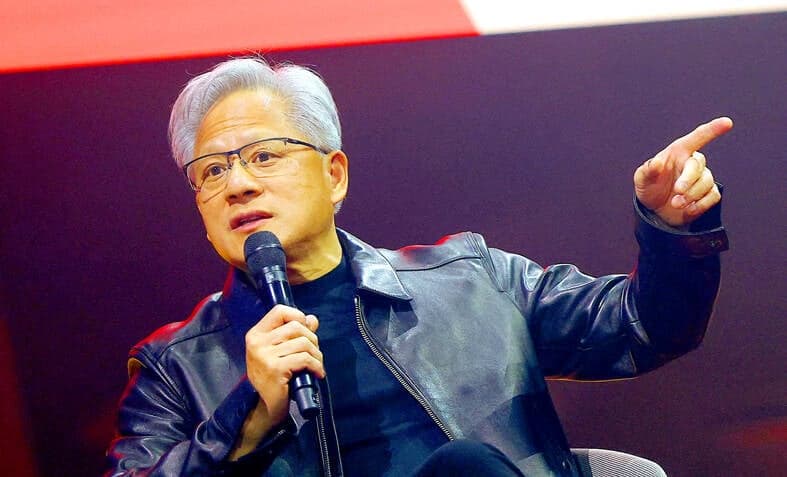
The high-stakes technology confrontation between Washington and Beijing reached a critical turning point following the resignation of Nvidia Chief Executive Officer Jensen Huang, an event that has triggered intense scrutiny over executive networks, espionage risks, and export compliance[1][2]. The controversy erupted following disclosures of Huang's personal ties and romantic relationship with a prominent Chinese businesswoman suspected by Western intelligence agencies of operating on behalf of Beijing's state intelligence apparatus[1][2]. While public statements have maintained that there is no confirmed evidence of direct technology theft or espionage, the episode has exposed the acute vulnerability of corporate leadership at the apex of the global artificial intelligence infrastructure[1]. In Washington, the political fallout has broadened into congressional inquiries and executive review, with the Trump administration floating potential succession candidates, including Apple CEO Tim Cook[3][2].
The crisis has reverberated throughout the Asia-Pacific, prompting a major reassessment in Taipei of Taiwan’s vaunted "silicon shield"[1]. For years, Taiwanese policymakers and international strategists operated under the assumption that the island's near-monopolistic control over advanced semiconductor manufacturing - principally through Taiwan Semiconductor Manufacturing Company (TSMC), Nvidia's foundational fabrication partner - served as an existential security guarantee that would compel Western intervention in any conflict with the People's Republic of China[1]. However, strategic analysts writing in Taipei point out that contemporary espionage relies far less on formal state infiltration than on commercial brokers, social access, and informal elite capture operating in plain sight[1]. The convergence of private commercial interests and state security objectives has weakened the protective barriers of the tech sector[1].
This executive shakeup carries immediate geopolitical implications for global supply chains and high-performance computing trade controls[1][4]. Huang had been an outspoken opponent of overly stringent U.S. export controls, consistently arguing that blanket bans on AI accelerators would simply incentivize China to build an autonomous domestic semiconductor ecosystem while hurting American corporate revenue[1][4]. With Huang removed from Nvidia's helm, the tech industry faces an accelerated push toward aggressive, protectionist export curbs and a swift decoupling of American and allied technology design from the mainland Chinese market[1][4]. Rather than serving as an untouchable diplomatic buffer, the global microchip supply chain is now recognized as a direct vector of great-power intelligence competition[1].
- Nvidia
- Jensen Huang
- Taiwan Semiconductor Manufacturing Company (TSMC)
World & Geopolitics
3 min read
Nvidia CEO Jensen Huang Resigns Amid Chinese Espionage Concerns
Nvidia CEO Jensen Huang has resigned abruptly following an internal probe into his alleged ties with a Chinese businesswoman suspected of espionage for China's Ministry of State Security. While Nvidia's board found no evidence of breached secrets, the incident has intensified national security debates over AI chip supply chains and export controls. CFO Colette Kress has been appointed interim CEO.
Read the full storyFold the full story2 min · 8 sources
The geopolitical battle over global artificial intelligence supply chains and semiconductor supremacy suffered a major tremor when Nvidia co-founder Jensen Huang resigned abruptly as president, chief executive officer, and board member[1][2]. Announced following an extraordinary late-night board meeting, Huang’s departure was precipitated by an independent board-level probe and media disclosures concerning his personal relationship with a Chinese businesswoman, Alice Huang, who is suspected by US intelligence agencies of operating on behalf of China’s Ministry of State Security (MSS) to collect intelligence on advanced AI chip architectures[3][2]. Chief Financial Officer Colette Kress was installed as interim CEO, while former Synopsys CEO Harvey Jones was appointed Nvidia’s first-ever board chair[1][2].
The scandal swiftly broadened into a high-stakes national security dispute across the Pacific[4]. While Nvidia’s board stated it had found no evidence that proprietary technological secrets or national security parameters had been breached, intelligence analysts and defense officials argued the situation laid bare vulnerabilities in corporate counterintelligence[4][1]. For years, Huang had served as the tech industry’s leading advocate against sweeping US export restrictions on advanced microchips, successfully lobbying the Trump administration to permit the export of Nvidia’s specialized H200 chips to the Chinese commercial market despite bipartisan pushback in Washington[1]. The revelations regarding his ties to an executive at Megaspeed, a Singapore-based data center operator and major Nvidia client, ignited fierce debates within the US government over whether export controls had been systematically circumvented[5][3].
Key entities impacted by the fallout include Nvidia’s global leadership, the US Commerce and Defense Departments, intelligence officials in Washington and Beijing, and key international technology partners[3][6]. In Beijing, state officials firmly rejected the spying allegations, characterizing the espionage claims as a politically motivated smear campaign against China’s legitimate commercial partnerships[6][7]. In Washington, senior economic officials including Scott Bessent and Howard Lutnick have clashed publicly over enforcement failures surrounding advanced semiconductor transfers to Chinese buyers[5]. Internationally, the sudden executive vacuum triggered immediate anxiety in allied markets; in Israel, where Nvidia operations account for roughly 18 percent of corporate revenues and substantial local research infrastructure, defense and economic officials voiced alarm over potential shifts in corporate commitments[8].
The geopolitical repercussions are felt most acutely in Taiwan, where commentary on November 13 and 14 warned that Huang’s ouster represents a profound stress test for the island’s celebrated "silicon shield"[4]. Strategic analysts pointed out that informal personal networks, commercial intermediaries, and high-level corporate figures represent prime vectors for state-directed intelligence gathering that bypass formal security perimeters[4]. Nvidia shares plunged more than 7 to 10 percent in immediate market trading, dropping toward $160 and shedding over a third of their value relative to prior peaks[1][3]. Huang’s removal is anticipated to harden Washington’s export enforcement posture, eliminating the semiconductor industry’s most persuasive corporate lobbyist for cross-border engagement and accelerating the bifurcation of the global artificial intelligence technology stack between the Western democratic bloc and China[4][1].
- Nvidia
- Jensen Huang
- Colette Kress
World & Geopolitics
3 min read
China and Thailand Forge Deeper Trade Ties: High-Speed Rail, EVs, and AI Agreements Signed
Chinese Premier Li Qiang and Thai Prime Minister Anutin Charnvirakul met in Bangkok, solidifying bilateral agreements on electric vehicles, AI, semiconductors, and agriculture. A key outcome was reaffirming the 2030 target for the first phase of the high-speed rail project and seeking an expedited upgrade to the China-ASEAN trade agreement. This strategic partnership aims to bolster economic resilience and secure integrated industrial channels in Southeast Asia amid global trade friction.
Read the full storyFold the full story2 min · 9 sources
Chinese Premier Li Qiang and Thai Prime Minister Anutin Charnvirakul concluded extensive bilateral discussions in Bangkok on November 13 and 14, 2026, marking the first official visit by a Chinese premier to Thailand in seven years[1][2]. The state visit culminated in the signing of bilateral agreements and memorandums of understanding spanning electric vehicles (EVs), artificial intelligence, semiconductor collaboration, agricultural trade protocols, customs streamlining, and cross-border security cooperation[3][3][4][5]. During a subsequent bilateral investment roundtable at the Mandarin Oriental in Bangkok, attended by more than 200 senior officials and corporate executives from both nations, Prime Minister Anutin and Premier Li formally reaffirmed a firm 2030 operational target for the first phase of the landmark Thai–Chinese high-speed railway and called for an expedited upgrade to the regional China–ASEAN trade agreement[2].
The bilateral push comes amid evolving geopolitical pressures and persistent global supply chain fragmentation[3]. Prime Minister Anutin had previously traveled to Beijing in July 2026, making the Bangkok summit an exchange of prime ministerial visits within a four-month span[4][6]. With rising tariff walls and trade scrutiny from Western markets, Beijing is aggressively securing integrated industrial channels in Southeast Asia[7][8]. Thailand, meanwhile, has pursued an aggressive industrial roadmap to establish itself as the premier manufacturing and export hub for next-generation automobiles and digital infrastructure within the Association of Southeast Asian Nations (ASEAN)[3].
The talks featured top leaders and institutional delegations from both sides[2]. Thai Prime Minister and Interior Minister Anutin Charnvirakul was flanked by deputy prime ministers and heads of trade agencies, while Chinese Premier Li Qiang led senior ministerial delegates overseeing commerce, transport, and technology[3][2][9]. The signed agreements establish fresh export frameworks for Thai agricultural goods - notably durian and snake fruit - and expand operational access for Chinese advanced manufacturing enterprises, EV makers, and digital service firms operating in Thailand's Eastern Economic Corridor[3][5]. Both governments also agreed to activate high-level coordination mechanisms, including the "2+2" strategic dialogue between their foreign and defense ministers, while coordinating closely within multilateral forums like the Lancang-Mekong Cooperation, APEC, and the World Trade Organization[3].
The implications for international commerce and regional trade connectivity are substantial. Reaffirming the 2030 completion timeline for the first leg of the high-speed rail line binds Thailand directly into China's Belt and Road rail corridor running south from Kunming through Laos[2][4]. This infrastructure substantially lowers freight transport times and trade costs across Southeast Asia. Furthermore, Thailand's commitment to providing a receptive regulatory framework for Chinese automotive and technology capital offers Beijing a crucial offshore conduit to manufacture and re-export high-value green technologies, circumventing bilateral Western trade barriers and intensifying competition with traditional regional investors such as Japan and South Korea[3][8][1].
Notable reactions from the summit stressed shared economic resilience[2]. Prime Minister Anutin addressed corporate attendees by stating that the bilateral partnership must transcend traditional diplomatic courtesies to focus on joint investment, noting that no single nation can navigate demographic shifts, technological transitions, and climate targets in isolation[2]. Premier Li echoed this stance, asserting that closer coordination between the second-largest economy in the world and Southeast Asia's second-largest market would deliver concrete economic certainty to global markets amid an increasingly volatile international landscape[3].
- Li Qiang
- Anutin Charnvirakul
- China
World & Geopolitics
2 min read
China Connects Poles via GuoWang Network, Demonstrating Arctic Icebreaker Communication Milestone
China has achieved a significant breakthrough in polar communications by establishing a stable, high-bandwidth satellite link between its Arctic icebreaker *Ji Di* and its Antarctic Qinling Station, utilizing the burgeoning GuoWang low-Earth-orbit constellation. This demonstration marks the first time personnel in the polar regions have been directly connected with China's terrestrial bases and maritime facilities, showcasing the network's capability for seamless data, voice, and video transmission.
Read the full storyFold the full story1 min · 4 sources
China achieved a milestone in polar communications and dual-use aerospace infrastructure when the polar research icebreaker Ji Di (Polar), deployed on China's 16th Arctic expedition, established the first low-latency, high-bandwidth satellite link bridging the Earth's extreme polar regions[1]. Operating along the Northern Sea Route, the Ji Di conducted seamless video, voice, and data transmissions connecting personnel in the Arctic directly with China’s Qinling Station in Antarctica, a high-altitude observation base on the Qinghai-Tibet Plateau, and maritime coordination facilities in Qingdao[1]. The breakthrough trial utilized China's burgeoning GuoWang low-Earth-orbit (LEO) satellite constellation, which has placed more than 180 spacecraft in orbit since launches accelerated in late 2024 to create a sovereign domestic alternative to Western satellite mega-constellations like SpaceX’s Starlink[1].
The demonstration represents a strategic advancement for Beijing’s "Polar Silk Road" initiative[1][2]. The polar regions have historically suffered from severe satellite blind spots due to the orbital geometry of conventional geostationary communication systems, creating acute communication bottlenecks for Arctic commercial transit, scientific telemetry, and military command networks[1]. By demonstrating high-definition video consultations and real-time medical support between icebreakers and terrestrial hospitals, Beijing has validated that the GuoWang network can provide continuous, high-throughput coverage across the Arctic Ocean and Antarctic landmass[1]. The achievement illustrates the maturation of China’s dual civil-military scientific posture in the Far North, where platforms like the Ji Di operate in tandem with advanced polar research installations[1][3].
The long-term geopolitical reverberations of an independent Chinese polar satellite network are substantial[1]. As climate change steadily diminishes polar sea ice, the Arctic passage represents an increasingly viable, shorter maritime conduit between East Asia and European markets that circumvents vulnerable southern maritime chokepoints[3][4]. Western defense analysts emphasize that high-bandwidth polar connectivity forms the foundation for persistent maritime domain awareness, automated surface navigation, and submarine communications across the Arctic basin[2][3]. By achieving operational capability across both poles, China has disrupted Western reliance on proprietary communications architectures in extreme latitudes, cementing Beijing's role as an indispensable actor in Arctic governance, scientific intelligence, and commercial transit corridor management[1][3].
- China
- GuoWang
- Ji Di
World & Geopolitics
3 min read
IAEA Raises Alarm Over Iran Nuclear Program Access Void at Isfahan Facility
The International Atomic Energy Agency (IAEA) has expressed grave concern over Iran's refusal to grant inspectors access to the newly declared Isfahan Fuel Enrichment Plant (IFEP). The agency lacks crucial visibility into the facility's coordinates, operational status, and whether nuclear material is present. This follows damage to Iran's primary enrichment sites from a joint US-Israeli military campaign, after which Tehran has systematically barred IAEA access to sensitive installations.
Read the full storyFold the full story2 min · 10 sources
A confidential report issued by the International Atomic Energy Agency (IAEA) on Friday, November 13, revealed that the United Nations nuclear watchdog has lost critical visibility into Iran’s nuclear program[1][2]. The IAEA stated it is "increasingly concerned" over Tehran’s refusal to grant inspectors access to the newly declared Isfahan Fuel Enrichment Plant (IFEP)[2][3]. The agency confirmed to member states that it does not know the facility’s precise coordinates, its operational status under international safeguards, or whether nuclear material is currently housed inside the underground site[2][3]. The agency also warned that it has been unable to ascertain the status or location of Iran’s estimated 440-kilogram stockpile of uranium enriched to 60 percent purity - a threshold situated dangerously close to weapons-grade levels[4][5].
The impasse stems from the aftermath of the 12-day military campaign conducted in June 2025 by Israel and the United States, which inflicted severe damage on Iran’s primary enrichment complexes at Natanz and Fordow[2][6]. Tehran declared the existence of the Isfahan facility on June 12, 2025, exactly one day before strikes targeted tunnel entrances at the Isfahan nuclear complex, preventing scheduled IAEA inspections[2]. Since that campaign, Iran has systematically barred IAEA inspectors from visiting any damaged nuclear installations, citing security concerns and arguing that standard monitoring protocols cannot function under ongoing foreign aggression[2][7]. IAEA Director General Rafael Grossi has previously noted that a significant volume of Iran’s highly enriched uranium is suspected to be stored within the heavily fortified Mount Kolang tunnel network at Isfahan[2][5].
The confrontation involves IAEA leadership, the Iranian government, and defense officials in Washington and Jerusalem[8][2]. On November 13 and 14, Iran’s diplomatic and security apparatus mounted a defiant public pushback[9][7]. Iran’s Permanent Mission to the UN Office in Vienna issued a statement condemning the IAEA Board of Governors' resolutions as legally flawed and ultra vires, maintaining that "normal safeguards implementation cannot and will not resume under abnormal circumstances" created by US and Israeli strikes[7]. Concurrently, Iranian security chief Mohsen Rezaei delivered televised remarks warning that Tehran will not permit even a single particle of enriched material to leave Iranian soil and vowed severe retaliation against any prospective military operations[9]. In Washington, the administration maintained an ambiguous posture; Defense Secretary Pete Hegseth recently asserted that more than 80 percent of Iran’s nuclear industrial base was eradicated during earlier operations, while President Trump downplayed the urgency of negotiating a formal settlement, even as the State Department offered up to $20 million for actionable intelligence on Iranian nuclear sites[8][4].
The IAEA’s inability to verify the non-diversion of Iranian fissile material significantly amplifies the danger of renewed preemptive military conflict in the Middle East[1][4]. The Board of Governors’ earlier referral of Iran to the UN Security Council marks the first formal noncompliance referral in two decades, yet the absence of baseline data leaves Western intelligence agencies guessing whether Tehran is covertly completing the weaponization of its remaining enriched stockpiles[4]. The breakdown in inspections has also prompted regional security realignments, with the US State Department issuing updated security advisories across Saudi Arabia due to persistent missile and drone threats from Iranian-aligned Houthi forces in Yemen[10].
- IAEA
- Iran
- Isfahan Fuel Enrichment Plant
World & Geopolitics
2 min read
IAEA Warns of Uninspected Isfahan Nuclear Site Amidst Middle East Logistics Fragmentation
The International Atomic Energy Agency (IAEA) has issued a severe proliferation warning concerning Iran's Isfahan Fuel Enrichment Plant (IFEP), which has remained uninspected for over a year following military strikes. Iran has denied access to inspectors, leaving the operational status and capacity of the facility unknown, which significantly hinders the agency's ability to verify uranium stockpiles. This alert coincides with disruptions to Middle East energy logistics due to ongoing regional conflicts.
Read the full storyFold the full story2 min · 6 sources
The International Atomic Energy Agency (IAEA) sounded a severe proliferation warning after reporting that Iran's declared Isfahan Fuel Enrichment Plant (IFEP) has remained completely uninspected and unmonitored for over a year[1]. The underground installation, declared by Tehran last year, fell entirely outside international oversight following the military strikes that hit Iranian nuclear infrastructure in June 2025[1][2]. The IAEA confirmed that its inspectors were barred from entering the site on a scheduled mission that coincided with the bombing campaign, and Iranian authorities have continuously refused access ever since[1]. Agency officials emphasized that the exact operational status, equipment inventory, and centrifuge capacity at Isfahan remain unknown, severely undermining the agency's ability to verify Iran’s stockpiles of highly enriched uranium[1]. Tehran has countered by asserting that comprehensive nuclear monitoring cannot resume while the country remains subject to ongoing military threats and maritime sanctions[2][3].
The watchdog’s alert comes against the backdrop of an evolving regional shadow conflict that has disrupted Persian Gulf energy security[4][3]. Ongoing clashes, drone incursions, and naval mine attacks near the Strait of Hormuz - which historically handled 20% of global seaborne crude - have prompted oil producers to reconfigure critical logistics routes[4][3]. In a notable development on November 13, Iraq accelerated crude oil exports overland via long-distance tanker truck convoys, moving shipments out of Basra across Syria to the Mediterranean terminal of Baniyas[5][6]. Simultaneously, Saudi state energy giant Aramco has initiated expansion work on its East-West pipeline system, aiming to ramp up throughput capacity toward 10 million barrels per day to bypass vulnerable Gulf waterways entirely[4].
The conjunction of unmonitored nuclear activities and rerouted hydrocarbon supply chains illustrates a profound structural fragmentation across the Middle East[1][4]. With the IAEA blind to developments within Isfahan's enrichment halls, Western intelligence agencies and regional adversaries face an acute information deficit regarding Iran’s weaponization breakout timeline[1]. Concurrently, the revival of unconventional overland crude routes through Syria and the fortification of trans-peninsular bypass systems underscore that sovereign states are actively preparing for prolonged maritime chokepoint interdictions[6][4]. This shift risks entrenching parallel, sanctions-resistant logistics corridors while significantly elevating the danger of preemptive military action against unmonitored Iranian nuclear facilities[1][4].
- IAEA
- Iran
- Isfahan Fuel Enrichment Plant (IFEP)
World & Geopolitics
2 min read
Solar Geoengineering Risks Global Conflict as Governance Lags Behind Technological Advance
A new study warns that the rapid advancement of Stratospheric Aerosol Injection (SAI) technology, aimed at cooling the planet, is outpacing the development of global governance structures. The research highlights that unilateral deployment by a single nation or private entity poses an imminent risk of international conflict due to unpredictable and uneven atmospheric consequences, potentially destabilizing weather patterns worldwide.
Read the full storyFold the full story1 min · 3 sources
The intersection of private capital, frontier climate science, and national security competition was placed into sharp relief following the publication of an international foresight study titled Towards Governance of Climate Cooling Approaches[1]. Authored by Dr. Trish Lavery of the Centre for Future Generations as part of the SAFEGEOGOV initiative, the analysis warns that the technology behind Stratospheric Aerosol Injection (SAI) - the intentional dispersal of reflective sulfur dioxide or engineered aerosols into the upper stratosphere to cool the planet - is progressing far faster than the legal and diplomatic institutions required to govern it[1][2][2]. With venture-backed startups and research syndicates racing toward field-scale testing within the next decade, the study outlines four distinct geopolitical scenarios for 2036, arguing that unilateral deployment by a single state or private consortium poses an imminent risk of global conflict[1][3].
The technological acceleration comes as security planners in both Washington and Beijing begin evaluating atmospheric modification through the lens of state sovereignty and strategic defense[1]. Because solar radiation modification is asymmetric and relatively inexpensive compared to systemic decarbonization, a single wealthy country or non-state actor could theoretically launch a solar geoengineering campaign using high-altitude aircraft or specialized balloons[1]. However, the atmospheric consequences of such interventions do not conform to national borders[1]. Uneven sulfur distribution risks destabilizing seasonal monsoons in South Asia, disrupting hydrological cycles in Sub-Saharan Africa, and depressing agricultural output across the Global South[1].
The total absence of a binding international treaty leaves a critical legal vacuum[1]. In the event of agricultural collapse or catastrophic droughts suspected to stem from an atmospheric intervention, affected states would have no institutional mechanism to adjudicate attribution or seek restitution[1]. National security experts highlight that atmospheric cooling could easily become weaponized or interpreted as hostile environmental modification[1]. As climate-driven weather shocks intensify, the race to alter the stratosphere threatens to trigger a new domain of gray-zone confrontation, where sovereign control over the skies becomes as fiercely contested as traditional territorial borders[1].
- Stratospheric Aerosol Injection (SAI)
- Dr. Trish Lavery
- Centre for Future Generations
World & Geopolitics
2 min read
UAE Linked to $74 Billion in Illicit Conflict Gold, Swissaid Report Warns of Watchlist Risks
A Swissaid investigation revealed that the UAE imported approximately 591 metric tons of illicit gold, valued at $74 billion, from conflict zones and illegal mining operations. Despite recent regulations, the report indicates lax enforcement by UAE-based traders and refiners. The findings suggest the UAE remains a primary transit hub for smuggled bullion, potentially financing armed insurgencies.
Read the full storyFold the full story2 min · 4 sources
A comprehensive investigative report released on November 13, 2026, by the Bern-based international development and aid organization Swissaid revealed that the United Arab Emirates remains a primary destination for illicit gold smuggled from active war zones, despite regulatory crackdowns enacted by authorities in Abu Dhabi and Dubai[1][2]. The findings, confirmed across global wire services, documented that at least 591 metric tons of illicit gold valued at an estimated $74 billion entered the UAE over a single review cycle[2]. According to the investigation, smuggled bullion originating from conflict zones, sanctions-targeted regimes such as Russia, and illicit extraction operations across Africa accounted for roughly 42% of the UAE's total gold import volume[2].
The report lands after years of heightened multilateral scrutiny over the UAE's bullion trading sector[2]. Following aggressive pressure from the Financial Action Task Force (FATF) and European regulators regarding money laundering and terror financing vulnerabilities, the Emirati government introduced new responsible sourcing regulations and stringent supply chain due-diligence mandates intended to overhaul the sector[3][2]. Despite these legal mechanisms, Swissaid’s field investigation and customs audit concluded that enforcement remains markedly lax, with numerous UAE-based gold refiners, intermediaries, and physical commodity traders routinely flouting traceability rules[1][2].
Key entities and actors highlighted in the investigative release include Swissaid lead researcher Marc Ummel, artisanal and conflict mining operations across Mali, Sudan, and Yemen, and regional gold trading houses operating within Dubai's physical metal exchanges[1][4][2]. The report specifically identifies the UAE's position as the world’s second-largest exporter of refined gold after Switzerland, serving as the core processing and transit gateway that feeds clean bullion into major international consumer and investment markets, including Switzerland, India, and China[3][2].
The fallout from these findings carries serious potential ramifications for international bullion supply chains and the UAE's broader standing in global finance[1][3]. Swissaid officially recommended that international oversight bodies and regulatory authorities place the UAE back on formal global financial watchlists for systemic financial wrongdoing and sanctions evasion[1][2]. A return to greylist status would compel global correspondent banks, institutional asset managers, and corporate buyers to enact punitive compliance premiums on transactions routed through the Emirates, dampening foreign direct investment and disrupting physical precious metal liquidity[3][2].
International anti-corruption monitors and human rights advocates emphasized that the laundering of conflict gold directly finances armed insurgencies, state-sponsored violence, and paramilitary groups across Sub-Saharan Africa and the Middle East[1][2]. The findings also place immense regulatory pressure on European luxury brands, Swiss refining houses, and central banks to re-evaluate procurement practices and tighten third-party audits of all physical gold flows originating from Gulf transit hubs[3][2].
- Swissaid
- United Arab Emirates
- Financial Action Task Force
World & Geopolitics
2 min read
Turkey and Qatar Sign Mutual Defense Pact Amidst Middle East Regional Security Fractures
Turkey and Qatar have signed a bilateral mutual defense agreement in Istanbul, formalizing long-standing security ties and establishing mutual assistance commitments. The pact aims to deepen military coordination, safeguard territorial integrity, and prevent the resurgence of regional armed conflict. This move occurs amidst heightened anxiety over potential contagion from confrontations involving Iran and its proxies, impacting Gulf states.
Read the full storyFold the full story2 min · 4 sources
In a significant realignment of Gulf and Middle Eastern defense architecture, Turkish President Recep Tayyip Erdogan and Qatari Emir Sheikh Tamim bin Hamad al-Thani signed a bilateral mutual defense agreement on Friday, November 13, in Istanbul[1]. In an official communication released by the Turkish presidency, the two governments affirmed that the mutual defense arrangement is designed to deepen military coordination, safeguard territorial integrity, and prevent the resurgence of wide-scale regional armed conflict across the Persian Gulf[1]. The pact formalizes long-standing security ties between Ankara and Doha, establishing mutual assistance commitments during a period of acute vulnerability for Gulf states[1].
The context surrounding the pact reflects mounting anxiety over potential regional contagion stemming from the protracted US and Israeli confrontations with Iran and its regional proxies[2][1]. Over the preceding months, Gulf states have witnessed increased military strikes and threats to energy shipping and civilian infrastructure, highlighted by recent drone and missile activities orchestrated by Iranian-backed Houthi forces operating from Yemen[3][4]. Both Turkey and Qatar have sought to insulate their energy corridors and domestic assets from the risk of retaliatory escalation, especially as traditional Western defense guarantees face scrutiny amid broader diplomatic shifts[1].
The agreement brings together two regional actors possessing significant diplomatic and economic weight[1]. Erdogan's government, which has balanced its role as a NATO member with an assertive, independent foreign policy across the Caucasus, the Levant, and North Africa, has increasingly positioned the Turkish military defense industry as an alternative security partner for Gulf monarchies[1]. For Sheikh Tamim and Qatar, the alliance reinforces Doha’s defense guarantees at a time when Gulf cooperation mechanisms remain strained and mediator nations face intense pressure from conflicting regional power centers[1]. In their joint declaration, both leaders underscored their commitment to using collective defense mechanisms to dissuade aggression while urging warring regional parties to return to diplomatic dispute resolution[1].
The strategic implications of the Turkey-Qatar defense pact are substantial, establishing a distinct security pole in the Middle East that operates outside the direct control of Washington or Riyadh[1]. As regional actors evaluate the likelihood of resumed strikes against Iranian installations and monitoring around the Red Sea maritime corridors deteriorates, bilateral defense alliances are superseding broader multilateral frameworks[2][1][4]. The agreement signals that key regional powers are actively hedging against an unpredictable regional security environment, reinforcing their defensive posture to navigate sudden shocks to global energy supplies and maritime trade routes[2][1].
- Turkey
- Qatar
- Recep Tayyip Erdogan
World & Geopolitics
2 min read
US Wholesale Inflation Surges to 6.5%, Downgrading Rate-Cut Hopes and Shaking Markets
US producer prices unexpectedly rose in October 2026, pushing the annual wholesale inflation rate to 6.5%, the highest since November 2022. This surge, driven by persistent input costs and supply chain issues, contradicts market expectations of a steady disinflationary trend and a swift cycle of interest rate cuts by the Federal Reserve. The data has prompted a repricing of financial assets globally.
Read the full storyFold the full story2 min · 6 sources
Wholesale price growth in the United States accelerated sharply, according to official data released on Friday, November 13, 2026, by the U.S. Bureau of Labor Statistics[1]. The Producer Price Index (PPI) for final demand rose 0.3% month-over-month in October, driving the 12-month headline rate up to 6.5%[1]. The print marks the fastest annual pace of wholesale inflation recorded since November 2022, severely disrupting broader market assumptions of a smooth disinflationary path toward the Federal Reserve’s targets[1].
The resurgence in producer-level prices arrives against the backdrop of shifting fiscal dynamics following the 2026 U.S. midterm elections, compounding existing frictions across industrial manufacturing and global logistics[2][1]. Throughout mid-2026, market participants and corporate executives had increasingly priced in a consistent cycle of monetary easing, expecting cooling domestic demand to suppress wholesale pricing pressures[2][3]. However, persistent input costs in raw industrial commodities, domestic transport, and components have filtered upstream, demonstrating that supply chain reconfigurations and trade friction are continuing to inject cost inflation directly into factory gates[2][1].
The data release immediately shifted expectations across capital markets and currency exchanges[2]. Institutional fixed-income desks and equity trading floors witnessed immediate repricing, with benchmark U.S. Treasury yields fluctuating sharply as traders dialed back the likelihood of near-term rate reductions by the Federal Reserve[2]. On equity bourses, capital-intensive and rate-sensitive sectors - including tech manufacturing, industrial equities, and speculative growth names - faced selling pressure, while the U.S. dollar index saw renewed upward support against major trading pairs[4][2].
The implications of sticky U.S. wholesale inflation extend well beyond domestic borders[2][1]. A higher-for-longer interest rate stance by the Federal Reserve preserves wide yield differentials, sustaining dollar strength against both advanced and emerging market currencies[4][2]. This dynamics raises foreign-exchange import bills for developing economies, increases debt-servicing costs on dollar-denominated sovereign and corporate obligations, and constrains the monetary policy flexibility of central banks across Europe, Latin America, and Asia, which risk currency depreciation if they ease rates prematurely[5][4][6].
Market analysts and economic strategists highlighted that wholesale inflation tends to operate as a leading indicator for core consumer price metrics[1]. The sustained 6.5% year-over-year climb indicates that manufacturers and intermediate goods distributors are continuing to pass elevated overhead costs along the supply chain[1]. With corporate margins already tested by geopolitical realignments and wage stability, economists warned that central banks face an increasingly narrow corridor between avoiding a manufacturing slowdown and preventing a secondary wave of persistent, structural inflation[5][1].
- U.S. Bureau of Labor Statistics
- Federal Reserve
- U.S. dollar
World & Geopolitics
2 min read
FAA Communications Failure Sparks Nationwide Ground Stop, Halting U.S. and Transatlantic Flights
A catastrophic communications failure across all 22 FAA regional air traffic control centers forced an unprecedented nationwide ground stop on U.S. flights. The incident quickly escalated, leading EUROCONTROL to halt European departures to the U.S. Concurrently, the National Weather Service reported widespread internet and communications outages. Federal agencies found no evidence of a cyberattack.
Read the full storyFold the full story2 min · 8 sources
The Federal Aviation Administration ordered an extraordinary nationwide ground stop on the afternoon of Friday, November 13, 2026, halting departing flights across the United States in response to a catastrophic communications failure that crippled all 22 regional air traffic control centers[1][2]. The operational collapse quickly escalated into an international crisis when European air traffic coordinator EUROCONTROL halted departures from European airspace bound for the United States at the FAA's request[3]. Adding to the operational disarray, the National Weather Service reported nationwide internet and communications failures just hours later, knocking out public access to critical meteorological systems and warning platforms[4].
The systemic outage struck at a time of heightened federal scrutiny regarding the resilience of critical transportation infrastructure[1][2]. The nationwide ground stop represents the most severe federal air-traffic paralysis since January 2023, when a corruption error in the FAA’s Notice to Air Missions (NOTAM) system froze departures across the country[2]. The communications failure occurred despite a $12.5 billion federal modernization program authorized by the U.S. Congress specifically to replace legacy air traffic control equipment with resilient digital networks[2].
The disruption mobilized senior federal leadership and global aviation operators[5][1][2]. Transportation Secretary Sean Duffy directed technicians to locate the core network fault, while Homeland Security Secretary Markwayne Mullin issued a public statement clarifying that federal agencies had found no evidence of an intentional cyberattack or national security breach[1][2]. Airlines worldwide, including Delta Air Lines, Air France, KLM, Korean Air, and Virgin Atlantic, issued emergency travel waivers and scrambled to manage thousands of grounded aircraft and stranded travelers[5]. Simultaneously, major software and cloud vendors, including Microsoft, moved to address public inquiries and clarify cloud stability following contemporaneous disruptions in business communications software[6][7][8].
The economic and commercial consequences of the shutdown were immediate and severe[1][3][2]. Beyond the millions of affected passengers, the paralysis disrupted global time-sensitive air cargo, corporate supply lines, and just-in-time shipping across North America and Europe[3][2]. International carriers faced operational cascading costs, including crew time expirations, fuel diversions, and aircraft repositioning expenses[5][3]. The incident also triggered immediate volatility across airline equities and prompted aviation logistics firms to reassess vulnerabilities in American transport nodes[1][2].
Aviation analysts and transportation logistics experts described the event as a glaring demonstration of single-point-of-failure vulnerabilities in critical global infrastructure[1][4][2]. Congressional committees signaled plans for immediate oversight hearings to examine how a localized communications fault could disable the country's entire regional control architecture, demanding answers on why redundant fail-safe systems failed to isolate the problem before it severed international air corridors[3][2].
- Federal Aviation Administration
- EUROCONTROL
- National Weather Service
Section 3 of 4
City News
17 stories · 8 min skim
City News
2 min read
University of Toronto Rejects Campus Equity Report on Policing and Discrimination
The University of Toronto has formally rejected a detailed internal report that identified widespread concerns regarding the treatment of Muslim, Arab, and Palestinian students and staff, citing "over-policing and under-protecting." The university administration stated it could not endorse the report's recommendations, arguing they contained political commentary and conflicted with existing standards. The rejection has drawn sharp criticism from academic and civil society groups.
Read the full storyFold the full story1 min · 2 sources
The University of Toronto administration formally rejected a comprehensive, nearly 300-page internal equity report that uncovered widespread concerns regarding the institutional treatment of Muslim, Arab, and Palestinian students, faculty, and staff[1]. The report, compiled by an internal working group following consultations with 85 individuals and focus groups alongside 525 community survey responses, concluded that there is a "general pattern of over-policing and under-protecting" of these groups across the university’s St. George, Mississauga, and Scarborough campuses[1].
The document, which delivered 57 specific recommendations, outlined systemic double standards regarding campus security, the suppression of academic events, speech restrictions, and heavy-handed enforcement against student assemblies - referencing tensions following the administration’s legal dismantling of a pro-Palestinian protest encampment[1]. In its formal written response, however, U of T administration announced that it could not endorse the report or adopt its recommendations, asserting that the authors departed from typical equity reviews by offering lengthy political commentary on foreign conflicts, while advancing recommendations that conflict with existing collective bargaining agreements and academic freedom standards[1][1].
The university’s outright dismissal of the findings drew immediate and sharp pushback from academic associations and civil society groups[2]. Representatives from the Muslim Community's Research Observatory publicly denounced the decision, stating that the university’s refusal to accept recommendations from a working group it commissioned serves as institutional validation of the report’s claims of marginalization[2]. While rejecting the formal recommendations, the university committed to implementing unilateral internal measures, such as providing additional anti-discrimination workshops for staff and expanding campus Muslim prayer spaces[2].
The confrontation highlights acute governance and safety fault lines across Ontario’s largest post-secondary institution[1]. The dispute carries immediate implications for campus climate, student safety, and security operations across the GTA, with student groups warning that the dismissal of the report’s policing criticisms will deepen distrust between campus safety officers and minority student bodies during future demonstrations[1][2].
- University of Toronto
- Muslim Community's Research Observatory
- St. George Campus
City News
2 min read
Ministers Meet in Toronto to Tackle Homelessness Crisis and Winter Shelter Shortages
Federal, provincial, and territorial housing ministers convened in Toronto for a summit focused on addressing the escalating homelessness crisis and critical shortages in winter shelter capacity. Co-chaired by federal and Ontario housing ministers, the forum discussed intergovernmental resource deployment to support municipalities, expand transitional housing, and prevent shelter system collapses as colder weather approaches. Discussions highlighted the urgent need to distribute federal funding streams like the Canada Housing Benefit and Reaching Home initiative.
Read the full storyFold the full story1 min · 2 sources
Federal, provincial, and territorial ministers responsible for housing and emergency accommodations gathered in Toronto for a high-level summit to address escalating shelter shortages and the growing crisis of homelessness[1]. The Federal, Provincial and Territorial (FPT) Forum on Housing and Homelessness was co-chaired by federal Minister of Housing and Infrastructure Gregor Robertson and Ontario Minister of Municipal Affairs and Housing Rob Flack[1]. The discussions centered on deploying intergovernmental resources to prevent winter shelter collapses, support municipalities, and expand transitional and non-market housing across Canadian urban centres[1].
The summit took place against the backdrop of acute seasonal pressures across the Greater Toronto Area, where municipal shelter networks are operating at near-total capacity[2]. Forum participants reviewed federal funding allocations totaling $44.7 billion over 11 years, emphasizing the urgent need to renew and distribute key funding streams including the Canada Housing Benefit ($5.6 billion over 10 years) and the Reaching Home homelessness initiative ($6.5 billion over 10 years)[1]. Discussions between Ontario provincial leadership and Ottawa focused on the logistical difficulties municipalities face as colder weather approaches, including the proliferation of outdoor encampments and the financial strain placed on local emergency service providers[1][2].
The meeting follows the City of Toronto’s rollout of its 2026–2027 winter services plan, which attempts to introduce 500 emergency shelter spaces between mid-November and mid-April to keep vulnerable populations from succumbing to extreme temperatures[2]. Municipal leaders across the GTA have repeatedly warned that city resources alone cannot manage the dual pressures of economic displacement and migrant intake without coordinated operational backing from Queen's Park and Ottawa[1][2].
For residents across Toronto and surrounding regions, the intergovernmental forum represents a critical test of whether high-level funding commitments can translate into immediate frontline relief[1]. Municipalities are preparing for aggressive outreach efforts to divert individuals into indoor shelter settings, a public safety priority aimed at avoiding winter fatalities, mitigating encampment fire hazards, and maintaining order in public parks and downtown transit corridors[1][2].
- Federal, Provincial and Territorial (FPT) Forum on Housing and Homelessness
- City of Toronto
- Gregor Robertson
City News
2 min read
Federal, Provincial Ministers Meet to Streamline $44.7 Billion Housing Investment for Homelessness Reduction
Federal, provincial, and territorial housing ministers convened in Toronto to strategize the implementation of $44.7 billion in federal funds aimed at expanding non-market housing and reducing homelessness. The joint communiqué from the FPT Forum on Housing and Homelessness outlines a plan to deploy these investments over 11 years. Discussions focused on aligning capital with municipal zoning and infrastructure financing to accelerate the construction of supportive housing and community housing stock.
Read the full storyFold the full story2 min · 6 sources
Federal, provincial, and territorial ministers responsible for housing and homelessness gathered in Toronto for the Federal, Provincial, and Territorial (FPT) Forum on Housing and Homelessness[1]. Co-chaired by Canada’s Minister of Housing and Infrastructure and Ontario Minister of Municipal Affairs and Housing Rob Flack, the summit concluded with a joint communiqué outlining intergovernmental strategy to implement newly designated funds from the 2026 federal budget[1]. The discussions centered on deploying $44.7 billion in planned federal investments over an 11-year timeline aimed at expanding non-market housing stock, reducing street-level homelessness, and restructuring intergovernmental funding mechanisms[1].
The meeting comes at a critical juncture for the Greater Toronto Area, where municipal systems are bracing for the onset of winter while navigating shifts in shelter demand and non-market housing construction[2]. While regional emergency shelter pressures have seen moderate reductions following revisions to federal immigration and refugee claimant intake programs, Toronto continues to operate near emergency thresholds, maintaining plans to activate over 1,500 winter surge shelter spaces across the city[2]. Regional leaders emphasized during the summit that short-term shelter responses must be systematically replaced by permanent supportive housing and accelerated community housing infrastructure[3][1].
Key stakeholders at the summit underscored the urgent necessity of renewing and expanding the Canada Housing Benefit to keep low-income households housed as private-market affordability remains stretched[1]. Minister Rob Flack and municipal representatives highlighted that capital allocation from senior levels of government must directly align with municipal zoning permissions and infrastructure financing[4][1]. The co-chairs noted that addressing the country's housing crisis requires synchronizing federal capital with provincial delivery channels to ensure funds translate directly into physical shovel-in-the-ground developments across southern Ontario[1].
The outcome of the forum carries significant implications for municipalities across the Greater Toronto Area, which are currently finalizing their respective municipal budgets[5]. The coordinated focus on non-market housing and supportive units provides public housing authorities and non-profit housing providers with clearer visibility into capital subsidy pipelines[1]. As municipal councils across the region balance infrastructure debt and shelter costs, local policymakers expressed cautious optimism that formalized FPT coordination will accelerate the delivery of high-density social infrastructure on government-owned lands[6][1].
- Federal Housing Ministers
- Provincial Housing Ministers
- Territorial Housing Ministers
City News
2 min read
Multiple Violent Incidents and Collisions Across GTA Prompt Police Investigations
A series of serious violent encounters and severe vehicle collisions across the Greater Toronto Area has led to intensive police investigations. Incidents include a stabbing in Cabbagetown, a hate-motivated assault in the city's west end, a pedestrian hit-and-run in Markham, and a collision involving a police cruiser in Bradford West Gwillimbury. These events have heightened public concern over safety in urban and suburban areas.
Read the full storyFold the full story2 min · 9 sources
Urban public safety across the Greater Toronto Area was marked by several serious violent encounters and vehicle collisions, prompting intensive police investigations and oversight mandates[1][2]. In downtown Toronto, emergency services responded shortly before 5:00 p.m. to the intersection of Sackville and Spruce Streets in Cabbagetown after receiving emergency calls regarding a violent dispute[3]. Toronto Police officers discovered a man in his 30s suffering from serious stab wounds sustained during an altercation[3]. The victim was treated by paramedics and rushed to hospital, while the assailant fled the scene on foot, leaving downtown investigators to canvas neighborhood surveillance footage[3].
Concurrently, the Toronto Police Counter-Terrorism and Hate Crime units processed the arrest of 31-year-old Ellan Michelle Wood following an unprovoked, hate-motivated assault in the city's west end[4]. Police allege that the incident occurred near Lansdowne Avenue and Dupont Street, where a woman walking her dog was approached by the accused, who hurled aggressive anti-transgender slurs, issued verbal threats to kill the victim, and physically attacked her[4]. While the victim escaped physical injury, Wood was taken into custody and formally charged with assault motivated by hatred, uttering threats motivated by hatred, and breaches of a release order and probation[4][5].
Road and pedestrian safety concerns were further punctuated by two severe vehicle incidents across the GTA[6][7]. In Markham, York Regional Police's Major Collision Investigation Unit launched an appeal for witnesses after an 80-year-old pedestrian was struck by a vehicle at the intersection of Warren Bradley Street and Stonebridge Drive[6][8]. The elderly man remains in critical, life-threatening condition in hospital while detectives analyze dashcam footage[8]. North of the GTA, Ontario's police oversight body, the Special Investigations Unit (SIU), invoked its mandate after a collision involving a South Simcoe Police cruiser and a civilian vehicle at Line 8 and Summerlyn Trail in Bradford West Gwillimbury left one person hospitalized with serious injuries[7].
These concurrent events have amplified resident anxieties over public realm safety, traffic enforcement, and street encounters in both core urban neighborhoods and suburban transit corridors[9][4]. Community leaders and local representatives continue to press municipal police boards and transit authorities for elevated physical presence and proactive de-escalation strategies across high-density residential and pedestrian zones[9].
- Greater Toronto Area
- Toronto Police Service
- York Regional Police
City News
2 min read
Canada Overhauls Airport Security After Pearson Drug-Trafficking Probe
The federal government is implementing major reforms to Canadian airport security protocols following an investigation revealing how organized crime exploited baggage systems at Toronto Pearson International Airport. New legislation aims to close vulnerabilities in tarmac access, baggage handling, and staff clearances. The reforms follow a report detailing a "bag-tag switching" scheme where illicit drugs were placed in luggage belonging to unsuspecting travelers, leading to their detention abroad.
Read the full storyFold the full story2 min · 1 source
The federal government announced sweeping reforms to Canadian airport security protocols following an investigative report detailing how organized crime networks exploited internal baggage systems at Toronto Pearson International Airport[1]. Federal Transportation Minister Steven MacKinnon confirmed that the administration has gone "back to the drawing board" to draft new legislation aimed at closing glaring vulnerabilities in tarmac access, baggage handling facilities, and staff security clearances[1]. The legislative push follows a national multi-part investigative series produced by CTV’s W5, which revealed widespread illicit activity involving the manipulation of commercial luggage tags[1].
The investigation brought to light an operation known as "bag-tag switching," in which compromised airport employees peel destination baggage tags from unsuspecting commercial flyers and affix them to luggage packed with illicit narcotics heading on identical routes[1]. Couriers then wait at foreign arrival hubs to retrieve the contraband[1]. When these shipments are intercepted by customs or police forces abroad, innocent Canadian travelers whose names remain on the luggage tags have been detained and imprisoned in foreign jurisdictions where legal systems offer little leniency[1]. The reporting identified more than two dozen individual cases of Canadians caught in this scheme, with the overwhelming majority of affected flights originating from Toronto Pearson International Airport[1].
Under the forthcoming security overhaul, Transport Canada and federal law enforcement agencies will enforce stringent new vetting measures for airport ground workers and restrict access to high-security sorting areas[1]. Minister MacKinnon stated that the updated framework will significantly tighten the issuance of security passes, introduce stricter physical and digital access controls, and mandate enhanced oversight across commercial baggage hubs[1]. The reforms mark one of the most substantial regulatory interventions into Canadian aviation logistics in recent years, placing the Greater Toronto Airports Authority (GTAA) and airlines operating at Pearson under heightened federal compliance scrutiny[1].
For GTA residents and travelers, the policy shift directly addresses long-standing vulnerabilities within Canada’s primary international gateway[1]. While the heightened vetting and restricted access protocols are intended to protect outbound passengers from unknowingly being tied to international drug-running rings, operational changes within baggage-handling environments are expected to alter workplace clearances, tarmac surveillance, and auditing procedures for thousands of Pearson-based personnel[1].
- Transport Canada
- Toronto Pearson International Airport
- Greater Toronto Airports Authority
City News
2 min read
Toronto Council Opposes Ontario's Bike Lane Removal Law, Rejects Costs
Toronto City Council has formally opposed Ontario's Bill 212, which mandates the removal of municipal bike lanes. Council has declared it will not allocate municipal funds or resources to dismantle existing bike lanes and is pursuing legal challenges against the provincial legislation. The decision reflects a direct conflict over road space allocation and urban planning authority.
Read the full storyFold the full story1 min · 3 sources
In a formal confrontation over municipal infrastructure jurisdiction, Toronto City Council has adopted an emergency measure opposing the Government of Ontario’s Bill 212, the Reducing Gridlock, Saving Time Act[1]. Council voted to register its official opposition to amendments within Part XII of the Highway Traffic Act that grant provincial oversight over municipal road redesigns and mandate the removal of designated bike lanes[1]. Council directed the City Solicitor to conduct an immediate legal review and prepare potential litigation challenging the constitutional validity and statutory reach of Bill 212 once proclaimed into force[1].
A centerpiece of the council decision is an explicit refusal to absorb the financial burden of removing municipal infrastructure[1]. City Council adopted a binding policy position asserting that zero municipal taxpayer funds, staff time, design resources, or traffic management expenditures will be dedicated toward dismantling bike lanes approved by Toronto's democratically elected council[1]. City Manager staff were instructed to formalize this stance on Ontario’s Environmental and Regulatory Registries, while Transportation Services leadership has been directed to testify before the Ontario Legislature’s Standing Committee on Heritage, Infrastructure, and Cultural Policy[1].
The legislative conflict stems from provincial initiatives targeting separated bike lanes installed along major corridors such as Bloor Street, Yonge Street, and University Avenue[1]. Provincial ministers have claimed that cycling infrastructure exacerbates vehicular congestion, creates bottlenecks for commercial logistics, and impedes emergency response vehicles[1]. In contrast, City of Toronto officials and urban transportation advocates argue that the provincial bill contradicts the foundational principles of the City of Toronto Act, 2006, and undermines the city’s Council-approved Cycling Network Plan without technical justification[1][2].
The council’s resistance threatens to trigger an extended legal standoff between Queen's Park and City Hall, creating heightened uncertainty for businesses and commuters across the downtown core[1]. By declining to implement or fund lane removals, Toronto effectively shifts the operational, legal, and political liability of street demolition directly onto the province[1]. The ongoing battle highlights deep ideological rifts regarding road space allocation, vision-zero road safety goals, and the governance of urban transportation corridors in Canada's largest commercial center[1][3].
- Toronto City Council
- Government of Ontario
- Bill 212
City News
2 min read
Council Grants Metrolinx Extended Authority for GO Expansion Highway Closures
Toronto City Council has approved a seven-year extension for Metrolinx to enact temporary highway closures of up to 365 days for the GO Expansion program. This update bypasses standard notice requirements and council approvals for lengthy closures. The decision aims to expedite transit infrastructure delivery.
Read the full storyFold the full story1 min · 1 source
Toronto City Council has approved a far-reaching infrastructure update delegating authority to the General Manager of Transportation Services to enact temporary road closures lasting up to 365 consecutive days through December 31, 2031, to accommodate Metrolinx's GO Expansion program[1]. The adoption of Agenda Item EX18.8 updates Municipal Code Chapter 937, extending a regulatory mechanism originally set to expire in March 2025 and renaming former "Regional Express Rail" provisions under the current program framework[1].
Crucially, the policy amendment exempts the General Manager of Transportation Services from standard municipal notice requirements that typically require consultation with and reporting to local ward councillors before implementing lengthy closures[1]. City staff argued that eliminating case-by-case council approvals is essential to keep major provincial transit expansions on schedule and avoid massive contractual delay claims from private consortia executing track bed, electrification, and bridge reconstruction[1].
Alongside the closure delegations, Council authorized the city to finalize cost-sharing terms with Metrolinx for vital rail-over-road separations[1]. This includes authorizing the municipal cost contribution toward the basic grade separation on Steeles Avenue East, situated east of Kennedy Road[1]. The project will depress road traffic beneath the rail corridor, eliminating an active level crossing that has historically been a significant source of suburban traffic delays and safety hazards[1].
While transit planners view the administrative delegation as a vital tool to accelerate infrastructure delivery, the decision carries major implications for local businesses, commercial fleets, and residents along key arterial corridors[1]. Granting seven years of streamlined closure authority ensures that major east-west arteries and rail crossings across Scarborough, North York, and Etobicoke will experience recurring, multi-month traffic detours with limited municipal political intervention through the beginning of the next decade[1].
- Toronto City Council
- Metrolinx
- GO Expansion program
City News
2 min read
TTC CEO Mandeep Lali Under External Investigation for Workplace Conduct
An external investigation has been launched into Toronto Transit Commission (TTC) CEO Mandeep Lali following a complaint about his workplace conduct. The probe focuses on allegations of insulting and demeaning communication towards an employee. This comes at a critical time for the TTC, facing operational challenges and governance changes.
Read the full storyFold the full story1 min · 5 sources
The Toronto Transit Commission (TTC) has launched an external investigation into its Chief Executive Officer, Mandeep Lali, following a formal complaint regarding his conduct toward an employee[1]. The inquiry was authorized by the People, Culture, and Governance Committee of the TTC Board of Commissioners after an emergency meeting convened to review the allegations[1]. Sources familiar with the internal complaint indicate that the probe centers on an alleged pattern of communication described by subordinates as insulting, demeaning, condescending, and demoralizing throughout his tenure leading the transit agency[1].
The formal probe comes during a vulnerable operational window for the transit provider[1]. Lali was appointed CEO in July 2025, succeeding interim leaders Bruce Macgregor and Greg Percy[1]. Those appointments followed the August 2024 departure of former CEO Rick Leary, who resigned after facing an internal board-initiated inquiry in October 2023 over workplace misconduct and cultural toxicity[1][2][3]. Leary, who denied all wrongdoing and maintained he stepped down on his own terms, presided over an era characterized by low employee morale and internal friction[1]. Lali’s appointment had been framed as a cultural reset for the agency, but insider reports suggest that internal dynamics have remained strained[1].
The controversy arrives amidst sweeping governance changes at the highest level of Toronto's municipal administration[1]. Much of the TTC Board of Commissioners is currently slated for turnover following the October 2026 municipal election, which included the electoral defeat of Board Chair Jamaal Myers[1]. Consequently, an incoming board chair and new commissioners will be tasked with navigating executive misconduct proceedings while concurrently tackling structural operating deficits, sluggish ridership retention on core routes, and extensive capital repair backlogs[1].
The investigation threatens to complicate executive oversight just as the TTC negotiates major regional partnerships and multi-billion-dollar transit expansions[4][1]. Neither the TTC nor its senior executives provided official comment prior to publication, but labour monitors and transit advocates warn that recurring leadership instability at North America’s third-largest transit agency could impede internal operational confidence and distract from ongoing service-delivery improvements[5][1].
- TTC
- Mandeep Lali
- People, Culture, and Governance Committee
City News
2 min read
Ontario Schools Maintain Higher Lead in Drinking Water Limits, Leaked Memo Reveals
An internal Ministry of the Environment, Conservation and Parks (MECP) memo revealed Ontario's decision not to adopt stricter federal guidelines for lead in drinking water for schools. The province continues to use an older standard of 10 parts per billion (ppb), while Health Canada recommends 5 ppb. The memo cited logistical burdens and costs as reasons for resisting the change.
Read the full storyFold the full story1 min · 1 source
Public health and infrastructure safety within Ontario schools became the subject of intense debate following the revelation of an internal Ministry of the Environment, Conservation and Parks (MECP) memo detailing the province's decision not to adopt stricter federal guidelines for lead in drinking water[1]. The memo, dated earlier in the year and obtained through freedom of information filings by the University of Toronto’s Investigative Journalism Bureau (IJB), outlined internal government rationale for declining to align provincial standards with Canada's updated national safety threshold[1].
In a public denunciation, Ontario NDP Education Critic Chandra Pasma condemned the government’s refusal to lower the allowable lead concentrations, warning that thousands of children across Toronto and the broader province are exposed to unsafe lead levels at school fountains and daycares[1]. While Health Canada recommends a maximum acceptable lead concentration of 5 parts per billion (ppb) to protect early childhood neurological development, Ontario continues to adhere to an older standard of 10 ppb[1]. The leaked "Key Facts" briefing revealed that provincial officials resisted adopting the 5 ppb guideline primarily due to the substantial logistical compliance burdens and capital costs that would be placed on municipal school boards and water treatment operators[1].
The findings have sparked immediate alarm for urban school districts, most notably the Toronto District School Board (TDSB), which manages a vast real estate inventory dominated by aging mid-century infrastructure and lead-soldered plumbing[1]. Education labor unions and parent advocacy groups demanded emergency provincial funding to retrofit school plumbing and install localized filtration fixtures, pointing out that childhood lead consumption has been conclusively linked by public health experts to irreversible cognitive delays and behavioral complications[1].
The dispute places direct pressure on the Ontario government to reconsider its environmental safety benchmarks[1]. For GTA families, the disclosure elevates school infrastructure safety to the forefront of local policy discussions, with municipal trustees calling for immediate transparency regarding water testing results across regional classrooms[1].
- Ontario Ministry of the Environment, Conservation and Parks
- Health Canada
- University of Toronto's Investigative Journalism Bureau
City News
2 min read
Line 2 Subway Closure Between Victoria Park and Kennedy for Weekend Maintenance
The TTC has closed a segment of Line 2 Bloor-Danforth subway between Victoria Park and Kennedy stations for the weekend. The closure facilitates critical expansion and track maintenance work. Replacement shuttle buses are operating, but capacity is limited, leading to potential delays.
Read the full storyFold the full story1 min · 6 sources
Subway service on the eastern segment of the TTC’s Line 2 Bloor-Danforth has been halted between Victoria Park and Kennedy stations for the weekend of November 14–15 to accommodate transit expansion work and infrastructure repairs[1][2]. The closure cuts off a vital rapid-transit connection into Scarborough, with Warden Station completely shuttered to passengers[1][2]. Victoria Park and Kennedy stations remain partially open solely to permit surface bus transfers, PRESTO card loading, and fare transactions, while regular train service is slated to resume on Monday at 6:00 a.m.[1][2].
During the outage, replacement shuttle buses are running continuously along surface arterials between Victoria Park and Kennedy to handle displaced passenger volumes[1][2]. The TTC cautioned that surface shuttle capacity remains significantly lower than heavy rail, warning passengers to expect longer trip times and localized street congestion[3]. Wheel-Trans vehicles have been assigned across the affected zone to provide on-demand assistance to passengers with accessibility requirements, while customer service personnel have been deployed on-site to direct crowds[1][2].
According to technical advisories issued by the transit agency, crews are utilizing the two-day track closure to execute complex signal integration work required for the future Scarborough Subway Extension (SSE)[1]. Concurrently, engineering teams are repairing aging tunnel equipment and undertaking drainage infrastructure improvements at track level to prevent water infiltration, a primary source of track deterioration and reduced-speed zones across the transit network[1][4].
The service disruption compounds travel hurdles for east-end residents who have dealt with prolonged commute penalties following the July 2023 decommissioning of the Scarborough RT (Line 3)[5]. Commuters arriving at Kennedy Station via GO Transit's Stouffville line face added bottlenecks when attempting to reach downtown, while commercial establishments adjacent to Warden Station and along Danforth Road face diminished foot traffic and localized detours caused by the continuous flow of replacement shuttles[2][6][2].
- TTC
- Line 2 Bloor-Danforth
- Victoria Park Station
City News
2 min read
Major Weekend Rail Shutdowns Disrupt UP Express, Barrie, and Kitchener Lines
Metrolinx has implemented significant weekend rail service suspensions and modifications on the UP Express, Barrie, and Kitchener GO lines. This includes a complete shutdown of UP Express and Barrie GO train service, with replacement buses operating. The Kitchener line faces heavily truncated operations.
Read the full storyFold the full story2 min · 6 sources
Commuters, airport travelers, and weekend eventgoers across the Greater Toronto Area face severe travel delays as Metrolinx enacted widespread rail shutdowns and service modifications across three essential regional corridors[1][2]. Beginning late Friday, November 13, and running through the end of service Sunday, November 15, rail operations have been completely shuttered on both the Union Pearson (UP) Express and the Barrie GO line[3][4]. Furthermore, operations along the Kitchener GO line have been heavily truncated to accommodate intensive civil construction and track-level infrastructure work[2][5].
For airport transit riders, UP Express train service linking Union Station to Toronto Pearson International Airport has been suspended entirely[1][2]. In its place, Metrolinx deployed temporary GO buses operating Route 35, which provide direct express travel strictly between the Union Station Bus Terminal and Pearson Terminal 1[3]. These replacement shuttles bypass intermediate stops entirely, leaving Bloor, Mount Dennis, and Weston UP stations with zero rail or replacement bus access and forcing local riders onto municipal TTC routes[3][1]. Regular UP Express rail operations are scheduled to resume at the start of morning service on Monday, November 16[3][4].
Simultaneously, the entirety of the Barrie GO rail corridor has been taken offline[1]. No train service is operating between Allandale Waterfront and Union Station; instead, regional GO shuttle buses have been routed from Allandale Waterfront and Rutherford GO directly to the TTC’s Highway 407 Bus Terminal[1][4]. Commuters heading into downtown Toronto must transfer to TTC Line 1 to complete their journeys[1][4]. Further west along the Kitchener line, rail traffic is restricted exclusively to the stretch between Mount Pleasant and Mount Dennis GO stations, with connecting bus bridges running from Kitchener, Stratford, and Guelph to Highway 407 and York Mills stations[2][5].
Metrolinx stated that the weekend network shutdowns are essential to facilitate critical track upgrades, station platform refurbishments, and civil engineering work supporting the multi-billion-dollar GO Expansion program[3][4][5]. The long-term initiative seeks to transition diesel commuter rail lines into rapid, electrified networks delivering two-way, 15-minute frequencies[5]. However, the immediate closures place a major logistical burden on regional transportation, coinciding with heavy seasonal traffic drawn to sports games at Scotiabank Arena and the opening weekend of the Distillery Winter Village[2][6].
- Metrolinx
- UP Express
- Barrie GO Line
City News
2 min read
Ontario Commences Construction on Hazel McCallion LRT Extension into Downtown Brampton
Preliminary construction has begun on the northern extension of the Hazel McCallion Light Rail Transit (LRT) line, which will connect Mississauga to downtown Brampton. Spearheaded by Metrolinx and the Ontario Ministry of Transportation, this expansion aims to integrate transit networks across the western GTA and address rapid population growth pressures. The project involves developing a dedicated right-of-way to improve travel times.
Read the full storyFold the full story1 min · 5 sources
Preliminary construction and site preparation work officially commenced on the long-anticipated northern extension of the Hazel McCallion Light Rail Transit (LRT) line into downtown Brampton[1]. The provincial transit initiative, spearheaded by Metrolinx and the Ontario Ministry of Transportation, expands the 18-kilometre rapid transit corridor currently running along Hurontario Street from south Mississauga directly into Brampton’s historic transit terminal and downtown commercial core[1]. The move represents a major milestone in integrating transit networks across the western GTA[1].
The project extension resolves years of municipal planning deliberations over how best to channel high-order transit through Brampton’s urban center while preserving heritage properties and managing local floodplain restrictions[1]. Rapid population expansion across Peel Region has placed immense pressure on existing arterial corridors, creating urgent demand for electrified, high-capacity transit links connecting residents to GO rail services, Mississauga City Centre, and major commercial employment hubs[1][2].
Key institutional stakeholders involved include the City of Brampton, led by municipal transit planners, alongside Metrolinx contractors and regional utilities tasked with relocating subterranean infrastructure ahead of major track and station construction[1]. Provincial infrastructure planners emphasize that the LRT extension will operate in a dedicated right-of-way, significantly reducing end-to-end travel times between Port Credit in Mississauga and downtown Brampton[1].
Beyond transit mobility, the commencement of construction is set to transform the surrounding real estate and land-use landscape[3][1]. City planners and regional development consortia have already positioned the corridor for major Transit-Oriented Communities (TOCs)[4]. The higher zoning permissions unlocked by rapid transit status are anticipated to attract medium- and high-density residential developments, including missing-middle housing and purpose-built rental towers, revitalizing Brampton’s urban core and aligning regional housing growth directly with mass transit corridors[3][5][1].
- Ontario
- Hazel McCallion Line
- Light Rail Transit (LRT)
City News
2 min read
Ontario Living Wage Benchmark Hits $27.60/Hour in GTA Amidst Soaring Shelter Costs
The Ontario Living Wage Network has set the benchmark hourly wage for the Greater Toronto Area at $27.60, reflecting the high cost of essential goods and services. Escalating shelter costs are identified as the primary driver for this steep increase. This figure highlights a significant gap between current entry-level wages and the cost of maintaining a basic standard of living in the region.
Read the full storyFold the full story1 min · 6 sources
The Ontario Living Wage Network released its annual benchmark calculations, reporting that workers in the Greater Toronto Area must now earn an hourly wage of at least $27.60 to maintain a basic, modest standard of living[1]. The updated figure represents one of the steepest rates in the country, underscoring the severe gap between baseline employment earnings and regional living expenses[1]. The network’s living wage calculation accounts for a standard basket of essential goods and services, including shelter, food, transportation, childcare, healthcare, and modest recreation, calculated across diverse family structures[1].
The report highlights that escalating shelter costs remain the overriding driver pushing the GTA’s living wage upward[1]. Even with recent softening in benchmark home sales prices and a leveling off of private market rents, absolute housing expenses consume an overwhelming share of median household incomes across Toronto, Peel, York, and Durham regions[2][3][1]. The ongoing shortage of purpose-built affordable rental stock, compounded by cumulative increases in utility rates and basic consumer staples, has cemented a high financial floor for residents in the urban core and immediate suburbs[4][1].
The publication has catalyzed renewed discussions among local business associations, civic non-profits, and organized labour[1]. While hundreds of certified living-wage employers across Ontario have committed to paying the recalculated rate, major business groups have pointed out the compounding difficulties of absorbing higher labour costs amid slowing consumer discretionary spending and high commercial rent overheads[5][1].
Economists and municipal observers note that the $27.60 threshold highlights an expanding demographic challenge for the Greater Toronto Area’s broader economy[1]. Essential frontline sectors, including retail, hospitality, personal care, and early construction trades, continue to operate with entry-level wages well below the calculated threshold[1]. Policymakers warn that this persistent divergence risks driving younger workers and service providers out of the region, ultimately threatening municipal economic vitality, transit usage, and the broader social fabric of the city[1][6].
- Ontario Living Wage Network
- Greater Toronto Area (GTA)
- Living Wage
City News
2 min read
GTA Housing Market Sees Seasonal Sales Lift, But Volumes Down Year-Over-Year Amidst Buyer Caution
The Greater Toronto Area housing market recorded a seasonal increase in October sales to 5,603 units, though overall transaction volumes remain down 7.9% compared to last year. Benchmark prices have declined 4.3% year-over-year, with the average home price falling 2.7%. Buyer hesitancy persists due to economic uncertainty and cautious lending, despite moderating mortgage rates.
Read the full storyFold the full story2 min · 11 sources
Updated residential real estate figures across the Greater Toronto Area highlight a persistent disconnect between improving purchase affordability and buyer willingness to transact[1][2]. Comprehensive data from the Toronto Regional Real Estate Board (TRREB) shows that while monthly transactions saw a seasonal lift to 5,603 sales in October, transaction volumes remained down 7.9% compared to the same period in 2025[2]. The MLS Home Price Index Composite benchmark fell 4.3% year-over-year to $916,400, while the unadjusted GTA average home price reached $1,024,108, marking a 2.7% annual decline[3][2].
The underlying context for this market posture stems from a combination of economic uncertainty, sticky consumer price indices, and cautious lending practices[4]. Although five-year fixed and variable mortgage rates have moderated relative to peak levels, consumer confidence has yet to stage a broad-based recovery[1][5][6]. Potential homebuyers continue to exhibit caution, anticipating further price corrections or awaiting policy clarity regarding mortgage stress test guidelines and federal housing initiatives[7][8]. This buyer hesitance has kept the sales-to-new-listings ratio around 39.5%, leaving the market in a balanced territory that affords purchasers considerable negotiating leverage[2][9].
The slowdown has manifested unevenly across housing typologies[10]. The condominium apartment segment remains the weakest performing sector in the GTA, with annual sales declining by 10.4% and benchmark condo prices softening by 5.8% to an average of $621,400[9]. Active condo supply currently hovers near six months of inventory, with listings averaging roughly 38 days on the market[9]. By contrast, ground-oriented housing - specifically single-family detached and semi-detached homes in established City of Toronto neighborhoods - has demonstrated stronger price floor stability, supported by tighter inventory and sustained interest from move-up buyers[10][6].
Real estate economists and TRREB representatives observe that the current environment is defined by an ongoing standoff[4][2]. Sellers who are not under financial duress are opting to delist or delay bringing homes to market rather than accept deep discounts, causing new listings across the GTA to fall 11.9% year-over-year to 14,173 properties[2][10]. Market analysts emphasize that while price declines have structurally improved purchasing conditions for well-capitalized first-time buyers, broader market re-acceleration will likely remain muted until economic clarity and employment stability re-anchor prospective buyer sentiment[1][4][11].
- Greater Toronto Area (GTA)
- Toronto Regional Real Estate Board (TRREB)
- MLS Home Price Index
City News
2 min read
Toronto Real Estate Cycle Nears Floor Amidst Prolonged Buyer Hesitation and Collapsing Construction
A PwC and Urban Land Institute report suggests Toronto's real estate market is approaching a cyclical floor after significant monetary tightening and shifting demand. However, the recovery is expected to be slow, with distressed properties potentially taking until 2028 to stabilize. The GTA is experiencing a sharp decline in high-density development, leading to a paradox of current sales slumps exacerbating future housing shortages.
Read the full storyFold the full story1 min · 4 sources
A comprehensive real estate outlook published by PwC and the Urban Land Institute (ULI) indicates that Canada’s national real estate cycle is approaching a cyclical floor, with Toronto standing at the center of the correction[1]. The report details that after multiple years of aggressive monetary tightening, rising construction debt, and shifting post-pandemic demand, valuation resets across both commercial assets and multi-family residential developments are nearing an inflection point[1][2]. However, the analysis highlights that Toronto’s distressed real estate inventory may face a drawn-out workout period, with some distressed sectors not reaching full stabilization until 2028[1].
The report's findings arrive as the Greater Toronto Area contends with a sharp contraction in high-density development[3][2]. Toronto's once-booming condominium pre-construction sector has experienced steep declines in investor absorption, leaving developers unable to meet the pre-sale thresholds necessary to secure conventional construction financing[3][2]. This standstill has led to significant receiverships and private lender interventions across the GTA, forcing institutional capital to pause new groundbreakings[1]. The report notes that this dynamic has created an unusual paradox: an acute short-term sales slump that directly exacerbates future structural housing shortages due to a collapsing construction pipeline[3][2].
Key institutional stakeholders, including major pension funds, private equity lenders, and advisory firms surveyed in the report, noted that liquidity is beginning to re-enter the periphery of the market[1]. Investors are largely targeting cash-flowing industrial assets, essential retail, and well-capitalized purpose-built rental developments[1]. Conversely, office spaces and unbuilt condominium lands remain deeply discounted as stakeholders navigate elevated debt service costs and stubborn municipal development levies[1][4].
For the broader Toronto development industry, the report signals that while the worst of the pricing decline may be nearing its trough, the path to recovery will be slow and disciplined[1]. Industry leaders emphasized that the era of speculative multi-family residential development driven primarily by individual retail investors has permanently shifted[1]. Moving forward, capital deployment in Toronto's urban core will require stronger equity cushions, realistic construction budgeting, and municipal planning reforms that support scalable rental housing rather than exclusive reliance on condo presales[1][4].
- PwC
- Urban Land Institute (ULI)
- Toronto
City News
2 min read
Tesla Crashes into Pickering Construction Site, Critically Injuring Two Workers
Two construction workers were critically injured when an electric vehicle lost control, breached a construction site fence, and struck them in Pickering. The incident occurred near a busy commercial area, involving a Tesla that reportedly accelerated rapidly. Investigations are underway by police and the Ministry of Labour to determine the cause, examining potential driver error or vehicle malfunction.
Read the full storyFold the full story1 min · 4 sources
Two construction workers sustained critical, life-threatening injuries when an electric vehicle surged out of control, plowed through a secure construction fence, and struck them inside an active work zone in Pickering[1][2]. The incident occurred near The Shops at Pickering City Centre, a bustling commercial corridor located close to Highway 401 and Liverpool Road[2][3]. First responders, including Durham Regional Police and emergency medical teams, arrived to find extensive destruction and two workers pinned within the cordoned job site[1][2].
According to Durham Regional Police Service Acting Sgt. Nicholas Gluckstein, a 75-year-old man behind the wheel of a white Tesla was attempting to maneuver through an adjacent parking lot in search of a parking space when the vehicle suddenly accelerated at an extreme rate of speed[2][3]. The car broke through the metal perimeter barrier separating traffic from the construction area and slammed directly into a 22-year-old female worker and a 58-year-old male worker[2][3]. Paramedics mobilized an Ornge air ambulance, which landed nearby to airlift the critically injured 22-year-old woman to a specialized Toronto trauma centre, while the 58-year-old man was rushed to a regional hospital in life-threatening condition[2][3]. The driver of the vehicle sustained minor injuries[3].
The collision has triggered parallel investigations by the Durham Regional Police Major Collision Unit and the Ontario Ministry of Labour, Immigration, Training and Skills Development[1][2]. Investigators are conducting technical and forensic evaluations on the vehicle to verify whether the rapid acceleration stemmed from driver error, pedal misapplication, or mechanical/software malfunction[2][3]. Work in the immediate area of the development site was suspended as investigators documented the scene and interviewed witnesses[2].
The incident has brought urgent renewed attention to physical safety barriers at commercial construction sites across the GTA[4][3]. Local labor advocates noted that the incident underscores the vulnerability of roadside and commercial construction crews to perimeter breaches, calling on municipal permitting authorities and developers to enforce stronger, reinforced physical barriers along vehicular rights-of-way rather than standard fencing[4][3].
- Tesla
- Pickering
- Durham Regional Police Service
City News
2 min read
Toronto Launches Distillery Winter Village and Neighbourhood Festivals, Boosting Seasonal Economy
Toronto's Distillery Winter Village has opened for the holiday season, featuring artisan markets and food venues, alongside neighbourhood activations from local Business Improvement Areas. These events are vital for supporting small businesses, generating significant portions of annual revenue through increased foot traffic. They also highlight the civic importance of pedestrianized public realms in heritage commercial districts.
Read the full storyFold the full story1 min · 4 sources
Toronto’s civic and neighbourhood commercial landscape marked its traditional mid-November pivot with the official opening of the Distillery Winter Village for the winter holiday season[1]. The annual open-air festival, hosted within the historic cobblestone pedestrian streets of the Distillery Historic District, debuted its central holiday installations, outdoor artisan markets, and food venues[1][2]. Concurrently, local Business Improvement Areas (BIAs) throughout the city, including Rosedale Main Street, launched neighbourhood community activations, including the annual Cavalcade of Lights celebration[3][1].
These seasonal community openings provide essential support to Toronto's local retail, dining, and artisanal sectors[1]. For hundreds of small independent businesses and cultural vendors, foot-traffic generated during mid-November community programming accounts for an outsized portion of annual commercial revenues[3][1]. The activations also emphasize the civic importance of pedestrianized public realms, attracting hundreds of thousands of residents and regional visitors to heritage commercial districts[1][2].
The execution of these community fixtures involves close collaboration between local BIAs, Heritage Toronto, and city cultural divisions[3][1]. The Distillery Historic District’s management has incorporated sustainable crowd-management logistics and transit-access initiatives, working alongside the Toronto Transit Commission (TTC) to encourage non-vehicular access to the dense eastern downtown neighbourhood[1].
The active rollout of regional winter events serves as a pulse check on local consumer behaviour[3][1]. Despite broader concerns surrounding household debt, interest rates, and the high cost of living in the GTA, early participation in civic cultural events illustrates sustained resident demand for accessible, community-oriented urban experiences[4][1]. For urban planners and local businesses, successful neighborhood activations reinforce the vitality of mixed-use public spaces in fostering community cohesion amidst a challenging macroeconomic landscape[3][1].
- Toronto
- Distillery Winter Village
- Distillery Historic District
Section 4 of 4
Sports
13 stories · 6 min skim
Sports
2 min read
Blue Jays Outfielder Anthony Santander Apologizes for Anti-Muslim Social Media Posts
Toronto Blue Jays player Anthony Santander has issued a public apology for sharing anti-Muslim social media content. He acknowledged the harm caused and expressed regret for his lack of thoughtfulness, vowing to prevent his platform from promoting hate. The controversy began with videos posted on his Instagram account, drawing significant backlash across Canada and Major League Baseball. The team's president and CEO also met with local Muslim community leaders to offer an institutional apology.
Read the full storyFold the full story2 min · 7 sources
Toronto Blue Jays outfielder Anthony Santander released a public statement on his personal Instagram account apologizing for sharing anti-Muslim social media posts earlier in the month[1][2]. Santander, 32, acknowledged that the videos he shared caused significant emotional harm and fell far short of his personal convictions[1][3]. In his apology, Santander expressed regret over his lack of thoughtfulness and pledged to ensure his public platform is never again used to amplify hate or discrimination[1][2].
The controversy began when Santander posted content to Instagram featuring a Christian preacher claiming "there is no such thing as kind Muslims," alongside another video suggesting Sharia law would be instituted following the election of Abdul El-Sayed to the Senate in Michigan[4][1]. Although Santander deleted the videos roughly twenty-four hours after posting them, the content drew immediate outrage across Canada and throughout Major League Baseball[4][1]. The pressure mounted significantly during the MLB general managers' meetings in Las Vegas, where Blue Jays general manager Ross Atkins publicly stated that there "really aren't words to express my level of disappointment" and confirmed he had instructed the veteran outfielder to address the controversy directly[4][5].
Prior to Santander's statement, Blue Jays president and CEO Mark Shapiro met in person with leaders of Toronto's Muslim communities to offer a direct, institutional apology[4][1]. Shapiro affirmed the club's condemnation of Islamophobia and all forms of hate, stressing that the organization would actively collaborate with Muslim community leaders to foster inclusion[4]. In his subsequent message, Santander mirrored those sentiments, writing: "I would like to affirm my respect for the Muslim community and for the dignity and freedom of people of every faith and background. From this experience, I have learned to ensure that none of my communications promote hate or give the impression that I support hatred, discrimination, or violence against anyone"[2].
The off-field storm adds another layer of complexity to Santander's tenure in Toronto[4][2]. After signing a lucrative five-year, $92.5 million contract in January 2025, the Venezuelan slugger has battled persistent injuries - most notably a torn labrum in his left shoulder that required surgery and sidelined him for the entire 2026 campaign[4][6]. In two seasons with Toronto, he has appeared in just 54 games[2]. Although Santander completed a brief rehab assignment with Triple-A Buffalo in September and is expected to be cleared for 2027 spring training, the front office has yet to determine whether formal team disciplinary action will follow[1][7][6].
- Anthony Santander
- Toronto Blue Jays
- Major League Baseball
Sports
2 min read
Alperen Sengun's 43-Point Game Lifts Rockets Over Winless Jazz in NBA Cup
Houston Rockets center Alperen Sengun had a career-defining performance, scoring 43 points and grabbing 12 rebounds to lead the Rockets to a 125-118 victory over the Utah Jazz in an NBA Cup group stage game. Sengun was highly efficient from the field, helping the Rockets overcome a subdued scoring night from Kevin Durant. The Jazz, still seeking their first win of the season, were led by Keyonte George and rookies Darryn Peterson and Ace Bailey.
Read the full storyFold the full story1 min · 1 source
Houston Rockets center Alperen Sengun delivered a signature career performance, racking up 43 points and 12 rebounds to guide Houston to a 125-118 win over the Utah Jazz[1]. The Friday night clash at Toyota Center counted toward the NBA Cup group stage, handing the rebuilding Jazz their 11th consecutive defeat[1]. Sengun was virtually unstoppable inside, shooting an efficient 17 of 24 from the floor while controlling both backboards[1].
The performance marked only the second 40-point game of Sengun’s NBA career, approaching his personal career high of 45 points established against San Antonio in 2024[1]. Sengun’s offensive explosion was necessary for the Rockets (10-3), who had to compensate for an uncharacteristically cold shooting performance from superstar Kevin Durant[1]. Durant finished with 22 points on 5-of-14 shooting, though he iced the contest by sinking a pair of high-pressure free throws with seconds remaining[1].
Utah put up spirited resistance behind their youthful core despite dropping to 1-12 on the season[1]. Guard Keyonte George scored 10 of his 27 points during a third-quarter surge that trimmed Houston's lead to 92-89, while rookie sensations Darryn Peterson (28 points) and Ace Bailey (21 points) kept the Jazz within striking distance into the final minute[1]. However, Sengun's low-post passing and interior footwork repeatedly punished Utah’s undersized frontcourt whenever the Jazz mounted a run[1].
The victory moves Houston to 1-1 in NBA Cup group play and keeps them among the upper tier of the Western Conference standings[1]. Sengun's ongoing leap from high-level distributor into an unstoppable interior scoring force expands Houston's offensive dimensions, proving the Rockets can dominate games inside even when their perimeter jump-shooting stalls[1]. Utah, meanwhile, continues to search for answers in closing games, with their lone victory of the 2026-27 season dating back to late October[1].
- Houston Rockets
- Utah Jazz
- Alperen Sengun
Sports
2 min read
Maple Leafs Suffer Fifth Straight Loss as Matt Boldy's Hat Trick Dominates
The Toronto Maple Leafs extended their losing streak to five games following a 5-2 defeat against the Minnesota Wild. Matt Boldy was the standout performer for the Wild, scoring a hat trick including the game-winning goal. Toronto's offensive struggles and defensive breakdowns were evident throughout the game, contributing to their seventh loss in their last eight contests.
Read the full storyFold the full story2 min · 5 sources
The Toronto Maple Leafs saw their November slump deepen into a full-scale crisis after falling 5-2 to the visiting Minnesota Wild at Scotiabank Arena[1][2]. Minnesota forward Matt Boldy powered the Wild's attack with a dynamic hat trick, scoring the game-winning goal early in the third period by capitalizing on coverage miscues in Toronto's zone[1][2]. The defeat marks the fifth consecutive loss for Toronto and their seventh defeat in eight games, dropping the club further down the Atlantic Division standings[1].
Toronto initially managed to take a 2-1 lead in the second period courtesy of goals from Zack MacEwen and captain Auston Matthews, who recorded his first goal of November[1][2]. However, the advantage proved fleeting[2]. Boldy responded on a Minnesota power play fewer than three minutes later to knot the score at 2-2[2]. Early in the final frame, Boldy received a drop pass from Ryan Hartman, split through uncontested ice as William Nylander and Oliver Ekman-Larsson backed away, and beat goaltender Anthony Stolarz cleanly on the glove side to give Minnesota the lead for good[1][2]. Danila Yurov and Michael McCarron added insurance tallies for Minnesota, while Wild netminder Jesper Wallstedt turned away 26 of 28 Toronto shots to capture his league-leading 13th victory of the season[1][2].
Defensive execution was the central focus of postgame scrutiny in Toronto[2]. With veteran defenseman Chris Tanev scratched from the lineup, head coach Craig Berube was forced to lean heavily on top-four minutes for pairings featuring Ekman-Larsson and Troy Stecher, both of whom finished minus-2 on the night[3][2]. Stecher's first-period giveaway directly precipitated Minnesota's opening marker, and Nylander's hesitation on Boldy's third-period dagger highlighted the recurring lapses that have plagued Toronto during their five-game slide[2]. Stolarz, who stopped 21 shots, also struggled with rebound control during Minnesota's late surges[1][2].
The result continues a stark contrast in fortunes for the two clubs[1]. While the Wild improved to 5-0-1 over their last six games behind three-assist distribution from Kirill Kaprizov, the Maple Leafs face mounting internal questions regarding their structure and roster depth[1][2]. The club has also sought to spark energy within its forward lines through minor roster maneuvers, including calling up Ryan Tverberg from the American Hockey League[4]. Toronto must rapidly address its penalty kill and five-on-five defensive posture before the current tailspin permanently damages their playoff positioning[5][2].
- Toronto Maple Leafs
- Minnesota Wild
- Matt Boldy
Sports
2 min read
Maple Leafs Aim for Defensive Overhaul Amid Losing Streak
The Toronto Maple Leafs are actively seeking a major defensive upgrade following a severe slump, dropping to 12th in Eastern Conference standings. General manager John Chayka is targeting a long-term defenseman, exploring trades for forward depth to create salary cap flexibility. Coach Jim Hiller is pushing back against accepting 'moral victories' as the team faces mounting injuries and defensive breakdowns.
Read the full storyFold the full story2 min · 16 sources
Following an alarming 1-7-0 stretch that culminated in a 5-2 defeat to the Minnesota Wild and extended their home losing streak to five consecutive games, the Toronto Maple Leafs have initiated aggressive calls across the league to orchestrate a major defensive overhaul[1][2][3]. General manager John Chayka is reportedly targeting an impactful, long-term defenseman rather than a temporary stopgap[4]. Industry reports indicate Chayka is working through multiple trade avenues to solidify the roster ahead of the March 1 deadline, simultaneously gauging trade interest in forward depth pieces like Dakota Joshua and the injured Miles Wood to free up salary cap flexibility for an impact acquisition[4][5].
The team's tailspin has dropped Toronto to an 8-11-2 record, placing them 12th in Eastern Conference points percentage and fueling internal frustration[3]. Facing the media following Friday's practice, head coach Jim Hiller pushed back forcefully against excuses, declaring that the team can no longer accept "moral victories in playing close and being there and losing this way."[2][3] The Maple Leafs have been outscored 22-7 across their last five home contests, with breakdowns in transition and penalty trouble undoing early leads[3][6][7]. In an effort to reset the room mentally, the squad engaged in an unconventional off-day workout at the Rogers Centre on Friday, donning Blue Jays attire ahead of Saturday's matchup against the Edmonton Oilers - an encounter marked by former Leafs coach Mike Babcock’s return to Scotiabank Arena[8][9].
Toronto’s defensive vulnerability has been aggravated by mounting injuries on the back end[1]. With top-pairing anchor Morgan Rielly sidelined, the coaching staff has been forced to lean heavily on newcomer Darren Raddysh, who has registered key minutes and top power-play duty but cannot shoulder the primary shutdown responsibilities alone[1][10]. Jake McCabe, Oliver Ekman-Larsson, and an aging Chris Tanev have had their minutes elevated beyond optimal usage[1]. While captain Auston Matthews notched his 12th goal of the season against Minnesota - bringing him within one of Mats Sundin’s franchise record of 75 career game-tying goals - the absence of offensive winger Kirill Marchenko and ongoing depth limitations have blunted the team’s late-game punch[11][3][12].
With the Maple Leafs hovering near the bottom of the Atlantic Division standings, Chayka’s maneuvering signals that organizational patience has worn thin[13]. Although franchise leadership remains invested in the long-term potential of young pieces like 2026 first-overall selection Gavin McKenna, the immediate objective is stemming the defensive bleeding before the postseason window slips away entirely[14][15]. The front office's pursuit of a definitive top-four blueliner is expected to intensify over the coming days, with Toronto prioritizing defensive durability and cost certainty to stabilize an increasingly fragile back line[4][16].
- Toronto Maple Leafs
- John Chayka
- Jim Hiller
Sports
2 min read
Maple Leafs Scramble for Defense, Goaltending Under Fire Amid Losing Streak
The Toronto Maple Leafs are in turmoil, with their defense struggling and goaltending drawing heavy criticism. Following a significant losing skid, the team is reportedly targeting Carolina Hurricanes defenseman Alexander Nikishin to bolster their blueline. The urgency is amplified by injuries and the underperformance of newly acquired goalie Sergei Bobrovsky.
Read the full storyFold the full story2 min · 6 sources
The Toronto Maple Leafs find themselves at a critical crossroads as general manager John Chayka actively works the trade market to address a porous defensive unit[1]. Following a demoralizing 5-2 loss to the Minnesota Wild that dropped Toronto to an 8-11-2 record - and a dreadful 1-7-0 mark over their last eight games - the organization has reportedly set its sights on acquiring an impactful, physical defenseman[1][2]. Highlighting the trade buzz is Carolina Hurricanes blueliner Alexander Nikishin, whose name emerged in reports as a primary trade target[2]. The 25-year-old, 6-foot-3, 220-pound defenseman is currently on a one-year, $3 million contract and will become a restricted free agent upon expiry, offering the salary-capped Maple Leafs high-upside physical stability without an overwhelming immediate cap footprint[2].
The urgency for defensive reinforcements stems from severe structural flaws and injuries that have decimated Toronto’s back end[1][2]. The Maple Leafs have conceded 75 goals in just 21 games, ranking near the bottom of the league in defensive metrics[2]. While offseason arrival Darren Raddysh and veteran Morgan Rielly supplied offensive punch early on, Rielly’s day-to-day lower-body injury has left the lineup dangerously thin[1][2][3]. Defensemen like Jake McCabe have been forced into disproportionately heavy top-pairing minutes, veteran Chris Tanev requires heavy load management, and Oliver Ekman-Larsson has struggled to anchor younger pairings[1][4]. The mounting pressure even triggered outside speculation of potential core subtractions; winger William Nylander publicly addressed persistent trade rumors, confirming that a decade of trade chatter does not distract him while acknowledging fan frustration over Toronto's minus-6 goal differential and recent losing slide[5].
Simultaneously, scrutiny has intensified around the offseason acquisition of two-time Vezina Trophy-winning goaltender Sergei Bobrovsky, with hockey analysts pointing to growing signs of buyer's remorse[6]. After signing Bobrovsky to shore up Toronto’s crease following his departure from the Florida Panthers, the veteran netminder has logged an .881 save percentage and allowed 3.6 goals above expected across the first quarter of the 2026–27 campaign[6]. Bobrovsky has surrendered three or more goals in 12 of his first 13 starts, forcing backup Anthony Stolarz into heavier duty without stabilizing results[6][5]. While the blueline's breakdown shares culpability, analysts argue Toronto failed to heed Bobrovsky’s declining expected metrics from last season (.891 expected save percentage), leaving the club with a costly, underperforming tandem as the team slips to 23rd overall in the NHL standings[2][6].
- Toronto Maple Leafs
- John Chayka
- Alexander Nikishin
Sports
2 min read
MacKinnon and Makar Injured in Avalanche's Overtime Loss to Senators
Colorado Avalanche stars Nathan MacKinnon and Cale Makar both sustained lower-body injuries during a 4-3 overtime defeat against the Ottawa Senators. Both players were forced to leave the game in the second period, significantly impacting the team's depth. MacKinnon was injured along the boards, while Makar appeared to pull up awkwardly while handling the puck.
Read the full storyFold the full story2 min · 6 sources
The Colorado Avalanche were hit with an injury double-blow when franchise cornerstones Nathan MacKinnon and Cale Makar both exited with lower-body injuries during a 4-3 overtime loss to the Ottawa Senators[1][2]. Both superstars were forced out during the second period at Canadian Tire Centre and were ruled out for the remainder of the contest, leaving Colorado's bench severely depleted[1][2].
MacKinnon's injury occurred with just over eight minutes remaining in the middle frame[3]. While attempting to initiate a reverse check on Senators defenseman Artem Zub along the boards, MacKinnon took contact near his hip and midsection[1][3]. The former Hart Trophy winner immediately clutched his right side in pain, skated gingerly to the Colorado bench, and eventually limped down the tunnel to the dressing room[4][1]. Minutes earlier, Makar pulled up awkwardly while handling the puck in the offensive zone, favoring his right leg[1][2]. Although Makar attempted to return for a brief 25-second shift later in the period, he spent the rest of the second frame testing his leg on the bench before the medical staff shut him down for the night[3][2].
The injuries spoiled what was an otherwise dramatic contest[1][5]. Colorado fought through the third period, briefly grabbing a 3-2 lead behind Gabriel Landeskog's eighth goal of the season, alongside tallies from Artturi Lehkonen and Parker Kelly[2][5][6]. However, Ottawa's Drake Batherson tied the game late in regulation, setting the stage for Shane Pinto[5]. Celebrating his 26th birthday, Pinto intercepted a clearing pass in the overtime period and beat Scott Wedgewood for his second goal of the night, securing the 4-3 victory for Ottawa[5].
Losing MacKinnon and Makar for any sustained stretch would alter Colorado's season trajectory dramatically[4]. MacKinnon entered the night ranking fifth in the NHL with 30 points (10 goals, 20 assists) across 19 games, while Makar led all Avalanche skaters in ice time and ranked third among league blueliners with 23 points in 18 games[3][2]. Head coach Jared Bednar declined to provide a timeline postgame, stating only that both players would travel with the team to Montreal, with their availability against the Canadiens evaluated day-to-day[2]. Captain Landeskog acknowledged the severity of the loss, reiterating that the remaining group must adapt to an aggressive "next-man-up" mindset[3].
- Colorado Avalanche
- Nathan MacKinnon
- Cale Makar
Sports
2 min read
Short-Handed Raptors Fall to 76ers Despite Strong Play from Barrett and Quickley
The Toronto Raptors lost to the Philadelphia 76ers with a score of 123-112, marking their fourth loss in five games. Playing with a depleted roster, the Raptors struggled in the final quarter despite strong offensive performances from RJ Barrett (31 points) and Immanuel Quickley (25 points). Philadelphia was led by Tyrese Maxey with 27 points, with Joel Embiid contributing 20.
Read the full storyFold the full story1 min · 4 sources
The Toronto Raptors dropped their fourth game in five outings, falling 123-112 on the road to the Philadelphia 76ers[1]. Operating with a depleted roster, the Raptors hung tough for three quarters before Philadelphia's backcourt took over down the stretch[1][2]. All-Star guard Tyrese Maxey guided the Sixers with 27 points, while Joel Embiid poured in 20 points and Jaylen Brown chipped in 18 to help Philadelphia improve to 10-3 on the season[1].
Philadelphia secured the victory despite being without LeBron James, who was ruled out prior to tipoff due to persistent back soreness - marking his third missed contest of the year[1]. Embiid himself participated after being upgraded from questionable with a foot ailment, though he gave Philadelphia fans a major scare when he crashed heavily to the hardwood during a collision in the first half[3][1][2]. Embiid stayed on the floor in noticeable discomfort before remaining in the contest to anchor Philadelphia's interior defense alongside Collin Murray-Boyles and Jakob Poeltl[1].
For Toronto, the offensive burden fell squarely on Canadian swingman RJ Barrett and point guard Immanuel Quickley[1]. Barrett delivered an efficient performance, attacking the rim aggressively to compile a game-high 31 points[1]. Quickley added 25 points of his own, scoring from all three levels and facilitating for young contributors such as rookie Alijah Martin[1]. However, the Raptors struggled to generate reliable secondary scoring, and defensive breakdowns along the perimeter permitted Maxey and Brown to generate critical separation in the fourth quarter[1].
The loss emphasizes Toronto's challenging developmental curve amid ongoing injury woes[4][1]. With key starters sidelined, the Raptors have struggled to close out competitive fourth quarters against Eastern Conference contenders[1]. Head coach Darko Rajaković’s squad will look to shore up perimeter point-of-attack containment and transition defense as they head deeper into an intensive mid-November stretch[1].
- Toronto Raptors
- Philadelphia 76ers
- RJ Barrett
Sports
2 min read
Raptors Grapple with Identity Crisis as Injuries Cloud Star-Studded Roster
The Toronto Raptors are facing an identity crisis, with key players Kawhi Leonard and Scottie Barnes sidelined by injuries. This has prevented the team from evaluating its full potential following major trades, including the acquisition of Leonard and the earlier departure of OG Anunoby. The team is struggling in the standings without its stars.
Read the full storyFold the full story1 min · 7 sources
The Toronto Raptors are navigating a complex inflection point, forced to balance the immediate toll of early-season injuries against the long-term evaluation of their blockbuster trades[1]. The conversation around front-office architecture was thrust into the spotlight as the reigning NBA champion New York Knicks arrived in Toronto, reigniting fierce debate among analysts and fans regarding the blockbuster trade that sent two-way wing OG Anunoby to New York[2]. While Toronto secured high-level talent and eventual flexibility in return, New York parlayed Anunoby’s defensive tenacity into an NBA title, leading local commentators to question whether the Raptors parted with a core championship pillar too hastily[2].
The Anunoby retrospective lands at a moment when Toronto’s most ambitious roster gamble remains largely on ice[1]. Following their blockbuster fall trade with the Los Angeles Clippers to reacquire 2019 Finals MVP Kawhi Leonard - a deal that cost Toronto All-Star Brandon Ingram, young wing Gradey Dick, and two unprotected first-round draft picks - the team has been unable to deploy its intended lineup[3][4][1]. Both Leonard and franchise centerpiece Scottie Barnes are sidelined by injuries, preventing head coach Darko Rajaković and the front office from properly evaluating the roster's collective ceiling[1]. Without their two marquee stars, the Raptors dropped a hard-fought contest to the Philadelphia 76ers despite a valiant 31-point performance from RJ Barrett, highlighting the substantial burden falling on Toronto's secondary options[5][1].
The disconnect between Toronto’s theoretical depth and on-court execution has left both fans and analysts split on the organization's outlook[1]. Barrett’s continued individual growth and the flashes shown by emerging role players have provided moral victories, yet Toronto's tumble down the Eastern Conference standings underscores their precarious margin for error[6][5]. Observers argue that general manager Bobby Webster and team president Masai Ujiri have locked the franchise into an all-in contending posture under the new collective bargaining agreement’s restrictive salary-cap aprons, leaving no margin for prolonged absences from Leonard or Barnes[7][4][1]. Until their newly assembled core shares the floor consistently, the Raptors remain caught between championship expectations and an incomplete, shorthanded reality[1].
- Toronto Raptors
- Kawhi Leonard
- Scottie Barnes
Sports
2 min read
Raptors Suffer Back-to-Back Collapses Amidst Key Injuries
The Toronto Raptors have lost five of their last seven games, including two consecutive collapses where they squandered double-digit leads. These late-game meltdowns are attributed to significant injuries to key players like Kawhi Leonard, Scottie Barnes, and Jakob Poeltl, thinning the team's rotations. Rookie Alijah Martin has emerged as a bright spot, providing consistent perimeter play.
Read the full storyFold the full story2 min · 7 sources
The Toronto Raptors have dropped to 5-7 on the season after squandering massive advantages on back-to-back nights, blowing a 22-point lead against the Boston Celtics in a 98-93 loss and coughing up a 17-point cushion in a 123-112 defeat to the Philadelphia 76ers[1]. In both games, Toronto established dominant first-half margins through high-tempo transition play, only to suffer crippling second-half scoring droughts[1]. Against Boston, the Raptors mustered just 32 total points after halftime - including a single field goal across a nine-minute stretch in the third quarter - while committing 11 second-half turnovers[1]. The subsequent loss in Philadelphia mirrored the same collapse, underscoring how thin head coach Darko Rajakovic's rotations become under late-game pressure[1][2].
The late-game breakdowns stem directly from an extensive injury list headlined by Kawhi Leonard[1][3]. Leonard has now missed 10 consecutive games due to left knee inflammation after struggling through his first two appearances of the season[1][3]. While a medical update is scheduled for early next week, team insiders note that Toronto will proceed with extreme caution, pinpointing a November 27 home matchup against the Brooklyn Nets as the most realistic target for his return[3]. Compounding the problem, cornerstone forward Scottie Barnes missed his fourth straight game with a groin strain, while absences to center Jakob Poeltl and versatile forward Collin Murray-Boyles have severely compromised Toronto's rim protection and half-court offense[1][3].
The void has thrust heavy scoring loads onto RJ Barrett and Immanuel Quickley, who combined for explosive early bursts before fatiguing down the stretch against deeper Eastern Conference opponents[1][4]. However, the injuries have opened a prime development pathway for rookie guard Alijah Martin[5][4]. Building on his breakout 27-point, six-three-pointer outing in an NBA Cup victory over the Milwaukee Bucks, Martin provided reliable two-way perimeter energy and timely perimeter scoring against both Boston and Philadelphia[1][4][6]. His fearlessness from beyond the arc and point-of-attack defense have stood out as rare bright spots during Toronto’s slump[5][4].
While the Raptors’ early-season odds for an Eastern Conference playoff run have fluctuated amid the 1-4 slide, front-office observers are assessing broader roster construction[1][7]. Trade chatter linking Toronto to defensive backcourt stabilization - such as hypothetical pursuits of Dejounte Murray - and frontcourt reinforcements highlights the team's pressing need for secondary ball-handlers and consistent shot creation[4]. Until Barnes and Leonard regain full health, the Raptors face an uphill battle to close out competitive games, relying heavily on Martin and reserve guard Jamal Shead to preserve their postseason aspirations during a grueling November schedule[1][3][2].
- Toronto Raptors
- Kawhi Leonard
- Scottie Barnes
Sports
2 min read
Angels Sign Catcher Tyler Heineman to One-Year Contract
The Los Angeles Angels have signed veteran catcher Tyler Heineman to a one-year major league contract worth $1.2 million, avoiding salary arbitration. Heineman, who played for both the Angels and Toronto Blue Jays in 2026, will return to Anaheim. The team also signed pitcher Sammy Peralta to a minor league deal.
Read the full storyFold the full story1 min · 1 source
The Los Angeles Angels and veteran catcher Tyler Heineman agreed to terms on a one-year major league contract worth $1,237,500, avoiding salary arbitration[1]. Heineman, 35, will earn the identical salary he took home in 2026, solidifying his role within Anaheim's catching corps[1]. Alongside Heineman’s signing, the Angels agreed to terms on a minor league pact with left-handed pitcher Sammy Peralta, which includes an invitation to 2027 major league spring training[1].
Heineman spent portions of the 2026 campaign split between the Toronto Blue Jays and the Angels[1]. The Angels originally acquired the journeyman backstop from Toronto on June 17 in exchange for cash considerations[1]. In 75 combined appearances spanning 200 plate appearances between both franchises, Heineman batted .175 with one home run, 10 RBIs, and tied for the American League lead with 12 sacrifice bunts[1]. Behind the plate, he provided steady handling of pitching staffs and threw out 19 of 61 attempted base stealers[1].
The deal brings stability to Heineman, who has developed into a reliable veteran presence across seven big-league seasons[1]. Since making his major league debut with Miami in 2019, he has logged time with the Giants, Pirates, Red Sox, Blue Jays, and Angels[1]. His longest associations came in Toronto, where he served three separate stints (2022, 2023, and 2024–2026), frequently called upon as a defensive specialist and emergency catcher to support the primary tandem of Alejandro Kirk and Danny Jansen[1].
For the Angels, securing Heineman on an affordable, one-year deal provides depth and continuity behind the plate heading into the offseason[1]. His mastery of game management and defensive framing gives manager Ron Washington an experienced reserve catcher to guide young arms, while Peralta’s minor league signing adds southpaw bullpen competition ahead of spring training camp[1].
- Los Angeles Angels
- Tyler Heineman
- Toronto Blue Jays
Sports
2 min read
Doug McDermott Retires After a 12-Year NBA Career Focused on Three-Point Shooting
Veteran forward Doug McDermott has announced his retirement from professional basketball after a 12-year NBA career. Known for his exceptional three-point shooting, McDermott played for seven different franchises, including his most recent stint with the Sacramento Kings. He concludes his career with a notable 41.0% three-point field goal percentage.
Read the full storyFold the full story1 min · 4 sources
Veteran forward Doug McDermott announced his retirement from professional basketball, bringing an end to a durable 12-year NBA career[1][2]. The announcement was made through his agency, Priority Sports, marking the conclusion of a career that established him as one of the most consistent long-range marksmen of his generation[1][2]. McDermott, 34, concluded his playing days having appeared in 726 regular-season games across seven different franchises[1][3].
Selected 11th overall in the 2014 NBA Draft by the Denver Nuggets before being dealt on draft night to the Chicago Bulls, McDermott carved out an effective niche as a floor-spacing forward[1][2]. Over his dozen years in the league, he spent time with the Bulls, Oklahoma City Thunder, New York Knicks, Dallas Mavericks, Indiana Pacers, San Antonio Spurs, and Sacramento Kings[1][3]. His most productive statistical campaign arrived during the 2020-21 season with Indiana, where he averaged a career-high 13.6 points while connecting on 38.8% of his three-point attempts[3]. He closed his NBA tenure playing for Sacramento between 2024 and 2026, serving as a veteran locker-room leader and bench threat[1][2].
McDermott departs the professional ranks with a 41.0% career three-point field goal percentage, which ranks 22nd in NBA history[2]. Averaging 8.5 points and 2.1 rebounds over his career, he excelled at moving without the basketball and converting in high-leverage catch-and-shoot scenarios[1][3]. He became a textbook model for college specialists successfully translating specialized offensive skill sets into sustained, multi-contract longevity in the modern NBA[1][2].
Before his pro career, McDermott cemented legendary status at Creighton University playing under his father, head coach Greg McDermott[1]. A three-time Consensus First-Team All-American, he captured the 2014 National College Player of the Year award and led Division I in scoring during the 2013-14 campaign[1][2]. He completed his collegiate career with 3,150 points - ranking among the highest scoring outputs in NCAA history[1][2][4]. The Bluejays retired his No. 3 jersey in December 2023, ensuring his place as one of collegiate basketball's all-time greats[1].
- Doug McDermott
- NBA
- Sacramento Kings
Sports
2 min read
Blue Jays Target Steven Kwan Amidst CBA Deadline Pressure and Roster Moves
With the Collective Bargaining Agreement deadline approaching, the Toronto Blue Jays are actively exploring trade options to improve their offense, with Cleveland Guardians outfielder Steven Kwan as a primary target. Kwan's high-contact, on-base skills align with Toronto's analytic preferences. The team is also navigating trade buzz around other players and lingering issues from recent acquisitions.
Read the full storyFold the full story2 min · 6 sources
Following the wrap-up of Major League Baseball’s General Managers’ Meetings, the Toronto Blue Jays front office has begun actively surveying the trade market to reshape an offensive roster that faltered in 2026[1][2]. With an impending December 1 Collective Bargaining Agreement expiration and potential labor lockout fast approaching, front offices across baseball are seeking to execute business well before the winter freeze[1]. After emerging from the GM Meetings with only modest minor-league additions, the Blue Jays are reportedly prioritizing trade discussions over pure free agency, identifying current surplus MLB depth and rising minor-league arms - such as Double-A strikeout standout Gage Stanifer - as primary currency to retool the club[1].
The primary target atop Toronto’s winter wish list is Cleveland Guardians outfielder Steven Kwan, who has once again emerged as a premier focal point of Toronto's trade overtures[3]. An analysis of the proposed acquisition highlights Kwan as an ideal schematic fit for a Blue Jays offense seeking high-contact, on-base reliability following a 2026 season plagued by swing-and-miss droughts[3][2]. Kwan, who slashed .282/.382/.349 with 21 doubles and a 114 wRC+ in 2026 after posting a 130 wRC+ in 2024, fits the exact contact-over-power profile favored by the Blue Jays' analytic modeling[3]. Securing Kwan would immediately anchor left field and provide an elite leadoff presence ahead of Vladimir Guerrero Jr. and Andrés Giménez, though Cleveland's asking price is expected to command multiple top-tier young arms from Toronto's system[1][3].
At the same time, Toronto’s leadership faces complex roster tension stemming from recent high-profile acquisitions that have failed to produce smooth sailing[1][4]. External trade buzz around Arizona Diamondbacks switch-hitter Ketel Marte persists, but concerns over salary absorption and locker room fit complicate further blockbusters, particularly as the club continues to navigate the fallout from designated hitter Anthony Santander’s off-field controversies[5][4]. Santander issued a formal public apology for hurtful social media posts, but the lingering public relations drama and inconsistent offensive returns have fueled fan unease over the front office's player-personnel vetting[4]. With payroll hovering around the top five in the majors and team president Mark Shapiro committed to aggressive resource allocation, the Blue Jays' executive brass is under mounting pressure to turn trade proposals into tangible, productive roster upgrades before the league-wide transaction window closes[1][6].
- Toronto Blue Jays
- Steven Kwan
- Cleveland Guardians
Sports
2 min read
Blue Jays Pursue Pitching Upgrades Amidst Santander Controversy
The Toronto Blue Jays are aggressively pursuing starting pitching reinforcements, targeting free agents like Tarik Skubal and exploring trade options. This comes as outfielder Anthony Santander issued a formal apology for discriminatory social media posts, following criticism from management and community leaders. The team also made minor roster adjustments while celebrating individual player accolades.
Read the full storyFold the full story2 min · 12 sources
Exiting the annual MLB General Managers Meetings in Las Vegas, Toronto Blue Jays general manager Ross Atkins confirmed the front office is preparing an aggressive winter agenda, prioritizing high-leverage lineup upgrades and an elite starting pitcher capable of taking the ball in Game 1 of a postseason series[1]. Industry reports reveal that Toronto has emerged as a serious fourth contender pursuing premier free agent and two-time Cy Young Award winner Tarik Skubal[1]. Atkins is also exploring alternate rotation avenues on both the trade and free-agent markets, evaluating pitchers such as Freddy Peralta, Trevor Rogers, and Sonny Gray, while leaving the door open to a potential reunion with 35-year-old veteran Kevin Gausman on a short-term pact[1].
The high-stakes pitching search unfolds alongside resolution on a sensitive clubhouse matter[1][2]. Outfielder Anthony Santander issued a formal apology on his Instagram account, expressing contrition for recently sharing social media posts and videos that were discriminatory and derogatory toward the Muslim community following the U.S. midterm elections[3][2][4]. Santander’s statement acknowledged the hurt caused by the content and followed a public reprimand from Atkins at the GM Meetings, where the executive termed the posts "extremely concerning and extremely disappointing."[5][2] Franchise president and CEO Mark Shapiro had met with Muslim community leaders in Toronto to issue an organizational apology, with groups like the National Council of Canadian Muslims expressing hope that education and dialogue would foster systemic accountability[2][6][7].
Santander’s situation arrives during an already complex tenure in Toronto[2]. Since signing a major contract prior to 2025, persistent shoulder injuries have restricted the slugger to only 54 games over the past two seasons, leaving his on-field role heading into 2027 under scrutiny[2][8]. Concurrently, the Blue Jays front office conducted back-end organizational trimming, announcing the release of four minor-league players, including 27-year-old pitcher Wallace, while monitoring peripheral additions such as outfielder Ismael Munguia to clear necessary roster flexibility[9][10].
Despite the off-field turbulence, the organization's strategic posture has been validated by top-level individual honors[11]. Ace Dylan Cease - who posted an 11-6 record with a 2.40 ERA and 239 strikeouts - and closer Louis Varland were both officially named to the 2026 All-MLB First Team[11]. Varland's selection capped a historic week in which he also captured the BBWAA's inaugural American League Reliever of the Year Award behind a 1.27 ERA[12]. By pairing an established, dominant front-line tandem with an all-out winter pursuit of arms like Skubal, Atkins is attempting to construct an impenetrable pitching staff capable of matching the American League’s elite rotations[1][11].
- Toronto Blue Jays
- Ross Atkins
- Tarik Skubal
You're all caught up.
That's every story in Saturday's PiBrief Canada. And there's a newer edition waiting for you.
Subscribe to receive daily briefings about Canadian news in your email.
Get PiBrief Canada in your inbox
A free newsletter for Canadians. National news, the world stories that affect Canada, the Greater Toronto Area, and your Toronto teams, with an audio briefing in every edition.
Free forever / no account / 1-click unsubscribe