
Canada-China trade deal, APEC summit & Leafs slump
Canada expanded its trade agreement with China and secured tariff relief during the APEC summit in Shenzhen, where global leaders met amid shifting international alignments. At home, Toronto City Council opened its new term with a focus on transit and housing, backing 19 rental projects with a 1.5 billion dollar fund. Meanwhile, the Maple Leafs dropped their seventh straight game amid a historic scoring drought.
54 stories4 sections232 sources checked
Listen to this edition
PiBrief Canada, November 18, 2026
The lineup
In this edition
 01
Canada, China Expand Trade Deal, Deepen Financial Ties at Shenzhen APEC
National News
 02
Canada Defends Stalled U.S. Trade Talks, Cites Sovereignty Concerns
National News
 03
Canada and Mexico Deepen Strategic Partnership and CUSMA Defense at APEC
National News
 04
Canada Secures China Tariff Relief Amid U.S. Trade Tensions
National News
 05
Canada Invests in Offshore Clean Energy, Aligns with Renewable Priorities
National News
 06
Canada's Immigration Plan Faces Scrutiny Over Social Infrastructure Strain
National News
 07
Federal Government Boosts Clean Energy Investments for Nova Scotia
National News
 08
CN Rail Derails into Skeena River After B.C. Rockslide; Two Injured
National News
 09
Canadian Housing Starts Decline 2% in October Amid Stalled Resale Market
National News
 10
Bill S-8 Proposed to Enhance AML and Cash Controls in Canadian Financial Sector
National News
- 11
Drone Incursions Over Canadian Military Bases Reveal Security Gaps
National News
 12
BDC Study: $3 Million Revenue Mark Crucial for Canadian Business Productivity
National News
- 13
Government Releases Red Tape Progress Report, Intensifies Intergovernmental Efforts
National News
 14
Bill C-34 Faces Pressure to Include Online Gaming Oversight
National News
- 15
Manitoba to Ban AI-Generated Real Estate Images
National News
 16
Alert Ready Public Warning System Undergoes Nationwide Diagnostic Testing
National News
 17
Alberta Auditor General Delays Health Contracting Probe, Citing Evidence Volume
National News
 18
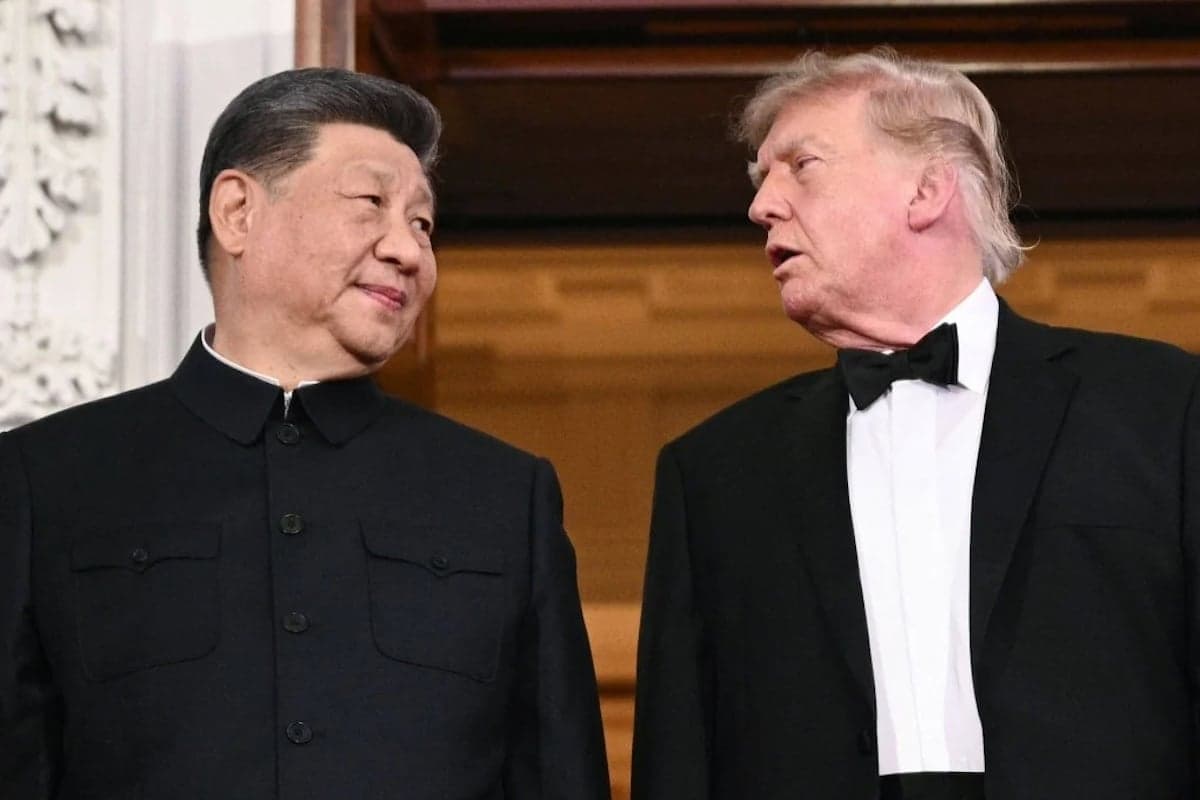
Xi, Putin, Trump Meet at APEC Summit in Shenzhen, Sparking "New Yalta" Fears
World & Geopolitics
- 19
Middle East Crisis: Houthis Advance on Aden, Iran Escalates Threats to Gulf Shipping
World & Geopolitics
 20
Ukraine Strikes Kerch Bridge, Severing Key Russian Supply Line Ahead of Talks
World & Geopolitics
 21
Canada Pursues "Middle Power Strategy" Amid US Trade Tensions at APEC
World & Geopolitics
- 22
Canada and India Finalize Historic Free Trade and Defense Agreement
World & Geopolitics
 23
Canada and Japan Forge Strategic Battery Supply Chain and Critical Minerals Alliance
World & Geopolitics
 24
Canada and China Expand Trade Pact Amidst Auto and Tariff Disputes
World & Geopolitics
- 25
Canada and Mexico Coordinate Response to Stalled CUSMA Talks Amid U.S. Tariffs
World & Geopolitics
 26
Xi Jinping Challenges Western Trade Restrictions at Shenzhen APEC Summit
World & Geopolitics
 27
Parliamentary Watchdog Challenges Carney's Spending Discipline and Investment Pledges
World & Geopolitics
- 28
Ottawa Prepares for Potential End of Tariff-Free Trade with U.S.
World & Geopolitics
- 29
Canada-India Free Trade Agreement Nears Finalization Ahead of Modi's Visit
World & Geopolitics
 30
Canada and China Expand Trade Partnership with Shenzhen Tariff Relief Deal
World & Geopolitics
- 31
Canada Sets 2027-2029 Immigration Levels to Balance Needs and Capacity
World & Geopolitics
 32
Toronto City Council Begins New Term Focused on Transit Expansion and Budget Framework
City News
 33
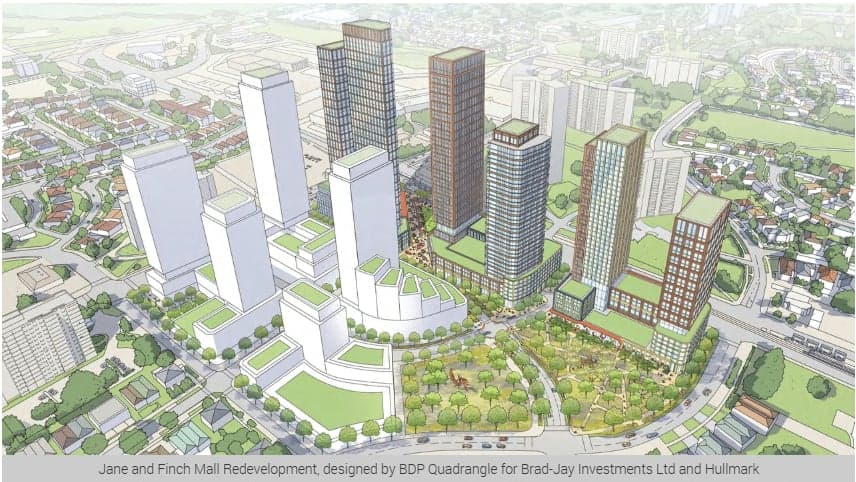
Toronto Selects 19 Rental Projects Backed by $1.5B Fund for Transit-Oriented Development
City News
 34
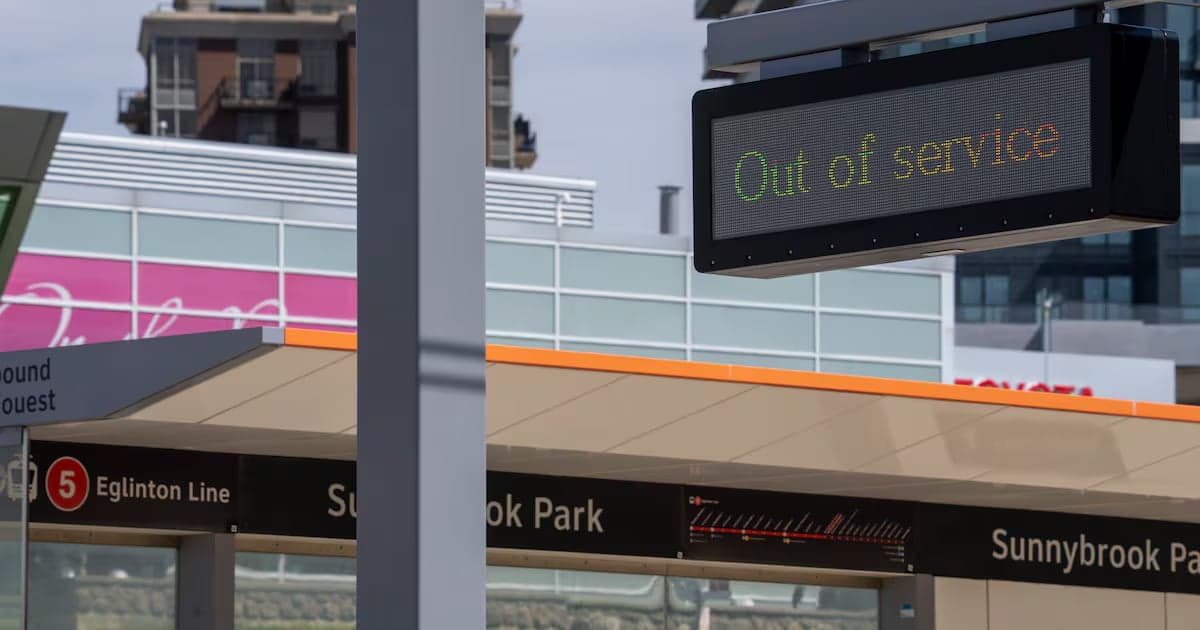
Ontario Transportation Ministry Briefs GTA Transit Amid Metrolinx Rapid Transit Expansion
City News
- 35
Ontario Teachers Vote Overwhelmingly to Strike, Threatening School Year Disruption
City News
- 36
Ontario Launches New Road Safety and Enforcement Measures
City News
- 37
New Toronto City Council Convenes, Prioritizing Housing and Leadership
City News
- 38
TTC and Metrolinx Implement Weekend Service Disruptions for Essential Maintenance and Construction
City News
 39
Canadian Housing Market Cools: Sales and Starts Decline Amidst High Interest Rates
City News
 40
Unseasonable Warmth Grips Toronto, Shattering November Temperature Records
City News
- 41
Alert Ready Emergency System Tested Provincewide
City News
- 42
Ontario Clean Water Agency Fined $100,000 for Workplace Injury
City News
- 43
Inquest Announced for Quacey Dos Santos Death Following Police Interaction
City News
 44
Toronto Police Seize Guns and Drugs in Steeles Avenue Operation
City News
- 45
Toronto Police Seek Public's Help in Etobicoke Park Assault Case
City News
 46
Blue Jays Add Prospects Perry, Guerra, and Schreck to 40-Man Roster
Sports
 47
Maple Leafs Suffer Seventh Straight Loss Amidst Historic Scoring Drought
Sports
 48
Dustin May Signs with White Sox; Blue Jays Pursued Starter But Opted Out
Sports
 49
MLB Teams Finalize 40-Man Rosters Amidst Rule 5 Draft and CBA Uncertainty
Sports
 50
NHL Trade Standoffs and Historic Scoring Streaks Reshape Eastern Conference
Sports
- 51
Maple Leafs in Crisis Mode After Consecutive Losses, Face Intense Pressure
Sports
 52
Raptors Lose Tightly Contested Game to Knicks, Extend Head-to-Head Losing Streak
Sports
- 53
NBA Eastern Conference Balance Shifts as Pistons End Spurs Streak, 76ers Lose Brown
Sports
- 54
Walter's Scoring Surge Can't Prevent Raptors' Fifth Straight Loss to Knicks
Sports
See all 54 as a listHide the list
- Canada, China Expand Trade Deal, Deepen Financial Ties at Shenzhen APEC
- Canada Defends Stalled U.S. Trade Talks, Cites Sovereignty Concerns
- Canada and Mexico Deepen Strategic Partnership and CUSMA Defense at APEC
- Canada Secures China Tariff Relief Amid U.S. Trade Tensions
- Canada Invests in Offshore Clean Energy, Aligns with Renewable Priorities
- Canada's Immigration Plan Faces Scrutiny Over Social Infrastructure Strain
- Federal Government Boosts Clean Energy Investments for Nova Scotia
- CN Rail Derails into Skeena River After B.C. Rockslide; Two Injured
- Canadian Housing Starts Decline 2% in October Amid Stalled Resale Market
- Bill S-8 Proposed to Enhance AML and Cash Controls in Canadian Financial Sector
- Drone Incursions Over Canadian Military Bases Reveal Security Gaps
- BDC Study: $3 Million Revenue Mark Crucial for Canadian Business Productivity
- Government Releases Red Tape Progress Report, Intensifies Intergovernmental Efforts
- Bill C-34 Faces Pressure to Include Online Gaming Oversight
- Manitoba to Ban AI-Generated Real Estate Images
- Alert Ready Public Warning System Undergoes Nationwide Diagnostic Testing
- Alberta Auditor General Delays Health Contracting Probe, Citing Evidence Volume
- Xi, Putin, Trump Meet at APEC Summit in Shenzhen, Sparking "New Yalta" Fears
- Middle East Crisis: Houthis Advance on Aden, Iran Escalates Threats to Gulf Shipping
- Ukraine Strikes Kerch Bridge, Severing Key Russian Supply Line Ahead of Talks
- Canada Pursues "Middle Power Strategy" Amid US Trade Tensions at APEC
- Canada and India Finalize Historic Free Trade and Defense Agreement
- Canada and Japan Forge Strategic Battery Supply Chain and Critical Minerals Alliance
- Canada and China Expand Trade Pact Amidst Auto and Tariff Disputes
- Canada and Mexico Coordinate Response to Stalled CUSMA Talks Amid U.S. Tariffs
- Xi Jinping Challenges Western Trade Restrictions at Shenzhen APEC Summit
- Parliamentary Watchdog Challenges Carney's Spending Discipline and Investment Pledges
- Ottawa Prepares for Potential End of Tariff-Free Trade with U.S.
- Canada-India Free Trade Agreement Nears Finalization Ahead of Modi's Visit
- Canada and China Expand Trade Partnership with Shenzhen Tariff Relief Deal
- Canada Sets 2027-2029 Immigration Levels to Balance Needs and Capacity
- Toronto City Council Begins New Term Focused on Transit Expansion and Budget Framework
- Toronto Selects 19 Rental Projects Backed by $1.5B Fund for Transit-Oriented Development
- Ontario Transportation Ministry Briefs GTA Transit Amid Metrolinx Rapid Transit Expansion
- Ontario Teachers Vote Overwhelmingly to Strike, Threatening School Year Disruption
- Ontario Launches New Road Safety and Enforcement Measures
- New Toronto City Council Convenes, Prioritizing Housing and Leadership
- TTC and Metrolinx Implement Weekend Service Disruptions for Essential Maintenance and Construction
- Canadian Housing Market Cools: Sales and Starts Decline Amidst High Interest Rates
- Unseasonable Warmth Grips Toronto, Shattering November Temperature Records
- Alert Ready Emergency System Tested Provincewide
- Ontario Clean Water Agency Fined $100,000 for Workplace Injury
- Inquest Announced for Quacey Dos Santos Death Following Police Interaction
- Toronto Police Seize Guns and Drugs in Steeles Avenue Operation
- Toronto Police Seek Public's Help in Etobicoke Park Assault Case
- Blue Jays Add Prospects Perry, Guerra, and Schreck to 40-Man Roster
- Maple Leafs Suffer Seventh Straight Loss Amidst Historic Scoring Drought
- Dustin May Signs with White Sox; Blue Jays Pursued Starter But Opted Out
- MLB Teams Finalize 40-Man Rosters Amidst Rule 5 Draft and CBA Uncertainty
- NHL Trade Standoffs and Historic Scoring Streaks Reshape Eastern Conference
- Maple Leafs in Crisis Mode After Consecutive Losses, Face Intense Pressure
- Raptors Lose Tightly Contested Game to Knicks, Extend Head-to-Head Losing Streak
- NBA Eastern Conference Balance Shifts as Pistons End Spurs Streak, 76ers Lose Brown
- Walter's Scoring Surge Can't Prevent Raptors' Fifth Straight Loss to Knicks
Section 1 of 4
National News
17 stories · 8 min skim
National News
3 min read
Canada, China Expand Trade Deal, Deepen Financial Ties at Shenzhen APEC
Canada and China have finalized an expanded bilateral trade agreement at the Shenzhen APEC Summit, including mutual tariff relief on industrial and agricultural goods. Beijing will lower import tariffs on Canadian agricultural and seafood shipments, valued at approximately C$400 million, while Canada extends tariff exemptions on specified Chinese steel and aluminum products. The agreement aims to restore market access and foster deeper financial ties, including a renewed currency swap arrangement between the Bank of Canada and the People's Bank of China.
Read the full storyFold the full story2 min · 9 sources
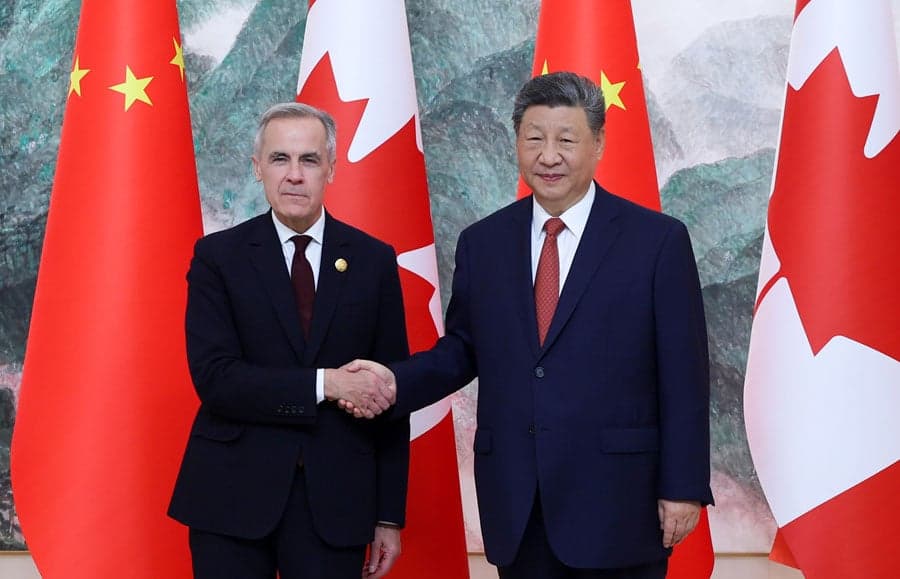
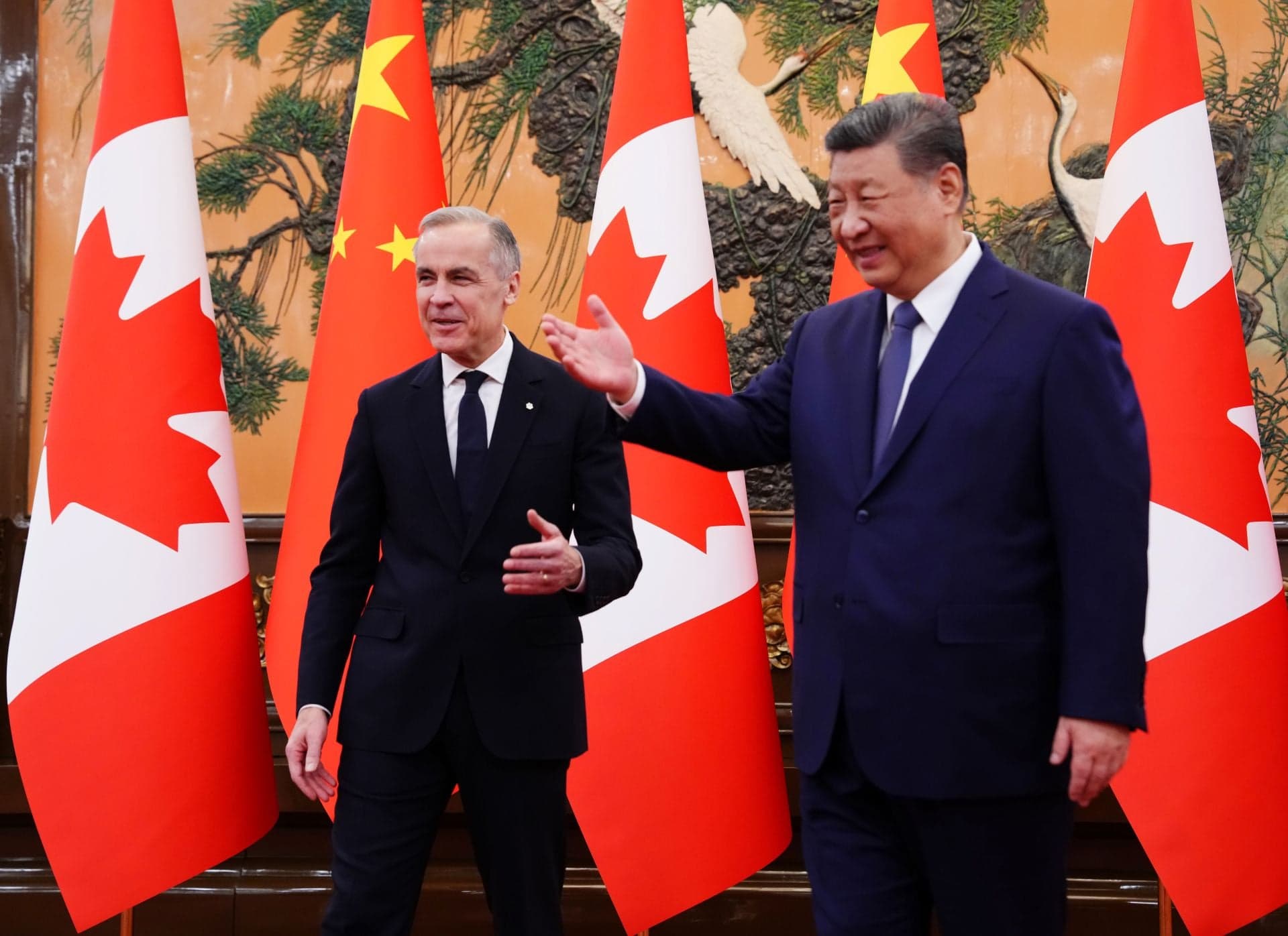
Prime Minister Mark Carney and Chinese President Xi Jinping finalized an expanded bilateral trade agreement in Shenzhen, China, on November 17, 2026, granting mutual tariff relief across hundreds of millions of dollars in industrial and agricultural goods[1][2]. Under the negotiated expansion of the Preliminary Joint Arrangement on Addressing Bilateral Economic and Trade Issues, Beijing agreed to lower import tariffs on approximately C$400 million (US$280 million) worth of Canadian agricultural and seafood shipments[1][2]. The relief includes C$116 million in frozen pork cuts and C$285 million in fish and seafood items, providing long-awaited market access for Canadian exporters of geoduck, cold-water shrimp, Greenland halibut, molluscs, and Pacific spot prawns[2]. The agreement also opens Chinese access to Canadian pulses, including chickpeas, fava beans, and lentils[3].
In exchange, the Canadian government committed to extending a two-year tariff remission on specified Chinese steel and aluminum products that was originally slated to expire at the end of 2026[2]. Ottawa further broadened these exemptions to encompass 32 additional tariff lines - covering 23 steel and nine aluminum product categories - where domestic Canadian supply is currently unavailable or insufficient to meet industrial manufacturing demand[2][4]. The announcement builds upon an initial preliminary pact established in January, bringing the total restored market access to over 90% of the Canadian export trade previously affected by retaliatory Chinese tariffs, valued at roughly C$7.5 billion[1][2]. The two governments also laid groundwork for a bilateral trade mission and declared 2027 the "Canada-China Year of e-Commerce"[2].
Speaking on the sidelines of the Asia-Pacific Economic Cooperation (APEC) CEO Summit on November 18, Prime Minister Carney outlined deeper institutional ties, confirming the renewal of a bilateral currency swap arrangement between the Bank of Canada and the People’s Bank of China to allow domestic businesses to settle transactions across diversified payment corridors[5]. Carney underscored that building financial redundancy and exploring alternative foreign markets is vital to insulating Canada against trade disruptions[5]. Foreign Affairs Minister Anita Anand reinforced this position, telling reporters that Ottawa is executing a "step-by-step" strategy to diversify trade partners across the Asia-Pacific region to reduce reliance on the United States[6]. Two-way merchandise trade between Canada and China climbed to C$125.6 billion in 2025, up 5.6% from the previous year[2].
The trade breakthrough was met with widespread acclaim from Canadian primary producers who had faced steep commercial barriers[7]. Marketing representatives from the Underwater Harvesters Association described the tariff reduction as an immense relief for geoduck and spot prawn harvesters, whose regional dockside prices had plunged by roughly 30% under the trade dispute[7]. Similarly, the Agricultural Producers Association of Saskatchewan welcomed tariff stabilization for canola meal and pulse crops, noting that market access gives growers operational certainty[3]. However, Canadian canola oil exports remain subject to a 100% Chinese tariff, presenting an unresolved hurdle for domestic crushers[3].
The diplomatic pivot has heightened friction with Washington, where White House trade adviser Peter Navarro publicly condemned Ottawa's warming ties with Beijing[8]. Addressing concerns that commercial engagement with China could imperil Canada’s relationship with the incoming Trump administration, Carney stated that commodity trade such as pork, grains, and seafood does not compromise sensitive Western technologies like advanced semiconductors[8]. Ahead of expected bilateral talks with U.S. President Donald Trump, Carney maintained that while North American supply chains and U.S. negotiations remain Ottawa's overarching economic priority, Canada must preserve the sovereign right to balance its export portfolio against foreign protectionist measures[9][8].
- Canada
- China
- Mark Carney
National News
2 min read
Canada Defends Stalled U.S. Trade Talks, Cites Sovereignty Concerns
Canada's Trade Minister Dominic LeBlanc defended the government's stance on collapsed trade negotiations with the United States before a parliamentary committee. LeBlanc asserted that Washington's eleventh-hour demands, including restrictions on independent trade agreements and demands on Canadian culture and language, undermined Canadian sovereignty. The discussions follow significant U.S. tariffs on Canadian imports and retaliatory measures from Ottawa.
Read the full storyFold the full story2 min · 4 sources
Appearing before the House of Commons Standing Committee on International Trade (CIIT) in Ottawa on November 17, 2026, Canada-U.S. Trade Minister Dominic LeBlanc staunchly defended Prime Minister Mark Carney’s public characterization of the breakdown in trade negotiations with the United States[1]. LeBlanc, accompanied by Canada's Chief Trade Negotiator to the United States, Janice Charette, told lawmakers that Washington had attempted to impose eleventh-hour conditions during summer talks that would have severely undermined Canadian sovereignty[1]. The high-stakes committee hearing follows the abrupt collapse of bilateral discussions in August, which prompted the Trump administration to levy 50% tariffs on approximately $20 billion in Canadian imports, triggering dollar-for-dollar retaliatory measures from Ottawa[1][2].
During heated questioning, Conservative trade critic Jacob Mantle pressed LeBlanc to reconcile the conflicting accounts between Ottawa and Washington, noting that United States Trade Representative Jamieson Greer had publicly accused Carney of misrepresenting the substance of the negotiations[1]. LeBlanc insisted that the Prime Minister's statements were entirely accurate, testifying that American negotiators introduced sweeping demands on the final day of talks in Washington[1]. Specifically, LeBlanc revealed that the U.S. sought to insert provisions restricting Canada's autonomy to execute independent free trade agreements with third-party nations in designated sectors, while simultaneously attempting to erode statutory protections for Canadian culture and language and retaining punishing automotive tariffs[1].
Janice Charette provided technical context on Canada's posture heading into the mandatory joint review of the Canada-United States-Mexico Agreement (CUSMA)[1][3]. Charette explained that the geopolitical and commercial climate in Washington had fundamentally transformed, with U.S. negotiators showing an active unwillingness to maintain comprehensive, tariff-free commerce across the continent[3]. Under these constraints, Charette indicated that Canadian negotiators are focusing on securing the lowest possible tariff levels across the narrowest possible basket of critical goods to preserve preferential access for Canadian manufacturing and natural resource sectors[3].
The testimony exposed sharp partisan divisions over Canada’s macroeconomic direction. Opposition MPs questioned whether Canada’s aggressive trade diversification initiatives in Asia - most notably bilateral tariff remissions with China and pending trade agreements with India - had alienated key decision-makers in Washington and jeopardized integrated supply chains[1][4]. LeBlanc rejected the critique, maintaining that CUSMA already possesses mechanisms governing non-market economies, but arguing that capitulating to Washington's overreach would reduce Canada to an economic protectorate[1]. The minister emphasized that Ottawa will only sign an agreement that preserves Canadian regulatory sovereignty and protects core industrial corridors[1][2].
- Dominic LeBlanc
- Mark Carney
- Janice Charette
National News
2 min read
Canada and Mexico Deepen Strategic Partnership and CUSMA Defense at APEC
Canada and Mexico reaffirmed their Comprehensive Strategic Partnership at APEC, focusing on defending and renewing the CUSMA trade agreement amidst rising protectionism. Direct bilateral trade has increased by 19%, with significant growth in cross-border investments in key sectors like manufacturing and clean energy.
Read the full storyFold the full story1 min · 3 sources
On November 17, Prime Minister Mark Carney held a formal bilateral meeting with Mexican President Claudia Sheinbaum on the sidelines of the APEC Economic Leaders' Meeting in Shenzhen, establishing a synchronized strategy for North American trade relations[1][2]. Celebrating the first anniversary of the Canada-Mexico Comprehensive Strategic Partnership, the two leaders conducted a formal review of the Canada-Mexico Action Plan[1]. Federal officials reported that over 130 specific bilateral initiatives have been rolled out over the past 12 months across economic, security, and governance pillars[1].
A central focus of the discussions was a unified commitment to defend and renew the Canada-United States-Mexico Agreement (CUSMA)[1][2]. With all three North American economies facing heightened protectionist pressures, Prime Minister Carney and President Sheinbaum underscored that direct bilateral trade between Canada and Mexico has accelerated markedly, rising 19 percent in the first nine months of 2026 compared to the same period in 2025[1][2]. Bilateral capital flows also reached new highs, with Mexican direct investment in Canadian mining and food processing reaching nearly $1 billion, and Canadian investments in Mexican manufacturing, clean energy, and mineral extraction exceeding $3.7 billion[1][2].
Beyond commercial trade, the leaders announced new initiatives to expand market access for Canadian agri-food exporters and build out regional critical mineral and semiconductor supply chains[1][2]. They also finalized plans to launch a new bilateral Strategic Security Dialogue backed by more than $10 million in Canadian programmatic support to improve border enforcement, biosecurity, and international crime disruption[2]. The coordinated posture demonstrated by Ottawa and Mexico City signals a deliberate effort by both governments to deter bilateral divide-and-conquer tactics in forthcoming continental trade negotiations, emphasizing that deeper Canada-Mexico trade cooperation will serve as a pillar of long-term North American economic resilience[1][3].
- Canada
- Mexico
- Mark Carney
National News
2 min read
Canada Secures China Tariff Relief Amid U.S. Trade Tensions
Prime Minister Mark Carney finalized a deal with China to ease tariffs on $400 million of Canadian agricultural exports through 2028. In return, Canada extended tariff exemptions for Chinese steel and aluminum imports. Carney defended the agreement as crucial for Canadian exporters, even as it led to diplomatic friction with the United States, whose trade adviser criticized the pact.
Read the full storyFold the full story1 min · 8 sources
On November 17, 2026, Canadian Prime Minister Mark Carney met with Chinese President Xi Jinping in Shenzhen on the sidelines of the 33rd Asia-Pacific Economic Cooperation (APEC) Economic Leaders’ Meeting, finalizing a bilateral arrangement to ease mutual trade restrictions[1][2][3]. Under the agreement, Beijing agreed to lower or suspend punitive tariffs across roughly $400 million worth of Canadian agricultural, seafood, and food exports through 2028[4]. In exchange, Ottawa agreed to extend tariff exemptions for specific Chinese steel and aluminium imports[5][4]. Addressing an international press conference in Shenzhen on November 18, Carney defended the economic pact as vital to safeguarding Canadian export industries, even as he prepared for a high-stakes bilateral meeting later that day with United States President Donald Trump[6].
The relief package directly impacts Canada’s primary producers, especially across the Prairies and Atlantic Canada[4]. Chinese authorities agreed to reduce duties on frozen pork, cold-water shrimp, spot prawns, molluscs, geoduck, sea cucumbers, and Greenland halibut, while eliminating barriers on canola meal, field peas, fava beans, chickpeas, and lentils[4]. Agricultural bodies, including the Agricultural Producers Association of Saskatchewan, welcomed the tariff rollbacks, noting that market access for canola byproducts and pulses provides critical revenue predictability after months of trade friction[4]. Canola seed tariffs had previously been trimmed from nearly 85% to 14.9% in the spring, and this latest agreement cements stability for farmers who had been caught in recurring geopolitical standoffs[4][7].
However, the pact has ignited acute diplomatic tension with Washington[6]. Following the breakdown of Canada–U.S. trade negotiations in August, the Trump administration slapped 50% tariffs on approximately $20 billion worth of Canadian imports, compelling Ottawa to implement reciprocal retaliatory duties[6]. White House trade adviser Peter Navarro publicly condemned the Shenzhen accord, questioning whether Canada was attempting to play Beijing against Washington and expressing alarm over discussions that could invite Chinese automotive and electric vehicle manufacturing into Canada[6][8]. Carney countered Navarro’s critique on November 18, asserting that while securing a stable trade arrangement with the U.S. remains Canada’s top economic priority, Ottawa will unapologetically pursue trade diversification in the interest of Canadian workers[6].
- Mark Carney
- Xi Jinping
- Donald Trump
National News
2 min read
Canada Invests in Offshore Clean Energy, Aligns with Renewable Priorities
The federal government is allocating significant capital to accelerate offshore clean energy development in Atlantic Canada, focusing on offshore wind and tidal energy, and subsea grid connections. These investments align with the renewable energy goals outlined in Budget 2026 and aim to bolster regional supply chains.
Read the full storyFold the full story1 min · 7 sources
Minister of Justice and Attorney General of Canada Sean Fraser, serving concurrently as Minister responsible for the Atlantic Canada Opportunities Agency (ACOA), addressed industry leaders on November 18 at the Marine Renewables Canada (MRC) 2026 Conference in Ottawa to unveil federal clean energy investments for Nova Scotia and outline national marine renewable strategies[1][2]. The federal announcement allocates dedicated capital to accelerate offshore wind, tidal energy development, and subsea grid connection capabilities across Atlantic Canada, aligning regional infrastructure with the energy transition goals outlined in Budget 2026[1][3].
The new clean energy commitments target regional supply chains and specialized maritime fabrication facilities required to deploy large-scale offshore wind arrays off the coast of Atlantic Canada[1][4]. Minister Fraser noted that while global offshore wind represents an expanding multi-billion-dollar international market, Canada’s extensive coastlines have lagged behind European and Asian jurisdictions in commercial turbine deployment[3]. Federal funding delivered through ACOA will finance technical feasibility studies, seabed mapping, and common-user port infrastructure in Nova Scotia to service future floating and fixed-bottom marine renewable installations[1][3].
The offshore renewable investments function in tandem with the federal government's broader legislative and industrial buildout under Bill C-5, the One Canadian Economy Act[5][6]. Enacted to fast-track nation-building infrastructure through its Building Canada Act provisions and the Major Projects Office, the regulatory regime aims to compress federal permitting and environmental assessment timelines for major clean energy and transmission corridors from five years down to two[7][6]. Industry participants at the MRC conference welcomed the federal capital deployment, noting that streamlining federal-provincial regulatory jurisdictions is vital to attracting international investment and meeting clean energy generation requirements[1][6].
- Sean Fraser
- Atlantic Canada Opportunities Agency
- Marine Renewables Canada
National News
2 min read
Canada's Immigration Plan Faces Scrutiny Over Social Infrastructure Strain
Canada's 2027-2029 Immigration Levels Plan targets 380,000 permanent residents annually, focusing on economic immigration, while stabilizing temporary resident arrivals. A new transitional measure aims to grant permanent residency to up to 100,000 temporary residents already in Canada. Analysts and economists are raising concerns about the strain on social infrastructure, particularly healthcare and housing, despite caps on temporary immigration.
Read the full storyFold the full story2 min · 6 sources
Policy analysts and institutional economists published detailed assessments on November 17 and 18, 2026, examining the federal government’s newly released 2027–2029 Immigration Levels Plan and its operational supplementary targets[1][2]. Formal details released by Immigration, Refugees and Citizenship Canada (IRCC) demonstrate a sustained stabilization agenda, setting the annual target for permanent resident (PR) admissions at 380,000 for each year between 2027 and 2029[1][3]. Economic immigration forms the cornerstone of the policy, accounting for 64.4% of total admissions (244,700 individuals per year), followed by family reunification at 21.3% (81,000), and refugees and protected persons at 13% (49,300)[1]. French-speaking admissions outside Quebec are set to scale upward, rising from 9.5% in 2027 to 12% by 2029[4].
Crucially, the multi-year framework maintains a strict national cap on new temporary resident arrivals, stabilizing the intake at 370,000 annually through 2029[1][3]. Under this allocation, temporary workers represent approximately 60% of arrivals (220,000 individuals, divided between the International Mobility Program and the Temporary Foreign Worker Program), while new international students are restricted to approximately 40% (150,000 arrivals annually)[1]. The continuation of hard caps on temporary permits marks an enduring shift away from the rapid population growth witnessed earlier in the decade, intended to give municipal infrastructure and services time to catch up[3][2].
The national debate sharpened following briefings by Immigration Minister Lena Metlege Diab detailing an accelerated, time-limited transitional measure that could grant permanent residency to up to 100,000 temporary residents already living and working in Canada[5]. To expedite transitions without requiring individuals to exit the country, the government has lowered Express Entry Comprehensive Ranking System (CRS) thresholds for Canadian Experience Class applicants, removed certain Labour Market Impact Assessment (LMIA) hurdles for high-wage workers, and partnered with provincial nominee programs[2][5]. The policy is designed to retain skilled workers who are already integrated into local labor markets while systematically winding down the domestic volume of non-permanent residents[3][2].
Economic and healthcare analyses released on November 17 and 18 highlighted significant structural implications. RBC Economics noted that while transitioning workers already in Canada does not immediately exacerbate the housing market - due to elevated rental apartment inventory in major urban centers - it prevents a sharp demographic outflow and creates upside pressure on broader population projections[2]. Furthermore, health policy researchers cautioned that public infrastructure like provincial healthcare networks, emergency departments, and electrical grids remain severely stretched[2][6]. Experts emphasized that retaining hundreds of thousands of workers permanently will require concurrent federal transfers to provincial healthcare systems to prevent further erosion in primary care access and hospital capacity[2][6].
- Immigration
- Refugees and Citizenship Canada
- Lena Metlege Diab
National News
1 min read
Federal Government Boosts Clean Energy Investments for Nova Scotia
The Atlantic Canada Opportunities Agency (ACOA) announced new federal clean energy funding for Nova Scotia at the Marine Renewables Canada (MRC) 2026 Conference. The investments are aimed at supporting specialized port infrastructure, supply chain development, and research into tidal and offshore wind technologies, positioning Atlantic Canada as a clean power corridor.
Read the full storyFold the full story1 min · 3 sources
On November 17, 2026, the Atlantic Canada Opportunities Agency (ACOA) announced that the Honourable Sean Fraser, Minister of Justice and Attorney General of Canada and Minister responsible for ACOA, would deliver the keynote address opening the Marine Renewables Canada (MRC) 2026 Conference on November 18 at The Westin Ottawa[1][2]. Minister Fraser’s appearance centered on unveiling new federal clean energy funding tailored specifically for Nova Scotia, alongside detailing the deployment of Budget 2026 measures designed to accelerate marine renewable projects nationwide[1][2].
The funding injection comes as Atlantic Canada seeks to establish itself as a primary offshore clean power and green hydrogen corridor for North America and European export markets[1]. Federal capital is directed toward supporting specialized port infrastructure, supply chain readiness, and research into tidal and offshore wind technologies in the Bay of Fundy and offshore Atlantic shelves[1]. Minister Fraser emphasized that expanding clean electrical generation capacity is central to the federal government's economic agenda, providing foundational power for regional manufacturing and industrial decarbonization[1].
The announcement also follows mounting scrutiny over regulatory oversight in Atlantic Canada's renewable energy sector[3]. A report tabled on November 17 by Nova Scotia’s provincial auditor general urged the provincial Environment Department to significantly strengthen its environmental assessments for onshore and renewable energy developments[3]. Fraser’s address sought to bridge this gap, reiterating that federal funding will require rigorous environmental review processes and comprehensive consultation with Indigenous communities to ensure sustainable project execution[1].
- Atlantic Canada Opportunities Agency
- ACOA
- Sean Fraser
National News
2 min read
CN Rail Derails into Skeena River After B.C. Rockslide; Two Injured
A CN Rail freight train derailed near Terrace, British Columbia, after striking debris from a rockslide, spilling locomotives and containers into the Skeena River. Two crew members sustained serious injuries and were hospitalized. The derailment caused a diesel fuel leak into the river, prompting environmental containment efforts, and halted freight traffic on a critical export corridor to the Port of Prince Rupert.
Read the full storyFold the full story2 min · 1 source
A Canadian National (CN) Rail freight train derailed along a remote mountain corridor west of Terrace, British Columbia, on the afternoon of November 17, 2026, sending locomotives and cargo containers into the Skeena River and injuring rail personnel[1]. The incident occurred shortly after 1:00 p.m. local time when the westbound freight train struck debris from a sudden rockslide along the trackside bluffs[1]. Two locomotives and five intermodal freight cars derailed from the tracks, with several container units loaded with processed forest products tumbling down the embankment into the water[1].
Emergency first responders, including RCMP officers, municipal fire services, and British Columbia Emergency Health Services (BCEHS) paramedical crews, rushed to the scene along Highway 16[1]. Responders extricated two train operators who sustained serious injuries in the collision[1]. Paramedics transported both crew members to a regional hospital, where medical personnel listed them in serious but stable condition with non-life-threatening injuries[1]. The severity of the derailment prompted the immediate closure of Highway 16, the sole arterial roadway linking interior northern communities to the Pacific coast[1].
Environmental containment efforts began immediately after CN Rail confirmed that diesel fuel had begun leaking into the Skeena River from a ruptured fuel tank on one of the submerged locomotives[1]. Hazardous materials personnel deployed containment booms and absorbent pads downstream to restrict fuel dispersion in the river, which serves as one of British Columbia’s most ecologically vital salmon and steelhead migration ecosystems[1]. Provincial environmental officers and transport inspectors arrived to oversee environmental protection measures alongside CN cleanup specialists[1].
The derailment caused acute logistical disruptions along Canada’s northern export corridor[1]. Highway 16 was reopened to single-lane alternating traffic late on November 17, but the severed rail line halted freight traffic feeding into the Port of Prince Rupert[1]. As Canada’s third-busiest port and an integral conduit for grain, forest products, coal, and container shipments destined for Asian markets, Prince Rupert relies almost exclusively on this CN Rail mainline[1]. The accident has prompted logistical operators and regional civic leaders to call for structural geotechnical reviews of rail right-of-ways through unstable mountainous terrain, particularly during late autumn weather cycles prone to rockfalls and slope instability[1].
- CN Rail
- Skeena River
- British Columbia
National News
2 min read
Canadian Housing Starts Decline 2% in October Amid Stalled Resale Market
National housing starts in Canada fell by 2% in October to a seasonally adjusted annual rate of 244,558 units, primarily due to slower construction in Ontario, British Columbia, and Atlantic Canada. This downturn occurred alongside a near-standstill in the resale market, where existing home sales saw minimal growth, leading to increased inventory and balanced market conditions in major cities.
Read the full storyFold the full story1 min · 6 sources
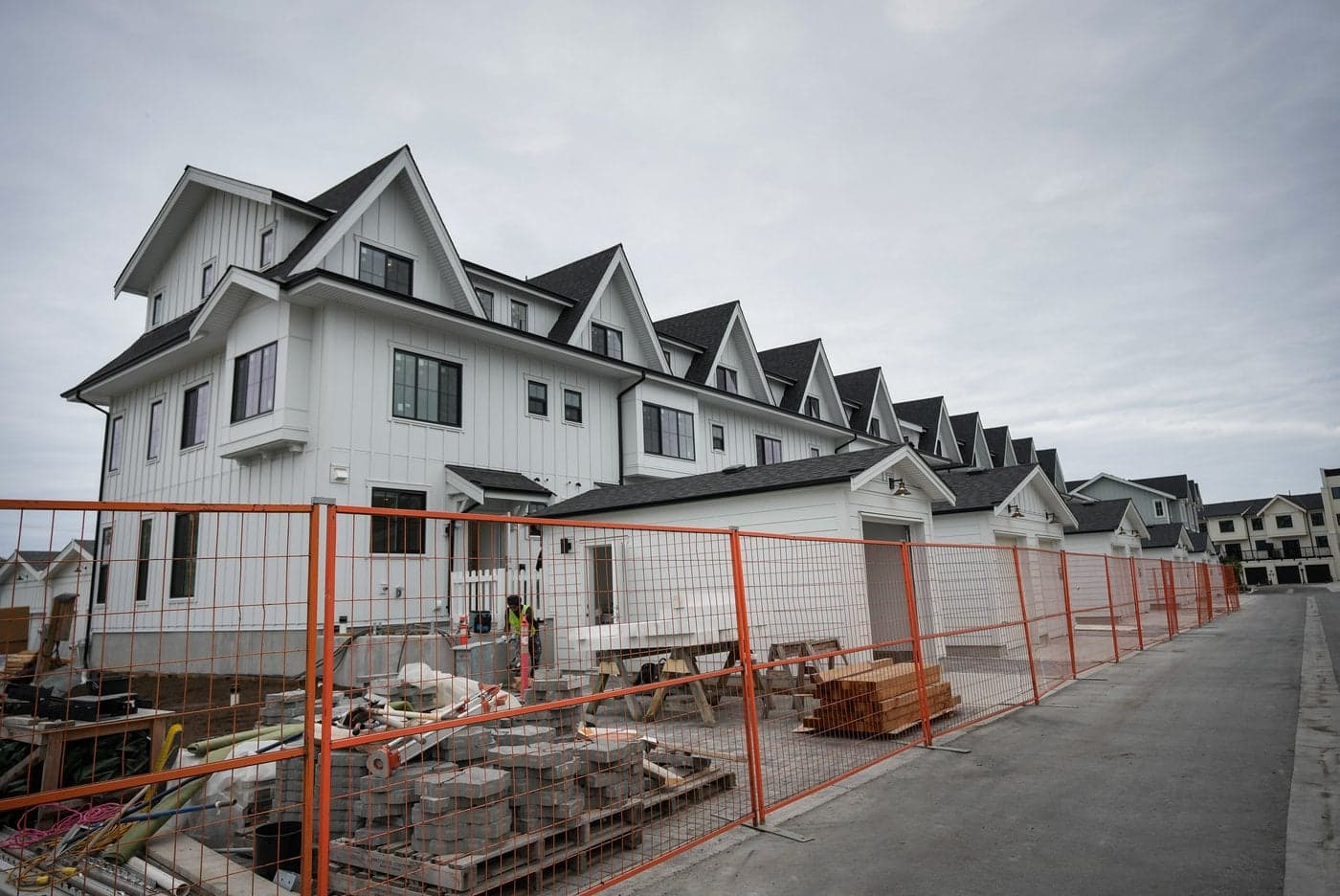
Canada Mortgage and Housing Corporation (CMHC) reported on November 17, 2026, that national housing starts declined by 2% month-over-month in October to a seasonally adjusted annual rate (SAAR) of 244,558 units, down from an upwardly revised 250,072 units in September[1][2]. The six-month moving average of the trend figure also retreated, slipping 1.7% to 246,231 units[1][3]. Kevin Hughes, deputy chief economist at CMHC, highlighted that the contraction was led by slowing construction momentum in Ontario, British Columbia, and Atlantic Canada, which outweighed temporary gains recorded in Quebec's urban centres[3][2].
The softening in new home construction coincided with a near-total freeze in the secondary market[4]. In monthly updates released on November 17, both RBC Economics and Desjardins reported that existing home resales were essentially flat in October, nudging up by just 0.3% month-over-month on a seasonally adjusted basis[4][2]. With prospective buyers sidelined by elevated borrowing costs and general economic uncertainty, new listings outpaced sales for the third consecutive month[4]. This dynamic elevated national inventory to 5.0 months of supply, easing the national sales-to-new-listings ratio to 48.8% and pulling major metropolitan hubs such as Toronto and Montreal into balanced or buyer-favoured territory[4][2].
The underlying data underscores a growing supply-demand imbalance in the domestic housing market[2][5]. While multi-unit urban developments sustained overall starts figures, single-family construction fell to its lowest level in over a decade, outside of the initial disruptions of the pandemic[2]. Economists pointed out that the current six-month pace of 246,000 units tracks far behind CMHC’s estimated requirement of 417,000 to 469,000 annual starts needed to restore affordability, as well as the federal target of 500,000 completions annually[2]. In a research report published simultaneously by the C.D. Howe Institute, economists cautioned that higher financing costs continue to depress project economics, raising the prospect of sharper supply shortages when borrowing conditions eventually ease[5][6].
- Canada Mortgage and Housing Corporation
- CMHC
- RBC Economics
National News
2 min read
Bill S-8 Proposed to Enhance AML and Cash Controls in Canadian Financial Sector
Canada's proposed Bill S-8 aims to significantly strengthen anti-money laundering (AML) and anti-terrorist financing regulations. The legislation will require financial institutions to update their compliance systems, crack down on unregulated crypto ATMs, and lower the ownership threshold for mandatory background checks. It also introduces a $10,000 cap on cash transactions and enhances FINTRAC's oversight powers.
Read the full storyFold the full story1 min · 2 sources
In-depth regulatory analyses published on November 17, 2026, detailed the operational impact of Bill S-8, the federal government's Combatting Financial Crimes and Drug Trafficking Act[1][1]. Introduced earlier in the month, the legislative package sets out sweeping revisions to Canada's anti-money laundering (AML) and anti-terrorist financing frameworks[1][2]. Financial intelligence platforms and compliance advisers warned that the legislation will require domestic banks, credit unions, and independent money services businesses (MSBs) to revamp their onboarding, customer due diligence, and transaction monitoring regimes[1][1].
A central focus of Bill S-8 is the systemic vulnerability associated with cash-to-digital rails[1][1]. Citing Canadian Anti-Fraud Centre data indicating that consumers lost between $142 million and $284 million to scams involving cryptocurrency automated teller machines (ATMs) in 2024 alone, the bill establishes that operating a crypto ATM without proper provincial or territorial MSB licensing will become a criminal offense[1]. Licensed operators will face stricter reporting timelines, while the ownership threshold requiring mandatory criminal background checks for MSB principals and major investors will drop from 20% down to 5%[1]. Furthermore, the legislation grants the Financial Transactions and Reports Analysis Centre of Canada (FINTRAC) widened powers to summarily deny or revoke registrations[1].
The proposed reforms also introduce a hard cap restricting cash transactions of $10,000 or more, alongside strict prohibitions on third-party cash deposits[1][2]. While regulated chartered banks and credit unions will receive formal exemptions from the $10,000 cash limit, compliance specialists emphasized on November 17 that the exemption provides no shelter from enforcement[1][2]. Tier-one lenders are expected to upgrade automated transaction monitoring systems to identify cash-structuring, rapid movement through intermediary accounts, and illicit mule accounts, as FINTRAC moves from auditing policy documentation toward assessing active technical efficacy[1][2].
- Financial Transactions and Reports Analysis Centre of Canada
- FINTRAC
- Canadian Anti-Fraud Centre
National News
2 min read
Drone Incursions Over Canadian Military Bases Reveal Security Gaps
Declassified military records reveal multiple unauthorized drone incursions over strategic Canadian air bases, including CFB Trenton and CFB Cold Lake, between 2024 and 2025. In all instances, the drones evaded detection and operators were not identified. The documents expose shortcomings in the Department of National Defence's counter-unmanned aerial systems capabilities, with detection systems failing or being offline during breaches.
Read the full storyFold the full story2 min · 1 source
Internal Royal Canadian Air Force (RCAF) documents released through federal Access to Information legislation on November 17 and 18, 2026, revealed multiple unauthorized drone incursions over two of Canada's most vital military installations[1]. The records document seven distinct security breaches occurring between 2024 and 2025 at Canadian Forces Base (CFB) Trenton in eastern Ontario and CFB Cold Lake in northeastern Alberta[1]. In all seven instances, the unauthorized remotely piloted aircraft systems (RPAS) evaded interception, and military investigators failed to locate the devices or identify their operators[1].
The documented breaches occurred at installations that form the operational backbone of Canada’s national defence architecture[1]. CFB Trenton serves as the primary hub for the RCAF’s tactical and strategic air mobility fleets, housing heavy-transport CC-177 Globemaster III and CC-130J Hercules aircraft responsible for global troop movement, arctic logistics, and disaster response[1]. CFB Cold Lake represents Canada's premier fighter installation, home to the 4 Wing operational squadrons flying CF-18 Hornet fighter jets tasked with executing North American Aerospace Defense Command (NORAD) air sovereignty missions[1]. According to the disclosed logs, three incursions occurred at Trenton and four at Cold Lake[1].
The files exposed technical and operational shortcomings in the Department of National Defence’s counter-unmanned aerial systems (C-UAS)[1]. In one notable incident on September 17, 2025, an unidentified camera-equipped drone operated directly above the active runway at CFB Trenton; however, the base’s newly commissioned detection apparatus was entirely offline due to a scheduled base power outage[1]. Only five days later, a second unauthorized drone was observed penetrating the same restricted airspace, but the detection system - operational at the time - failed to recognize or track the aerial target[1]. At CFB Cold Lake, personnel recorded sightings of various drone profiles, including an industrial box-shaped unit roughly 60 centimetres wide moving at high speeds[1].
The disclosures have ignited renewed debate regarding physical and electronic airspace defenses across Canada’s critical defense infrastructure[1]. Defense analysts and parliamentarians pointed out that the inability to detect, track, or neutralize low-altitude commercial or modified drones exposes major blind spots in domestic territorial surveillance[1]. With uncrewed aerial technology proliferating rapidly among state adversaries and criminal syndicates, the incidents highlight an urgent need to modernize counter-drone procurement, ensure uninterruptible power redundancies for sensor arrays, and update military rules of engagement for neutralizing rogue platforms operating inside controlled Canadian airspace[1].
- Royal Canadian Air Force
- CFB Trenton
- CFB Cold Lake
National News
2 min read
BDC Study: $3 Million Revenue Mark Crucial for Canadian Business Productivity
A new study by the Business Development Bank of Canada (BDC) identifies $3 million in annual revenue as a critical threshold for Canadian businesses to achieve productivity gains and long-term viability. Firms below this mark struggle with operating leverage and technology adoption, while those exceeding it benefit from economies of scale and higher reinvestment in research and development.
Read the full storyFold the full story1 min · 2 sources
A major economic study released by the Business Development Bank of Canada (BDC) on November 17–18, 2026, revealed that annual revenue of $3 million represents a definitive "tipping point" for Canadian enterprise productivity and long-term viability[1]. Drawing on Statistics Canada data tracking 1.2 million businesses across two decades, the Crown corporation’s research demonstrated that small firms generating less than $3 million face structural impediments in achieving operating leverage, technology adoption, and sustained profitability[1][1].
According to the report, micro-enterprises and small businesses falling below the $3 million mark produce an average annual profit of less than $10,000[1]. In an interview on November 17, Pierre Cléroux, BDC’s chief economist and vice president of research, explained that these modest margins prevent firms from deploying internal capital into automated equipment, digital workflows, and advanced technology[1][1]. Conversely, enterprises that cross into the $3 million to $10 million revenue bracket capture clear economies of scale, generating substantially higher operating margins and demonstrating higher rates of research and development reinvestment[1].
The findings have intensified the national debate over Canada’s lagging productivity performance relative to other G7 nations[1][1]. BDC is advising small business operators to actively evaluate mergers, acquisitions, and strategic partnerships as vehicles to reach optimal scale, rather than remaining trapped as sub-scale lifestyle businesses[1]. The study's conclusions are also expected to inform ongoing federal discussions regarding the proposed amalgamation of BDC and Export Development Canada (EDC), as policymakers consider how public venture and credit facilities can better support mid-tier enterprise scaling[2].
- Business Development Bank of Canada
- BDC
- Statistics Canada
National News
2 min read
Government Releases Red Tape Progress Report, Intensifies Intergovernmental Efforts
The Treasury Board of Canada has released a report detailing progress on regulatory streamlining, with over 160 measures completed to reduce business and citizen burdens. Coincidingly, an intergovernmental council agreed to accelerate service integration and mutual recognition frameworks to eliminate redundant inspections.
Read the full storyFold the full story1 min · 6 sources
The Treasury Board of Canada Secretariat officially published its regulatory accountability report, Reducing Red Tape in the Government of Canada: Progress and Way Forward, detailing extensive structural reforms aimed at lowering operational burdens on businesses and citizens[1][2]. The report marks the government's progress on nearly 500 regulatory streamlining initiatives identified during the government's horizontal red tape reviews, confirming that more than 160 specific measures have now been fully completed across federal departments and agencies[1][2]. These completed measures span digital permitting, modernizing cross-border customs documentation, and simplifying federal procurement criteria[1][2].
Coinciding with the release of the progress report, Treasury Board President Shafqat Ali co-chaired the second formal Federal-Provincial-Territorial (FPT) Ministerial Meeting on Red Tape Reduction alongside Nova Scotia Minister of Service Efficiency Timothy Halman[3][4]. The intergovernmental council agreed to accelerate shared service integration across jurisdictions, explicitly focusing on expanding the federal BizPaL platform to provide single-window licensing and permitting across federal, provincial, and municipal tiers of government[3]. The ministers also endorsed mutual recognition frameworks designed to eliminate redundant provincial and federal technical inspections for interprovincial transport, agricultural shipments, and skilled trades[3][5].
The administrative push builds directly upon major legislative actions advanced by the federal government throughout the autumn[1]. These include Bill S-7, the Cutting Red Tape for All Canadians Act, introduced in Parliament in October to amend 31 different federal statutes to strip out archaic reporting mandates[1]. It also operationalizes the government’s new Cabinet Directive on Regulatory Competitiveness and Red Tape Reduction, which formally established a "two-for-one" rule requiring federal regulators to offset two dollars in compliance burden costs for every new dollar of regulatory cost introduced[1][6]. Business groups, including the Canadian Federation of Independent Business and major manufacturing coalitions, have welcomed the regulatory auditing, noting that compliance costs have been an ongoing drag on national productivity and domestic capital investment[2].
- Treasury Board of Canada Secretariat
- Shafqat Ali
- Timothy Halman
National News
2 min read
Bill C-34 Faces Pressure to Include Online Gaming Oversight
Advocacy groups are urging the Canadian government to expand Bill C-34, the Safe Social Media Act, to include oversight of massive multiplayer online gaming platforms. These platforms are argued to function similarly to social networks and pose risks to minors.
Read the full storyFold the full story1 min · 10 sources
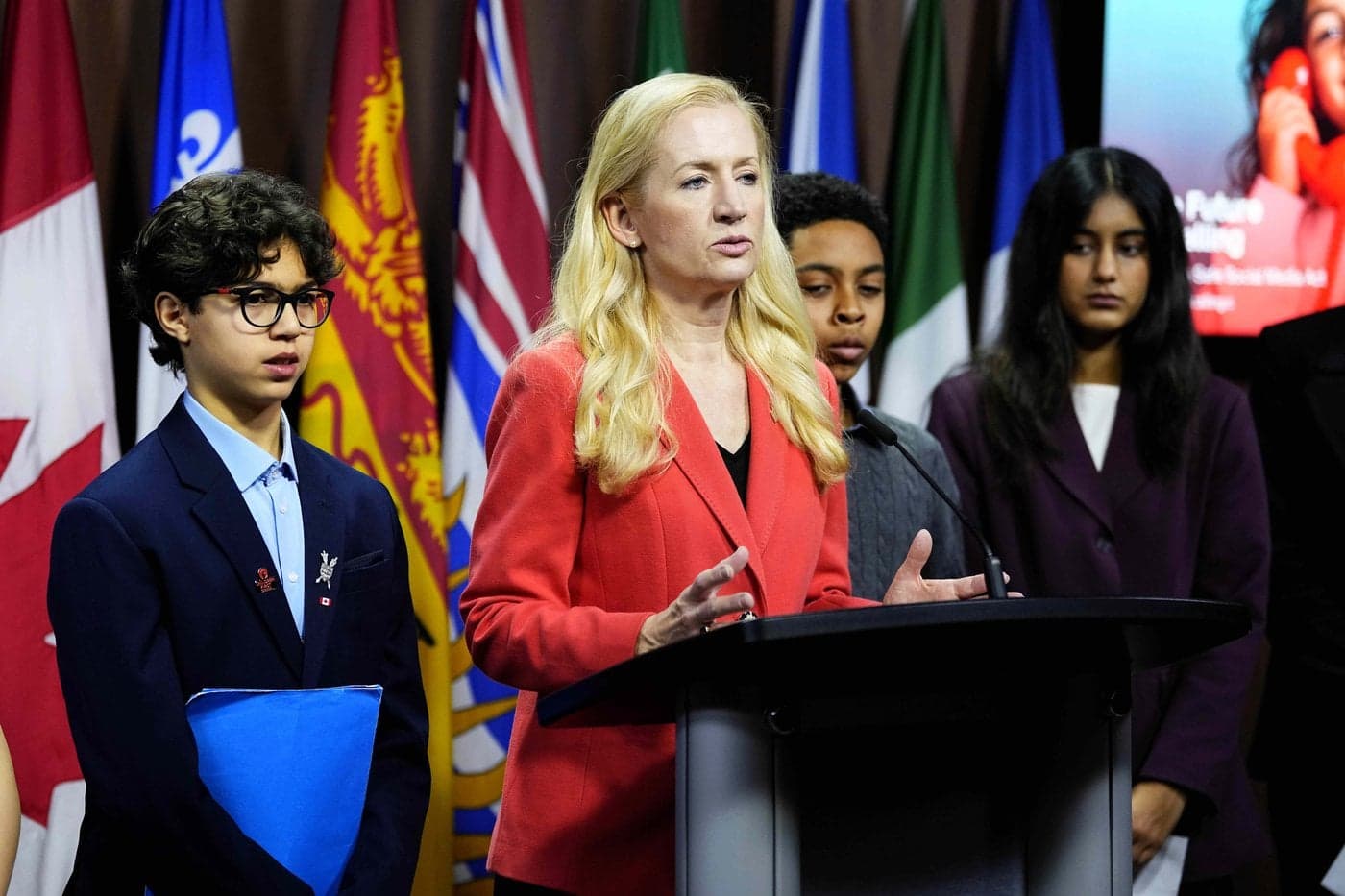
Legislative scrutiny around Bill C-34, the Safe Social Media Act, escalated on Parliament Hill on November 17 as the House of Commons Standing Committee on Canadian Heritage initiated its clause-by-clause study of the landmark digital safety legislation[1][2]. At a press conference in West Block, national child protection advocacy coalition Children First Canada, alongside representatives from the Young Canadians' Parliament and affected families, urged the federal government to amend the legislation to explicitly include massive multiplayer online gaming networks within the bill's regulatory reach[3][4][1]. Advocates argued that children spend substantial digital time on platforms like Roblox and Minecraft, which function identically to social networks but lack equivalent statutory safeguards[1][5].
Introduced by Minister of Canadian Identity and Culture Marc Miller, Bill C-34 represents the federal government’s core regulatory framework to address online harms[1][2][6]. The bill enacts the Digital Safety Act and creates the Digital Safety Commission of Canada Act, establishing a standalone federal regulator empowered to impose fines up to the greater of $10 million or 3 percent of gross global revenue for non-compliance, and up to 5 percent of global revenue for serious statutory offences[6][7]. The bill mandates that covered social media platforms and artificial intelligence chatbot operators enforce safety-by-design principles, restrict access for users under 16, and remove child sexual exploitation material and non-consensual intimate images within 24 hours of notification[6][8].
Testimony from civil society leaders and impacted parents underscored mounting public frustration with legislative delays[1][9]. Sara Austin, founder and CEO of Children First Canada, argued before parliamentarians that failing to extend the Digital Safety Commission's mandate to gaming ecosystems would leave millions of minors vulnerable to algorithmic exploitation, grooming, and financial extortion[10][1]. Minister Miller previously acknowledged growing concerns regarding social media mechanics inside digital games, though the Liberal government has resisted automatically bundling gaming into the first phase of the bill, seeking instead to empower the prospective Digital Safety Commissioner to designate specialized online services after the primary legislation receives royal assent[1][5][6].
- Bill C-34
- Marc Miller
- Children First Canada
National News
1 min read
Manitoba to Ban AI-Generated Real Estate Images
The Government of Manitoba has pledged to introduce legislation prohibiting the use of artificial intelligence-generated images in real estate listings, becoming the first Canadian jurisdiction to enact such a ban. This consumer-protection measure aims to prevent deceptive practices and ensure fair market competition by addressing concerns over digitally altered property representations.
Read the full storyFold the full story1 min · 2 sources
On November 17, 2026, the Government of Manitoba announced that it will introduce legislation to prohibit the use of artificial intelligence-generated images in real estate listings across the province[1][2]. The policy proposal was formally presented by Lieutenant Governor Anita Neville during the reading of the provincial speech from the throne, marking Manitoba as the first Canadian jurisdiction to pursue a statutory ban on synthetic property marketing[2].
The measure was framed as an urgent consumer-protection initiative amid rising complaints regarding digital misrepresentation in residential real estate listings[2]. In recent years, generative AI tools have allowed realtors and property developers to virtually stage, modify structural layouts, remove blemishes, and artificially alter surrounding landscapes[2]. The provincial government argued that unchecked synthetic alterations create false impressions of property condition and value, undermining fair market competition and penalizing homebuyers navigating high shelter costs[2].
The proposed real estate ban reflects Manitoba’s broader push to regulate commercial artificial intelligence infrastructure[2]. In the throne speech, the provincial government specifically highlighted its recent decision to halt the construction of a major AI data center in Île-des-Chênes following resistance from local municipal residents over power consumption, noise, and environmental impacts[2]. While real estate boards and proptech firms await specific legislative text regarding how the ban will distinguish between basic photo enhancement and deceptive generative rendering, the announcement signals an assertive provincial intervention into tech-enabled commerce[2].
- Government of Manitoba
- Anita Neville
- AI
National News
2 min read
Alert Ready Public Warning System Undergoes Nationwide Diagnostic Testing
The Alert Ready public warning system underwent its biannual nationwide diagnostic test across Canada on November 18, 2026. The test involved interruptions to television, radio, and mobile broadcasts to evaluate system resilience and public awareness. While the system broadcast over 1,215 live alerts in 2026 for various emergencies, ongoing technical challenges with universal reception were acknowledged.
Read the full storyFold the full story2 min · 5 sources
Canadians across the country experienced simultaneous interruptions to television, radio broadcasts, and mobile communications on Wednesday, November 18, 2026, as emergency management agencies conducted the final scheduled nationwide test of the Alert Ready public warning system for the year[1][2][3]. Coordinated by Pelmorex Corp. - the technical operator of the National Public Alerting System - alongside provincial and territorial emergency management organizations, wireless telecommunications carriers, and Environment and Climate Change Canada, the test commenced with the signature piercing Canadian Alert Attention Signal[4][2][3].
The staggered tests took place across various time zones, starting in Newfoundland and Labrador at 9:55 a.m. local time, moving to New Brunswick at 10:55 a.m., Ontario and Prince Edward Island at 12:55 p.m., and across western provinces and northern territories at 1:55 p.m.[2][5]. The Canadian Radio-television and Telecommunications Commission (CRTC) mandates at least one public test annually to evaluate infrastructure resilience and maintain public familiarity with emergency protocols[2]. Provincial authorities reiterated that test alerts and genuine emergency notifications cannot be opted out of by mobile subscribers due to the paramount objective of life safety[2][3].
Data released in conjunction with the diagnostic revealed that the Alert Ready network had broadcast more than 1,215 live emergency alerts across Canada in 2026 as of late autumn[3][5]. The notifications covered a broad spectrum of critical public safety emergencies, including Amber Alerts for child abductions, real-time tornado and extreme thunderstorm warnings, flash flooding alerts, and industrial biological hazards[3][1]. Officials pointed out that the volume of localized alerts highlights the growing importance of the automated system in an era characterized by increasingly severe, volatile weather events and complex civic emergencies[3][1].
Despite the system's operational reach, provincial emergency organizations acknowledged ongoing technical challenges regarding universal reception[4][2]. In public advisories, authorities noted that several factors continue to prevent certain citizens from receiving wireless alerts on their devices, including phone software versions, device compatibility limitations, and intermittent coverage gaps in rural cellular towers[4][2]. The results of the November 18 test are being collected by telecom operators and emergency coordinators to pinpoint regional network dead zones and refine automated cell-broadcast delivery mechanisms ahead of the 2027 severe weather season[2].
- Pelmorex Corp.
- Environment and Climate Change Canada
- Canadian Radio-television and Telecommunications Commission
National News
2 min read
Alberta Auditor General Delays Health Contracting Probe, Citing Evidence Volume
Alberta's Auditor General, Phil Peters, announced a delay in concluding his investigation into health-care contracting practices at Alberta Health Services (AHS). The probe, examining allegations of irregularities and political interference in sole-source contracts, has uncovered a significant volume of evidence requiring further review. Peters prioritized a thorough report over meeting an initial deadline.
Read the full storyFold the full story2 min · 3 sources
Alberta Auditor General Phil Peters announced on November 17, 2026, that his office can no longer commit to a timeline for concluding its extensive investigation into controversial health-care contracting practices[1]. The formal inquiry was initiated to examine procurement integrity and financial compliance within the provincial health apparatus after former senior executives at Alberta Health Services (AHS) - previously the province’s centralized health authority - alleged widespread irregularities and political interference in the awarding of multimillion-dollar sole-source contracts to private vendors[1].
Peters, who assumed the role of Auditor General earlier in 2026, had previously assured legislative committees that the comprehensive probe would be wrapped up before the end of the calendar year[1]. In his updated statement, Peters clarified that the investigative team has uncovered a growing volume of documentary evidence and conducted extensive witness interviews that necessitate secondary follow-up, forensic review, and expanded audit procedures[1]. He emphasized that his priority is producing a thorough, legally bulletproof report with actionable public policy recommendations, rather than rushing to meet an artificial deadline[1].
The investigation takes place against a turbulent political backdrop in Alberta[1]. The allegations of procurement misconduct have drawn fierce denials from Premier Danielle Smith and her United Conservative Party (UCP) administration, which has maintained that all contracts followed standard emergency or administrative guidelines[1]. None of the corruption allegations have been tested or proven in court[1]. However, opposition lawmakers have frequently leveraged the scandal in the legislative assembly to scrutinize the provincial government's aggressive restructuring of AHS into four disaggregated sector agencies and its growing reliance on private delivery partners[1].
The delay underscores broader national governance challenges regarding the accountability of Canadian health spending[2][3]. National data published by the Canadian Institute for Health Information (CIHI) indicates that Canadian health expenditures will reach a record $433 billion in 2026, with an increasing share of public funds directed toward outsourced service capacity and private clinical partnerships[2][3]. Health economists and policy analysts warn that without rigorous procurement oversight and transparent public auditing, provinces risk compounding institutional inefficiencies while failing to relieve systemic bottlenecks such as surgical wait times and emergency room congestion[3].
- Phil Peters
- Alberta Health Services
- Danielle Smith
Section 2 of 4
World & Geopolitics
14 stories · 7 min skim
World & Geopolitics
2 min read
Xi, Putin, Trump Meet at APEC Summit in Shenzhen, Sparking "New Yalta" Fears
The APEC Summit in Shenzhen features an unprecedented meeting between Presidents Xi Jinping, Vladimir Putin, and Donald Trump. The leaders' discussions focused on the Ukraine war, US-Iran conflict, and nuclear disarmament, drawing comparisons to the 1945 Yalta Conference. Concerns are rising among allies about potential great-power deals that could establish spheres of influence.
Read the full storyFold the full story2 min · 12 sources
The 33rd Asia-Pacific Economic Cooperation (APEC) Leaders' Summit opened in the southern Chinese tech hub of Shenzhen on November 18, 2026, setting the stage for an unprecedented trilateral meeting between U.S. President Donald Trump, Chinese President Xi Jinping, and Russian President Vladimir Putin[1][2][3]. Ahead of Trump’s arrival on Air Force One from Manila, Xi and Putin held substantive bilateral talks - their fifth meeting of the year - to project mutual strategic solidarity[2][3]. In public remarks, Xi denounced unilateral protectionism and called for shared global governance in artificial intelligence and the digital economy, while Putin declared that Western economic sanctions imposed over the invasion of Ukraine had "failed," praising Russia's economic endurance and emphasizing that the international system requires "equality rather than division"[4][2][5].
The convergence of the three leaders in Shenzhen has triggered acute unease among mid-sized powers and traditional allies, drawing frequent comparisons from analysts and think tanks to the 1945 Yalta Conference[6][5]. The anticipated trilateral agenda encompasses the war in Ukraine, the ongoing armed conflict between the United States and Iran, and the future of global nuclear disarmament following the formal expiration of the bilateral U.S.-Russia New START treaty framework earlier in 2026[2][3][5]. While U.S. Secretary of State Marco Rubio defended the summit as necessary pragmatic engagement to de-escalate flashpoints - even entertaining potential future contact with North Korean leader Kim Jong-un - European, Asian, and Latin American delegates have expressed alarm that great-power deals could carve out informal spheres of influence over the heads of sovereign states[4][7][3].
The geopolitical dynamics surrounding Shenzhen reflect sharp divisions in global commerce and regional alliances[5]. Trump arrived in China following an ASEAN summit appearance in the Philippines, where a revived Quad meeting alongside Indian Prime Minister Narendra Modi, Australian Prime Minister Anthony Albanese, and Japanese Prime Minister Sanae Takaichi was characterized by observers as strained and transactional[8]. Concurrently, Latin American leaders present in Shenzhen - including Mexican President Claudia Sheinbaum, Peruvian President Keiko Fujimori, and Chilean President José Antonio Kast - have been actively courting Asian capital and trade to hedge against aggressive U.S. tariff measures[9].
This great-power summitry strikes at the core of Canadian foreign and security policy[10][11]. Canada's long-standing reliance on a rules-based, multilateral international order is increasingly challenged by transactional diplomacy between Washington, Beijing, and Moscow[10][11]. In Shenzhen, Canadian officials have observed the summit with wariness, concerned that informal compacts between superpowers could compromise international security norms, weaken collective defense institutions like NATO and NORAD, and sideline the interests of middle powers[10][11]. The prospect of unilateral understandings regarding Eastern European borders or Indo-Pacific maritime zones threatens to diminish the agency of non-nuclear nations, prompting Canadian foreign policy planners to accelerate diplomatic coordination with other middle powers to preserve international law[10][12].
- APEC
- Shenzhen
- President Xi Jinping
World & Geopolitics
3 min read
Middle East Crisis: Houthis Advance on Aden, Iran Escalates Threats to Gulf Shipping
The Middle East faces escalating tensions as Houthi forces advance rapidly toward Aden in Yemen, forcing a government retreat. Simultaneously, Iran has issued threats regarding U.S. and Israeli installations, coinciding with attacks on commercial tankers in the Strait of Hormuz. These events threaten vital maritime choke points and global energy markets.
Read the full storyFold the full story2 min · 3 sources
The multi-theater crisis across the Middle East entered a dangerous operational phase on November 17, 2026, marked by rapid battlefield developments in Yemen and direct escalations involving Iran[1]. In southern Yemen, forces of the Ansar Allah (Houthi) movement made sweeping coastal advances, closing to within 80 kilometers of the interim capital of Aden - their nearest approach to the strategic port since 2015[1]. The advance followed a retreat by forces aligned with the internationally recognized Yemeni government, which abandoned key security positions guarding the Bab el-Mandeb strait to consolidate defenses around Aden[1]. In response to the crisis, Saudi Arabia abruptly dismissed the commander of coalition forces in Yemen, while the Yemeni Parliament convened in an emergency session to unanimously enact legislation declaring the Houthi movement a terrorist organization[1]. Saudi air defenses also reported the interception of two hostile drones targeting the Mecca and Riyadh regions[1].
Simultaneously, tensions between Tehran and Washington escalated sharply following intelligence revelations and maritime attacks[1]. A report citing seven U.S. officials indicated that intelligence agencies uncovered operational plans by Iranian-linked networks to target senior Trump administration officials on U.S. soil utilizing unconventional means, including potential dirty bombs or chemical agents[1]. In Tehran, Iranian Parliament Speaker Mohammad Bagher Ghalibaf issued an escalatory public warning, declaring that any civil infrastructure, water dams, ports, or power facilities located in proximity to U.S. or Israeli military installations across the region would henceforth be classified by the regime as "dual-use" military targets[1]. Within hours of the proclamation, the United Kingdom Maritime Trade Operations (UKMTO) confirmed that two commercial oil tankers were struck and set ablaze in separate incidents in the Strait of Hormuz, forcing shipping operators to reroute vessels[1].
The twin crises in the Bab el-Mandeb and the Strait of Hormuz threaten to throttle two of the world's most critical maritime choke points at once, triggering volatility in international energy markets and maritime insurance rates[1]. The prospect of Aden falling to Houthi control would severely disrupt commercial navigation across the Red Sea and Gulf of Aden, undermining multi-nation maritime security initiatives[1]. In Washington, Vice President JD Vance sought to reassure the American public that the escalating standoff with Iran would not descend into a "forever war," yet the expansion of kinetic strikes raises the specter of an uncontained regional confrontation that could pull in regional Gulf monarchies and international coalitions[1].
For Canada, the deterioration in the Middle East has direct economic and security implications[2][1]. Renewable energy disruptions and spikes in benchmark crude prices driven by the Hormuz tanker attacks threaten domestic inflation targets and supply chain stability[3][1]. Furthermore, the destabilization of maritime corridors in the Red Sea and Arabian Gulf complicates Canadian trade routes to Asia and Europe[1]. Diplomatic and security planners in Global Affairs Canada and the Department of National Defence face growing calls to reinforce allied maritime freedom-of-navigation missions, address regional humanitarian crises, and protect Canadian personnel and diaspora communities across the region as Tehran broadens its doctrine of retaliation[1].
- Yemen
- Houthi movement
- Aden
World & Geopolitics
3 min read
Ukraine Strikes Kerch Bridge, Severing Key Russian Supply Line Ahead of Talks
Ukraine conducted a major drone and missile strike, collapsing a section of the Kerch Strait Bridge and severing vehicular traffic. This operation, using domestically produced systems, degrades Russia's logistical capabilities in southern Ukraine. The strike occurred amidst international efforts for diplomatic discussions, signaling Ukraine's intent to resist a frozen conflict.
Read the full storyFold the full story2 min · 12 sources
Early on November 17, 2026, Ukrainian military and security forces executed a coordinated, long-range drone and missile strike that collapsed a critical 227-to-270-meter section of the road arch span of the Kerch Strait Bridge into the sea[1][2][3]. The crossing, a $4 billion structure personally inaugurated by Russian President Vladimir Putin following the 2014 annexation of Crimea, sustained heavy structural damage that completely severed vehicular traffic, while its parallel rail span also suffered significant architectural distress[1][2][3]. Ukrainian President Volodymyr Zelenskyy confirmed the assault, calling it an "unprecedented" operation conducted by the Security Service of Ukraine (SBU), its elite Alpha unit, and the Ministry of Defense[2][4][5]. Zelenskyy framed the strike as a direct response to recent Russian barrages that hit major bridges over the Dnipro in Kyiv and cut off water and heat to portions of the capital, asserting, "War will always return to where it started"[1].
The attack represents the culmination of a methodical, seven-stage campaign carried out over several weeks to degrade and blind Russian air defense networks, radars, and electronic warfare positions protecting the strait[1][6]. Ukrainian forces reportedly deployed an array of domestically manufactured systems, including long-range "Flamingo" missiles and upgraded jet-powered "Liutyi" strike drones[2][3]. Analysts observed that Ukrainian forces operated these indigenous guidance networks independently of foreign commercial satellite systems like Starlink and Starshield[2]. In occupied Crimea, Russian-installed governor Sergei Aksyonov reported that two civilians were killed and vehicle movement halted[6][7]. While Kremlin spokesman Dmitry Peskov promised Russia would rebuild the crossing "even better than before," military specialists, including Finnish analyst Emil Kastehelmi, noted that clearing the massive debris and restoring the central navigable span would require specialized marine equipment that cannot safely operate in an active strike zone, effectively rendering the road bridge unusable for the foreseeable future[2][4][7].
The timing of the strike carries profound military and diplomatic weight, unfolding as international mediators attempt to coordinate backchannel discussions[8][5]. On November 17, Rustem Umerov, head of Ukraine's Foreign Intelligence Service, participated in high-level virtual consultations with European allies - including the United Kingdom, France, Germany, Italy, Poland, NATO, and the European Commission - alongside U.S. envoys Steve Witkoff, Jared Kushner, and European Command head Gen. Alexus Grynkewich[8]. These discussions followed exploratory talks in Abu Dhabi and aimed to establish humanitarian ceasefires and prisoner-of-war exchanges[9][8][10]. By severing Moscow's primary road conduit to the southern front just as President Putin prepared to travel to Asia, Kyiv signaled that it will not accept a frozen conflict or peace terms dictated by foreign powers without its consent[4][7].
For global stability and Canadian foreign policy, the escalation intensifies systemic friction within Western security architecture[11]. The collapse of the bridge disrupts logistical flows sustaining Russian deployments in southern Ukraine, likely compelling Moscow to rely on vulnerable overland rail routes through occupied Melitopol and Mariupol while prompting retaliatory air assaults on Ukrainian critical infrastructure[8][7]. For Ottawa, which has consistently anchored its European foreign policy on the absolute defense of Ukraine's territorial integrity and international law, the strike highlights the narrowing window for multilateral consensus[11]. As major global powers flirt with bilateral dealmaking, Canada faces mounting pressure from Eastern European and NATO allies to sustain military and economic assistance, safeguard Arctic and trans-Atlantic defense commitments, and resist peace frameworks that concede sovereign Ukrainian territory[11][12].
- Ukraine
- Kerch Strait Bridge
- Russia
World & Geopolitics
3 min read
Canada Pursues "Middle Power Strategy" Amid US Trade Tensions at APEC
Canadian Prime Minister Mark Carney is advancing a strategy to reduce economic dependence on the U.S. amidst stalled trade talks and U.S. tariffs. At the APEC Summit, Carney met with Mexican President Claudia Sheinbaum to coordinate on supply chains and CUSMA renegotiations. He also engaged with China on investment opportunities and pursued trade deals with Türkiye and expanded defense ties with Cambodia.
Read the full storyFold the full story2 min · 11 sources
Confronted with strained relations with Washington and an aggressive U.S. tariff regime, Canadian Prime Minister Mark Carney used his attendance at the Shenzhen APEC Summit on November 17–18, 2026, to advance a comprehensive "middle power strategy" aimed at drastically reducing Canada’s economic reliance on the United States[1][2][3]. With bilateral Canada-U.S. trade talks stalled amid friction involving U.S. Commerce Secretary Howard Lutnick and the White House, Ottawa has formally committed to a policy objective of doubling non-U.S. trade over the next decade[2][4][3]. Foreign Affairs Minister Anita Anand reinforced this stance, stating that Canada must build strategic resilience to ensure the nation does not become "collateral" in great-power rivalry[2][5].
A centerpiece of this diplomatic push occurred on November 17, when Carney held a high-stakes bilateral meeting with Mexican President Claudia Sheinbaum on the summit sidelines[3]. As both North American economies weather disruptive U.S. import levies, Carney and Sheinbaum sought to coordinate approaches to preserve continental supply chains and prepare for contentious renegotiations of the Canada-United States-Mexico Agreement (CUSMA/USMCA)[4][3]. Carney reported that bilateral Canada-Mexico merchandise trade expanded by 18 percent over the past year following the implementation of 120 joint initiatives under an action plan established in late 2025[3]. The leaders affirmed their mutual commitment to deepening trade and industrial ties, providing an economic buffer against volatile trade directives from Washington[3].
Simultaneously, Carney took pragmatic steps to stabilize commercial relations with China while navigating national security boundaries[6][7][8]. Building on recent market agreements that restored Canadian access for canola meal and seafood in exchange for steel and aluminum quotas, Carney met with President Xi Jinping to discuss potential investment pathways[7][8]. A national poll released on November 17 by the Angus Reid Institute and the Centre for Strategic Statecraft found that 59 percent of Canadians favor permitting Chinese investment in domestic electric vehicle (EV) and battery manufacturing under strict security safeguards, a sentiment Carney has sought to balance against security concerns regarding critical minerals, telecommunications, and foreign interference[9][8]. This strategy extends globally; on November 17, Ottawa finalized details for free trade negotiations with Türkiye under the 2026–2029 Strategic Partnership Action Plan and expanded defense training cooperation with Cambodia[1][10].
This systemic pivot represents a structural realignment of Canadian foreign policy, codified in the government's strategic framework, The Plan for a Stronger Canada: National Security for Canadians[1]. For decades, Canada operated under the assumption of seamless North American economic integration under the U.S. security umbrella[6]. By diversifying trade toward Europe, the Asia-Pacific, and regional middle powers, Ottawa is attempting to preserve its economic sovereignty[1][2]. However, this strategy carries severe domestic and geopolitical friction: managing engagement with authoritarian regimes like China while defending democratic principles in Hong Kong and Eastern Europe tests Canada’s diplomatic balance, particularly as critics at home warn against undermining traditional continental alliances[5][11].
- Prime Minister Mark Carney
- Canada
- United States
World & Geopolitics
3 min read
Canada and India Finalize Historic Free Trade and Defense Agreement
Canada and India are nearing the finalization of a comprehensive free trade agreement and a bilateral defense cooperation accord. This development marks a significant diplomatic and commercial turnaround following a period of strained relations. The agreement, expected to be signed by year-end, aims to more than double bilateral trade to $70 billion annually by 2030, covering goods, digital trade, and services, with a focus on agricultural and clean technology exports.
Read the full storyFold the full story2 min · 2 sources
In an address delivered in Ottawa on November 17, Dinesh Kumar Patnaik, India’s High Commissioner to Canada, announced that Ottawa and New Delhi are on the verge of finalizing a comprehensive bilateral free trade agreement[1][2]. Speaking at an event hosted by the Centre for Strategic Statecraft and the Canadian International Council, Patnaik revealed that 16 years after negotiations originally launched in 2010, the terms of a deal are nearly settled[1]. The announcement sets the stage for Indian Prime Minister Narendra Modi to make an official state visit to Canada on December 11 and 12, with planned bilateral summits in Toronto and Ottawa immediately ahead of the G20 Leaders' Summit in Miami[1][2]. During the visit, the two nations are also projected to formalize a historic bilateral defense cooperation agreement[1].
The trade pact represents a dramatic turnaround in diplomatic and commercial relations, which suffered an unprecedented freeze in late 2023 following allegations concerning the assassination of a Canadian Sikh activist in British Columbia[1]. That dispute culminated in the expulsion of senior diplomats and the suspension of trade dialogues[2]. Reconciliation began in earnest when Prime Minister Mark Carney invited Modi as a guest to the G7 Summit in Alberta in June 2025, leading to the restoration of high commissioners[2]. The leaders revived formal negotiations at the G20 summit in South Africa later that year and accelerated commercial cooperation during Carney’s trade mission to New Delhi and Mumbai in March 2026, which yielded 10 commercial pacts valued at CAD $5.5 billion alongside a landmark $2.6 billion agreement to supply 22 million pounds of Canadian uranium for Indian nuclear power generation[2].
The emerging Comprehensive Economic Partnership Agreement is designed to dramatically reshape bilateral commerce, covering goods, digital trade, professional services mobility, agriculture, and sustainable energy development[2]. International Trade Minister Maninder Sidhu confirmed that Canada intends to sign the pact before the conclusion of 2026[1]. Total two-way goods and services trade reached CAD $30.4 billion in 2025, and Canadian negotiators have outlined an ambitious roadmap to more than double that volume to $70 billion annually by 2030[1]. Securing preferential tariff treatment for Canadian pulse crops, forest products, potash, and clean technology is viewed as a vital hedge for Canadian exporters grappling with persistent volatility across the southern border[1][2].
While industry groups and business councils have welcomed the diplomatic thaw, the finalization of the trade and defense framework will require delicate domestic political management[1][2]. Tensions continue to linger within Canada’s diaspora over foreign interference concerns and the activities of Sikh sovereignty advocates[1][2]. High Commissioner Patnaik reaffirmed New Delhi’s longstanding position that Ottawa must curb extremist elements, while Canadian officials emphasize that the incoming agreements balance robust national security safeguards, intelligence-sharing protocols, and the protection of constitutional civil liberties with long-term economic integration[1].
- Canada
- India
- Dinesh Kumar Patnaik
World & Geopolitics
2 min read
Canada and Japan Forge Strategic Battery Supply Chain and Critical Minerals Alliance
Canada and Japan have concluded their third dialogue on battery supply chains and critical minerals, aiming to establish secure and aligned corridors for electric vehicle battery components. The meeting focused on integrating Canada's critical mineral resources with Japan's processing and manufacturing capabilities, including joint investments in extraction and precursor material facilities. This alliance seeks to de-risk Canada's automotive transition and attract non-U.S. capital amidst global supply chain uncertainties.
Read the full storyFold the full story1 min · 2 sources
Global Affairs Canada and Japan’s Ministry of Economy, Trade and Industry (METI) formally concluded the third meeting of the Canada-Japan Battery Supply Chain Dialogue and Industry Roundtable in Ottawa on November 17[1]. Co-chaired by Sara Wilshaw, Senior Assistant Deputy Minister of International Trade and Chief Trade Commissioner at Global Affairs Canada, and Takayanagi Daisuke, METI’s Deputy Director-General, the high-level gathering brought together Canadian critical minerals developers, refiners, automotive manufacturers, and representatives from Japan's Battery Association for Supply Chain[1]. The bilateral summit aimed to operationalize secure, friend-shored processing and supply corridors for electric vehicle batteries outside of dominant geopolitical chokepoints[1].
The sessions focused on bridging Canada’s vast critical mineral reserves - including lithium, nickel, cobalt, and graphite - with Japanese industrial processing technologies and advanced battery cell manufacturing[1]. Officials harmonized regulatory approaches between Canada’s Critical Minerals Strategy and Japan’s updated Battery Industrial Strategy, reviewing joint research and development initiatives conducted by state research institutes from both nations[1]. The commercial discussions focused heavily on accelerating joint capital investments into extraction and precursor material facilities within Ontario, Quebec, and Western Canada, enabling Canadian producers to guarantee long-term supply arrangements with Japanese original equipment manufacturers (OEMs)[1].
This alliance carries profound strategic implications for Canada’s industrial architecture[1]. Amid intense friction over U.S. trade policy and growing unease regarding overreliance on Chinese supply chains, Tokyo has emerged as an indispensable partner for Ottawa’s clean tech strategy[1][2]. By solidifying institutional supply chain agreements with Japan, Canada seeks to de-risk its automotive transition, attract non-U.S. sovereign capital, and establish high-value processing facilities within Canadian borders[1]. Participating industry leaders noted that binding Canadian critical resource supplies to Japanese manufacturing standards provides Canadian mining ventures with guaranteed commercial off-takers while ensuring supply chain compliance across international allied markets[1].
- Canada
- Japan
- Global Affairs Canada
World & Geopolitics
3 min read
Canada and China Expand Trade Pact Amidst Auto and Tariff Disputes
Canada and China have agreed to broaden and extend their bilateral trade arrangement through December 31, 2028. This includes China suspending anti-dumping tariffs on Canadian agricultural and seafood exports, while Canada extends tariff remission for certain Chinese steel and aluminum imports. The deal aims to alleviate pressure on Canadian export sectors and supports Canada's strategy to diversify trade away from the United States. However, the agreement faces scrutiny over auto imports and has raised concerns about asymmetry and potential disruption to North American trade ties.
Read the full storyFold the full story2 min · 11 sources
Canadian Prime Minister Mark Carney and Chinese President Xi Jinping reached an agreement on November 17 in Shenzhen to significantly broaden and extend their bilateral trade arrangement[1]. Meeting on the sidelines of the 33rd Asia-Pacific Economic Cooperation (APEC) Leaders’ Summit, the two leaders confirmed an extension of the Preliminary Joint Arrangement on Addressing Bilateral Economic and Trade Issues through December 31, 2028[1][2]. Under the accord, Beijing agreed to suspend anti-discrimination tariffs on roughly CAD $400 million worth of Canadian agricultural and seafood exports[1][2]. In exchange, Ottawa agreed to extend tariff remission measures for certain Chinese steel and aluminum imports through 2028, expanding the exemption across 32 tariff lines (23 steel and nine aluminum items) where Canadian domestic supplies remain constrained[1][2].
The breakthrough provides immediate relief for key export sectors in Western and Atlantic Canada[3]. The tariff exemptions encompass CAD $116 million in frozen pork cuts and CAD $285 million in seafood, notably Pacific spot prawns ($87.5 million), Greenland halibut ($96 million), geoduck ($61.4 million), and sea cucumber ($39.4 million)[3][2]. This agreement builds on earlier concessions negotiated in January and reaffirmed at the bilateral Joint Economic and Trade Commission (JETC) in Beijing, which eliminated punitive duties on Canadian canola meal, peas, lobster, and crab[3][2]. Ottawa notes that these steps have now restored open market access for more than 90 percent of Canadian trade previously penalized by Beijing - representing approximately CAD $7.5 billion in annual export value[4][1].
The agreement reflects the Carney administration’s explicit macroeconomic strategy to diversify Canadian commerce away from the United States, which has imposed aggressive 50 percent duties on Canadian products under Section 338 of the Tariff Act of 1930[5][6][7]. Canada has set a formal policy goal to double non-U.S. exports over the next decade and boost exports to China by 50 percent by 2030[8][5]. However, the thaw extends into contentious industrial territory: federal background documents released alongside the summit disclosed that Canada has imported 16,211 Chinese electric vehicles (EVs) since March under a targeted tariff-rate quota designed for affordable models priced under CAD $35,000[3]. The federal policy stipulates that affordable vehicles must account for 10 percent of the quota next year, rising to 50 percent by 2030, with Carney openly suggesting Canada could deepen joint ventures with Chinese automakers if commercial negotiations with the White House deteriorate further[3].
The rapprochement has triggered sharp domestic and cross-border scrutiny[3][9]. Michael Kovrig, the former Canadian diplomat detained for over 1,000 days in China, warned on November 17 that the agreement's terms remain asymmetrical and disproportionately benefit Beijing while exposing Canadian critical sectors to leverage[3]. In the United States, automotive executives and officials expressed alarm that Canadian openings to Chinese auto supply chains could disrupt North American auto integration[9][10]. Speaking to reporters in Shenzhen on November 18, Carney pushed back against U.S. concerns, stating that Canada's trade with China centers on agricultural commodities and natural resources rather than sensitive dual-use technologies or advanced semiconductors, and dismissed assertions that the arrangement would derail North American security ties[11].
- Canada
- China
- Mark Carney
World & Geopolitics
2 min read
Canada and Mexico Coordinate Response to Stalled CUSMA Talks Amid U.S. Tariffs
Canadian Prime Minister Mark Carney and Mexican President Claudia Sheinbaum met to address the escalating crisis in North American trade under CUSMA, facing protectionist measures from the U.S. Both leaders reaffirmed their commitment to trilateral trade while acknowledging the increasing difficulty of achieving full tariff-free trade with the current U.S. administration. Canada has shifted its focus to damage limitation and securing minimal tariff ceilings on critical goods.
Read the full storyFold the full story2 min · 10 sources
Prime Minister Mark Carney met with Mexican President Claudia Sheinbaum in Shenzhen on November 17 to establish a joint front regarding the escalating crisis surrounding the Canada-United States-Mexico Agreement (CUSMA)[1][2][3]. Facing aggressive protectionist measures from Washington, both leaders formally reaffirmed their commitment to preserving a trilateral trade architecture across North America[2][4]. The meeting marked the first anniversary of the Canada-Mexico Comprehensive Strategic Partnership and reviewed progress under the bilateral Action Plan, which has seen the completion of over 120 joint economic and diplomatic initiatives over the past year[2][3].
The bilateral meeting unfolded against an increasingly pessimistic backdrop for North American commerce[3]. On November 17, Canadian trade negotiators acknowledged that comprehensive tariff-free cross-border trade with the United States may no longer be politically attainable under the current U.S. administration[5]. Canadian chief negotiator Charette publicly stated that American counterparts at the CUSMA review table have demonstrated an outright "unwillingness to enter into any arrangement in which there is full, tariff-free trade"[5]. Consequently, Ottawa has shifted its posture from defending seamless continental integration to a defensive damage-limitation strategy, attempting to secure the lowest possible tariff ceilings on the narrowest basket of critical goods to shield Canadian manufacturing and energy[5].
The impasse stems from Washington's sweeping trade offensive against Ottawa, where President Donald Trump invoked Section 338 of the Tariff Act of 1930 to place 50 percent punitive duties on roughly CAD $27.6 billion in Canadian exports - including automotives, dairy, forest products, and metals - prompting dollar-for-dollar Canadian retaliatory countermeasures[6][7][8]. Compounding Canadian business anxieties, Washington has explicitly ruled out USMCA-origin exemptions for goods targeted under Section 338 or Section 232 national security orders[9][10]. A comprehensive analysis released by Deloitte on the potential collapse of CUSMA indicated that an outright U.S. withdrawal would inflict a severe structural blow on Canadian GDP, though the report noted Canadian diversification could keep the shock from becoming total economic collapse[5].
Given these pressures, Canada and Mexico are aggressively expanding bilateral commerce to insulate their domestic economies[2][3]. Bilateral merchandise trade between Canada and Mexico expanded by nearly 19 percent in the first nine months of 2026 compared to the same period in 2025[2][3]. Mexican foreign direct investment in Canadian food processing and mining approached CAD $1 billion this year, while Canadian investment in Mexican renewable energy, manufacturing, and extractive operations exceeded $3.7 billion[2]. Over 100 commercial partnerships were finalized across 3,700 business-to-business engagements, signaling a deliberate re-routing of supply chains in pharmaceuticals, agricultural goods, and industrial equipment directly between the two countries to bypass U.S. tariff barriers[2].
- Canada
- Mexico
- United States
World & Geopolitics
2 min read
Xi Jinping Challenges Western Trade Restrictions at Shenzhen APEC Summit
Chinese President Xi Jinping criticized Western protectionism at the APEC CEO Summit in Shenzhen, advocating for open global integration and positioning China as a stable trade partner. His remarks come amid anticipated U.S. restrictions on AI hardware exports and ahead of a potential trilateral meeting with Trump and Putin.
Read the full storyFold the full story2 min · 9 sources
Chinese President Xi Jinping delivered a pointed keynote address at the opening of the 33rd Asia-Pacific Economic Cooperation (APEC) CEO Summit and Leaders' Week in Shenzhen, directly challenging Western protectionist policies and trade curbs[1][2]. Without explicitly naming the United States, Xi warned the more than 2,000 international delegates and corporate executives that "unilateralism and protectionism are rampant" across the global economy[1][3]. Invoking the necessity of open global integration, Xi declared that "history tells us that opening doors brings progress, while closing doors leaves one behind," presenting China as an open, predictable anchor for international trade, digital industrialization, and applied artificial intelligence[1].
The speech was timed to counter imminent regulatory actions from Washington, particularly an interim final rule from the U.S. Commerce Department’s Bureau of Industry and Security (BIS) restricting remote cloud access to advanced American AI hardware[1]. Beijing is leveraging the Shenzhen platform to sway non-aligned economies across Southeast Asia, Latin America, and the Pacific Rim, presenting China’s massive manufacturing ecosystem and digital infrastructure as an alternative to transactional U.S. tariff measures[1]. Geopolitical attention is focused on an anticipated trilateral meeting in Shenzhen between Xi, Donald Trump, and Russian President Vladimir Putin, alongside bilateral talks among visiting Pacific Rim heads of state[4][5].
The diplomatic gathering takes place against the backdrop of significant domestic and technological instability in the United States[6][4]. Silicon Valley has been rattled by the sudden resignation of Nvidia CEO Jensen Huang following an espionage investigation involving contacts with Chinese intelligence[4][7]. The scandal has put U.S. Commerce Secretary Howard Lutnick under intense scrutiny from congressional hawks over the administration's management of semiconductor export controls[4]. Meanwhile, President Trump, pressured by domestic midterm congressional losses and facing the impending January 10 expiration of the current tariff ceasefire, is seeking a high-profile trade win with Beijing, even as China shows little willingness to offer rapid concessions[4].
For Canada, the geopolitical positioning in Shenzhen highlights the growing challenge of navigating great-power fragmentation[4][8]. As global supply chains fracture into competing digital and industrial blocs governed by export curbs and technological sanctions, middle powers face pressure to align regulatory standards on advanced computing, telecommunications, and dual-use hardware[1][4]. Prime Minister Carney’s presence at the summit and his simultaneous commercial outreach to Beijing emphasize Canada’s delicate balance: securing export avenues for its commodities while guarding against technological espionage, intellectual property leakage, and secondary sanctions from an increasingly unpredictable Washington[8][9].
- China
- Xi Jinping
- APEC
World & Geopolitics
2 min read
Parliamentary Watchdog Challenges Carney's Spending Discipline and Investment Pledges
The Parliamentary Budget Officer (PBO) has criticized the federal government's fiscal trajectory, noting that the Carney administration absorbed 96% of new revenue windfalls through increased spending rather than deficit reduction. The PBO found that a significant portion of new measures has been allocated to operational costs and entitlements, rather than the promised productive investments and infrastructure projects. The Finance Ministry defended its spending, citing the need to counter U.S. trade barriers and enhance national productivity.
Read the full storyFold the full story2 min · 6 sources
The Parliamentary Budget Officer (PBO) issued a comprehensive critique of the federal government’s fiscal trajectory on November 17, challenging Prime Minister Mark Carney’s core economic premise of curbing operational expenditures to fuel long-term productive investments[1]. Scrutinizing the federal budget tabled on November 5, PBO Annette Ryan acknowledged that Ottawa’s baseline revenues had shown notable improvement since the spring fiscal update, bolstered by resilient corporate receipts and a substantial tax windfall generated by elevated global crude oil prices[1]. However, Ryan cautioned that the government had absorbed 96 percent of this newly available fiscal room through new spending measures rather than applying the windfalls toward deficit reduction[1].
According to the PBO's detailed accounting, federal spending across the three budgetary packages enacted under Carney’s tenure has risen by a cumulative CAD $331.6 billion[1]. The watchdog’s sharpest rebuke centered on the composition of this capital allocation[1]. While the Liberal government pledged to re-anchor federal finances around productive infrastructure, energy transition projects, and capital incentives, the PBO determined that roughly 60 percent of all new measures since Budget 2025 have been allocated to the day-to-day operational costs of the federal public service and entitlements[1]. "The government promised to spend less to invest more. This budget spends more, invests more and borrows more," Ryan concluded in a statement accompanying the report[1].
The Finance Ministry mounted an immediate defense of its economic program[1]. John Fragos, spokesperson for Finance Minister François-Philippe Champagne, countered that approximately CAD $90 billion of the $150 billion in gross expenditures introduced in Budget 2026 is squarely aimed at capital formation, trade infrastructure, and industrial capacity[1]. The Department of Finance maintained that borrowing beyond historical parameters is justified to counter the stagflationary drag of American trade barriers and enhance national productivity[2][1]. The government pointed to its fiscal anchors - specifically a downward trajectory in the debt-to-GDP ratio and a legislative commitment to balance operating expenditures within the fiscal cycle - as evidence of disciplined stewardship[1].
The PBO’s warnings come at a fragile moment for the domestic macroeconomy[3][4][5]. Fresh data released by Statistics Canada and major bank forecasts outline sluggish real economic growth of approximately 1.0 percent for 2026, weighed down by U.S. tariffs and persistent headline inflation lingering at 3.1 percent due to elevated food and retail fuel costs[4][5]. Meanwhile, Statistics Canada reported on November 17 that while net international capital inflows into Canadian securities reached CAD $6.0 billion in September, the vast majority of foreign funds flowed into short-term corporate paper and money market instruments rather than long-term capital bonds, reflecting cautious foreign sentiment toward Canada’s medium-term growth prospects amid trade uncertainty[6][6].
- Parliamentary Budget Officer (PBO)
- Mark Carney
- Annette Ryan
World & Geopolitics
2 min read
Ottawa Prepares for Potential End of Tariff-Free Trade with U.S.
Canadian officials are preparing for a reality where tariff-free trade with the U.S. may no longer be achievable, citing U.S. demands that infringe on Canadian sovereignty. These demands reportedly included restrictions on independent trade deals and changes to protections for Canadian cultural institutions.
Read the full storyFold the full story1 min · 6 sources
Canada's Chief Trade Negotiator to the United States, Janice Charette, and Canada-U.S. Trade Minister Dominic LeBlanc delivered candid assessments regarding North American trade relations during appearances before the House of Commons Standing Committee on International Trade in Ottawa[1]. Charette testified that while Canada's primary objective remains securing unfettered trade with the United States, Ottawa must realistically prepare for a world where traditional tariff-free access is no longer politically or structurally achievable under Washington's current policy framework[2]. The testimony underscores a notable shift in federal trade posture ahead of the scheduled formal review of the Canada-United States-Mexico Agreement (CUSMA)[3][4].
Minister LeBlanc defended Prime Minister Mark Carney's account of the breakdown in bilateral trade negotiations with the Trump administration[1]. According to LeBlanc, Washington demanded last-minute concessions that infringed upon Canadian economic sovereignty, specifically requiring Ottawa to accept clauses that would restrict its ability to sign independent free trade agreements with third-party nations and non-market economies[1]. LeBlanc reported that U.S. negotiators also sought to dismantle longstanding exemptions protecting Canadian cultural and linguistic institutions while insisting on retaining heavy tariffs on Canadian automotive and metal exports[1].
The statements prompted pushback from opposition MPs, including Conservative trade critic Jacob Mantle, who questioned the government's narrative in light of claims by United States Trade Representative Jamieson Greer that Ottawa's characterization went far beyond anything proposed at the negotiating table[1]. Mantle highlighted existing CUSMA provisions that already restrict signatories from entering free trade deals with non-market economies without prior notification, suggesting the Carney administration's aggressive pursuit of trade ties with China had unnecessarily antagonized the White House and compromised Canada's most critical trading relationship[1].
The prospect of enduring tariffs poses profound structural risks for the Canadian economy, where roughly 70 percent of exports flow south across the border[3]. Prolonged cross-border friction threatens supply chain integration in automotive assembly, cross-border energy grids, and manufacturing clusters across Ontario and Quebec[2][1]. As Canadian trade officials prepare for difficult CUSMA review sessions, the federal government is accelerating domestic contingency planning and aggressive international trade diversification to mitigate the economic shock of enduring American protectionism[5][6][3].
- Canada
- United States
- Ottawa
World & Geopolitics
2 min read
Canada-India Free Trade Agreement Nears Finalization Ahead of Modi's Visit
Canada and India are close to finalizing a comprehensive free trade agreement after sixteen years of negotiations. Indian Prime Minister Narendra Modi is expected to visit Canada in December, during which a defense cooperation agreement will also likely be signed. The trade talks had previously stalled due to diplomatic tensions.
Read the full storyFold the full story2 min · 2 sources
India’s High Commissioner to Canada, Dinesh Patnaik, announced that Ottawa and New Delhi are on the verge of finalizing a comprehensive bilateral free trade agreement[1]. Speaking at an event hosted by the Centre for Strategic Statecraft and the Canadian International Council in Ottawa, Patnaik confirmed that the long-stalled negotiations are nearing completion after sixteen years of intermittent discussions[1]. Highlighting the breakthrough, Patnaik revealed that Indian Prime Minister Narendra Modi is scheduled to travel to Canada on December 11 and 12, making stops in Ottawa and Toronto ahead of the upcoming G20 summit in Miami[1]. A formal bilateral defence cooperation agreement is also expected to be signed during the prime ministerial visit[1].
Trade talks between the two nations had officially collapsed in 2023 following public allegations by the federal government concerning Indian government involvement in the assassination of Canadian Sikh activist Hardeep Singh Nijjar in British Columbia[1]. The diplomatic freeze disrupted bilateral trade initiatives and chilled intergovernmental dialogue for years[1]. The formal revival of negotiations was set in motion during an encounter between Prime Minister Mark Carney and Prime Minister Modi on the sidelines of the G20 leaders' summit in South Africa, leading to months of quiet technical negotiations led by Canadian International Trade Minister Maninder Sidhu[1].
The impending pact forms an integral pillar of Canada’s broader foreign economic strategy, which sets a statutory target of doubling non-U.S. exports over the next decade[1]. Bilateral goods and services trade between Canada and India reached $30.4 billion in 2025, and federal officials are aiming to expand two-way trade to $70 billion annually by 2030[1]. Patnaik expressed strong confidence that the final text of the agreement would be completed before the end of the year, providing preferential market access across Canadian pulses, critical minerals, clean tech, and higher education services while easing market barriers for Indian engineering, IT, and pharmaceutical exports[1][2].
The trade and defence breakthrough signals an important geopolitical realignment for Canada in the Indo-Pacific, re-establishing New Delhi as a core economic partner amid shifting global supply chains[1]. However, navigating the thaw presents persistent domestic political sensitivities for Ottawa[1]. The Carney government faces continued scrutiny from Canadian diaspora communities and civil liberties advocates over foreign interference concerns and the handling of Sikh separatist activism, requiring the administration to balance strategic economic objectives with domestic civil liberties and national security considerations[1].
- Canada
- India
- Narendra Modi
World & Geopolitics
2 min read
Canada and China Expand Trade Partnership with Shenzhen Tariff Relief Deal
Canada and China have agreed to a significant expansion of their bilateral trade agreement, offering approximately $400 million in tariff relief on Canadian agricultural exports. In return, Canada will ease tariffs on select Chinese steel and aluminum imports. This agreement follows a previous diplomatic visit that saw China reduce duties on Canadian canola.
Read the full storyFold the full story2 min · 5 sources
Canadian Prime Minister Mark Carney and Chinese President Xi Jinping concluded a high-stakes bilateral meeting in Shenzhen, China, agreeing to a substantial expansion of their bilateral trade agreement[1][2]. The deal delivers approximately $400 million in tariff relief across targeted Canadian export sectors, focusing heavily on agriculture, pork, and seafood[2]. Under the arrangement, China agreed to eliminate duties on frozen cold-water shrimp and prawns ($87.5 million), geoduck ($61.4 million), sea cucumber ($39.4 million), Greenland halibut ($96 million), and frozen pork products[2]. In return, the Canadian federal government agreed to ease and extend tariff exemptions on select Chinese steel and aluminum imports[2].
The Shenzhen agreement builds directly upon the diplomatic and commercial recalibration initiated between Ottawa and Beijing[1]. Earlier in the year, Carney conducted an official visit to Beijing - the first between a Canadian prime minister and a Chinese head of state in more than eight years - which resulted in China reducing punitive duties on Canadian canola seed from roughly 85 percent to 14.9 percent and suspending surcharges on canola meal, peas, lobster, and crab[3][4]. Bilateral goods flows responded swiftly, driving a 40 percent surge in Canadian exports to China over the course of the year and restoring market access for more than 90 percent of Canadian trade previously impacted by retaliatory trade actions[1][3].
This commercial thaw highlights Ottawa’s deliberate strategic pivot toward diversifying its export dependencies away from the United States[3]. With Washington pursuing aggressive trade protectionism and tariff measures against Canadian goods, Prime Minister Carney has framed deeper ties with major Indo-Pacific partners as an economic buffer[3]. Carney emphasized that while Canada maintains "clear guardrails" regarding national security, broader economic cooperation is actively being explored across clean and conventional energy, financial services, and potentially automotive supply chains, depending on the trajectory of North American trade talks[3].
The agreement offers immediate relief to Canadian primary producers and coastal fisheries, which have faced significant market volatility and supply glut pressures[2][4]. For the domestic steel and manufacturing industries, the reciprocal easing of Chinese metals duties will alter procurement costs and competitive dynamics[2]. However, the strategic opening to Chinese investment and industrial cooperation introduces acute geopolitical friction, complicating Canada's relations with Washington and intensifying domestic debate over economic dependency versus market diversification[3][5].
- Canada
- China
- Mark Carney
World & Geopolitics
2 min read
Canada Sets 2027-2029 Immigration Levels to Balance Needs and Capacity
Canada has released its multi-year immigration plan for 2027-2029, capping permanent resident admissions at 380,000 annually and temporary resident intake at 370,000. The plan prioritizes economic class immigrants while aiming to manage pressures on housing, infrastructure, and healthcare.
Read the full storyFold the full story1 min · 1 source
Immigration, Refugees and Citizenship Canada (IRCC) unveiled the federal government’s 2027–2029 Immigration Levels Plan, instituting multi-year caps designed to balance labor market requirements against housing, municipal infrastructure, and healthcare pressures[1]. Under the new framework, permanent resident admissions are held steady at 380,000 individuals annually across the three-year window, maintaining a target range between 352,500 and 422,000[1]. Concurrently, the federal government established a binding annual intake target of 370,000 for temporary residents, split between temporary workers and international students[1].
The framework allocates 64.4 percent of all permanent resident admissions - representing 244,700 newcomers annually - to the Economic Class[1]. Within this economic envelope, Federal High Skilled streams (encompassing the Federal Skilled Worker Program, Canadian Experience Class, and Federal Skilled Trades) account for 100,000 admissions, while the Provincial Nominee Program (PNP) is allocated 95,000 slots[1]. Family reunification accounts for 21.3 percent (81,000 admissions), Refugees and Protected Persons represent 13 percent (49,300), and Humanitarian and Compassionate streams are capped at 1.3 percent (5,000)[1].
For temporary migration, the plan establishes strict sub-allocations to manage transient populations across provinces[1]. New temporary foreign workers are capped at 220,000 arrivals annually (approximately 60 percent of total temporary intake), with 170,000 admitted under the employer-driven International Mobility Program (IMP) and 50,000 under the Temporary Foreign Worker Program (TFWP)[1]. Annual admissions for new international post-secondary students are limited to 150,000, solidifying the operational restrictions introduced over the prior two fiscal cycles[1].
The stabilization plan is designed to address domestic public anxiety regarding rental vacancy rates, public healthcare waiting times, and local infrastructure strains without causing labor shortages in high-growth sectors[1]. By preserving high admission thresholds for specialized engineers, healthcare personnel, and skilled construction trades, Ottawa is attempting to maintain essential productivity gains[1]. The policy shifts have prompted mixed reactions: post-secondary institutions and lower-wage service employers face ongoing fiscal and staffing adjustments, while regional planners and municipal leaders have welcomed the predictable admissions trajectory as necessary to allow housing construction and public services to catch up with population growth[1].
- Canada
- Immigration
- Refugees and Citizenship Canada (IRCC)
Section 3 of 4
City News
14 stories · 7 min skim
City News
3 min read
Toronto City Council Begins New Term Focused on Transit Expansion and Budget Framework
Toronto City Council convened its new term with a focus on transit expansion and governance. Mayor Olivia Chow leads the council into discussions on financing, building, and managing public transit, with a significant agenda item being the Waterfront East Rapid Transit Line. The council will also address the SmartTrack Stations Program and the TTC's operating budget challenges, alongside leadership changes that will shape infrastructure priorities.
Read the full storyFold the full story2 min · 7 sources
The first meeting of Toronto City Council’s 2026–2030 term commenced on November 18, 2026, following the release of the official legislative agenda and start-of-term executive briefing notes on November 17[1][2]. With Mayor Olivia Chow entering her second term alongside seven newly elected councillors, the municipal government faces an urgent crossroads regarding how the city finances, builds, and manages public transit and supportive infrastructure[1][3]. The agenda and accompanying administrative documents establish a mandate for the incoming council to solidify committee appointments, initiate the 2027 municipal budget framework, and appoint a new chair to lead the Toronto Transit Commission (TTC) board following the defeat of former chair Jamaal Myers in the municipal election[1][3][4].
A series of strategic briefing notes prepared for the incoming council outlined the current standing and fiscal obligations of the city's multi-billion-dollar transit portfolio[2]. High among the capital priorities is the Waterfront East Rapid Transit Line, which secured a landmark tripartite funding commitment of $3 billion split equally among municipal, provincial, and federal governments[2]. With $70 million already allocated by the city for early works and design, council will be asked in early 2027 to formally greenlight next-phase implementation authority and integrate the city's matching capital contributions into the municipal budget[2]. Concurrently, city planners are advancing preliminary engineering on the Scarborough East Rapid Transit project (designated as the future Line 7 LRT) using $10 million in municipal seed money while pressing senior levels of government to commit matching one-third shares to break ground[5][2].
The start of the term also places renewed scrutiny on the municipal SmartTrack Stations Program and the larger regional transit expansion overseen by Metrolinx[2]. The SmartTrack program, operating under an active $1.689 billion budget - funded by $878 million from Toronto, $585 million from Ottawa, and $226 million from Queen’s Park - has major construction underway at the East Harbour and Bloor-Lansdowne stations, while detailed engineering is finalizing for the St. Clair-Old Weston (Stockyards) station[2][6]. However, municipal transit analysts noted that with the TTC’s operating budget exceeding $3 billion and farebox revenue covering barely 40% of baseline operating costs, the incoming council faces steep pressure to expand subsidies, address structural state-of-good-repair backlogs, and roll out promised progressive fare-capping mechanisms without triggering destabilizing deficits[7].
The leadership changes within council chambers will significantly shape the trajectory of these infrastructure files[3]. Key new councillors, including Shaun Chen (Scarborough North), Curran Stikuts (Toronto Centre), and Diana Chan McNally (Parkdale-High Park), join returning executive members as the Striking Committee convenes to draft appointments across vital agencies[1][3][1]. Transit advocacy groups and municipal budget watchdogs emphasize that with major transit links opening or approaching final delivery across Toronto, the city's primary challenge over the next four years will be securing long-term operational operating subsidies from upper-tier governments to match the aggressive pace of regional capital construction[7].
- Toronto City Council
- Olivia Chow
- TTC
City News
2 min read
Toronto Selects 19 Rental Projects Backed by $1.5B Fund for Transit-Oriented Development
The City of Toronto has selected 19 major purpose-built rental developments, aiming to create 9,667 new rental units, including affordable housing. These projects are situated in transit-accessible corridors and are supported by a $1.5 billion federal and provincial funding program. This initiative aims to accelerate housing delivery by aligning it with necessary infrastructure investments.
Read the full storyFold the full story1 min · 1 source
On November 18, 2026, the City of Toronto announced the selection of 19 major purpose-built rental developments through the second phase of its Purpose-Built Rental (PBR) Housing Incentives program[1]. Representing an $894 million municipal incentive package, the selected developments will build 9,667 new rental units across 12 city wards, including 2,059 designated affordable, rent-controlled homes[1]. The rollout marks a significant alignment between housing delivery and critical infrastructure investment, as all 19 sites were selected in high-density corridors directly anchored by transit networks[1].
The program's second phase is underpinned by a $1.5 billion federal and provincial funding envelope provided through the Development Charges Reduction Program[1]. This tripartite funding structure is specifically earmarked to assist the municipality in covering the high costs of infrastructure required to support rapid urban development - most notably local transit connections, road expansions, and deep water and wastewater systems[1]. Under the program terms, developers receive indefinite deferrals of municipal development charges for market-rate rental units, waivers of building permit fees, and property tax exemptions for affordable units, with the senior government funding offsetting the municipality's lost revenue to safeguard critical capital works[1].
Mayor Olivia Chow framed the program as an essential measure to ensure Toronto remains affordable while expanding transit-oriented density[1]. "Our Purpose-Built Rental Housing Incentives program is getting rental homes built faster," Chow stated during the announcement[1]. The city prioritized projects that are shovel-ready, mandating that the 19 selected applicants commence physical construction within 12 months to remain eligible for financial incentives[1]. The initiative saw intense competition, with 58 applications received representing roughly 27,000 proposed rental units, of which 5,600 were proposed as affordable[1].
Industry observers and municipal planners highlighted that coupling residential construction incentives with infrastructure funding addresses one of Toronto’s longest-standing development bottlenecks: the lag between housing construction and municipal servicing capacity[1]. By funneling provincial and federal capital directly into the roads, water networks, and transit corridors serving these 19 sites, Toronto aims to accelerate infill development while avoiding additional tax-supported debt burdens for surrounding community infrastructure[1].
- City of Toronto
- Purpose-Built Rental Housing Incentives
- Olivia Chow
City News
2 min read
Ontario Transportation Ministry Briefs GTA Transit Amid Metrolinx Rapid Transit Expansion
The Ontario Minister of Transportation, Prabmeet Sarkaria, held a briefing in Mississauga to discuss the province's transit expansion plans across the Greater Toronto Area. The event highlighted ongoing projects like the Hazel McCallion LRT and the Eglinton Crosstown West Extension, emphasizing the province's strategy to connect Toronto and Peel Region. The involvement of the Solicitor General underscored a focus on transit security and public safety.
Read the full storyFold the full story1 min · 10 sources
On November 17, 2026, Ontario Minister of Transportation Prabmeet Sarkaria issued a formal media advisory convening a regional transportation briefing and media availability scheduled for the morning of November 18 in Mississauga[1]. Sarkaria was joined by Solicitor General Michael Kerzner to address the province’s transit expansion portfolio and infrastructure operations across the Greater Toronto Area (GTA)[1]. The briefing placed a direct spotlight on the rapid transit projects connecting Toronto and Peel Region, highlighting the province's coordination between transportation expansion, local enforcement, and urban development[1].
The ministerial availability comes at a critical operational period for regional transit agency Metrolinx and the Ministry of Transportation[2]. Across the western GTA, work continues to advance on the Hazel McCallion LRT along Hurontario Street, alongside tunneling and elevated guideway construction on the 9.2-kilometre Eglinton Crosstown West Extension (ECWE)[3][4]. The ECWE, designed to run underground and along an elevated guideway from Mount Dennis to Renforth Drive, represents an essential connection integrating transit systems between Toronto and Mississauga, while planning studies proceed with the Greater Toronto Airports Authority to evaluate direct rail links into Toronto Pearson International Airport[3].
The provincial government's transportation strategy emphasizes relieving highway gridlock and supporting record population growth through heavy capital investment across the transit grid[5][3][6]. Metrolinx continues to push forward its broader GO Expansion Program, aiming to bring two-way, all-day 15-minute electrified rail service to core GTA corridors such as the Lakeshore, Kitchener, and Barrie lines[5][6][7]. In the GTA's urban cores, the province has maintained active construction across four priority subway builds: the Ontario Line, the Scarborough Subway Extension, the Yonge North Subway Extension, and the Eglinton Crosstown West Extension[5][8].
The involvement of Solicitor General Michael Kerzner underscores the province's growing focus on transit security, emergency services integration, and public safety enforcement across GTA transit networks[1]. Recent initiatives across GO Transit, UP Express, and the TTC have prioritized enhanced safety infrastructure, including the deployment of additional transit special constables, modernized emergency communication technologies, and upgraded station surveillance platforms to protect passengers and workers on regional infrastructure[9][10].
- Ontario Ministry of Transportation
- Prabmeet Sarkaria
- Metrolinx
City News
2 min read
Ontario Teachers Vote Overwhelmingly to Strike, Threatening School Year Disruption
The Ontario Secondary School Teachers' Federation (OSSTF) has secured a 96% strike mandate from its members, authorizing potential job action across public high schools in the Greater Toronto Area and surrounding regions. This vote empowers union negotiators in their ongoing bargaining with the provincial government over wages, resources, classroom sizes, and workload. The outcome reflects widespread dissatisfaction among educators regarding current funding and resource allocation.
Read the full storyFold the full story1 min · 1 source
Labor tensions between the provincial government and Ontario's public education sector reached a critical juncture as the Ontario Secondary School Teachers’ Federation (OSSTF) announced an overwhelming 96% strike mandate[1]. The vote, which encompasses thousands of public high school teachers and education workers across Toronto, Peel, York, Durham, and Halton school boards, equips union negotiators with the legal authorization to trigger labor disruptions - up to and including a full-scale withdrawal of services - if ongoing central bargaining fails to reach an agreement[1].
The decisive vote follows months of strained negotiations between the union and the Ontario Ministry of Education concerning wage compensation, specialized classroom support resources, classroom sizes, and escalating workload demands[1]. Union representatives emphasized that the near-unanimous ballot outcome reflects widespread dissatisfaction among frontline high school staff regarding stagnant funding models and resource cuts affecting urban and suburban classrooms throughout the GTA[1].
The strike authorization creates significant uncertainty for hundreds of thousands of high school students and families across the GTA[1]. School boards such as the Toronto District School Board (TDSB) - the largest in the country - are monitoring developments closely as bargaining teams head back to the negotiating table[1]. While a strike mandate does not lead to immediate job action, it ratchets up pressure on provincial education authorities to present compromise proposals to prevent targeted work-to-rule campaigns, administrative slowdowns, or potential classroom walkouts later in the school term[1].
- Ontario Secondary School Teachers’ Federation
- OSSTF
- Ontario Ministry of Education
City News
2 min read
Ontario Launches New Road Safety and Enforcement Measures
Ontario's Ministers of Transportation and Solicitor General announced new road safety initiatives in Mississauga. The measures aim to address concerns about traffic congestion, aggressive driving, and pedestrian safety across the Greater Toronto Area. This aligns with ongoing legislative efforts to enhance vehicular enforcement and protect communities, focusing on stricter penalties for reckless driving and improved enforcement protocols.
Read the full storyFold the full story1 min · 8 sources
Ontario Minister of Transportation Prabmeet Sarkaria and Solicitor General Michael Kerzner convened a joint ministerial briefing in Mississauga to detail forthcoming provincial road safety, commercial vehicle enforcement, and traffic compliance measures[1][1]. The announcement addresses escalating community concerns regarding arterial corridor gridlock, aggressive driving, and pedestrian vulnerabilities across the Greater Toronto Area (GTA)[2][3]. Municipal leaders and transportation stakeholders have continuously petitioned Queen’s Park for tougher provincial standards and enhanced statutory backing to curb hazardous highway conduct[3].
The initiative aligns with ongoing legislative measures framed under Bill 119, the Protecting Ontario’s Streets and Communities Act, 2026, which seeks to strengthen the regulatory apparatus surrounding vehicular enforcement and community protection[4][5]. Prior legislative consultations emphasized increased scrutiny of commercial transit corridors, stricter penalties for reckless and careless driving, and dedicated enforcement protocols to safeguard vulnerable road users[3][1]. Provincial officials underscored that maintaining safe roadways directly correlates with regional economic efficiency, particularly along heavily congested logistics hubs throughout Peel Region and York Region[1][6].
Key figures steering this directive include Minister Sarkaria, Solicitor General Kerzner, and regional policing liaisons who have collaborated on aligning municipal bylaws with provincial enforcement mandates[1][3]. The briefing represents an operational bridge between the Ministry of Transportation’s highway monitoring jurisdiction and the Ministry of the Solicitor General’s mandate over municipal and provincial policing services[1][7]. The collaboration signals coordinated crackdowns on high-risk driving behaviors across major 400-series highway arteries and regional connectors[1][6].
For GTA residents and commuters, the policy updates entail ramped-up visible enforcement checkpoints, tighter commercial fleet compliance checks, and faster administrative suspensions for dangerous vehicle operations[3][1]. Advocacy groups representing motorists, cycling networks, and pedestrian safety organizations have expressed sharp interest in how these enforcement powers will balance commuter transit speed with the protection of neighborhood streetscapes[2][8]. The broader transportation industry is expected to monitor subsequent regulatory timelines closely as enforcement resources deploy across municipal boundaries[1].
- Ontario Ministry of Transportation
- Prabmeet Sarkaria
- Michael Kerzner
City News
2 min read
New Toronto City Council Convenes, Prioritizing Housing and Leadership
Toronto's new City Council for the 2026–2030 term has held its inaugural meeting, welcoming seven new members alongside 18 incumbents, including Mayor Olivia Chow. The council's composition, featuring individuals with backgrounds in federal politics and housing advocacy, signals a strong focus on addressing critical issues such as affordability, public transit, and shelter crises. Key committee assignments and agency appointments were established to guide the city's governance for the next four years.
Read the full storyFold the full story1 min · 3 sources
The City of Toronto officially opened its 2026–2030 municipal term with the first formal meeting of the newly constituted Toronto City Council[1]. Mayor Olivia Chow and 18 returning incumbent councillors welcomed seven newly elected members to the Council chamber, marking a notable shift in the political composition of the 25-ward governing body[1]. The new cohort of councillors - including Chiara Padovani (York South-Weston), Curran Stikuts (Toronto Centre), Diana Chan McNally (Parkdale-High Park), Mike Layton (University-Rosedale), Nate Erskine-Smith (Beaches-East York), Sara Ehrhardt (Toronto–Danforth), and Shaun Chen (Scarborough North) - joins seasoned municipal politicians to steer the city's multi-billion-dollar operating budget and infrastructure priorities[1].
The initial session establishes key committee assignments, speaker designations, and agency appointments essential for executing city governance over the next four years[1]. The arrival of council members with strong backgrounds in federal politics, housing advocacy, and urban policy signals an aggressive shift toward addressing the city's urgent affordability, public transit, and shelter crises[1][2]. Returning veterans, such as Budget Chief Shelley Carroll, Deputy Mayor Ausma Malik, and Planning and Housing Committee Chair Alejandra Bravo, are slated to work alongside the fresh caucus to streamline bureaucratic processes surrounding housing delivery and municipal taxation[1][3].
Immediate council attention is focused on advancing core civic infrastructure and municipal housing projects[1]. Ahead of the council sitting, Mayor Chow highlighted urgent housing deliverables, including the expansion of Phase 2 of the city’s rental housing initiative[2]. With substantial representation from high-density downtown wards and evolving suburban districts across Etobicoke and Scarborough, the council faces immediate pressure to balance municipal revenue tools against calls for expanded public transit funding, social housing investments, and long-term infrastructure resilience against extreme weather events[1].
- City of Toronto
- Toronto City Council
- Mayor Olivia Chow
City News
2 min read
TTC and Metrolinx Implement Weekend Service Disruptions for Essential Maintenance and Construction
Toronto transit users experienced significant disruptions on November 17-18, 2026, due to essential maintenance on TTC's Line 1 subway and extensive construction on King Street. Line 1 faced single-track operations and early closures for critical repairs, while King Street streetcar routes were detoured due to utility work. Metrolinx also continued round-the-clock construction on the Ontario Line.
Read the full storyFold the full story2 min · 7 sources
Transit riders across Toronto faced an extensive series of service modifications and detour operations as of November 17–18, 2026, as both the TTC and Metrolinx advanced intensive state-of-good-repair overhauls and rapid transit construction[1][2][3]. Operations on the TTC’s Line 1 Yonge-University subway were impacted across two major segments[2][3]. Through late November 18, trains between Pioneer Village and Sheppard West operated under single-track restrictions after 11 p.m., with both northbound and southbound trains alternating along a single set of rails[2][3]. The operation caused travel delays of up to 15 minutes as crews worked overnight to mount hardware and replace radio communication cables throughout the tunnel[2][3]. Concurrently, Line 1 service between York Mills and Eglinton stations closed early at 11 p.m. to accommodate tunnel maintenance for communication gear, supported by fleets of replacement shuttle buses[2].
Surface transit routes also entered complex detours due to major utility renewal projects[4][1]. On King Street West, the city’s deep watermain replacement program between Close Avenue and Dufferin Street, and between Portland Street and Spadina Avenue, forced a reconfiguration of the downtown streetcar network[4][1]. The 504 King streetcar was restructured to operate exclusively between Dundas West Station and Broadview Station, while 504C replacement buses were dispatched seven days a week between Sunnyside Loop and Distillery Loop to navigate around construction zones[4][1]. To offset capacity losses, the 503 Kingston Road bus route was extended westward to Dufferin Gate Loop, while the 508 Lake Shore route was temporarily suspended[4].
The disruption on King Street stands in contrast to the western lakeshore, where streetcar service officially resumed regular loops[4][1]. Following the completion of extensive track and loop reconstruction at Long Branch Loop, 501 Queen and 507 Long Branch streetcars have returned to full rail service, enabling the decommissioning of temporary bus shuttles that had operated along Lake Shore Boulevard West[4][1]. The restoration provides direct, continuous rail access for south Etobicoke commuters connecting into the downtown core and the western subway termini[4].
Simultaneously, Metrolinx advanced round-the-clock construction on the Ontario Line, issuing updated community construction notices on November 17 for ongoing work at the Cosburn Station site, requiring overnight work to progress station excavation and foundation supports[5]. This coincided with tunneling preparation, monitor installations, and utility investigations active around Moss Park and Exhibition stations[6][7]. Metrolinx confirmed that its primary tunnel-boring support infrastructure - including muck pits, grout plants, and water treatment facilities at the Exhibition Station site - is operating continuously 24 hours a day, 7 days a week, laying the groundwork for continuous subterranean boring under the downtown rail corridor[6].
- TTC
- Metrolinx
- Line 1 Yonge-University
City News
2 min read
Canadian Housing Market Cools: Sales and Starts Decline Amidst High Interest Rates
Canada's housing market continues to cool, with national home sales down 10.6% year-over-year in October according to the Canadian Real Estate Association (CREA). The Canada Mortgage and Housing Corporation (CMHC) also reported a 2% monthly decline in housing starts. The average sale price saw a slight year-over-year dip, and new listings also decreased, indicating ongoing caution among buyers and builders due to restrictive borrowing costs.
Read the full storyFold the full story1 min · 4 sources
Fresh real estate and construction benchmarks published by national housing agencies indicate that the cooling trend across Ontario and the Greater Toronto Area remains entrenched[1][2]. Data released by the Canadian Real Estate Association (CREA) revealed that home sales dropped 10.6% in October compared to the same period the previous year, totaling 37,827 transactions nationwide[1]. While sales edged up slightly by 0.3% on a seasonally adjusted basis compared to September, the broader year-over-year contraction highlights continued hesitation among prospective home buyers in the GTA and broader Canadian markets grappling with the lagged effects of restrictive borrowing costs[1].
Parallel data from the Canada Mortgage and Housing Corporation (CMHC) underscored deepening constraints on housing supply[3]. CMHC documented a 2% monthly decline in the seasonally adjusted annual pace of housing starts between September and October[3]. Meanwhile, the national average sale price recorded by CREA ticked down 1.6% year-over-year to $678,584, while newly listed properties fell 5.5% compared to the prior year, reaching 75,814 units[1]. Although new listings saw a marginal 0.8% month-over-month uptick on a seasonally adjusted basis, inventory replenishment continues to lag historical targets required to resolve regional supply shortages[1].
The dual contraction in transactional sales and home starts reflects a market where buyers and builders alike are treading cautiously[1][3]. CREA Chair Garry Bhaura explained that the recent figures indicate a modest, orderly slowdown from summer into late autumn, occurring against the backdrop of late-October interest rate developments[1]. Across the GTA, where inventory in select segments has accumulated, buyers continue to exercise leverage in price negotiations, yet many developers remain hesitant to break ground on capital-intensive multi-unit projects amid elevated financing charges and soft demand[4][3]. The simultaneous drop in housing starts is intensifying long-term affordability concerns for regional municipal leaders who depend on sustained housing completions to alleviate systemic housing deficits.
- Canadian Real Estate Association
- Canada Mortgage and Housing Corporation
- Ontario
City News
2 min read
Unseasonable Warmth Grips Toronto, Shattering November Temperature Records
The Greater Toronto Area is experiencing a prolonged period of unseasonable warmth, with temperatures reaching into the mid-teens, significantly above the seasonal average. This anomalous weather pattern is driven by a strong high-pressure ridge drawing warm air from southern latitudes. The extended warm spell has allowed outdoor activities and municipal services to continue beyond their typical operational windows.
Read the full storyFold the full story1 min · 3 sources
A prolonged surge of unseasonable warmth swept across Toronto and the Greater Toronto Area (GTA), driving daytime highs into the mid-teens and challenging historical temperature records[1][2]. Environment Canada logged temperatures reaching 13°C on November 17, with forecasts anticipating a sustained peak of 14°C on November 18 and remaining in the 13°C to 14°C range through the remainder of the workweek[2][1]. In contrast to the historical seasonal average of 7.8°C for mid-November, the GTA experienced conditions near 6°C above typical benchmarks, flirting directly with the city’s previous November 17 high-temperature record established in 2015[1][2].
The anomalous weather pattern is being driven by large-scale atmospheric dynamics over the continent[1]. According to meteorological analyses from The Weather Network and Environment Canada, an intense upper-level troughing pattern established over western North America has displaced cold polar air southward into the continent's interior, conversely triggering the formation of a stout, sprawling high-pressure ridge across Eastern Canada[1]. This ridge has drawn a steady stream of dry, mild air north from southern latitudes into Southern Ontario, keeping early-winter frontal systems and snow squalls completely at bay while generating brisk southwest surface wind gusts reaching up to 40 km/h[1][3].
The prolonged warmth has provided an extended operational runway for sectors usually constrained by the arrival of November frost[3]. Municipal maintenance services and public works departments have experienced smoother operational conditions, while regional golf courses, patios, and outdoor recreational spaces throughout the Golden Horseshoe have remained open uncharacteristically late into the fourth quarter[3]. CP24 Weather Specialist Jess Smith noted that while such spikes are not wholly detached from autumn volatility, the consistency of clear skies and double-digit warmth across multiple consecutive days provides an exceptionally rare mid-November stretch[2]. However, forecasters caution that this thermal ridge will begin breaking down by early next week, returning regional temperatures to seasonal single digits around 5°C[2].
- Toronto
- Greater Toronto Area
- Environment Canada
City News
2 min read
Alert Ready Emergency System Tested Provincewide
An emergency alert system test, Alert Ready, was conducted across Ontario, including the Greater Toronto Area. The test broadcasted warnings on television, radio, and wireless devices to ensure the system's operational integrity. Emergency Management Ontario stated the test was precautionary and required no public action.
Read the full storyFold the full story1 min · 1 source
Emergency management authorities executed a comprehensive test of Canada’s national public alert system, Alert Ready, across Ontario, broadcasting the signal at 12:55 PM EST[1]. The test triggered warning tones and text notifications across television channels, radio broadcasts, and all compatible wireless devices connected to LTE or 5G networks throughout the Greater Toronto Area[1]. Emergency Management Ontario stressed in public safety advisories that the exercise was purely precautionary and required no civilian action[1].
The Alert Ready infrastructure operates as a collaborative federal-provincial warning system designed to rapidly disseminate life-critical warnings, including tornadic activity, major floods, hazardous chemical releases, and urgent AMBER Alerts[1]. Semi-annual public tests are legally mandated to evaluate the technical integrity of cellular carrier broadcast nodes, verify transmission latencies, and confirm that emergency software protocols function seamlessly during rapid-onset civic threats[1]. GTA emergency personnel rely heavily on the system given the dense population dispersion and extreme weather vulnerabilities common to Southern Ontario’s urban landscape[1].
The testing sequence was coordinated in partnership between Emergency Management Ontario, Public Safety Canada, telecommunications carriers, and Pelmorex Corp., the operator of the National Alert Aggregation and Dissemination (NAAD) System[1]. Government officials utilized the broadcast window to prompt GTA households to review their localized disaster management plans, check emergency kits, and verify that digital devices maintain up-to-date operating software capable of receiving emergency broadcast standards[1].
Public safety analysts emphasize that testing frequency is essential to identifying cellular dead zones and optimizing message transmission speeds across dense high-rise developments throughout Toronto and Mississauga[1]. Civic feedback gathered from these exercises also helps emergency planners fine-tune alert thresholds, minimizing public fatigue while guaranteeing that urgent safety notices command immediate attention during verified crises[1].
- Alert Ready
- Ontario
- Greater Toronto Area
City News
2 min read
Ontario Clean Water Agency Fined $100,000 for Workplace Injury
The Ontario Clean Water Agency (OCWA) has been fined $100,000 after being convicted of a workplace safety violation that resulted in a critical injury at a Mississauga wastewater treatment facility. The incident occurred when an unprotected worker fell through an open floor hatch due to a lack of guardrails or warnings.
Read the full storyFold the full story1 min · 1 source
The Ontario Ministry of Labour, Immigration, Training and Skills Development announced that the Ontario Clean Water Agency (OCWA), a provincial Crown corporation headquartered in Mississauga, has been convicted and fined $100,000 in connection with a critical workplace injury at its local wastewater treatment facility[1]. The ruling, handed down in the Provincial Offences Court in Mississauga by Justice of the Peace Jeannie Anand, also imposed a mandatory 25 per cent victim fine surcharge ($25,000), remitted directly to the provincial victim assistance fund[1]. Wes Wilson served as Crown counsel in the prosecution[1].
The legal proceedings stem from a serious workplace incident at the agency’s wastewater processing site located at 920 East Avenue in Mississauga[1]. Workers were attempting to install a new motor pump, an operation requiring them to open access floor hatches on the ground floor and two lower underground tiers so an overhead crane could transport the heavy equipment to a third subfloor[1]. When the crew encountered remote control malfunctions with the crane, a maintenance team lead advised them to suspend operations for lunch[1]. The floor hatches remained open without guardrails, visual warnings, or perimeter safety barriers in place[1]. While the work area sat unguarded, an individual fell through the open floor hatch to the lower deck, sustaining critical physical injuries[1].
The court found that OCWA failed in its fundamental employer duties under Section 25(2)(h) of Ontario’s Occupational Health and Safety Act (OHSA) by leaving an unprotected drop hazard without physical barriers or mandatory guardrails[1]. As a prominent public agency managing water and wastewater utilities for dozens of municipal clients across Ontario, OCWA faces high operational accountability standards regarding facility safety protocols[1].
The significant financial penalty sends a sharp compliance signal to infrastructure contractors, public utilities, and municipal operators across Peel Region and the broader GTA[1]. Workplace safety regulators emphasized that statutory guardrail requirements are non-negotiable, particularly in high-risk industrial facilities featuring multi-level subterranean infrastructure where fall hazards can quickly prove fatal[1].
- Ontario Clean Water Agency (OCWA)
- Ministry of Labour
- Immigration
City News
2 min read
Inquest Announced for Quacey Dos Santos Death Following Police Interaction
A coroner's inquest has been scheduled to investigate the death of Quacey Dos Santos, 25, who died on October 10, 2022, after an interaction with York Regional Police. The inquest, mandated by Ontario's Coroners Act, will examine the circumstances surrounding the death and issue recommendations to prevent future incidents.
Read the full storyFold the full story1 min · 2 sources
Dr. Jennifer M. Dmetrichuk, Regional Supervising Coroner for the Toronto East Region, announced that a formal coroner’s inquest will commence on Wednesday, December 2, 2026, into the death of 25-year-old Quacey Dos Santos[1]. Dos Santos died on October 10, 2022, following an interaction with officers from the York Regional Police a day earlier[1]. Because the death occurred following an encounter with law enforcement, an inquest is legally mandated under Ontario’s Coroners Act to maintain public transparency and independent oversight[1].
The proceedings will be overseen by Dr. Geoff Bond as presiding officer, with Erin Winocur assigned as inquest counsel[1]. Slated to last nine business days, the quasi-judicial hearing will examine testimony from approximately 11 witnesses, including responding police officers, independent eyewitnesses, and medical professionals who provided critical care following the encounter[1]. The five-member jury will not determine civil or criminal liability, but will instead scrutinize the exact operational circumstances surrounding the fatal incident and issue actionable recommendations aimed at preventing similar occurrences in the future[1].
This inquest takes place within a broader public dialogue across the Greater Toronto Area regarding police use-of-force protocols, dynamic de-escalation training, and interactions involving vulnerable or distressed individuals[1]. Community advocacy organizations have repeatedly called for structural reforms in how suburban services, such as York Regional Police and Peel Regional Police, interface with the public during high-stress calls[2][1].
The inquest will be conducted virtually via public videoconference to maximize community accessibility and transparency[1]. The resulting jury recommendations will be submitted to the Ministry of the Solicitor General, the York Regional Police Services Board, and emergency medical agencies for administrative review and prospective policy implementation[1].
- Quacey Dos Santos
- Dr. Jennifer M. Dmetrichuk
- York Regional Police
City News
2 min read
Toronto Police Seize Guns and Drugs in Steeles Avenue Operation
Toronto Police arrested seven individuals and seized illegal firearms and a significant quantity of controlled substances during a search warrant execution in the Steeles Avenue West and Keele Street area. The operation targeted neighborhood-level organized crime and disrupted the flow of illicit drugs and weapons.
Read the full storyFold the full story1 min · 2 sources
The Toronto Police Service announced the arrest of seven individuals and the seizure of loaded illegal handguns alongside a significant cache of controlled narcotics following the execution of a search warrant in the Steeles Avenue West and Keele Street area[1]. Led by detectives from 31 Division, the operation resulted from a firearms trafficking investigation initiated in mid-October to disrupt neighborhood-level organized crime networks operating in northwest Toronto[1].
During the search, executing officers recovered two illegal handguns equipped with prohibited overcapacity extended magazines, multiple rounds of compatible live ammunition, quantities of cocaine, and hundreds of prescription opioids - specifically 443 oxycodone pills and 449 hydromorphone pills[1]. Investigators formally charged seven Toronto residents: Gure Elmi, 31; Adam Elmi, 30; Abdulkadir Elmi, 25; Nafiza Elmi, 27; Marian Mohamed, 61; Halimo Mohamed, 56; and Abdullahi Elmi, 25[1]. Each suspect faces counts of unauthorized possession of a firearm, careless storage of a firearm, and possession of a firearm knowing its possession is unauthorized, with several members facing additional counts of possession of a Schedule I substance for the purpose of trafficking[1].
The seizures arrive amid intensified scrutiny regarding the influx of illegal handguns and high-potency synthetic pharmaceuticals into residential corridors across the GTA[1]. Police leadership has routinely identified the illicit diversion of prescription-grade opioids as a primary engine driving violent street crime and turf disputes in the city’s peripheral commercial-residential intersections[1]. The presence of overcapacity magazines further underscored the elevated public danger posed by these weapons[1].
Community leaders in the Downsview and Jane-Finch corridors welcomed the operation's outcome, pointing out that removing illicit firearms and hundreds of prescription pills directly mitigates violent altercations and overdose hazards[1]. The seven accused individuals were remanded into the court system awaiting scheduled appearances at the Toronto Regional Bail Centre, as forensic testing proceeds on the seized weapons to determine whether they are linked to unsolved shootings across the region[2][1].
- Toronto Police Service
- 31 Division
- Steeles Avenue West
City News
2 min read
Toronto Police Seek Public's Help in Etobicoke Park Assault Case
Toronto Police are seeking assistance in locating an unidentified suspect following the sexual assault of a 13-year-old girl in a park in North Etobicoke. The suspect is described as a white male in his 30s, with blonde hair, a beard, and distinctive yellow teeth, who fled on a bicycle.
Read the full storyFold the full story1 min · 2 sources
The Toronto Police Service’s Sex Crimes Unit issued an urgent public safety alert seeking community assistance following the reported sexual assault of a 13-year-old girl in North Etobicoke[1]. According to investigative findings released under case number 2026-2400077, the youth was approached around midday in the vicinity of Martin Grove Road and Albion Road by an unidentified adult male[1]. The suspect escorted the victim into a nearby public park and assaulted her before fleeing the scene[1].
Detectives described the suspect as a white male in his 30s, featuring short blonde hair, a beard, and distinctive straight yellow teeth[1]. At the time of the offense, he was observed wearing all-black attire, consisting of a black jacket and black pants, and was riding a black and red bicycle[1]. Investigators from 23 Division and the specialized Sex Crimes Unit have canvassed nearby businesses, park borders, and residential properties to secure surveillance footage that may trace the assailant’s route prior to and following the assault[2][1].
The daytime attack in an open park space has elevated vigilance among parents, neighborhood associations, and school administrators across northern Etobicoke[1]. Local school boards routinely coordinate with Toronto Police priority response units following neighborhood assault alerts to review perimeter security measures, ensure staff are informed, and remind students to observe safe transit habits between school grounds, local transit stops, and municipal parks[2][1].
Police have appealed to anyone who observed an individual matching the suspect’s physical description or possessing dashboard-camera footage from the Martin Grove and Albion intersection to contact Sex Crimes investigators directly or submit tips anonymously through Crime Stoppers[1]. Authorities also reiterated regional survivor support networks and community resources available through designated victim services hubs[1].
- Toronto Police Service
- Sex Crimes Unit
- Etobicoke
Section 4 of 4
Sports
9 stories · 4 min skim
Sports
3 min read
Blue Jays Add Prospects Perry, Guerra, and Schreck to 40-Man Roster
The Toronto Blue Jays protected top prospects Nolan Perry, Daniel Guerra, and RJ Schreck by adding them to their 40-man roster before the deadline. This move ensures the players are not eligible for the Rule 5 Draft. The promotions filled the roster to its 40-player limit, requiring the team to make further decisions on arbitration-eligible players soon.
Read the full storyFold the full story2 min · 10 sources
Ahead of Major League Baseball’s 6 p.m. ET deadline on Tuesday, November 17, the Toronto Blue Jays officially selected right-handed pitchers Nolan Perry and Daniel Guerra alongside outfielder RJ Schreck to their 40-man roster[1][2]. The transactions safeguard all three minor-league standouts from being selected by rival organizations in the upcoming Rule 5 Draft, scheduled for December 9 at the Winter Meetings in San Diego[1][2]. Because Toronto entered the afternoon with exactly three open spots on its 40-man roster, general manager Ross Atkins was able to execute the promotions without waiving or designating any players for assignment, bringing the team's roster to its full 40-player limit[1][2][3].
The headliner of the trio is 23-year-old Nolan Perry, ranked as Toronto’s No. 2 prospect and baseball's No. 90 overall prospect by MLB Pipeline[2]. Perry completed a meteoric rise in 2026 after missing the entirety of the 2025 campaign recovering from UCL repair surgery[2][3]. Originally a 12th-round pick in 2022, Perry advanced through Low-A Dunedin, High-A Vancouver, and Double-A New Hampshire this past summer, accumulating an 82.2-inning workload with a 2.50 ERA and 117 strikeouts, finishing as a finalist for MLB Pipeline’s Breakout Prospect of the Year[2]. Guerra, a 22-year-old Venezuelan swingman, earned his protection after pitching across five minor league levels in 2026, posting a 3.33 ERA and striking out 32.3 percent of batters faced over 78.1 innings[1][3]. Schreck vaulted through the organization into Triple-A Buffalo, compiling an OPS above .900 with potent left-handed power[1].
Securing internal talent comes at a critical juncture for a Blue Jays club trying to rebound from a disappointing 79-83 record in 2026[4]. Just one year removed from reaching Game 7 of the 2025 World Series, Toronto suffered a severe offensive regression, finishing dead last in Major League Baseball in total runs and home runs[4][5]. The run-scoring drought wasted premier individual campaigns from ace Dylan Cease (2.40 ERA, 239 strikeouts) and bullpen stopper Louis Varland, who captured AL Reliever of the Year honors with 35 saves and an MLB-best 1.27 ERA[6]. With extensive financial commitments already dedicated to Vladimir Guerrero Jr.’s $500 million contract and Anthony Santander, infusing cost-effective young talent into the upper minors is essential for sustainable payroll balance[5].
The roster additions also trigger acute short-term implications ahead of Friday's non-tender deadline on November 20[7]. With the 40-man roster at maximum capacity, the front office must quickly resolve the status of several arbitration-eligible players[2][7]. Utility infielder Ernie Clement is at the center of internal discussions; projected for a $7.6 million arbitration salary after a sharp second-half decline (.182 batting average, .442 OPS), Clement has emerged as a prime candidate to be traded or non-tendered into free agency by week's end[8][7]. Furthermore, after watching free-agent starter Dustin May land a three-year, $52 million pact with the Chicago White Sox on Tuesday, the Blue Jays are actively exploring trade avenues to secure middle-infield and outfield upgrades, with young depth infielders Charles McAdoo and Sean Keys viewed as potential trade chips[9][10].
- Toronto Blue Jays
- Nolan Perry
- Daniel Guerra
Sports
2 min read
Maple Leafs Suffer Seventh Straight Loss Amidst Historic Scoring Drought
The Toronto Maple Leafs extended their losing streak to seven games with a 6-3 defeat to the Chicago Blackhawks. Goaltender Sergei Bobrovsky struggled, and the team's offensive woes continued, scoring only 12 goals in November, fewer than an individual opposing player. Coach Jim Hiller maintained continuity, but analytics show a lack of high-danger chances beyond the top line.
Read the full storyFold the full story2 min · 6 sources
The Toronto Maple Leafs suffered a deflating 6-3 road loss to the Chicago Blackhawks on Tuesday night, November 17, pushing their spiraling slump to seven consecutive defeats[1][2]. Having already dropped six consecutive games on home ice at Scotiabank Arena, the change of venue to the United Center provided zero relief for a club searching for answers[1]. Veteran goaltender Sergei Bobrovsky, tabbed to start despite losing his previous five outings, endured another difficult performance[3][1]. Bobrovsky permitted five goals before an empty-net tally sealed Toronto's fate, sinking his season record to 3-9-2 alongside a sub-par .881 save percentage[3][1]. Even the return of alternate captain Morgan Rielly to the blue line and an offensive strike from center John Tavares against Blackhawks goaltender Spencer Knight could not stem the bleeding[3][4].
The defeat magnifies an unprecedented goal-scoring anemia that has gripped the team throughout November. In a startling statistical contrast that captured attention across the hockey world on Wednesday, Anaheim Ducks forward Cutter Gauthier has scored more goals on his own in November (17) than the entire Maple Leafs team has managed collectively (12)[5]. Despite the prolonged offensive drought, head coach Jim Hiller has steadfastly defended keeping forward lines intact, arguing that tactical continuity will eventually translate onto the scoreboard[3]. However, analytical data paints a grimmer reality: Toronto has generated scarce high-danger scoring chances at even strength beyond captain Auston Matthews’ top unit, leaving the team unable to recover from multi-goal deficits[3].
The game’s tactical breakdown revealed major breakdowns across the roster. Rielly, Jake McCabe, Chris Tanev, and Oliver Ekman-Larsson repeatedly struggled to contain Chicago’s transition speed, surrendering odd-man rushes and leaving Bobrovsky defenseless on high-leverage chances[1]. While Matthews, William Nylander, and Tavares logged heavy ice time, secondary scoring remained completely absent[3][1]. The special teams units offered no reprieve, continuing a month-long pattern of allowing critical power-play conversions while failing to execute with the man advantage[6].
The fallout from Tuesday's loss was immediate and intense. Following the final horn, media analysts launched blistering critiques of the franchise's direction, most notably Daily Faceoff's Zack Phillips, who argued on the postgame broadcast that the current core has run its course and called for sweeping organizational changes targeting the coaching staff, front office, and core veterans including Matthews, Nylander, Tavares, and Rielly[1]. With the Maple Leafs tumbling down the standings, the pressure on general manager John Chayka and Hiller has intensified significantly[3]. Unless the club can identify immediate stability in goal and awaken its supporting cast, front-office leadership will face mounting calls to restructure the roster before the season slips entirely away[1].
- Toronto Maple Leafs
- Chicago Blackhawks
- Sergei Bobrovsky
Sports
2 min read
Dustin May Signs with White Sox; Blue Jays Pursued Starter But Opted Out
Free-agent pitcher Dustin May agreed to a three-year, $52.5 million deal with the Chicago White Sox, spurning interest from the Toronto Blue Jays and several other teams. May's performance in the previous season was inconsistent, splitting time between two clubs. The Blue Jays, prioritizing financial prudence and seeking different rotation profiles, ultimately decided against committing such a significant contract.
Read the full storyFold the full story2 min · 4 sources
The market for starting pitching accelerated rapidly on Tuesday, November 17, as free-agent right-hander Dustin May agreed to terms with the Chicago White Sox on a three-year, $52.5 million contract[1][2]. Negotiated by agent Craig Rose of Paragon, the agreement pays May an average annual value of $17.5 million and concludes an intense multi-team bidding contest[1][2]. The Toronto Blue Jays were among nine aggressive suitors vying for May’s services right up until the final hours, competing against the Chicago Cubs, Washington Nationals, Baltimore Orioles, San Francisco Giants, Cincinnati Reds, Cleveland Guardians, and Miami Marlins before new White Sox manager Will Venable’s club secured his signature[1][2].
May, 29, split the 2026 season between the St. Louis Cardinals and Milwaukee Brewers, logging a career-high 31 starts and pitching 145.1 innings[1]. While his upper-90s fastball and raw stuff remained elite, his season totals were volatile: May finished 7-9 with a 4.70 ERA and a 1.32 WHIP, striking out 144 batters while walking 50[1]. His performance diverged sharply down the stretch; after posting a respectable 4.38 ERA in 21 starts for St. Louis, his numbers tumbled to a 5.65 ERA and a 5.06 FIP across 10 starts following a trade-deadline move to Milwaukee[1][2].
For the Blue Jays, stepping away from the bidding spares the organization a substantial financial commitment to a pitcher who has never surpassed 146 innings in a single season and carries a career 4.12 ERA[1]. General manager Ross Atkins has prioritized pitching depth to reinforce a rotation projected to feature Dylan Cease, José Soriano, Trey Yesavage, and Cody Ponce[3]. While May's ceiling made him an attractive reclamation candidate, committing over $17 million annually for three guaranteed seasons exceeded Toronto’s risk tolerance for a back-of-the-rotation arm[1].
The broader implication of May’s signing is the aggressive price benchmark it sets across Major League Baseball’s free-agent pitching market[1]. With an inconsistent mid-rotation starter commanding nearly $18 million per year, the cost for proven rotation arms has escalated sharply[1]. Toronto will now recalibrate its free-agent board, where veteran left-handed alternatives - such as Japanese southpaw Shota Imanaga and former Cy Young Award winner Robbie Ray - remain viable targets as the front office looks to finalize its rotation for the 2027 campaign[3][4].
- Dustin May
- Chicago White Sox
- Toronto Blue Jays
Sports
3 min read
MLB Teams Finalize 40-Man Rosters Amidst Rule 5 Draft and CBA Uncertainty
Major League Baseball teams met the November 17 deadline to set their 40-man rosters, protecting prospects from the Rule 5 Draft. Many organizations faced roster crunches, leading to trades and player designations. The approaching Collective Bargaining Agreement expiration also fueled speculation about potential lockouts and their impact on the draft.
Read the full storyFold the full story2 min · 6 sources
Major League Baseball reached an essential offseason milestone on Tuesday, November 17, as all 30 organizations met the 6:00 p.m. ET deadline to finalize their 40-man rosters ahead of the upcoming Rule 5 Draft[1][2]. Under league rules, players originally signed at age 18 or younger must be added to a team's 40-man roster within five professional seasons, while those signed at age 19 or older must be protected within four seasons, or otherwise face exposure in the Rule 5 Draft scheduled for the Winter Meetings in San Diego[2]. Across the majors, front offices faced severe roster crunches, resulting in only 53 out of 131 eligible top-30 organizational prospects (40.5%) being placed on 40-man rosters[2]. All eight eligible players on MLB Pipeline’s overall Top 100 list were protected, including Los Angeles Dodgers right-hander Christian Zazueta, Washington Nationals arms Travis Sykora and Jarlin Susana, Arizona Diamondbacks second baseman Demetrio Crisantes, and Detroit Tigers catcher Josue Briceño[3].
The deadline forced significant maneuvering among the Toronto Blue Jays and their American League East rivals, who orchestrated rapid trades and designations to avoid losing valuable assets for nothing[1][4]. The Boston Red Sox, having recently agreed to a four-year contract with designated hitter and first baseman Jake Bauers, needed to clear immediate space on their full 40-man roster[1]. Boston addressed the squeeze just ahead of the 6:00 p.m. cutoff by trading 29-year-old left-handed reliever Raymond Burgos (4.22 ERA in 21.1 innings) to the Athletics in exchange for minor-league right-hander Kenya Huggins[1]. Meanwhile, the Baltimore Orioles completed a simultaneous swap with the Athletics, sending Triple-A right-hander Yaqui Rivera (3.44 ERA over 55 innings in 2026) to Oakland in exchange for 20-year-old Ontario-born pitching prospect Josiah Romeo, a native of Milton, Ontario[4]. To finalize their protection slate, Baltimore also designated right-handers Hayden Juenger and Yunior Tur for assignment[4].
Compounding the tension across front offices is the looming expiration of the Collective Bargaining Agreement on December 1, which has generated widespread speculation regarding an imminent league-wide lockout[2][5][6]. While industry analysts anticipate that a transaction freeze could postpone or alter the Rule 5 Draft itself, teams could not afford to assume the draft would be voided, prompting conservative asset protection[2][6]. Clubs were required to balance the $100,000 cost of a Major League Rule 5 claim - and the mandate that a claimed player spend the entire subsequent season on the selecting team's active 26-man roster - against the risk of losing high-ceiling arms and upper-minors talent for minimal compensation[2][6].
For the Toronto Blue Jays, the league-wide roster purge holds direct and indirect competitive ramifications[3]. Toronto successfully shielded its prized young talent, notably selecting right-hander Nolan Perry (ranked No. 90 on the Top 100 prospect list) to its 40-man roster[3]. However, the club also faced intricate bubble decisions, such as whether to protect Triple-A Buffalo infielder Josh Kasevich[3]. Kasevich posted elite contact metrics in 2026 - recording a 94.3% in-zone contact rate and batting .282 across 130 games - yet generated minimal extra-base power with a .363 slugging percentage and a 50.1% ground-ball rate[3]. As divisional rivals like Boston and Baltimore actively rotate fringe bullpen arms and lock in prospective depth, Toronto’s protected minor-league core will face immediate tests against an AL East that remains relentless in maximizing every inch of roster flexibility[1][4].
- Major League Baseball
- Rule 5 Draft
- Collective Bargaining Agreement
Sports
2 min read
NHL Trade Standoffs and Historic Scoring Streaks Reshape Eastern Conference
The NHL is experiencing significant movement with Detroit Red Wings captain Dylan Larkin's trade standoff impacting the market, as teams demand immediate roster talent over draft picks. Simultaneously, Connor McDavid's historic point streak and other individual milestones are creating new competitive benchmarks across the league.
Read the full storyFold the full story2 min · 5 sources
Competitive pressure across the National Hockey League reached a new crescendo over the past 24 hours, highlighted by ongoing trade friction surrounding Detroit Red Wings captain Dylan Larkin and record-setting offensive surges that are rattling the Eastern Conference hierarchy[1][2]. Larkin continues to sit out awaiting a resolution, creating a substantial freeze across the league’s trade market[2]. Reporting from Sportsnet's Elliotte Friedman indicates that the standoff is less about Larkin's 10-team trade list and more about Detroit's refusal to accept future-based trade packages[2]. While the Minnesota Wild have emerged as Larkin's preferred destination - reportedly dangling young forward Danila Yurov and three first-round draft picks - Red Wings management has remained steadfast in demanding immediate NHL roster talent to aid their current campaign rather than purely deferred draft capital[2].
Simultaneously, the competitive benchmark across both conferences was underscored by historic individual milestones on Tuesday night, November 17[3][1]. In Sunrise, Florida, the Edmonton Oilers downed the Florida Panthers 5-2, driven by Connor McDavid’s goal and assist[3]. The performance extended McDavid’s season-opening scoring streak to 23 games (13 goals, 42 assists for 55 points), tying Wayne Gretzky for the fifth-longest season-opening point streak in NHL history and leaving him trailing only historic streaks by Gretzky, Mats Sundin, and Mario Lemieux[3]. Meanwhile, 19-year-old New York Islanders defenseman Matthew Schaefer recorded his first career hat trick against the New York Rangers, becoming the second-youngest blueliner in league history to post a three-goal game and matching Bryan Trottier for the most goals by a teenager in Islanders franchise history[1]. Out west, Anaheim Ducks forward Cutter Gauthier also etched his name into the history books by scoring in his 10th consecutive game, becoming the first NHL player in 29 years to achieve the feat[4][5].
The intensifying pace and shifting assets carry profound indirect implications for the Toronto Maple Leafs, who find themselves navigating internal performance volatility while competing in a cutthroat Atlantic Division[2]. With the two-time defending conference champion Florida Panthers stumbling in a 5-2 loss to Edmonton, the division standings remain tightly packed[3]. However, Detroit’s ultimate handling of Larkin represents the primary variable hanging over the Atlantic[2]. Should Detroit successfully extract established, top-tier roster players for their captain, or if a third-party Eastern rival enters the bidding, the wild-card threshold could elevate significantly[2].
Moreover, as secondary scoring surges across the Eastern Conference - reflected in breakout performances from blueliners like Schaefer and rapid offense throughout the Metropolitan and Atlantic Divisions - the pressure mounts on Toronto’s defensive depth and specialty units[1]. With top Eastern competitors actively scouting available centers and defensive reinforcements, Maple Leafs management will be forced to evaluate whether their existing roster can withstand the rising offensive output across the conference or if they must prematurely engage in an inflated trade market to safeguard their postseason trajectory[2].
- NHL
- Detroit Red Wings
- Dylan Larkin
Sports
2 min read
Maple Leafs in Crisis Mode After Consecutive Losses, Face Intense Pressure
The Toronto Maple Leafs' early-season struggles worsened significantly with a 6-3 loss to the Chicago Blackhawks, extending their winless streak in November to several games. The team's record plummeted, highlighting offensive droughts and defensive breakdowns. Head coach Jim Hiller and general manager Brad Treliving are under immense pressure to reverse the team's fortunes and secure a playoff spot.
Read the full storyFold the full story2 min · 8 sources
The Toronto Maple Leafs saw their early-season downward spiral deepen significantly on Tuesday, November 17, falling 6-3 to the Chicago Blackhawks at the United Center[1][2]. The defeat dropped Toronto’s record to 8-13-2 (18 points), cementing a wretched month of November in which the club has failed to secure a single victory[3][4]. The Maple Leafs initially appeared poised to reset their momentum when rookie forward Easton Cowan opened the scoring at 3:22 of the first period - his second game-opening tally of the campaign - assisted by captain Auston Matthews and forward Jack Roslovic[3]. However, that early lead evaporated quickly as defensive breakdowns and a lack of sustained structure allowed Chicago (6-13-2) to overwhelm Toronto with six goals over the remainder of the contest[1][3].
The road loss comes on the heels of a disastrous homestand where head coach Jim Hiller’s squad dropped six consecutive games at Scotiabank Arena, leaving the club 0-7 following the turn of the calendar into November[1][4]. The organization’s struggles have been exacerbated by glaring scoring droughts and inconsistent play from the roster’s highest-compensated core[1]. In November, the entire Maple Leafs team had managed only 12 goals leading into Tuesday's action[5], underscoring an offense that has completely stalled at even strength and on special teams.
The lifeless performance in Chicago ignited widespread frustration across the Toronto sports landscape and prompted scathing assessments from national hockey analysts[1]. Following the game, Zack Phillips of Daily Faceoff used the postgame edition of the "After Dark" podcast to issue a blistering critique of the franchise, going as far as demanding sweeping organizational departures[1]. Phillips called out the leadership core directly, targeting Matthews and veteran forward John Tavares, alongside key contributors William Nylander, Morgan Rielly, Jake McCabe, Chris Tanev, and Oliver Ekman-Larsson, while urging management to make structural changes to both the roster and coaching staff[1].
The immediate implications for the Maple Leafs are stark. Falling five games below NHL .500 in mid-November severely jeopardizes Toronto's playoff positioning within the Eastern Conference[1][3]. With internal morale visibly shaken and external scrutiny reaching a boiling point, Hiller and general manager Brad Treliving face intense pressure to halt the slide before the season slips away[1][6]. The Maple Leafs return home to Scotiabank Arena on Thursday, November 19, to take on the Los Angeles Kings in a high-stakes effort to break their winless drought[7][8].
- Toronto Maple Leafs
- Chicago Blackhawks
- Jim Hiller
Sports
2 min read
Raptors Lose Tightly Contested Game to Knicks, Extend Head-to-Head Losing Streak
The Toronto Raptors were defeated 111-102 by the New York Knicks, marking their 15th consecutive loss against the divisional rival. Despite a tenacious effort and strong defensive play for much of the game, the Raptors' offense faltered in the crucial fourth quarter. The loss underscores the team's ongoing challenge in securing wins against opponents with winning records.
Read the full storyFold the full story1 min · 2 sources
The Toronto Raptors fought tenaciously on Tuesday night, November 17, at Scotiabank Arena but were ultimately undone by fourth-quarter execution, falling 111-102 to the New York Knicks[1][2]. The matchup represented the second closely contested meeting between the two Atlantic Division rivals in a 48-hour span, with New York sweeping both games[1][2]. With the defeat, Toronto’s head-to-head losing streak against New York reached 15 consecutive regular-season games dating back to 2023[1]. The Raptors remained competitive through three-and-a-half quarters, disrupting the Knicks with defensive length and high energy, before New York's veteran shotmakers pulled away over the final five minutes of play[1].
The result extends a frustrating pattern for head coach Darko Rajaković’s rebuilding squad: the Raptors have yet to record a victory against an opponent with an above-.500 winning percentage this season[1]. Despite maintaining defensive intensity and forcing turnovers, Toronto’s half-court offense sputtered down the stretch, failing to generate clean looks against New York's switching defense[1]. The late-game drought prevented Toronto from capitalizing on several defensive stops and left them searching for reliable secondary scoring options in clutch moments[1].
Despite the outcome, the Raptors’ relentless effort drew significant praise from opposing head coach Mike Brown[1]. Speaking during his postgame media availability, Brown highlighted Toronto's defensive game plan and the culture instilled by Rajaković[1]. "Darko does a heckuva job… those guys play hard, really good defensively, give us fits," Brown remarked[1]. Brown credited his own team's poise down the stretch, pointing to their spacing and offensive execution as the decisive factors in overcoming Toronto’s physical defensive resistance[1].
For Toronto, the loss underscores both the progress and the limitations of their young core[1]. While the team has demonstrated an ability to trade blows with championship-caliber contenders, their margin for error in late-game execution remains paper-thin[1]. The Raptors have no time to dwell on the loss, as they return to the Scotiabank Arena hardwood on Wednesday, November 18, to host the Washington Wizards in the second game of a back-to-back set[2].
- Toronto Raptors
- New York Knicks
- Darko Rajaković
Sports
2 min read
NBA Eastern Conference Balance Shifts as Pistons End Spurs Streak, 76ers Lose Brown
The NBA saw its power dynamics shift as the Detroit Pistons ended the San Antonio Spurs' winning streak, while the Los Angeles Lakers claimed the league's best record. In the East, the Philadelphia 76ers faced a blow with Jaylen Brown's hamstring injury, impacting their positioning in a competitive conference.
Read the full storyFold the full story2 min · 4 sources
The Eastern Conference pecking order experienced fresh disruption over the past 24 hours through a combination of unexpected upsets, marquee winning streaks, and critical injury updates[1][2]. Headlining Tuesday night's action, the Detroit Pistons snapped the San Antonio Spurs’ 12-game winning streak, proving the rapid maturation of Detroit’s young core and injecting volatility into the middle of the Eastern standings[1]. The Spurs' setback vaulted the Los Angeles Lakers to the outright best record in the NBA at 13-2, following a dramatic 118-114 overtime victory against the Charlotte Hornets that was decided when wing Matisse Thybulle made a game-winning sideline steal with 8.8 seconds remaining[1]. Thybulle's defensive heroics capped his sixth straight contest with three or more steals, anchoring what has become a nine-game winning run for the league leaders[1].
While Western powerhouses dominated the national spotlight, significant health developments emerged to rattle Eastern Conference contenders[2]. The Philadelphia 76ers announced that star wing Jaylen Brown has been officially ruled out of Wednesday night's matchup against the Orlando Magic due to a left hamstring strain[2]. Brown felt tightness during the late stages of Monday’s victory over the Brooklyn Nets, an outing in which he logged 31 points, 13 rebounds, and four assists in 33 minutes[2]. In his debut season with Philadelphia, the 30-year-old has been a primary offensive engine, averaging 22.6 points, 6.6 rebounds, and 3.6 assists per contest[2]. His sudden sideline stint creates a massive void for the Sixers as they prepare to battle an Orlando squad battling for upper-echelon seeding in the East[2].
These collective shifts alter the landscape for the Toronto Raptors, who are engaged in a tightly contested Eastern Conference battle alongside divisional adversaries like the New York Knicks, Brooklyn Nets, and Philadelphia 76ers[3][2][4]. A short-term absence for Brown exposes Philadelphia to drop pivotal divisional and conference games, temporarily flattening the standings between Eastern playoff locks and teams hovering in the Play-In bracket[2]. With Orlando and other Eastern contenders eager to capitalize on injured rosters, any disruption at the top of the conference directly compresses the postseason cutoff[2].
At the same time, Detroit’s takedown of the red-hot Spurs signals that the bottom tier of the Eastern Conference is substantially more competitive than in previous campaigns[1]. For a rebuilding Toronto roster that relies on taking advantage of manageable matchups against non-playoff seeds, the heightened competence of teams like the Pistons eliminates guaranteed wins on the schedule[1]. With the conference displaying unprecedented parity and marquee contenders vulnerable to sudden soft-tissue injuries, Toronto's management and coaching staff must manage player workloads meticulously while preparing for an increasingly unforgiving eastern schedule[2].
- NBA
- Detroit Pistons
- San Antonio Spurs
Sports
2 min read
Walter's Scoring Surge Can't Prevent Raptors' Fifth Straight Loss to Knicks
The Toronto Raptors lost their fifth consecutive game, falling 111-102 to the New York Knicks, extending their losing streak against the Knicks to 14 games. Ja'Kobe Walter had a standout performance with 25 points and seven three-pointers, helping Toronto build a lead. However, the Knicks, led by Jalen Brunson, rallied in the second half.
Read the full storyFold the full story2 min · 6 sources
The Toronto Raptors dropped a 111-102 decision to the New York Knicks at Scotiabank Arena on Tuesday, November 17, falling to 5-9 on the season and extending two frustrating skids: a five-game overall losing streak and a 14-game head-to-head losing streak against New York[1][2][3][4]. The contest marked the second meeting between the division rivals in just 48 hours, following Sunday’s 112-108 overtime heartbreaker[4]. However, the primary on-court revelation for Toronto was second-year guard Ja'Kobe Walter, who delivered a breakout performance by pouring in a team-high 25 points while sinking 7 three-pointers in an electrifying display of perimeter shotmaking[3].
Walter's offensive burst helped Toronto construct a 13-point lead in the second quarter, buoyed by relentless defensive pressure that disrupted New York's sets[2]. Yet the Knicks' veteran composure asserted itself in the second half. New York guard Jalen Brunson spearheaded the rally, finishing with a game-high 31 points, five rebounds, five assists, and four triples on 10-of-22 shooting, complemented by 17 points from Mikal Bridges[2][3]. Sideline friction added further drama to the contest: during New York's late comeback, Raptors head coach Darko Rajakovic went viral on social media for animatedly mocking Brunson’s flopping on the sideline after an offensive foul call, highlighting the escalating emotional tension between the two squads[2].
Toronto’s late-game falter came against a backdrop of notable roster limitations. All-Star forward Scottie Barnes, who recently returned from an adductor groin injury compounded by chronic hip soreness that had disrupted his rest, struggled to maintain his usual offensive efficiency as New York collapsed defensive help into the paint[5][4]. Compounding Toronto’s depth challenges, veteran wing Kawhi Leonard remains sidelined for at least another week with injury[5]. Those vacancies thrust young players like Walter and rookie forward Collin Murray-Boyles into high-minute, high-leverage roles where late-game execution proved to be the decisive separator[5][6].
Despite the loss, the Raptors drew strong praise from the opposing sideline. In his postgame press conference, Knicks head coach Mike Brown highlighted Rajakovic’s scheme and the Raptors’ physical resilience, remarking that Toronto plays exceptionally hard defensively and "gives us fits" on every possession[1]. Raptors rookie point guard Jamal Shead pushed back against concerns that the team's struggles against playoff-caliber opponents constitute an intractable trend, stressing that the squad is still discovering its identity through the opening month of the schedule[5]. Walter’s sharp-shooting display offers a high-value offensive building block, but Toronto's inability to protect double-digit leads remains an urgent developmental hurdle[2].
- Toronto Raptors
- New York Knicks
- Ja'Kobe Walter
You're all caught up.
That's every story in Wednesday's PiBrief Canada. And there's a newer edition waiting for you.
Subscribe to receive daily briefings about Canadian news in your email.
Get PiBrief Canada in your inbox
A free newsletter for Canadians. National news, the world stories that affect Canada, the Greater Toronto Area, and your Toronto teams, with an audio briefing in every edition.
Free forever / no account / 1-click unsubscribe