
Shenzhen summit, GTA towing bust & Skubal sweepstakes
World leaders gather in Shenzhen for an unprecedented trilateral summit amid shifting global dynamics. Across Canada, police dismantle a violent towing syndicate linked to murder plots in the GTA, while severe winter weather disrupts travel across the Prairies.
54 stories4 sections314 sources checked
Listen to this edition
PiBrief Canada, November 19, 2026
The lineup
In this edition
 01
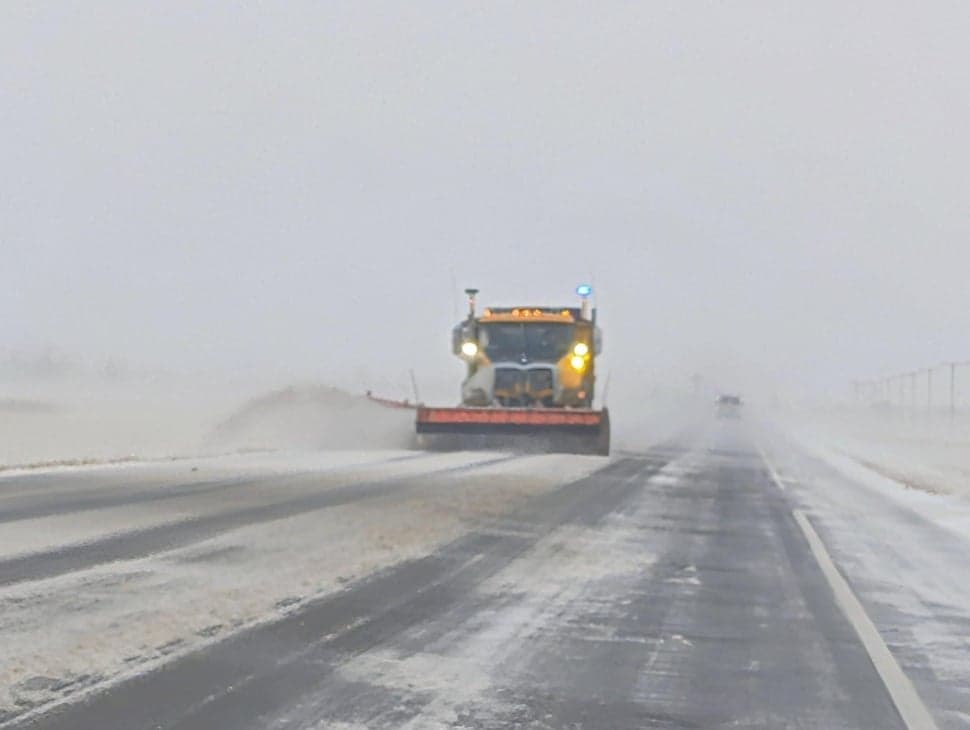
Early Winter Blizzard Paralyzes Southern Alberta and Saskatchewan
National News
- 02
British Columbia Faces Flash-Freeze After Weeks of Destructive Storms
National News
 03
First Nations Health Watchdog Investigates Catastrophic Pediatric Surgery in Saskatchewan
National News
 04
Saskatchewan RCMP Arrests Surge in Pelican Narrows Drug and Crime Bust
National News
- 05
Belleville Police Dismantle Major Drug and Weapons Network in Project Synergy
National News
- 06
PM Carney Meets Trump at APEC Amid Trade Diversification Push
National News
 07
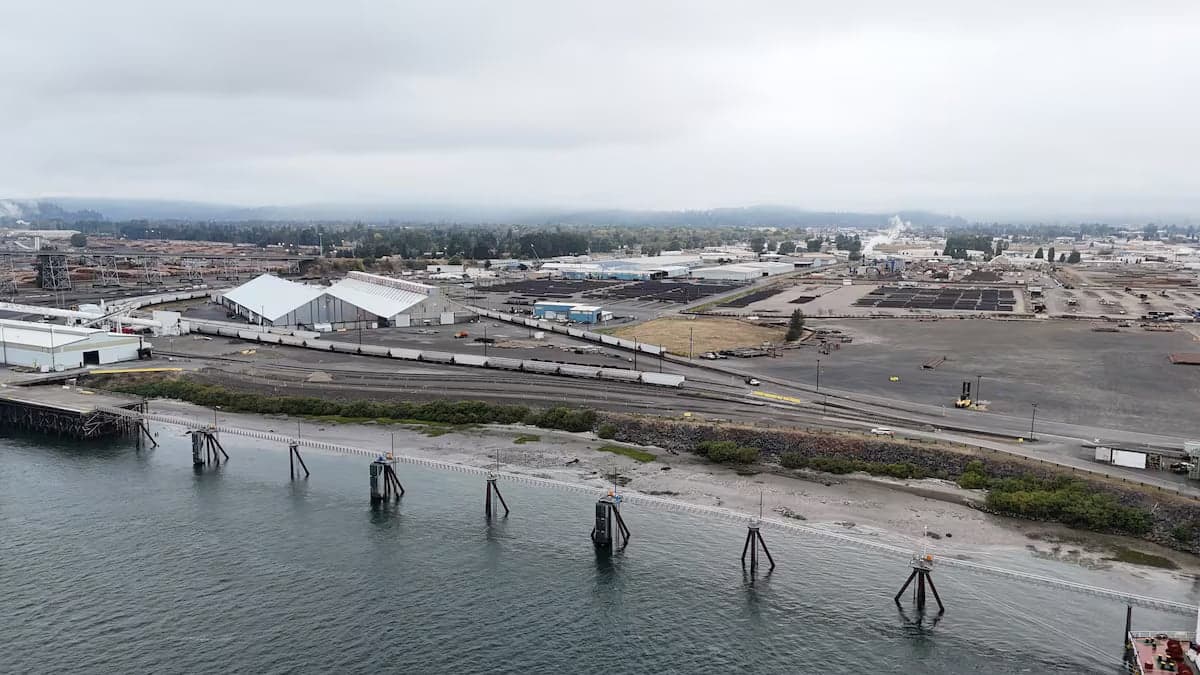
Nutrien Advances Deal for Washington State Export Terminal, Bypassing B.C. Ports
National News
 08
Competition Bureau Investigates Gap and Old Navy for Deceptive Pricing
National News
 09
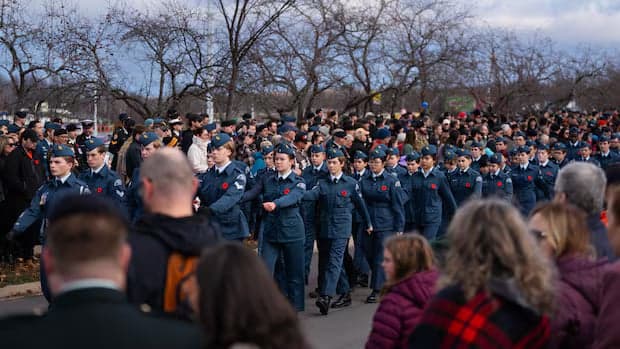
Military Cadets Stand Down Due to Strained Defence Budgets
National News
 10
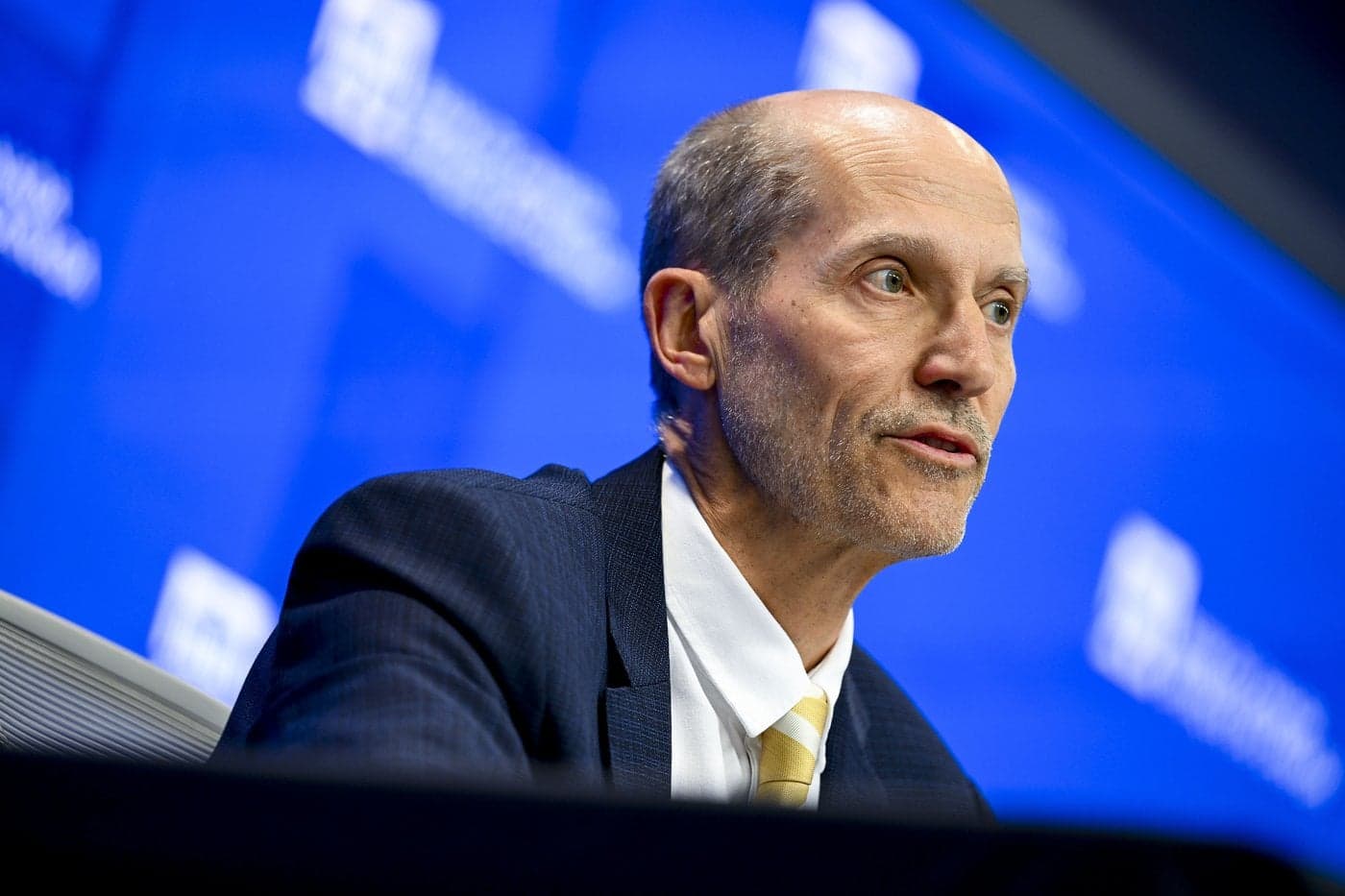
Bank of Canada Rejects Forward Guidance Amid Economic Uncertainty
National News
- 11
IRCC Overhauls Express Entry for Grant-Funded University Researchers
National News
 12
Canadian Citizenship Application Backlog Soars to 139,000, Wait Times Reach 35 Months
National News
 13
Unseasonable Heat Ridge Grips Central and Eastern Canada
National News
- 14
Toronto General Hospital Deploys North America's First Multi-Position CT Scanner
National News
 15
Historic Trilateral Summit: Trump, Xi, Putin Meet in Shenzhen Amid Global Crises
World & Geopolitics
 16
Trilateral APEC Summit Reshapes Great-Power Diplomacy, Straining Alliances
World & Geopolitics
 17
Ukraine Cripples Crimean Bridge's Rail Line in Third Strike, Halting Russian Logistics
World & Geopolitics
- 18
France Admits Deploying Military Specialists to Ukraine, Russia Warns of Direct Participation
World & Geopolitics
 19
Iran Strikes Kuwaiti Air Base, Israel Urges Joint U.S. Strikes Amid Gulf Escalation
World & Geopolitics
 20
Persian Gulf Escalates: Iran Strikes Kuwaiti and Bahraini Bases in Retaliation for U.S. Qeshm Raid
World & Geopolitics
 21
U.S. and Venezuela Sign Military Cooperation Pact, Restoring Ties in Caracas
World & Geopolitics
- 22
Five EU Nations Partner with Rwanda for Offshore Asylum Deportation Hubs
World & Geopolitics
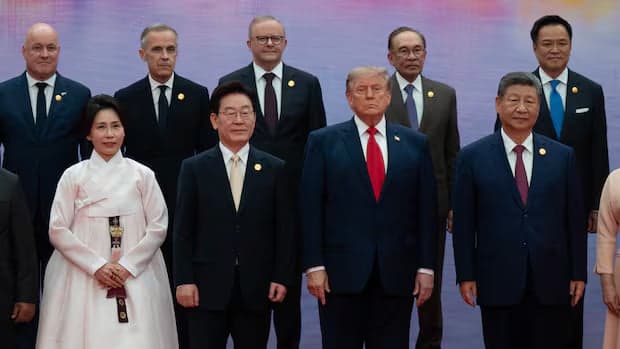 23
Carney and Trump Hold Sideline Talks at APEC Amid Strained Canada-US Trade Relations
World & Geopolitics
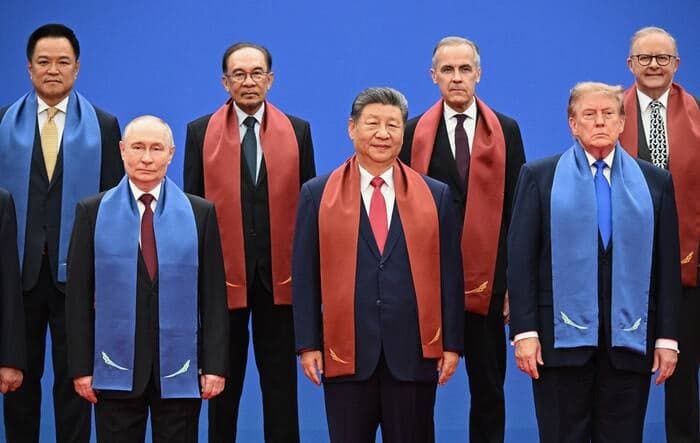 24
Great-Power Dynamics Dominate APEC as Trump, Xi, and Putin Engage
World & Geopolitics
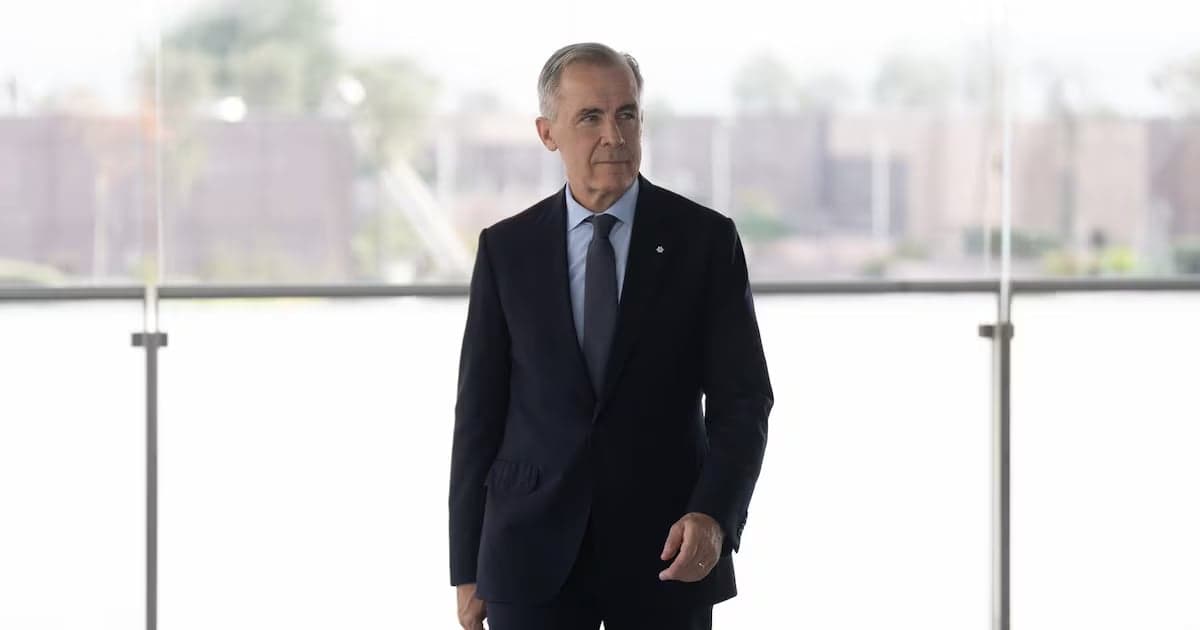 25
Canada Secures $400M Trade Pact with China, Diversifying Exports
World & Geopolitics
 26
Warsaw P-TEC Meeting Advances Transatlantic LNG and Nuclear Energy Security
World & Geopolitics
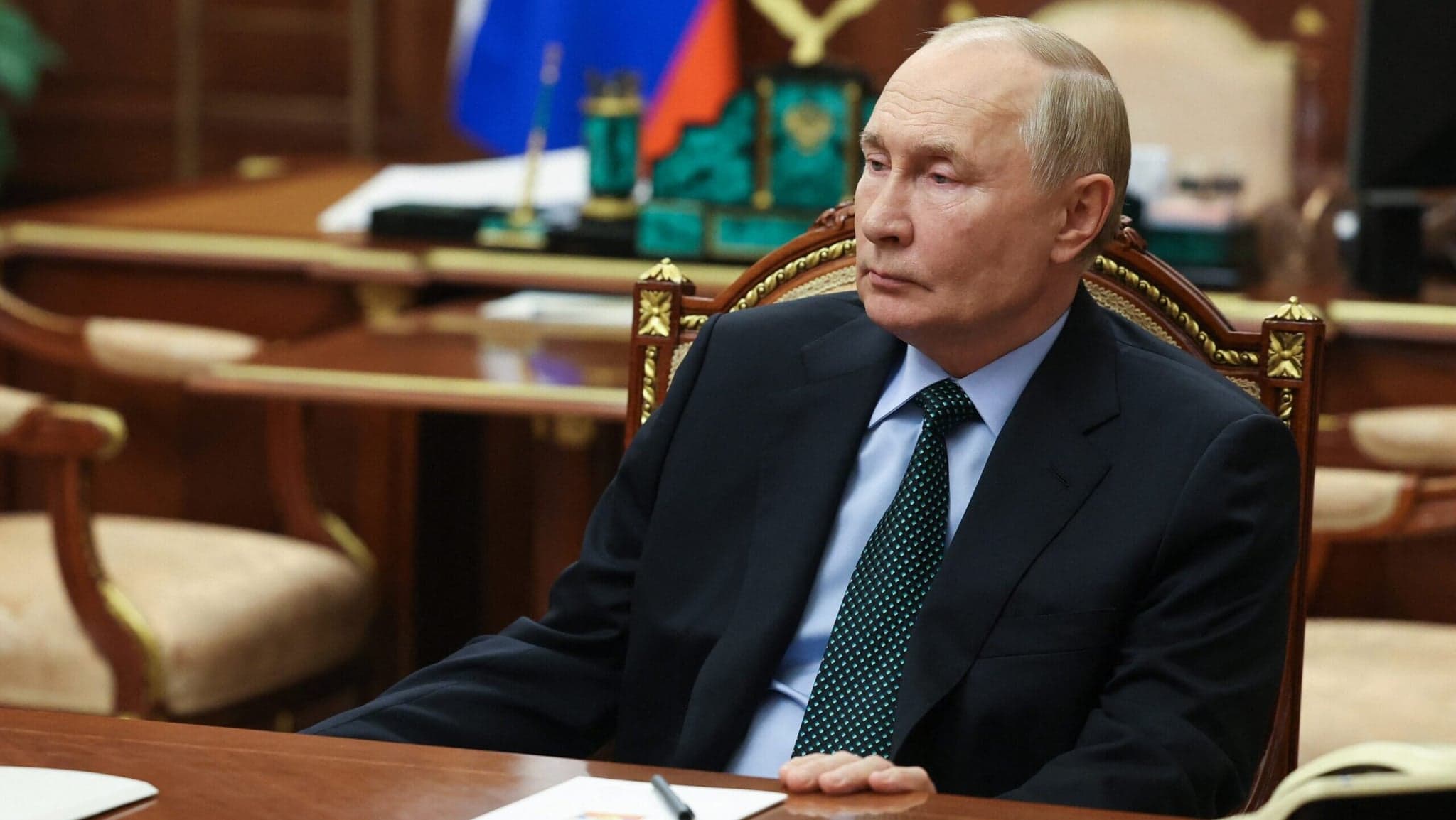 27
Russia Demands Finland's NATO Exit as Peace Precondition, Testing Alliance Unity
World & Geopolitics
- 28
Global Supply Chains Exposed: New Report Reveals Systemic Vulnerabilities in Trade
World & Geopolitics
 29
COP31 Antalya Deadlocked Over Fossil Fuel Phaseouts and Critical Minerals
World & Geopolitics
 30
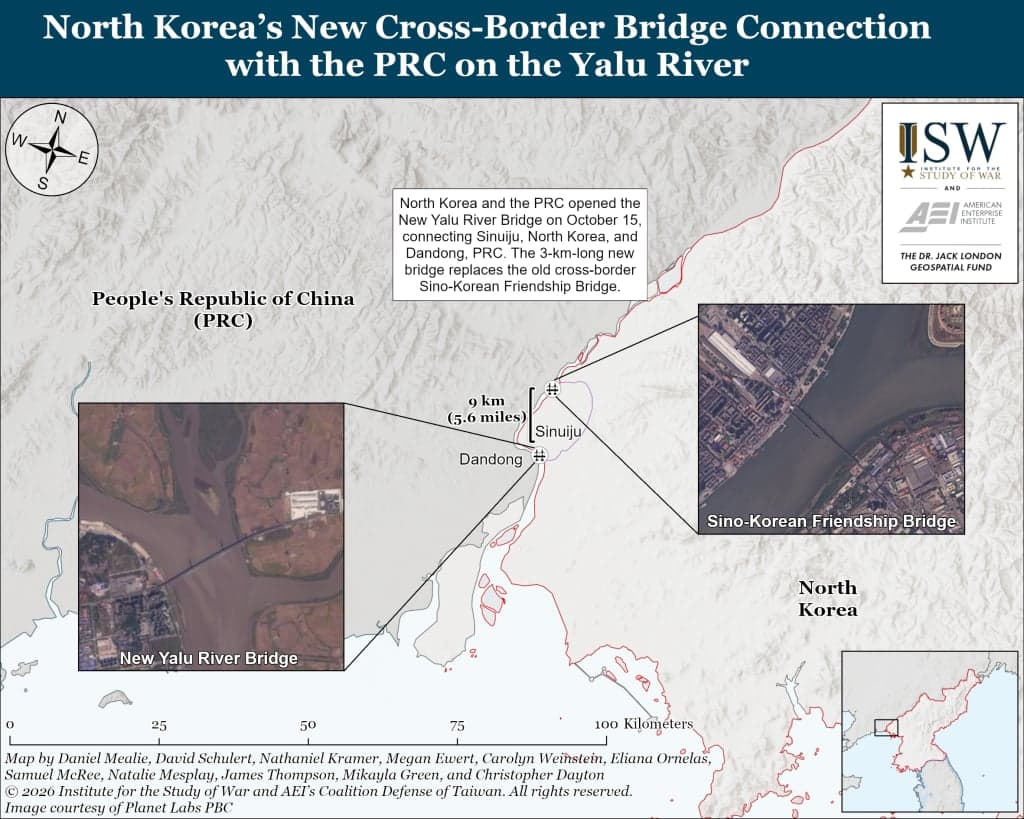
North Korea Accelerates Naval Buildup and Nuclear Defiance Ahead of Summit Diplomacy
World & Geopolitics
 31
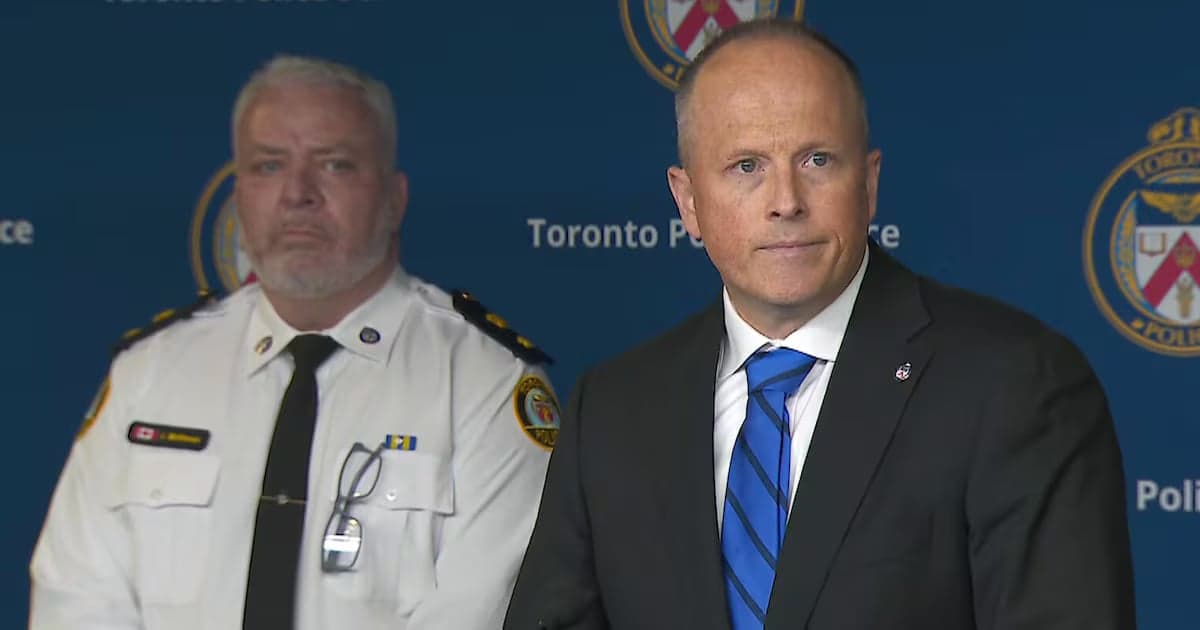
GTA Towing Syndicate Dismantled: Project Swords Uncovers Murder Plots and TPS Contract Links
City News
 32
Manhunt Intensifies for Etobicoke Double-Homicide Suspect
City News
 33
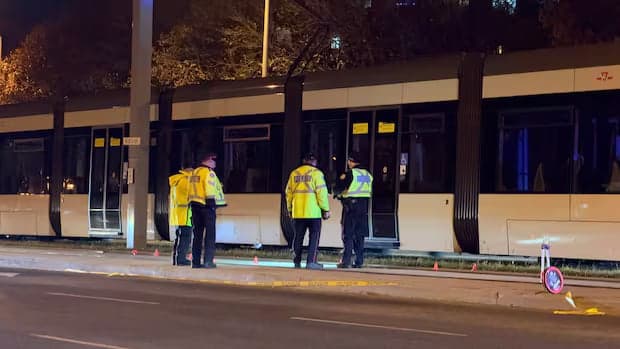
Fatal Crosstown LRT Collision Renews Safety Concerns on Line 5
City News
 34
Toronto City Council Convenes New Term Focused on Housing Affordability and Infrastructure
City News
- 35
Mayor Chow Charts Second Term Priorities: Housing, Transit Affordability, and Tenant Protection in Toronto
City News
 36
Toronto Council Approves Phase Two of Purpose-Built Rental Housing Incentives Program
City News
 37
Ontario Enhances Penalties for Excessive Vehicle Noise and Modifications
City News
 38
Ontario Introduces Stricter Fines and Penalties for Loud Vehicles and Street Modifications
City News
 39
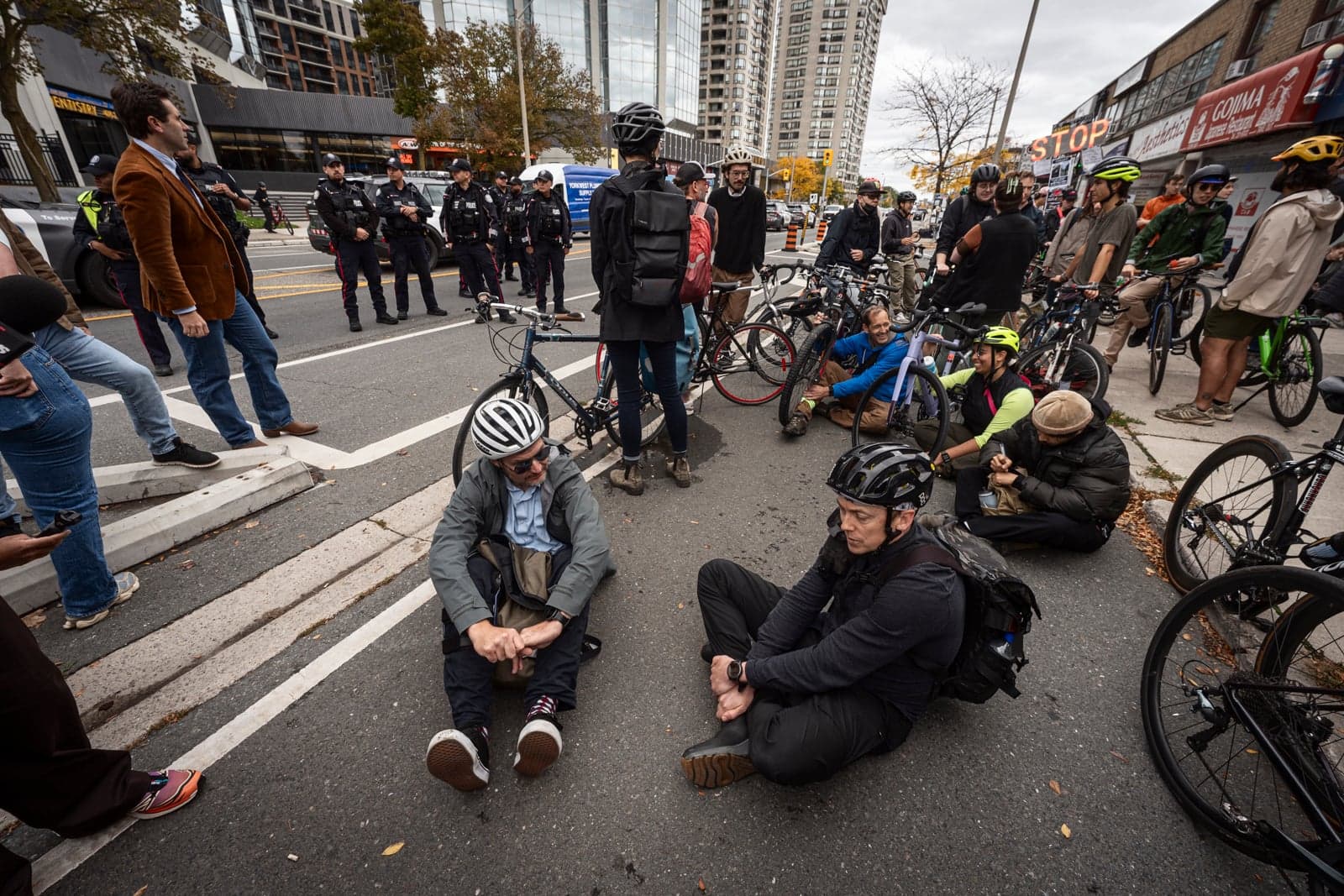
Ontario Transit Policy Clashes Spark Protests Over Bike Lane Removals
City News
 40
AFC Toronto Clinches Historic Northern Super League Title, Three Players Called to National Team
City News
 41
New Toolkit Launched to Accelerate Supportive Housing Development in Greater Toronto Area
City News
 42
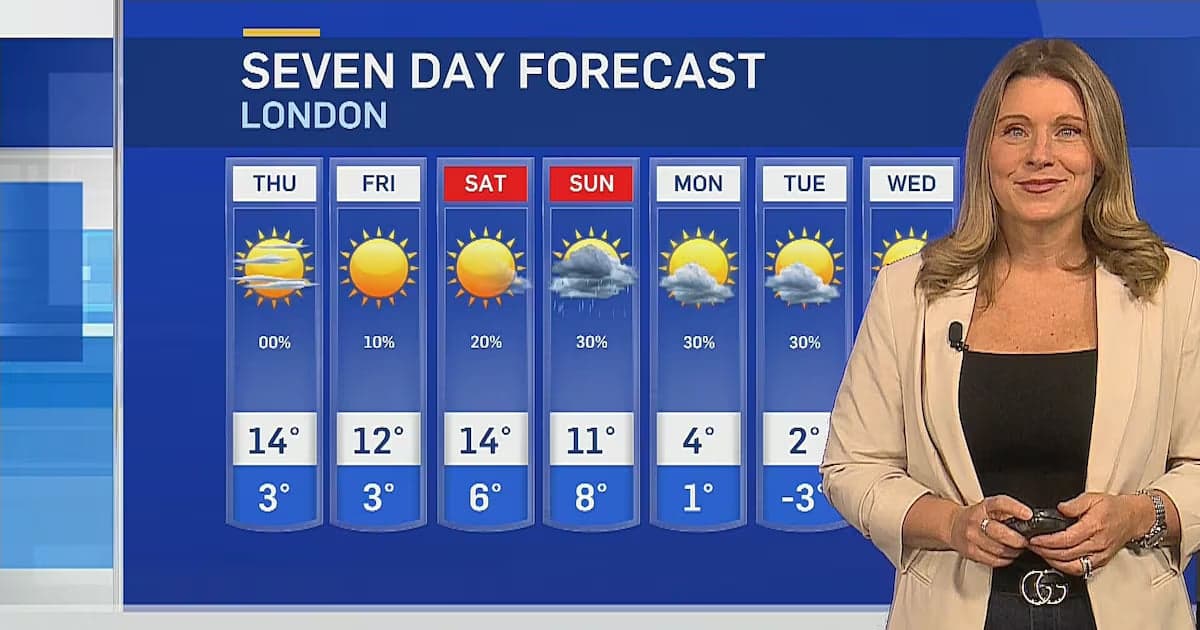
Unseasonable November Warmth and Fog Blanket the Greater Toronto Area
City News
 43
Blue Jays and Mets Vie for Tarik Skubal in Record-Breaking Free Agency Showdown
Sports
 44
Tarik Skubal Sweepstakes Narrows: Blue Jays and Mets in Historic Bidding War
Sports
- 45
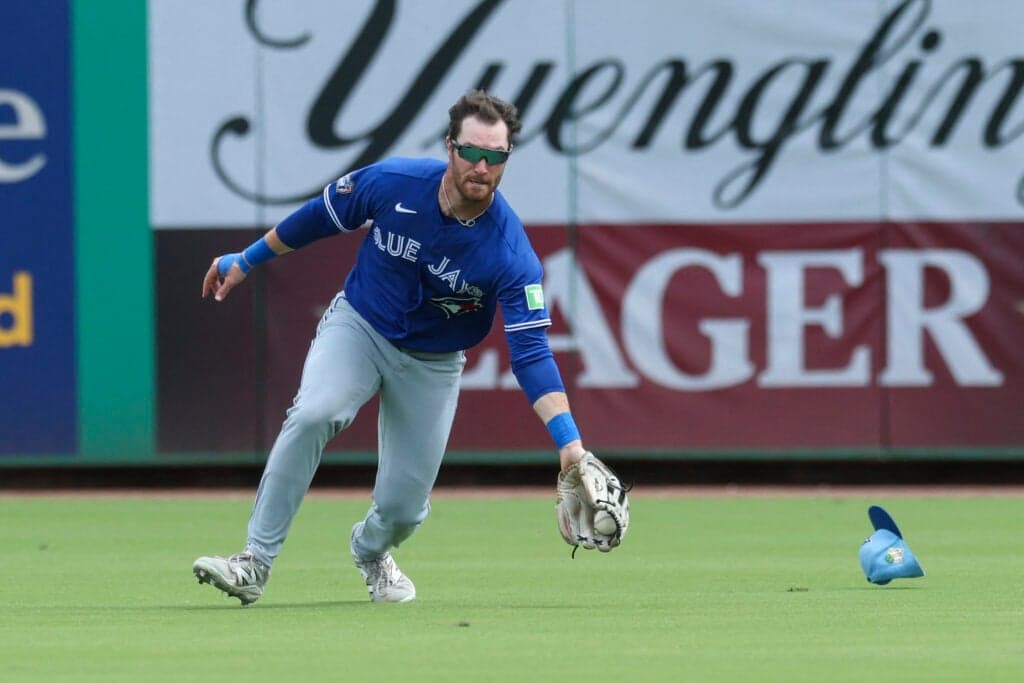
Blue Jays Lead Race for Ace Tarik Skubal, Poised for Record-Breaking Contract
Sports
 46
Vladimir Guerrero Jr. Traded to Tigres del Licey in Dominican Winter League Blockbuster
Sports
 47
Raptors Exploring Trades for Barrett, Quickley, Poeltl Amid Slow Start
Sports
 48
Raptors Extend Losing Streak to Six Amid Deepening Injury Crisis
Sports
 49
Raptors' Sixth Straight Loss Highlights Structural Issues Amidst Player Absences
Sports
 50
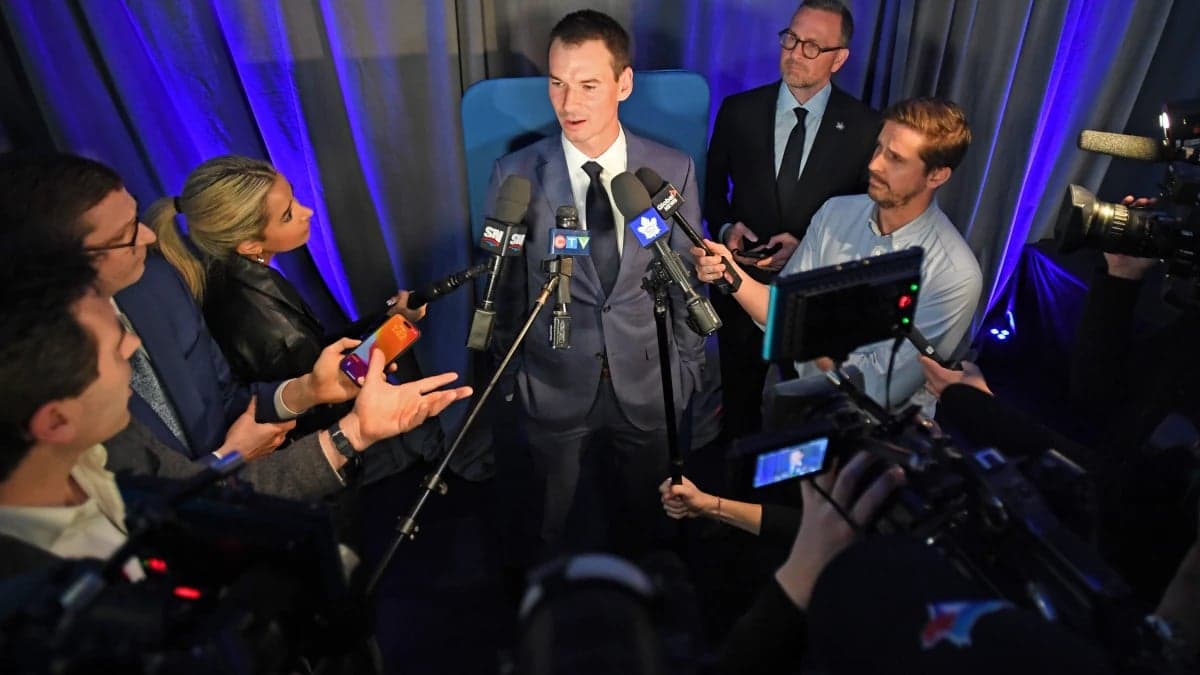
Maple Leafs Front Office Rejects Panic Trades Amid Seven-Game Losing Skid
Sports
 51
Maple Leafs Front Office Resists Trades Amidst Losing Streak, Monitors Edvinsson
Sports
 52
Maple Leafs Pursue Red Wings Defenseman Simon Edvinsson Amid Slump
Sports
 53
Blue Jays Protect Top Prospects, Finalize 40-Man Roster Ahead of Rule 5 Draft
Sports
 54
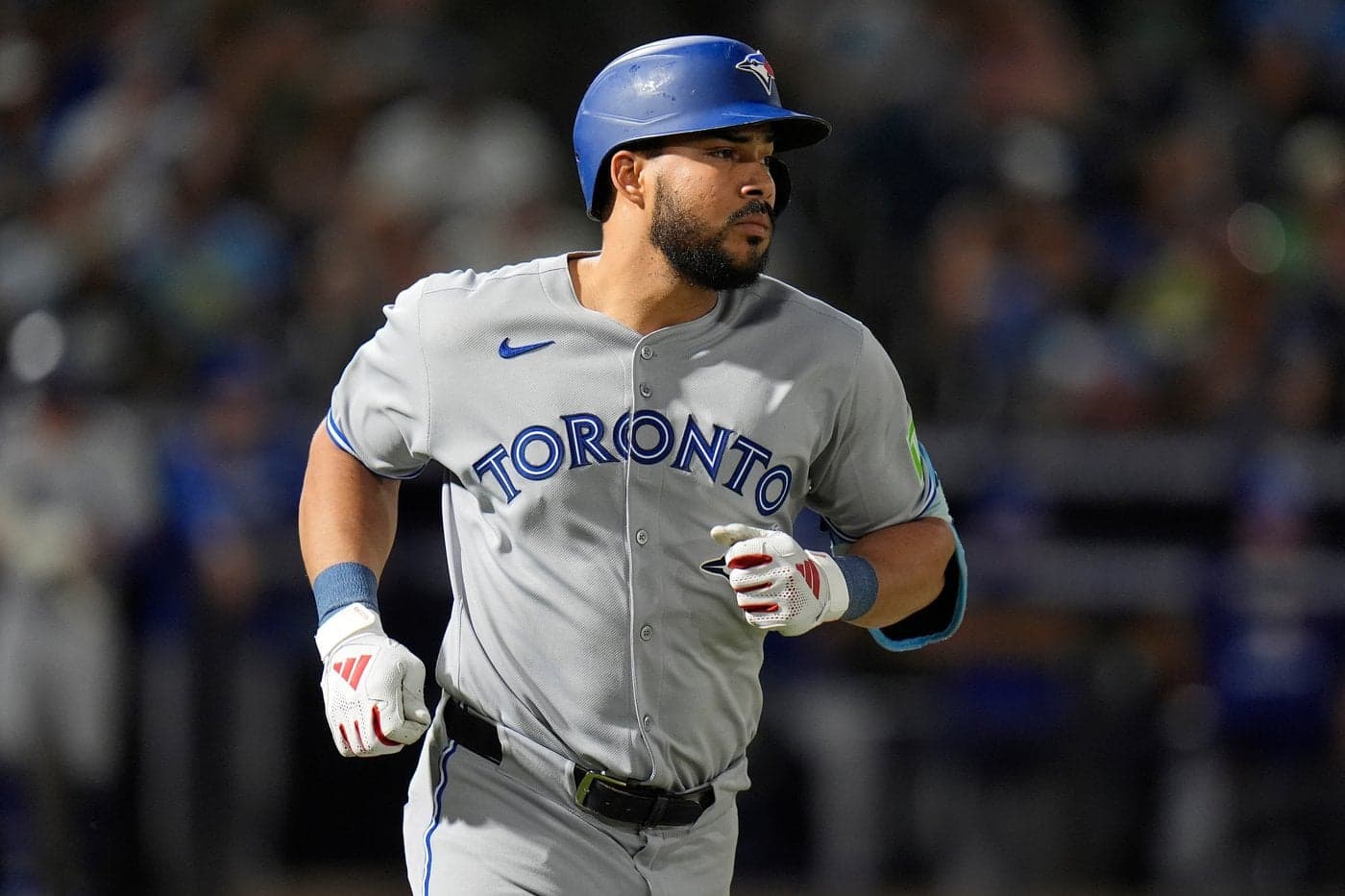
Blue Jays and Rogers Face Scrutiny Over Silence on Santander's Social Media Controversy
Sports
See all 54 as a listHide the list
- Early Winter Blizzard Paralyzes Southern Alberta and Saskatchewan
- British Columbia Faces Flash-Freeze After Weeks of Destructive Storms
- First Nations Health Watchdog Investigates Catastrophic Pediatric Surgery in Saskatchewan
- Saskatchewan RCMP Arrests Surge in Pelican Narrows Drug and Crime Bust
- Belleville Police Dismantle Major Drug and Weapons Network in Project Synergy
- PM Carney Meets Trump at APEC Amid Trade Diversification Push
- Nutrien Advances Deal for Washington State Export Terminal, Bypassing B.C. Ports
- Competition Bureau Investigates Gap and Old Navy for Deceptive Pricing
- Military Cadets Stand Down Due to Strained Defence Budgets
- Bank of Canada Rejects Forward Guidance Amid Economic Uncertainty
- IRCC Overhauls Express Entry for Grant-Funded University Researchers
- Canadian Citizenship Application Backlog Soars to 139,000, Wait Times Reach 35 Months
- Unseasonable Heat Ridge Grips Central and Eastern Canada
- Toronto General Hospital Deploys North America's First Multi-Position CT Scanner
- Historic Trilateral Summit: Trump, Xi, Putin Meet in Shenzhen Amid Global Crises
- Trilateral APEC Summit Reshapes Great-Power Diplomacy, Straining Alliances
- Ukraine Cripples Crimean Bridge's Rail Line in Third Strike, Halting Russian Logistics
- France Admits Deploying Military Specialists to Ukraine, Russia Warns of Direct Participation
- Iran Strikes Kuwaiti Air Base, Israel Urges Joint U.S. Strikes Amid Gulf Escalation
- Persian Gulf Escalates: Iran Strikes Kuwaiti and Bahraini Bases in Retaliation for U.S. Qeshm Raid
- U.S. and Venezuela Sign Military Cooperation Pact, Restoring Ties in Caracas
- Five EU Nations Partner with Rwanda for Offshore Asylum Deportation Hubs
- Carney and Trump Hold Sideline Talks at APEC Amid Strained Canada-US Trade Relations
- Great-Power Dynamics Dominate APEC as Trump, Xi, and Putin Engage
- Canada Secures $400M Trade Pact with China, Diversifying Exports
- Warsaw P-TEC Meeting Advances Transatlantic LNG and Nuclear Energy Security
- Russia Demands Finland's NATO Exit as Peace Precondition, Testing Alliance Unity
- Global Supply Chains Exposed: New Report Reveals Systemic Vulnerabilities in Trade
- COP31 Antalya Deadlocked Over Fossil Fuel Phaseouts and Critical Minerals
- North Korea Accelerates Naval Buildup and Nuclear Defiance Ahead of Summit Diplomacy
- GTA Towing Syndicate Dismantled: Project Swords Uncovers Murder Plots and TPS Contract Links
- Manhunt Intensifies for Etobicoke Double-Homicide Suspect
- Fatal Crosstown LRT Collision Renews Safety Concerns on Line 5
- Toronto City Council Convenes New Term Focused on Housing Affordability and Infrastructure
- Mayor Chow Charts Second Term Priorities: Housing, Transit Affordability, and Tenant Protection in Toronto
- Toronto Council Approves Phase Two of Purpose-Built Rental Housing Incentives Program
- Ontario Enhances Penalties for Excessive Vehicle Noise and Modifications
- Ontario Introduces Stricter Fines and Penalties for Loud Vehicles and Street Modifications
- Ontario Transit Policy Clashes Spark Protests Over Bike Lane Removals
- AFC Toronto Clinches Historic Northern Super League Title, Three Players Called to National Team
- New Toolkit Launched to Accelerate Supportive Housing Development in Greater Toronto Area
- Unseasonable November Warmth and Fog Blanket the Greater Toronto Area
- Blue Jays and Mets Vie for Tarik Skubal in Record-Breaking Free Agency Showdown
- Tarik Skubal Sweepstakes Narrows: Blue Jays and Mets in Historic Bidding War
- Blue Jays Lead Race for Ace Tarik Skubal, Poised for Record-Breaking Contract
- Vladimir Guerrero Jr. Traded to Tigres del Licey in Dominican Winter League Blockbuster
- Raptors Exploring Trades for Barrett, Quickley, Poeltl Amid Slow Start
- Raptors Extend Losing Streak to Six Amid Deepening Injury Crisis
- Raptors' Sixth Straight Loss Highlights Structural Issues Amidst Player Absences
- Maple Leafs Front Office Rejects Panic Trades Amid Seven-Game Losing Skid
- Maple Leafs Front Office Resists Trades Amidst Losing Streak, Monitors Edvinsson
- Maple Leafs Pursue Red Wings Defenseman Simon Edvinsson Amid Slump
- Blue Jays Protect Top Prospects, Finalize 40-Man Roster Ahead of Rule 5 Draft
- Blue Jays and Rogers Face Scrutiny Over Silence on Santander's Social Media Controversy
Section 1 of 4
National News
14 stories · 7 min skim
National News
2 min read
Early Winter Blizzard Paralyzes Southern Alberta and Saskatchewan
A high-impact snowstorm delivered a sudden and disruptive transition to winter across the Canadian Prairies, dumping heavy, wet snow and stranding motorists across southern Alberta and southwestern Saskatchewan. Snowfall totals reached 20-30 centimeters, with localized areas nearing 40 centimeters, severely compromising transportation infrastructure and causing numerous traffic collisions. The storm also introduced logistical pressures for the agricultural economy, forcing livestock producers to expedite winter feeding regimens.
Read the full storyFold the full story2 min · 8 sources
A high-impact late-autumn snowstorm delivered a sudden and disruptive transition to full winter across the Canadian Prairies, dumping heavy, wet snow and stranding motorists across southern Alberta and southwestern Saskatchewan[1][2][3]. Originating as a low-pressure system pushing north from Montana and Wyoming, the storm collided with a block of Arctic air wedged against the foothills, causing precipitation to intensify rapidly[1]. Environment and Climate Change Canada (ECCC) maintained widespread snowfall warnings and special weather statements throughout the region as snowfall totals climbed steeply[1][2]. Swaths of southeastern Alberta - including Lethbridge, Taber, Brooks, Cardston, and the Cypress Hills - recorded accumulations between 20 and 30 centimetres, with localized elevation pockets nearing 40 centimetres[2]. In Lethbridge, where the typical monthly snowfall for all of November is 16.4 centimetres, the storm delivered well over a full month’s worth of precipitation in under 36 hours[2].
The rapid accumulation and slippery wet snow severely compromised transportation infrastructure throughout Wednesday and into Thursday[1][3]. In Calgary, where between 10 and 15 centimetres fell, morning and evening commutes slowed to a crawl[2][3]. The Calgary Police Service reported dozens of traffic collisions within hours, including ten hit-and-run crashes and multiple injury collisions as heavy slush turned into packed ice[3]. Major arterial corridors - most notably Deerfoot Trail, Stoney Trail, and sections of the Trans-Canada Highway - experienced severe bottlenecks, vehicle spin-outs, and lane closures[4][3]. The Alberta RCMP and the Alberta Motor Association (AMA) issued urgent advisories urging residents across southern Alberta to postpone non-essential travel, citing zero-visibility conditions in open rural stretches where ditched commercial haulers and passenger vehicles hampered snow-clearing operations[5][3].
Beyond municipal road networks, the storm introduced abrupt logistical and operational pressures for the regional agricultural economy[6]. Livestock producers and cattle ranchers in southern Alberta and southwestern Saskatchewan, who had been enjoying an unusually mild November, were forced to expedite winter feeding regimens and secure herd shelters against the wet snow, which clings to livestock coats and elevates hypothermia risks[6][3]. Rural transport routes serving the agricultural supply chain faced delays, while municipal public works departments mobilized full fleets of graders and salt trucks to prevent roadways from bonding with the slush ahead of a severe cold snap[7][3].
Meteorological analysts noted that the setup was fueled by an efficient moisture feed interacting with an Arctic boundary, transforming what looked like a modest low into a localized snowmaker[1][2]. Forecasters from CTV and The Weather Network noted that the storm served as the formal opening salvo of winter after weeks of above-seasonal warmth[8][3]. As the storm system began tapering off into Saskatchewan, meteorologists warned that temperatures would plunge sharply into the minus teens across the Prairies, locking the freshly fallen snow into thick ice and complicating regional clean-up efforts into the weekend[7][5].
- Alberta
- Saskatchewan
- Calgary
National News
2 min read
British Columbia Faces Flash-Freeze After Weeks of Destructive Storms
Coastal British Columbia transitioned from a prolonged barrage of wind and rainstorms into a freezing cold pattern, triggering emergency welfare measures across the Lower Mainland. Over the preceding two weeks, relentless storms battered the coastline, causing moderate flooding. The abrupt drop in temperatures prompted an Extreme Weather Alert in Vancouver, activating emergency shelter protocols for vulnerable residents. Simultaneously, infrastructure recovery continued amid fallen timber and damaged distribution lines.
Read the full storyFold the full story2 min · 10 sources
Coastal British Columbia transitioned from a prolonged barrage of ferocious wind and rainstorms into a freezing cold pattern, triggering emergency welfare measures across the Lower Mainland[1][2]. Over the preceding two weeks, a relentless series of Pacific frontal boundaries and deep marine depressions battered the coastline, culminating in wind gusts as high as 156 km/h at offshore stations like Solander Island and hurricane-force gusts reaching coastal communities on Vancouver Island and Haida Gwaii[1][3][4]. While the relentless downpours pushed rivers in the Sea-to-Sky and inland valleys into moderate flood stages, the weather pattern shifted abruptly on November 18 and 19 as moisture pushed inland and an Arctic ridge forced freezing continental air toward the coastline[1][2][3].
The abrupt drop in temperatures prompted the City of Vancouver and regional partners to issue an Extreme Weather Alert, effective through November 19, activating emergency overnight shelter protocols[2]. With overnight temperatures falling near or below 0°C and heightened wind chill factors, non-profit operators and municipal housing agencies mobilized additional cold-weather bed capacity to safeguard vulnerable and unhoused residents[2]. Facilities including Directions Youth Services Centre, The Salvation Army Belkin House, the Powell Street Getaway, OPS Overnight Shelter on East Hastings, and community hubs in Kiwassa and Marpole opened their doors as part of the coordinated humanitarian response to prevent cold-exposure casualties[2].
Simultaneously, infrastructure recovery continued across communities grappling with recent storm impacts[5][3]. Forestry crews and BC Hydro technicians worked to stabilize coastal distribution lines and clear fallen timber brought down by sustained gale-force winds[6][4]. Meanwhile, in the British Columbia Central and Northern Interior, stable high pressure coupled with temperature inversions prompted the Ministry of Environment and Parks, alongside the Northern Health Authority, to issue air quality advisories for communities such as Vanderhoof and Smithers[7][8]. Trapped particulate matter from heating and industrial emissions forced health officials to advise residents with chronic respiratory ailments, seniors, and infants to limit outdoor exertion[7][8].
The convergence of coastal storm damage, interior air stagnation, and urban freezing highlights British Columbia’s growing exposure to multi-hazard transition periods during the late autumn[9][10][7]. Environmental experts emphasized that while coastal infrastructure is generally engineered to absorb heavy precipitation, sudden flash freezes following saturated conditions amplify the vulnerability of roads, water mains, and urban forestry canopy[9][2].
- British Columbia
- Vancouver
- Lower Mainland
National News
2 min read
First Nations Health Watchdog Investigates Catastrophic Pediatric Surgery in Saskatchewan
Saskatchewan's First Nations Health Ombudsperson is investigating the medical treatment of a four-year-old boy who suffered catastrophic organ loss after a routine appendectomy. The child underwent multiple surgeries, leading to the excision of his small intestine, and remains in critical condition awaiting a transplant. His family alleges systemic medical negligence and a failure to communicate complications promptly.
Read the full storyFold the full story1 min · 5 sources
Saskatchewan’s First Nations Health Ombudsperson Office launched a formal investigation into the medical treatment of four-year-old Sheldon OneBear Rosebluff, who suffered catastrophic organ loss following care for a routine appendicitis diagnosis[1][2]. At a press briefing held in Saskatoon alongside the Federation of Sovereign Indigenous Nations (FSIN) and Cowessess First Nation Chief Erica Beaudin, the child’s family detailed a series of deteriorating interventions that culminated in the total excision of his small intestine[1][3]. Rosebluff remains in critical condition in the intensive care unit at the Jim Pattison Children's Hospital in Saskatoon, entirely dependent on total parenteral nutrition and awaiting a life-saving small intestine transplant[1][4][5].
According to the child’s aunt and primary caregiver, Kristin Lerat, Rosebluff underwent an initially uneventful appendectomy in Regina in September[1]. However, his condition worsened drastically on October 24 due to an acute bowel obstruction[1][4]. Over the subsequent week, the boy underwent two emergency surgical procedures in Regina within 24 hours, was airlifted to Saskatoon, and underwent two additional surgical operations[3]. Surgeons subsequently discovered that blood supply to his small intestine had been cut off, resulting in irreversible tissue necrosis[3][4]. The family has formally alleged systemic medical negligence and a failure by clinical teams at Regina General Hospital to communicate surgical complications promptly[2][5]. Compounding the crisis, Lerat revealed that the Saskatchewan Ministry of Social Services revoked her medical decision-making authority once the boy reached critical condition, transferring life-altering determinations to provincial authorities[3][4].
The tragedy has prompted parallel probes and reignited national scrutiny over health equity for Indigenous populations[1]. First Nations Health Ombudsperson Dianne Lafond confirmed her office is investigating both the clinical decisions leading to the child's organ loss and the jurisdictional removal of the caregiver's parental advocacy rights, with a complete investigative report slated for February 2027[1][5]. The Saskatchewan Health Authority (SHA) confirmed it has initiated its own internal quality-of-care review[1][4]. First Nations leaders highlighted the case as an example of systemic institutional biases, demanding broader oversight over provincial pediatric surgical procedures and greater transparency in child welfare interactions with hospital administration[1][4].
- Saskatchewan First Nations Health Ombudsperson Office
- Sheldon OneBear Rosebluff
- Federation of Sovereign Indigenous Nations
National News
2 min read
Saskatchewan RCMP Arrests Surge in Pelican Narrows Drug and Crime Bust
Saskatchewan RCMP concluded a five-week enforcement surge in Pelican Narrows, arresting 119 individuals and laying 89 charges. The operation targeted violent offenders, illegal firearms, and drug trafficking networks that have destabilized the community. Police seized firearms, methamphetamine, cocaine, and other illicit substances. This surge followed an escalation of violence and a significant increase in local crime rates over the past decade.
Read the full storyFold the full story1 min · 4 sources
The Saskatchewan Royal Canadian Mounted Police announced the conclusion of an intensive, intelligence-led enforcement surge in the northern remote community of Pelican Narrows, resulting in 119 arrests and 89 criminal and drug charges[1][2]. The five-week deployment, conducted between October 1 and November 5 by the specialized Saskatchewan Enforcement Response Teams (SERT), mobilized 29 officers from 14 operational units across the province to bolster the local detachment[1][2]. Police executed 83 outstanding arrest warrants and four search warrants, conducted 222 targeted traffic stops, and laid 84 new Criminal Code charges alongside five charges under the Controlled Drugs and Substances Act[1].
The enforcement operation targeted violent offenders, illegal firearms, and organized trafficking networks that have destabilized the community of approximately 3,700 residents, located about 285 kilometres northeast of Prince Albert[2]. Search operations yielded 10 firearms, 1.1 kilograms of methamphetamine, 302 grams of cocaine, and 19 grams of other illicit substances[1][2]. The deployment followed an escalation of violence over the past year, in an area where local crime rates have surged by 50 percent over the past decade[2]. Notable incidents precipitating the intervention included multiple fatal shootings - including an October gun battle involving teenagers that occurred during the deployment itself, a fatal daytime shooting near the local medical clinic in June, and the discovery of the remains of 16-year-old Ontario youth Jay’siiah Webb-Long in May[2][3].
Leadership from both the RCMP and the Peter Ballantyne Cree Nation (PBCN) emphasized the necessity of targeted interdiction while acknowledging its limitations[1][4]. Staff Sgt. Éric Desfossés, north region manager for SERT, stressed that while rapid-deployment strike units - including Crime Reduction Teams, the Gang Task Force, and the Warrant Enforcement Suppression Team - can effectively dismantle local illicit distribution hubs, law enforcement represents only one piece of the response[1][4]. Desfossés noted that long-term stabilization requires sustained interventions targeting systemic poverty, severe addictions, and gang recruitment[1][4]. PBCN Chief Peter Beatty echoed these sentiments, expressing support for the specialized surge while reiterating that First Nations residents deserve equal baseline safety and structural social supports to prevent recidivism[4].
- Saskatchewan RCMP
- Pelican Narrows
- SERT
National News
2 min read
Belleville Police Dismantle Major Drug and Weapons Network in Project Synergy
The Belleville Police Service, alongside the Ontario Provincial Police, has dismantled a significant drug and weapons distribution operation known as 'Project Synergy.' The investigation led to eight warrants, the arrest of six individuals, and 33 criminal charges. Seized items include handguns, long guns, ammunition, cocaine, fentanyl, methamphetamine, cash, and proceeds of crime.
Read the full storyFold the full story1 min · 3 sources
The Belleville Police Service, in coordination with the Ontario Provincial Police Provincial Operations Intelligence Bureau and the Quinte West OPP Street Crime Unit, dismantled a major organized drug and weapons distribution operation code-named "Project Synergy"[1][2]. The conclusion of the multi-month investigation saw law enforcement carry out eight coordinated Controlled Drugs and Substances Act warrants across multiple residences and three vehicles within the City of Belleville[1][2]. The tactical raids resulted in the arrest of six individuals who face a combined 33 criminal charges spanning commercial trafficking, weapons possession, and proceeds-of-crime violations[1][2].
Search teams seized a substantial cache of illegal armaments and narcotics, including two handguns, four long guns, a less-lethal self-defence firearm, and ammunition[1][2]. Investigators also seized 800 grams of cocaine, quantities of illicit fentanyl and crystal methamphetamine, $13,265 in Canadian currency, and over $400,000 worth of customized jewelry recognized as proceeds of crime[1][2]. Among those facing multiple indictments is 33-year-old Belleville resident Vaughan Cummings, who was charged with possession of Schedule I substances for the purpose of trafficking, possession of property obtained by crime over $5,000, careless firearm storage, and multiple counts of unauthorized weapons possession[1].
The takedown highlights the persistent migration of organized crime syndicates and illegal handgun trafficking outside major metropolitan hubs like Toronto into mid-sized urban corridors along the Highway 401 belt[1][2]. Municipal police leaders noted that the proliferation of illegal handguns combined with toxic drug mixtures - particularly fentanyl and methamphetamine - continues to place unprecedented pressure on municipal policing resources, paramedic first responders, and local emergency health infrastructure across eastern Ontario[1][2][3].
- Belleville Police Service
- Ontario Provincial Police
- Project Synergy
National News
2 min read
PM Carney Meets Trump at APEC Amid Trade Diversification Push
Prime Minister Mark Carney met with U.S. President Donald Trump at the APEC summit to discuss trade, following a period of tariff threats. Carney emphasized Canada's efforts to diversify trade relationships beyond North America, seeking new investment in infrastructure and easing restrictions on Chinese imports to boost agricultural and resource exports. The meeting aimed to maintain open communication channels and address ongoing trade friction.
Read the full storyFold the full story2 min · 9 sources
Prime Minister Mark Carney met face-to-face with U.S. President Donald Trump on the sidelines of the Asia-Pacific Economic Cooperation (APEC) Leaders’ Meeting in Shenzhen, China[1][2]. The bilateral encounter followed a period of elevated friction marked by cross-border tariff threats and stalled negotiations between Ottawa and Washington[3][4]. According to an official readout released following the private discussion, the two leaders addressed ongoing efforts to negotiate a mutually beneficial trade arrangement that protects jobs, improves affordability, and respects Canadian sovereignty and cultural institutions, with both sides agreeing to maintain open channels of communication[1][2].
The meeting came against the backdrop of an assertive Canadian foreign economic policy aimed at diversifying trade relationships beyond North America[5][4]. In public appearances leading up to his session with Trump, Carney dismissed the U.S. president’s previous assertion that Washington “holds all the cards” in bilateral negotiations[6]. “Our cards are that everyone else in the world wants to deal with us,” Carney remarked, asserting that “if the U.S. doesn’t want to do a deal, we’re busy”[6][5]. Earlier in the summit, Carney delivered a keynote address to international business executives urging direct Asian investment in Canadian infrastructure megaprojects, including pipelines and major export terminals, while formally easing restrictions on Chinese steel and aluminum imports to secure restored market access for Canadian pork, seafood, and agricultural goods[7][2][8].
The key figures shaping this high-stakes dynamic include Prime Minister Carney, President Donald Trump, Chinese President Xi Jinping, and Canadian trade negotiators seeking to insulate domestic industries from American tariff threats[7][1][4]. In discussions regarding American apprehension over Ottawa’s deepening ties with Beijing, Carney contended that Canada’s relationship with China - predominantly focused on natural resources and agricultural commodities rather than advanced semiconductors or sensitive defense technology - is not a primary concern for the Trump administration[2][9].
For Canadian industries and policymakers, the encounter marks a structural pivot toward strategic multi-alignment[7][5]. While trade experts caution that substituting the massive volume of the U.S. market remains economically difficult, Ottawa’s aggressive dealmaking across the Indo-Pacific has given Canadian negotiators greater leverage[4]. Domestic business groups have welcomed renewed market access in Asia, though cross-border logistics operators and manufacturing sectors remain anxious about the timeline for resolving tariff disputes with Washington[3][4].
- Mark Carney
- Donald Trump
- APEC
National News
2 min read
Nutrien Advances Deal for Washington State Export Terminal, Bypassing B.C. Ports
Nutrien Ltd. has secured agreements to develop a major potash export terminal at the Port of Longview in Washington State, bypassing Canadian Pacific gateways. The decision stems from years of logistics challenges, regulatory delays, and labor disputes affecting Canadian bulk commodity shipments. The new terminal aims to handle millions of tonnes of potash annually for Asian markets.
Read the full storyFold the full story1 min · 8 sources
In a major development for Western Canadian resource logistics, Saskatoon-based fertilizer giant Nutrien Ltd. secured key agreements to develop a massive potash export terminal at the Port of Longview in Washington State, opting to route substantial Canadian commodity exports outside British Columbia’s port system[1][2]. Commissioners at the Port of Longview unanimously voted to approve a site development agreement and a long-term ground lease with Nutrien for the vacant Berth 4 facility, advancing a private capital investment projected between US$500 million and US$1 billion[2][3].
The project emerges after years of mounting logistics challenges, regulatory delays, and recurring labor disputes that have disrupted bulk commodity shipments across Canada’s Pacific gateways[3][4]. Nutrien, the world’s largest producer of potash, historically moves the majority of its Saskatchewan output through Neptune Terminals in Vancouver and the Port of Saint John in New Brunswick, alongside existing terminal operations in Portland, Oregon[5][2]. Frustration expressed by the company and its export arm, Canpotex, regarding Canadian rail bottlenecks and Pacific port disruptions pushed the corporate leadership to seek dedicated deep-water capacity elsewhere in the Pacific Northwest[4][6].
Key players involved include Nutrien’s executive leadership, the Port of Longview Board of Commissioners, and Canadian transport officials[2][4]. Federal Transport Minister Steven MacKinnon had previously expressed sharp criticism of Canadian resource producers investing heavily in U.S. infrastructure at the expense of domestic supply chains[4]. Nutrien defended the move as complementary to its current Canadian operations, emphasizing that a final investment decision will take place by 2028 as technical and environmental permitting moves forward[5][4].
If completed around 2032, the Longview facility will handle between five million and eight million tonnes of Saskatchewan potash annually for delivery to fast-growing Asian markets, including China, India, and Japan[3][7]. The decision carries serious economic and political fallout for British Columbia and Ottawa, raising alarms among maritime industry leaders about Canada’s competitive standing and ability to attract major export infrastructure capital[3]. Domestically, the announcement has fueled debate across Western Canada over interprovincial trade policies, port reliability, and the efficiency of federal regulatory frameworks[8][3].
- Nutrien Ltd.
- Port of Longview
- British Columbia
National News
2 min read
Competition Bureau Investigates Gap and Old Navy for Deceptive Pricing
Canada's Competition Bureau has obtained a court order compelling Gap Inc. to provide records for an investigation into deceptive pricing and promotional tactics by Gap and Old Navy. The probe focuses on allegations of fake regular prices and the use of misleading marketing tactics like countdown timers and false scarcity claims.
Read the full storyFold the full story1 min · 4 sources
Canada’s Competition Bureau announced it has secured an order from the Federal Court of Canada compelling clothing retailers Gap and Old Navy to provide internal records, advancing a national investigation into deceptive pricing and promotional tactics[1][2]. Both retail banners are operated by Gap Inc., which maintains a significant footprint of brick-and-mortar stores and prominent e-commerce sites across the country[1].
The enforcement action follows a sharp escalation in consumer complaints received over the past year regarding false reference pricing, commonly referred to as "fake regular prices"[1][2]. The Competition Bureau is examining whether advertised discounts represented genuine price reductions from standard market prices, or whether regular prices were artificially inflated prior to sales promotions[1]. Investigators are also probing the use of aggressive digital marketing cues, including website countdown timers, urgency language such as "Only a Few Left" or "Selling Fast," and potentially manipulated popularity metrics designed to pressure shoppers[1].
The primary parties involved are the Competition Bureau of Canada, the Federal Court, and Gap Inc.[1][3] While the independent competition watchdog emphasized that the court order is an information-gathering mechanism and that no formal findings of wrongdoing have yet been established, it noted that the practices under review fall squarely under the deceptive marketing provisions of the Competition Act[1].
The investigation carries significant ramifications for the Canadian retail and e-commerce sectors, coming just ahead of the peak Black Friday and holiday shopping periods[1]. Federal regulators have increasingly cracked down on digital "dark patterns" that mislead consumers, putting retailers on notice that deceptive countdown clocks and false scarcity claims could draw substantial financial penalties under recently strengthened enforcement powers[1][2]. Consumer advocacy groups welcomed the court order as a necessary check on retail pricing transparency amid persistent household budget pressures[4][1].
- Competition Bureau of Canada
- Gap Inc.
- Old Navy
National News
2 min read
Military Cadets Stand Down Due to Strained Defence Budgets
The Canadian Armed Forces has suspended weekend training and activities for youth cadets nationwide until March due to budgetary shortfalls. This measure aims to control departmental operating costs amid pressures on everyday military budgets, despite significant capital expenditure commitments.
Read the full storyFold the full story1 min · 5 sources
Internal military communications revealed that the Canadian Armed Forces (CAF) has ordered a widespread suspension of weekend training, competitions, and activities for youth cadets across multiple regions of the country until March, citing internal budgetary shortfalls[1][2]. The directives, confirmed by Department of National Defence officials, require regional cadet commands to halt travel, specialized field exercises, and competitive events in an effort to rein in departmental operating costs[2].
The cuts expose a growing divide between the federal government’s top-line spending commitments and grassroots military operations[2]. While Ottawa has pledged tens of billions in capital expenditures to modernize continental air defense, acquire surveillance aircraft, and meet allied procurement obligations, everyday operational budgets within the military branches are under severe pressure[2][3]. Leaked emails obtained by media outlets indicate that regional support commands were instructed to curtail non-essential operational spending immediately after exceeding annual localized financial allocations[2].
The primary stakeholders affected by the freeze include thousands of Canadian youth enrolled in the Sea, Army, and Air Cadets, civilian instructors, volunteer sponsor committees, and military leadership within the Canadian Armed Forces and Department of National Defence[2]. Senior military leaders had previously faced criticism over operational budget squeezes that reduced paid service member participation in standard civic engagements, such as Remembrance Day ceremonies[3].
The suspension has drawn sharp pushback from community groups, veterans’ organizations, and military observers[4][3]. Critics argue that sidelining the cadet program undermines one of Canada’s most effective youth leadership institutions and compromises an essential recruitment pipeline at a time when the regular forces are struggling with acute personnel shortages[2][5]. The situation has intensified parliamentary pressure on defence leadership to clarify how operational funding is allocated internally and why front-line youth programs are being cut while capital acquisition budgets remain robust[2][3].
- Canadian Armed Forces
- Department of National Defence
- Cadets
National News
2 min read
Bank of Canada Rejects Forward Guidance Amid Economic Uncertainty
Bank of Canada Deputy Governor Toni Gravelle stated the central bank will not provide explicit forward guidance on future interest rate paths. Instead, policymakers are relying on scenario modeling due to volatile economic conditions. Gravelle argued that rigid guidance creates moral hazard and reduces operational flexibility for the bank.
Read the full storyFold the full story1 min · 5 sources
Speaking before the Edmonton Chamber of Commerce, Bank of Canada Deputy Governor Toni Gravelle rejected calls from market participants for the central bank to provide explicit forward guidance on its future interest rate trajectory[1][2]. Gravelle stated that monetary policymakers are leaning heavily on exploratory scenario modeling rather than rigid forward rate commitments, arguing that committing to fixed paths in an unpredictable global economy creates moral hazard in financial markets[1][3].
The central bank’s communications strategy comes as policymakers grapple with volatile energy prices, stubborn cost-of-living challenges, and complex trade pressures[1][2]. Gravelle highlighted that an alternative scenario published by the Bank in April - which modeled global crude prices remaining near $100 per barrel - accurately captured the inflationary conditions that materialized over the spring and summer[1][3]. That modeling helped inform the Governing Council’s decision late last month to hike the benchmark policy interest rate to 2.5%, marking the bank’s first rate increase in three years[1][3].
Key figures in this policy discourse include Deputy Governor Gravelle, the Bank of Canada Governing Council, and commercial financial institutions whose economists have pressed the central bank for clearer roadmaps[1][3]. Gravelle warned that overly prescriptive forward guidance risks causing financial institutions and market traders to “stop doing their homework,” blinding them to shifting economic fundamentals and reducing the central bank's operational flexibility[4][3].
Financial markets reacted swiftly to the central bank’s cautious tone[5][3]. Overnight index swaps indicated that bond markets are pricing in an approximately 60% probability of an additional interest rate increase at the Governing Council’s upcoming December 9 policy meeting, despite recent data showing localized softening in consumer demand[3]. Gravelle reaffirmed that the central bank’s primary mandate remains returning inflation reliably to its 2% target under its renewed agreement with the federal government, signaling to businesses and mortgage holders that borrowing costs could remain elevated or see further upward adjustment depending on incoming data[1][3].
- Bank of Canada
- Toni Gravelle
- Governing Council
National News
2 min read
IRCC Overhauls Express Entry for Grant-Funded University Researchers
Immigration, Refugees and Citizenship Canada has revised Express Entry eligibility to recognize Canadian academic employment for researchers funded through grants, stipends, or fellowships. This change allows individuals in roles like university professors and lecturers to count their grant-funded research experience towards permanent residency under the Canadian Experience Class and Federal Skilled Worker Program.
Read the full storyFold the full story1 min · 3 sources
Immigration, Refugees and Citizenship Canada implemented a substantive revision to the eligibility standards governing the Express Entry selection category for researchers with Canadian work experience[1]. Under the revised framework, the federal government will formally recognize Canadian academic employment and official job offers held by university professors and lecturers (NOC 41200) who receive remuneration through non-payroll channels, such as institutional stipends, fellowships, research grants, and bursaries[1]. The regulatory adjustment allows these individuals to credit their grant-funded research directly toward the criteria of the Canadian Experience Class (CEC) and the Federal Skilled Worker Program (FSWP), while unlocking valuable Comprehensive Ranking System points[1].
The reform addresses a long-standing structural impediment within Canada’s economic immigration system[2]. Previously, federal immigration regulations narrowly defined qualifying work experience as activities for which candidates received conventional wages or direct sales commission[2]. This legal definition routinely disqualified post-doctoral scholars, adjunct professors, and visiting research fellows who are customarily funded through third-party institutional foundations, research grants, or academic fellowships rather than direct employee payroll[1][2]. The Canadian academic sector had long warned that this technicality caused Canada to train and host high-calibre global scholars only to deny them permanent residency pathways, driving intellectual property and talent to rival international markets[1][2].
Simultaneously, IRCC introduced restrictions to preserve the category's high-skill focus by removing post-secondary teaching and research assistants (NOC 41201) from eligibility under the targeted researchers stream[1][3]. The department stated that the refinement ensures the targeted category remains restricted to candidates occupying advanced, autonomous university research roles[1]. The move reflects a broader strategic pivot by Ottawa to fine-tune economic immigration toward specialized, high-productivity innovation sectors while narrowing intake criteria for entry-level academic and student support roles[1].
- IRCC
- Express Entry
- Canadian Experience Class
National News
2 min read
Canadian Citizenship Application Backlog Soars to 139,000, Wait Times Reach 35 Months
The backlog for Proof of Canadian Citizenship applications has reached an unprecedented 139,200 cases, with official processing times now at 35 months. This surge is attributed to the implementation of Bill C-3, which abolished the 'first-generation limit' for citizenship by descent. The extended wait times impact applicants' ability to obtain passports, healthcare, and social insurance numbers.
Read the full storyFold the full story1 min · 4 sources
Federal administrative data published through IRCC’s processing tools revealed that the backlog for Proof of Canadian Citizenship applications (Form CIT 0001) expanded to an all-time high of 139,200 pending cases, driving official processing times to 35 months[1][1][2]. The new figures reflect an increase of 8,500 applications - a 6.5 percent surge - from October levels, fully erasing temporary processing gains and marking the highest inventory ever recorded by the department[1][2]. At current processing velocities, an individual applying for citizenship certification by descent from Canada or the United States faces an anticipated processing window stretching to October 2029, with applicants applying from outside North America facing queues exceeding 38 months due to international logistical intervals[1][2].
The mounting gridlock stems directly from the implementation of Bill C-3, which was passed by Parliament in December 2025 to abolish the controversial "first-generation limit" on foreign-born descendants of Canadian citizens[1][1][2]. When the legislation came into force, the pending national certificate inventory stood at roughly 40,400 files[1][2]. In the eleven months since the statutory relaxation, the active queue has swelled by more than 240 percent, outstripping the central processing throughput capacity at IRCC’s Case Processing Centre in Sydney, Nova Scotia[1][2]. Posted wait times have climbed steadily from 12 months in May 2026 to 25 months in August, 34 months in October, and now nearly three full years[1][2].
The expansion of wait times has generated significant downstream fallout for applicants and immigration practitioners[2]. Without an active citizenship certificate, foreign-born Canadians cannot obtain Canadian passports, register for provincial healthcare coverage, or secure social insurance numbers[3][2]. Legal analysts note that while IRCC has substantially reduced processing windows for specific employer-driven work permits and agricultural labor streams, family-class files, spousal sponsorships, and citizenship certifications continue to endure prolonged administrative backlogs, highlighting operational resource trade-offs within the federal immigration apparatus[4].
- IRCC
- Proof of Canadian Citizenship
- Bill C-3
National News
2 min read
Unseasonable Heat Ridge Grips Central and Eastern Canada
Ontario and Quebec experienced an extraordinary stretch of mid-November warmth, setting widespread temperature anomalies. An expansive upper-level ridge of high pressure channeled mild, southwesterly airflow, with temperatures climbing 8 to 10 degrees above historical seasonal normals. This warmth, however, generated dense morning fog patches across southern Ontario, causing airport ground delays and hazardous highway conditions, while remote northern communities faced logistical disruptions due to freezing drizzle.
Read the full storyFold the full story2 min · 9 sources
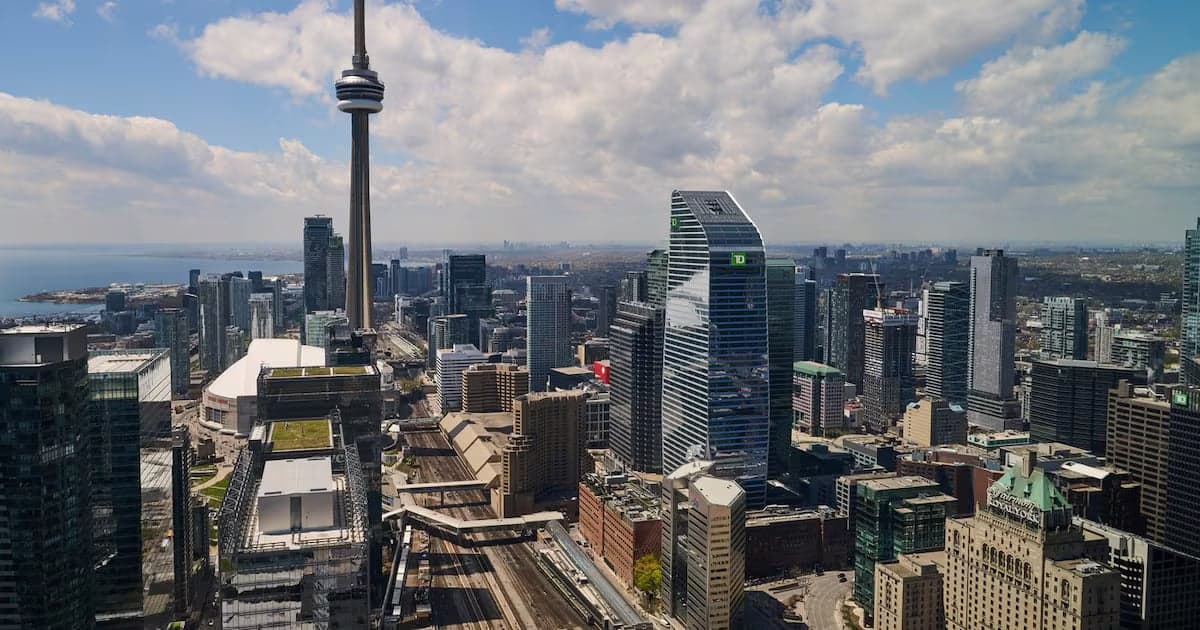
In stark contrast to the winter storms gripping Western Canada, Ontario and Quebec experienced an extraordinary stretch of mid-November warmth, setting widespread temperature anomalies across the urban and industrial heartland[1][2][3]. An expansive upper-level ridge of high pressure anchored over eastern North America channeled mild, southwesterly airflow across the Great Lakes and St. Lawrence basins[4][3]. Across southern Ontario - including the Greater Toronto Area, Hamilton, and the London region - afternoon temperatures climbed into the 13°C to 16°C range[2][4][5]. These readings sat 8 to 10 degrees above historical seasonal normals, which typically hover between 0°C and 6°C for this time of year[5].
The elevated warmth extended unusually far north into northwestern Ontario, where communities like Thunder Bay enjoyed consecutive days near 10°C, feeling more like early October than late November[6][7]. However, the collision of warm, moisture-laden air with cold ground surfaces generated dense morning fog patches across southern Ontario and the GTA, prompting airport traffic-management ground delays and hazardous low-visibility highway conditions on major transport corridors[5][8]. Farther north, remote First Nations communities - including Sandy Lake, Deer Lake, and Webequie - faced a treacherous mix of drizzle, fog, and freezing drizzle[8]. Because these fly-in communities rely exclusively on regional air transport for groceries, freight, and medical appointments, localized freezing drizzle and degraded visibility posed significant logistical disruptions to northern air bridges[8].
This profound meteorological divergence across Canada drew significant attention from climatologists and atmospheric scientists[9][1]. Forecasters from CTV News and The Weather Network pointed to an unusually amplified jet stream pattern, further complicated by an unprecedented mid-month reversal and disruption of the polar vortex, which allowed sub-Arctic air to dig aggressively into the western provinces while locking a subtropical air mass over Ontario and Quebec[9][1]. The commercial impacts of this split have been tangible: while retail, landscaping, and construction operations across southern Ontario and Quebec extended their seasonal outdoor work schedules, winter sports venues, ski resorts, and municipal winter-readiness operations remained on standby, delaying early-season operations[6][4].
Meteorologists caution that this warmth represents a temporary calm before a sharp atmospheric realignment[6][4]. Medium-range computer guidance projects a strong frontal boundary sweeping eastward by the upcoming weekend, which will collapse the Eastern ridge, trigger scattered showers, and drag temperatures down to sub-zero seasonal levels, abruptly harmonizing Eastern Canada with the winter conditions already underway across the Prairies[6][7][4].
- Ontario
- Quebec
- Greater Toronto Area
National News
2 min read
Toronto General Hospital Deploys North America's First Multi-Position CT Scanner
University Health Network in Toronto has deployed North America's first multi-position CT scanner at Toronto General Hospital, enabling patients to be scanned while standing or sitting. This advanced technology captures diagnostic-grade imaging in various functional postures, offering insights into dynamic physiological mechanisms previously undetectable in supine scans.
Read the full storyFold the full story1 min · 2 sources
In a significant diagnostic technology development, Toronto’s University Health Network announced the operational validation and clinical deployment of Canon’s multi-position computed tomography (CT) system at Toronto General Hospital[1][1]. The installation marks the first time this convertible imaging apparatus has been implemented outside of Japan[1][1]. Unlike traditional CT systems that restrict patient evaluations to a static, horizontal supine posture, the advanced multi-position scanner enables automated gantry movements that allow clinicians to capture diagnostic-grade imaging of patients while standing, sitting, or weight-bearing, transitioning between functional postures in just over sixty seconds[1].
Clinical trial outcomes released by UHN researchers in the Canadian Association of Radiologists Journal, titled One Gantry, Two Positions: First Clinical Experience with a Convertible Supine and Upright CT Unit, documented performance data across more than 200 evaluated patients[1]. The study, spearheaded by Dr. Patrik Rogalla, site director of medical imaging at Toronto General Hospital and professor of radiology at the University of Toronto, verified that upright scans achieved imaging quality equivalent to conventional supine acquisitions without requiring higher radiation dosages[1]. Crucially, the upright posture unveiled dynamic physiological mechanisms, including gravitational fluid shifts, lung volumetric variations, and spinal column loading stresses that remain entirely undetected when a patient is lying flat[1].
Beyond clinical diagnostic gains, the convertible platform presents notable workflow and logistical implications for Canada's strained public hospital networks[1][2]. The ability to scan ambulatory patients in a standing or seated position significantly curtails prep time, simplifies transfer mechanics for mobility-impaired or elderly patients, and shortens total examination suite turnover intervals[1]. Hospital administrators project that wide-scale adoption of multi-position CT systems could meaningfully expand daily imaging capacity, helping provincial healthcare authorities alleviate long diagnostic imaging queues that currently contribute to delayed surgeries and prolonged emergency room wait times[1][2].
- University Health Network
- Toronto General Hospital
- Canon
Section 2 of 4
World & Geopolitics
16 stories · 8 min skim
World & Geopolitics
3 min read
Historic Trilateral Summit: Trump, Xi, Putin Meet in Shenzhen Amid Global Crises
In an unprecedented move, U.S. President Donald Trump, Chinese President Xi Jinping, and Russian President Vladimir Putin convened for the first-ever trilateral summit in Shenzhen, China. The meeting focused on ongoing conflicts in Ukraine and Iran, global energy stability, and the lapsed nuclear arms control architecture. This summit occurs against a backdrop of geopolitical crises and shifting domestic political landscapes for the leaders involved.
Read the full storyFold the full story2 min · 9 sources
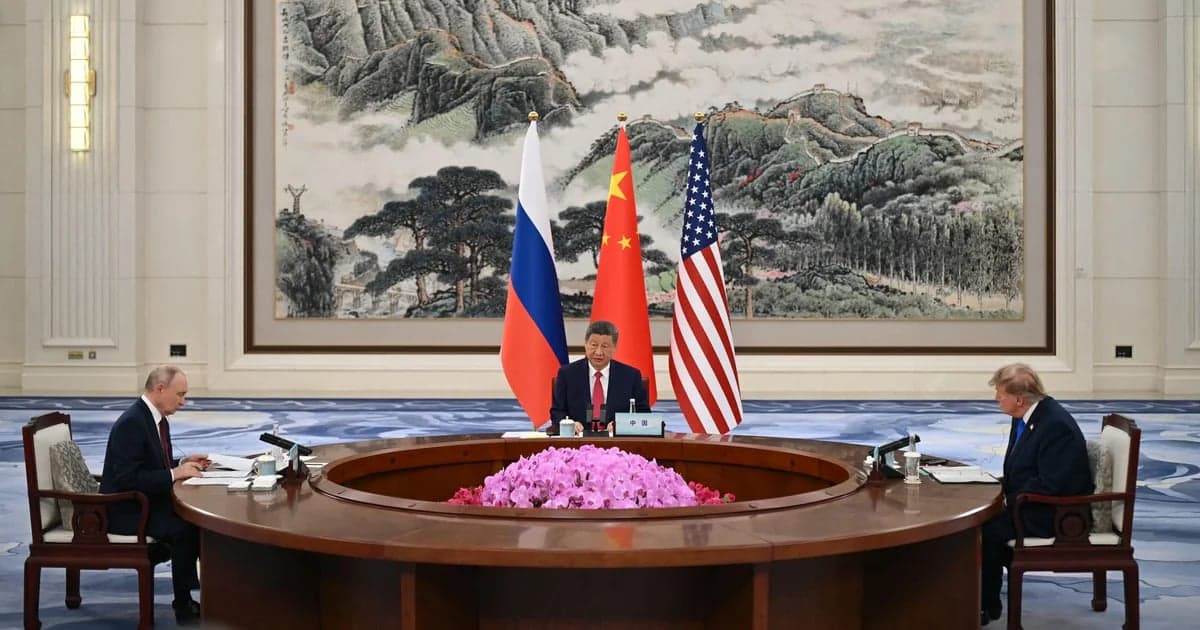
In an unprecedented gathering reshaping global diplomacy, U.S. President Donald Trump, Chinese President Xi Jinping, and Russian President Vladimir Putin convened in Shenzhen, China, for the first-ever trilateral summit among the leaders of the world’s three preeminent military and nuclear powers[1][2]. The historic meeting took place at Kylin Villa on the sidelines of the 33rd Asia-Pacific Economic Cooperation (APEC) Leaders’ Meeting, following bilateral sessions Trump held earlier with Putin and Xi[1][3]. The summit placed the continuing conflicts in Ukraine and Iran, global energy stability, and the lapsed architecture of international nuclear arms control at the center of the agenda[4]. Trump arrived flanked by U.S. Secretary of State Marco Rubio and Treasury Secretary Scott Bessent, while Putin was accompanied by Russian Foreign Minister Sergey Lavrov and top foreign policy aide Yuri Ushakov[1][4].
The backdrop to this trilateral engagement is defined by intersecting geopolitical crises and shifting domestic political realities[5]. The New START treaty - the final remaining bilateral nuclear arms control pact between Washington and Moscow - expired earlier this year, creating an unregulated strategic environment[2]. Trump has repeatedly advocated for a new trilateral framework to constrain atomic arsenals that includes Beijing, though China has long resisted caps given that its stockpile remains smaller than those of the U.S. and Russia[2]. The meeting also followed recent U.S. midterm elections that resulted in political setbacks for the administration, heightening global attention on Trump’s foreign policy leverage[5][6]. In his one-on-one session with Putin - their first formal meeting since talks in Alaska failed to halt hostilities - Trump referred to the Russian leader as a “friend” and expressed hope that significant agreements could emerge, while Ushakov described the tone of the bilateral dialogue as productive[1][4][7].
Substantively, the discussions traversed international commerce and conflict resolution[1][4]. In bilateral discussions with Xi, Trump pressed Beijing to expand purchases of American agricultural goods and noted a mutual imperative to secure commercial shipping through the Strait of Hormuz, where tanker attacks tied to the Iran conflict have rattled energy markets[1][8]. Xi characterized U.S.-China relations as “stable and improved,” emphasizing that bilateral coordination injects certainty into an otherwise volatile global economy[1][4]. On the Ukraine front, Trump directly asked Xi for assistance in negotiating a cessation of hostilities, though Russian and American positions on territorial lines and sovereignty remain deeply entrenched[1][9].
The optics of the summit drew sharp scrutiny from international observers and regional allies[5][2]. Addressing the broader APEC assembly, Australian Prime Minister Anthony Albanese directly confronted Putin, urging the Russian president to immediately end the war in Ukraine and warning that persistent conflicts in Eastern Europe and the Middle East are compounding global inflationary pressures[9]. Concurrently, Taiwan’s Defense Ministry reported that two Russian Tu-95 strategic bombers flew off its eastern coast during the summit, underscoring ongoing military coordination between Moscow and Beijing[9]. While Western analysts downplayed the likelihood of immediate, binding treaties on nuclear caps or ceasefire terms, the three-way summit demonstrates a dramatic evolution in multipolar power dynamics[5][4].
- Donald Trump
- Xi Jinping
- Vladimir Putin
World & Geopolitics
2 min read
Trilateral APEC Summit Reshapes Great-Power Diplomacy, Straining Alliances
Chinese President Xi Jinping hosted an unprecedented trilateral meeting with U.S. President Trump and Russian President Putin at the APEC Summit in Shenzhen. The summit marks a significant shift toward great-power concert diplomacy, bypassing traditional alliances. Trump focused on nuclear arms control, Putin aimed to project Russia as a peer superpower, and Xi sought to stabilize bilateral ties. Traditional Western allies expressed apprehension over potential transactional deals and a shift away from collective security.
Read the full storyFold the full story1 min · 10 sources
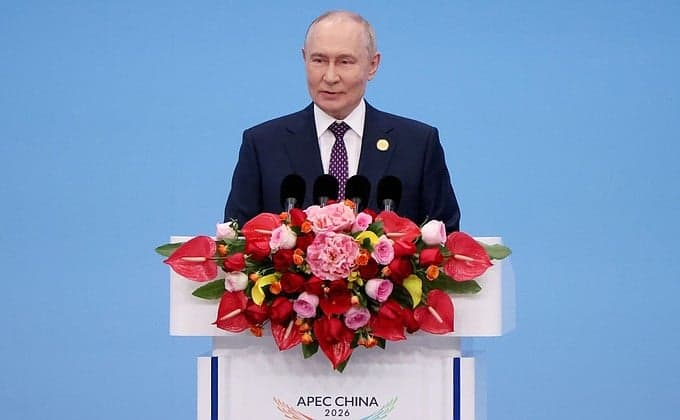
At the 33rd Asia-Pacific Economic Cooperation (APEC) Summit in Shenzhen, Chinese President Xi Jinping hosted an unprecedented trilateral meeting with U.S. President Donald Trump and Russian President Vladimir Putin at Kylin Villa[1][2][3]. The meeting was preceded by bilateral engagements and a ceremonial reception where the three leaders exchanged handshakes and held preliminary side discussions[4][3][5]. Trump held individual meetings with Putin - attended by U.S. Secretary of State Marco Rubio, Treasury Secretary Scott Bessent, and Russian Foreign Minister Sergey Lavrov - and subsequently with Xi, focusing on trade balances and agricultural purchases[3].
The trilateral summit represents a major geopolitical shift toward great-power concert diplomacy, bypassing traditional multilateral alliances[6]. Trump positioned the talks around negotiating a post-New START trilateral nuclear arms control architecture to constrain the world’s three largest nuclear arsenals[2]. However, Beijing has consistently resisted capping its expanding strategic stockpile while it remains quantitatively smaller than U.S. and Russian inventories[2]. For Moscow, Kremlin aide Yuri Ushakov and President Putin utilized the platform to project Russia as a peer superpower and an essential architect of an emerging multipolar order, effectively subordinating the resolution of the war in Ukraine to broader tripartite negotiations[4][7].
The convening of the three leaders has sparked significant apprehension among traditional Western allies and frontline states[8][2]. European partners and Indo-Pacific democracies expressed fears that a great-power condominium could trade regional security guarantees for transactional bilateral deals, evoking comparisons to a modern-day Yalta conference[6][5]. Russian presidential envoy Kirill Dmitriev claimed that Moscow and Washington remain committed to resolving regional conflicts, while Chinese state media emphasized Xi's role in steering bilateral ties onto a stable course[9][10]. This summit indicates that Washington’s foreign policy is pivoting increasingly toward direct negotiations among nuclear-armed rivals, placing traditional security alliances under unprecedented strain[6].
- Xi Jinping
- Donald Trump
- Vladimir Putin
World & Geopolitics
2 min read
Ukraine Cripples Crimean Bridge's Rail Line in Third Strike, Halting Russian Logistics
Ukrainian forces executed a third strike on the Kerch Strait Bridge, specifically targeting and disabling the railway section that serves as a critical logistics artery for Russian forces in southern Ukraine. This operation follows two previous attacks on the bridge within four days, further complicating Russian supply lines.
Read the full storyFold the full story1 min · 9 sources
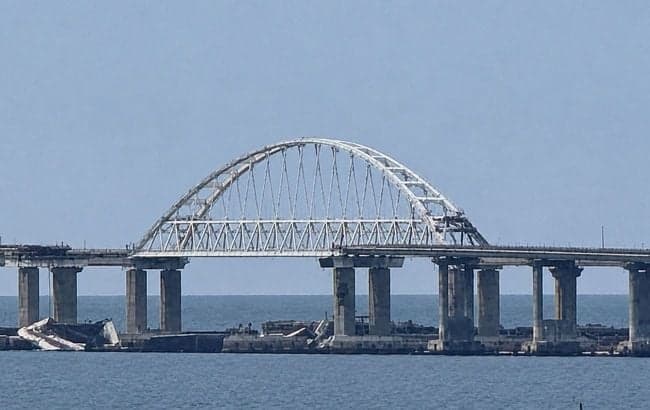
Ukrainian military and intelligence agencies executed another coordinated strike against the Kerch Strait Bridge connecting Krasnodar Krai to the occupied Crimean peninsula, forcing Russian occupation authorities to completely halt railway traffic[1][2]. The early morning attack struck the railway section of the 19-kilometer structure, which serves as Moscow’s primary heavy logistics artery for resupplying Russian armed forces occupying southern Ukraine[1][3][4]. Russia's Ministry of Transport and the Moscow-installed governor of Crimea, Sergei Aksyonov, confirmed the suspension of rail services and stated that engineering teams had been deployed to evaluate structural damage to the railway deck and pylons[1][5].
The operation marks the third strike against the strategically vital transit corridor in just four days, culminating a synchronized multi-stage campaign coordinated by the Security Service of Ukraine (SBU) alongside Ukrainian defense forces[3][5]. Prior strikes had already inflicted severe structural harm on the vehicular portion of the crossing, collapsing a road span and warping a primary metal arch into the Kerch Strait[3][2]. Reports indicate the latest operation employed long-range attack drones paired with advanced domestic Ukrainian strike capabilities, including the Flamingo missile system, focused specifically on disabling the parallel rail artery[3][4].
The timing of the strike carried profound operational and psychological weight, occurring mere hours before President Vladimir Putin convened his high-profile trilateral meetings with Donald Trump and Xi Jinping in Shenzhen[6][7][8]. The bridge - personally opened by Putin in 2018 following Russia’s 2014 annexation of Crimea - stands as the most prominent physical symbol of Moscow’s claims over the peninsula[1][8]. The General Staff of the Armed Forces of Ukraine acknowledged the strikes with public irony, congratulating Lisbon’s Vasco da Gama Bridge on becoming the longest bridge in Europe[5][2].
Severing or restricting the railway line severely complicates Russian theater logistics[4][9]. With alternative overland routes through occupied southern Ukraine vulnerable to long-range Ukrainian artillery and drone interdiction, the rail link across the Kerch Strait has been indispensable for transporting heavy armor, munitions, and fuel to Russia’s southern front[4][9]. Although Russian emergency services previously managed partial single-track rail restorations following earlier hits, repeated precision impacts have compounded structural fatigue and created immense bottlenecks[2][8].
- Ukraine
- Russia
- Kerch Strait Bridge
World & Geopolitics
2 min read
France Admits Deploying Military Specialists to Ukraine, Russia Warns of Direct Participation
France has confirmed that it is periodically deploying active military personnel, including weapons engineers and technical advisers, to Ukraine for maintenance and training missions on complex French-delivered hardware. Russia reacted furiously, warning that this signifies direct participation in the conflict and constitutes a legitimate target.
Read the full storyFold the full story1 min · 6 sources
Tensions between the Kremlin and the North Atlantic Treaty Organization (NATO) reached a critical threshold after the French government publicly acknowledged that it has been periodically deploying active military personnel and armaments specialists inside Ukraine[1][2]. French Deputy Defense Minister Alice Rufo confirmed that specialized military personnel, including weapons engineers and technical advisers, travel into Ukrainian territory on temporary missions to conduct maintenance, repair complex hardware, and provide advanced weapons training[3]. The targeted systems include French-delivered Mirage 2000-5 fighter jets and CAESAR truck-mounted howitzers, which form an essential component of Ukrainian air defense and mobile artillery capabilities[3].
The revelation triggered a furious diplomatic and rhetorical counter-offensive from Moscow[1][3]. Russian Foreign Minister Sergey Lavrov directly condemned the confirmation, declaring that the presence of French personnel inside the sovereign war zone means Western involvement is "no longer 'support for Ukraine,' but direct participation in the war"[3]. The Kremlin has consistently warned that any uniformed Western military personnel operating on Ukrainian soil constitute legitimate military targets for Russian missile and drone strikes[4][3].
In response to the Russian statements, Rufo defended Paris’s policy during appearances before French lawmakers and on domestic media, asserting that French personnel are non-combatants situated far from the active line of contact[3][5]. Emphasizing that France is not at war with the Russian Federation, Rufo maintained that small contingents of technicians carrying out intermittent maintenance missions do not constitute combat formations and called Lavrov's accusations absurd[3][5]. However, Rufo confirmed that Paris is accelerating support deliveries in response to intensified Russian aerial bombardments targeting Ukrainian civilian and energy infrastructure[3].
The escalation highlights an accelerating trend toward deeper Western operational involvement inside Ukraine[3][6]. The United Kingdom has also maintained personnel inside Ukraine for technical advisory and training functions, a presence brought to light following the accidental deaths of two British service members over the past year[6]. With Ukraine fielding increasingly sophisticated Western weapon platforms - spanning Western jets, cruise missiles, and advanced radar suites - defense analysts note that relying strictly on remote foreign maintenance has proved logistically insufficient, forcing European governments to accept heightened exposure to Russian retaliatory action[3][6].
- France
- Ukraine
- Russia
World & Geopolitics
2 min read
Iran Strikes Kuwaiti Air Base, Israel Urges Joint U.S. Strikes Amid Gulf Escalation
Iran launched drone strikes targeting Ali Al Salem Air Base in Kuwait and renewed attacks on Bahrain, prompting U.S. Central Command to consult with Israeli defense officials. These actions are part of an escalating confrontation involving the U.S., Israel, and Iran, which has disrupted maritime traffic in the Strait of Hormuz and damaged commercial vessels.
Read the full storyFold the full story2 min · 12 sources
Hostilities across the Persian Gulf expanded into fresh territory after the Iranian military launched drone strikes targeting Ali Al Salem Air Base in Kuwait, an installation hosting American forces, alongside renewed strikes directed at Bahrain[1][2]. The Iranian Armed Forces claimed via state television that its loitering munitions struck Patriot air defense batteries and drone and missile launching facilities at the base[1][2]. The General Staff of the Kuwaiti Armed Forces confirmed its air defenses intercepted hostile drone waves, reporting no casualties or critical damage, while the Kuwaiti Foreign Ministry condemned the strikes as a criminal violation of sovereignty and invoked its inherent right to self-defense under Article 51 of the United Nations Charter[1][2][3]. In neighboring Bahrain, where the U.S. Navy’s 5th Fleet is headquartered, the Bahrain Defence Force reported intercepting multiple inbound aerial threats, marking the fourth such wave targeting the kingdom in six days[2][4].
The barrage from Tehran followed a major U.S. military retaliatory action: American fighter aircraft conducted precision airstrikes against an Islamic Revolutionary Guard Corps (IRGC) missile launch installation on Qeshm Island in the Strait of Hormuz[5][6]. That U.S. strike was conducted in response to an Iranian attack on an American radar station in Bahrain earlier in the week[4][6]. The tit-for-tat exchanges are part of a broader, months-long confrontation involving the U.S., Israel, and Iran, which has imposed severe pressure on the Iranian economy via naval interdictions and disrupted maritime traffic through the vital Strait of Hormuz energy transit corridor[7][4][8]. Amid the exchanges, commercial vessels have suffered damage, including a tanker operated by Abu Dhabi National Oil Company (ADNOC) where a crew member was reported missing[7].
Simultaneously, an intense diplomatic struggle has erupted across Middle Eastern capitals over the trajectory of the confrontation[9][7]. Israeli Prime Minister Benjamin Netanyahu is actively lobbying the Trump administration to initiate a coordinated air campaign targeting Iran’s core nuclear infrastructure and ballistic missile arsenals[9][10]. To coordinate defense posture, U.S. Central Command Commander Admiral Brad Cooper arrived in Tel Aviv to hold high-level consultations with Israel Defense Forces Chief of Staff Lieutenant General Eyal Zamir and Mossad Director Roman Gofman[11].
Alarmed by the prospect of a catastrophic regional conflagration, key Arab states - including Kuwait, Bahrain, Qatar, and Oman - have intensified urgent backchannel diplomacy to forestall renewed broad-scale airstrikes[7][6]. Regional governments fear that an expanded campaign against Iran would prompt aligned Yemeni Houthi forces to shut down commercial navigation through the Bab el-Mandeb Strait completely, severing Red Sea trade[7]. While Trump has characterized new U.S. offensive operations as unlikely, he also affirmed that U.S. forces remain fully postured, deploying additional carrier battle groups and air wings to the Arabian Sea to protect maritime corridors[7][4][12].
- Iran
- Kuwait
- Bahrain
World & Geopolitics
2 min read
Persian Gulf Escalates: Iran Strikes Kuwaiti and Bahraini Bases in Retaliation for U.S. Qeshm Raid
Iranian forces launched coordinated drone and missile strikes on U.S. installations in Kuwait and Bahrain, targeting air defense batteries and launch infrastructure. These attacks are a direct response to a U.S. airstrike on an Iranian missile site on Qeshm Island. The escalation has spread to include Houthi drone attacks on Saudi oil facilities and intensified pressure on shipping in the Strait of Hormuz.
Read the full storyFold the full story1 min · 9 sources
Military escalation across the Persian Gulf expanded substantially as Iranian forces carried out coordinated strikes on American-occupied installations in Kuwait and Bahrain[1]. In an official announcement, the Iranian Army and Islamic Revolutionary Guard Corps (IRGC) declared that drone and missile strikes hit Ali Al Salem Air Base in Kuwait, specifically targeting U.S. Patriot missile defense batteries and unmanned aerial launch infrastructure[1][2][3]. The Kuwaiti Army General Staff and the Bahrain Defense Force confirmed that their air defense networks repelled and intercepted multiple incoming hostile drones during early-morning barrages[4][5].
The operation was conducted in direct retaliation for a precision U.S. airstrike on an IRGC missile installation located on Qeshm Island in the Strait of Hormuz[1][2]. That strike was itself an American response to repeated Iranian drone and missile strikes on a U.S. radar facility in Bahrain, where the U.S. Navy’s Fifth Fleet is headquartered[1][2]. The escalation has rapidly spilled beyond bilateral clashes into neighboring theaters: Iran-aligned Houthi forces launched five attack drones against two pumping stations on the Saudi East-West pipeline near Riyadh[6][7], while Iranian naval forces have intensified pressure on commercial shipping in the Strait of Hormuz[4].
This cycle of strikes has placed Gulf Cooperation Council (GCC) host nations in a precarious position. The Kuwaiti Foreign Ministry issued a sharp rebuke, declaring the unauthorized use of its airspace a dangerous infringement on sovereignty that risks triggering a wider regional war[5][8]. Tehran maintains that U.S. installations across the Gulf are legitimate targets under Article 51 of the UN Charter if they facilitate military actions against Iranian territory[8]. The persistent strikes on Ali Al Salem Air Base - which has sustained damage to hangars and early-warning installations over nine months of friction[9] - demonstrate Iran’s operational strategy: raising the political and security costs for host nations in an effort to fracture American basing rights across the region[4].
- Iran
- Kuwait
- Bahrain
World & Geopolitics
2 min read
U.S. and Venezuela Sign Military Cooperation Pact, Restoring Ties in Caracas
The United States and Venezuela have formalized a bilateral military cooperation agreement in Caracas, re-establishing defense ties after more than two decades. The pact includes joint training, advisory initiatives, and intelligence sharing, marking a significant shift in regional security dynamics following the removal of former President Nicolás Maduro.
Read the full storyFold the full story2 min · 7 sources
U.S. Defense Secretary Pete Hegseth conducted an unannounced official visit to Caracas, where the United States and Venezuela signed a formal bilateral agreement to re-establish military ties, ending more than two decades of severed defense relations[1][2]. The pact encompasses joint military training, bilateral defense advisory initiatives, and extensive intelligence sharing between the Pentagon and Venezuelan security forces[3][1]. Hegseth finalized the arrangement during consultations with Venezuela’s interim leadership, headed by interim President Delcy Rodríguez, marking a radical realignment in Western Hemisphere security architecture[3][4].
The military agreement follows seismic political and security disruptions across Latin America[1][4]. In January, U.S. forces seized then-Venezuelan President Nicolás Maduro from his compound and transferred him to the United States to face federal drug trafficking indictments in New York[1][5]. In the months since, Washington has expanded its military and strategic footprint across the region[1]. Hegseth praised the new posture in Caracas, stating that Venezuela has transformed from the United States' "most aggressive regional threat to a compliant security partner"[4].
Strategic energy calculations sit at the core of the newly restored security alliance[6]. In August, the Trump administration brokered a sweeping arrangement granting the U.S. operational access to key Venezuelan oil reserves to rehabilitate the nation’s output[6][7]. Hegseth directly tied the new defense cooperation agreement to broader global energy stability, explicitly citing the Iran conflict and the vulnerability of maritime crude flows through the Persian Gulf[6]. In the view of Pentagon and White House planners, securing dependable Western Hemisphere production provides a vital buffer against global supply shocks and elevated domestic gasoline prices[6].
The pact has nevertheless generated domestic debate and geopolitical anxiety[1][7]. Opposition figure María Corina Machado recently returned to Venezuela following mediation supported by U.S. Secretary of State Marco Rubio, but the interim government has yet to schedule a firm date for national democratic elections[7]. While many Venezuelans welcomed Maduro’s removal, domestic critics and human rights organizations argue that Washington has prioritized energy capture and military integration over concrete steps toward establishing full democratic governance[7]. Regionally, the permanent stationing of American military trainers in Caracas represents a decisive blow to the strategic footprints previously cultivated in Venezuela by Moscow, Beijing, and Tehran[2].
- United States
- Venezuela
- Pete Hegseth
World & Geopolitics
2 min read
Five EU Nations Partner with Rwanda for Offshore Asylum Deportation Hubs
Five European Union member states, including Austria and Denmark, have finalized an agreement with Rwanda to establish offshore return centers for rejected asylum seekers starting in 2027. These facilities will house individuals whose asylum claims are denied and who cannot be repatriated, financed and operated by the EU nations.
Read the full storyFold the full story2 min · 3 sources
In a significant transformation of European migration policy, five European Union member states finalized an agreement with the government of Rwanda to construct and operate dedicated offshore return centers designed to receive rejected asylum seekers[1][2]. Unveiled during ministerial meetings in Vienna, the initiative brings together a coalition of EU states - including Austria and Denmark - determined to operationalize third-country removal hubs starting in 2027[1][3]. Under the terms of the accord, European governments will finance the construction and administration of secure holding facilities in Rwanda, where foreign nationals whose asylum requests have been definitively denied will be transferred if they cannot be repatriated to their countries of origin[1][3].
The agreement follows the European Union’s broader regulatory approval of third-country “return hubs,” designed to overcome administrative and legal hurdles that have historically resulted in low deportation rates for rejected applicants[3]. European governments have faced mounting electoral pressure from right-wing and nationalist parties demanding strict border sovereignty, prompting center-right and coalition governments across the continent to abandon open-door conventions in favor of offshore externalization models[1][3]. Rwandan Interior Minister Vincent Biruta confirmed the deal, framing the partnership as an international initiative to offer relocated migrants economic and vocational reintegration opportunities in Africa[1].
The legal and ethical implications of the arrangement have sparked fierce pushback from international legal scholars, humanitarian organizations, and human rights watchdogs[1][3]. Migration specialists note that externalization does not bypass the difficult constraints of human rights law, as transferring nations remain bound by the principle of non-refoulement - the prohibition against sending individuals to locations where they risk persecution or degrading treatment[1][3]. Critics pointed to previous legal challenges that dismantled the United Kingdom's prior bilateral deportation attempt with Rwanda, questioning whether judicial review by national supreme courts and the European Court of Human Rights will allow actual deportations to commence[1][3].
Supporters of the plan argue that establishing third-country hubs provides an indispensable deterrent to human smuggling networks operating across the Mediterranean and Balkans[3]. Representatives from conservative European policy institutes welcomed the move as a long-overdue mechanism for restoring credible immigration enforcement[3]. However, analysts caution that unless significant numbers of rejected applicants are routinely transferred, the deterrence value will remain minimal, while the financial and diplomatic costs required to sustain external detention infrastructure in Central Africa will be substantial[3].
- European Union
- Rwanda
- Austria
World & Geopolitics
2 min read
Carney and Trump Hold Sideline Talks at APEC Amid Strained Canada-US Trade Relations
Canadian Prime Minister Mark Carney and U.S. President Donald Trump held an unscheduled meeting at the APEC summit in Shenzhen. This was their first direct dialogue since trade discussions collapsed in August. The leaders discussed a path toward a mutually beneficial trade agreement that protects jobs and sovereignty. Both agreed to maintain communication as trade teams continue negotiations amid ongoing tariffs and friction.
Read the full storyFold the full story2 min · 9 sources
On the evening of November 18, 2026, Canadian Prime Minister Mark Carney and U.S. President Donald Trump held an unscheduled bilateral meeting on the sidelines of the 33rd Asia-Pacific Economic Cooperation (APEC) Economic Leaders’ Meeting in Shenzhen, China[1][2][3]. The face-to-face encounter, lasting approximately 20 minutes with senior delegations present, marked the first direct dialogue between the two leaders since bilateral trade discussions collapsed in August[2][4]. An official readout released by the Prime Minister’s Office confirmed that the discussions focused on navigating a path toward a “mutually beneficial trade agreement” that protects employment, improves consumer affordability, and respects Canada’s domestic sovereignty, cultural protections, and language rights[3]. Both leaders agreed to maintain open channels of communication as trade teams continue negotiations[3].
The encounter occurred against a backdrop of prolonged economic friction between North America's two largest trading partners[5]. Tensions escalated sharply after the July 1 statutory review of the Canada–United States–Mexico Agreement (CUSMA), during which United States Trade Representative Jamieson Greer announced Washington’s refusal to renew the trilateral accord in its current form[6]. Following the breakdown of formal negotiations in August - spurred by U.S. demands regarding auto manufacturing rules and restrictions on Canadian trade autonomy - Washington imposed 50% tariffs on a range of Canadian goods including steel, cement, wine, and hockey equipment[4][7]. Ottawa countered by enacting retaliatory tariffs on CAD $27.6 billion worth of U.S. imports in September[4].
Testifying before the Canadian House of Commons Standing Committee on International Trade, Canada’s chief trade negotiator with the United States, Janice Charette, briefed lawmakers on the shifting reality of the talks[6][8]. Charette acknowledged that the Trump administration has demonstrated an unwillingness to return to completely tariff-free trade, signaling a structural reordering of U.S. trade policy globally[6][8]. Consequently, Ottawa's strategic priority has shifted toward securing the "most preferential access" possible while minimizing tariff exposure across vital industries[8]. Meanwhile, Canada-U.S. Trade Minister Dominic LeBlanc defended Ottawa's stance, reiterating that Canada will not accept American conditions that compromise sovereign trade authority with other global partners[7].
For Canadian households and industries, the continuation of the trade dispute remains a central economic risk[4]. Cross-border friction and reciprocal duties continue to exert upward pressure on consumer prices and industrial input costs, complicating the Bank of Canada’s monetary policy as domestic inflation hovers near 3.1%[9][4]. While the meeting in Shenzhen indicates renewed diplomatic engagement, the absence of an immediate breakthrough means Canadian businesses across the manufacturing, agriculture, and automotive sectors must continue operating under tariff barriers and elevated trade uncertainty[4].
- Mark Carney
- Donald Trump
- APEC
World & Geopolitics
2 min read
Great-Power Dynamics Dominate APEC as Trump, Xi, and Putin Engage
The APEC summit in Shenzhen was largely overshadowed by intensive discussions among major world powers. U.S. President Donald Trump, Chinese President Xi Jinping, and Russian President Vladimir Putin engaged in bilateral and trilateral dialogues. While business delegates focused on economic integration, geopolitical security and the shifting global alignment were central themes.
Read the full storyFold the full story2 min · 10 sources
The 33rd APEC Economic Leaders’ Meeting in Shenzhen concluded its major sessions on November 18–19 under the official theme "Building an Asia-Pacific Community to Prosper Together," but formal multilateral proceedings were largely eclipsed by intensive great-power maneuvering[1][2][3]. In an unprecedented convergence, President Donald Trump, President Xi Jinping, and Russian President Vladimir Putin shared the summit stage, engaging in bilateral dialogues and trilateral exchanges that drew intense international scrutiny[2][4]. Trump held discussions with Putin on the sidelines - describing bilateral ties as long-standing and expressing optimism about constructive outcomes - while Xi hosted bilateral discussions with Putin to commemorate 30 years of strategic partnership coordination[1][4].
Multilateral business delegates attempted to maintain a focus on economic integration through the APEC CEO Summit, which concluded on November 18 with the release of the "Shenzhen Initiative"[5][6]. Marking the first time in the summit’s 30-year history that an outcome was formalized as an initiative, the document called for preserving open regional supply chains, accelerating digital connectivity, and bolstering cross-border investment against rising protectionism[5][6]. Parallel diplomatic discussions also addressed East Asian trade architecture, as Xi and South Korean President Lee Jae Myung confirmed the substantial conclusion of the second phase of negotiations on the China–Republic of Korea Free Trade Agreement[7].
Despite regional trade declarations, the primary undercurrent involved geopolitical security files, including the conflict in Ukraine, the ongoing diplomatic talks hosted in Abu Dhabi, and security parameters across the Asia-Pacific[8][9]. The diplomatic signaling in Shenzhen reflected an increasingly fragmented international order, with non-Western powers positioning APEC as a vehicle for multipolarity, while the United States approached the forum through transactional bilateralism rather than broad consensus-building[8].
For Canada and other middle powers attending the summit, the high-level maneuvering among Washington, Beijing, and Moscow poses complex foreign policy challenges[2][8]. As the rules-based multilateral trading system faces disruption from unilateral tariffs and great-power realpolitik, middle economies are forced to navigate competing regulatory and technological spheres[3]. Carney used his summit appearances to urge Asian sovereign funds and private corporations to invest directly in Canadian infrastructure, highlighting critical transportation corridors, pipelines, and port developments as necessary hedges against global volatility[10].
- Donald Trump
- Xi Jinping
- Vladimir Putin
World & Geopolitics
2 min read
Canada Secures $400M Trade Pact with China, Diversifying Exports
Prime Minister Mark Carney finalized a significant trade package with China at the APEC summit, including tariff exemptions on CAD $400 million of Canadian agricultural and marine exports like pork and lobster. China will also open import channels to Canadian pulse crops. In return, Canada will grant tariff remissions on specific Chinese industrial imports and approved the Agricultural Bank of China to establish a branch.
Read the full storyFold the full story2 min · 7 sources
Concurrently at the APEC summit in Shenzhen, Prime Minister Mark Carney finalized a substantial trade package with Chinese President Xi Jinping, securing tariff relief for key Canadian agricultural sectors while expanding bilateral commercial cooperation[1][2]. Under the terms of the agreement confirmed on November 18 and 19, Beijing agreed to grant tariff exemptions on approximately CAD $400 million worth of Canadian agricultural and marine exports, including frozen pork cuts, finfish, and premium seafood such as lobster and crab[2][3]. The deal also formally opens Chinese import channels to Canadian pulse crops - specifically fava beans, chickpeas, and lentils - with ongoing negotiations set to finalize regulatory protocols for Canadian pet food and wild aquatic products by year’s end[1].
In exchange, Canada agreed to grant two-year tariff remissions on 32 specialized Chinese industrial imports, encompassing 23 steel products and nine aluminum products for which domestic Canadian supply is insufficient or unavailable[1][2]. The broader bilateral agreement extends existing trade frameworks through late 2028[1]. Reinforcing this economic détente, the federal government officially approved an application by the Agricultural Bank of China to establish a full-service banking branch in Canada, facilitating commercial transactions between businesses in both jurisdictions[4]. The two governments also designated 2027 as a dedicated year of bilateral e-commerce and outlined plans for an official Canadian trade mission to China[1].
The rapprochement represents a calculated move by Ottawa to diversify its export markets away from heavy reliance on the United States[1][5]. The agreement builds on earlier momentum from January, when China lifted steep punitive tariffs on Canadian canola meal, peas, and shellfish in exchange for Canadian import quotas allowing up to 49,000 Chinese electric vehicles annually under a 6.1% tariff threshold[6]. Addressing questions in Shenzhen regarding U.S. criticism - notably pushback from senior Trump economic adviser Peter Navarro over Canadian engagement with Chinese automakers - Carney drew a sharp distinction between resources and high technology[2]. Carney stressed that Canada’s primary exports to China consist of bulk commodities such as canola, pork, halibut, liquefied natural gas, and crude oil, rather than sensitive components like semiconductors[2].
This trade expansion delivers critical revenue and demand stability to Western Canadian grain farmers, Atlantic fish harvesters, and livestock producers facing trade barriers elsewhere[6]. However, the policy pivot has ignited political debate domestically; official opposition leaders and industry analysts caution that deepening economic links with Beijing carries strategic risks, particularly if Washington interprets Canada’s tariff relief on Chinese metals and growing Asian market integration as an attempt to bypass North American trade covenants[6][7].
- Mark Carney
- Xi Jinping
- APEC
World & Geopolitics
2 min read
Warsaw P-TEC Meeting Advances Transatlantic LNG and Nuclear Energy Security
Government ministers and energy leaders met in Warsaw for the Partnership for Transatlantic Energy Cooperation (P-TEC) summit. The focus was on enhancing European energy sovereignty, expanding civil nuclear power, and securing LNG distribution routes. Key outcomes included agreements for U.S. LNG to flow into Central Europe via Poland and advancements in civilian nuclear power commitments, including supply chains for Westinghouse reactors and SMRs.
Read the full storyFold the full story2 min · 7 sources
Across the Atlantic, government ministers, multilateral development banks, and corporate energy leaders gathered in Warsaw, Poland, on November 18–19 for the seventh ministerial meeting of the Partnership for Transatlantic Energy Cooperation (P-TEC)[1][1]. Co-convened by the U.S. Department of Energy, the Polish Ministry of Energy, and the Atlantic Council’s Global Energy Center, the summit focused on reinforcing European energy sovereignty, expanding civil nuclear infrastructure, and securing liquefied natural gas (LNG) distribution routes ahead of the winter season[1][2]. Polish Prime Minister Donald Tusk opened the ministerial alongside U.S. Secretary of Energy Chris Wright, U.S. Secretary of the Interior Doug Burgum, and energy officials representing over a dozen Central and Eastern European states, including Ukraine, Slovakia, Hungary, Romania, and the Czech Republic[2][3].
A major outcome from the ministerial was an agreement between Poland and its regional partners to establish transit mechanisms allowing imported American LNG to flow directly through Polish regasification terminals into landlocked Central European markets, specifically Hungary and Slovakia[4]. U.S. Energy Secretary Chris Wright emphasized during a press conference that Central and Eastern European corridors will serve as the primary drivers of Europe's post-crisis energy architecture[4]. The ministerial also advanced commitments on civilian nuclear power deployment, reviewing supply chains for large-scale Westinghouse reactors and small modular reactors (SMRs), with technical and cybersecurity oversight supported by the U.S. Idaho National Laboratory and Argonne National Laboratory[2][5][3].
Discussions heavily emphasized emergency resilience for Ukraine’s power grid, which has suffered severe disruptions heading into the winter months[6][3]. Prime Minister Tusk stressed that European dependence on Russian energy has effectively ended, necessitating durable, cross-border infrastructure to prevent supply shocks[3]. Financial institutions participating in the summit - including the U.S. Export-Import Bank (EXIM), the U.S. International Development Finance Corporation (DFC), and regional development lenders - outlined financing frameworks to support regional interconnectors and grid modernization projects[2].
The reorganization of European energy networks carries direct economic implications for the Canadian energy sector[7][3]. As Europe solidifies long-term supply arrangements for LNG and next-generation nuclear technology, Canadian energy producers and engineering firms face both heightened competition and expanding commercial opportunities[7][3]. With Canadian LNG export facilities developing on both the Pacific and Atlantic coasts and Canada possessing established expertise in CANDU and SMR development, the structural shift toward allied, transatlantic energy supply chains highlights an evolving marketplace for Canadian natural gas and clean nuclear exports[7][3].
- P-TEC
- Donald Tusk
- Chris Wright
World & Geopolitics
2 min read
Russia Demands Finland's NATO Exit as Peace Precondition, Testing Alliance Unity
Russian negotiators have reportedly proposed Finland's withdrawal from NATO as a key condition for settling the war in Ukraine during backchannel talks. Moscow argues this is necessary for European stability, citing Finland's long border with Russia. Finnish officials have strongly rejected the demand, calling it non-negotiable.
Read the full storyFold the full story1 min · 5 sources
European defense and diplomatic circles responded with alarm following reports that Russian negotiators proposed a full Finnish withdrawal from NATO as a core condition for settling the war in Ukraine[1][1]. The demand surfaced during backchannel talks held in Abu Dhabi, where Russian officials argued that genuine European stability requires rolling back NATO's military perimeter along Russia's immediate northwestern frontier[1][2]. Finnish Defense Minister Antti Häkkänen condemned the initiative as completely non-negotiable, while Ukrainian Foreign Minister Andrii Sybiha criticized Moscow's attempt to reconstruct a post-WWII sphere of influence[3].
Security analysts point to clear operational reasons behind Moscow’s decision to single out Finland over other recent alliance entrants[1][1]. Finland’s accession added a 1,340-kilometer direct land border between NATO and Russia, placing Western forces within operational striking distance of Saint Petersburg and the logistics corridors connecting Moscow to the Kola Peninsula[1][1]. The Kola Peninsula houses Russia’s Northern Fleet and the core of its sea-based strategic nuclear deterrent, leaving Moscow's military strategists sensitive to NATO intelligence and surveillance systems stationed on Finnish territory[1]. Furthermore, Moscow views historical "Finlandization" - the neutral arrangement Finland maintained throughout the Cold War - as a precedent it hopes to restore[1][1].
Although NATO member states quickly rejected the demand, the Russian proposal is an intentional diplomatic wedge designed to test alliance solidarity[1][1]. By conditioning Ukrainian security guarantees on concessions in Northern Europe, the Kremlin is attempting to fracture European consensus and revive its 1997-era security demands that seek to dismantle NATO's eastern posture[3][4]. The move complicates ongoing peace talks, indicating that Moscow remains focused on restructuring the broader European security architecture rather than negotiating purely localized territorial settlements in Ukraine[5][3].
- Russia
- Finland
- NATO
World & Geopolitics
2 min read
Global Supply Chains Exposed: New Report Reveals Systemic Vulnerabilities in Trade
A report by McKinsey Global Institute and the World Economic Forum indicates a significant increase in systemic vulnerabilities within global supply chains, with 23% of global goods imports facing compounding risks. Ten key commodities, including semiconductors and crude oil, account for a large portion of these vulnerable imports. The report also highlights the concentration of risks in critical maritime trade corridors.
Read the full storyFold the full story1 min · 4 sources
A comprehensive economic security report released by the McKinsey Global Institute and highlighted by the World Economic Forum, titled The Achilles Heel of Global Trade, revealed that systemic vulnerabilities within global supply chains have increased significantly[1]. Examining $19 trillion in international goods trade, the study established that 23% of all global goods imports now face compounding vulnerabilities, driven by high supplier concentration and widening geopolitical distances between trading partners - a metric that has climbed from 15% in 2000[1].
The analysis identified that risk is concentrated in a handful of indispensable trade flows: ten specific commodities account for 35% of all vulnerable imports worldwide[1]. These goods include crude oil, advanced semiconductor memory chips, smartphones, laptops, and iron ore[1]. The report highlighted the mutual nature of these dependencies between major rival blocs[1]. China supplies roughly 53% of Europe’s highly concentrated, vulnerable goods imports; conversely, China relies on European manufacturers for over 50% of its critical retail pharmaceuticals, finished medications, and advanced vaccines, illustrating that economic weaponization carries substantial reciprocal risk[1].
Compounding these manufacturing concentrations are physical maritime chokepoints: roughly 80% of all seaborne trade passes through at least one of 24 critical maritime corridors, including the Strait of Hormuz, the Malacca Strait, the Bab el-Mandeb, and the Suez Canal[1]. As regional conflicts disrupt transit corridors in the Middle East[2][3], conventional mitigation strategies such as maritime rerouting and commercial stockpiling are proving insufficient to absorb prolonged shocks[1]. The findings indicate that current industrial de-risking and "friend-shoring" policies have had limited success in untangling core global dependencies, leaving global corporate supply chains exposed to sudden geopolitical disruption[1][4].
- McKinsey Global Institute
- World Economic Forum
- Global Trade
World & Geopolitics
2 min read
COP31 Antalya Deadlocked Over Fossil Fuel Phaseouts and Critical Minerals
Climate talks at COP31 in Antalya, Türkiye, have stalled due to disagreements over the global phaseout of fossil fuels and financing for green transitions. Developing nations with critical mineral resources are demanding mandatory technology transfer, refusing to be mere raw material exporters. A recent International Energy Agency report highlighted the systemic risk of hydrocarbon market volatility.
Read the full storyFold the full story1 min · 8 sources
Negotiations at the 31st United Nations Climate Change Conference (COP31) in Antalya, Türkiye, reached an impasse as the summit approached its conclusion[1][2]. Operating under a dual presidency - with Turkish Environment Minister Murat Kurum leading official proceedings and Australian Climate Change Minister Chris Bowen directing negotiations - delegates failed to reach consensus on draft text governing the global phaseout of fossil fuels and the financing of green transitions in emerging markets[2][3]. While ministerial teams launched a second Global Stocktake to measure adherence to Paris Agreement targets[2][4], major energy exporters and developing economies pushed back against binding phaseout dates[5][6].
The dispute in Antalya was further sharpened by the International Energy Agency’s release of its World Energy Outlook 2026, which warned that continued volatility in global hydrocarbon markets poses an ongoing systemic risk to national economic stability[5]. Running parallel to the fossil fuel debate is an escalating diplomatic row over critical transition minerals[7][1]. Developing nations possessing rich deposits of lithium, nickel, cobalt, graphite, and rare earths demanded mandatory technology-transfer provisions and local refining investments, refusing to serve as raw-material exporters to industrialized economies[7][3].
Civil society and non-governmental actors attempted to apply pressure from outside the negotiating rooms, with 31 Catholic and faith-based institutions announcing formal financial divestment from fossil fuel assets[8]. However, the institutional divide between the Global South and wealthy nations regarding public climate finance remains unresolved[5][6]. Without substantial capital guarantees and concessional loans, developing economies argue that rapid decarbonization mandates undermine their national energy security[2][3]. The deadlock in Antalya indicates that global climate diplomacy is increasingly hindered by national industrial policies and raw material protectionism[7][3].
- COP31
- Antalya
- Türkiye
World & Geopolitics
2 min read
North Korea Accelerates Naval Buildup and Nuclear Defiance Ahead of Summit Diplomacy
North Korea has strengthened its strategic partnership with Russia and China while rejecting U.S. dialogue, positioning itself as an irreversible nuclear state. Simultaneously, intelligence indicates accelerated military development, including the construction of two new naval bases on its eastern coast to modernize its fleet and facilitate submarine-launched ballistic missile deployment. State-linked cyber actors are also integrating reconnaissance drones into naval operations.
Read the full storyFold the full story1 min · 2 sources
Anticipating high-stakes negotiations between the United States, China, and Russia in Shenzhen, the Democratic People’s Republic of Korea executed diplomatic maneuvers to secure its status as an irreversible nuclear weapons state[1]. Jo Yong Won, a key secretary of the Workers' Party of Korea (WPK) Central Committee, held talks in Moscow with Russian President Vladimir Putin and Security Council Deputy Chairman Dmitry Medvedev[1]. This engagement followed a high-level meeting in Beijing between WPK International Department Director Kim Song Nam and Chinese Foreign Minister Wang Yi[1]. Simultaneously, Kim Yo Jong explicitly rejected American proposals for dialogue, citing the United States' persistent "hostile policy"[1].
According to security assessments from the Institute for the Study of War and the American Enterprise Institute, Pyongyang’s diplomatic blitz was paired with accelerated military development[2]. Satellite analysis confirms that North Korea is constructing two expansive naval bases on its eastern coastline to modernize its East Sea Fleet[2]. The Korean People's Navy considers the East Sea the primary theater for any future conflict on the peninsula, prioritizing deep-water access that facilitates submarine-launched ballistic missile (SLBM) deployment and complicates allied anti-submarine warfare operations[2]. In parallel, state-linked cyber operators have launched targeted campaigns against commercial drone developers to integrate reconnaissance unmanned aerial vehicles into naval formations[2].
Pyongyang’s coordinated diplomatic and military posture underscores its strategy to undermine Washington's denuclearization goals[1][2]. By reaffirming its strategic partnership with Moscow and Beijing ahead of trilateral summits, North Korea has secured cover from both permanent UN Security Council members against further international sanctions[1]. The naval buildup along the East Sea indicates that North Korea is transitioning from developing static missile capabilities to building a resilient, survivable sea-based second-strike deterrent[2]. This shift limits Washington and Seoul’s deterrence leverage and forces regional defense planners to allocate additional maritime resources to the Sea of Japan[2].
- North Korea
- Democratic People’s Republic of Korea (DPRK)
- Russia
Section 3 of 4
City News
12 stories · 5 min skim
City News
2 min read
GTA Towing Syndicate Dismantled: Project Swords Uncovers Murder Plots and TPS Contract Links
A 14-month investigation dubbed Project Swords has led to the dismantling of an organized crime network controlling the GTA's towing sector. Twenty-one individuals were arrested on over 100 charges, including conspiracy to commit murder. The syndicate, allegedly led by Manoharan Subramaniam, was also involved in auto theft, firearms trafficking, and arson. Significantly, one of the implicated towing companies, Williams Towing, was under contract with the Toronto Police Service.
Read the full storyFold the full story2 min · 7 sources
In a coordinated law enforcement operation, the Toronto Police Service (TPS) - in partnership with York Regional Police, Durham Regional Police Service, and the Ontario Provincial Police (OPP) - announced the dismantling of an alleged organized crime network operating across the Greater Toronto Area’s towing sector[1][2]. Dubbed "Project Swords," the 14-month multi-jurisdictional investigation culminated in the execution of 13 search warrants across the GTA, leading to the arrest of 21 individuals facing a combined 112 criminal charges[3][2][4]. Among the most alarming developments, police disclosed that they disrupted an active conspiracy to murder two rival towing industry figures, with three accused individuals formally charged with conspiracy to commit murder[1][2]. Investigators allege the enterprise was directed by 43-year-old Whitby resident Manoharan "Mano" Subramaniam[2].
The investigation revealed that the syndicate had expanded into a diversified criminal operation spanning auto theft rings, firearms trafficking, arson, and fraudulent physiotherapy billing clinics[1][3]. A correctional worker at the Toronto East Detention Centre was also charged with breach of trust for allegedly attempting to assist Subramaniam while in custody[1]. Significantly for municipal oversight and public safety, police discovered that Subramaniam acted as the covert, de facto owner of Williams Towing and Bob’s Towing[1][5]. Despite the corporate filings bearing third-party names, Subramaniam maintained operational and financial control over Williams Towing - a firm actively contracted by the TPS to handle towing operations across four eastern police divisions: 41, 42, 43, and 55[1][5]. Following the operation, TPS immediately severed all contractual ties with the vendor[3][5].
The sweep marks a turning point in the prolonged turf wars that have destabilized the GTA towing landscape since early 2023[2][6]. During the height of the conflict in 2024, towing-related violence accounted for 62 shooting incidents in Toronto alone, representing nearly 13 percent of all recorded firearms discharges[2][6]. While an earlier offensive, "Project Yankee," crippled the rival faction known as "The Union," Project Swords neutralized its primary opposition[1][6]. Toronto Police Chief Myron Demkiw and Integrated Gun and Gang Task Force Detective-Sergeant Steve Matthews reported that coordinated enforcement has driven tow-related shootings down to just five occurrences GTA-wide, accounting for only two percent of city firearms discharges[7][5][6]. However, the revelation that a contracted vendor was intimately linked to alleged murder-for-hire plots has intensified scrutiny on police procurement safeguards and background vetting protocols for municipal contractors.
- Project Swords
- Toronto Police Service
- York Regional Police
City News
2 min read
Manhunt Intensifies for Etobicoke Double-Homicide Suspect
Toronto Police are actively searching for 17-year-old Cameron Marlor, wanted on Canada-wide warrants for his alleged involvement in two fatal shootings in Etobicoke over three days. Police have obtained rare judicial authorization to publicly identify Marlor due to the severity of the charges, which include first-degree murder. Other co-accused have also been arrested or are being sought.
Read the full storyFold the full story1 min · 6 sources
Toronto Police have intensified their search for 17-year-old Cameron Marlor, who is wanted on Canada-wide warrants in connection with two separate fatal shootings carried out over three days in Etobicoke[1][2]. Detective-Sergeant Sandra Arruda of the TPS Homicide and Missing Persons Unit issued urgent public advisories on November 18 and 19, 2026, appealing to residents across the GTA for information regarding Marlor's whereabouts[1][2]. To facilitate the manhunt, police obtained rare judicial authorization under the Youth Criminal Justice Act to publicly identify Marlor and publish his photograph; that legal authorization carries a strict expiration deadline of Thursday, November 19, 2026[3][2].
The homicides began on the afternoon of November 7, 2026, when 18-year-old Malik Abass of Mississauga was fatally shot in the area of Rathburn Road and The East Mall[1][2]. Just three days later, on November 10, 18-year-old Brandon Blake of Barrie, Ontario, was shot and killed outside the Elmbank Community Centre near Martin Grove Road and Finch Avenue West[1]. TPS forensic investigators used advanced ballistic comparison technology to analyze cartridge casings recovered from both scenes, establishing that the same firearm and suspect were linked to both killings[1][4].
Marlor faces a first-degree murder charge in connection with the killing of Blake, alongside charges of second-degree murder, attempted murder, and multiple weapons-related offences stemming from the death of Abass[1][5]. Police have already arrested and charged a 16-year-old Vaughan youth with first-degree murder in Blake’s death[1]. Two adult co-accused remain outstanding: 19-year-old Joseph Kunene, wanted for first-degree murder in Blake's death, and 19-year-old Armani Callender, wanted for second-degree murder and attempted murder in the Abass slaying[1][5].
The urgency surrounding Marlor’s apprehension coincided with a November 18 joint advisory from the Toronto Police Service and Canada's national Bolo Program[6]. On the morning of November 19, police leadership and the Bolo Program scheduled a major national news conference in Toronto to unveil an updated roster of Canada's most wanted fugitives, detailing substantial financial rewards and expanded inter-provincial investigative resources aimed at taking violent, armed suspects into custody[6].
- Toronto Police
- Cameron Marlor
- Malik Abass
City News
2 min read
Fatal Crosstown LRT Collision Renews Safety Concerns on Line 5
A pedestrian was killed after being struck by an eastbound LRT vehicle on the Eglinton Crosstown Line 5 near Victoria Park Avenue. Emergency services responded, but the woman in her 40s succumbed to her injuries at a local trauma hospital. The incident caused service disruptions and has reignited scrutiny over the safety of surface-level light rail crossings in Toronto.
Read the full storyFold the full story1 min · 5 sources
A fatal transit collision along the above-ground portion of the Eglinton Crosstown Light Rail Transit (Line 5) has renewed public safety concerns regarding grade-separated light-rail crossings in eastern Toronto[1][2]. Emergency personnel were dispatched at approximately 6:08 p.m. on Wednesday, November 18, 2026, following reports of a pedestrian struck by a train near Eglinton Avenue East and Victoria Park Avenue, in the vicinity of Eglinton Square and O'Connor Drive[3][2]. According to the Toronto Police Service Traffic Services Unit, a woman in her 40s was walking northbound across the tracks just west of Victoria Park Avenue when she was struck by a westbound LRT vehicle[3][1].
The impact caused life-threatening injuries[4]. Paramedics administered emergency life-support measures at the scene before rushing the victim to a local trauma hospital, where she succumbed to her injuries later Wednesday night[1][2]. Members of the TPS Traffic Services Collision Reconstruction team cordoned off the intersection for several hours to conduct on-site forensic analysis, download onboard train telemetry, and canvas nearby businesses for surveillance and dashcam footage[1][5].
The fatal incident triggered immediate service suspensions on the Crosstown network[5][2]. The Toronto Transit Commission (TTC) halted train operations across the surface alignment between Sloane and Pharmacy stations, deploying emergency replacement shuttle buses to transport commuters during the evening rush hour[2]. Specialized track clearing and safety assessments allowed regular rail service to resume shortly before 11:00 p.m. on Wednesday[5].
This tragedy represents the second pedestrian death documented along this specific midtown surface corridor[2]. In August 2025, a 64-year-old woman was fatally struck near Eglinton Avenue East and Pharmacy Avenue, one major intersection east of Wednesday's scene[2][4]. The recurring incidents at surface crossings along Line 5 have drawn intense examination from transit planners and pedestrian advocacy groups, who point to sightline challenges, rail-corridor fence configurations, and the complexities of high-speed light rail operating in mixed urban arterial traffic[2][4].
- Eglinton Crosstown LRT
- Line 5
- Toronto Police Service
City News
2 min read
Toronto City Council Convenes New Term Focused on Housing Affordability and Infrastructure
The 2026–2030 Toronto City Council has officially begun its term, with Mayor Olivia Chow outlining priorities including housing affordability, infrastructure renewal, and poverty reduction. The council also advanced Phase 2 of its Purpose-Built Rental Housing Incentives program, greenlighting 19 developments expected to deliver nearly 10,000 new rental units, including over 2,000 affordable and rent-controlled homes.
Read the full storyFold the full story1 min · 7 sources
Toronto municipal governance entered a new chapter as the 2026–2030 Toronto City Council convened its inaugural meeting at City Hall under the leadership of Mayor Olivia Chow[1][1]. The legislative session began with an Indigenous ceremony at Nathan Phillips Square, where Elder Mark Sault, Fire Keeper Geoff Daybutch, and treaty and territorial partners conducted a pipe lighting and sacred fire ceremony, welcoming the newly elected council into a partnership of peace and mutual respect[1]. Following the ceremonial procession, Council officially organized its leadership bench, formally selecting downtown councillor Ausma Malik as Council Speaker and veteran councillor Shelley Carroll as Deputy Speaker[1][2].
Addressing Council from the floor, Mayor Chow framed the four-year mandate around urgent, systemic structural reforms, with an immediate priority placed on housing affordability, municipal infrastructure renewal, and poverty reduction[3][1]. Concurrently, the City advanced Phase 2 of its Purpose-Built Rental Housing Incentives program, announcing the selection of 19 key multi-family residential developments spanning 12 municipal wards[4]. Together, the projects represent an injection of 9,667 new rental units across the GTA, including 2,059 legally protected, rent-controlled affordable homes designed to curb outward displacement[4].
The convening of the new council comes as urban advocates, business groups, and service providers press the administration on pressing urban challenges[5]. The first order of business includes establishing committee assignments and formalizing the Striking Committee recommendations to steer statutory policy committees[1]. Concurrently, the regional governance map across the GTA was reshaped, with Peel Region Council and adjacent municipal councils in Mississauga and Brampton swearing in their newly composed chambers, setting up pivotal intergovernmental negotiations on regional transit funding and emergency housing support[6][7].
- Toronto City Council
- Olivia Chow
- Ausma Malik
City News
2 min read
Mayor Chow Charts Second Term Priorities: Housing, Transit Affordability, and Tenant Protection in Toronto
Mayor Olivia Chow has outlined her administration's policy direction for the 2026-2030 term, focusing on transit affordability, tenant protections, and accelerating housing development. Facing a council reshaped by recent elections and a significant budget shortfall, Chow emphasized a self-reliant fiscal strategy for the city.
Read the full storyFold the full story2 min · 3 sources
Toronto City Council convened for the inaugural ceremonial and business meetings of its 2026–2030 term, with Mayor Olivia Chow officially delivering her opening address to establish the administration's second-term policy trajectory[1][2]. Facing a substantially transformed council chamber following municipal elections, Chow pledged to govern with a "renewed mandate from the people," directly centering her platform on transit affordability, tenant protections, and rapid housing delivery[3][2]. The address served as a strategic blueprint for addressing the twin pressures of severe municipal affordability and transit operations, promising to hold the line on transit fares, boost protections for renters, and partner with public and private builders to expand housing stock across the city[3].
The meeting marked a generational and structural shakeup in the governing body at Toronto City Hall[3]. Longtime council Speaker Frances Nunziata, who held the gavel for 16 years, was defeated in the autumn elections, while housing committee chair Gord Perks retired and transit committee chair Jamaal Myers was unseated[3]. These departures have left key committee leadership positions vacant, prompting Chow to manage a chamber featuring seven newly elected councillors, including prominent former federal parliamentarians such as Nate Erskine-Smith and Shaun Chen[3]. The reconstitution of council arrives amid an impending fiscal crunch: Toronto faces a projected $1.1-billion budgetary shortfall heading into the 2027 fiscal cycle[2].
The backdrop of municipal finances is further complicated by escalating intergovernmental tensions[2]. Ontario Premier Doug Ford recently signaled reluctance to renew the landmark three-year "New Deal" that had previously transferred operational responsibilities for the Gardiner Expressway and Don Valley Parkway to the province while providing $1.2 billion in operating support for municipal transit and shelter systems[2]. Acknowledging this friction during her council address, Chow signaled that Toronto must rethink its long-term financial architecture rather than repeatedly returning to Queen’s Park and Ottawa for stopgap funding agreements, emphasizing the imperative of building durable, local transit-oriented fiscal frameworks[2].
Reaction across the municipal spectrum reflects both urgency and apprehension. Housing and transit advocacy coalitions welcomed Chow’s commitments to fare caps and expanded municipal housing incentives[3], but business groups and municipal analysts warn that meeting these targets without renewed provincial operating subsidies will necessitate difficult decisions around property tax baselines and capital expenditure timelines[2]. Council's immediate legislative calendar will test the new alliance between the mayor's office and incoming ward representatives as they navigate initial budgetary consultations and committee chair appointments[3][2].
- Olivia Chow
- Toronto City Council
- Doug Ford
City News
2 min read
Toronto Council Approves Phase Two of Purpose-Built Rental Housing Incentives Program
Toronto City Council is advancing Phase Two of its Purpose-Built Rental (PBR) Housing Incentives Stream, greenlighting 19 projects expected to yield nearly 10,000 new rental homes, including over 2,000 affordable units. This program offers developers significant fee and tax relief in exchange for meeting affordability and construction timelines.
Read the full storyFold the full story2 min · 8 sources
Toronto City Council formally received supplementary documentation and executive updates to move forward with Phase Two of the Purpose-Built Rental (PBR) Housing Incentives Stream[1][2]. The policy measure selects 19 shovel-ready development projects across 12 municipal wards to deliver 9,667 purpose-built rental homes, of which 2,059 are designated as affordable, rent-controlled units[3][4]. The incentive package is designed to unlock stalled construction starts across the Greater Toronto Area by offering targeted municipal fee and tax relief to developers willing to meet rigorous affordability covenants and rapid development timelines[1][5].
The framework provides participating developers with an indefinite deferral of municipal development charges on market rental homes, alongside a 15 percent property tax reduction spanning 35 years[6][5]. For the affordable units - which must constitute at least 20 percent of a development’s residential gross floor area - the city provides full property tax exemptions for at least 40 years, complete waivers of building permit fees, and relief from road disruption charges[1][5]. Rents for these units are legally capped to city income-based affordability limits[5]. To curb land speculation, selected proponents are subject to a strict "use-it-or-lose-it" condition requiring construction to break ground within 12 months to maintain municipal backing[3][5].
Phase Two represents a key component of the city’s broader strategy to align high-density rental development with major transit infrastructure[3]. Five of the 19 selected projects are located within high-demand downtown wards - such as Spadina-Fort York, University-Rosedale, Toronto-Centre, and Parkdale-High Park - accounting for 3,277 homes, or 34 percent of the phase's total capacity[6]. Across both Phase One (launched in late 2024) and Phase Two, the city has committed approximately $894.2 million in municipal tax and fee incentives toward 34 total developments[7][4]. The municipal funding capacity was largely unlocked through a $1.5-billion tri-level agreement with the federal and provincial governments under the Development Charges Reduction Program, which backfills municipal coffers for necessary wastewater, road, and transit trunk infrastructure[1][5].
Development industry groups, including the Building Industry and Land Development Association (BILD), noted that municipal fee deferrals are essential in an economic climate marked by elevated interest rates and high construction financing costs, which had previously caused rental housing starts to slump[1]. The city received 58 competitive applications representing approximately 27,000 potential rental homes before narrowing down the list to the 19 shovel-ready projects[3][4]. Housing policy analysts emphasized that while municipal fee relief has proven successful in getting construction underway, ongoing provincial-municipal harmonization is still required to ensure corresponding transit stations and utility systems can accommodate the surge in density[1][8].
- Toronto City Council
- Building Industry and Land Development Association (BILD)
City News
2 min read
Ontario Enhances Penalties for Excessive Vehicle Noise and Modifications
The Ontario government has introduced new legislation tripling the minimum fine for excessive vehicle noise to $200, with a $1,000 maximum for repeat offenders. The law targets illegal aftermarket exhaust modifications and disruptive engine revving. This measure aims to restore quiet and safety to municipal streets, responding to persistent demands from GTA municipalities.
Read the full storyFold the full story1 min · 3 sources
The Government of Ontario introduced new road safety legislation on Wednesday, November 18, 2026, aimed at curbing excessively loud vehicles, illegal aftermarket exhaust modifications, and disruptive engine revving across residential neighbourhoods[1][2]. Solicitor General Michael Kerzner announced the measure as part of a targeted provincial push to restore quiet and safety to municipal streets across the Greater Toronto Area and broader Ontario communities[2].
Under the proposed amendments to provincial transit and road laws, the statutory minimum fine for excessive vehicle noise offences will more than triple, rising from $60 to $200[2]. The legislative framework retains the existing maximum fine ceiling of $1,000 for egregious and repeat offenders[2]. The legislation explicitly targets vehicle modifications that intentionally bypass manufacturer emissions and muffling standards, such as straight-pipe exhausts, decibel-amplifying bypass valves, and deliberate backfire engine tunes[2].
The provincial announcement addresses persistent petitions from municipal councils across the GTA, including Toronto, Mississauga, and Durham Region, where local residents have repeatedly demanded stronger provincial enforcement mechanisms[2][3]. GTA municipalities have long struggled to manage street racing and disruptive vehicular noise using local noise bylaws alone, which often lack the legal teeth of the Highway Traffic Act[3]. The elevated fines are structured to provide front-line regional police services with stronger deterrent tools during coordinated traffic enforcement blitzes[2].
The legislative push is being rolled out alongside the launch of the annual Festive R.I.D.E. (Reduce Impaired Driving Everywhere) campaign across southern Ontario[1]. Provincial officials and municipal policing bodies noted that stepped-up noise penalties complement broader highway enforcement efforts designed to target reckless driving, street stunts, and modified vehicle gatherings throughout the GTA ahead of the winter holiday season[1][2].
- Government of Ontario
- Michael Kerzner
- Highway Traffic Act
City News
2 min read
Ontario Introduces Stricter Fines and Penalties for Loud Vehicles and Street Modifications
The Ontario government has introduced new legislation aimed at curbing excessively loud vehicles and illegal street modifications. The bill proposes a significant increase in fines for excessive noise, starting at $200, with escalating penalties and demerit points for repeat offenders. The legislation also grants police expanded powers to order mechanical inspections and impound non-compliant vehicles.
Read the full storyFold the full story1 min · 2 sources
The Ontario provincial government introduced new legislation targeting excessively loud motor vehicles, modified aftermarket exhaust systems, and street racing culture across GTA roads and highways[1][2]. The bill seeks to modernize motor vehicle enforcement standards and close statutory loopholes long exploited by motorists operating vehicles with altered mufflers or intentional exhaust noise devices[1]. Chief among the measures is an increase in the statutory minimum fine for excessive vehicle noise, raising it from $60 to $200, accompanied by elevated tiered penalties and moving-violation points for repeat offenders[1].
The legislative push responds to escalating municipal petitions and neighborhood complaints from Toronto, Peel, and York regions[1][2]. Residents in dense urban corridors and arterial suburban transit loops have consistently voiced frustration over unregulated street modifications, backfiring exhaust tunes, and organized late-night stunt driving meets. GTA municipalities have previously piloted automated acoustic noise radar devices, but local police forces frequently cited antiquated Highway Traffic Act statutes as an impediment to sustained, enforceable prosecution.
Under the proposed provincial legislation, police services will receive broader discretion to order mandatory vehicle mechanical safety inspections and impound vehicles found to possess non-compliant decibel alterations. Municipal associations and road-safety coalitions have largely welcomed the regulatory shift, noting that vehicle noise pollution directly correlates with street racing infractions and public disturbances. Meanwhile, automotive trade associations and aftermarket performance groups have signaled they will scrutinize the specific testing procedures to ensure that compliant vintage or commercial performance vehicles are not unfairly targeted by broad roadside inspection criteria.
- Ontario Government
- Highway Traffic Act
- Toronto
City News
2 min read
Ontario Transit Policy Clashes Spark Protests Over Bike Lane Removals
Critics are opposing the Ontario Ministry of Transportation's decision to remove protected bike lanes along Bloor Street West, citing broader concerns about provincial transit strategy under Bill 212. Advocates argue the move prioritizes vehicular traffic over active transportation and road safety.
Read the full storyFold the full story2 min · 7 sources
Urban planning experts, active transportation advocates, and municipal leaders renewed criticism against the Ontario Ministry of Transportation following the provincial government's removal of protected bike lanes along Bloor Street West in Etobicoke[1][2]. Transportation advocacy group Cycle Toronto, represented by executive director Michael Longfield, released an extensive critique challenging the Ford government’s broader transit strategy under Bill 212[1]. The legislation empowers the provincial government to remove municipal cycling infrastructure that occupies traffic lanes on arterial roadways, a policy the province contends is necessary to relieve severe vehicular gridlock across the Greater Toronto Area[1][3].
The critique follows the province's completion of work along a 1.2-kilometre stretch of Bloor Street West between Clissold Road and Royal York Road, where the Ministry of Transportation hired private contractors to remove concrete barriers and signage to restore motor vehicle traffic lanes[1][2]. Advocacy groups questioned Transportation Minister Prabmeet Sarkaria’s refusal to accept a municipal compromise proposed by Mayor Olivia Chow, which sought to reconfigure the roadway to maintain bike lanes while restoring car capacity[1]. The standoff has triggered street demonstrations, legal challenges disputing the constitutionality of provincial overreach into municipal roadway management, and widespread debate regarding transportation safety[1][4].
The dispute underscores a fundamental divide between provincial and municipal transit philosophies in the GTA[1]. The provincial government argues that arterial thoroughfares must prioritize personal motor vehicles and freight transport to sustain economic productivity and reduce commute times[3][5]. Conversely, municipal urban planners, public health officials, and cycling advocates contend that dismantling protected infrastructure directly contravenes the city's Vision Zero road safety objectives, discourages active transit adoption, and disproportionately endangers cyclists, pedestrians, and individuals using mobility devices who rely on protected corridors[6][1].
Traffic safety analysts highlighted transportation studies indicating that removing separated bike lanes does not resolve systemic traffic congestion, which is largely driven by regional highway choke points, extensive transit construction detours, and auto dependency[1]. Furthermore, transit organizations pointed out that safe, connected cycling lanes serve as essential first-mile/last-mile connectors to Toronto Transit Commission (TTC) and GO Transit stations[7][1]. With Minister Sarkaria signaling that the province intends to target additional arterial corridors in the next construction cycle[3], municipal councillors and community groups are preparing for renewed council debates on defending local infrastructure control against provincial overrides[1][4].
- Ontario Ministry of Transportation
- Cycle Toronto
- Olivia Chow
City News
2 min read
AFC Toronto Clinches Historic Northern Super League Title, Three Players Called to National Team
AFC Toronto has celebrated its championship victory in the inaugural Northern Super League (NSL) season with a civic ceremony at Toronto City Hall. The team's success marks a significant milestone for professional women's soccer in Canada, exceeding attendance expectations and fostering youth soccer development. Three core AFC Toronto players have also been named to the Canadian Women's National Team.
Read the full storyFold the full story1 min · 2 sources
Hundreds of soccer supporters, civic officials, and community leaders gathered atop the Toronto City Hall Podium Rooftop to celebrate AFC Toronto’s championship victory in the inaugural season of the Northern Super League (NSL)[1]. The civic ceremony honored the club’s capture of the Diana B. Matheson Cup, marking the conclusion of the first professional women’s domestic soccer season in Canadian sports history[1]. Celebrations featured an athlete march from the square, community speeches, a ceremonial flag-raising over City Hall, and a public trophy showcase alongside players and team executives[1].
The championship triumph marks a commercial and cultural milestone for women’s athletics in the Greater Toronto Area. Established as an original flagship franchise of the newly founded NSL, AFC Toronto’s inaugural campaign demonstrated sustained grassroots engagement, breaking regional attendance expectations and expanding youth soccer outreach initiatives across Toronto's neighborhoods. Addressing supporters at the event, team leadership and city representatives underscored how the team’s rapid ascendancy has generated a sustainable professional pipeline for homegrown female athletes who previously had to look to European or U.S. markets for professional opportunities.
The local celebration was further highlighted by the announcement that three core AFC Toronto players - veteran goalkeeper Sabrina D’Angelo, forward Kaylee Hunter, and defender Shelina Zadorsky - were called up to the Canadian Women’s National Team for the Concacaf W Championship[2]. The trio will represent Canada as the team opens its campaign against Panama, pursuing qualification for both the 2027 FIFA Women’s World Cup and the 2028 Olympic Games in Los Angeles[2]. For the Toronto sports market, the championship celebration and subsequent international call-ups underscore the burgeoning role of domestic women's clubs as pillars of civic pride and international player development.
- AFC Toronto
- Northern Super League (NSL)
- Diana B. Matheson Cup
City News
2 min read
New Toolkit Launched to Accelerate Supportive Housing Development in Greater Toronto Area
United Way Greater Toronto, the Toronto Supportive Housing Network, and WW+P Architects have released a comprehensive toolkit, 'Designed for Support,' aimed at streamlining the creation of permanent supportive housing. The publication offers standardized frameworks for design, operations, and planning to address the region's homelessness crisis.
Read the full storyFold the full story1 min · 3 sources
United Way Greater Toronto, the Toronto Supportive Housing Network, and architecture firm WW+P Architects officially released Designed for Support: A Practical Toolkit for Developing Supportive Housing[1]. The publication provides a standardized design, operational, and planning framework intended to accelerate the delivery of permanent supportive housing across the Greater Toronto Area and Canadian municipalities[1]. Aimed at non-profit housing providers, architects, private developers, and municipal planners, the toolkit addresses technical and financial hurdles that have prolonged project timelines amid growing regional homelessness[1].
The toolkit's launch responds to chronic strain across the GTA’s emergency shelter infrastructure and social services[1][2]. With regional counts showing more than 15,000 individuals experiencing homelessness in the Greater Toronto Area and municipal shelters routinely operating at absolute capacity, the report emphasizes that emergency shelter models are neither cost-effective nor therapeutically sustainable[1][2]. The publication provides architectural prototypes and capital financing blueprints that integrate on-site mental health, addiction, and community health services directly into residential buildings, focusing on trauma-informed design, accessibility, and high energy efficiency[1][2].
A central theme of the toolkit is the spatial integration of supportive housing with regional transportation networks and social infrastructure[1]. The authors argue that locating supportive developments in transit-rich neighbourhoods with walkable access to grocery stores, health clinics, and transit stops is vital to preventing isolation and supporting reintegration into community life[1]. The report emphasizes that without proactive integration into Transit-Oriented Communities (TOCs) and Major Transit Station Areas (MTSAs), lower-income and marginalized populations risk being displaced to the urban periphery where transit access is scarce and support services are practically non-existent[3][1].
Urban planning experts and community sector leaders praised the toolkit as a much-needed operational roadmap for non-profit entities seeking to leverage federal and provincial funding streams, such as the national $10-billion supportive housing allocations[2]. Industry stakeholders noted that by standardizing space guidelines and regulatory pathways, housing developers can bypass bureaucratic delays in municipal approvals, reducing design cycles and getting complex housing built significantly faster across southern Ontario[1].
- United Way Greater Toronto
- Toronto Supportive Housing Network
- WW+P Architects
City News
1 min read
Unseasonable November Warmth and Fog Blanket the Greater Toronto Area
The Greater Toronto Area is experiencing a period of unseasonably warm weather, with temperatures significantly exceeding typical mid-November averages. Afternoon highs have reached between 13°C and 16°C across the region. This warm spell is accompanied by dense morning fog, which has reduced visibility and caused delays for commuters.
Read the full storyFold the full story1 min · 4 sources
Residents across the Greater Toronto Area experienced a stretch of unseasonably warm conditions as a stubborn high-pressure ridge pushed temperatures well above seasonal norms[1][2]. Environment and Climate Change Canada (ECCC) logged afternoon temperatures between 13°C and 16°C across Toronto, Mississauga, Brampton, and Durham Region, with localized monitoring stations nearing 17°C[2][3]. The daytime highs represented an anomaly for mid-November, where historical averages typically range between 0°C and 6°C[2].
The unseasonable temperature inversion produced localized weather hazards across the GTA commuter basin. Dense fog patches developed across Toronto, Brampton, Oshawa, and the Niagara corridor, reducing highway visibility and slowing early-morning commutes[2]. Gusty southwesterly winds accompanied the system, reaching speeds between 20 km/h and 40 km/h in exposed waterfront pockets and suburban plains in Halton and Hamilton[2].
While the mild weather provided an extended window for municipal infrastructure works, active transportation, and recreational use of public parks, meteorologists cautioned that the thermal anomaly is fleeting[1]. Forecast models indicate that the high-pressure system will give way to an incoming Arctic cold front, which will drive temperatures down toward typical seasonal patterns, bringing showers and potential early-winter flurries[1]. The temporary warm spell also provided a brief logistical buffer for emergency shelter operators across the GTA as municipalities operationalize seasonal winter respite services and activate emergency cold-weather shelter spaces[4].
- Environment and Climate Change Canada
- Greater Toronto Area
- Toronto
Section 4 of 4
Sports
12 stories · 6 min skim
Sports
2 min read
Blue Jays and Mets Vie for Tarik Skubal in Record-Breaking Free Agency Showdown
The free agency pursuit of pitcher Tarik Skubal has narrowed to a two-team race between the Toronto Blue Jays and the New York Mets. Both teams have made significant pitches to the ace pitcher, who is expected to sign a record-breaking contract exceeding $400 million. Skubal's decision is highly anticipated as teams rush to finalize deals before the December 1 collective bargaining agreement deadline.
Read the full storyFold the full story2 min · 4 sources
The high-stakes free-agent chase for two-time Cy Young Award winner Tarik Skubal reached a decisive phase on November 18, 2026, when ESPN’s Jeff Passan and Buster Olney reported that the bidding has effectively consolidated into a two-team heavyweight battle between the Toronto Blue Jays and the New York Mets[1][2]. Passan revealed that the Blue Jays hosted Skubal for extensive in-person meetings on Tuesday, following a similar pitch by the Mets on Monday[1]. With the left-handed ace preparing to conclude his team visits, Olney posted to social media that industry executives overwhelmingly expect the historic contract battle to pit Toronto directly against New York[1][2].
The pursuit of Skubal represents an urgent strategic pivot by Blue Jays general manager Ross Atkins[3][2]. Toronto entered the offseason needing a top-of-the-rotation arm capable of starting Game 1 of a playoff series[4]. That objective intensified on November 17, when the Blue Jays missed out on secondary rotation target Dustin May, who agreed to a three-year, $52.5 million deal with the Chicago White Sox[4]. Rather than settling for mid-tier pitching depth, Atkins has committed Toronto's financial resources toward landing the absolute premier arm on the market[2][4].
The central figures in this historic pursuit are Skubal, Mets owner Steve Cohen, and Rogers Communications ownership backing Atkins' front office[1][2]. Skubal is widely regarded as the most dominant starting pitcher in baseball, and his forthcoming deal is projected to surpass $400 million, making it the largest pitching contract in MLB history[1][2]. Passan noted that even franchises that traditionally advocate for team payroll restraint are willing to break precedent for Skubal’s caliber[1].
The immediate impact of this sweepstakes will alter the competitive hierarchy of both the American and National Leagues[2]. If Toronto wins the bidding, Skubal would pair with right-hander Dylan Cease - who finished second in AL Cy Young voting during his debut season in Toronto in 2026 - to construct the most formidable one-two rotation punch in baseball[2]. That would instantly return the Blue Jays to World Series favorite status in the competitive AL East, where the New York Yankees and Baltimore Orioles are also seeking pitching upgrades[2].
Market urgency is further elevated by baseball's broader labor timeline[3][4]. With the collective bargaining agreement expiring on December 1, both Skubal’s camp and front offices are motivated to finalize terms rapidly before a league transaction freeze halts all player movement[3][4]. Mets insiders reported feeling impressed with their meeting, but Toronto’s aggressive posture confirms that ownership is prepared to match any figure New York puts on the table[1][2].
- Tarik Skubal
- Toronto Blue Jays
- New York Mets
Sports
2 min read
Tarik Skubal Sweepstakes Narrows: Blue Jays and Mets in Historic Bidding War
The race for top free-agent pitcher Tarik Skubal has intensified, with the Toronto Blue Jays and New York Mets emerging as the finalists. Both teams have made significant pitches, with Skubal reportedly impressed by Toronto's pitching development track record. The deal is expected to break pitching contract records, potentially resetting the market.
Read the full storyFold the full story2 min · 9 sources
The sweepstakes for baseball’s premier free-agent starting pitcher reached a decisive inflection point as ESPN’s Jeff Passan and Buster Olney reported that the bidding war for two-time Cy Young Award winner Tarik Skubal is crystallizing into a direct showdown between the Toronto Blue Jays and the New York Mets[1][2]. Following an in-person pitch by Mets brass earlier in the week, Toronto executives met directly with Skubal in Southern California[2][3]. Sources indicated the star southpaw came away “very impressed” with Toronto’s track record of elite pitching development[2] - a presentation bolstered by Kevin Gausman’s Cy Young finalist campaign and the immediate success of Dylan Cease, who finished as the American League Cy Young runner-up after signing a seven-year, $210 million deal in Toronto[2][4].
The aggressiveness of Toronto’s pursuit stems from front-office resolve to break through a narrative that has defined recent winters[1][4]. While Toronto has consistently entered late-stage negotiations for generational stars - including Shohei Ohtani, Juan Soto, and Kyle Tucker - the franchise has frequently found itself cast as the high-bidding bridesmaid to big-market rivals[1][4]. However, with Major League Baseball’s Collective Bargaining Agreement set to expire on December 1 and an impending owner lockout threatening to freeze transaction activity, Skubal and his agent, Scott Boras, are operating on an accelerated timeline to secure a contract before the league halts business[5][6][3][7]. The contract is widely projected to surpass the record $325 million guarantee Yoshinobu Yamamoto received from the Los Angeles Dodgers, potentially resetting the financial parameters of elite pitching[2][4].
For the Blue Jays, landing Skubal would transform the competitive calculus of the American League East[2]. Pairing Skubal - who produced a 2.72 ERA and 186 strikeouts across 158 2/3 innings between Detroit and Los Angeles last season despite a midsummer arthroscopic elbow cleanout - alongside Cease would furnish Toronto with arguably the most lethal one-two punch in baseball[2][8][4]. Industry analysts note that while Mets owner Steve Cohen possesses unmatched personal spending power, Toronto's ownership group, Rogers Communications, enters the winter flush with capital and determined to fortify an elite rotation to compensate for a sputtering offense that was entirely shut out of the 2026 Silver Slugger Awards[9][5][1].
The market has shifted rapidly over the past 24 hours, with sportsbooks adjusting implied odds to position the Mets as narrow favorites and the Blue Jays surging ahead of the incumbent Dodgers into second[6]. Insiders emphasize that while mystery suitors and the San Diego Padres remain on the peripheral radar, Toronto’s organizational infrastructure and willingness to meet historic contract terms have made them a genuine frontrunner rather than merely leverage[1][3].
- Tarik Skubal
- Toronto Blue Jays
- New York Mets
Sports
2 min read
Blue Jays Lead Race for Ace Tarik Skubal, Poised for Record-Breaking Contract
The Toronto Blue Jays have emerged as the primary contenders to sign top free-agent pitcher Tarik Skubal, engaging in extensive negotiations and presentations. Skubal, considered the winter's top pitching prize, is projected to receive a contract exceeding $350 million, potentially setting a new record for pitchers. The Blue Jays aim to bolster their rotation significantly to contend for a championship.
Read the full storyFold the full story2 min · 8 sources
The Toronto Blue Jays have firmly inserted themselves into the epicenter of Major League Baseball’s off-season, completing an extensive in-person pitch to free-agent ace Tarik Skubal[1][2]. According to reports from ESPN’s Jeff Passan and Buster Olney, the sweepstakes for the premier left-handed starter are rapidly narrowing down to a direct financial battle between the Blue Jays and the New York Mets[3][4]. Skubal, who met with the Mets in California on Monday and followed with meetings with Toronto and the Los Angeles Dodgers on Tuesday, reportedly came away “very impressed” by Toronto’s organizational presentation[1][5][2].
The 29-year-old southpaw represents the crown jewel of this winter’s free-agent class, with industry projections estimating his next pact will comfortably exceed Yoshinobu Yamamoto’s 12-year, $325 million guarantee to become the richest contract ever awarded to a pitcher[3][1][5]. Represented by Scott Boras, Skubal’s market is projected in the range of $350 million to $400 million[1][4]. Skubal is coming off a dominant campaign split between the Detroit Tigers and the Dodgers, recording a 2.72 ERA and 186 strikeouts over 158 2/3 innings despite an in-season elbow cleanup[1][3]. The two-time Cy Young Award winner (2024, 2025) has drawn interest from big-market powerhouses, yet Toronto’s pitching infrastructure - which helped Kevin Gausman secure a Cy Young finalist nod and helped Dylan Cease finish as the AL Cy Young runner-up after signing a seven-year, $210 million deal - has given the front office genuine traction with the ace[1][5].
For general manager Ross Atkins and team president Mark Shapiro, securing Skubal would represent a signature coup following years of near-misses in pursuit of baseball’s biggest superstars[3]. Toronto’s leadership is looking to re-establish the club as a championship contender after an erratic 2026 season in which the team struggled offensively, ranking near the bottom of the league in runs scored just a year after reaching Game 7 of the 2025 World Series[6]. Pairing Skubal with Cease at the top of the rotation would immediately construct arguably the most formidable one-two punch in the American League[1][5].
The timing of the Skubal negotiations is intensified by a broader league-wide deadline: MLB’s Collective Bargaining Agreement is set to expire on December 1, with the looming threat of a work stoppage incentivizing top free agents to consider deals before a potential transaction freeze[6][7]. While Mets owner Steve Cohen possesses unmatched capital, sources indicate the Blue Jays ownership group, Rogers Communications, has given the front office the green light to spend aggressively[1][8]. Skubal is scheduled to round out his initial slate of meetings with the San Diego Padres, but front offices across baseball increasingly expect the bidding war to finish as an East Coast duel between Toronto and Queens[1][3][4].
- Toronto Blue Jays
- Tarik Skubal
- New York Mets
Sports
3 min read
Vladimir Guerrero Jr. Traded to Tigres del Licey in Dominican Winter League Blockbuster
Vladimir Guerrero Jr.'s rights have been traded to Tigres del Licey in the Dominican Winter League (LIDOM) from Toros del Este. The Blue Jays star is joining his father's former team in a move that could help him reset his offensive game after a down year. Guerrero is expected to play winter ball, which he hasn't done since 2021, as MLB faces a potential lockout.
Read the full storyFold the full story2 min · 4 sources
The baseball world saw a major shakeup on November 18, 2026, when Tigres del Licey officially completed a trade to acquire the Dominican Winter League (LIDOM) rights to Toronto Blue Jays superstar first baseman Vladimir Guerrero Jr. from Toros del Este[1]. In exchange for the rights to the multi-time MLB All-Star, Licey sent two active relief pitchers to Toros del Este, closing out negotiations that had been brewing behind the scenes[1]. The trade was formally confirmed by Tigres del Licey across their media channels with their celebratory tagline, welcoming Guerrero to the franchise as “a true blue blood”[1].
The move arrives against the backdrop of a challenging and scrutinized period in Guerrero’s career[1]. Following the Blue Jays’ run to Game 7 of the 2025 World Series, the franchise missed the postseason entirely in 2026, largely weighed down by a sharp offensive decline from their franchise cornerstone[2][1]. In the first year of his record-setting 14-year, $500 million contract extension, Guerrero appeared in 144 games but posted uncharacteristic numbers: a .260 batting average, a .332 on-base percentage, an underwhelming .688 OPS, just nine home runs, and 57 RBIs[1]. Persistent lower back discomfort drained his raw power, leaving both the player and the Blue Jays organization searching for avenues to reset his swing mechanics[1].
Key figures in this transaction extend from the front offices of LIDOM to the executive suites in Toronto. For Guerrero, joining Tigres del Licey represents a deep family legacy; his father, Hall of Famer Vladimir Guerrero Sr., concluded his illustrious professional career with the storied Santo Domingo franchise[1]. Blue Jays general manager Ross Atkins and manager John Schneider have kept a close eye on Guerrero’s offseason path, as the organization needs its marquee hitter to return to MVP-caliber form if Toronto hopes to climb back to the top of the American League East[3][2][1].
The trade carries profound implications for both LIDOM and Major League Baseball[1]. Guerrero has not played winter ball since the 2021 offseason, but the current baseball climate dramatically increases the odds of him suiting up[1]. With MLB’s collective bargaining agreement set to expire on December 1 and an anticipated league lockout on the horizon, MLB teams will have no legal standing to prevent players from participating in winter leagues[3][1][4]. Suiting up for Licey offers Guerrero a competitive, high-stakes proving ground to rebuild his offensive profile before 2027 spring training, free from front-office restrictions[1].
Reactions across the Caribbean and North American sports landscapes have underscored the magnitude of the transaction[1]. Licey supporters celebrated the arrival of one of the game's premier hitters, while baseball analysts in Toronto view winter competition as a necessary gamble to revive Guerrero's run-producing punch[1]. If Guerrero takes the field in the capital, it will instantly elevate LIDOM's international viewership while serving as the focal point of the Blue Jays’ winter rejuvenation strategy[1].
- Vladimir Guerrero Jr.
- Tigres del Licey
- Toros del Este
Sports
3 min read
Raptors Exploring Trades for Barrett, Quickley, Poeltl Amid Slow Start
The Toronto Raptors are actively exploring trade options for starters RJ Barrett, Immanuel Quickley, and Jakob Poeltl due to a disappointing 5-8 start and ongoing injury concerns for Kawhi Leonard. With roster reconfigurations being considered, the team is also reportedly interested in acquiring veteran center Anthony Davis. This strategic pivot comes as the Raptors face luxury tax implications and re-evaluate their team's core.
Read the full storyFold the full story2 min · 13 sources
On November 18, 2026, NBA insider Jake Fischer reported on a Bleacher Report livestream that the Toronto Raptors front office has re-engaged rival teams to gauge the market on starters RJ Barrett, Immanuel Quickley, and Jakob Poeltl[1][2]. Facing a difficult start to the regular season, the Raptors are actively surveying trade avenues to reconfigure their roster structure[3][1]. Fischer noted that while the trio had been floated in exploratory talks dating back to the summer, Toronto is now evaluating aggressive mid-season pivots, with external whispers linking the team to market-shifting targets, including veteran center Anthony Davis[1].
The impetus behind Toronto's trade readiness is an uninspiring 5-8 start to the 2026–27 campaign and mounting health concerns[4]. After pushing the Cleveland Cavaliers to seven games in the 2026 postseason, Toronto executed a blockbuster trade with the LA Clippers for superstar forward Kawhi Leonard, promptly signing him to a two-year, $115 million contract extension[5][6][7]. However, Leonard has managed to play in only two games, remaining sidelined since late October with persistent swelling in his left knee[5][7]. On November 17, the team confirmed Leonard will miss at least another full week, cementing a 3-7 stretch in his absence that has pushed Toronto into early play-in tournament territory[3][5][4].
Key figures guiding these maneuvers are Raptors general manager Bobby Webster, team president Masai Ujiri, and head coach Darko Rajaković[8][9]. Despite the team's struggles, Barrett has produced at a career-best rate, serving as Toronto's offensive engine with 20.8 points, 6.5 rebounds, and 4.2 assists per game on 50.7% shooting[1][10]. However, Barrett is playing on an expiring $29.6 million contract, while Quickley and Poeltl remain locked into substantial multi-year extensions[11][10]. With Toronto hard-capped and staring at restrictive luxury-tax penalties next season, Webster must determine whether to reinvest in the current core or cash in these veteran starters for higher-upside defensive anchors[12][10].
The implications of Toronto's positioning stretch throughout the Eastern Conference playoff race[6]. Moving any combination of Barrett, Quickley, or Poeltl would represent a fundamental transition toward prioritizing Scottie Barnes as the franchise's singular offensive hub[6][9]. Competing clubs in need of secondary playmaking and scoring - such as the Phoenix Suns, Milwaukee Bucks, or Sacramento Kings - are closely tracking Barrett’s availability[3][4][11]. Furthermore, should Toronto package its players to target an established defensive stalwart, the Raptors could instantly address their interior rebounding and rim protection deficiencies[1][6].
Insiders and Raptors analysts remain divided on the prudence of selling early[10]. Barrett’s status as a hometown favorite and reliable scoring leader makes any trade a difficult public relations decision[6]. Nonetheless, with the front office extending younger pieces like Jamal Shead while leaving Barrett’s extension talks unresolved, NBA executives anticipate Toronto will be one of the most volatile and active players heading into the December trade window[13].
- Toronto Raptors
- RJ Barrett
- Immanuel Quickley
Sports
2 min read
Raptors Extend Losing Streak to Six Amid Deepening Injury Crisis
The Toronto Raptors suffered their sixth consecutive loss, falling 103-99 to the Washington Wizards. The team was severely shorthanded, missing key players Scottie Barnes and RJ Barrett due to injuries, joining Kawhi Leonard on the sidelines. Further compounding the issue, starter Collin Murray-Boyles exited the game early with an illness.
Read the full storyFold the full story2 min · 10 sources
The Toronto Raptors dropped their sixth consecutive contest on Wednesday night, suffering a 103-99 home defeat to the Washington Wizards at Scotiabank Arena[1][2]. The loss snapped an eight-game losing skid for the visiting Wizards while pushing the Raptors’ record down to 5-10[1]. Toronto entered the matchup severely depleted after all-NBA forward Scottie Barnes (left groin strain management) and starting guard RJ Barrett (right hamstring tightness) were ruled out just hours prior to tip-off[1]. Both joined Kawhi Leonard on the inactive list; the veteran superstar continues to manage persistent left knee swelling and patellar tendinopathy that has limited him to just two appearances through Toronto's first 15 games[3][4][5].
Matters deteriorated rapidly for head coach Darko Rajakovic in the second quarter when starting sophomore forward Collin Murray-Boyles was forced to depart after logging just four minutes due to a sudden illness[1][6]. Thrust into heavily expanded roles, Toronto stayed competitive on the back of point guard Immanuel Quickley, who led the team with 24 points, and Jamison Battle, who provided 19 points off the bench while drilling five three-pointers[1]. However, Washington took control early in the fourth quarter behind a decisive 11-0 run capped by a three-pointer from Montreal native Kyshawn George, who finished with 20 points[1]. Wizards big man Anthony Davis led all scorers with 25 points and 14 rebounds, while prized rookie AJ Dybantsa delivered 23 points and 12 boards to seal the victory[1].
The late-game collapse laid bare Toronto's ongoing fourth-quarter execution woes and chronic struggles at the charity stripe[1][2]. The Raptors shot a meager 7-of-14 (50%) from the free-throw line on Wednesday night, following similarly disastrous shooting nights against the New York Knicks on Sunday (10-for-19) and Tuesday (10-for-18)[1]. Over their last six games, the Raptors have built second-half leads against elite Eastern Conference opposition only to see offensive efficiency crater during crunch time[3][7].
The defeat caps a demoralizing stretch in which Toronto was swept in back-to-back home tilts by the Knicks, extending their franchise losing streak against New York to 15 games[8][9]. With Leonard's re-evaluation not expected for another week and Barnes and Barrett dealing with day-to-day soft-tissue limitations, the Raptors face an uphill battle to keep their season afloat[4][1]. Rajakovic acknowledged the frustration post-game, emphasizing the necessity of mental toughness as the team prepares to hit the road for an NBA Cup matchup against the Detroit Pistons on Friday[1][10].
- Toronto Raptors
- Washington Wizards
- Scotiabank Arena
Sports
2 min read
Raptors' Sixth Straight Loss Highlights Structural Issues Amidst Player Absences
The Toronto Raptors have extended their losing streak to six games following a close loss to the Washington Wizards, exacerbating concerns about the team's structural identity. The team is currently shorthanded due to multiple core players being managed for injuries. A troubling trend of late-game collapses and poor free-throw shooting has become apparent.
Read the full storyFold the full story1 min · 4 sources
The Toronto Raptors dropped their sixth straight contest in a 103-99 defeat against the Washington Wizards, but the underlying concern inside the organization reaches far beyond the final score[1][2]. In what has become a troubling November trend, Toronto entered the game stripped of its premier core due to a confluence of soft-tissue setbacks and aggressive organizational injury management protocols[1][3]. All-NBA forward Scottie Barnes was held out due to groin injury management, RJ Barrett was sidelined with hamstring tightness, and marquee star Kawhi Leonard remained out for knee management[1][3]. The team's frontcourt rotation thinned further when rookie forward Collin Murray-Boyles left the contest after just five minutes of action due to acute illness[1][3].
The tactical consequences of this absence were underscored in back-to-back collapses that have defined Darko Rajakovic’s squad over the past 48 hours[3]. Against both the New York Knicks and the Wizards, Toronto constructed double-digit advantages behind inspired bench contributions from Jamison Battle and dynamic backcourt scoring from Immanuel Quickley[1][3]. Yet without Barnes or Leonard on the floor to stabilize half-court sets in high-leverage minutes, Toronto’s late-game offensive execution unravelled[3]. Over the fourth quarter, the Raptors surrendered an 11-0 Washington run, repeatedly mismanaged late shot clocks, and turned the ball over on critical possessions[1][4].
Most alarming to the coaching staff is an emerging institutional flaw at the free-throw line[1]. The Raptors shot a miserable 7-of-14 (50%) from the charity stripe against Washington, marking the third consecutive game Toronto failed to clear the 56% threshold[1]. In losses to New York earlier in the week, Toronto converted just 10-of-19 (52.6%) and 10-of-18 (55.6%) at the line[1]. Dropping games by single-possession margins while leaving dozens of points at the line has magnified scrutiny on Rajakovic's rotations and conditioning program[1][3]. The Raptors’ high-maintenance load-management blueprint has left the young roster psychologically fragile in fourth quarters, raising internal debate on whether prioritizing preservation over rotational continuity is actively derailing competitive development[3][4].
- Toronto Raptors
- Washington Wizards
- Scottie Barnes
Sports
2 min read
Maple Leafs Front Office Rejects Panic Trades Amid Seven-Game Losing Skid
The Toronto Maple Leafs have lost seven consecutive games following a 6-3 defeat to the Chicago Blackhawks, dropping their record to 8-13-2 and last place in the Atlantic Division. Despite mounting pressure and calls for roster changes, the front office, led by GM John Chayka, has stated a firm policy against making reactionary trades. They aim to avoid sacrificing future assets for short-term gains.
Read the full storyFold the full story2 min · 8 sources
The Toronto Maple Leafs enter Thursday confronting immense organizational scrutiny after a 6-3 road loss to the Chicago Blackhawks extended the franchise’s losing streak to seven games[1][2]. The prolonged slump has dropped head coach Jim Hiller’s squad to an 8-13-2 record, placing Toronto 27th overall in the NHL standings and dead last in the Atlantic Division with a -10 goal differential[3][2]. Amid mounting public calls from analysts and local media for drastic roster overhauls - including discussions centered on trading core players - the Leafs' front office has issued a clear internal response[4][2]. Reporting on the FAN Hockey Show, Sportsnet insider Elliotte Friedman confirmed that general manager John Chayka and team leadership have strictly ruled out reactionary or panic trades to alleviate short-term pressure[2].
The front office’s stance reflects a determination not to sacrifice future foundational assets or mortgage draft capital in a desperate bid to mask present flaws[2]. Toronto leaders firmly believe that historical tendencies to seek quick fixes and take organizational shortcuts created the systemic roster imbalances that currently plague the team[2]. While the Leafs' power play remains in the league's top ten, their defensive structure and goaltending have cratered[5]. Off-season acquisition Sergei Bobrovsky has struggled behind Toronto’s blue line, slipping to a 3-9-2 record with 51 goals surrendered across 14 appearances, while the team’s goals-against average (3.52) ranks 27th leaguewide[5].
The team's latest defeat in Chicago also featured one of the most unusual rule applications seen in the league this season[6]. With the Blackhawks leading 2-1 late in the second period, Leafs center Teddy Blueger banked in a goal off Spencer Knight at 18:16 that crossed the goal line completely undetected by on-ice officials[6][1]. Play continued for 13 seconds until Chicago's Oliver Moore scored at the other end to seemingly make it 3-1[6]. Following an immediate intervention by the NHL Situation Room in Toronto under Rule 37.6, the Moore goal was nullified, the Blueger tally was formally awarded, and the game clock was wound back to 18:16 to replay the remaining 1:44[6]. The game also saw Blackhawks star Connor Bedard exit with an awkward hand injury after a faceoff swipe by Toronto's Nick Paul[7].
Despite the unusual reset, the Maple Leafs failed to capitalize on the momentum shift, surrendering three unanswered third-period goals to seal their seventh straight defeat[1][2]. With captain Auston Matthews (30 points) and William Nylander continuing to produce near a point-per-game clip, the team's top-end talent has shouldered heavy blame for failing to close out defensively tight contests[4][5]. The Maple Leafs return to Scotiabank Arena on Thursday night to host the Los Angeles Kings (6-11-2), a game that represents a pivotal opportunity to halt their slide before external pressure on the coaching staff becomes untenable[5][8].
- Toronto Maple Leafs
- Chicago Blackhawks
- Jim Hiller
Sports
2 min read
Maple Leafs Front Office Resists Trades Amidst Losing Streak, Monitors Edvinsson
Despite a seven-game losing streak, the Toronto Maple Leafs' general manager John Chayka and adviser Mats Sundin are resisting reactionary trades and dismissals, attributing the team's struggles to past decisions. Concurrently, the team is reportedly monitoring restricted free agent defenseman Simon Edvinsson, who is in a contract dispute with the Detroit Red Wings.
Read the full storyFold the full story2 min · 8 sources
Faced with a mounting existential crisis following a 6-3 defeat against the Chicago Blackhawks that stretched their losing streak to seven consecutive games, the Toronto Maple Leafs’ executive leadership has established a definitive internal posture[1][2]. Industry insider Elliotte Friedman reported that despite mounting external calls for roster liquidation or the dismissal of first-year head coach Jim Hiller, general manager John Chayka and senior adviser Mats Sundin are actively refusing to execute reactionary panic trades[3][2]. Chayka’s front office maintains that the club’s current predicament - stranded at 8-13-2 with a minus-10 goal differential and an analytical playoff probability that has plummeted to 3.2% - is the cumulative result of years of past administrations taking shortsighted shortcuts[3][2].
While external panic is being checked at the boardroom door, TSN hockey insider Chris Johnston revealed that the Maple Leafs are actively “lurking in the background” of the sweepstakes for unsigned Detroit Red Wings defenseman Simon Edvinsson[4][5][6]. The 23-year-old restricted free agent remains in an intense contract standoff with Detroit general manager Steve Yzerman, demanding a trade out of Michigan ahead of the strict December 1 deadline that governs NHL playing eligibility for the season[7][5][8]. Johnston noted that while the Boston Bruins and San Jose Sharks have driven the public trade discourse, Toronto is monitoring the Swedish blue-liner as an elite, long-term solution for an aging, slow defensive corps[5][6].
Executing a deal for Edvinsson, however, presents substantial strategic hurdles that explain Chayka’s cautious path[6][8]. Toronto does not control its own first-round draft selections in either 2027 or 2028, and while the organization holds Colorado’s 2027 first-rounder, that asset carries top-10 protection[6][8]. Furthermore, Edvinsson’s camp is seeking a long-term extension commanding upwards of $10 million annually - an impossible sum under Toronto’s rigid cap structure without shedding considerable core salary[7][8]. Compounding the crisis on the ice is the catastrophic start of 38-year-old goaltender Sergei Bobrovsky, whose three-year, $21 million offseason pact has unraveled behind Toronto’s porous defensive structure, yielding six goals on 25 shots against Chicago[3]. For now, the front office is preaching patience to a frustrated fanbase, prioritizing foundational roster surgery over band-aid solutions[3][2].
- Toronto Maple Leafs
- John Chayka
- Mats Sundin
Sports
3 min read
Maple Leafs Pursue Red Wings Defenseman Simon Edvinsson Amid Slump
The Toronto Maple Leafs are reportedly pursuing Detroit Red Wings defenseman Simon Edvinsson, who remains an unsigned restricted free agent. With Toronto struggling and a December 1 deadline approaching for unsigned RFAs, the Leafs are exploring trade packages to acquire and extend the young Swedish blueliner. Edvinsson's contract standoff and Toronto's dire need for defensive help are key factors.
Read the full storyFold the full story2 min · 11 sources
The Toronto Maple Leafs have formally inserted themselves into trade talks for Detroit Red Wings restricted free agent defenseman Simon Edvinsson, according to reporting on November 18, 2026, by TSN hockey insider Chris Johnston[1]. Edvinsson, a 23-year-old top-pairing talent, remains unsigned in an ongoing contract standoff with Detroit management[1][2]. With a hard NHL deadline of December 1 looming - after which unsigned restricted free agents become ineligible to play for the remainder of the 2026–27 campaign - Johnston revealed on Early Insider Trading that Toronto is “lurking in the background” and actively exploring trade packages to acquire and extend the young Swedish blueliner[1][3].
The Leafs’ aggressive pursuit comes amidst complete disarray on the ice[4]. Toronto is currently floundering through a catastrophic seven-game losing skid, sliding to an 8-12-2 record and occupying the basement of the Atlantic Division[4][5][2]. A recent 6-3 blowout loss to the Chicago Blackhawks exacerbated panic around the club, placing head coach Jim Hiller squarely on the hot seat[6][5]. Compounding the crisis is Toronto’s goaltending collapse: veteran Sergei Bobrovsky, who signed a three-year, $21 million contract on July 1, has started the season with an abysmal 3-9-2 record, an .874 save percentage, and a 3.65 goals-against average, leaving general manager John Chayka desperate for a structural defensive upgrade[6][7][8].
The primary actors in these discussions include Chayka, Red Wings general manager Steve Yzerman, and rival suitors such as the Boston Bruins and San Jose Sharks[1][2]. Edvinsson demonstrated legitimate top-four capability last season, averaging 22:21 of ice time across 72 games while recording 25 points and a +12 rating[2]. Reports indicate that Edvinsson prefers a trade away from Detroit and could seek a long-term contract carrying an average annual value exceeding $10 million, though he has expressed willingness to return to Sweden for the season if an agreement cannot be struck[1][9].
The chief obstacle preventing an immediate deal is Toronto’s severely compromised asset pool[1][2]. Due to conditional trades made in 2025 for Scott Laughton and Brandon Carlo, the Maple Leafs do not control their own first-round draft picks in either 2027 or 2028, with those selections encumbered by pending obligations to the Philadelphia Flyers and Boston Bruins[1][10]. Detroit’s asking price centers on premium future draft assets, meaning Chayka may have to consider parting with high-profile young roster players or top prospects such as Easton Cowan or Ben Danford to manufacture a competitive bid[7].
League analysts see this pursuit as a make-or-break juncture for Toronto's season[4][5]. Injecting a 6-foot-6, mobile defenseman like Edvinsson would stabilize a Leafs penalty kill and defensive zone coverage that have surrendered multiple goals in bunches[11][2]. However, if Toronto fails to outbid Boston or San Jose before December 1, Chayka will have exhausted his most promising blue-line target, almost certainly forcing a coaching change or a more painful roster dismantling[4][7][1].
- Toronto Maple Leafs
- Detroit Red Wings
- Simon Edvinsson
Sports
2 min read
Blue Jays Protect Top Prospects, Finalize 40-Man Roster Ahead of Rule 5 Draft
The Toronto Blue Jays have added pitcher Nolan Perry, pitcher Daniel Guerra, and outfielder RJ Schreck to their 40-man roster, safeguarding them from the Rule 5 Draft. This move fills all 40 roster spots, requiring subsequent acquisitions to involve corresponding player subtractions. Notable prospects like Brandon Barriera and Gage Stanifer were left unprotected.
Read the full storyFold the full story2 min · 7 sources
The Toronto Blue Jays finalized their 40-man roster ahead of Major League Baseball’s protection deadline, selecting right-handed pitchers Nolan Perry and Daniel Guerra alongside outfielder RJ Schreck to shield them from the upcoming Rule 5 Draft[1][2]. By purchasing the contracts of the three minor-league standouts, Toronto filled all 40 spots on its major-league roster, meaning any subsequent acquisitions this winter will require corresponding roster subtractions[1][2].
Nolan Perry headlines the trio after an exceptional 2026 campaign that vaulted him to the rank of Toronto’s No. 2 prospect and No. 90 overall in MLB Pipeline’s Top 100[1][2]. The 23-year-old right-hander - a 2022 12th-round draft selection who missed the entire 2025 season recovering from UCL repair surgery - climbed three minor-league tiers this season to finish at Double-A New Hampshire, posting a 2.50 ERA with 117 strikeouts across 82 2/3 innings[1][2]. Joining him is Guerra, a 6-foot-6 Venezuelan righty whose swing-and-miss arsenal produced a 3.33 ERA and a 32.3% strikeout rate while advancing all the way to Triple-A Buffalo[2][3]. The club also secured Schreck, a 2024 trade acquisition who logged an OPS north of .900 during his climb through the high-minors this past summer[4].
The deadline decisions forced the Blue Jays to leave several notable names exposed to selection by outside clubs, most prominently right-handers Brandon Barriera and Gage Stanifer[5][6]. Barriera, Toronto’s first-round selection (23rd overall) in the 2022 draft, became part of an unprecedented group of 12 first-rounders from his draft class left unprotected, having battled extensive injuries and inconsistencies since turning pro[6]. Stanifer was similarly left off after his ERA spiked over 100 innings split between two levels in 2026[5].
These roster choices carry added weight given the acute uncertainty surrounding baseball's winter calendar[1][7]. The annual Rule 5 Draft is currently scheduled for December 9 at the Winter Meetings in San Diego, but the event faces likely postponement or cancellation if MLB and the MLBPA fail to ratify a new CBA before the December 1 deadline[1][2][7]. Even in the event of a transaction freeze, Toronto’s decisive moves ensure that their highest-ceiling near-major-league arms remain protected within the organization’s developmental stable[2].
- Toronto Blue Jays
- Nolan Perry
- Daniel Guerra
Sports
2 min read
Blue Jays and Rogers Face Scrutiny Over Silence on Santander's Social Media Controversy
The Toronto Blue Jays and their parent company, Rogers Communications, are facing criticism for their silence regarding disciplinary action against outfielder Anthony Santander. Santander had previously shared anti-Muslim content on social media, prompting an apology but no clear statement on team repercussions from the organization. Legal experts note the unique position of athletes under collective bargaining agreements.
Read the full storyFold the full story1 min · 4 sources
A critical off-field test of corporate governance and brand reputation emerged in Toronto as sports law specialists and industry observers addressed the continued silence from both the Toronto Blue Jays and corporate parent Rogers Communications regarding potential disciplinary action against outfielder Anthony Santander[1][2]. While Santander issued a public apology acknowledging the hurt caused by sharing anti-Muslim and Islamophobic videos on his personal Instagram account, neither the ballclub nor its multi-billion-dollar telecom owner has signaled whether the veteran outfielder will face internal fines, contractual repercussions, or a team-mandated suspension[1][2][3].
The situation carries complex legal and commercial ramifications[1][2]. Brian R. Socolow, co-chair of the sports practice group at Loeb & Loeb LLP, underscored that while an average corporate employee engaging in similar conduct would face immediate termination, elite professional athletes occupy a unique legal space governed by collective bargaining agreements and guaranteed contracts[1][2]. Socolow highlighted the high-stakes gamble Toronto ownership is currently playing: Rogers operates one of Canada’s largest media and telecommunications conglomerates, making consumer sentiment and corporate inclusivity paramount[1][2]. By issuing an institutional apology to the Muslim community without announcing structural player consequences, the organization appears to be attempting to compartmentalize the PR crisis[1][2].
The calendar complicates matters further for Toronto[4]. Santander missed the majority of the 2026 campaign due to injury after an underwhelming 2025 season, but he is slated to rejoin the roster for 2027[4]. Because the MLB collective bargaining agreement expires on December 1, triggering a near-certain lockout, league and team operations will soon enter a legal deep freeze where player-management interactions are barred[4]. Legal experts note that this dynamic effectively leaves Santander’s status unresolved in the public eye[4]. If Rogers and the Blue Jays choose not to impose discipline before the transaction freeze, they risk reigniting public backlash when spring training convenes and Santander is forced to address the Toronto market in person[4].
- Anthony Santander
- Toronto Blue Jays
- Rogers Communications
You're all caught up.
That's every story in Thursday's PiBrief Canada. And there's a newer edition waiting for you.
Subscribe to receive daily briefings about Canadian news in your email.
Get PiBrief Canada in your inbox
A free newsletter for Canadians. National news, the world stories that affect Canada, the Greater Toronto Area, and your Toronto teams, with an audio briefing in every edition.
Free forever / no account / 1-click unsubscribe